Kirks, Cathedrals & Abbeys of Scotland: Where the Real Power Once Lay
When the Church ruled Scotland
It is easy, wandering round a roofless abbey today, to forget that these were once the most powerful places in the country. Before the Reformation of 1560, the Church was the greatest force in the land after the Crown — and often richer than the Crown itself. Bishops and mitred abbots sat in parliament, commanded vast estates, and wielded political muscle to rival any earl. The great abbeys — Arbroath, Dunfermline, Melrose, Kelso — were among the wealthiest landowners in the kingdom.
The Church crowned and buried kings. Scotland’s monarchs were made at Scone and laid to rest in holy ground; Dunfermline Abbey alone holds Robert the Bruce, St Margaret and a roll-call of kings. To control the Church was to reach for the throne. And it held the keys to everything else too: the only schools and universities (St Andrews grew straight out of its cathedral), the only hospitals, the only reliable record-keepers, and the ancient right of sanctuary. For most ordinary people, the parish kirk was the calendar, the news, the courtroom and the afterlife, all in one building.
The Church & the clans
In the Highlands and Islands the tie between kirk and kindred was especially tight. A chief founded, endowed and was buried in his kirk; the church was the clan’s spiritual home and its mausoleum. Around the West Highland seaboard you still find their memorials — the famous carved grave-slabs and crosses of the medieval “West Highland” and Iona schools, showing galley-ships, warriors in quilted armour and hunting scenes, marking the resting places of MacDonalds, MacDougalls, MacLeans, MacMillans and Campbells. You can stand over exactly such stones at Kilmartin.
Even clan names carry the Church inside them. Many a Highland surname begins with the “servant of a saint” — a MacLennan is son of the servant of St Finnan; a Gilchrist, servant of Christ. Saints and sanctity are woven right into who these families believed themselves to be.
Then the Reformation swept it away
In 1560 the Scottish Reformation, driven on by John Knox, tore the old Church down. Monasteries were dissolved, altars stripped, images smashed, and the great cathedrals and abbeys left to decay — which is exactly why so many of Scotland’s most beautiful churches are now magnificent roofless ruins. A century later the Covenanters fought and died for the Presbyterian Kirk in the “Killing Time,” a struggle that ran along the same clan and regional fault-lines as everything else.
What follows are the kirks, cathedrals, abbeys and chapels we’ve actually stood in — each one a doorway into that older, more powerful Scotland. We’ve linked every one to the clan, village, loch, stone, saint or battle it belongs to.
The great medieval powerhouses
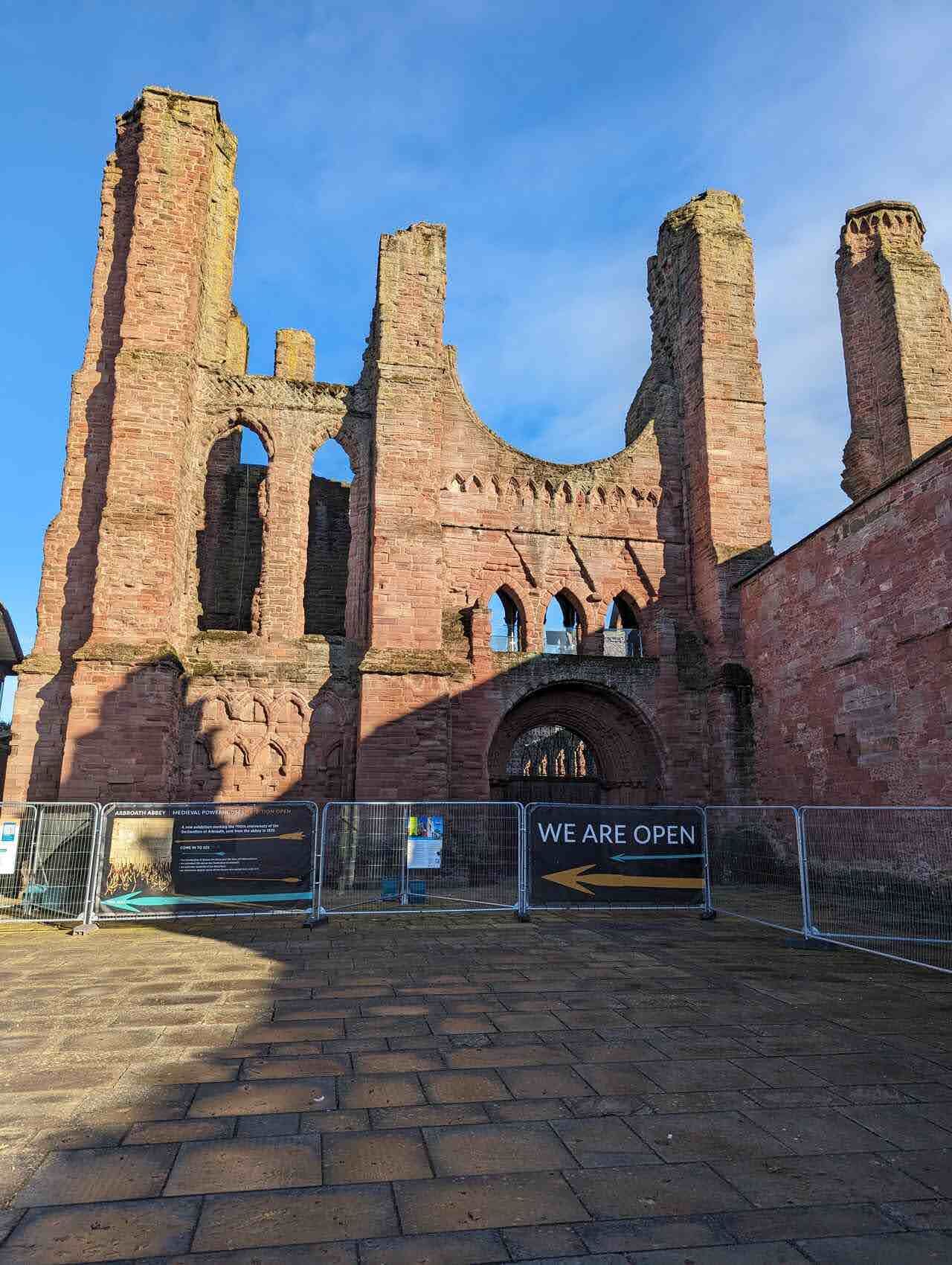
Arbroath Abbey
Founded in 1178 by William the Lion, and the birthplace of the 1320 Declaration of Arbroath — Scotland’s ringing assertion of its own freedom, sent to the Pope in the name of the community of the realm.
Links: Clan Bruce · the Declaration of 1320 (battle for independence) · Stirling & Bannockburn
Dunfermline Abbey
The Westminster of Scotland: burial place of Robert the Bruce and of St Margaret, the sainted queen, along with a whole dynasty of medieval kings. To lie here was to lie at the nation’s heart.
Links: Clan Bruce · House of Stewart · St Margaret (spiritual) · kings of Scots
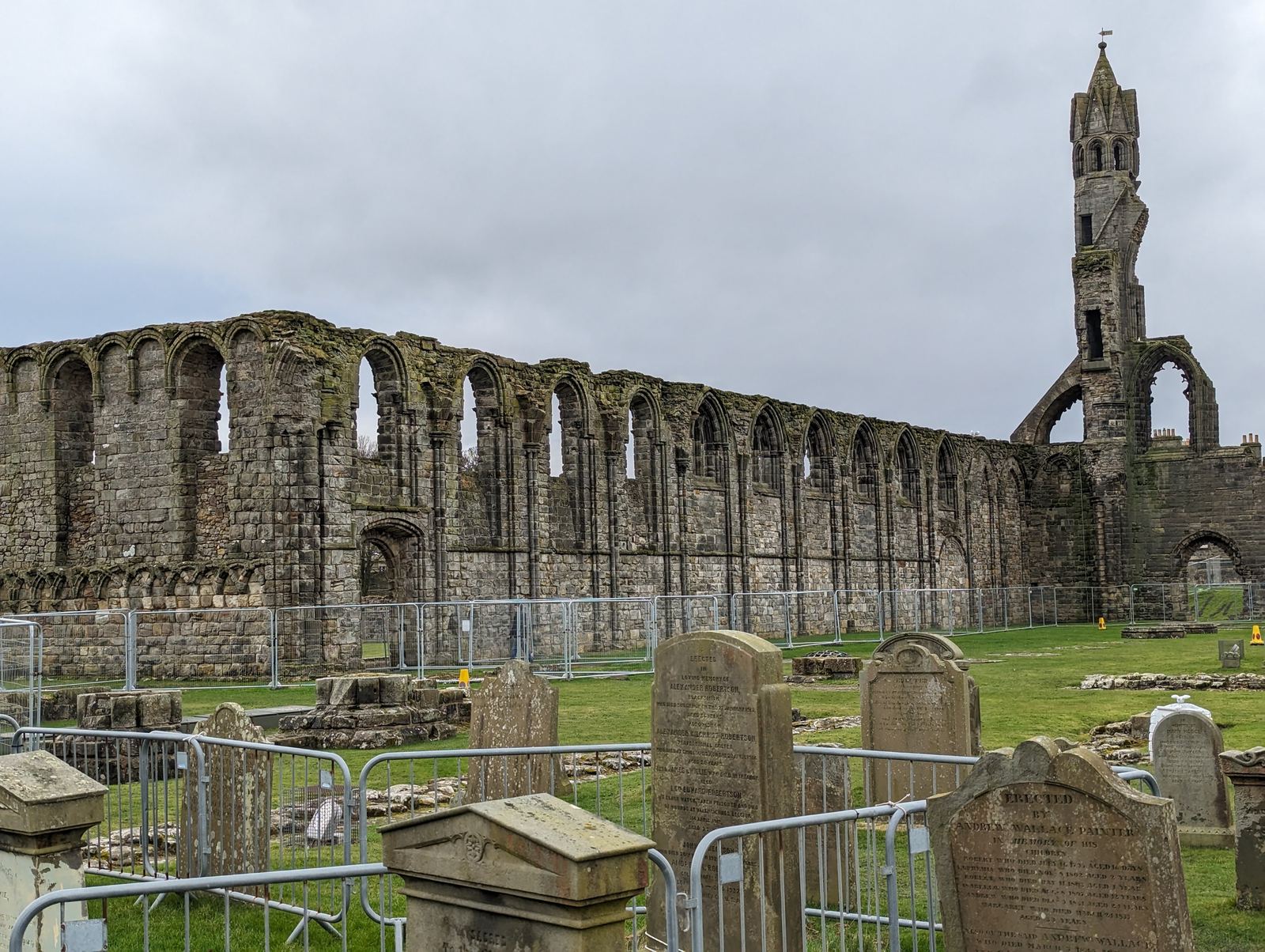
St Andrews Cathedral
Once the largest and greatest church in Scotland and the seat of its senior bishop — and then the cradle of the Reformation, where reformers were burned at the stake and, after Cardinal Beaton’s murder, the castle was held against a royal army in the siege of 1546–47 (the young John Knox among the defenders, later sent to the French galleys).
Links: the Reformation & the martyrs (spiritual upheaval) · the 1546–47 siege of St Andrews Castle (battle) · St Andrews
Dunkeld Cathedral
Half romantic ruin, half living kirk on the Tay. It holds the tomb of the notorious Wolf of Badenoch and stands on ground linked to relics of St Columba brought inland from Iona — and around it, in 1689, the town was fought over and burned in the Battle of Dunkeld, where a Cameronian regiment held off the Jacobite Highlanders after Killiecrankie.
Links: House of Stewart (the Wolf of Badenoch) · St Columba (spiritual) · the Battle of Dunkeld, 1689 (battle) · the River Tay · Dunkeld
Cambuskenneth Abbey & the Church of the Holy Rude, Stirling
Two churches at the very centre of the nation’s story, under the guns of Stirling Castle: Robert the Bruce held a parliament at Cambuskenneth in 1326, and the infant James VI was crowned in the Holy Rude. James III, killed at nearby Sauchieburn, lies buried at Cambuskenneth.
Links: Clan Bruce · Bannockburn 1314, Stirling Bridge 1297 & Sauchieburn 1488 (battles) · House of Stewart · Stirling
Culross Abbey
A Cistercian abbey above a perfectly preserved 17th-century town, on ground sacred to St Serf and his pupil St Mungo (Kentigern), the patron saint of Glasgow, who tradition says was born on this shore.
Links: St Mungo & St Serf (spiritual origins) · Culross
Clan kirks, saints & sacred stones
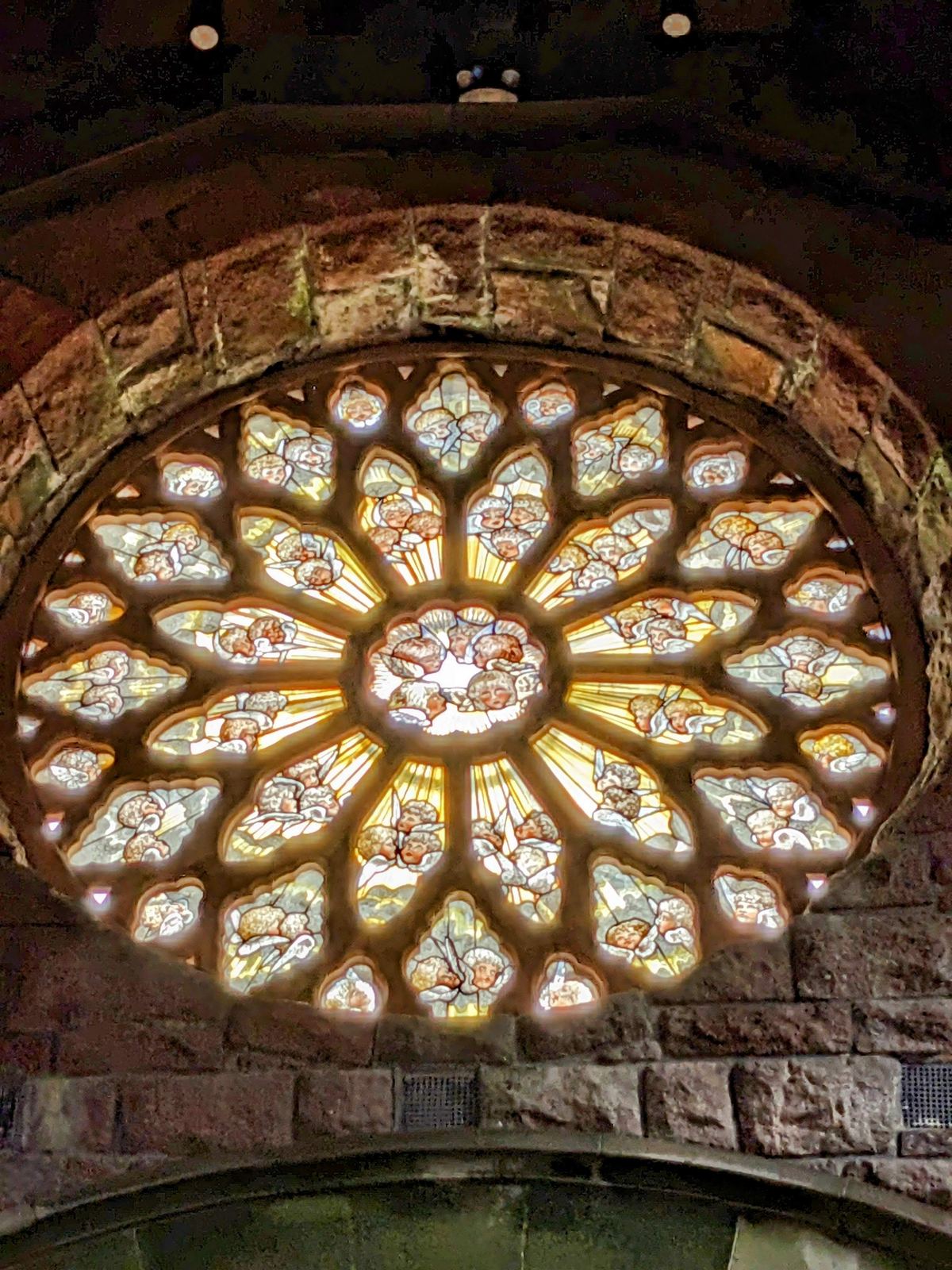
St Conan’s Kirk, Loch Awe
A hand-built Victorian marvel raised stone by stone by a Campbell laird, holding in its Bruce Chapel a fragment of Robert the Bruce’s own bone. It sits on Loch Awe, near the Pass of Brander where Bruce broke the MacDougalls in 1308. One of the most extraordinary small churches anywhere. (Now with its own full page.)
Links: Loch Awe (on the loch) · Clan Campbell · Clan Bruce (the Bruce relic) · the Pass of Brander, 1308 (battle)
Luss Parish Church
A pretty kirk above Loch Lomond on ground hallowed by St Kessog, and guarding a set of ancient Viking hogback gravestones in its yard — a rare survival of the Norse in the west.
Links: Loch Lomond (on the loch) · St Kessog (spiritual) · Clan Colquhoun · Viking hogback stones (carved stones) · Luss
St Fillan’s, Killin
The kirk of St Fillan at the head of Loch Tay, where the saint’s healing stones — each one shaped for a part of the body — are still kept and turned by a hereditary keeper to this day.
Links: Loch Tay (at the loch head) · Clan MacNab · the Healing Stones (spiritual & sacred stones) · Killin
Kilmartin Church & the Carved Stones
A country kirk ringed by 5,000 years of prehistory, sheltering a superb collection of medieval West Highland grave-slabs — carved with galleys, swords and warriors marking the graves of Highland chiefs.
Links: Kilmartin Glen standing stones (ancient stones) · carved Highland warrior slabs (clans) · Loch Awe nearby
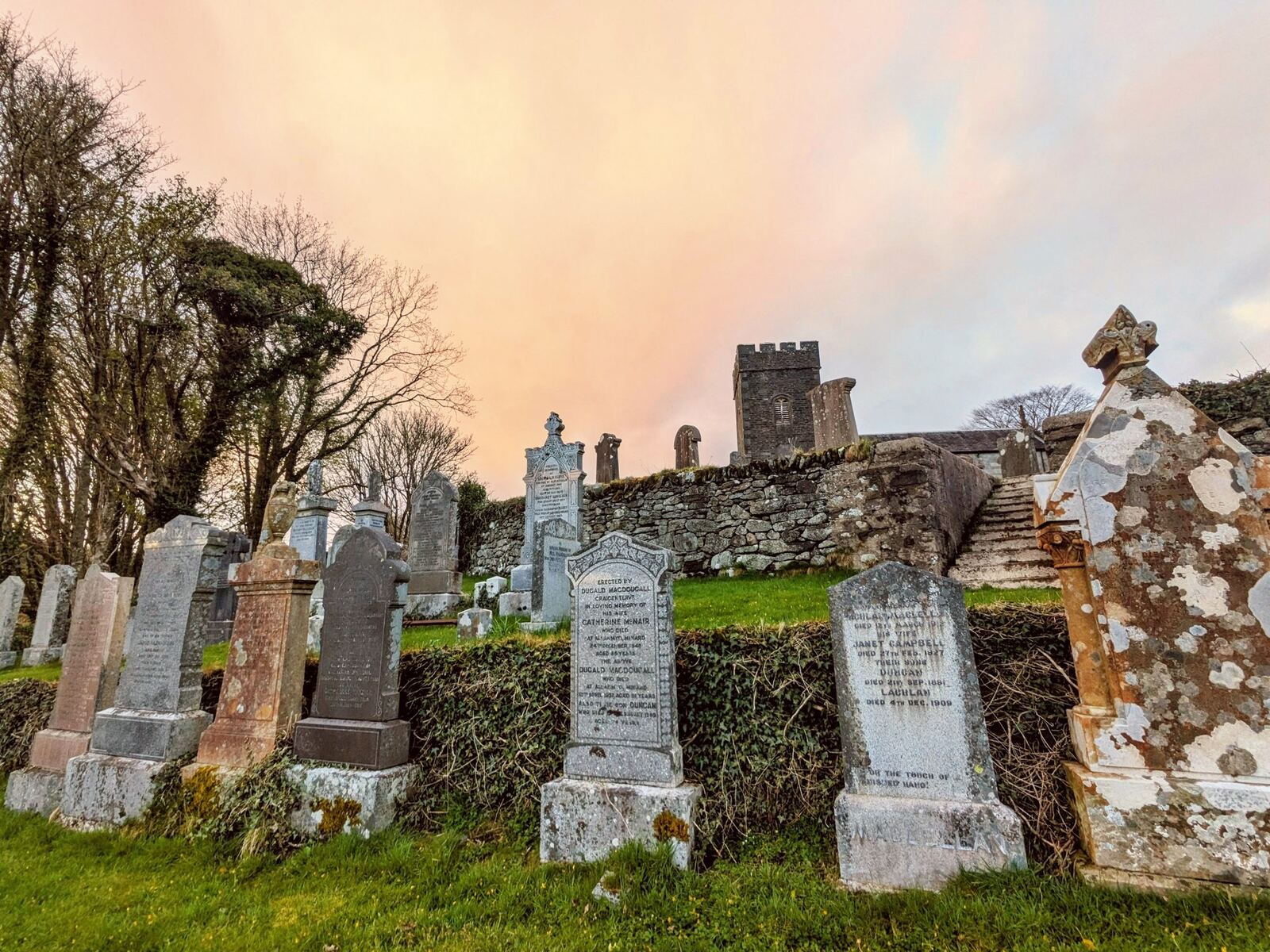
St Columba’s Chapel, Keil
A ruined chapel at the very foot of Kintyre, beside the rock footprints where St Columba is said to have first stepped ashore in Scotland — and within sight of Dunaverty, the MacDonald rock where a garrison was massacred in 1647.
Links: St Columba (spiritual) · Dunaverty & the 1647 massacre (battle) · Clan MacDonald / Kintyre · Southend
St Michael’s, Linlithgow
The great burgh kirk beside the palace where Mary, Queen of Scots was born — a soaring medieval church, crowned now with a bold golden modern spire above Linlithgow Loch.
Links: Linlithgow Loch (on the loch) · House of Stewart · Mary, Queen of Scots · Linlithgow
St Mungo’s, Alloa
The old kirk and tower of our home town, long tied to the Erskine Earls of Mar — the family who guarded royal heirs and helped shape the fate of the Scottish crown.
Links: the Erskines / Earls of Mar · St Mungo (spiritual) · Alloa
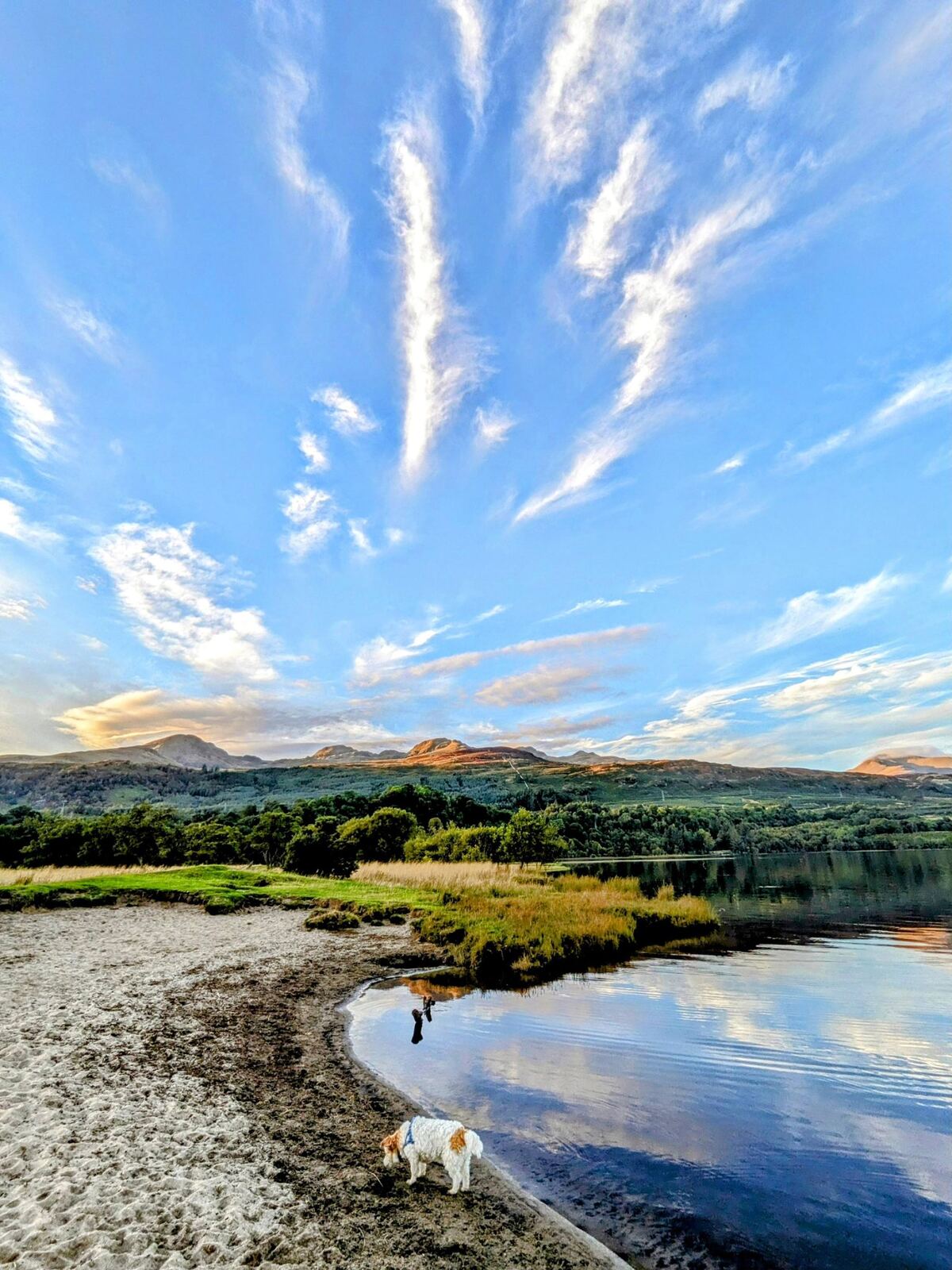
St Monans Auld Kirk
Reckoned the closest church to the sea in Scotland — barely 20 metres from the tide. Built in 1369 by King David II, son of Robert the Bruce, in thanks for surviving a storm in the Forth, and still in use, with an 18th-century votive model ship hanging in its medieval nave.
Links: on the sea, the Firth of Forth · Clan Bruce (built by David II) · Newark Castle nearby · St Monans
Also worth seeking out
Smaller, but full of the same story: St Brendan’s Chapel at Skipness (carved grave-slabs beside one of Scotland’s oldest castles), the old kirk at Keil above the Kintyre shore, and the ancient kirk at New Aberdour on its lonely Aberdeenshire bay. And one honest curiosity: Glenbarr “Abbey” in Kintyre was never an abbey at all — just a Gothic mansion and the seat of Clan MacAlister that borrowed the grand-sounding name.
Pages we think we should build
A few names keep coming up here that deserve their own page — and where a church sits on a loch or saw a battle, we’ve tried to link it both ways so you can follow the thread:
- Clan Fraser — founders of Fraserburgh and a great family from here to Lovat and Culloden; not yet built.
- Clan MacDougall — Bruce’s great rivals, broken at the Pass of Brander by Loch Awe; worth their own clan page.
- Clan Colquhoun — the family of Luss and Loch Lomond, and their bloody feud with the MacGregors at Glen Fruin.
Explore the rest
- The families behind these kirks: our Scottish Clans collection.
- Their strongholds: Castles of Scotland.
- The waters they stand beside: The Lochs of Scotland.
Sources
- Every church here is one we’ve visited in person; all photographs are our own.
- Historic Environment Scotland, the National Trust for Scotland and each church’s own history for dates and facts; see the individual place pages for detailed sources.