Luss Village: Postcard-Pretty — But a Money-Machine for Parking (Our Honest Take)
Overview — honest from the off
Luss is beautiful — a picture-postcard conservation village on the west shore of Loch Lomond, all neat stone cottages, an ancient church, monkey-puzzle trees and big loch-and-mountain views. It’s also badly over-touristed, the traffic bottlenecks back to the village, and — the bit that spoiled it for us — it’s become an absolute money-machine for parking. Every road around is now double-yellowed, the car parks are camera-enforced, and you pay to park and pay to stay, full stop. The old trick of pulling up on the wee bridge by the fairy-walk footpath? Gone.
Our honest verdict: go once for the village, the churchyard and the wonderful Fairy Trail — but if, like us, you resent paying serious money just to park, don’t expect to love it, and know there’s a free lochside spot 20 minutes away we’d rather use (on our Loch Lomond page). We wouldn’t rush back — but the place itself is worth understanding, because there’s far more history here than the coach parties ever see.
Where it is
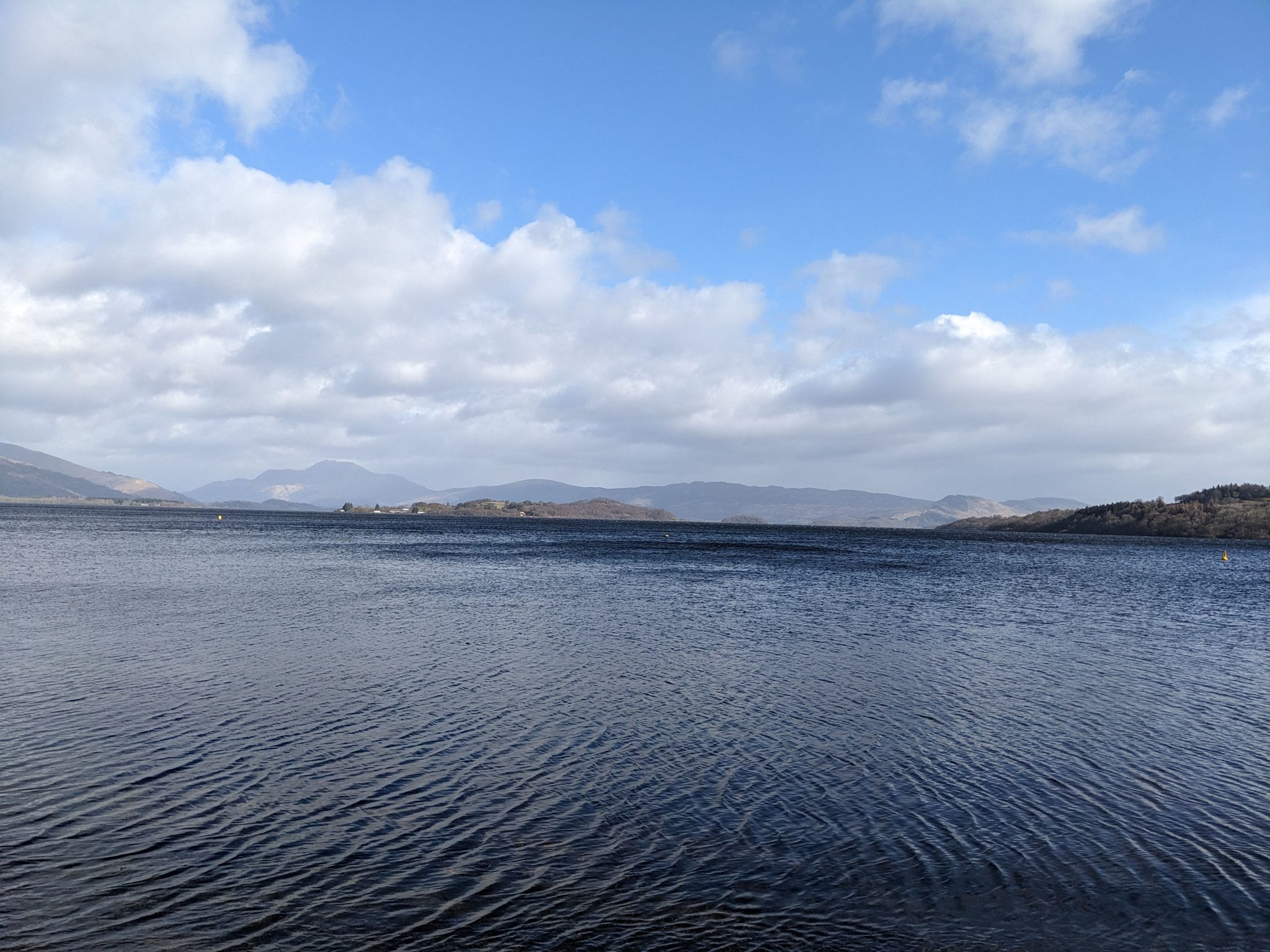
Luss sits on the A82 up the west side of Loch Lomond, in the Loch Lomond & The Trossachs National Park — about 45 minutes from Glasgow, which is exactly why it’s so busy. Loch Lomond itself is the largest stretch of fresh water in mainland Britain (about 22 square miles, and 24 miles long), and the Highland Boundary Fault runs right across it near here — which is why the loch is broad, island-dotted and Lowland at its south end, and narrow and mountainous to the north. Straight across the water rises Ben Lomond (974 m), the most southerly Munro.
A little history — St Kessog, the Colquhouns & a made village
Luss is far older than its tea-rooms suggest. The name is usually traced to the Gaelic lus, “a herb or plant,” and tied by tradition to St Kessog (Mac Kessog), a 6th-century missionary who brought Christianity to the loch and, the story goes, was martyred here around 520 AD; the herbs said to have grown about his grave are one of the tales behind the village’s name. The parish has been a place of Christian worship ever since — well over a thousand years.
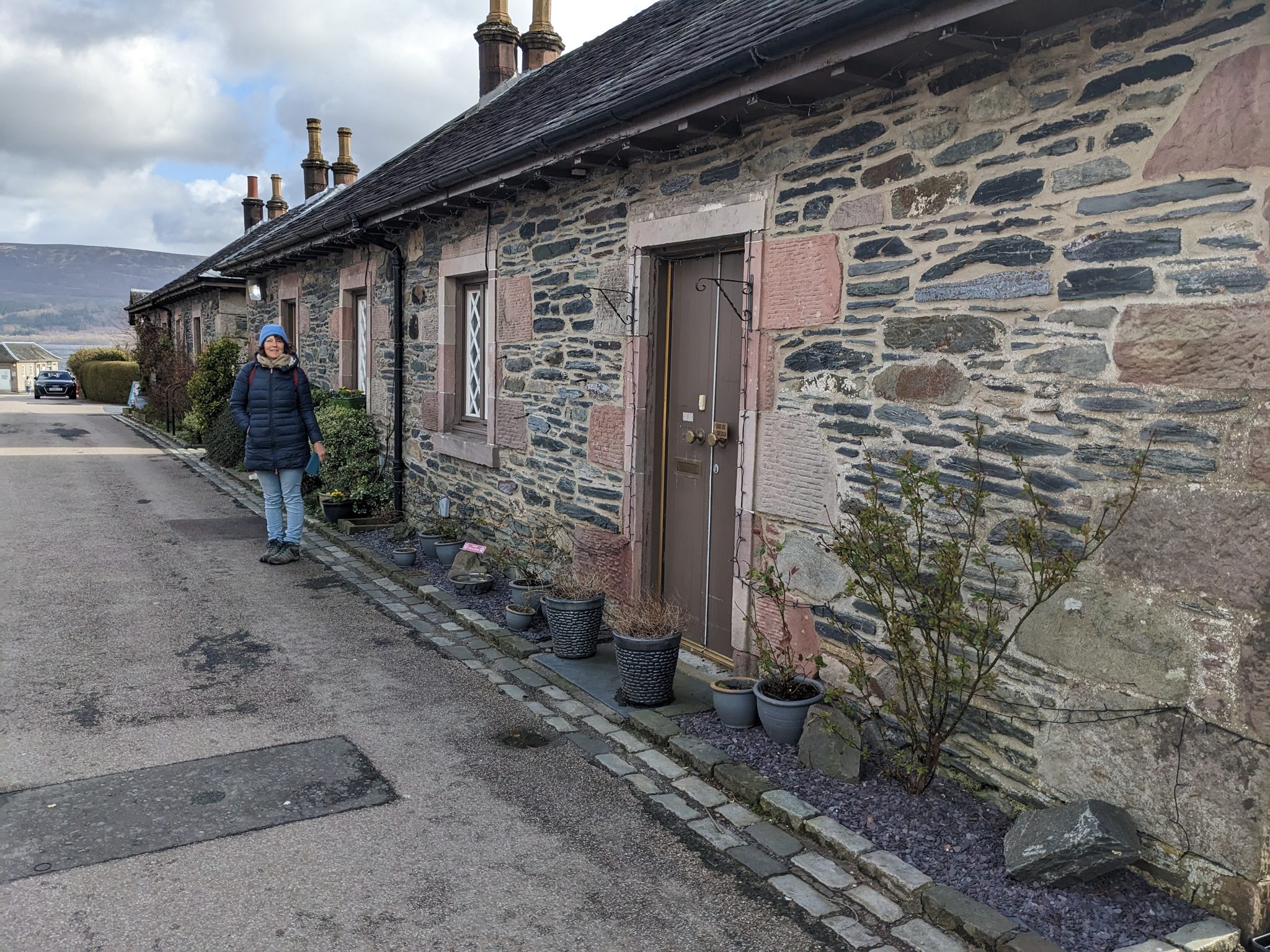
For centuries this has been the country of the Colquhouns of Luss, whose Luss Estates still own much of the village and shore. It was Colquhoun territory that saw the bloody Battle of Glen Fruin in 1603, just south-west of here, where the MacGregors routed the Colquhouns — a slaughter so notorious it helped get the very name MacGregor proscribed (outlawed) by the crown. The pretty village you see today, though, is largely a 19th-century creation: rows of estate cottages built by the Colquhoun lairds, many to house workers from the local slate quarries and mills. It’s now a protected conservation area — which is exactly why it still looks the way it does.
The village & the lochfront
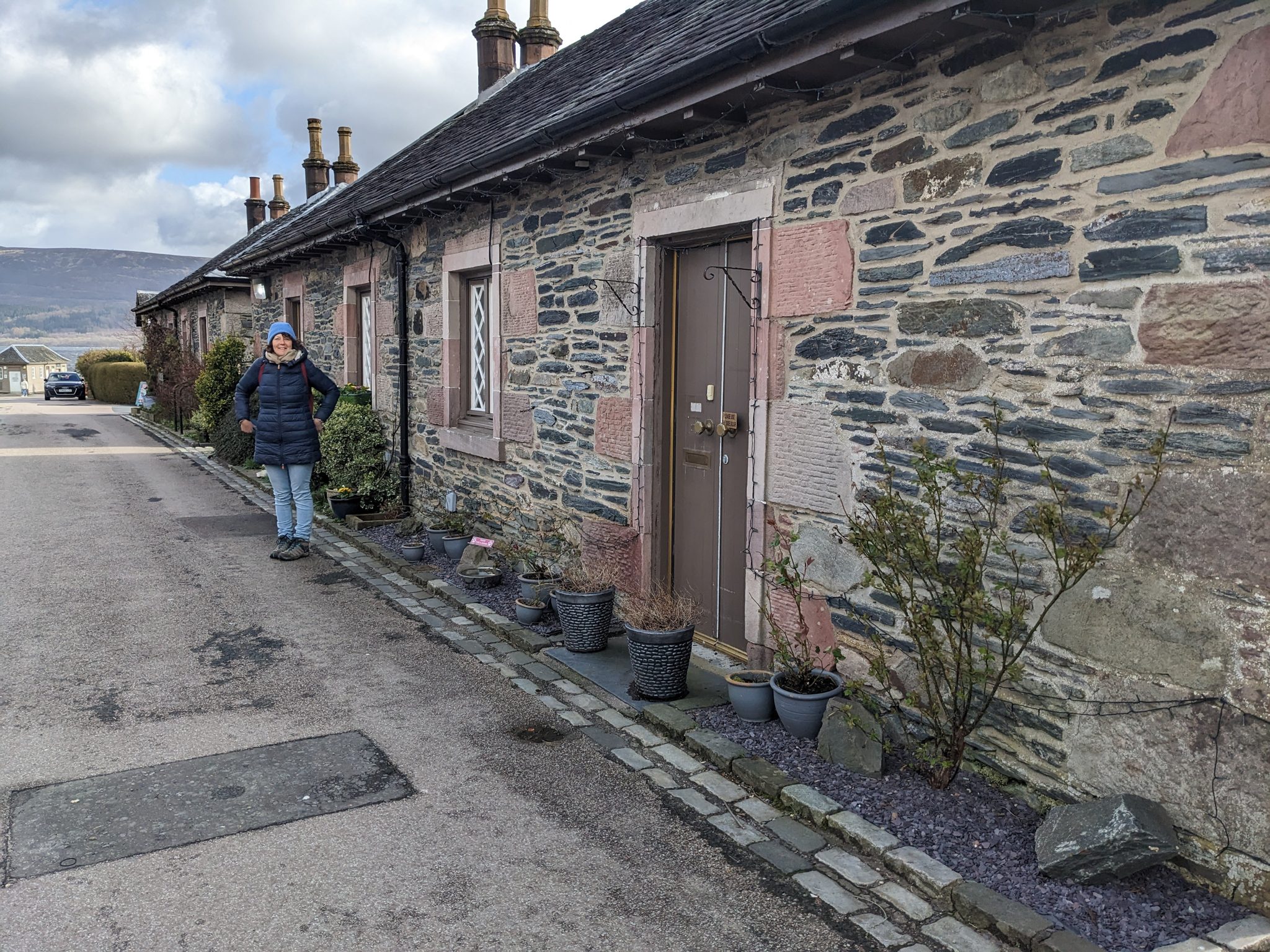
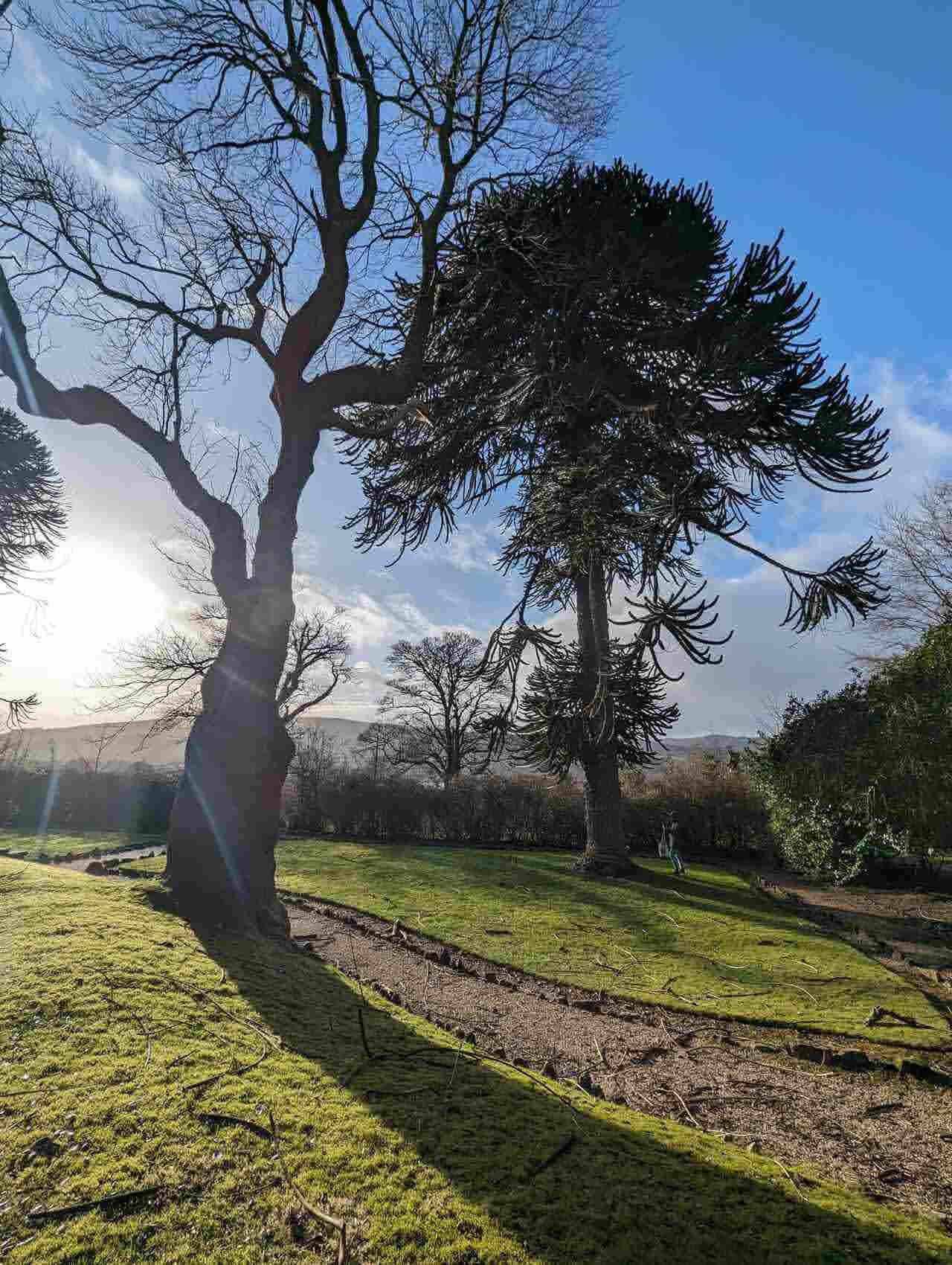
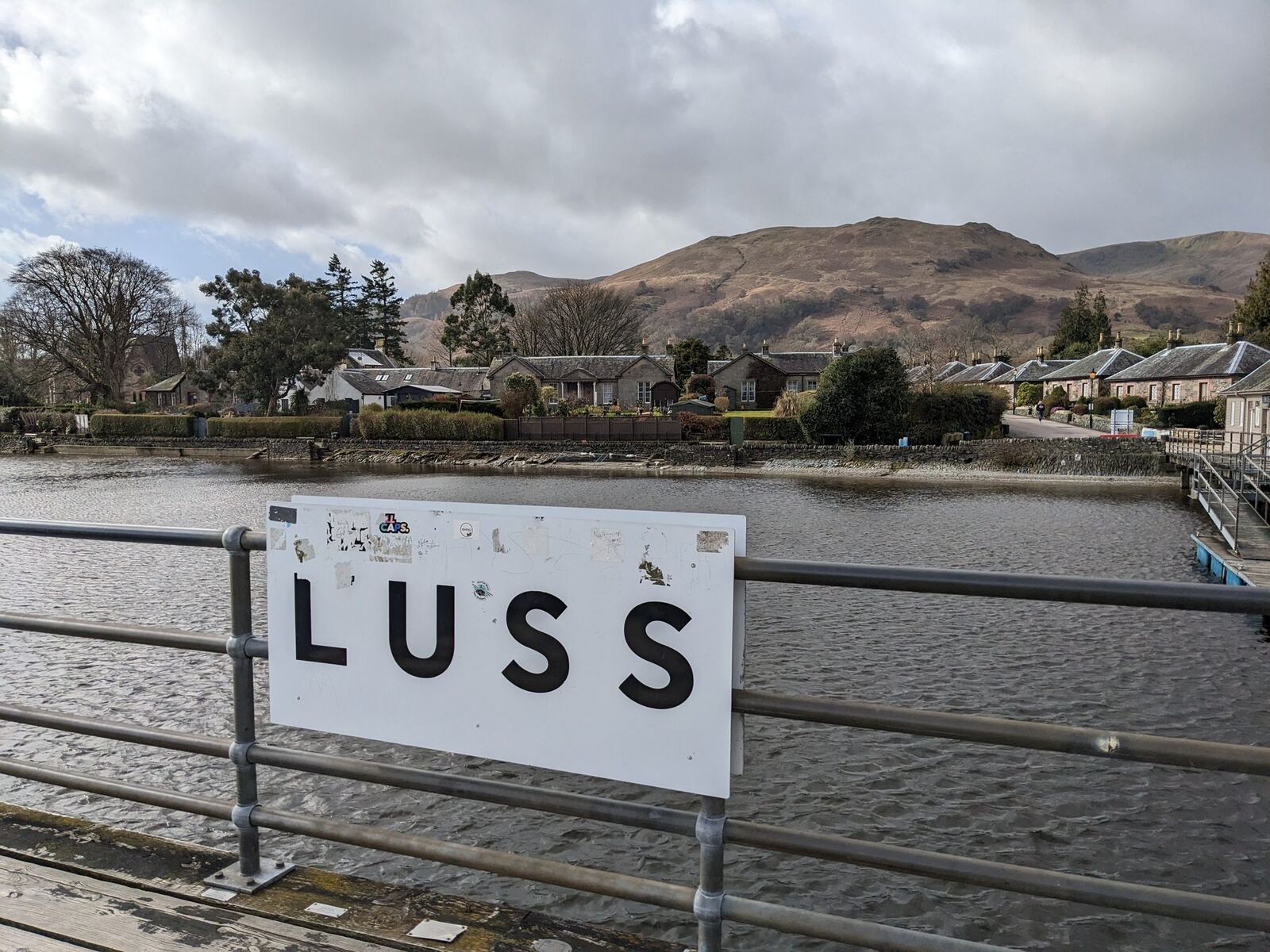
Credit where it’s due — the village really is lovely: rows of conservation-listed stone cottages, a village green with a stand of dramatic monkey-puzzle trees, a pier, and a lochfront promenade looking straight across to Ben Lomond. The walk along the shore is free and gorgeous (the parking to reach it is where they get you). Fans of a certain vintage will recognise it, too: Luss was the fictional “Glendarroch” of STV’s long-running soap Take the High Road (1980–2003), filmed right here for over two decades.
Loch Lomond & the shore
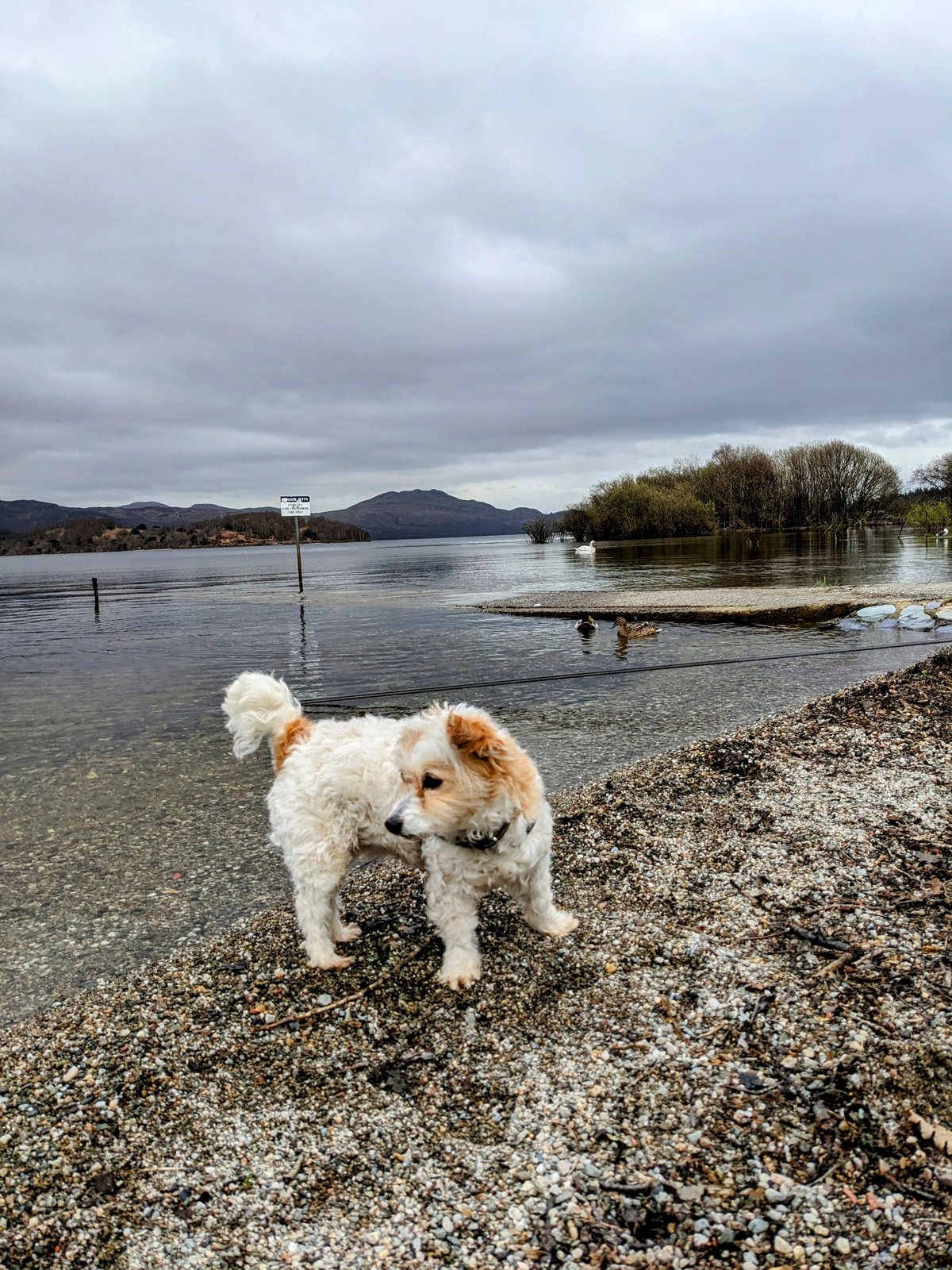
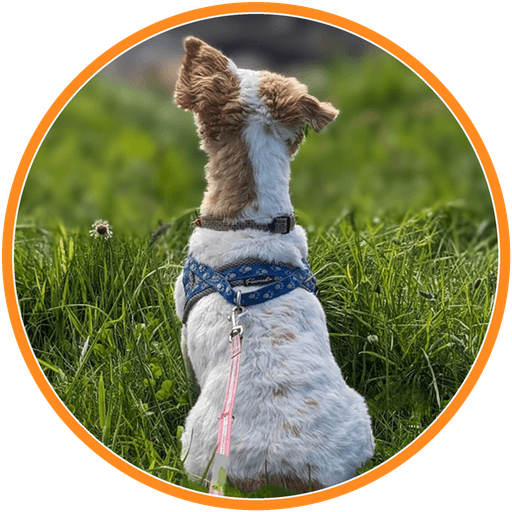
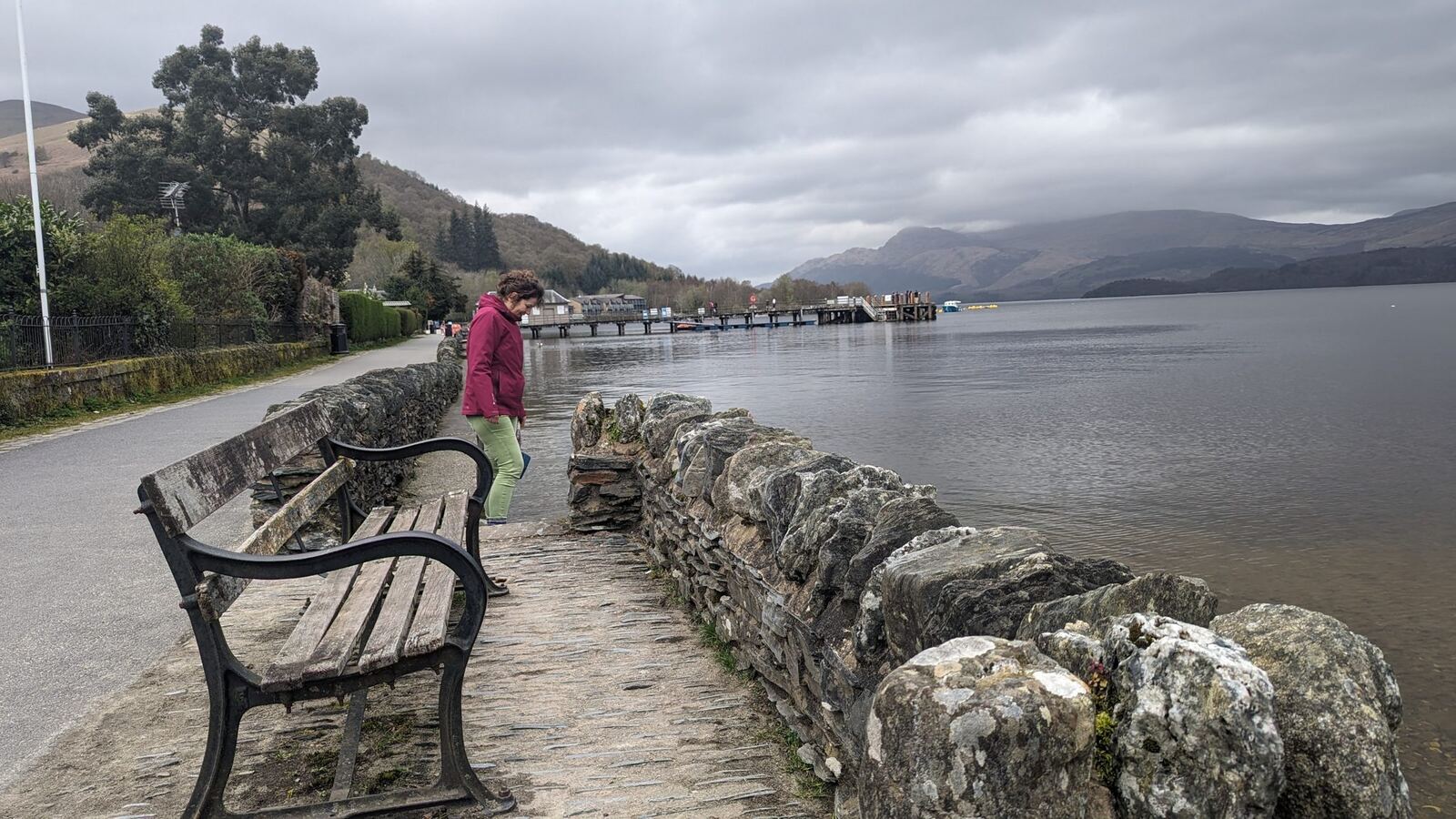
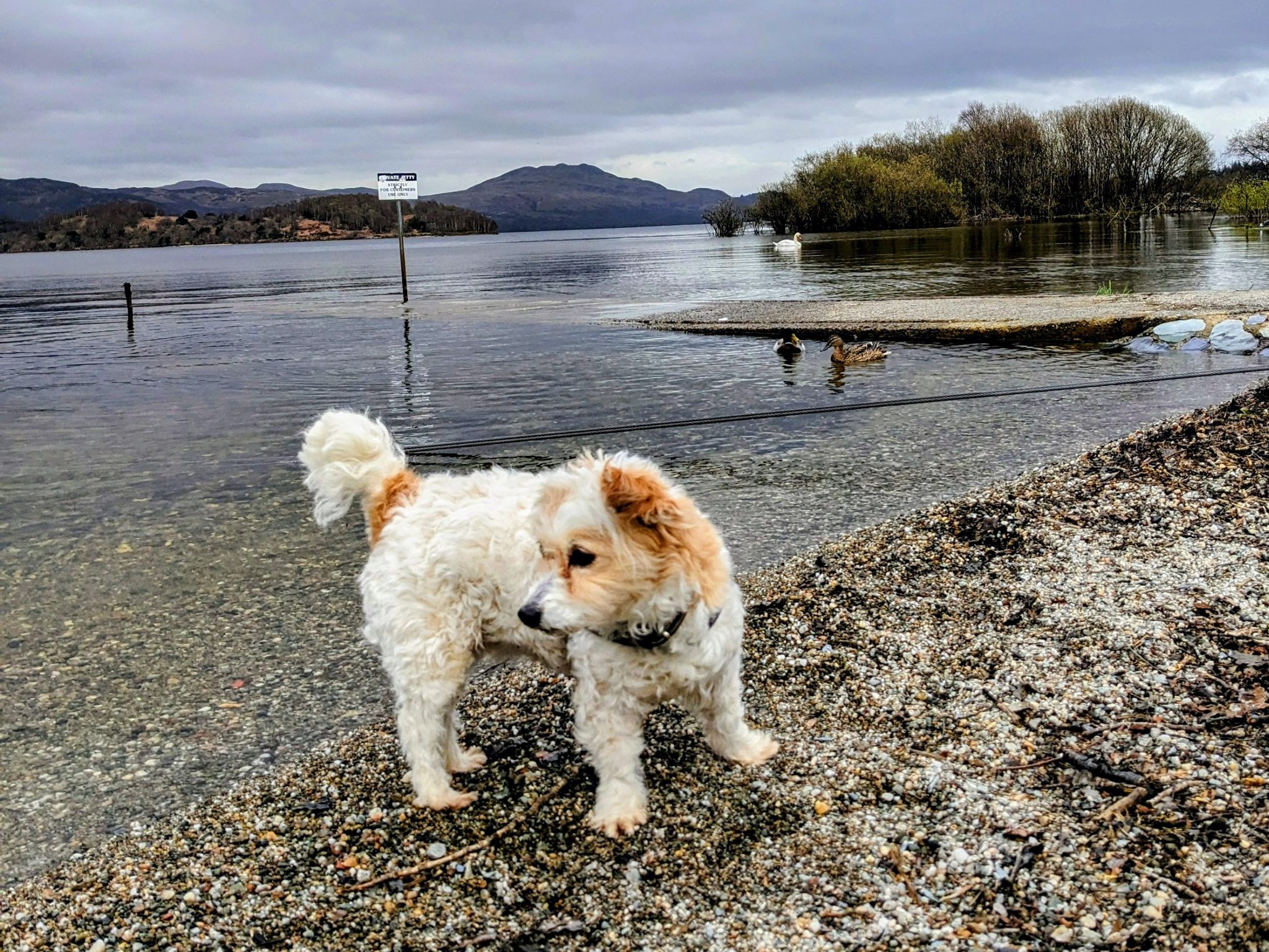
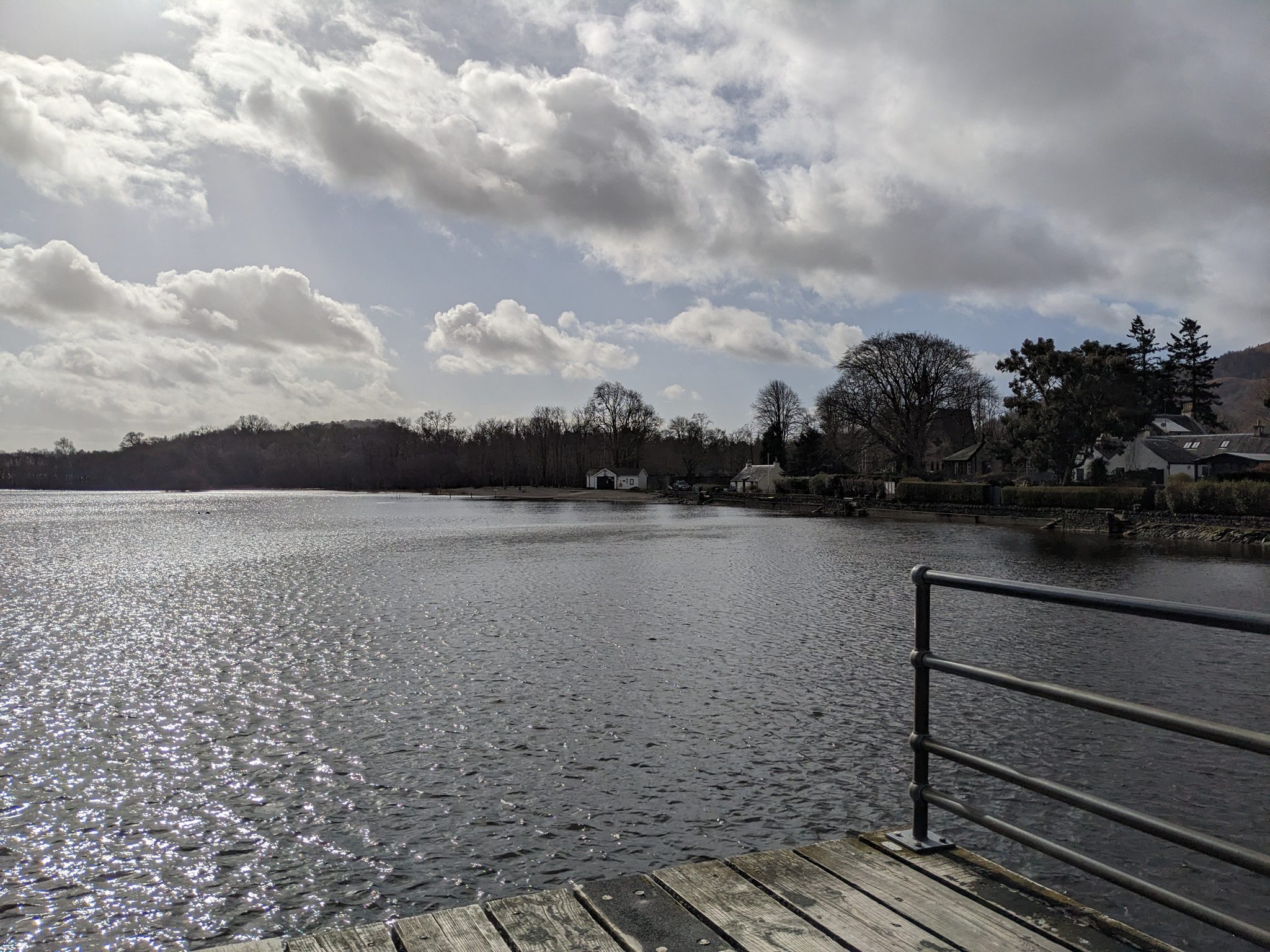
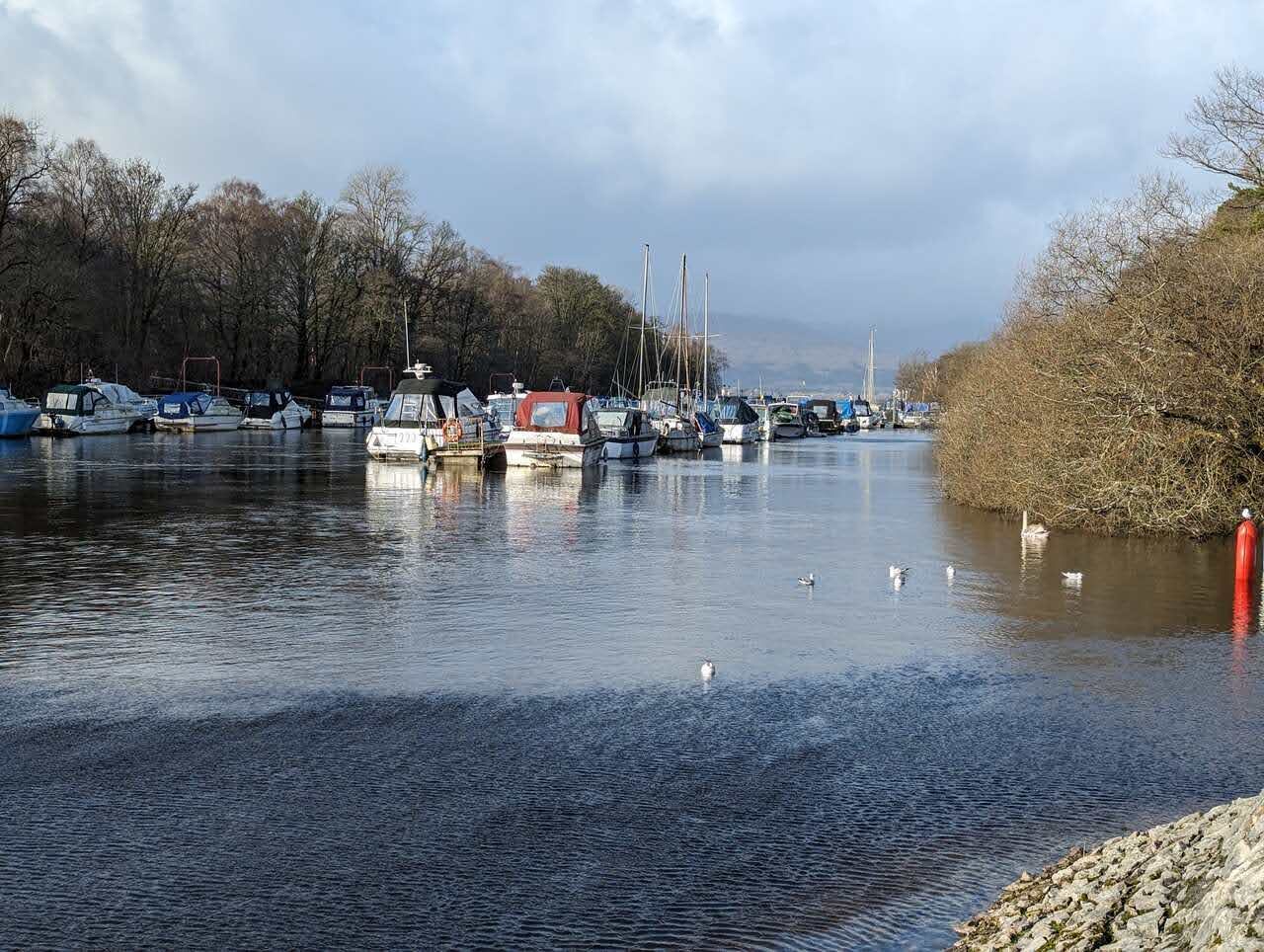
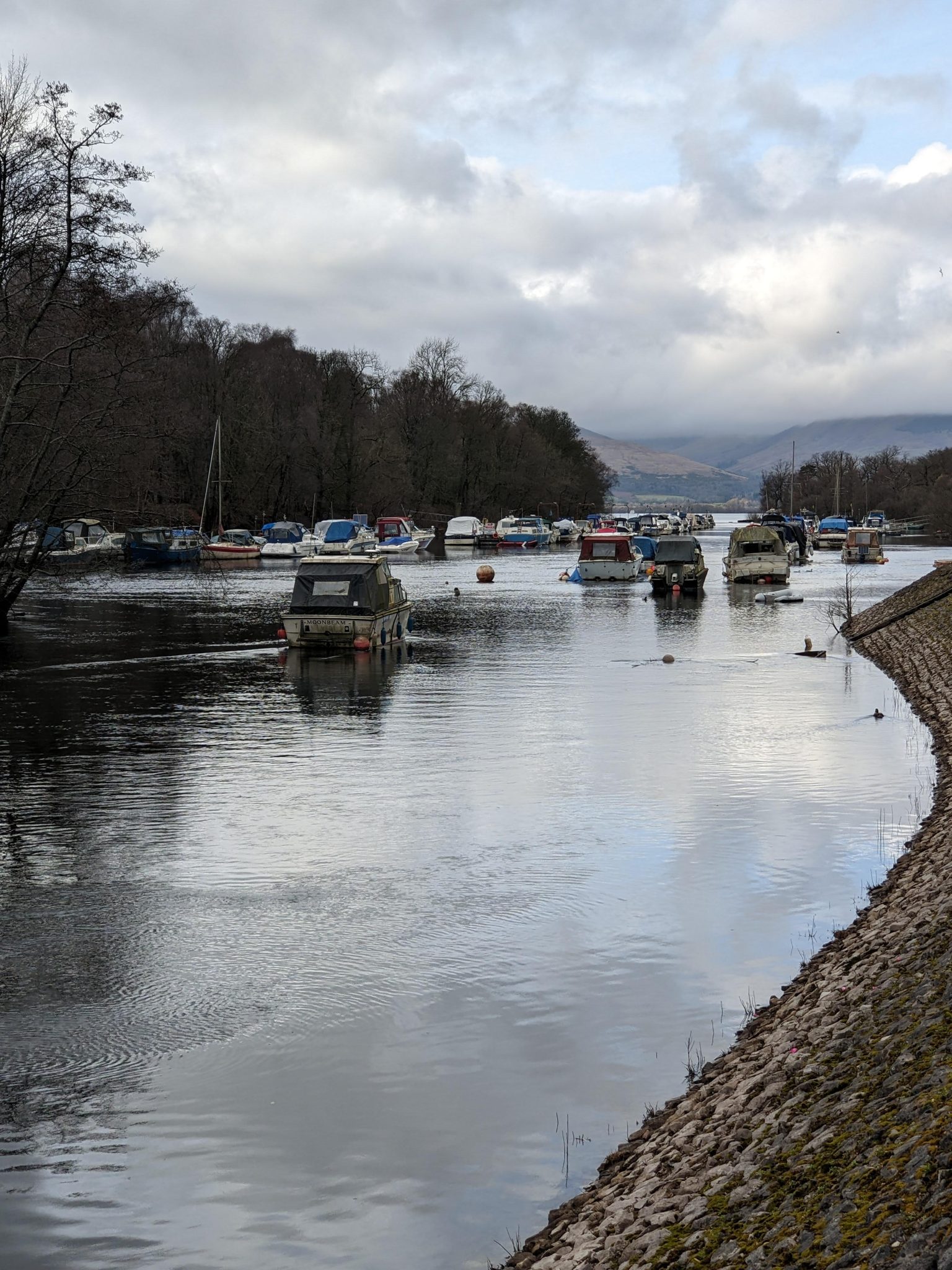
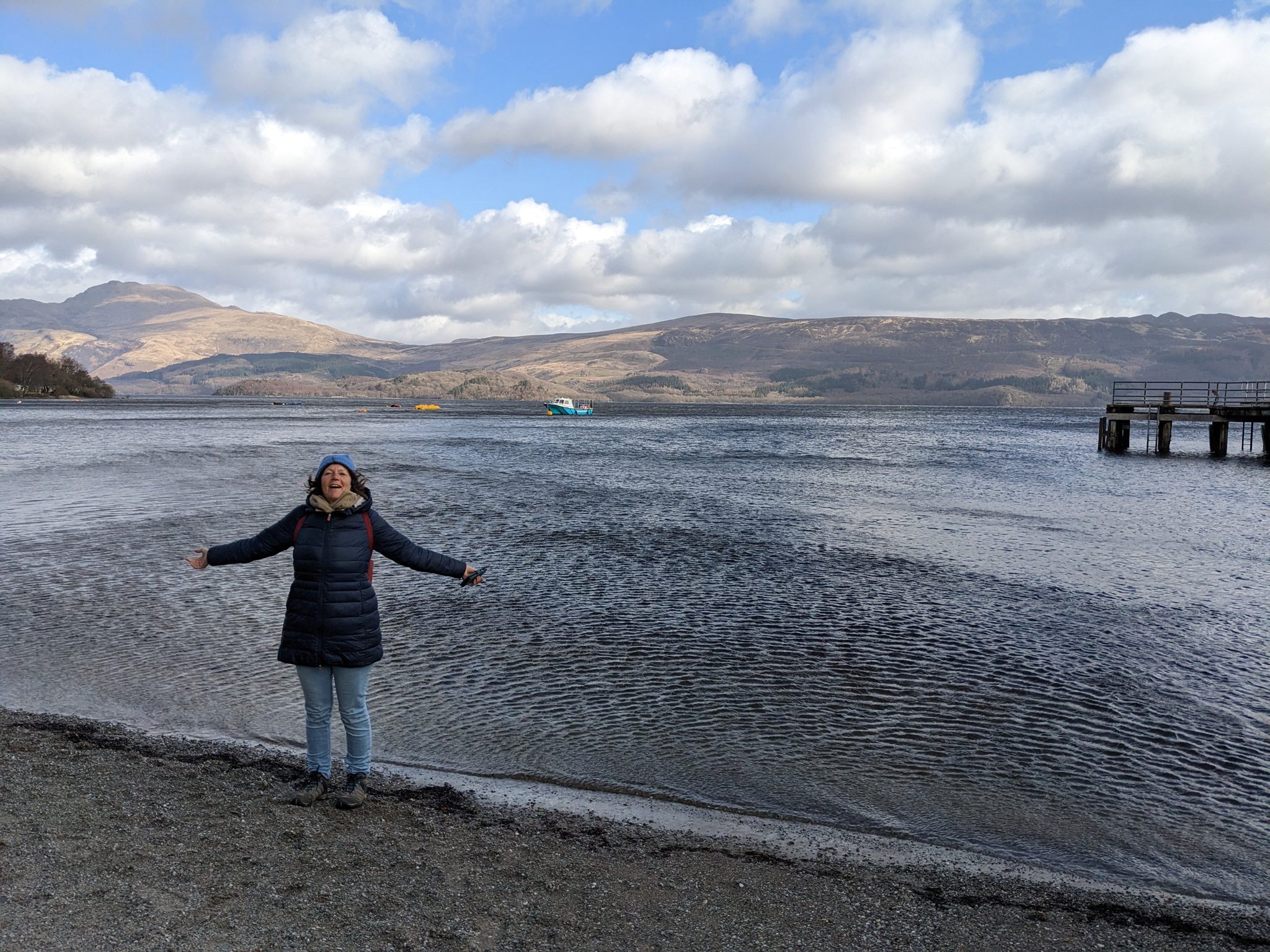
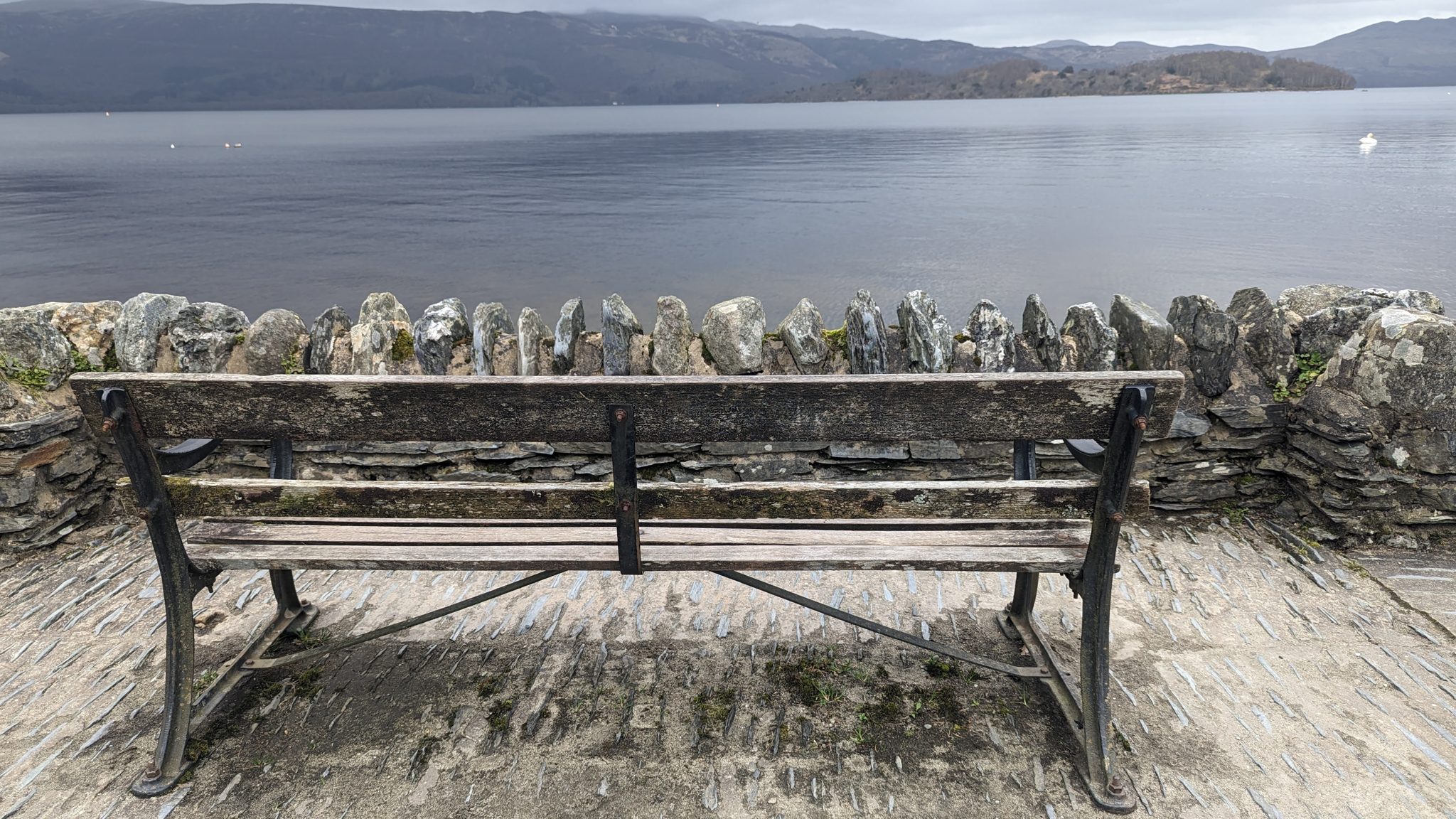
The lochfront is the free half of Luss, and the best half. There’s a shingle beach, the old pier, a little marina of moored boats, and that endlessly photogenic view east to Ben Lomond. It’s a fine spot to let a dog stretch its legs — Lillie certainly approved — and on a still morning the reflections are worth getting up early for.
The old church & churchyard — the real treasure
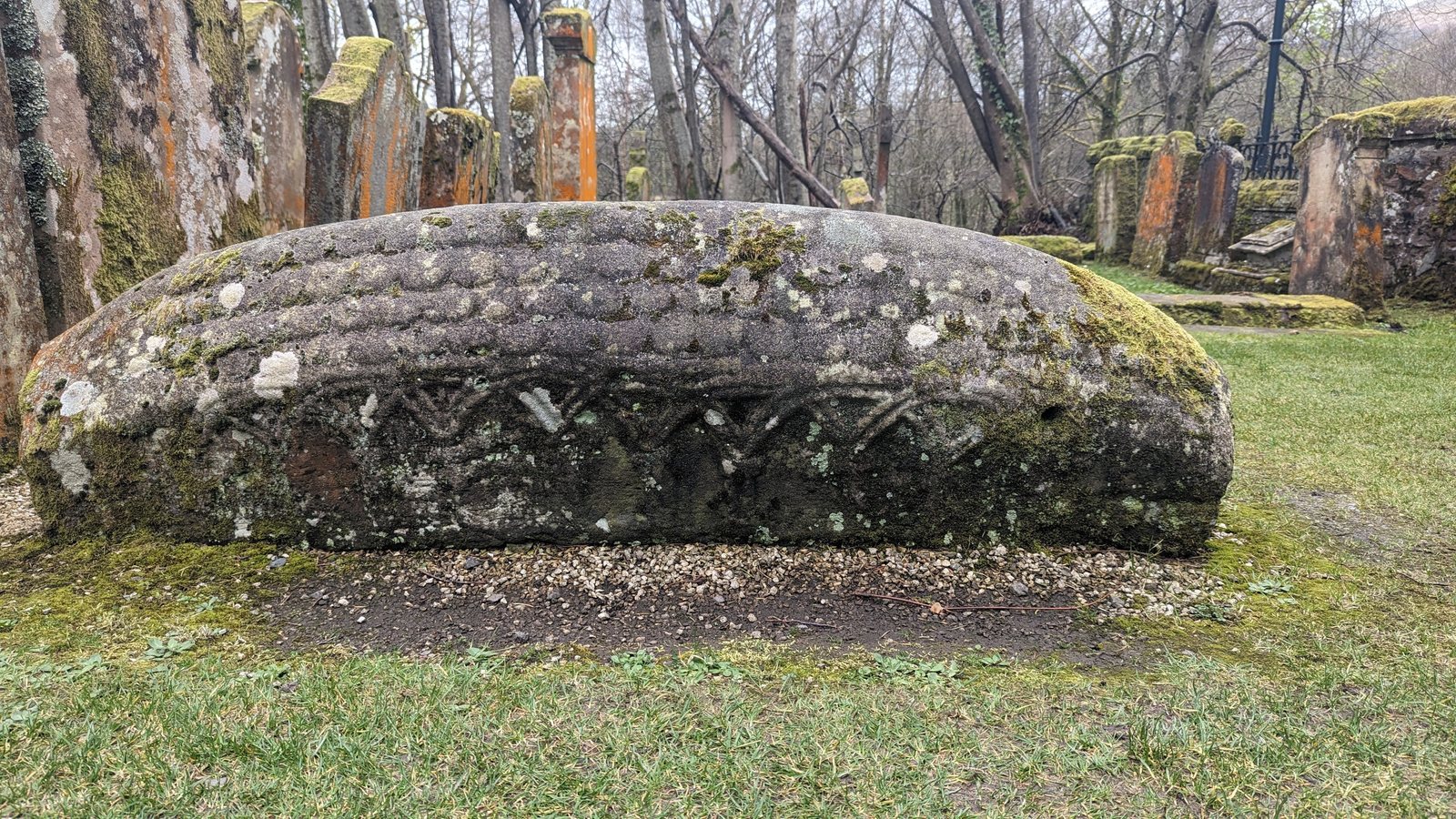
Behind the village, Luss Parish Church and its churchyard are the genuine highlight — and free. The present church was built in 1875 by Sir James Colquhoun in memory of his father, who had drowned in Loch Lomond in 1873, but it stands on ground that has been sacred since St Kessog’s day. Step through and it’s calm, ancient and completely unlike the bustle outside.
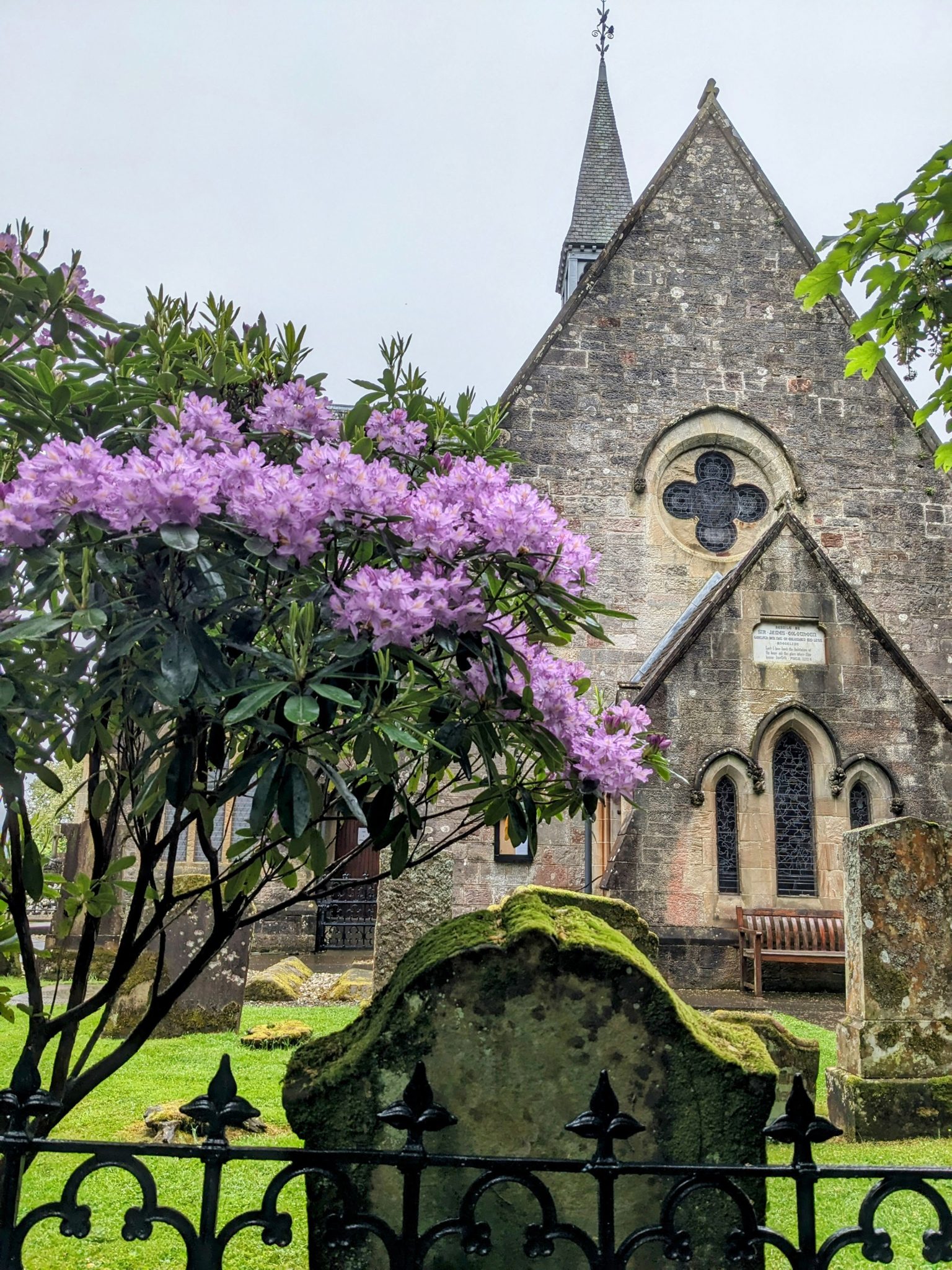
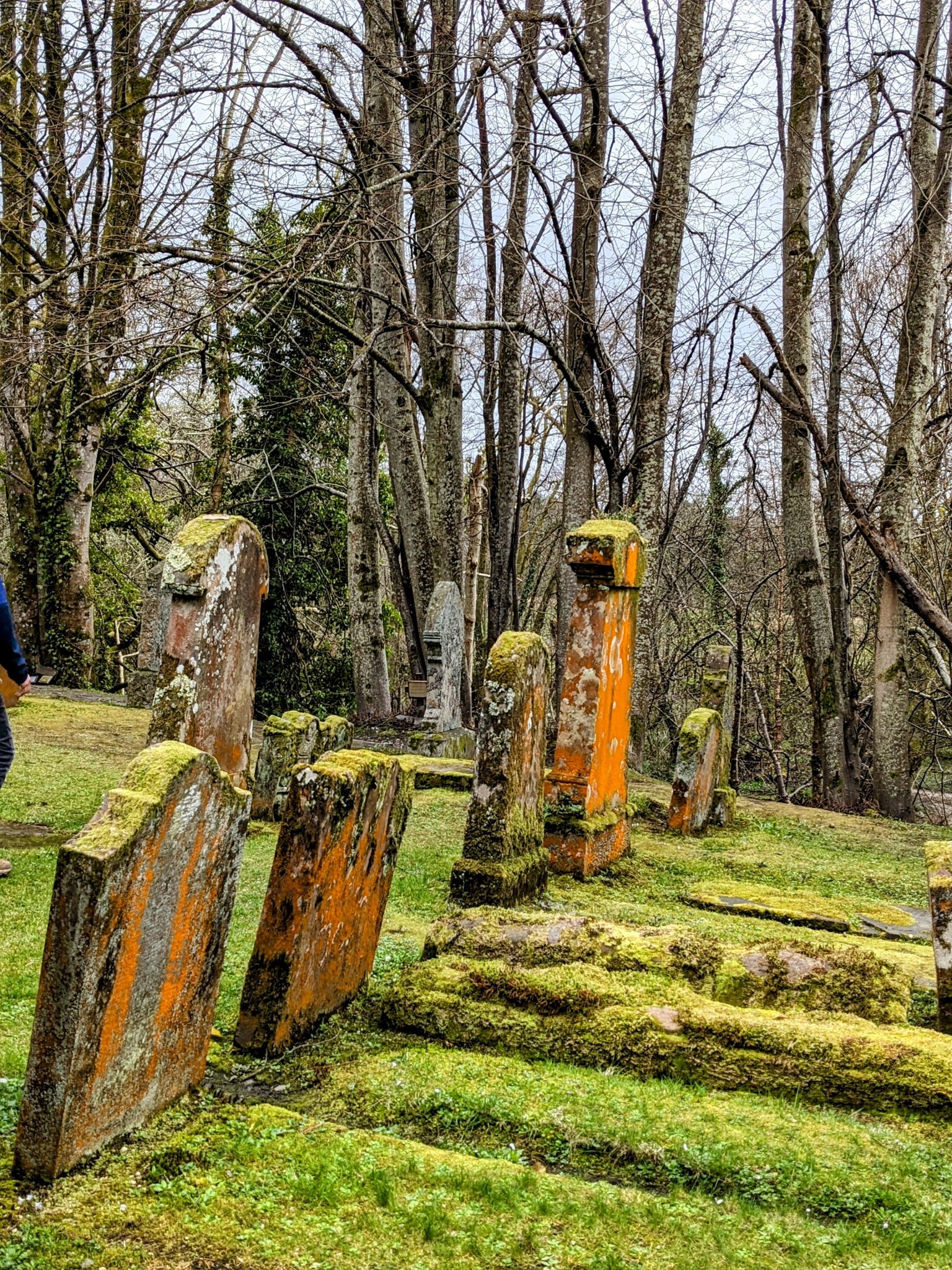
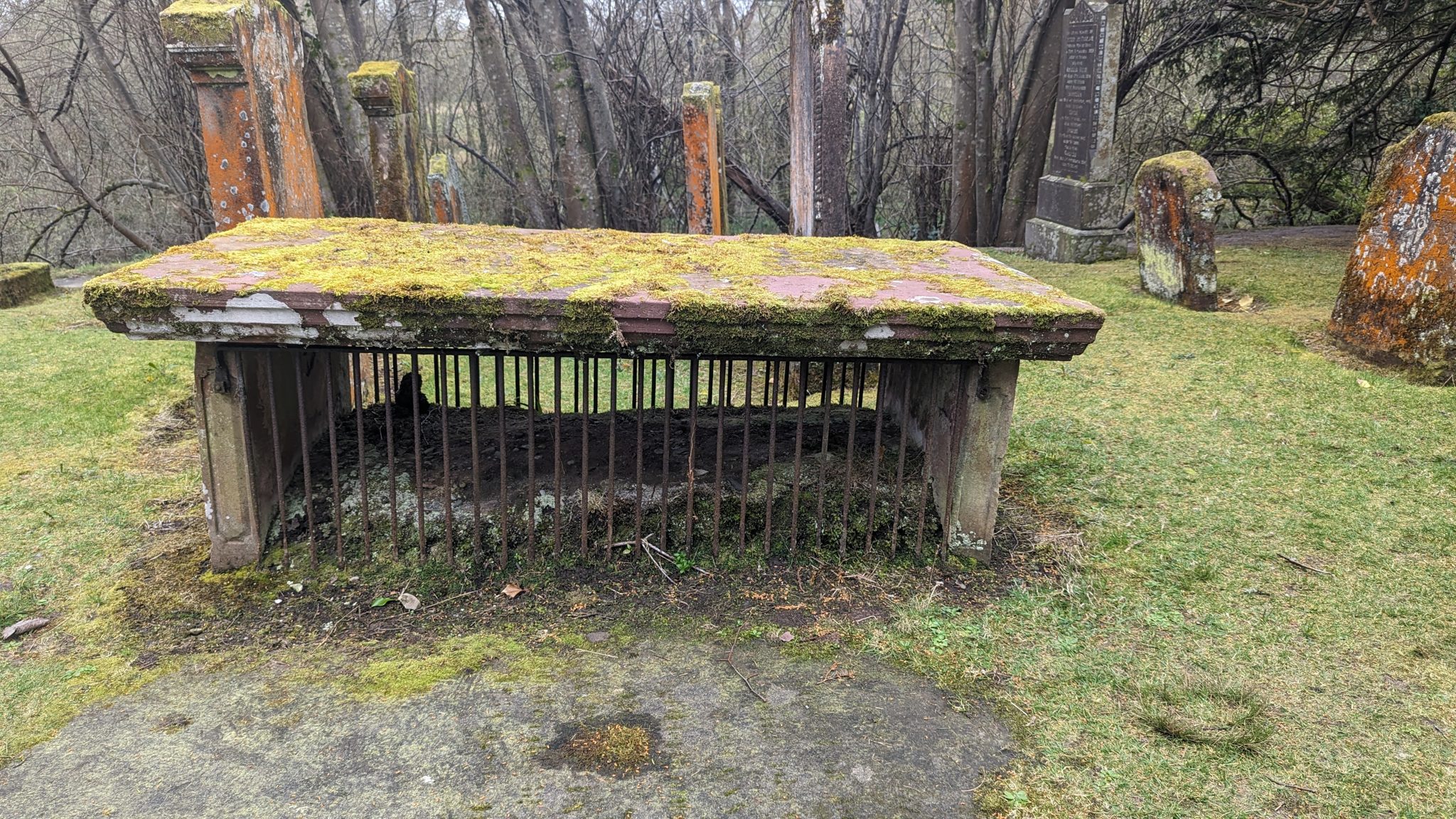
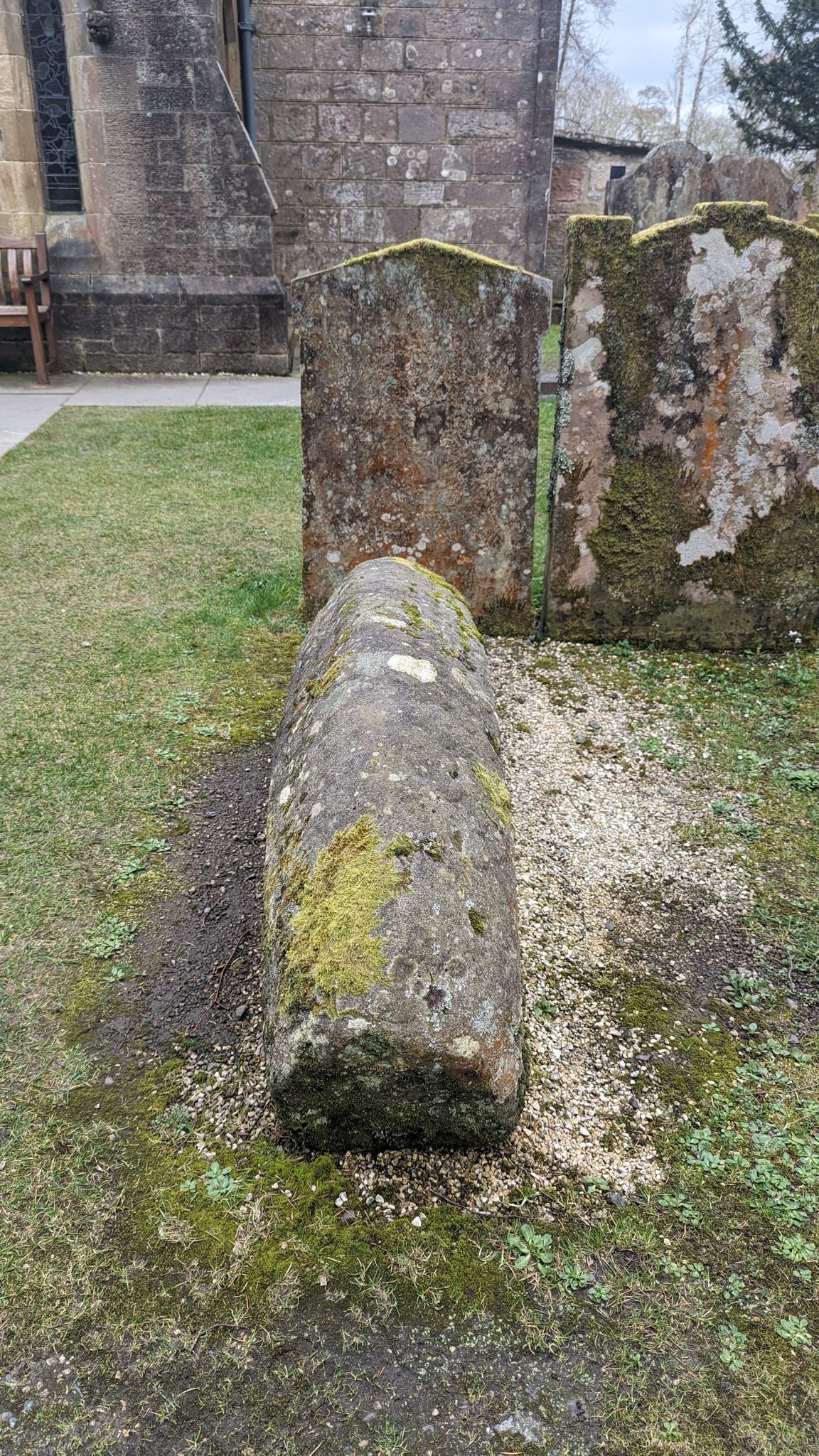
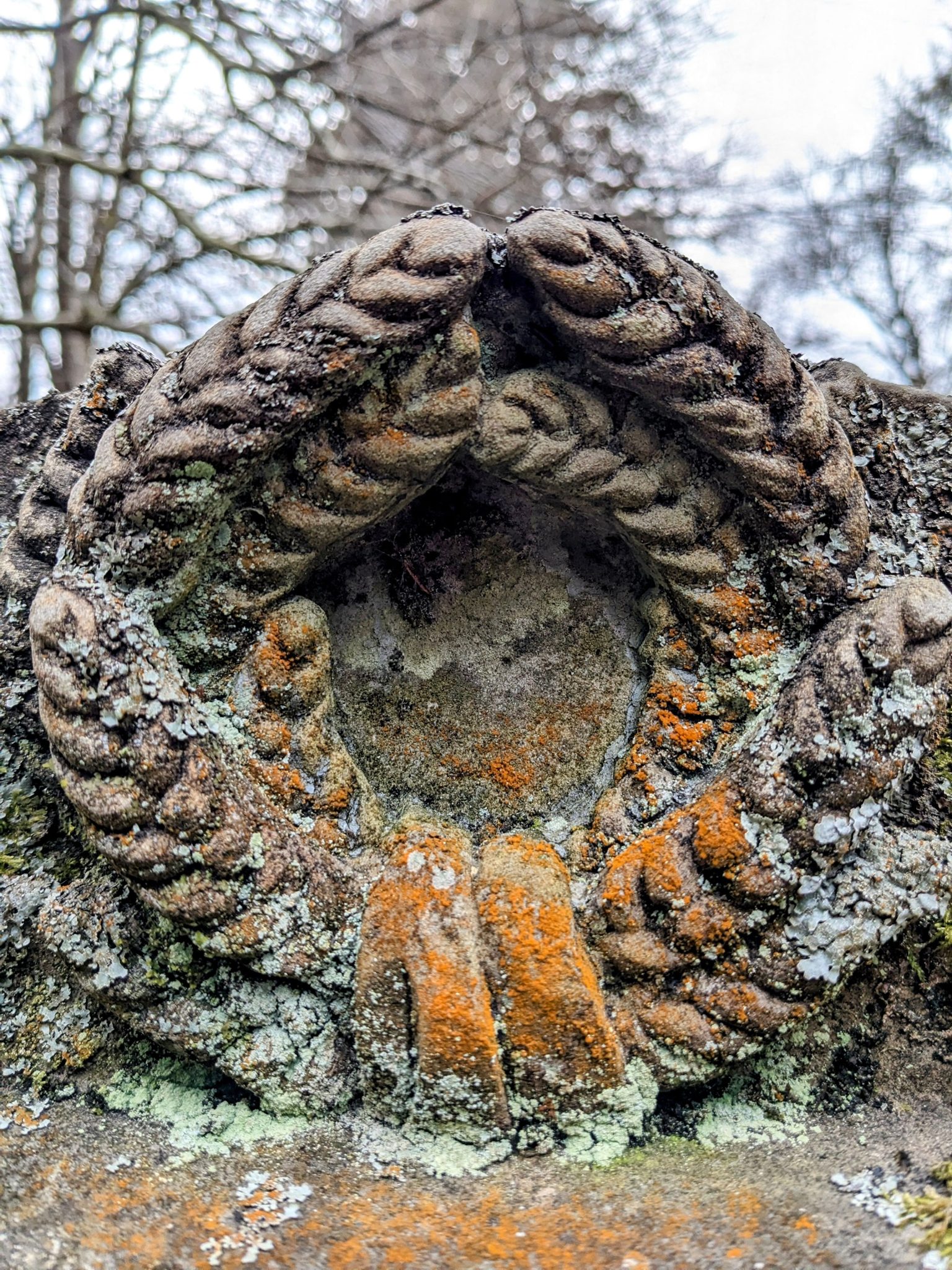
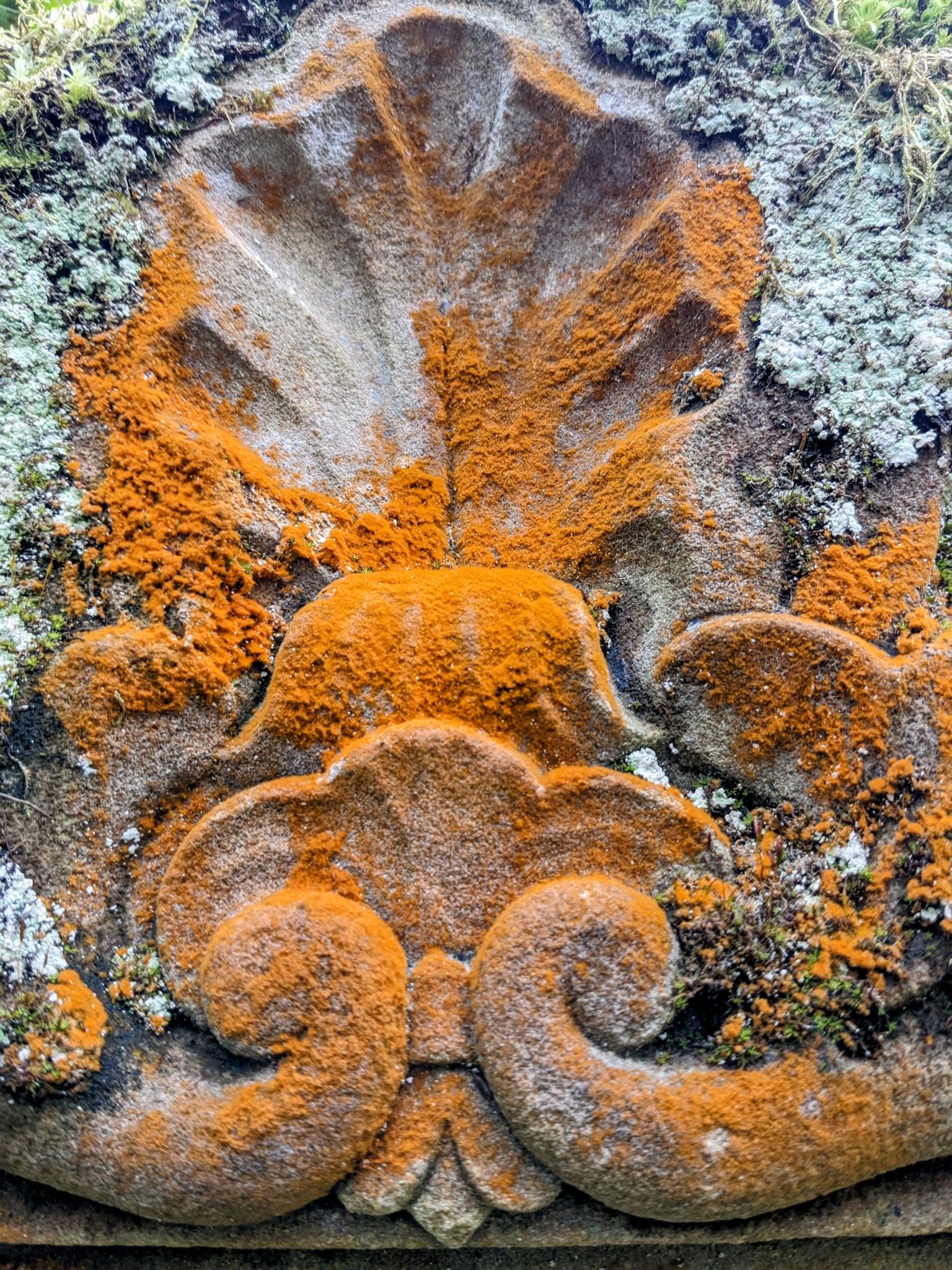
The churchyard is the part to linger over. It’s crowded with ancient carved stones — 18th-century table-tombs and chest-tombs, weathered grave-slabs and headstones bright with orange lichen, and older carved effigies. Two things to look for in particular:
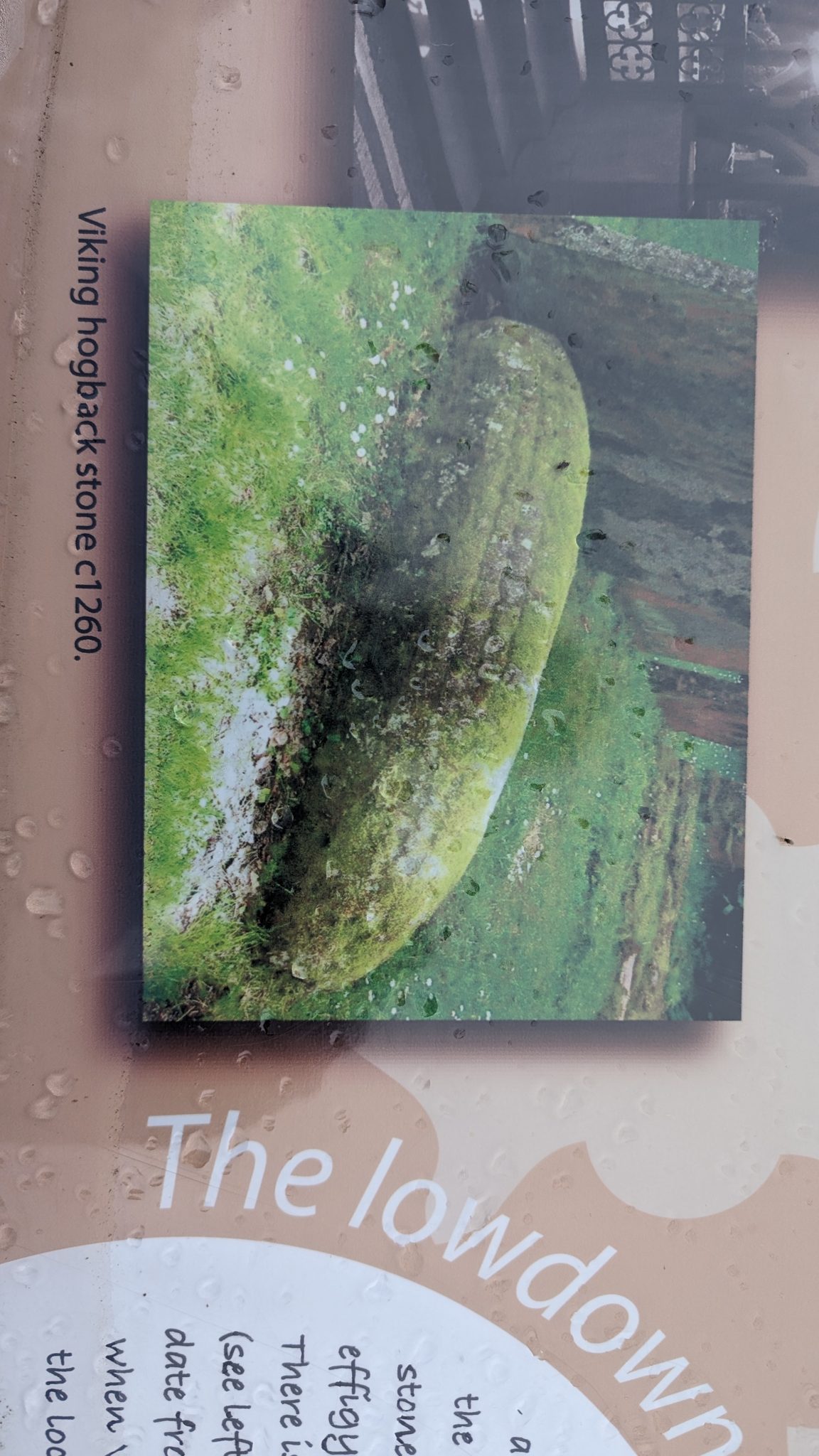
- A medieval hogback grave-stone — a long, curved, house-shaped Norse-influenced marker, among the very oldest carved stones on the site.
- A rare mort-safe — an iron cage clamped over a grave to stop the body-snatchers (“resurrectionists”) of the early 1800s from lifting a fresh corpse for the anatomy schools. A grim little piece of social history, hiding in plain sight.
Glen Luss, the burn & a proper hill day
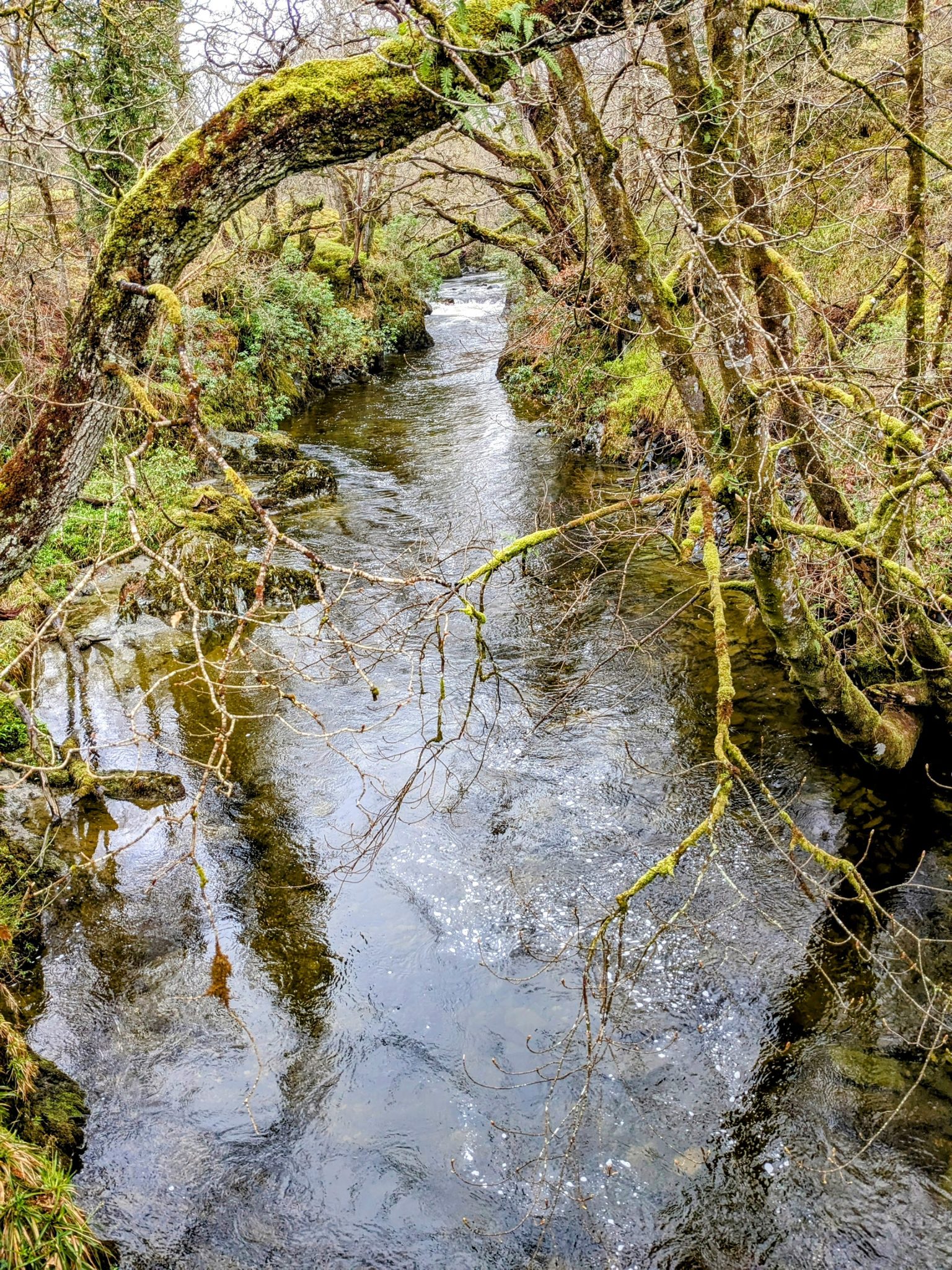
Most visitors never get past the shore, but the country behind Luss is lovely and quiet. Glen Luss runs west into the hills, its burn tumbling through mossy oak woodland, and for anyone with the legs there’s a cracking hill circuit straight from the village: the Beinn Dubh horseshoe (up Beinn Dubh and Mid Hill, roughly 9 km), which climbs quickly to a whole-length view of Loch Lomond and its islands. Even a short wander up the glen gets you away from the crowds in minutes.
The honest bit — parking & the money-grab
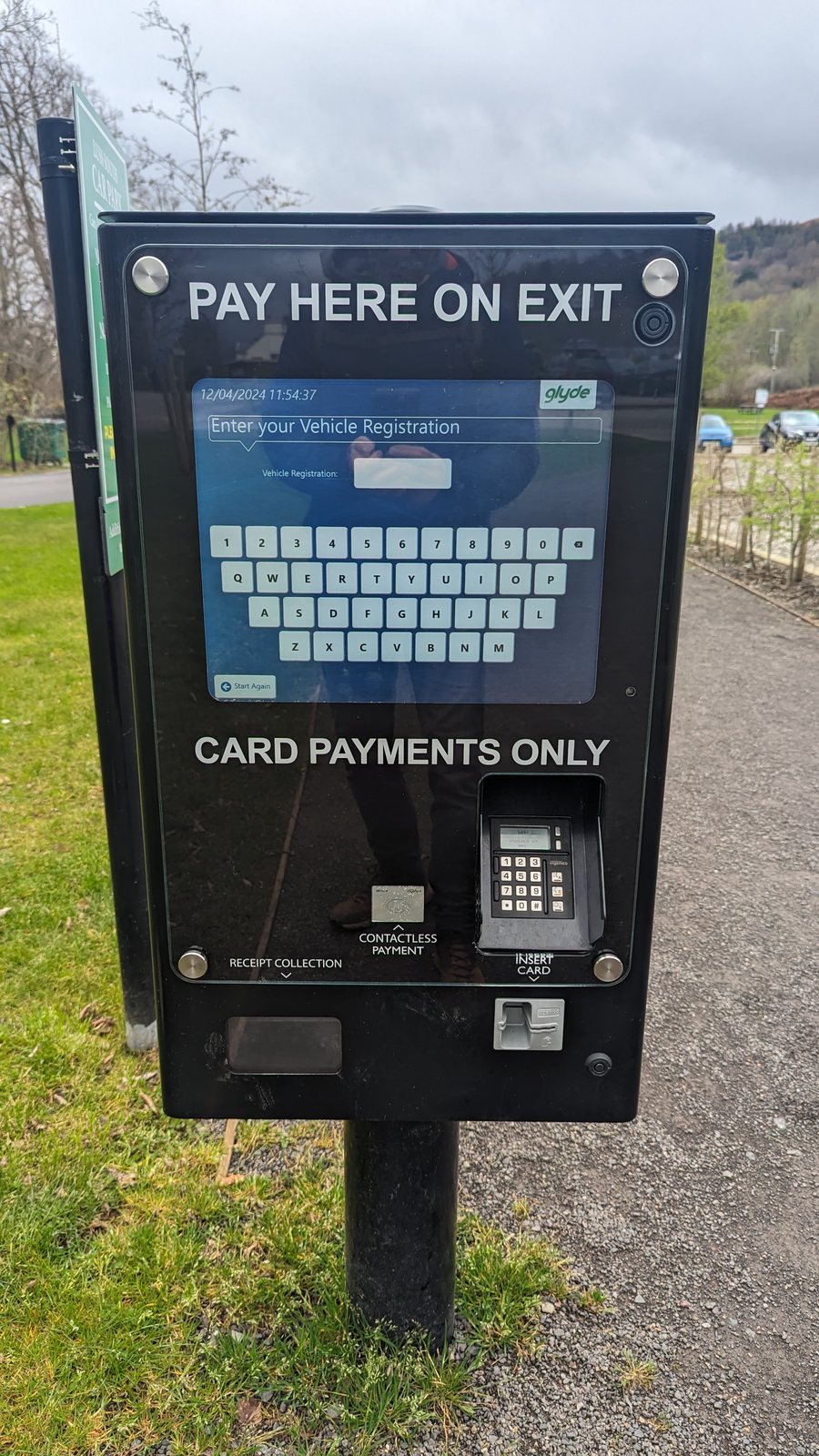
We’ll say it plainly: Luss has been squeezed for every last parking pound.
- Double yellow lines on every road around the village — nowhere free to leave a van.
- The main car park (run by Luss Estates, ~250 spaces) is ANPR camera-enforced and charges from around £1/hour (indicative — check current; there’s a small 2-hour-free south car park, but it fills fast). Cheap by the hour, maybe — but you pay to stay, overnight included, and there’s no free alternative thanks to the yellow lines.
- The old free pull-in by the fairy-walk footpath is gone (more on that below).
- In season the traffic bottlenecks on the road back into the village.
The bridge that broke our hearts. There used to be a perfect little spot on the bridge by the fairy-walk footpath where you could pull up free for the night — quiet, tucked away, not bothering a soul. We loved it. Since then they’ve painted double yellow lines right along it (council-authorised, we assume), so that spot has gone too. Real money-grabbers.
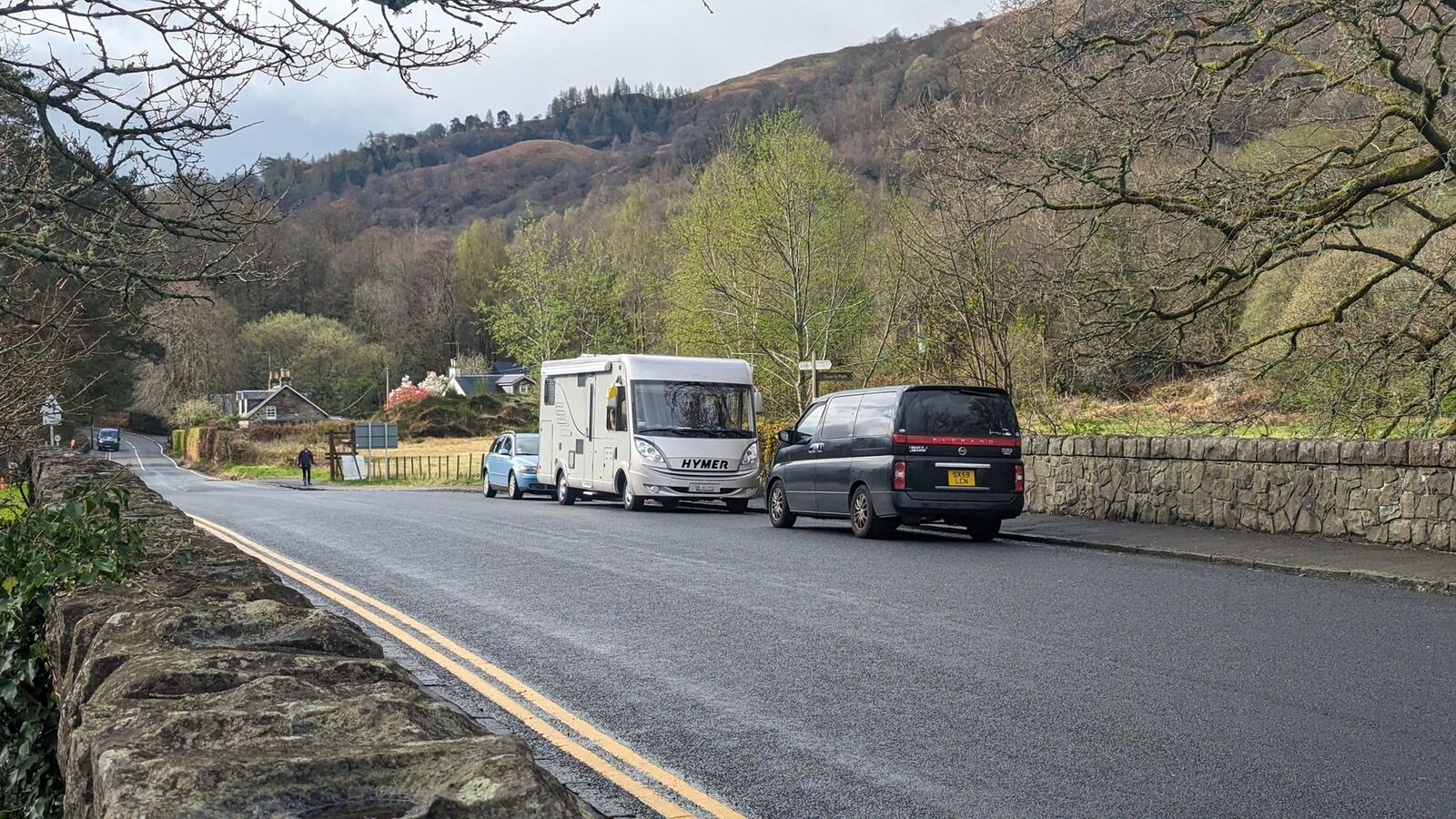
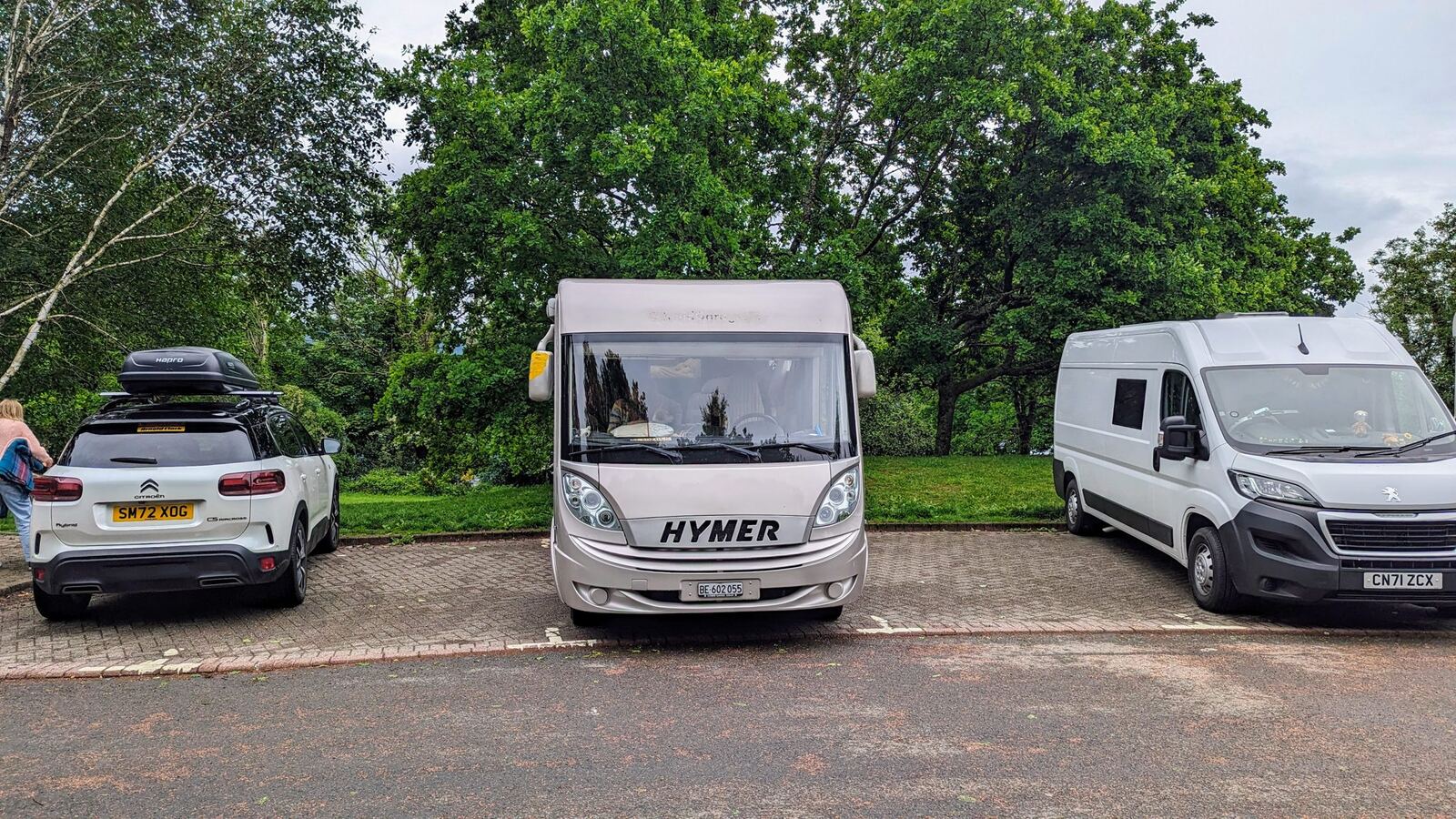
Did we overnight here? Honestly, yes — once. We stayed a night in the main car park in the van, bought a ticket in the morning for the couple of hours we were actually there, and at the time there was no issue with staying overnight. But given what a money-pit the place has become, assume that’s tightened up — check the current signage and rules before you rely on it, and frankly we’d take the free lochside layby 20 minutes away every time.
Coffee, cake, the Games & where we stayed
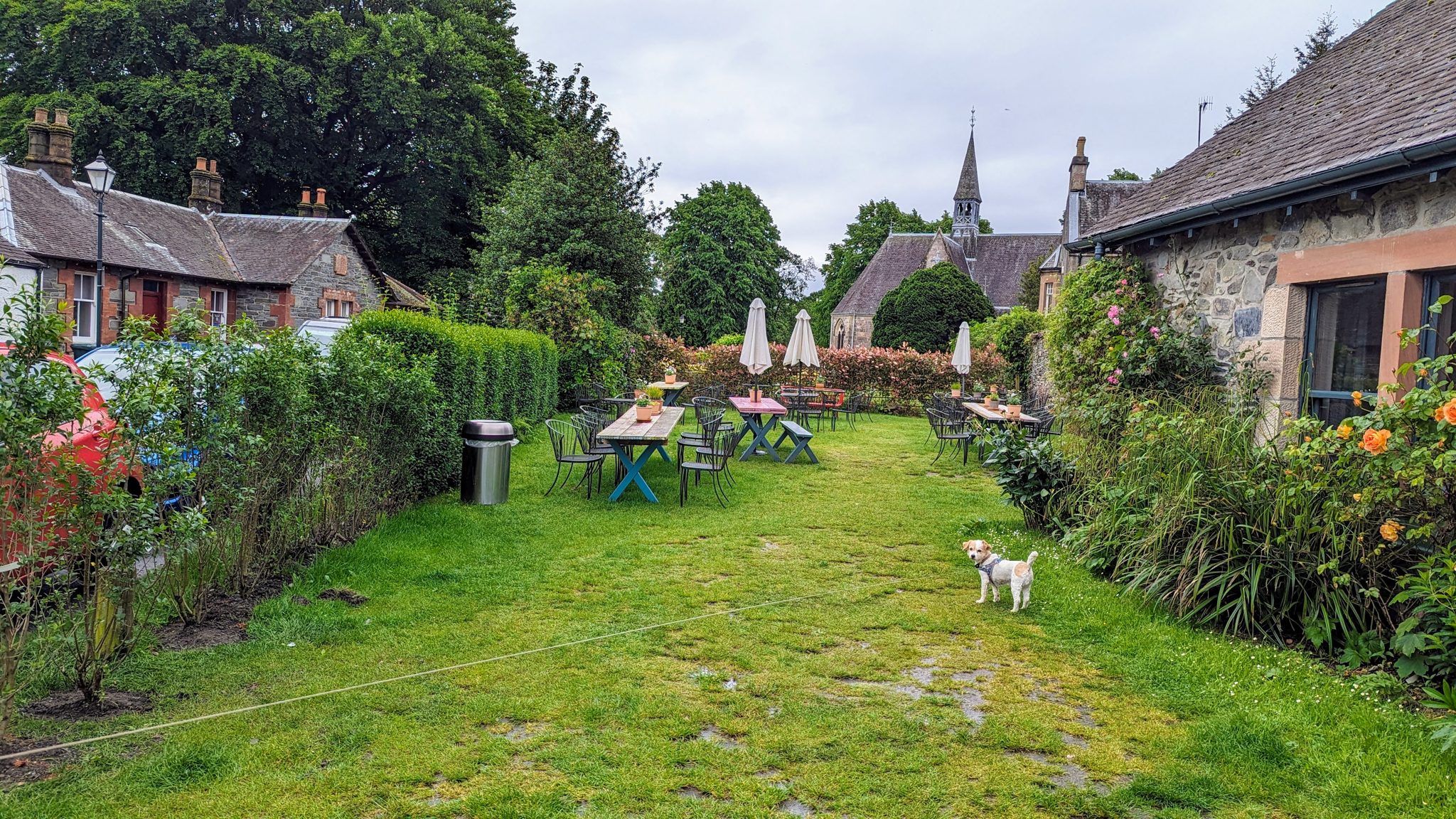
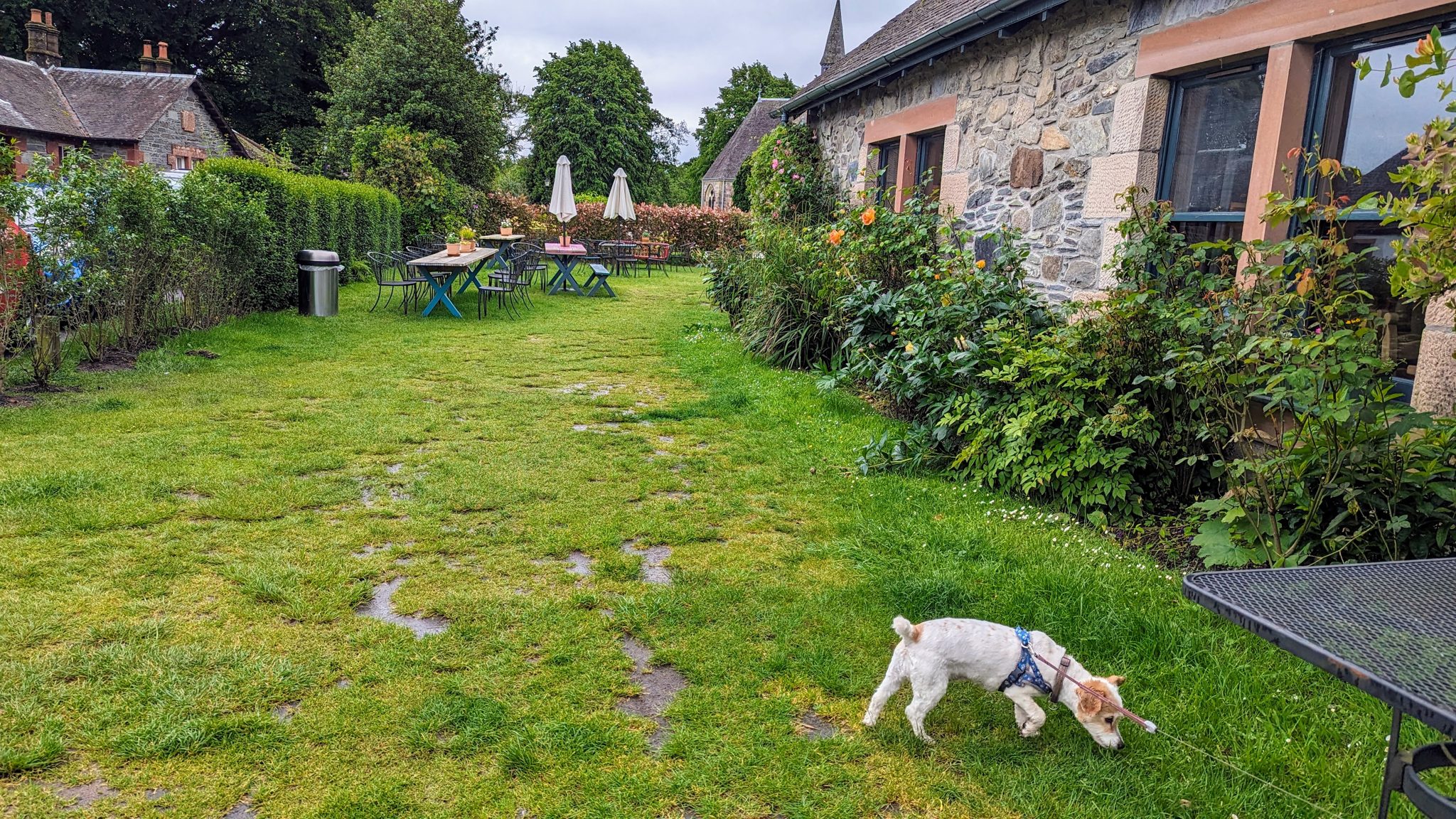
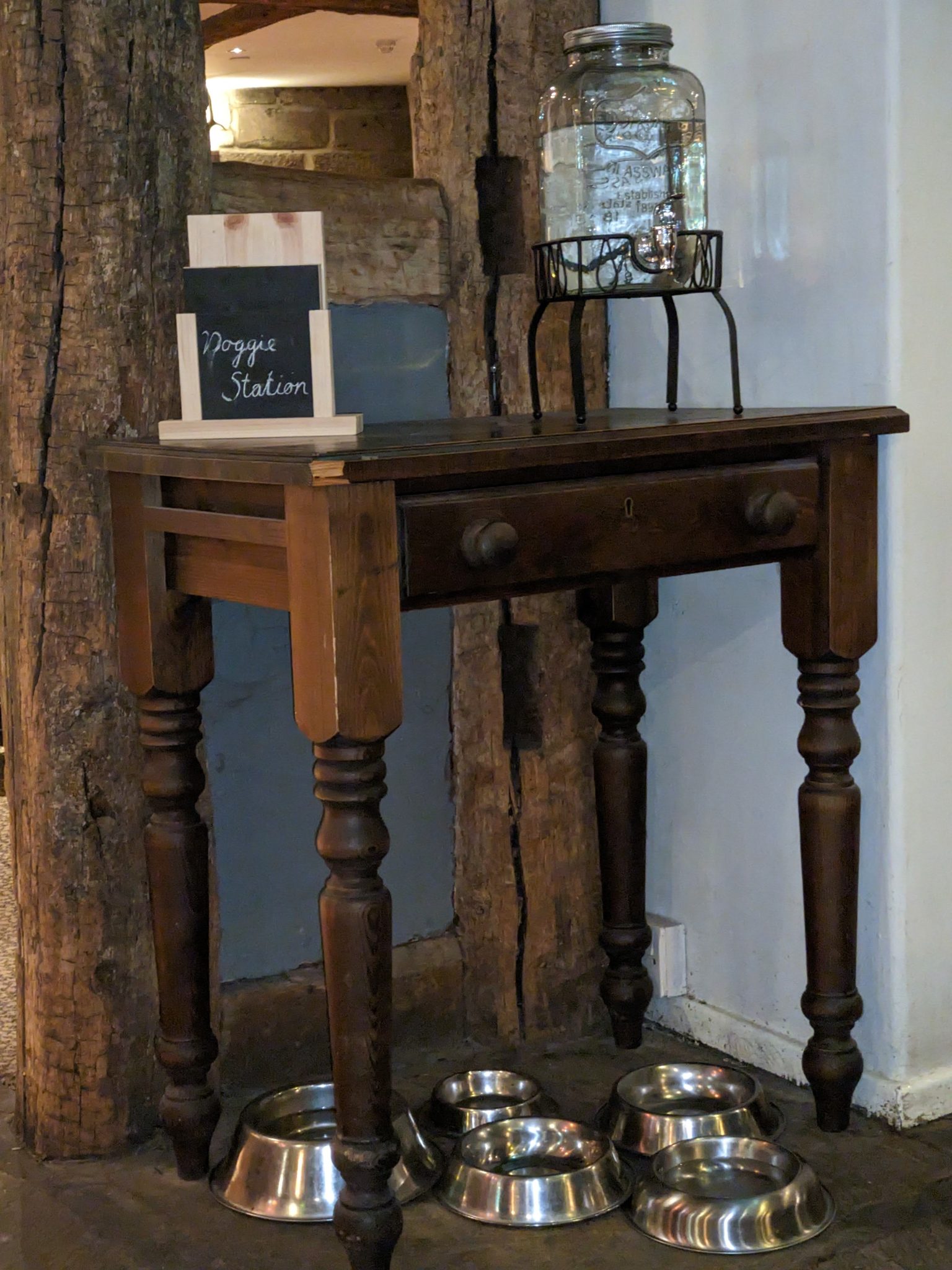
Coffee & cake — the Coach House Coffee Shop. We stopped here more than once: lovely cakes and good coffee, and dog-friendly, which we always like. Like everything at Luss, though — it’s definitely not cheap. There’s a pretty walled garden to sit out in when the weather plays along.
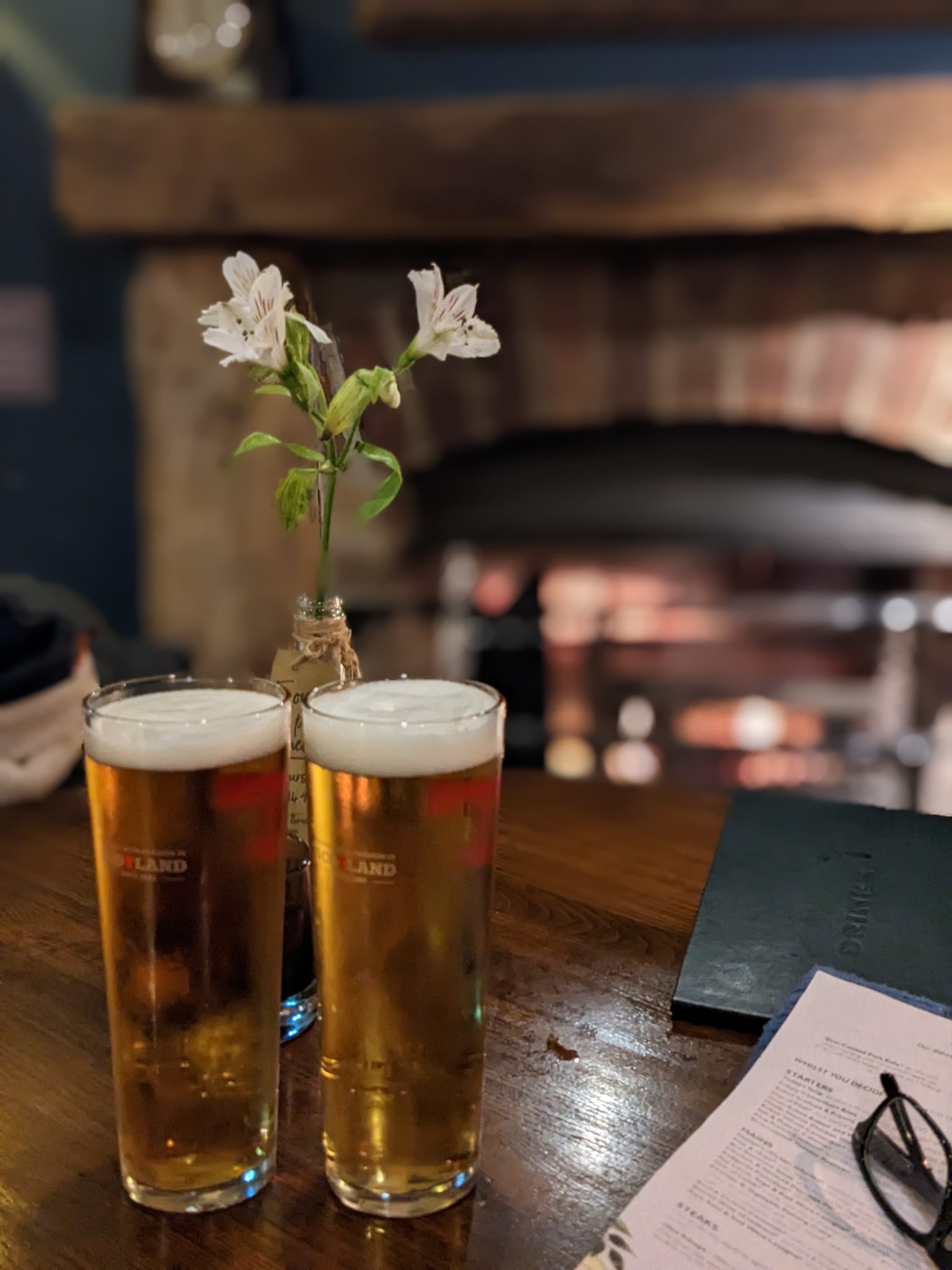
If you’re here on the right July weekend, the Luss Highland Games take over the shore — heavy events, pipe bands and Highland dancing, in one of the best settings in Scotland. Worth planning around (or avoiding, if crowds aren’t your thing).
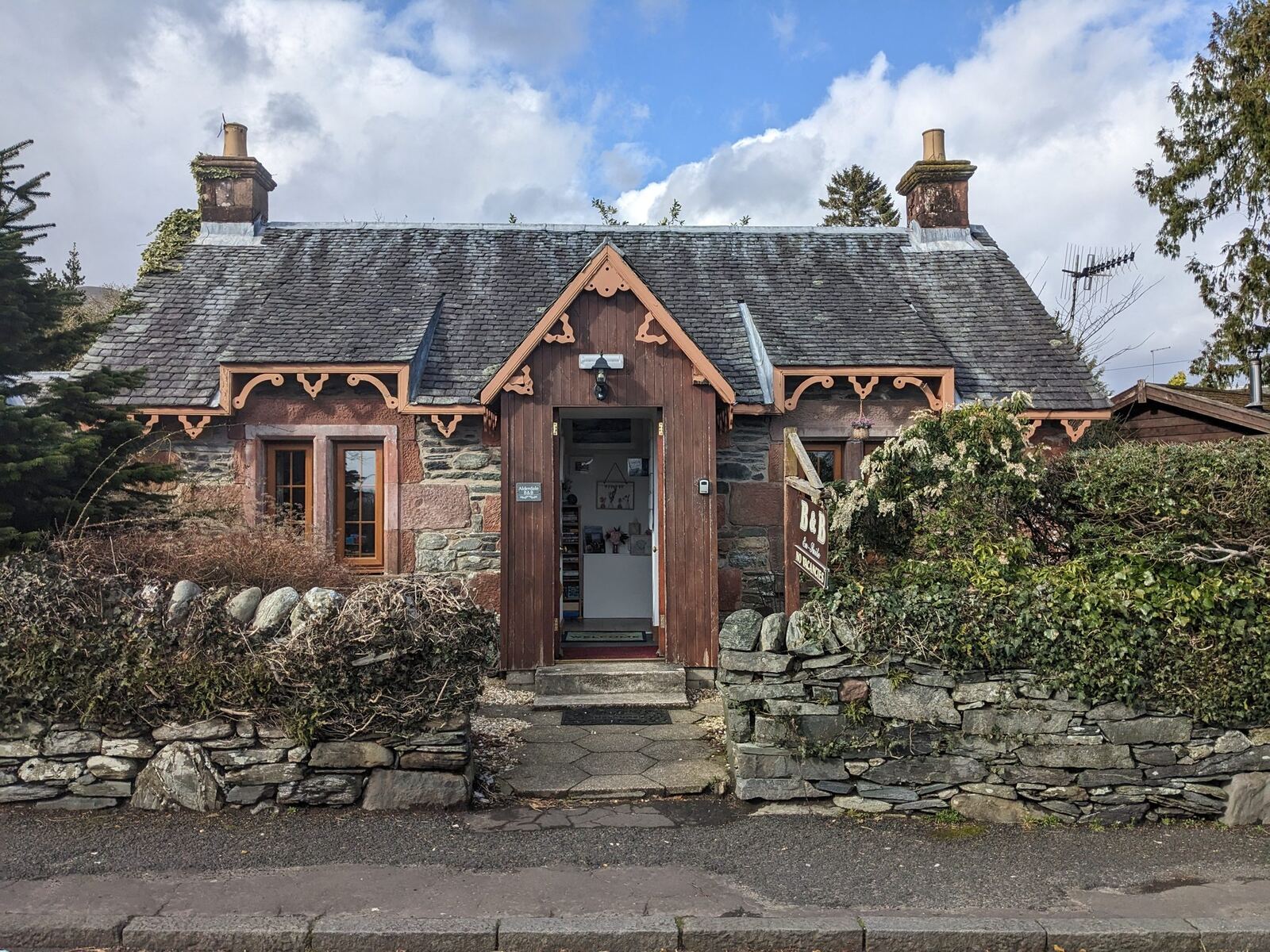
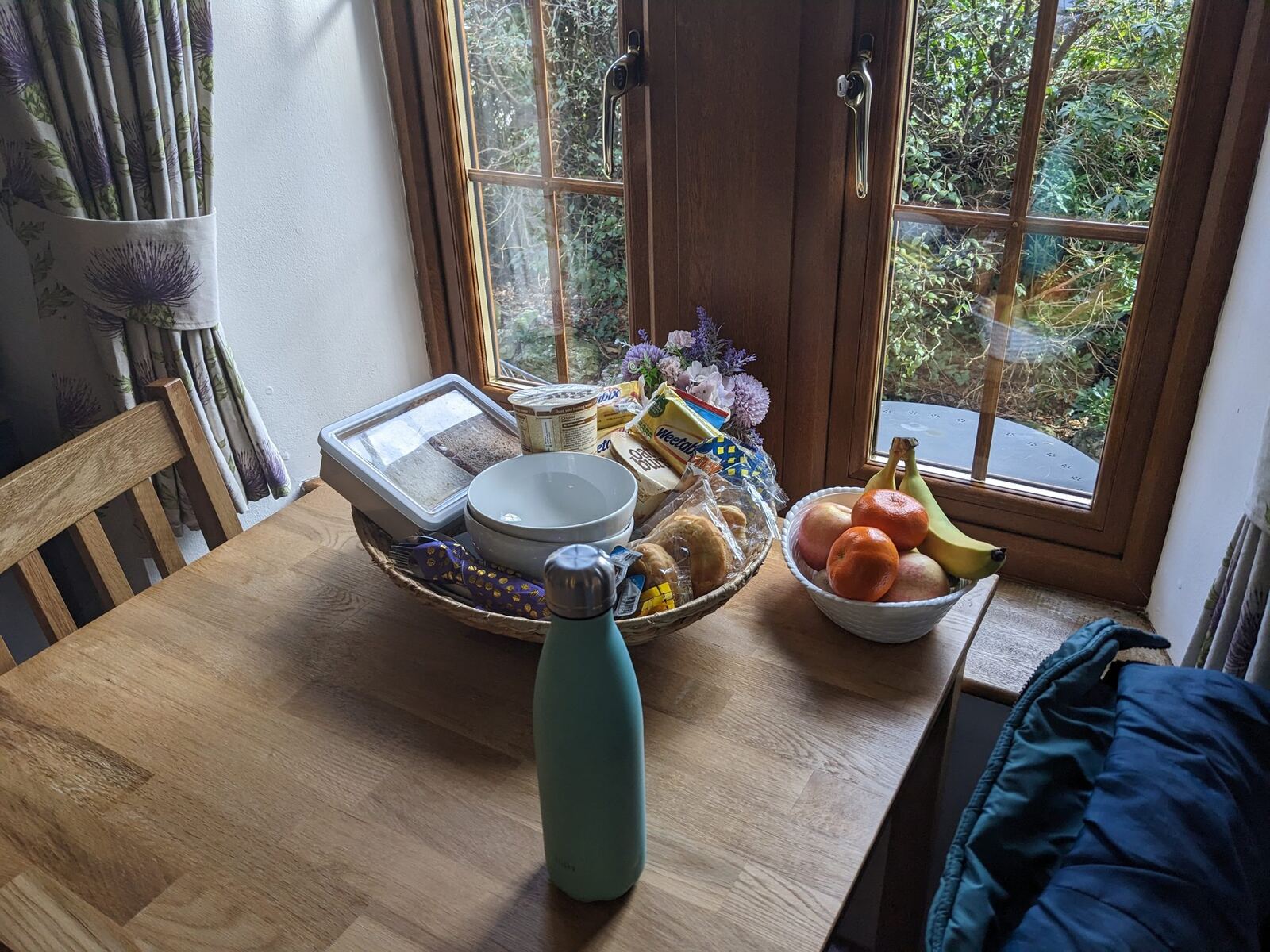
The B&B — Alderdale. We also stayed a night at Alderdale in the village. Honest verdict? Expensive, and just OK — perfectly fine, clean and comfortable, but nothing special, and the breakfast really wasn’t one to write home about. For a night on Loch Lomond we found Balloch far better and much better value — worth knowing before you book.
Best time to visit
Off-season, early morning — a spring or autumn weekday, first thing, before the coaches. Avoid summer weekends unless you enjoy queues and paying to park. Whatever you do, come knowing it’ll cost you to stop.
The Luss trio & nearby
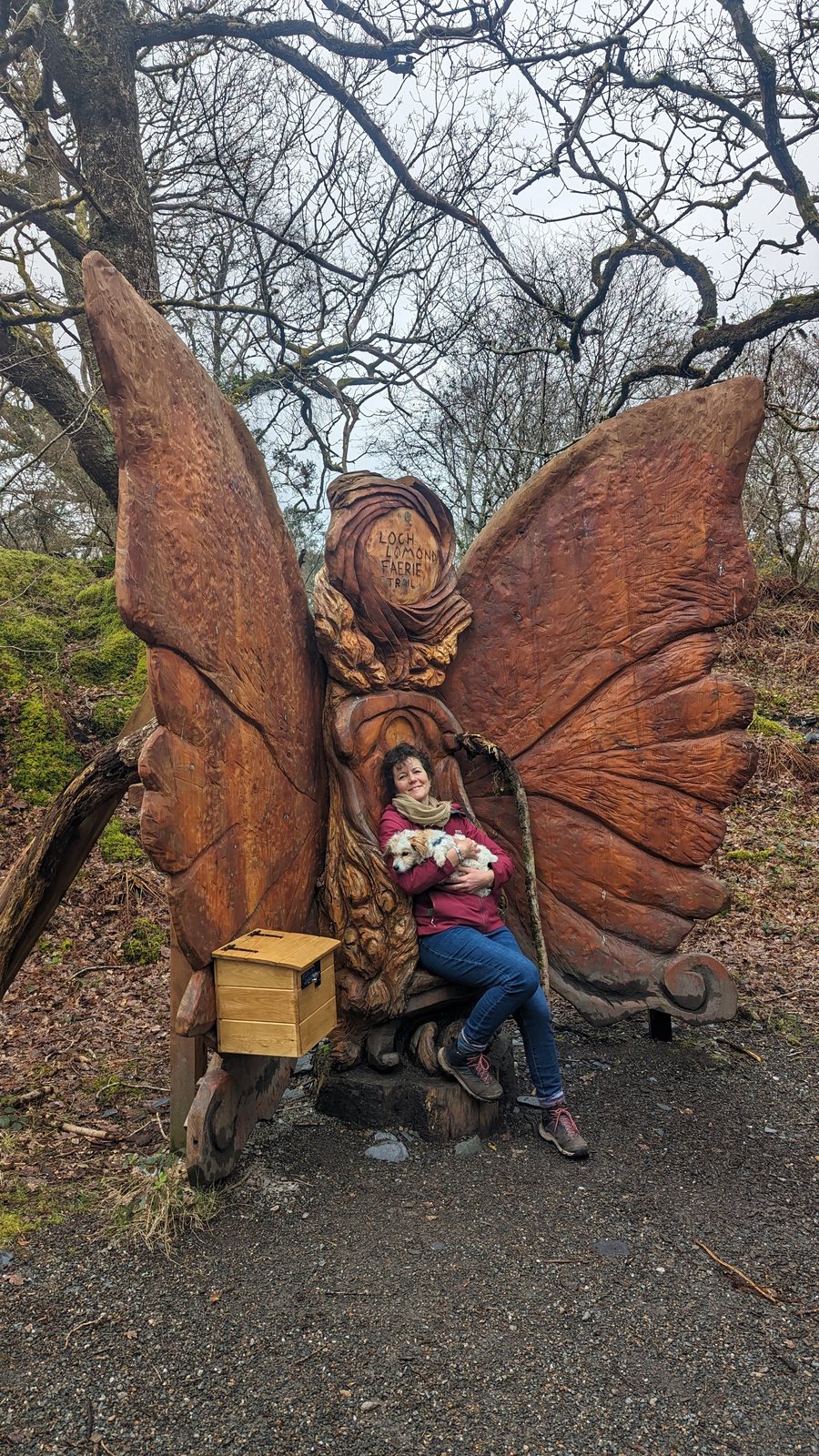
- The Loch Lomond Fairy Trail — the magical carved-sculpture walk in the woods (our favourite bit here).
- Loch Lomond — the loch itself: scenery, walks, boats, and the free layby we overnight at.
- Balloch — the loch’s south end: far better value for a bed and a meal.
- Inveraray — west over the Rest and Be Thankful.
Reality notes
- 💷 Parking: double yellows everywhere; camera-enforced, paid car parks. Budget for it.
- 🚦 Traffic: bottlenecks back to the village in season.
- ⛪ Churchyard: free, atmospheric, ancient tombs — the hogback stone and the mort-safe are the ones to find.
- 🥾 Behind the village: Glen Luss and the Beinn Dubh horseshoe get you away from the crowds fast.
- 🐕 Dogs: fine on the shore and in the village, and several dog-friendly cafés (leads near roads).
Sources
- First-hand: Kevin & family, several visits 2023–2024 (own photos)
- Loch Lomond & The Trossachs National Park
- Luss — Wikipedia
- On-site interpretation boards, Luss Parish Church & churchyard