The Highlands & Skye
The big one — the wildest mountains, the most famous glens, and the whole of the Isle of Skye.
The big one. This is the Scotland the guidebooks put on the cover: sea-lochs and single-track roads in Wester Ross, the massacre glen at Glencoe, Ben Nevis and the Great Glen, and the whole of the Isle of Skye. It is also the part of the country that rewards taking your time — the distances are long, the roads are slow, and the weather does what it likes, so we’d always rather do half of it properly than all of it in a hurry. Below is how we’d break it up, honest steers and all.
Two things worth saying up front. The far North-West is genuinely remote — fuel, food and phone signal all thin out, so fill up and stock up when you can. And Skye, for all its beauty, is now very busy in summer: the famous spots have small car parks that fill by mid-morning, so an early start or a shoulder-season visit (May, or September–October) is the difference between a great day and a frustrating one.
The North-West & Wester Ross
The wildest, emptiest, most beautiful coast in Britain, and our favourite corner of the whole country. The set-piece is Applecross and its approach over the Bealach na Bà — the “Pass of the Cattle,” one of the highest and steepest roads in Britain, a single-track ladder of hairpins that tops out above 2,000ft. The view from the summit is astonishing on a clear day, but be honest with yourself about your vehicle: in a big motorhome, or in cloud, it is no fun at all, and the gentler coast road round by Shieldaig gets you to the same brilliant seafood at the Applecross Inn without the white knuckles. Shieldaig itself — a single row of white cottages facing a pine-covered island on Loch Torridon, with sea eagles overhead — is worth a night in its own right, reached along the loch-side road through Lochcarron.
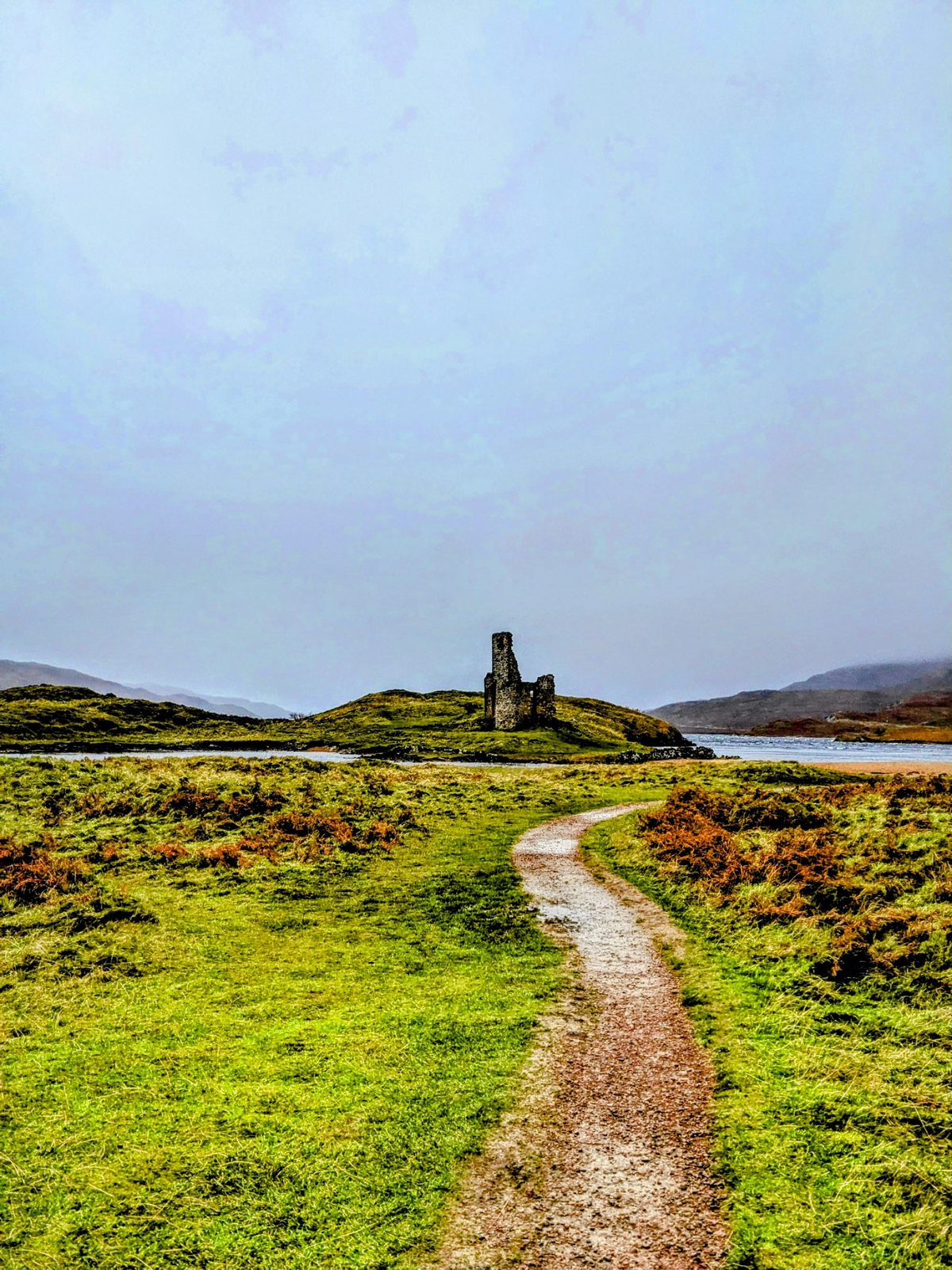
North from there the coast keeps giving. Gairloch has proper sandy beaches, a whale-and-dolphin coast, and ancient Loch Maree behind it; just up the road at Poolewe, Inverewe Garden is the one that surprises everyone — a lush, half-subtropical garden of rhododendrons, eucalyptus and Himalayan blue poppies thriving on the same latitude as Labrador, kept warm by the Gulf Stream. Further north still, Assynt is a landscape like nowhere else in Britain: isolated peaks — Suilven, Quinag, Stac Pollaidh — rising straight out of a bog-and-lochan wilderness, with the romantic ruin of Ardvreck Castle on Loch Assynt and the graceful sweep of the Kylesku Bridge. Ullapool, the whitewashed herring-and-ferry town on Loch Broom, is the one real town up here — the place to eat, refuel and catch the boat to Lewis — and at the very top-left corner, Durness gives you the vast cave at Smoo and the pale sands of Balnakeil, about as far as the road goes before Cape Wrath.
Lochaber & the Great Glen
The mountain heart of the Highlands, and the spine that carries most people north. Coming up the A82 you cross the great emptiness of Rannoch Moor before the road drops into Glen Coe — Scotland’s most dramatic glen and, for many, its most moving, hemmed in by the Three Sisters and shadowed by the 1692 massacre of the MacDonalds. It is a definite stop; even the lay-bys have a view. The drive over Rannoch Moor into the glen is one of the great road journeys in Britain in its own right.
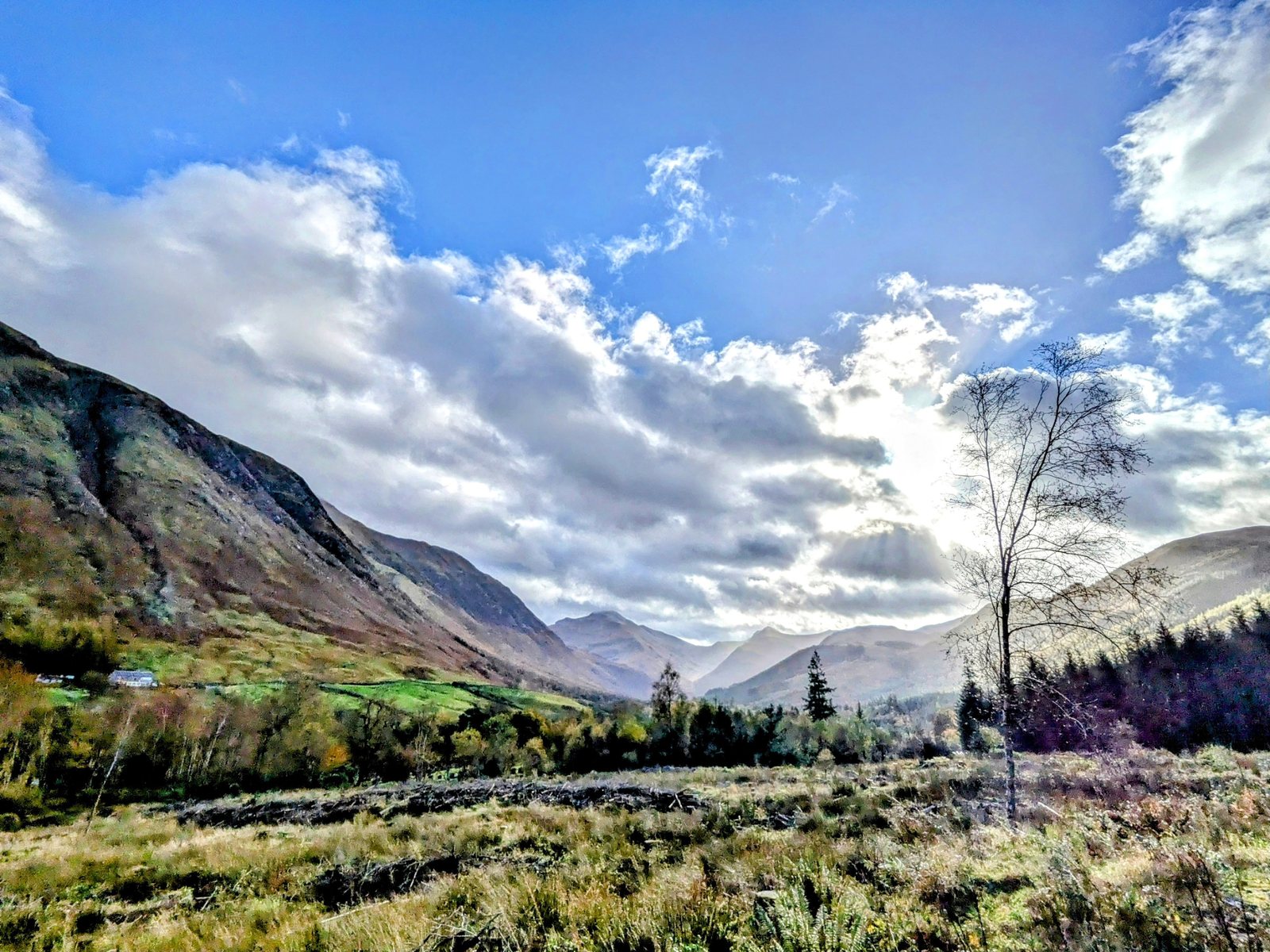
Fort William sits at the foot of Ben Nevis, and behind it Glen Nevis — the glen used in Braveheart and the Harry Potter films — leads to the spectacular gorge walk out to the Steall Falls, one of the best short walks in the country. Just up the loch, Kinlochleven lets you sleep right on the water below the West Highland Way. West towards the coast, Glenfinnan is the big one for families: the curved railway viaduct that carries the Hogwarts Express (and the real Jacobite steam train), with the monument to the 1745 rising standing at the head of beautiful Loch Shiel — time it for a train crossing and it’s magic, but expect crowds and a busy car park.
The Great Glen itself is Thomas Telford’s masterpiece, the Caledonian Canal stitching a chain of lochs coast to coast. Its showpieces are the eight-lock ladder of Neptune’s Staircase at Banavie, under Ben Nevis, and the flight of locks at Fort Augustus, which drop boats down into Loch Ness in the middle of the village — a genuinely good spot to sit with a fish supper and watch the boats work through. For a free, peaceful canal-side overnight there’s Laggan Locks on Loch Oich, and nearby the grim little Well of the Seven Heads monument tells one of the darkest clan stories in the glen.
Kintail & the Road to Skye
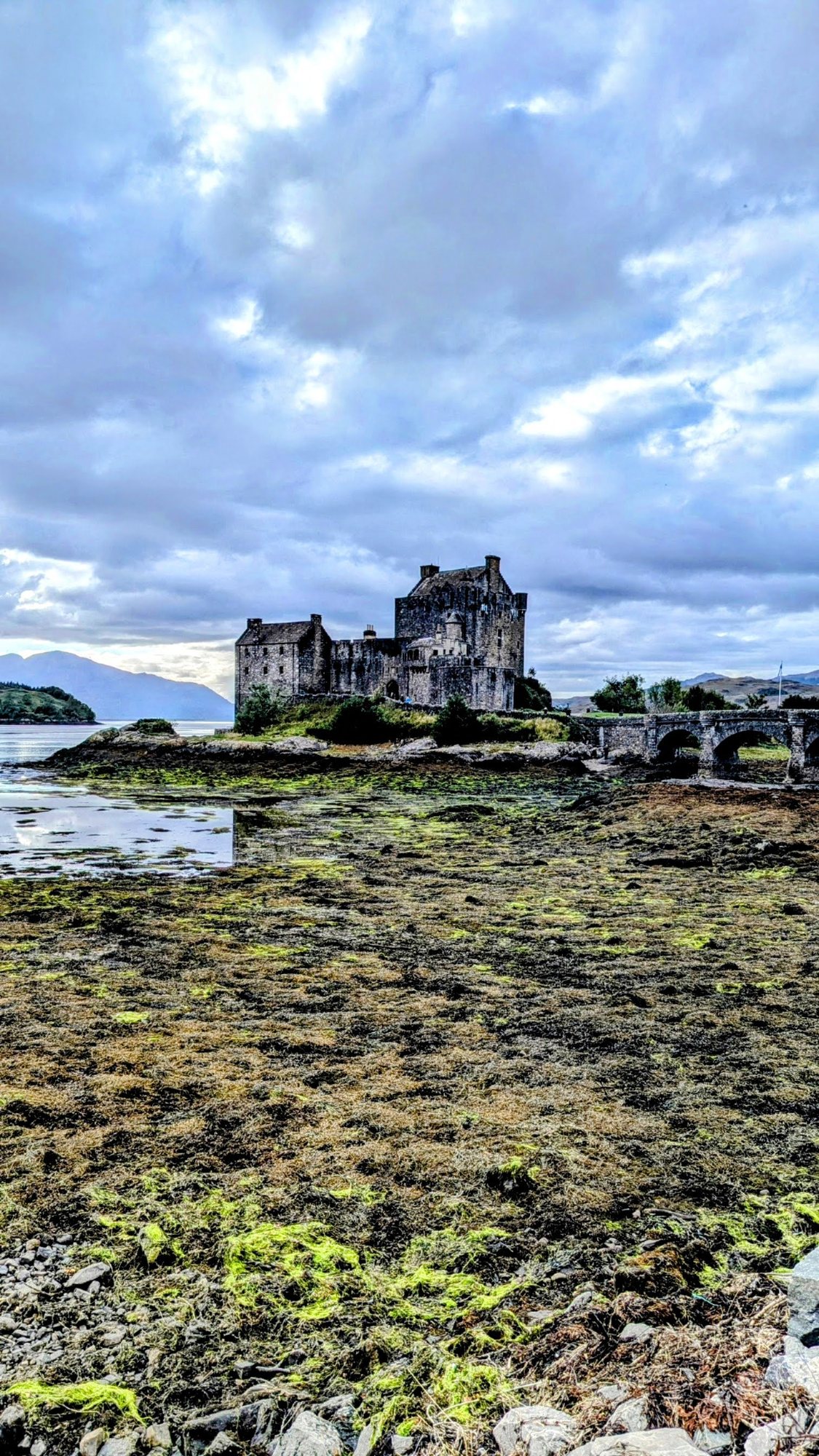
The road to Skye runs through Kintail, past the Five Sisters, to the one castle everybody knows: Eilean Donan, on its little tidal island where three sea lochs meet, joined to the shore by an arched stone bridge. It is the most photographed castle in Scotland for good reason — and though the building you see is a 20th-century rebuild of a fortress blown up in 1719, it does not make it a jot less lovely. A definite stop on the way over the bridge.
The Isle of Skye
Skye earns its fame — a compact island that packs in more drama than places ten times its size. Base yourself around Portree, the little capital with its row of colourful harbour houses, and work outward. The Trotternish peninsula in the north holds the island’s greatest hits: the rock pinnacle of the Old Man of Storr (a steep, hugely popular walk — go early, the small car park fills fast and we’ll be honest, it can feel like a motorway of walkers by lunchtime), and further round the Staffin & Quiraing coast with its dinosaur footprints, the waterfall-off-a-cliff at Kilt Rock, and the otherworldly Quiraing landslip walk.
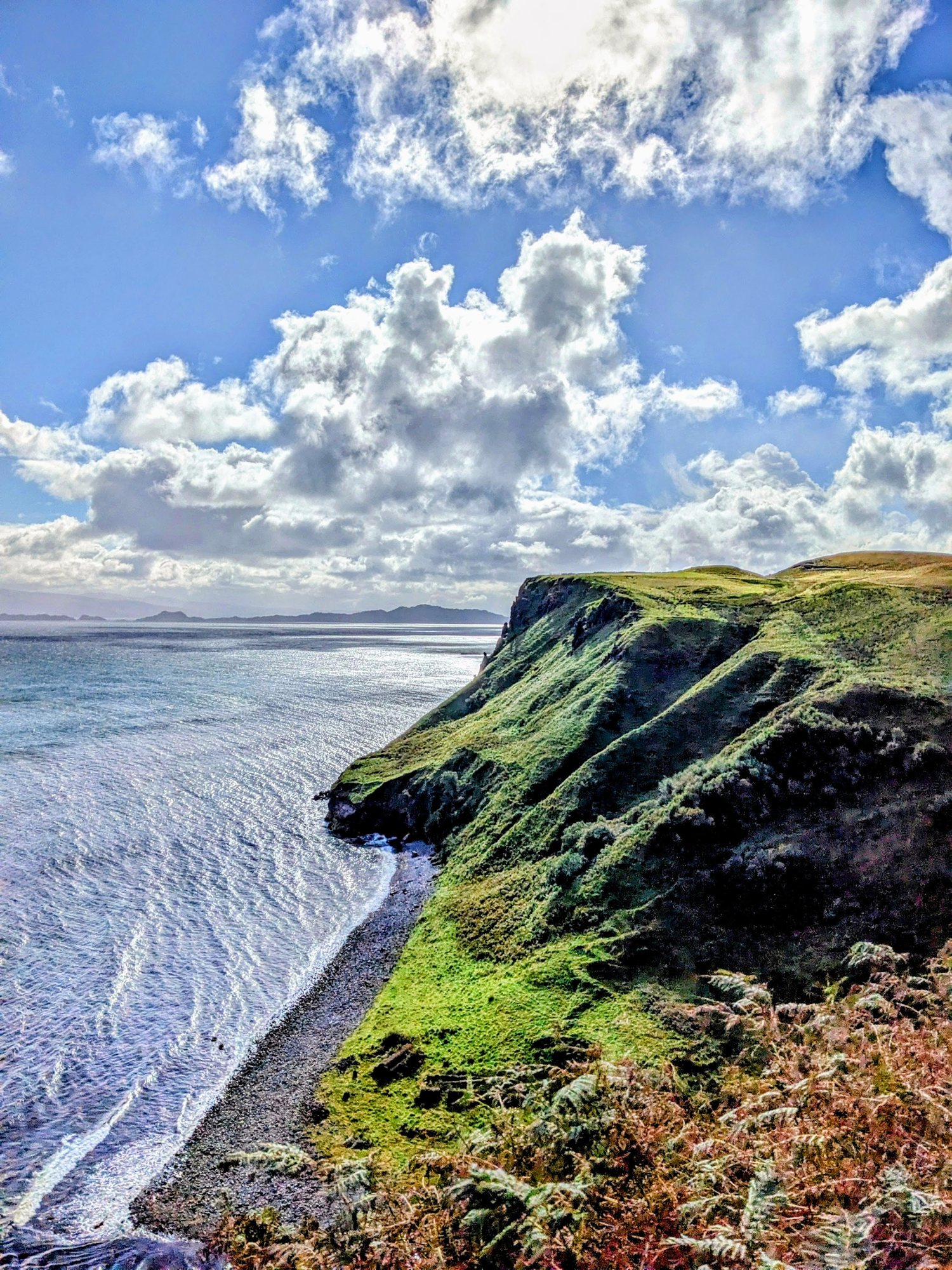
At the tip of Trotternish, Kilmuir has the excellent Skye Museum of Island Life, Flora MacDonald’s grave and the ruin of Duntulm Castle. West lies quieter Stein on the Waternish shore, home to Skye’s oldest inn and a lovely place to watch the sun go down over Loch Bay, and the great stronghold of Dunvegan Castle — 800 years of Clan MacLeod, and keeper of the legendary Fairy Flag. In the south, gentle green Sleat — the “Garden of Skye” — holds the Clan Donald centre and the Armadale ferry across to Mallaig, a lovely alternative way on or off the island. And no visit is complete without Talisker at Carbost, Skye’s oldest distillery, making its big peppery malt on the shore of Loch Harport under the Cuillin.
Why the Highlands & Skye?
Because this is the Scotland you came for — the biggest mountains, the wildest coast, the most famous glens and castles, and an island in Skye that packs a lifetime of scenery into a few days. It takes time, a tolerance for weather and single-track roads, and the honeypots do get busy — but nothing else in Britain comes close. Do half of it properly rather than all of it in a rush, and it will stay with you for life. A definite, unmissable yes.
Explore more: Lochs · Castles · Clans · Standing Stones · Kirks & Abbeys.