Clan Bruce: The House of Robert the Bruce
The clan by the numbers
| First on record | Robert de Brus, 1st Lord of Annandale (d. 1141); granted Annandale c. 1124 |
| Standing | Royal and national — the Bruces rose from Lords of Annandale to the Crown itself when Robert the Bruce became King of Scots in 1306 |
| People bearing the name today | ~9,100 in Scotland (~77th commonest), ~162,000 worldwide (estimate) |
The Bruces’ power was that of a Lowland noble house and then the monarchy — they commanded national armies, not a clan levy — so no Highland fighting-strength muster figure applies.
Overview — the family that won Scotland’s freedom
Few names carry the weight of Bruce. This was the family of Robert the Bruce — the king who beat the English at Bannockburn and won Scotland’s independence — and the Bruces left their mark right across the places on this site, from Stirling and Dunfermline to the pretty burgh of Culross.
Normandy, Annandale & a crown
Like so many Scottish noble houses, the Bruces began as Normans — “de Brus,” from Brix in Normandy — who came north under David I and were granted the lordship of Annandale. Their moment came in the Wars of Independence. After years of English occupation, Robert the Bruce (Robert I, 1274–1329) seized the crown in 1306 and, against the odds, ground out victory — crowned by triumph at the Battle of Bannockburn in 1314, fought below Stirling Castle. When he died, his body was buried at Dunfermline Abbey and his heart carried on crusade (it rests at Melrose). Even Tarbert Castle in Kintyre was one of his royal strongholds. The clan motto is “Fuimus” — “We have been.”
The Bruces of Culross
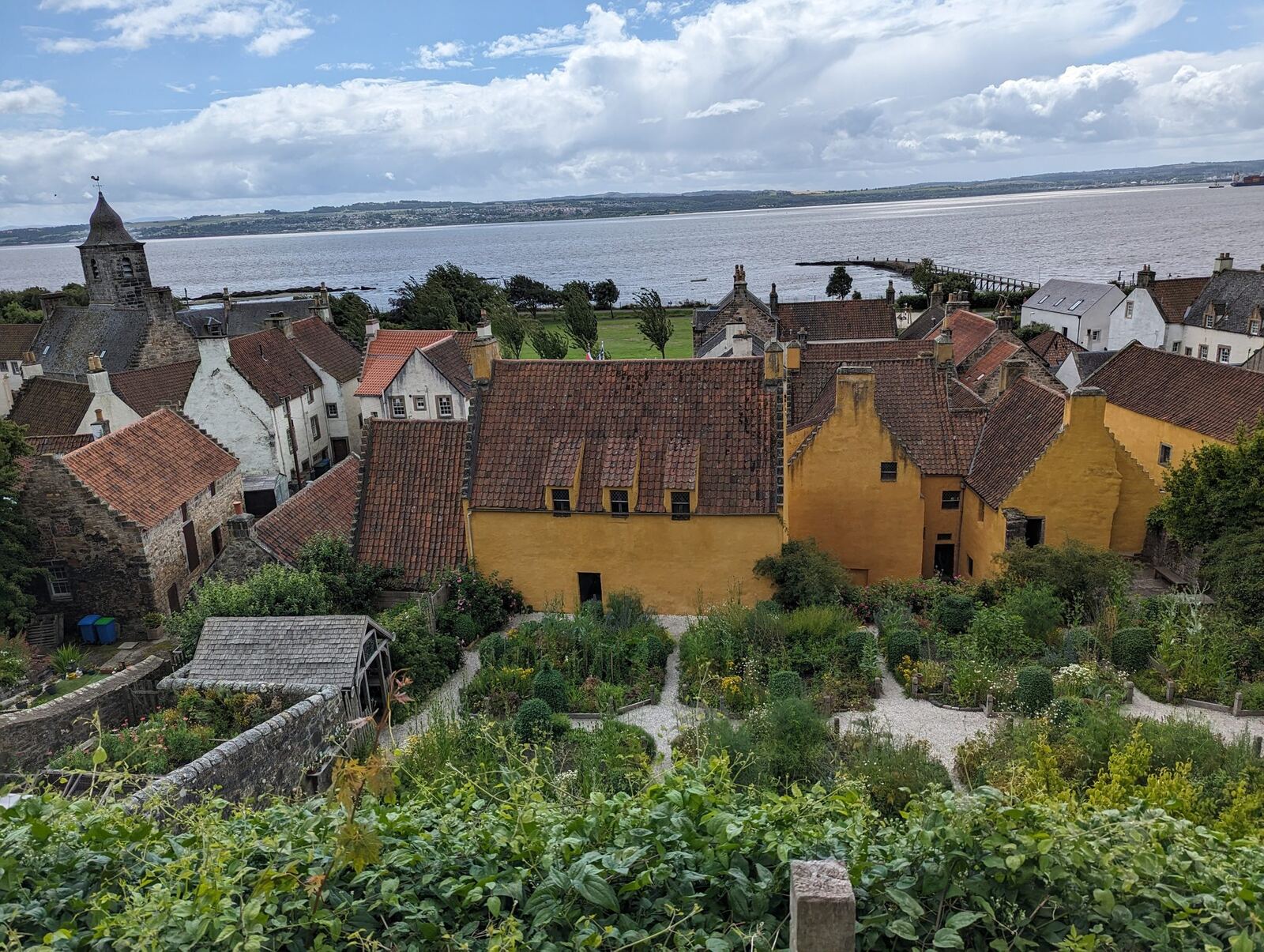
A branch of the same royal stock, the Bruces of Carnock and Culross, gave the Forth its most remarkable merchant-laird: Sir George Bruce, who in the late 1500s sank a coal mine out under the Firth of Forth (visited by King James VI in 1617) and used the fortune to build the ochre-walled Culross Palace. Wander Culross today and you’re walking through Bruce money.
Bruce country on our travels
- Culross — Sir George Bruce’s burgh and palace on the Forth.
- Stirling & Bannockburn — where Robert the Bruce won independence.
- Dunfermline — the abbey where the king is buried.
- St Conan’s Kirk — which holds a relic said to be a bone of the Bruce himself.
← Back to Scottish Clans · see also the Castles of Scotland.
The Bruce–Comyn war: the road to the throne
Robert Bruce’s path to the crown ran straight through his great rivals, the Comyns — one of the darkest and most decisive stories in Scottish history, each with its own page:
- The murder of the Red Comyn (1306) — Bruce stabs John Comyn before the altar at Dumfries, the act that forced him to seize the throne.
- The Battle of Barra (1308) — Bruce rises from his sickbed to shatter the Earl of Buchan’s army.
- The Harrying of Buchan (1308) — Bruce lays the Comyn earldom waste, ending their power for good.
(The Comyns had earlier won the Battle of Roslin in 1303, before Bruce and Comyn fell out.)
Battles — won and lost
The most notable actions the clan fought, and how they ended:
- Methven (1306) — vs the English (army routed) — LOST
- Dalrigh (1306) — vs the MacDougalls of Lorn — LOST
- Loudoun Hill (1307) — vs the English (his first victory) — WON
- Pass of Brander (1308) — vs the MacDougalls — WON
- Bannockburn (1314) — vs the English (decisive) — WON
- Old Byland (1322) — vs the English (Edward II nearly captured) — WON
His road to the crown ran through the Comyns — the Greyfriars murder, then Barra and the Harrying of Buchan.
The clan lands
Orange markers = the clan’s chief castles, seats and territories; where we have a page, they link through.
Explore Scottish Outposts
Clans · Whisky · Castles · Lochs · Kirks & Cathedrals · Standing Stones · Metal Detecting · Trips So Far
Sources
- First-hand: our own visits to Culross, Stirling & Dunfermline (own photos)
- Clan Bruce — Wikipedia · Robert the Bruce — Wikipedia