House of Stewart: Scotland’s Royal Dynasty
The clan by the numbers
| First on record | Walter fitz Alan, 1st High Steward of Scotland, c. 1150; Robert II, first Stewart king, 1371 |
| Standing | The royal house of Scotland (1371–1707) and of Great Britain (1707–14); the Highland Stewarts of Appin fielded ~400 men (Wade, 1724) |
| People bearing the name today | Stewart ~36,600 in Scotland (7th commonest); Stuart ~4,800; ~652,000 worldwide (estimate) |
As a royal house the Stewarts have no clan-muster figure — that would be a category error; only Highland branches such as the Stewarts of Appin mustered. Stewart and Stuart are counted separately.
Overview — from stewards to kings
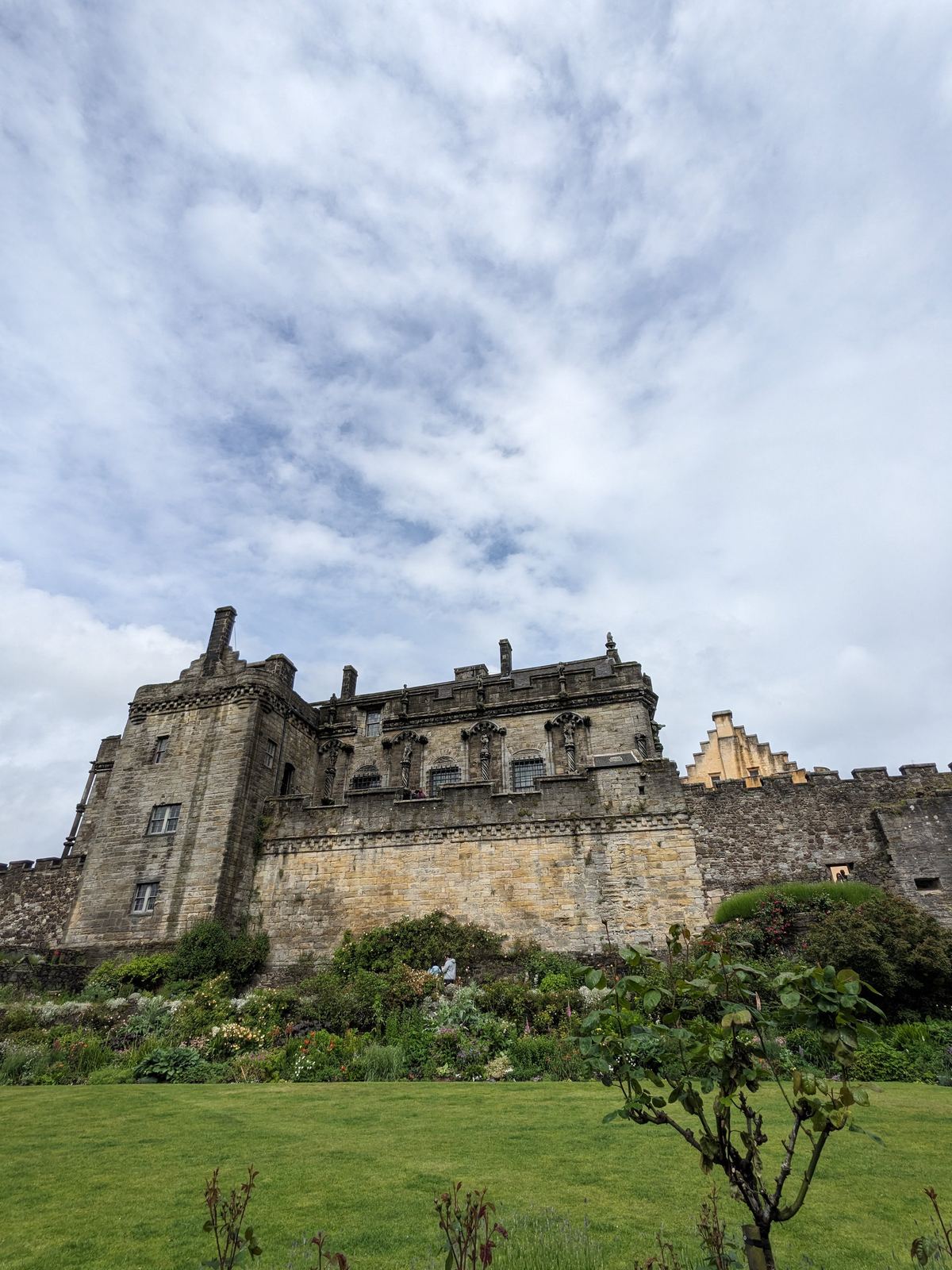
The Stewarts (later spelled Stuart) were Scotland’s royal dynasty — and eventually Britain’s. Their story is stitched right through the places on this site, above all Stirling and Linlithgow, the two great palaces where their kings and queens were born, crowned and buried.
The rise of the Stewarts
The family began not as royalty but as royal servants: the hereditary High Stewards of Scotland (hence the name), from Walter FitzAlan in the 12th century. The crown came through marriage — Walter, the 6th High Steward, married Marjorie Bruce, daughter of Robert the Bruce — and when the Bruce male line failed, their son became King Robert II in 1371, the first Stewart monarch. From him came the whole line: the Jameses (I to VI), Mary, Queen of Scots, and finally James VI, who in 1603 also became James I of England, uniting the crowns.
Stirling, Linlithgow & the Stewart palaces
No dynasty is more tied to Stirling Castle: the Stewarts made it their favourite residence, built its magnificent Renaissance palace and Great Hall, and here Mary, Queen of Scots was crowned as an infant in 1543. Down the road, Linlithgow Palace was the birthplace of both James V and Mary, Queen of Scots. At Dunfermline, Stewart royalty were born and buried too. Follow the Stewarts and you follow the story of Scotland itself.
Stewart country on our travels
- Stirling — the great royal castle and Stewart palace.
- Linlithgow — the palace by the loch, birthplace of Mary, Queen of Scots.
- Dunfermline — royal palace and abbey.
← Back to Scottish Clans · see also the Castles of Scotland.
Battles — won and lost
The most notable actions the clan fought, and how they ended:
- Sauchieburn (1488) — vs rebels (James III killed) — LOST
- Flodden (1513) — vs the English (James IV killed) — LOST
- Pinkie Cleugh (1547) — vs the English — LOST
- Sheriffmuir (1715) — vs the government (for the exiled Stuarts) — DRAWN
- Culloden (1746) — vs the government (for the exiled Stuarts) — LOST
Reigning Stewart kings fell at Sauchieburn, Flodden and Pinkie; Sheriffmuir and Culloden were risings for the exiled Stuarts.
The clan lands
Orange markers = the clan’s chief castles, seats and territories; where we have a page, they link through.
Explore Scottish Outposts
Clans · Whisky · Castles · Lochs · Kirks & Cathedrals · Standing Stones · Metal Detecting · Trips So Far
Sources
- First-hand: our own visits to Stirling, Linlithgow & Dunfermline (own photos)
- House of Stuart — Wikipedia