Linlithgow: Mary Queen of Scots’ Birthplace on a Loch
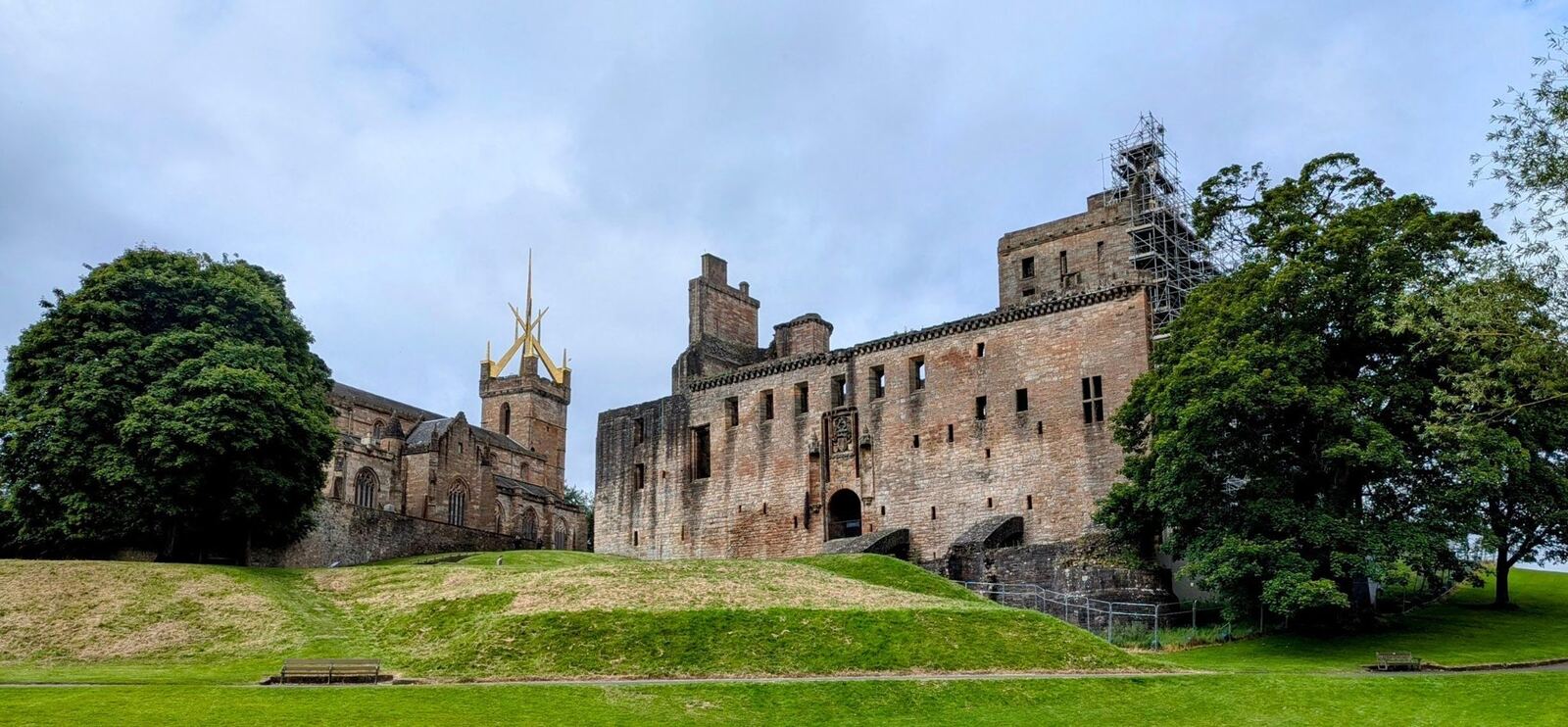
Of all the places we’ve parked up on the run between Edinburgh and Stirling, Linlithgow is the one we keep sending people to. A roofless royal palace on a loch, a medieval kirk under a golden crown, a proper old High Street and a walk round the water that costs nothing and beats most days out you’d pay for. We spent a full day here in June and barely scratched it. Here’s everything we saw, and the deep history behind it.
Overview — a royal ruin on the water
Linlithgow stops you in your tracks. Right in the middle of a busy West Lothian town, on a green mound above a loch, stand the honey-coloured walls of one of the grandest royal palaces in Scotland — the birthplace of Mary, Queen of Scots, and of her father James V before her. Beside it rises the great medieval church of St Michael’s, crowned since 1964 with an extraordinary golden spire that you can pick out from miles away. Add a loch-side circuit, a historic burgh and good coffee, and you have a near-perfect day — twenty minutes by train from the capital.
Where it is (and where on the route)
Linlithgow sits in West Lothian, almost exactly midway between Edinburgh (about 20 miles east) and Falkirk and Stirling to the west. On our Grand Tour it falls in Stage 2, the run linking Edinburgh, the Forth bridges and Stirling. It has fast, frequent trains (more on that below), which makes it one of the easiest historic day-trips in central Scotland — genuinely a place where we’d tell you to leave the van and take the train.
Linlithgow Palace — birthplace of a queen
There has been a royal residence on this mound for the best part of 900 years. David I had a manor here in the 12th century; during the Wars of Independence Edward I of England seized the site in 1301–02 and threw up a timber-and-earth fortress — the peel — that still gives the surrounding parkland its name. What you see today, though, is grander and later. After a great fire destroyed the earlier buildings and much of the town in 1424, James I began building the present palace: not a grim border keep but a Renaissance pleasure palace, ranged around a great central courtyard on the loch shore.
Four generations of Stewart kings — James I through James V — shaped it, each adding a range, a tower, a fashionable flourish. James III and James IV raised the royal apartments and the magnificent Great Hall; the elaborate outer gatehouse carries carved panels of the four orders of chivalry. It became a favourite home of the crown, a place of feasting and hunting rather than sieges.
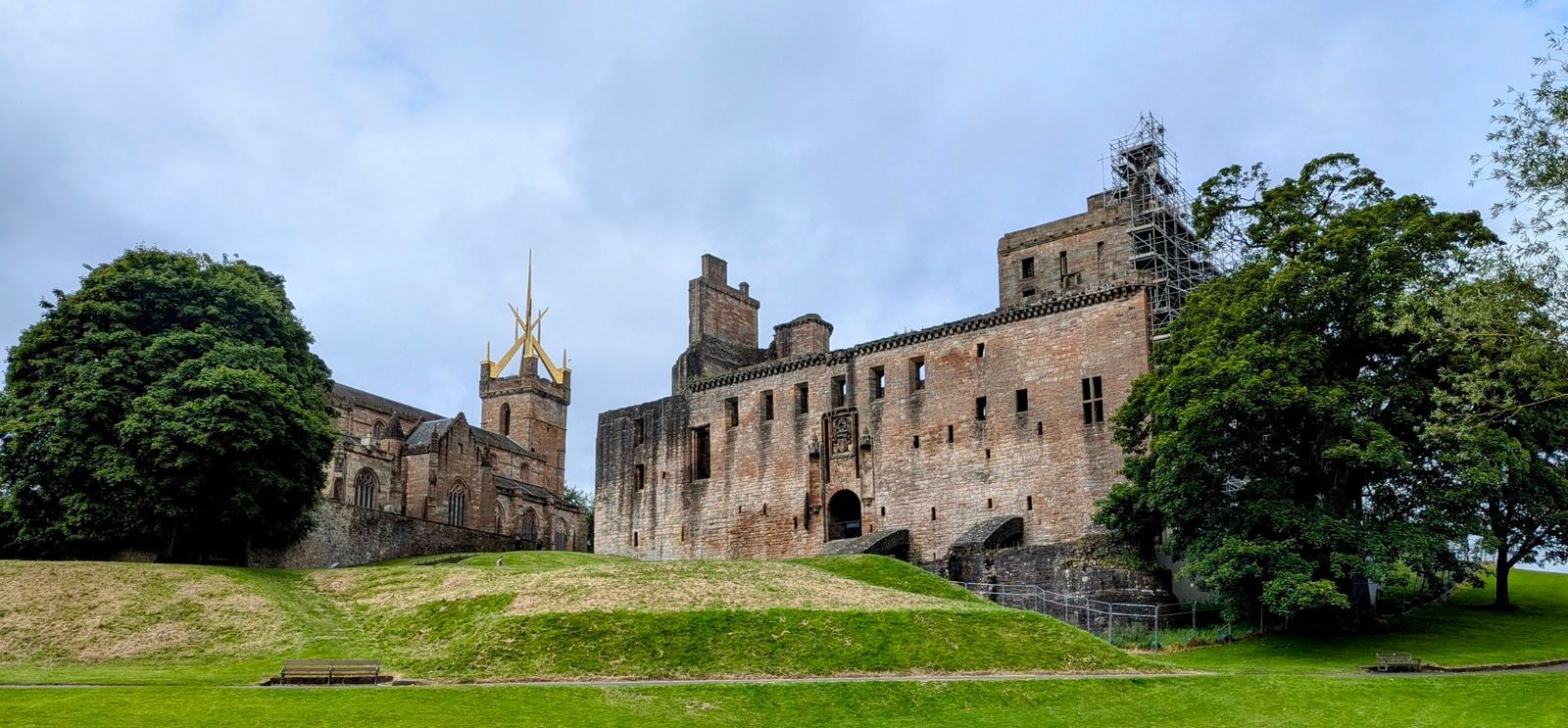
James V was born here in 1512, and, most famously, so was his daughter Mary, Queen of Scots, on 8 December 1542. Her father was dying at Falkland even as she drew her first breath, and the dying king — hearing his heir was a girl, and brooding on how the Stewart crown had come to his family through Robert the Bruce’s daughter — is said to have muttered the line every Scottish schoolchild learns: “It cam wi’ a lass, it’ll gang wi’ a lass.” He was wrong by four centuries, but the words stuck to the walls. Mary’s French mother, Mary of Guise, is reported to have said the palace compared with the finest châteaux of France. Stand in the courtyard and you can believe it.
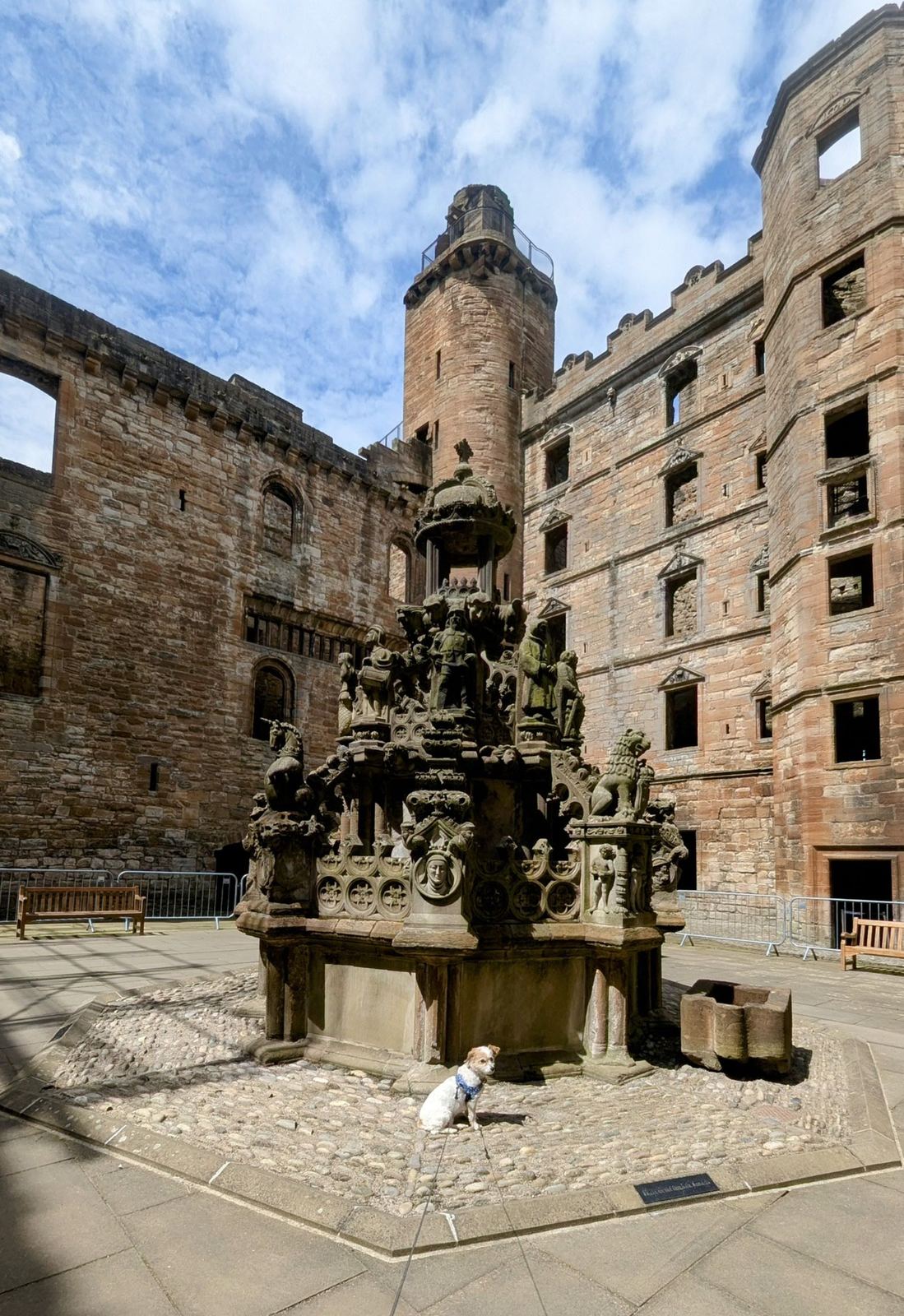
At the heart of the quadrangle stands the beautiful carved King’s Fountain, commissioned by James V around 1537–38 and reckoned to be the oldest surviving fountain in Britain. On grand occasions — and, the story goes, for Bonnie Prince Charlie when he passed through in 1745 — it ran not with water but with wine. It was painstakingly restored a few years back, and on a still day it’s the quiet centre of the whole ruin.
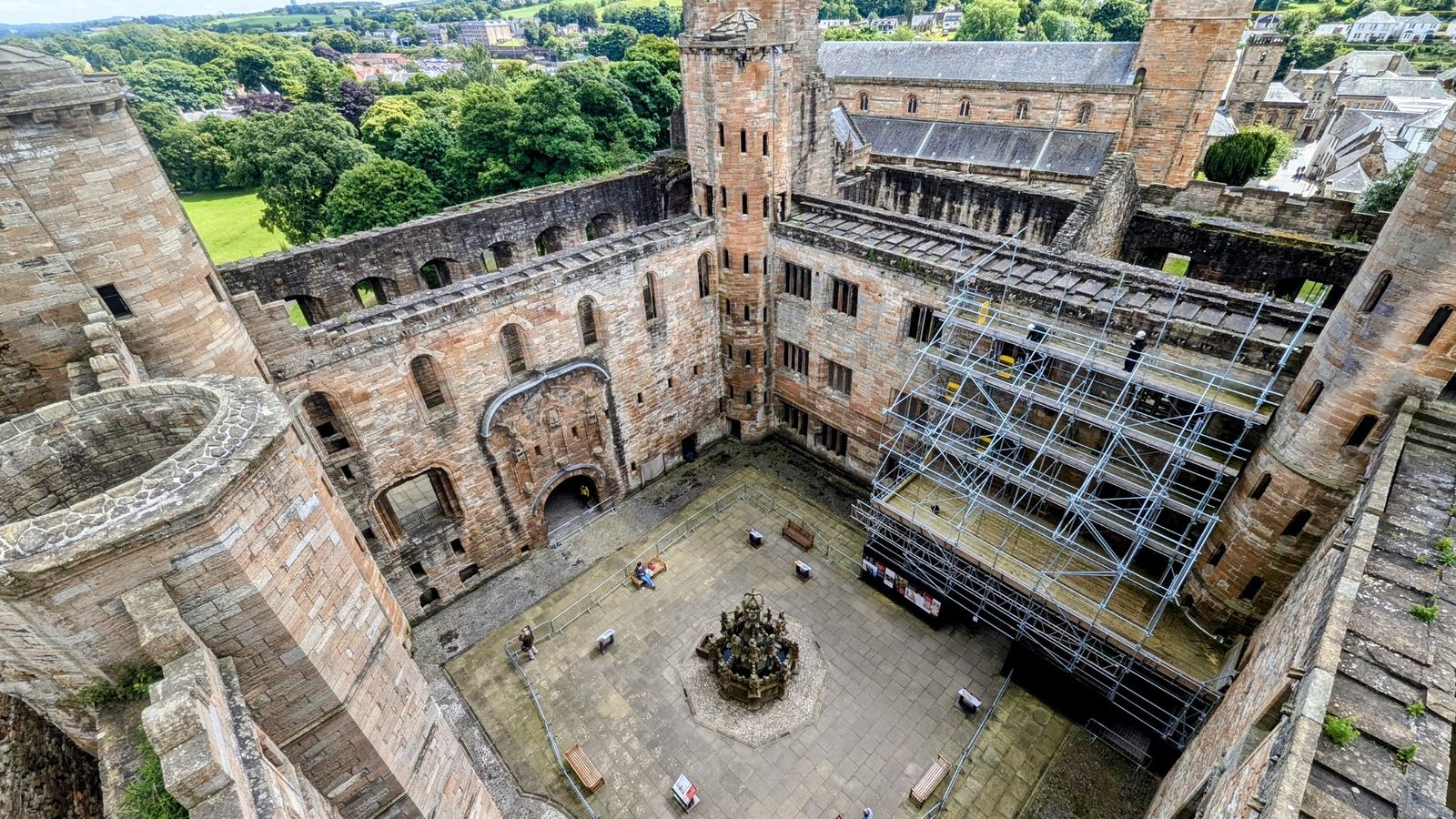
Around the courtyard rise the roofless ranges of the royal lodgings, the chapel and the Great Hall — the Lyon Chamber — with its enormous fireplace where whole oxen could be roasted. The place is a warren of turnpike stairs, deep window seats and stone passages, and half the fun is climbing it: every so often a window opens onto the loch and you understand exactly why the kings kept coming back.
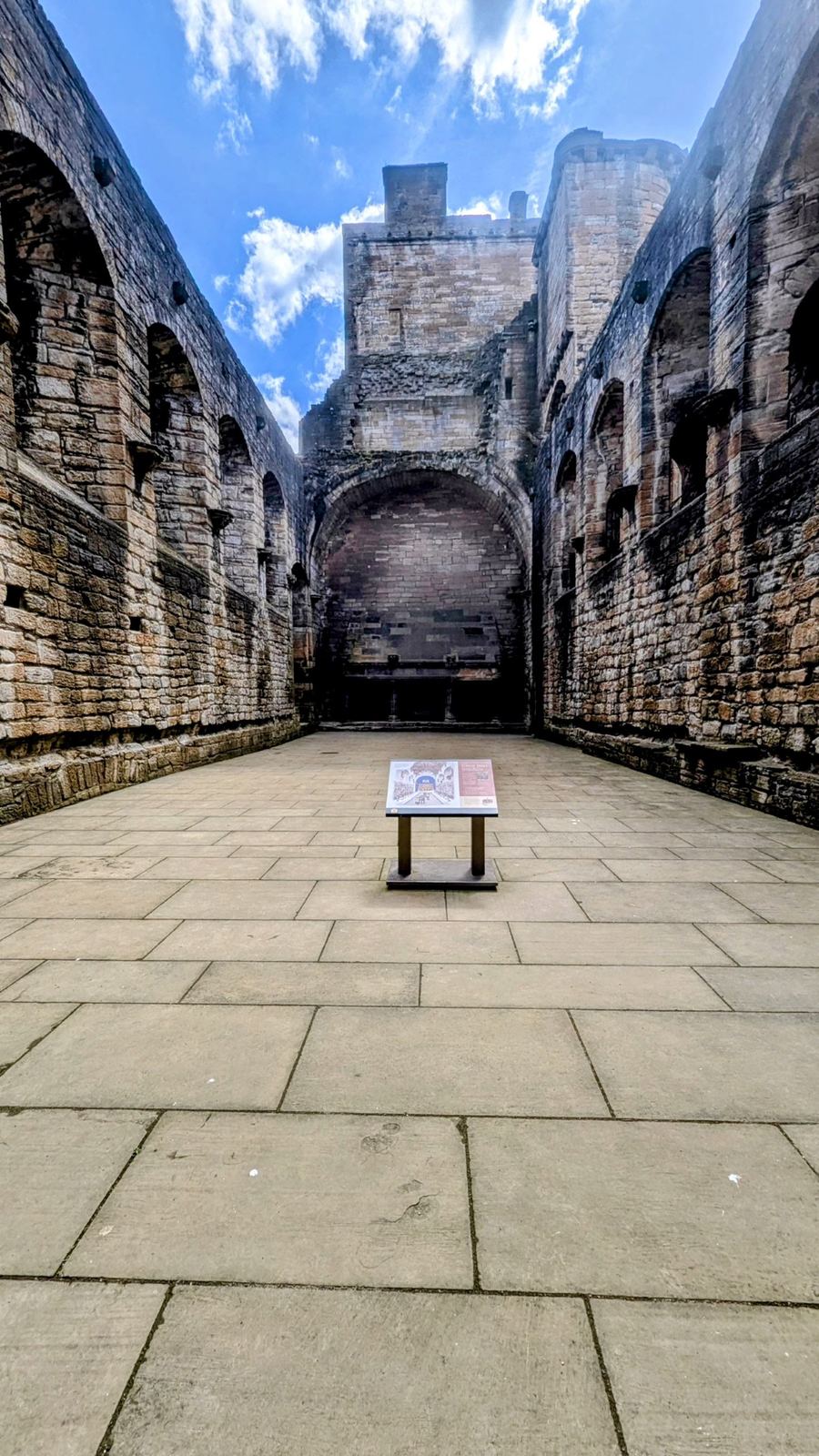
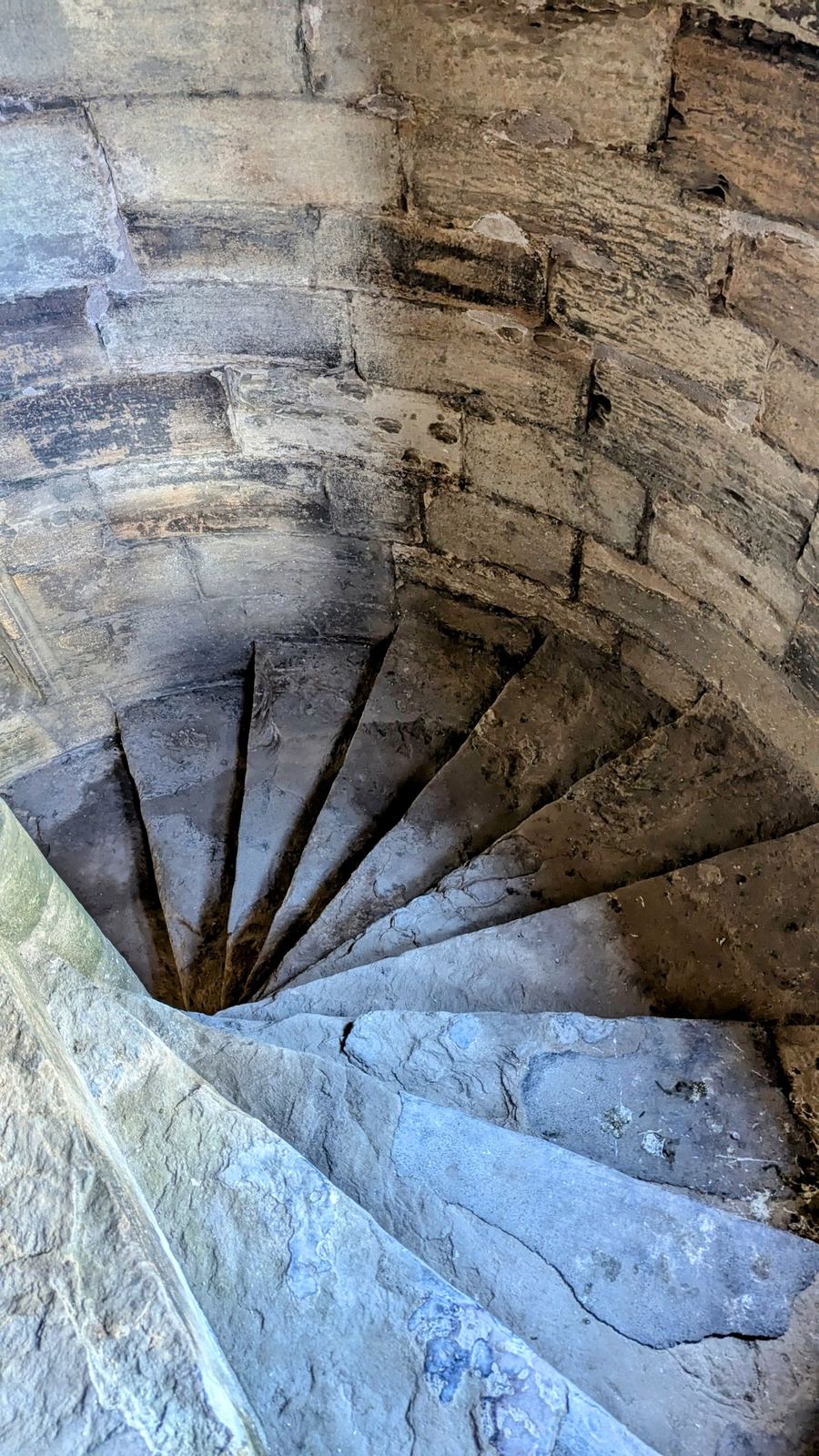
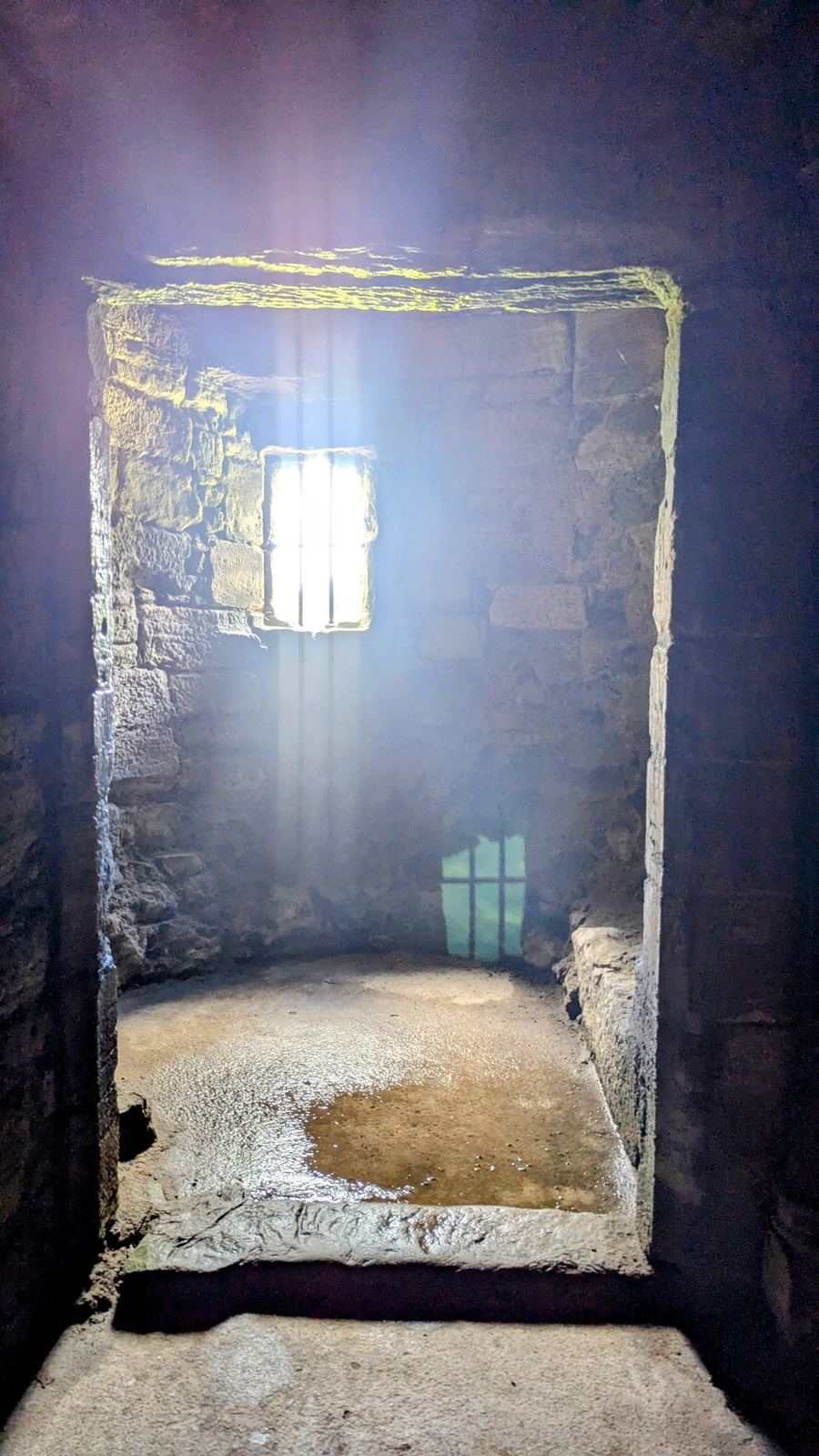
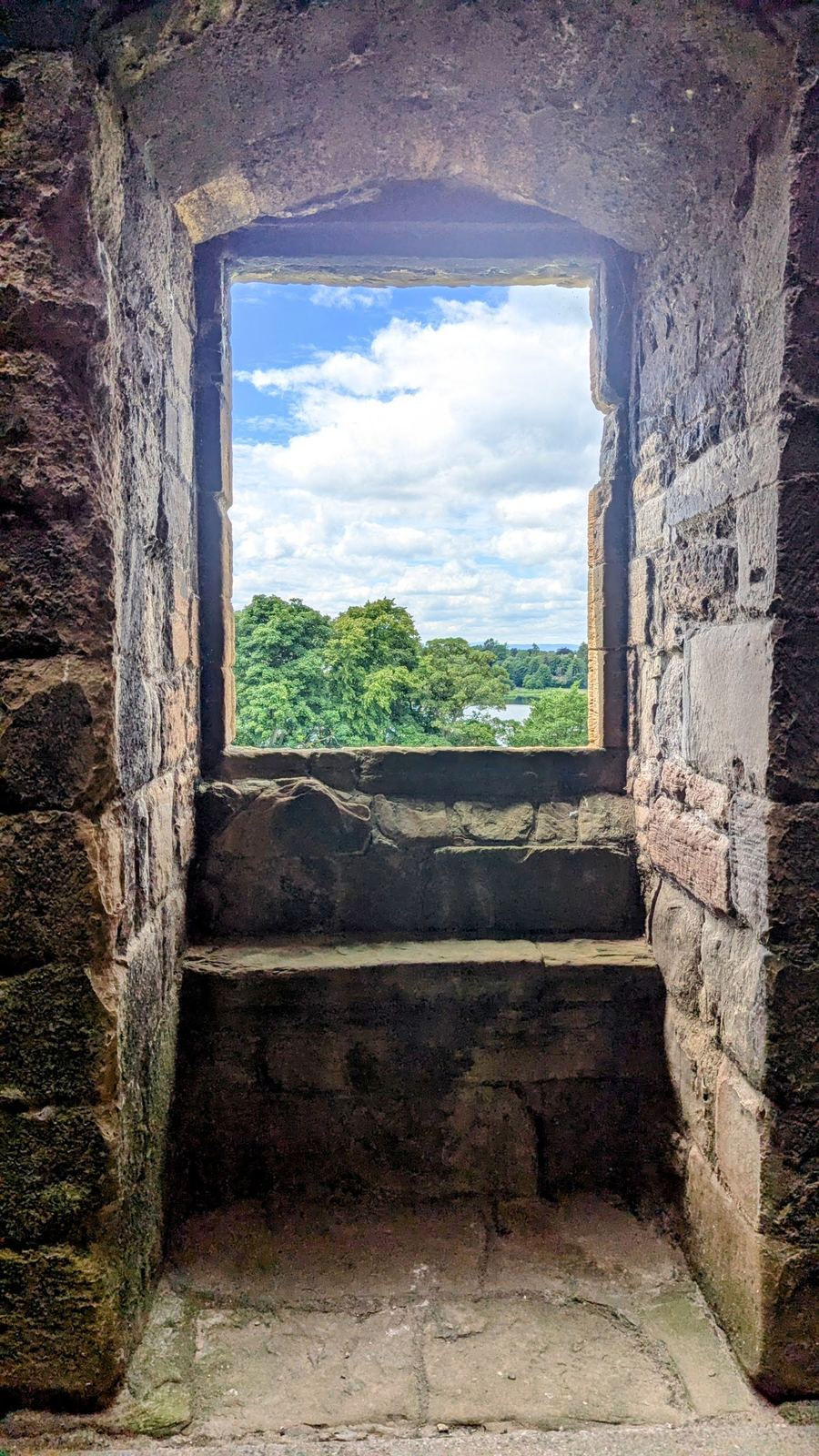
Its golden age ended in a single night. In the winter of 1746, as the Jacobite rising collapsed, government dragoons under General Hawley were quartered in the palace. When they marched out on 1 February they left their fires burning, and the great pleasure palace of the Stewarts was gutted. It has been a magnificent, roofless ruin ever since — now in the care of Historic Environment Scotland.
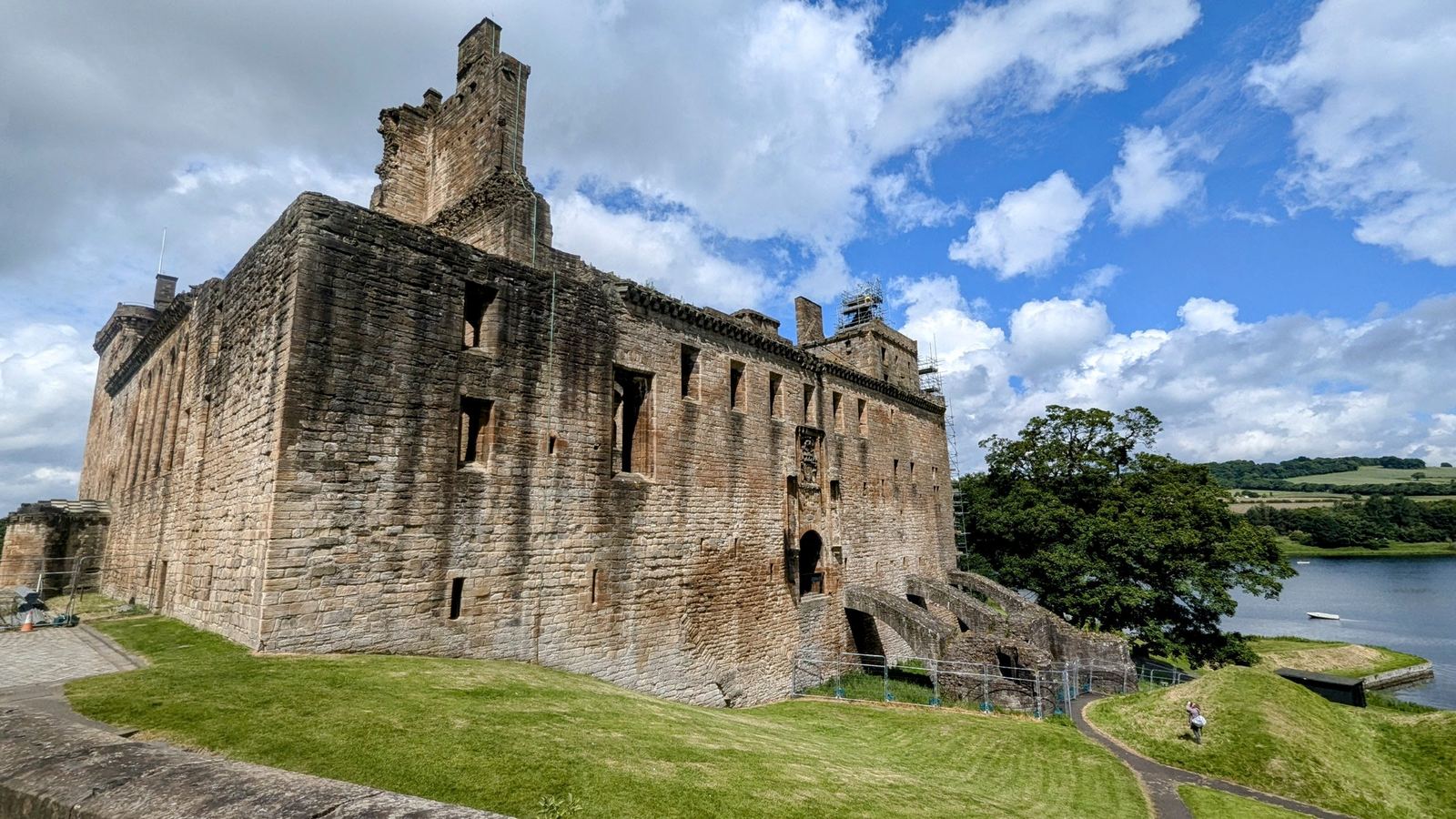
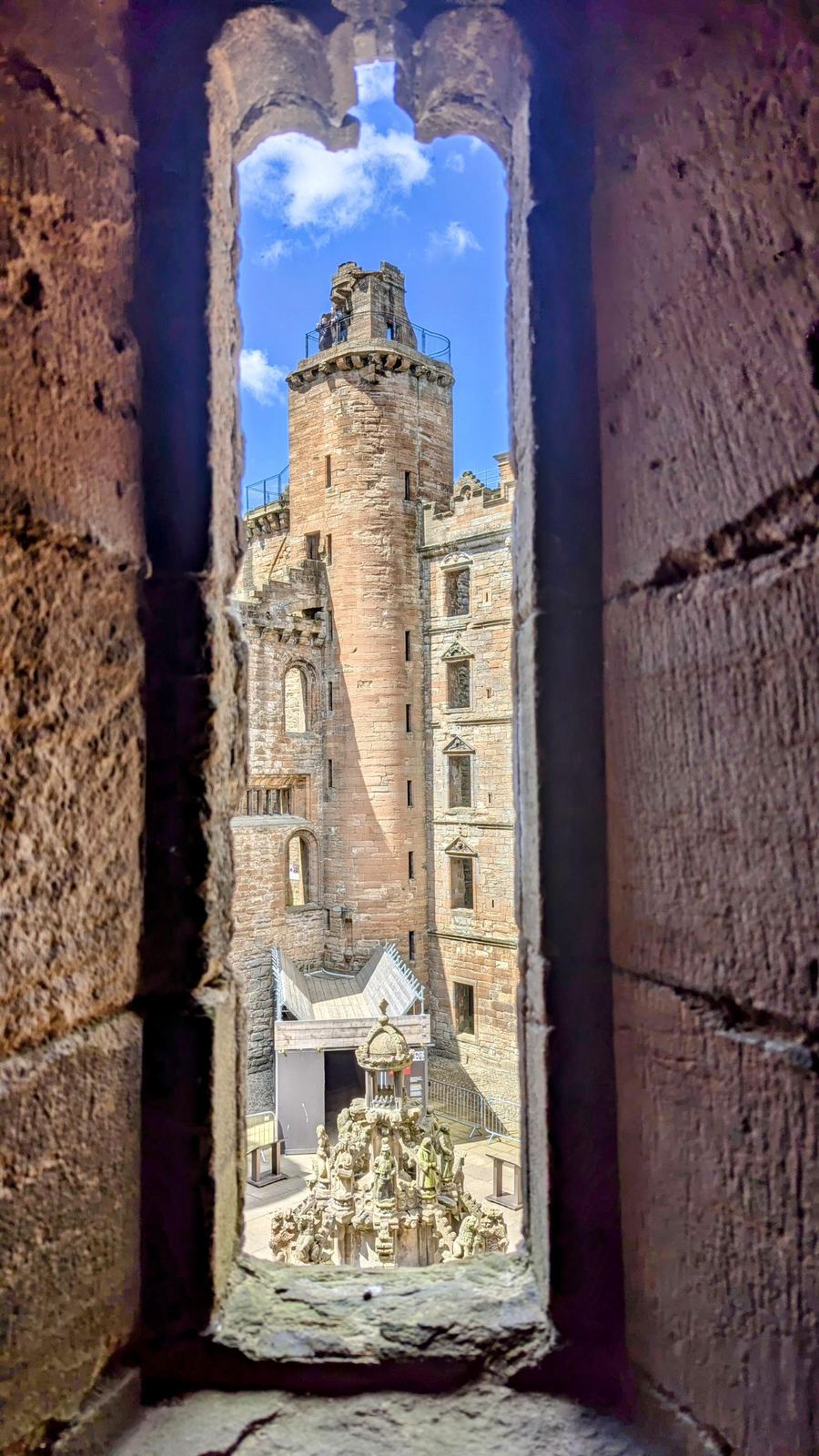
⚠️ Check palace access before you travel. Like several Historic Environment Scotland properties, Linlithgow Palace has had masonry safety inspections and spells of restricted or partial access in recent years — you’ll spot some barriers in our photos. It’s often open with a marshalled route; occasionally more is closed off. Always check the HES website for current opening before you set out.
St Michael’s Church — the crowned kirk
Sharing the mound with the palace stands St Michael’s Parish Church, one of the largest and finest medieval parish churches in Scotland, where the Stewart court once worshipped a few steps from their front door. A church has stood here since at least 1242; the present soaring Gothic building went up through the 15th century, after the same 1424 fire that reshaped the palace.
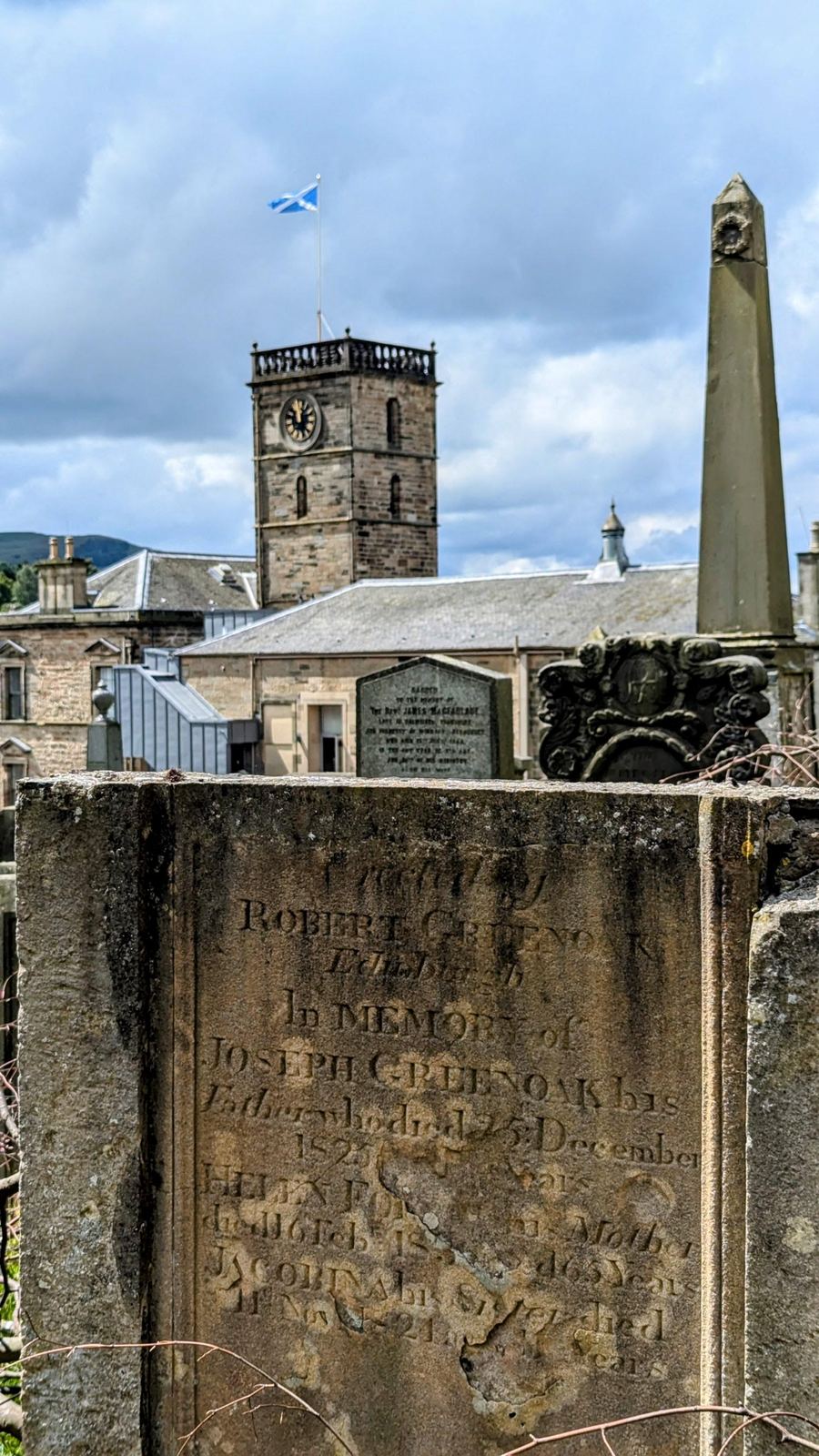
Its most striking feature is modern. The medieval stone crown steeple was removed as unsafe in 1821, leaving the tower bare for over a century. Then in 1964 came a bold, divisive answer: a spiky aluminium “crown of thorns” spire designed by the artist Geoffrey Clarke. The town hated it, then grew to love it; today it catches the light gold above the rooftops and has become the emblem of the place. Inside, it’s all height and calm — a long Gothic nave, worn flagstones, and glass that throws colour across the pews.
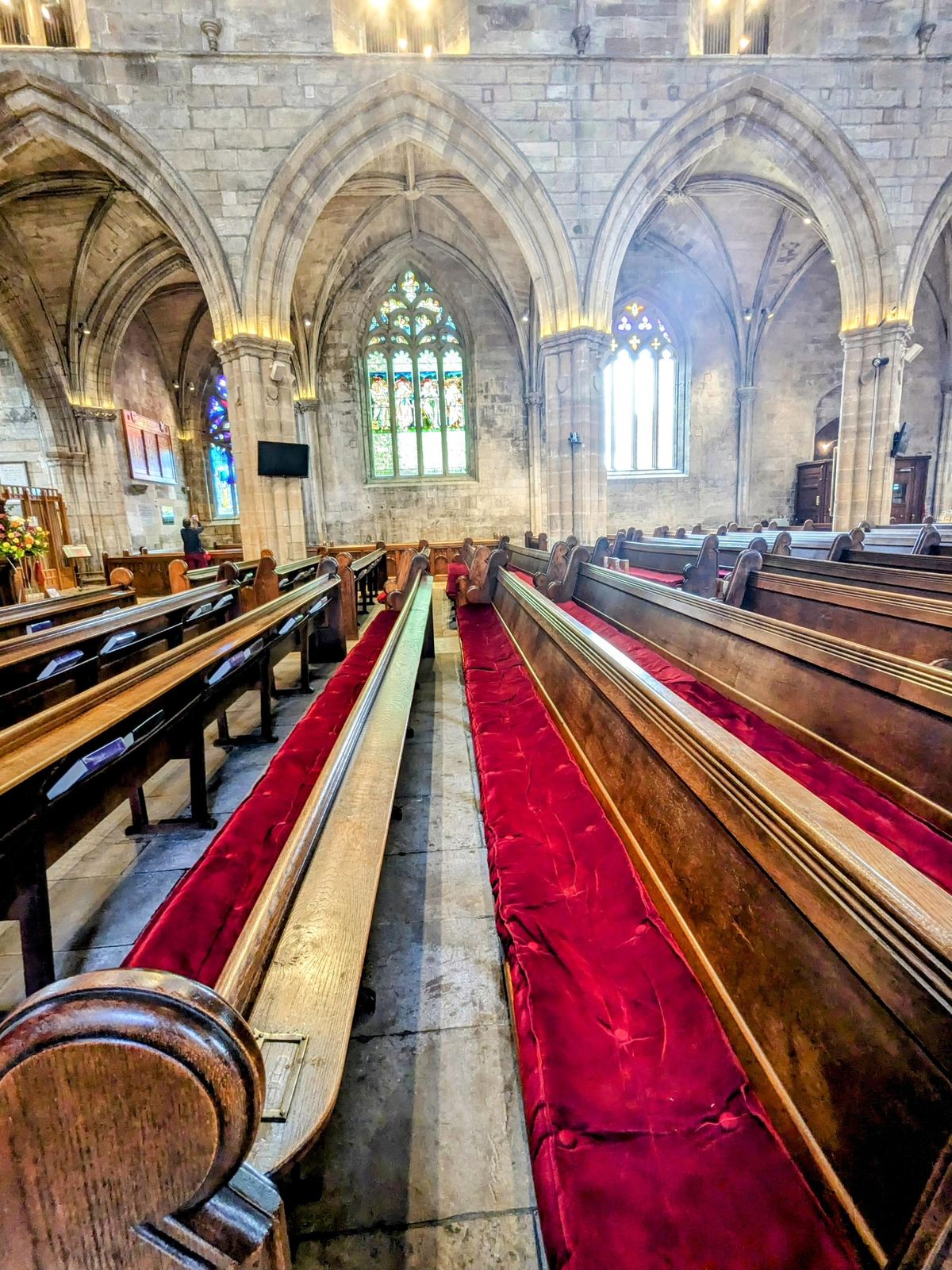
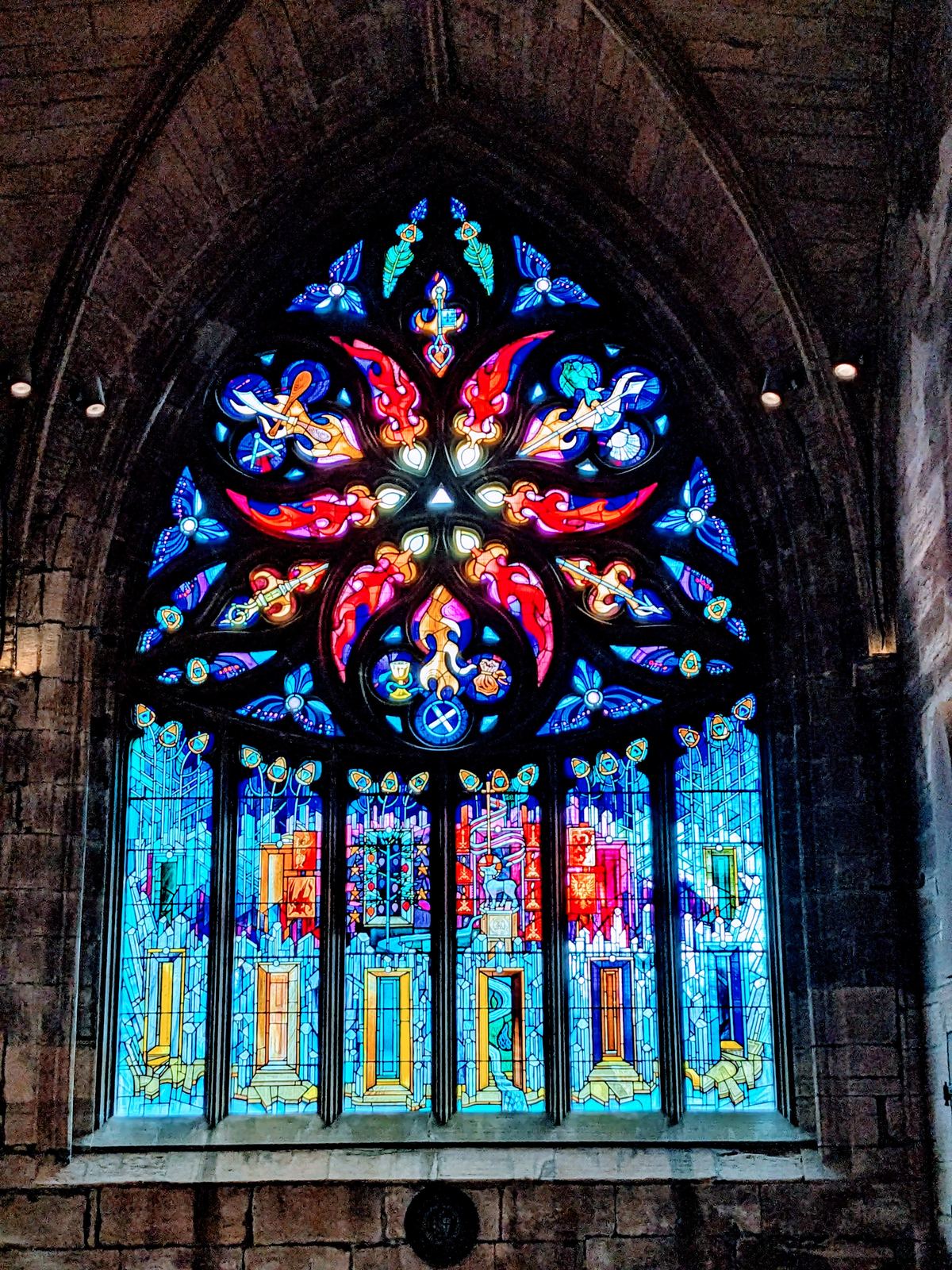
There’s a ghost story attached, too. In 1513, so the chronicles say, James IV was at prayer in St Michael’s when a blue-gowned figure appeared and warned him not to march south. He ignored it, rode to Flodden, and died there with the flower of Scottish chivalry. Make of it what you will — but it’s a fine thing to stand in the nave and think about.
The Loch & the Peel — the best walk in town
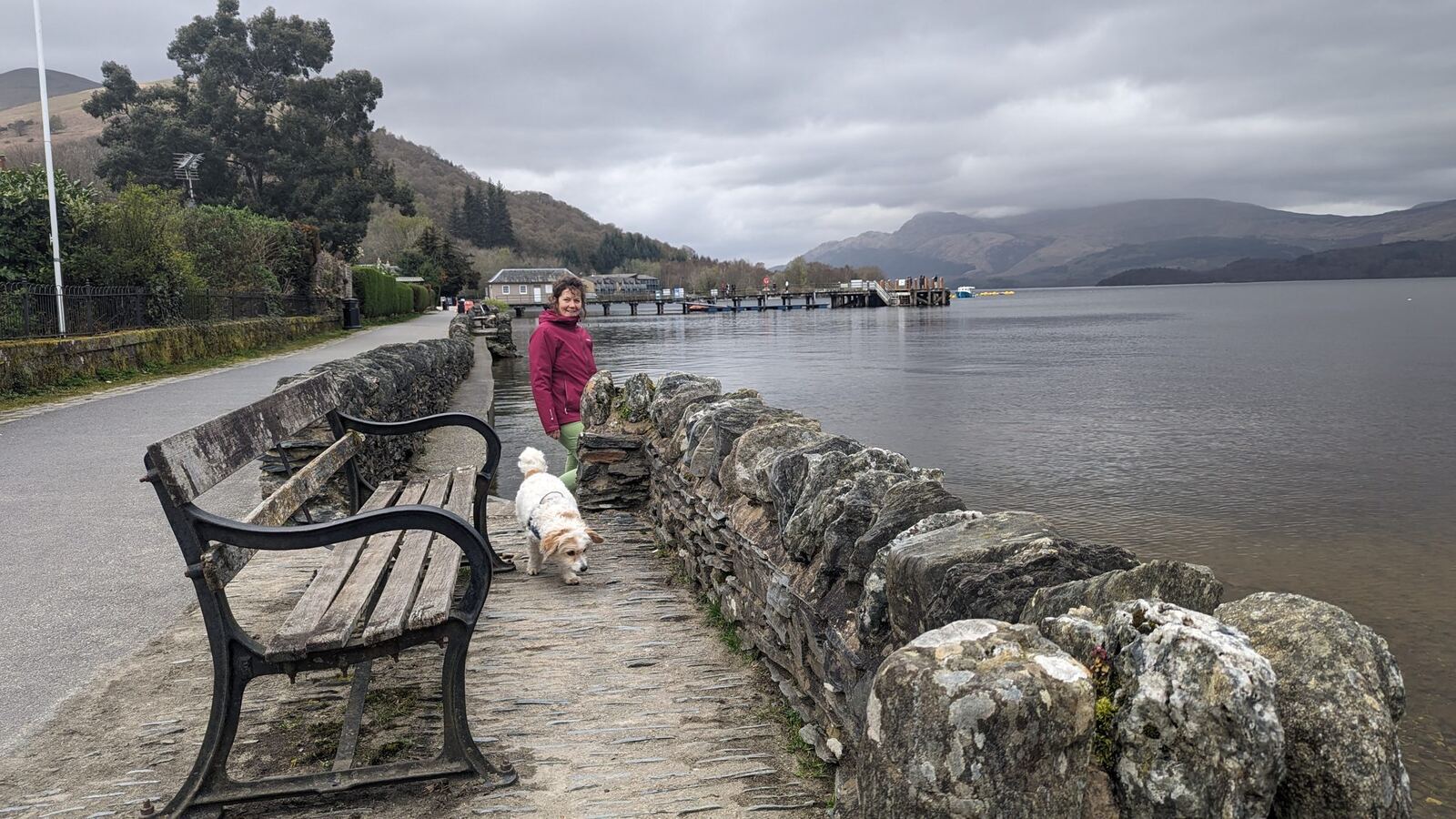
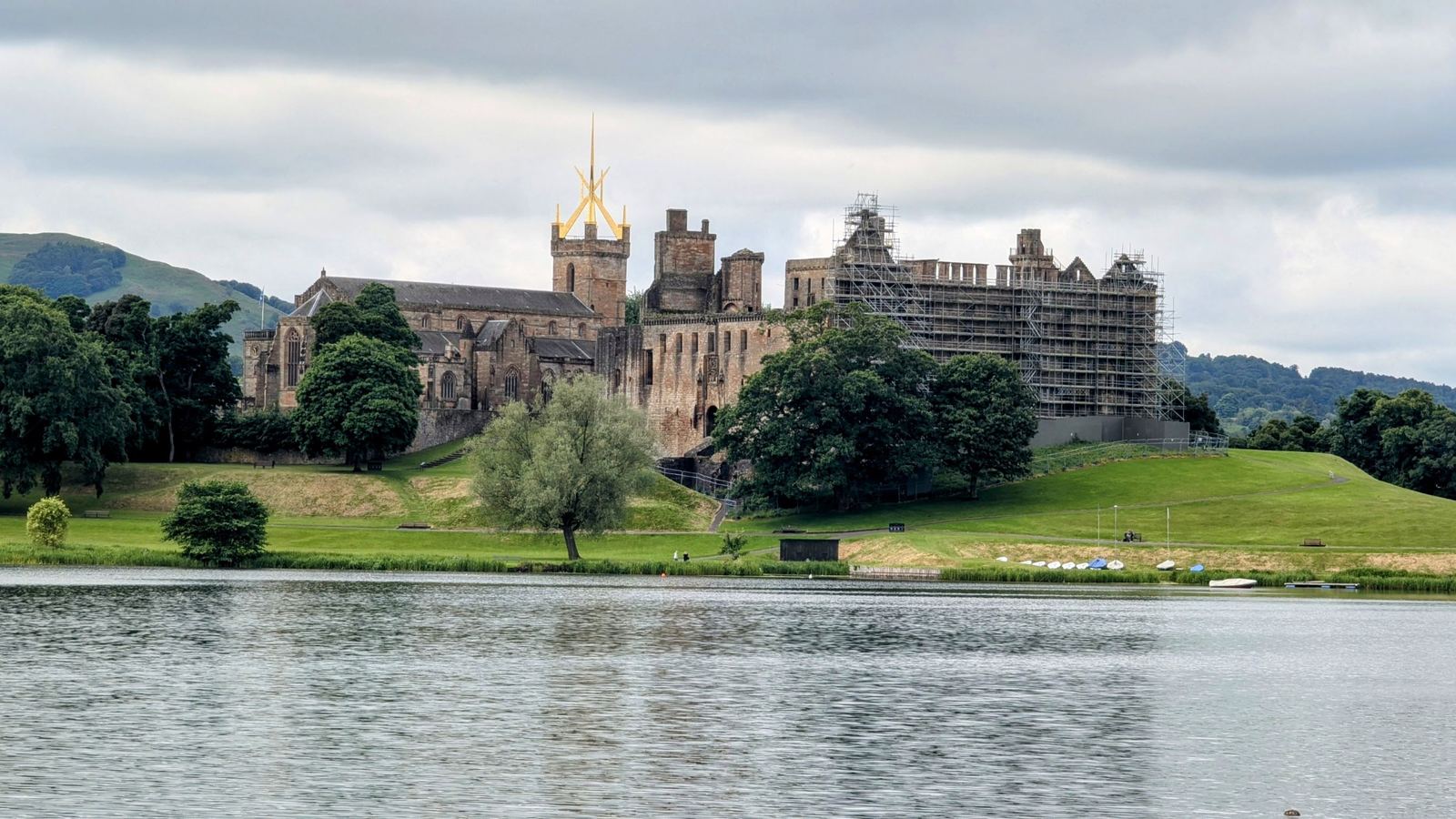
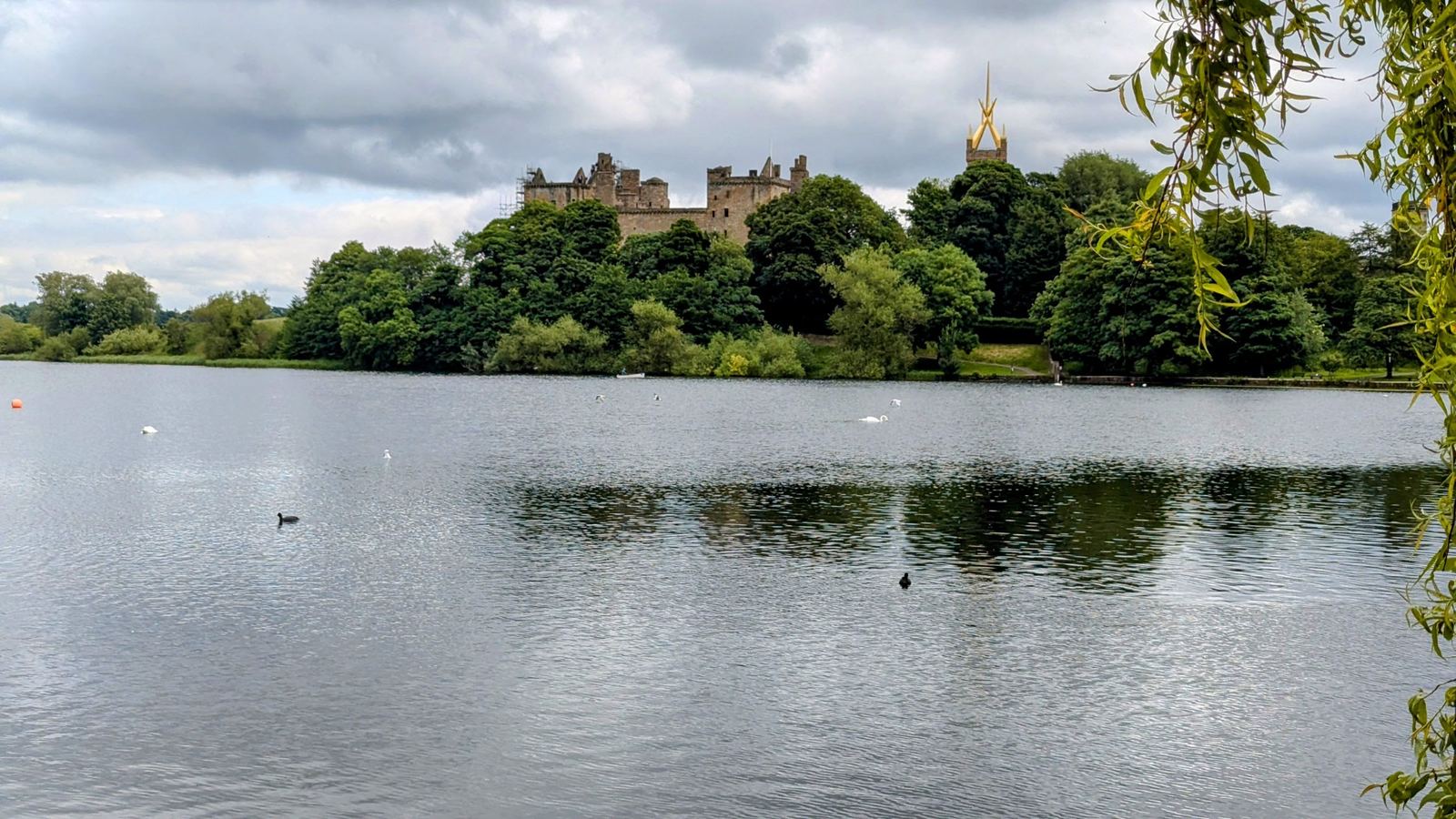
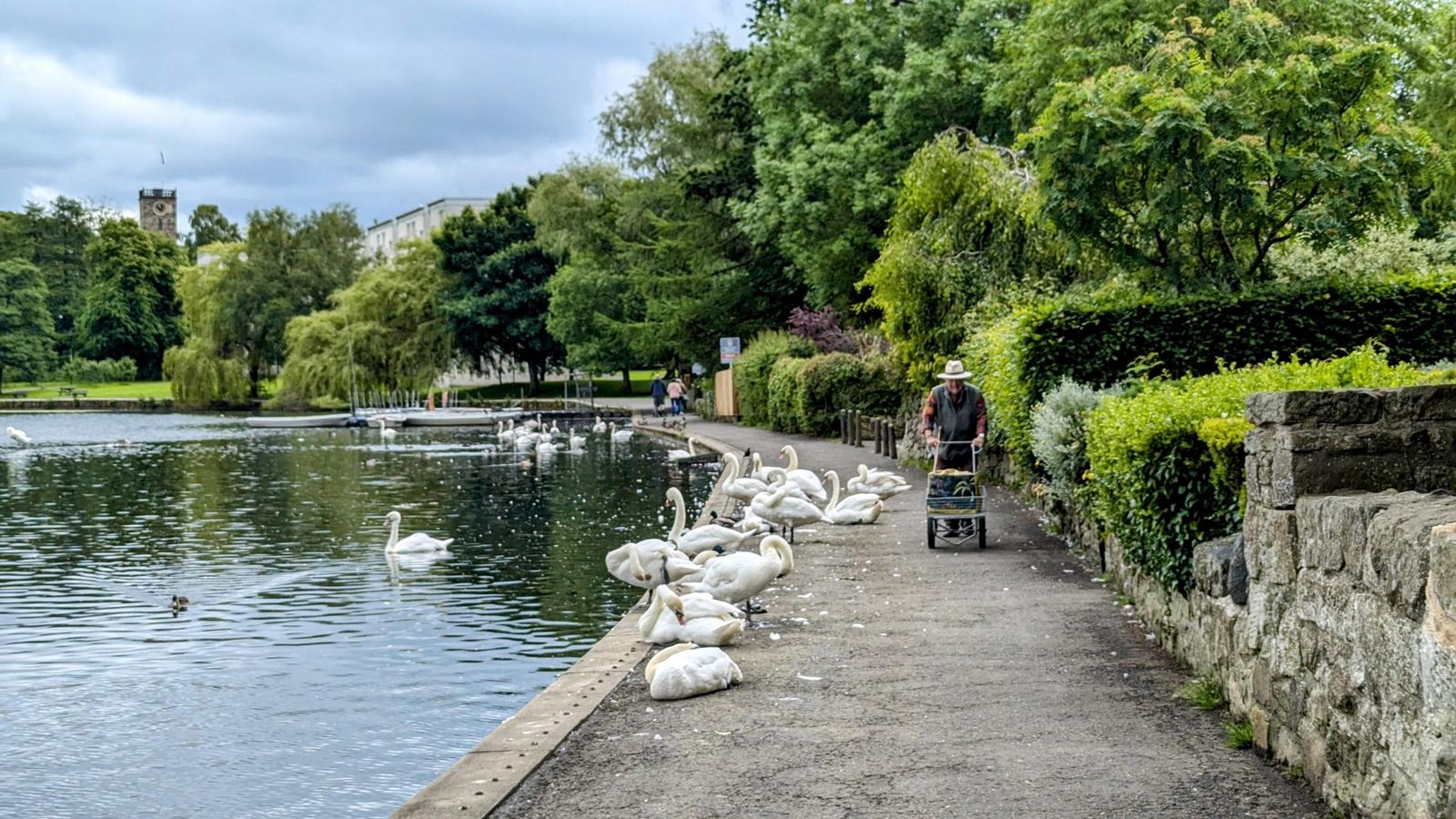
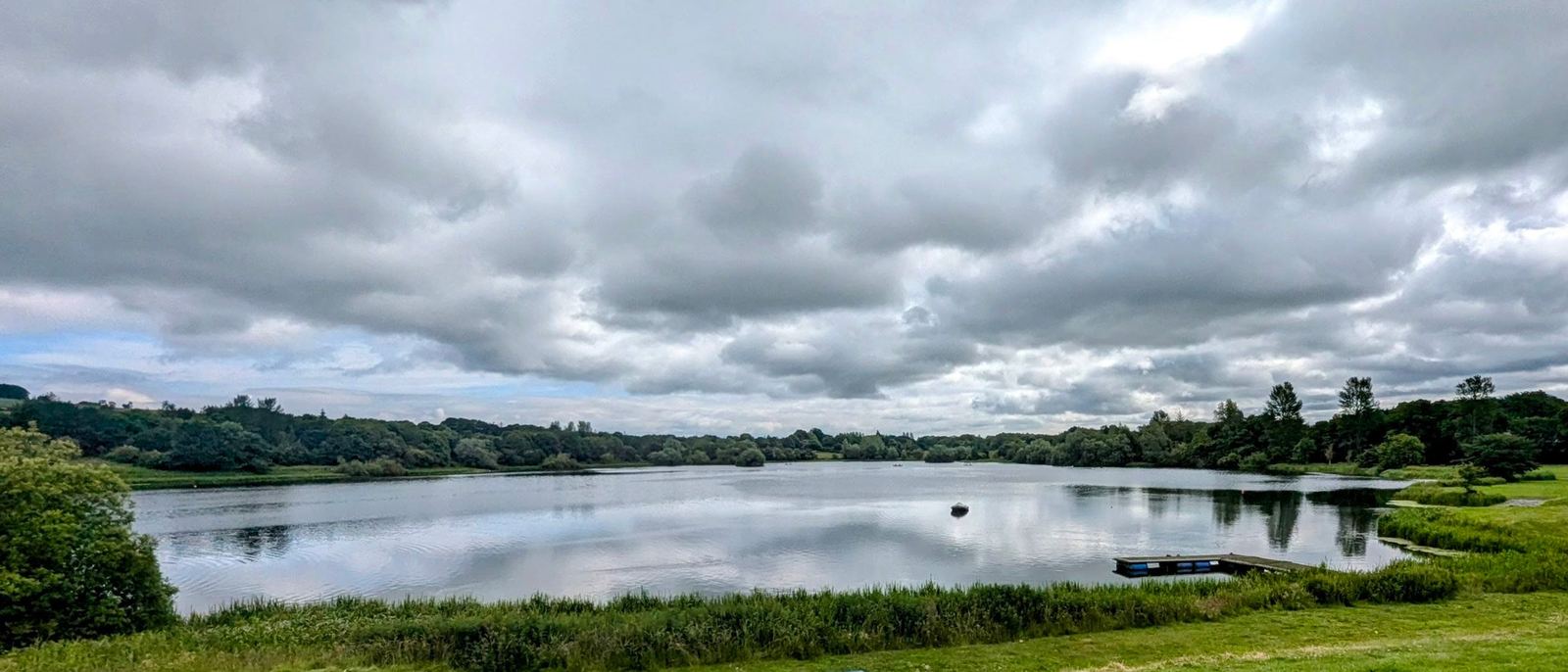
Palace and church sit in the Peel, the parkland that rings Linlithgow Loch — and for our money the walk around the loch is the finest thing to do here, and it’s free. You get ever-changing views of the palace mirrored in the water, masses of swans, geese and waterfowl, and a proper bit of nature right in the middle of a town. We did the full circuit with Lillie and took an age over it, because every hundred yards the palace re-arranges itself against the sky.
🚶 The circuit of the loch — do this. The full loop of Linlithgow Loch is roughly 2–2.5 miles and takes about an hour at a gentle pace. It’s mostly flat, on good paths, and suits families, dogs and (mostly) pushchairs. Go round either way — the reward is the palace reflected from every angle, swans all the way, and long views to the Bathgate Hills. Grab a coffee from the High Street first and make a morning of it. A short stretch can get muddy after rain, so decent shoes if it’s been wet.
The town & the “Black Bitch”
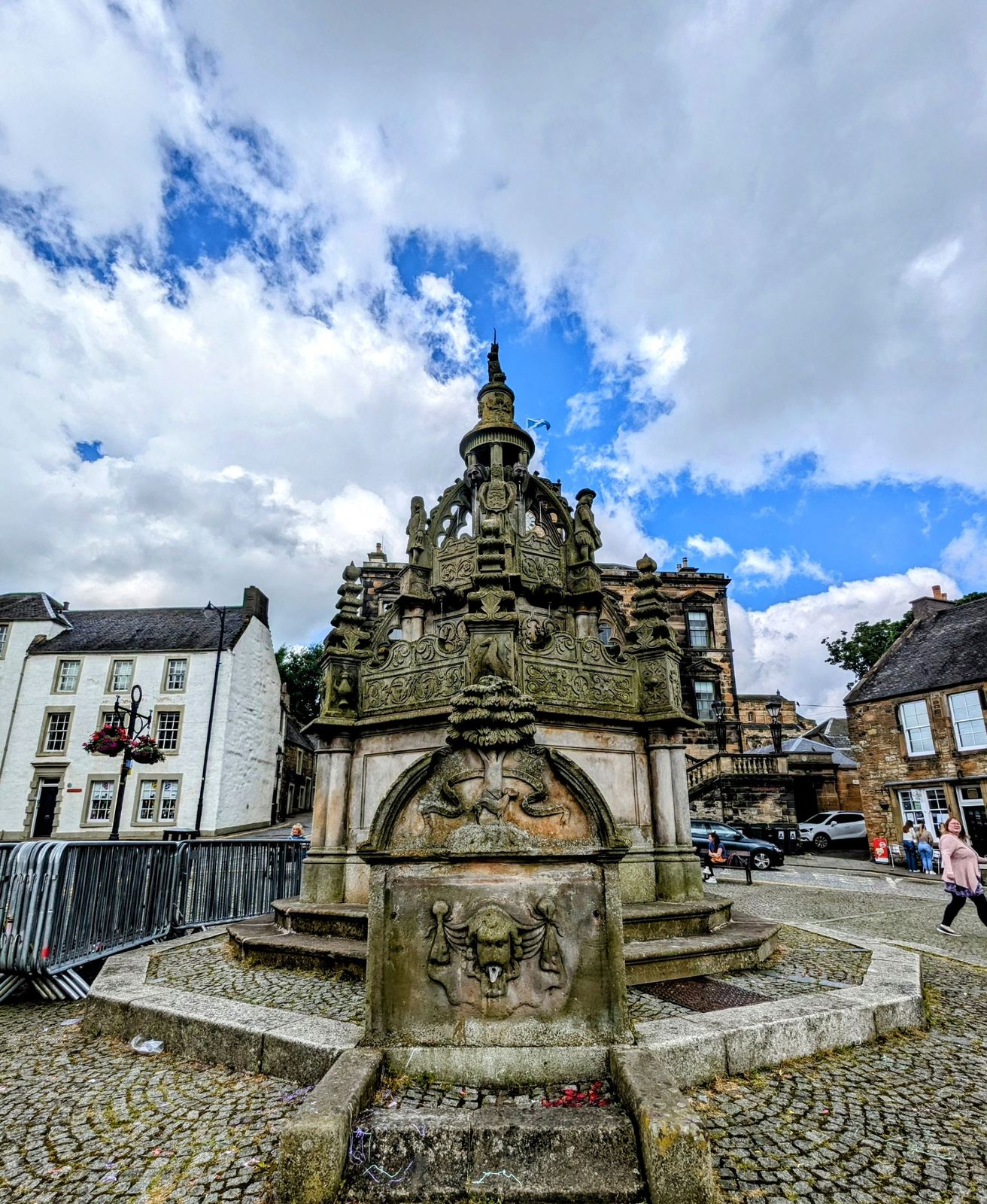
Linlithgow is a handsome royal burgh with a long, historic High Street running below the palace, centred on The Cross and its ornate carved Cross Well. The present well dates from 1807 — a faithful copy of a 1628 original — and, remarkably, is said to have been carved by a one-handed mason. It still runs.
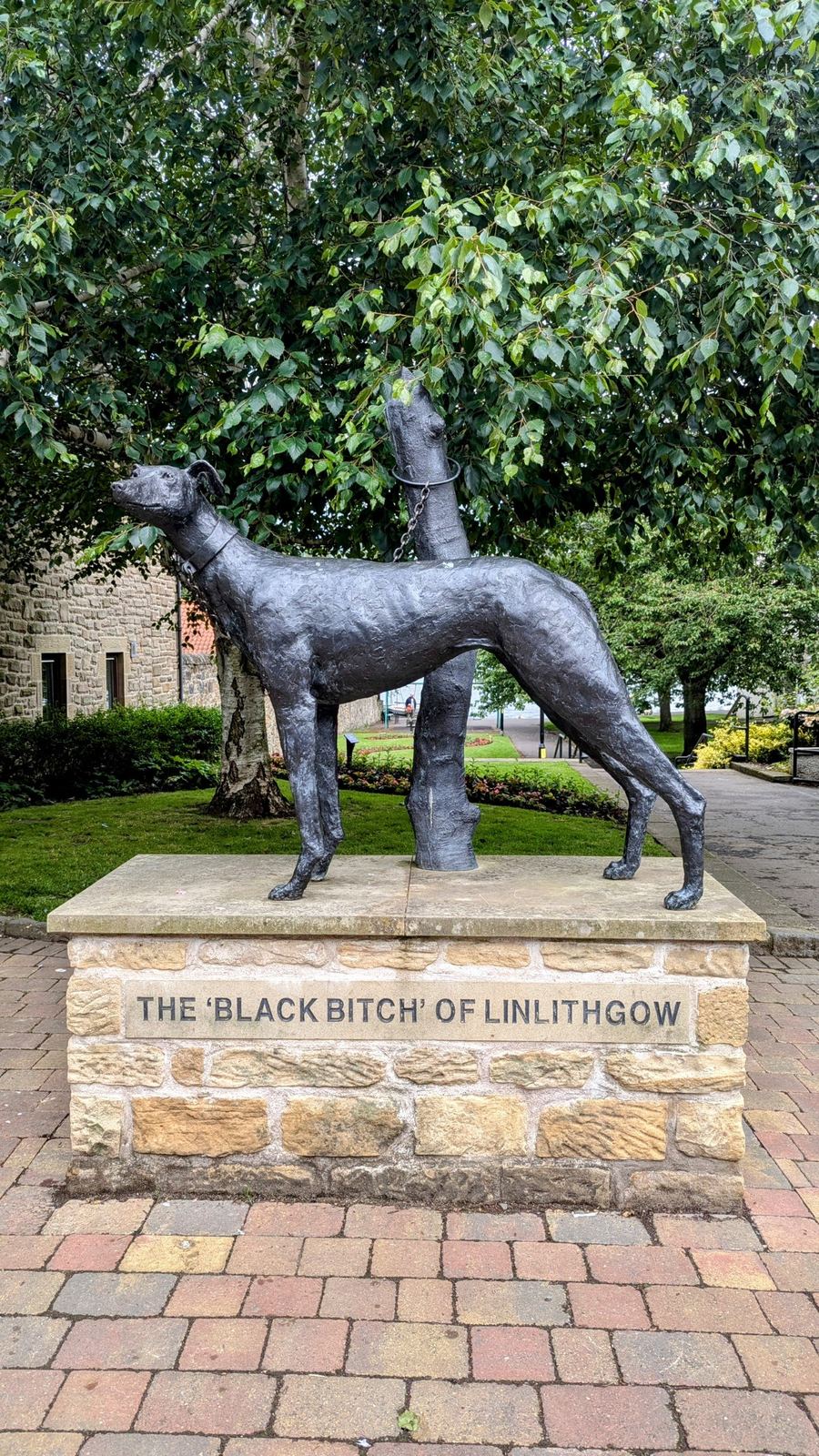
And the town has one of Scotland’s more memorable emblems: the “Black Bitch.” Linlithgow’s ancient coat of arms shows a black greyhound bitch chained to an oak on an island in the loch. The legend runs that a loyal hound swam out to a loch island each day to feed her banished, marooned master; when the townsfolk discovered it, both were punished — but the dog’s loyalty was never forgotten. People born in the burgh still call themselves “Black Bitches” with pride, and a fine bronze statue of her stands in the town.
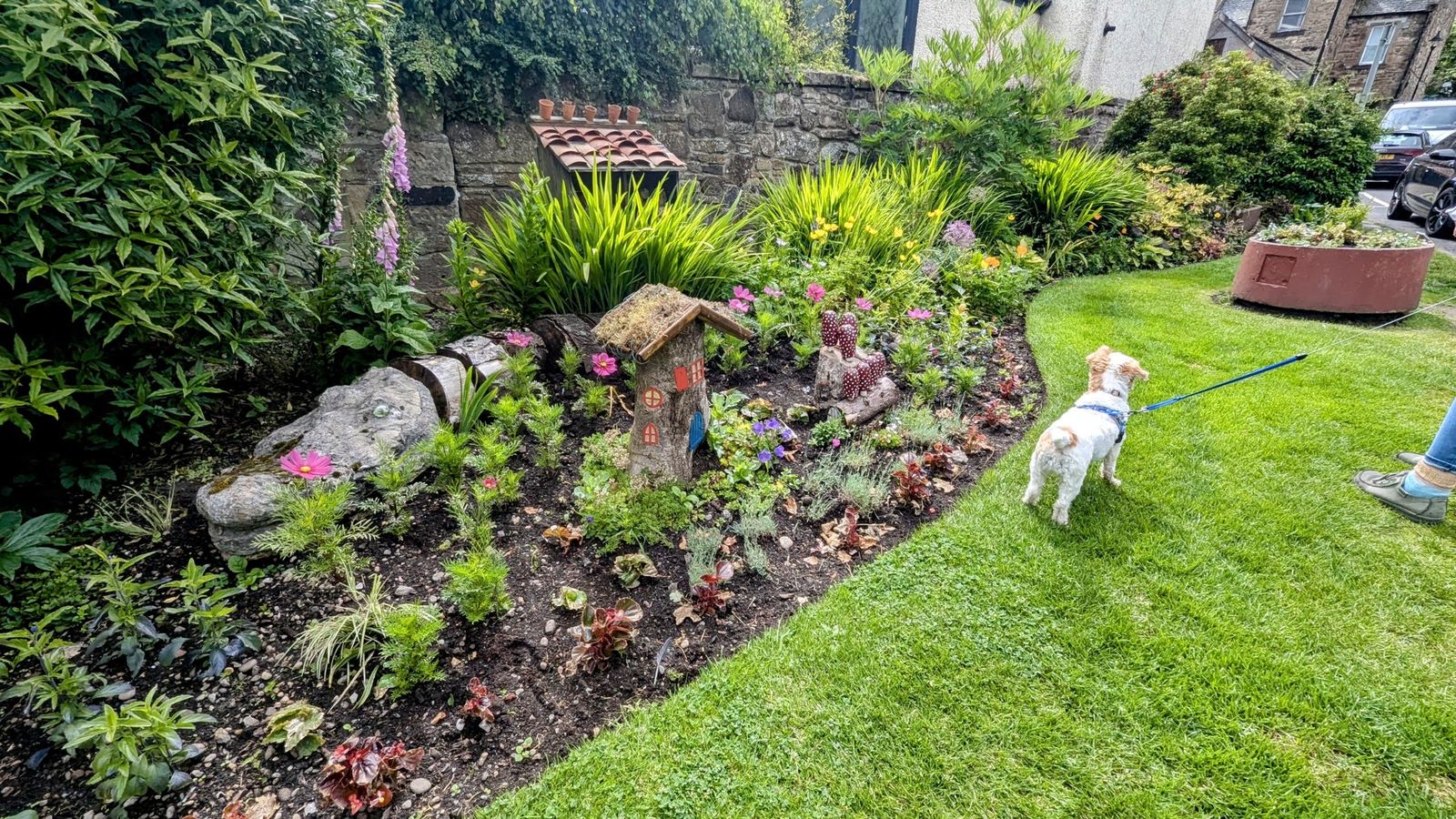
It’s a walkable, likeable town for an hour or two: independent shops, a museum (the Linlithgow Story) telling the burgh’s history, and enough corners to reward a wander. We had Lillie with us and she approved of the fairy garden tucked off one of the closes.
Coffee & lunch
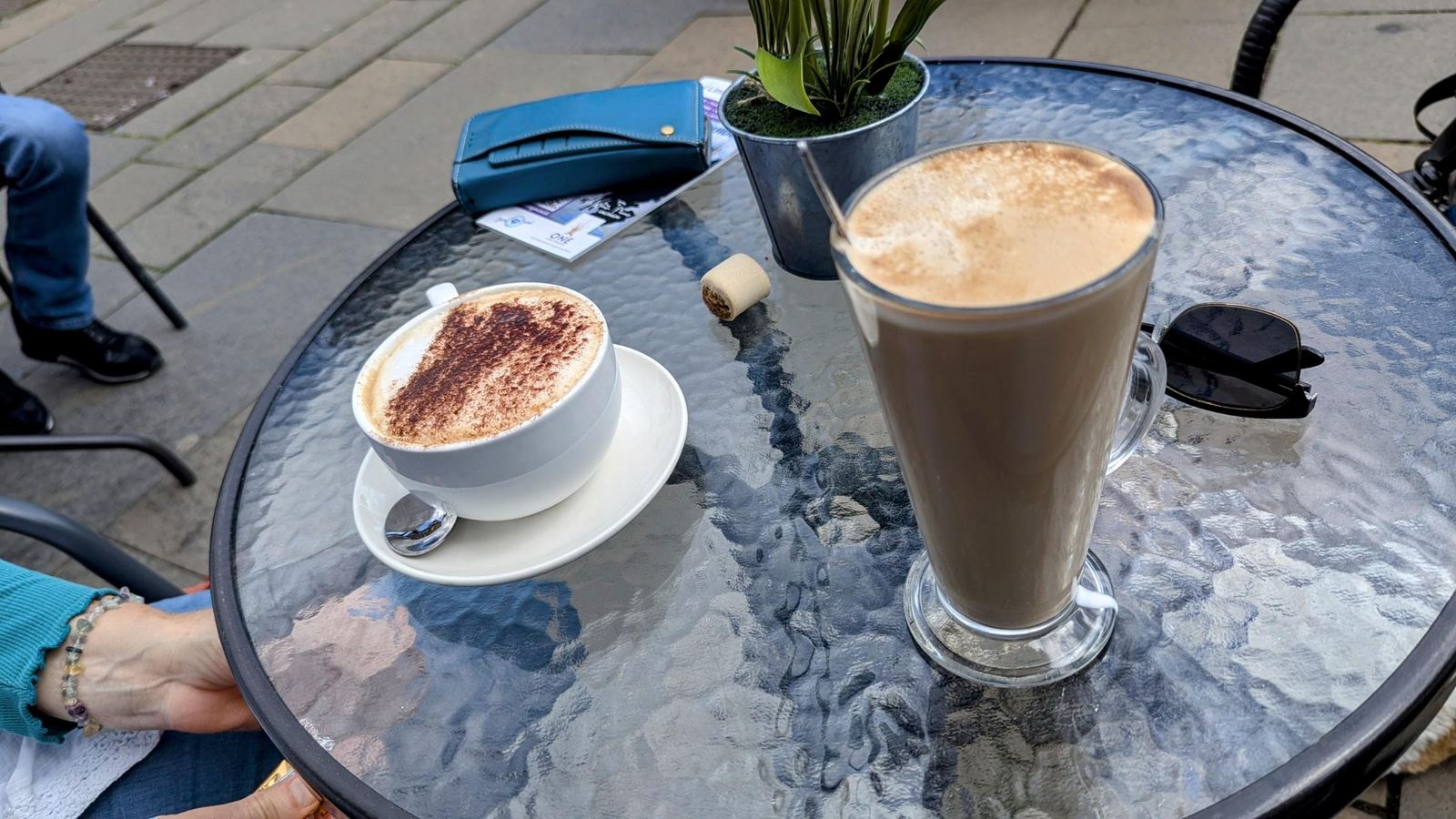
The High Street has a good run of cafés and coffee shops — an easy place to refuel after the loch loop or the palace. We took ours at So Strawberry on the High Street — outside in the sun, watching the town go by.
The Union Canal
Linlithgow also sits on the Union Canal (opened 1822), and the Linlithgow Canal Centre down at the basin runs a small museum and short boat trips in season. The towpath is a flat, easy walk or cycle, and — via the astonishing Falkirk Wheel — it connects all the way to the Forth & Clyde. A lovely gentle add-on if you’ve time to spare. (We didn’t get canal photos this trip — one for next time.)
Getting there & around
- 🚆 Trains — genuinely good: Linlithgow is on the main Edinburgh–Glasgow line, with fast, frequent services and the station a short walk uphill from the palace. This is one of the best rail day-trips in central Scotland — leave the car.
- 🚌 Buses: regular services along the M9 corridor.
- 🚗 Parking: town car parks near the Cross and down by the Peel; busy at weekends.
- 🚐 Motorhome: for us it’s a day-trip town, not an overnight — use the day car parks and move on. The nearest scenic overnights are out toward Beecraigs and the Forth shore.
Nearby
- Blackness Castle — the “ship that never sailed,” a dramatic Forth-side fortress (and Outlander‘s “Fort William”), about 4 miles north.
- The House of the Binns — historic home of the Dalyell family.
- Beecraigs Country Park — woods, a loch and trails up in the Bathgate Hills.
- Cairnpapple Hill — a major prehistoric henge and burial site with enormous views.
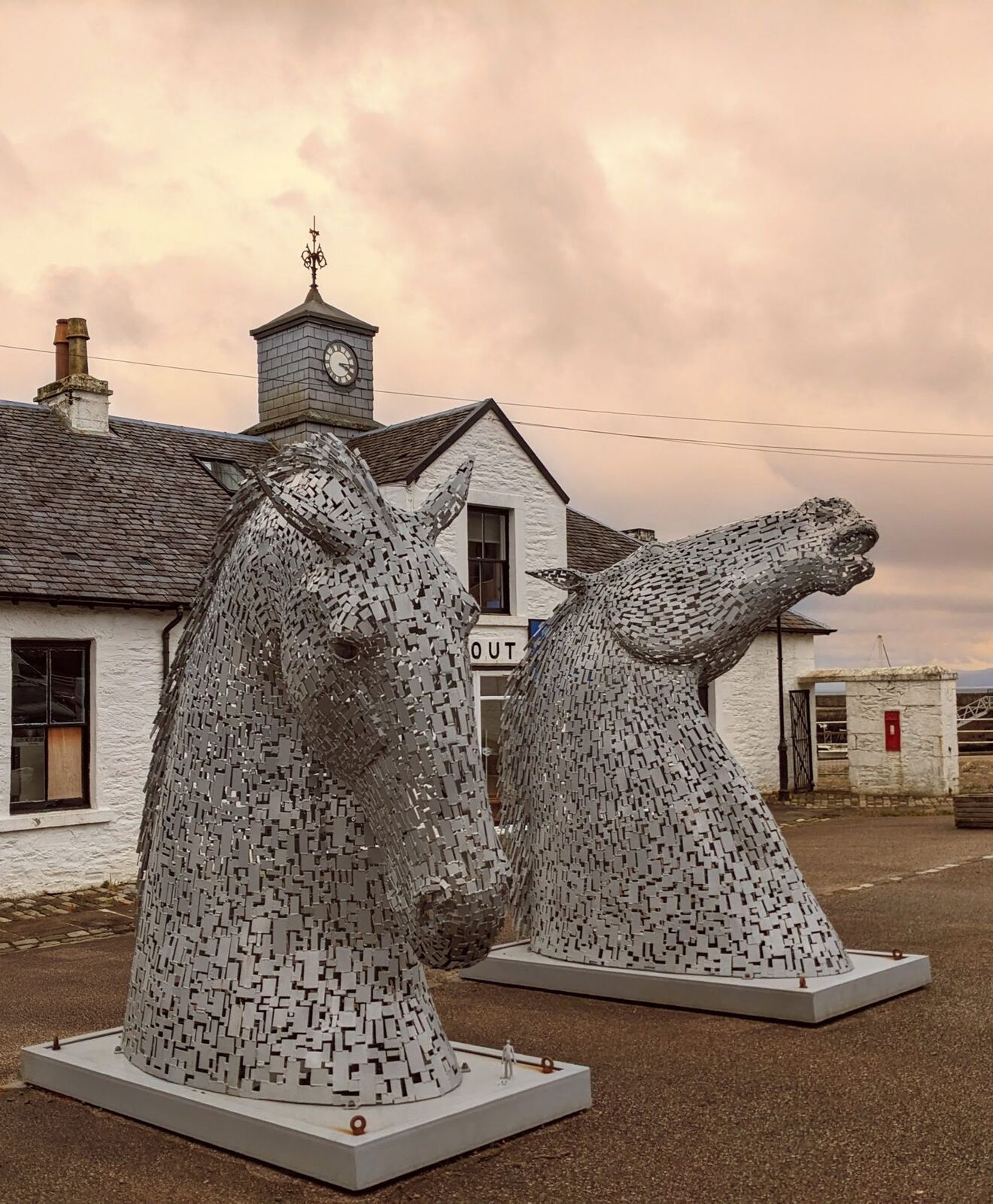
- The Falkirk Wheel & The Kelpies — engineering icons, a short drive west.
Best time to visit
Year-round — the loch walk and town are lovely in any season, and St Michael’s is weather-proof. Spring and summer for the palace, the swans and the best light on the water; a bright, still morning is unbeatable for the reflections. Always check the palace opening first (see the access note above).
Where we stand
- 🏰 Palace access: check HES for current opening — masonry works have caused closures and marshalled routes. Don’t build the whole day around getting inside; the exterior, loch and town stand on their own.
- 🦢 Wildlife: masses of swans and waterfowl on the loch — please don’t feed bread, and keep dogs under control near nesting birds.
- 🐕 Dogs: brilliant for the loch loop and the town on a lead. The palace and church have their own rules.
- 🚆 Car-free friendly: one of the best rail day-trips going — the station’s a five-minute walk.
- 🦟 Midges: low — it’s town and open water.
- 📸 What you’re seeing: all our own photos from a June day here — palace, courtyard and Great Hall, St Michael’s inside and out, the full loch circuit, the Cross Well and the Black Bitch, and Lillie doing quality control.
Why binoculars change the loch circuit
The circuit of Linlithgow Loch is a mile and a half of open water with the Palace reflected in it, and it is busy with birds — swans, grebes, gulls and whatever has dropped in that week. Without glasses it is a nice walk round a loch. With them it becomes something you slow down for, and the far shore stops being scenery and starts being somewhere with things happening on it.
☔ Even out east at Linlithgow the old rule holds: from autumn to early summer it rains far more often than not, and a golden dawn over the loch is no contract for the day. Give it an hour and the palace can be under a grey deluge. Watch the locals on the loch circuit — small pack, packable waterproof, umbrella clipped on — and follow suit, on foot or by bike, so the weather never cuts the walk short.
Celestron Nature DX 10×42 Binoculars
Linlithgow Loch wraps right around the base of the palace, and it is busier with wildlife than most people expect — mute swans, great crested grebes, and herons stalking the reeds, with an osprey passing through some summers. A pair of these turns the walk round the Peel into a proper wildlife hour rather than a stroll past a pretty view; light enough to keep round your neck the whole loop, and sharp in the flat loch-side light.
Check price on Amazon
Why a pack suits a palace-and-loch day
Linlithgow works as a half-day that turns into a full one — the Palace, St Michael’s, then the loch path, then back into the town. It is exposed round the water and sheltered in the Palace, so you will be adding and shedding layers all afternoon. Somewhere to put the jacket you have just taken off is most of what a daypack is actually for.
MOUNTAINTOP 40L Daypack
For the two-mile loch circuit and a wander round the palace and town, a light waterproof daypack is all you need — and this is the one we’d point you at. 40L, rain cover, thousands of happy walkers behind it.
Check price on Amazon