
St Andrews: The Home of Golf, a Ruined Cathedral & Scotland’s Oldest University
Overview — three towns in one
St Andrews punches so far above its size it’s almost silly. This little grey-and-gold town on the Fife coast is, all at once, the Home of Golf, the site of Scotland’s greatest medieval cathedral (now a spectacular ruin), a clifftop bishop’s castle with a dungeon and a siege-tunnel you can crawl through, and Scotland’s oldest university. Add a working harbour, the enormous West Sands beach, cobbled streets full of good cafés, and cracking coastal walks, and you’ve got one of our favourite days out anywhere. We came in winter and had the place — beach, cathedral, castle and all — gloriously to ourselves.
Where it is
St Andrews sits on the north-east coast of Fife, on the edge of the pretty East Neuk, about an hour and a bit north of Edinburgh (over the Forth bridges) or across from Dundee. It’s an easy, rewarding day or two from anywhere in central Scotland.
The Home of Golf ⛳
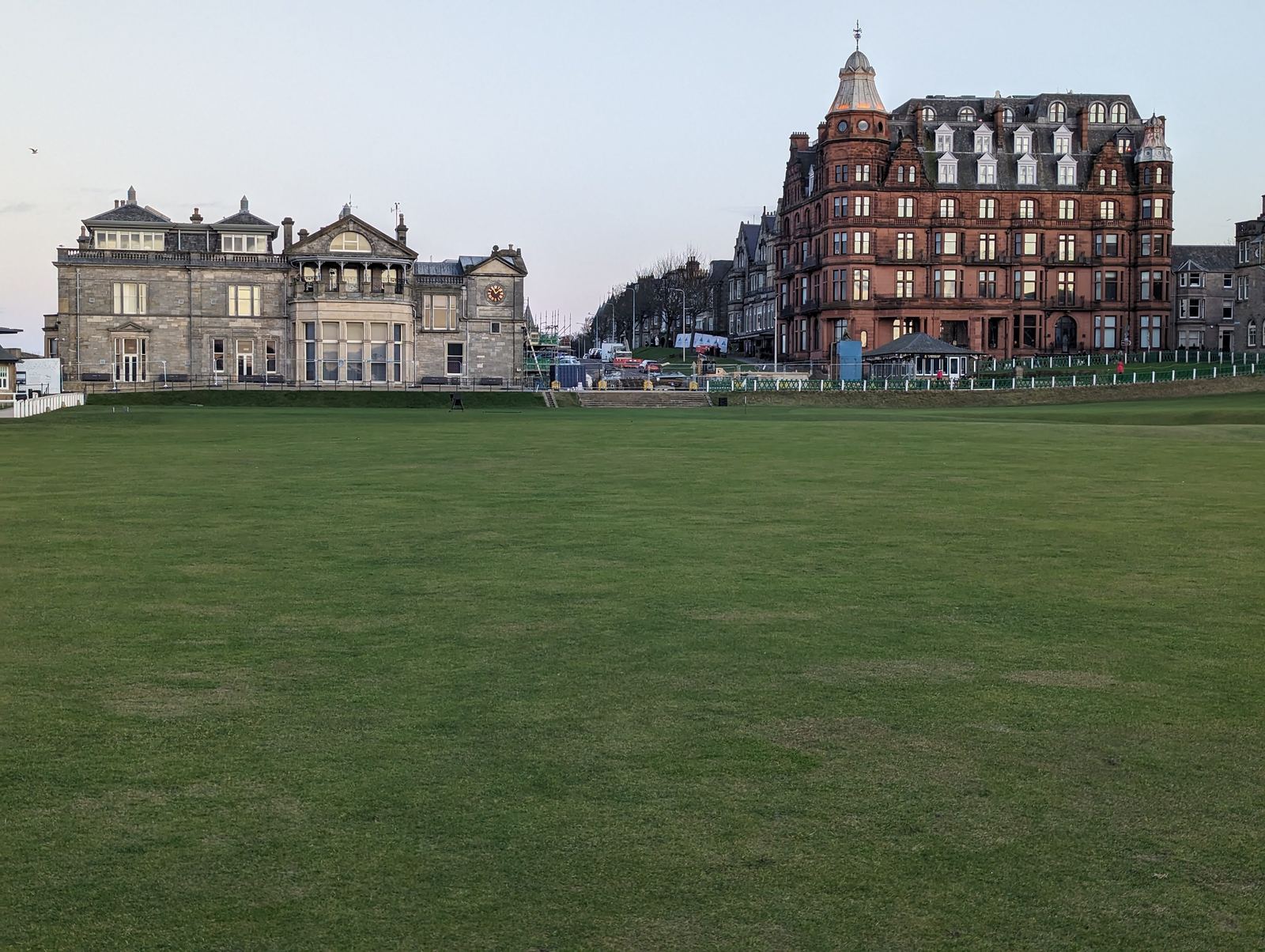
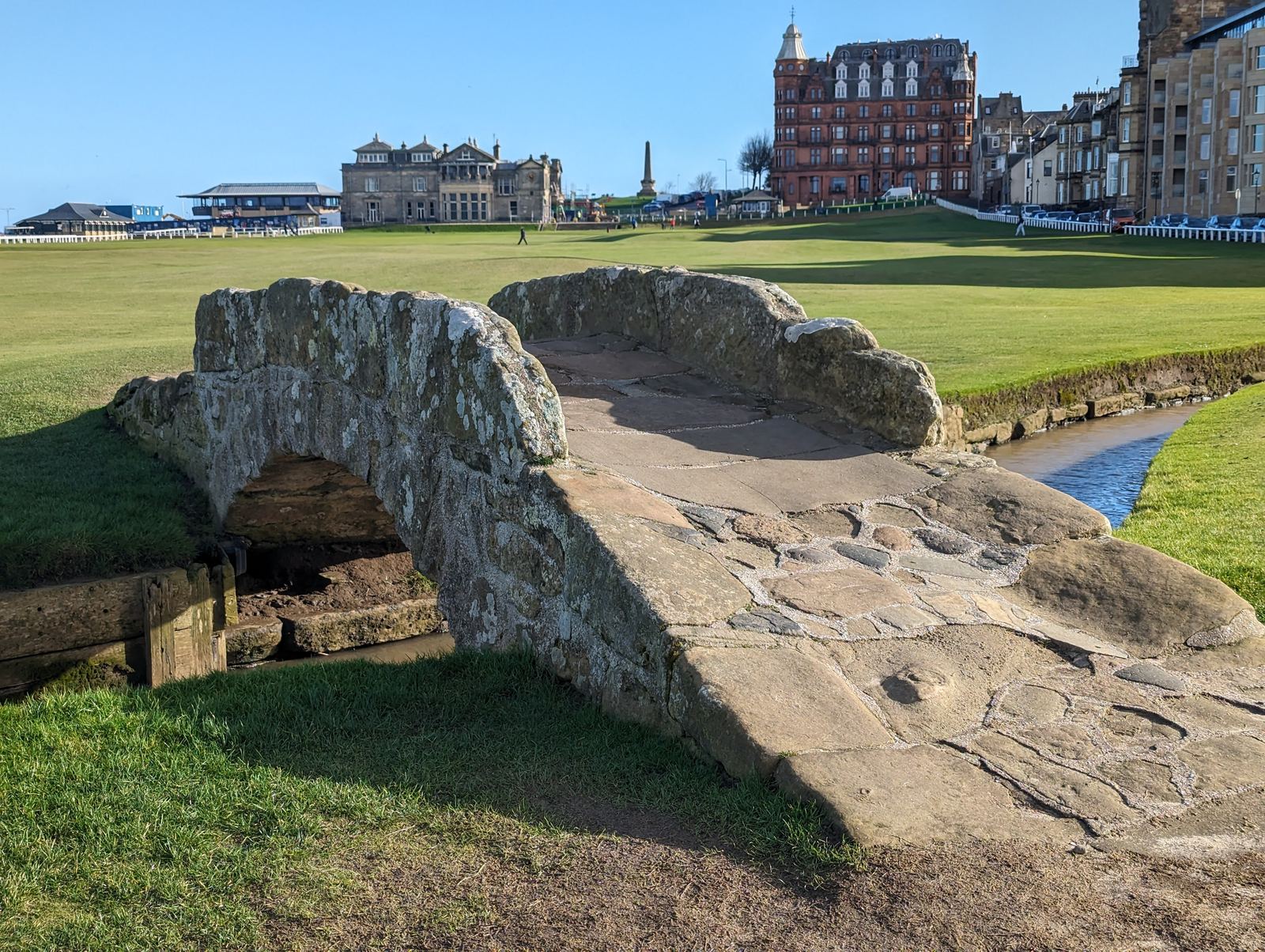
Golf has been played on the links here since the 1400s, and St Andrews is where the modern game was codified: the Royal & Ancient Golf Club (the “R&A”), founded in 1754, became one of the game’s governing authorities, and its clubhouse stands right behind the 18th green of the Old Course — the most photographed hole in golf. The famous little humpbacked Swilcan Bridge, where every golfer from Old Tom Morris to Tiger Woods has stopped for a photo, crosses the burn on that same fairway.
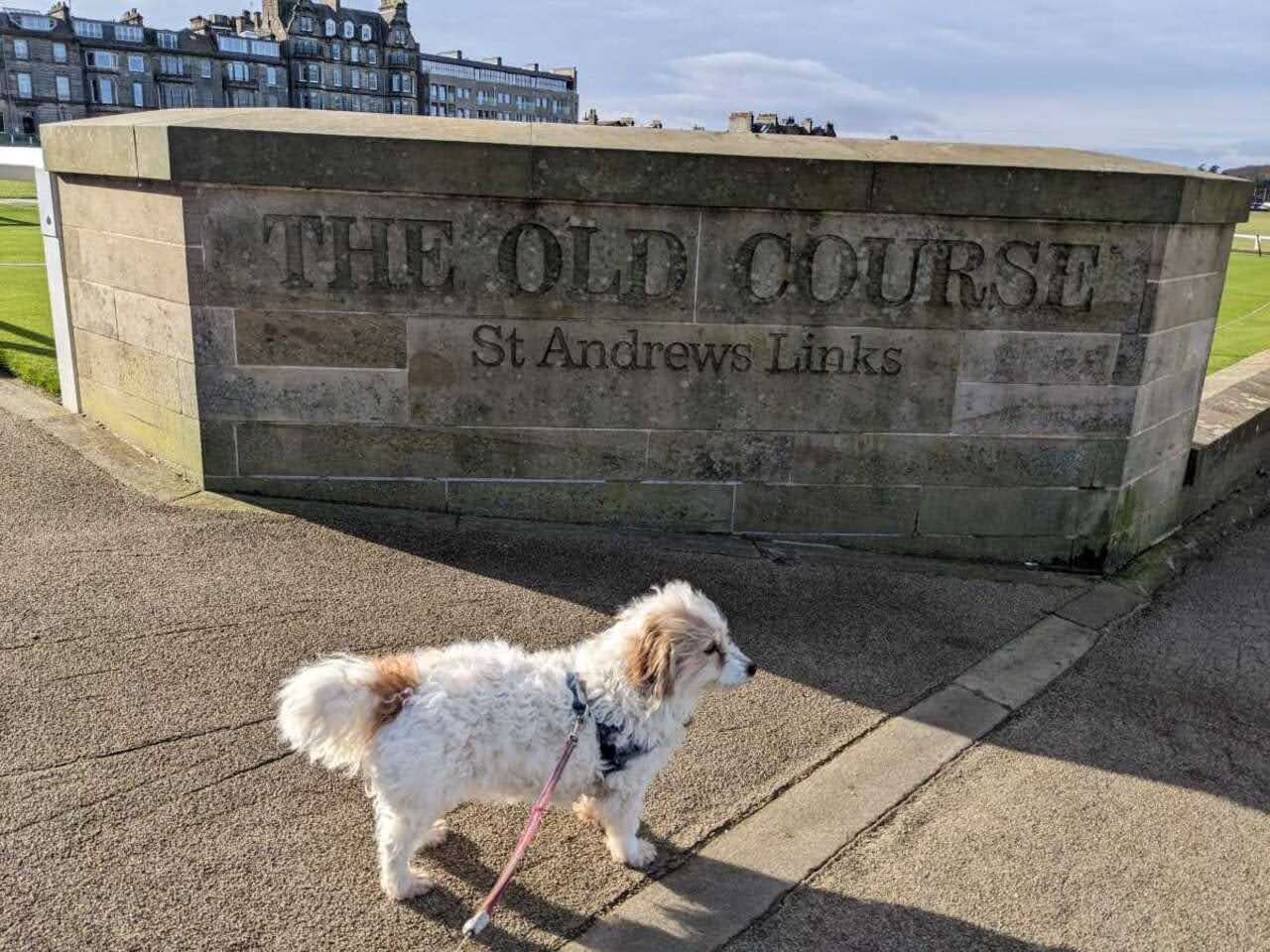
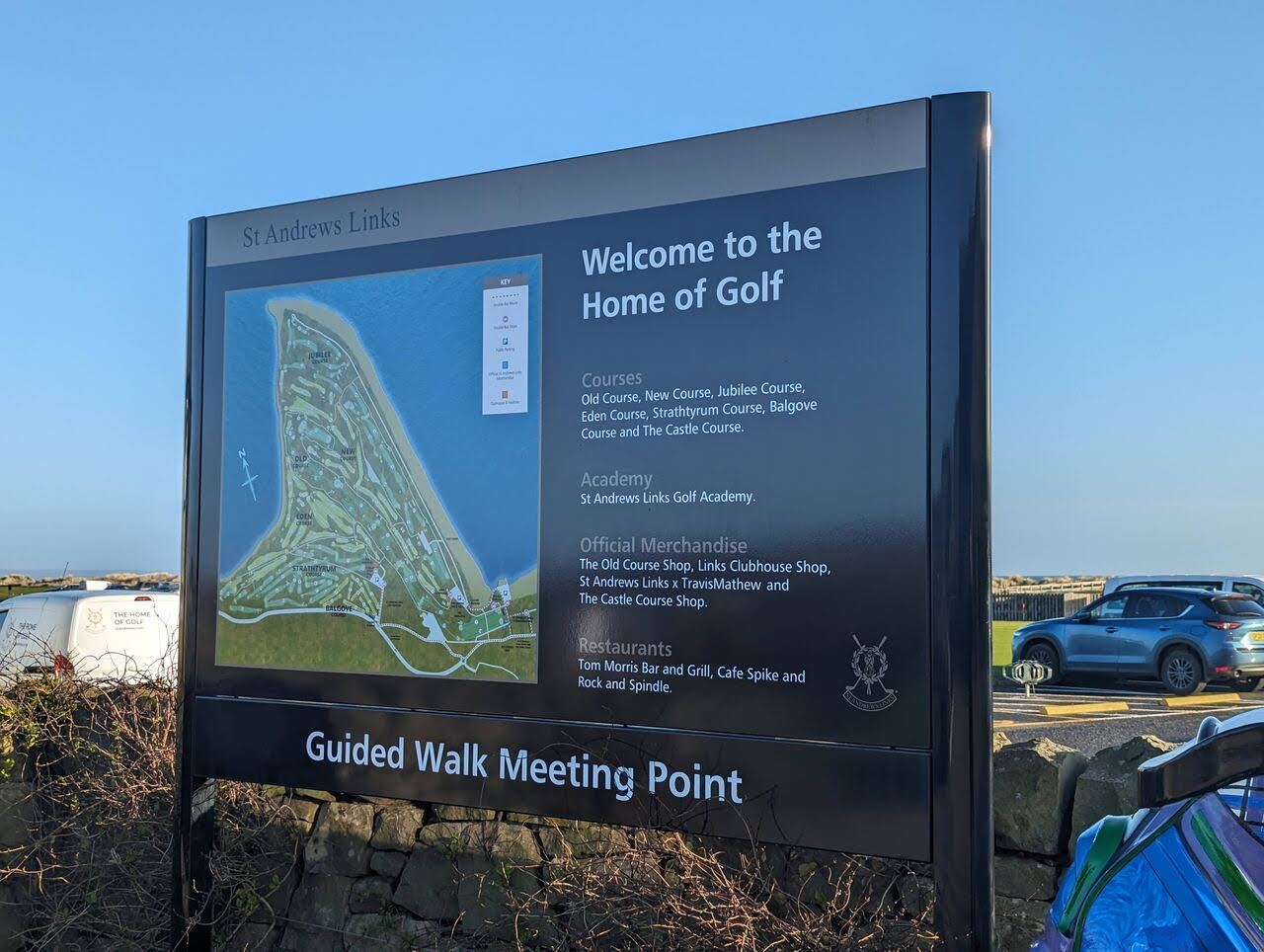
Crucially, the Old Course is a public course on common land — anyone can play it (by ballot or booking), and on Sundays, when it’s closed to golf, anyone can walk on it. Around it, the St Andrews Links Trust runs a whole family of courses — the New (1895), Jubilee (1897), Eden, Castle and more. Even if you’ve never held a club, it’s worth the wander for the sheer sense of history.


West Sands — the Chariots of Fire beach
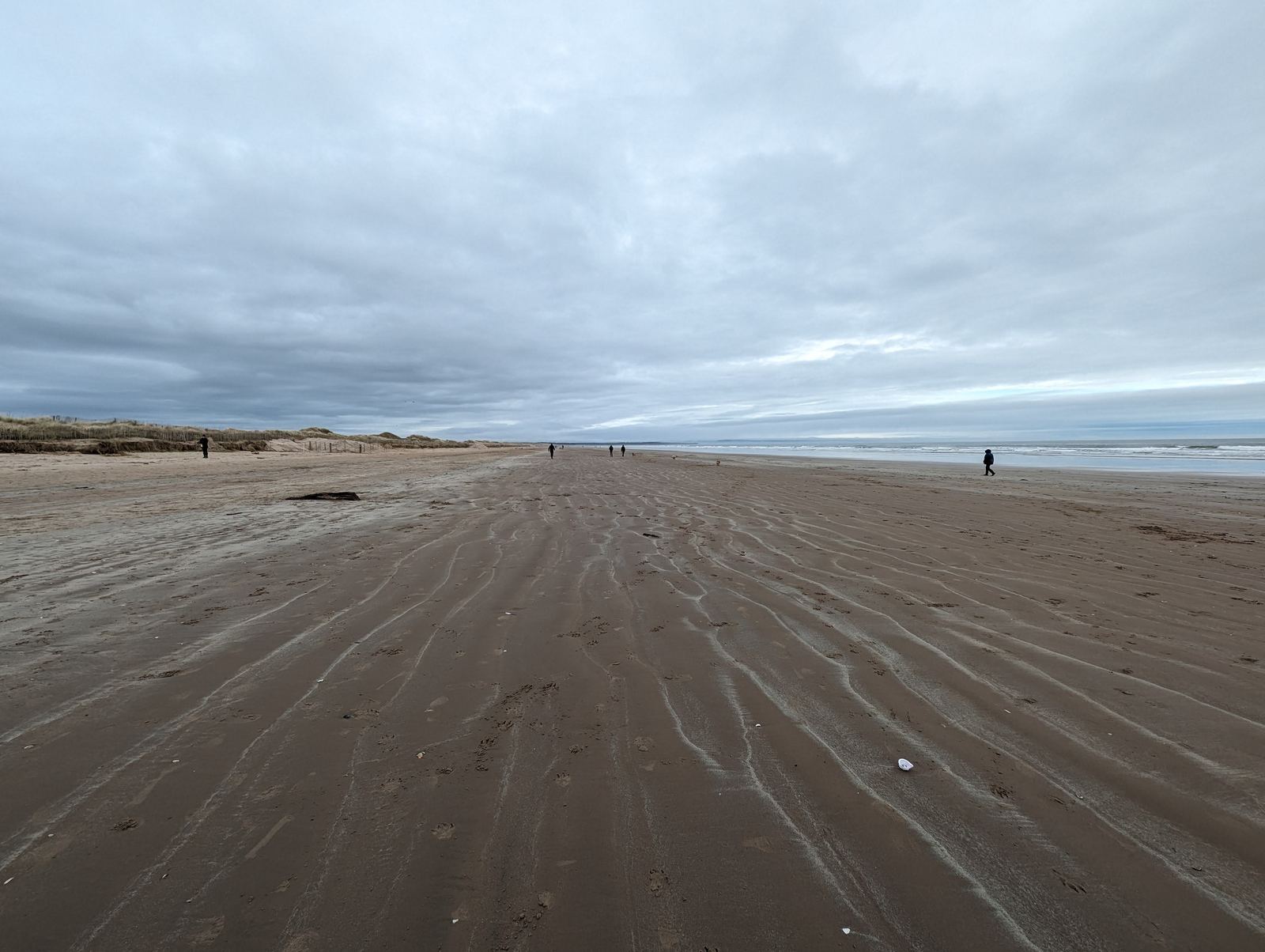
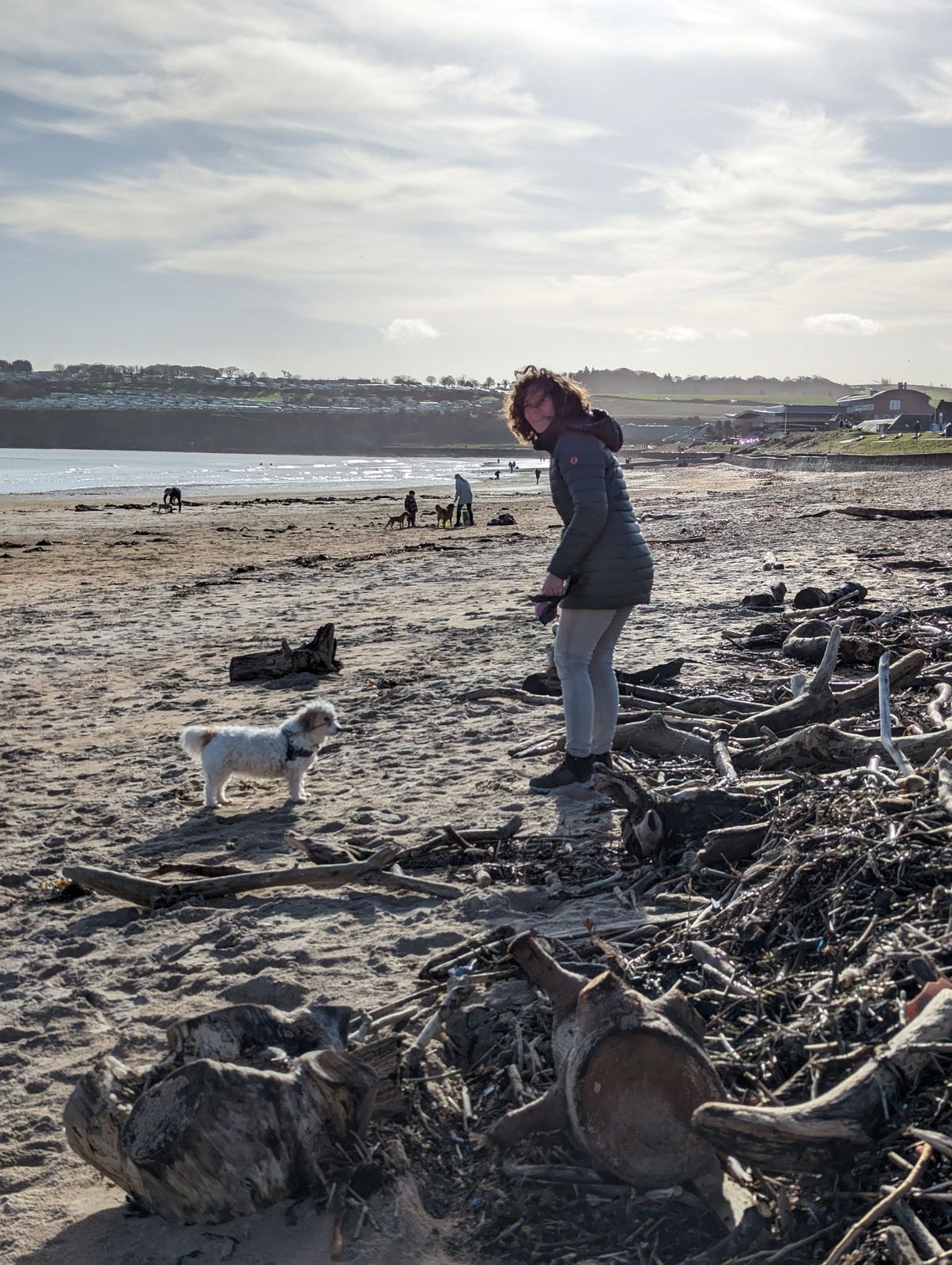
Running along the golf links is the glorious West Sands — two miles of flat, open beach that most people will recognise instantly: it’s where the opening scene of Chariots of Fire was filmed, all those runners pounding along the surf. It’s a superb dog beach and a brilliant blow-the-cobwebs-away walk (Lillie thoroughly approved), with the town and cathedral as your backdrop.

St Andrews Cathedral — once the greatest church in Scotland
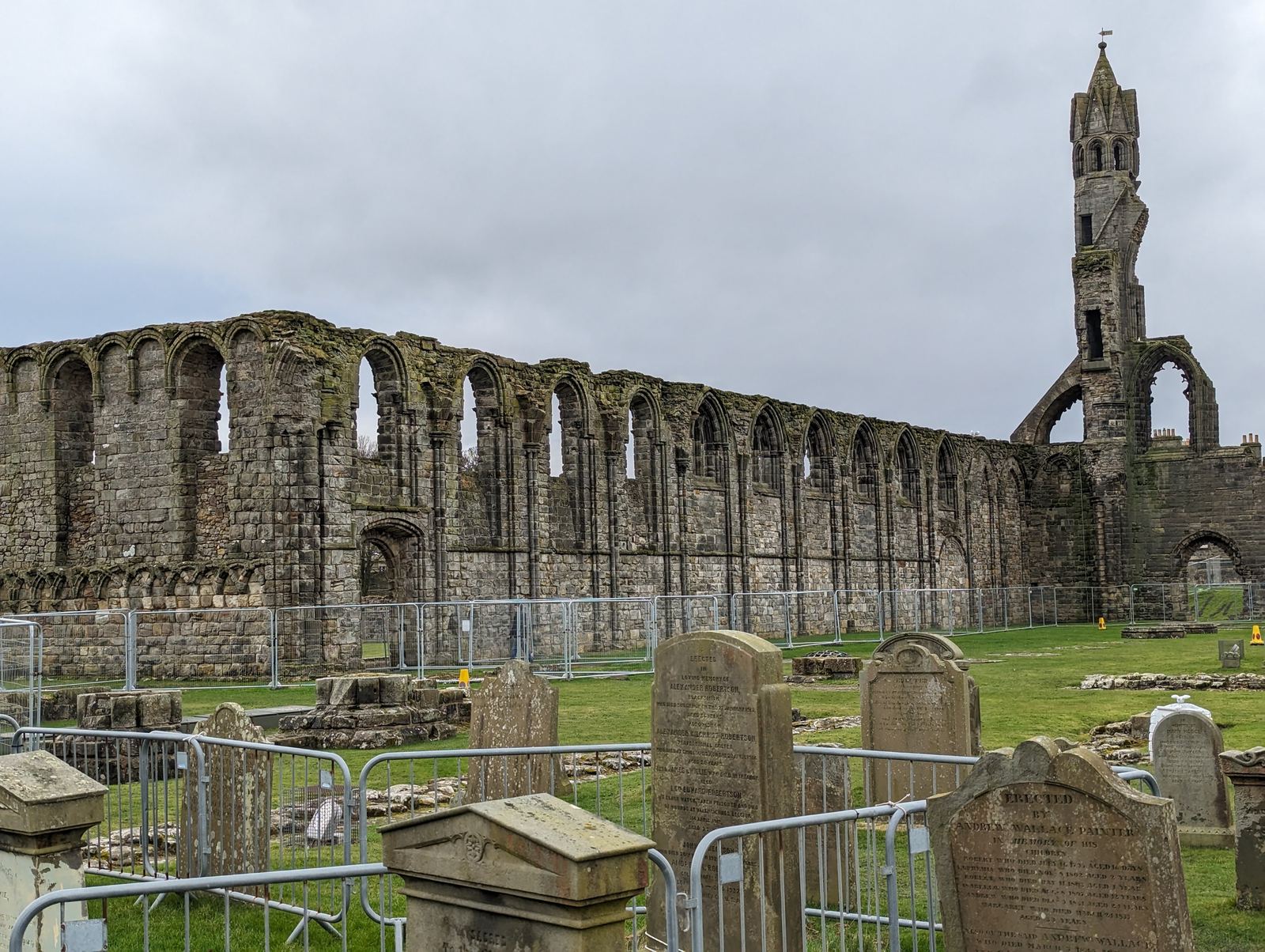
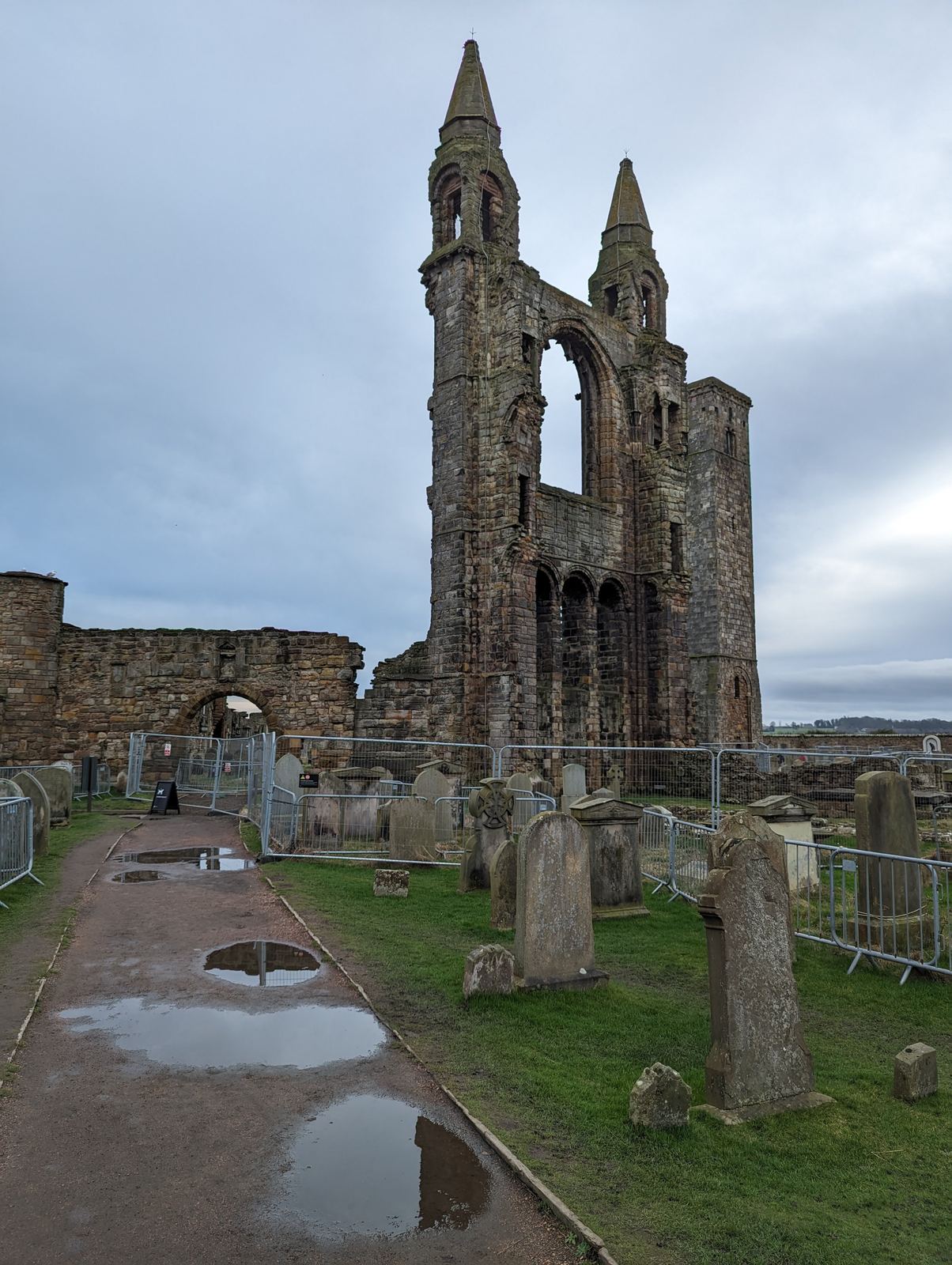
Up at the east end of town stand the breathtaking ruins of St Andrews Cathedral. Begun around 1160 and finally consecrated in 1318 — in the presence of Robert the Bruce, fresh from Bannockburn — it was, at nearly 390 feet long, the largest church ever built in Scotland, and the spiritual heart of the whole country. It held the relics of St Andrew himself (the apostle, and Scotland’s patron saint), brought here, legend says, by a monk called St Rule (Regulus) — which is why medieval pilgrims flocked here from all over Europe.
All that ended at the Reformation. In 1559, after a fiery sermon by John Knox, a mob stripped the cathedral, and without its roof it slowly collapsed into the magnificent skeleton you see today. Don’t miss the older St Rule’s Tower (11th–12th century, 33 metres) in the grounds — you can climb it for a stunning view over the town, the links and the sea.

St Andrews Castle — a dungeon, a murder & a siege tunnel
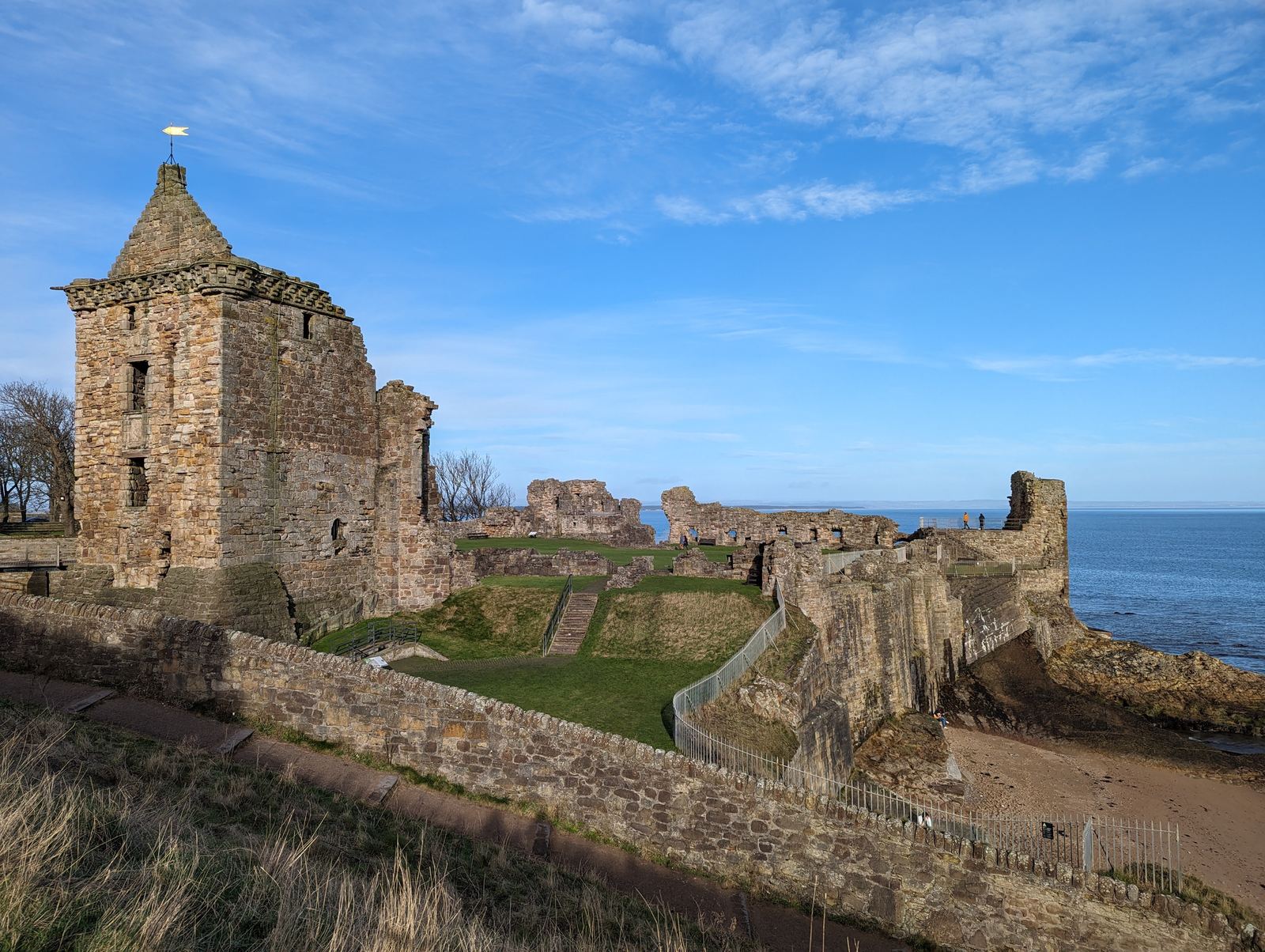
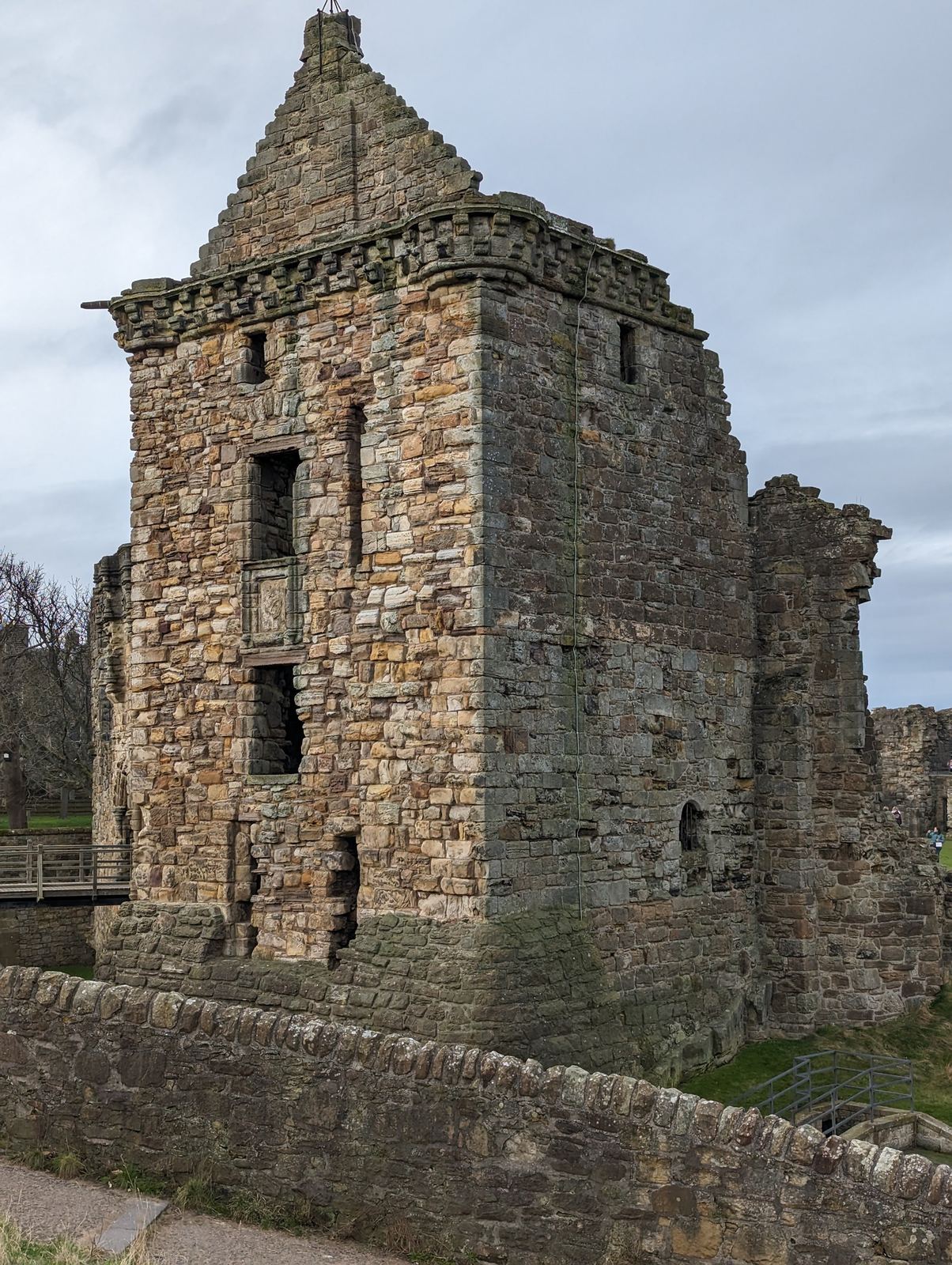
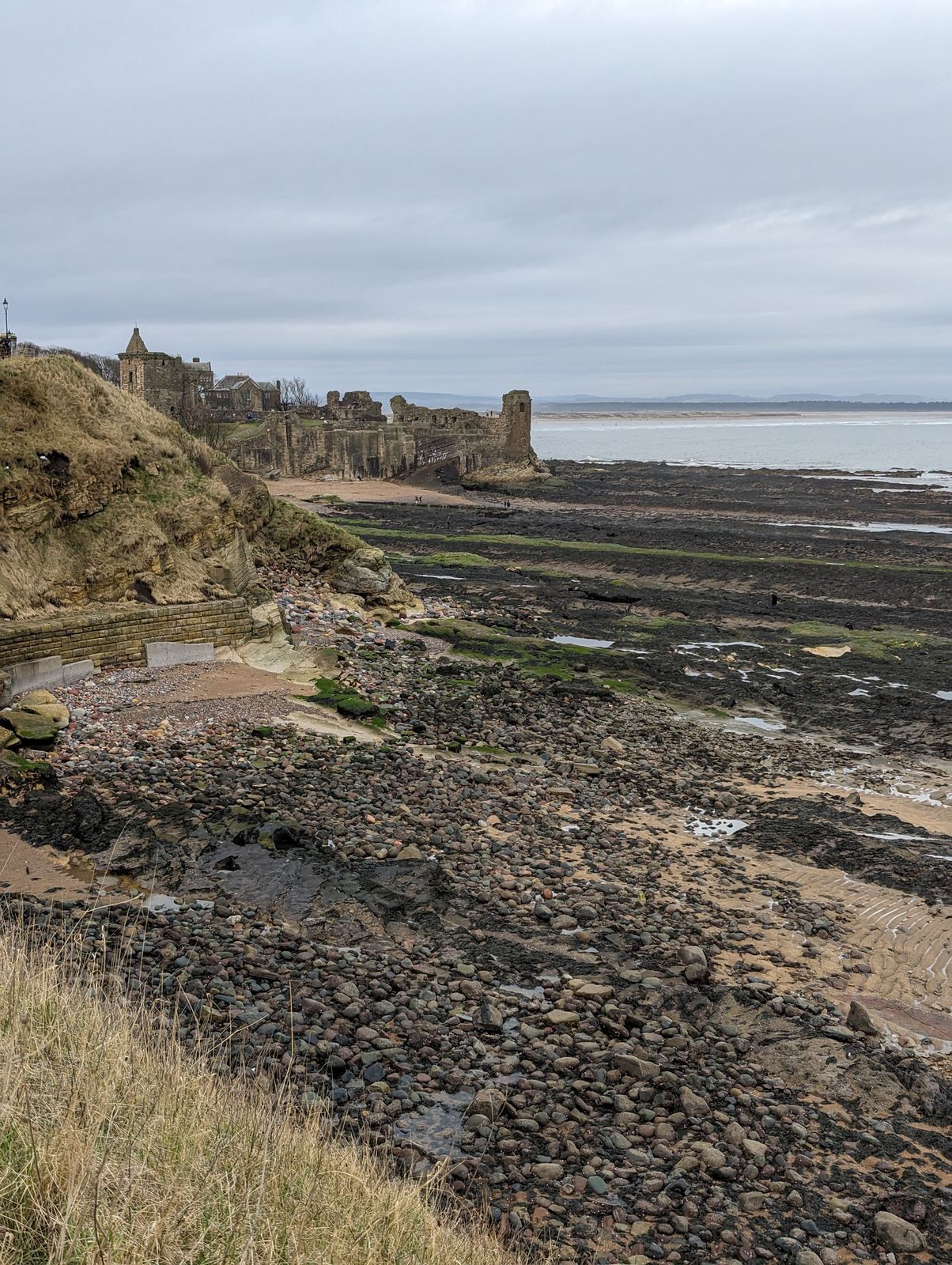
A short walk along the clifftop brings you to St Andrews Castle, the fortified home of the bishops and archbishops of St Andrews — and the scene of one of the most dramatic episodes of the Scottish Reformation. Its two unmissable features:
- The Bottle Dungeon — a horrible bottle-shaped pit hacked out of solid rock, narrow at the neck and wide below, from which prisoners simply could not climb out. John Knox wrote of it, “many of God’s children were imprisoned here.”
- The mine and counter-mine — during the 1546–47 siege, the attackers dug a tunnel to undermine the walls, and the defenders dug their own tunnel to intercept them. You can still crawl through both — a genuinely extraordinary thing to do.
The siege happened because, in 1546, Protestant reformers murdered Cardinal David Beaton in the castle (in revenge for his burning of the reformer George Wishart) and hung his body over the walls. The reformers — John Knox among them — then held the castle until French galleys battered them out in 1547. Few ruins pack this much history into one clifftop.
Scotland’s oldest university
St Andrews is also a university town — and not just any: the University of St Andrews, founded in 1413, is the oldest in Scotland and one of the oldest in the English-speaking world. Its ancient colleges are woven right through the streets, its students still wear scarlet gowns, and (a bit of modern lore) it’s where Prince William met Kate Middleton. The mix of medieval ruins, golf and gowned students gives the town a character all its own.
The harbour & the walks
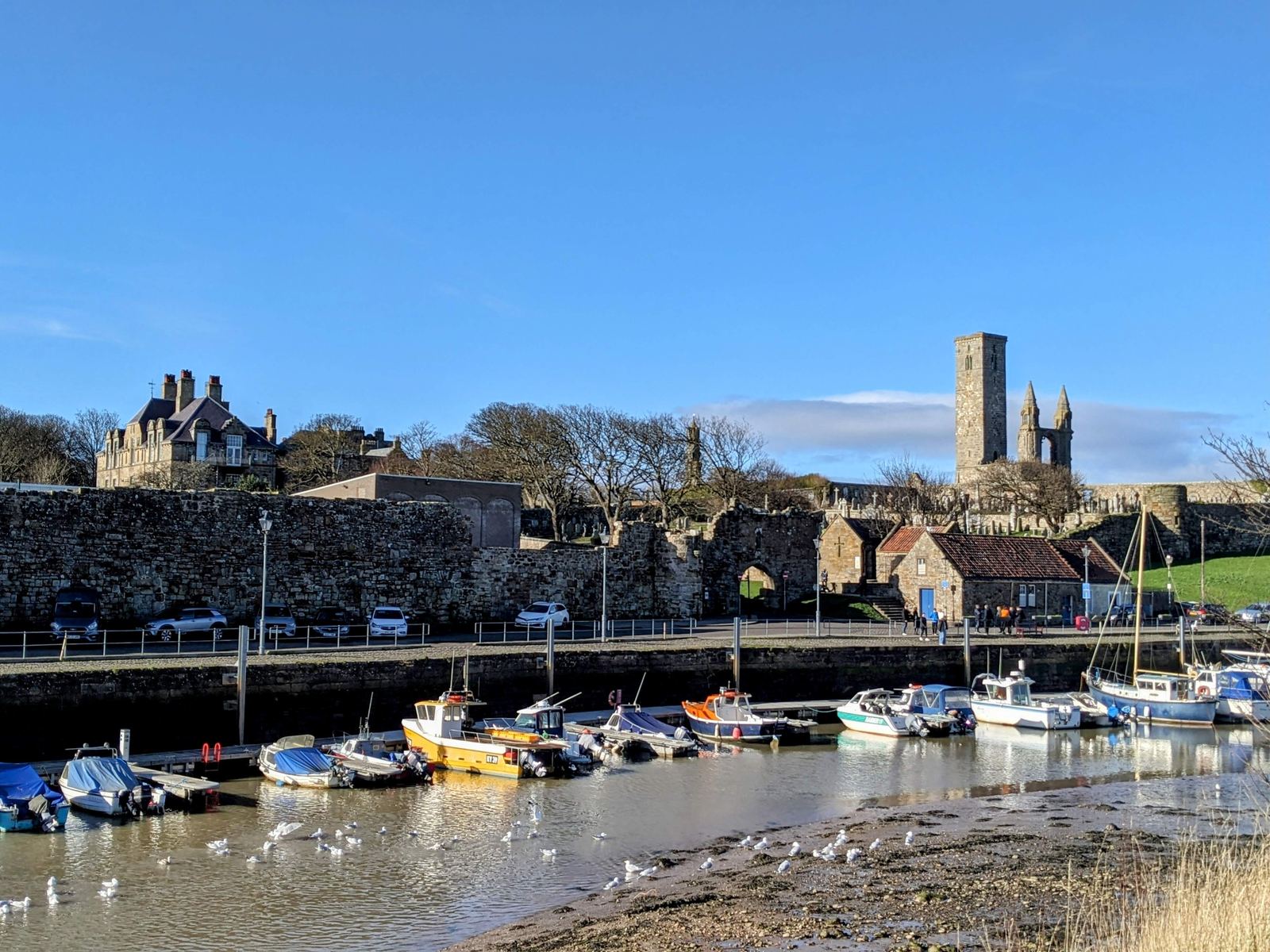
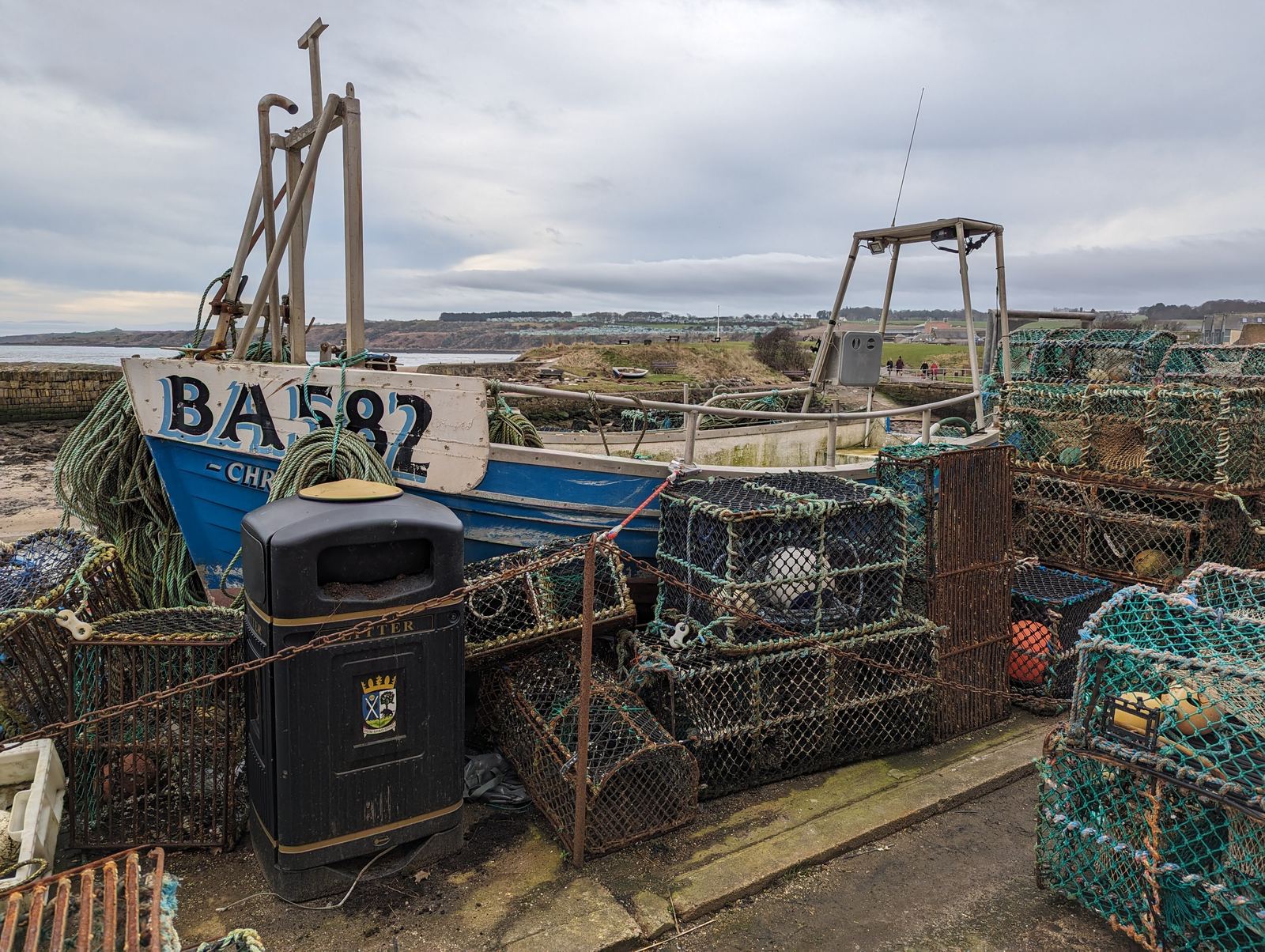
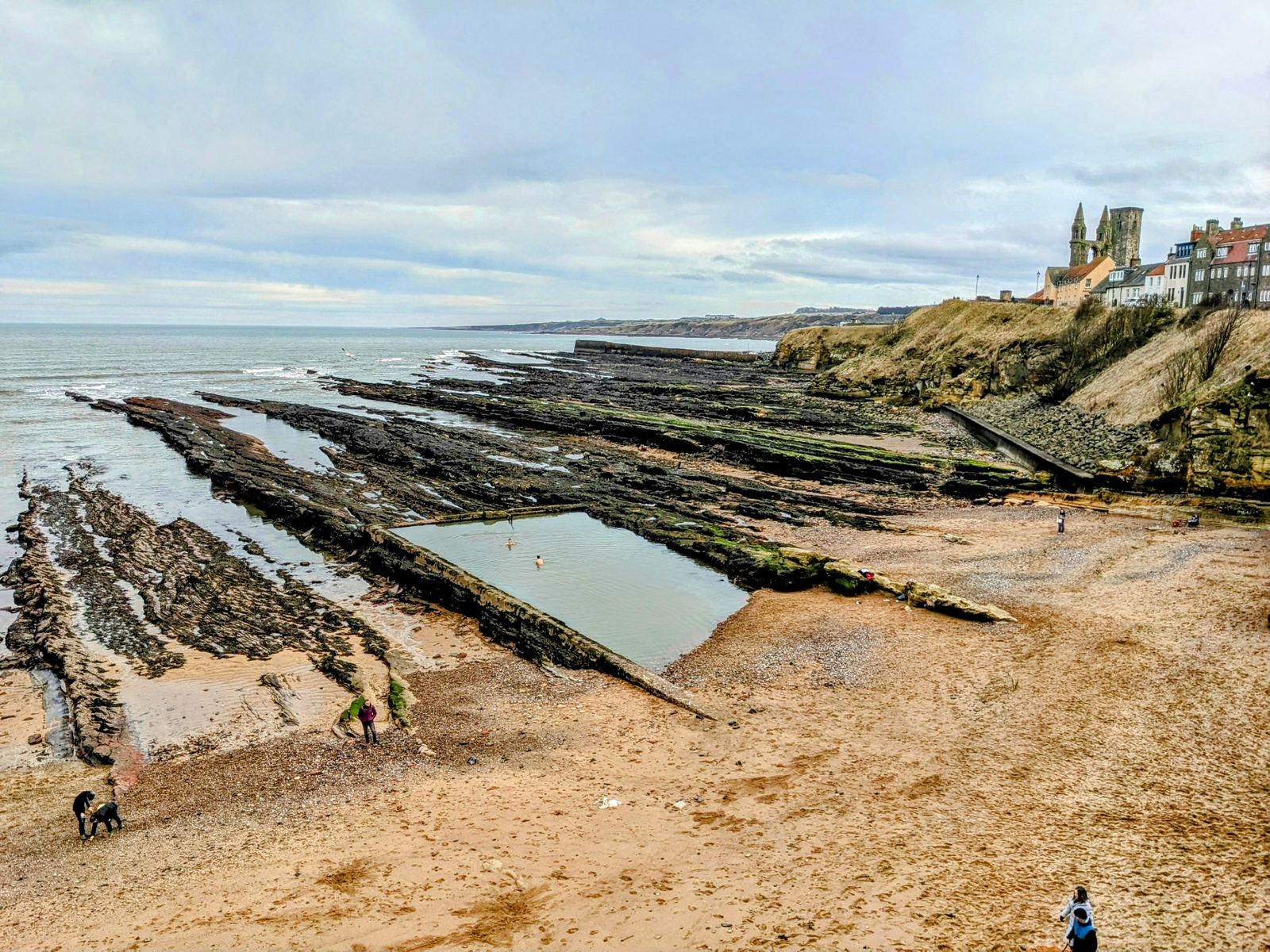
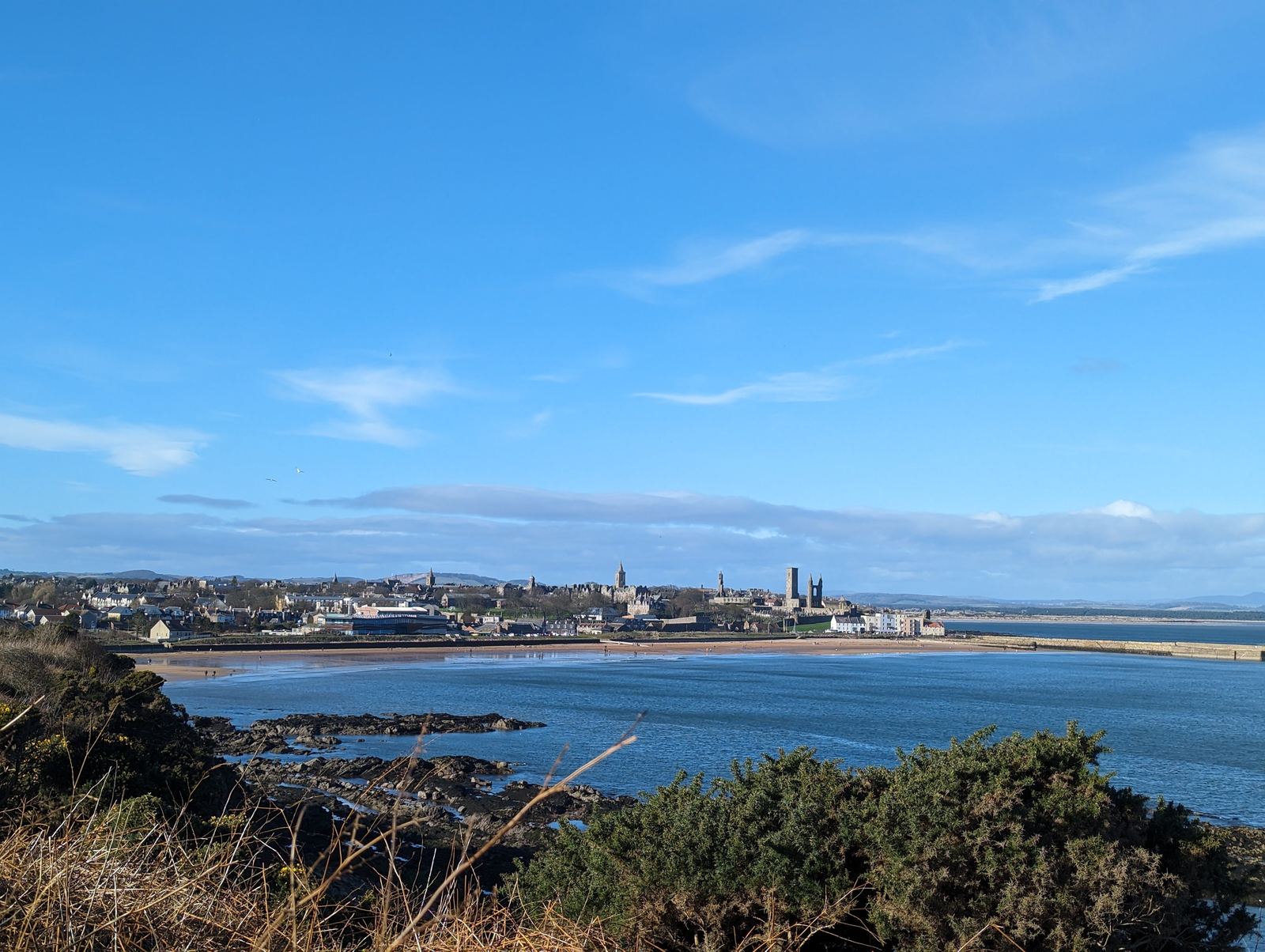
Below the cathedral, the little harbour is still a working one, with fishing boats, creels and the tide sliding in and out — and it’s the start of some lovely walks. We did a couple of nice ones: out along the harbour pier (the traditional students’ “Pier Walk”), the full length of the West Sands, and the coastal stretch below the castle and cathedral, where the sea has carved the rock into strange folded wave-cut platforms. Easy, scenic, and never far from a coffee.
The town & a coffee
St Andrews’ three old streets — North, Market and South — are full of independent shops, delis and cafés, all funnelling down to the cathedral. It’s an easy, handsome town to potter around. We had a lovely coffee and cake at a proper dog-friendly spot (the Old Union Coffee Shop flies the “dog friendly” flag, which always gets our vote), and there’s a “Taste of Scotland” and plenty more besides.



🚐 Staying overnight
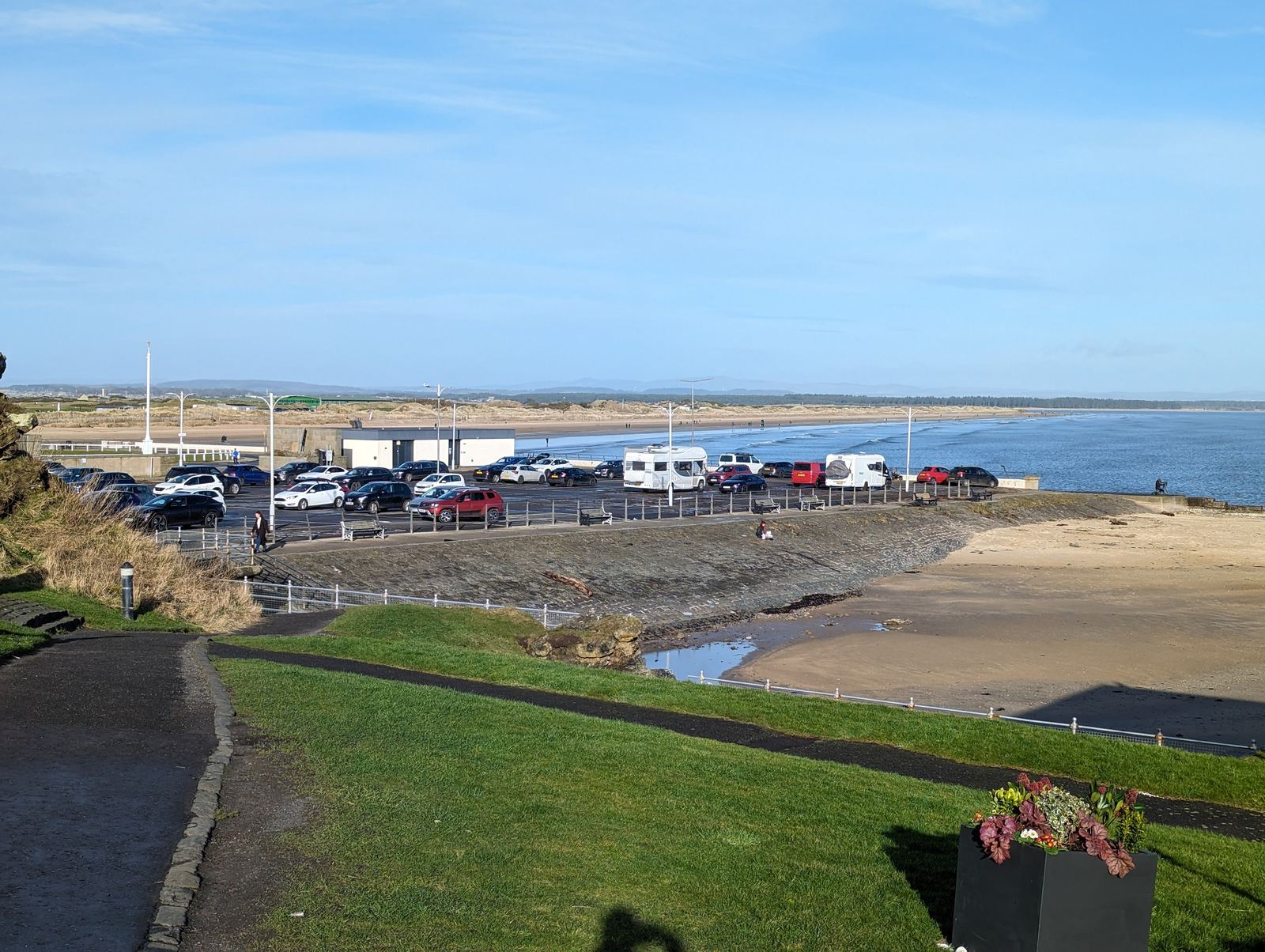
For van life, we stayed overnight by the car park near the sea — handy for the beach and the walks, and quiet at night. On a later trip we found an even better spot near the big wall (our son used it for a night a month later, and rated it) — a bit more tucked-away and pleasant. As always, treat these places with care: arrive late, leave early, take only one space, leave no trace, and check the current signage before you rely on any of it, because seafront and town parking rules change.
Best time to visit
Any time — St Andrews is a real, year-round town. We loved it in winter, with the ruins and the West Sands almost to ourselves; spring and autumn are lovely and quieter than the summer golf season. Term time brings the students and the buzz; check the golf calendar if you want to avoid (or catch) a big tournament.
Combine it with
- The East Neuk of Fife — Crail, Anstruther and the pretty fishing villages, just south.
- Dunfermline — the ancient capital and Bruce’s burial place, across Fife.
- Dunbar & the East Lothian coast — across the Forth to the south.
- See its castle on our Castles of Scotland hub.
Reality notes
- ⛳ Golf: the Old Course is walkable free on Sundays; the Links visitor centre and shops are worth a look any day.
- 🏛️ Cathedral & Castle: both Historic Environment Scotland (ticketed; cathedral grounds partly free to wander, St Rule’s Tower and the castle mine are the paid highlights).
- 🅿️ Overnight: seafront/town car parks — be tidy and discreet; check current signage.
- 🐕 Dogs: brilliant — West Sands, the coast paths and several dog-friendly cafés.
- 🚶 Underfoot: the castle mine is low, dark and not for the claustrophobic; St Rule’s Tower is a tight, steep climb.
More from our visits
Insta360 X6 360° Action Camera
The wee video on this page is filmed on our Insta360 X6 — the 360° camera we use for everything. On a spot like the West Sands you just hold it up and it captures the whole sweep of beach and sky at once, and you pick the best framing afterwards on your phone. Dead simple, tough and waterproof — brilliant for filming on the move.
Check price on Amazon
Sources
- First-hand: Kevin & family, St Andrews, Feb 2024 (own photos)
- St Andrews Cathedral & St Andrews Castle — Historic Environment Scotland
- St Andrews Links Trust · St Andrews — Wikipedia
Watch: what’s actually in the set
Tempted by the set above? Here’s a quick run-through of exactly what turns up in the box — all 16 pieces, stand bag and all — before you part with your money.
Why you might want your own clubs at St Andrews
You can hire at St Andrews, and plenty do. But if you have entered the Old Course ballot and it comes in, playing the Home of Golf with rented irons is a story you will tell slightly apologetically forever. A complete set that lives in the car for the rest of the trip — Kingsbarns, Crail, the Jubilee — changes the economics of a Fife golfing week entirely.
Callaway Strata Ultimate — 16-Piece Complete Set
If St Andrews leaves you itching to tee off, this is the set to do it with: a complete 16-piece Callaway package — driver, 3-wood, two hybrids, 6–9 irons, pitching & sand wedges, putter and a stand bag, all in one. Not tour-level custom gear, but the most-bought, best-reviewed complete Callaway set going, and superb value to get you round.
Check price on Amazon
Nokta Score Metal Detector
The West Sands is two miles of open, firm beach — the strand the runners pound in the opening of Chariots of Fire — and that much raked sand beside a very old town is happy hunting for a detectorist. Rings lost off the dunes, Victorian coppers, buckles: it all works its way down to the beach eventually. We’d start a newcomer on this one — waterproof to the coil, simple menus, and cheap enough to justify a week of swinging the sands before the early tee times. Our full review →
Check price on Amazon
🪙 Detecting on this beach
The West Sands is one of the busiest stretches of sand in Scotland — two miles of it, with golfers, students and visitors on it all summer. On paper it is the highest-potential beach anywhere on this site.
Keep it legal: the West Sands foreshore is permit-free under Crown Estate Scotland, but the dunes and the links behind them very much are not — and the Old Course is nobody’s detecting ground. Report every find to the Treasure Trove Unit, and check the scheduled-monument map before you go anywhere near the cathedral or castle. The law explained → · our guide →
Worth a thought if you fancy a new hobby: the West Sands sees more people in a summer week than most Scottish beaches see in a year, and every one of them is a potential dropped ring or chain. That is the honest economics of beach detecting — footfall is the raw material, and there is more of it here than anywhere on this site.