
Dunkeld: An Ancient Cathedral, Giant Trees & Telford’s Bridge on the Tay
Overview — the honest take
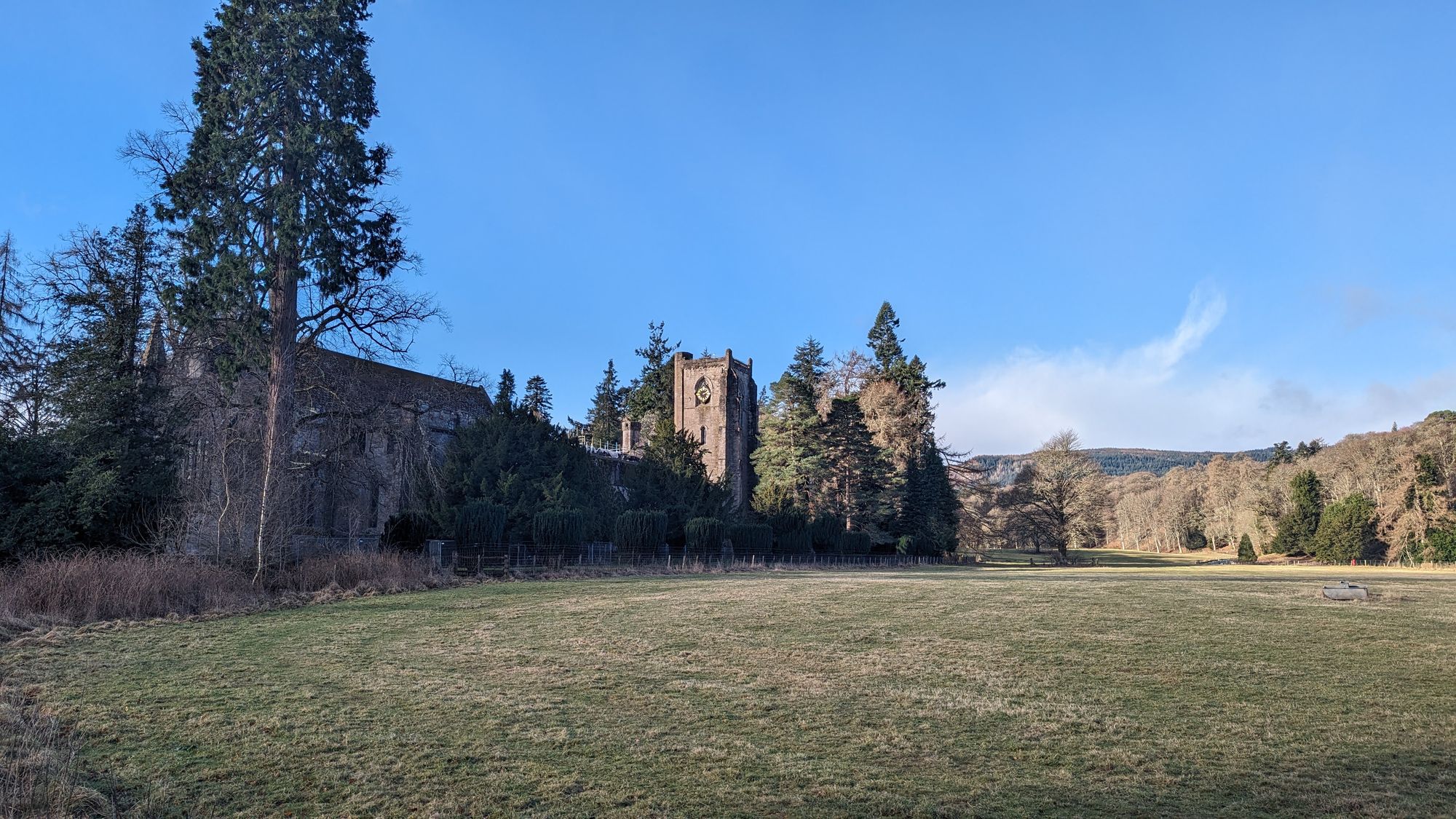
Dunkeld is one of the loveliest wee towns in Perthshire — a handsome huddle of streets on the north bank of the River Tay, gathered round a beautiful part-ruined cathedral, set among some of the tallest and grandest trees in Britain, and joined to its twin village of Birnam by one of Thomas Telford’s finest bridges. Add the magical Hermitage woodland walk just up the road, a dab of Shakespeare and a dab of Beatrix Potter, and it’s a place that rewards far more than a quick stop.
Where it is
Dunkeld sits on the A9 about 15 miles north of Perth, at the point where Lowland Perthshire gives way to the Highlands — a natural gateway to the north. The town is on the Tay’s north bank; cross Telford’s bridge and you’re in Birnam.
Dunkeld Cathedral
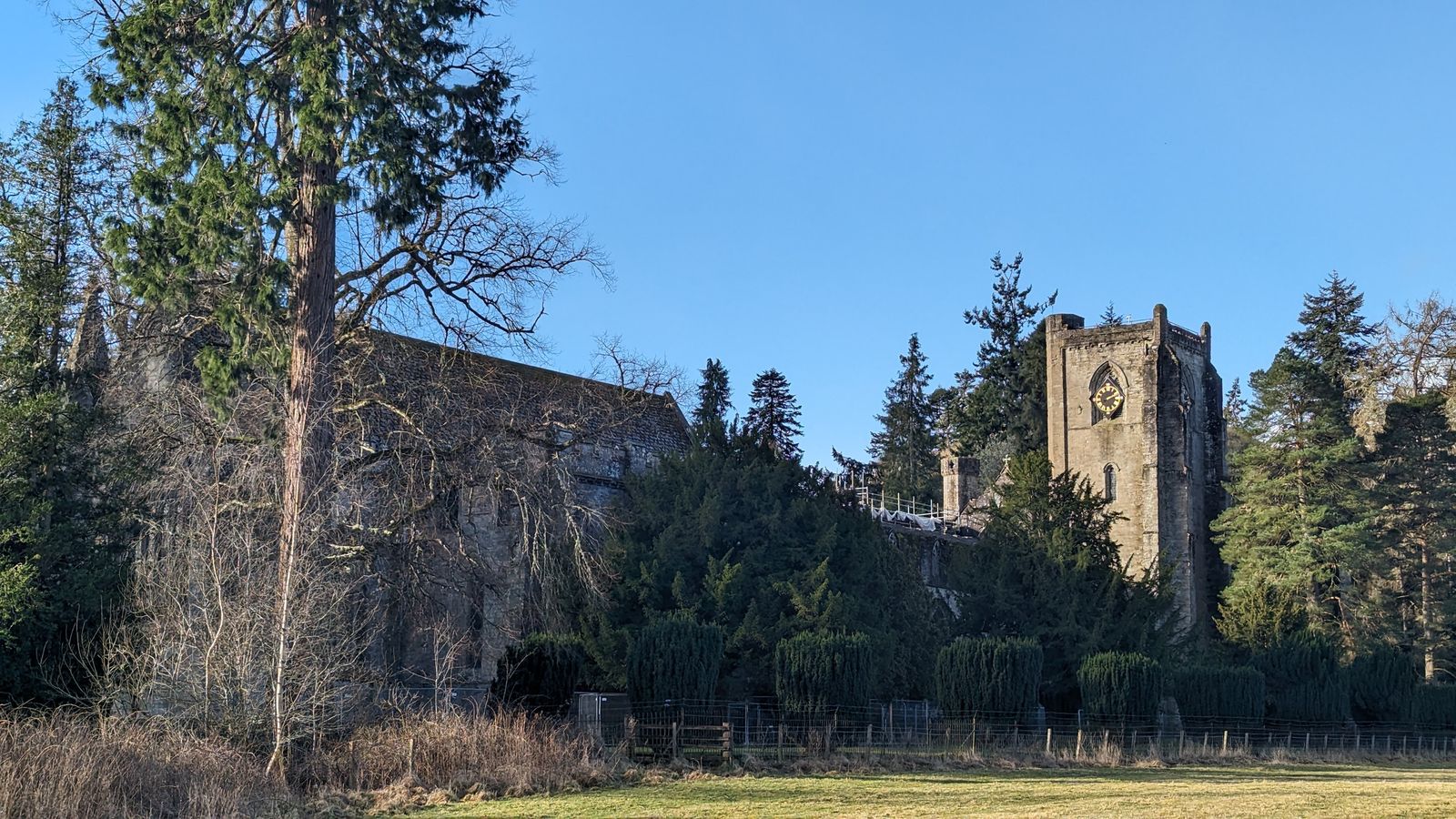
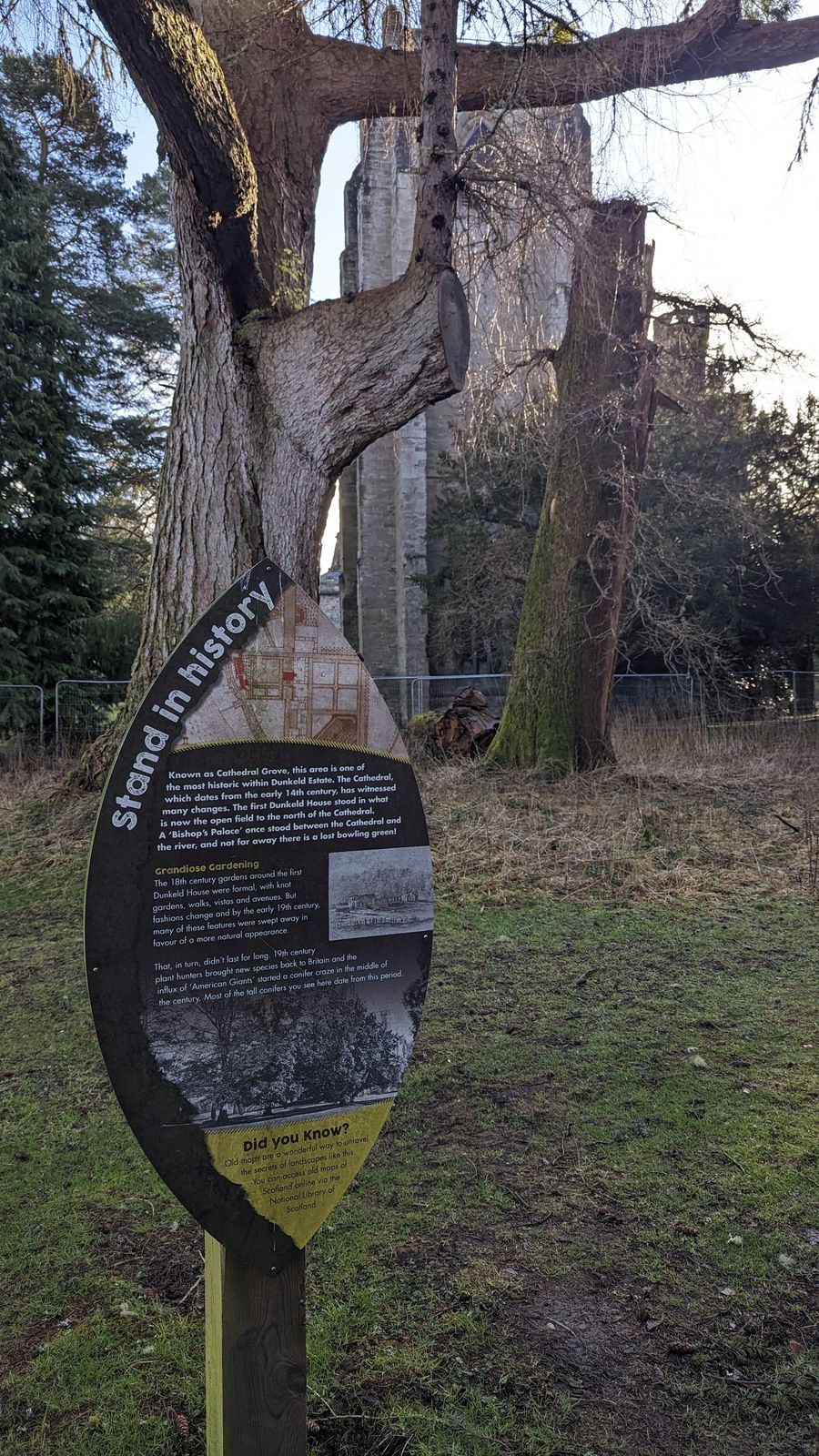
Dunkeld Cathedral stands in a gorgeous riverside setting, and its story runs deep. Around AD 850, Kenneth MacAlpin — the king who united Picts and Scots — made Dunkeld a centre of his kingdom and brought here some of the relics of St Columba from Iona, making it a cradle of the Scottish church. The building you see grew over centuries in Gothic and Norman styles. Today it’s half and half: a roofless, romantic ruined nave, and a restored choir that still serves as the parish church. It’s free to wander, and quietly moving.
The great trees
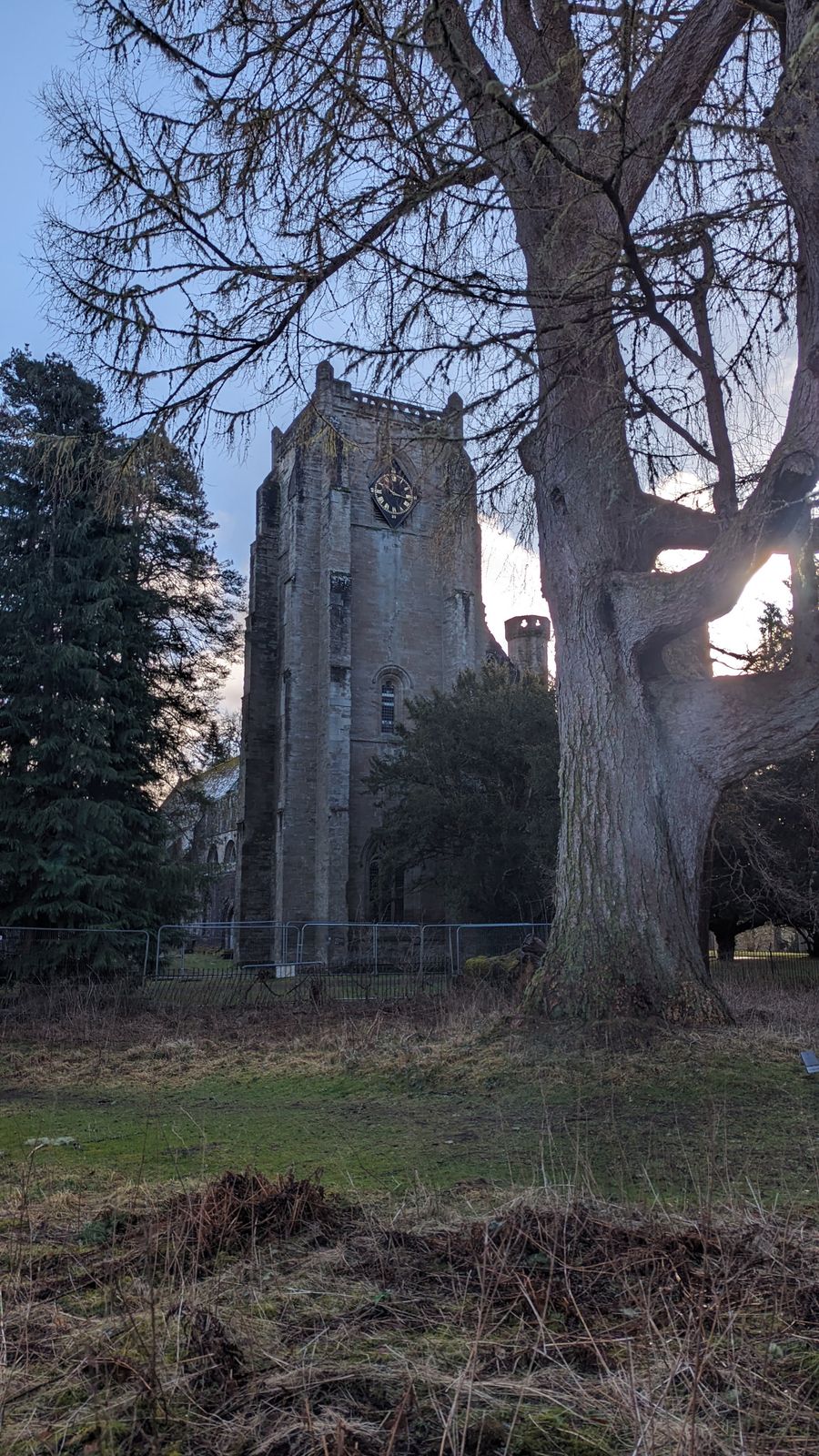
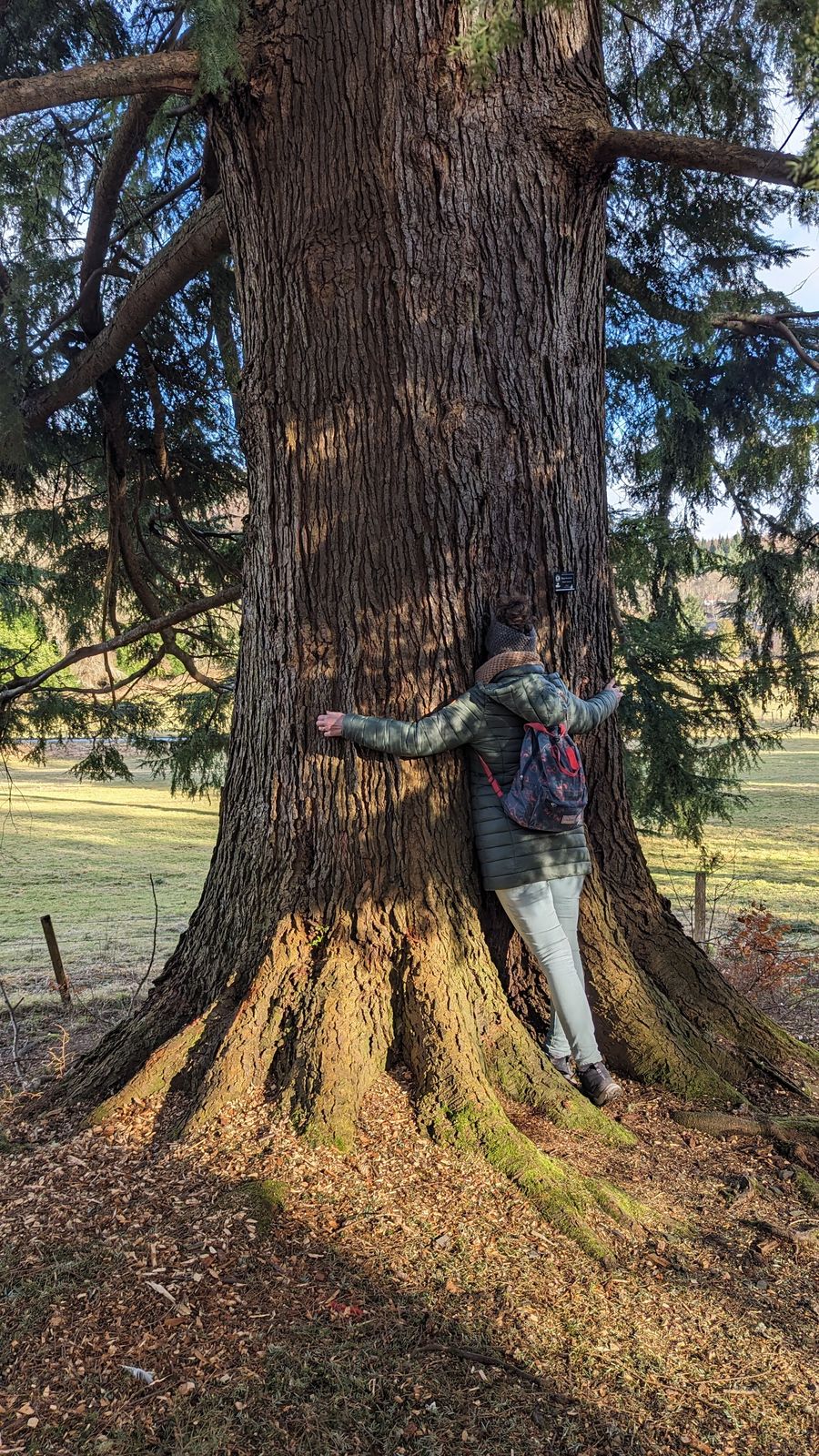
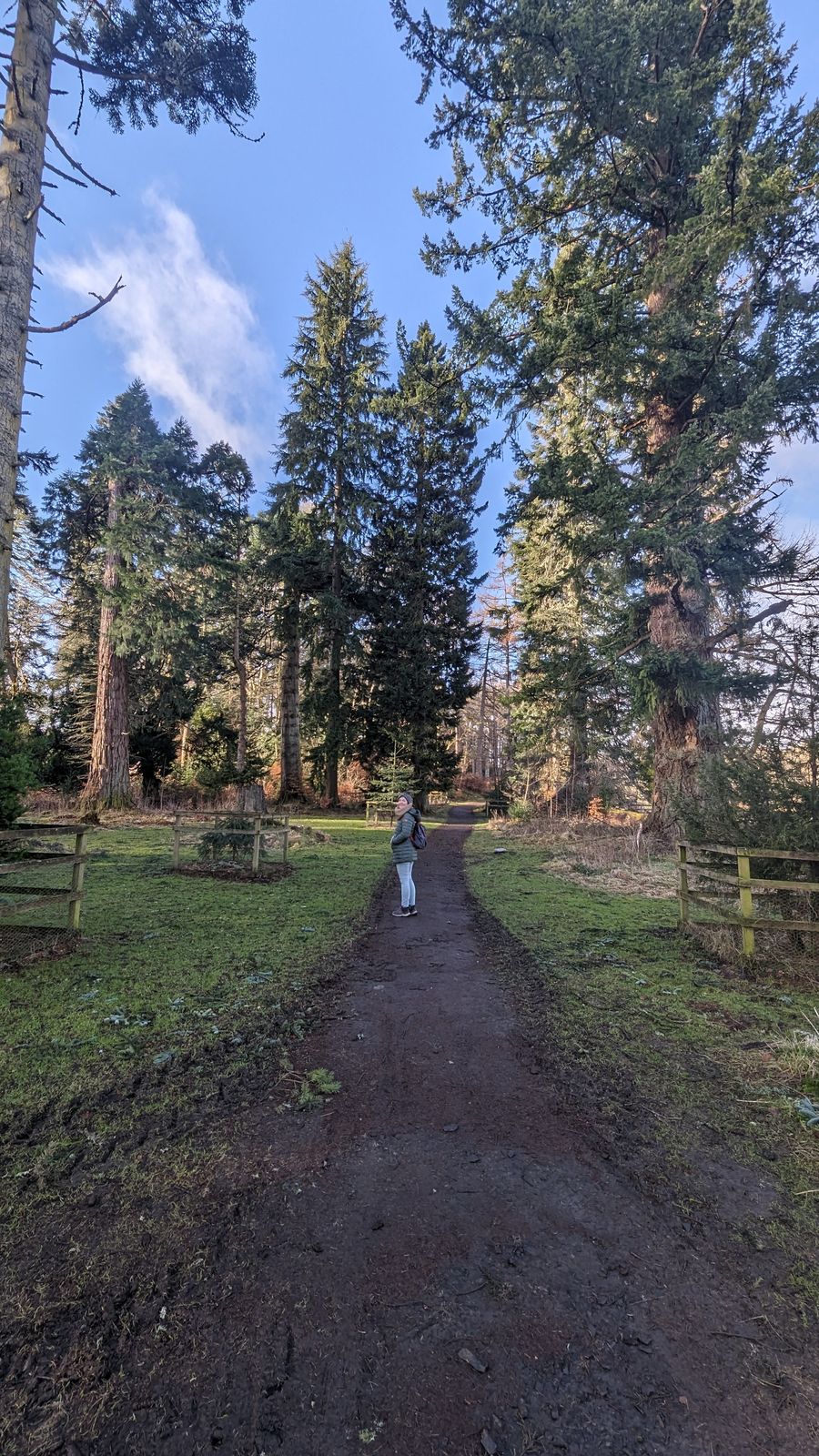
Dunkeld is famous among tree-lovers. The Dukes of Atholl planted vast numbers of conifers around the town from the 18th century — including the “Parent Larch,” one of the first European larches grown in Britain — and the cathedral grounds and riverside walks are full of towering, record-breaking Douglas firs and other giants. Stand at the foot of one and you feel very small indeed.
Telford’s Bridge & the Tay
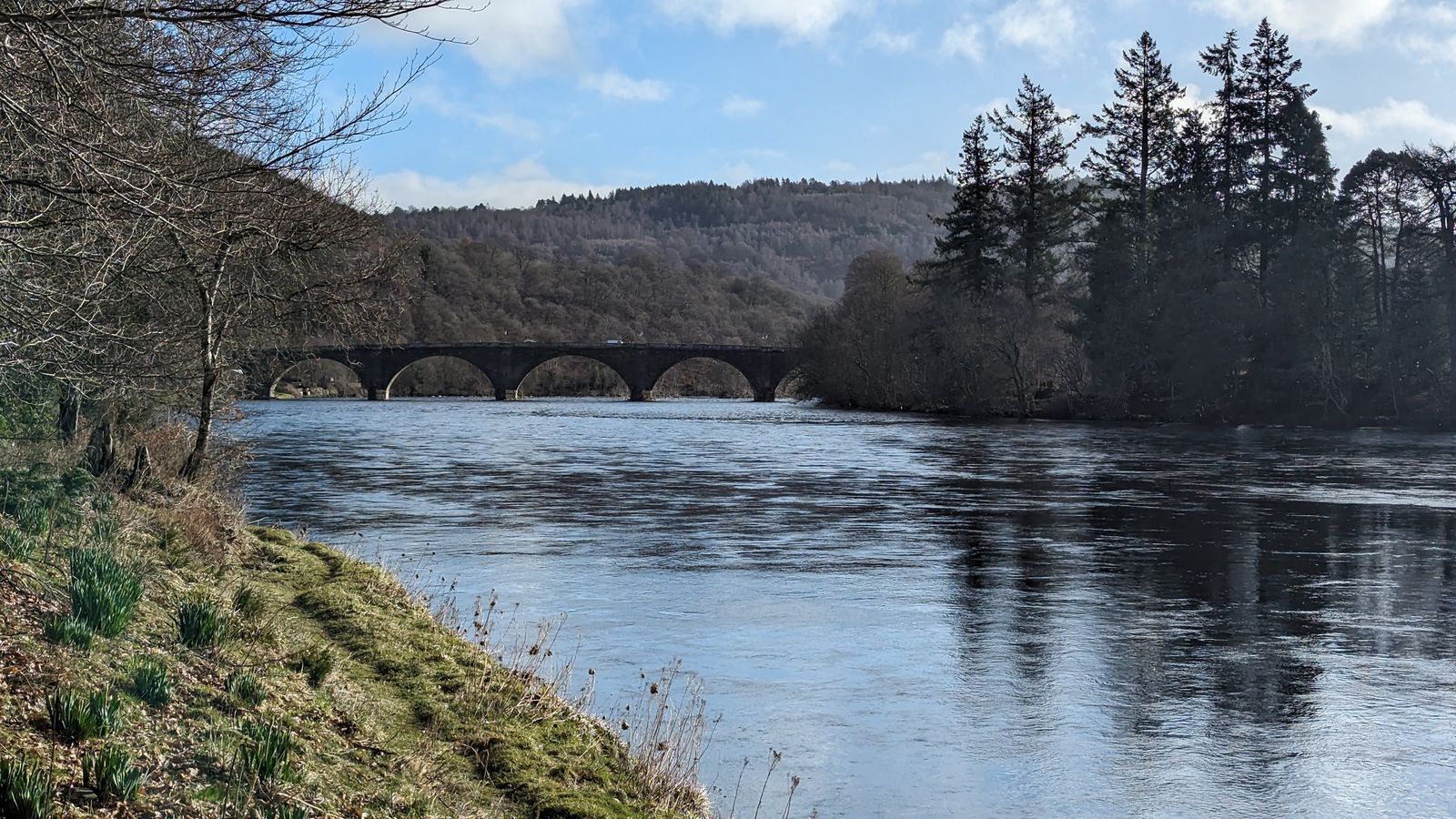
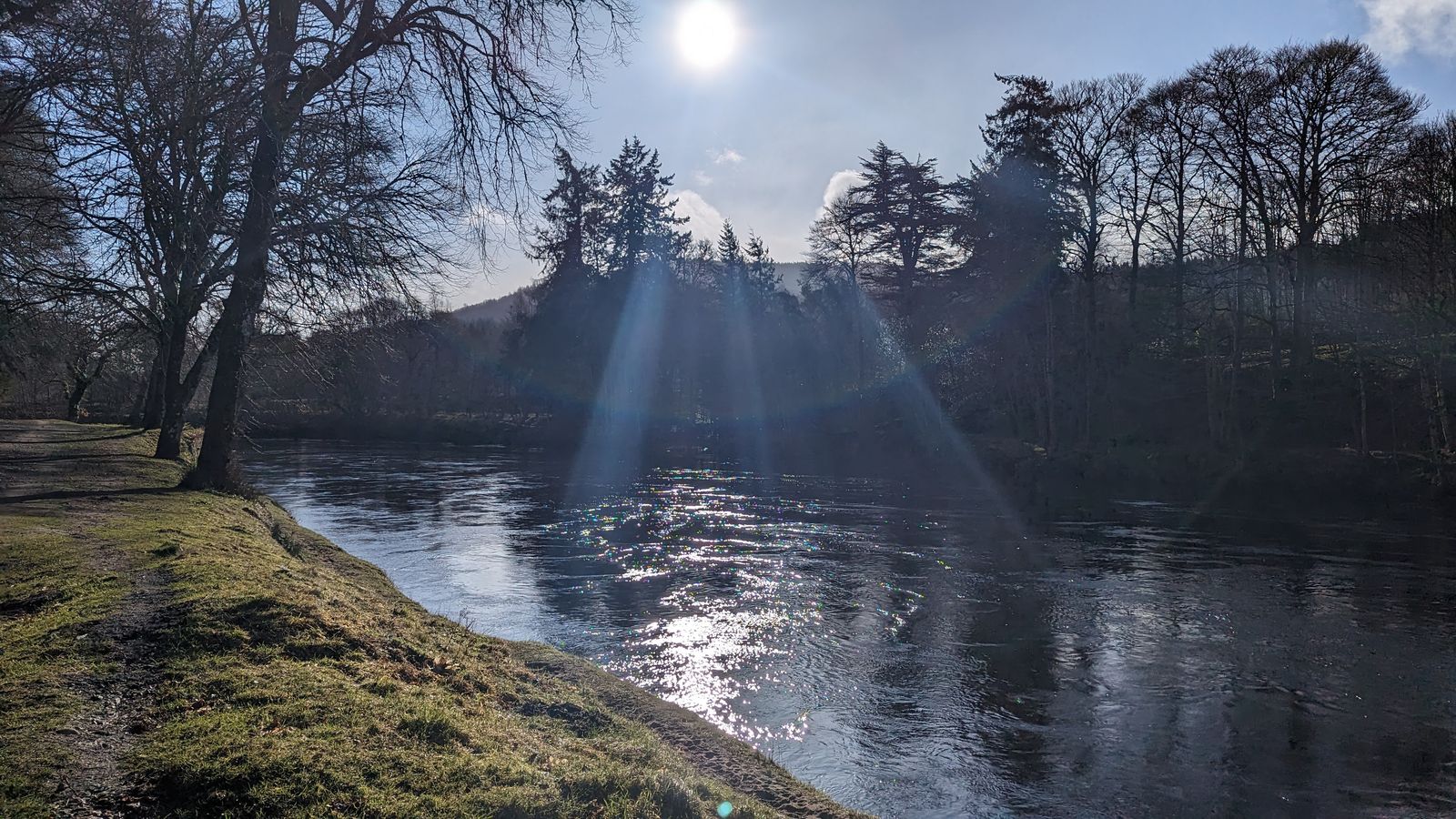
The seven-arched bridge over the Tay was built by Thomas Telford in 1809 and is reckoned one of his finest — for years it was the only crossing of the river between Perth and Aberfeldy. Below it runs the Tay, Scotland’s greatest salmon river, broad and powerful even in the depths of winter.
The town

The town itself is a delight — the little cathedral-street houses (many lovingly restored), independent shops, and good places for a coffee or a bite after a walk. It’s an easy, civilised base for exploring this stretch of the Tay.
Nearby — the Hermitage & Birnam
- The Hermitage (a mile west, National Trust for Scotland) — a magical woodland walk along the River Braan to Ossian’s Hall, an 18th-century folly hanging over the thundering Black Linn Falls, among some of Scotland’s tallest trees.
- Birnam, over Telford’s bridge — home to the ancient Birnam Oak, the last survivor of Shakespeare’s “Birnam Wood” from Macbeth; and to Beatrix Potter, who spent childhood summers nearby and drew inspiration for Peter Rabbit here.
- See where else we’ve been on our Trips So Far, or the Castles of Scotland.
Sources
- Britain Express — Dunkeld & National Trust for Scotland — Dunkeld.
- NTS — The Hermitage & Ossian’s Hall.
- Everything first-hand is from our own February 2024 visit.