Culross: Scotland’s Best-Preserved 17th-Century Village — Coffee, Cobbles & a Shore Walk
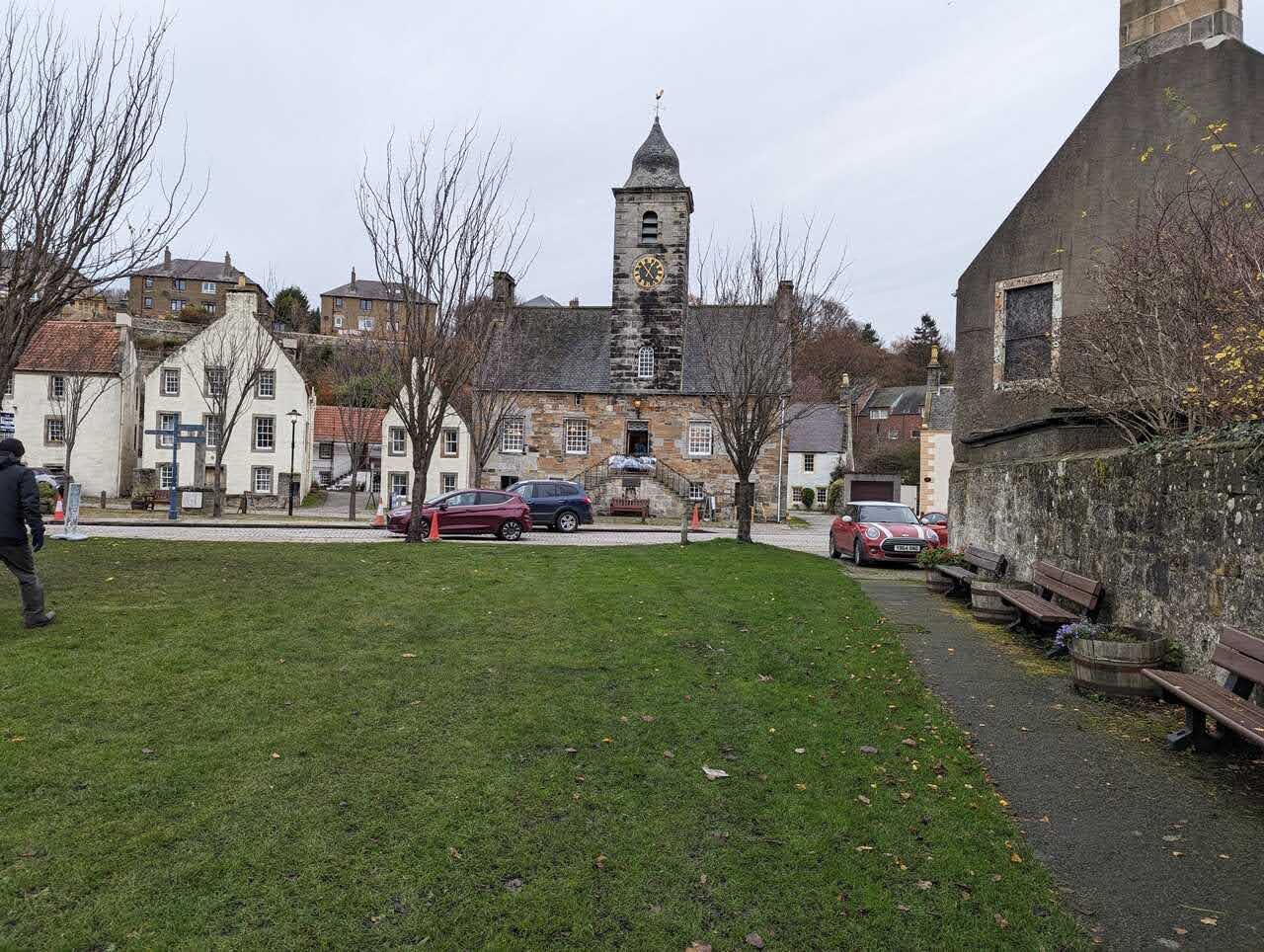
Overview — our local, and no wonder
We’ll be honest about our bias here: Culross is basically our local — about 30 minutes from home — so we go often, and never tire of it. It’s one of the most complete surviving examples of a 17th-century Scottish burgh, all ochre-washed walls, red pantile roofs and cobbled streets, cared for by the National Trust for Scotland — and it’s a cracking wee village for a coffee and a walk. (Telly fans will recognise it, too — more on that below.)
Where it is
Culross (say it “Coo-ross”) sits on the north shore of the Firth of Forth in west Fife, between Kincardine and Dunfermline — an easy run from Stirling, Alloa or Edinburgh, and a lovely stop on a Fife & Forth loop (we fold it into our Alloa–Dunfermline cycle circle).
The historic burgh — the Palace, the Town House & the cobbles
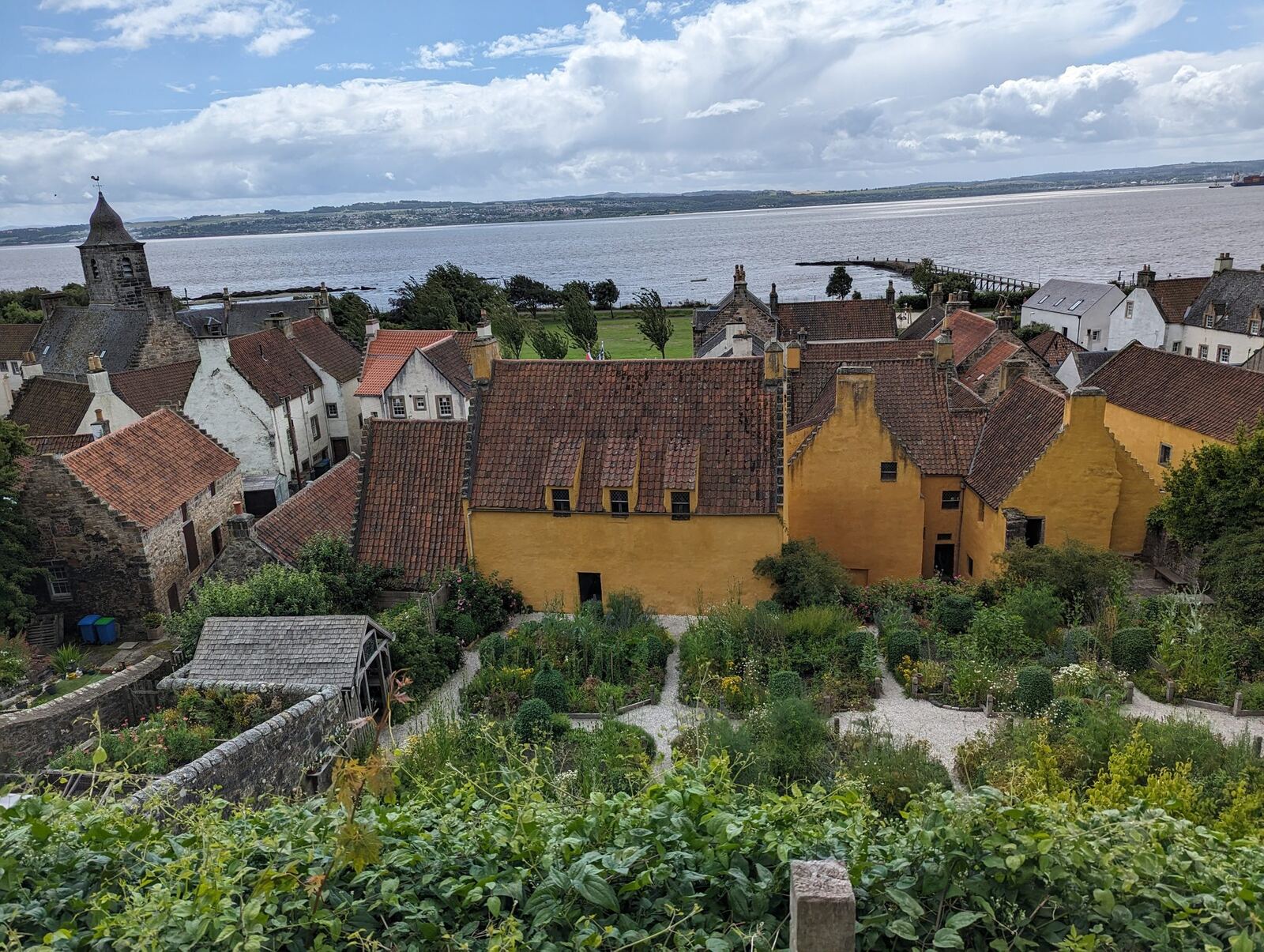
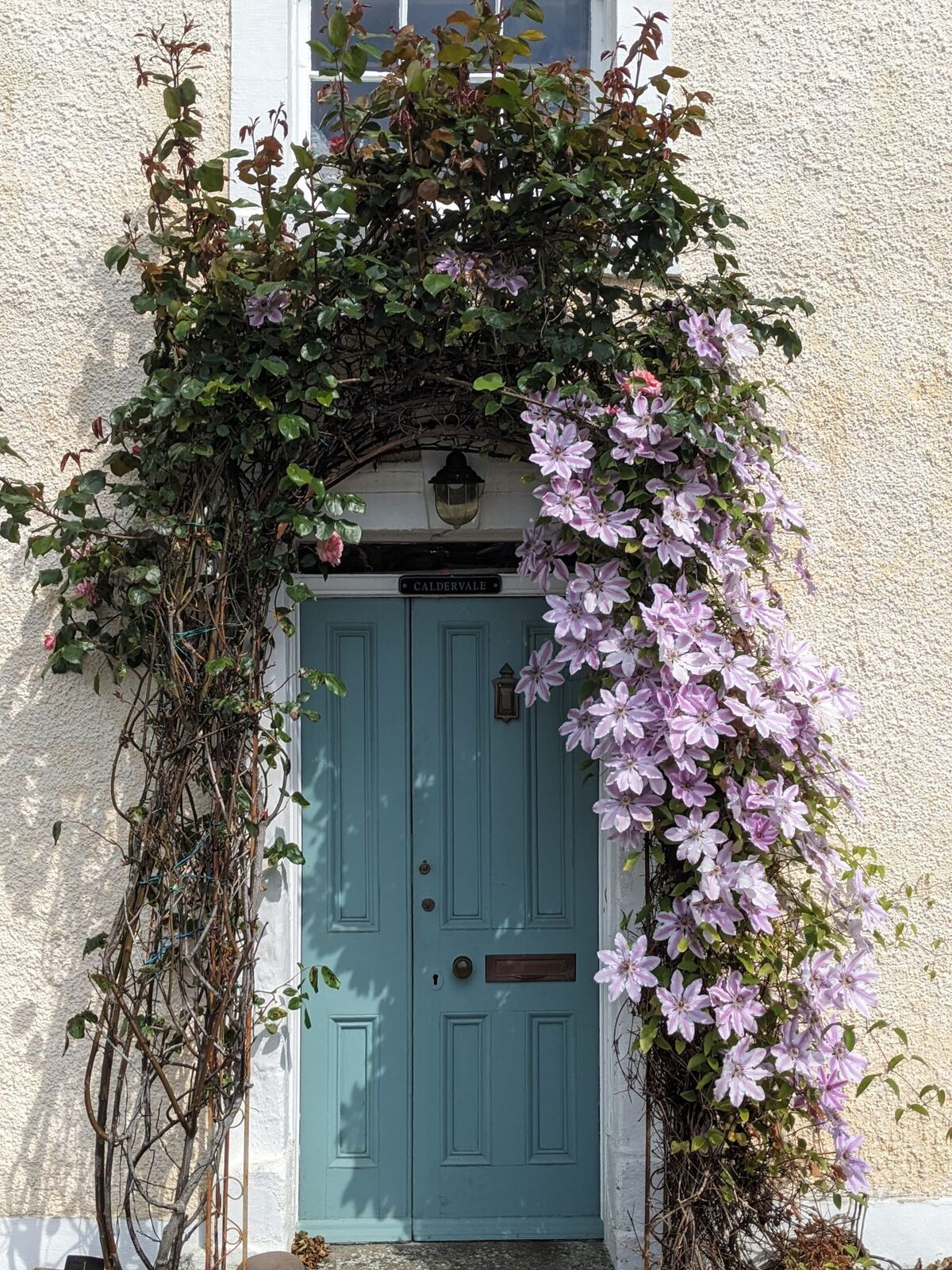
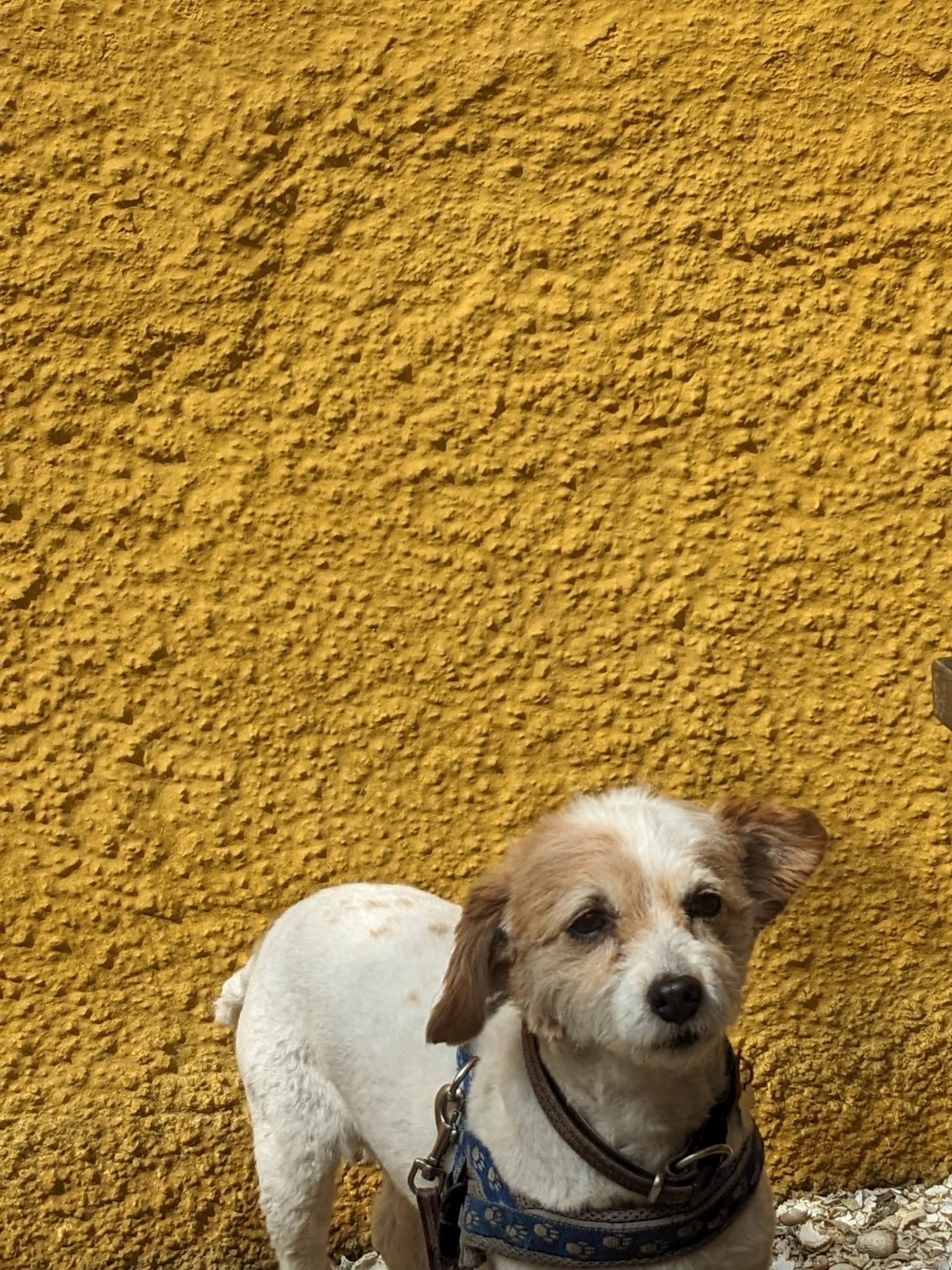
The showpiece is Culross Palace — not a royal palace at all, but the grand ochre-yellow merchant’s house built 1597–1611 by Sir George Bruce, who made his fortune from coal and salt on the Forth. Behind it climbs a lovely terraced garden. Around the village you’ll find the Town House (tolbooth, 1626) on the Green, the Mercat Cross, the Study, steep cobbled wynds, and, up the hill, Culross Abbey. It’s a joy just to wander.
St Mungo, St Serf & the Abbey — 1,500 years of history
Pretty as it is, Culross is also seriously old. By tradition this is the birthplace of St Mungo (Kentigern) — the patron saint of Glasgow — born here around 518 AD to the exiled British princess St Thenew, and raised and schooled by St Serf, who ran an early monastic community on the hill. So the little burgh on the Forth has a genuine claim to be a cradle of Scottish Christianity.
Up the hill, Culross Abbey was founded in 1217 by Malcolm, Earl of Fife, for Cistercian monks, on the site of St Serf’s old community. The choir still serves as the parish church, while the nave and cloister survive as atmospheric ruins (in the care of Historic Environment Scotland) — well worth the short climb from the Green for the setting and the view back over the pantiles to the Forth.
The mine under the sea — Sir George Bruce’s wonder
Here’s the story that made Culross rich, and it’s a cracker. In the late 1500s Sir George Bruce of Carnock sank a coal mine whose workings ran out under the Firth of Forth itself — believed to be the first mine in the world to extend beneath the sea. Its cleverest feature was the “Moat Pit”: a shaft whose head was built on an artificial island out in the tidal water, so coal could be wound up and loaded straight onto waiting ships. The workings were kept dry by an “Egyptian wheel” — an endless chain of buckets turned by horses.
In 1617 King James VI came to see it, was walked out along the tunnels and brought up the shaft onto the island — and, finding himself suddenly surrounded by sea, briefly thought he’d been led into a trap, until it was explained. The whole marvel was wrecked by a great storm in 1625, which flooded the pit for good. But the fortune Bruce made from coal and salt (Culross also boiled seawater in coal-fired salt pans) is exactly what paid for Culross Palace — and, in the end, for the village you wander today.
The Study, the Mercat Cross & the “crown of the causey”
Two more things to seek out as you wander. The Study (about 1610) is a beautiful little merchant’s house with a corbelled tower room — later used by the Bishop of Dunblane — with a fine outlook over the burgh. And on the cobbled streets, look down: the raised central line of stones is the “crown of the causey,” the dry, clean strip where the gentry once walked while everyone else took the gutter. The restored Mercat Cross, with its unicorn, marks the old market heart. Much of what survives is thanks to the National Trust for Scotland, which pioneered its “Little Houses” rescue scheme here from 1932 — saving the burgh when it might easily have been lost.
Outlander
If it looks familiar, that’s because Culross starred in Outlander — the village doubled as “Cranesmuir,” and the Palace garden became Claire’s herb garden at Castle Leoch. Fans come from all over to see it; even if you’ve never watched an episode, it just adds to the sense that you’ve walked onto a film set from four centuries ago.
Coffee, scones & a bite — the reason we keep coming back
Here’s what really keeps us returning: it’s a lovely village for a coffee, and there are two cafés we know well.
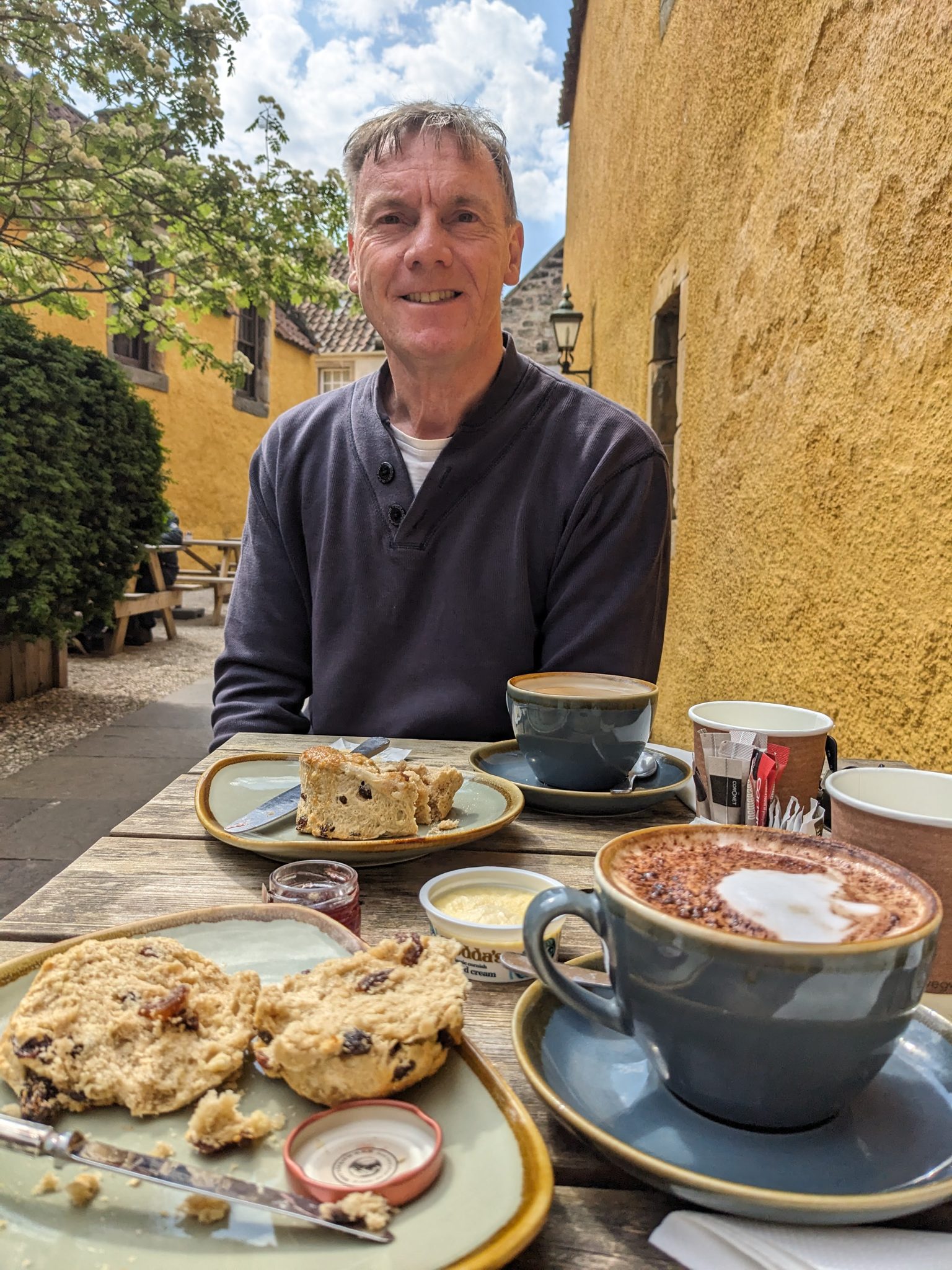
Bessie’s Café — our favourite. Genuinely lovely, and worth building your visit around — with one quirk worth knowing: certain things, like soups and cheese scones, aren’t served until lunchtime (we think it’s about 11am, though don’t hold us to the minute) — and they are bang-on the clock about it. There’s no point asking early; they simply won’t do it a moment before the time. A strange way of running things, honestly — but the food is so nice it’s worth the wait.
The Gallery — the other option, and quite nice, though we’ve found it a bit hit-and-miss. Its best card is the lovely courtyard round the back — a proper suntrap on a good day.
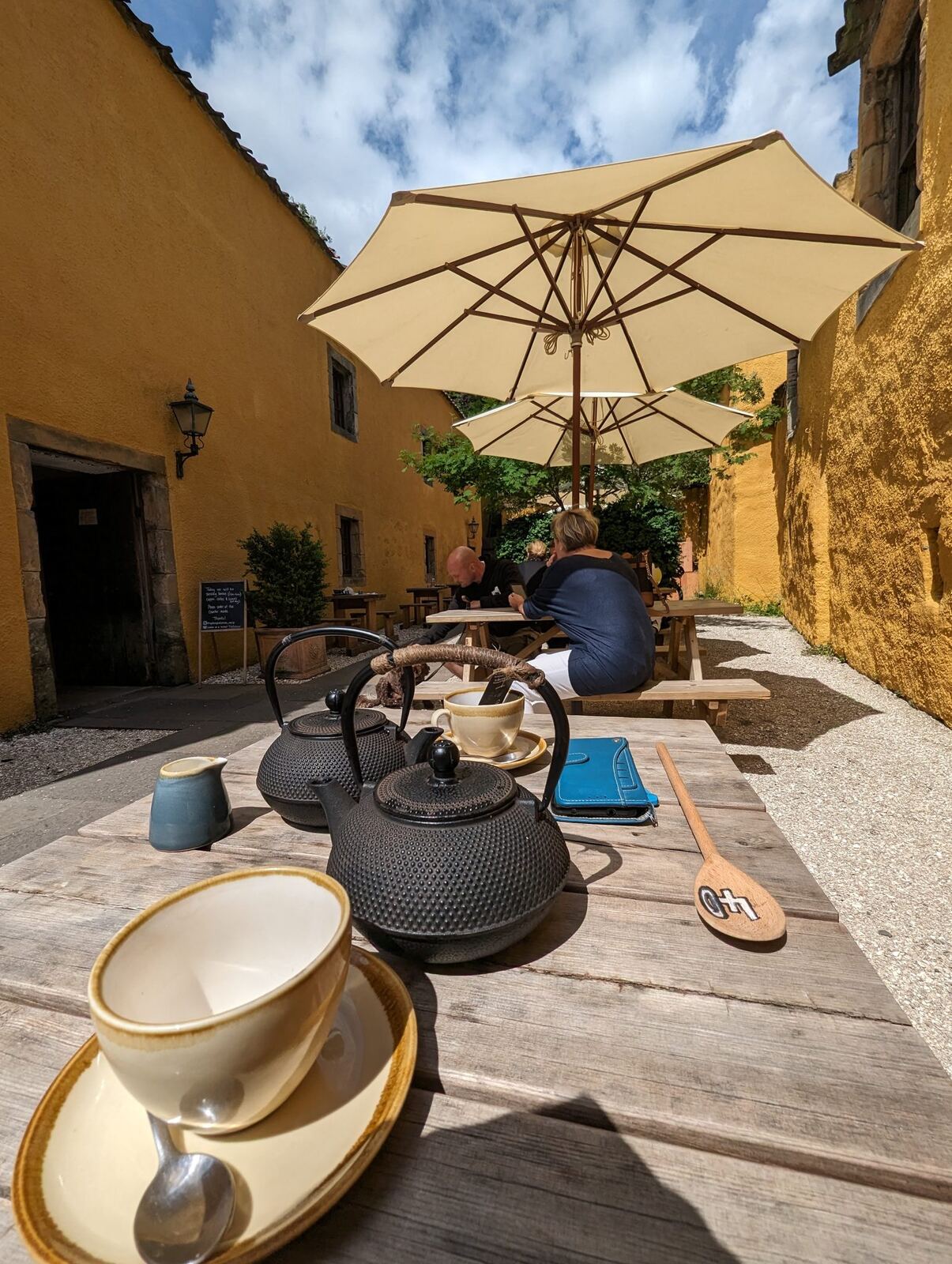
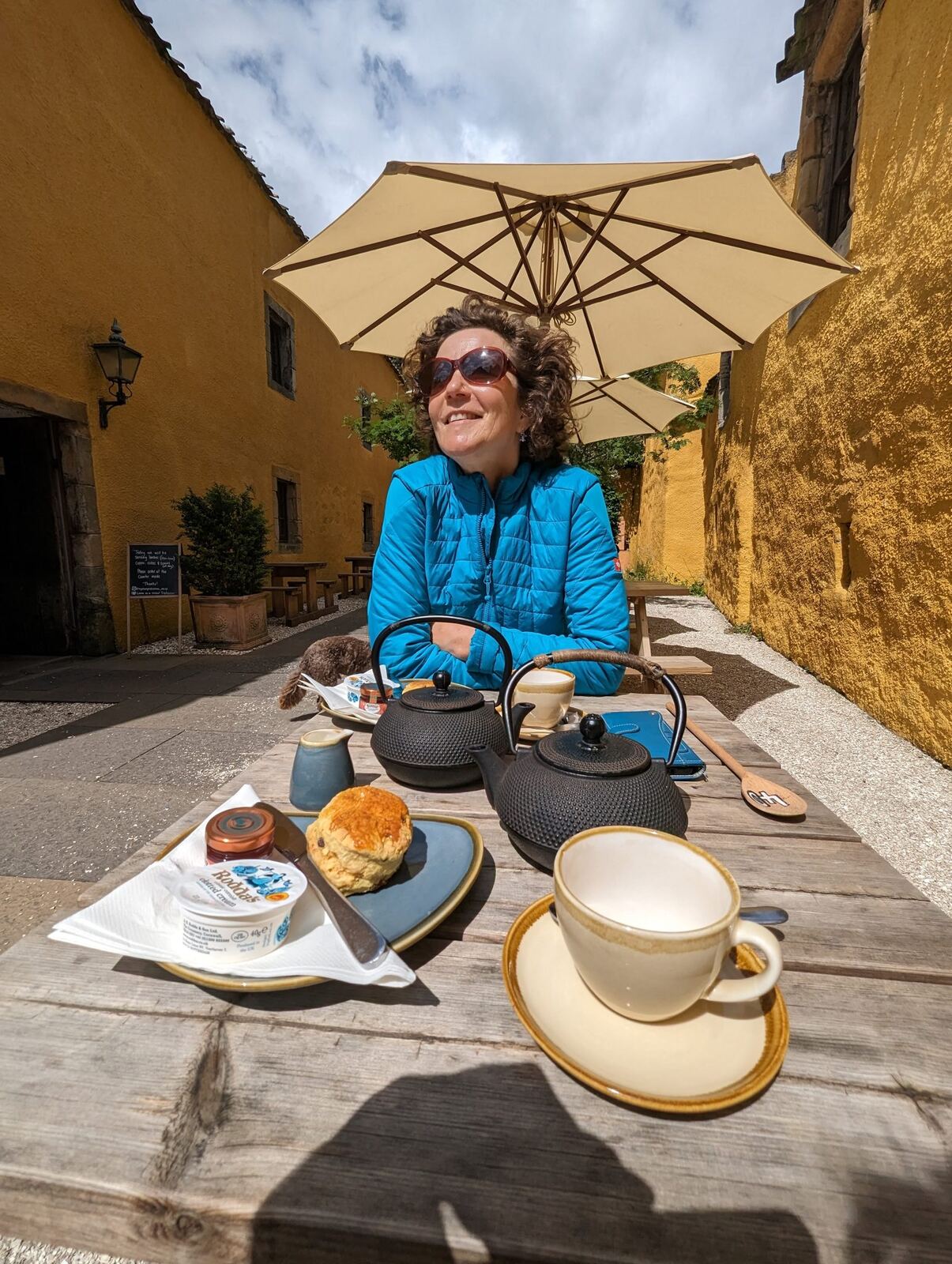
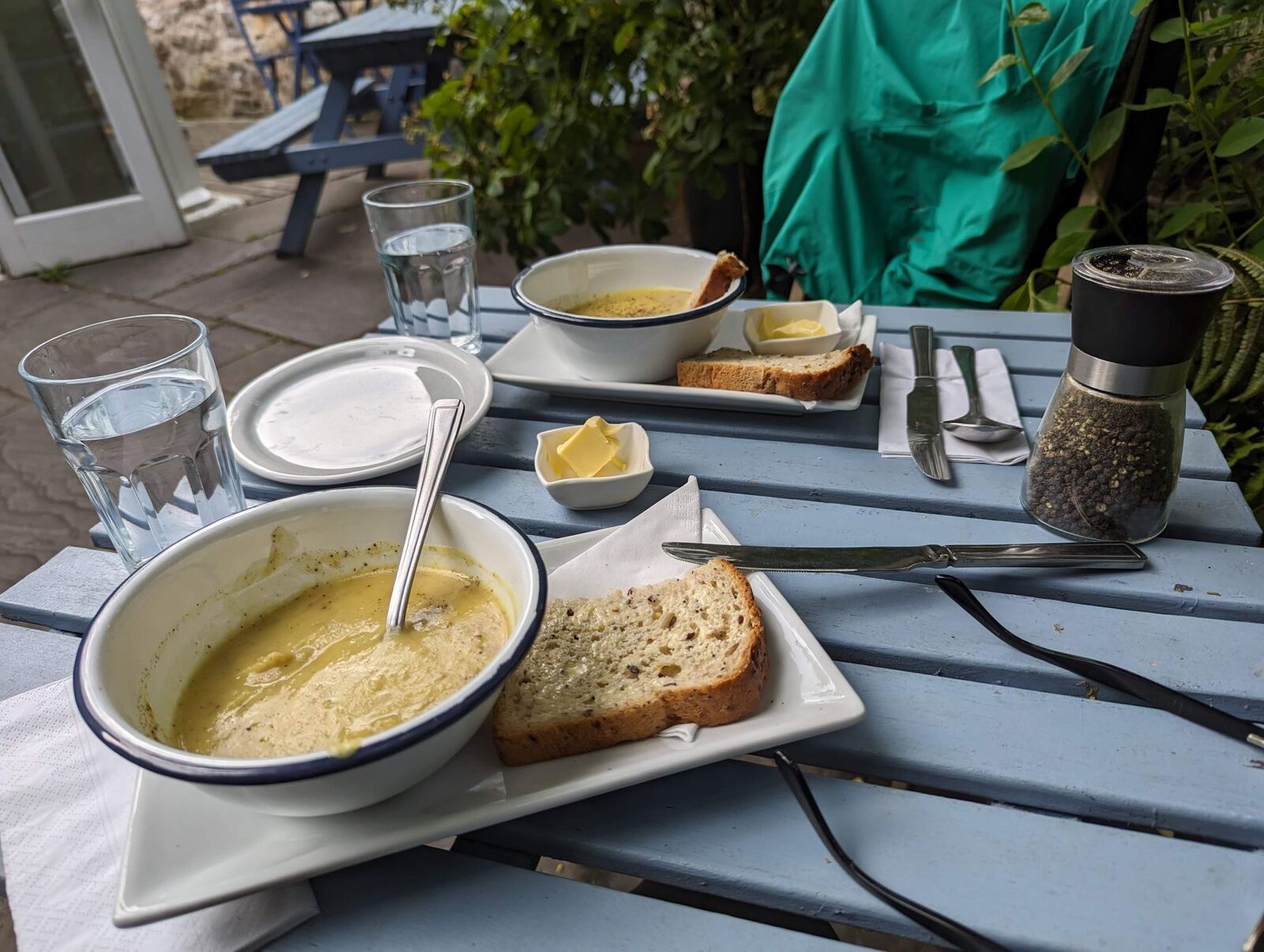
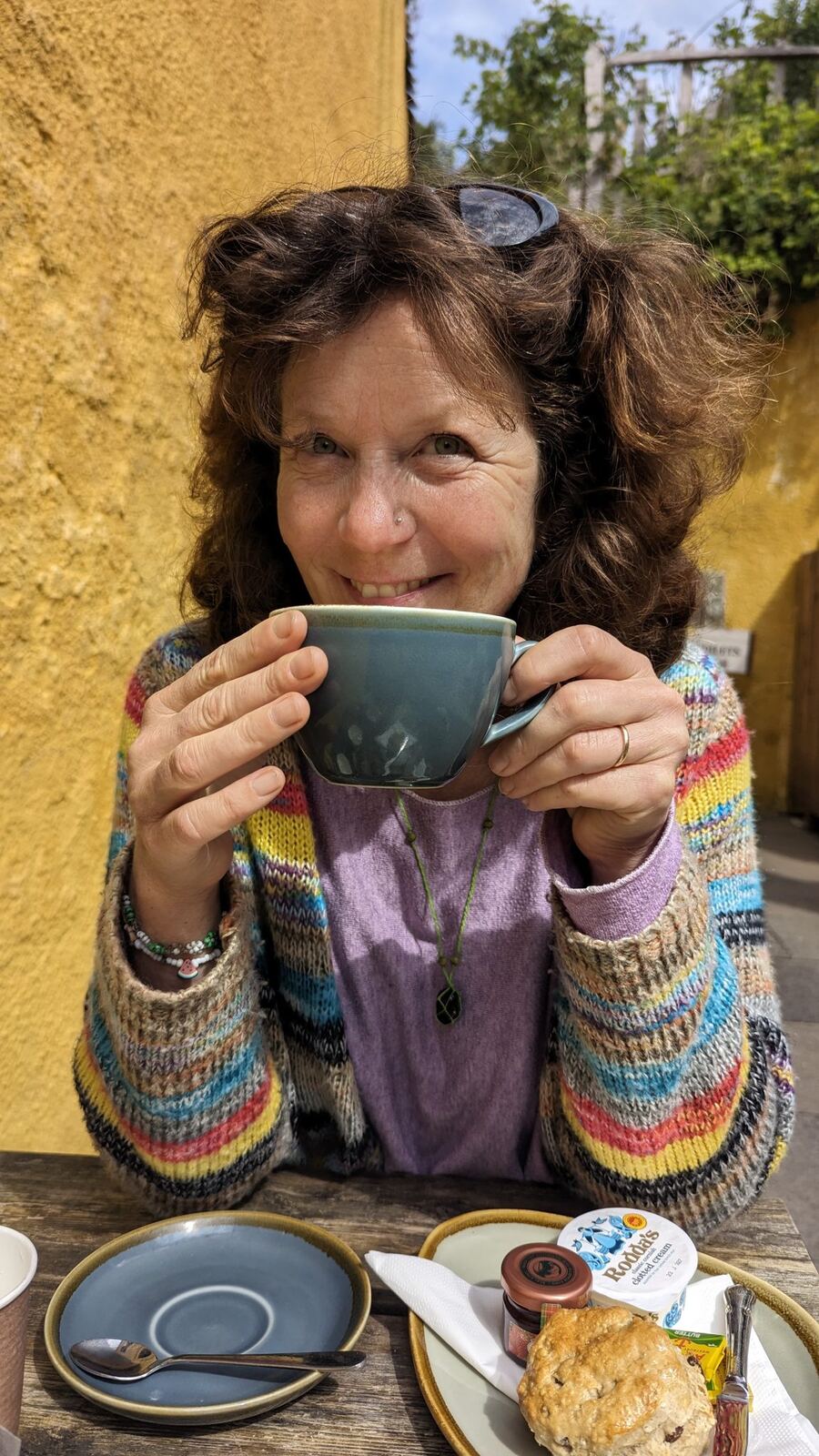
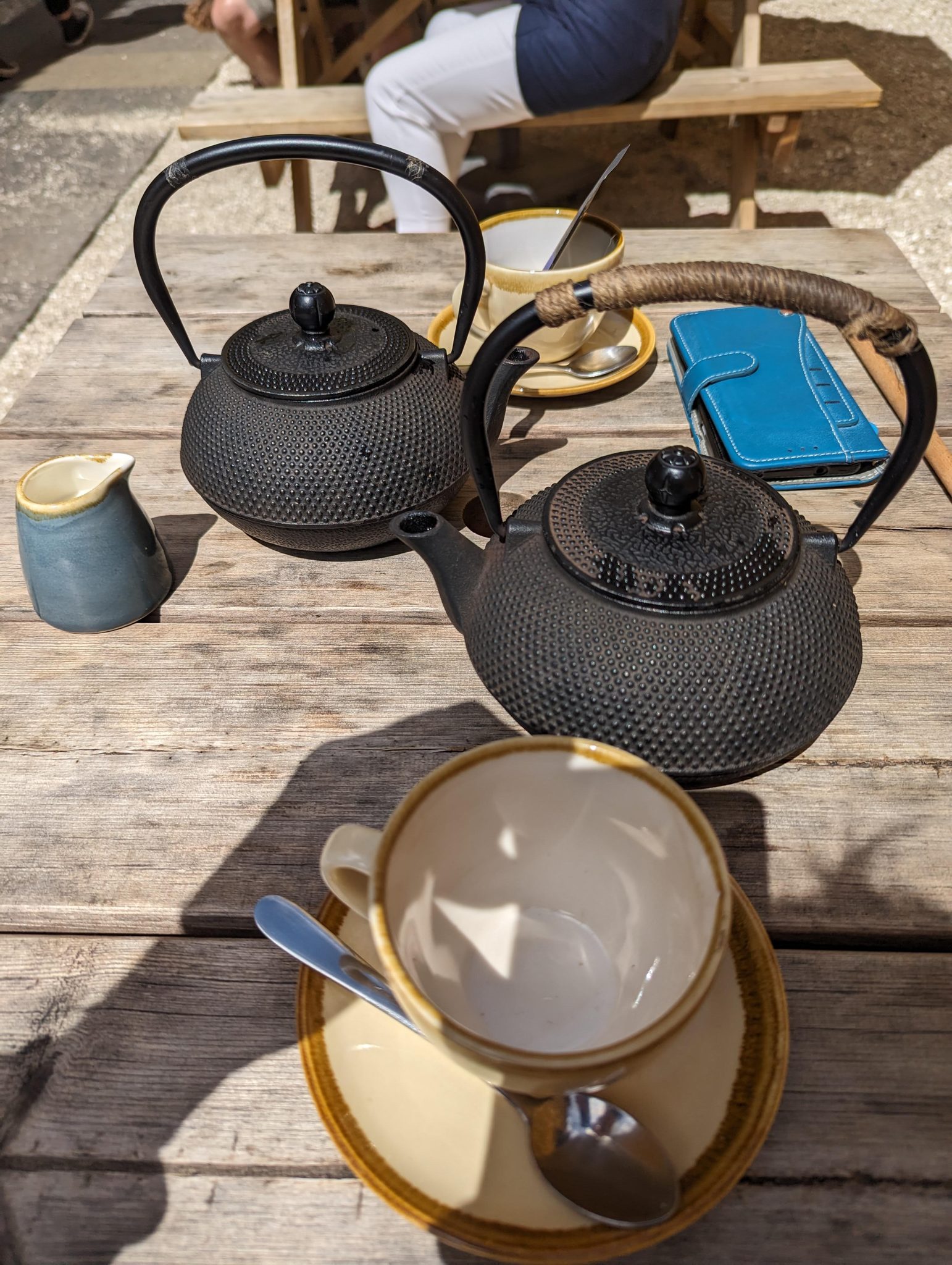
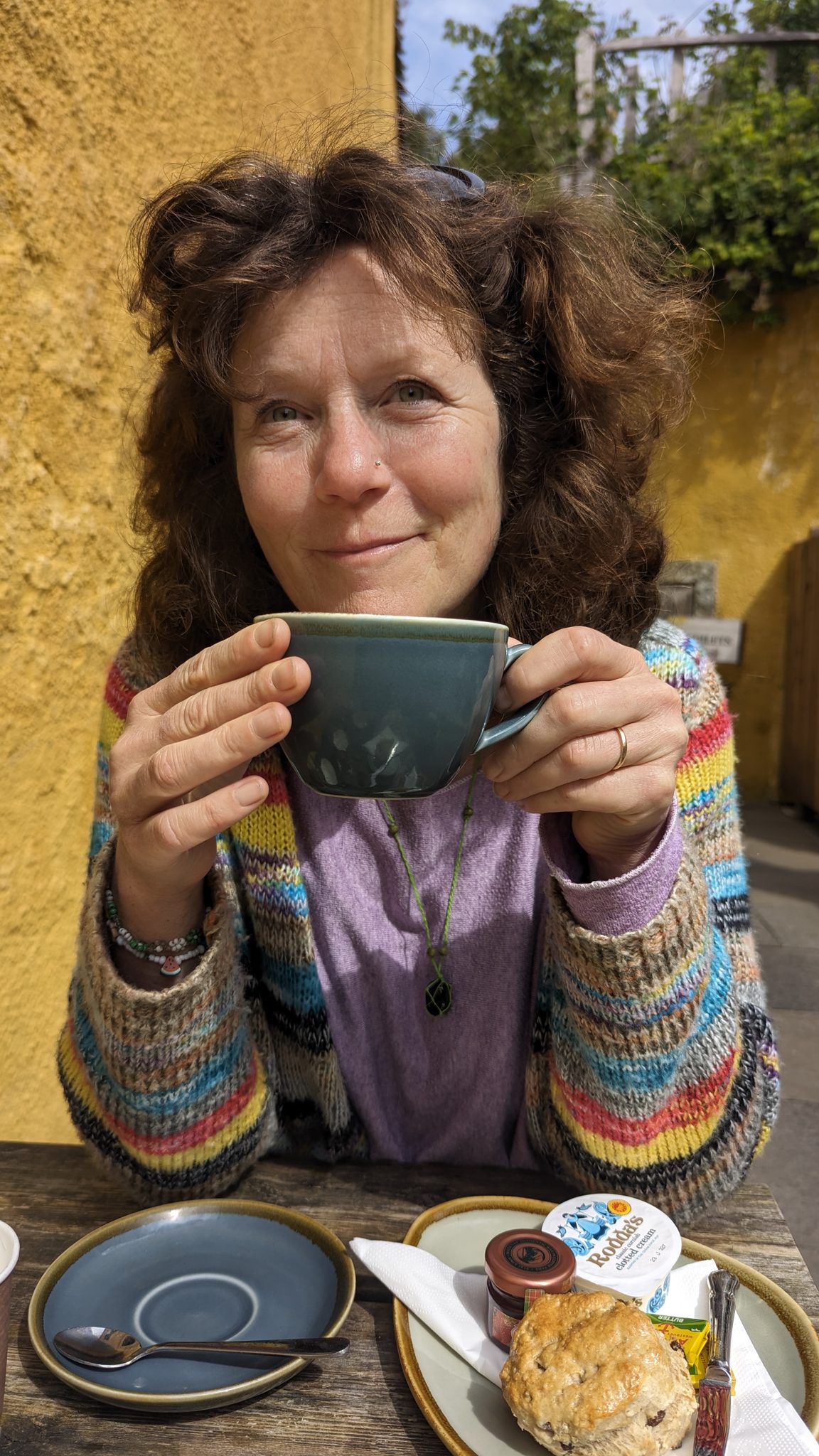
Between the two we’ve had countless coffees, teas, scones and bowls of soup here — often out in the sunny ochre courtyard with the cast-iron teapots, sometimes tucked indoors on a cold day. Cake, a scone, the dog at your feet, the Forth down the hill — a proper little ritual.
The shore walk — along the Firth of Forth
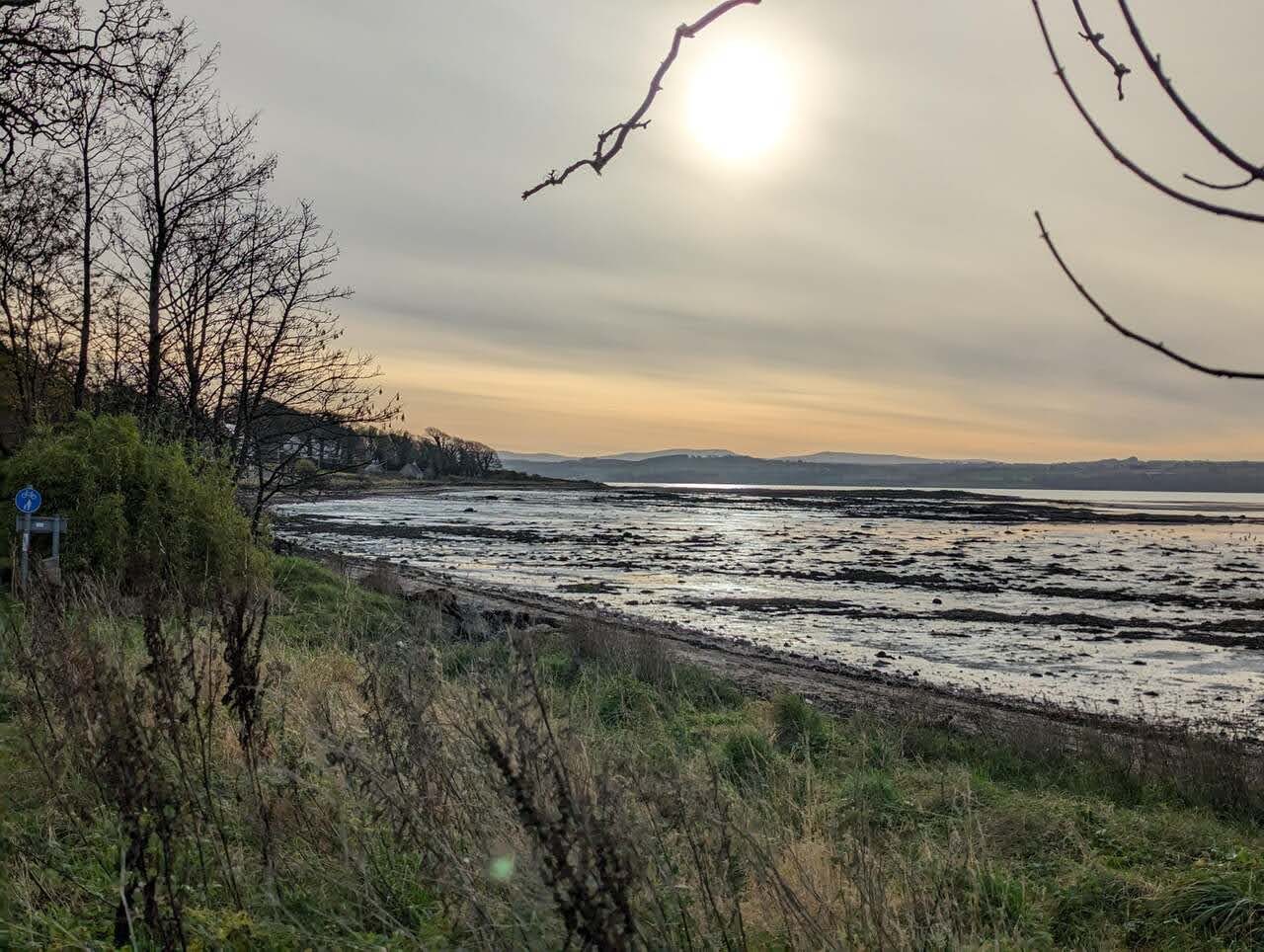
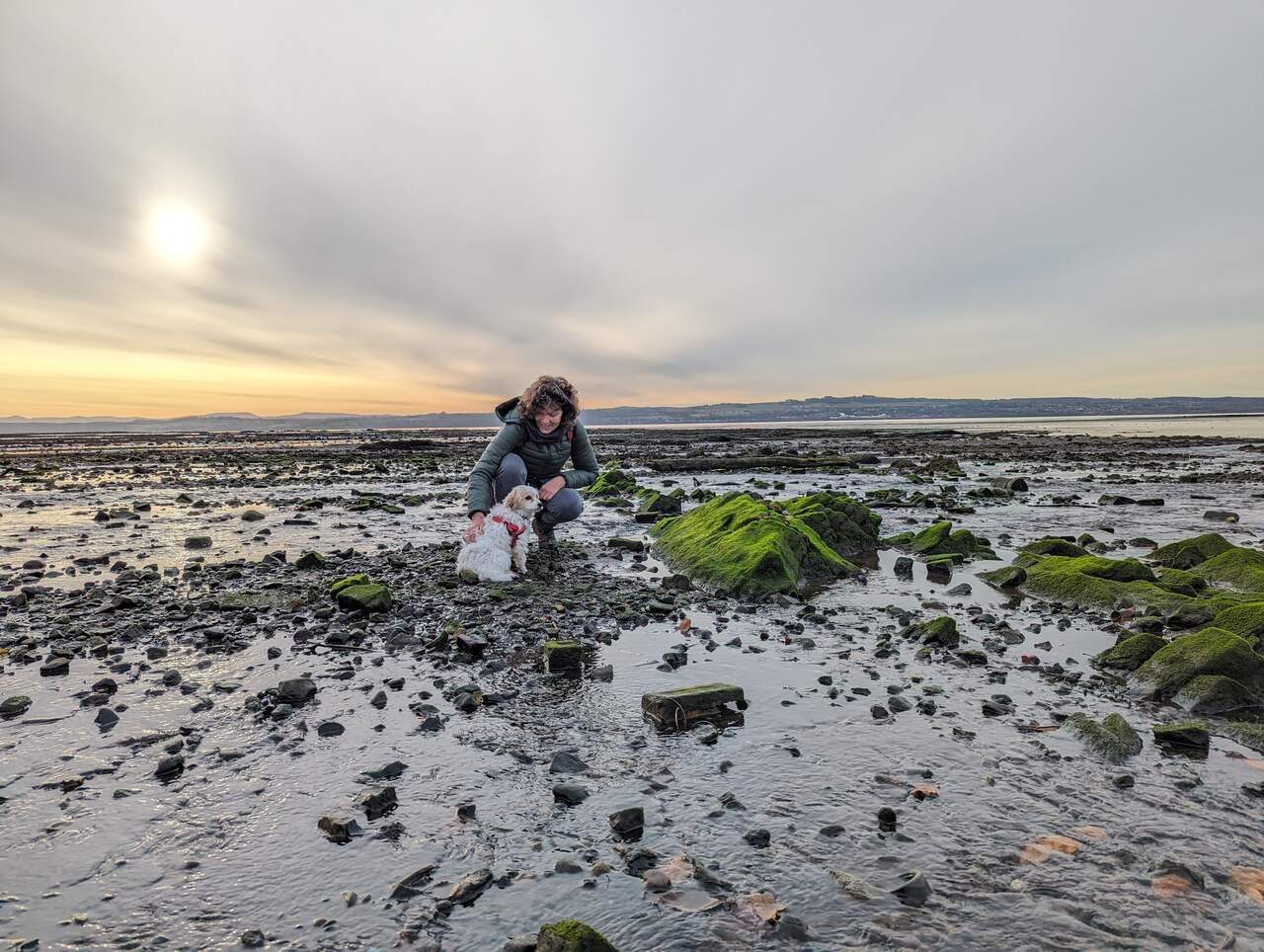
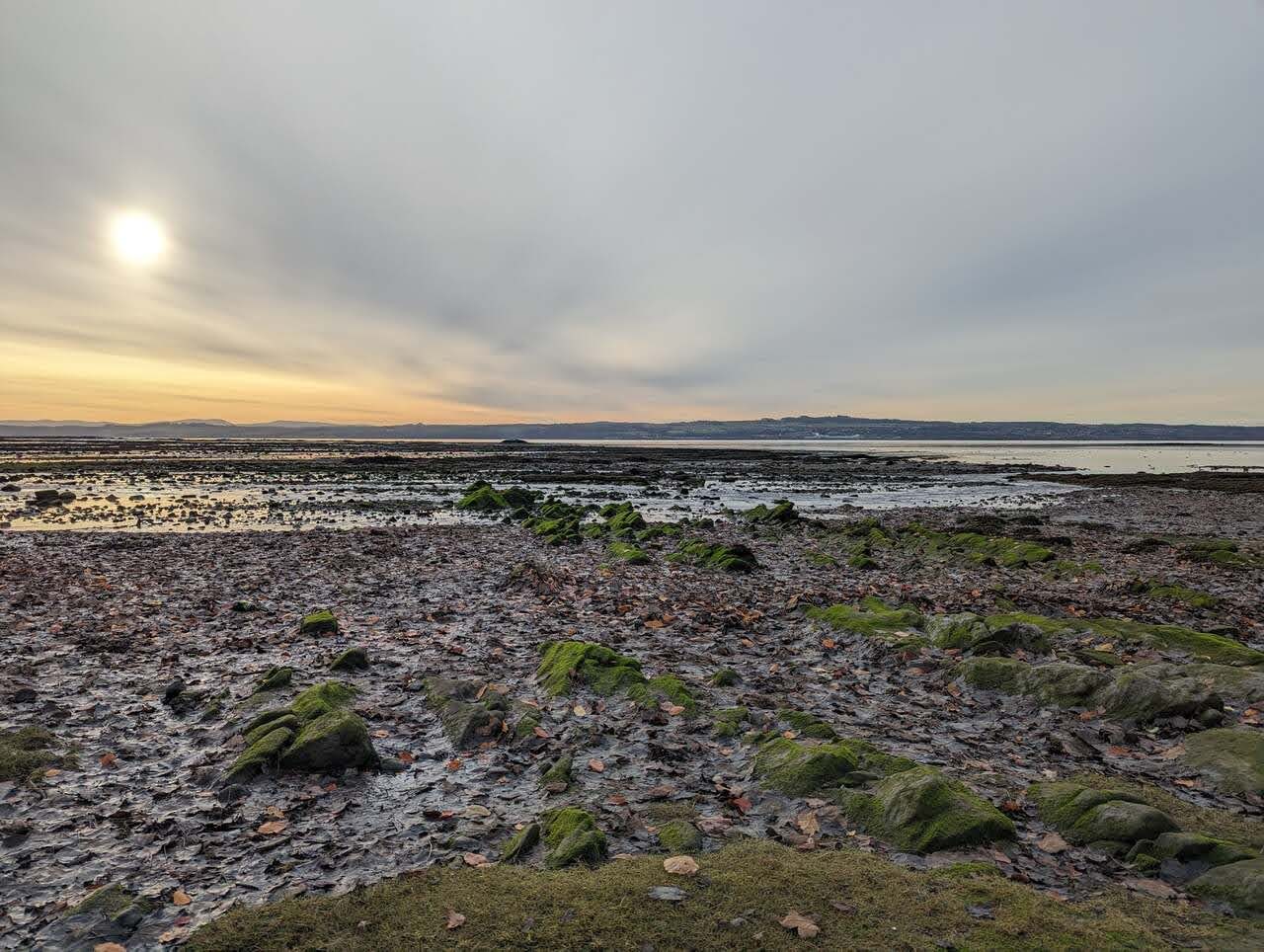
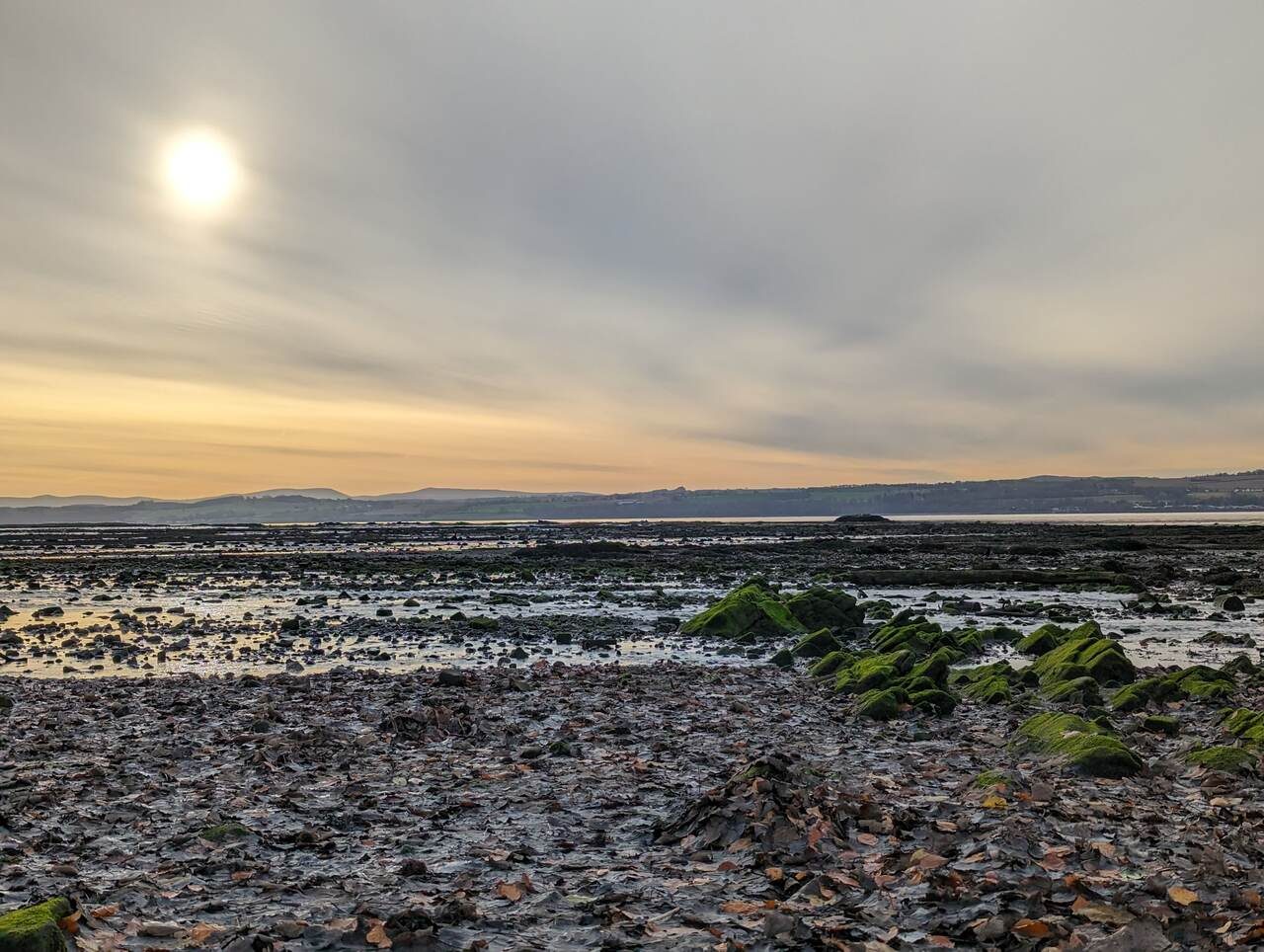
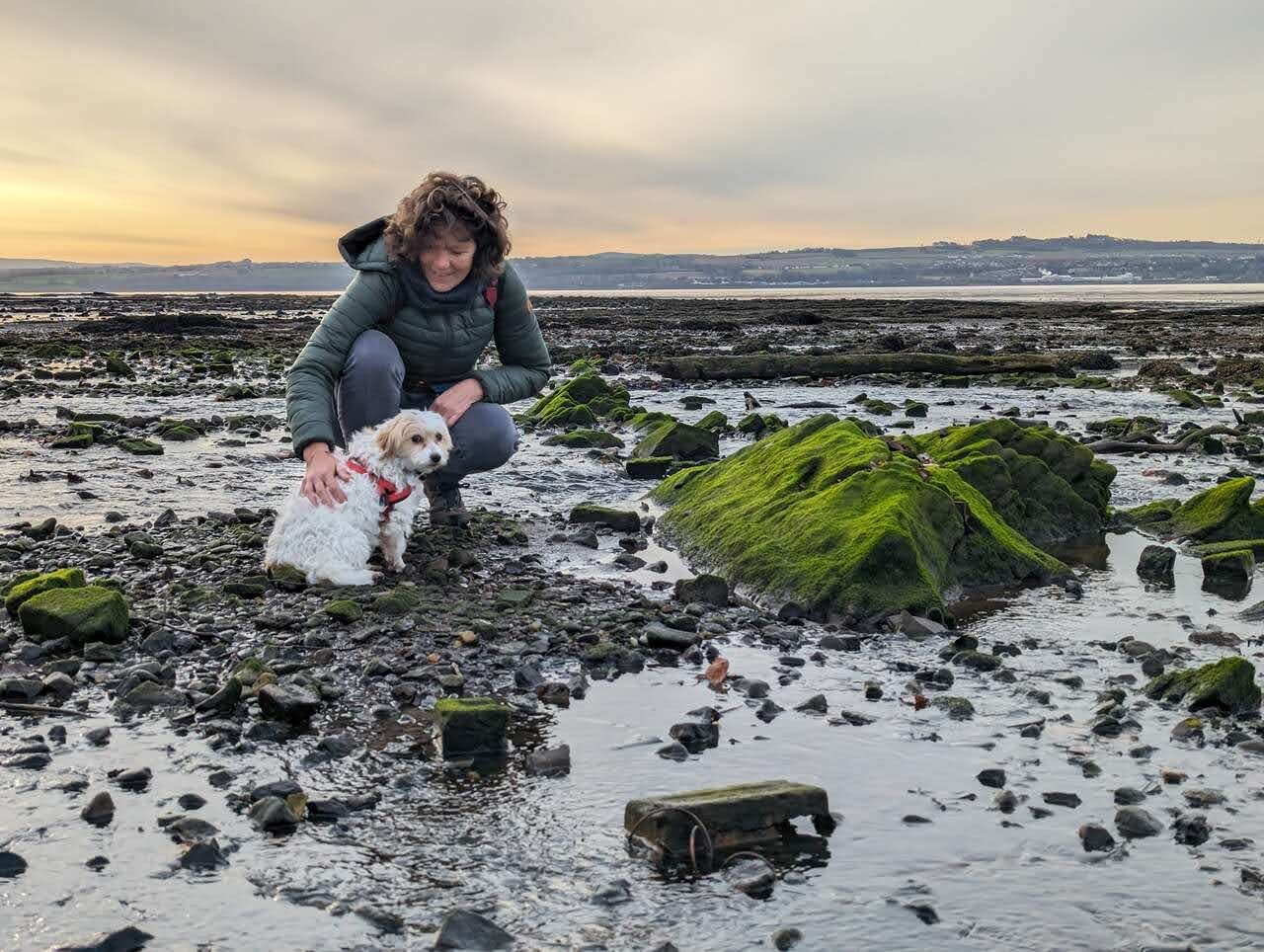
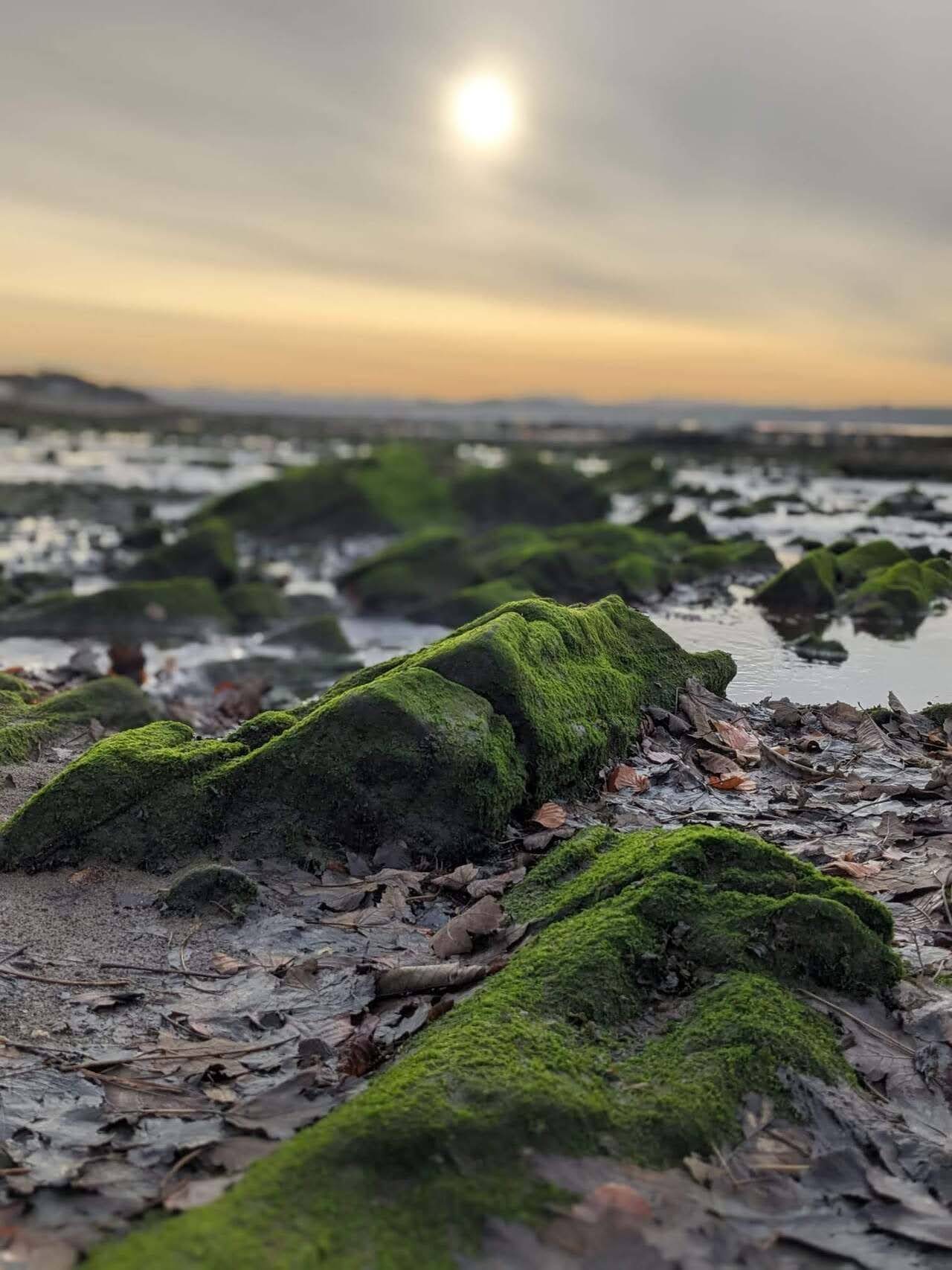
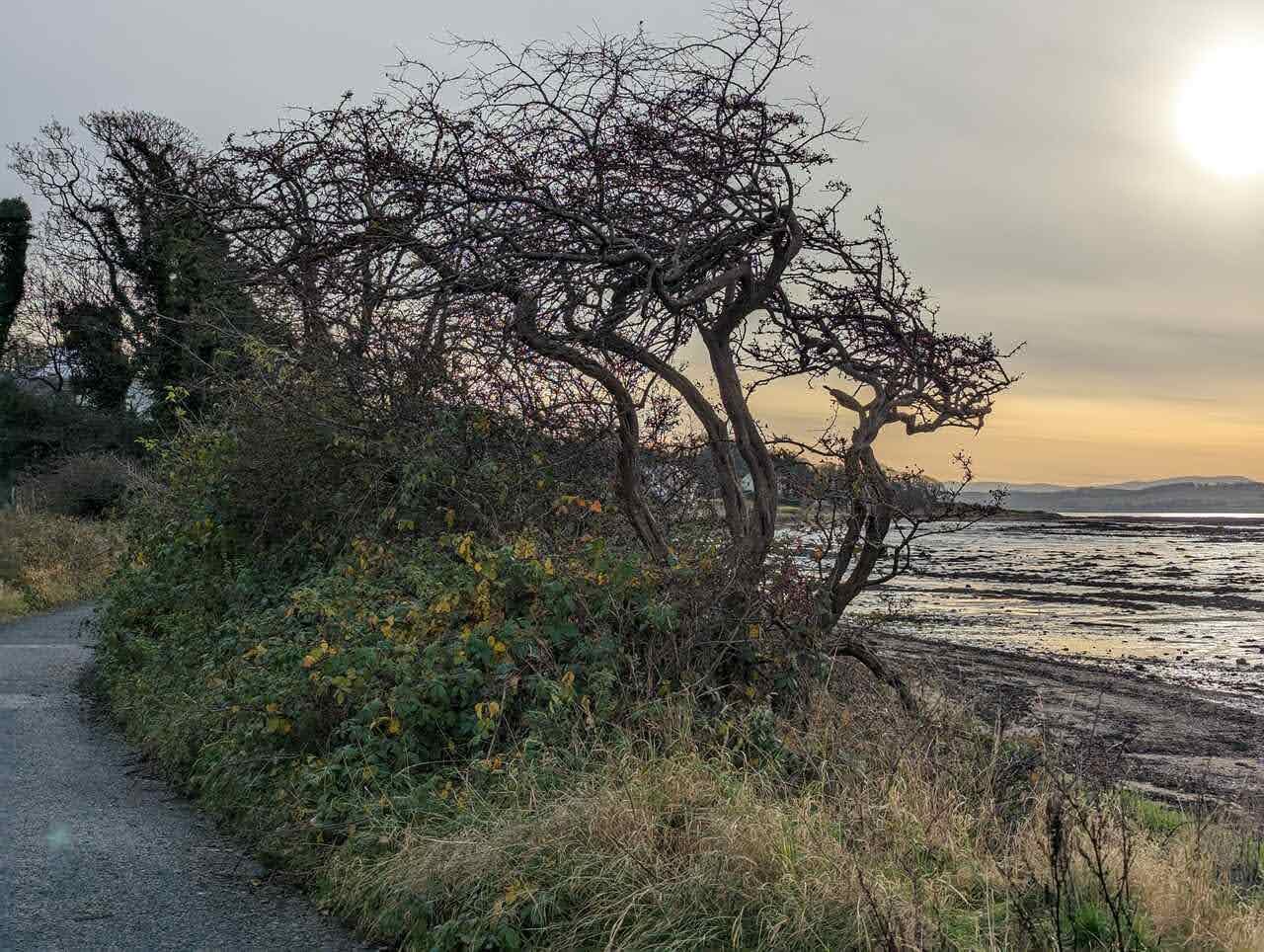
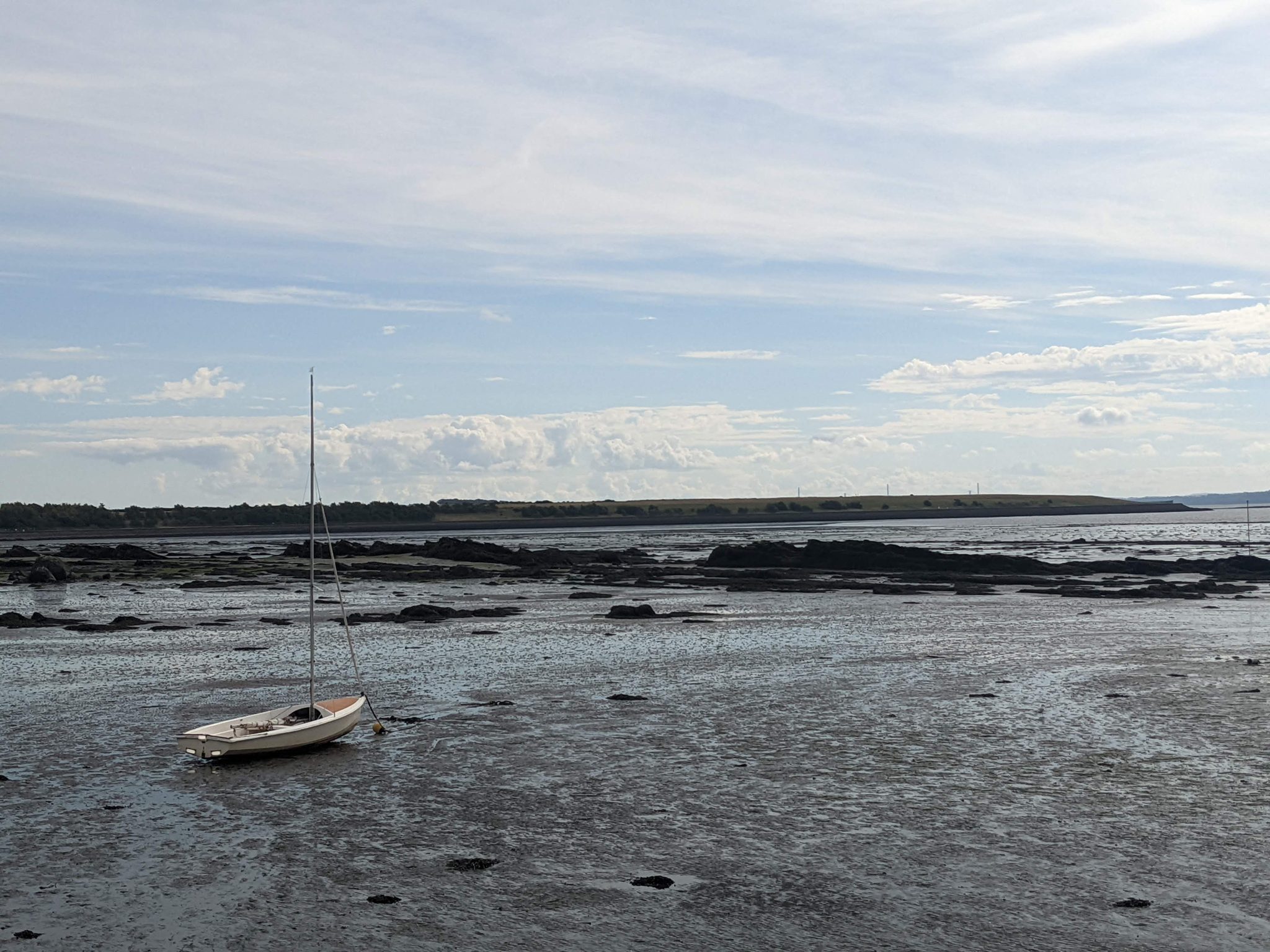
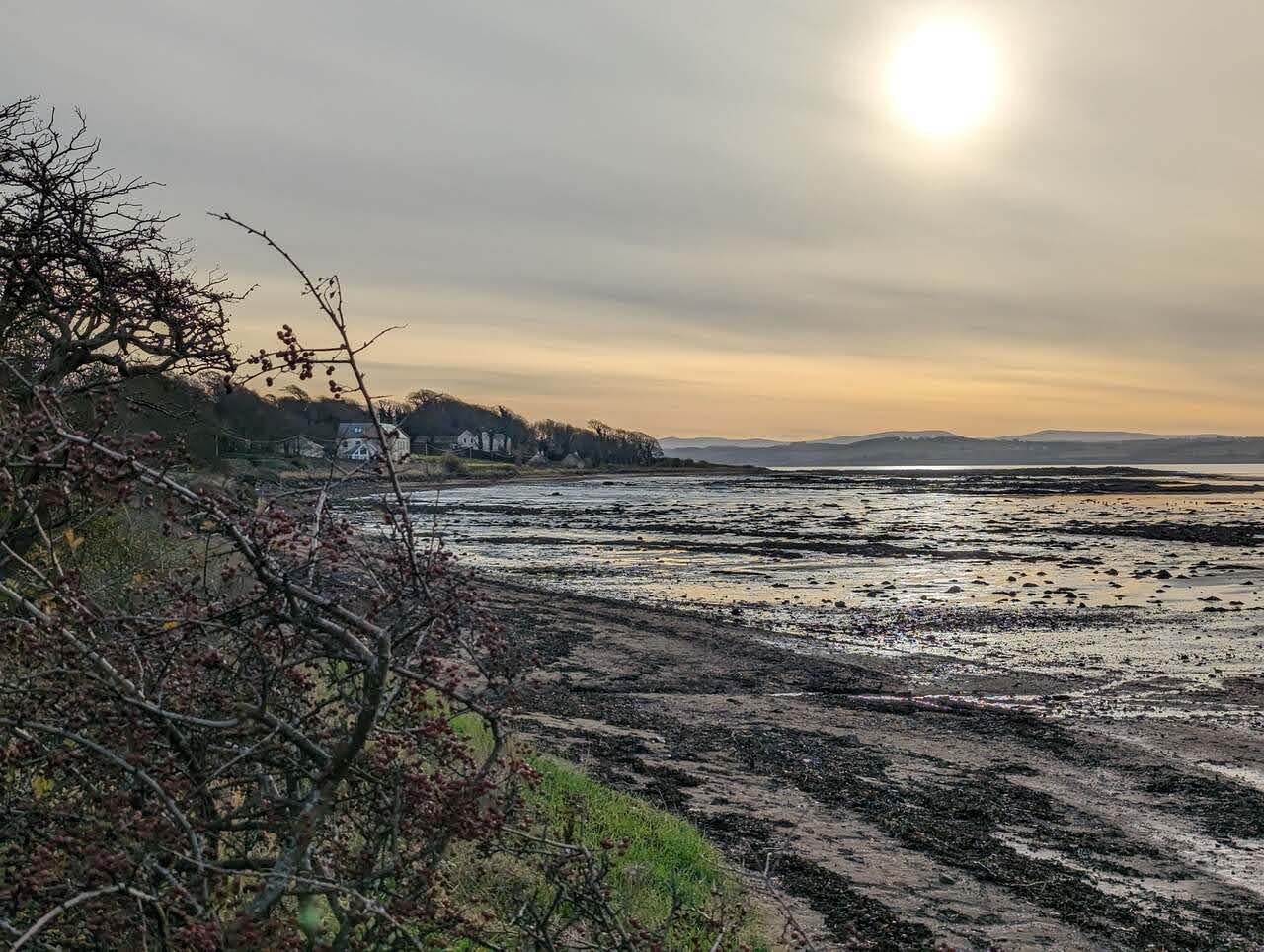
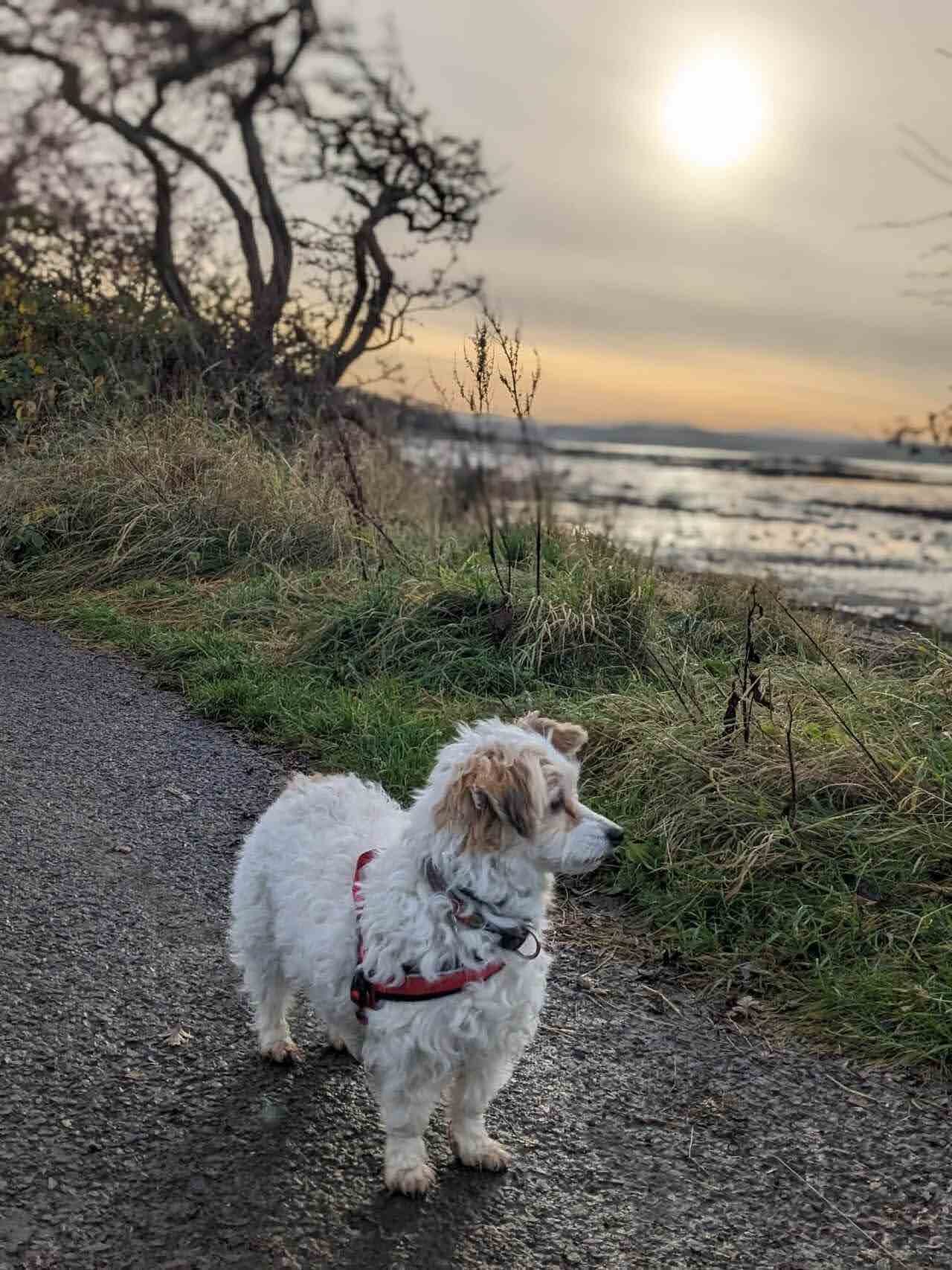
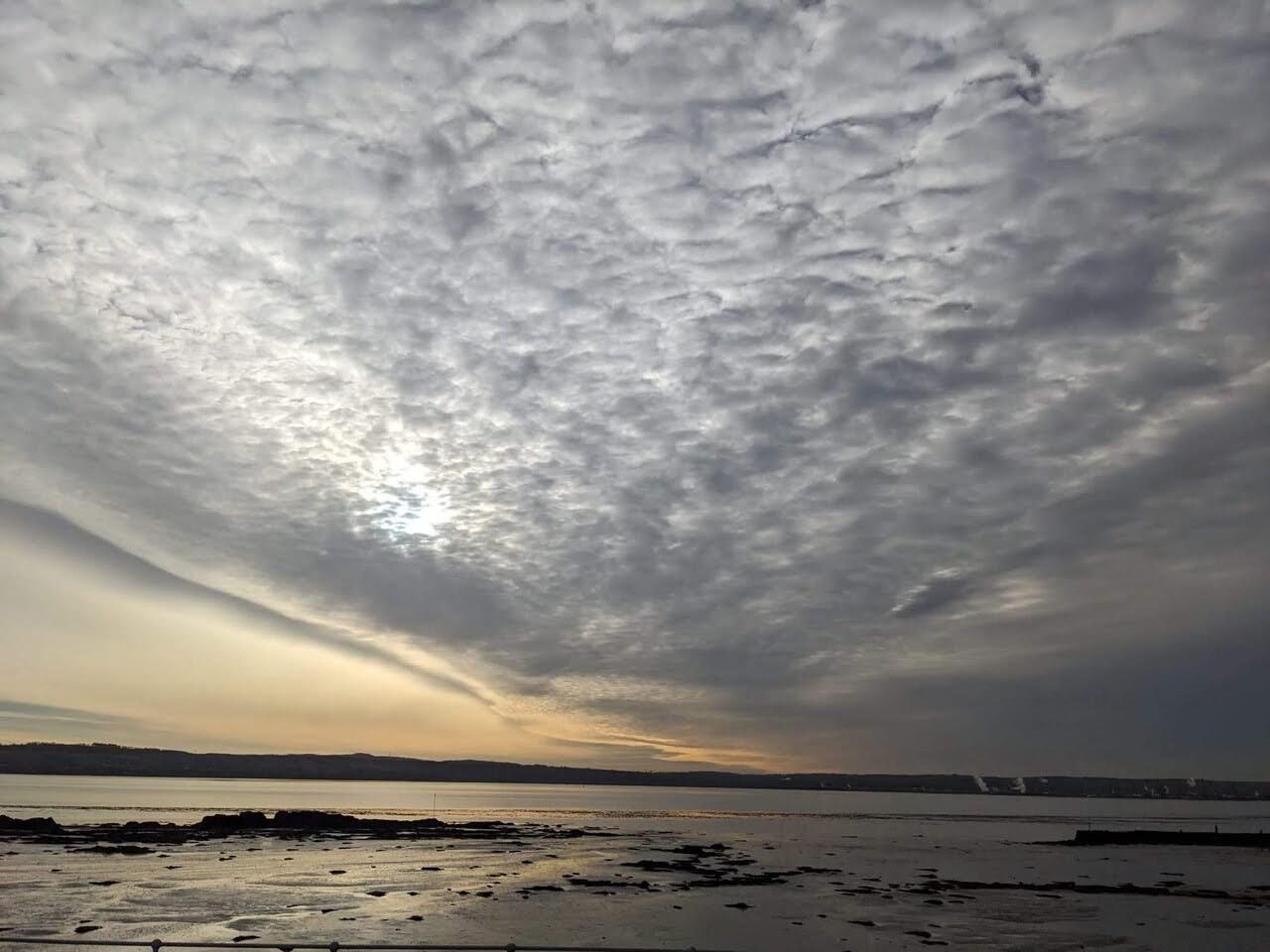
The other half of the ritual is the walk. Culross sits right on the Firth of Forth, and the Fife Coastal Path runs along the shore — a lovely, level stroll on the foreshore, brilliant at low tide for a beachcomb and stunning when the sun goes down over the water. The dog approves.
🗺️ Map — Culross (from GPS)
Best time to visit
Any time — it’s lovely year-round — but the Palace and café have seasonal hours (check NTS before a special trip), and the shore walk is magic at sunset. Weekdays are quietest; summer weekends and Outlander tours can busy it up.
Combine it with
- Stirling — upriver at the head of the Forth, where the estuary you have been walking beside finally narrows to a bridge.
- Dunfermline — the abbey, the palace ruins and Pittencrieff Park, ten minutes away.
- Our Alloa–Dunfermline cycle circle — Culross is the perfect coffee stop on it.
- Alloa — our home base a short run west: Alloa Tower, the historic Forth harbour and lovely parks.
- Aberdour — the “Fife Riviera” east along the coast: the Silver Sands beach, harbour and Aberdour Castle.
- The Fife Coastal Path — the shore route in both directions.
Reality notes
- 🏘️ The burgh: wander freely; Palace & garden are NTS-ticketed (village streets are free).
- ☕ Cafés: Bessie’s (our favourite) & The Gallery — heads-up, Bessie’s only serves soup / cheese scones from ~11am, strictly to the clock.
- 🎬 Outlander: popular with fans; can be busy at weekends.
- 🚶 Shore walk: level foreshore path; mind the tide for beachcombing.
- 🅿️ Parking: village car park (small); arrive earlier on nice weekends.
- 🐕 Dogs: brilliant — village, shore and café courtyard (leads near roads).
Sources
- First-hand: Kevin & family, Culross (own photos — a regular local haunt)
- Culross Palace — National Trust for Scotland
- Culross — Wikipedia
Why you want your hands free in Culross
Culross is cobbles — genuine, ankle-turning, 17th-century cobbles, on streets that climb from the shore up to the Abbey. You will be photographing constantly, and you will want both hands for the camera and one eye on your feet. A pack that sits still on your back while you crouch for a shot of a red-pantiled roof is doing real work.
☔ Culross looks its best under any sky, which is handy, because from autumn to early summer the rain here is a near-daily caller. Cobbles gleaming in the morning sun can be cobbles under a downpour within the hour — that’s the Forth for you. The locals wander with a small pack carrying a waterproof and an umbrella and never break stride. Coffee, cobbles or the shore walk, do the same and stay dry.
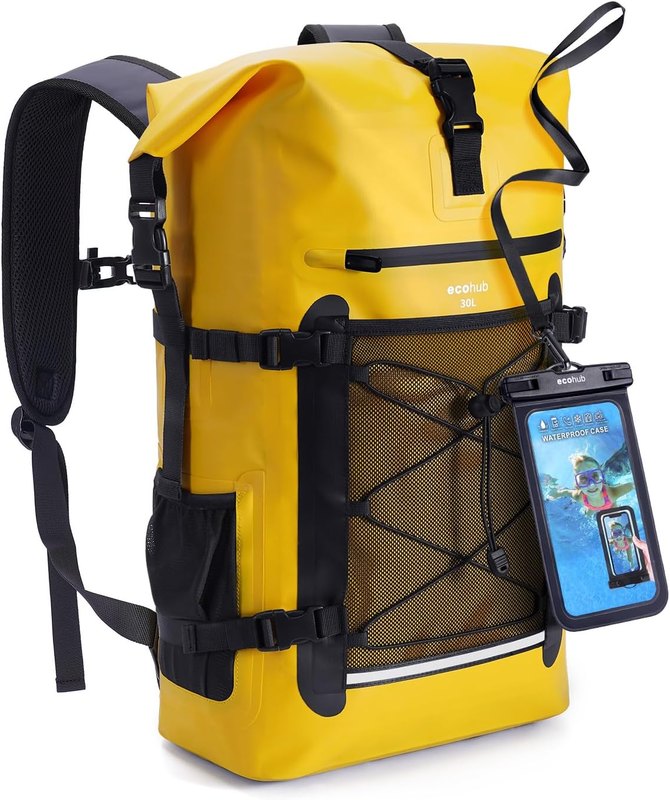
ECOHUB 30L Waterproof Roll-Top Backpack
Cobbles and a shore walk in Fife drizzle are no bother with a roll-top pack you can seal in a moment — keep your camera and an extra layer dry at Culross and enjoy the coffee stop without a soggy bag at your feet.
Check price on Amazon