
St Conan’s Kirk: The Handmade Masterpiece on the Shore of Loch Awe
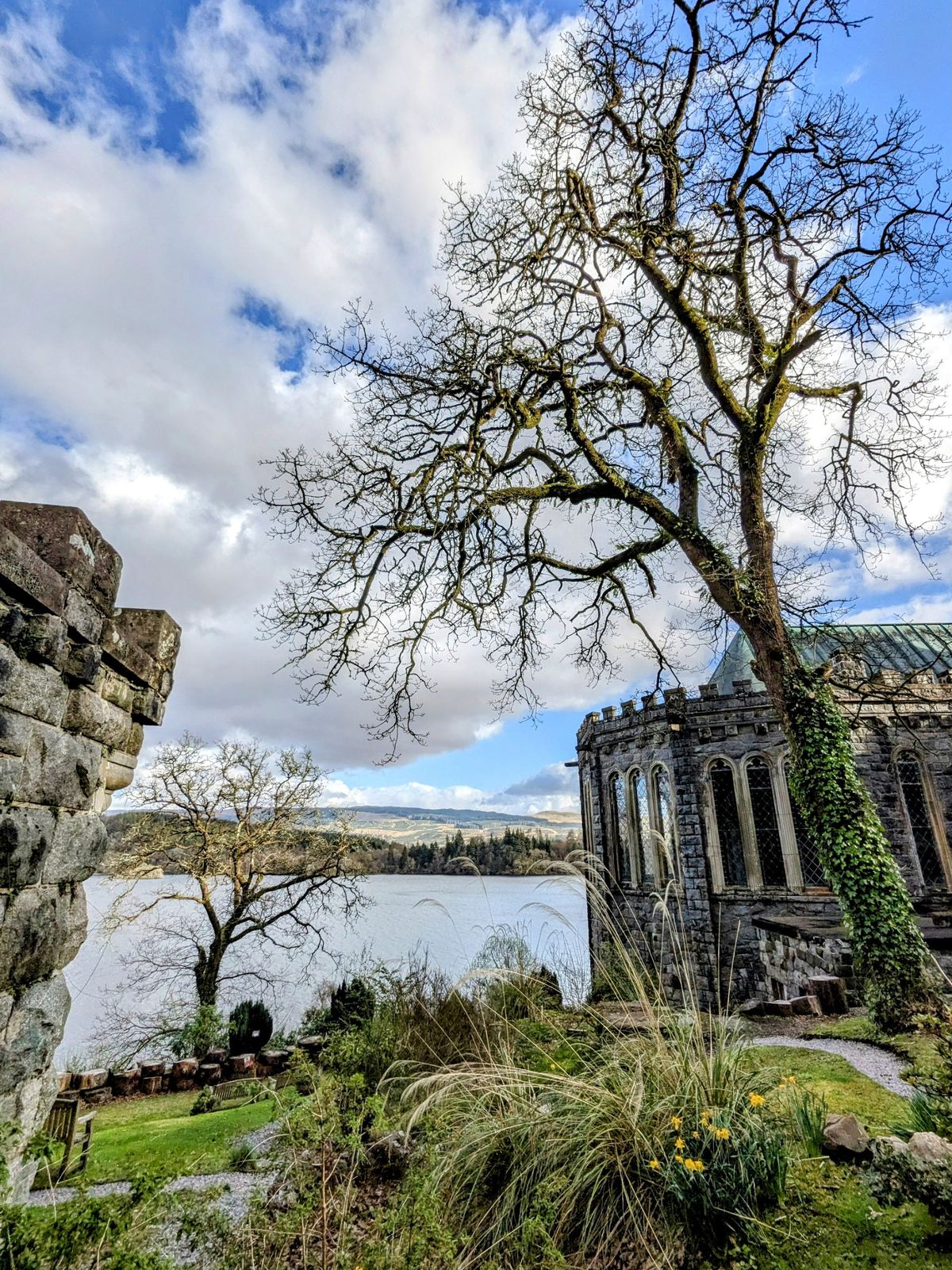
Overview — the strangest, loveliest church in Scotland
Some churches are grand because a bishop or a king willed them into being. St Conan’s Kirk is grand because one man simply couldn’t stop building. It stands on the north shore of Loch Awe, looks centuries old, and yet it isn’t medieval at all — it’s a lovingly obsessive Victorian and Edwardian creation, hand-built from the mountain behind it and stuffed with salvaged treasures. It is, quite simply, one of our favourite places in Scotland — and it’s free to walk into.
One man’s beautiful obsession — Walter Douglas Campbell
The kirk is the life’s work of Walter Douglas Campbell, a gentleman of the Blythswood Campbells whose family owned the nearby island of Innis Chonain. He was an amateur architect with no formal training, and the story goes that he first built a modest church here in the 1880s to spare his elderly mother the long trip to the parish church at Dalmally.
He couldn’t leave it alone. From 1907 he began pulling the little church about and rebuilding it on a far grander scale, designing every detail himself and pressing local craftsmen into the work. He died in 1914 with it unfinished, and his sister, Helen Campbell, with a board of trustees, saw his vision through to completion in 1930. This is a building raised, in an age before cranes and concrete, largely by hand.
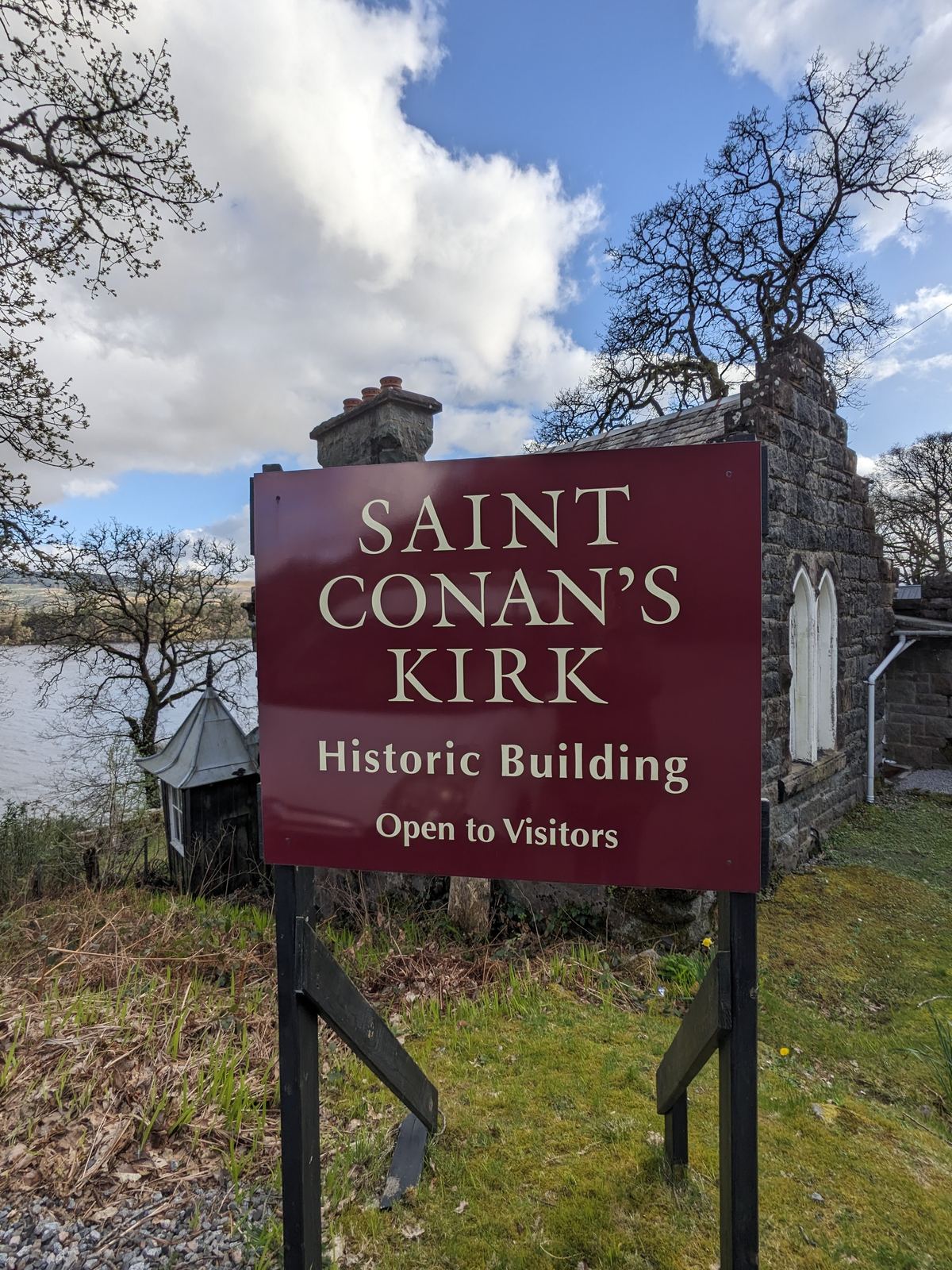
A magpie masterpiece — built from a mountain, salvaged from ships
What Walter Campbell built borrows shamelessly from every era at once: Norman, Romanesque, Gothic, Saxon and Celtic all rub shoulders here, and somehow it works. The stone was hauled down from Ben Cruachan, the great mountain that looms over the loch, and dressed on site. Into it he wove salvage from far and wide: oak timbers said to come from old warships (the battleships Caledonia and Duke of Wellington are the names usually given), ancient stone from other sites, and fragments gathered on his travels.
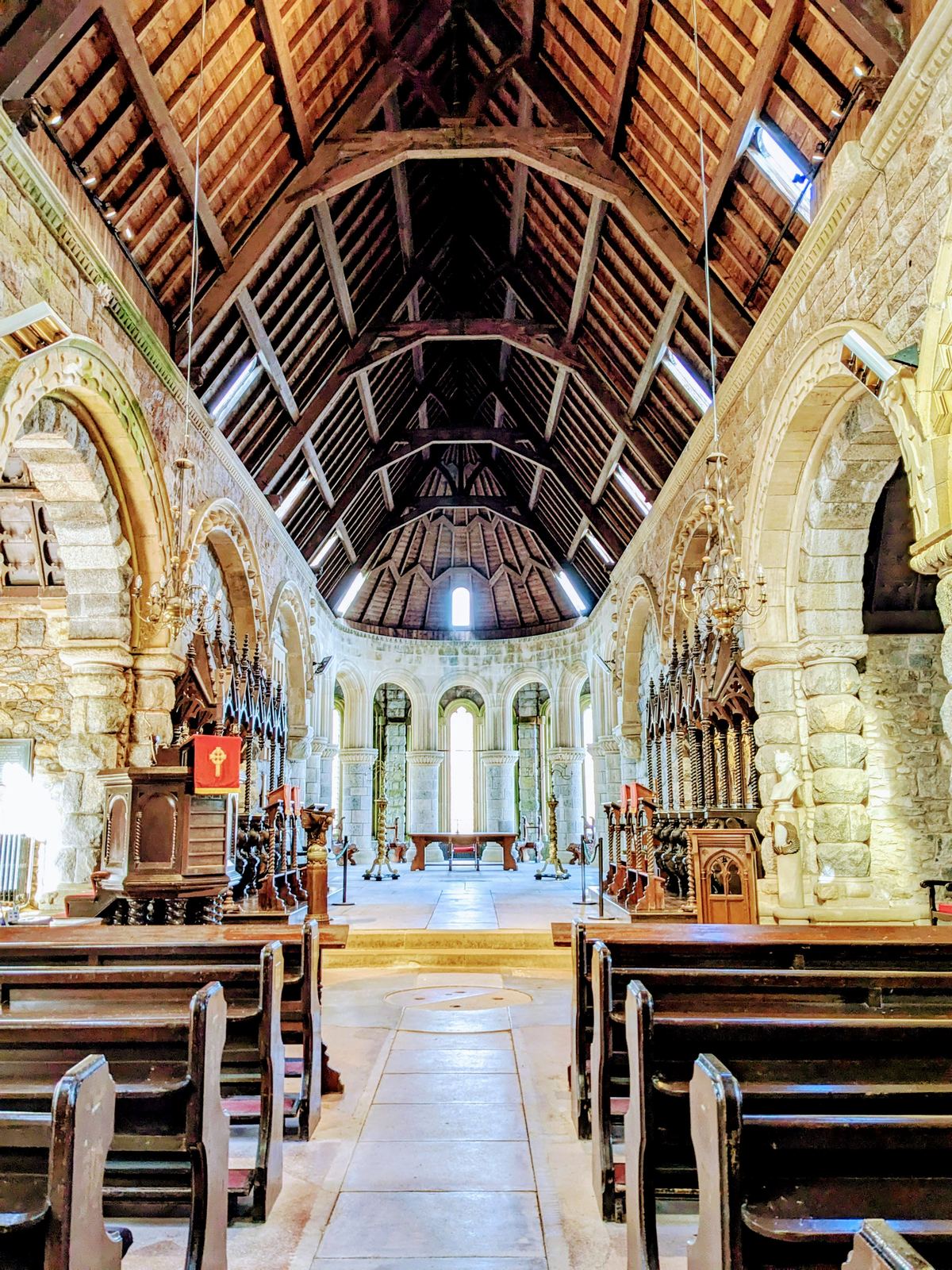
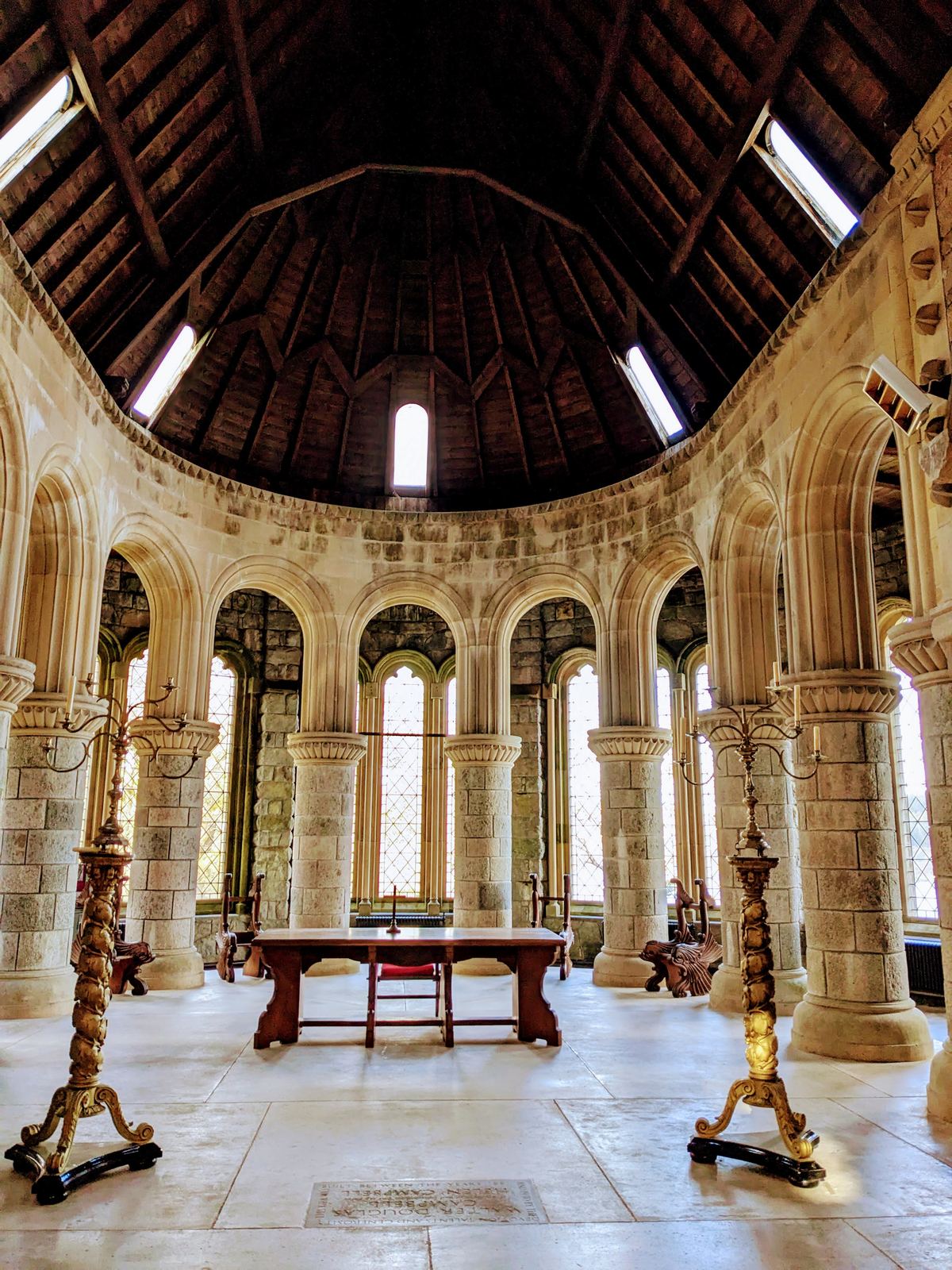
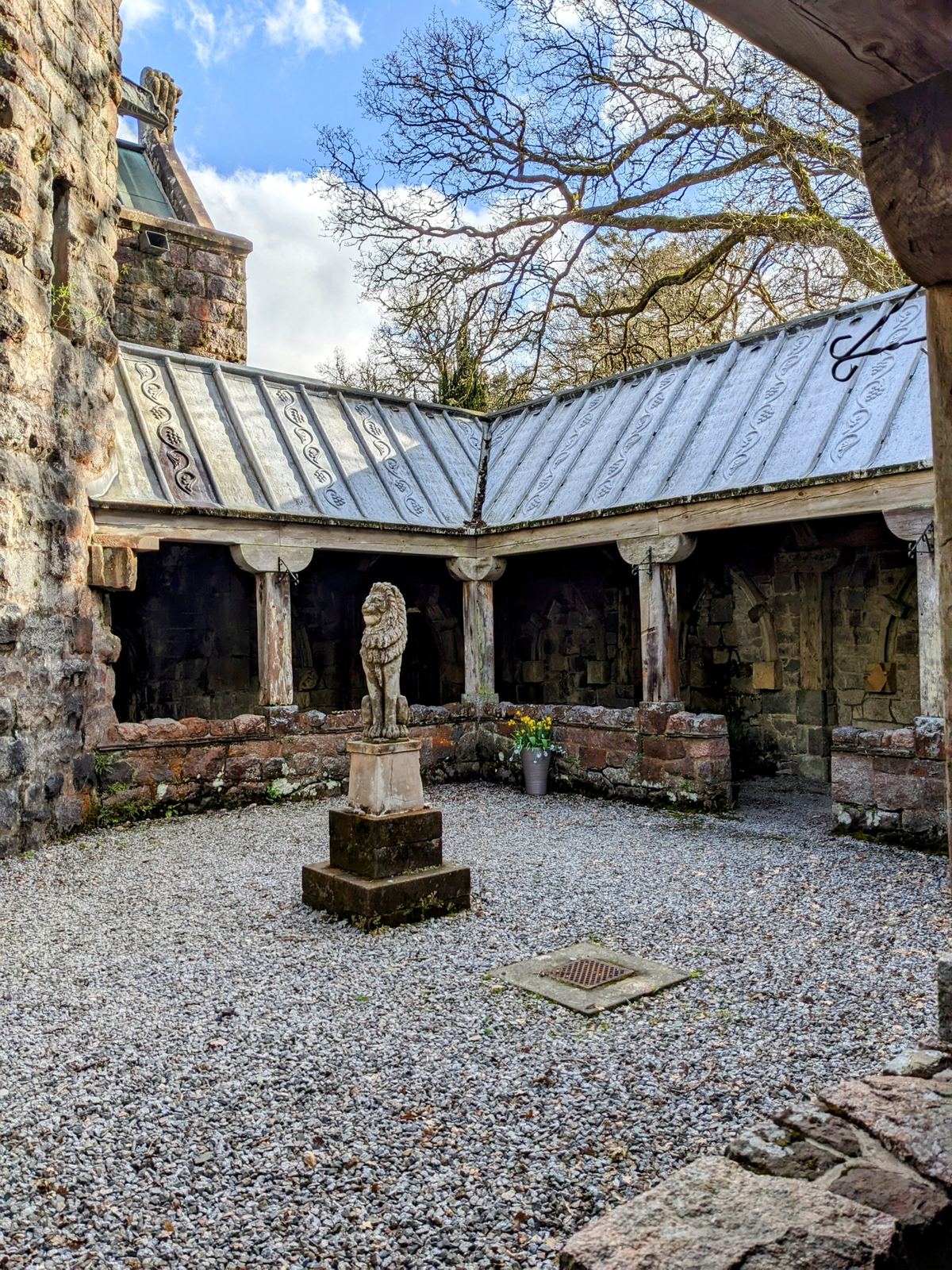
The result feels older, bigger and richer than a little country kirk has any right to — a warren of side-chapels, carved creatures, flying buttresses, a squat Saxon-style tower, an ambulatory and a cloister, all knitted together with astonishing hand-cut detail. Look for the little carved cormorant and the animals hidden in the stonework; there is a joke or a flourish round every corner.
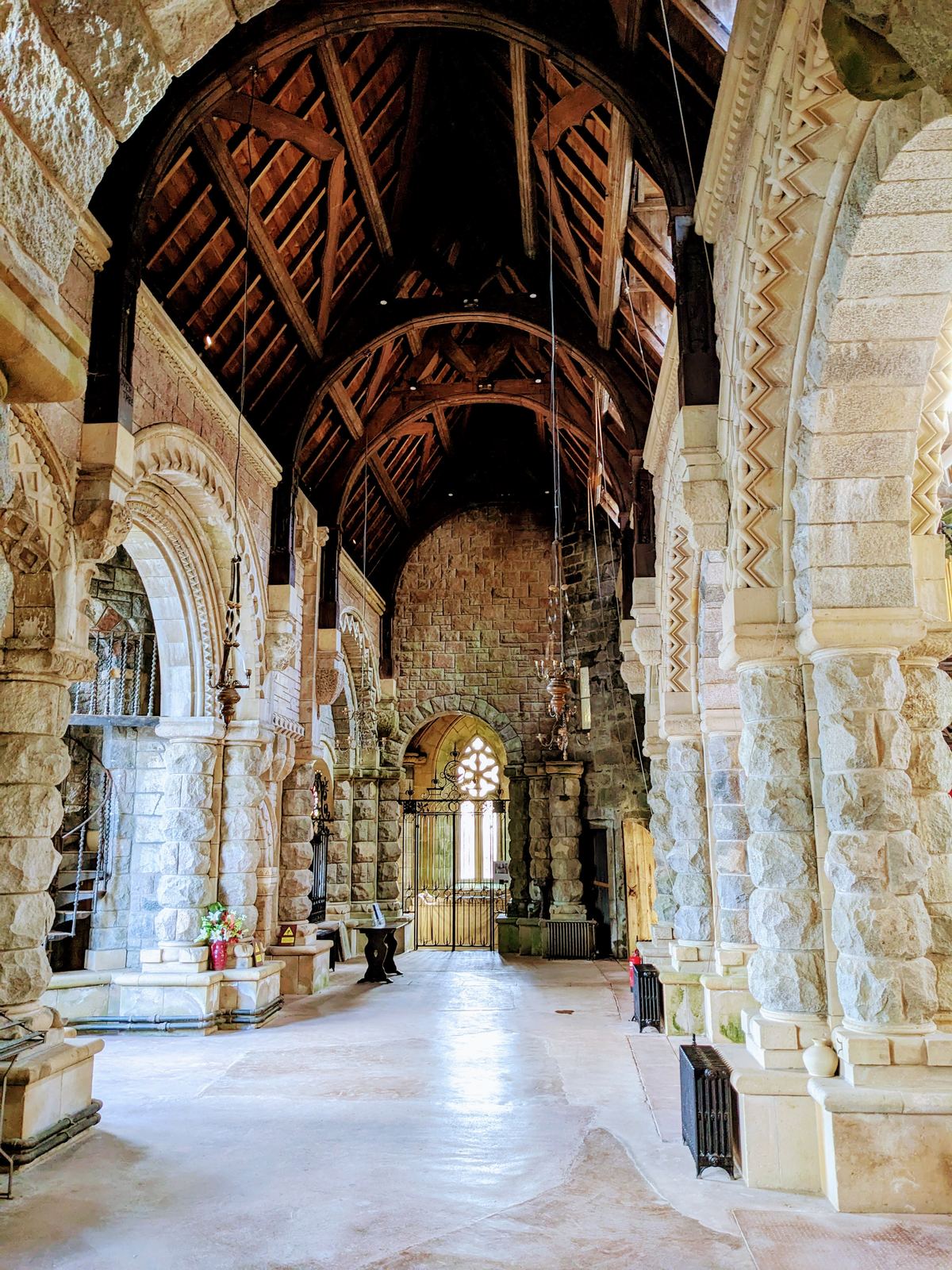
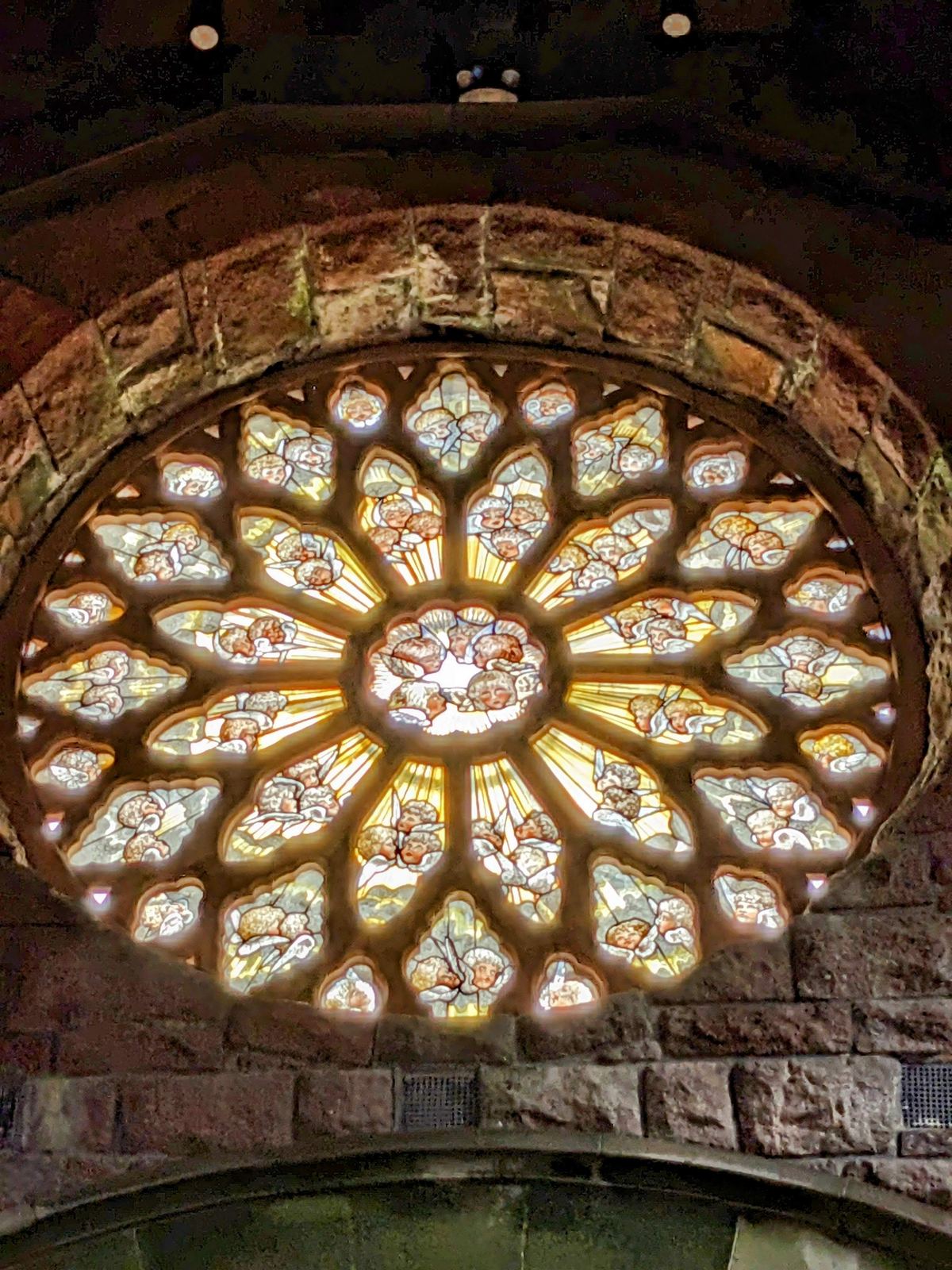
Inside — the rose window, the nave & the light
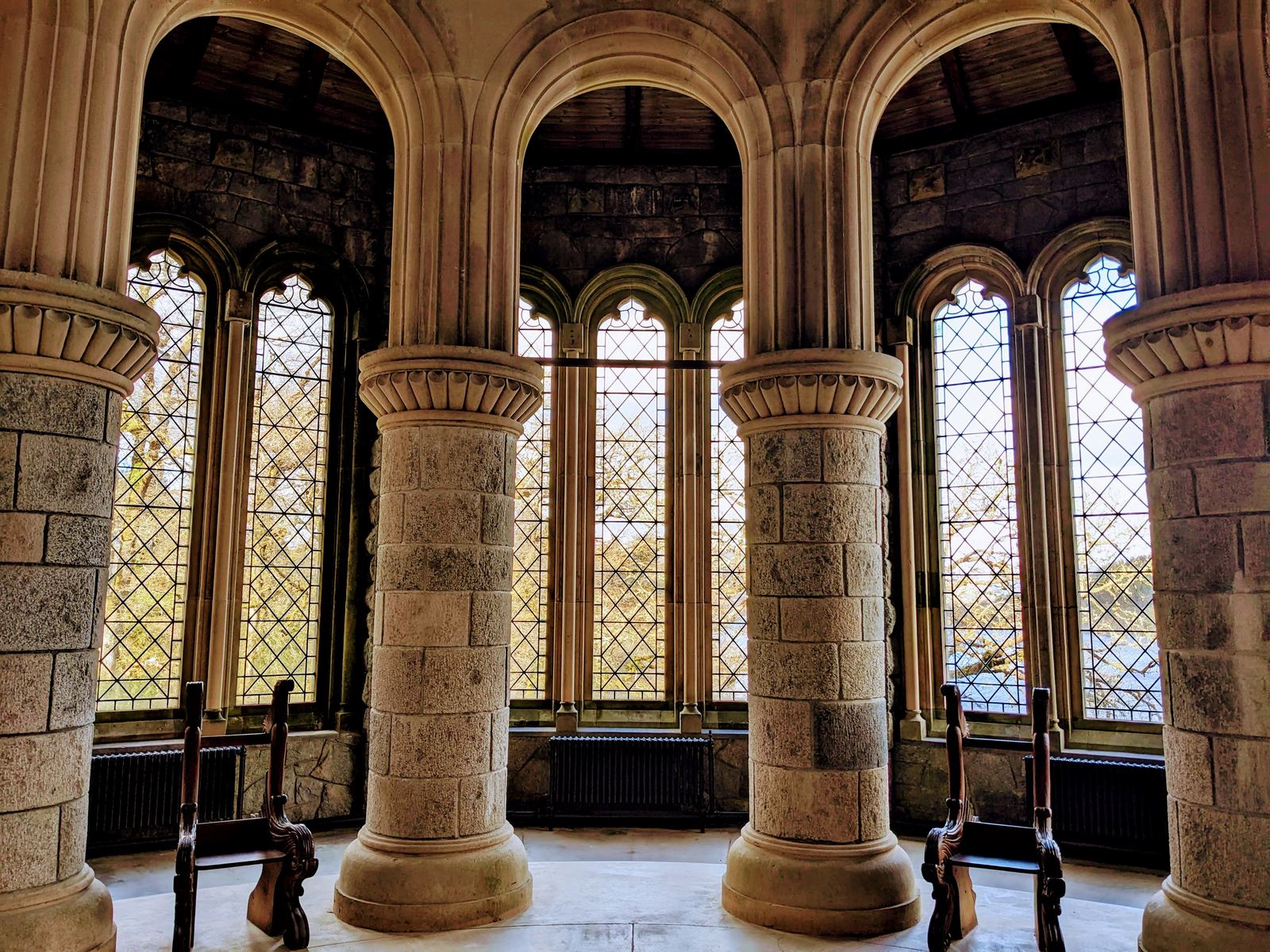
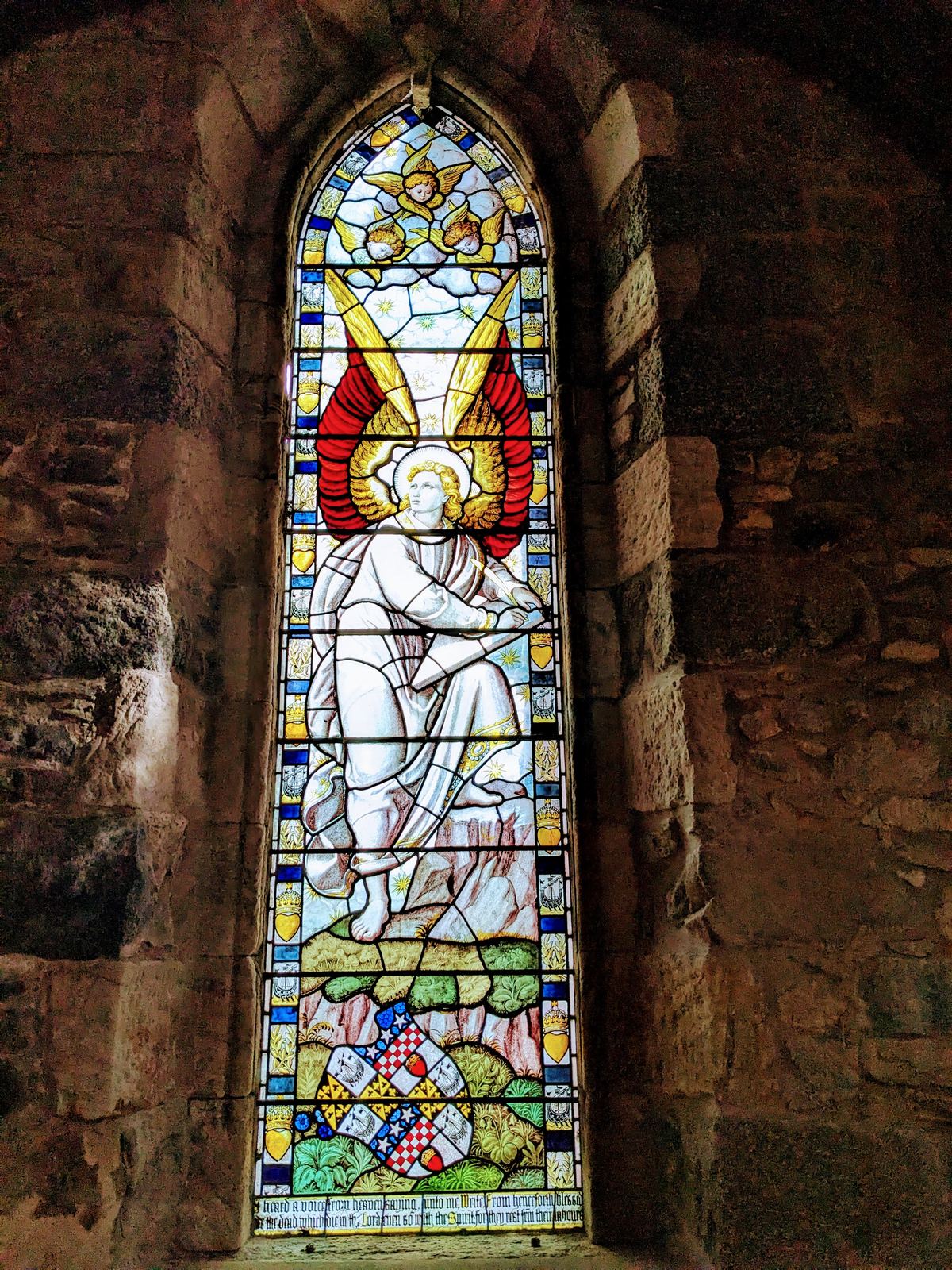
Step through the door and it simply keeps giving. The showstopper is the great rose window, but the whole interior is a feast: a soaring timber-roofed nave, carved Romanesque arches, round pillars, a beautiful ribbed apse flooded with light, glowing stained glass, and a quiet cloister garth open to the loch. Give yourself a proper half-hour — you’ll keep spotting new details every time you turn around.
The Bruce Chapel — a fragment of a king
The kirk’s most remarkable relic sits in the Bruce Chapel. It holds a carved effigy of Robert the Bruce — and, set beneath it, a fragment of bone said to be the king’s own, reputedly gifted from Dunfermline Abbey after Bruce’s tomb was rediscovered there in 1818. It’s a fitting link: the Pass of Brander at the head of this very loch is where Bruce broke the MacDougalls in 1308–09. The wider story is on our Clan Bruce page.
Visiting
- ⛪ Entry: free (donations very welcome), open to visitors daily — just off the A85 at Lochawe. A working, much-loved building, so please be respectful.
- 🚗 Parking: small car park right by the kirk.
- 🚂 By train: Loch Awe station, on the Glasgow–Oban line, is a two-minute walk.
- 🐶 Dogs: fine in the grounds; on leads inside.
- 📷 Photography: welcome inside — be discreet; the rose window and apse are the highlights.
Nearby — combine it with
- Loch Awe — the 25-mile loch the kirk sits on, and where to stay overnight.
- Kilchurn Castle — the great Campbell ruin at the head of the loch (a must-pair).
- Clan Campbell — the family behind both kirk and castle.
- Part of our Kirks, Cathedrals & Abbeys of Scotland collection.
Sources
- First-hand: Kevin & family, St Conan’s Kirk & Loch Awe, 16–17 April 2024 (own photos).
- St Conan’s Kirk (official) & Wikipedia (Walter Douglas Campbell, build history, the Bruce relic).