Fife & the East Neuk
The Kingdom of Fife — the home of golf and a string of perfect little harbour villages.
The Kingdom of Fife — a self-contained peninsula between the Forth and the Tay that Fifers have always half-jokingly called a kingdom of its own. It runs from the ancient royal burghs of the west, through the university-and-golf town of St Andrews, to the string of little pantiled fishing villages down the East Neuk that are, for our money, among the prettiest places in Scotland. It’s an easy hop from Edinburgh over the Forth bridges, the coast catches a lot of the east’s dry, bright weather, and the whole shoreline is stitched together by the superb Fife Coastal Path — so it walks and cycles as well as it drives.
West Fife & the Forth
Just over the bridges, Culross is the one not to miss — the best-preserved 17th-century town in Scotland, a warren of cobbled lanes and crow-stepped, ochre-washed houses around its little palace, so intact that Outlander films here without changing a thing. Come for a coffee and a wander and a shore walk; it’s a definite stop.
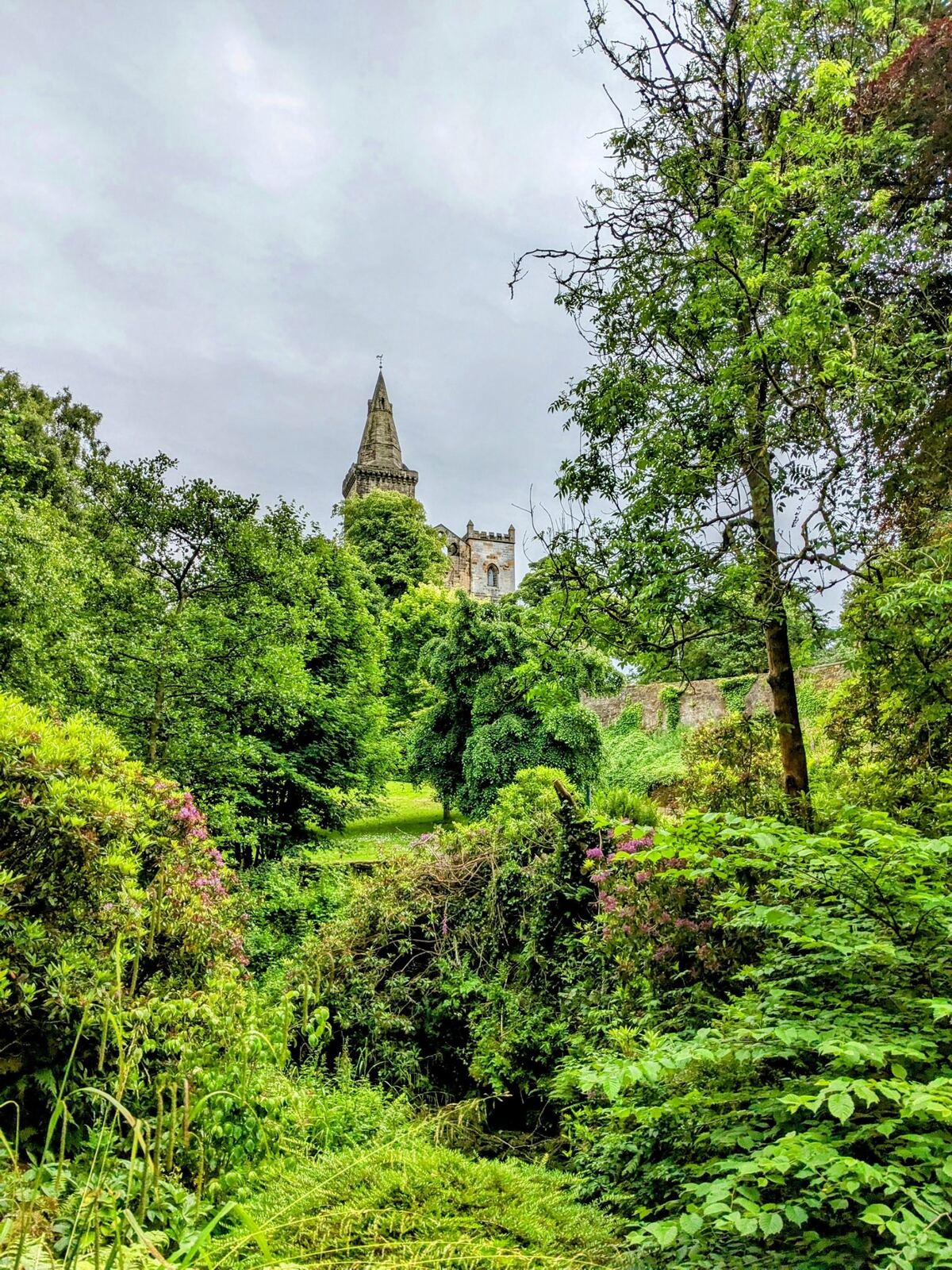
Inland, Dunfermline was Scotland’s capital before Edinburgh, and its great abbey is the resting place of kings — Robert the Bruce himself lies beneath the pulpit, his name spelled out around the tower parapet. It’s also the birthplace of Andrew Carnegie, whose gift of Pittencrieff Park still runs down to the abbey. On the coast, Aberdour earns its “Fife Riviera” nickname with the Silver Sands beach, a fine old castle and terrific Forth sunsets — and one of Britain’s most-decorated railway stations to arrive at.
St Andrews & north-east Fife
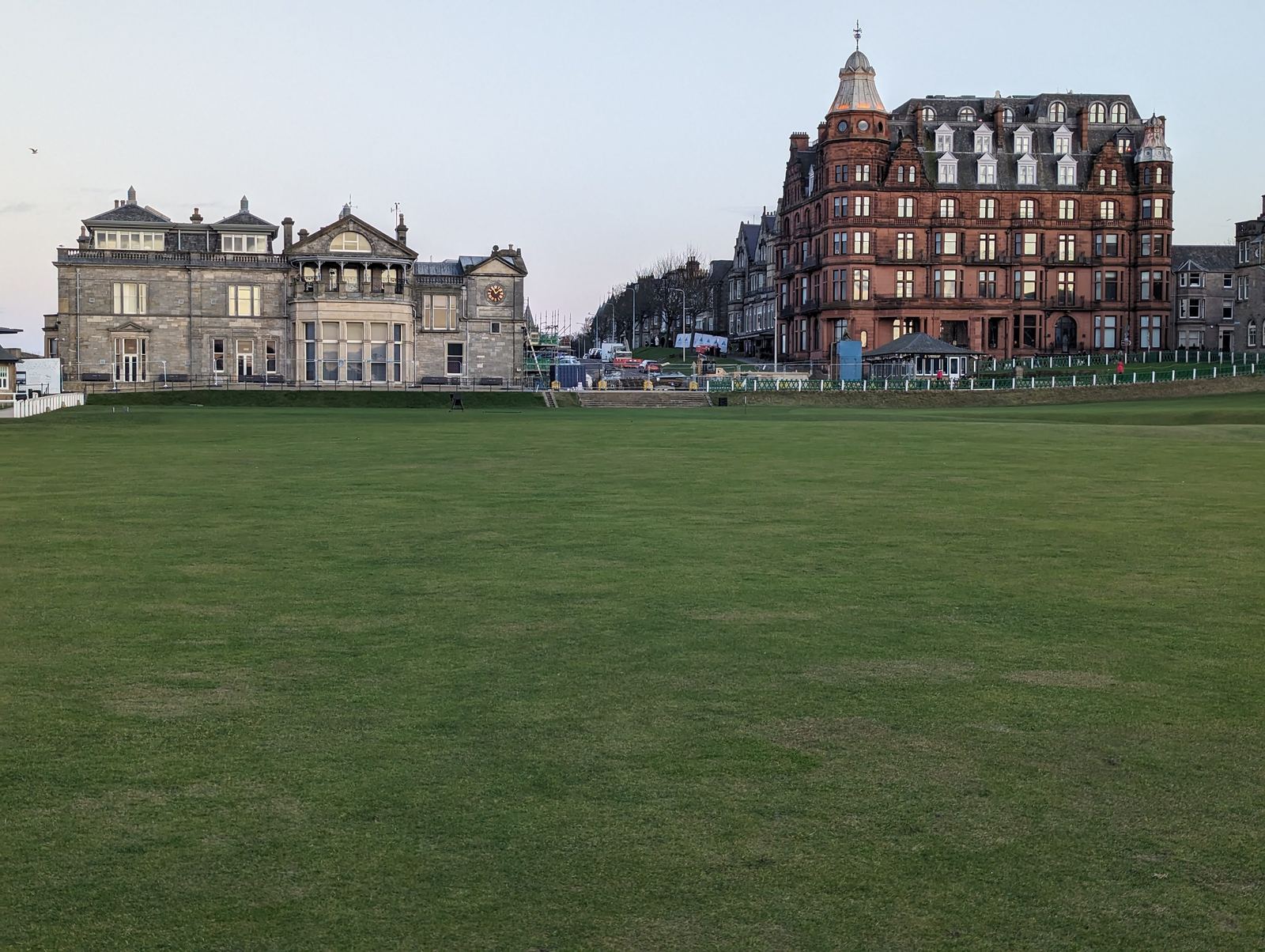
St Andrews is Fife’s star turn and wears three crowns: the home of golf, where the Old Course runs right up to the town and the R&A clubhouse; a great ruined cathedral and castle on the cliff-edge, once the religious capital of Scotland; and the oldest university in the country, founded in 1413. Even if you don’t play a hole, walk the West Sands (of Chariots of Fire fame) and the cathedral graveyard. A definite visit — and busiest in summer and on big golf weekends.
Inland, the estate village of Falkland sits under the Lomond Hills around a Stuart hunting palace — complete with the oldest real (royal) tennis court in Britain, still in play — another Outlander favourite and a lovely, unhurried stop. Down on the coast, quiet Kingsbarns has a big empty beach, the celebrated snowdrops of Cambo, and its own coastal distillery.
The East Neuk
Now the good bit. The East Neuk — the “east corner” — is a run of small harbour villages, each a variation on the same perfect theme: red-pantiled, crow-stepped cottages crowding round a working harbour. You could happily spend two or three days pottering between them. Anstruther is the capital of the corner, with the excellent Scottish Fisheries Museum, boats out to the puffin colony on the Isle of May, and a fish-and-chip shop that wins national awards — expect a queue, and join it.
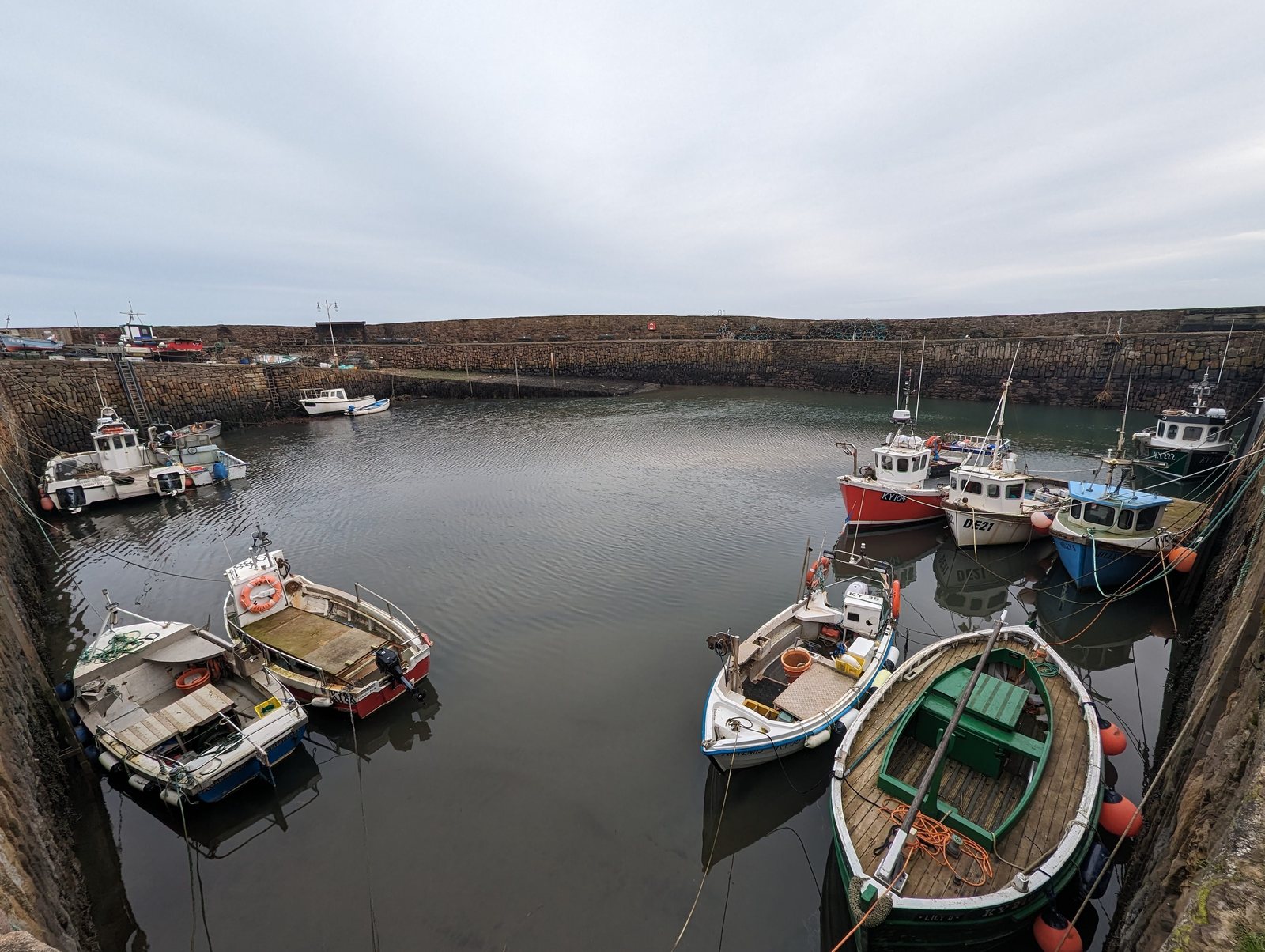
Crail is the jewel — its tiny harbour is possibly the most painted and photographed in Scotland, and rightly so; buy a fresh lobster or crab from the shack by the water in season. Pittenweem is the one still landing serious tonnage of fish, a proper working harbour with a saint’s cave up the wynd and the much-loved Cocoa Tree chocolate shop; its August arts festival fills the cottages with galleries.
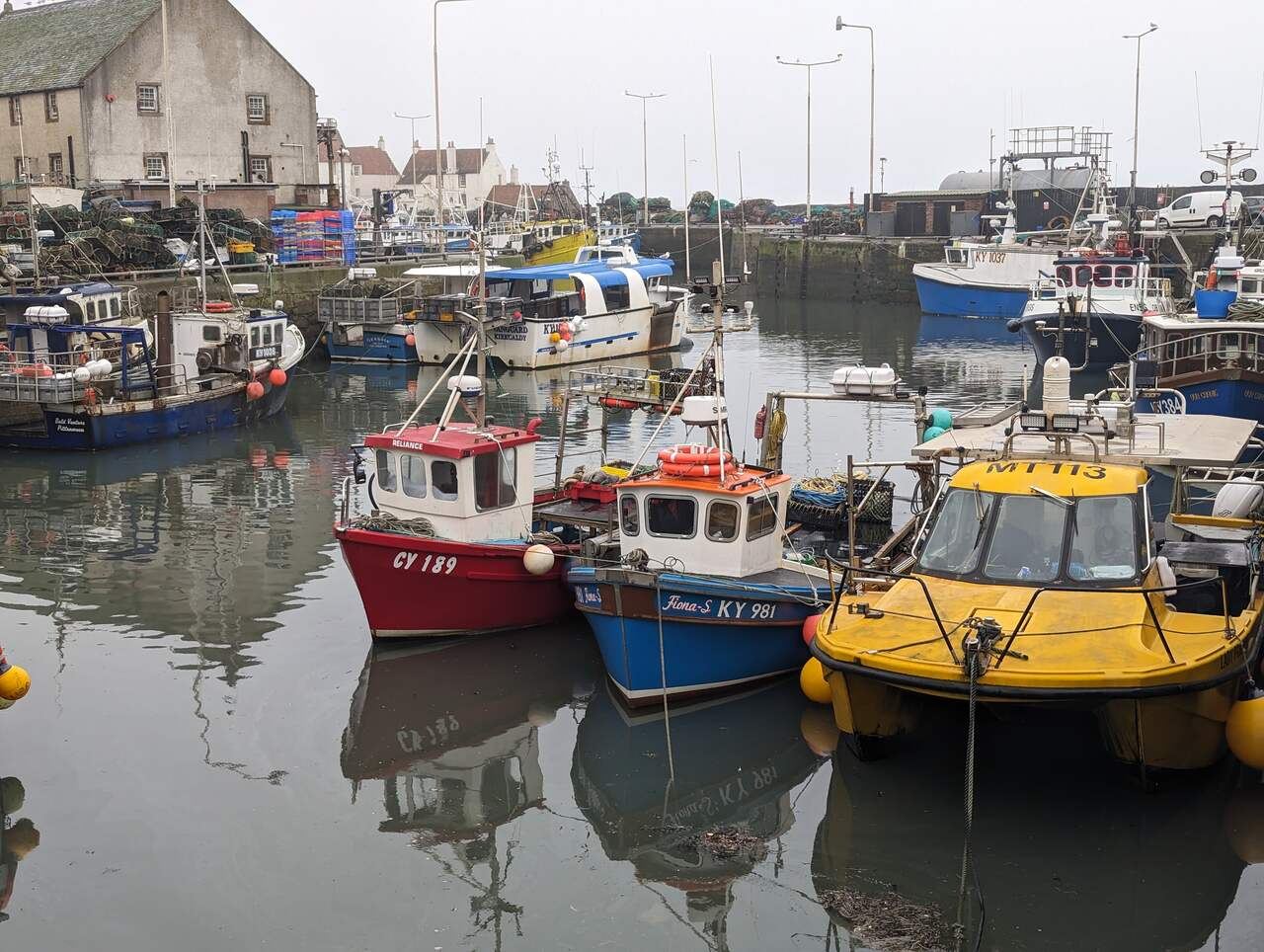
St Monans has the most photogenic set-pieces of all: a sea-edge kirk that stands closer to the water than any other church in Scotland, and a restored windmill above the old salt pans on the coastal path. Elie & Earlsferry breaks the mould with a genuinely stunning curve of sand — the beach village of the Neuk, with the ruined Lady’s Tower, the thrilling low-tide Chain Walk round an extinct volcano, and red garnets to hunt for on Ruby Bay. And just west, Lower Largo on Largo Bay was the home of Alexander Selkirk, the marooned sailor who became the real Robinson Crusoe — his statue stands on the spot where his cottage was.
The Wemyss Coast
Further west along the shore, East Wemyss and the Wemyss Caves hold something rare and precious — a set of Pictish and early carvings on the cave walls, the largest such collection in Britain, in a former mining village most tourists drive straight past. Above them stands the red-sandstone ruin of Macduff’s Castle, seat of the Thanes of Fife of Macbeth fame — a moody, free spot with a big view over the Forth.
Why Fife?
Because the East Neuk alone — that string of perfect little pantiled harbours — is worth the trip, and Fife wraps it in the home of golf, an ancient capital, royal palaces and some of the driest, brightest weather in Scotland. It’s compact, easy from Edinburgh, and just as good on foot or by bike along the coastal path as it is by car. Two or three days of villages, beaches and fish suppers — a definite yes.
Explore more: Lochs · Castles · Clans · Standing Stones · Kirks & Abbeys.
Fife’s whisky story goes back further than anywhere: the oldest written record of Scotch, from 1494, comes from the monks of Lindores, where Lindores Abbey Distillery now stands.