Argyll & the Isles
Scotland’s west coast in miniature — sea lochs, white villages and a scatter of whisky islands.
Argyll — the secret of Scotland that most people miss.
Most visitors race through on their way to Skye, Glencoe or the far north and never stop to look. That’s their loss. Argyll has it all within a short drive of Glasgow: sea lochs and island ferries, castles and standing stones, whisky, seafood and quiet single-track roads you’ll often have to yourself. Give it a few days and it will steal the trip.
Argyll is Scotland’s west coast in miniature, and for our money the most underrated corner of the country. It is a place of sea lochs that reach far inland, of little white fishing villages and single-track roads, of the long finger of Kintyre and a scatter of islands offshore. It holds one of the richest prehistoric landscapes in Europe at Kilmartin, the fairytale Campbell seat at Inveraray, and, at the far end of Kintyre, the old whisky capital of the world. It rains, and it is green because of it — but catch Argyll on a still, gold evening and nowhere in Scotland beats it.
It is also big, and slow. Those sea lochs mean the road is forever curling round the head of a bay, so plan on covering less ground than the map suggests and treat each of the areas below as a day or two in its own right. This is Campbell country above all — the Dukes of Argyll have ruled it from Inveraray for centuries — and, with Oban as the main ferry gate, it is the springboard for half the Hebrides.
Cowal & the Kyles of Bute
The nearest slice of Argyll to the central belt, and the one most people drive straight past. From Glasgow you can be in Dunoon in under an hour on the car ferry from Gourock — and Cowal opens up from there: a green peninsula of forest, gardens and quiet sea lochs that we’d happily send anyone to for a long weekend. Dunoon itself is a faded Victorian resort with a working pier, good coffee and a cracking wild-camp coast on its doorstep.
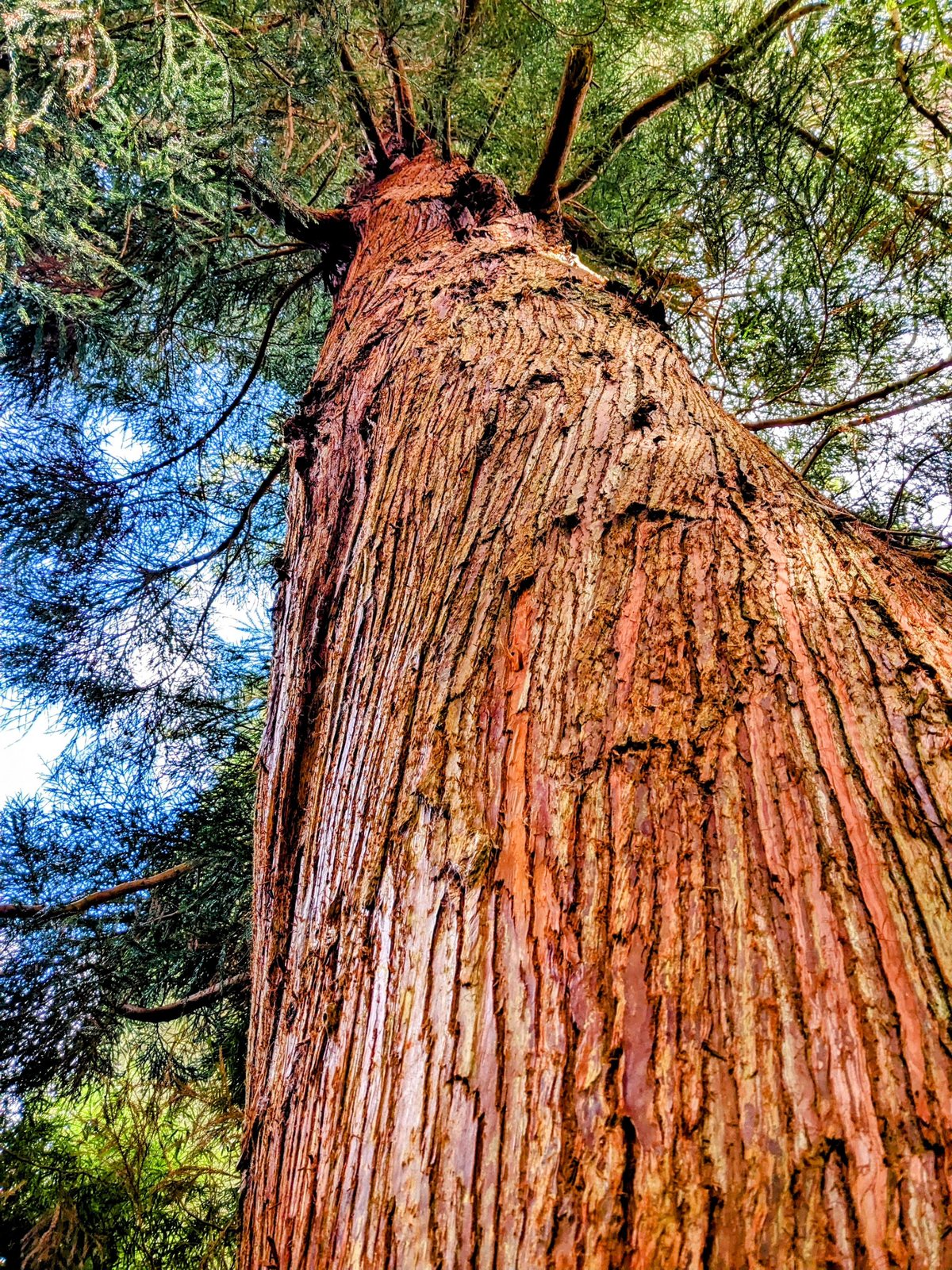
Just north of the town, Puck’s Glen is the one unmissable short walk in Cowal — a mossy, dripping fairy-gorge of little waterfalls and stone steps that feels made-up. Pair it with Benmore Botanic Garden next door, where an avenue of 150-year-old giant redwoods leads into a hillside of Himalayan rhododendrons and a Victorian fernery; it is one of the three national botanic gardens, and a genuine must-see in May and June. Further west, Tighnabruaich and the Kyles of Bute hide Cowal’s postcard view — the A8003 viewpoint looking down over the narrow Kyles is one of the best-known panoramas in the west — with the quiet sea-loch of Loch Riddon tucked in behind it. String the four together and you have a full, easy day out of Dunoon.
Loch Fyne & mid-Argyll
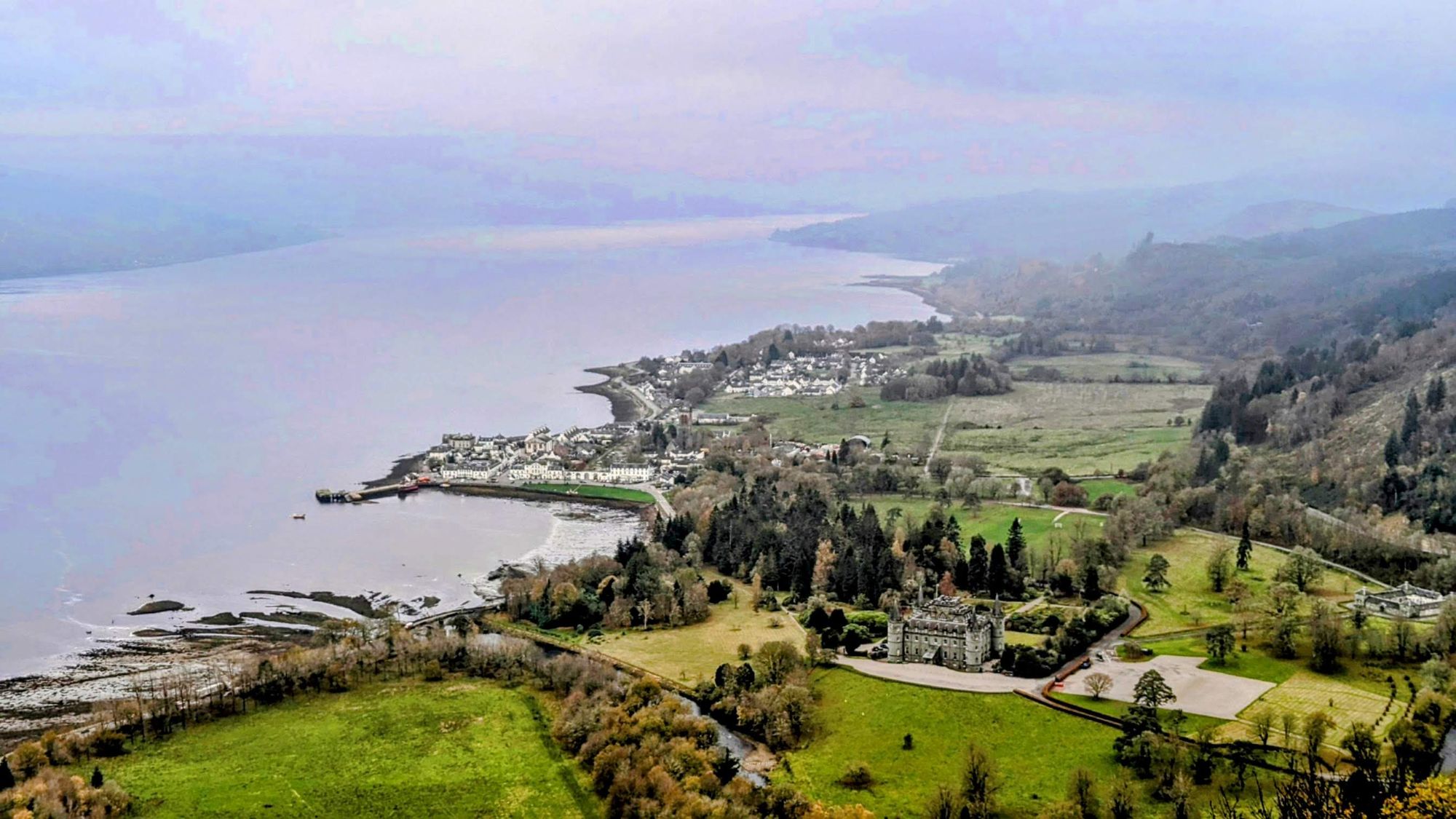
The spine of Argyll is Loch Fyne, Scotland’s longest sea loch, once so thick with herring it fed half the country and now better known for its oysters — buy a dozen at the famous oyster bar at the head of the loch. At its mid-point sits Inveraray, and if you do one thing in Argyll, do this: a perfect white-washed Georgian planned town on the shore, with the turreted Campbell castle behind it and a grim old jail you can walk round. It is the single best-looking small town in the west, and a definite stop.
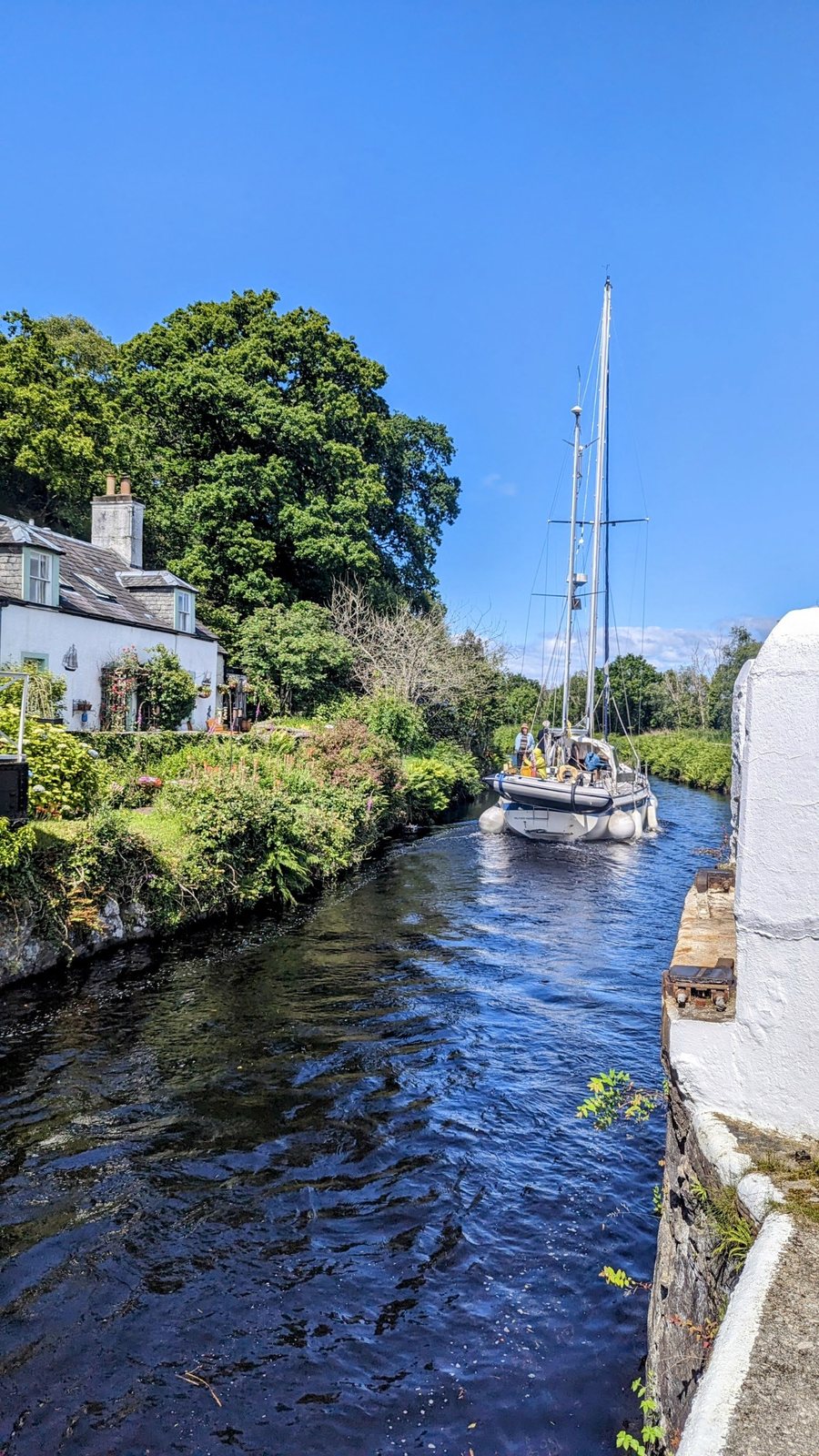
South and west, the loch narrows to Tarbert, a lovely horseshoe harbour at the neck of Kintyre — the natural place to stop, eat and decide whether you’re heading down the peninsula or on round the coast. Off to the north-west, Skipness pairs one of Scotland’s oldest castles with a seafood cabin and a quiet shore walk, and is worth the dead-end drive on a fine day. Better still, follow the Crinan Canal — nine miles of “Britain’s most beautiful shortcut,” built to save boats the long haul round the Mull of Kintyre — from Ardrishaig to the tiny, magical basin at Crinan, where it drops through its last lock straight into the sea.
Just up the road is the reason serious travellers come to Argyll at all: Kilmartin Glen, one of the densest concentrations of prehistoric monuments in Europe. In a couple of walkable miles you can take in a 5,000-year linear cemetery of burial cairns (Temple Wood and the Nether Largie chambers), a standing-stone setting that still lines up with the midwinter sun, and a churchyard full of medieval carved knights and the astonishing Poltalloch grave-slabs. There’s a museum and a good wee pub in the village, and the whole glen is an easy, low-key half-day — a definite visit, and one that lands harder than a lot of Scotland’s big-ticket sites.
Loch Awe & Lorn
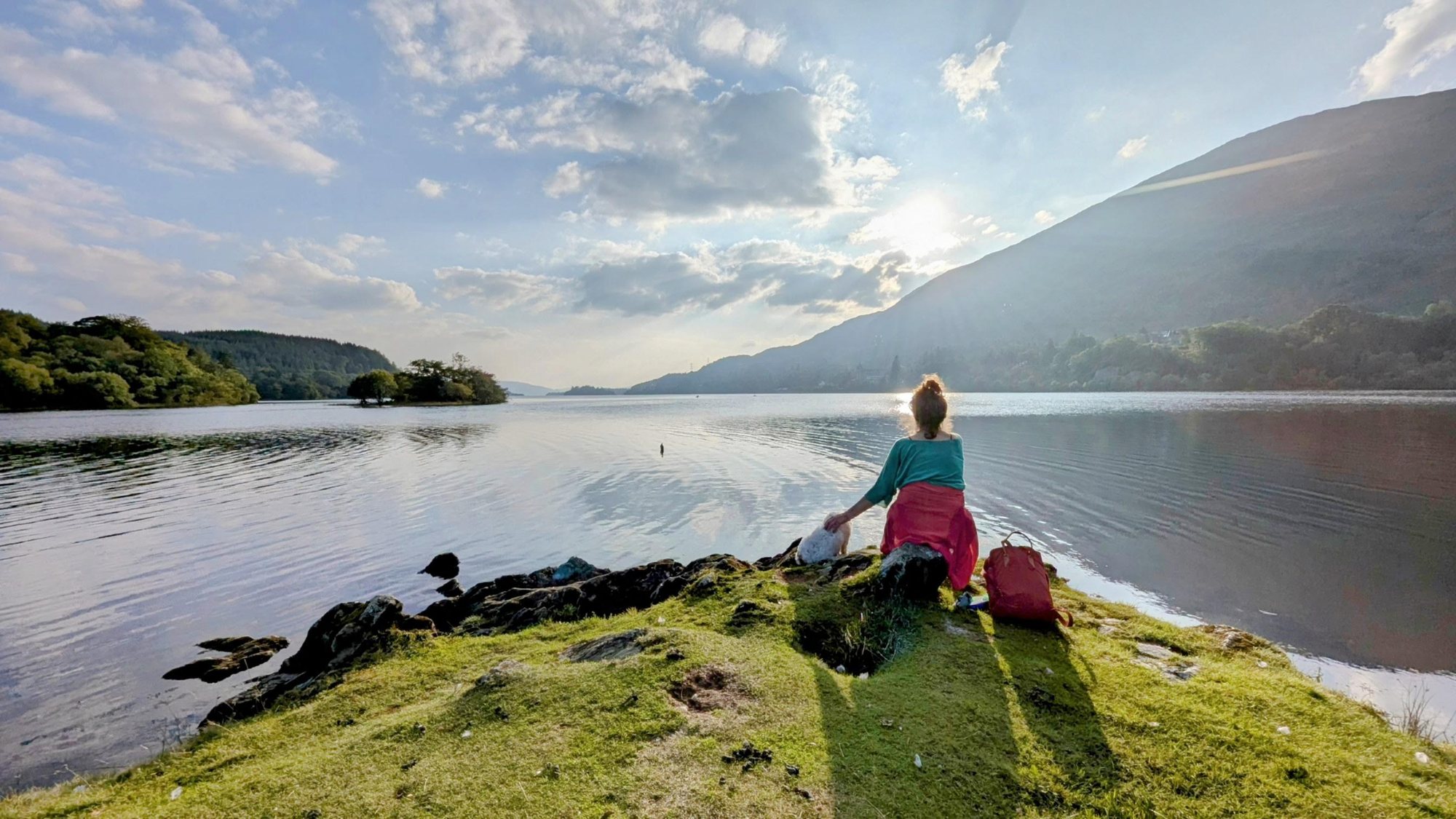
Inland, long Loch Awe runs for over twenty miles between the hills, and two things on its shore are worth the stop. Kilchurn Castle is the most photographed ruin in the west — a Campbell tower-house marooned on a spit at the head of the loch, framed by mountains — and a short walk gets you to it for free. A little way along, St Conan’s Kirk is one of the strangest, loveliest buildings in Scotland: a hand-built church a wealthy Campbell spent fifty years cobbling together from every architectural style he fancied, right on the water. See the two together on a still evening and you’ll not forget it.
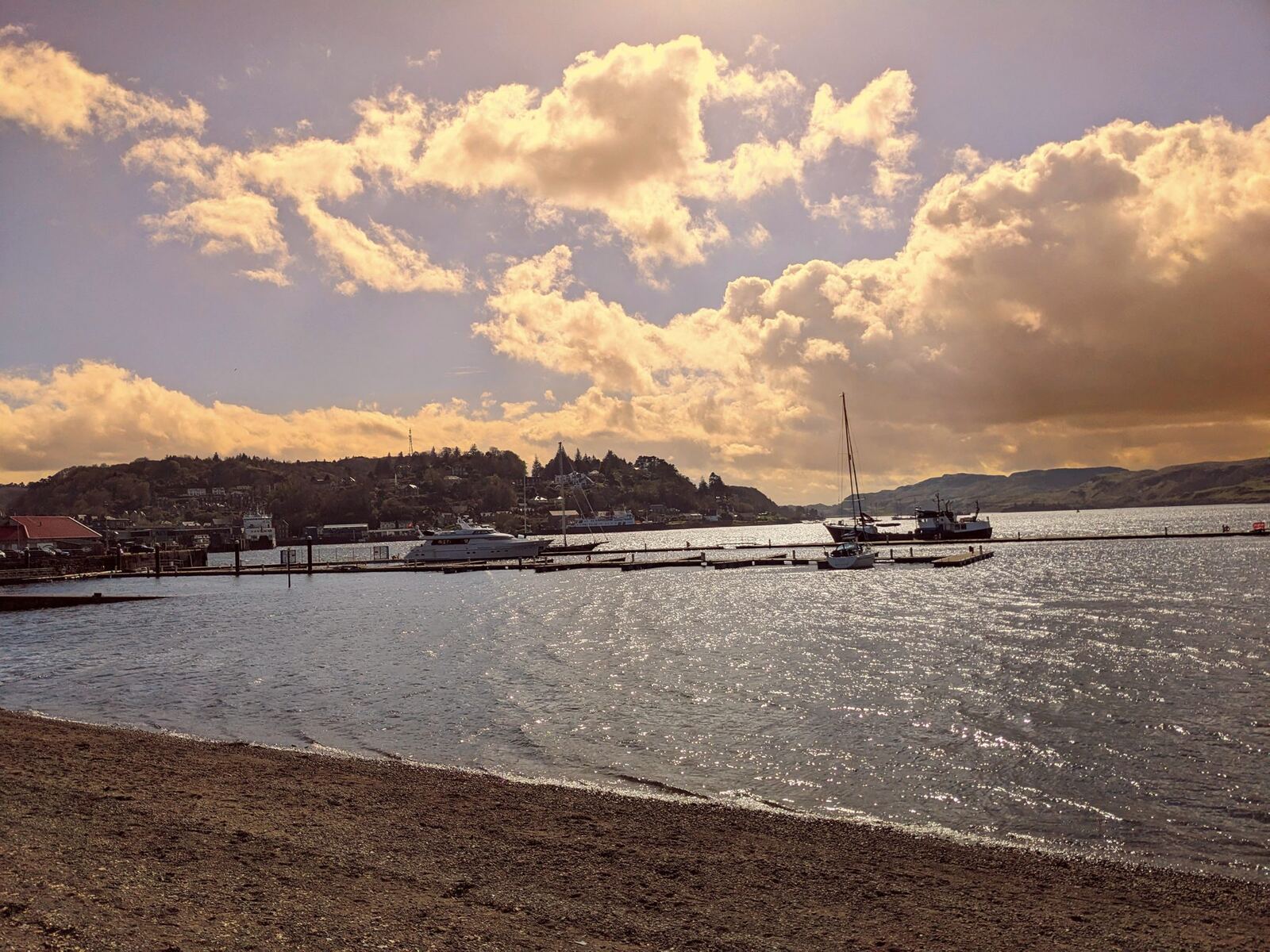
From here the road drops to the coast at Oban, the busy little “seafood capital” that is the main gateway to the Hebrides — ferries leave the pier for Mull, Barra, Coll, Tiree and more. It’s a proper day out: climb to McCaig’s Tower (the colosseum-shaped folly above the town) for the bay view, tour the little Oban Distillery in the middle of the high street, and eat your fill of fresh seafood on the quay. Oban does get busy in high summer and on ferry days — go early, and if you’re in a van, we sleep just down the coast rather than in the town itself.
Kintyre
Kintyre is the great long peninsula that hangs off the bottom of Argyll, so far south its tip is level with Northern Ireland — you can see Antrim from the end of it. It is a proper commitment (Tarbert to Campbeltown is a good ninety minutes), but the reward is emptiness: single-track shores, Atlantic beaches and one of whisky’s holy places. At the foot of it, Campbeltown — the “Wee Toon” — was once the whisky capital of the world with more than thirty distilleries; today it’s down to a proud handful, and they’re special. Springbank still floor-malts its own barley and does everything by hand under one roof, a genuine one-off worth booking ahead for, and Glen Scotia next door is a lovely small survivor.
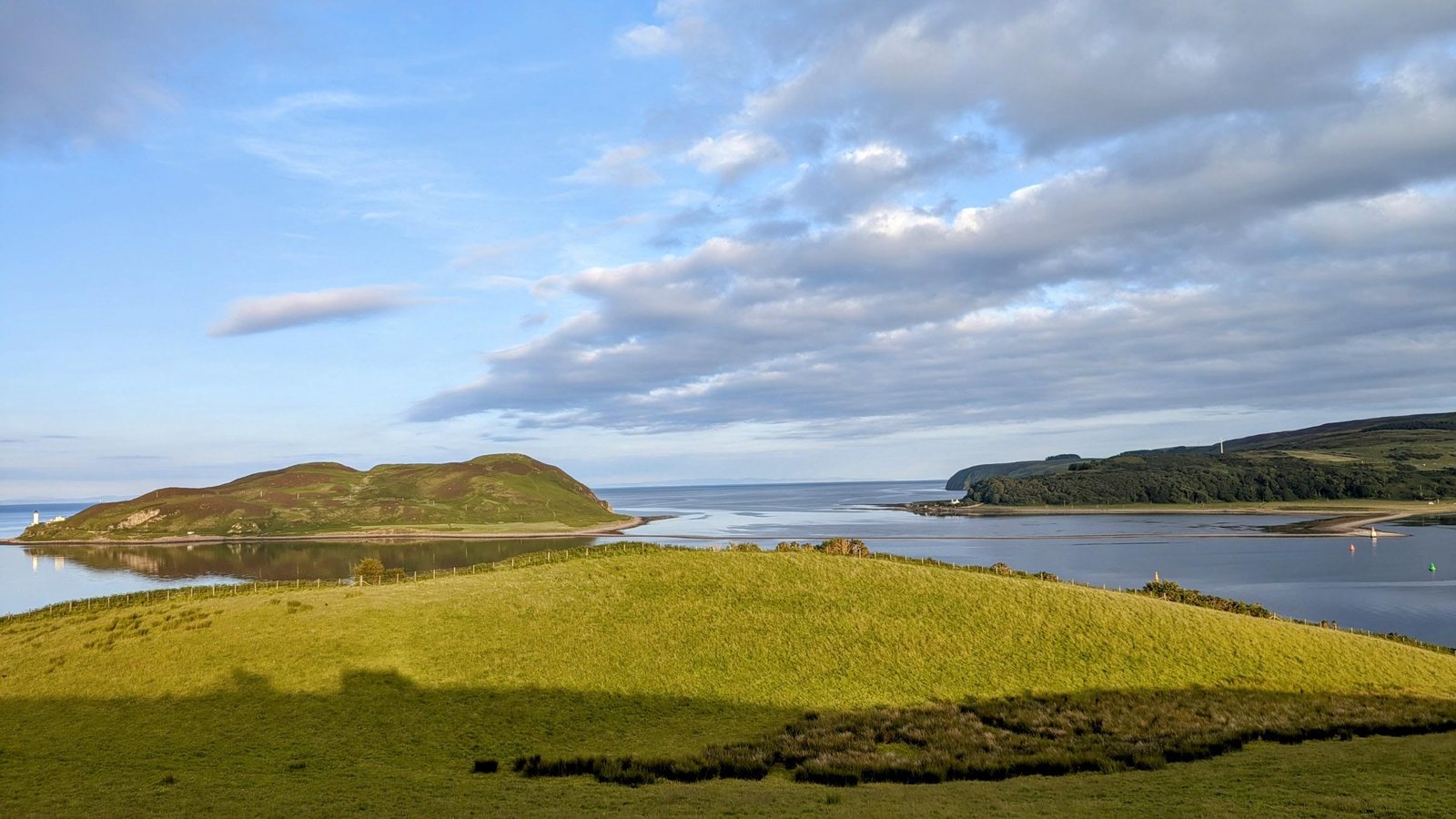
Around Campbeltown, Davaar Island guards the loch mouth — walk out across the tidal shingle spit at low water to find a Victorian cave painting of the Crucifixion hidden inside. West over the hill, Machrihanish throws a huge Atlantic beach and championship links golf against the open ocean, and at the very tip, Keil and Southend hold St Columba’s footprints in the rock — said to be where the saint first stepped onto Scotland — below the ruined stronghold of Dunaverty. Up the quieter west coast, Glenbarr Abbey is a Gothic house that was never an abbey, and Ballochroy lines up three Bronze Age standing stones with the midsummer sunset over Jura — and doubles as one of our favourite wild-camp shores. Walkers can take the whole peninsula on foot down the Kintyre Way, and cyclists follow National Cycle Route 78 the length of it and beyond.
… and the Isles
Half of Argyll is offshore, and the islands are worth a trip of their own. Islay is the peat capital of whisky, its south shore lined with the smoky giants — Lagavulin, Ardbeg and Laphroaig within a mile of each other, with Bowmore in the middle of the island’s wee capital. Beside it, remote Jura is all raised beaches and the three great Paps. Mull gives you the rainbow harbour and distillery of Tobermory (both a short hop from Oban), and Arran — “Scotland in miniature” — packs the Machrie Moor stone circles and two distilleries (Lochranza and Lagg) onto one small, mountainous island. Our whisky pages and the Kintyre & Arran Whisky Trail map the drams; from most of Argyll, the ferry that gets you there leaves from Oban, Tarbert or Kennacraig.
Planning a trip?
Our Argyll Coastal Route strings the pages below into seven stages — Cowal, Bute, Loch Fyne, Mid-Argyll, Kintyre, Oban and the isles, and Loch Awe — in the order you would drive them.
Why Argyll?
Because it is the west-coast Highlands without the traffic — sea lochs, white villages, single-track shores and a scatter of whisky islands, all within a couple of hours of Glasgow. Give it time (the roads are slow and the distances deceptive) and treat each area as its own trip, and Argyll will out-charm places three times as famous. Inveraray, Kilmartin Glen and a Kintyre sunset alone are worth the journey — this is our favourite corner of Scotland, and an emphatic yes.