
The Caledonian Canal: Telford’s Coast-to-Coast Highway Through the Great Glen
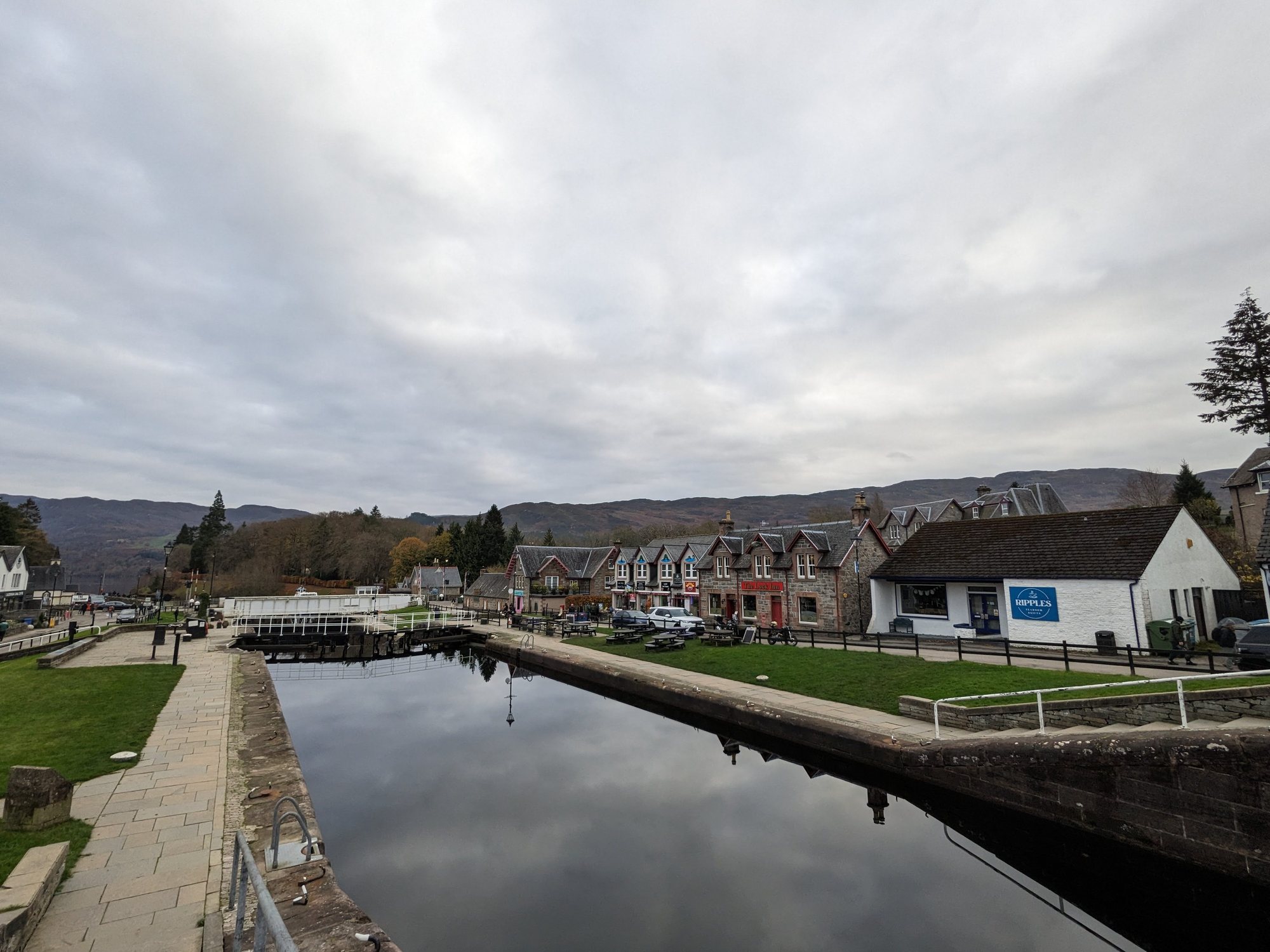
Overview — a canal that is mostly loch
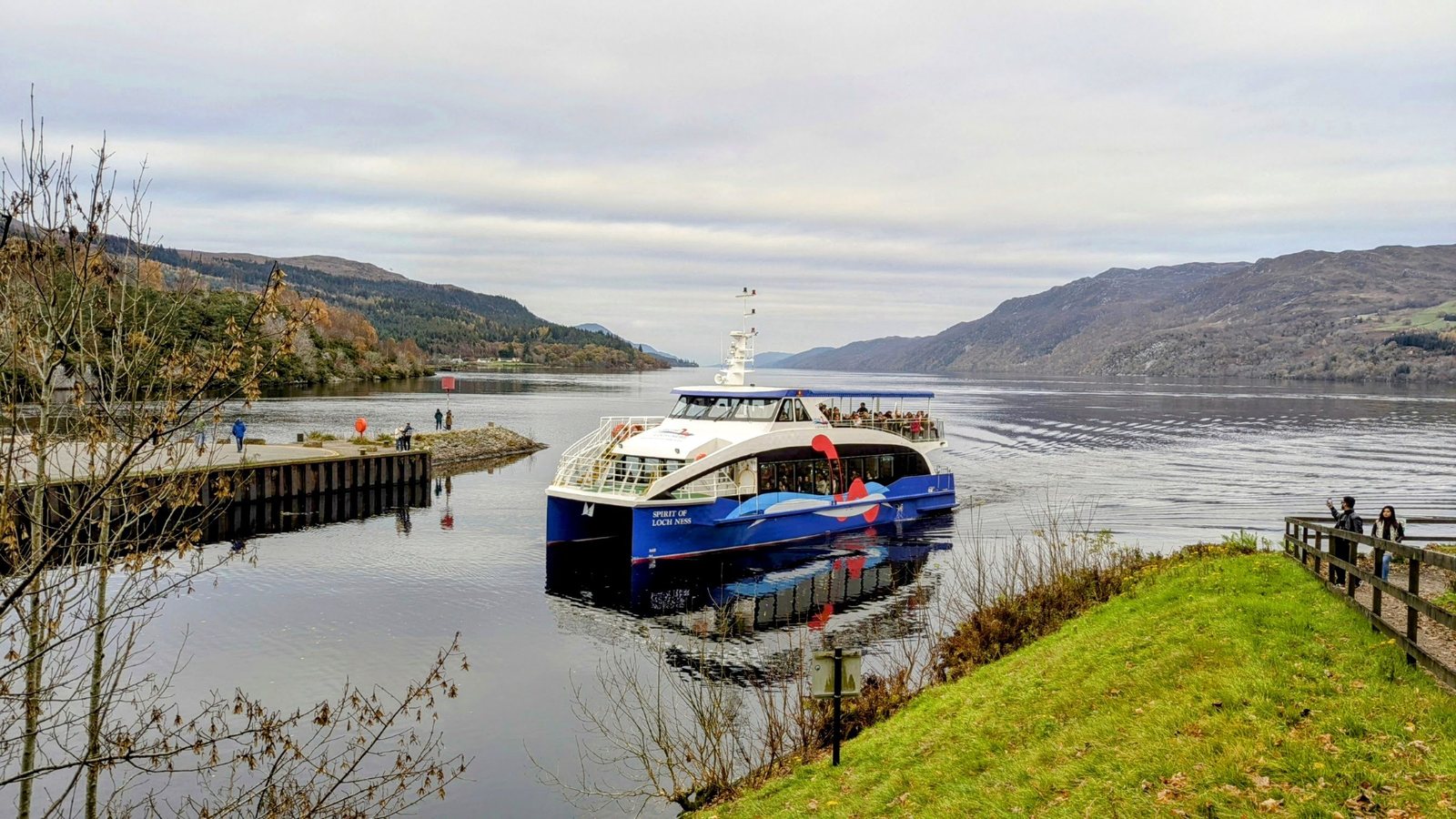
The Caledonian Canal is one of the great engineering feats of Georgian Britain: a coast-to-coast waterway slicing right through the Highlands along the Great Glen, from the west coast at Fort William to the east coast at Inverness. What makes it so clever is how little of it actually had to be dug — of its roughly 60 miles (about 97 km), only around 22 miles is man-made canal. The rest is a chain of natural lochs strung along the glen’s great geological fault: Loch Lochy, Loch Oich and Loch Ness. You’ll meet it at Laggan Locks and again at Fort Augustus.
Why it was built
Two problems drove the project. First, ships — and especially the Royal Navy during the Napoleonic Wars — faced a long and dangerous voyage round the top of Scotland, through the treacherous Pentland Firth and past Cape Wrath, to get from the west coast to the east. A canal through the Great Glen would let them cut straight across. Second, the government wanted to bring work and prosperity to a Highlands being emptied by the Clearances and mass emigration. The canal was to do both at once.
Telford, and 19 years of digging
The canal was designed by the great engineer Thomas Telford (with William Jessop advising) and built between 1803 and 1822. It was meant to take seven years; it took nineteen, and cost far more than planned — the sheer scale of the locks, the soft ground and the Highland weather all conspired against it. It opened in 1822, and had to be substantially rebuilt and deepened between 1844 and 1847 before it could take the larger ships it was designed for.
The locks — 29 of them
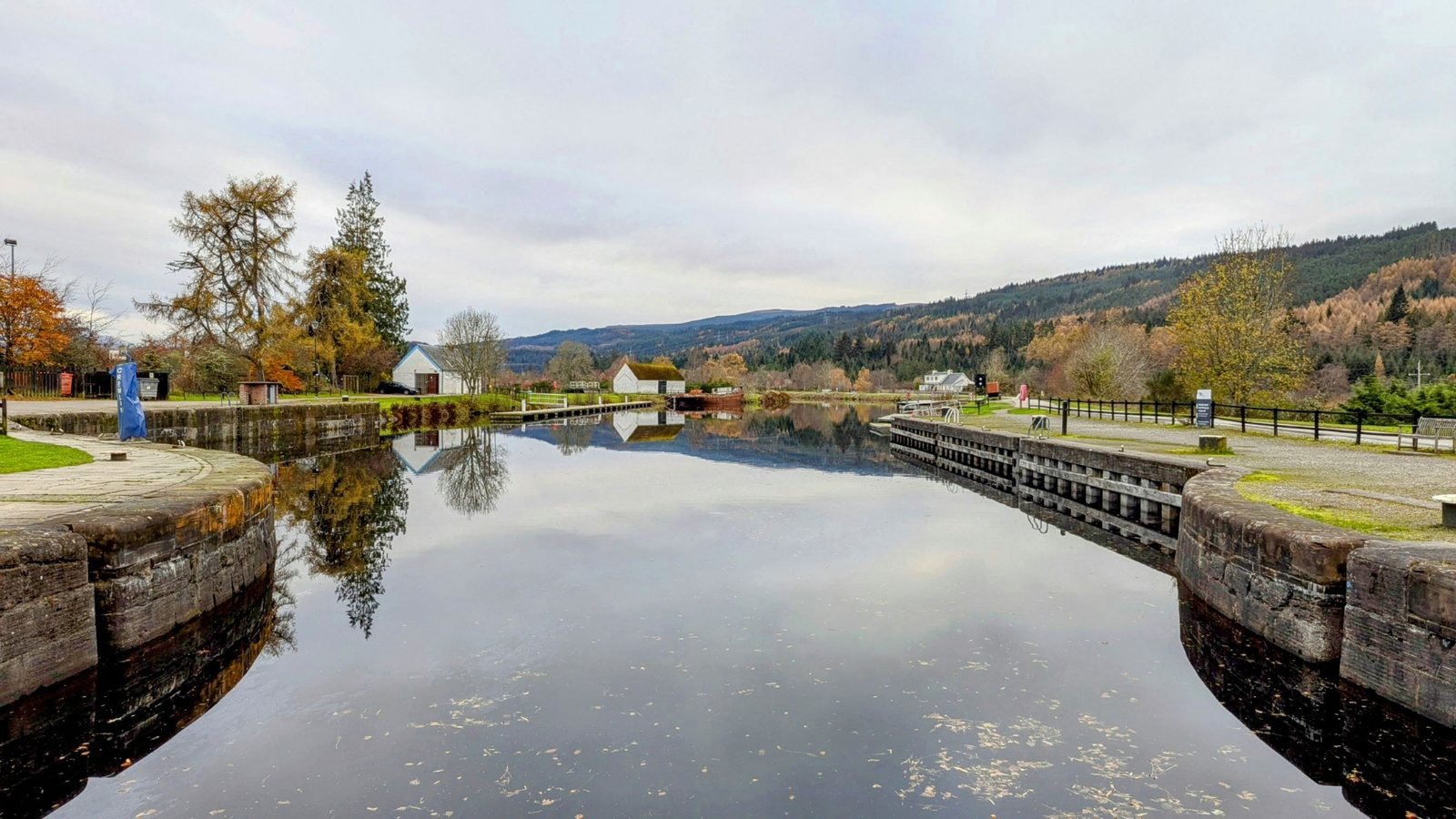
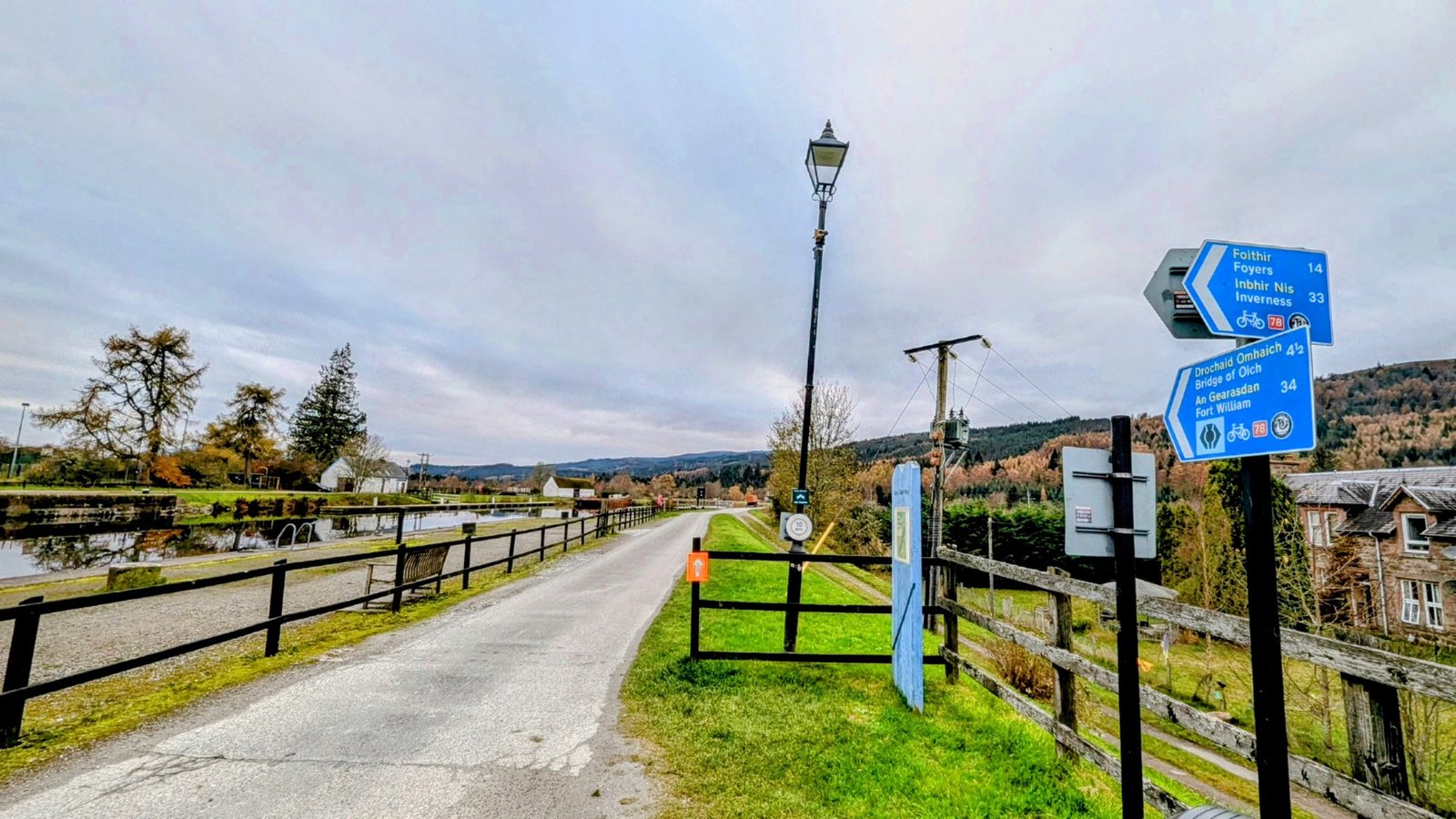
To carry boats over the hump of the glen, the canal climbs and descends through 29 locks, rising to a summit level at Loch Oich, its highest point. The showpieces are worth seeking out:
- Neptune’s Staircase, Banavie — a flight of eight linked locks near Fort William, the longest staircase lock in Britain, lifting boats about 19 m (64 ft).
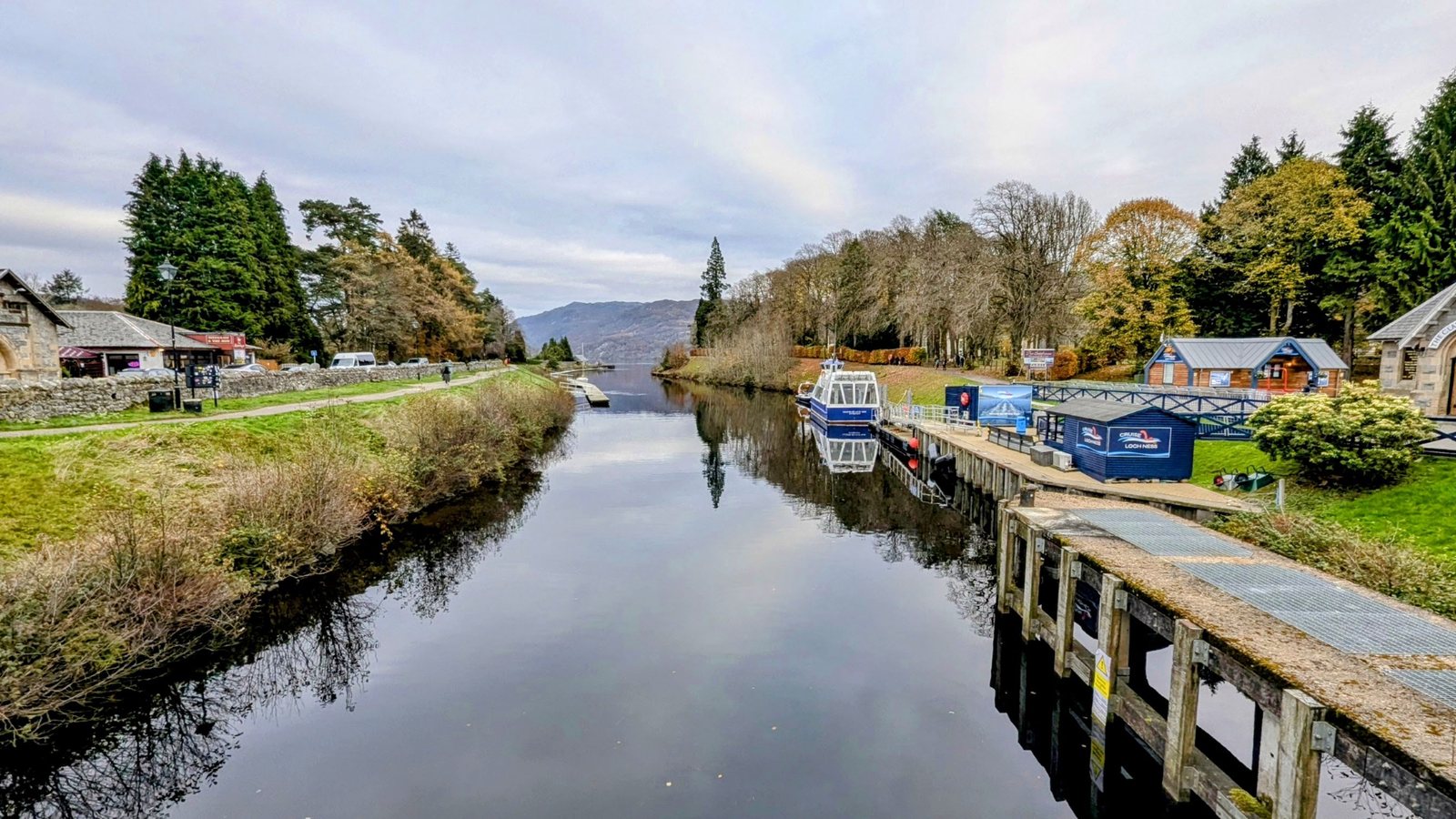
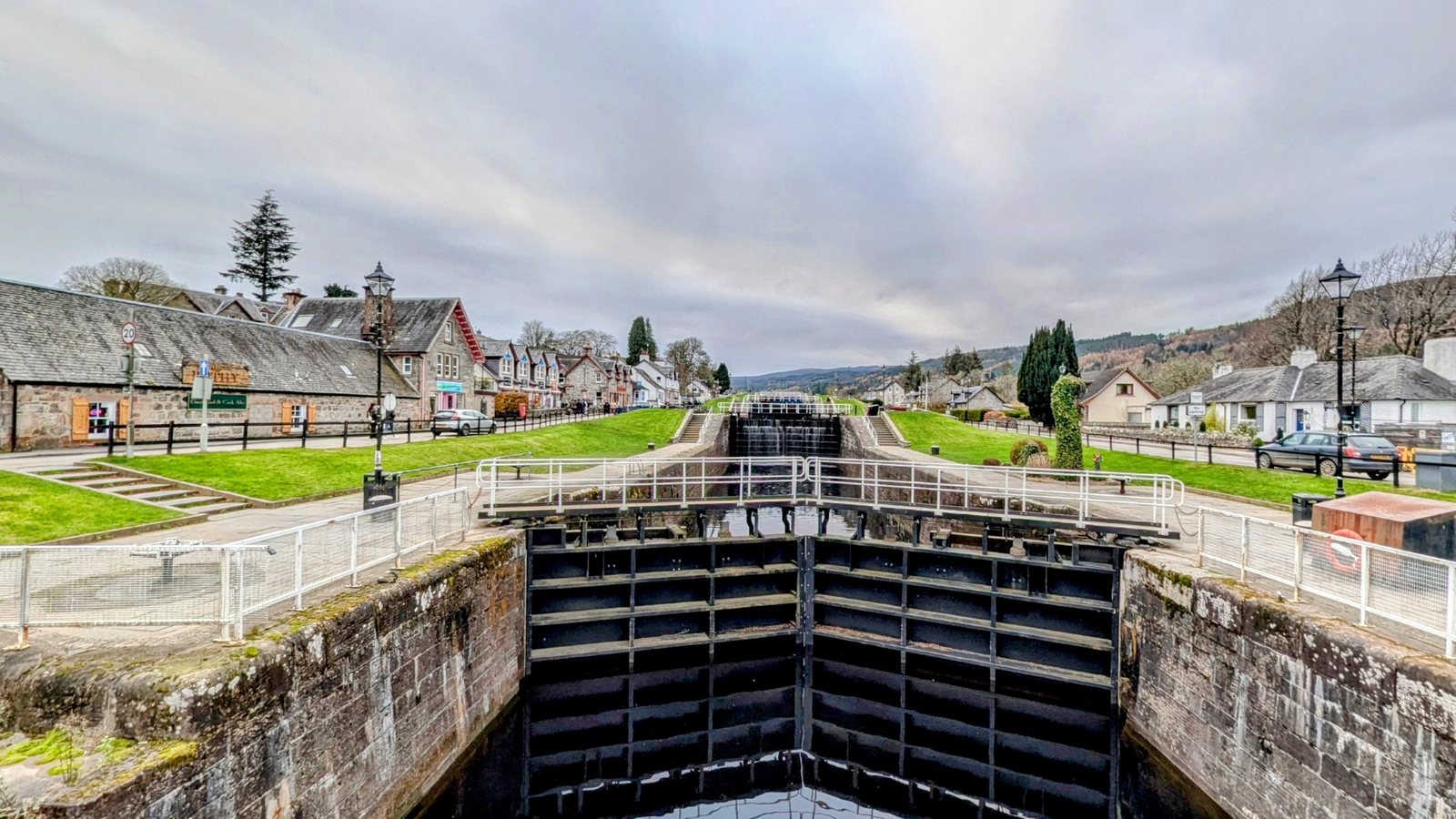
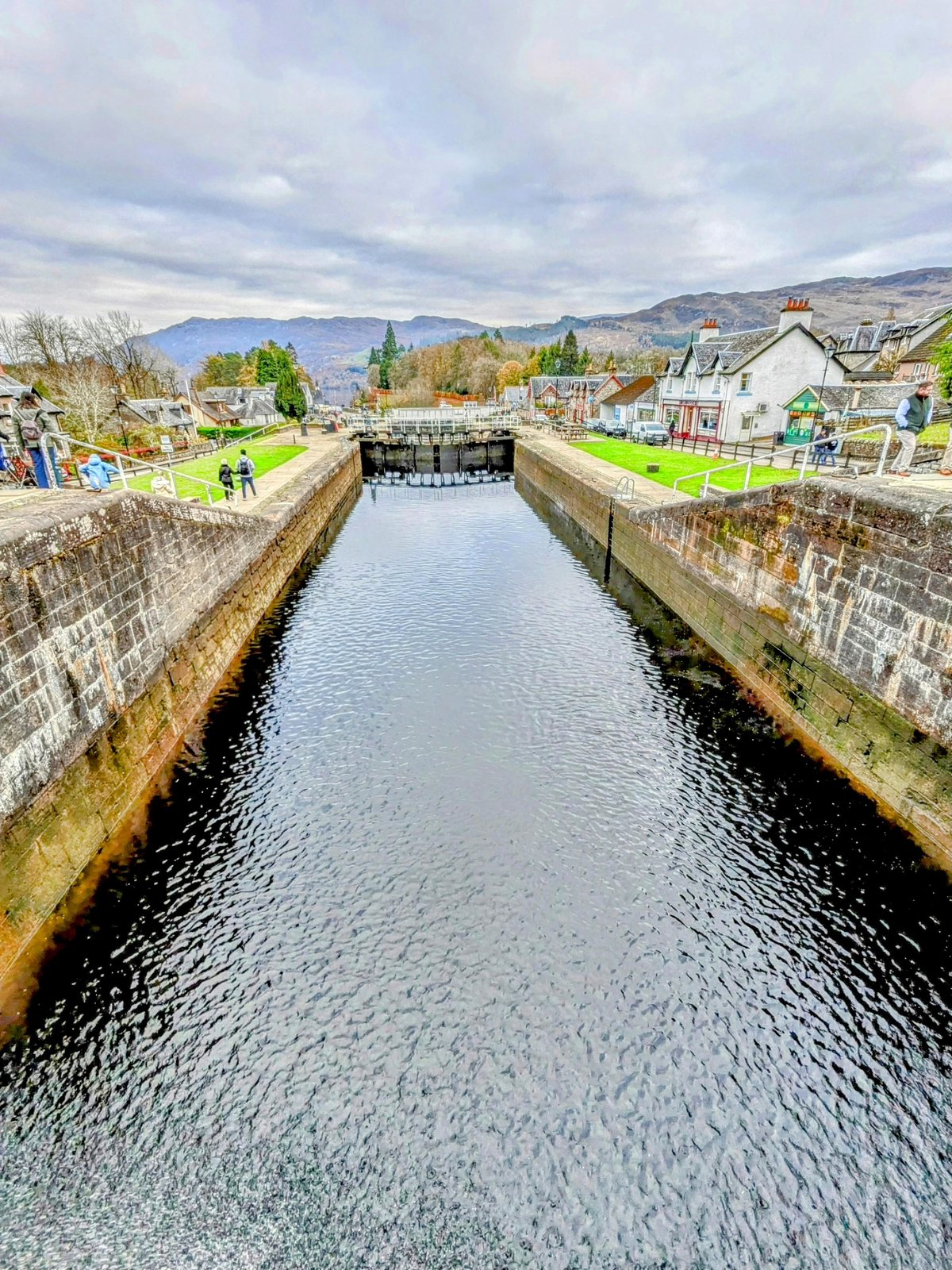
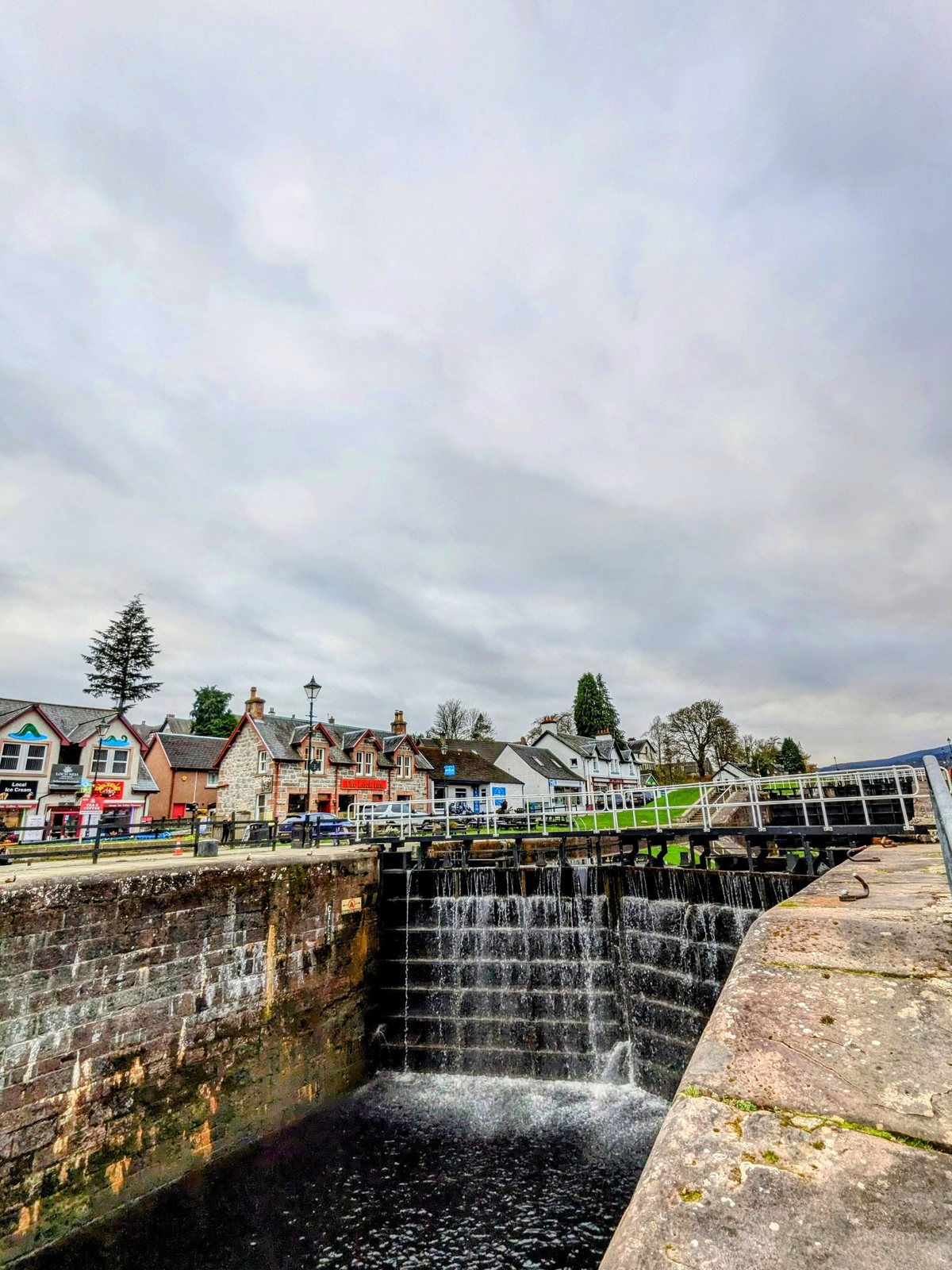
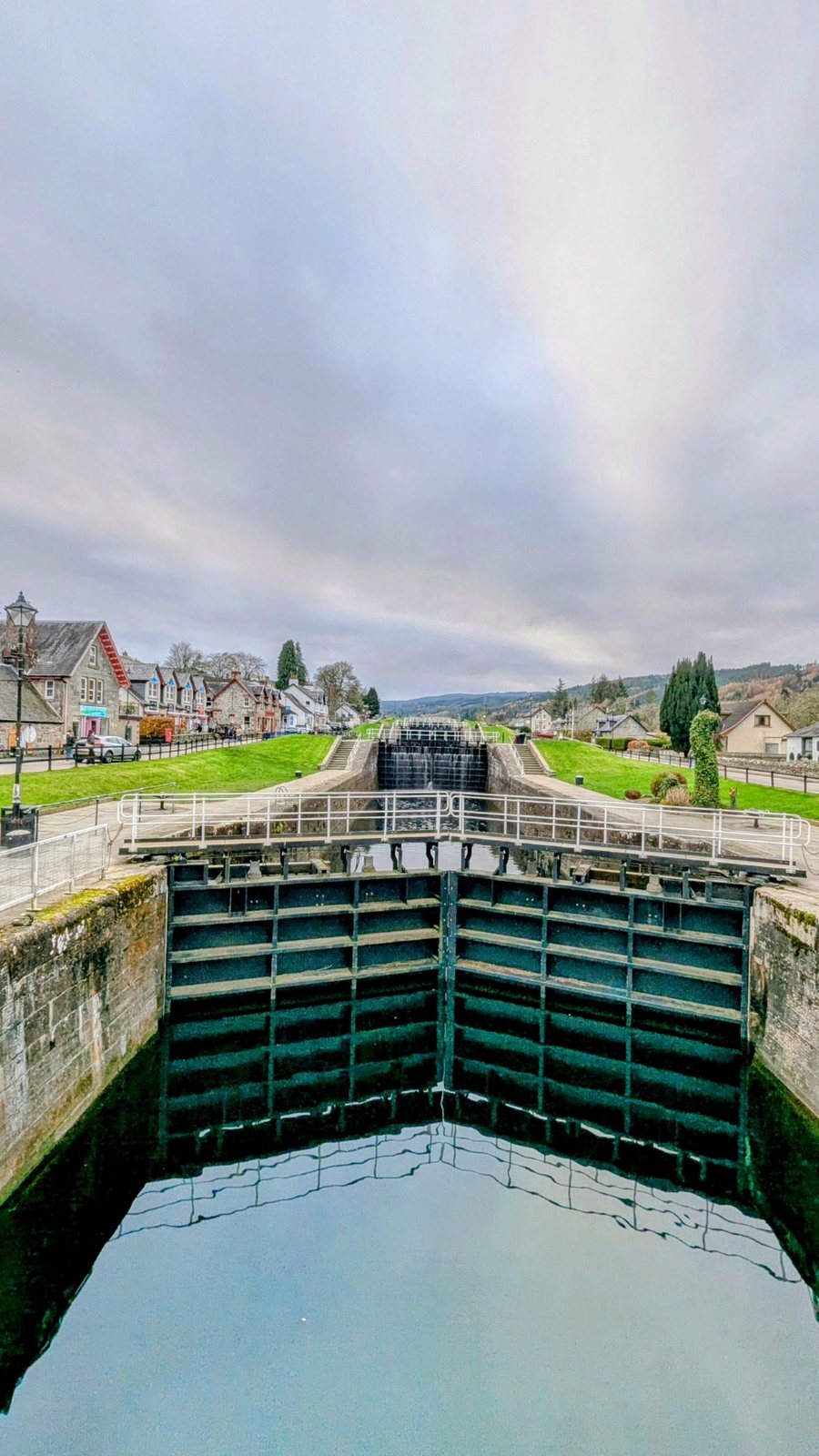
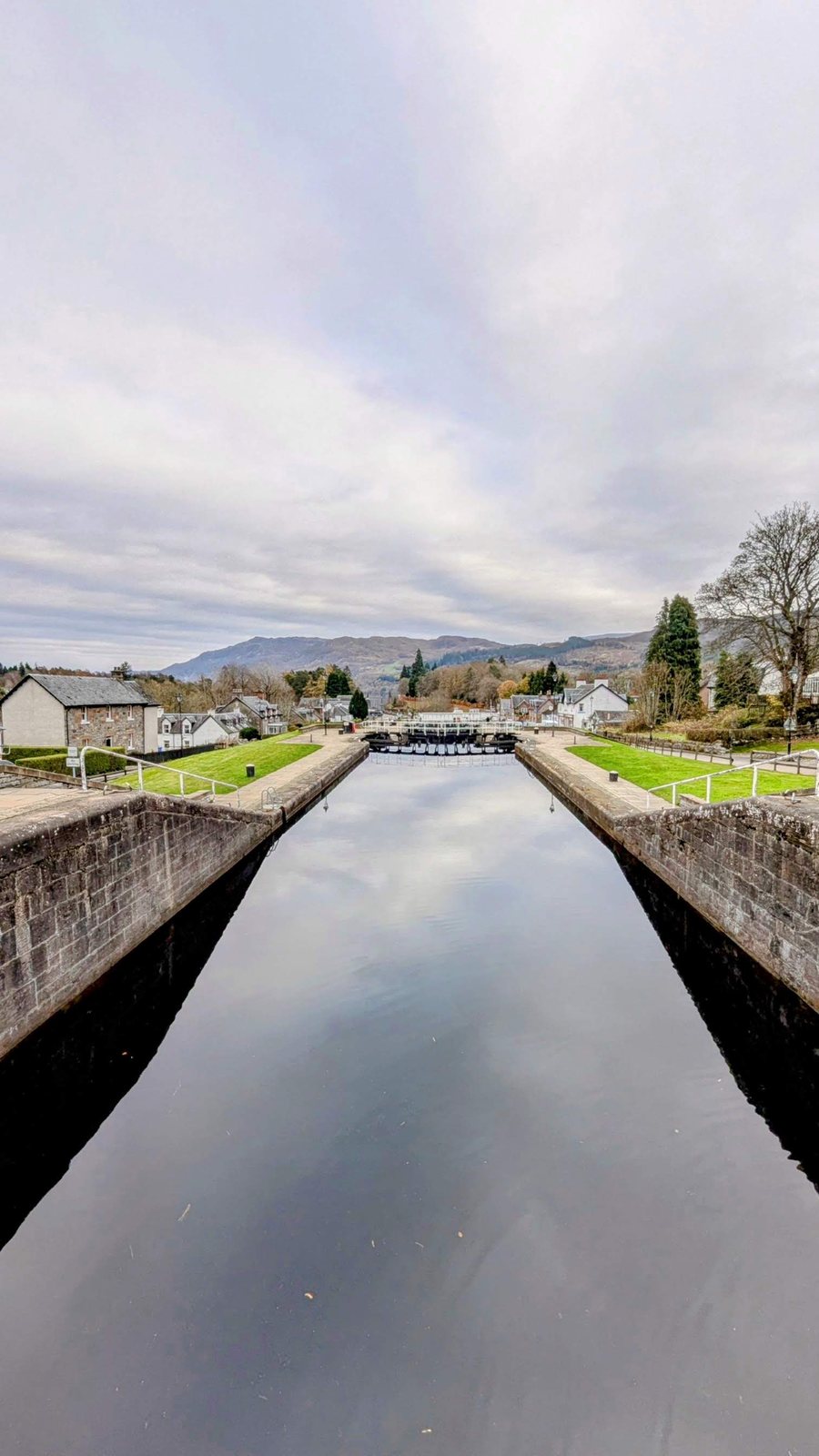
- Fort Augustus — a flight of five locks stepping down through the village into Loch Ness.
- Laggan Locks — lifting boats between Loch Lochy and Loch Oich.
- Gairlochy, Kytra, Cullochy and Muirtown — the other flights and single locks along the line, with the sea locks at Corpach (west) and Clachnaharry (east).
The canal today
Two centuries on, the Caledonian Canal never became the busy trade route its builders imagined — the coming of the railways and ever-larger ships saw to that — but it has found a wonderful second life. Today it carries yachts, cruisers and fishing boats, and its towpaths and shores are followed by the Great Glen Way (the coast-to-coast walking and cycling trail) and the Great Glen Canoe Trail. Cared for by Scottish Canals, it’s now one of the loveliest ways to travel — or simply potter along — through the heart of the Highlands.
Where we meet the canal
- Laggan Locks — our favourite free canal-side stopover, between Loch Lochy and Loch Oich.
- Fort Augustus — the great lock staircase down into Loch Ness.
- Glen Nevis & Fort William — the western end, near Neptune’s Staircase and the sea lock at Corpach.
- The lochs it links appear in our Lochs of Scotland collection.
Sources
- Wikishire and Scottish Canals histories on the Caledonian Canal, Thomas Telford and the lock flights.