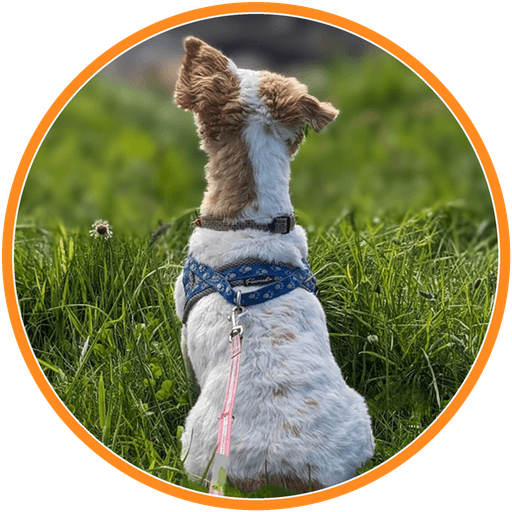
Laggan Locks: A Free Canal-Side Stopover on the A82, Just Before Loch Ness
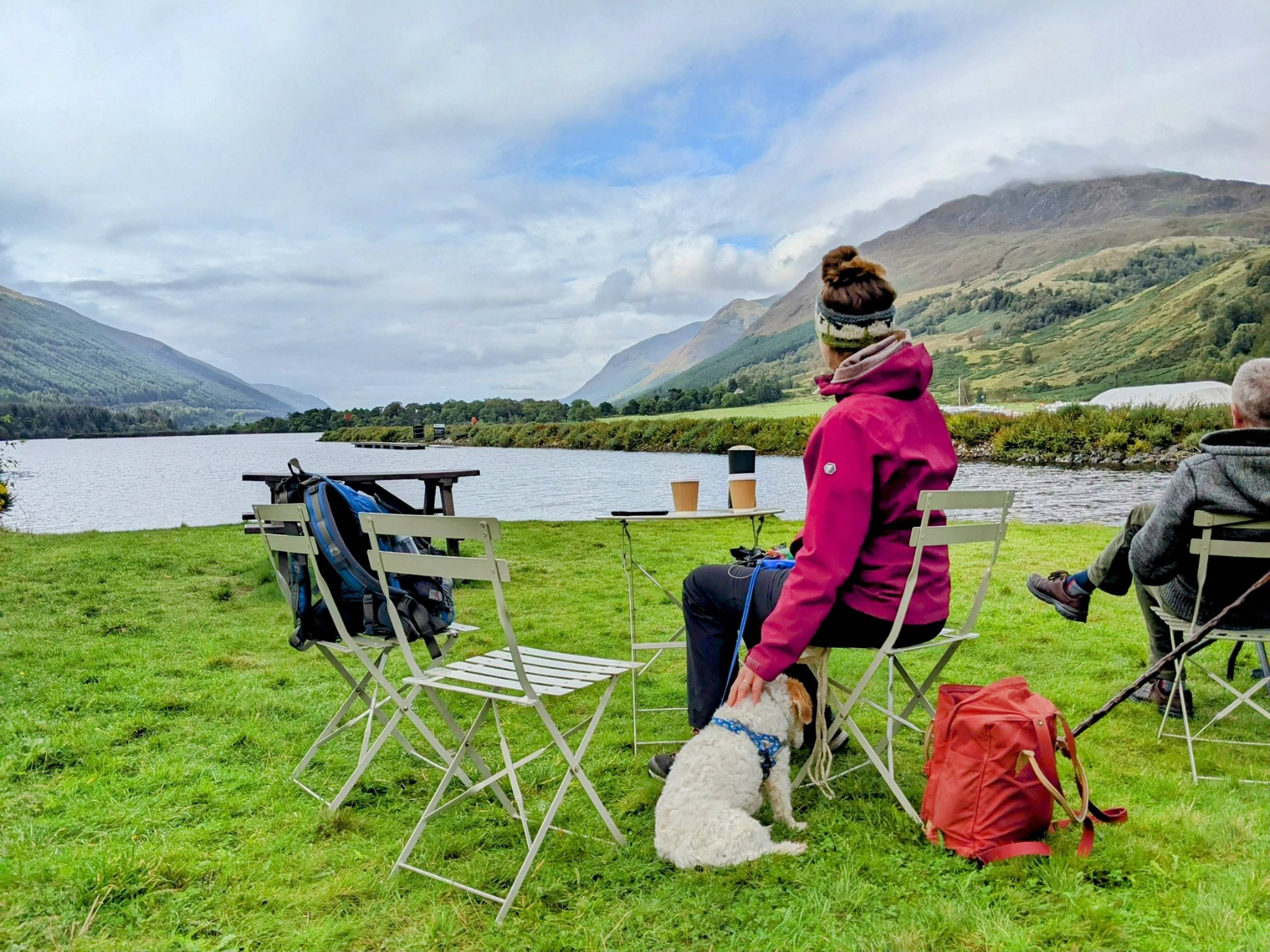
Overview — our favourite Great Glen halt
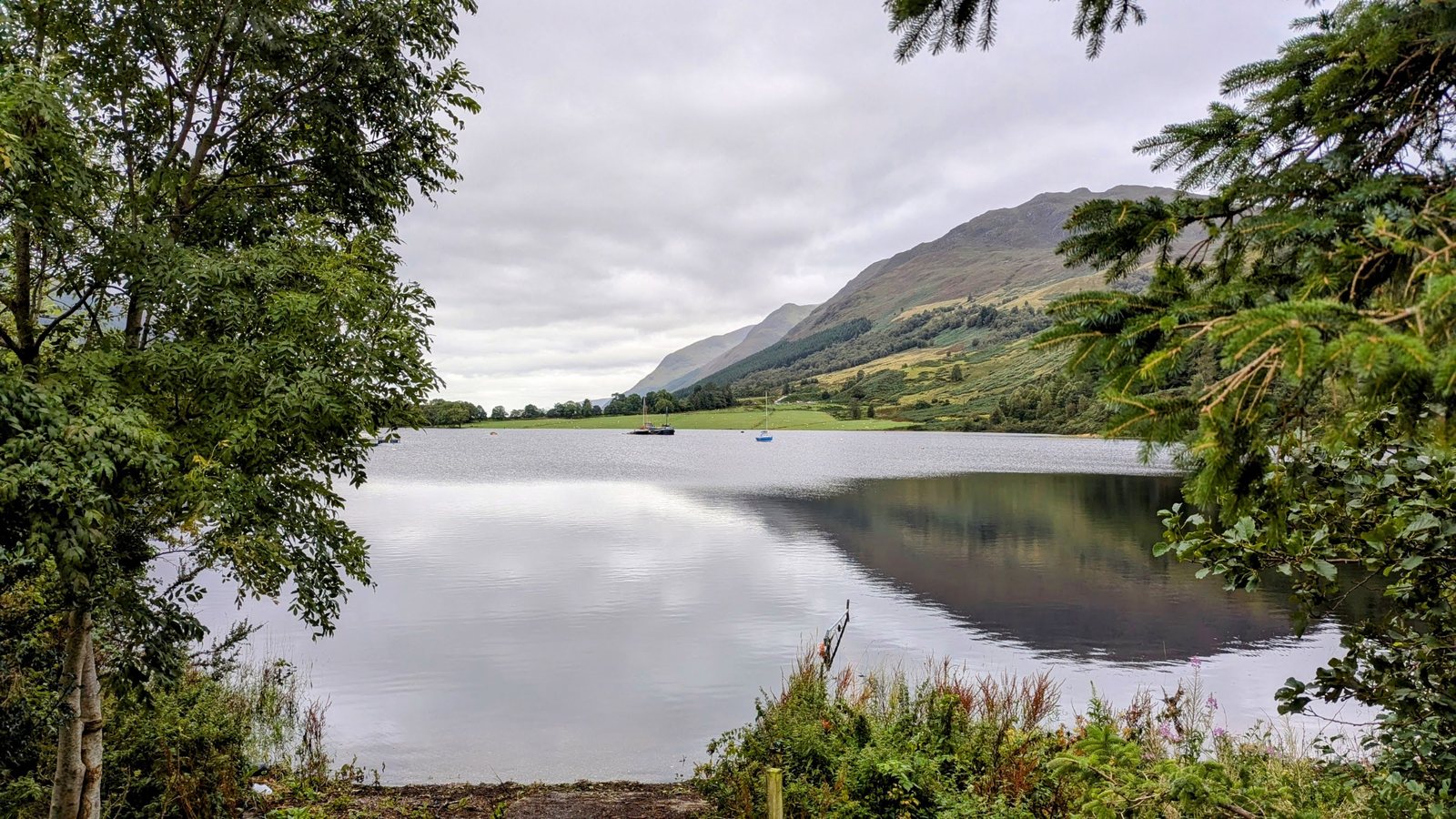
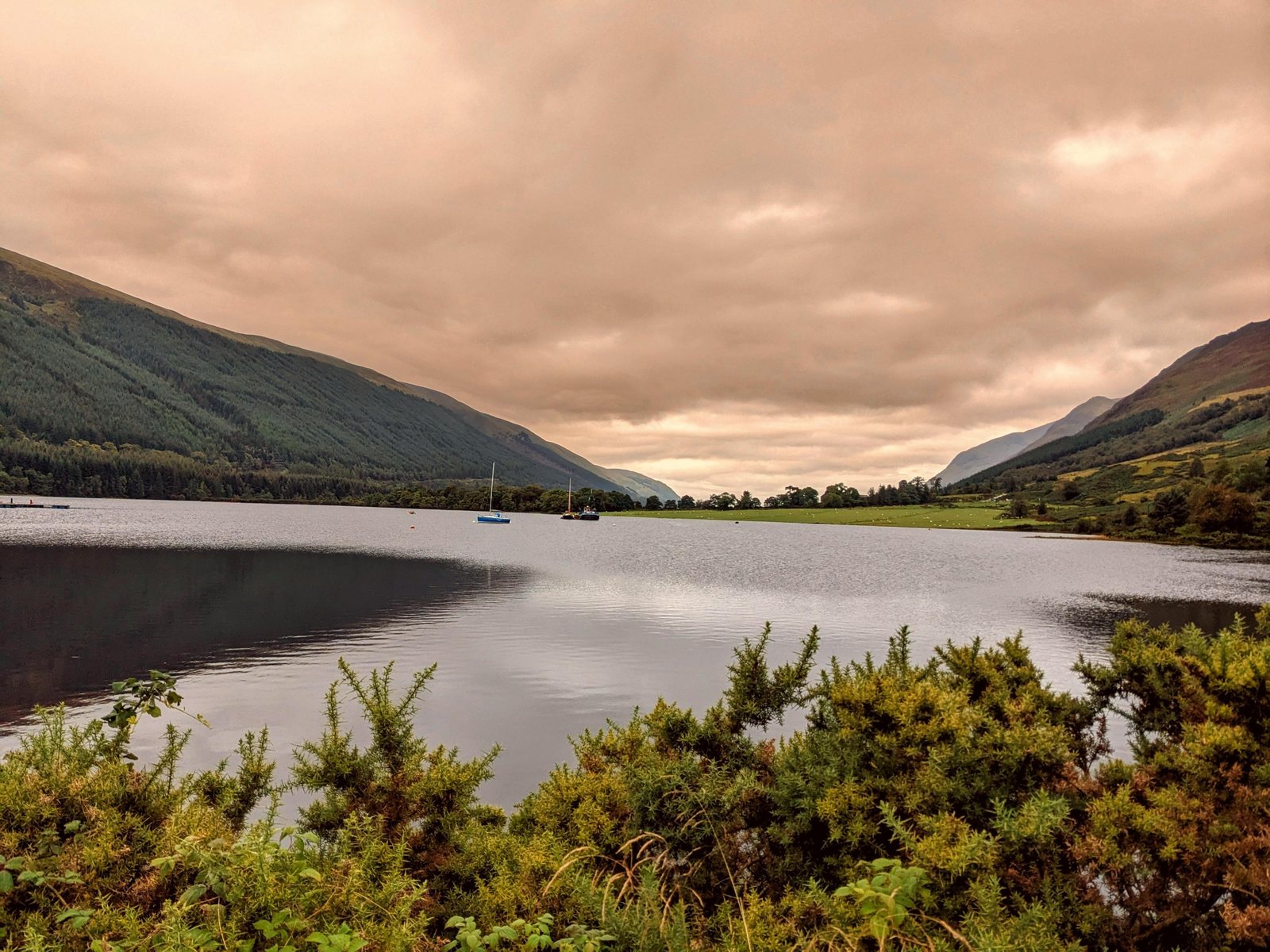
Laggan Locks is one of those places we keep coming back to — a quiet, lovely spot on the Caledonian Canal right in the heart of the Great Glen, exactly halfway along Scotland from coast to coast. It sits at the narrow neck of land between two big freshwater lochs, Loch Lochy to the south-west and Loch Oich to the north-east, where Thomas Telford’s canal steps up between them. There’s a free car park right on the locks, it’s peaceful, and there’s grand dog walking to be had once you cross the lock gates. It’s an easy one to find, too — it sits just off the A82, the main road up the Great Glen, with Fort Augustus and the foot of Loch Ness about eleven miles further north: a quarter of an hour’s drive. For us it’s become a perfect couple-of-nights stopover, there and back, on almost any Highland trip.
Where it is
Laggan lies on the A82 in the Great Glen, between Spean Bridge and Fort Augustus, roughly midway between Fort William and Loch Ness. The Caledonian Canal — Telford’s great engineering feat, opened in 1822 to link the east and west coasts through the Glen — here climbs out of Loch Lochy through the Laggan Locks and along a short cut, Laggan Avenue, into Loch Oich, the summit-level loch and highest point of the whole waterway.
The locks & the tearoom
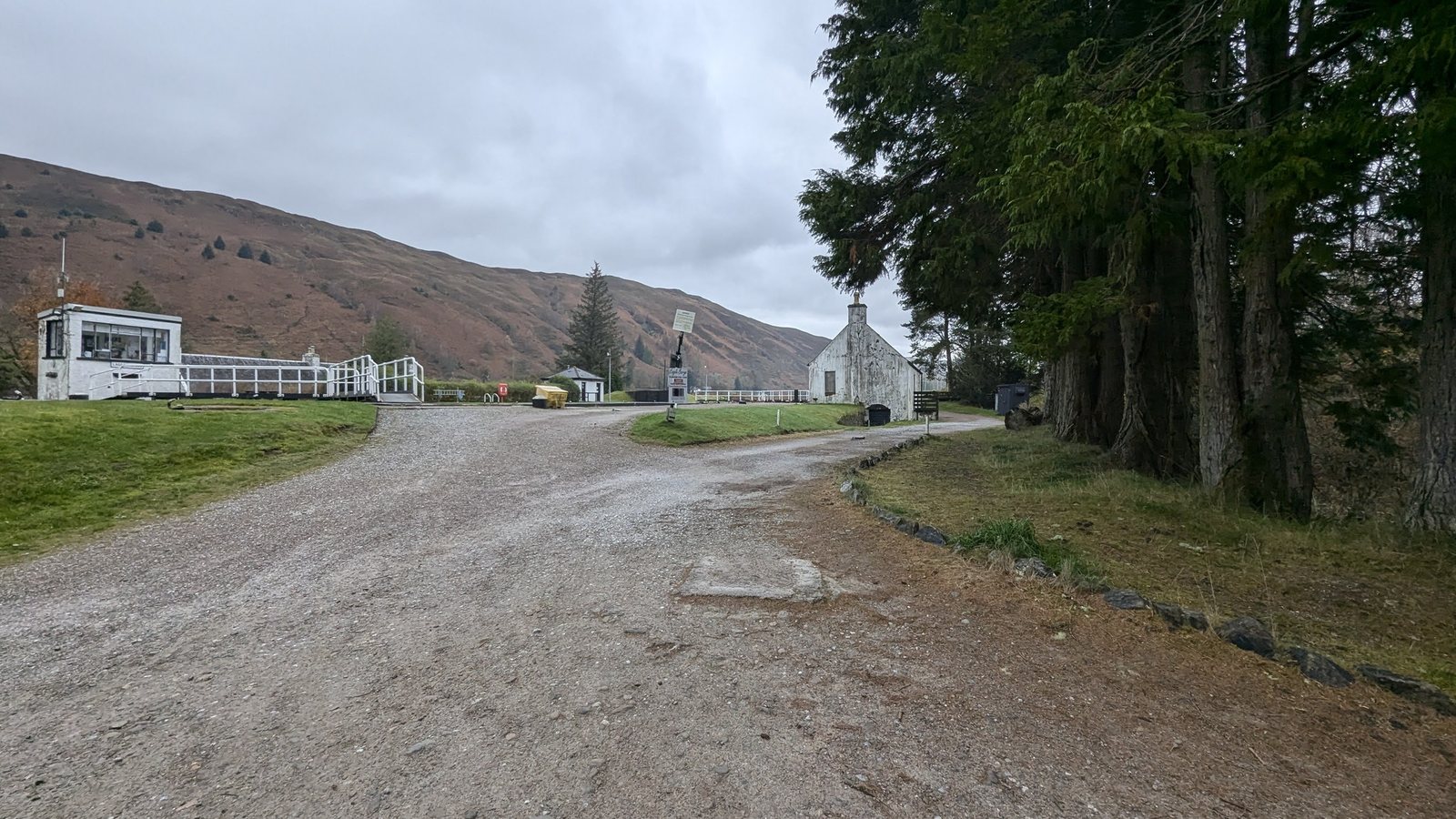
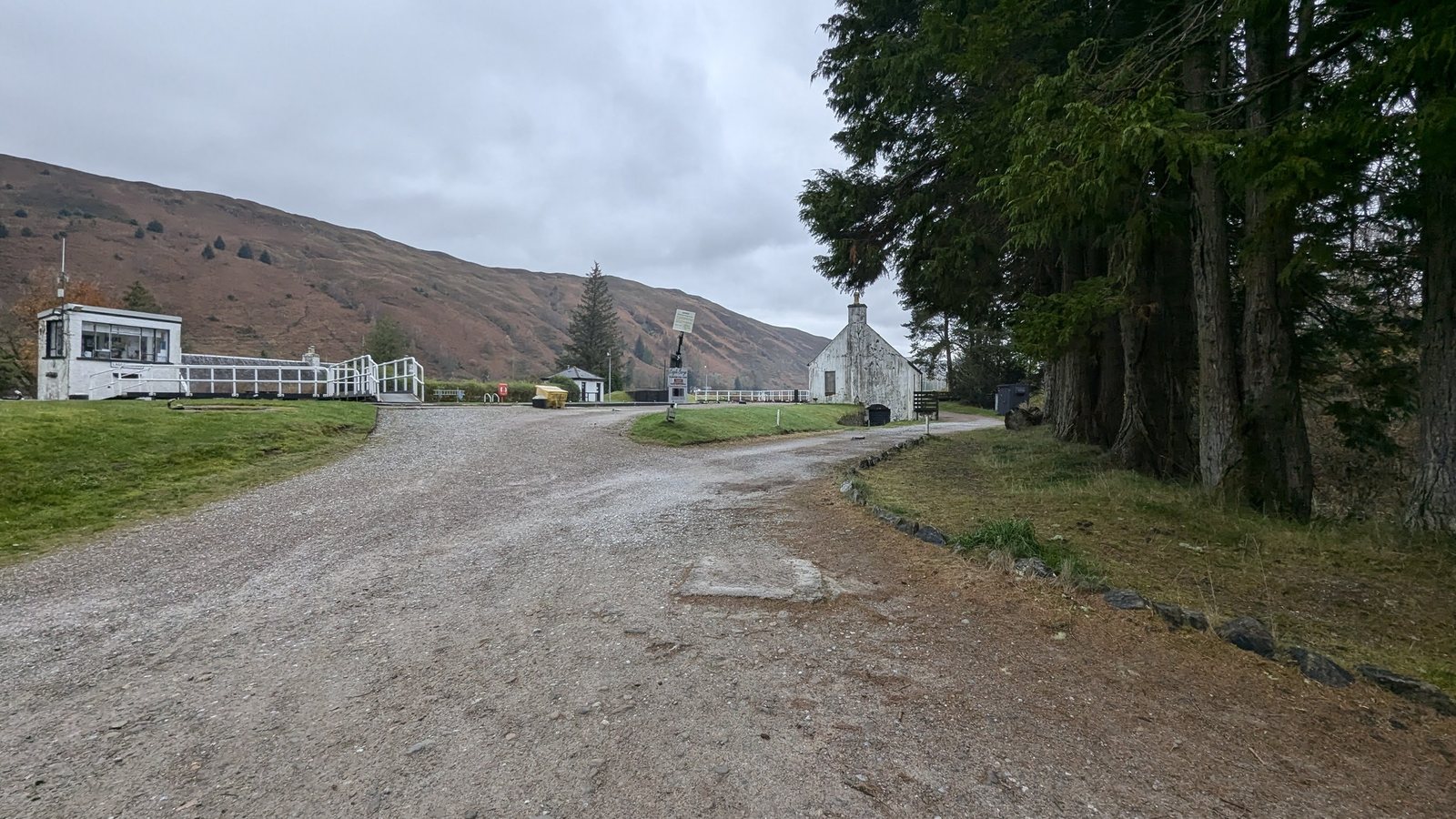
The locks themselves are a lovely thing to watch, with boats rising and falling between the two loch levels and the lock-keeper’s cabin right at the water’s edge. There’s a little coffee shop right at the locks — that’s where our coffee came from — you can sit out on the grass with the whole Great Glen laid out in front of you, which is exactly what we did. Moored alongside is the well-known Eagle Barge, a bar and restaurant on a converted Dutch barge, a proper Great Glen curiosity.
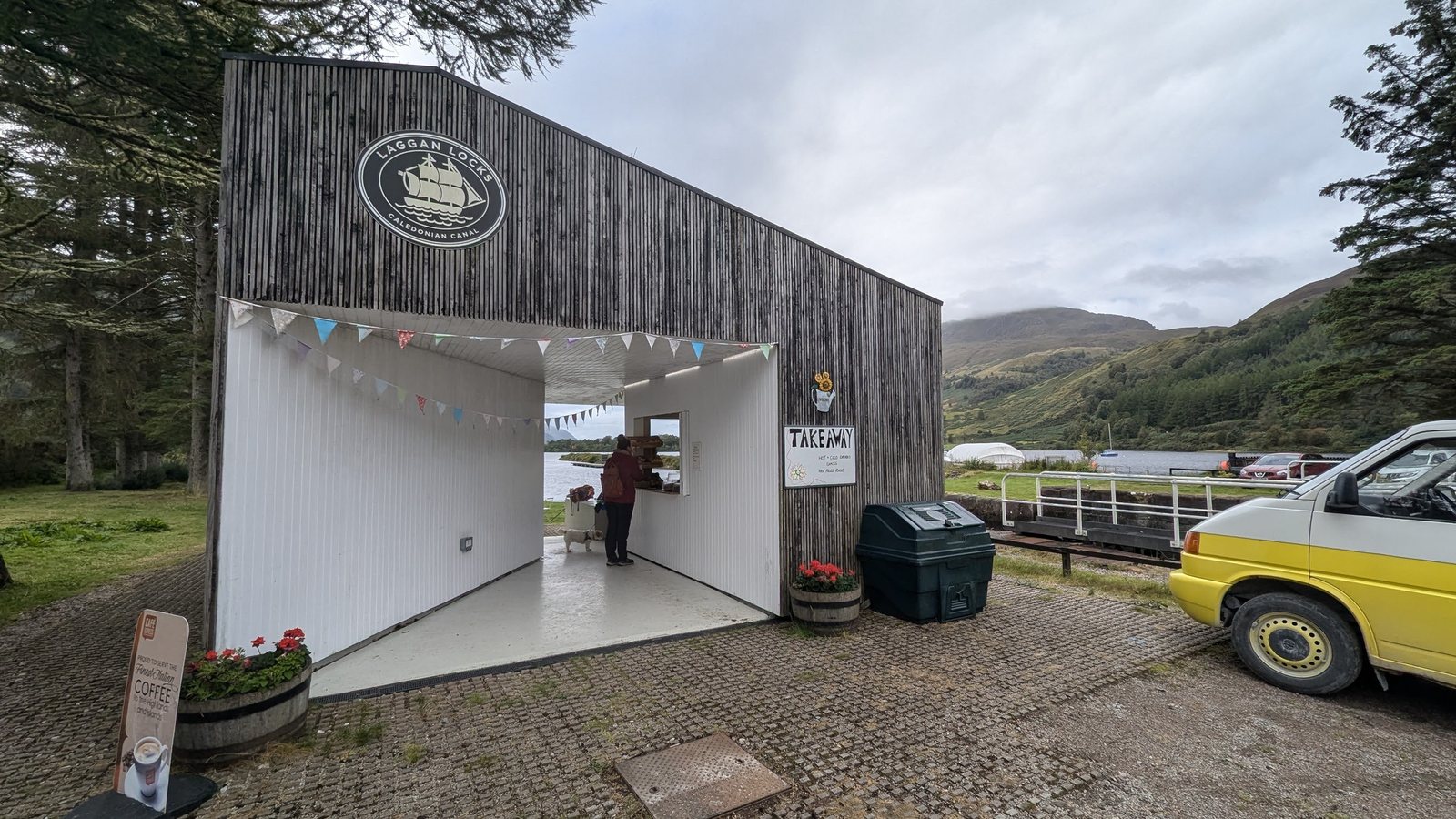
Don’t count on either of them being open. The coffee shop runs on the owner’s own clock — she opens when she feels like opening, and as far as we can tell that leans heavily on the weather: far more reliable through the summer months than off season. One handy tell if you’re wondering: when the yellow VW T4 campervan is parked outside, she’s open for business. The Eagle Barge keeps odd hours too, and if you want to eat aboard rather than just have a drink, you need to reserve. So: bring your own kettle, and treat a hot drink at Laggan as a bonus rather than the plan.
🚚 Where we stop — free, right on the locks
This is the bit we love. There’s a free car park right beside the locks, quiet and level, and we’ve happily stayed a couple of nights here more than once — it makes an ideal staging post on the way north and again on the way back. You wake up to the canal and the hills, and the dog walks are on your doorstep.
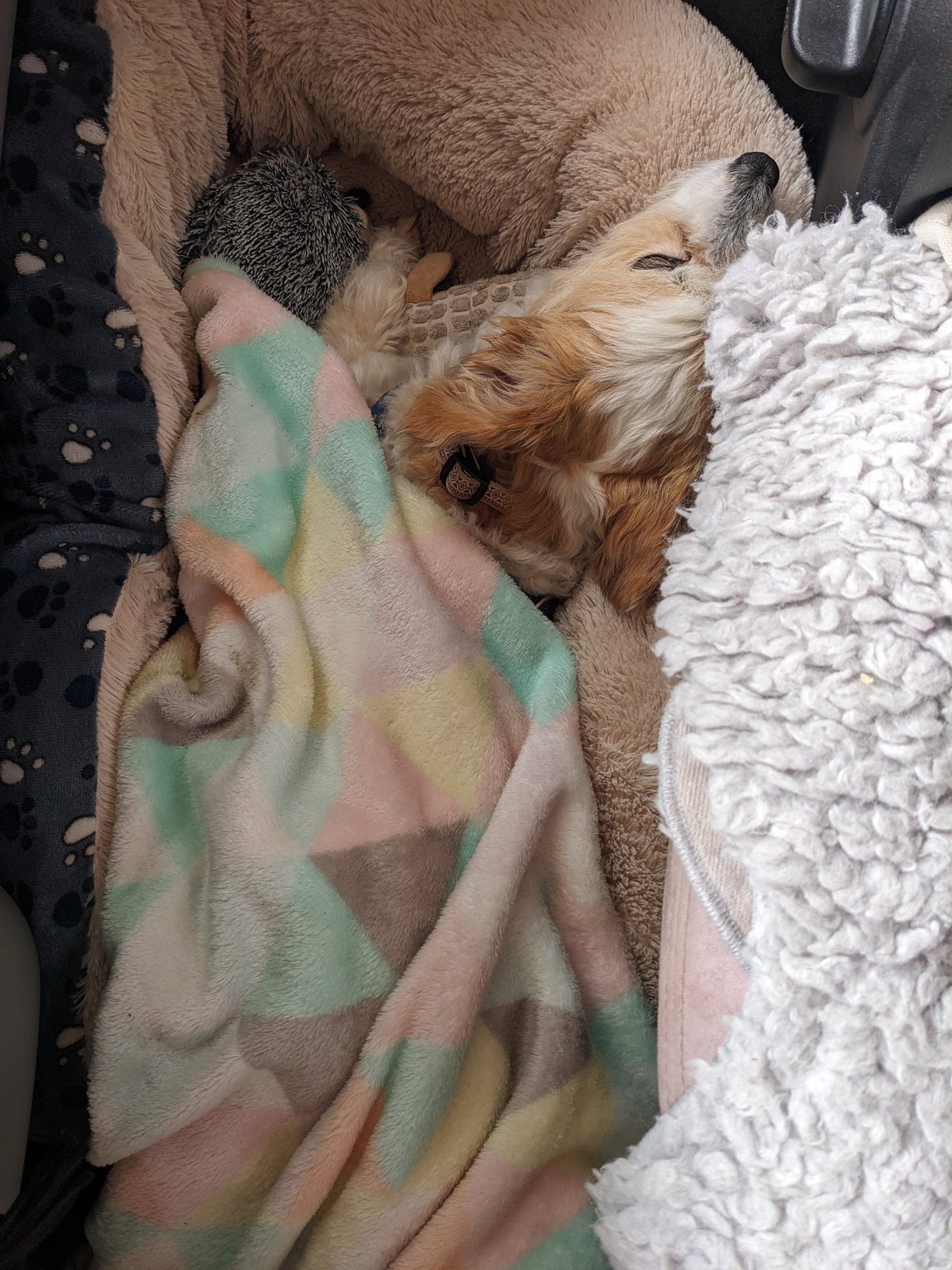
As ever: leave it exactly as you’d want to find it — not a trace — and don’t block the locks, the turning area or the towpath. Quiet spots like this stay open to vans only while everyone behaves.
The walks — cross the lock first
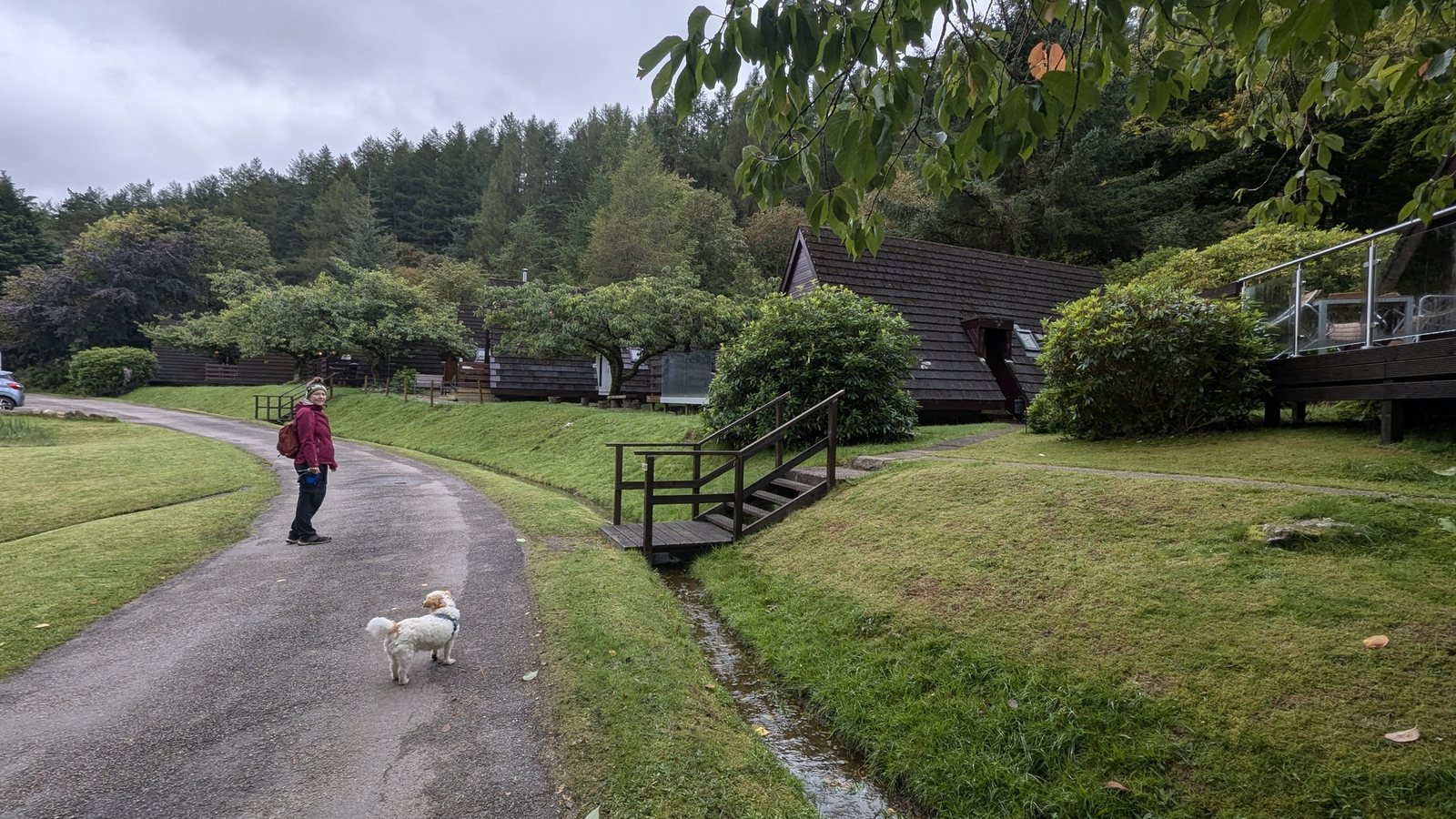
Worth knowing before you set off: you are at the beginning of the canal here, not partway along it. There is no flat towpath running away in both directions — the walking starts when you cross the lock gates. From the far side you can head up into the hills, or follow the road along the opposite side, and depending how far you fancy going that takes you along one loch or both. We did a couple of these over our stays and got a few videos along the way (below).
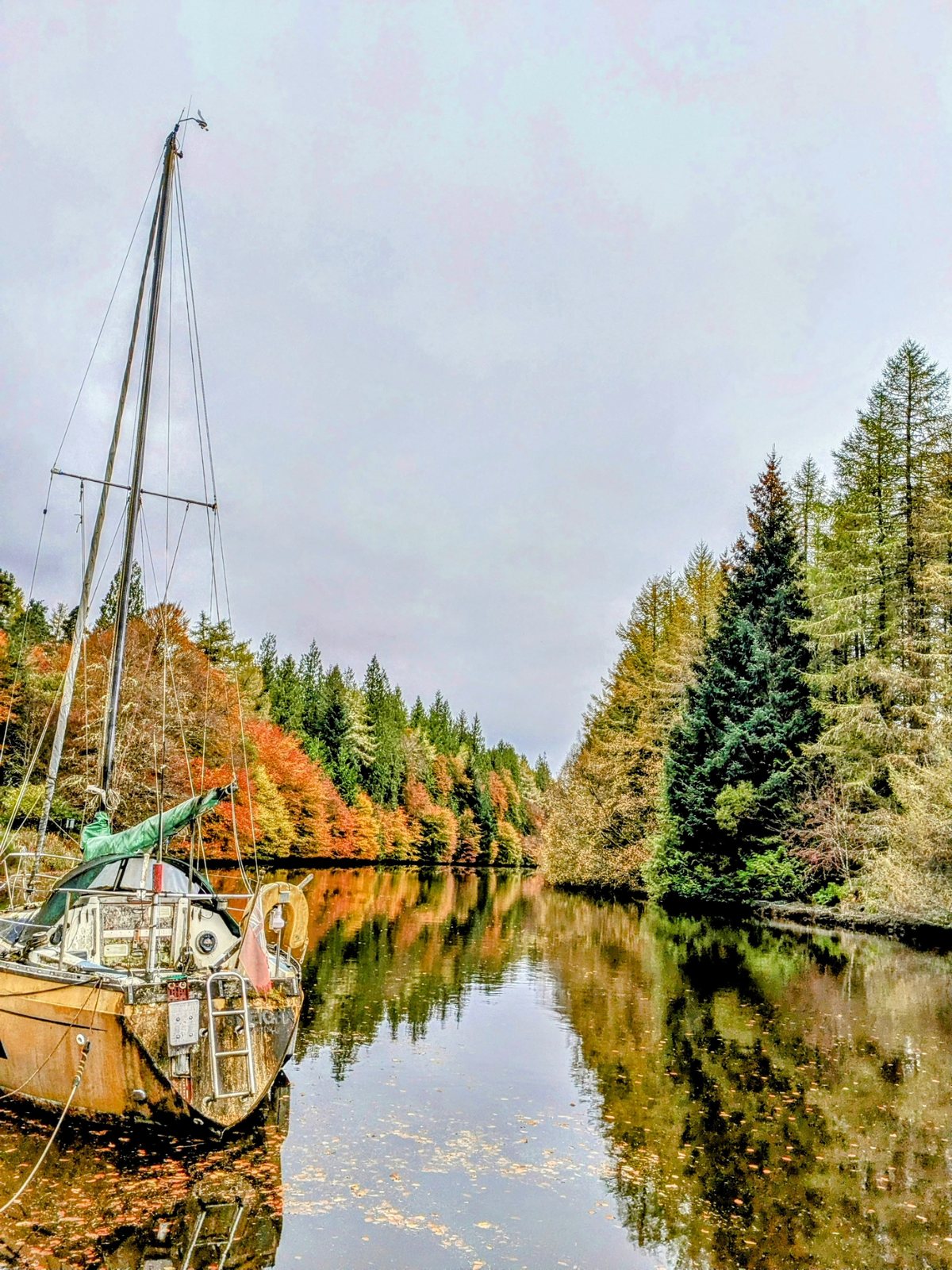
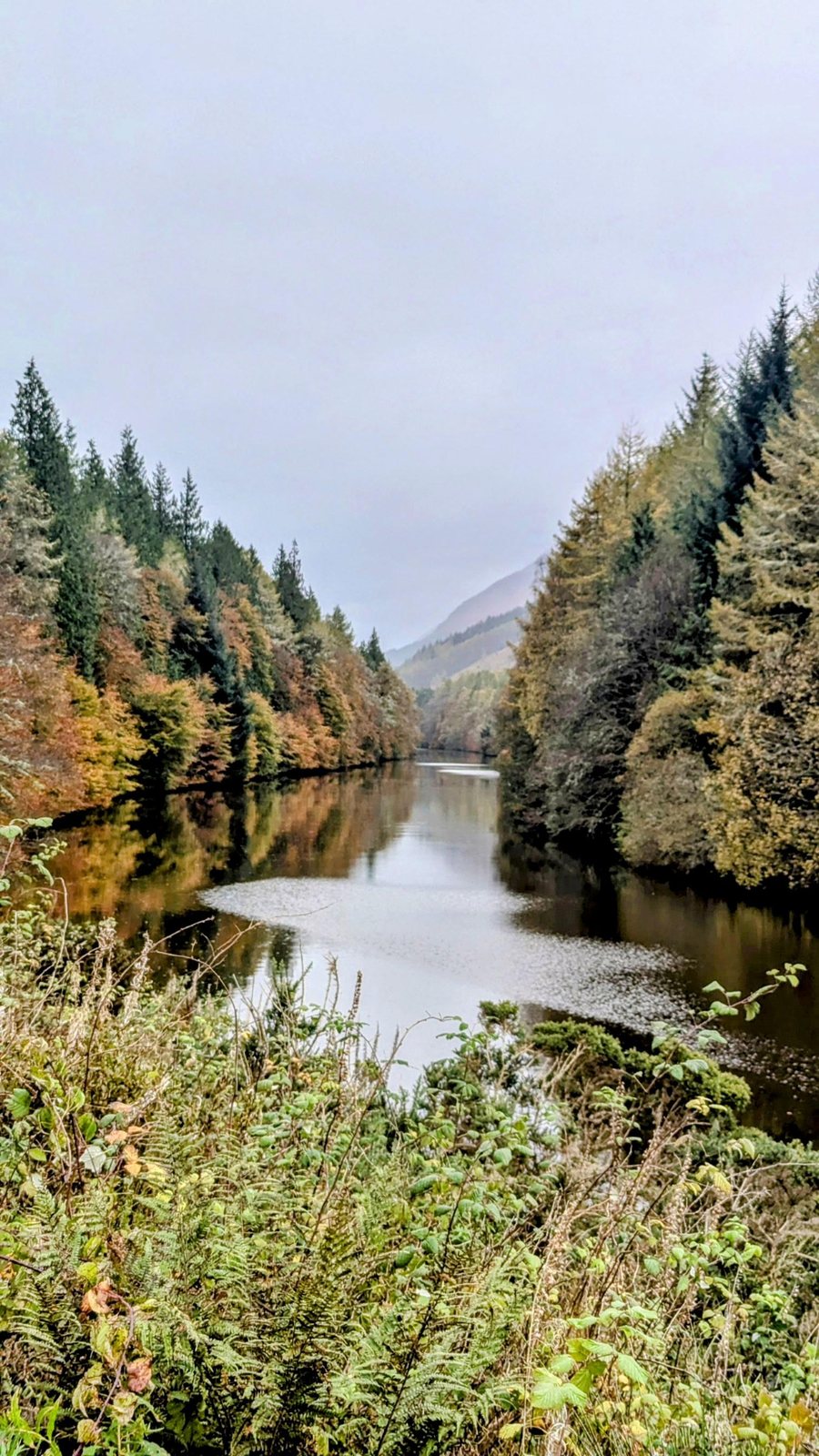
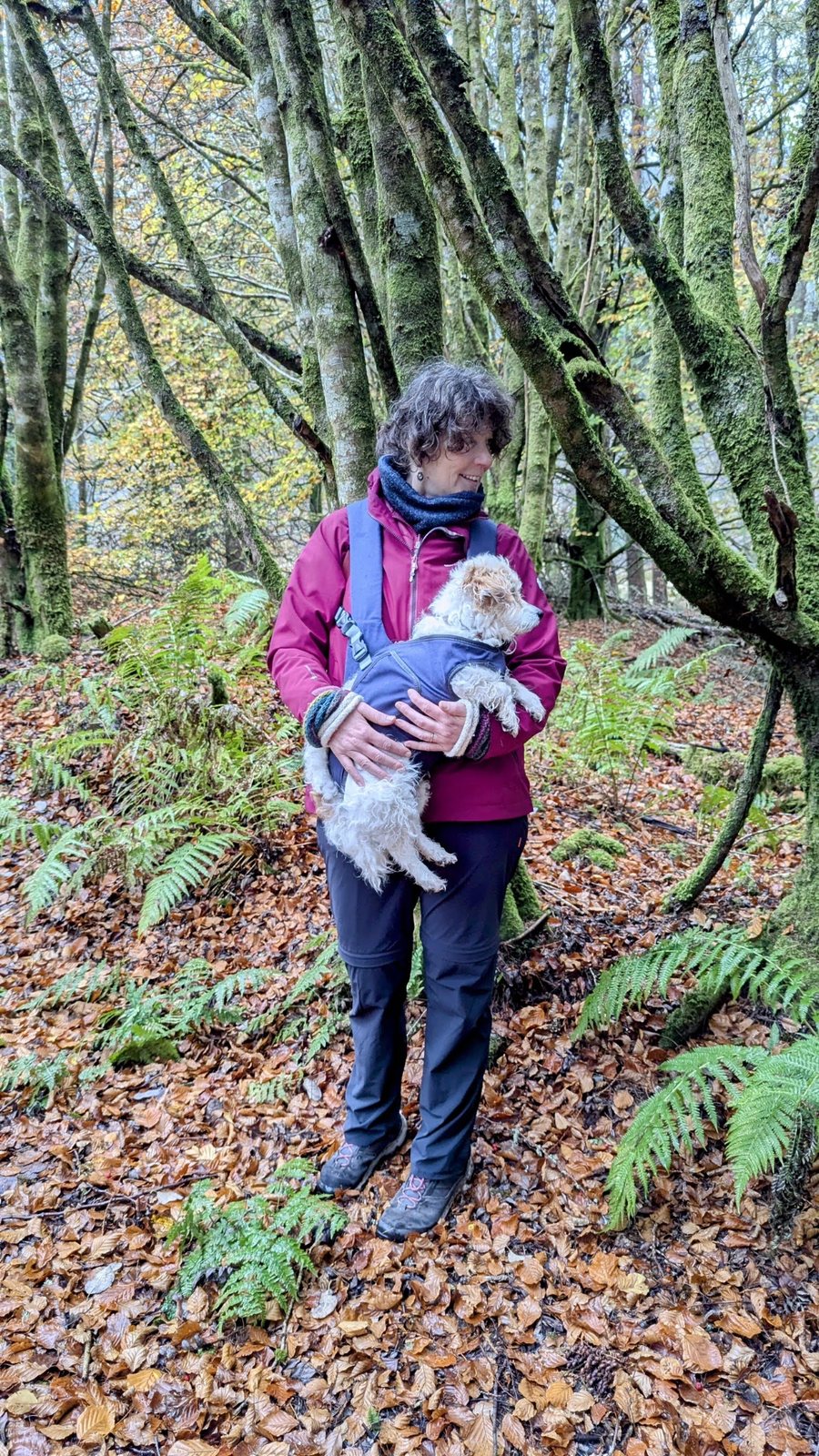
We walked the whole length of the locks and on along the canal towpath to the bridge that carries the A82 over the canal — a flat, easy there-and-back of about 1.5 km each way through the trees of Laggan Avenue, the water alongside you the whole time. It’s a genuinely beautiful walk through the trees — golden-brown when the autumn leaves are starting to fall — and a stunning one at any time of year. Here’s the route.
The towpath through the locks is also part of National Cycle Network Route 78 — the Caledonian Way, the coast-to-coast cycle route that runs the length of the Great Glen from Campbeltown to Inverness, passing right by the lock gates. Here’s the northern half of it, from Oban up through the Glen to Inverness:
Loch Lochy — and the Battle of the Shirts
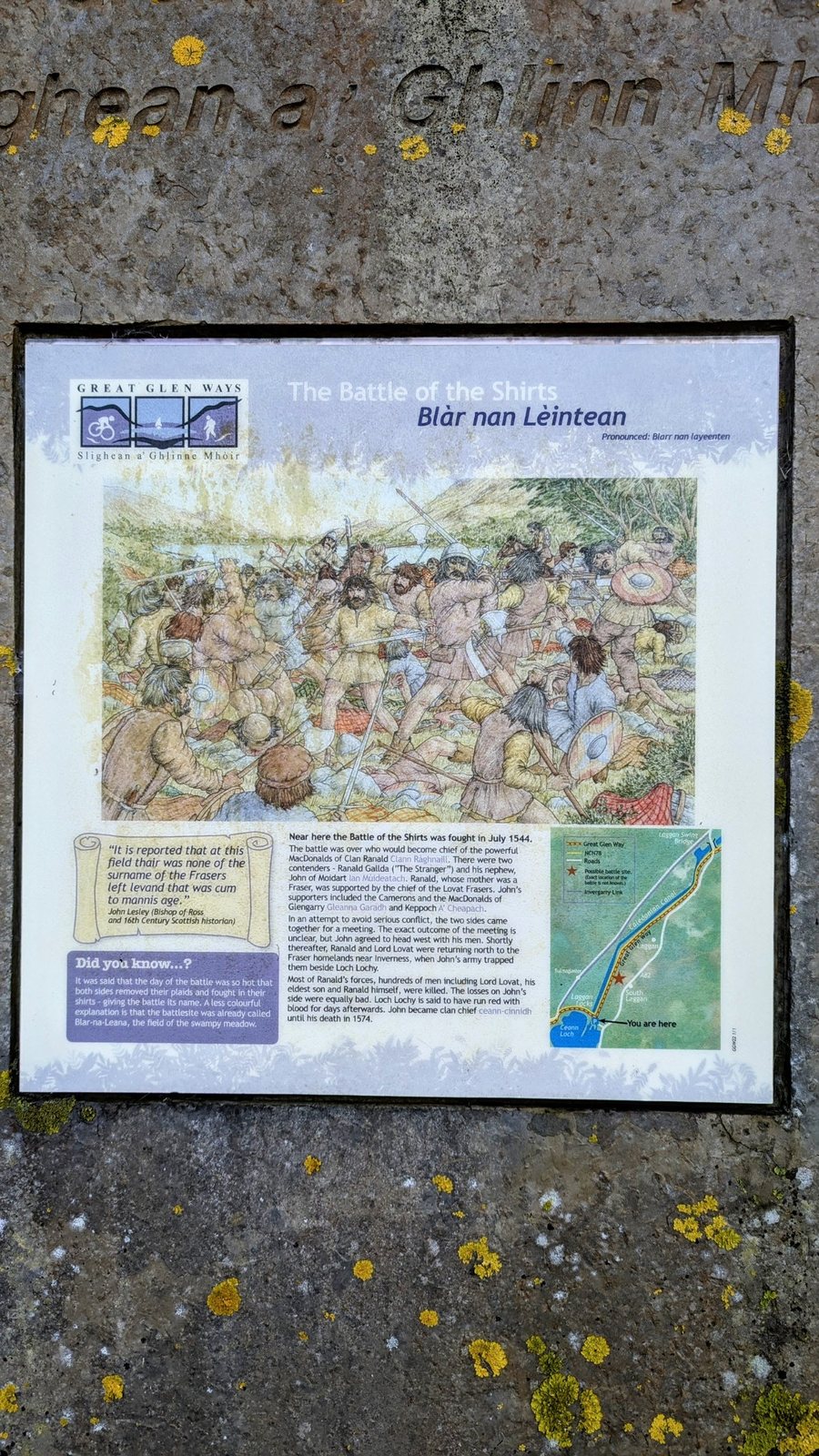
Loch Lochy is a long, deep freshwater loch (over 160 m at its deepest) filling the floor of the Great Glen south-west of the locks. Like its neighbours it has its own monster legend — a beast the locals nicknamed “Lizzie.” But its darkest fame is a battle. In July 1544, near the north end of the loch, the Frasers of Lovat met a combined force of MacDonalds of Clanranald and Camerons in a quarrel over the Clanranald chiefship. The fight became the Battle of the Shirts — in Gaelic Blàr na Léine — so called because it was fought on a blazing hot day and the clansmen are said to have thrown off their plaids and fought in their shirts. It was one of the bloodiest clan battles ever recorded: both sides were all but annihilated, and the Fraser chief and his heir were among the dead.
Loch Oich — the sunken boat, a railway & the Well of the Seven Heads
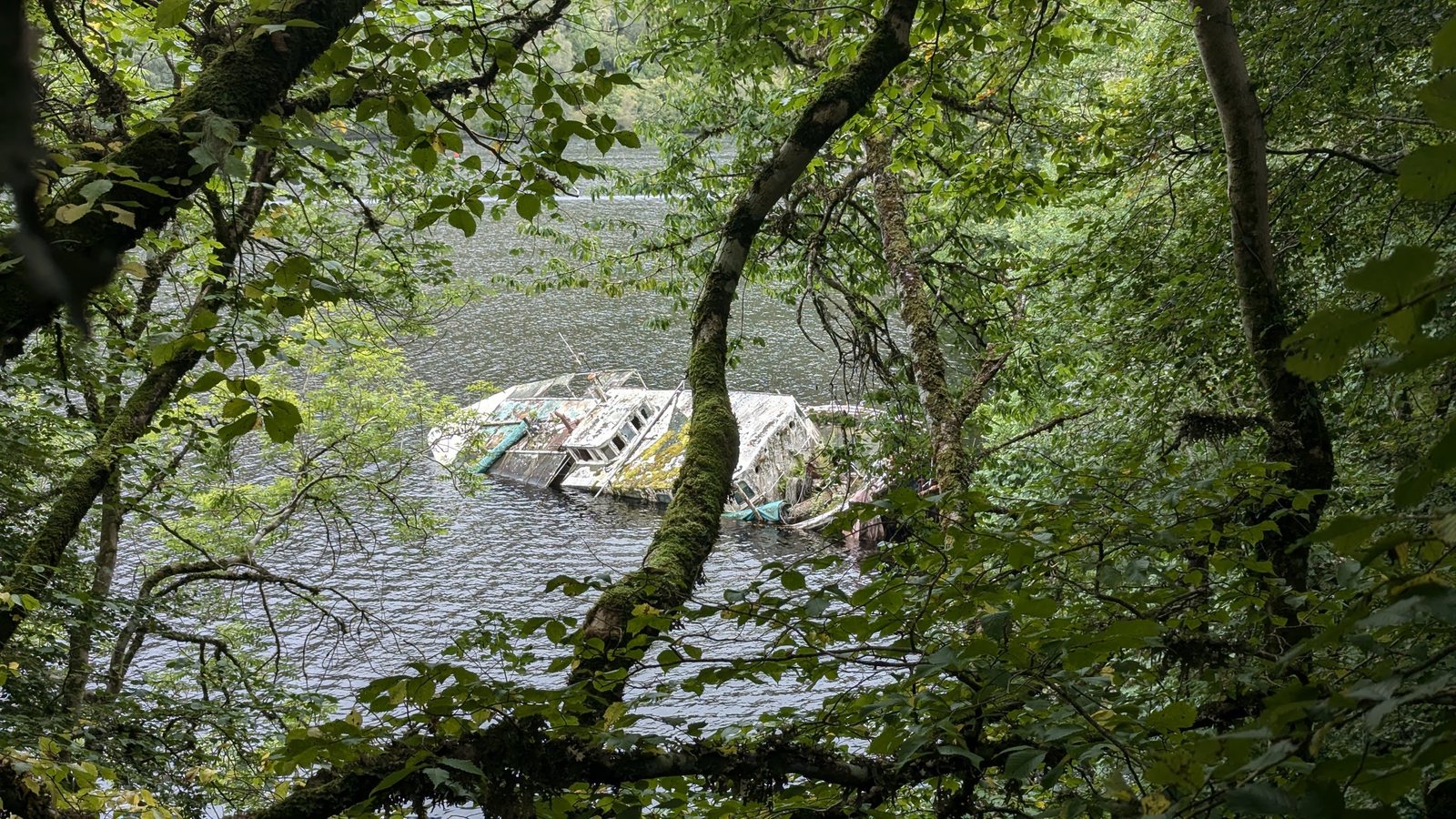
Loch Oich is the little jewel north of the locks — the summit level of the Caledonian Canal, its highest point above the sea. Along its wooded shore you’ll spot a wonderful oddity: a half-sunken old boat, quietly rotting and turning green in the shallows near Invergarry Castle (or what’s left of it) — a favourite of photographers on the shore path. The east side of the loch carries the bed of the old Invergarry & Fort Augustus Railway (opened 1903, closed to passengers by 1933 and lifted in the 1940s) — a short-lived, scenic Highland line that never really paid its way, now a peaceful walking route in places.
At the south end of the loch stands the Well of the Seven Heads (Tobar nan Ceann), a strange and grim monument of 1812. It marks the settling of a 17th-century clan feud: after the murder of the young Keppoch MacDonald chief and his brother, seven of the killers were tracked down and beheaded, and their heads were said to have been washed in the well here before being carried to the chief. We didn’t stop at it ourselves — but it’s right on the A82 a few minutes north, and well worth a look if you’re passing.
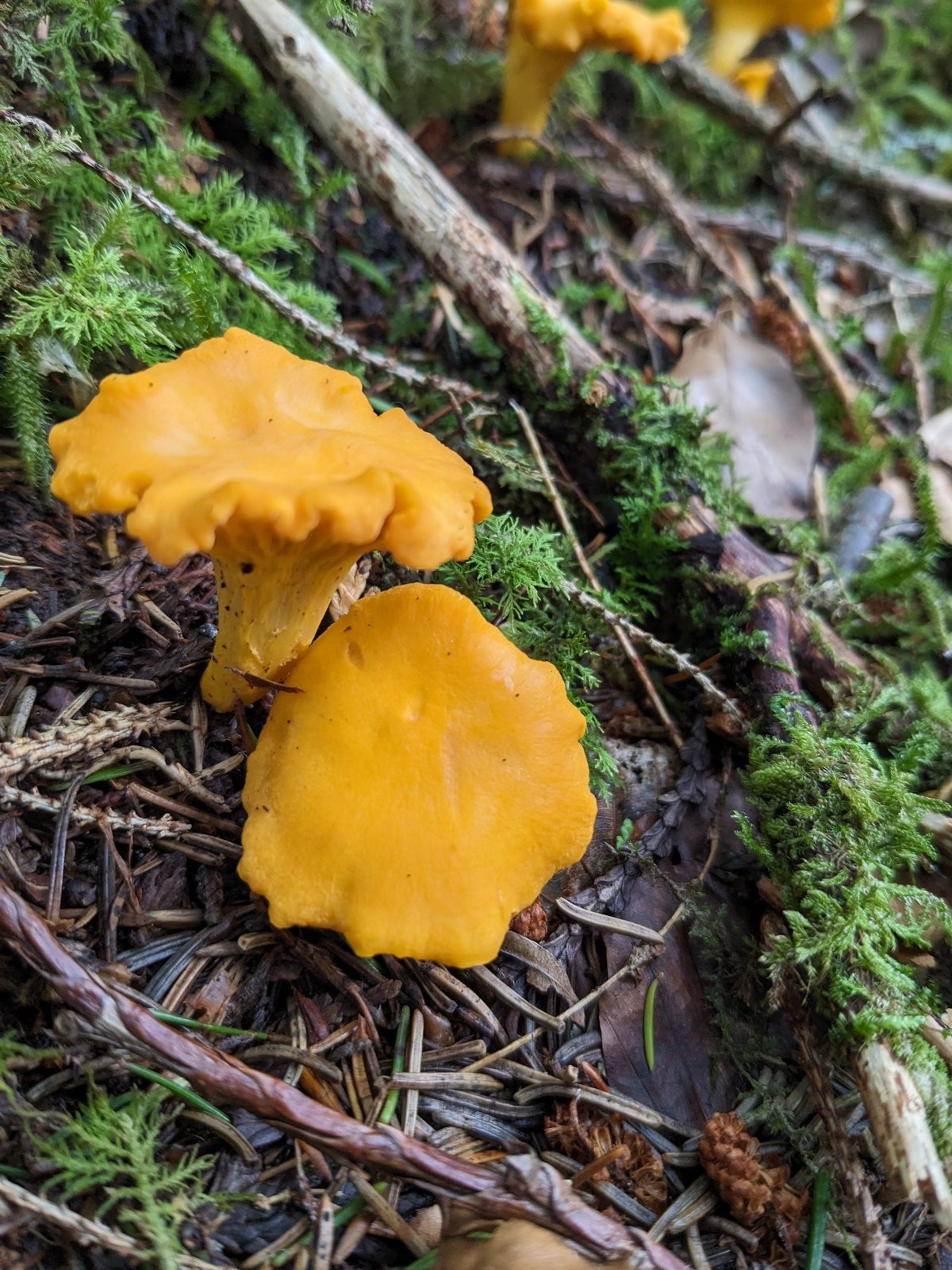
Heading north from the locks, the A82 runs up the side of Loch Oich, and a couple of miles along it we pulled in at a long white house right on the roadside for coffee and soup. It sits at North Laggan, and it is a genuinely handy stop — but it is hard against a busy main road, so we grabbed the soup and didn’t linger over the view.
Invergarry Castle
A short way up Loch Oich, on a rocky knoll above the west shore, stand the ruins of Invergarry Castle — the stronghold of the MacDonells (MacDonalds) of Glengarry. The rock it sits on, Creagan an Fhithich (“the Raven’s Rock”), gave the clan its war cry. It was a place that paid dearly for its loyalties: attacked in Cromwell’s time, and finally burned by the Duke of Cumberland’s troops in 1746 after Culloden, because Bonnie Prince Charlie had sheltered there both before and after the battle. The gaunt shell survives today in the grounds of the Glengarry Castle Hotel, looking out over the loch. We think we stopped here too on one pass through the Glen — a fittingly brooding ruin to round off the Laggan story.
Watch: Laggan
We took a few clips on the walks here — they’ll appear below as they go up on our channel.


Insta360 X6 360° Action Camera
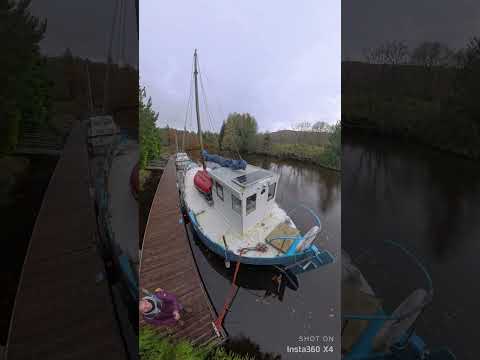
Both Laggan videos are filmed on our Insta360 X6 — the 360° camera we use for the lot. Walking the canal towpath you just switch it on and it films the whole Great Glen around you; back home you reframe whatever looked best, so you never miss a moment. Waterproof, pocketable and about as easy as filming gets.
Check price on Amazon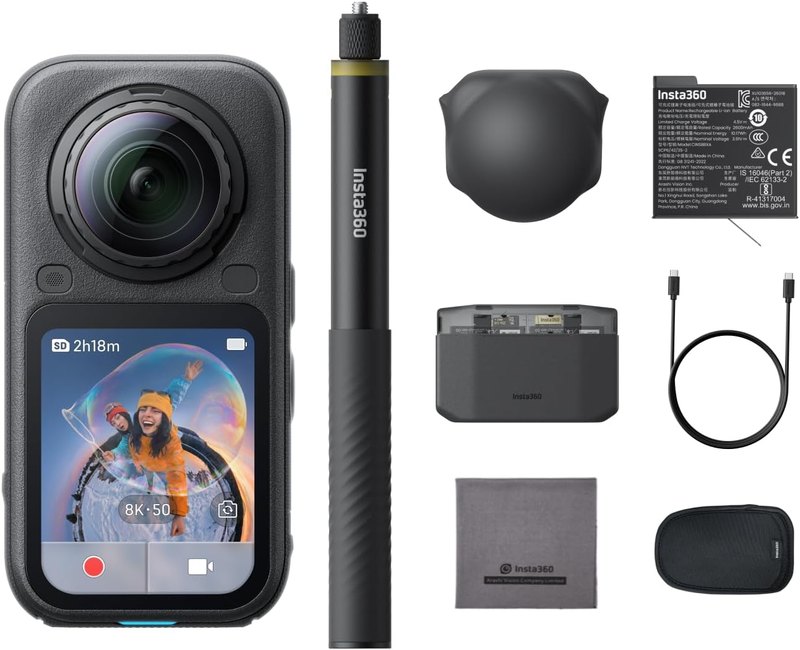
☔ The Great Glen funnels weather off both coasts, so the canal can be still and golden one minute and dripping the next. Scots don’t cancel the walk — they carry a light waterproof and a small brolly and keep going. Pack for a shower and the good spells feel like a bonus.
ECOHUB 30L Waterproof Roll-Top Backpack
The walk along the canal to the A82 bridge is flat and easy, but it’s tree-lined and the glen catches rain off both sides of the country. A roll-top waterproof pack means the camera and a spare layer stay dry under that golden autumn canopy. This 30-litre one is light, genuinely waterproof and kind on the wallet.
Check price on Amazon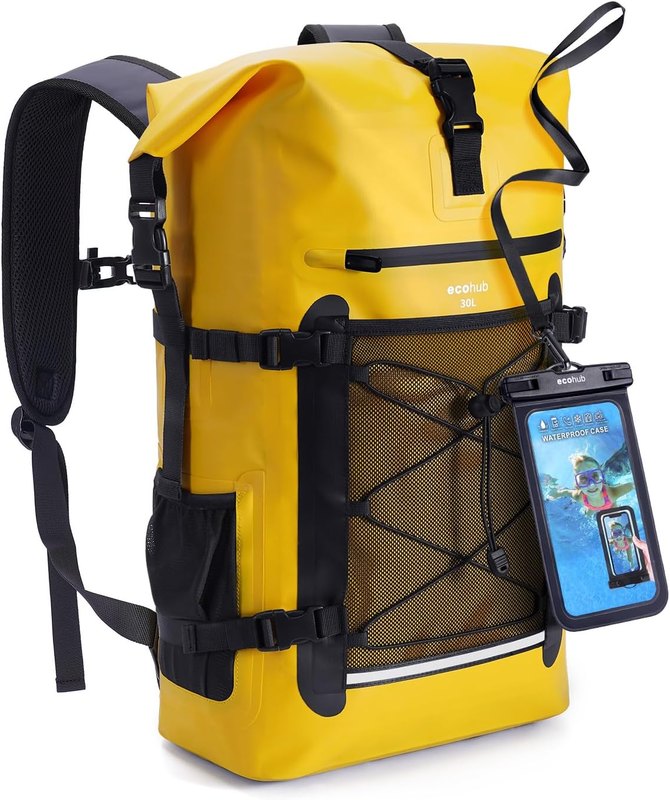
Nearby
- Fort Augustus — north up the canal: the great lock staircase down into Loch Ness.
- Spean Bridge & the Commando Memorial — south-west, the famous WWII memorial with its huge Great Glen view.
- Invergarry — the village at the head of Loch Oich, gateway to Loch Garry and the road to Skye.
- Scottish Clans — the MacDonells of Glengarry, the Camerons and the Frasers who fought over this ground.
- Neptune’s Staircase — the canal’s eight-lock ladder at the Fort William end.