
Durness: Smoo Cave, the White Sands of Balnakeil & the Top-Left Corner of Scotland
Overview — the honest take
Durness is about as far as you can go: the most north-westerly village on the British mainland, out where the far north-west (NC500) turns the top-left corner of Scotland. It rewards the long drive handsomely — a colossal sea cave with a waterfall thundering inside it, some of the most beautiful white-sand beaches in the country, a ruined church full of dark stories, and an artists’ colony in an old Cold War listening station. We did a lot of walking here, along the beaches and out to the coves, and loved every windblown minute.
Where it is
Durness sits at the very top of Sutherland, where the north coast meets the west, on the far north-west. It’s a long, wonderful drive from anywhere — over the causeway at the Kyle of Tongue from the east, or up the wild single-track west coast from Ullapool and Caithness. This is the launch point for Cape Wrath, the mainland’s north-western tip.
Smoo Cave
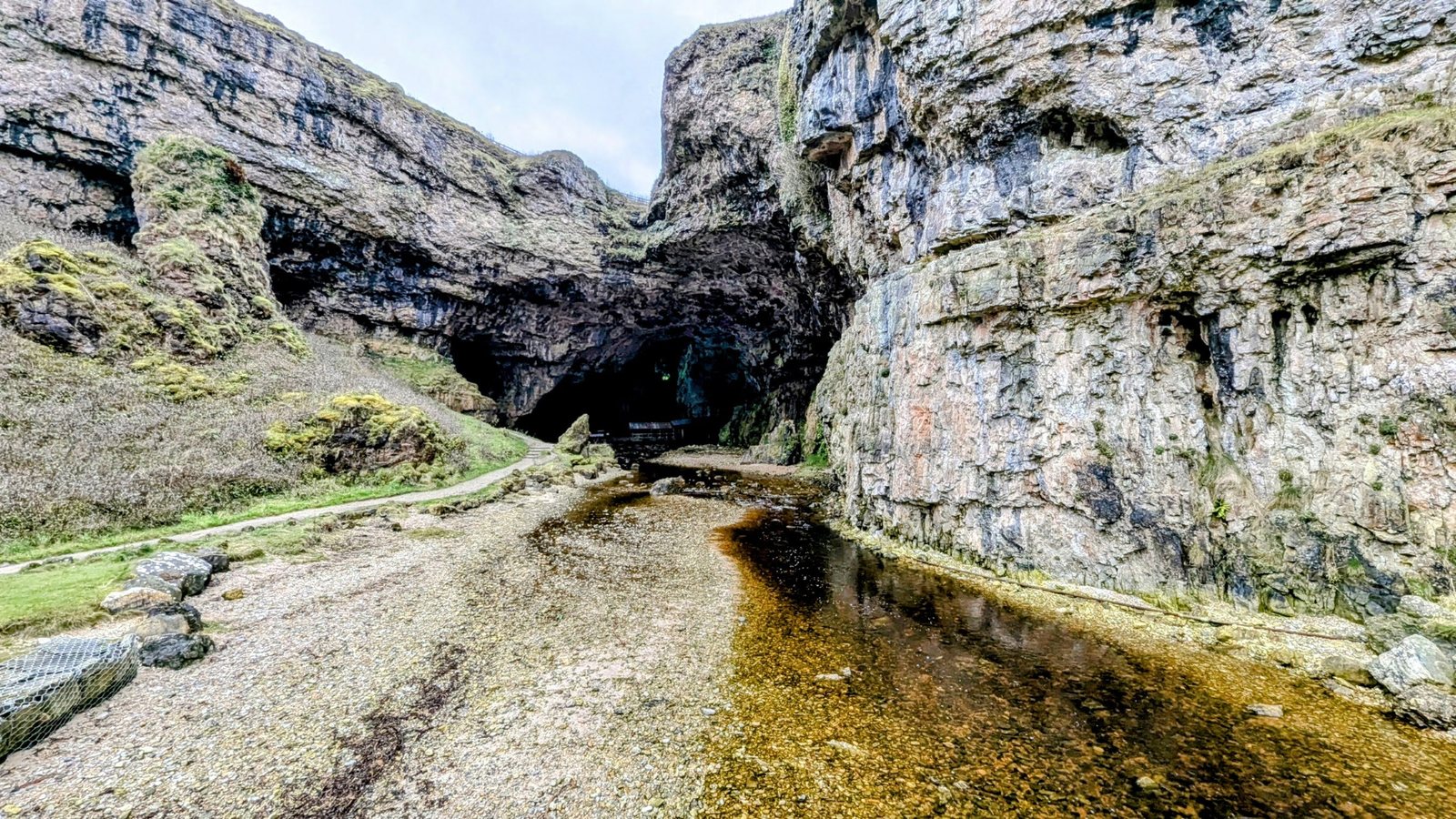
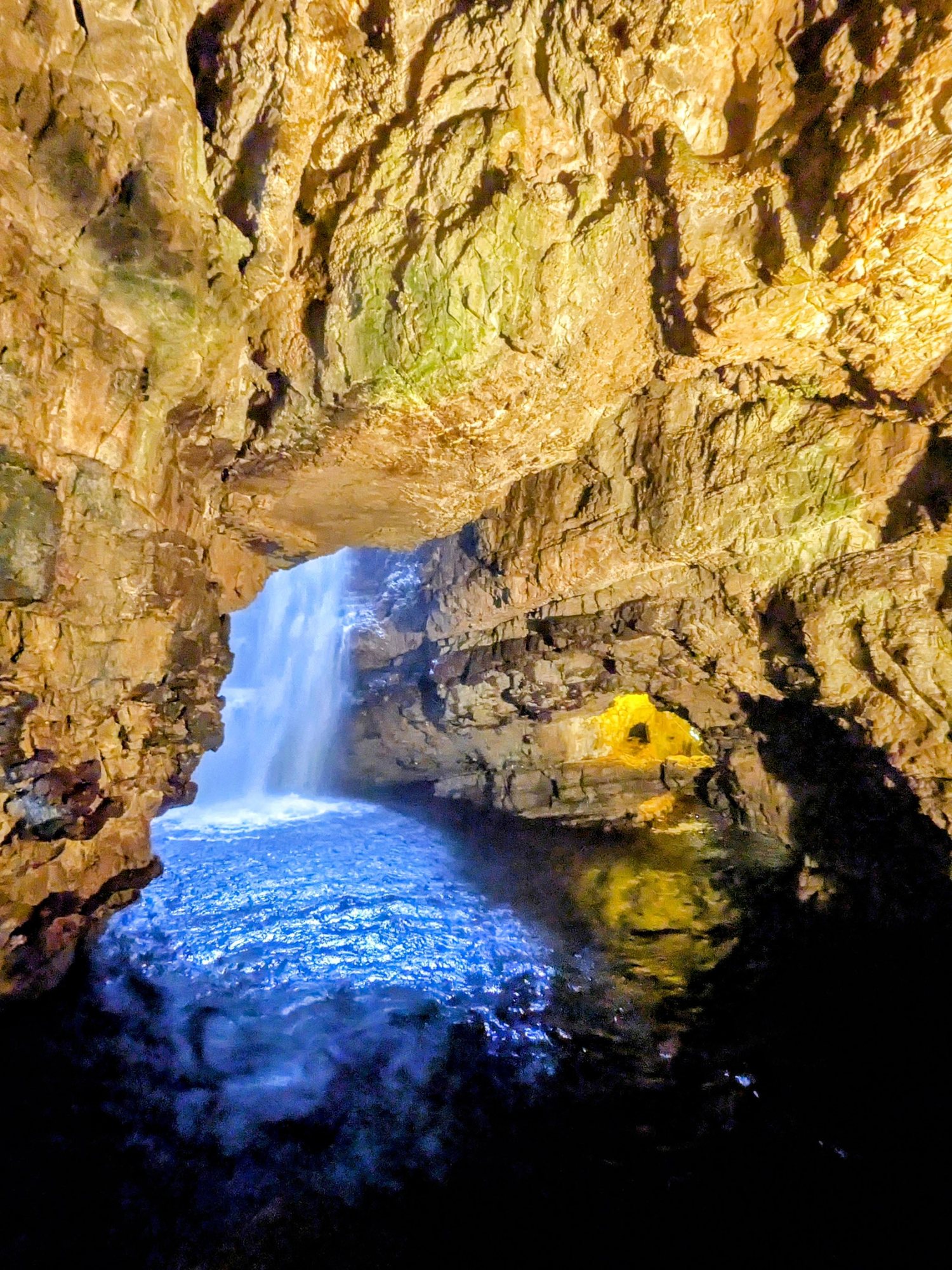
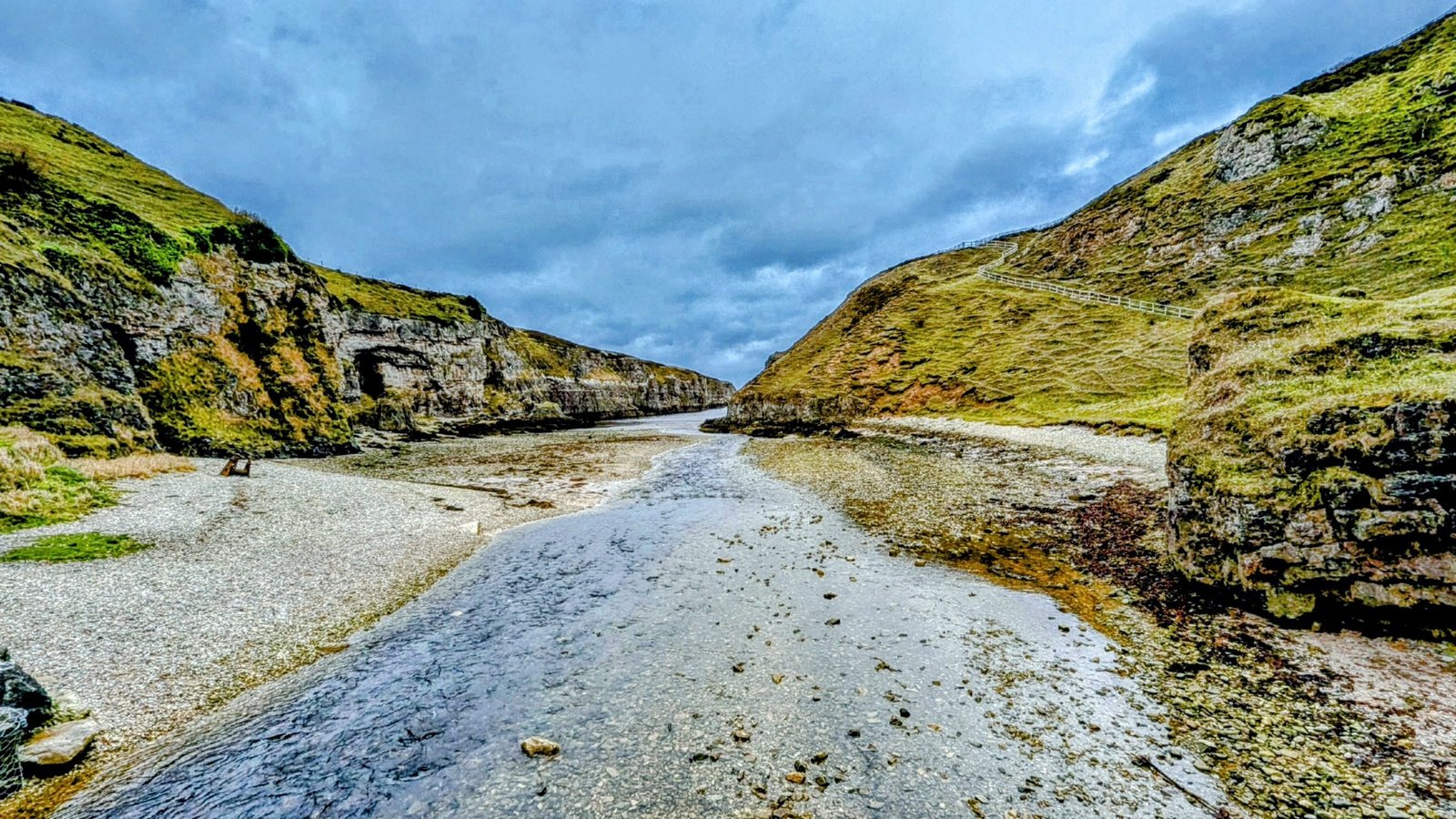
Smoo Cave is the showstopper. Its vast outer chamber — the largest sea-cave entrance in Britain — opens right at the foot of the cliffs, carved half by the sea and half by fresh water. Walk in and, in the inner chamber, the Allt Smoo burn drops straight through the roof as a waterfall, roaring down into a dark pool. It’s free to walk down to and into the main cave on good steps and boardwalks; in season a little boat trip takes you further into the flooded inner chambers. Genuinely one of the most dramatic spots on the whole coast.
Balnakeil — the beach, the church & the craft village
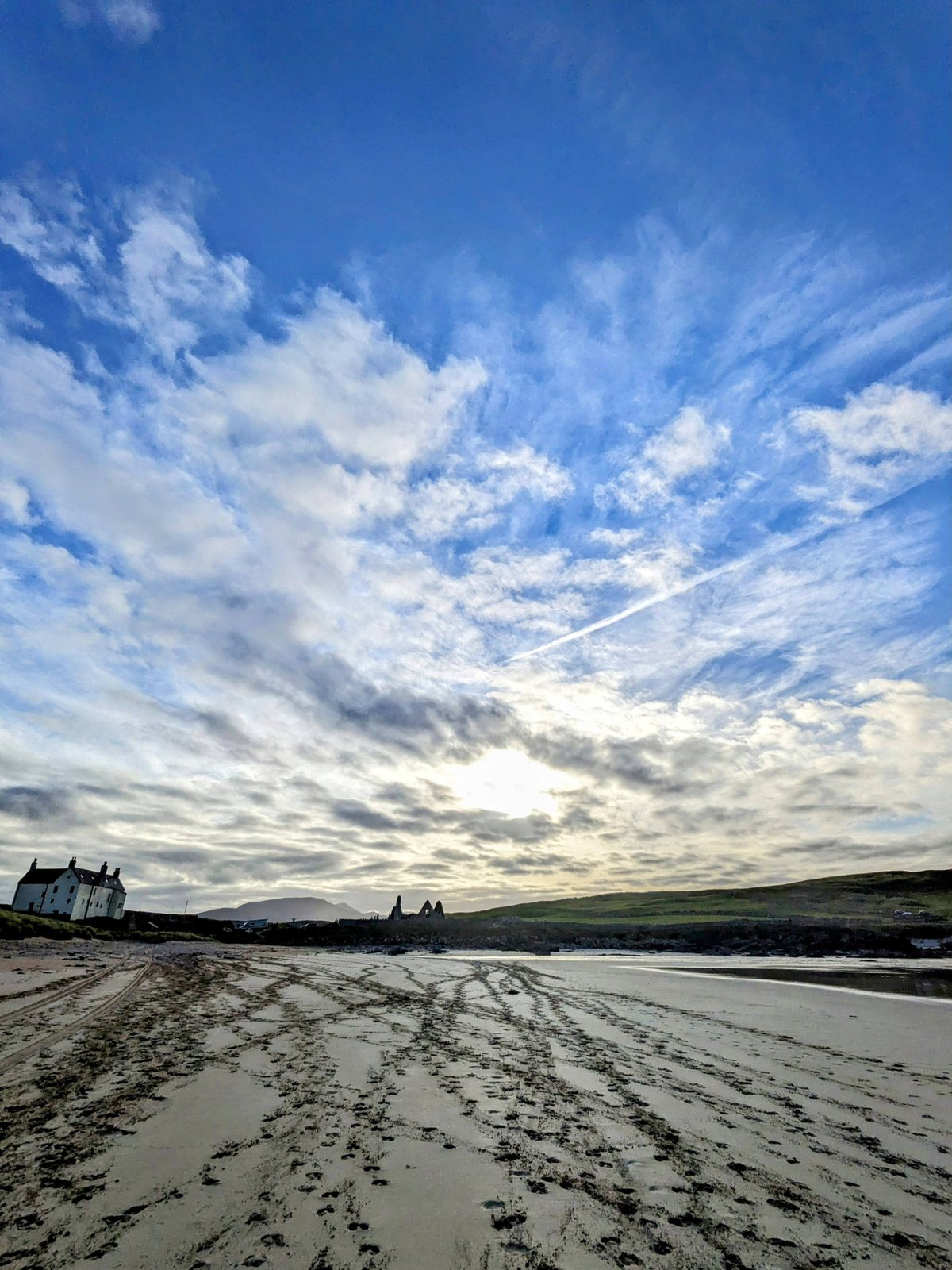
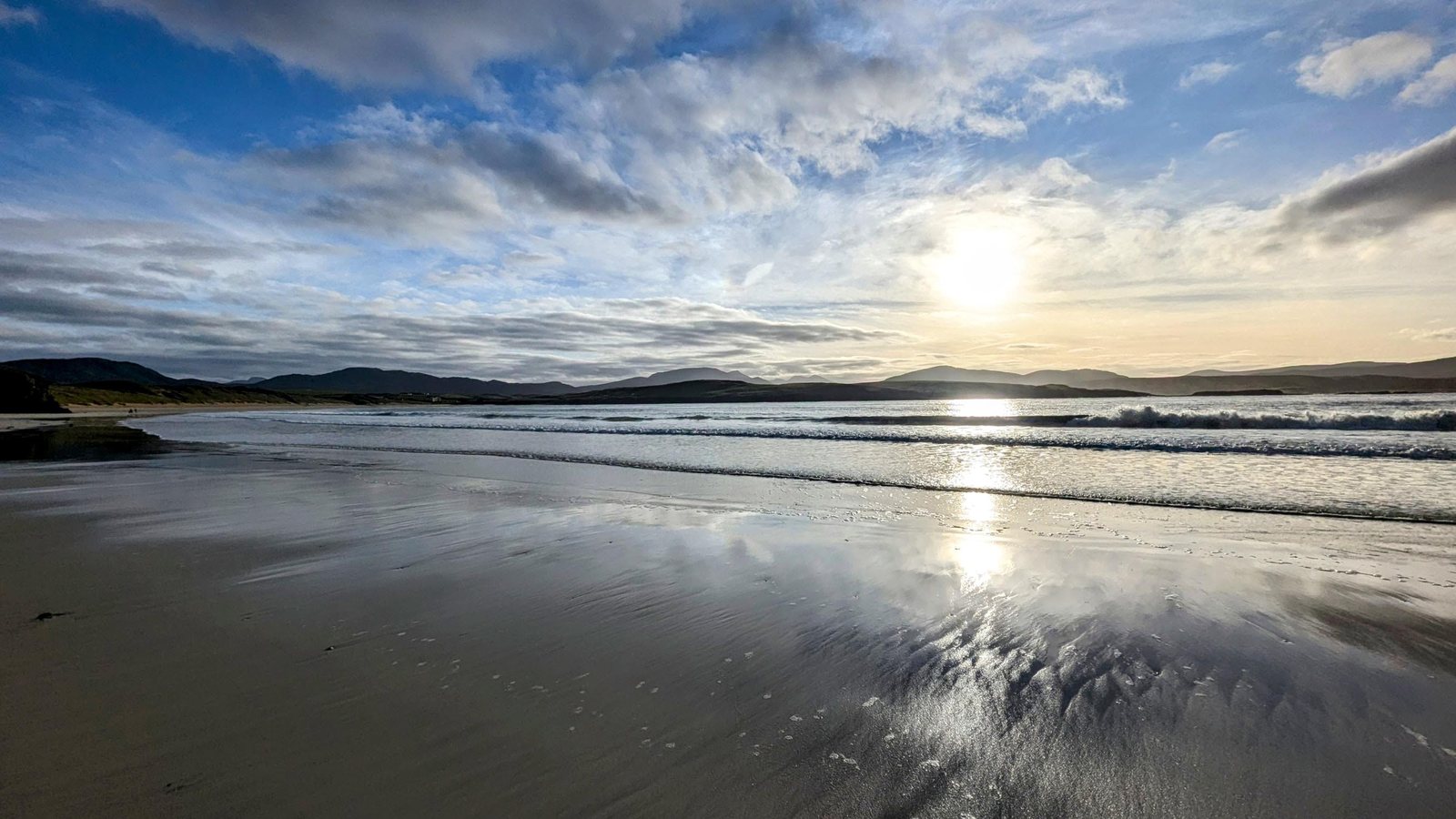
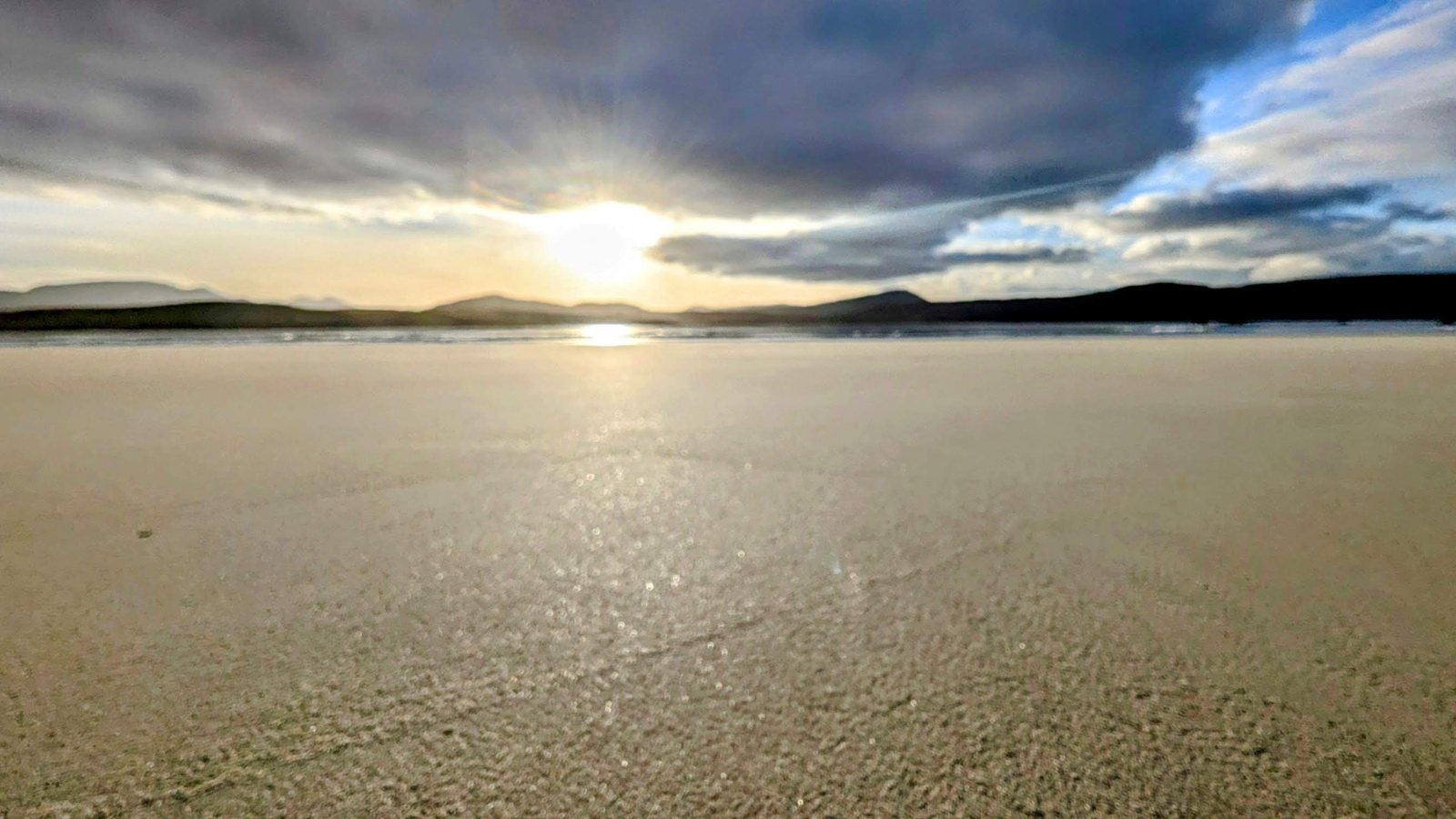
A mile from the village lies Balnakeil, and its beach is a jaw-dropper: a long arc of white shell-sand backed by dunes, running north towards the headland of Faraid Head — a superb beach walk, with a chance of puffins out on the point in summer. The light and the colours out here, especially at sunset, are extraordinary.
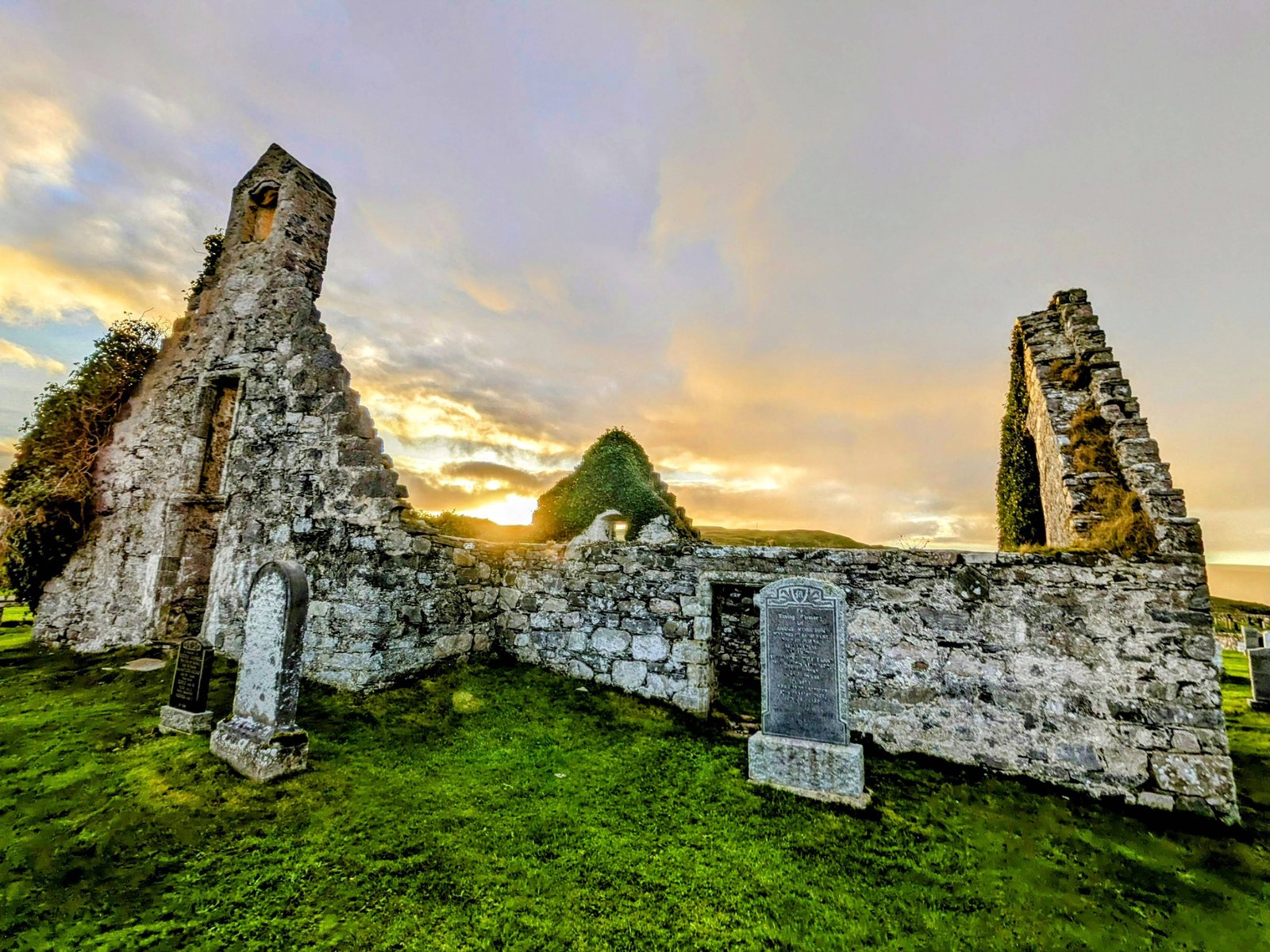
Above the beach stands the roofless Balnakeil Church, a 17th-century ruin in a lovely old graveyard. It holds the grave of the great Gaelic bard Rob Donn — and, set into its wall, the tomb of a notorious local, Donald MacMurchou, a killer said to have paid to be buried inside the wall so his enemies couldn’t dig up and desecrate his bones.
The kirk itself was rebuilt in 1619 by the chief of Clan Mackay, Lord Reay, whose clan ruled this whole coast — and the great Gaelic poet Rob Donn lies in the churchyard.
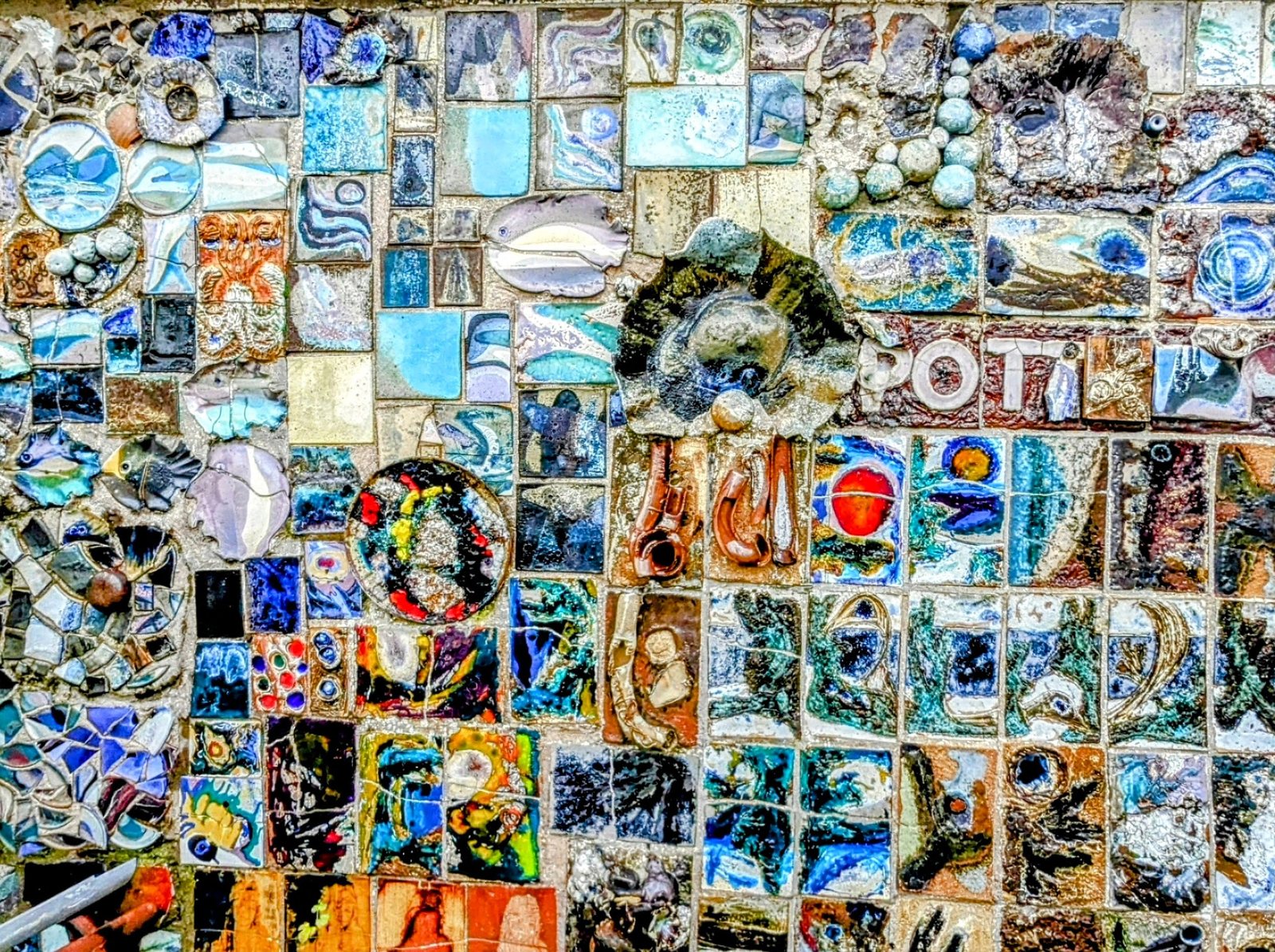
Next door is the quirky Balnakeil Craft Village: a cluster of artists’ and makers’ studios housed in the concrete huts of a 1950s Cold War early-warning station that was never finished. It’s home to studios, a bookshop, and the famous Cocoa Mountain chocolate café — an unexpected treat at the top of the country.
Sango Sands & the coves
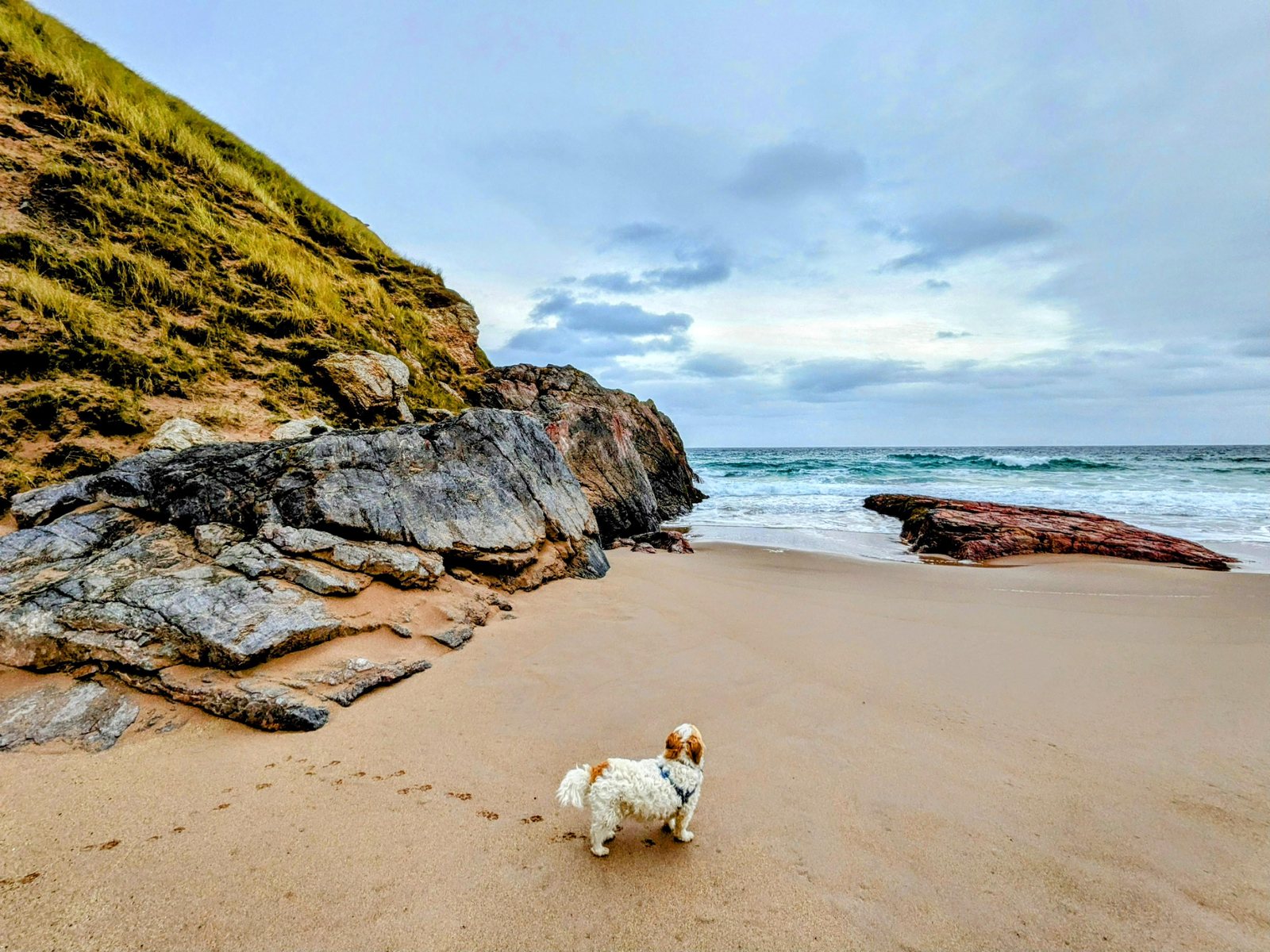
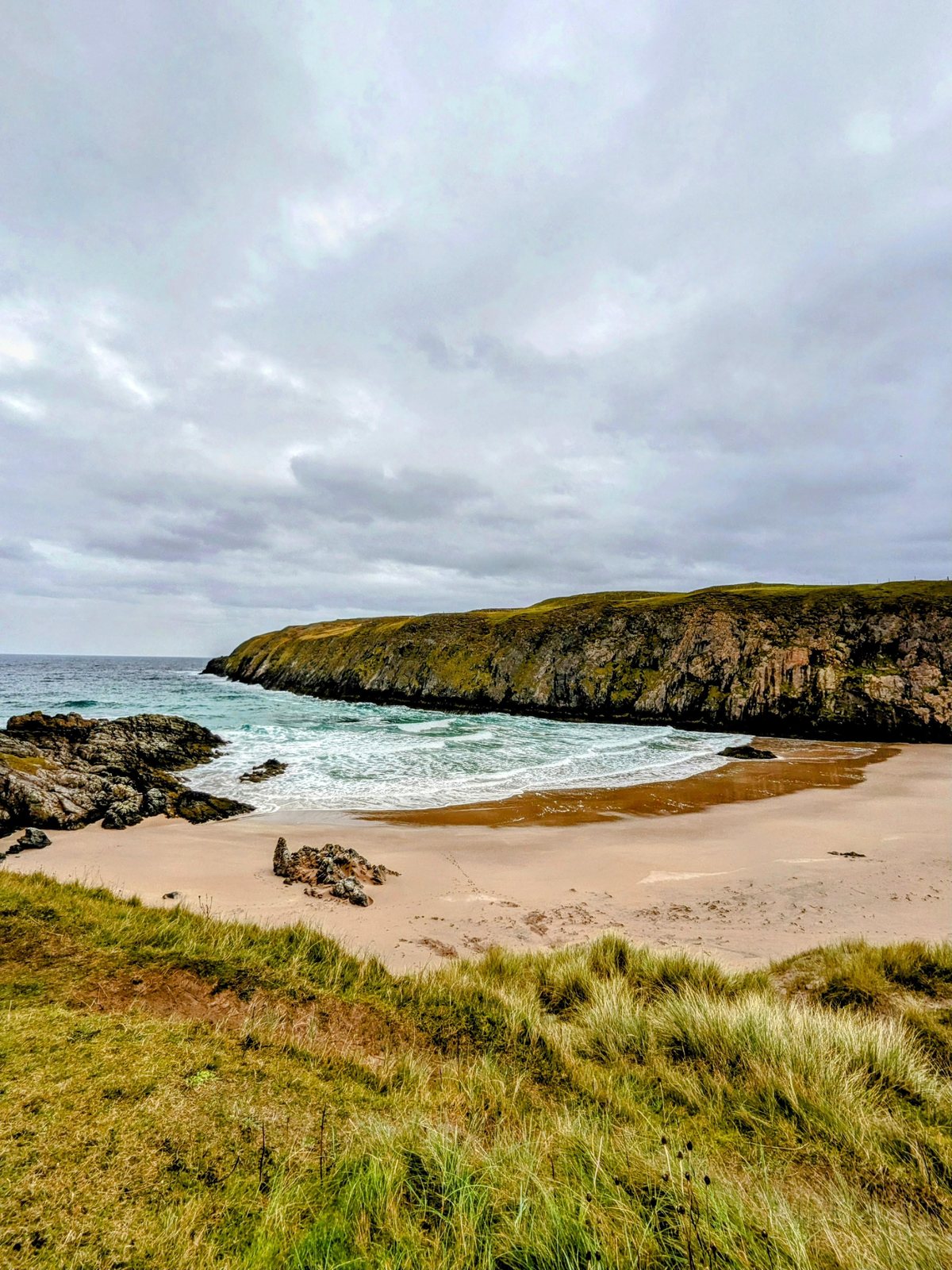
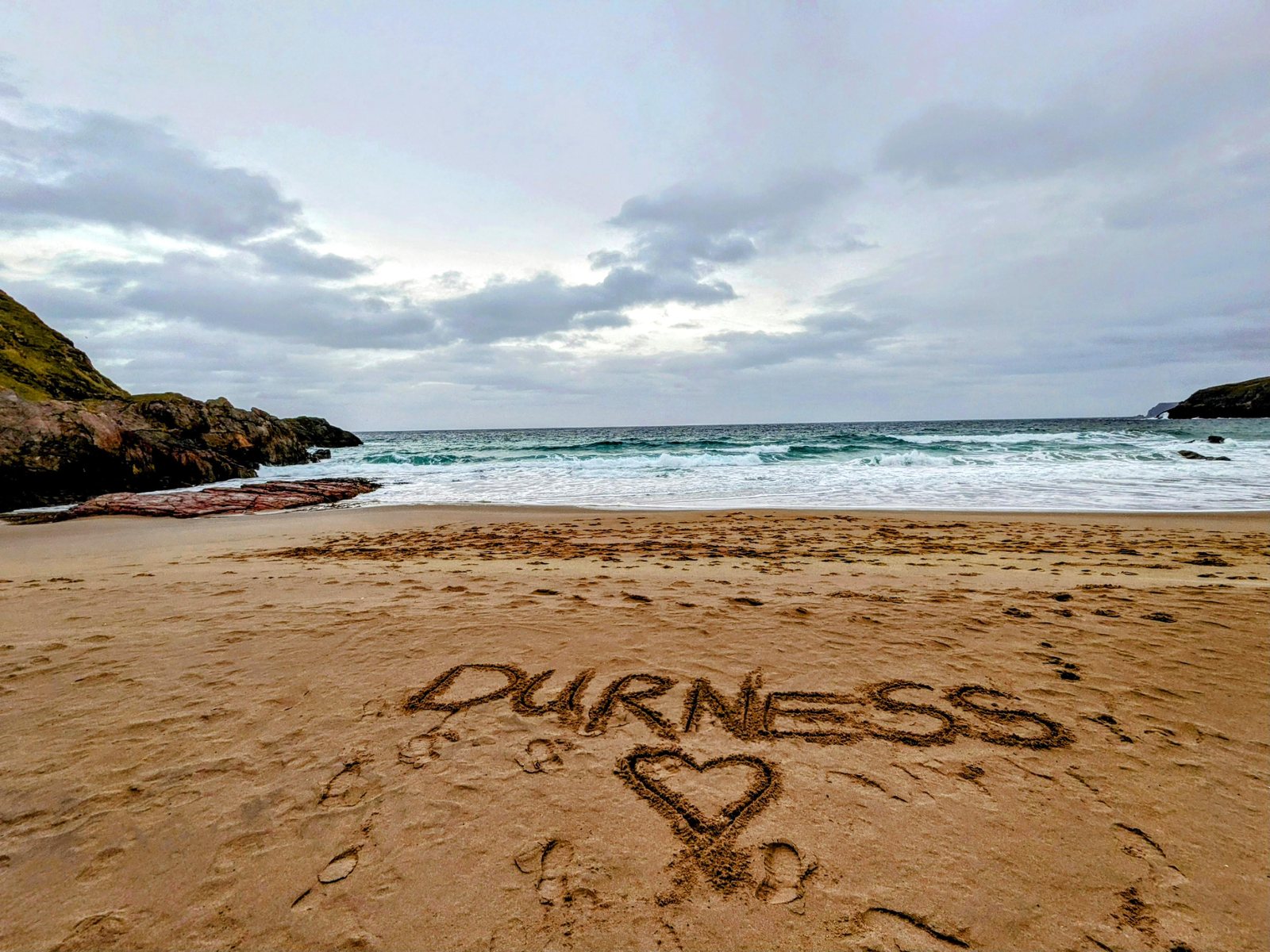
Right by the village, Sango Sands is a gorgeous beach broken up by rock stacks and little hidden coves — brilliant for a wander and a scramble, with the popular Sango Sands campsite on the clifftop above. We spent a happy while poking around the coves and rock pools.
Cape Wrath
From Durness you can make the pilgrimage to Cape Wrath, the wild north-west tip of the mainland: a passenger ferry across the Kyle of Durness, then a rattling minibus over the empty moor to the lighthouse, past the Clo Mor — the highest sea cliffs on mainland Britain. It’s weather- and MOD-firing-range dependent, so check before you plan on it, but it’s a proper end-of-the-world adventure.
Watch: the Kyle of Durness
The Kyle of Durness from the A838 at Keoldale, and Sango Sands below the village.

Insta360 X6 360° Action Camera
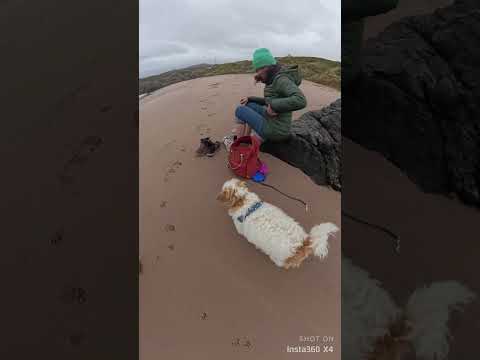
We film everything on the Insta360 X6 — a 360° camera that earns its keep in a place like Durness. Down at Smoo Cave or on Balnakeil beach you just hold it up and it captures the whole scene at once, then you choose the shot at home. Rugged, waterproof and genuinely easy — ideal for the wild top corner of Scotland.
Check price on Amazon
Nokta Score Metal Detector
Balnakeil’s white sands and the beach below Sango are the sort of quiet, far-north strands where a detector turns a walk into a treasure hunt. We’d hand a newcomer this one — waterproof coil, sensible menus, and priced so you can learn on it without a big outlay. Our full review →
Check price on Amazon
Nearby
- Cape Wrath — the mainland’s far north-western tip, by ferry and minibus from Durness.
- Kylesku & the north-west coast — the spectacular far north-west run south towards Ullapool and Assynt.
- Round the top to the east lie Wick, the Whaligoe Steps and Caithness.
- Emptying & filling in Scotland — where to legally dispose of waste and top up fresh water, with the nearest points and exact map pins.
Sources
- far north-west — Durness and Wikishire (Smoo Cave, Balnakeil, Sango Sands).
- On Balnakeil Church, Rob Donn and Donald MacMurchou: local heritage records.
- Everything first-hand is from our own visit to Durness.