
The Well of the Seven Heads (Tobar nan Ceann): Loch Oich’s Grim Monument to Highland Justice
Overview — a monument you won’t forget
On the wooded shore of Loch Oich, right beside the A82 in the Great Glen, stands one of the strangest and most chilling monuments in Scotland: the Well of the Seven Heads, in Gaelic Tobar nan Ceann. A tall obelisk topped by a carved hand grasping a dagger and seven severed heads marks the spot where, in a grisly act of clan justice, the heads of seven murderers were washed before being carried to their chief. It sits just a few miles north of Laggan Locks, and the tale behind it is worth knowing.
Where it is
The monument stands at the south end of Loch Oich, on the A82 between Invergarry and Laggan, roughly midway along the Caledonian Canal’s run through the Great Glen. The spring itself — the actual “well” — lies down a short, low tunnel beneath the roadside obelisk, close to the loch. There’s a car park and a small shop at the site.
The Keppoch Murders, 1663
The story begins in Lochaber on 25 September 1663. Alexander MacDonald, the young 13th chief of Keppoch, and his brother Ranald had just returned from being educated in France, and threw a grand homecoming party. Their own kinsmen — a jealous branch of the family resentful of the young chief and his new, foreign ways — are said to have started mocking the brothers’ French manners and accents. The quarrel exploded into violence, and both young men were murdered by their cousins at Inch, near Roybridge.
Justice, and the bard who demanded it
What makes the tale extraordinary is what came next. The authorities and even the clan chiefs were slow to act — but the Keppoch bard, Iain Lom (John MacDonald), would not let it rest. For nearly two years he agitated for vengeance, until at last a commission of fire and sword was granted. Sir James MacDonald of Sleat lent a force of some fifty men, and the seven murderers were hunted down and killed. Iain Lom himself is said to have gathered the seven severed heads, tied them together by the hair with a heather rope, and washed them at this spring on Loch Oich — before presenting them as proof of justice done to MacDonell of Glengarry at Invergarry Castle.
The monument
The obelisk you see today was raised over the spring in 1812 by Colonel Alasdair Ranaldson MacDonell of Glengarry — the flamboyant Highland chief said to have inspired Sir Walter Scott’s Fergus Mac-Ivor. On top sits the grim sculpture of the hand, dagger and seven heads, and the monument carries the story on its plinth in four languages — Gaelic, English, French and Latin — so that no traveller could pass without learning what happened here.
Visiting today
It’s an easy roadside stop on the A82, with a car park and a wee shop and café on site. The spring itself is reached down a low, dark passage beneath the monument — not one for the claustrophobic, but atmospheric in the extreme. We’ve passed it many times on the run through the Great Glen but not yet stopped to go down to the well itself — it’s firmly on the list for next time.
Nearby & linked
- Laggan Locks — our free canal-side stopover, a few miles south on Loch Oich.
- The Caledonian Canal — the great waterway that threads Loch Oich and the Great Glen.
- Clan MacDonald — the great clan whose Keppoch and Glengarry branches drive this dark story.
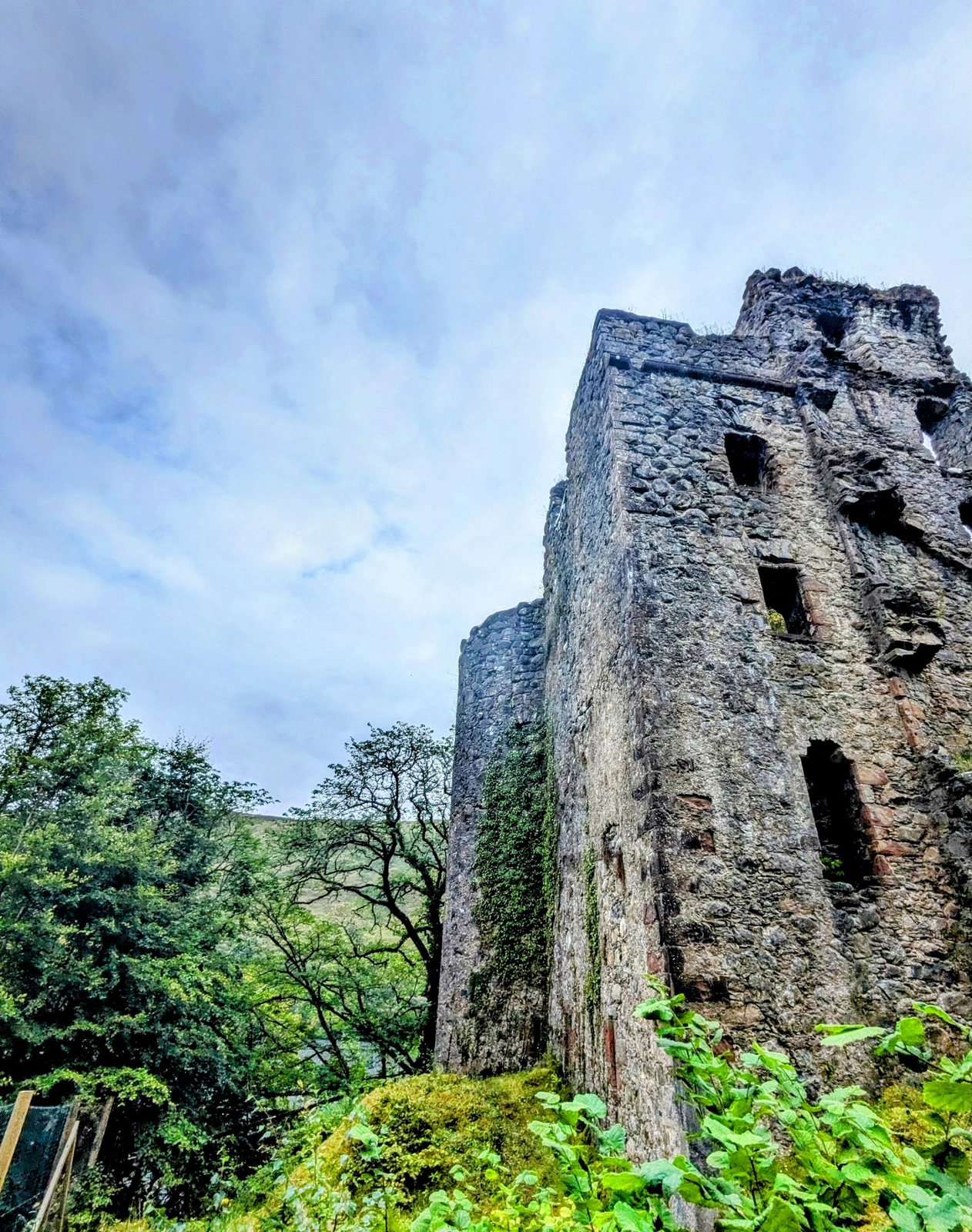
- Invergarry Castle — the ruined Glengarry stronghold at the head of Loch Oich, where the heads were presented.
Sources
- Wikipedia — the Keppoch Murders.
- Subterranea Britannica on the monument and the spring.
- First-hand notes to follow — we’ve not yet stopped at the well ourselves.