
Benmore Botanic Garden: The Giant Redwood Avenue, a Hillside of Rhododendrons & a Victorian Fernery
Overview — the honest take
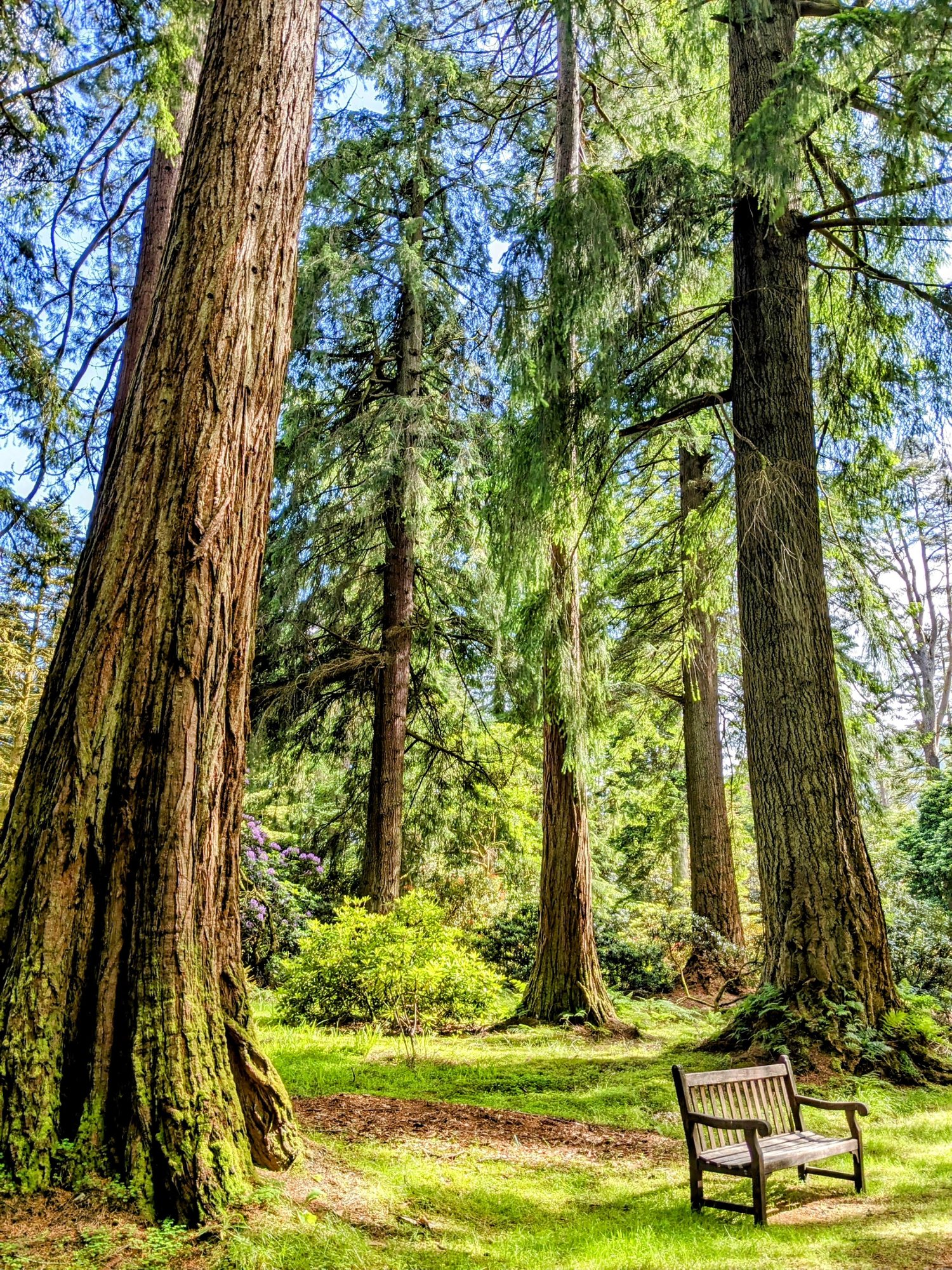
Benmore Botanic Garden is one of the finest gardens in Scotland, tucked into a dramatic mountain valley in Cowal, just north of Dunoon. It’s a Regional Garden of the Royal Botanic Garden Edinburgh, spread over 120 acres of hillside, and it opens with a jaw-dropping flourish: an avenue of giant redwoods so tall you have to lean back to see the tops. Add a world-class rhododendron collection, a restored Victorian fernery, plant collections gathered from the mountain forests of the world, and paths climbing to a viewpoint over the glen — and it’s an easy garden to fall for, whatever the weather. And right across the road is the Puck’s Glen fairy-gorge, so you can happily make a full day of it.
Where it is
Benmore sits in the Eachaig valley about 7 miles north of Dunoon, in the Argyll Forest Park on the Cowal peninsula. It’s reached by the ferry from Gourock to Dunoon and a short drive up the A815, or round the long way by Loch Lomond and Loch Long. The entrance and car park are right on the main road, with Puck’s Glen just opposite.
The Giant Redwood Avenue
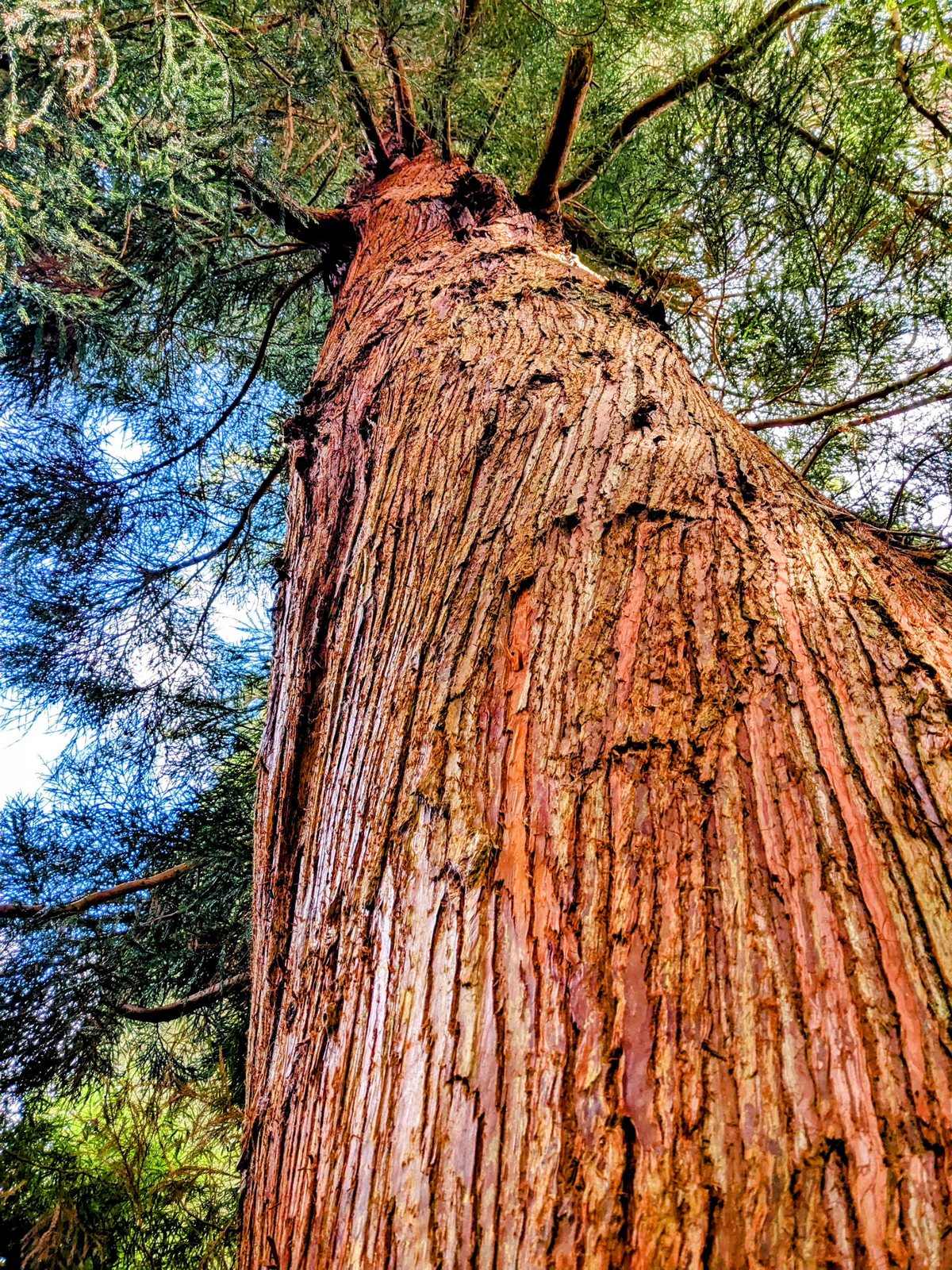
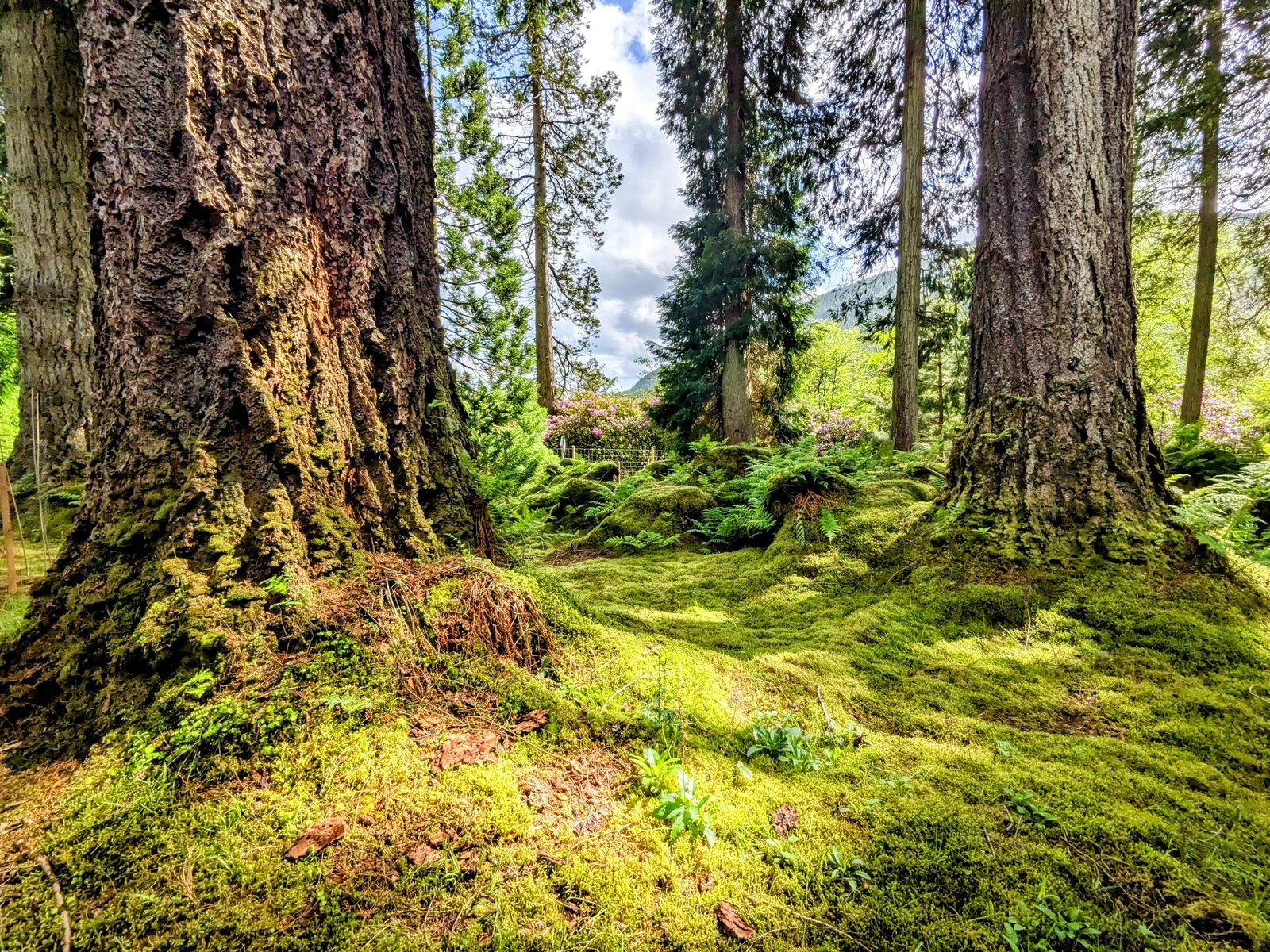
You walk into Benmore between the giant redwoods, and it’s a moment you don’t forget. The avenue of 49 Sierra redwoods (Sequoiadendron giganteum) was planted in 1863, and the trees now soar to around 50 metres — among the tallest and most impressive of their kind in Britain. Their trunks are enormous and their bark is warm, soft and rust-red; stand at the bottom and look up and the whole avenue closes over you like a cathedral nave. It’s worth doing slowly, both ways.
The rhododendrons & the world’s mountain plants
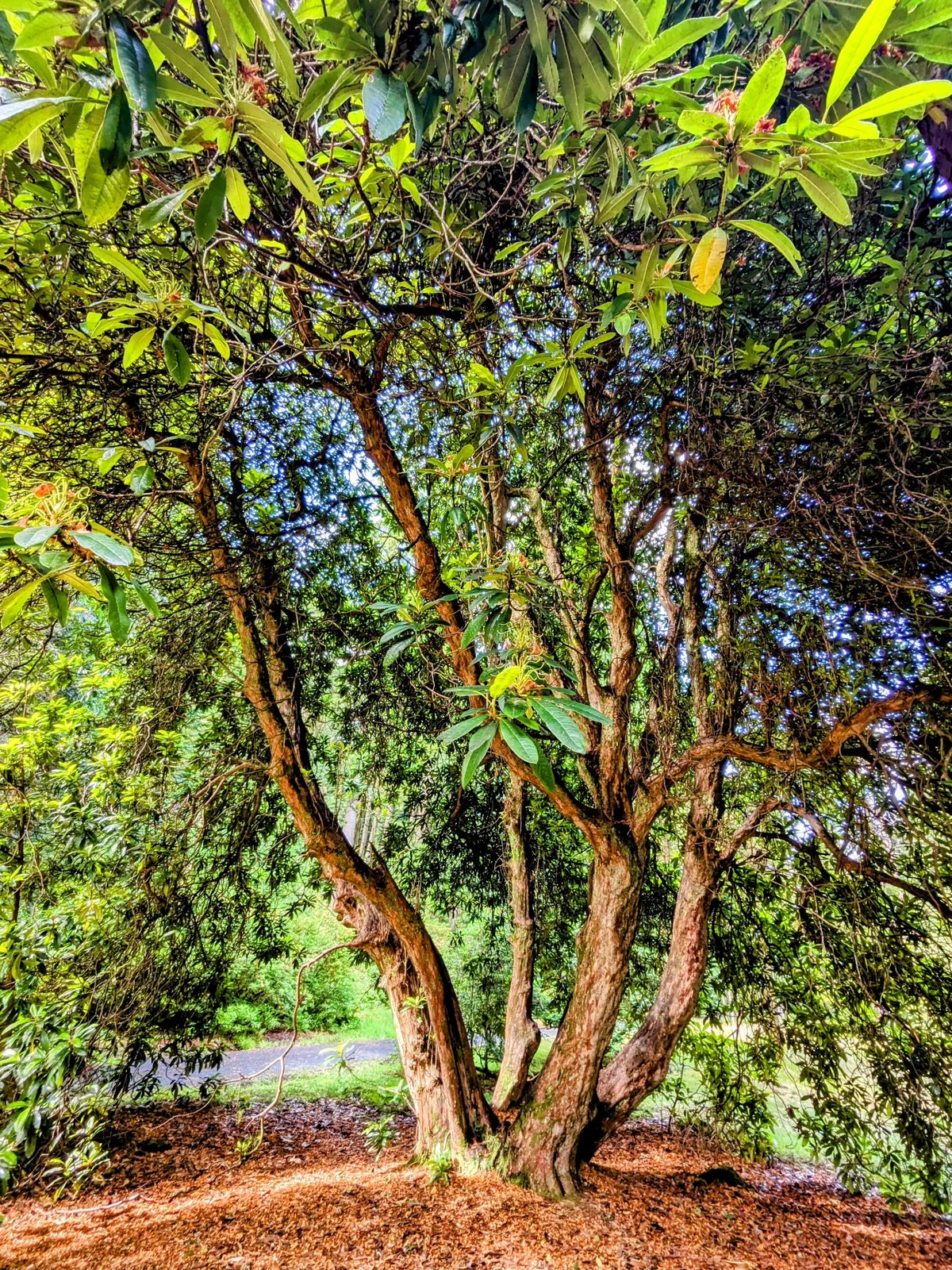
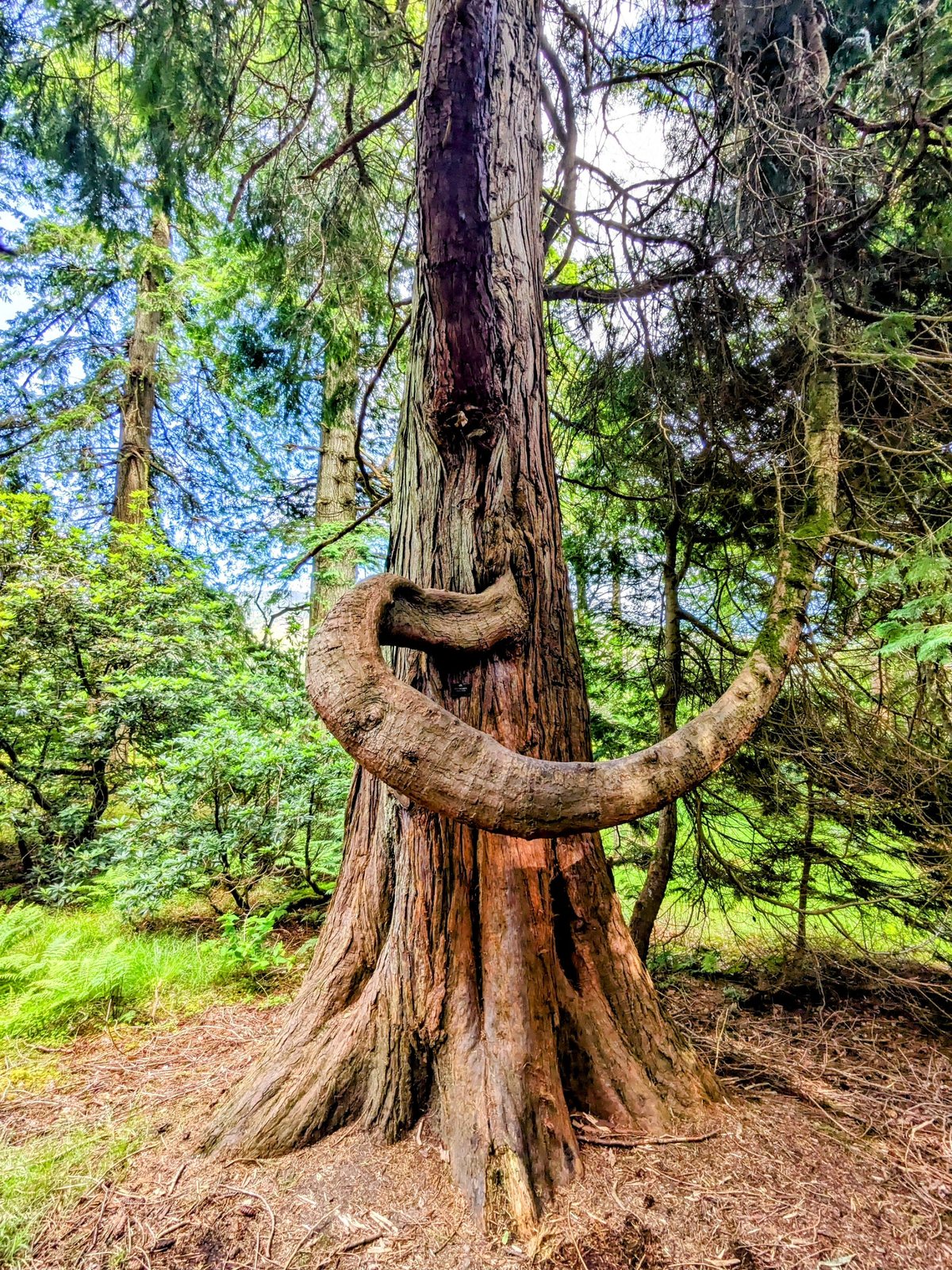
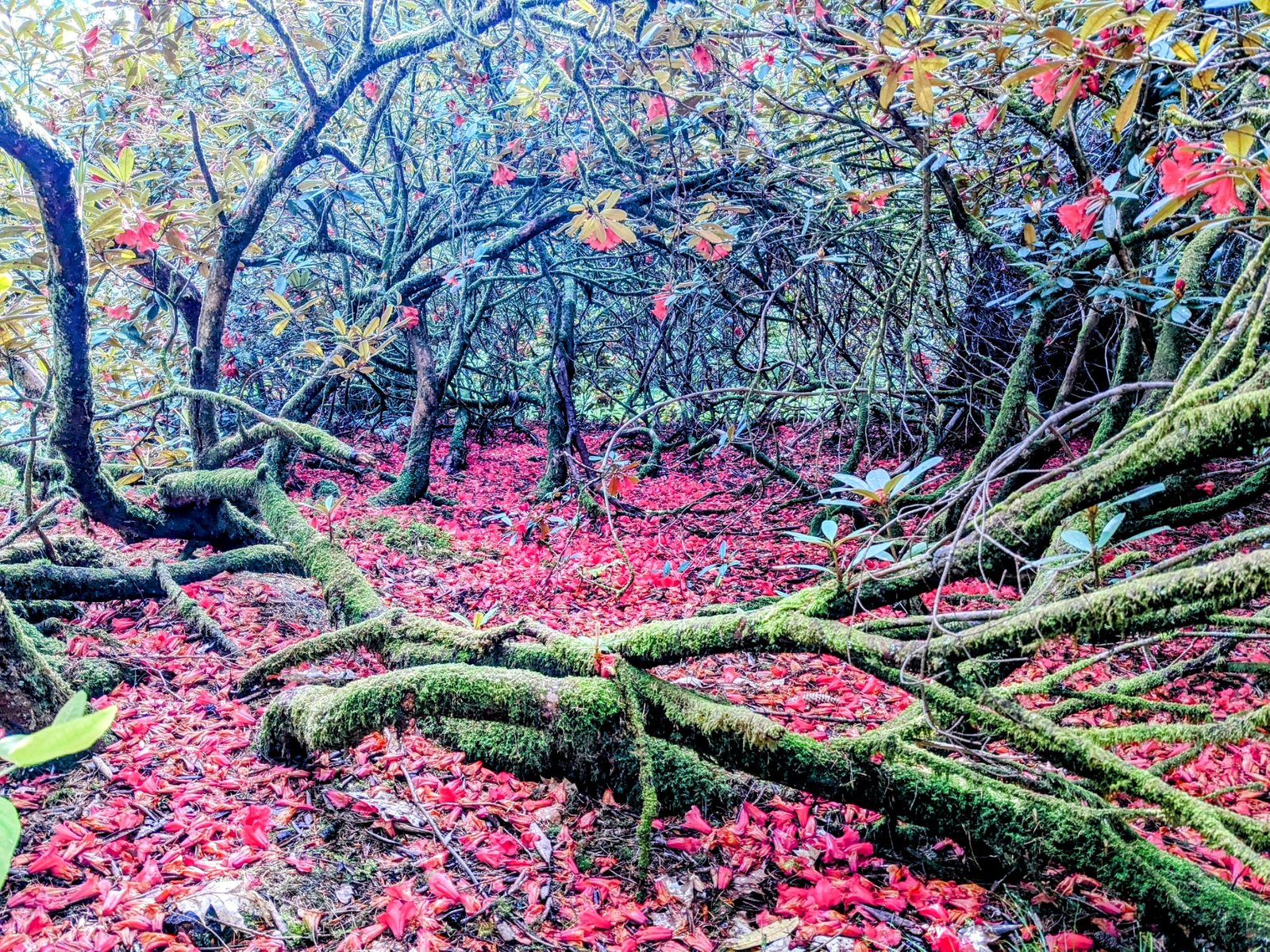
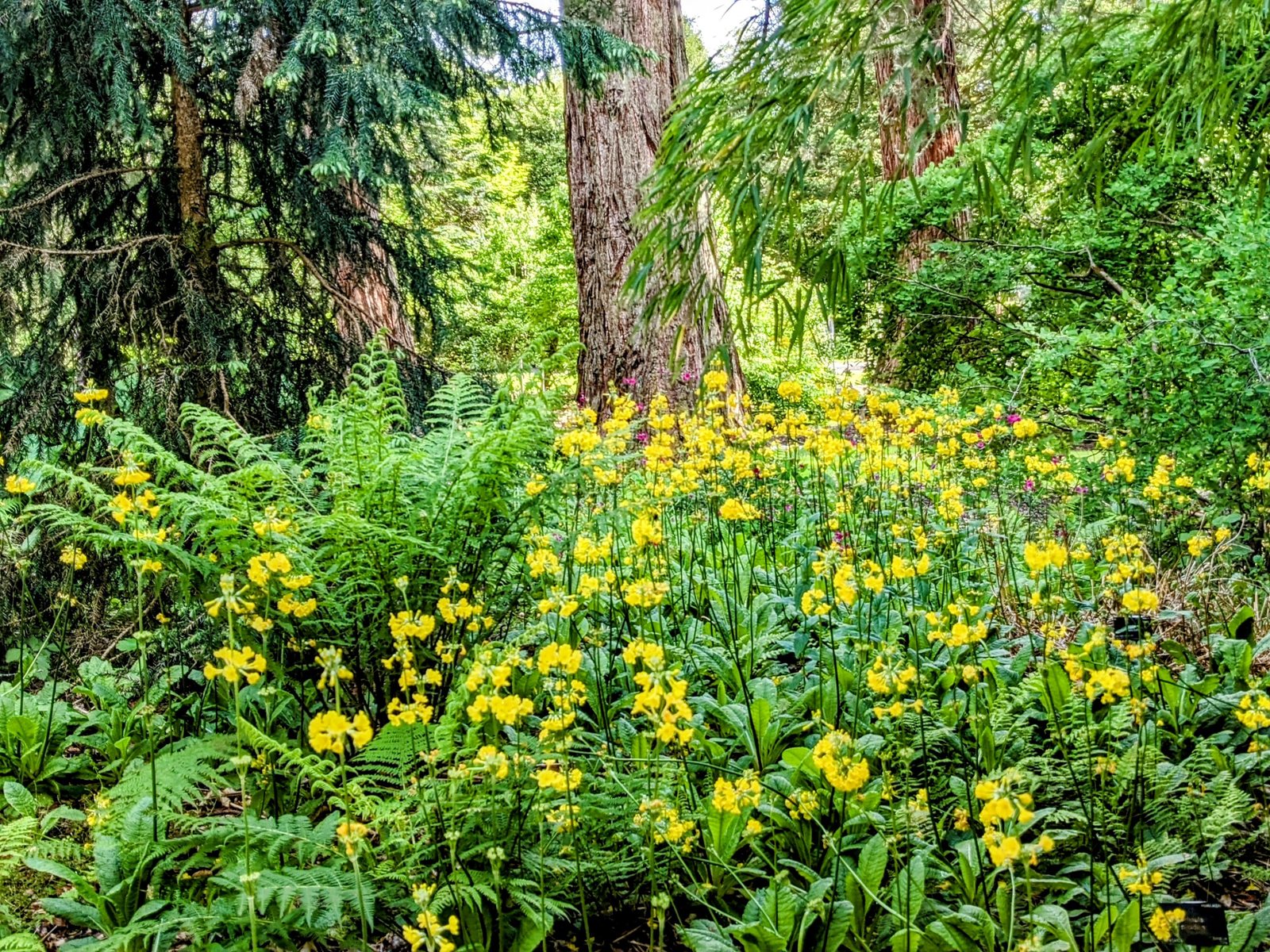
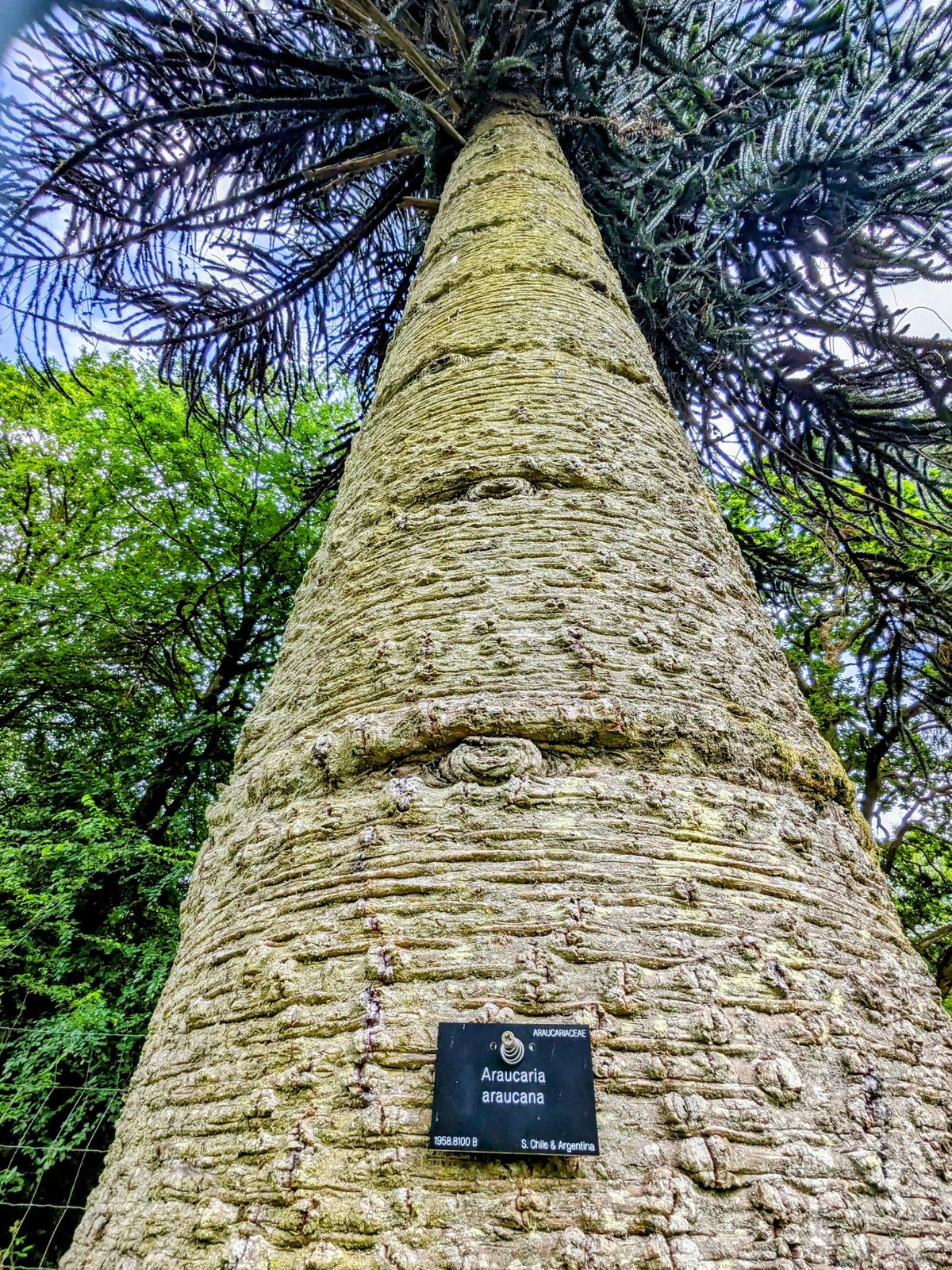
Benmore’s cool, wet Argyll climate suits plants from the world’s mountain forests, and the garden is famous for its rhododendrons — more than 300 species, blazing across the hillside in spring and early summer. The plantings are arranged by region, so a walk here takes you from a Chilean rainforest glade to Bhutanese and Himalayan hillsides and stands of Japanese and Tasmanian trees, all in one garden.
The fernery & the formal garden
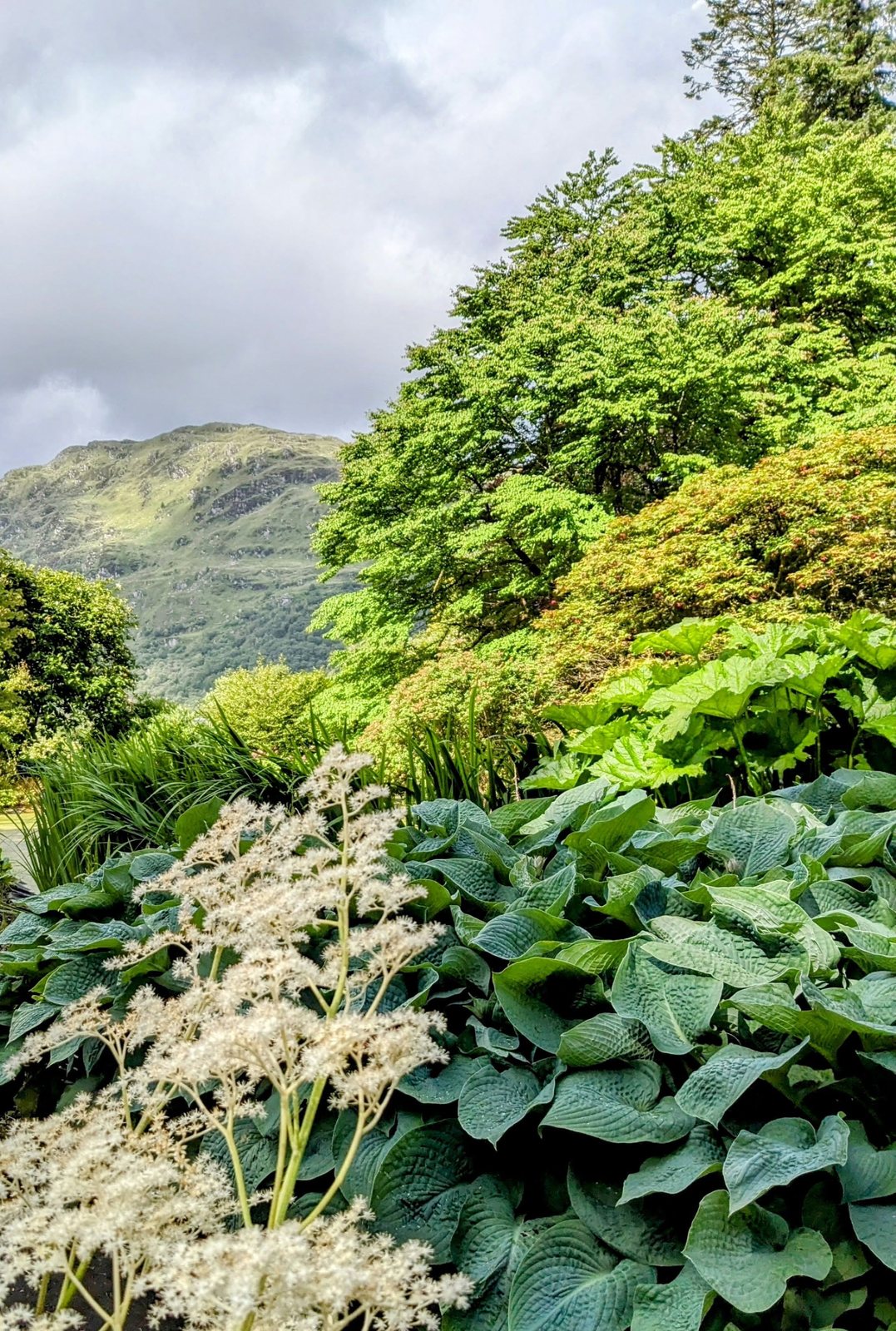
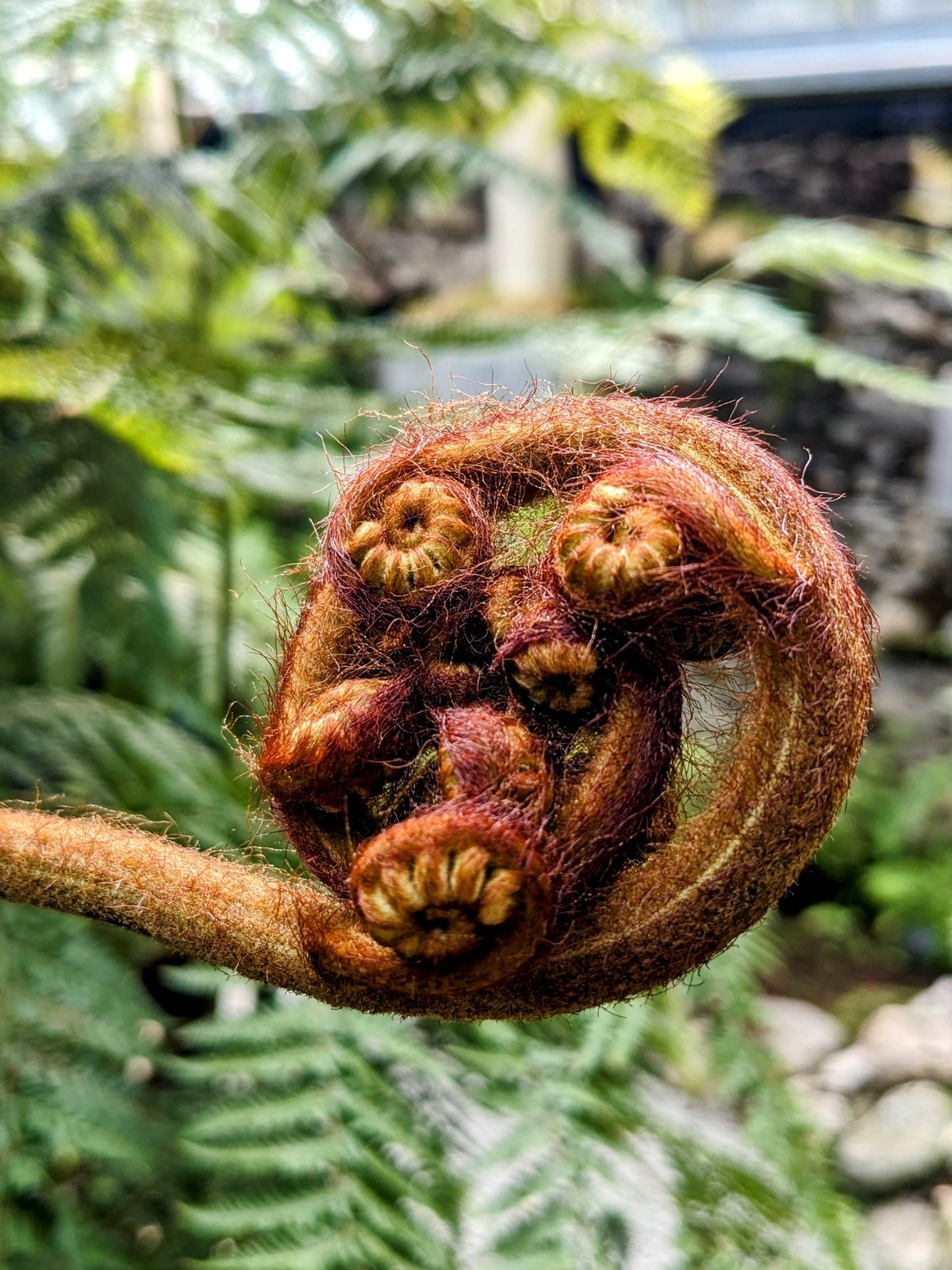
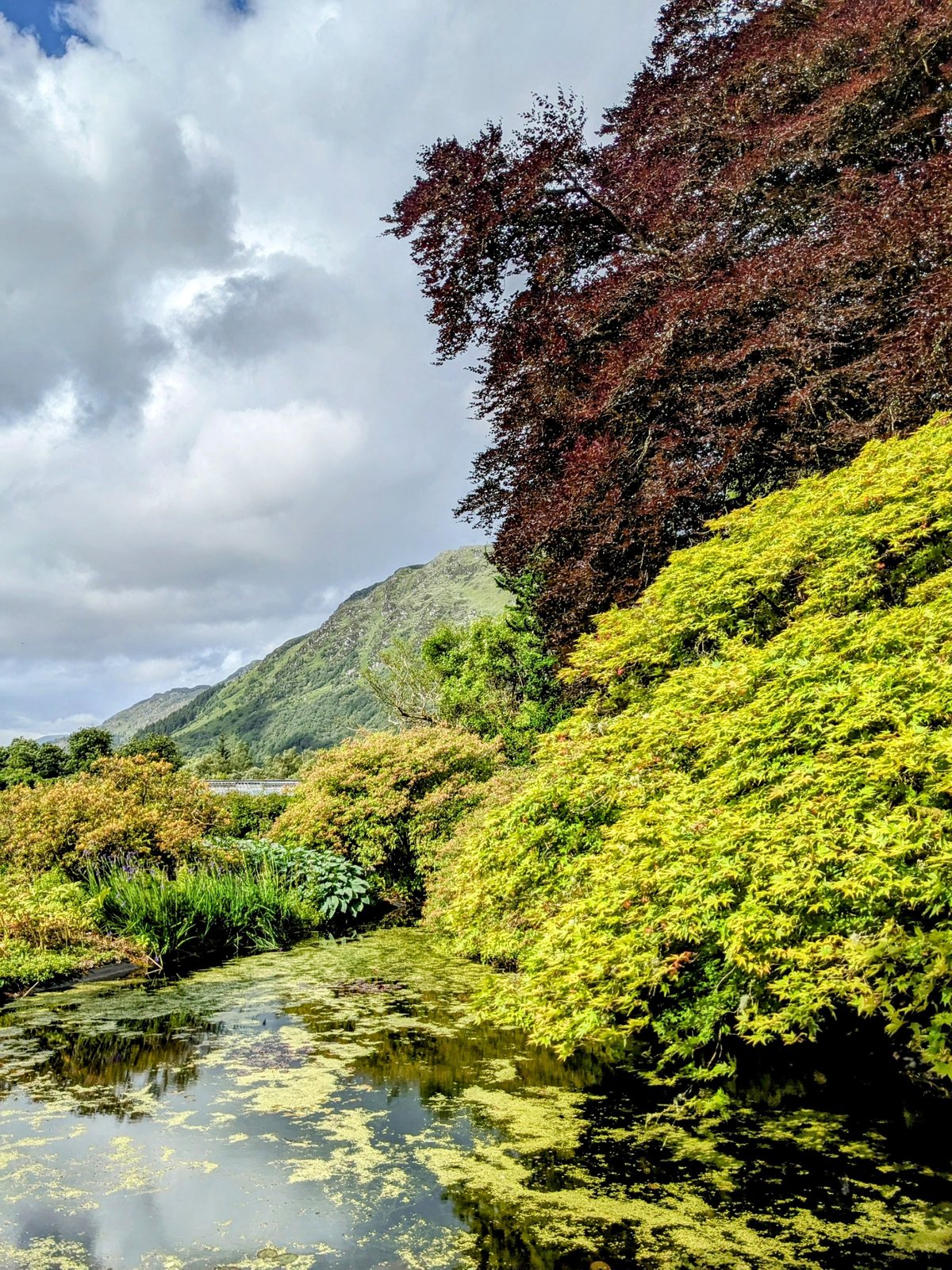
Tucked into the hillside is Benmore’s restored Victorian Fernery — a rare survivor, painstakingly brought back to life, dripping with ferns in a grotto of rock and glass. Lower down, formal borders, ponds and lawns give the garden its gentler, cultivated heart, with Japanese maples flaring red and gold and big-leaved gunnera by the water.
The history — and the Golden Gates
Benmore owes its grandeur to Victorian ambition. The redwood avenue and much of the planting were the work of James Duncan, a sugar magnate who owned the estate from 1870 and planted millions of trees across these hills. In 1925 the estate was gifted to the nation by Harry Younger, of the Edinburgh brewing family, and it became part of the Royal Botanic Garden Edinburgh. Look out for the ornamental Golden Gates — wrought-iron gates said to have come from a great Victorian exhibition — and the stone memorials that dot the grounds.
The hilltop viewpoint
For those with the legs, paths climb from the garden up through the trees to a viewpoint looking back down over the whole valley, the river and the surrounding Argyll mountains. It’s a proper little walk with a real reward at the top, and it turns a garden visit into a half-day out.
Visiting
Benmore is run by the Royal Botanic Garden Edinburgh, with paid entry, a café and a shop, and is generally open March to October (check current times and prices with RBGE before you travel, as the garden closes for winter). Allow at least a couple of hours — more if you climb to the viewpoint or cross the road to Puck’s Glen.
Nearby
- Puck’s Glen — the breathtaking fairy-gorge walk directly across the road; do the two together.
- Dunoon & Cowal — the seaside town and peninsula just to the south, a ferry-hop from Glasgow.
- Tighnabruaich & the Kyles of Bute — Cowal’s stunning western shore.
Sources
- Royal Botanic Garden Edinburgh — Benmore (the redwood avenue, rhododendrons, fernery, opening season).
- Wikishire on the estate’s history, James Duncan and the 1925 gift.
- Everything first-hand is from our own visit to Benmore.