Kilchurn Castle: The Campbell Ruin at the Head of Loch Awe
Overview — a castle straight off a shortbread tin
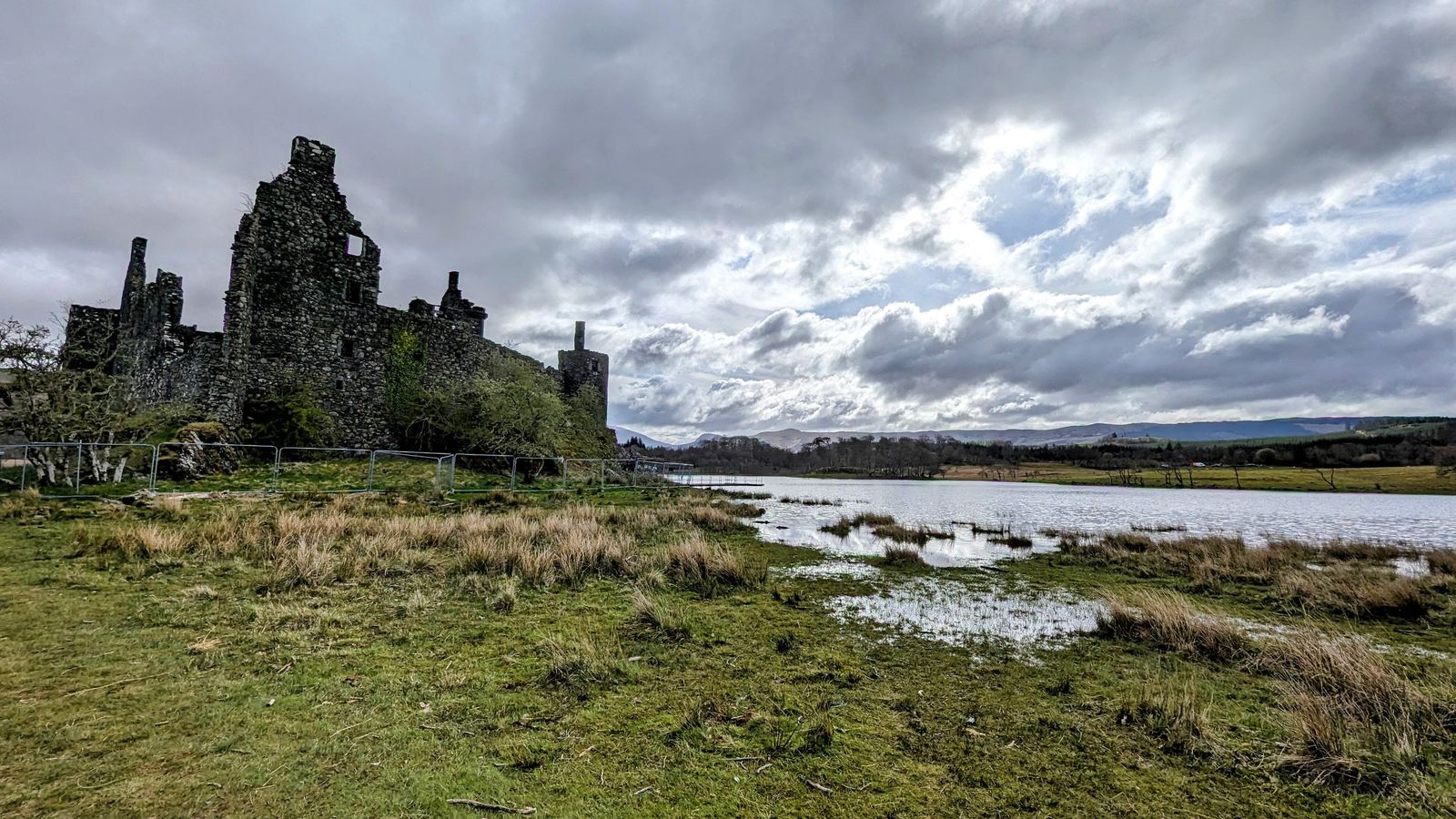
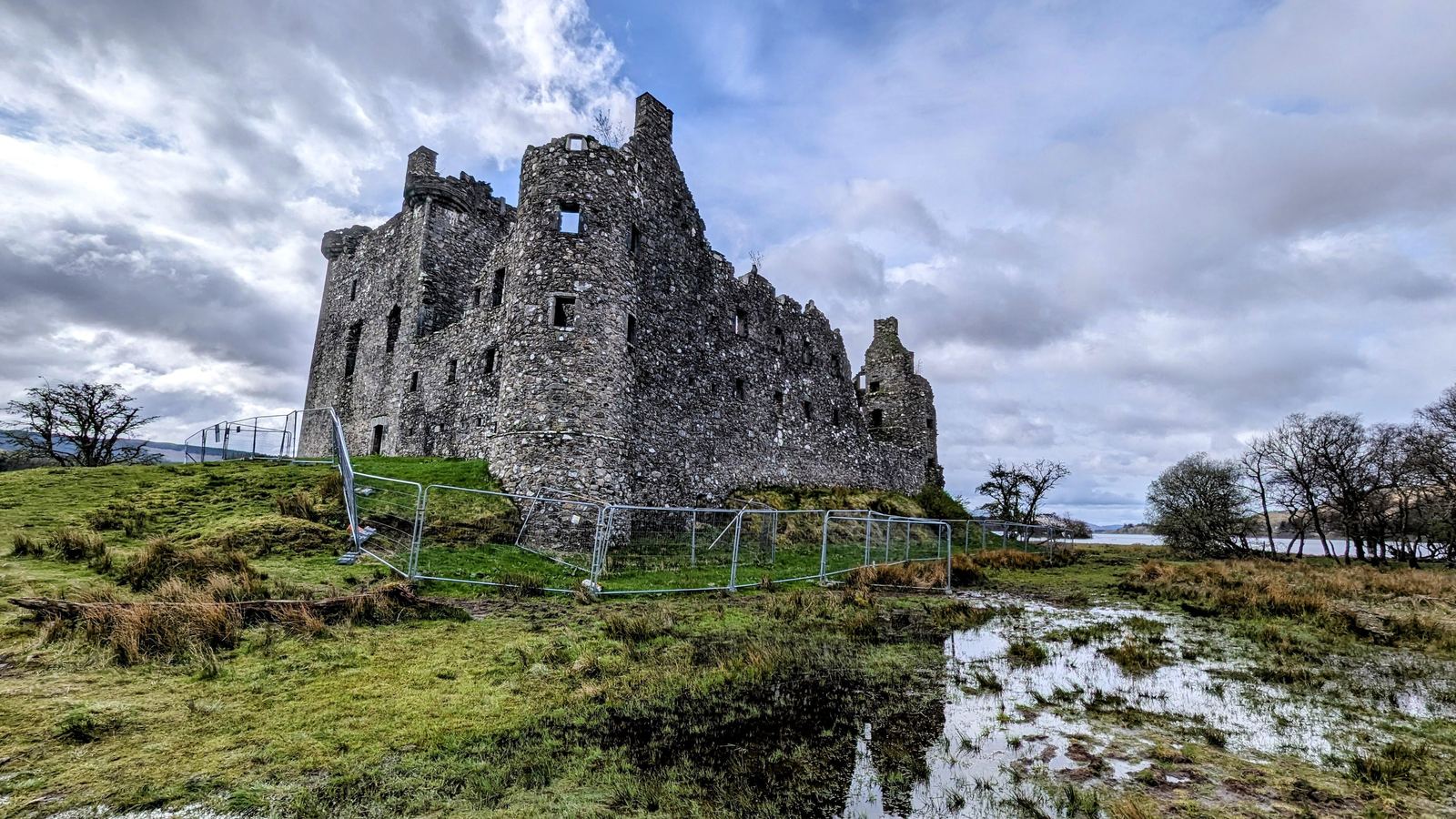
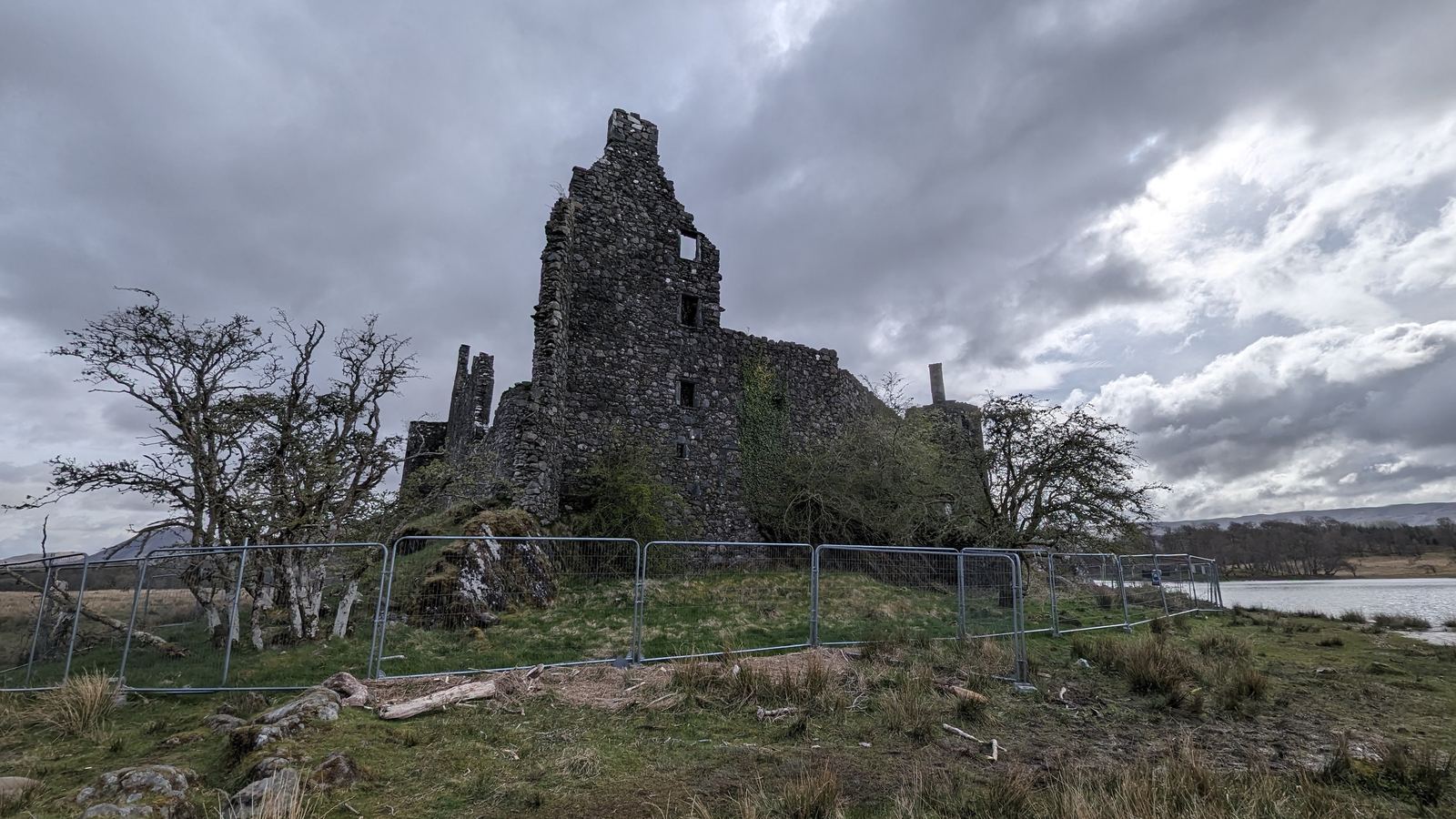
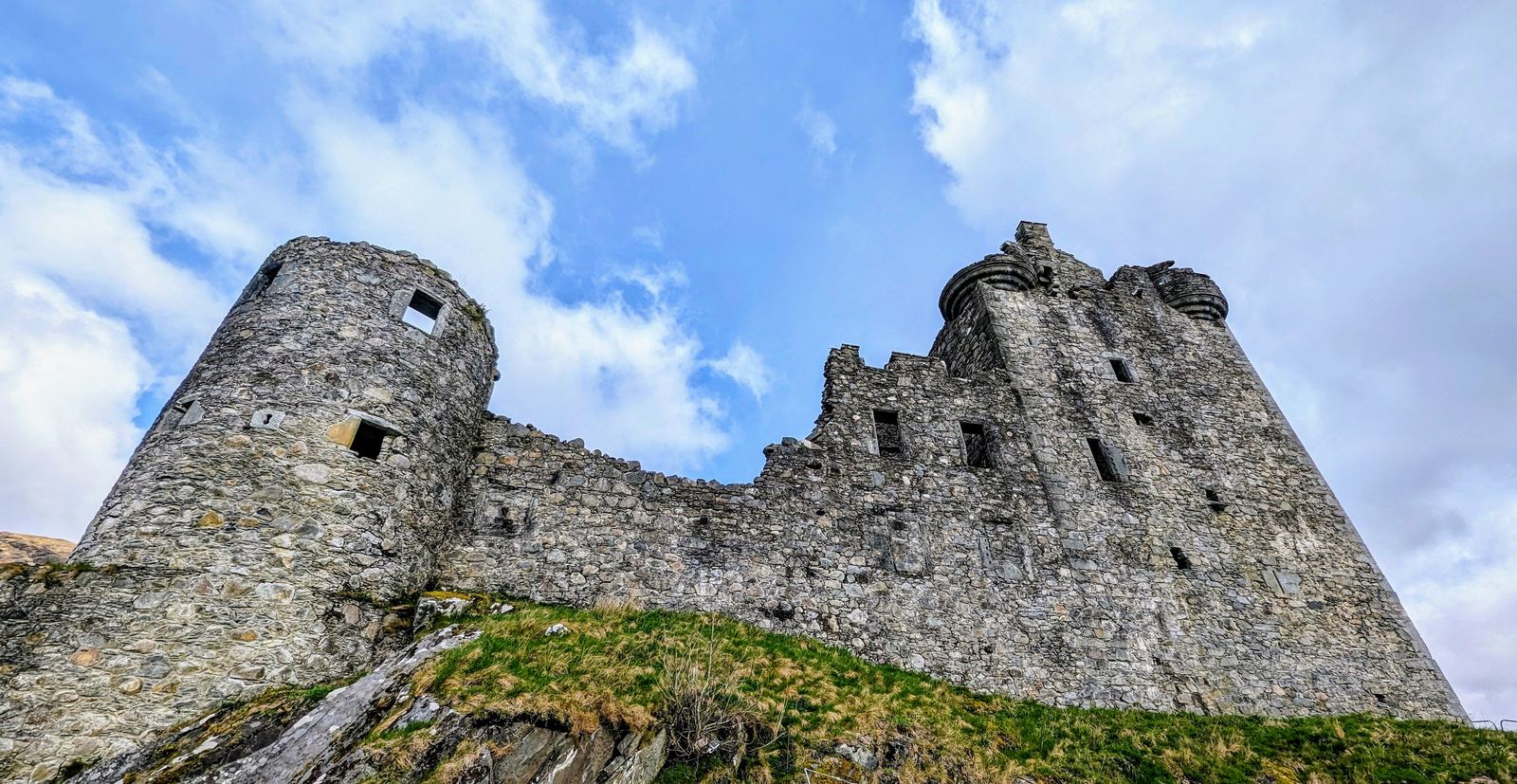
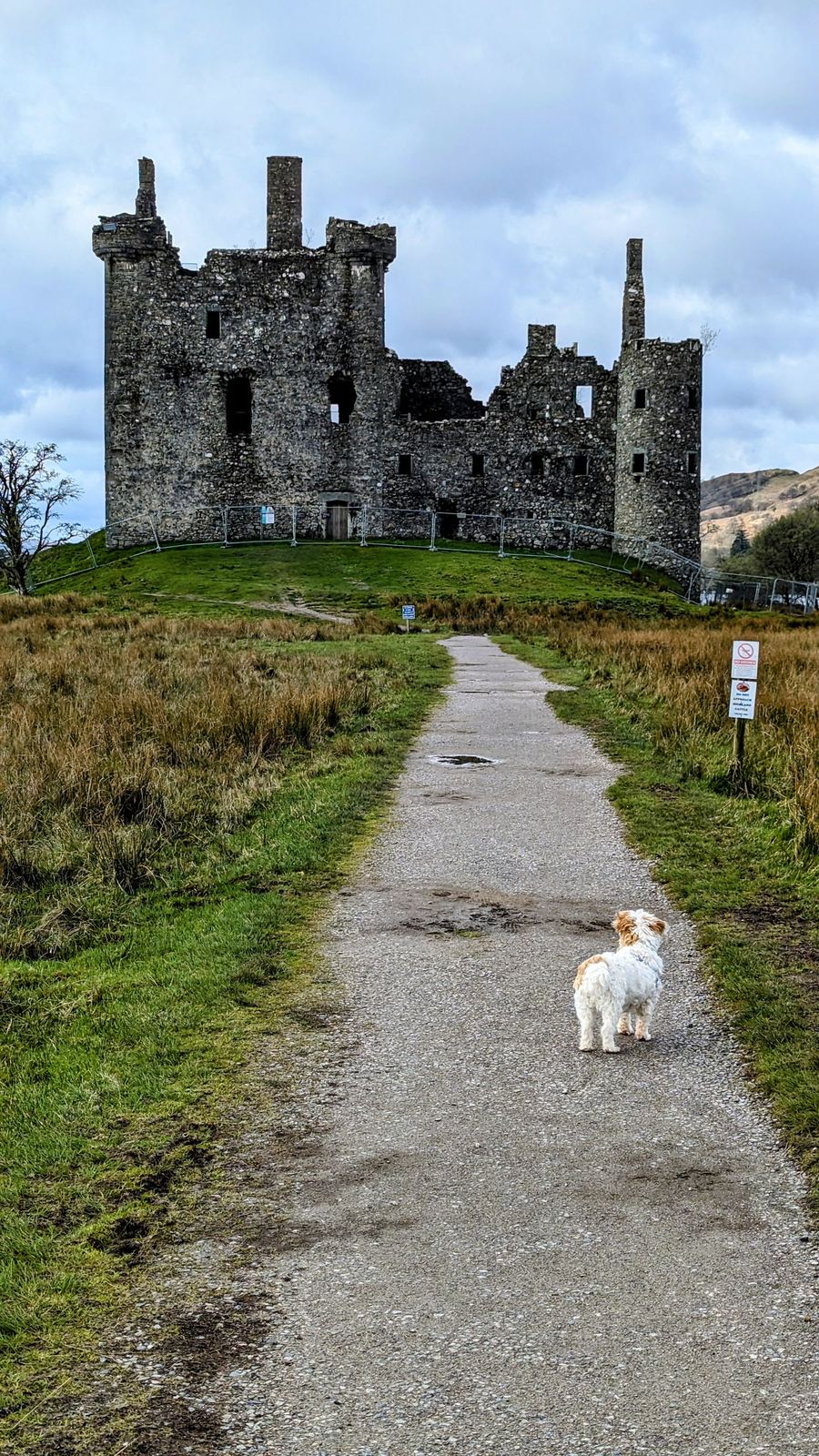
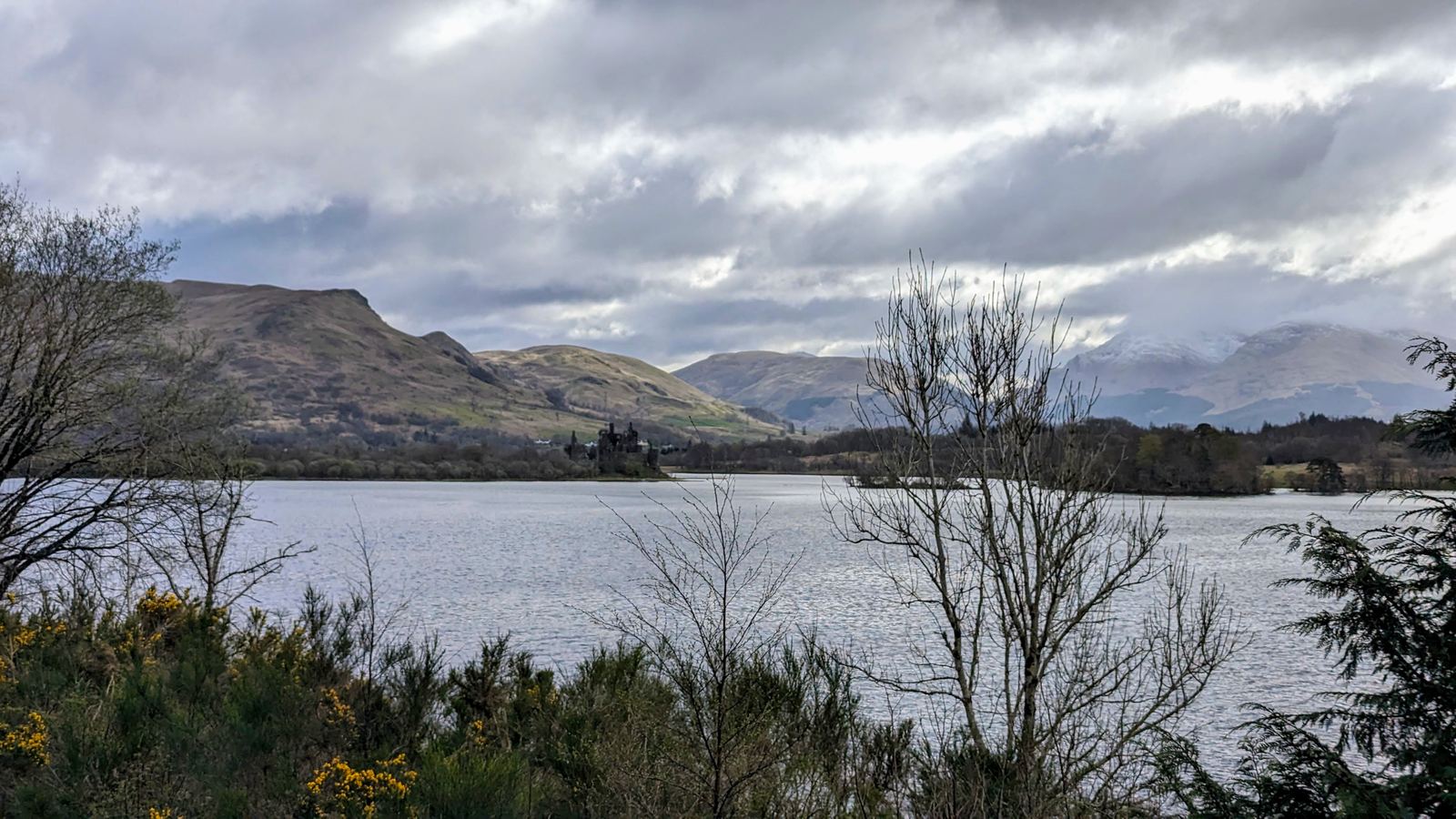
Some ruins just look the part, and Kilchurn Castle is the king of them: a great tumbledown Campbell stronghold on a low rocky spit at the head of Loch Awe, ringed by water and reeds, with the mountains of Ben Cruachan piled up behind. It’s one of the most photographed castles in Scotland, and for once the hype is earned — we walked out to it on a bright, cold April morning with snow still on the tops, and it’s a genuine spine-tingler.
Where it is
Kilchurn stands at the north-east head of Loch Awe, in Argyll, just off the A85 near Dalmally and the village of Lochawe — about 20 minutes east of the Pass of Brander and Ben Cruachan, and an easy run from Oban, Kilmartin or the Crinan Canal. Loch Awe itself is the longest freshwater loch in Scotland (about 25 miles), so the castle guards a genuinely strategic spot — whoever held Kilchurn held the head of the loch.
The history — the Campbells of Glenorchy
Kilchurn was built around 1450 by Sir Colin Campbell, 1st Lord of Glenorchy — a branch of Clan Campbell who would rise to become the immensely powerful Earls of Breadalbane. It began as a five-storey tower house and grew over the next two centuries into a full castle of ranges and towers around a courtyard.
Its last great act came in the 1690s, when Sir John Campbell, 1st Earl of Breadalbane, added a barrack block — among the earliest purpose-built barracks in Scotland — and the castle was garrisoned by government troops during the Jacobite risings. But the Campbells had already moved their main seat east to Taymouth, and by the 1740s Kilchurn was abandoned. Around 1760 it was struck by lightning — a turret was blown clean off and still lies upturned in the courtyard where it landed, one of the ruin’s odder sights. Today it’s a scheduled monument in the care of Historic Environment Scotland.
Getting to it — the walk across the flat
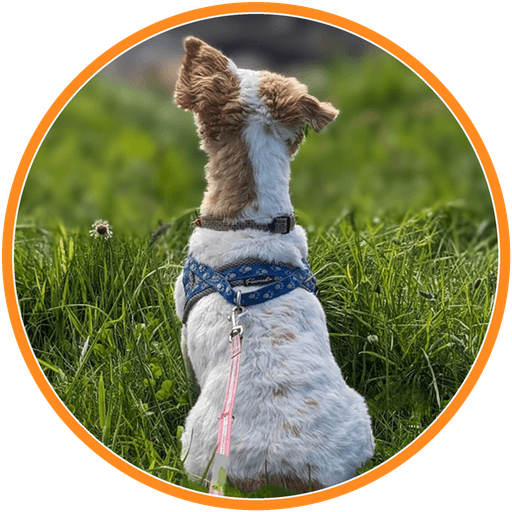
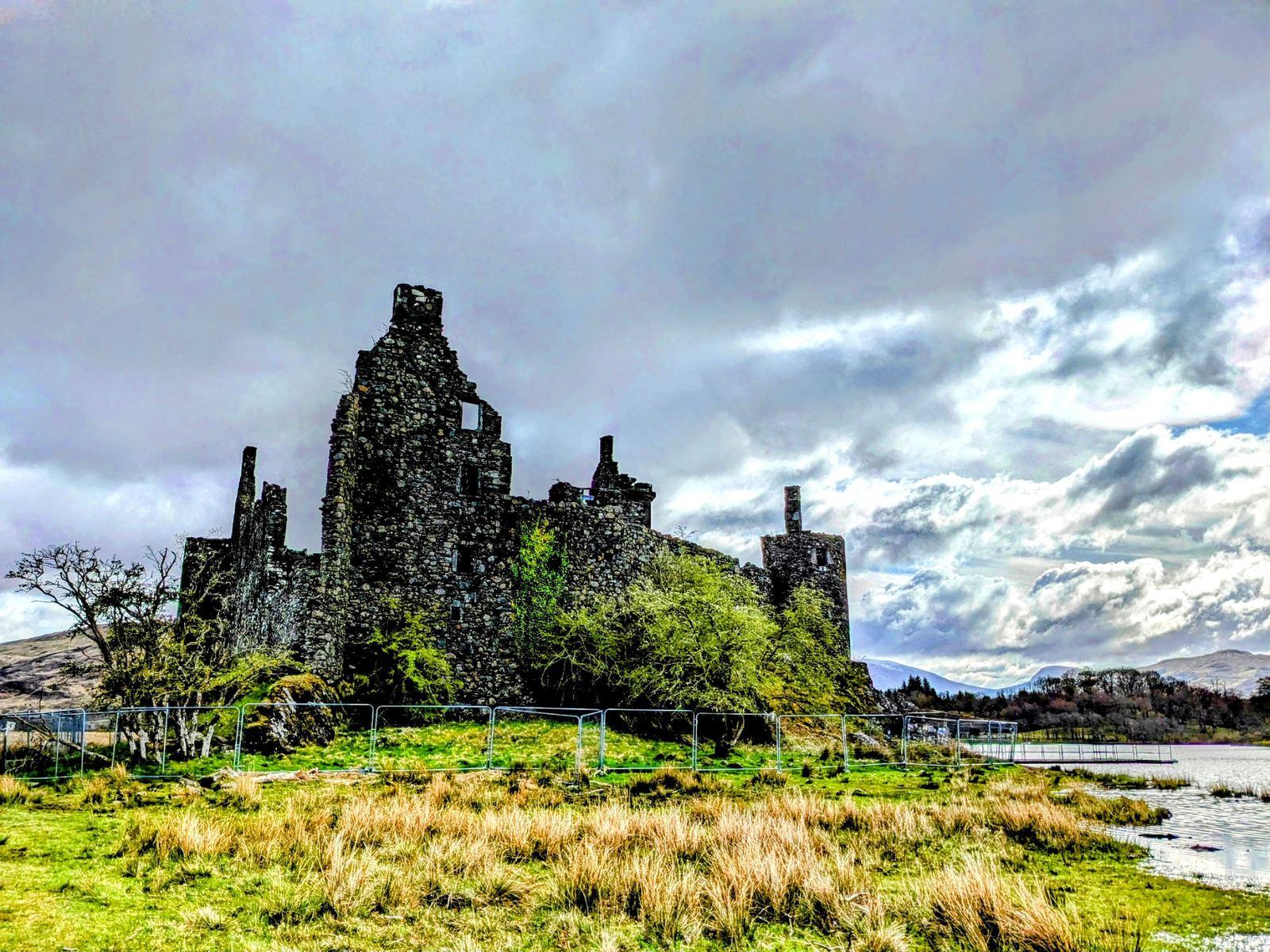
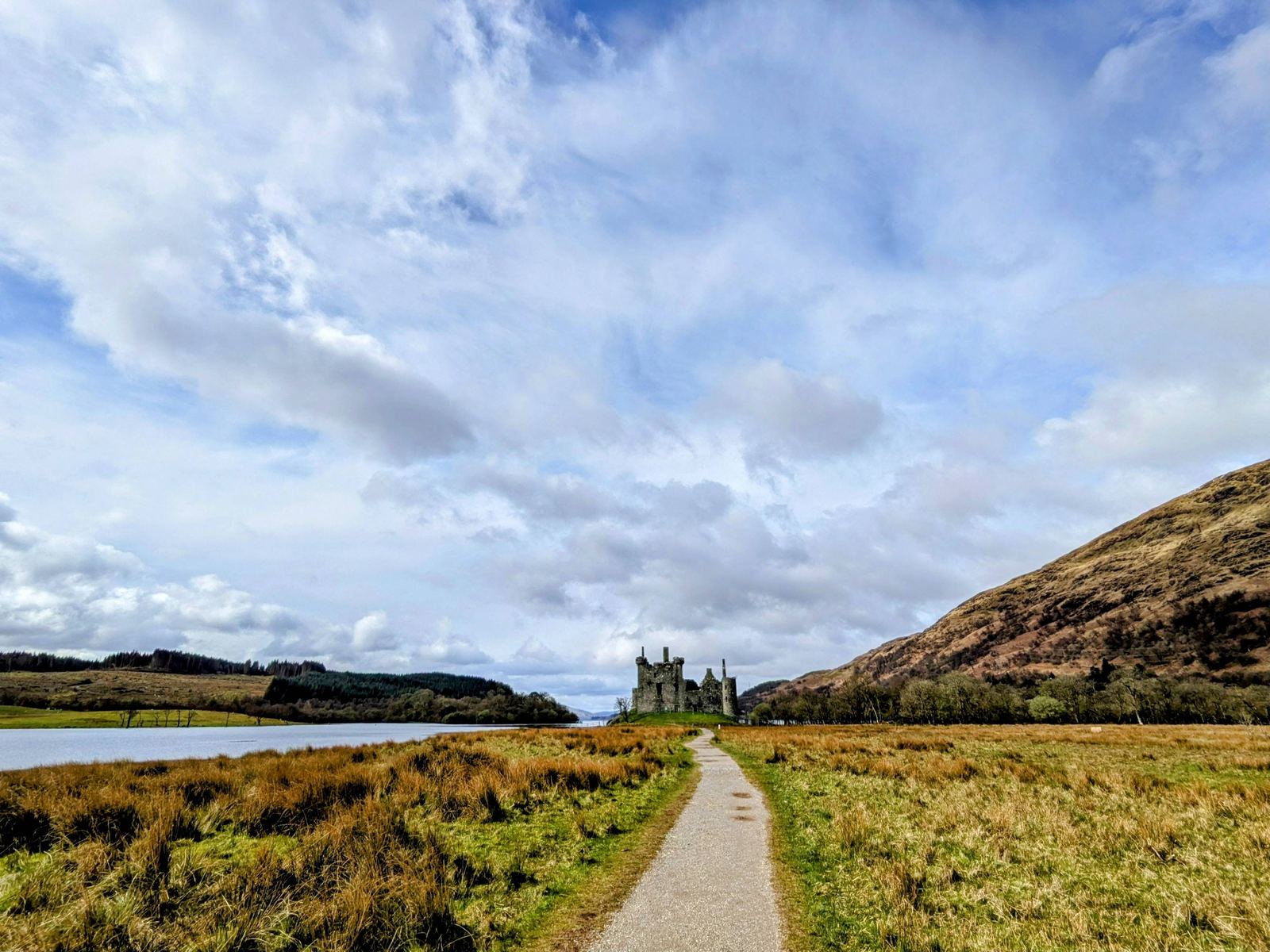
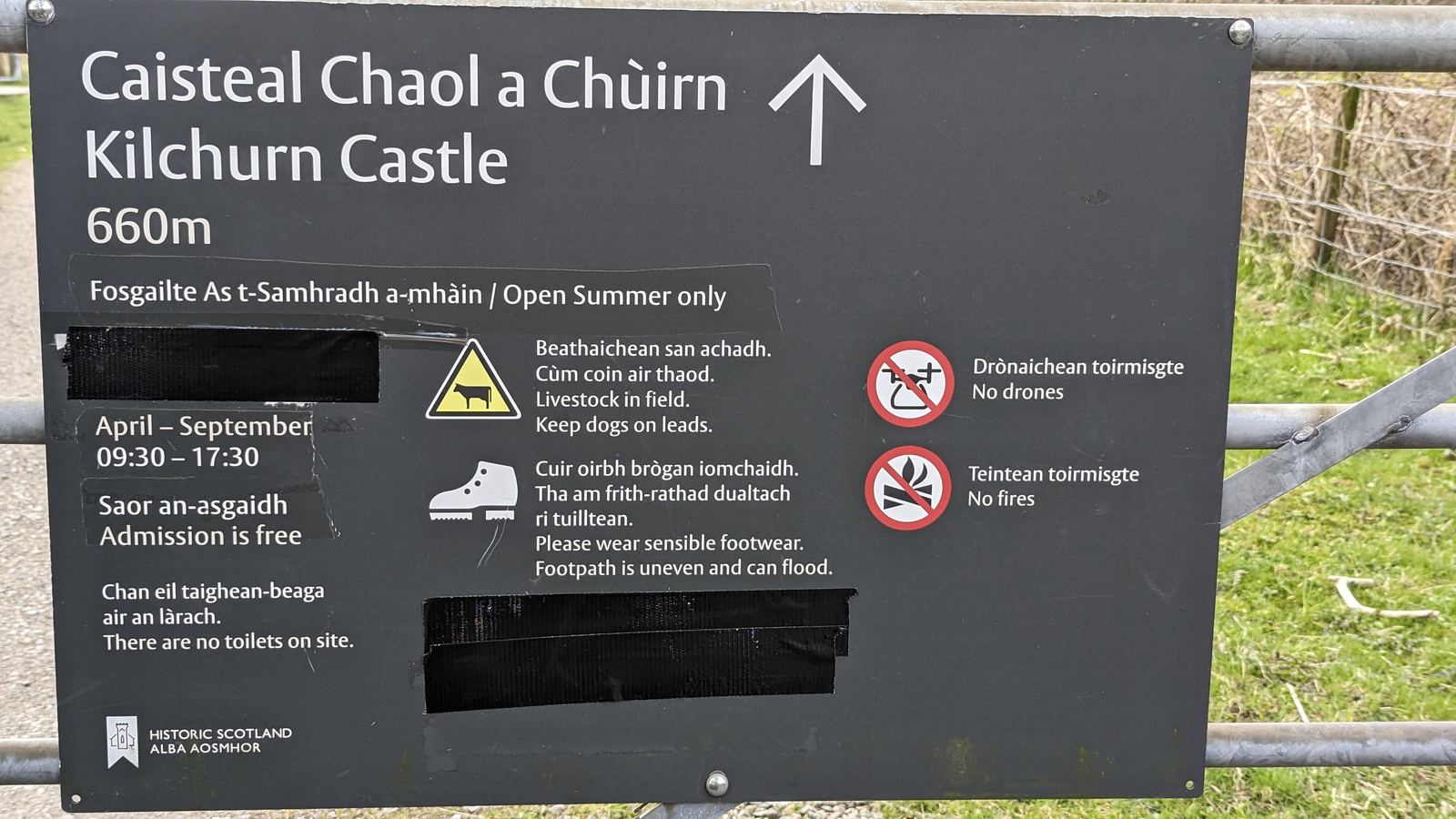
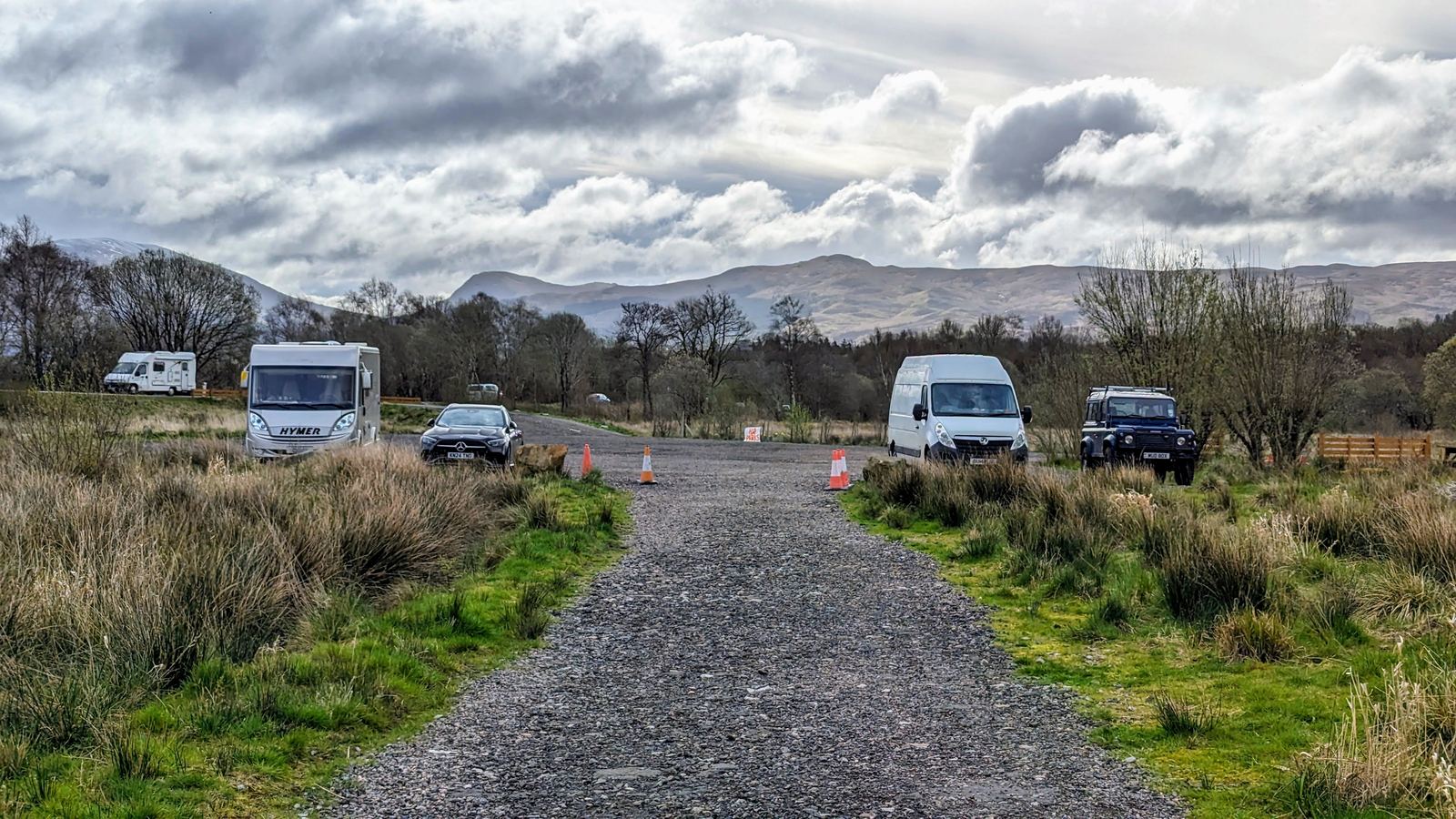
Here’s the practical bit, because Kilchurn is not a drive-up castle. You leave the car in a rough layby off the A85, cross the railway by a footbridge, and walk out along a footpath across the flat, boggy ground to the castle — about 15–20 minutes each way. The path is uneven and floods easily, so wear proper boots; a sign at the start (in Gaelic and English) warns as much, and asks for dogs on leads because of livestock. The interior and tower are staffed and open in summer only (Historic Environment Scotland), but the walk out and the exterior are the real reward, and you can do those most of the year — we went in April with no bother.
The setting — Loch Awe, Cruachan & a few hairy coos
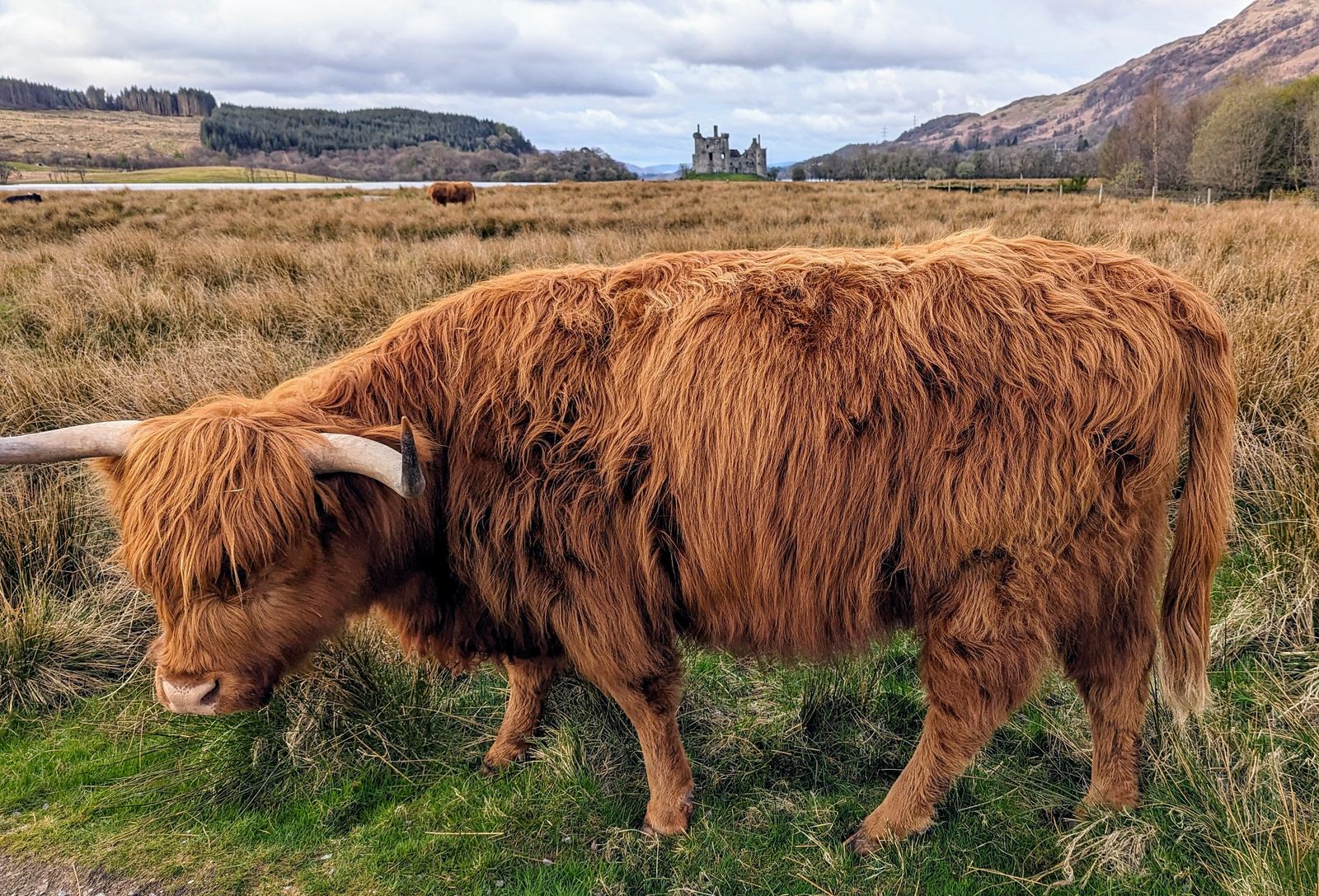
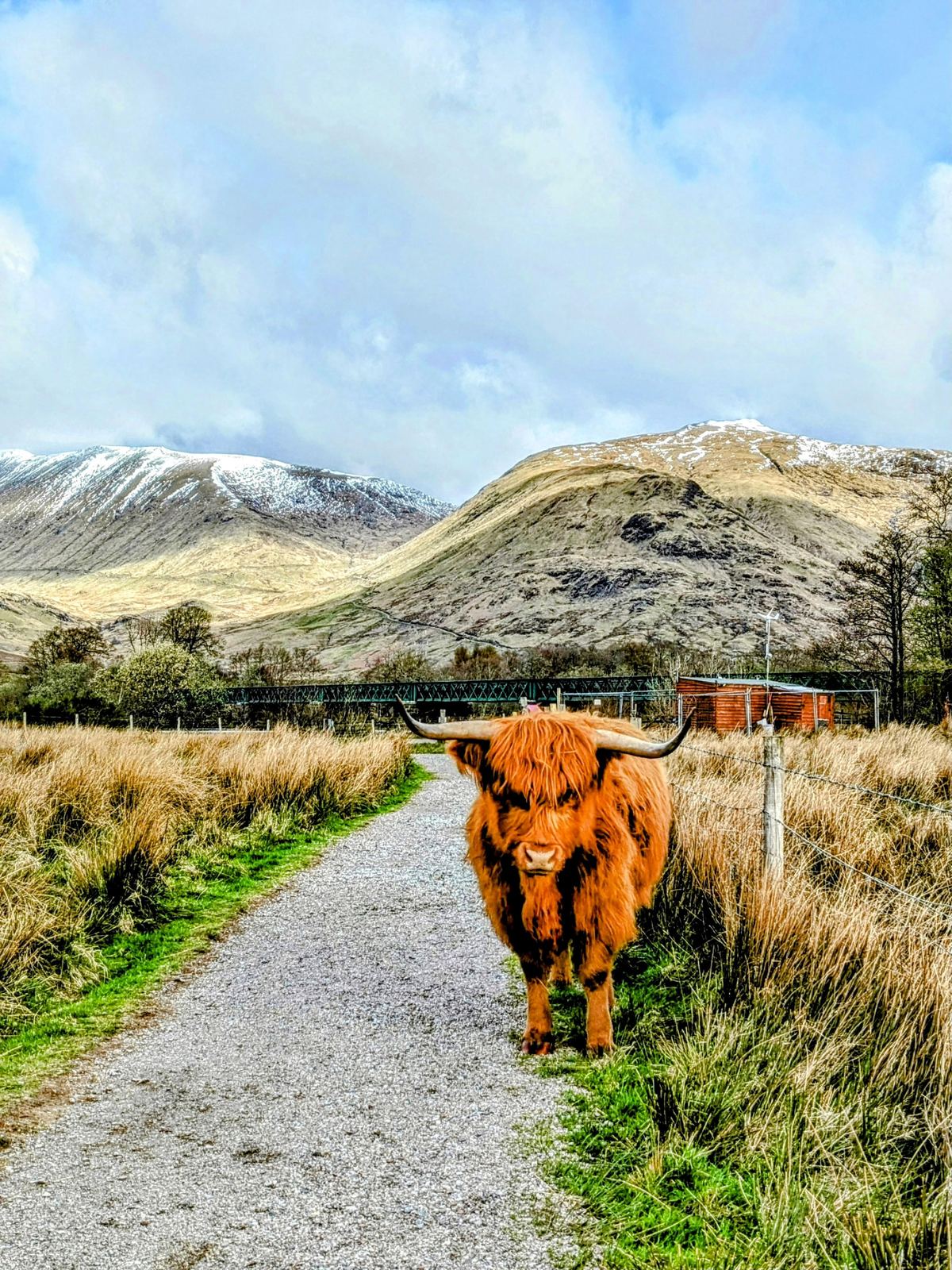
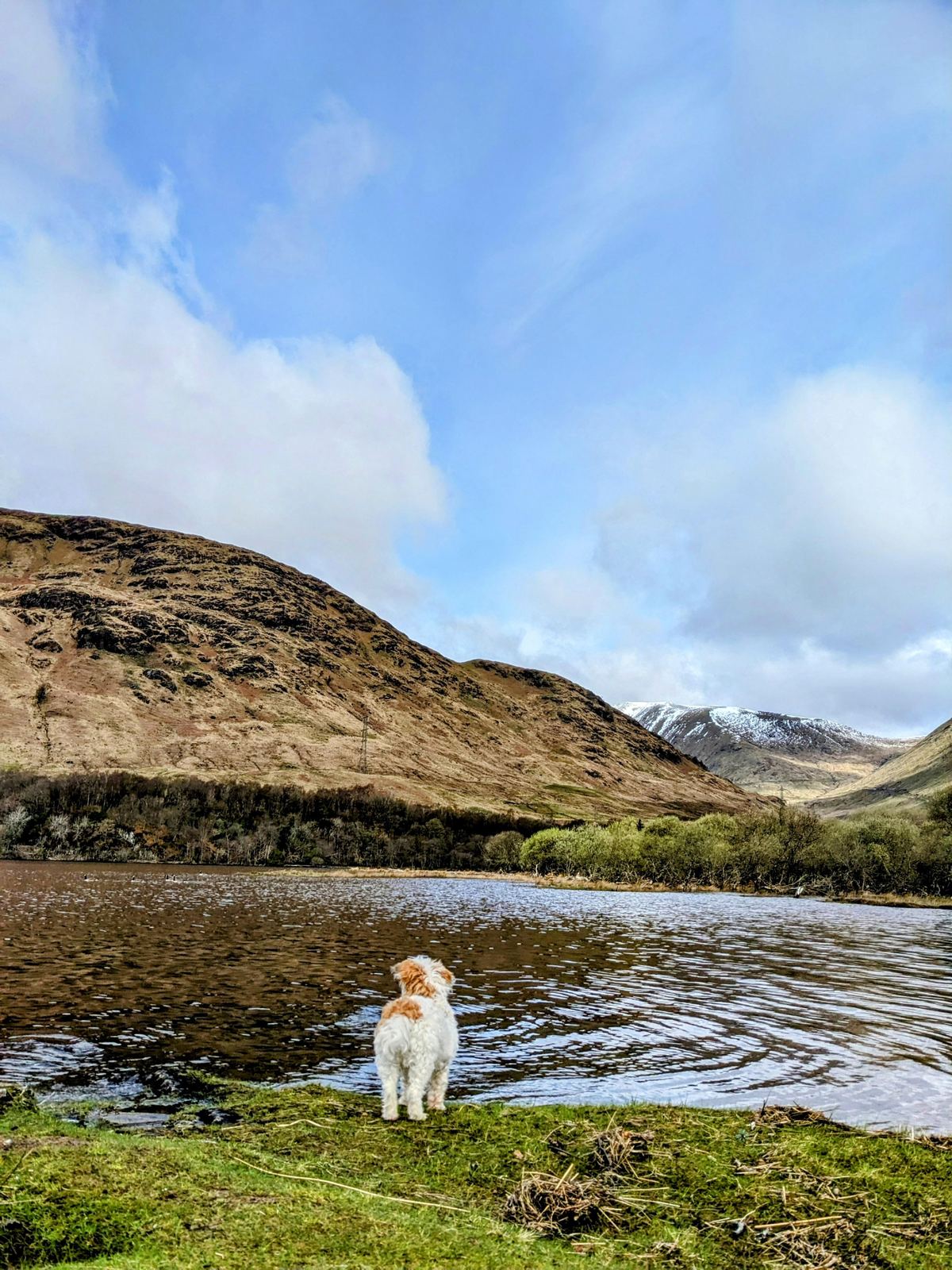
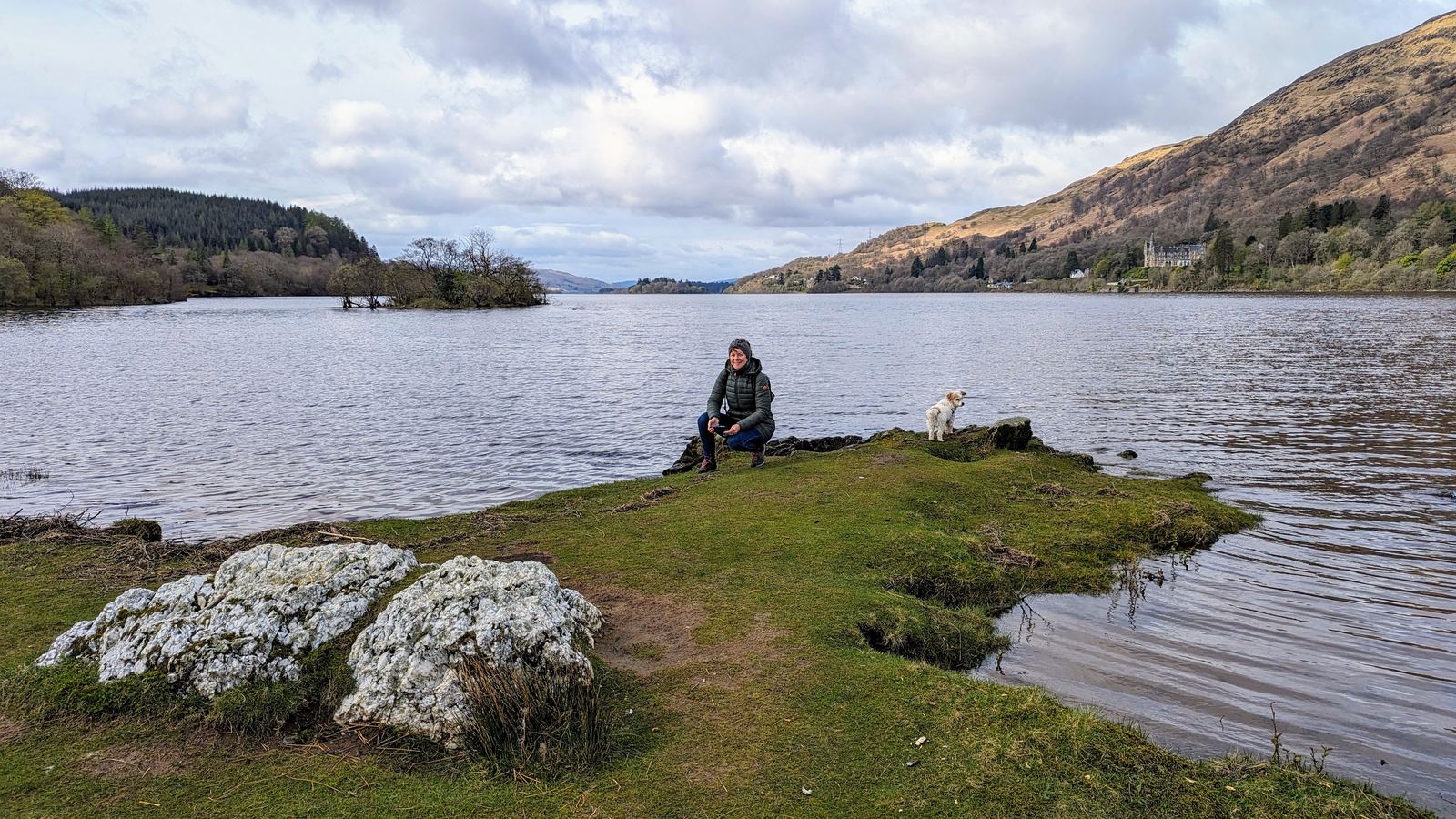
Honestly, half the magic of Kilchurn is where it is. The head of Loch Awe is ringed by mountains — Ben Cruachan, the “Hollow Mountain,” rises to the north-west — and in spring the tops still carry snow while the glen floods silver below. And this being the Highlands, you’re likely to share the path with a few Highland cattle — the shaggy, long-horned “hairy coos” that graze the flats. Ours posed beautifully.
Clan Campbell of Glenorchy
Kilchurn is Campbell through and through — specifically the Campbells of Glenorchy, the branch that became the Earls (and later Marquesses) of Breadalbane and, at their height, one of the great landholding families of the Highlands. You’ll meet the Campbells again and again across this coast: at Inveraray (the seat of the Dukes of Argyll, chiefs of the whole clan) and out along Loch Awe. Read the full Clan Campbell story in our Scottish Clans section.
Best time to visit
Spring and autumn for the light, the snow on Cruachan and the quiet; summer if you want the tower open and the boat running from Loch Awe pier. A still morning gives you the mirror reflections the castle is famous for. Whatever the season, bring boots — that path floods.
Nearby — combine it with
- Loch Awe & St Conan’s Kirk — the extraordinary church on the north shore, minutes away (a must-see).
- Oban — the seafood town and ferry port, west through the Pass of Brander.
- Kilmartin Glen & the Crinan Canal — the prehistoric glen and Britain’s prettiest canal, south in mid-Argyll.
- Rannoch Moor & Glen Coe — the great road east, over the top.
Reality notes
- 🅿️ Access: rough layby off the A85, then a 15–20 min walk over flat, flood-prone ground — boots essential.
- 🏰 Interior: tower & interior open summer only (Historic Environment Scotland, free); the exterior walk is open most of the year.
- 🚂 Also reachable by boat from Loch Awe pier in season.
- 🐄 Livestock: Highland cattle graze the flats — keep dogs on leads and give the coos room.
- 🐕 Dogs: welcome on the walk (on leads near cattle).
Sources
- First-hand: Kevin & family, Kilchurn Castle, 17 April 2024 (own photos)
- Kilchurn Castle — Historic Environment Scotland
- Kilchurn Castle — Wikipedia