
Glen Scotia: A Surviving Jewel of Campbeltown’s Whisky Capital
Glen Scotia at a glance
| Region | Campbeltown (Kintyre) |
| Founded | 1832 |
| Owner | Loch Lomond Group |
| Water | Crosshill Loch, plus two boreholes beneath the distillery |
| Land | Galbraith family (founders); Kintyre MacDonald→Campbell/Argyll country |
| Visitor centre | Yes |
| Tours | Daily tours (~11 & 2) — book |
| Opening | ~Daily/Mon–Fri 10–5 — check the website |
| Website | glenscotia.com |
Overview — the whisky town that time (almost) forgot
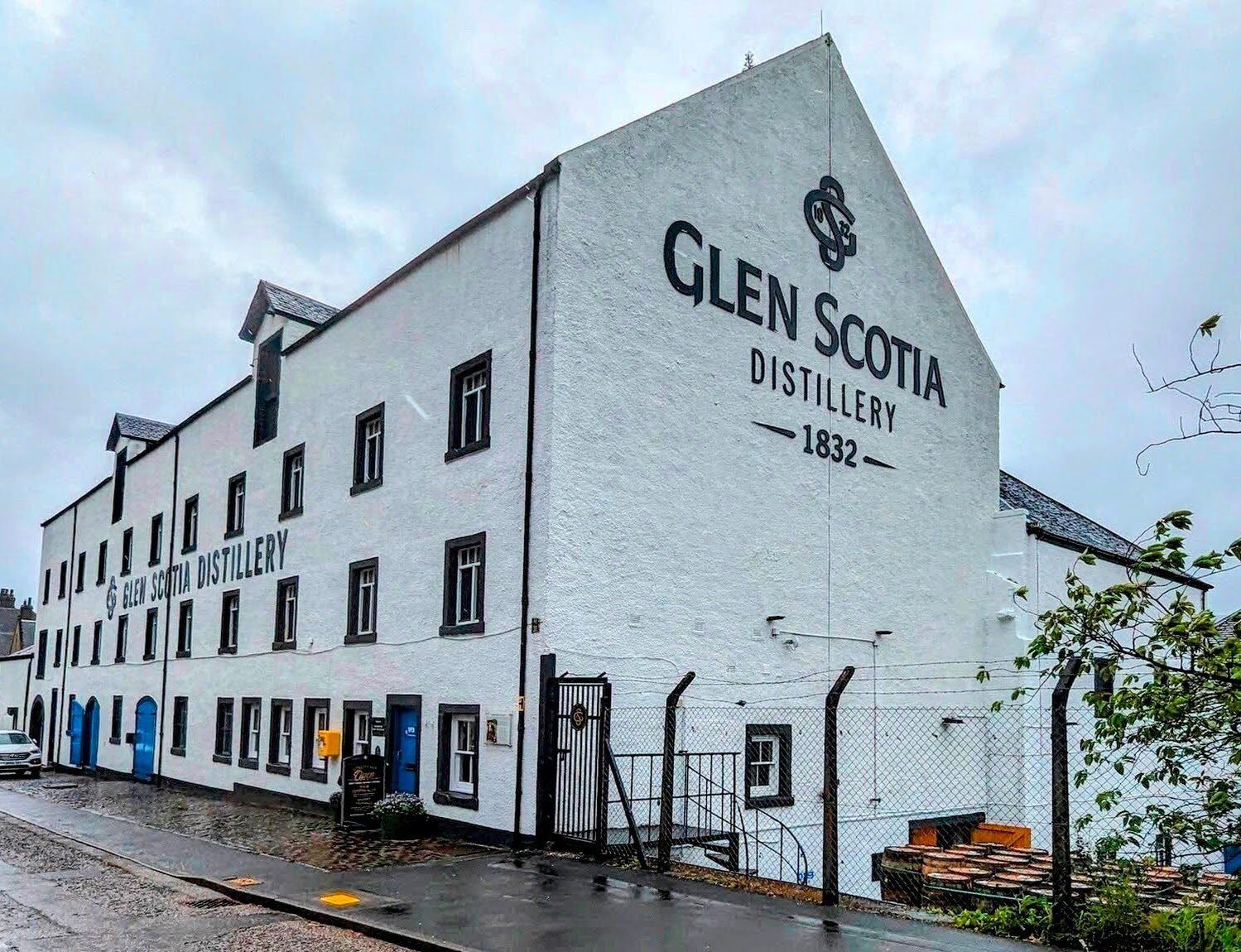
Down at the far end of the long Kintyre peninsula sits Campbeltown — a place most people never reach, and one with an astonishing whisky story. In the 1800s this remote wee town was “the whisky capital of the world,” with more than 30 distilleries working at once. Then it crashed. Today just three survive — and Glen Scotia, quietly making superb single malt since 1832, is one of them.
We loved it: a proper, unshowy, historic distillery on a cobbled street, making award-winning whisky in the smallest and most characterful of Scotland’s whisky regions. If you’ve made the effort to get to Kintyre, this is a must.
Where it is (and where on the route)
Glen Scotia stands in the middle of Campbeltown, at the southern end of the A83 on the Kintyre peninsula — about 140 miles and a proper journey from Glasgow. It’s a highlight of Stage 5 (Kintyre) of the Argyll Coastal Route.
The history (sourced)
- Campbeltown, the whisky capital. In the 19th century Campbeltown was the beating heart of the Scotch industry — over 30 distilleries at its late-1800s peak, before overproduction, changing tastes and economics all but wiped it out.
- Three survivors. Today Campbeltown — the smallest of Scotland’s whisky regions — has just three working distilleries: Glen Scotia, Springbank and Glengyle (Kilkerran).
- Founded 1832. Glen Scotia was founded in 1832 by the Galbraith family, who held it until 1919 — one of the generation of distilleries that followed the 1823 Excise Act.
- Loch Lomond Group. After a long and chequered history it was bought by the Loch Lomond Distillery Company in 1996 (now the Loch Lomond Group), who run it today.
- The distillery still shows its heritage — including the distinctive “pagoda” kiln roof noted on its own visitor board.
The fuller history
Behind those bare dates is one of the most turbulent histories in Scotch. Through the 20th century Glen Scotia was closed and reopened again and again as Campbeltown’s trade collapsed around it, and it carries the town’s most famous ghost story: a former owner, Duncan MacCallum, is said to have drowned himself in Campbeltown Loch in 1930 after being swindled in a business deal — and his ghost, some say, haunts the distillery still.
It was mothballed again in the 1980s and worked only fitfully for years, one of the last embers of a dying whisky town. Its real revival came under the Loch Lomond Group, who invested in the distillery, restored it, opened a proper visitor centre in 2018, and relaunched the range — the 15 Year Old and the Victoriana among them — to a string of international awards. That a distillery with such a battered past is now winning gold medals is a small triumph, and a big part of why Campbeltown still counts as a whisky region at all.
The whisky & a visit
 🥃 OUR OWN BOTTLE
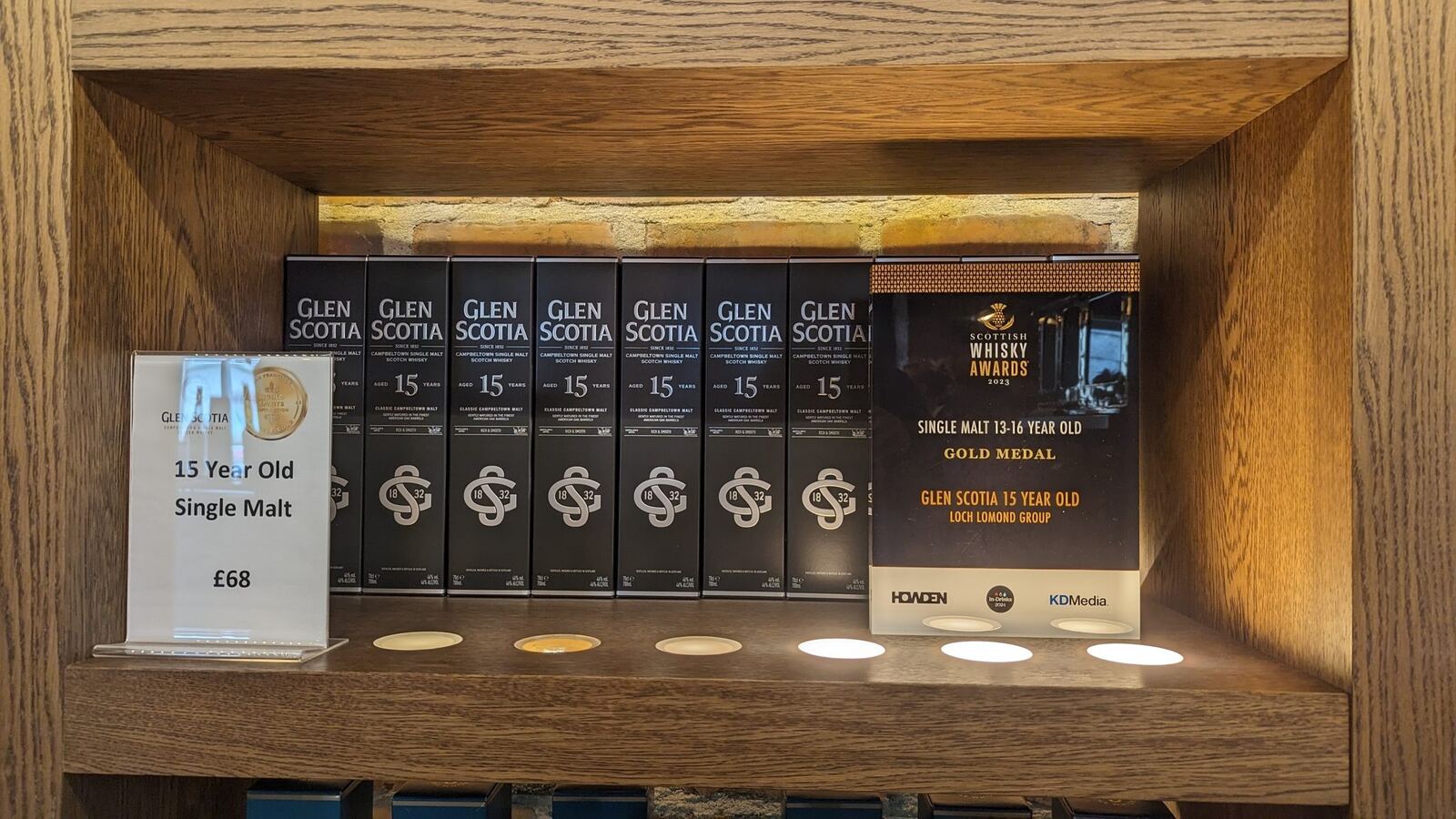
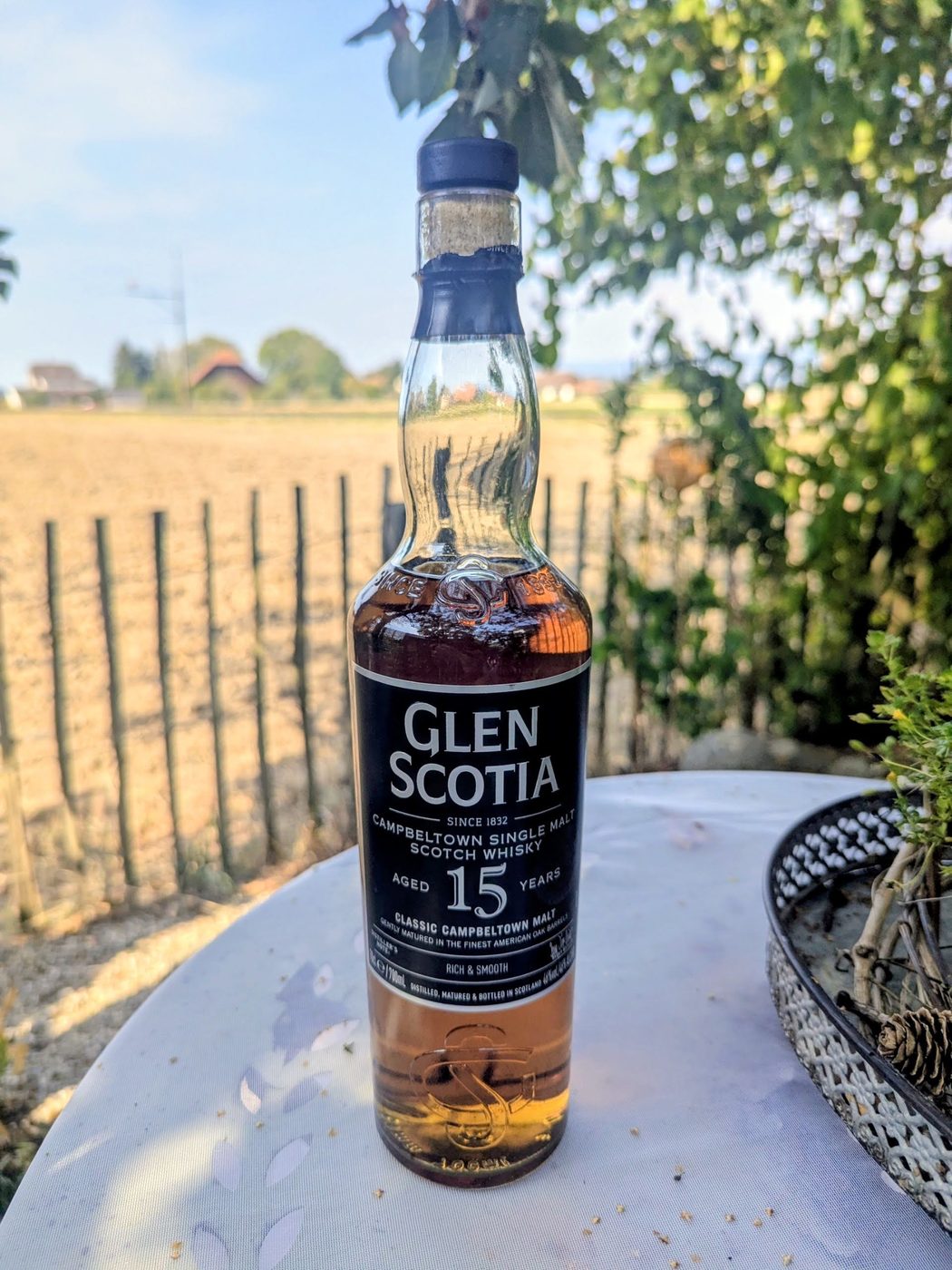
Glen Scotia makes a classic Campbeltown single malt — the region is known for a slightly briny, maritime character. On our visit the flagship on the shelf was the 15 Year Old, which had just taken a Gold Medal at the Scottish Whisky Awards 2023 (and was £68 a bottle) — and it’s the one we bought to bring home (alongside a smoky cask-strength Kilkerran Heavily Peated from the Springbank family). The distillery has a shop and runs tours and tastings — the best way to understand what makes Campbeltown whisky special.
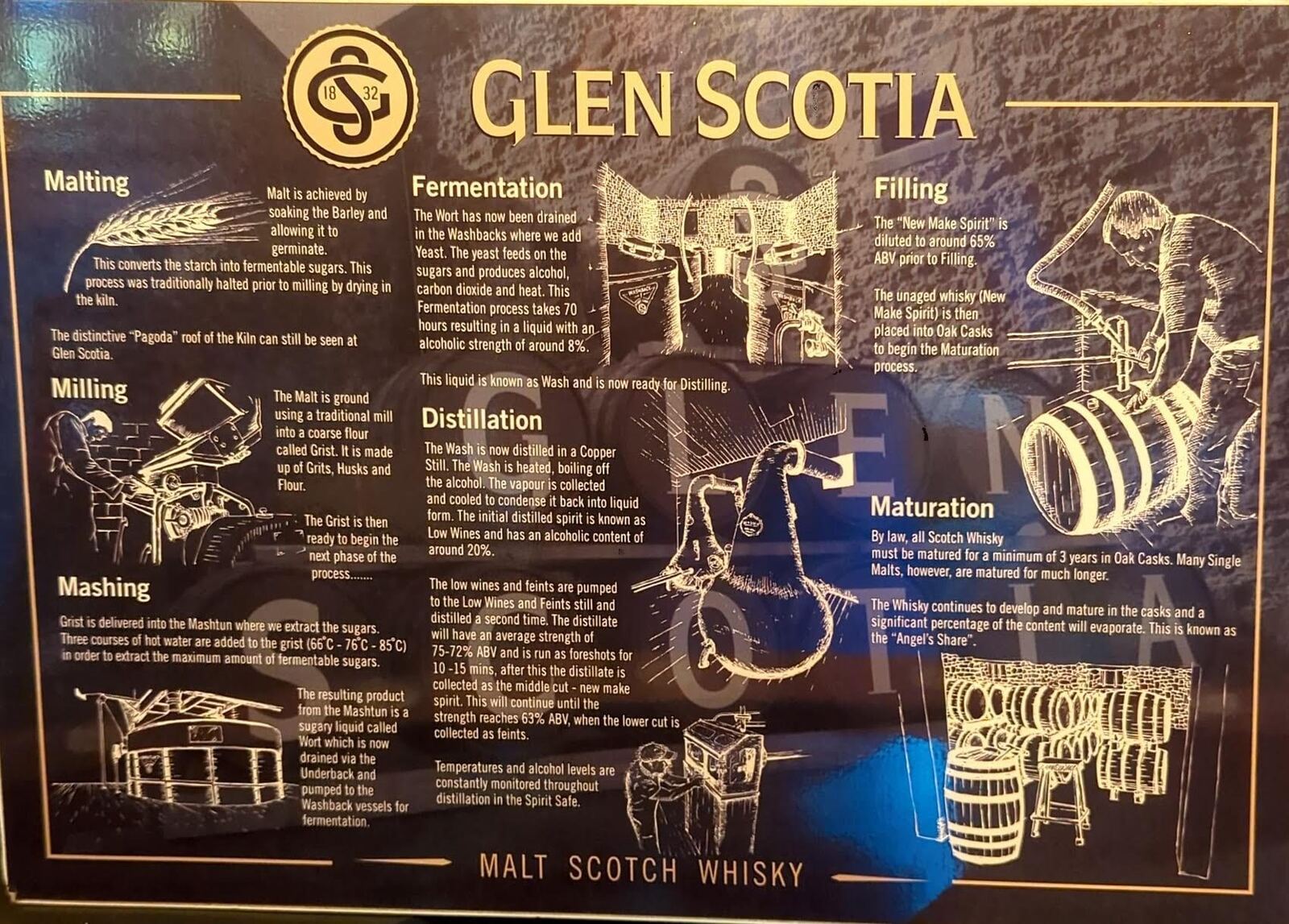
🥃 How single malt is made (from Glen Scotia’s own board): malting → milling → mashing → fermentation (~70 hours, ~8% “wash”) → double distillation in copper stills → filling into oak casks at ~63–65% → maturation (a legal minimum of 3 years; the “angel’s share” evaporates as it ages). Your photo of the distillery’s process board lays it out beautifully.
Scottish Outposts note — the driver’s dram
If you’re driving the van, you obviously can’t taste and drive — but distilleries like Glen Scotia will happily do you a “driver’s dram” to take away and enjoy later (and there’s always the designated-driver route, or stay over in Campbeltown).
Reality notes
- 🥃 Tours/tastings: book ahead, especially in summer; check current times.
- 🚗 Driving: don’t drink and drive — take a driver’s dram away.
- 📍 Campbeltown: it’s a long haul down the A83 — make a day (or a trip) of Kintyre, don’t just dash for a dram.
- 🅿️ Parking: town-centre parking near the distillery.
Combine it with (Kintyre — provisional)
The obvious one: Campbeltown is a three-distillery town — Glen Scotia, Springbank and Glengyle/Kilkerran — so there’s a ready-made Campbeltown whisky trail on foot.
Why Glen Scotia deserves the right shape
Campbeltown malts are big, oily and briny — characterful enough that the glass genuinely changes the dram. Glen Scotia in particular opens up when the nose is funnelled rather than dispersed, which is exactly what the Glencairn was designed in 2001 to do.
Glencairn Whisky Glass — Set of 6
Campbeltown malts are characterful enough to reward a proper glass, and Glen Scotia in particular opens up when the nose is concentrated rather than lost across a tumbler. Six lead-free crystal Glencairns, the shape the distilleries use themselves.
Check price on Amazon