
Ballochroy: A Famous Stone Alignment & a Wild-Camp Coast Looking Out to Jura
Overview — the honest take
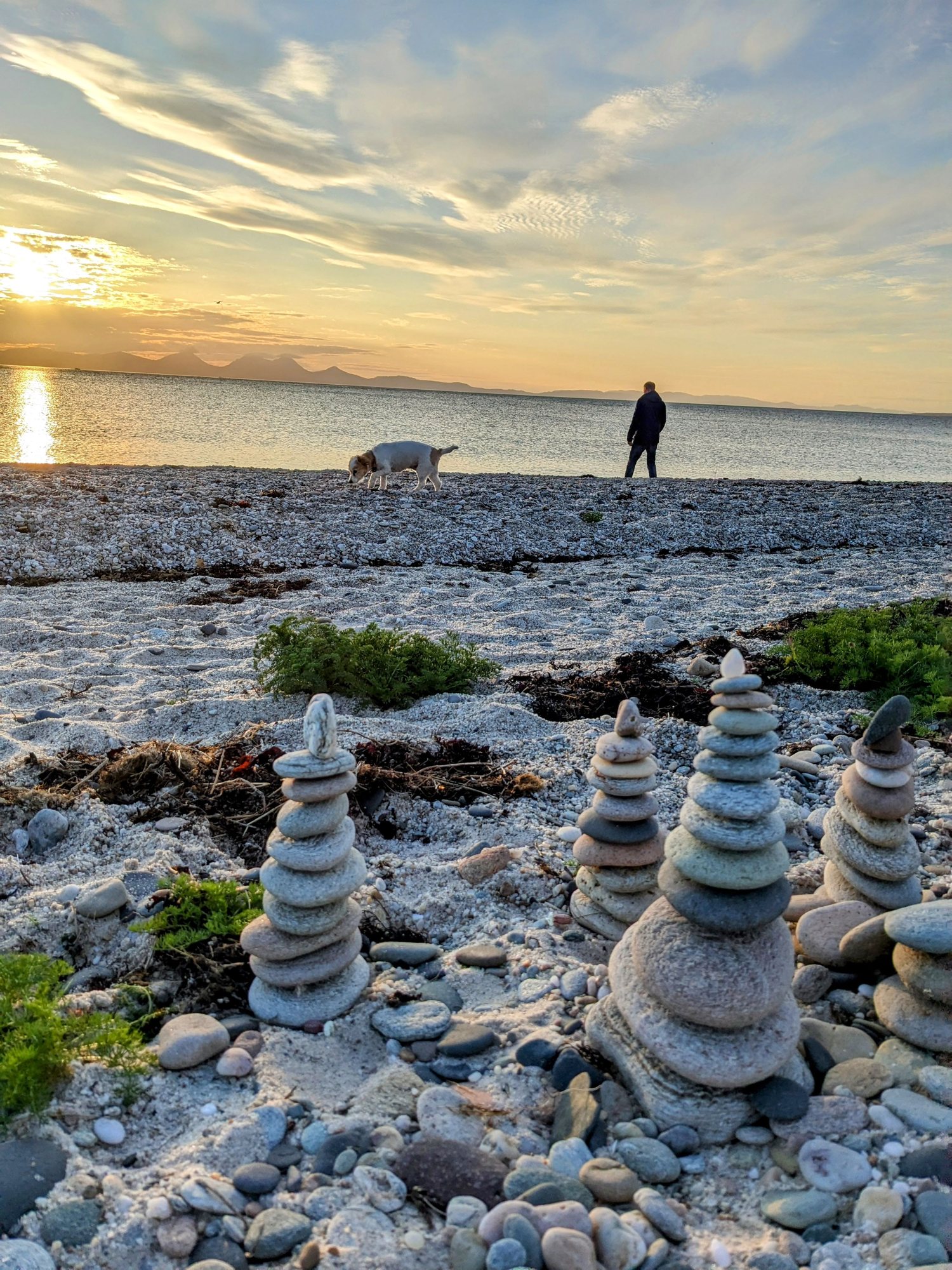
Ballochroy is a quiet stretch of the west Kintyre coast, on the A83 above the Sound of Gigha — and it’s two things at once. It’s the site of a Bronze-Age standing-stone alignment that became one of the most famous and argued-over spots in the study of ancient astronomy; and it’s a gorgeous, low-key wild-camping shore where you can sit out a whole evening watching the sun go down behind the Paps of Jura. We came for the second and stayed for the sunsets — it’s one of our favourite quiet corners of Kintyre.
Where it is
Ballochroy sits on the west coast of the Kintyre peninsula, near Clachan, roughly halfway down between Tarbert and Tayinloan on the A83. It looks straight out across the Sound of Gigha to the isle of Gigha, with Jura and Islay on the horizon — which is exactly why the ancient people who raised the stones chose it, and exactly why it’s such a sunset spot today.
The Ballochroy Stones — a window on the ancient sky
Set in a field above the shore stand the Ballochroy stones: a short line of three tall slabs, with a stone burial cist nearby, raised in the Bronze Age some 3,000–4,000 years ago. On their own they’re a fine, atmospheric little group. But Ballochroy is famous far beyond its size because of what it may point at.
In the 1960s and ’70s the engineer and archaeoastronomer Professor Alexander Thom made Ballochroy a cornerstone of his theory that Britain’s standing stones were deliberate astronomical instruments. He argued that the flat faces and the line of the stones frame precise solar sightlines — the midsummer sunset setting over the mountains of Jura, and a midwinter alignment down the coast towards the little island of Cara. Whether the builders were really the exact sky-watchers Thom believed is still debated by archaeologists, and you should take the most precise claims with a pinch of salt. But stand at the stones as the sun drops behind the Paps and it’s very easy to feel why people have looked west from this spot for four thousand years. Ballochroy is part of the wider story we tell on our Standing Stones & Stone Circles of Scotland page.
The wild-camp shore
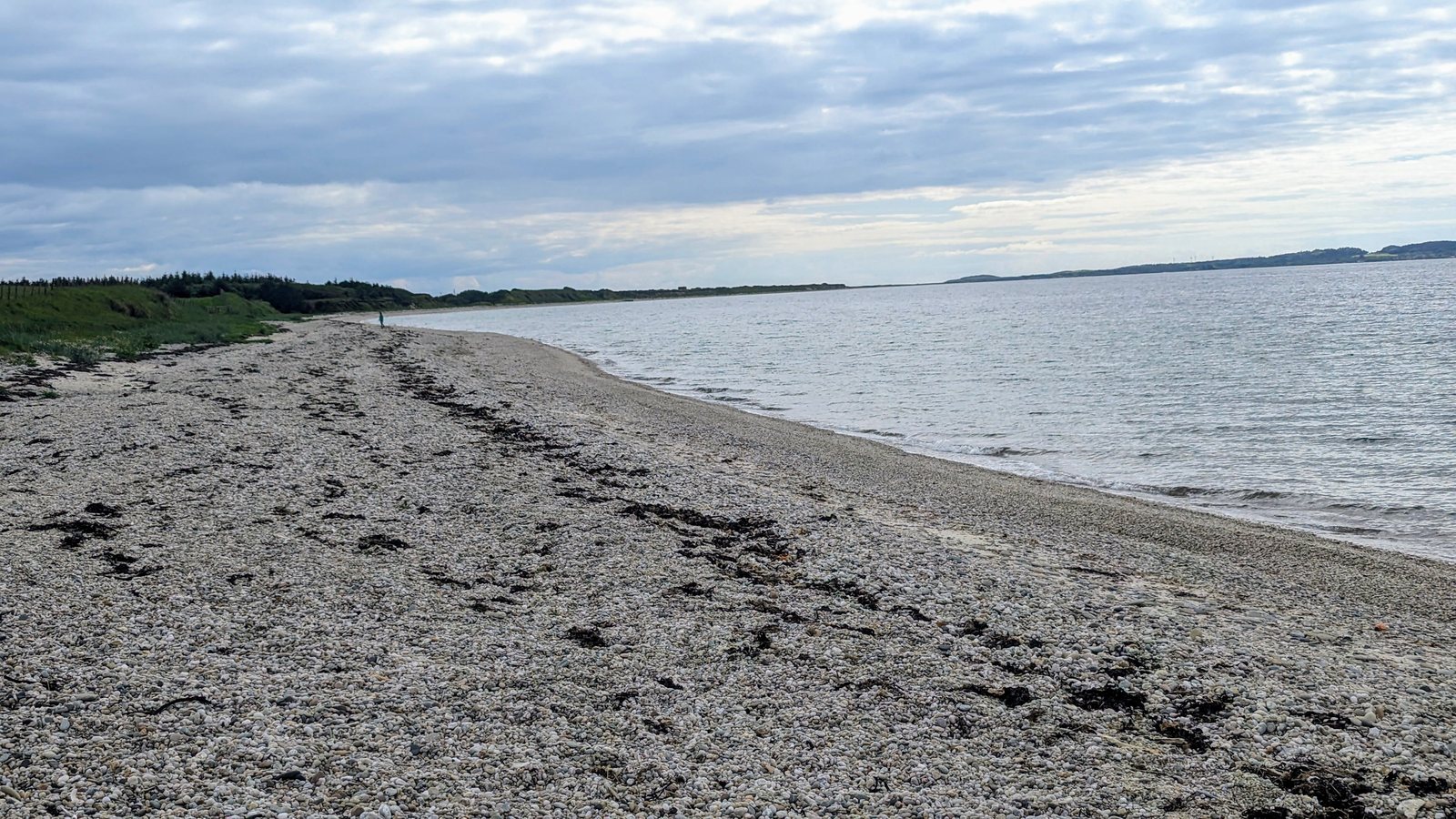
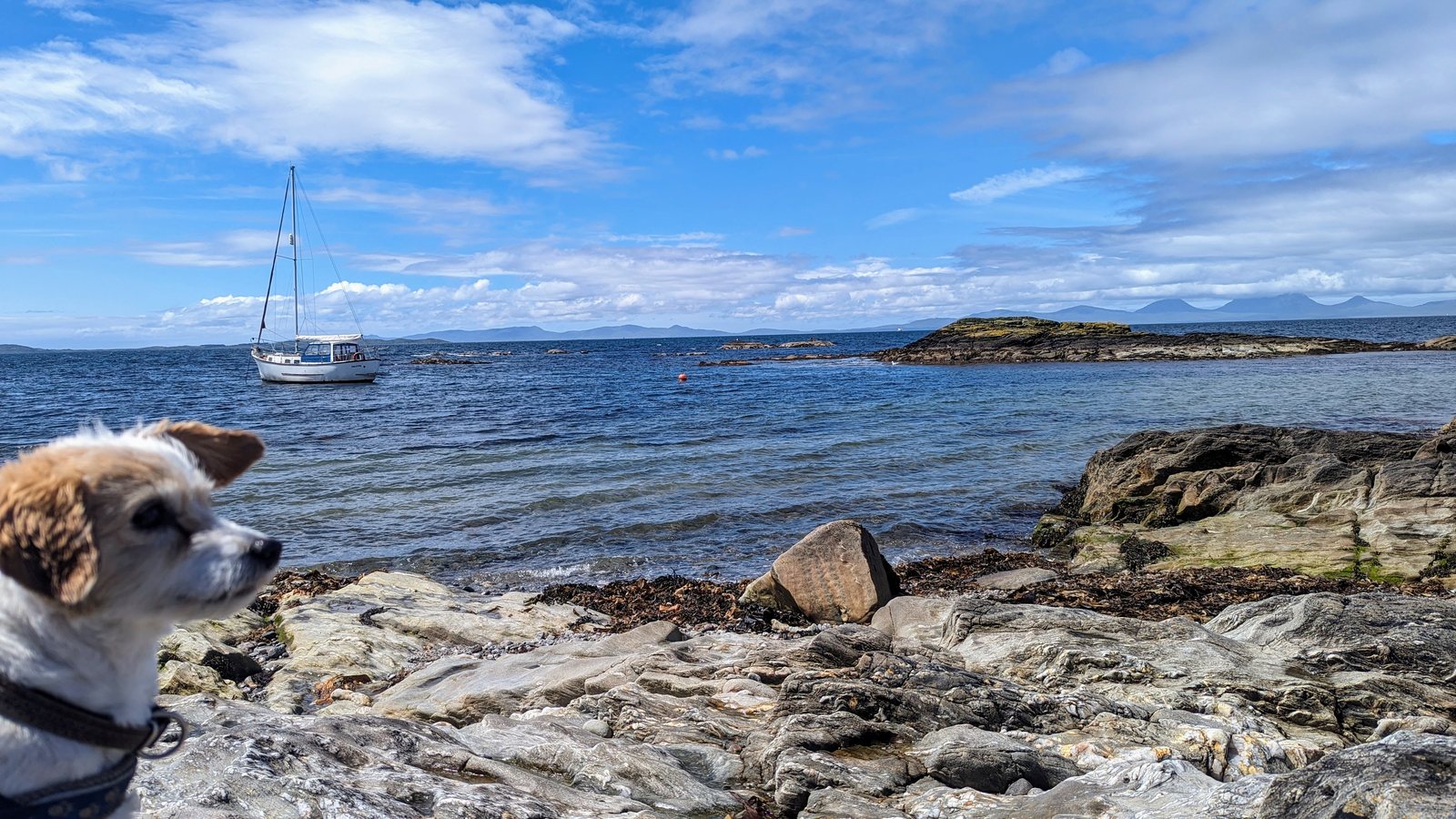
Down on the coast, Ballochroy is the kind of place we love best: a shingle shore, hardly anyone about, and a westward view made for the evening. We parked up the Hymer within sight of the water and settled in.
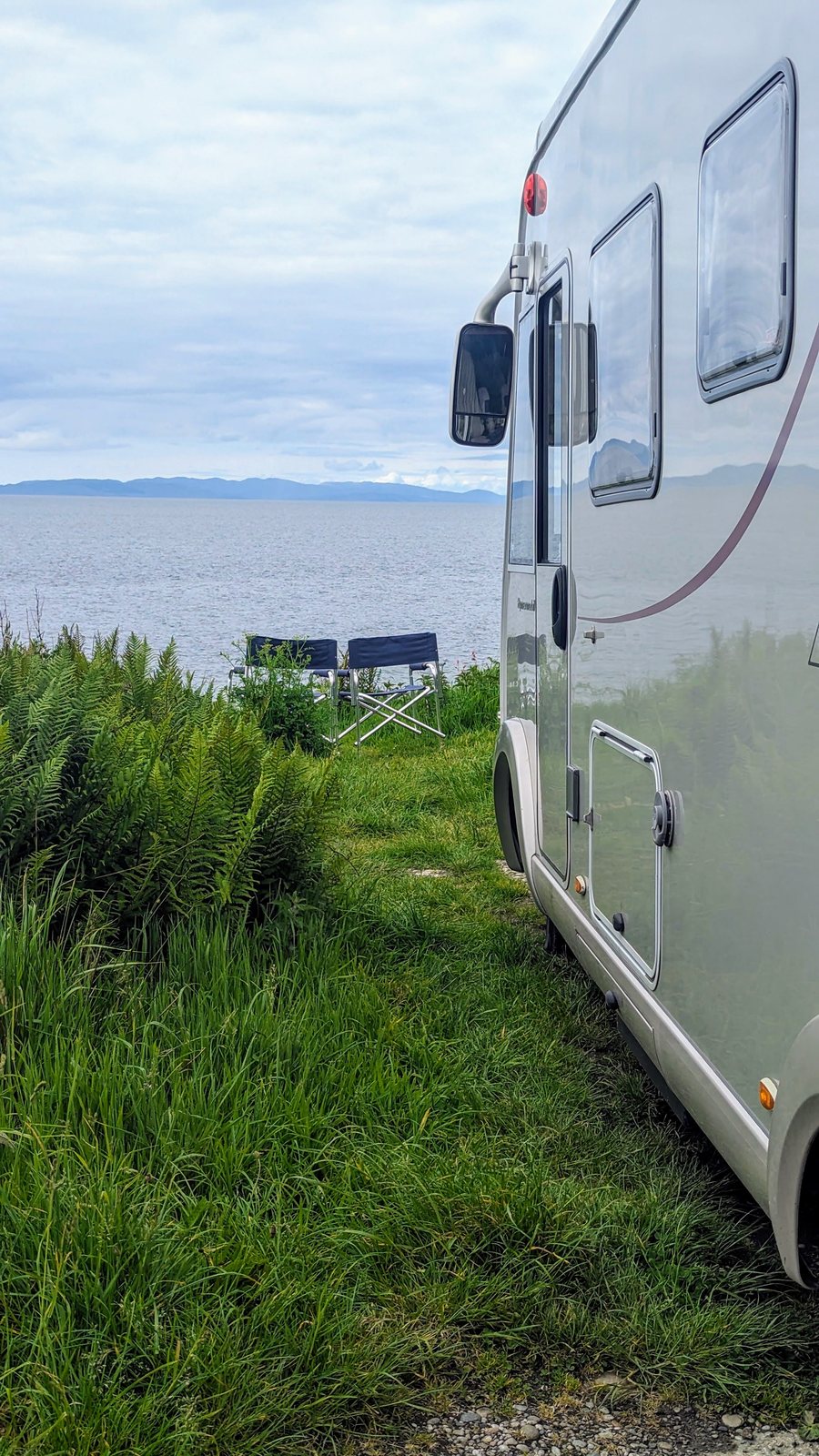
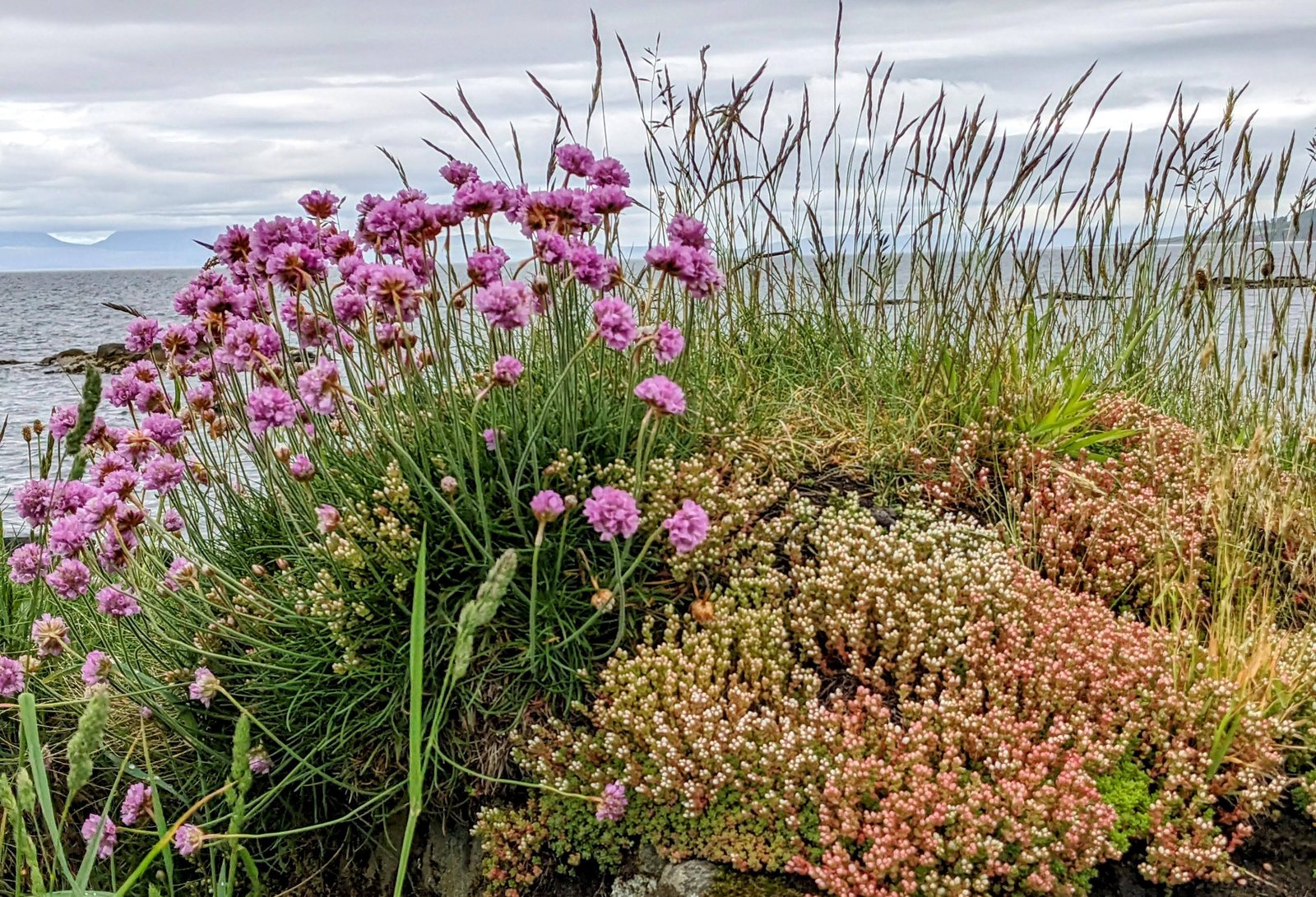
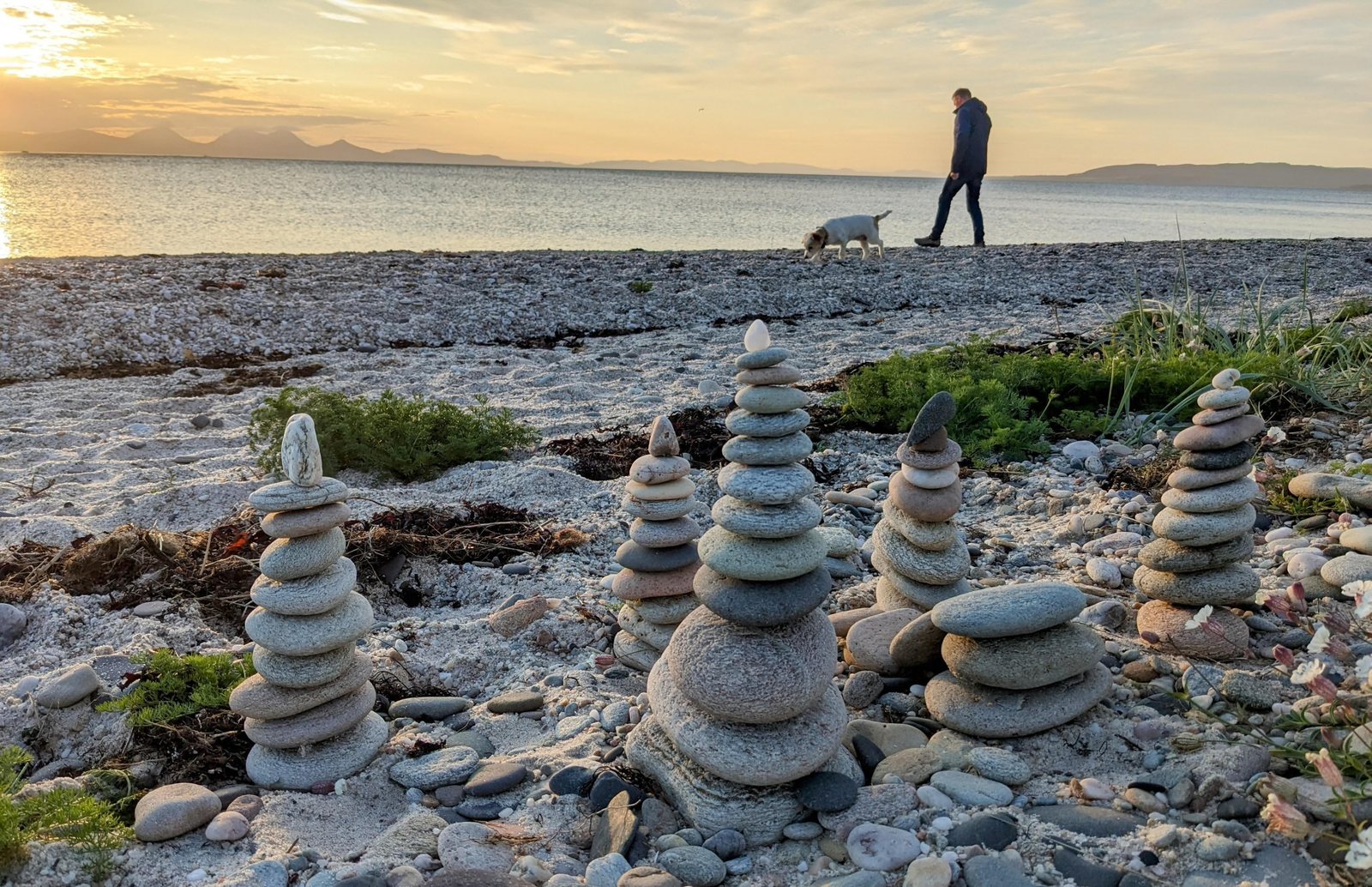
In late spring and early summer the rocks are cushioned with sea-pinks, the shore is good for a spot of stone-stacking, and there’s just the sound of the water and the odd bird. Even a swan came drifting past one still evening.
The sunsets
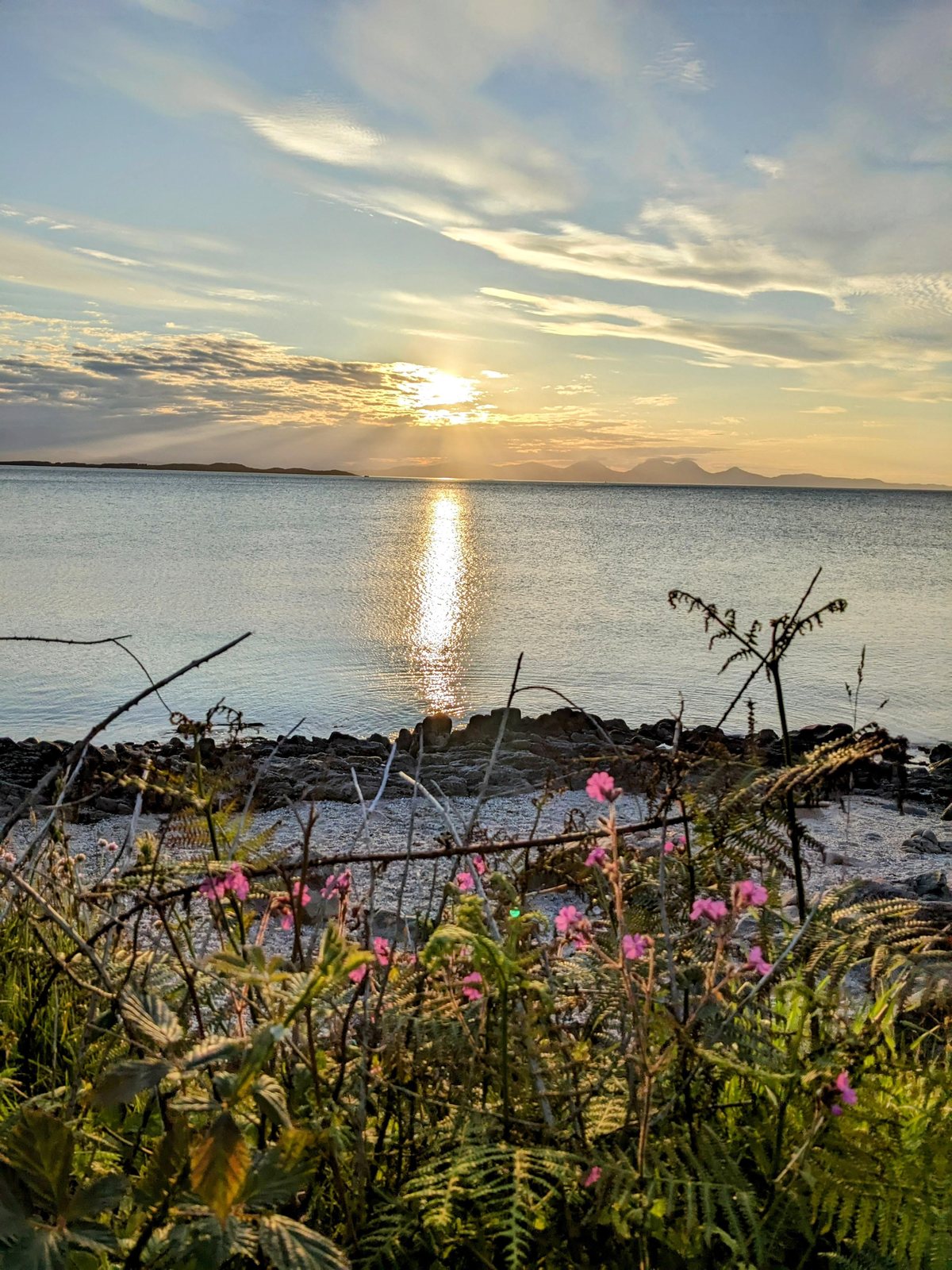
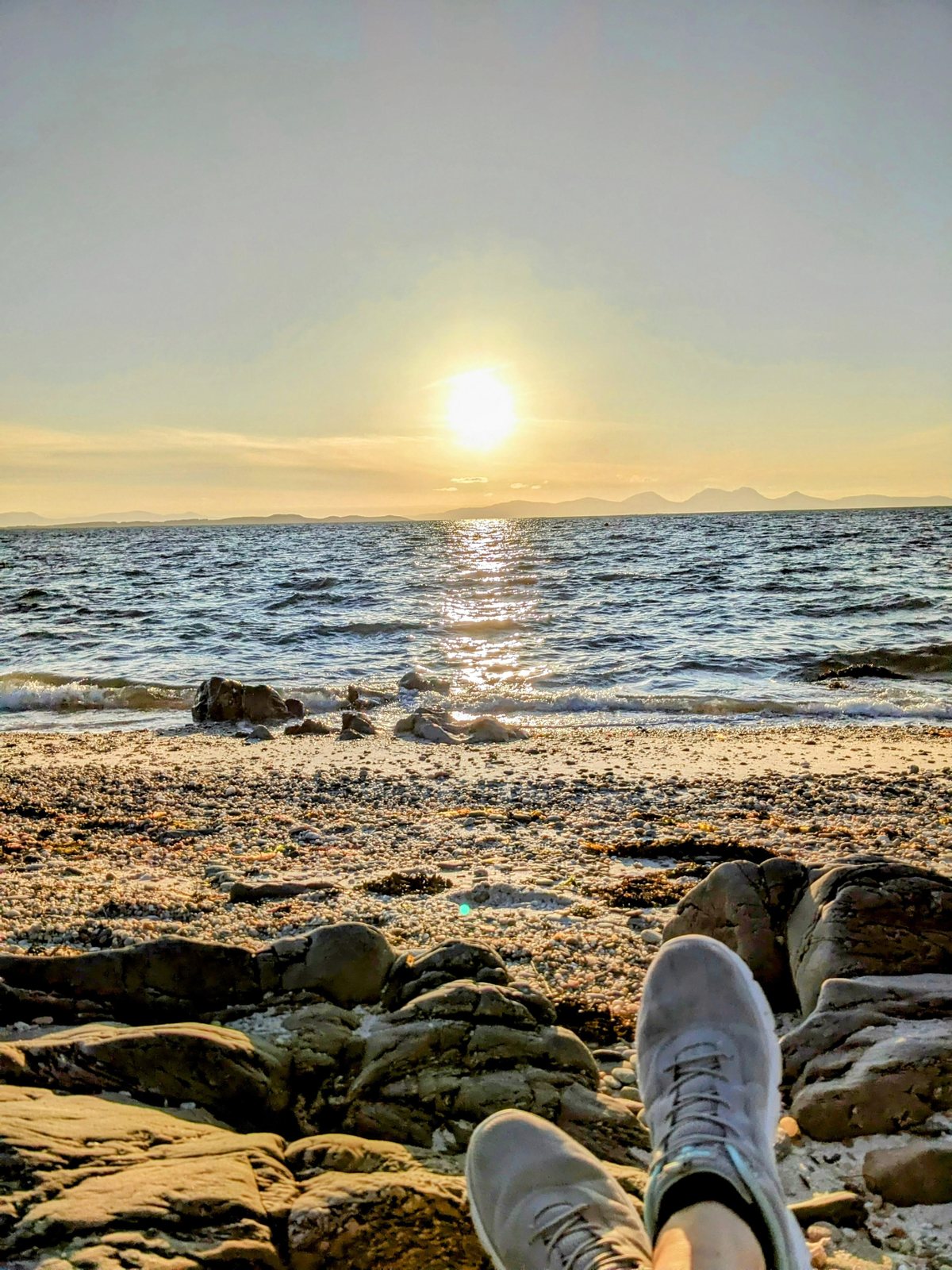
The sunsets are the reason to be here. As the sun sinks over Gigha and the Paps of Jura the whole sound turns to gold, and it’s about as good as a west-coast evening gets. Pour something, put your feet up, and watch the show.
Spring bluebells inland
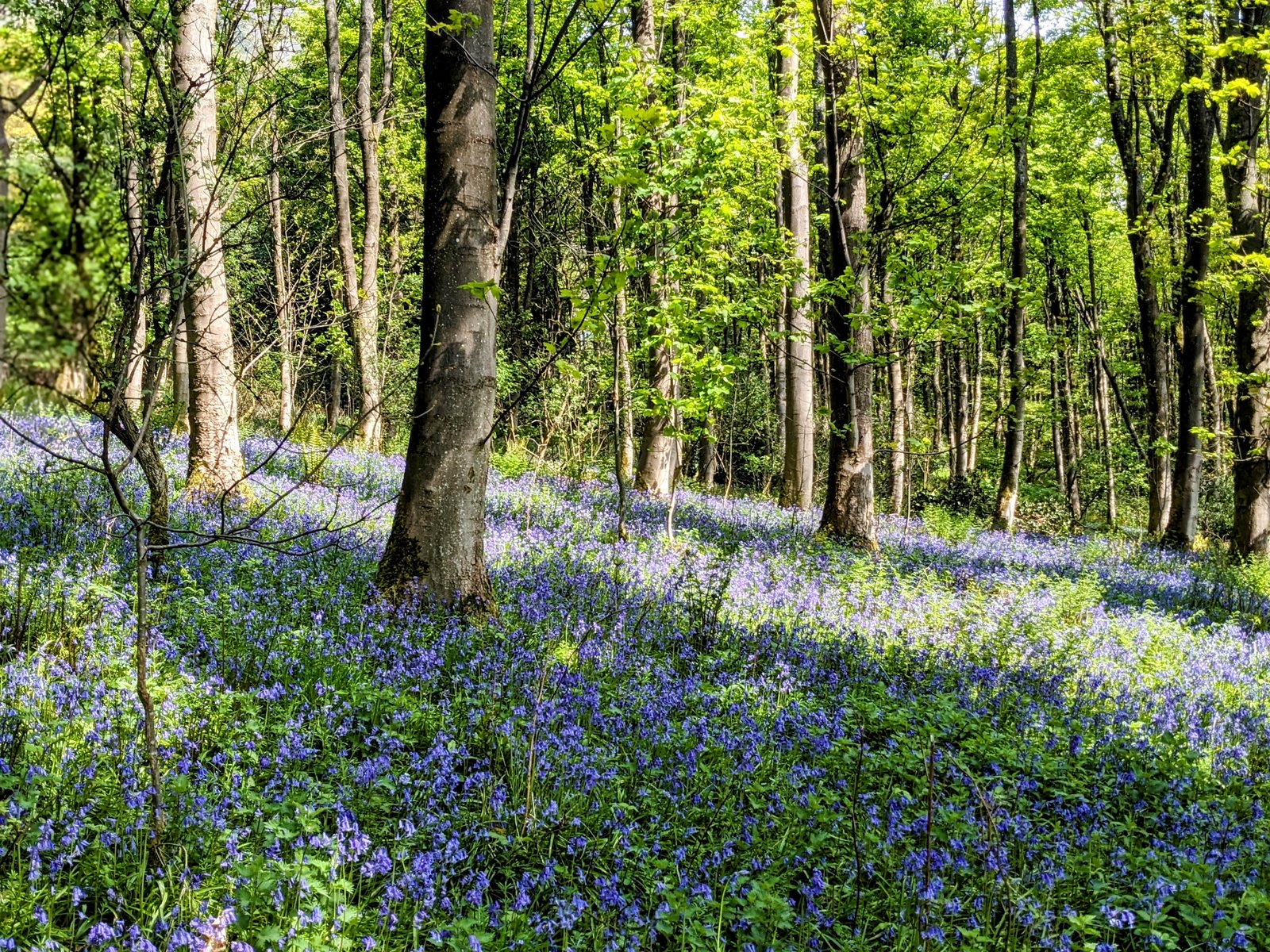
Just back from the shore, the sheltered woods put on a bluebell display in spring — a lovely contrast to the open, salty coast, and worth a wander if you’re here at the right time of year.
⚠ Wild camping: we stayed here responsibly — arriving late, leaving no trace, taking every scrap of rubbish away, and moving on next day. Please do the same: this is a quiet, unspoilt shore, and it stays that way only if everyone treats it kindly. Check for any local signage before you settle.
Nearby
- Tarbert — the lovely Loch Fyne village at the top of Kintyre.
- The Kintyre Way — the 100-mile walk down the whole peninsula, which runs through this coast.
- Our favourite Kintyre wild camp — another cracking pebble-beach overnight further down the way.
Sources
- Canmore on the Ballochroy stones and cist (Bronze-Age alignment).
- On the astronomy debate: Alexander Thom’s midsummer/midwinter alignment claims for Ballochroy, and the archaeological discussion since.
- Everything first-hand is from our own wild camp on the Ballochroy shore.