Glengyle Distillery (Kilkerran), Campbeltown: The Reborn Third
Glengyle (Kilkerran) at a glance
| Region | Campbeltown (Kintyre) |
| Founded | 1872 — revived 2004 |
| Owner | Mitchell’s Glengyle (family) |
| Visitor centre | Yes — small |
| Tours | Kilkerran tours ~twice daily Mon–Sat — book |
| Opening | Mon–Sat, two slots — check the website |
| Website | kilkerran.scot |
Overview
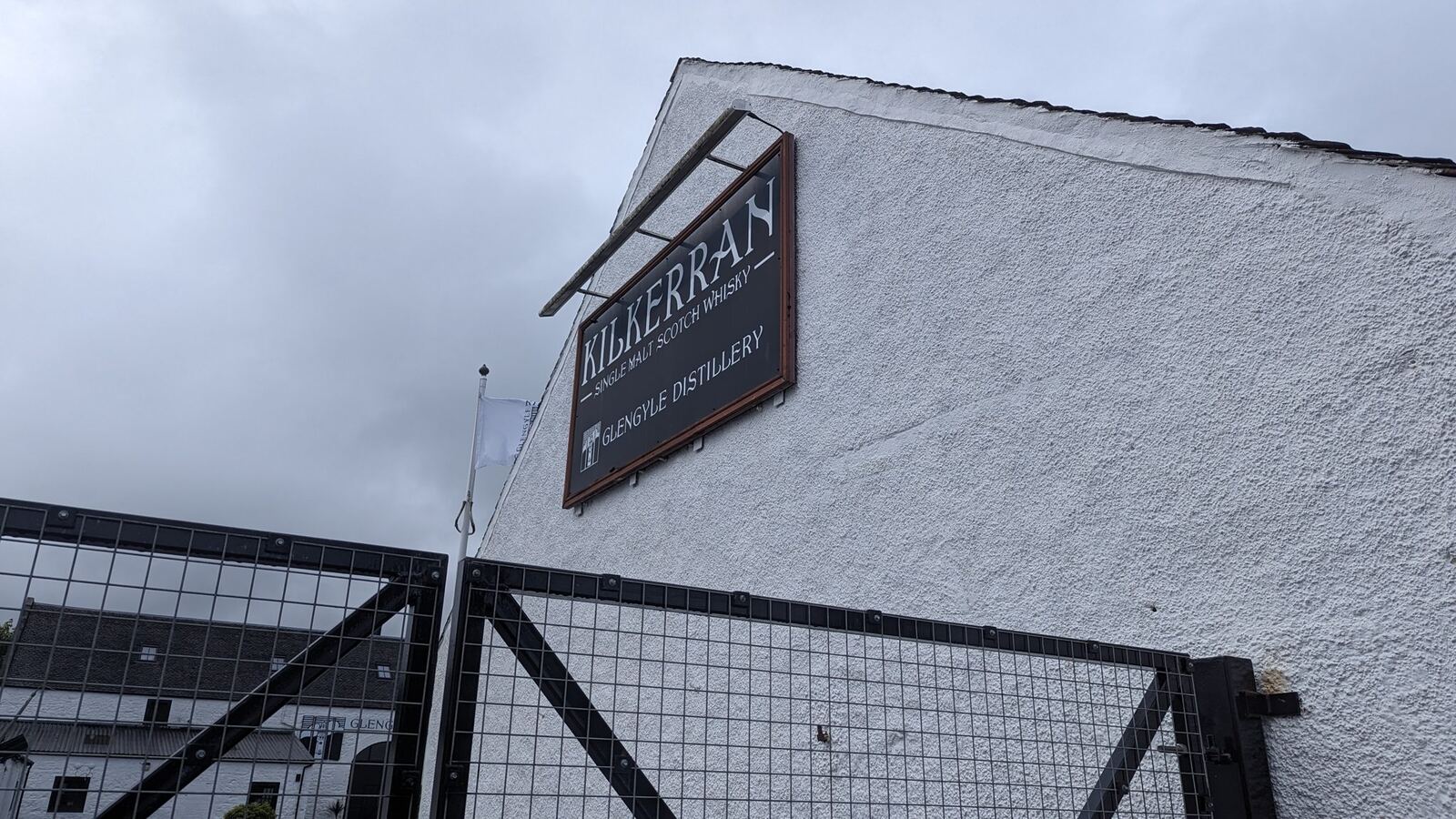
Glengyle is the youngest of Campbeltown’s three working distilleries. The other two are Springbank and Glen Scotia. It was built in 1872, went silent in 1925 and stayed shut for almost eighty years. In 2004 the family who own Springbank brought it back to life. Its single malt is called Kilkerran, because another company already owned the “Glengyle” brand name. The style is gently peated, fruity and slightly oily, the classic Campbeltown style.
It is easy to miss. Glengyle is a set of whitewashed buildings on Bolgam Street, two minutes’ walk from Springbank, in the old streets above Campbeltown’s harbour. You can do all three distilleries in a day on foot. If you’re driving the Kintyre peninsula or following our Argyll Coastal Route, it belongs on the same day as Springbank.
Where it is
Campbeltown sits near the bottom of the Kintyre peninsula, at the head of Campbeltown Loch, a sheltered sea loch. Davaar Island guards its mouth. It’s about 135 miles by road from Glasgow. The drive takes you along the shores of Loch Lomond and Loch Fyne, through Tarbert and down Kintyre’s west coast. Allow three and a half to four hours. It is one of the most remote whisky towns on the mainland. That remoteness is part of the reason it became a whisky capital, and part of the reason it nearly died.
Address: Glengyle Distillery, 9 Bolgam Street, Campbeltown PA28 6LR. Parking in town is easy outside high summer. Motorhomes do best on the harbour side, and a couple of streets uphill is no great walk.
The full history
Campbeltown, “whisky capital of the world”
Glengyle only makes sense against the history of the town. In the 19th century Campbeltown had everything a distiller needed: barley from the farms of Kintyre, peat from the moss, coal from the pits at Drumlemble, a deep harbour, and a direct sea route to Glasgow’s markets. Distilleries packed into its narrow streets. At its height the town had more than thirty, and with a population of only a few thousand it called itself the whisky capital of the world. Campbeltown malt was heavy, oily and smoky, and the Glasgow blenders bought all they could get.
1872: William Mitchell goes it alone
The Mitchell family were at the centre of all this. They farmed and malted in Kintyre and ran Springbank from the 1820s. William Mitchell co-owned Springbank with his brother John until the two fell out. William first joined other brothers at the Rieclachan distillery, then struck out on his own. In 1872 he founded Glengyle a few yards from the family’s old business. The work did not go smoothly. In 1873, shortly after the buildings were completed, a storm tore the roof off.
Boom, then bust
Glengyle worked through the late-Victorian boom. Then everything that had made Campbeltown rich turned against it. Some of the town’s distillers had cut corners in the rush to supply the blenders, and Campbeltown whisky gained a reputation for being rough and oily. Blenders turned to Speyside. The Drumlemble coal ran thin. The First World War brought barley restrictions, and Prohibition in the United States closed a key export market. Distilleries began to fall one after another.
Glengyle was sold in 1919 to West Highland Malt Distilleries, a group of local distillers who hoped that pooling their resources would save them. It did not. The distillery was auctioned in 1923 and changed hands in 1924 for just £350. By 1925 the stills were cold and the last stock had been sold off. Its original equipment was stripped and scrapped. Campbeltown went from more than thirty distilleries to two: Springbank and Glen Scotia.
Eighty silent years
The buildings survived, but the distilling didn’t. Around 1940–41 Bloch Brothers, owners of nearby Glen Scotia, bought Glengyle and planned to reopen it. The Second World War ended that plan. A second attempt in the 1950s, by Campbell Henderson Ltd, also came to nothing. The empty site became a rifle range and then an agricultural feed store. Meanwhile the Glengyle brand name passed to Glen Scotia’s later owners, Loch Lomond Distillers, who used it on a blended malt. That is why the revived distillery could not use its own name.
2000–2004: the revival
By the 1990s the Scotch Whisky Association listed Campbeltown as a separate whisky region, but it had only two working distilleries. There was a real risk of losing that status. Hedley Wright, chairman of Springbank’s owner J&A Mitchell and a descendant of the Mitchell family, set out to restore Glengyle. In 2000 he formed Mitchell’s Glengyle Ltd and bought the old buildings. They are listed, so the restoration took around four years of careful work.
Almost everything inside is second-hand. The two stills were originally made for the short-lived Ben Wyvis distillery at Invergordon. They were reshaped for Glengyle, with rounder shoulders and upward-angled lyne arms. The mill, mash tun and washbacks also came from other distilleries. Spirit ran again in 2004, after nearly eighty years of silence. Glengyle was the first new distillery in Scotland of the new millennium, and Campbeltown had three distilleries again.
Kilkerran comes of age
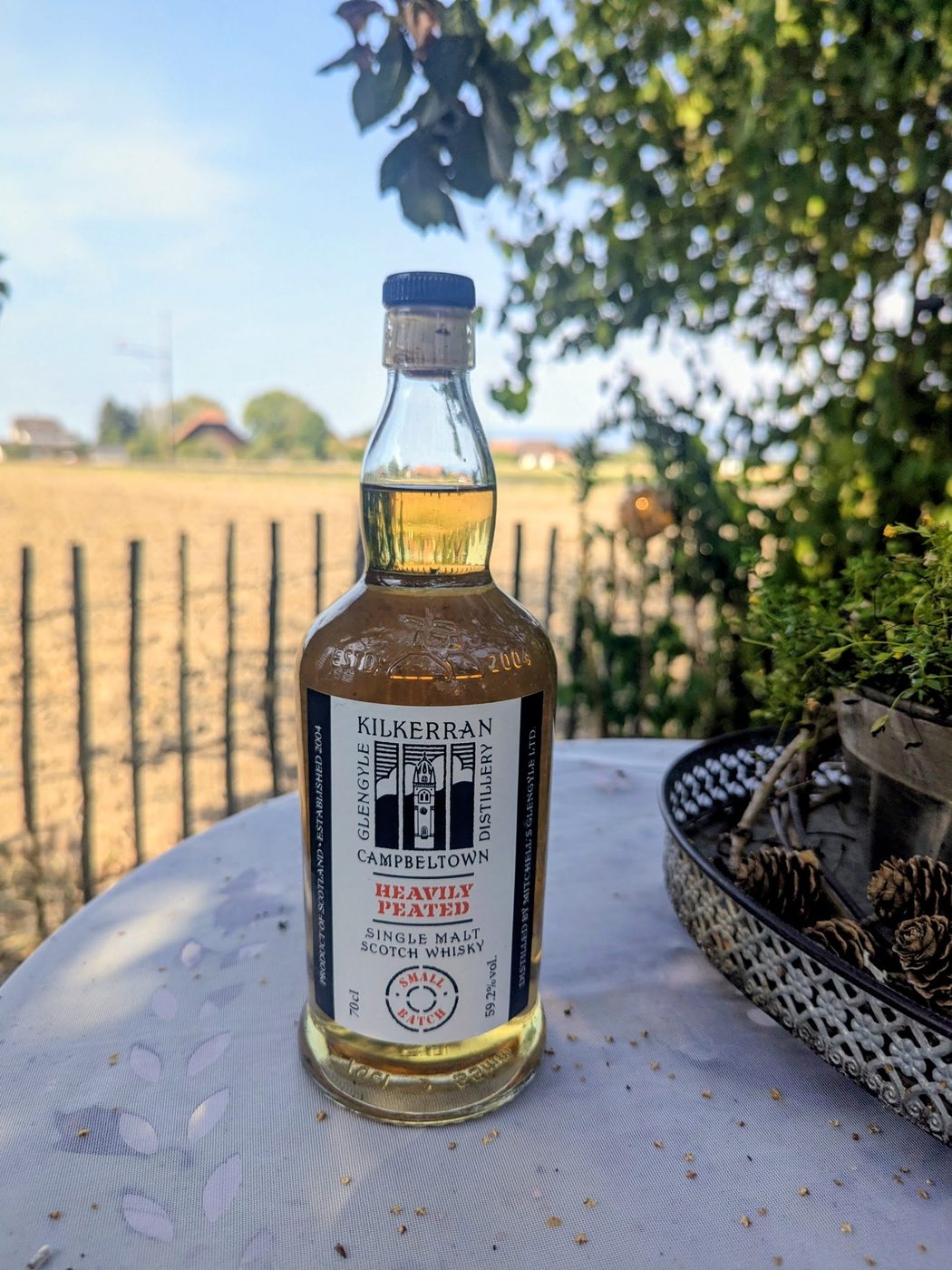
The new owners couldn’t use the old name, so they turned to an older one. Kilkerran comes from the Gaelic Ceann Loch Cille Chiarain, “the head of the loch of St Ciaran’s cell”. That was the name of the settlement here long before the Campbells renamed it Campbeltown. The whisky was released year by year as it matured. A series of “Work in Progress” bottlings began in 2007, so drinkers could follow the spirit as it grew up. The core Kilkerran 12 Year Old arrived in 2016. Since then Kilkerran has built a loyal following, especially for its 8-year-old cask strength releases and the occasional heavily peated batch.
Clans, kings & the land
Glengyle was founded by a family business, not a clan. The ground it stands on, though, carries one of the most fought-over clan histories in Scotland, and the distillery’s own name points straight to it.
For centuries Kintyre was Clan Donald country. It was held by the MacDonald Lords of the Isles, and later by the MacDonalds of Dunnyveg and the Glens, who ruled from Islay and Antrim. The crown wanted it back. In the 1490s James IV built a royal castle at Kilkerran, on the shore of Campbeltown Loch, to control the MacDonalds. Its site lies by the old Kilkerran graveyard, on the shore road out towards Davaar.
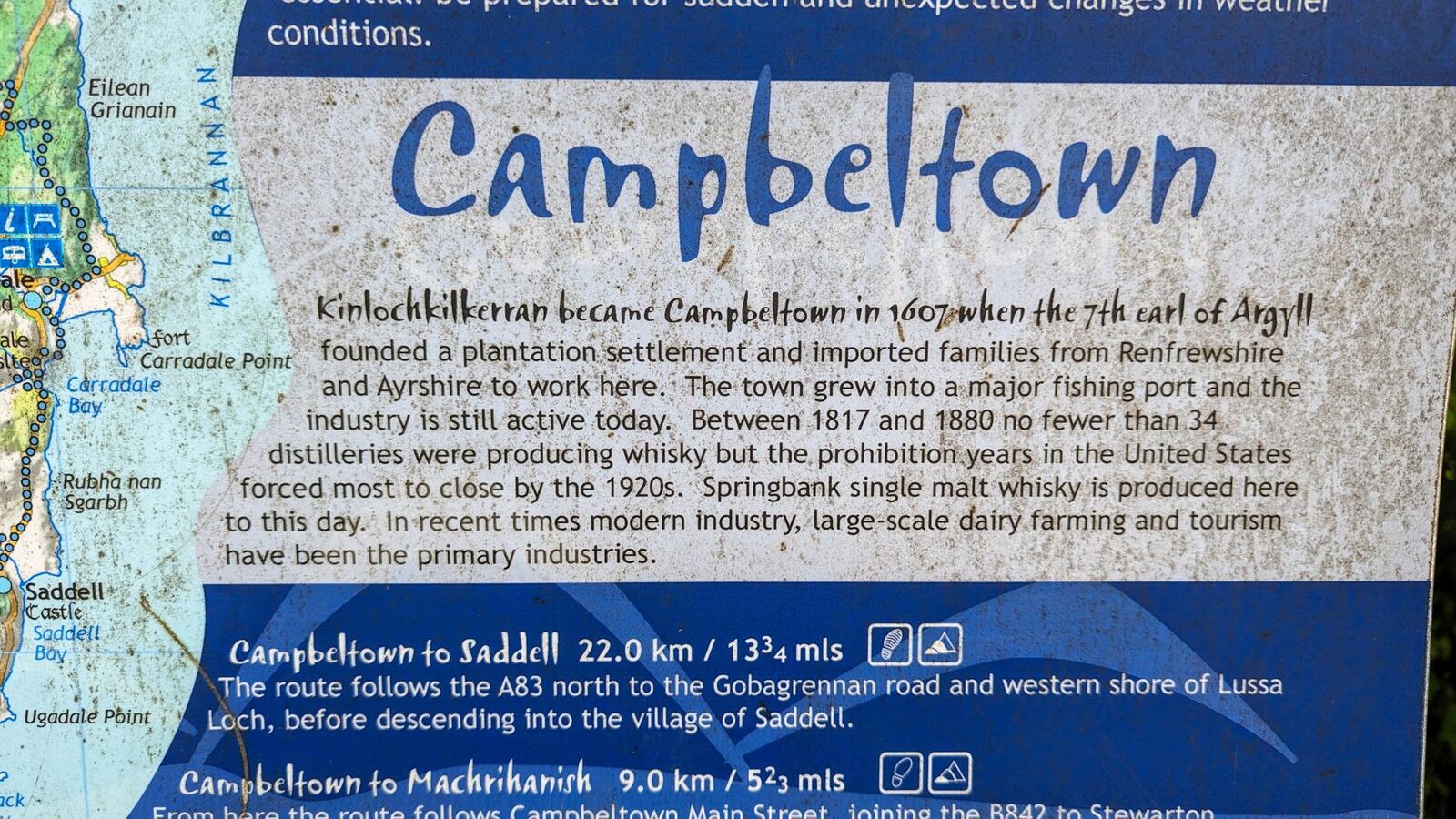
The decisive change came in 1607, when James VI granted Kintyre to Archibald Campbell, 7th Earl of Argyll. The Campbells moved Lowland settlers onto the land, and the old Kilkerran settlement grew into a new burgh named for the family: Campbeltown. It became a royal burgh in 1700. You can read more about the Campbell earls and dukes on our Dukes of Argyll page.
The rivalry ended in blood. In 1647, during the civil wars, a MacDonald garrison surrendered at Dunaverty Castle near Southend, ten miles south of the distillery. Covenanter troops, with Argyll in their army, then massacred around three hundred of them. A memorial stands there today.
The water: Crosshill Loch
All three Campbeltown distilleries draw their water from Crosshill Loch, a small reservoir in the hills just south of the town. The water is soft and peaty and has served the town’s distillers for two centuries. The barley is malted next door at Springbank’s own floor maltings, peated lightly to around 8–10 ppm. The spirit is then filled into cask and matured on site in both racked and traditional dunnage warehouses, breathing the same salty air off Campbeltown Loch as its neighbours. For more of Scotland’s lochs, see our lochs of Scotland page.
Churches, saints & stones nearby
Kintyre is old Christian ground, the nearest point of Scotland to Ireland, and the place the Irish saints came ashore. The Kilkerran name honours St Ciaran, an Irish missionary said to have lived in a cave on the coast south of the town. Places worth seeing:
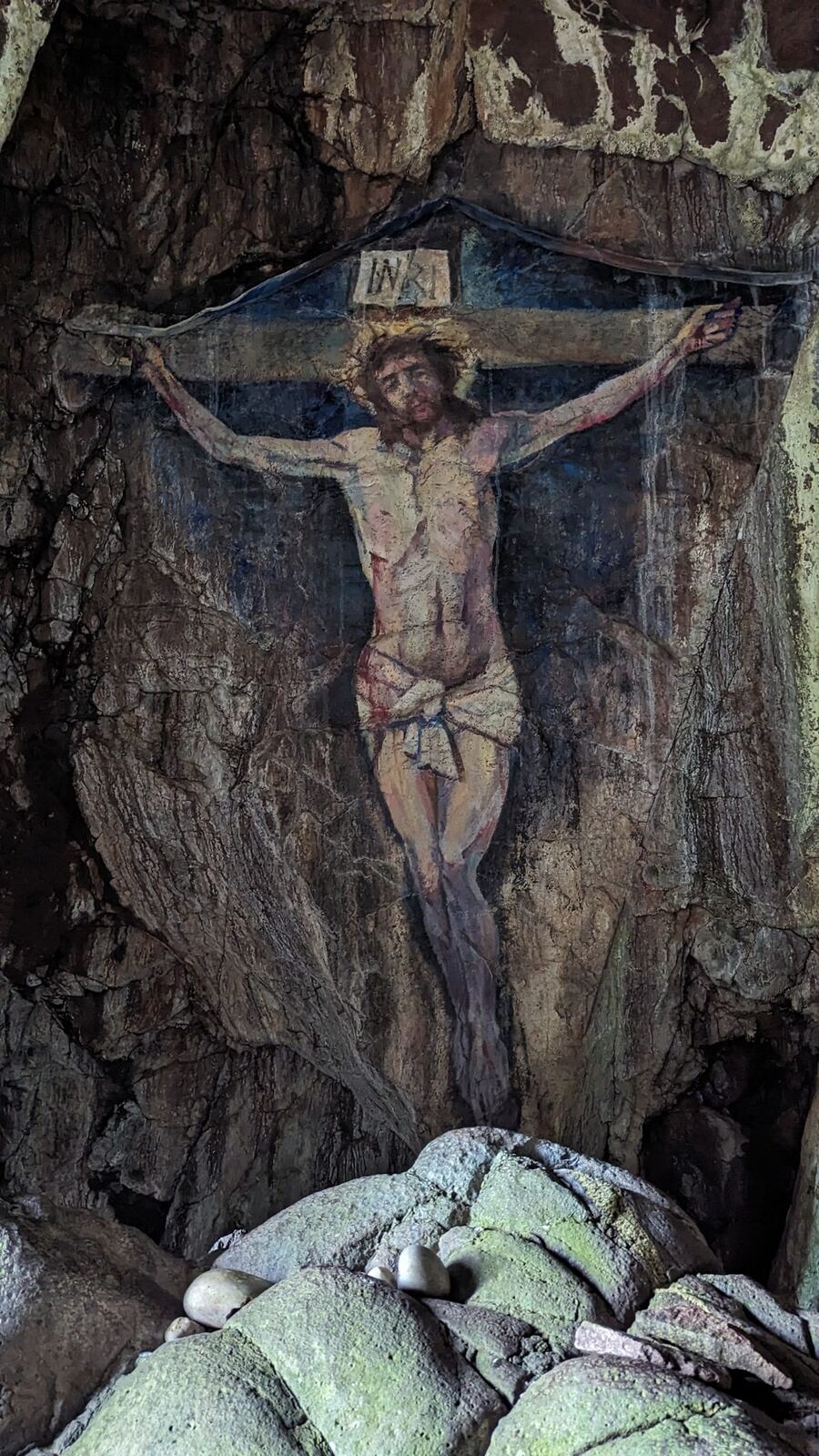
- Davaar Island: at low tide you can walk the shingle causeway called the Dhorlin out to the island, where a sea cave holds a painting of the Crucifixion by Archibald MacKinnon from 1887. It is about 3 miles from the distillery to the start of the causeway.
- Keil Chapel & St Columba’s Footsteps, near Southend: the ruined chapel where tradition says St Columba first landed in Scotland, with footprints carved in the rock nearby.
- Ballochroy Standing Stones: three tall Bronze Age stones on Kintyre’s west coast, aligned on the Paps of Jura. They are about 25 miles north on the A83.
- Glenbarr Abbey: the 19th-century house of the Macalister clan chiefs, on the way north.
- Further north, Kilmartin Glen has Scotland’s richest cluster of standing stones, cairns and carved stones, along with Kilmartin Church.
 🥃 OUR OWN BOTTLE
How it’s made
Glengyle is tiny: one wash still and one spirit still, with a capacity of about 750,000 litres a year. In practice it produces far less, because it is run part-time by the Springbank team. Fermentation is long, around 72 to 110 hours, which helps build the fruity character. The spirit still holds about 15,000 litres. The lightly peated malt, the slow fermentation and the reshaped Ben Wyvis stills give the Kilkerran house style: gentle smoke, orchard fruit, a little brine and that waxy Campbeltown texture. The team has also trialled heavier peating and triple distillation.
Visiting
Glengyle has a small shop, and Kilkerran tours usually run twice a day, Monday to Saturday. Places are limited, so book ahead through kilkerran.scot. The usual plan is a morning at Springbank and an afternoon at Glengyle, with Glen Scotia squeezed in between or the next day. All three are within ten minutes’ walk of each other. For the town itself (cafés, the harbour, where to stay and park up), see our Campbeltown guide.
Nearby distilleries
- Springbank: about 2 minutes’ walk. It is the same family business, still floor-malting and bottling everything on site, and it shares its team and its maltings with Glengyle.
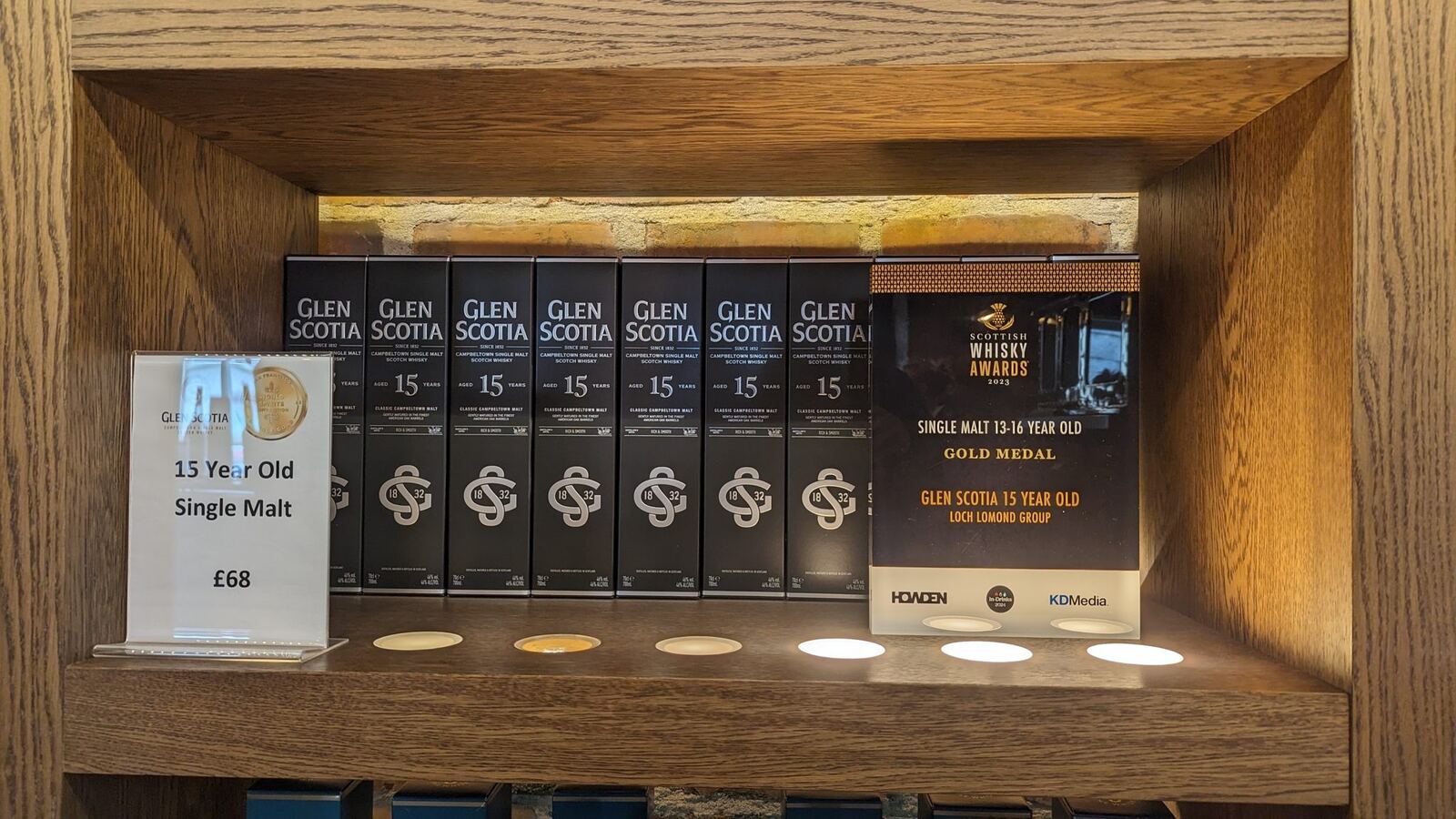
- Glen Scotia: about 10 minutes’ walk, down by the harbour. It is Campbeltown’s other survivor, and once belonged to the Bloch brothers who failed to reopen Glengyle.
- Arran (Lochranza): take the summer ferry from Claonaig, under an hourabout 1 hour 15 minutes’ drive northrsquo;s drive north, to Lochranza. The distillery is right by the slipway.
- Lagg: Arran’s peated sister distillery, on the south of the island.
- Islay’s distilleries: the ferry from Kennacraig, an hour north of Campbeltown, reaches Islay’s nine malt distilleries.
Planning the whole run? Our Kintyre & Arran Whisky Trail links all of these with drive times. The whisky hub covers every region in Scotland.
Sources
- Glengyle distillery — Wikipedia.
- Glengyle — Scotchwhisky.com Whiskypedia.
- Kilkerran / Mitchell’s Glengyle, official site.
- Our own visit to Campbeltown, Davaar and Southend.