Clan Donald (MacDonald): Lords of the Isles
The clan by the numbers
| First on record | Descended from Somerled (d. 1164) via Donald of Islay; Lords of the Isles until forfeited 1493 |
| Peak fighting strength | No single clan-wide figure — it mustered as separate branches (Sleat, Clanranald, Glengarry, Keppoch, Glencoe); Donald led perhaps 6,000–10,000 at Harlaw, 1411 (a disputed chronicle number) |
| People bearing the name today | ~27,000 in Scotland; MacDonald + McDonald together ~2nd commonest surname; ~232,000 worldwide (estimate) |
“Fighting strength” is the armed following, not a population. Clan Donald’s medieval numbers come from chronicles, not muster rolls, and it never mustered as a single body.
Overview — the greatest power in the west
Clan Donald — the MacDonalds — is the largest of the Highland clans, and for centuries was the greatest power in the west of Scotland. As the Lords of the Isles, the MacDonalds ruled a near-independent sea-kingdom stretching across the Hebrides and the western seaboard, with a fleet of galleys and a court of their own. Their long rivalry with Clan Campbell shaped the history of the whole west coast — including the corner of Kintyre we’ve spent so much time in.
Somerled, Donald & the Lords of the Isles
The clan traces its descent from Somerled, the great 12th-century warrior-lord who drove the Norse from the western seas, and from his grandson Donald, who gave the clan its name. At their height the MacDonald Lords of the Isles ruled from Finlaggan on Islay as princes in all but name — until the Scottish crown, wary of such a rival, forfeited the Lordship in 1493. The clan splintered into powerful branches — Sleat, Clanranald, Glengarry, Keppoch, Glencoe and the MacDonalds of Dunnyveg (Islay and Kintyre) — but never lost its pride or its numbers. The clan motto says it plainly: “Per Mare Per Terras” — “By Sea and By Land.”
Kintyre, Dunaverty & the 1647 massacre
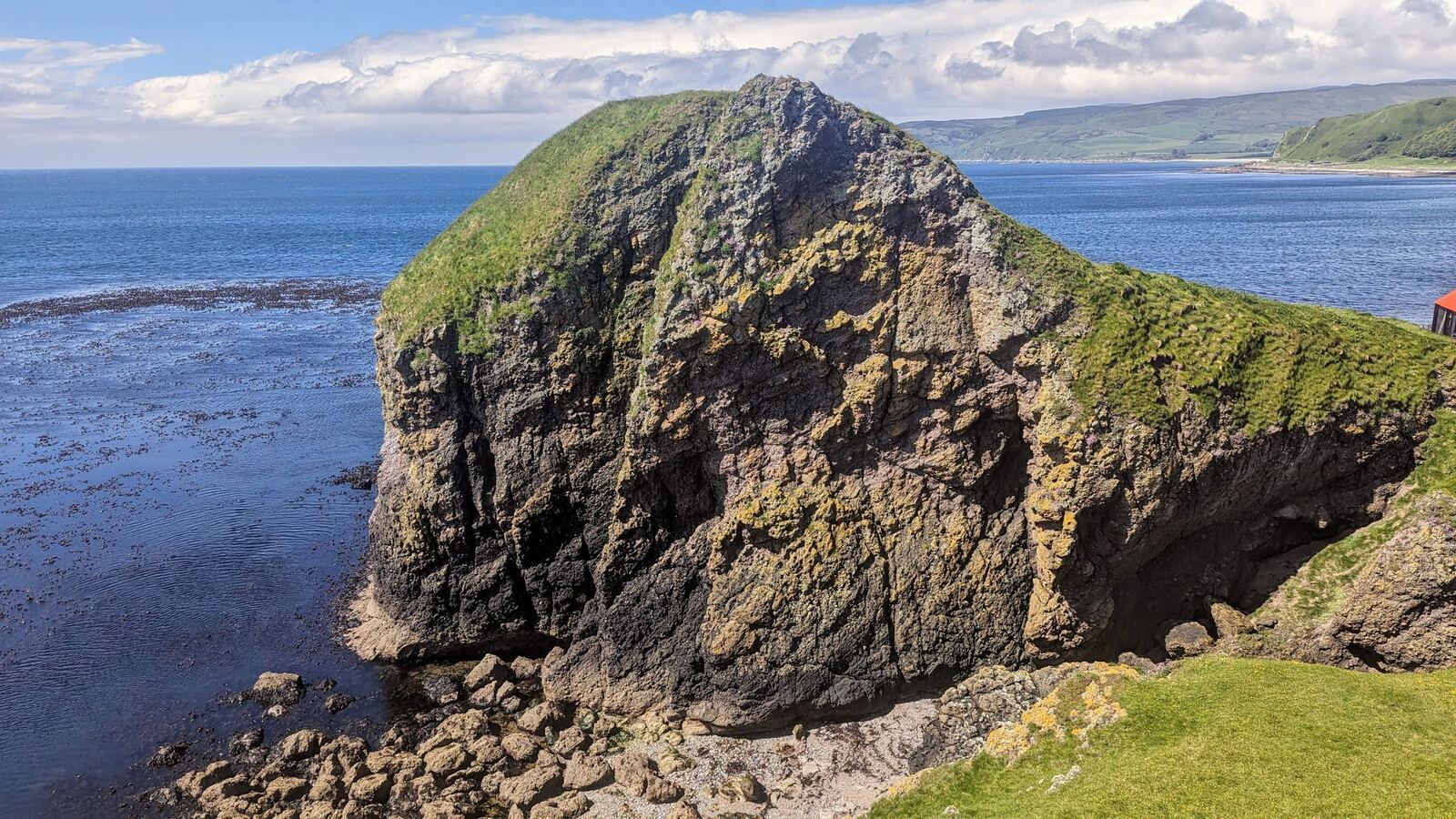
Down at the very tip of Kintyre, the MacDonalds of Dunnyveg held Dunaverty Castle — the great sea-rock above Southend. Its grimmest day came in 1647, during the Wars of the Three Kingdoms: a Royalist garrison here was besieged by Covenanter forces under General David Leslie, and after surrendering, some 300 defenders were massacred below the rock — remembered today by the memorial in the field. It’s a beautiful, haunted place.
The shadow of Glencoe
The MacDonalds’ most famous tragedy came later still: the Massacre of Glencoe in 1692, when the MacDonalds of Glencoe were murdered by government soldiers they had taken in as guests — a betrayal that still stains the name of the regiment (and the Campbell officer) that carried it out. It cemented the MacDonalds’ place in the Scottish imagination as a proud clan wronged.
MacDonald country on our travels
- Southend & Dunaverty — the MacDonald sea-rock and the 1647 massacre memorial, at the tip of Kintyre.
- Campbeltown & Kintyre — the whole peninsula was fought over by MacDonald and Campbell.
← Back to Scottish Clans · see also the Castles of Scotland.
Battles — won and lost
The most notable actions the clan fought, and how they ended:
- Bannockburn (1314) — vs the English — WON
- Harlaw (1411) — vs the royal/Lowland army — DRAWN
- Bloody Bay (c. 1481) — vs rivals within the clan — LOST
- Flodden (1513) — vs the English — LOST
- Inverlochy (1645) — vs the Campbells (for Montrose) — WON
- Killiecrankie (1689) — vs the government — WON
- Culloden (1746) — vs the government — LOST
The great feud was with the Campbells — culminating in the 1692 Glencoe Massacre, in which more than thirty Glencoe MacDonalds were murdered.
The clan lands
Orange markers = the clan’s chief castles, seats and territories; where we have a page, they link through.
Explore Scottish Outposts
Clans · Whisky · Castles · Lochs · Kirks & Cathedrals · Standing Stones · Metal Detecting · Trips So Far
Sources
- First-hand: our own travels in Kintyre (own photos)
- The Clan Donald
- Clan Donald — Wikipedia