
North Berwick: The Perfect East Lothian Seaside Town
Related pages: Bass Rock, the beach & Drift café · Tantallon Castle
Overview — why this is one of our favourite places
Some places you visit once and tick off. North Berwick we go back to again and again — many times over, across every season. It’s the complete East Lothian seaside town: two glorious sandy beaches, a little volcanic hill at its back with views to make you gasp, some of the most famous golf links on earth, a harbour with the Scottish Seabird Centre and Bass Rock just offshore, a genuinely lovely High Street, and — crucial for us — cracking coffee and cake at the end of every walk.
It’s barely 25 minutes east of Edinburgh (there’s a direct train, too), which makes it the ideal first or last stop of a Scottish trip and the natural opening to our Grand Tour. If you only do one town on the East Lothian coast, make it this one.
The town
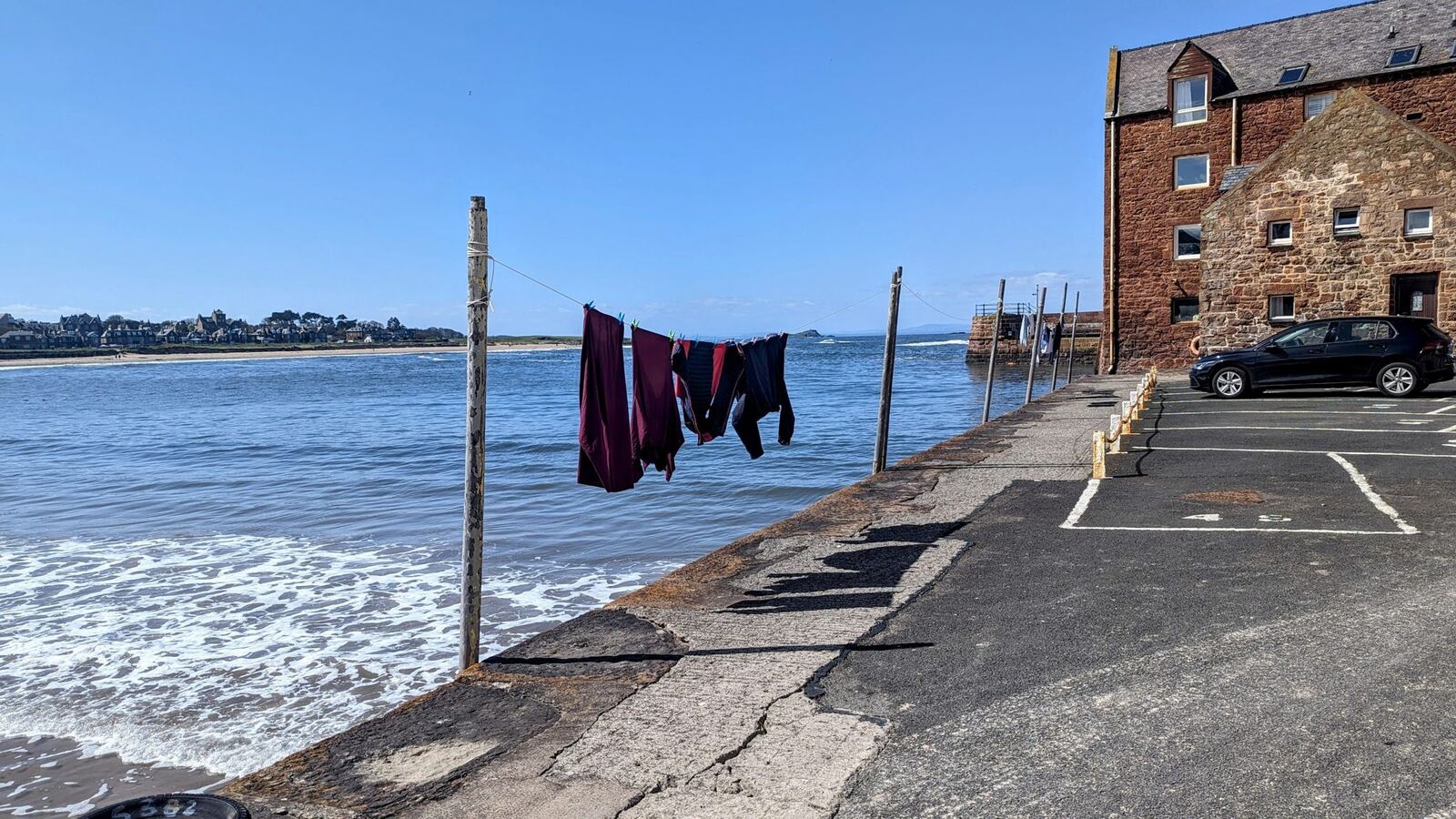
North Berwick made its name as a Victorian holiday resort — grand enough in its day to be dubbed the “Biarritz of the North.” That elegance still shows in the villas, the tidy High Street of independent shops and cafés, the harbour, and the green Lodge Grounds park. In August the whole place buzzes with the Fringe by the Sea festival. It’s prosperous, pretty and welcoming, but it never feels like a museum — it’s a proper, living town.
The two beaches (and the islands)
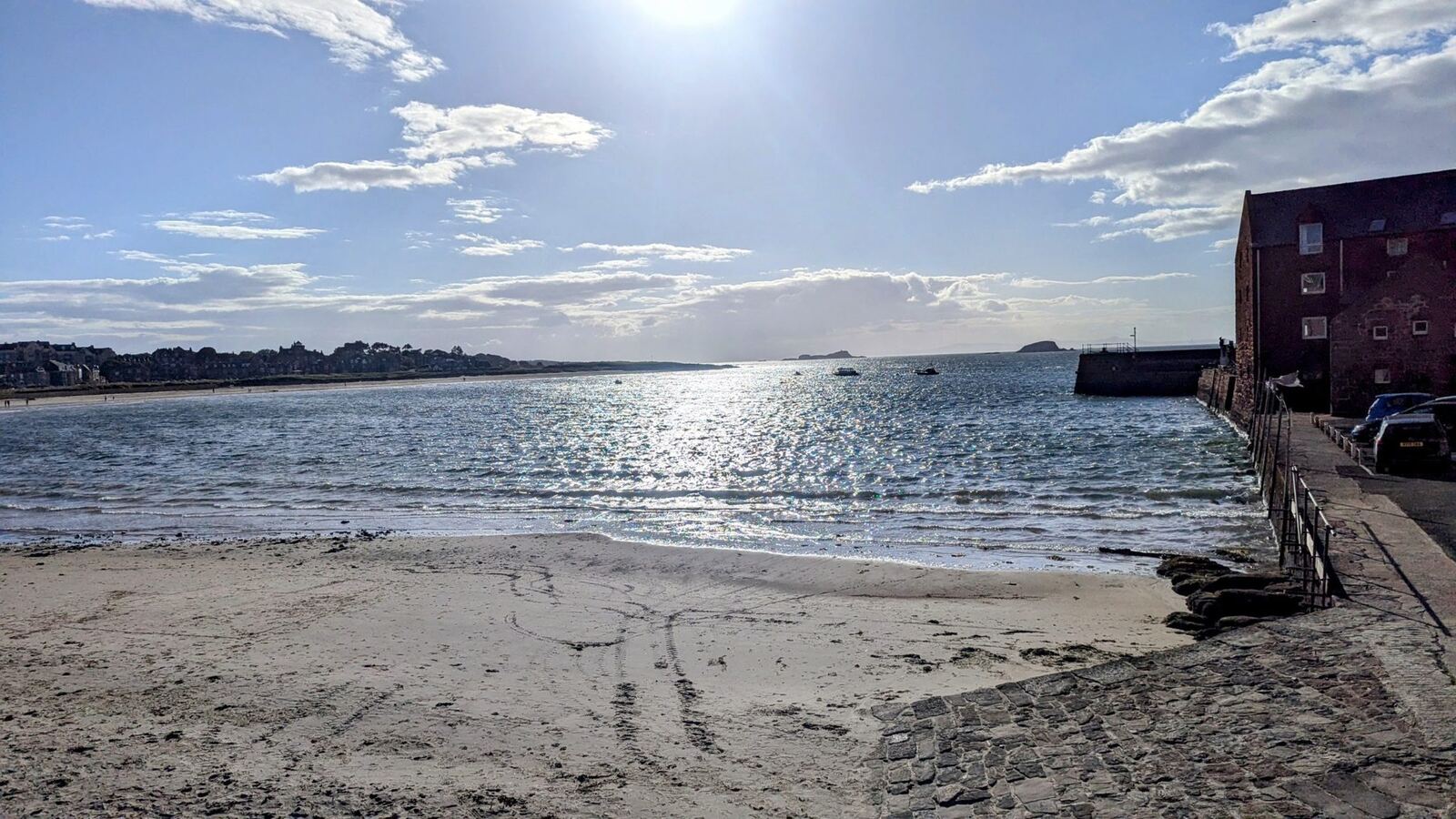
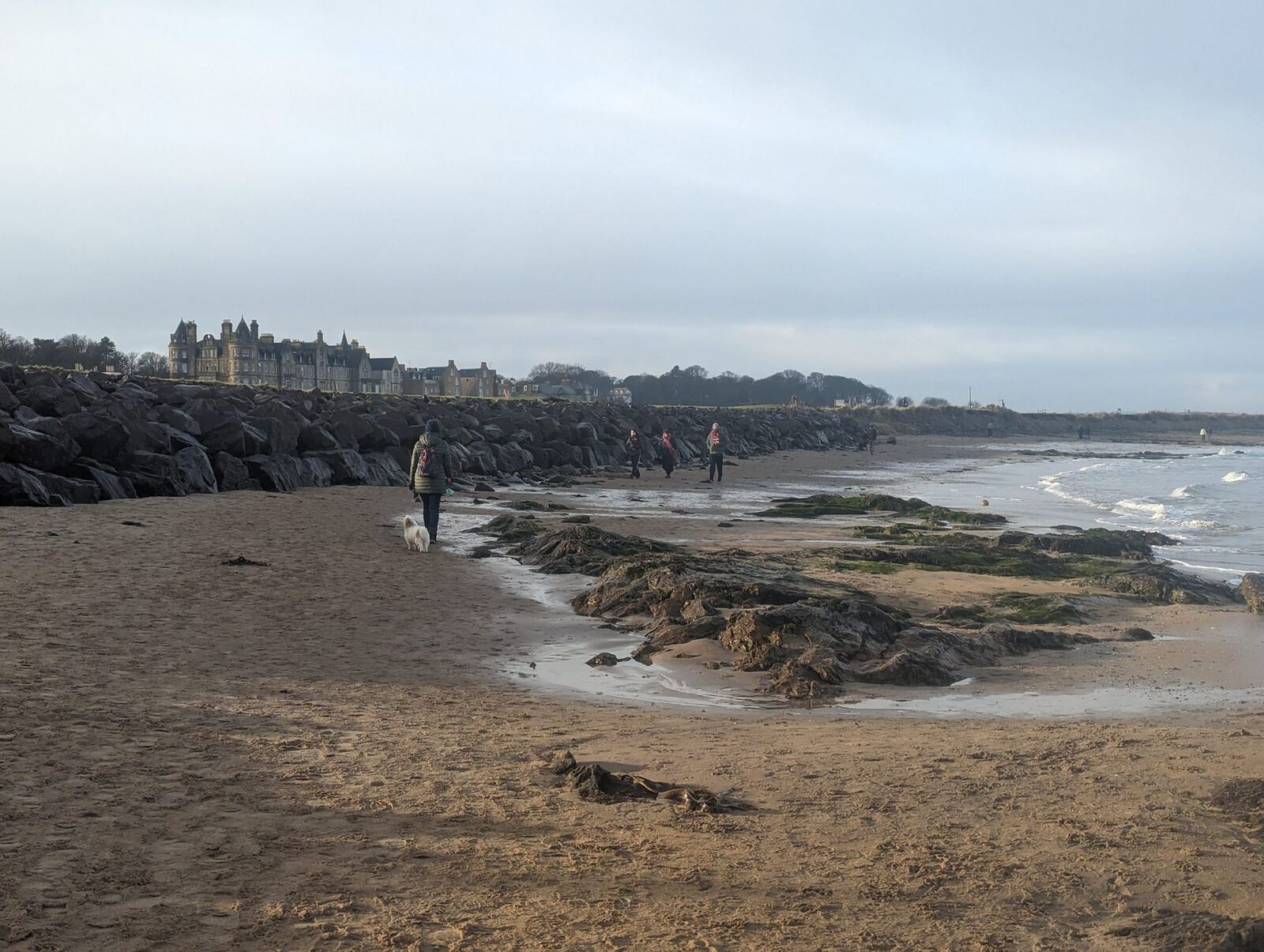
North Berwick has two beaches, one either side of the harbour:
- West Bay — the big, curving sweep beside the golf links, backed by the town.
- Milsey Bay (East Bay) — the quieter, family favourite to the east, with rock pools at low tide.
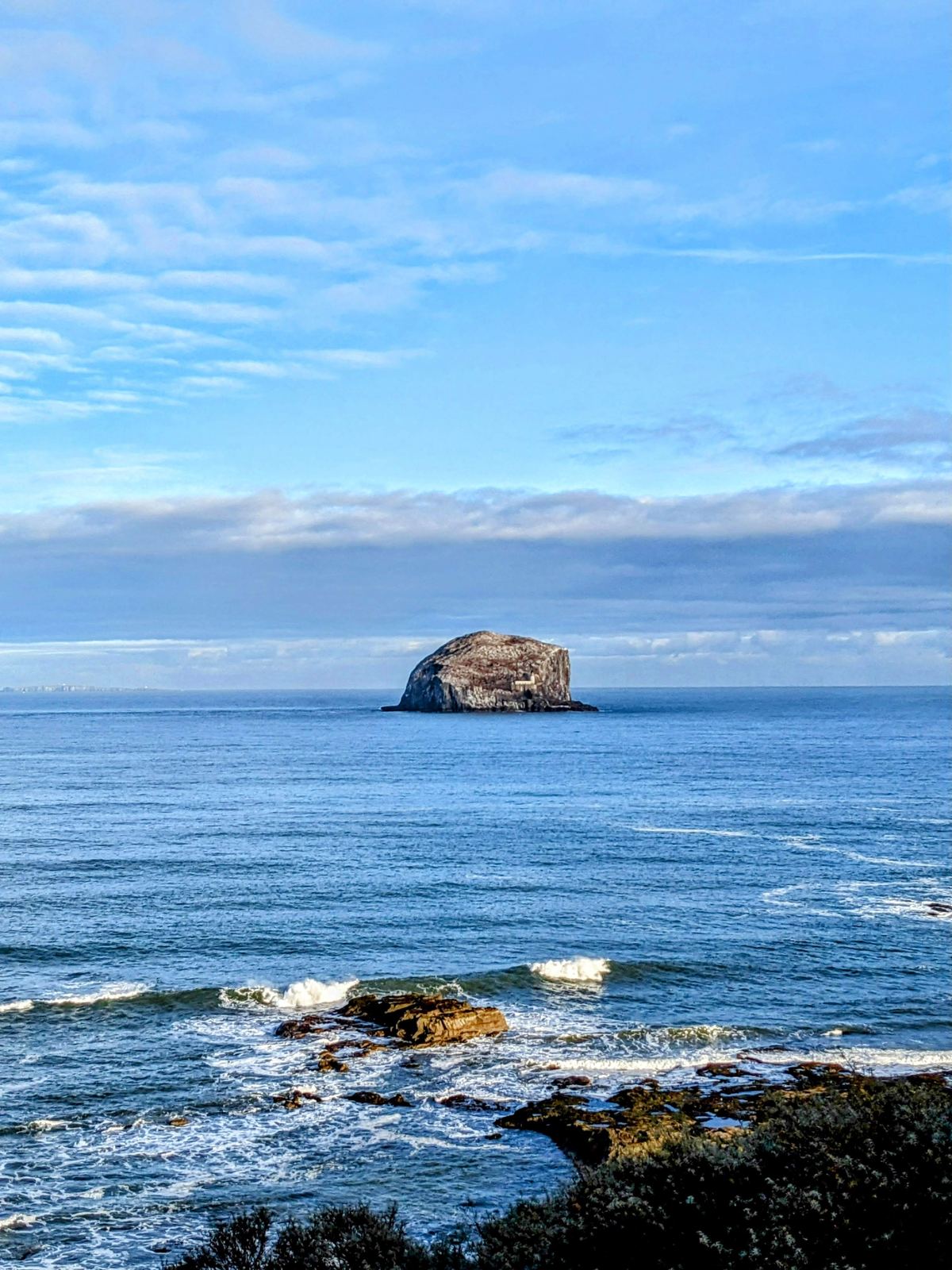
Both look out on a scatter of islands that define the view: Craigleith, The Lamb, Fidra (the island that inspired Robert Louis Stevenson’s Treasure Island map) — and, of course, Bass Rock.
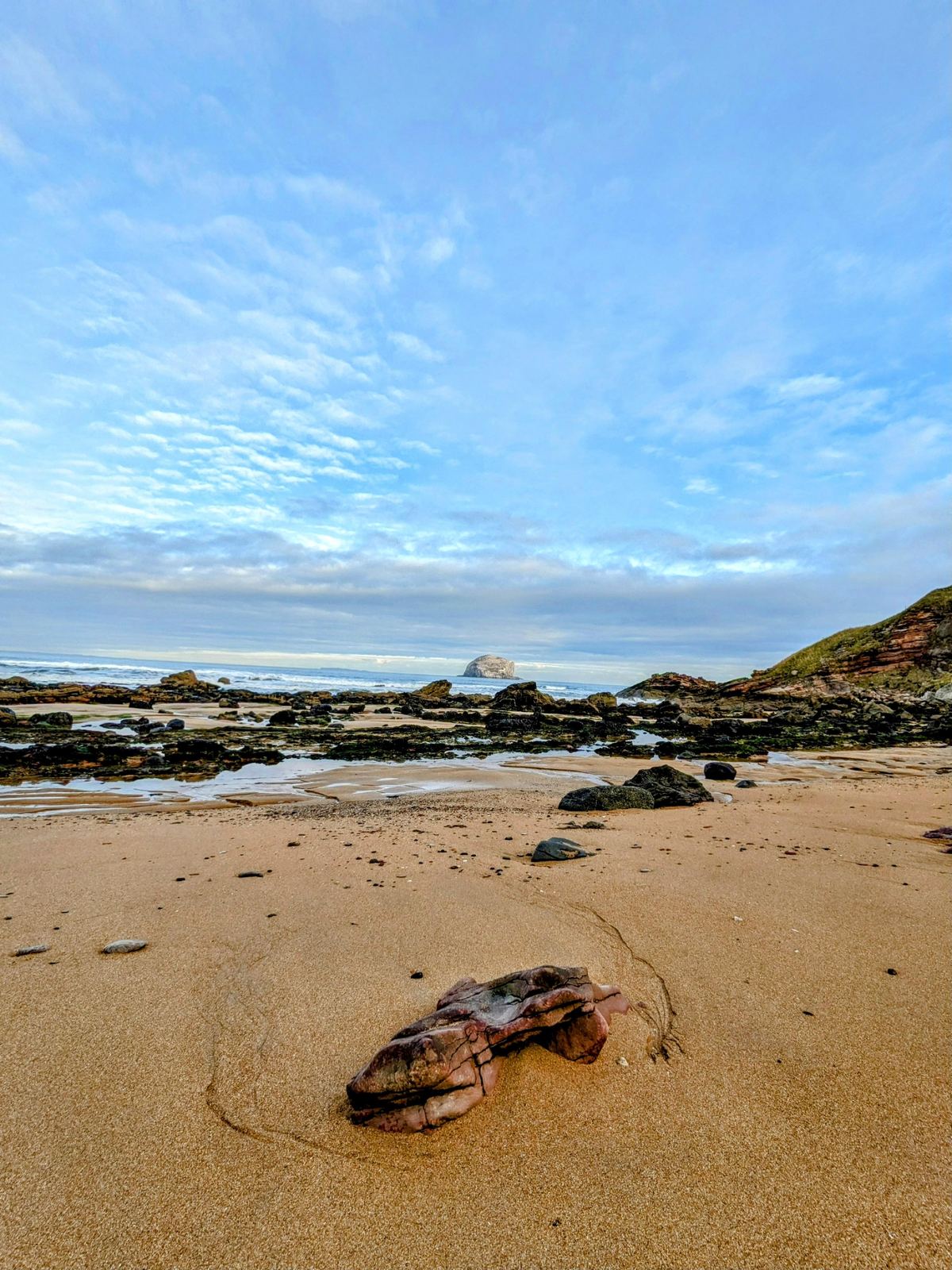
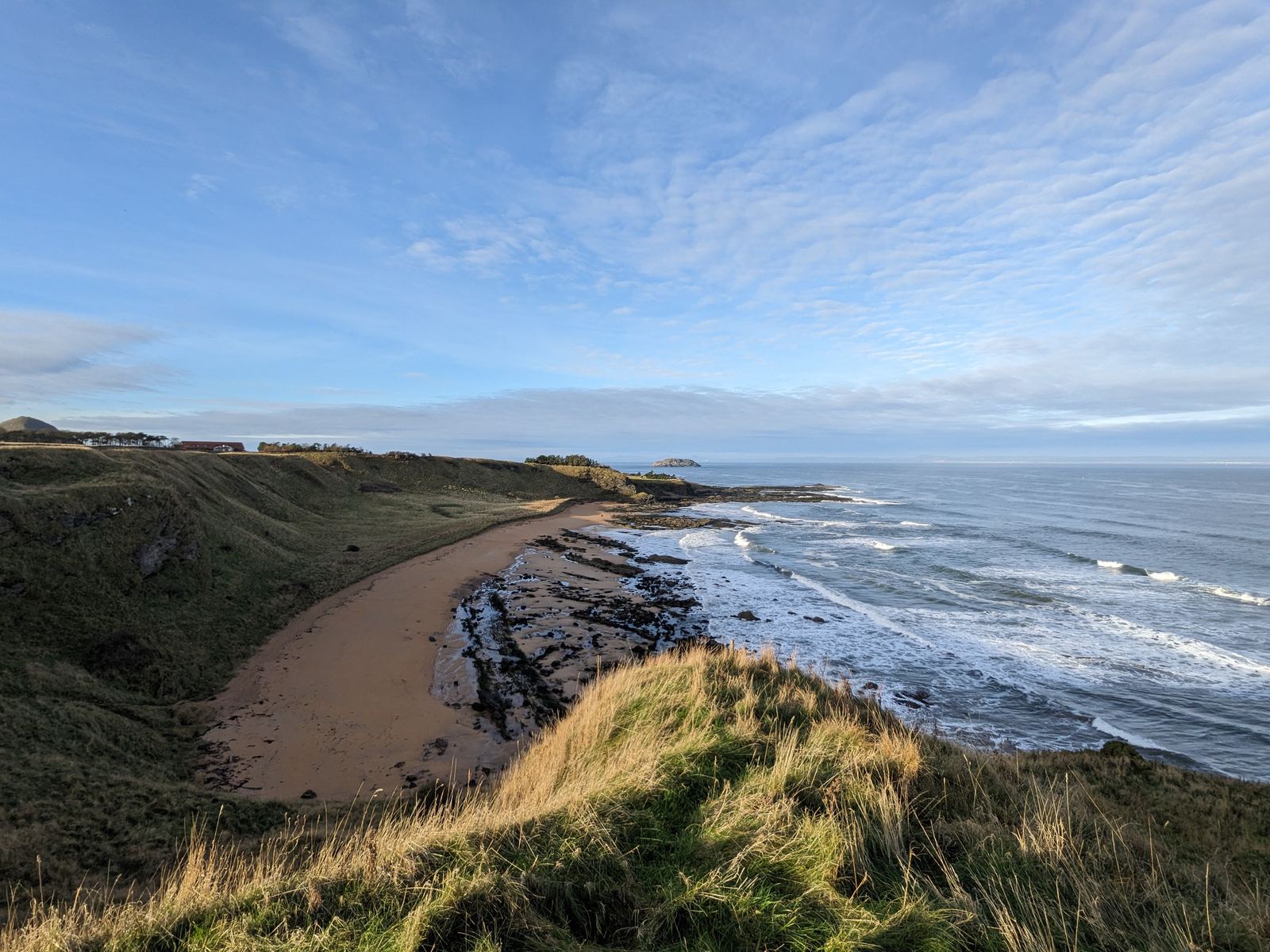
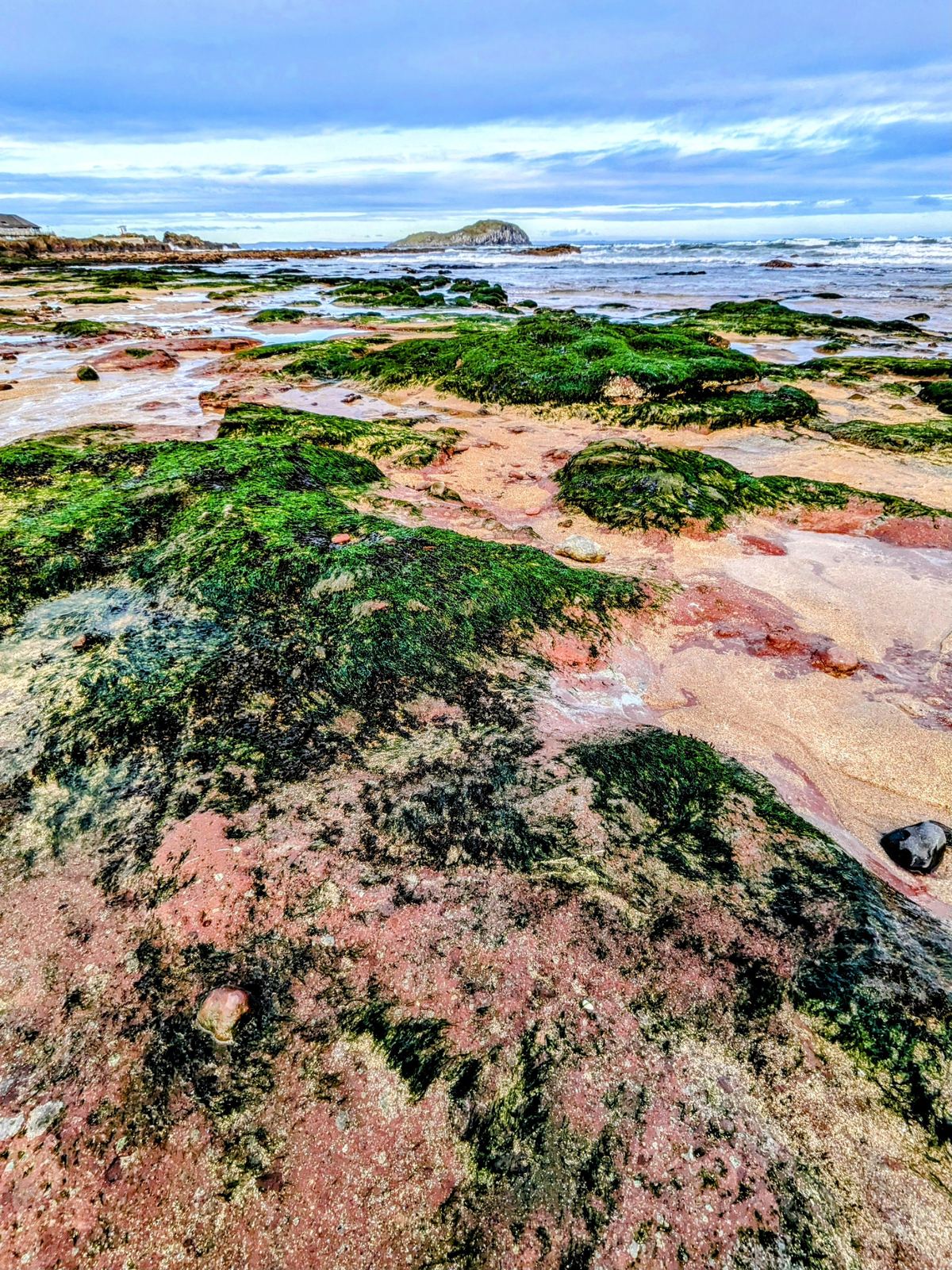
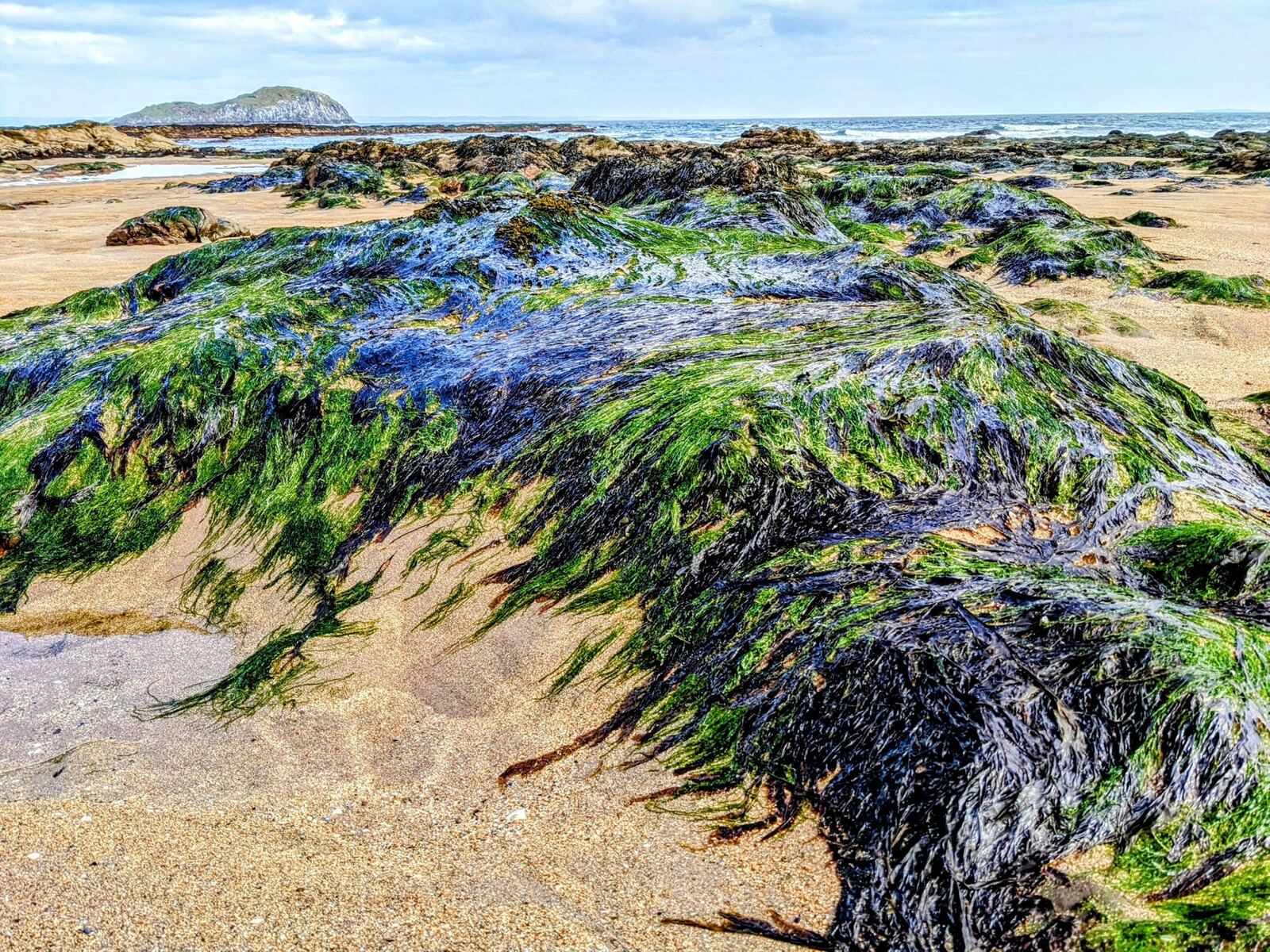
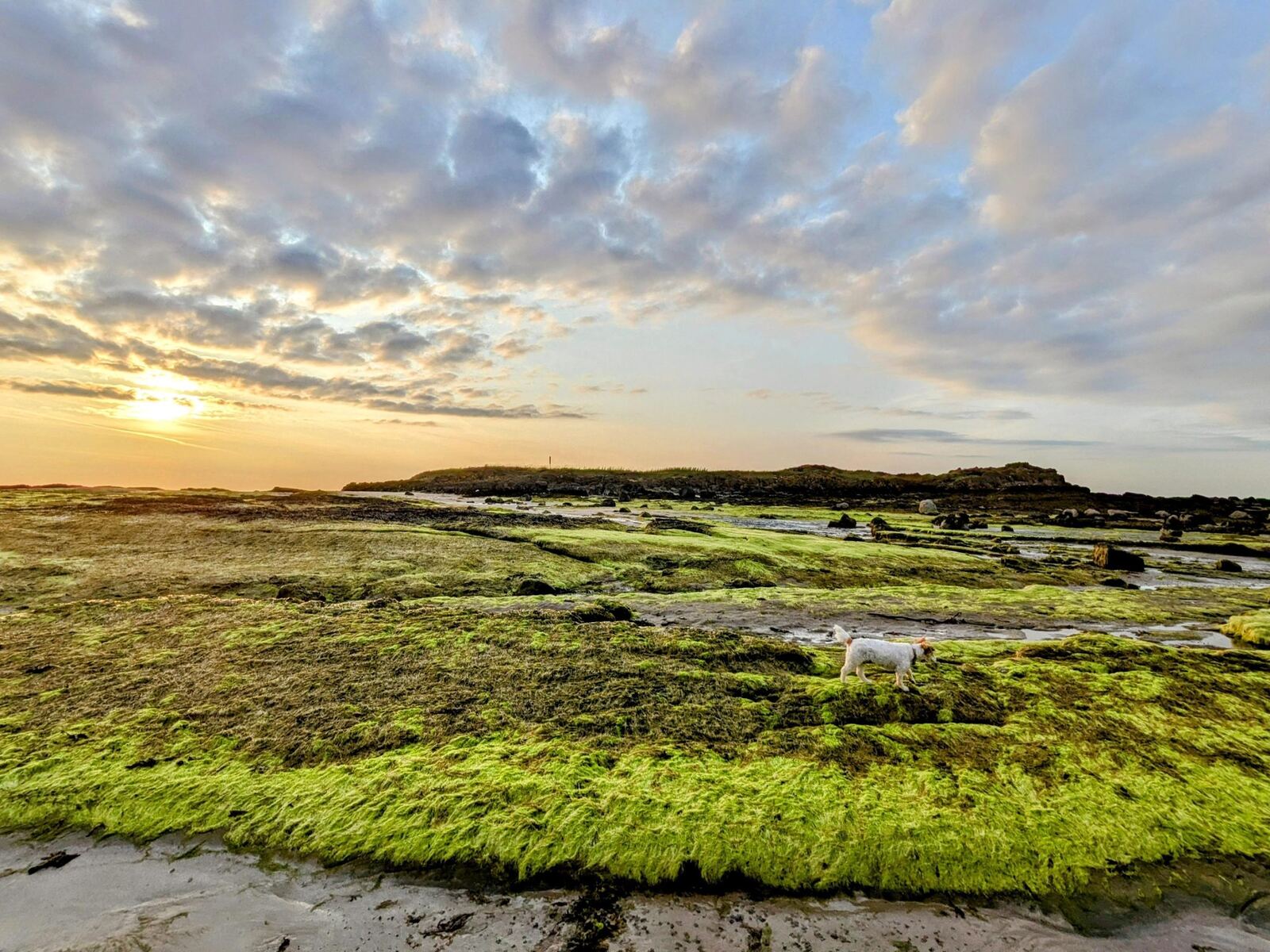
What surprises first-timers is the rock. This is volcanic country — the Law, Bass Rock, Craigleith and the Lamb are all the roots of ancient volcanoes — and at low tide the foreshore east of the harbour turns into a wonderland of pink and rust-red rock, green weed and rock pools. It’s some of the most photogenic shoreline on the Forth, and almost nobody’s on it.
The harbour & the Scottish Seabird Centre
The harbour is the heart of it. Here you’ll find the Scottish Seabird Centre, with live cameras beaming back the drama of Bass Rock’s gannets and the puffins of the Isle of May — and, in season, boat trips out around the islands. It’s brilliant for kids and birders alike. Just along the quay, the Lobster Shack does superb fresh seafood in summer.
Bass Rock — the world’s largest Northern gannet colony (~150,000 birds) — gets its own story on our Bass Rock & beach page.
North Berwick Law — the hill at the back
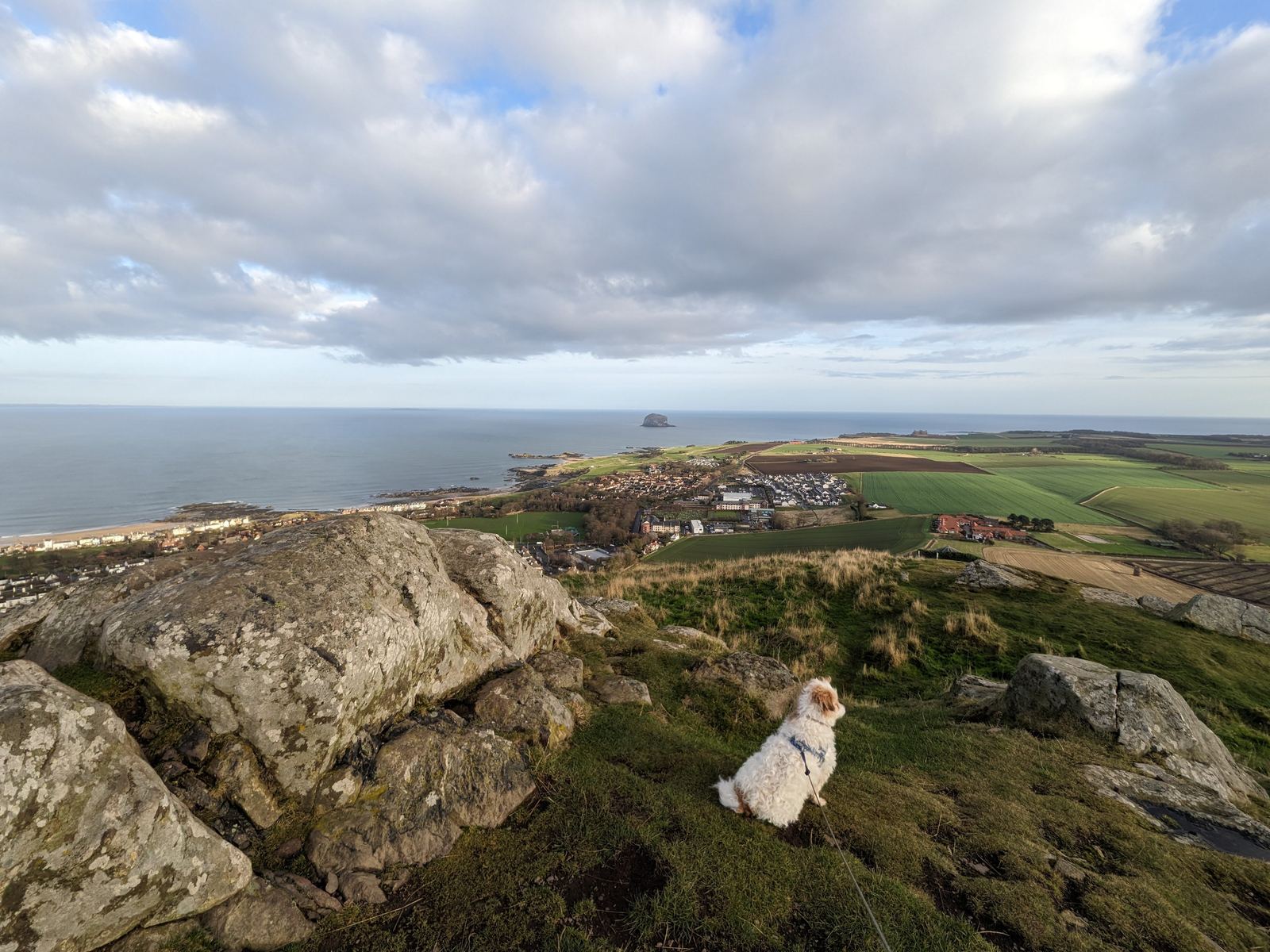
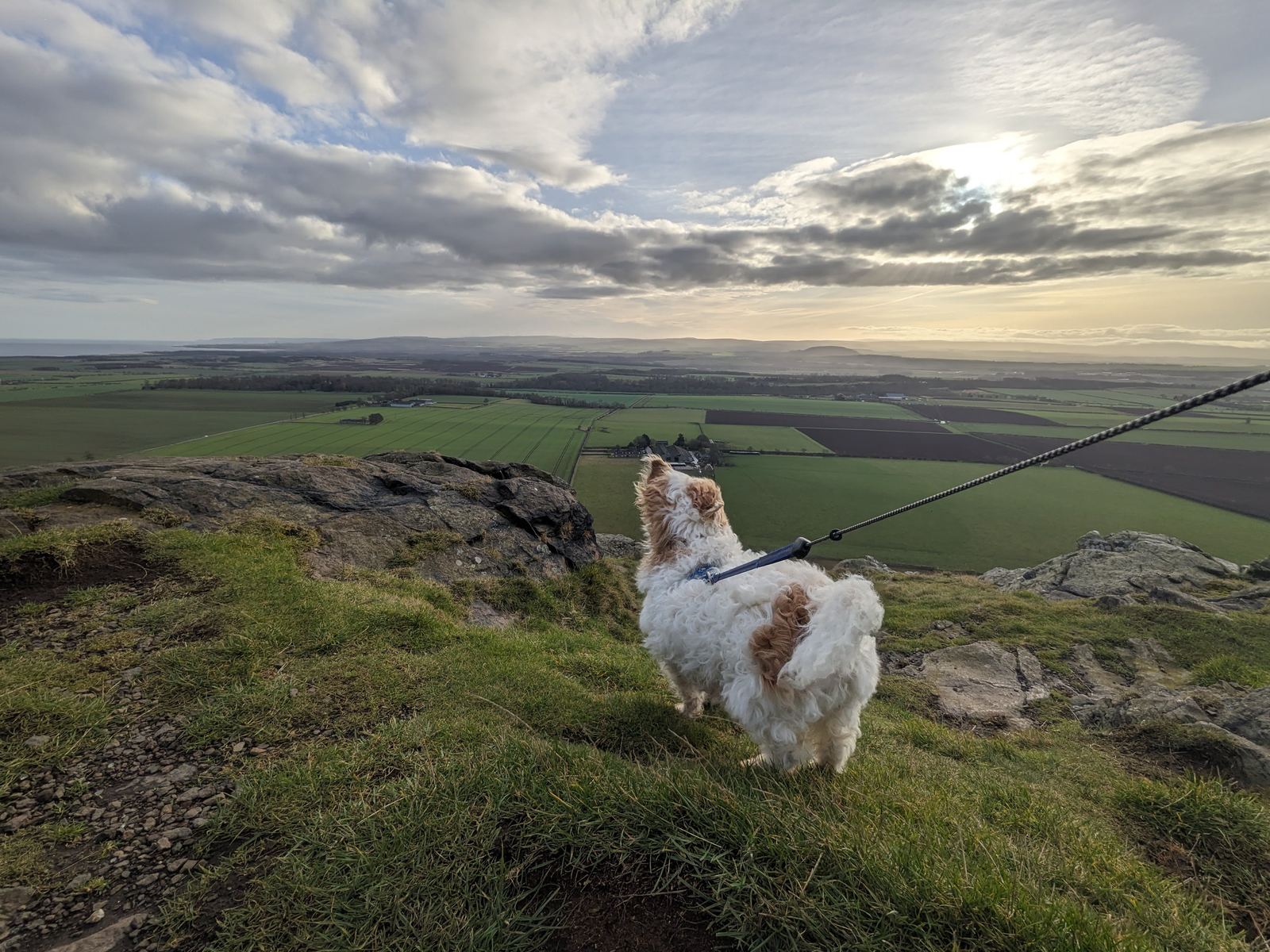
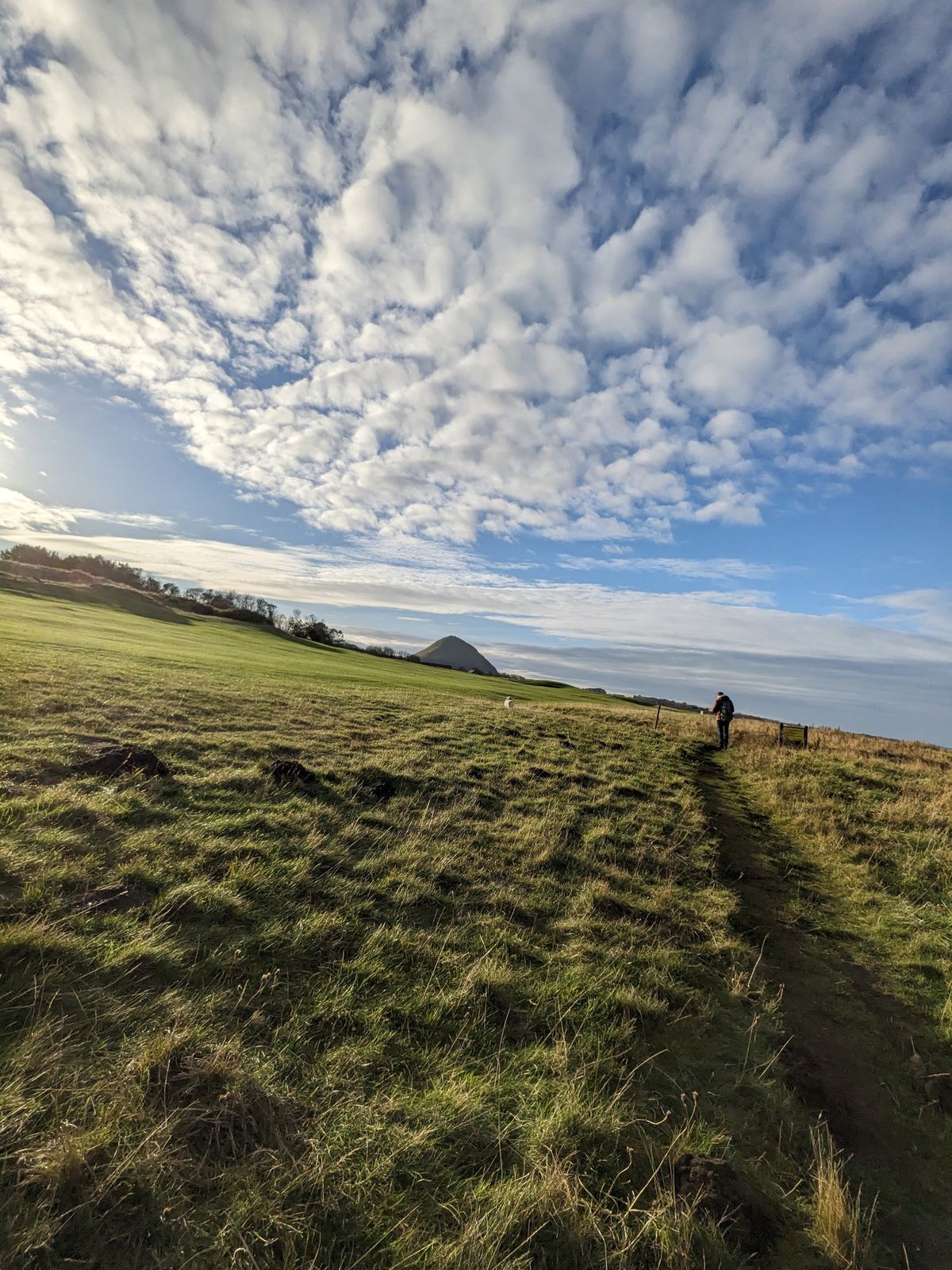
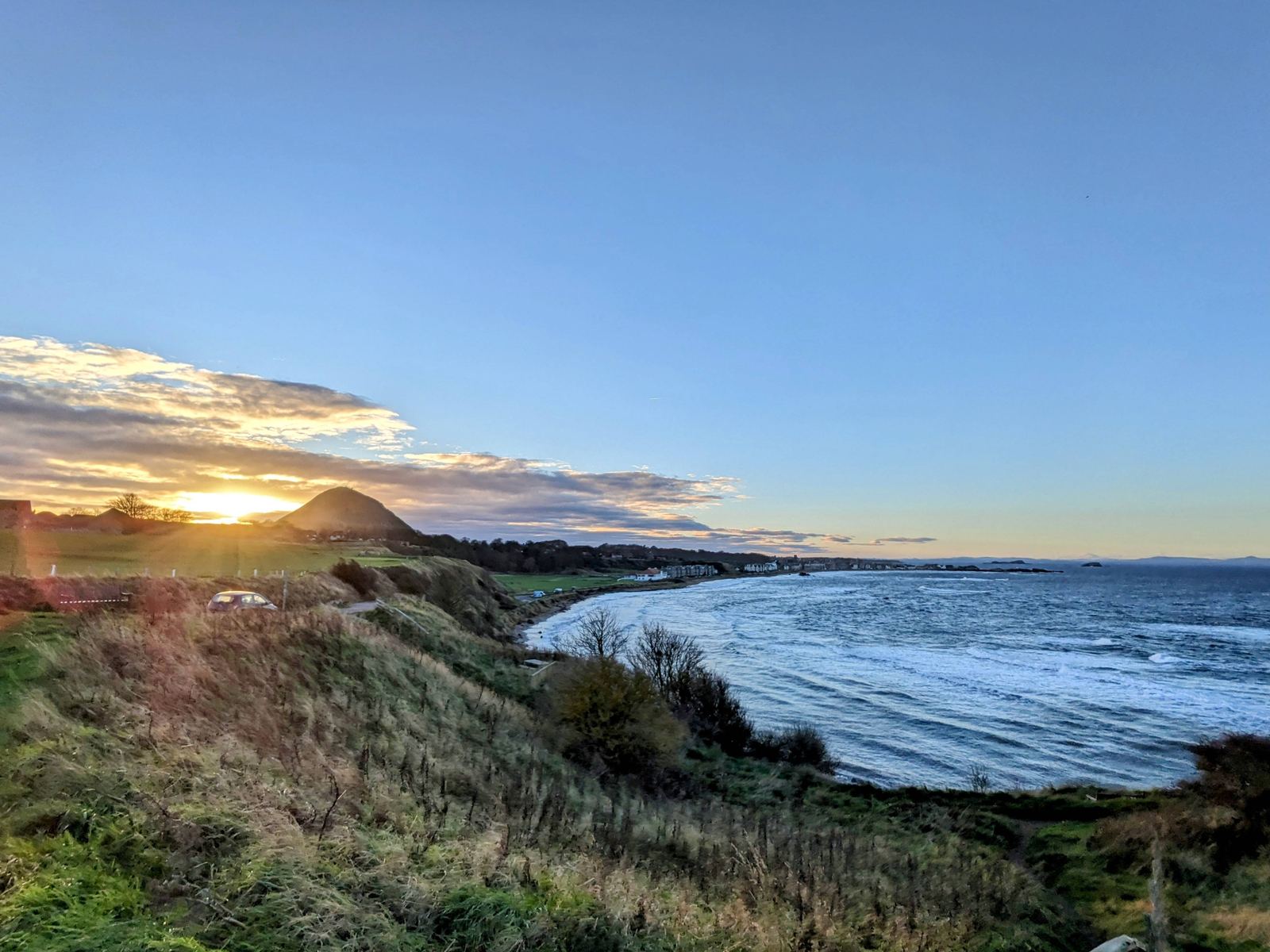
Rising straight up behind the town is North Berwick Law, a 187m volcanic plug and the town’s landmark — that near-perfect green cone you see from every beach and fairway. The walk to the summit is short but properly steep — 40 minutes or so from the car park at the foot — and it’s the single best thing you can do here for the effort involved.
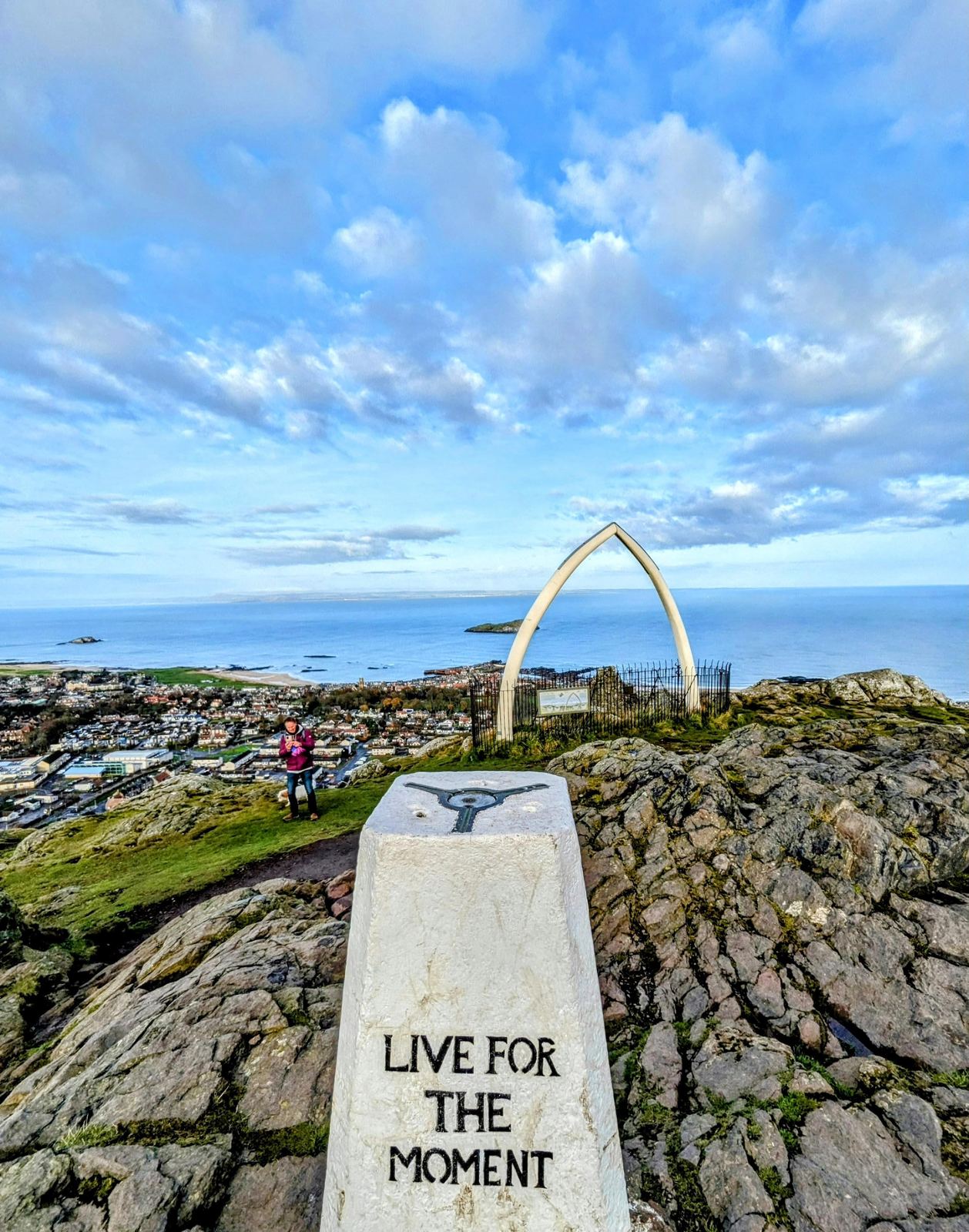
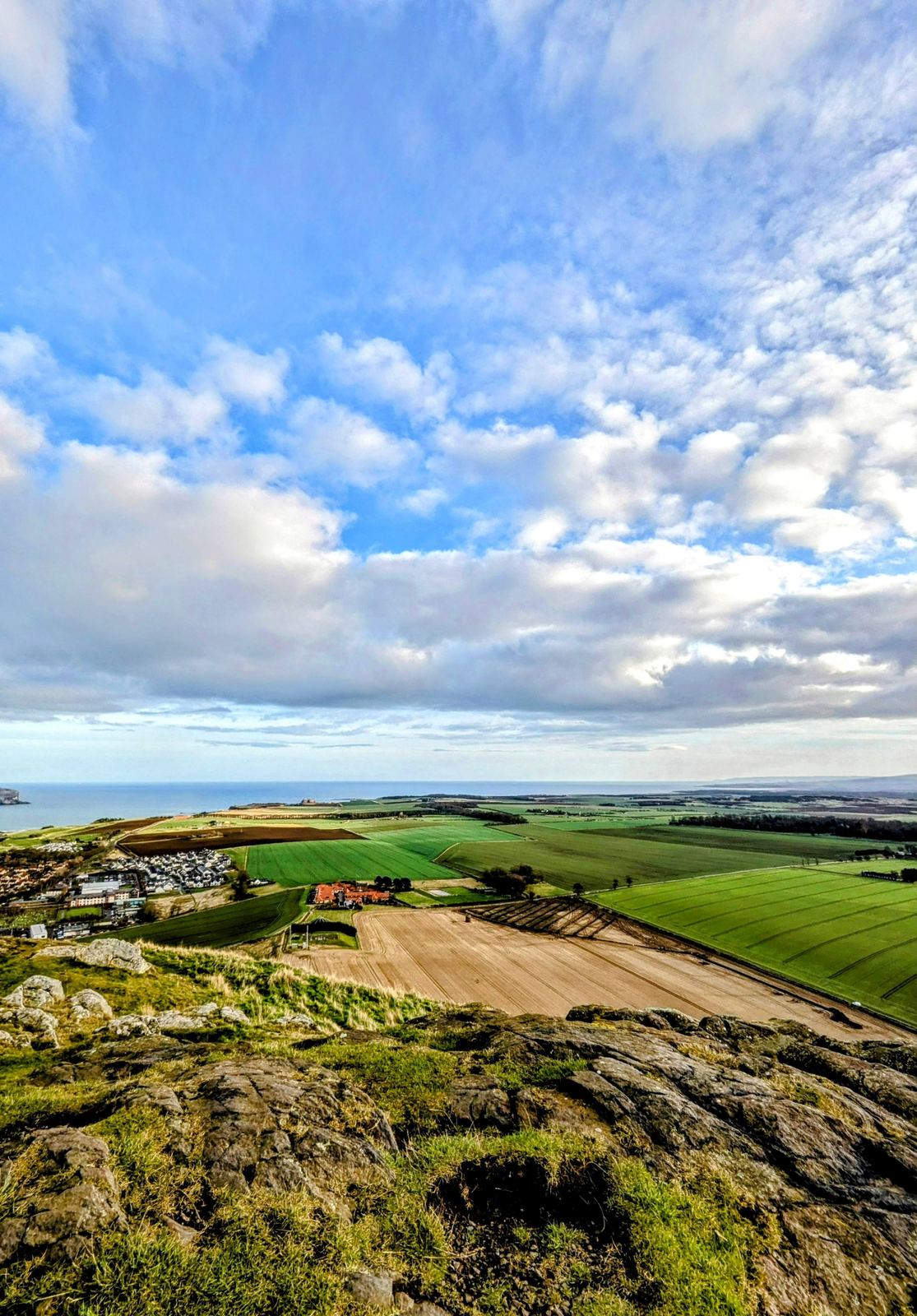
The reward at the top is a genuine 360° panorama: the Forth and its islands laid out below, over to Fife across the water, west to Edinburgh and Arthur’s Seat, and south to the rolling Lammermuirs. On a clear day you can trace the whole coastline you’ve been walking. Up top sit the ruins of Napoleonic-era and wartime lookouts — the Law was a watch-post for Napoleon’s fleet and again in both world wars — and the famous whalebone arch. There’s been a whale-jaw arch up here since around 1709; the current one is a fibreglass replica put up in 2008 when the last real jawbone finally rotted, but it’s still the great photo-stop of East Lothian.
The golf — “Scotland’s Golf Coast”
This stretch of coast is one of the great golfing corners of the world, and North Berwick is its heart:
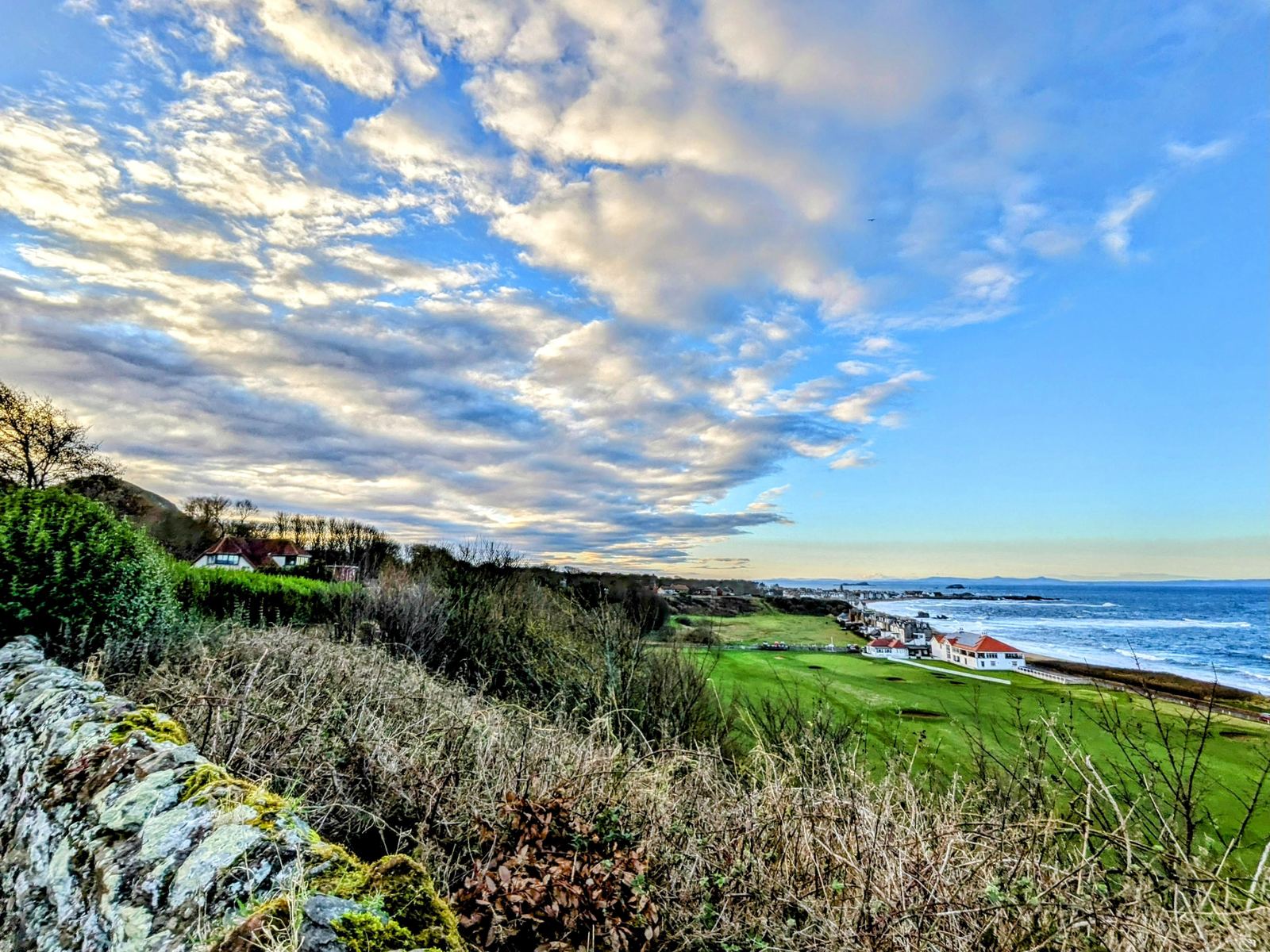
- North Berwick (West Links) — one of the oldest courses on the planet, played over essentially the same ground since 1832. Its par-3 15th, “Redan,” is among the most copied golf holes in the world. The West Links runs right along West Bay, so even non-golfers walk beside it.
- The Glen (East Links) — the town’s second course, on the cliffs east of the harbour, with cracking sea views.
And within a few miles are some of the most famous names in the game: Muirfield (Gullane) — home of the Honourable Company of Edinburgh Golfers and a regular Open Championship venue; The Renaissance Club — host of the Genesis Scottish Open; and Gullane, Archerfield Links and Craigielaw, all superb links within a short drive.
Coast walks — you don’t need clubs
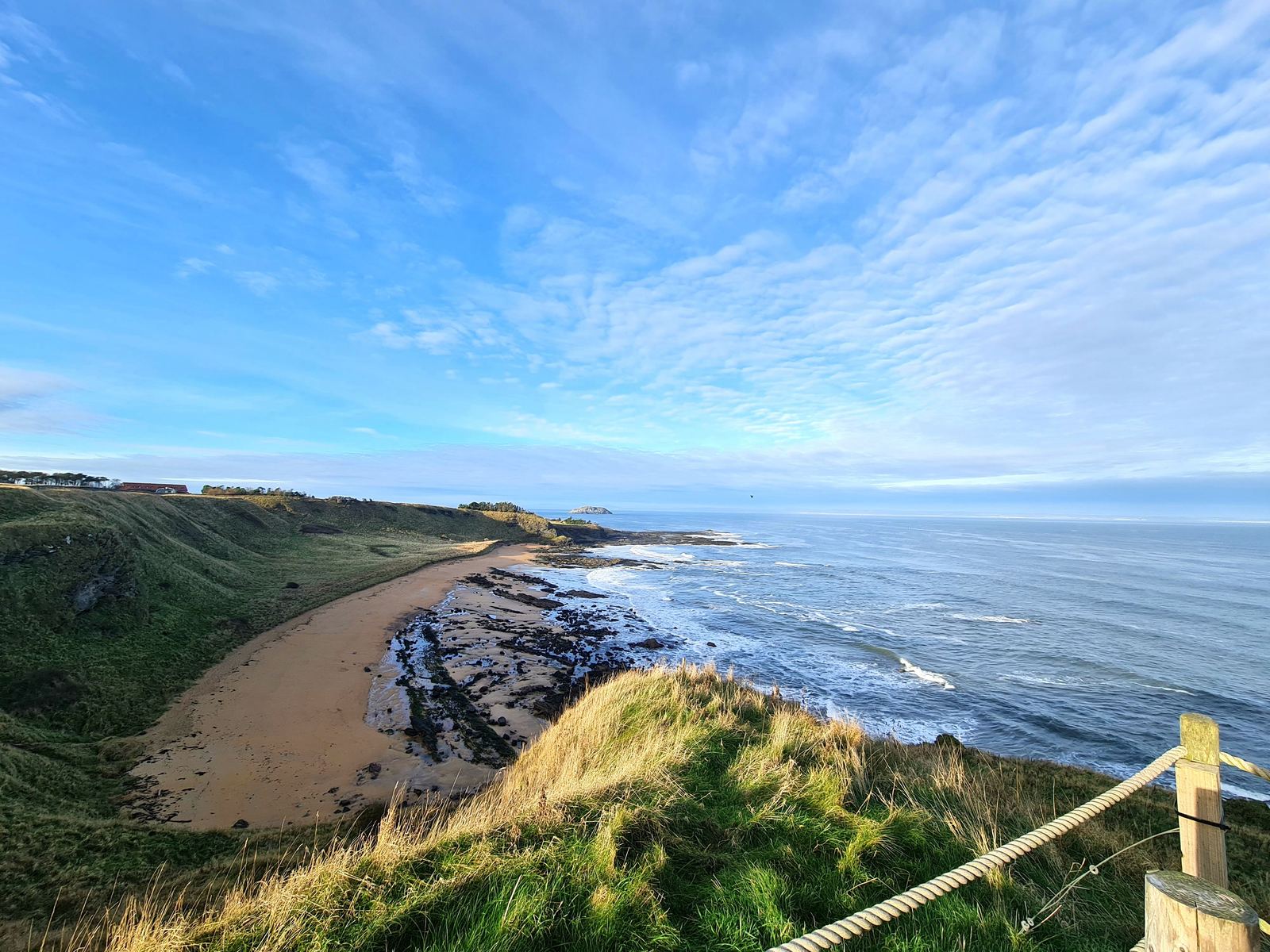
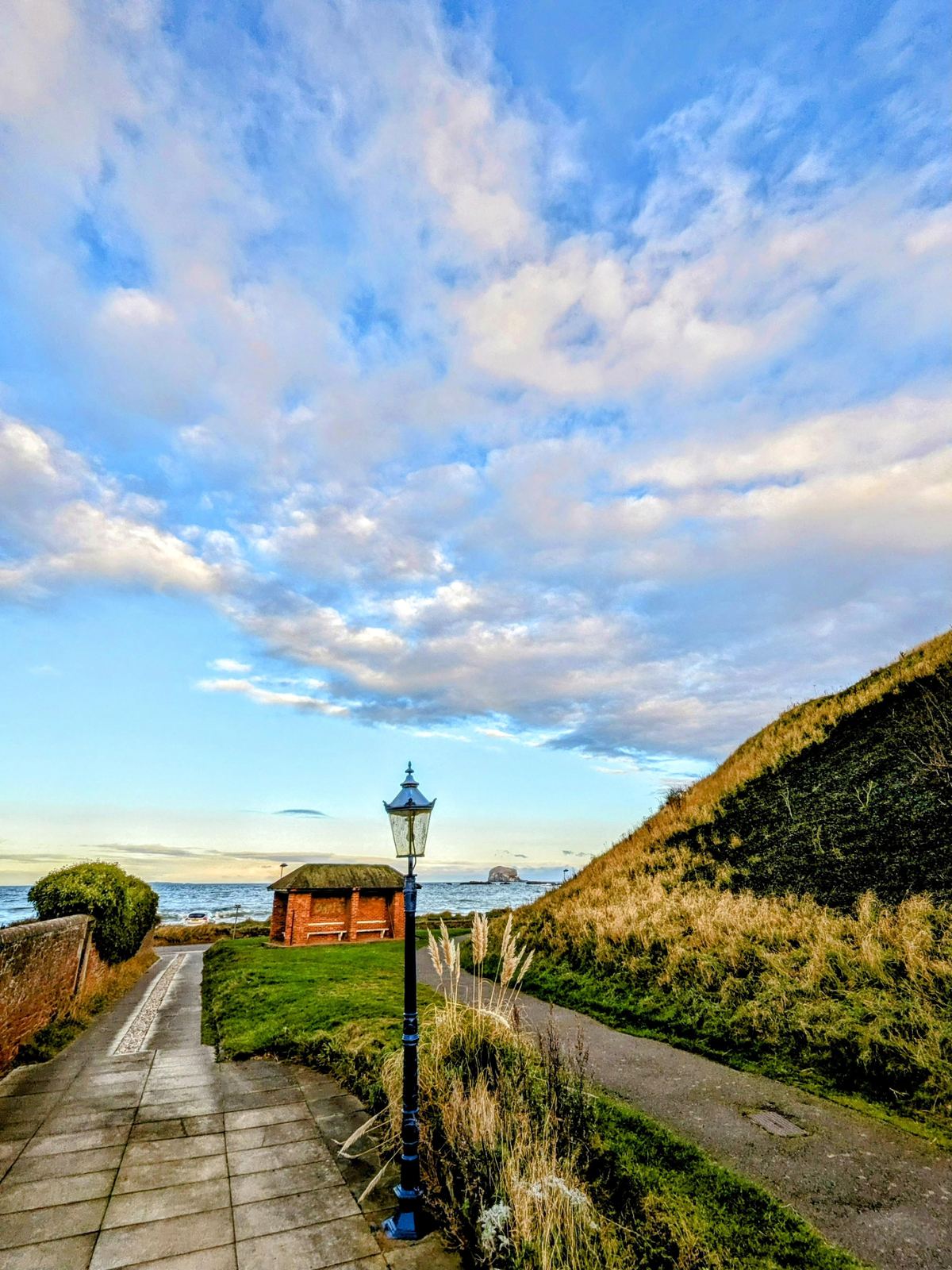
You don’t have to play golf to enjoy this coast. Some of the best walking here runs right through and alongside the links: the path west from the harbour hugs the West Links and Point Garry; the coast path east skirts The Glen and on toward Tantallon. You get the sea, the dunes, the volcanic rock and the golf-course greens all in one easy, flat stroll — and the light out here does the rest.
Coffee, cake & lunch — the walks that end in caffeine
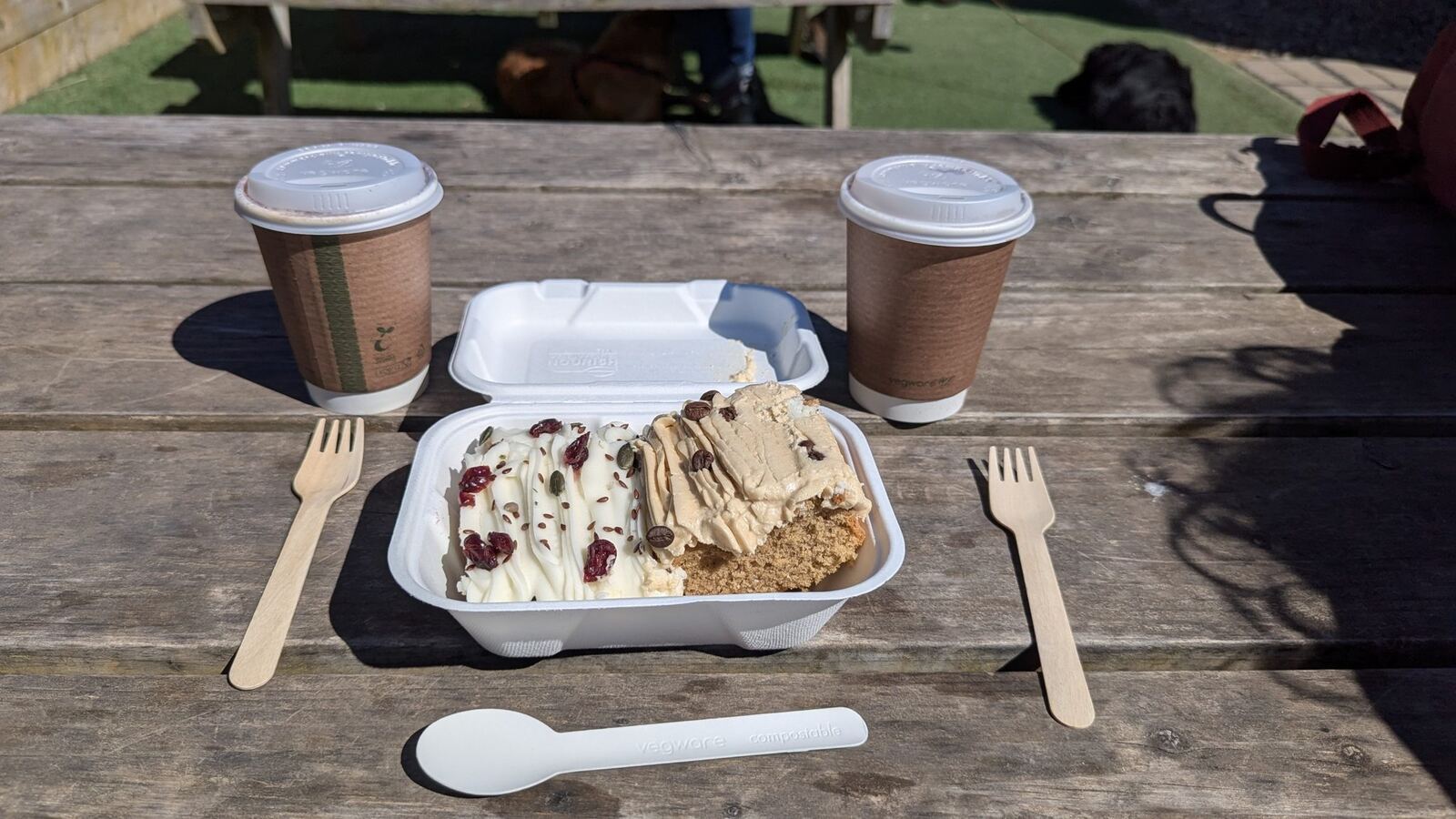
Half the joy of North Berwick is that every walk ends at a good coffee. The High Street and harbour are packed with proper independents — think top-notch coffee roasters and bakeries, a famous gelato stop, and cosy tea rooms — perfect after a beach walk or a slog up the Law. Our routine is simple: walk the bay or the links, then reward it with a flat white and a slab of cake.
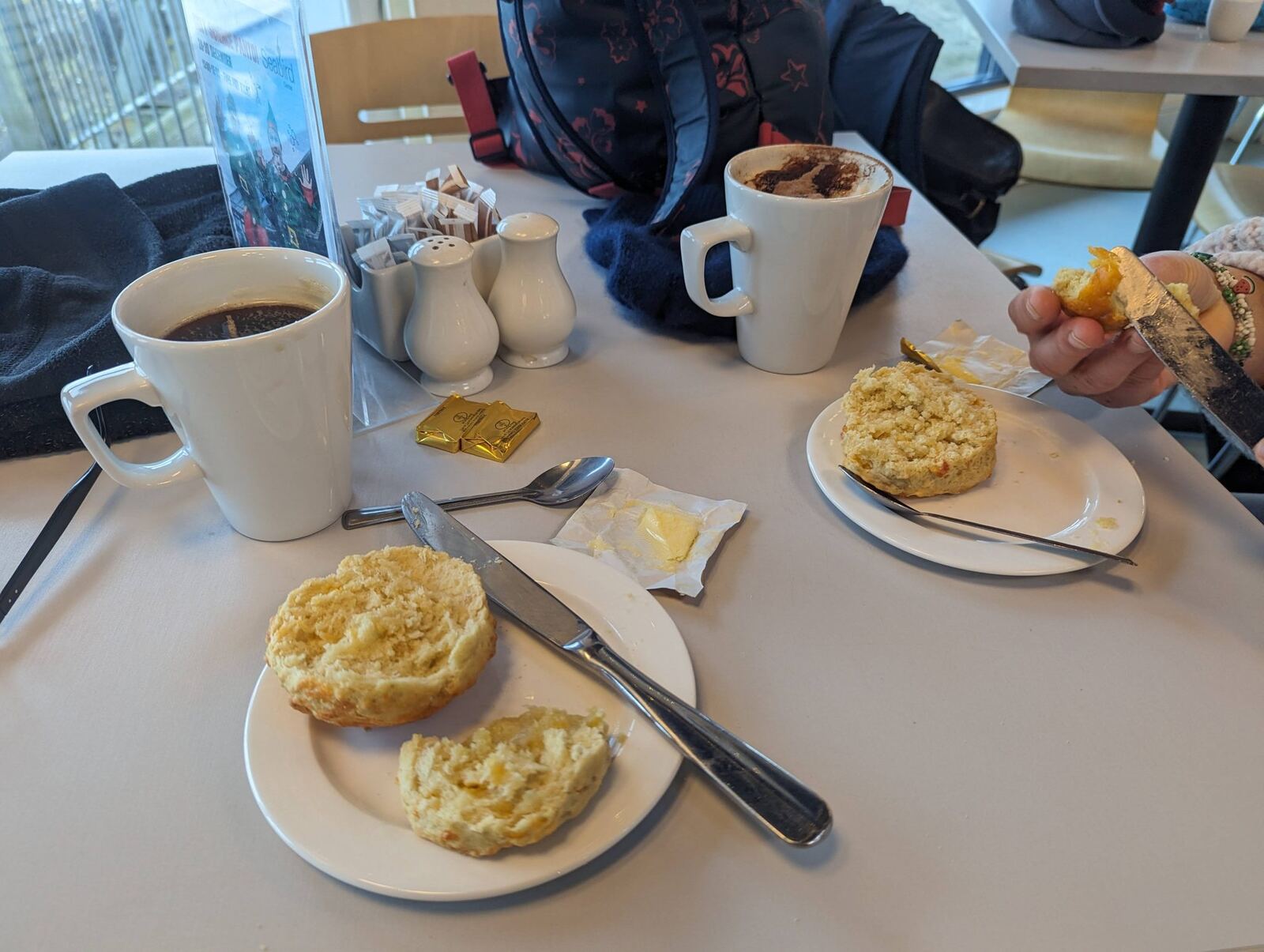

The “Penguin tea room” is our nickname for the café inside the Scottish Seabird Centre, right on the harbour — walk the pier, watch the live Bass Rock gannet cameras, then settle in for coffee and cake. It’s our go-to every visit.
Motorhome camping & staying over
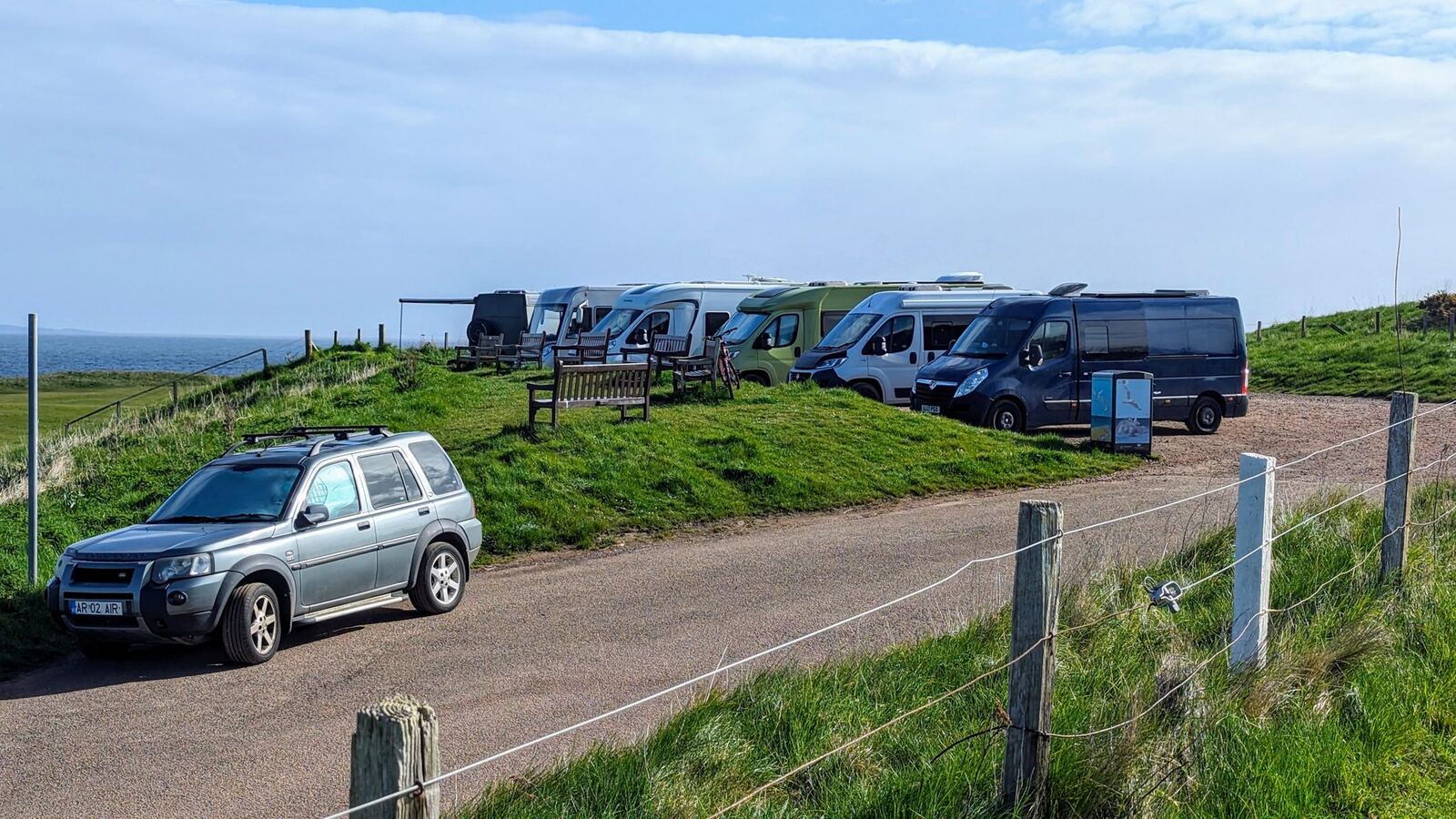
North Berwick is a great motorhome base for exploring East Lothian. The obvious formal option is Tantallon Caravan & Camping Park, on the clifftop east of town toward Tantallon Castle, with cracking Bass Rock views (more sites out at Dirleton/Yellowcraig to the west). Day-visiting by motorhome, use the larger town car parks rather than the tight harbour streets.
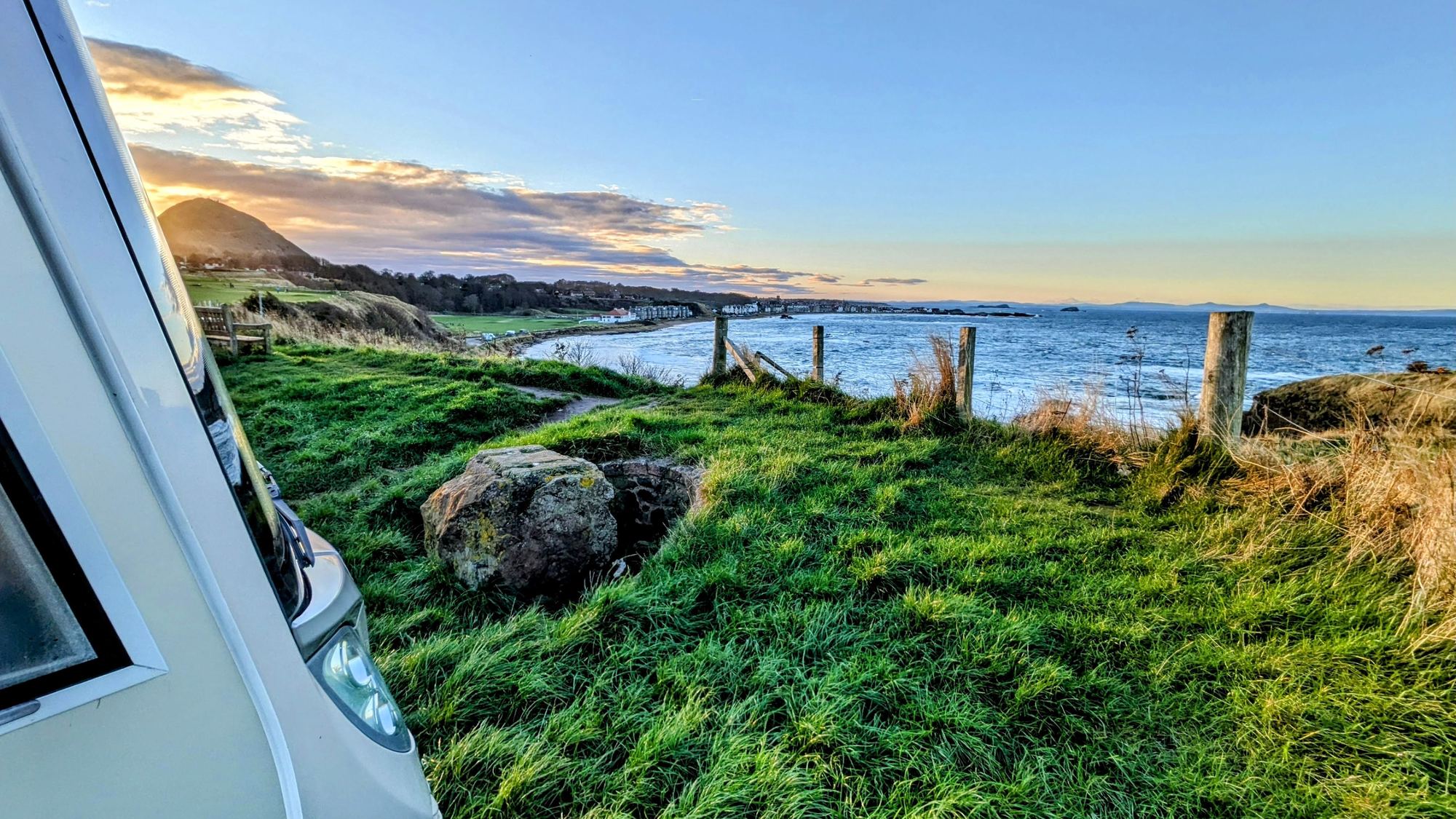
Truth be told, though — every time we came, we wild-camped up on the clifftops instead. The views are simply too good to give up: you wake with the Forth and Bass Rock filling the windscreen and the beach a few steps away.
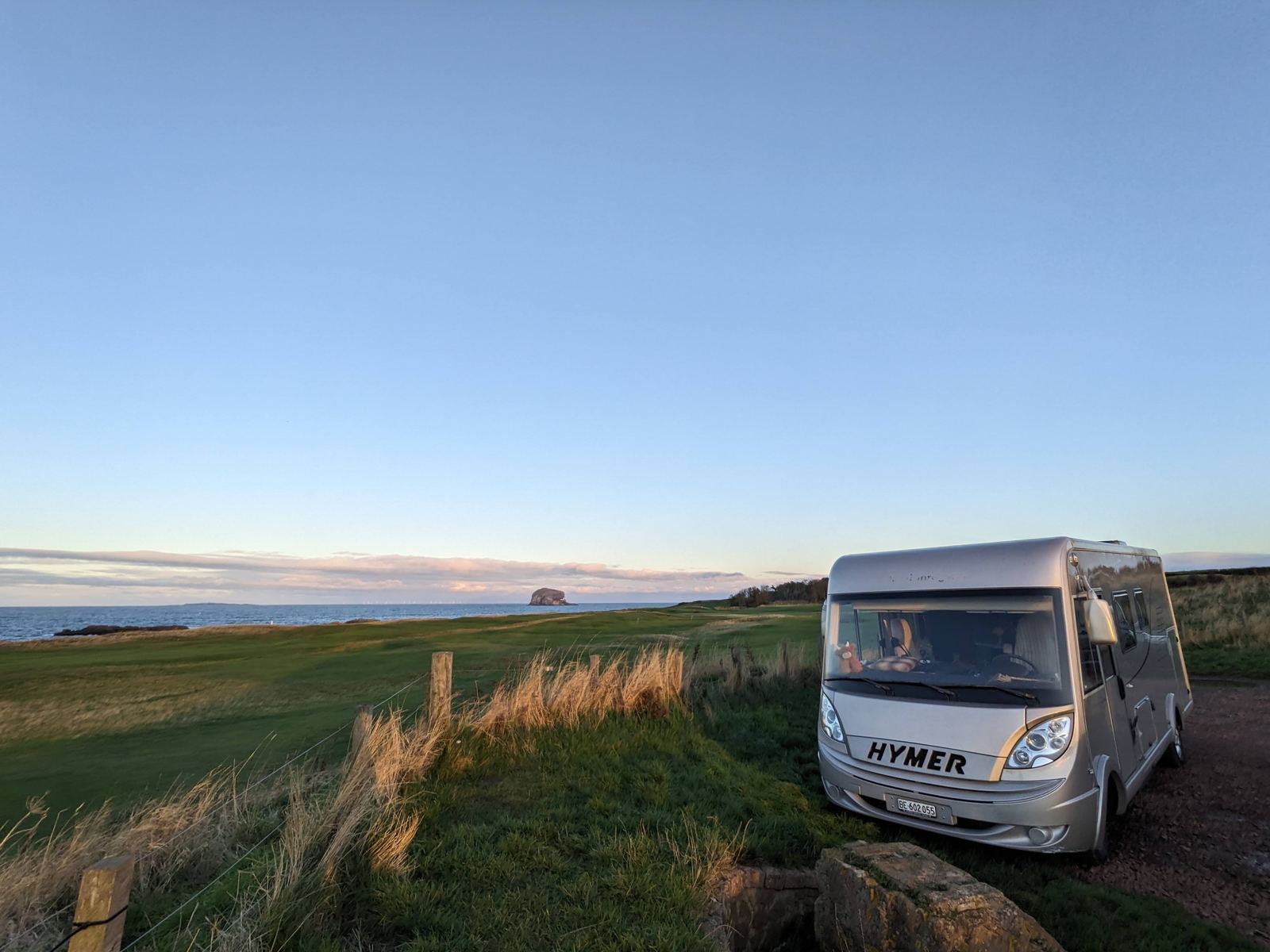
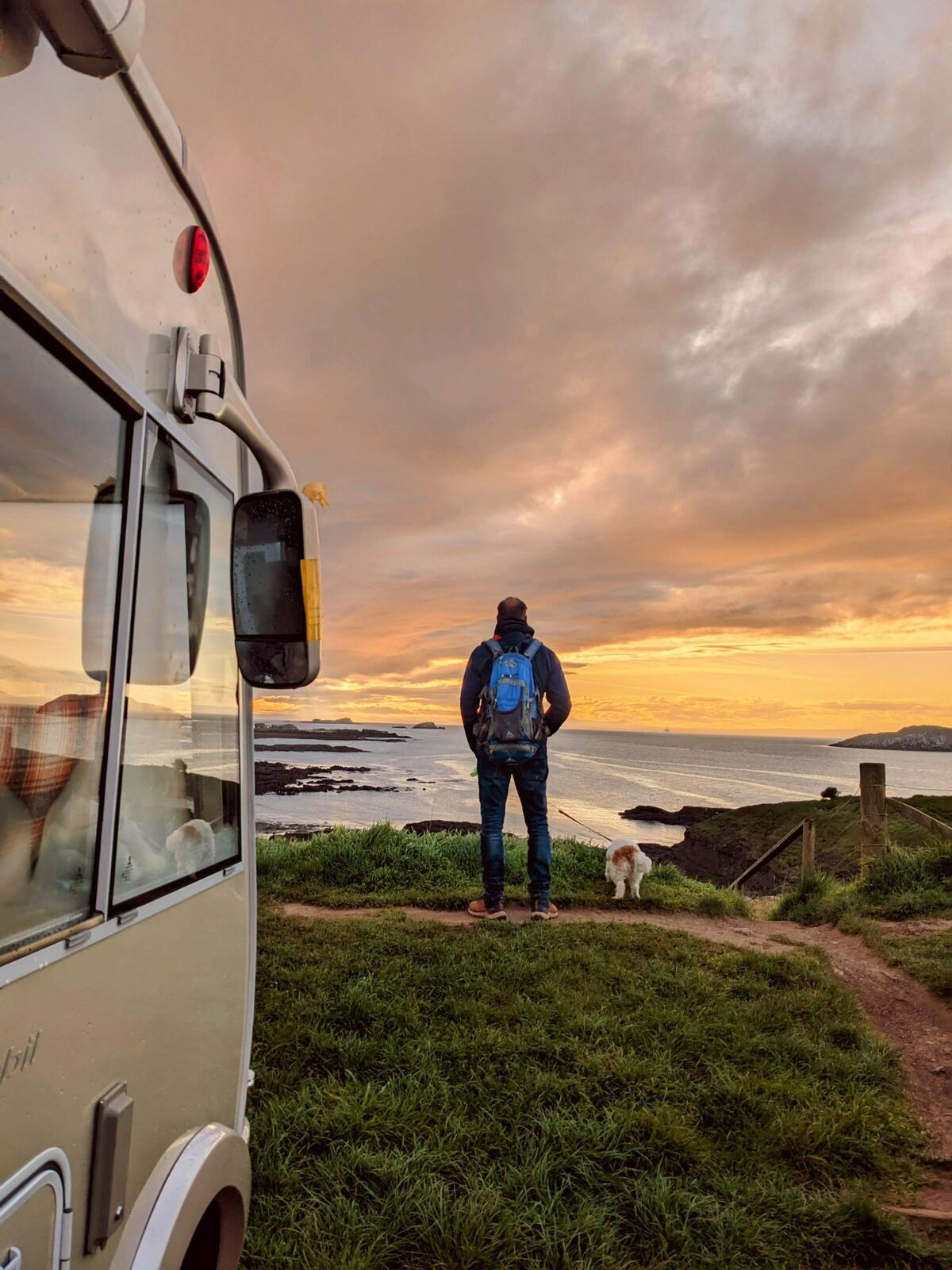
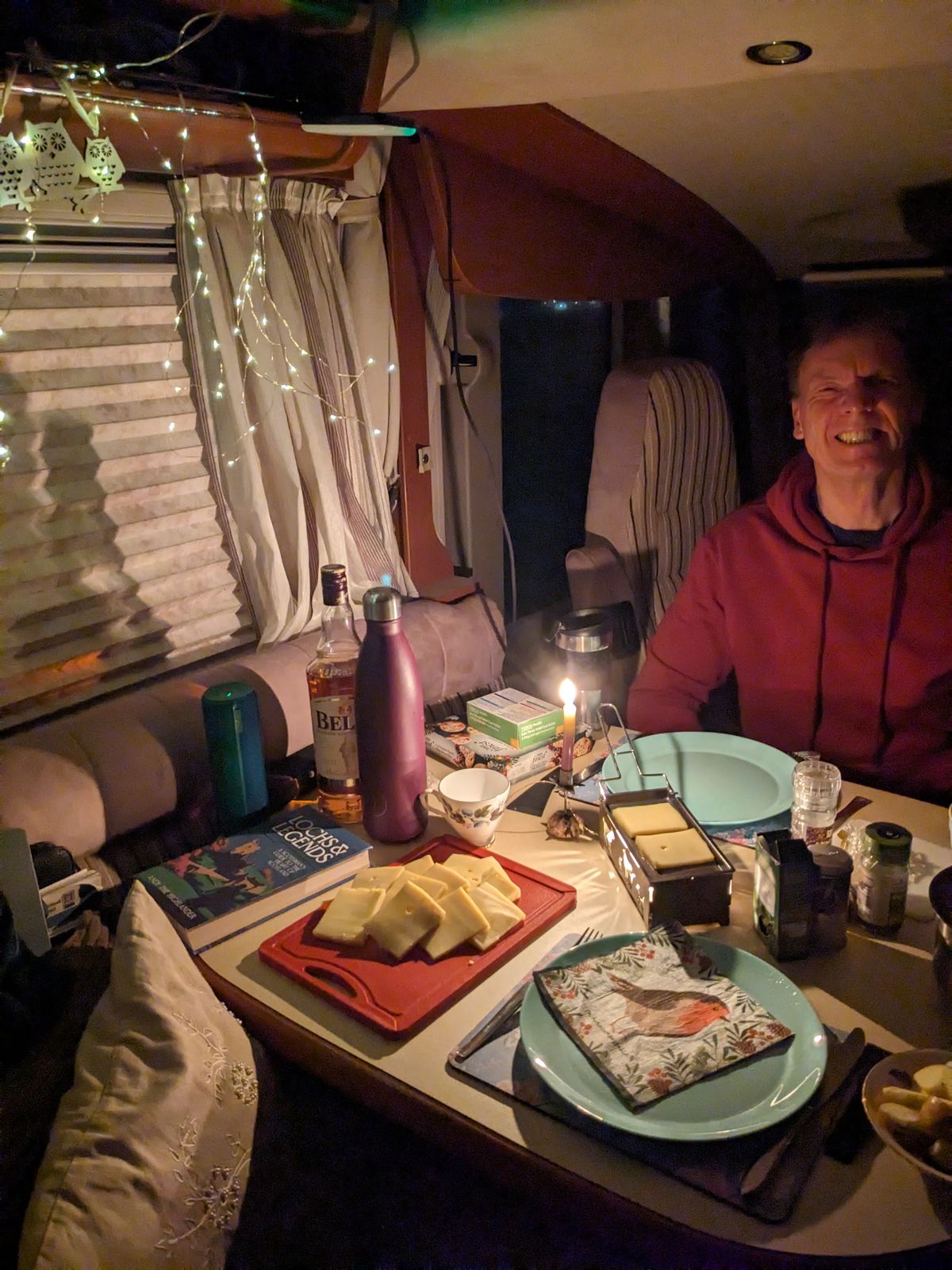
If you do the same, do it responsibly — arrive late, leave early, take every scrap away, don’t block gateways or access, and remember that Scotland’s wild-camping rights (the Outdoor Access Code) really cover tents rather than motorhomes, so clifftop van-nights are a courtesy-and-common-sense thing. Done well, nobody minds; done badly, the spots get closed for everyone.
A bit of history on the shore — RAF Coastal Command
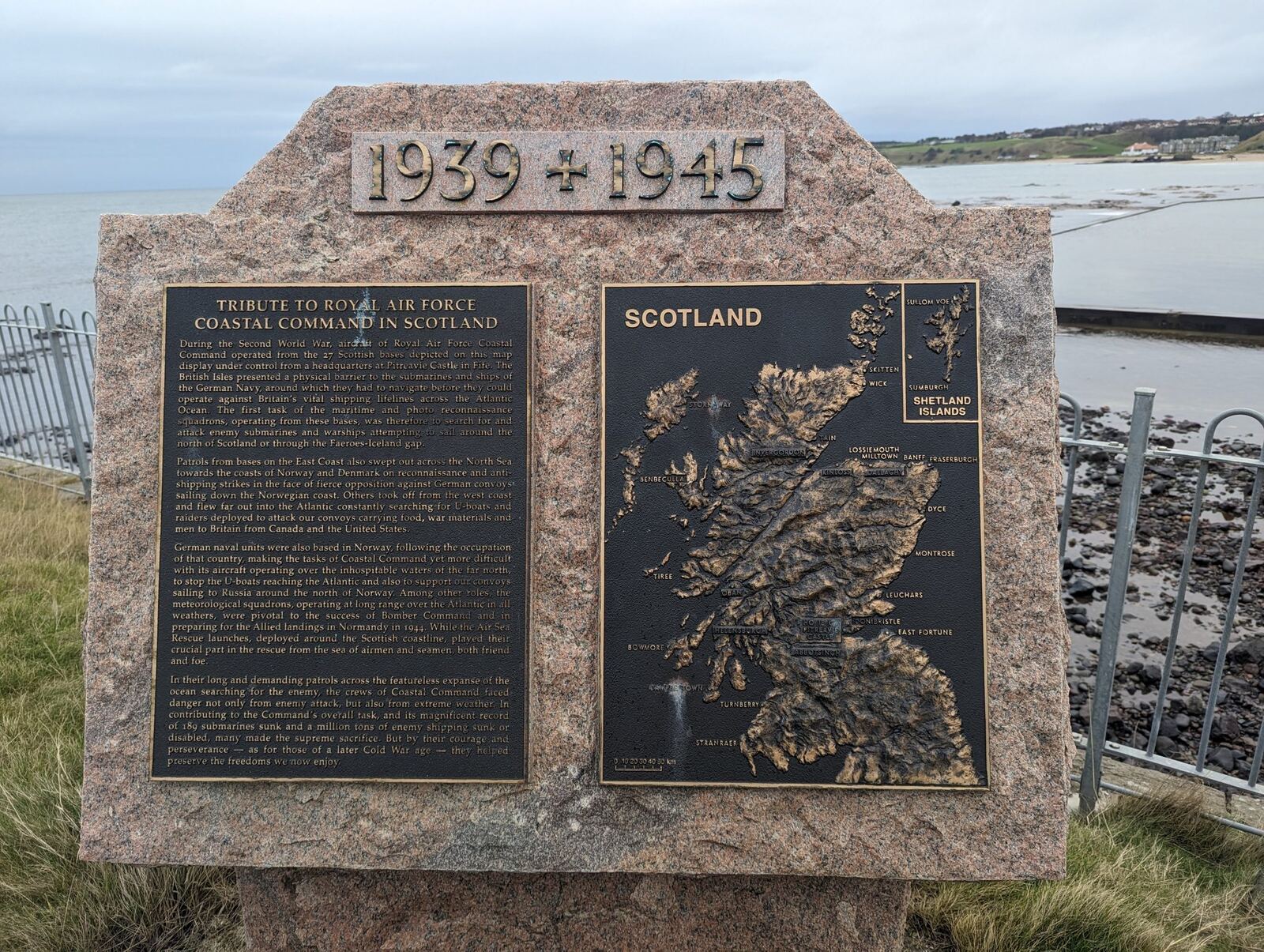
Down on the coast stands a striking granite memorial to RAF Coastal Command in Scotland (1939–1945), with a bronze relief map marking the 27 Scottish air bases (HQ’d at Pitreavie Castle in Fife) that hunted U-boats and escorted the Atlantic and Arctic convoys. A quiet, moving stop that most visitors walk straight past.
Best time to visit
- Spring–summer for the beaches, the gannets and the boat trips.
- August for Fringe by the Sea and long light — this is when our sunset walks come into their own.
- Any season — it’s a genuine year-round town; even a wild winter’s day here is a joy, and the cafés keep it cosy. Most of the photos on this page were taken on crisp December days, and it was glorious.

Combine it with
- Bass Rock, the beach & Drift café — the classic dog-beach + coffee combo.
- Tantallon Castle — dramatic red cliff fortress facing Bass Rock, minutes east.
- Dirleton (fairy-tale castle + village) and Yellowcraig beach to the west.
- Gullane — beach, dunes and the golf mecca.
- East along the coast: Tyninghame Beach and the town of Dunbar — both getting their own Scottish Outposts pages soon. And Whitesands beach, just before Dunbar, is said to be stunning (it’s on our list — we haven’t made it there yet, so we won’t pretend we have).
- The John Muir Way passes through, if you want to link it all on foot.
- Inland to the hills: the Pentland Hills — Scotland’s first great escape, under an hour west. If you’re coming down the east coast, this is where the sea gives way to the hills before Edinburgh.
Where we stand
- 🚐 Motorhome: stay at the clifftop/Dirleton sites; day-park in the big town car parks, not the harbour lanes. If you wild-camp the clifftops, do it by the book (above).
- 🐕 Dogs: superb dog town — beaches (check seasonal zones), the Law, and the coast paths. Bins and leads near the golf and livestock. Lillie has walked all of it.
- ⛳ Golf: championship courses need booking well ahead; the coastal paths beside the links are free to all.
- 🦟 Midges: low — open, breezy coast.
- 🅿️ Summer parking: busy on hot weekends and during Fringe by the Sea — arrive early.
- 🌊 Swimming: lovely bays but cold North Sea water and currents — take care.
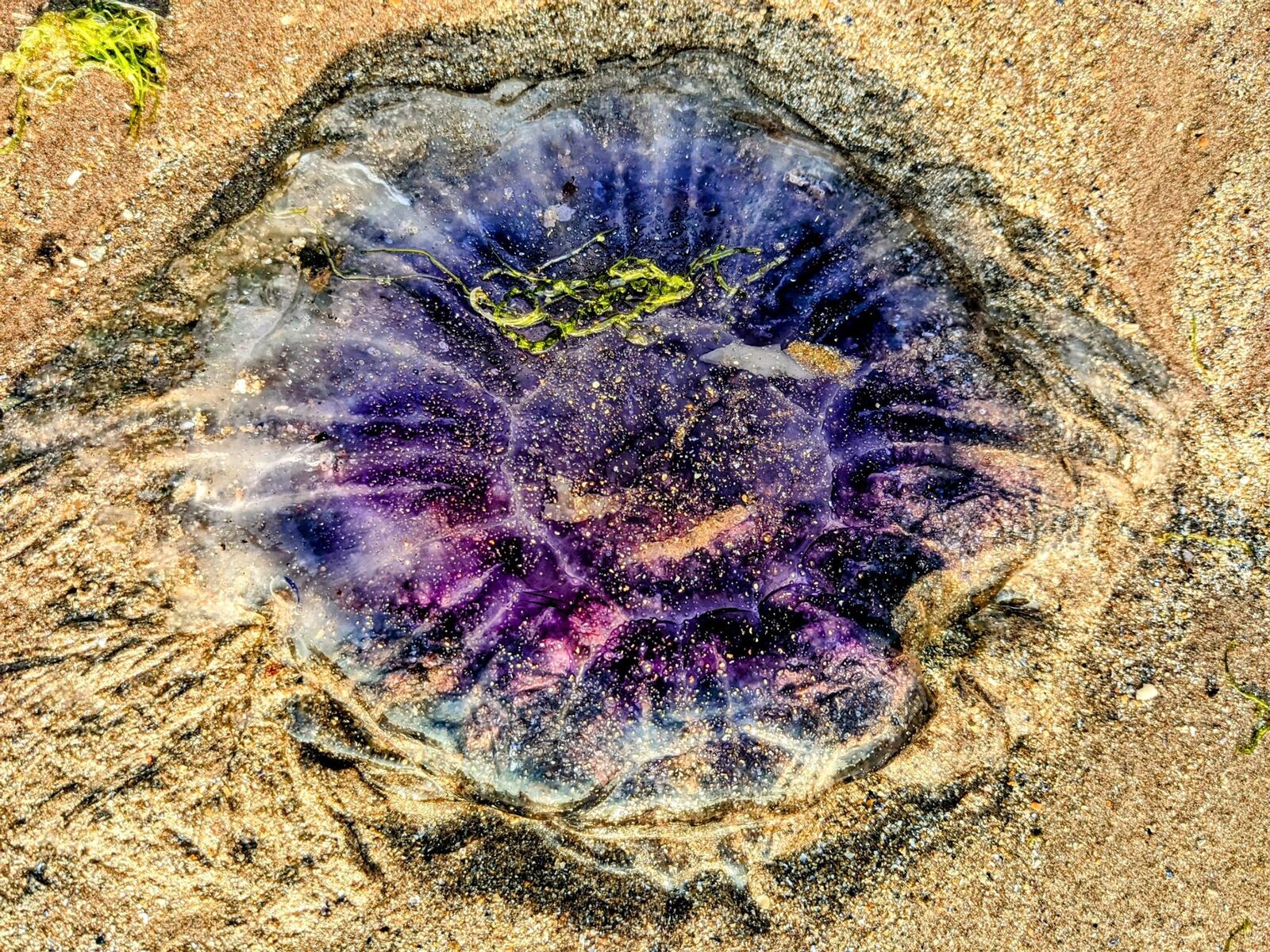
- 🪼 Jellyfish: big lion’s-mane jellyfish wash up in summer — don’t touch, they sting even when stranded.
- 📸 What you’re seeing: all our own photos, across several trips — harbour and beaches, the volcanic foreshore, the Law and its whalebone arch, the coast walks, clifftop wild-camp nights, and a lot of good light.
Why binoculars are the buy for this town
North Berwick exists in the shadow of the Bass Rock, and the Bass is home to the largest northern gannet colony in the world — something like 150,000 birds in season, visible as a white haze from the harbour. With the naked eye it is a distant white lump. Through a decent pair of 10×42s it resolves into individual birds wheeling and diving, and it becomes the reason you came.
Celestron Nature DX 10×42 Binoculars
For the gannets on Bass Rock, the seabirds off the harbour and the long views from the Law, a proper pair of binoculars makes a day here — and these are the ones we’d point you at. Waterproof, sharp, and Amazon’s Choice.
Check price on Amazon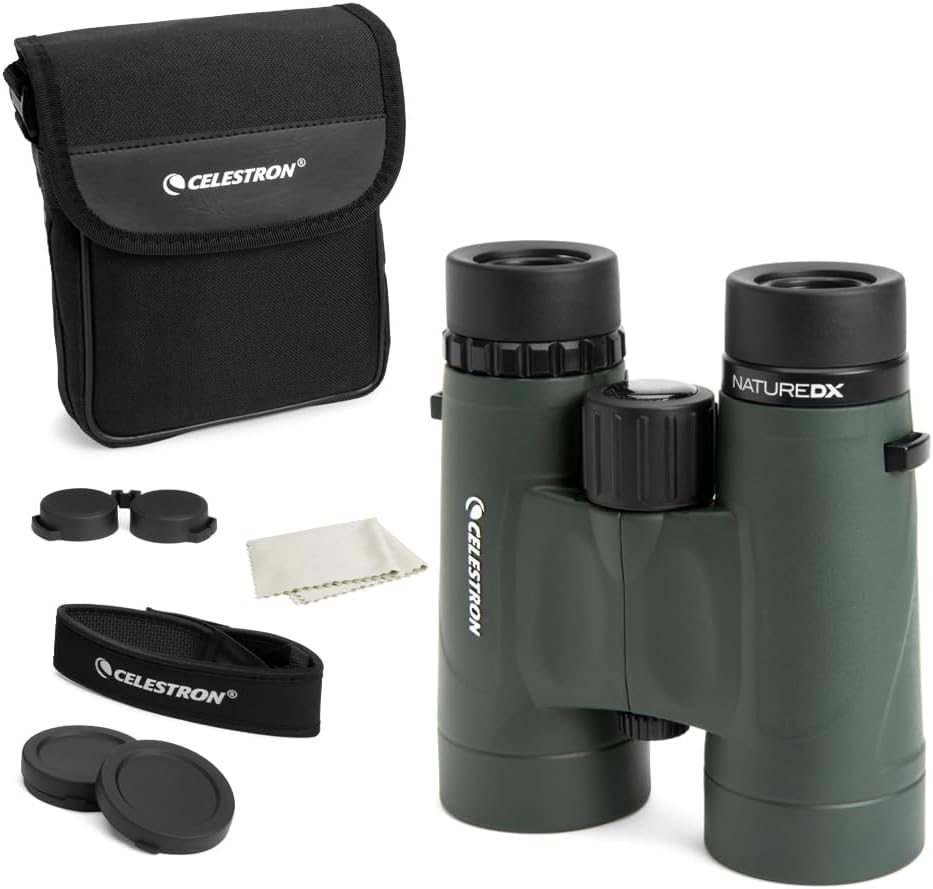
Most read
Tighnabruaich & the Kyles of Bute
Killin & the Falls of Dochart
Tarbert
North Berwick
The Crinan Canal
Loch Lomond
Oban
Loch Katrine
🪙 Detecting on this beach
Two town beaches right on the doorstep of the East Lothian day-trip crowd. Heavy summer use on easily accessible sand is the classic beach-detecting setup.
Worth knowing: you can detect Scottish foreshore without asking anyone, which covers both town beaches between the tide marks. Step up onto the grass, the putting green or the harbour and you need permission. All finds go to the Treasure Trove Unit — Scotland has no Treasure Act, so age and material make no difference. The Scottish position → · beginner’s guide →
If you want a second reason to come back: a detector turns two ordinary town beaches into somewhere you can work all season. Modern jewellery losses on a busy East Lothian sand are frequent enough that the machine stops being an expense fairly quickly, and anything genuinely old goes through Treasure Trove — where rewards are paid at market value.