The Pentland Hills: Scotland’s First Great Escape
Overview — the hills on Edinburgh’s back doorstep
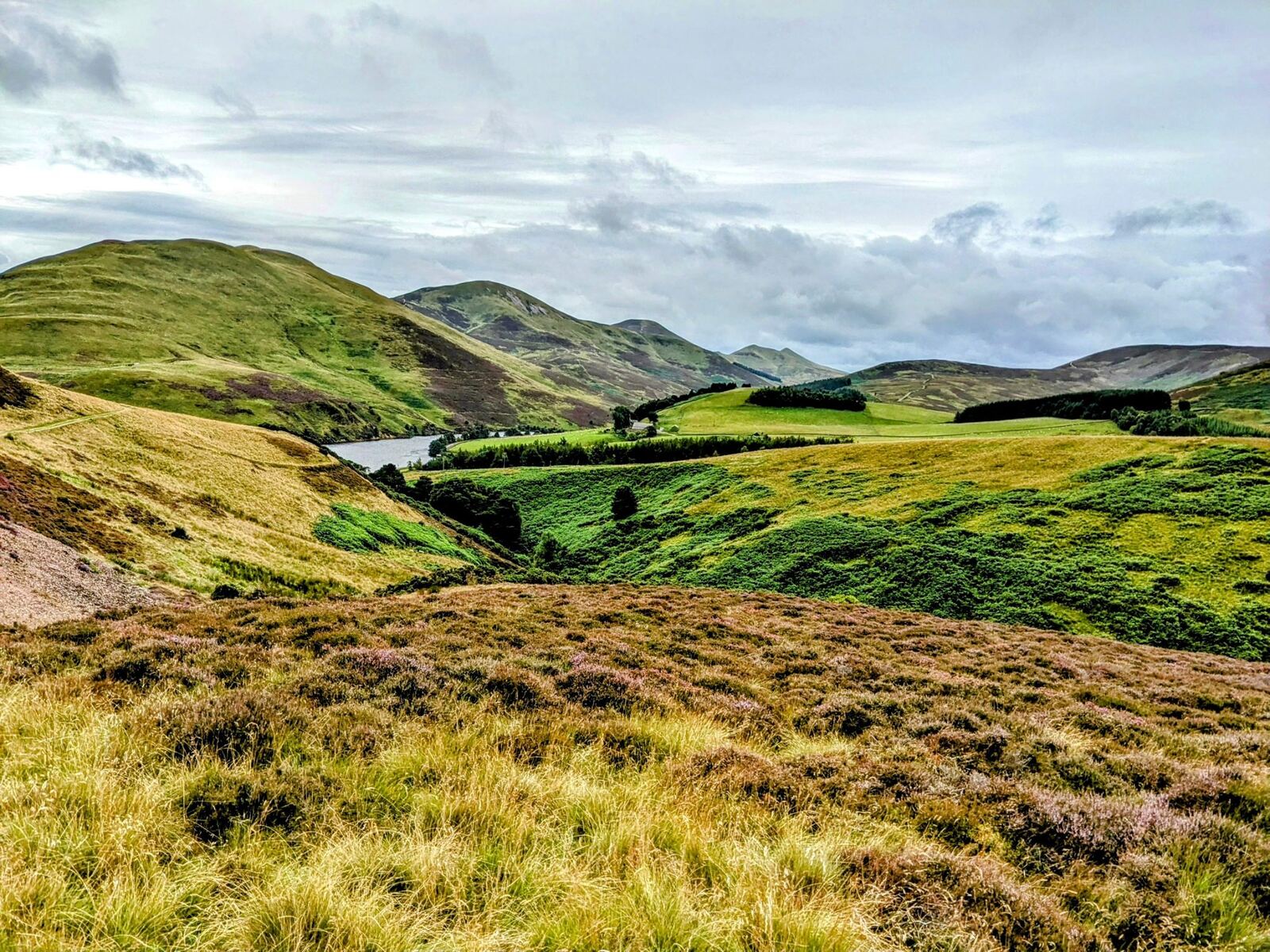
If you’re driving up into Scotland from the south — from Northumberland, or across from Peebles and the Borders — the Pentland Hills are the moment the country changes. One minute you’re on the main road; the next you’re parked below a horseshoe of smooth green hills, a reservoir glinting in the glen, and a footpath climbing away into the quiet. And it’s all barely half an hour from the middle of Edinburgh.
For us this became one of those places we came back to again and again — we did a number of walks here over several days, based right in the car park in the Hymer. A proper leg-stretch of a walk, one of the best wee cafés we’ve found at the start of any hill, our dog absolutely in her element, and somewhere to spend the night on the doorstep of the paths. If you want your first taste of Scottish hill country before you’ve even reached the Highlands, this is it.
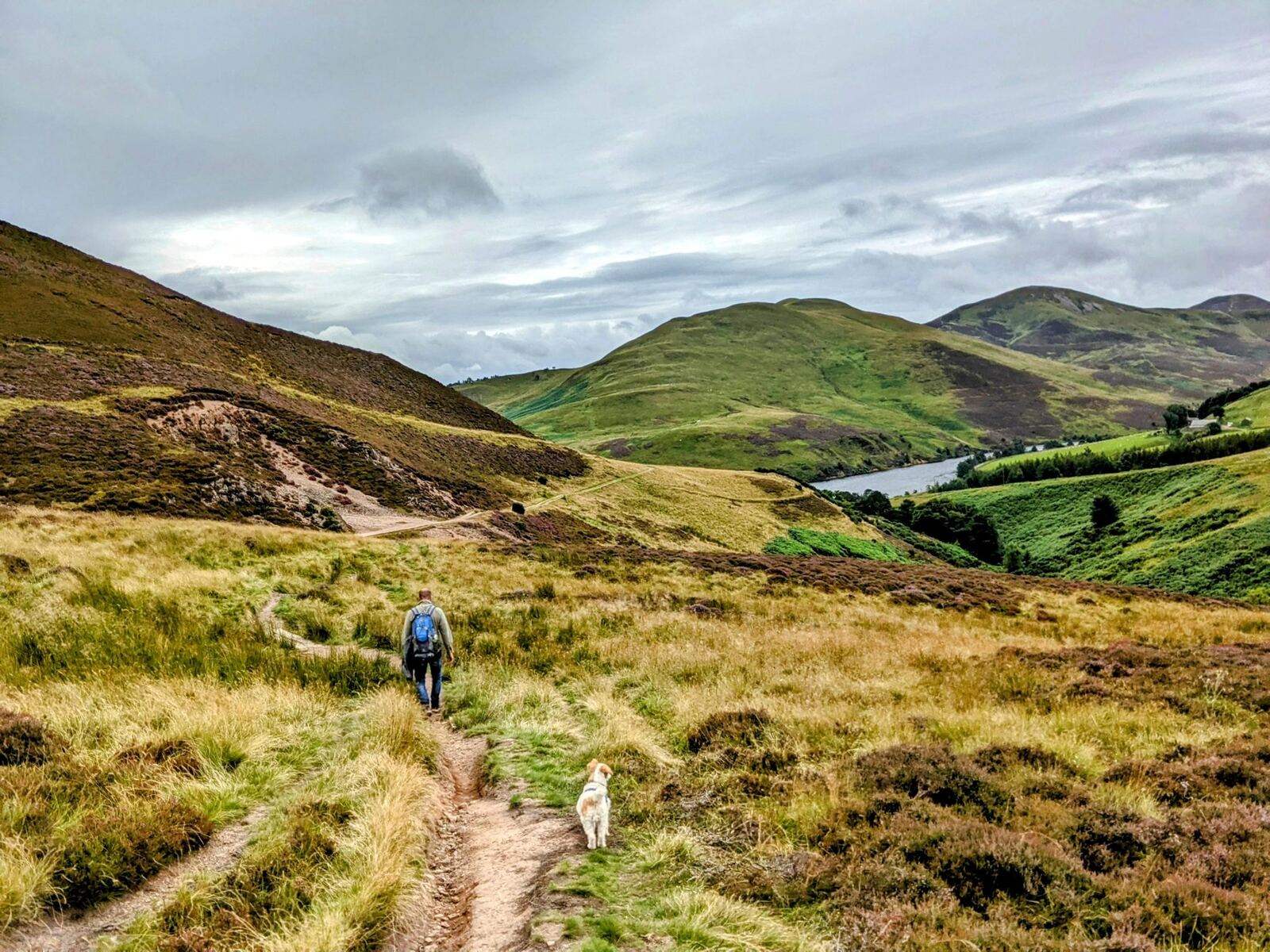
We’ve come here in two very different seasons — high summer, when the slopes above Glencorse turn magenta with heather, and the depths of December, with bare trees, the burn in full spate and the odd bright blue-sky top. Both are on this page, because both are worth having: the Pentlands are a genuinely year-round hill, and out of season they feel wilder and more your own.
The story — Edinburgh’s “hills of home”
The Pentland Hills roll for about 20 miles southwest out of Edinburgh, and they’ve been the city’s escape hatch for centuries. Robert Louis Stevenson grew up in their shadow and called them the “hills of home” — he knew these paths long before he wrote Treasure Island.
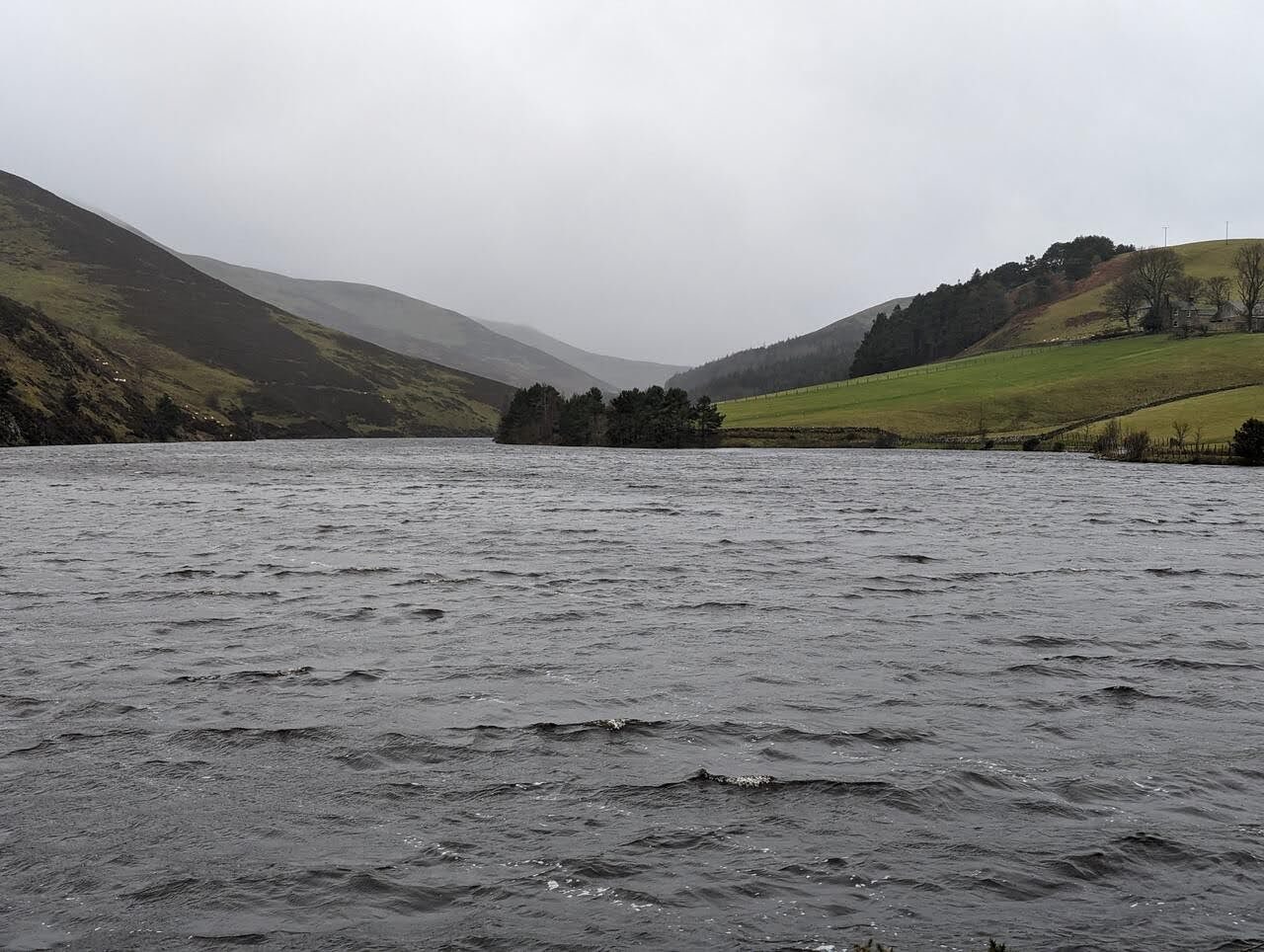
The reservoirs tucked into the glens aren’t natural lochs; Glencorse Reservoir and its neighbours were built to slake the thirst of a growing Edinburgh, and they’ve since become the calm, mirror-flat heart of a walk. The lines of Scots pine along the water are the giveaway — planted, deliberate, and now one of the most photographed sights in the range.
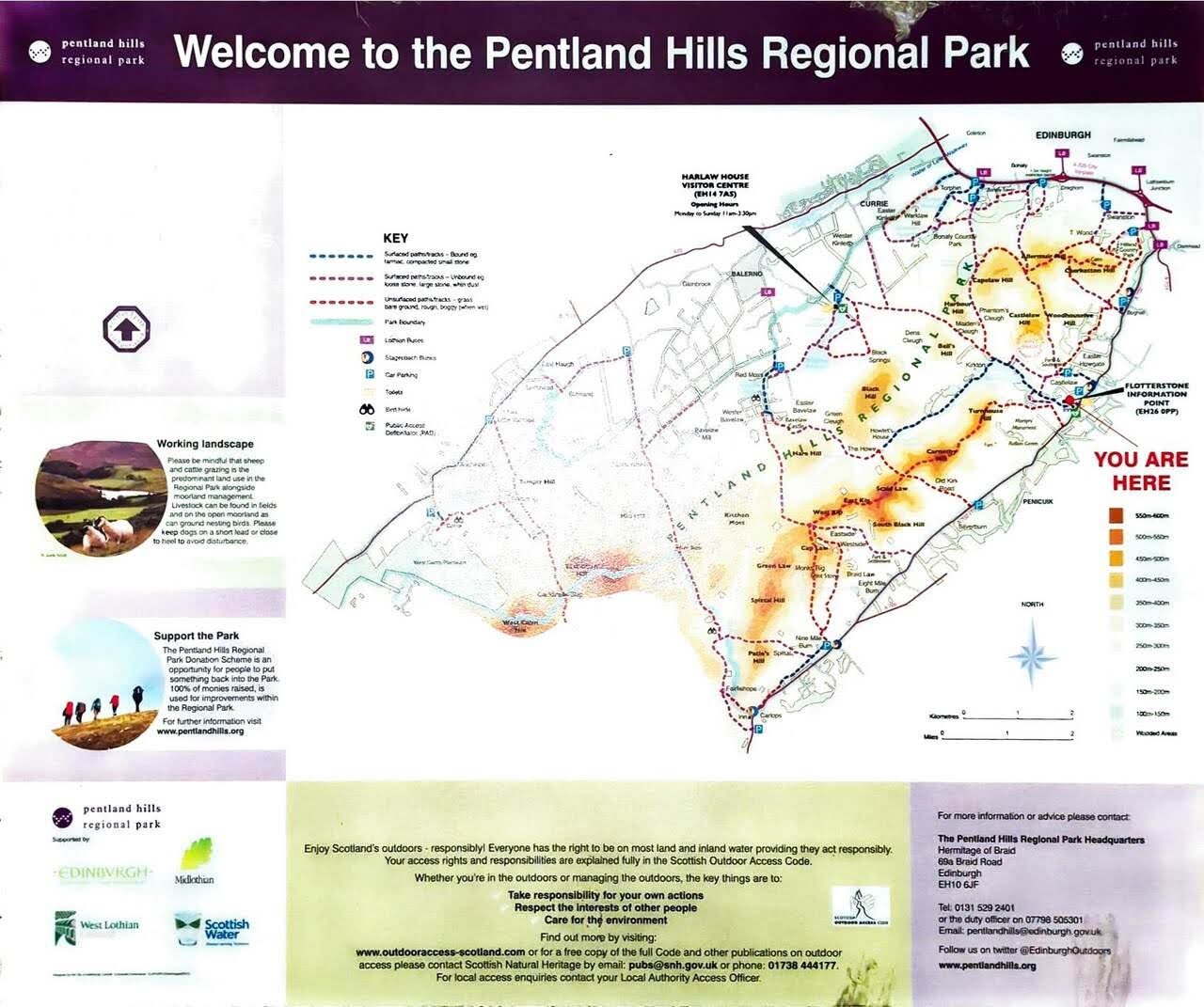
Today the whole area is the Pentland Hills Regional Park: working sheep farms, well-kept paths, ranger-run visitor facilities, and a genuine sense of wildness that has no business being this close to a capital city.
What you’ll actually see and do
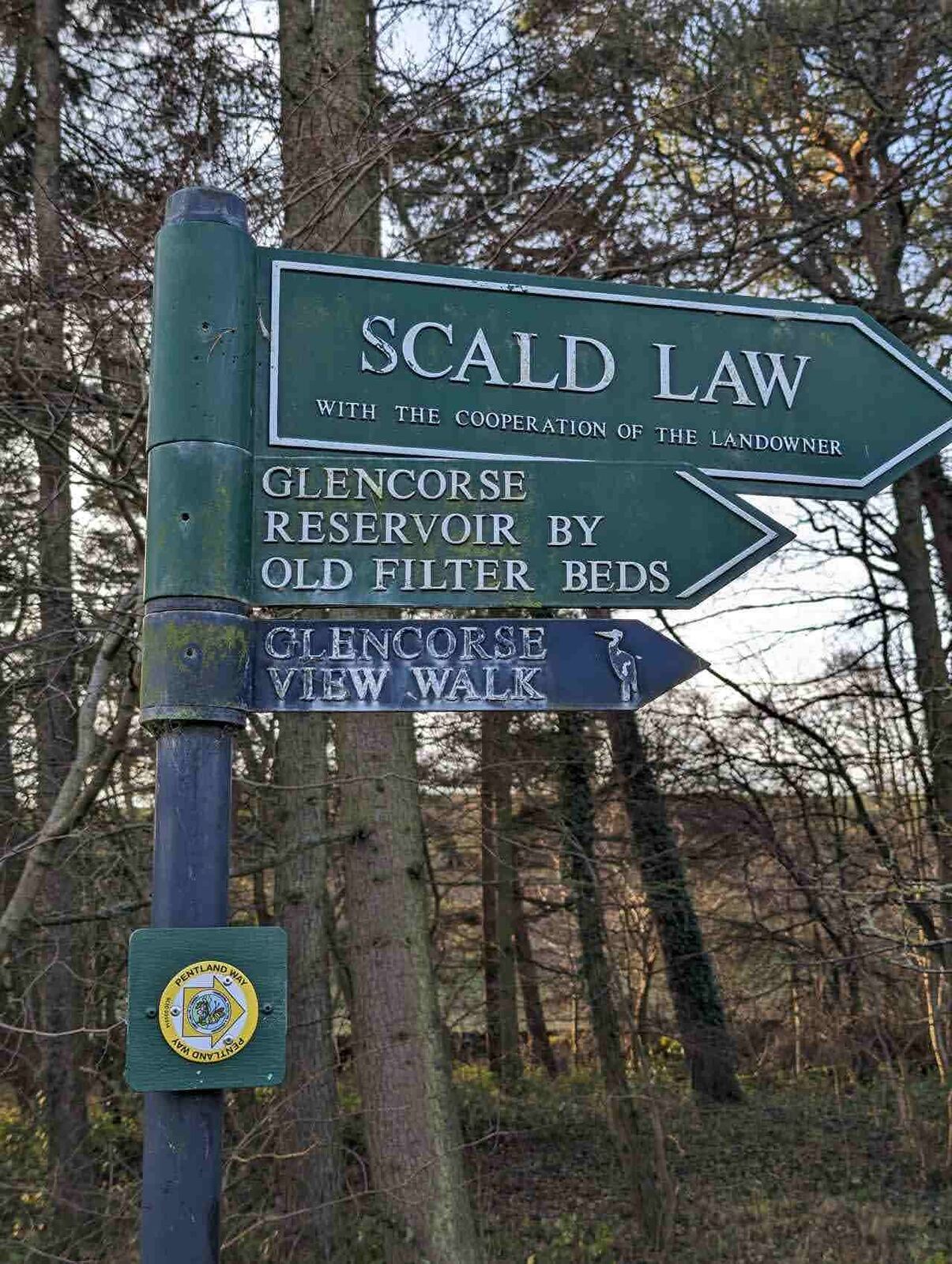
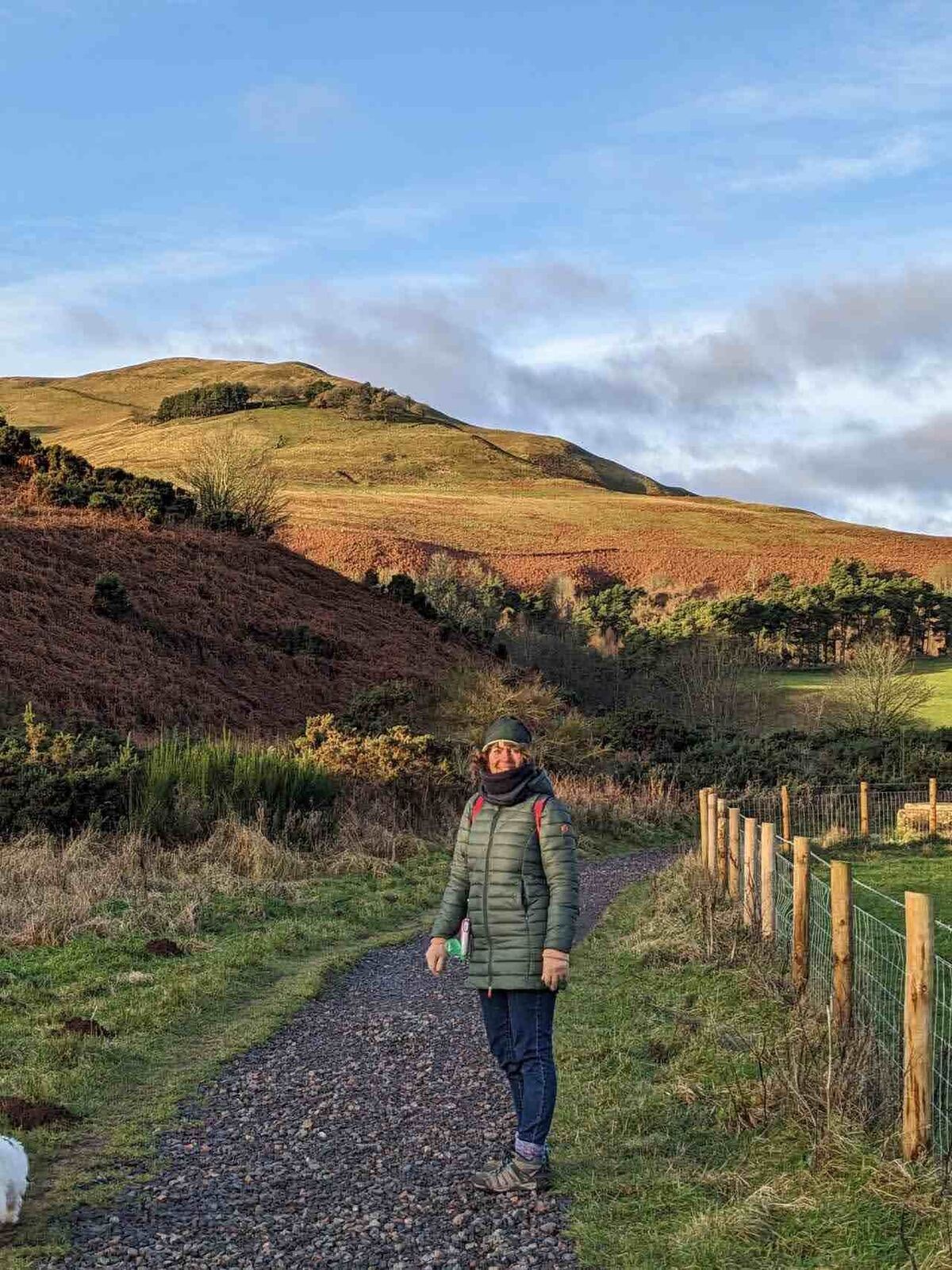
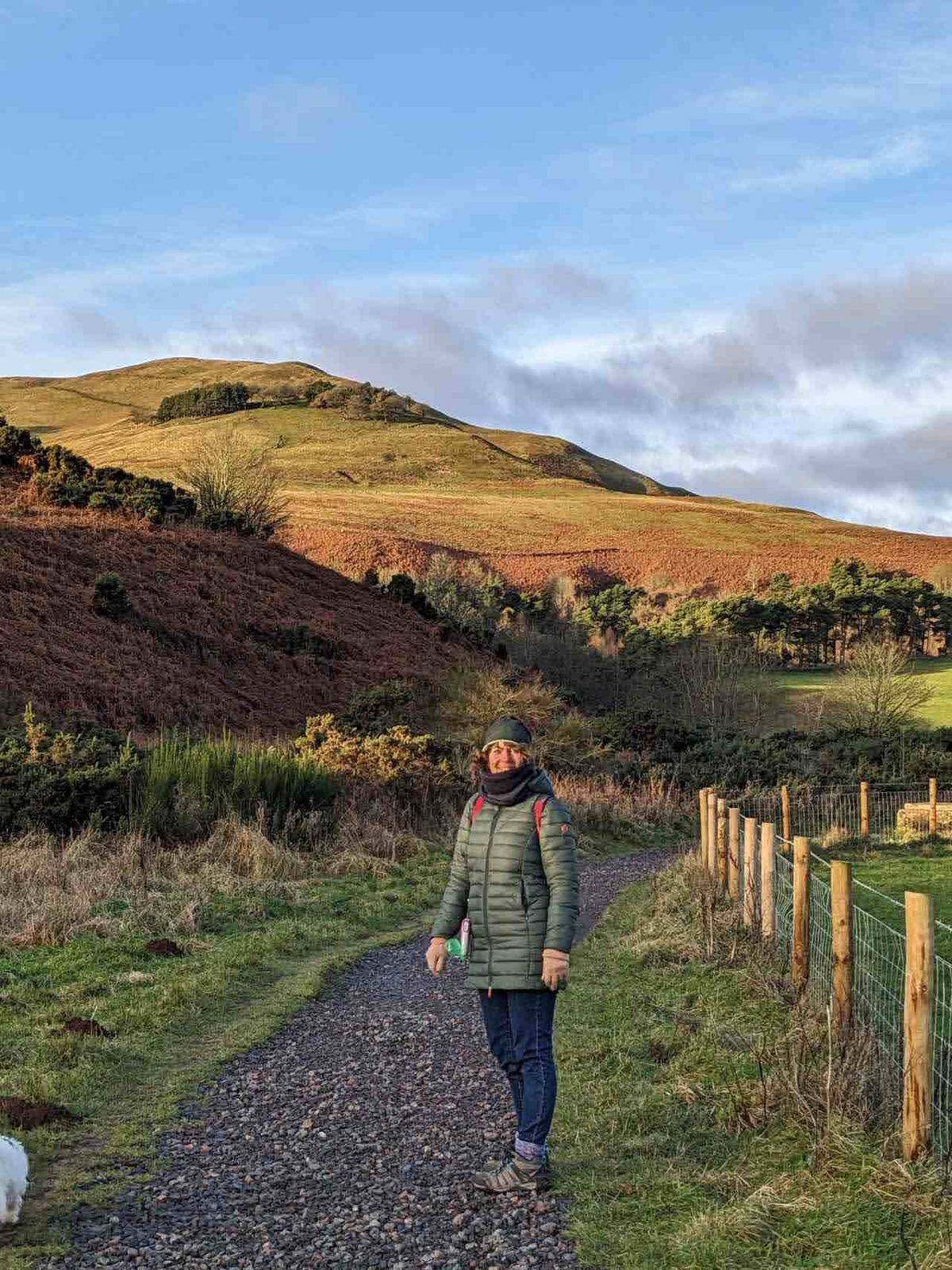
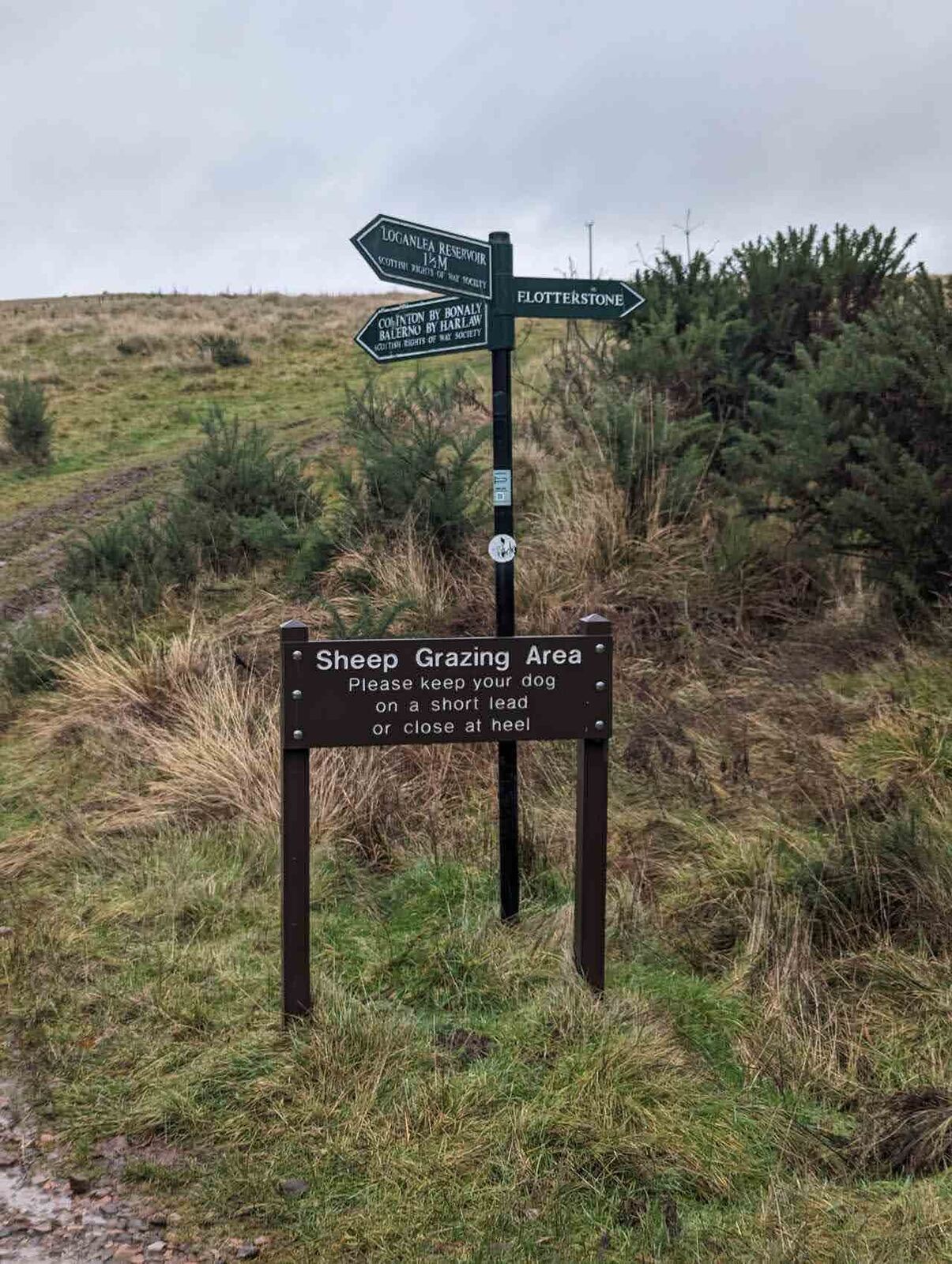
The main event is the walk in from the Flotterstone car park, following the track past the old filter beds and along Glencorse Reservoir into the hills, then climbing as far as your legs (and the weather) fancy. You don’t need to be a hill-walker: the low reservoir path is easy and gives you the best of the views, while the braver route carries on up toward Scald Law, the highest of the Pentlands at 579 m, and the rounded tops around it.
What sticks with you:
- The reservoir and the pines — still water, that distinctive line of Scots pine on the spit, sheep-cropped fields running down to the shore.
- The August heather — for a few short weeks in late summer the slopes above the water turn full magenta, bell heather and ling together, right up to the path edge.
- The waterfall — after winter rain the burn tumbles down in real spate; a proper roaring highlight on a grey day.
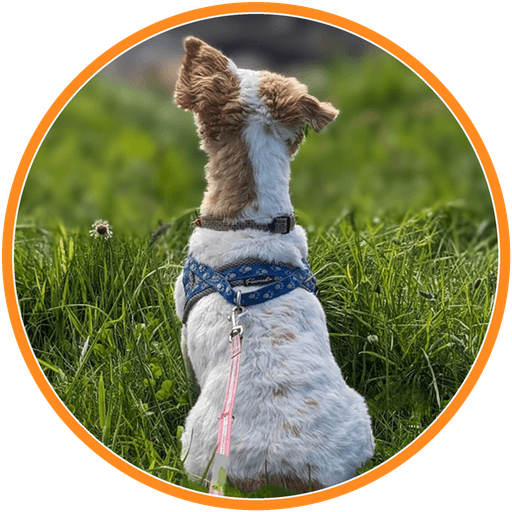
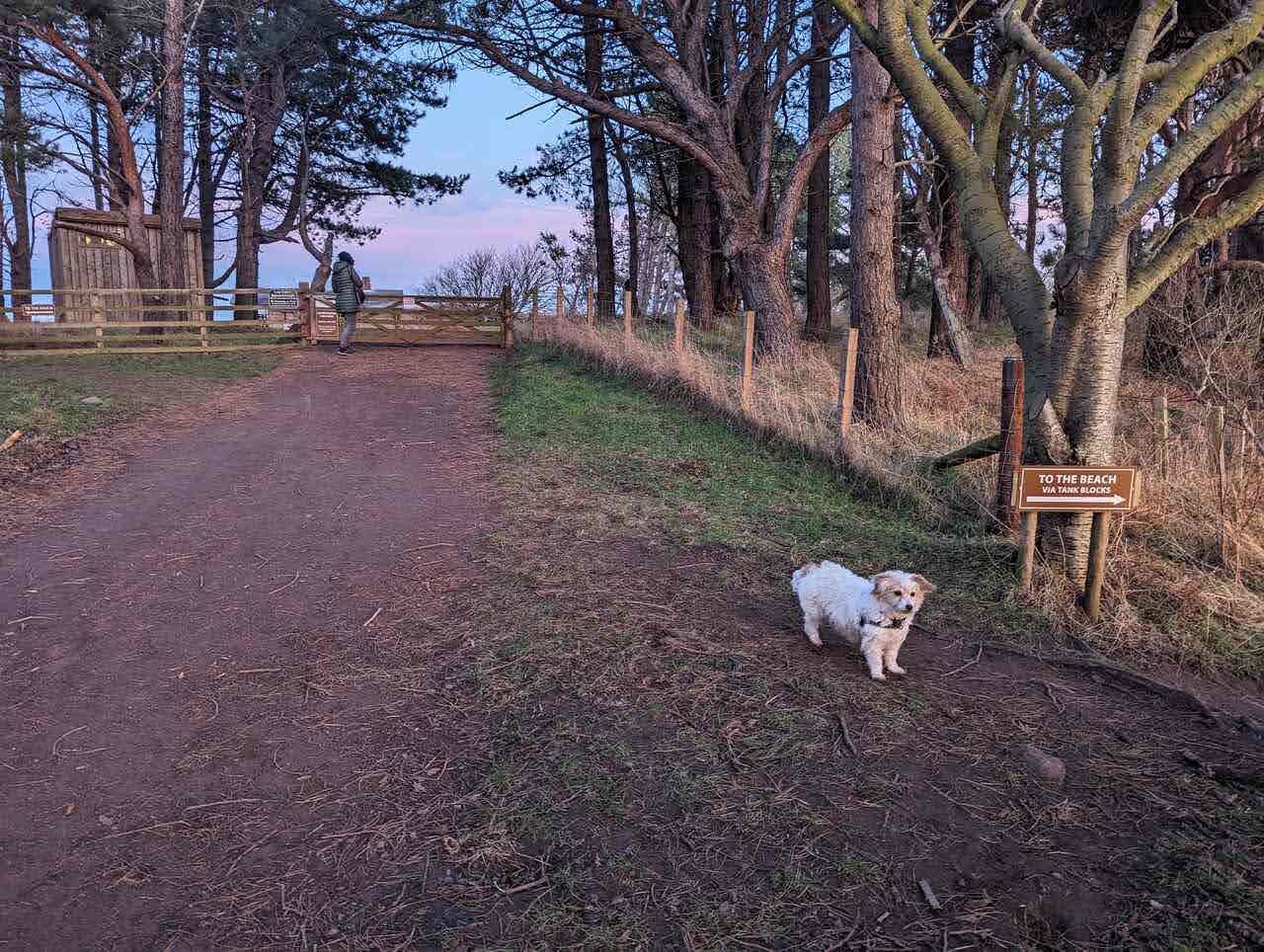
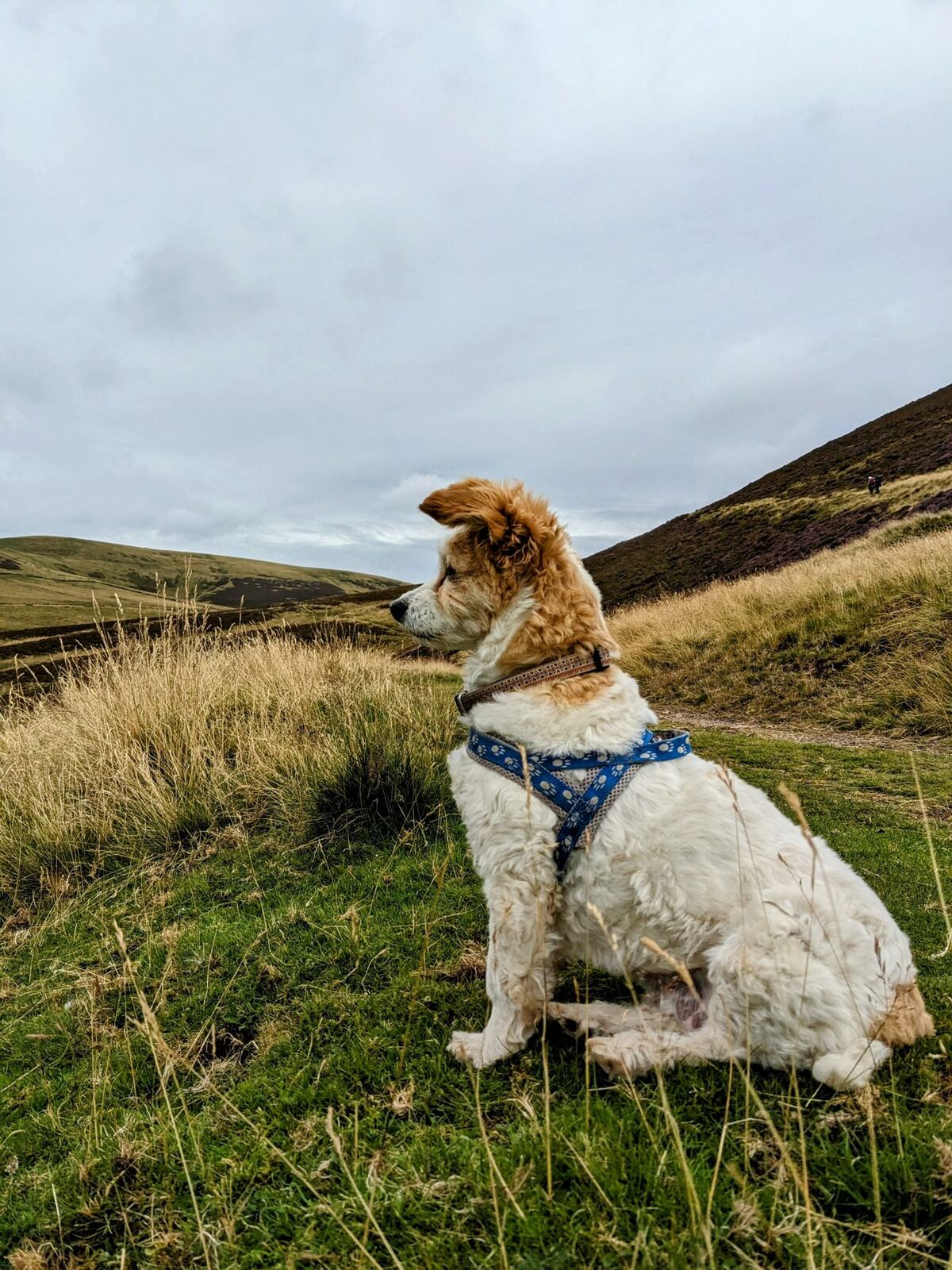
- The dog paradise — miles of open path, burns to splash in, and space to roam (leads near the sheep, always).
- The quiet — climb 20 minutes and, even on a summer weekend, you have the tops to yourselves.
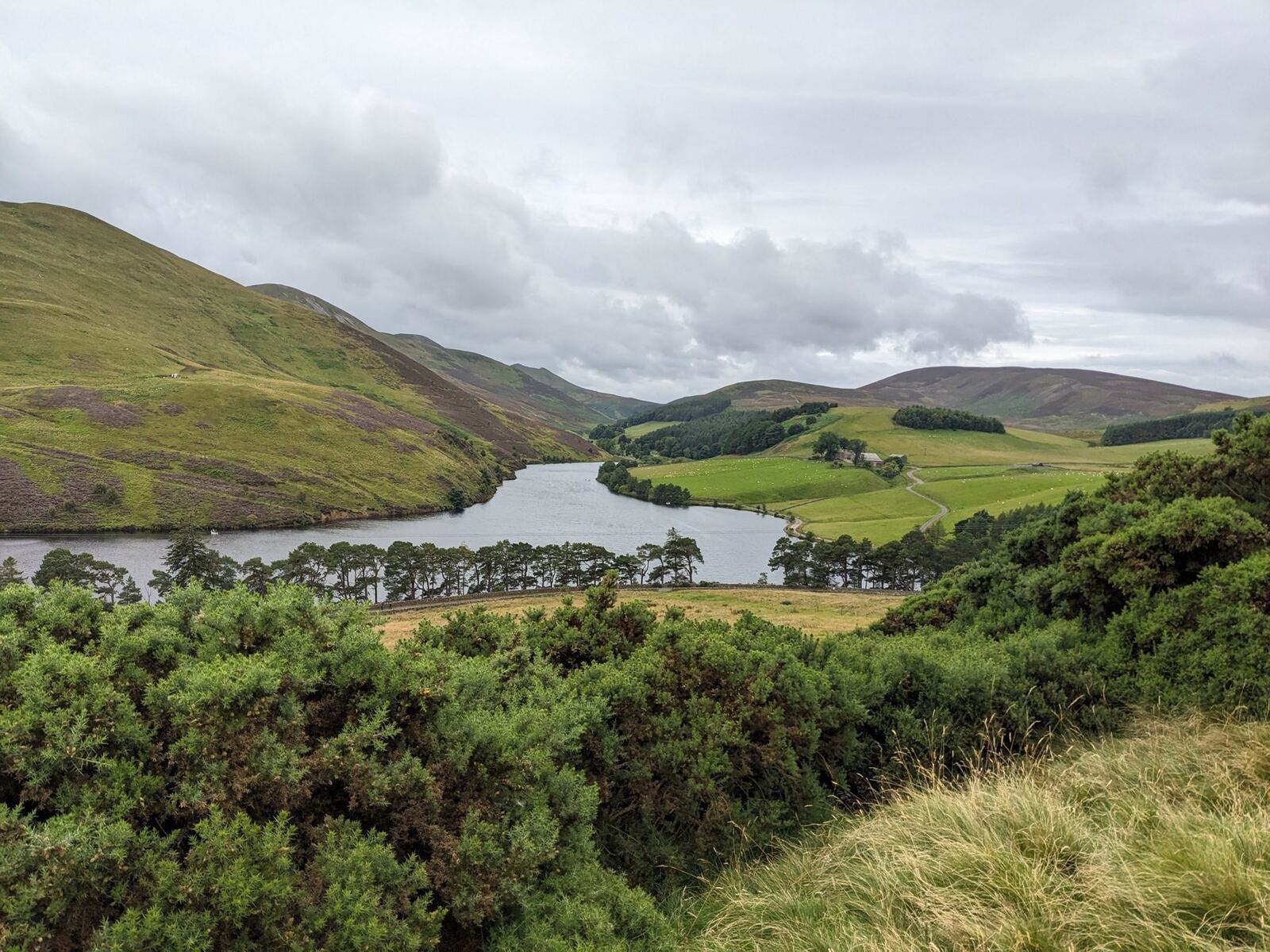
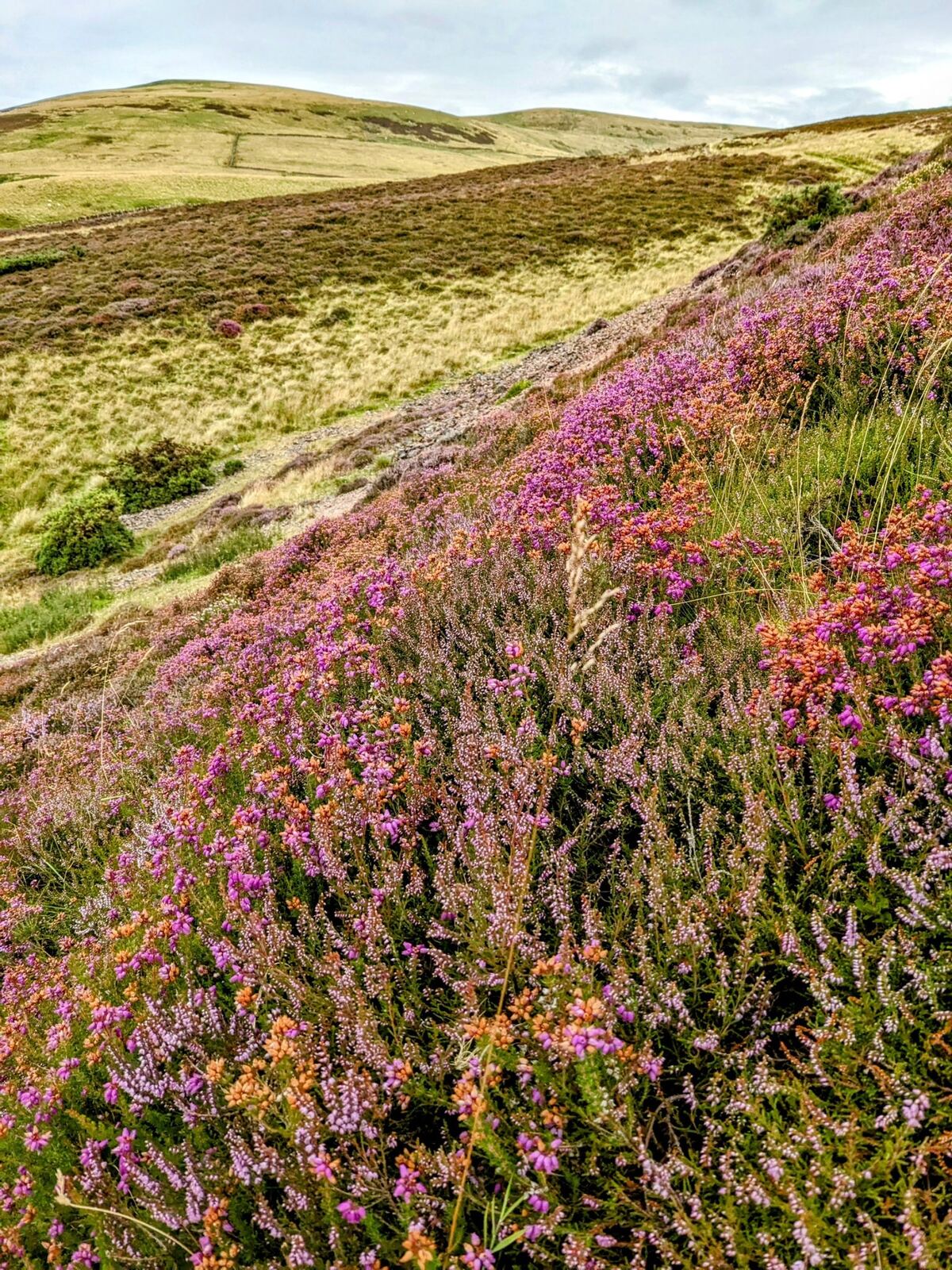
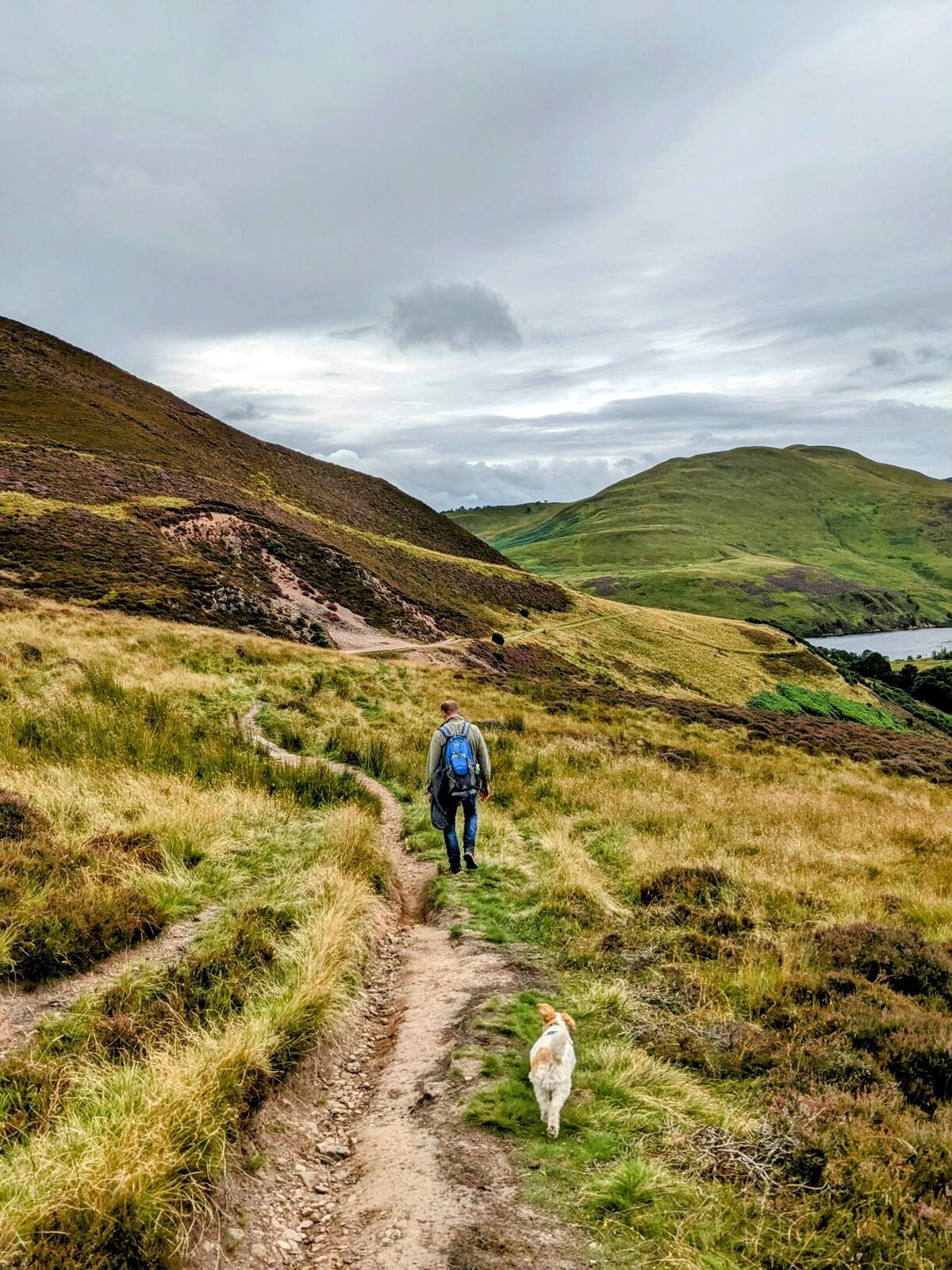
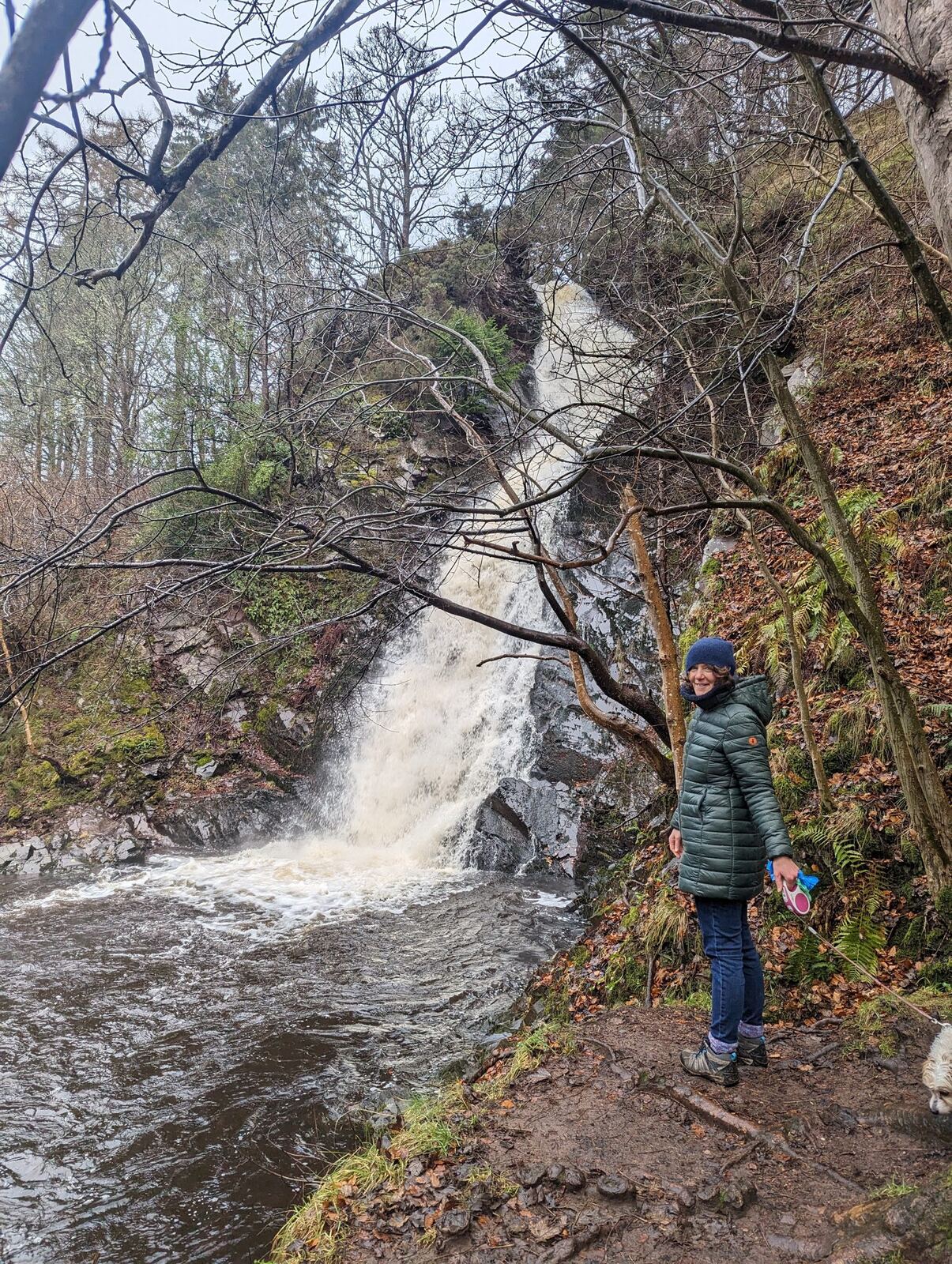
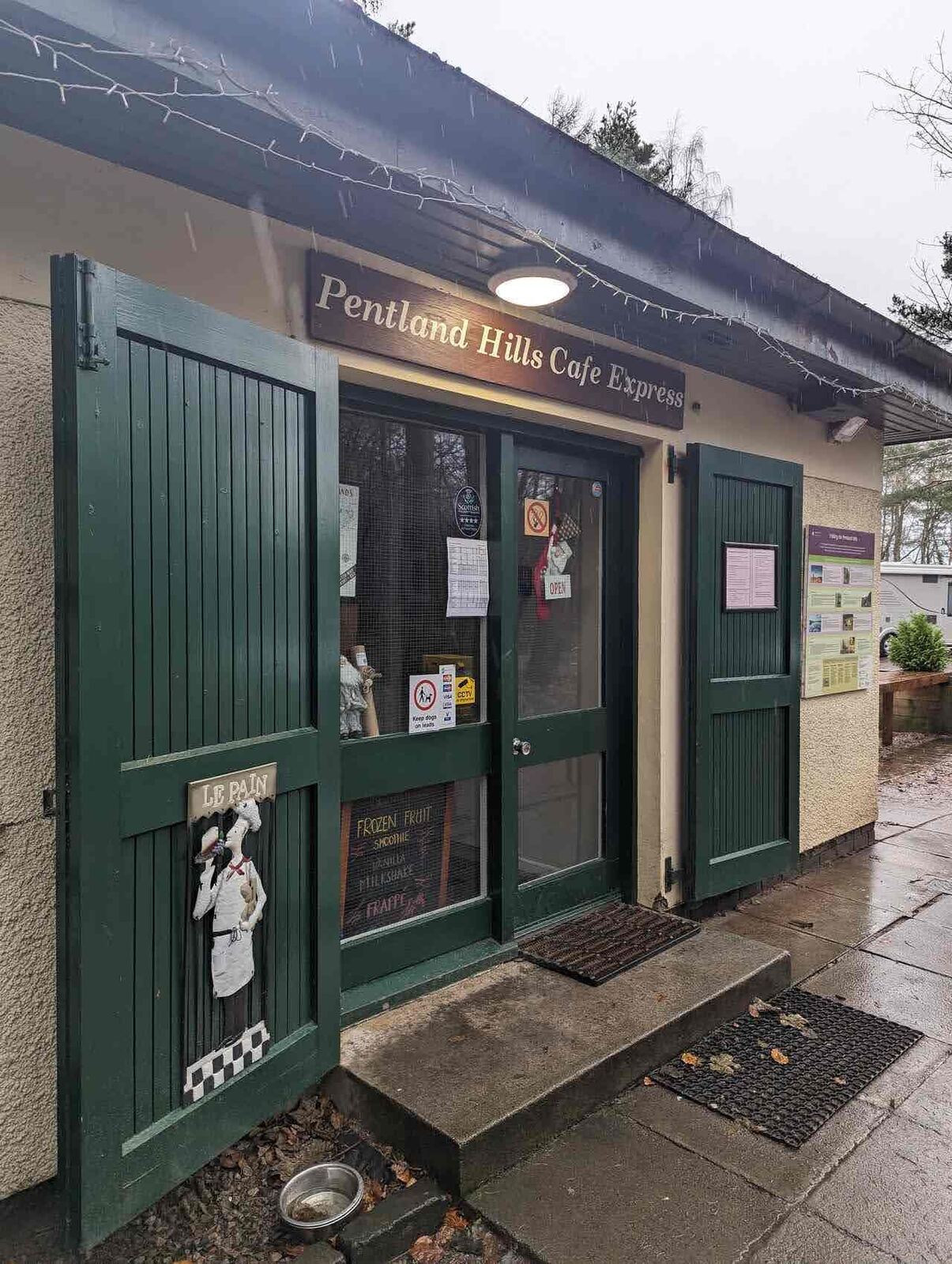
The Flotterstone café — genuinely the best bit
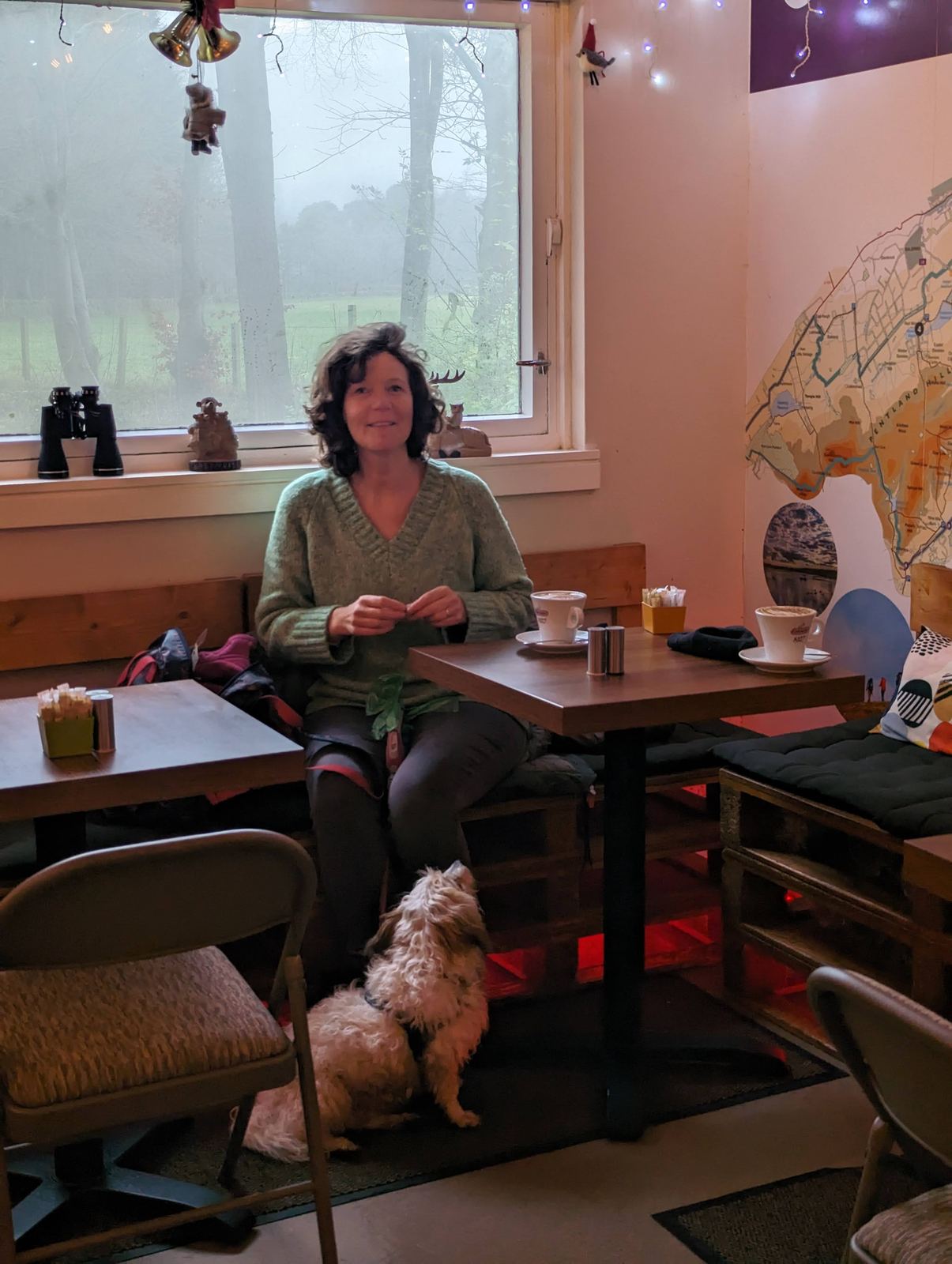
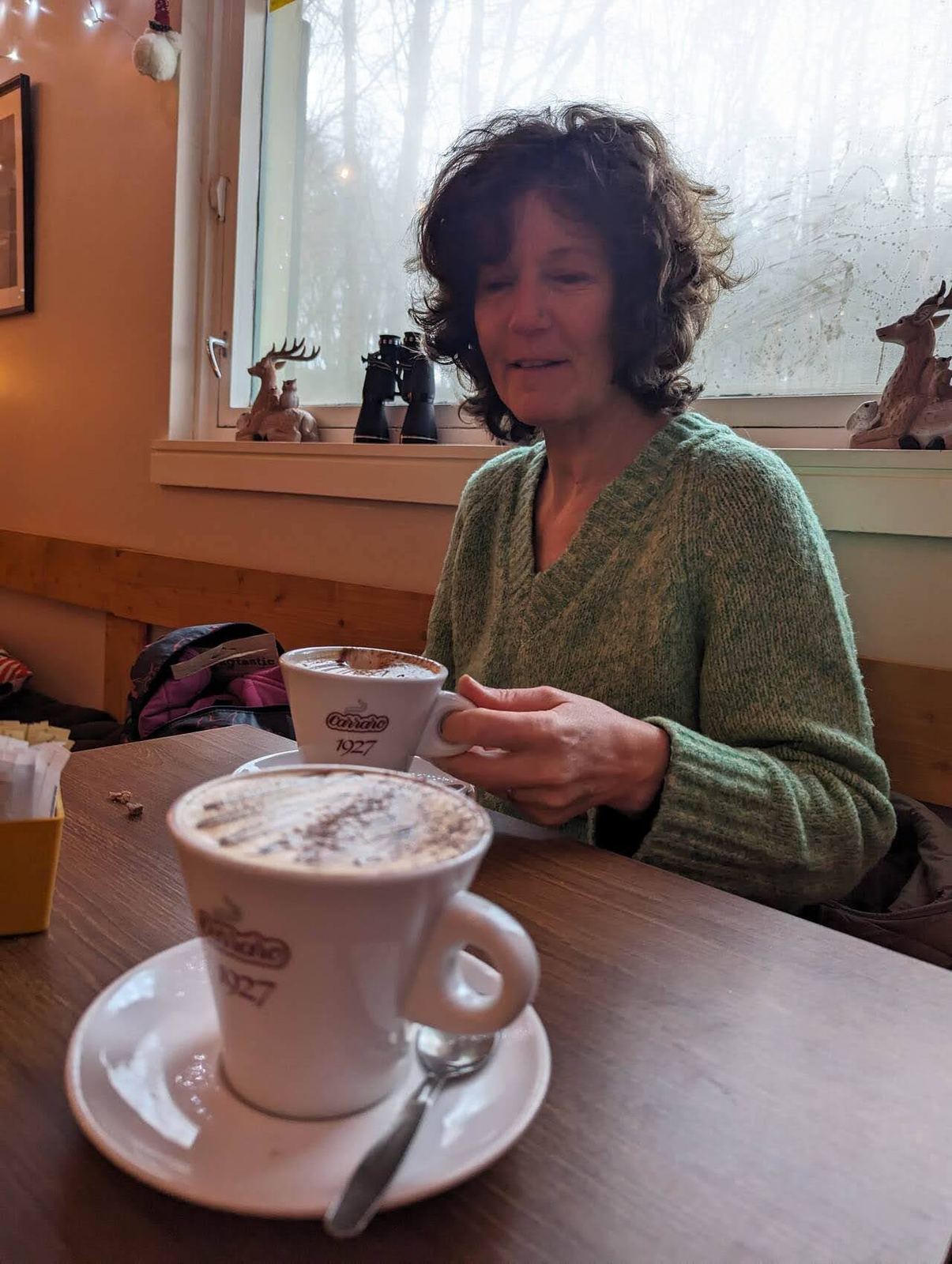
Here’s the part that makes the Pentlands so easy: at the Flotterstone visitor centre, right by the car park where the walk starts, there’s a proper little café — Pentland Hills Café Express — run alongside the ranger base. Walk first, warm up after; that was our order of the day, and on a wet December afternoon it was heaven.
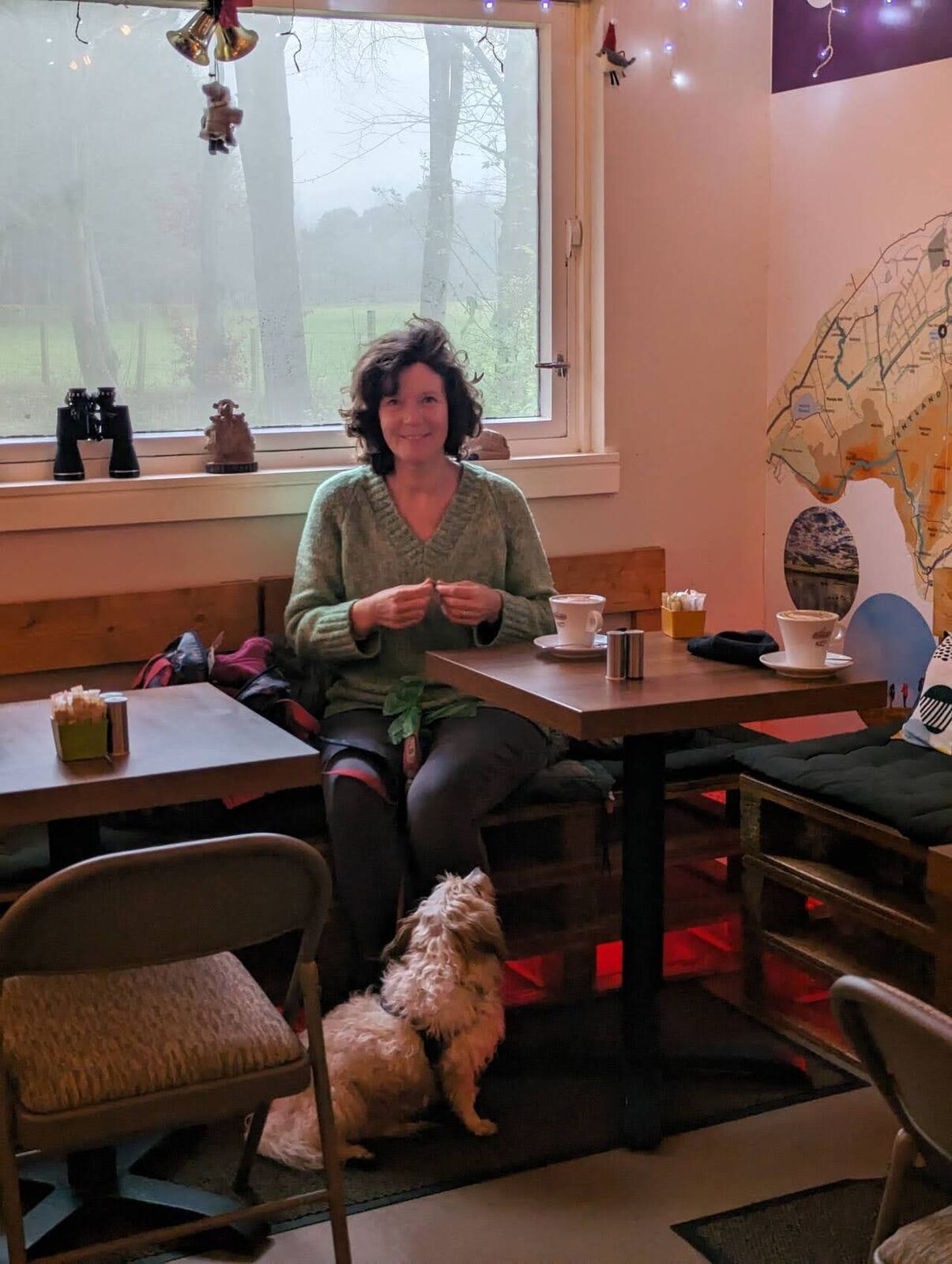
It’s cosy, dog-friendly, hung with fairy lights and “Welcome to the Pentlands” bunting, with big ranger info boards on the walls — the regional-park map, wildlife, the moorland code — so you can plan the next walk over a coffee. And the hot chocolates are a thing of beauty: proper mugs, chocolate drizzle, the works.

Best time to visit
August is the famous window — the hillsides turn purple with heather for a few short weeks (roughly mid-August into early September). But don’t wait for it: the Pentlands are a year-round walk, and our December trip proved it — bare, dramatic, the burn in spate, and the odd stunning blue-sky day between the grey ones.
Two honest notes:
- These are breezy, exposed hills — bring proper layers and a waterproof whatever the month; the tops make their own weather, and in winter it’s cold and can turn fast.
- On the plus side, that same wind keeps the midges down — this is not a midge-plagued spot the way the west coast can be. In winter, of course, there are none at all.
Parking, the café & overnight in the motorhome
The Flotterstone car park is the obvious base: level, surfaced, right by the visitor centre and café, and the jumping-off point for the Glencorse and Scald Law walks. We parked the Hymer 594 and the T25 here across several days and used it as a proper little home in the hills.
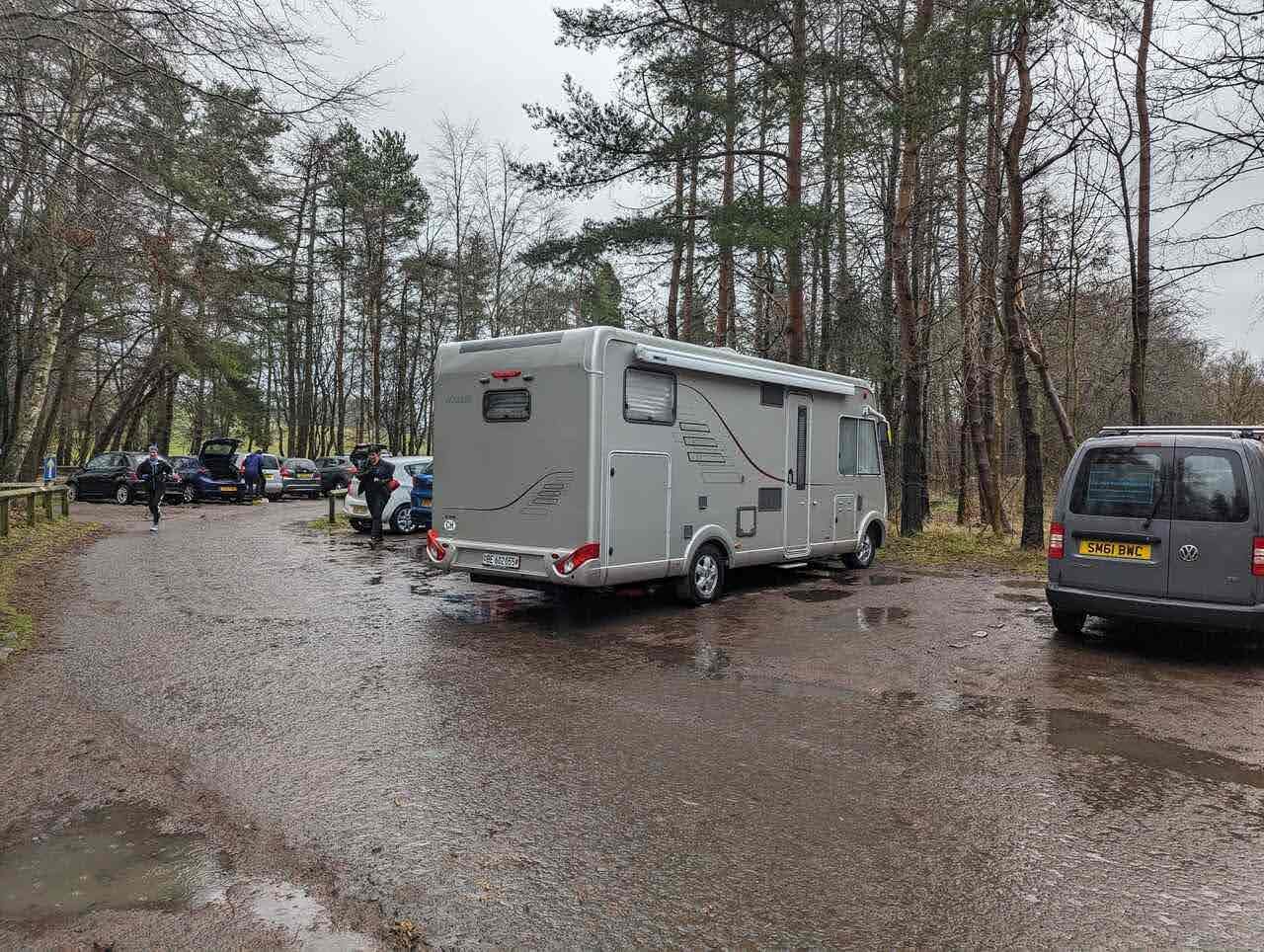
Staying overnight: we stayed here and it made a brilliant base right on the doorstep of the paths. One honest caveat — regional-park car parks like this can change their rules (paid tickets, time limits, height barriers), so check the current signage and any overnight restrictions before you rely on it. When we visited it was straightforward; that won’t necessarily hold forever.
Scottish Outposts tip: it’s a normal, level surfaced car park — fine for our 594 and most campervans and mid-size motorhomes. If a height barrier ever goes in, larger motorhomes may be shut out, so have a back-up in mind.
And the pub
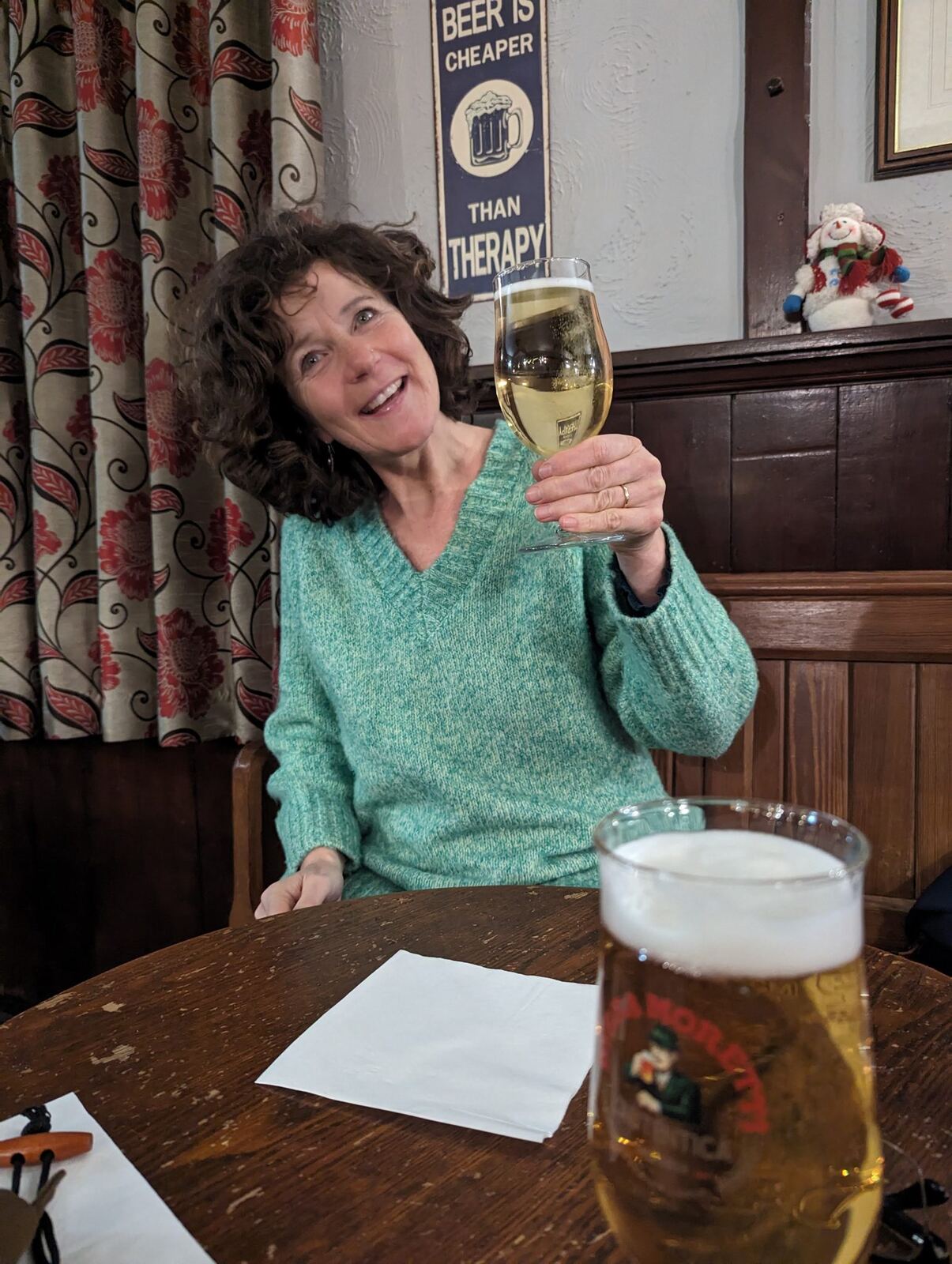
Right by the Flotterstone entrance sits the Flotterstone Inn — a proper walkers’ pub with a sign behind the bar that reads “beer is cheaper than therapy.” After a wet hill, a pint by the fire is exactly the therapy required.
Tie it together — coming into Scotland from the south
The Pentlands are the perfect first stop as you cross into Scotland from the south, and there are really two ways in. Pick your gateway:
1. Up through Peebles & the Borders (the A703). Coming from Carlisle, the M6 or the Borders, the road up through Peebles runs you along the southern end of the Pentlands themselves — the range spills right down toward the Tweed valley. You can be parked at Flotterstone with a hot chocolate in hand within half an hour of leaving the Borders behind. It’s the gentlest, greenest way to arrive in Scotland.
2. Down the east coast (the A1). Coming in along the coast from Northumberland, you hit Scotland’s finest run of castle-and-beach country before you ever reach the capital — a superb day or two on the East Lothian coast before you swing inland to the Pentlands and Edinburgh:
- North Berwick — the perfect East Lothian seaside town: two beaches, the Bass Rock offshore, and the Law to climb. Our hub for this stretch of coast.
- Dunbar, Tantallon Castle & Tyninghame — John Muir’s red-castle town, the mighty Red Douglas fortress on its clifftop, and a glorious pine-backed beach, all strung along the A1 within a few miles of North Berwick. (Pages coming — this whole coast ties straight back to the hills.)
Whichever way you come, the Pentlands are the moment the road quietens and the hills begin. From here it’s Linlithgow and its palace 30 minutes northwest, Edinburgh barely half an hour away, and the whole of Scotland opening up to the north — the natural jump-off onto the Grand Tour and everything beyond.
Reality notes
- 🚗 Parking / overnight: Flotterstone car park by the visitor centre and café; we overnighted here, but check current signage — regional-park car parks can move to paid/time-limited/barriered.
- 🚐 Vehicle suitability: level surfaced car park, fine for cars, campervans and mid-size motorhomes (our 594 was no problem). Watch for any height barrier if you’re in a big rig.
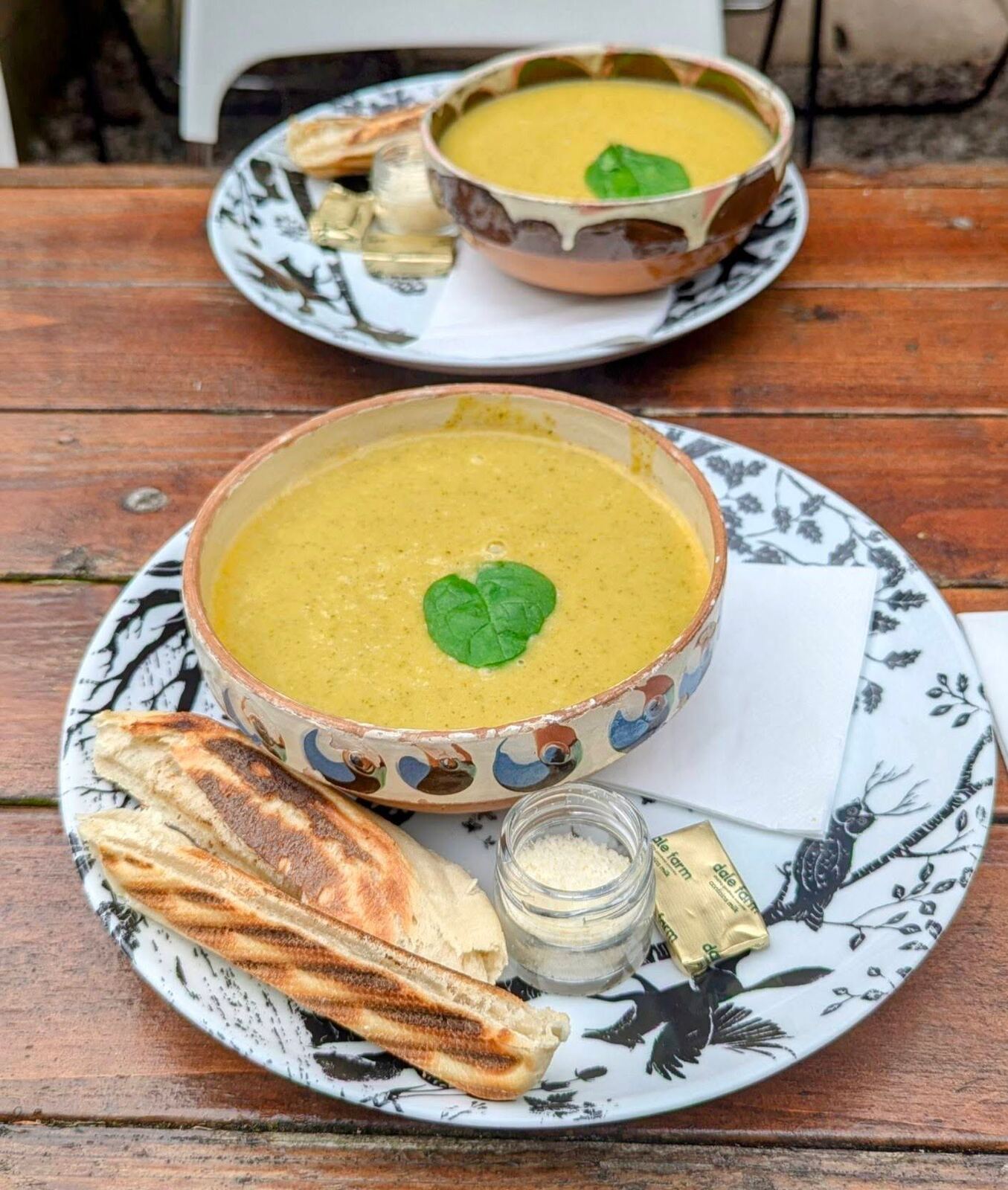
- ☕ Café: Pentland Hills Café Express at the Flotterstone visitor centre — soup, coffee, superb hot chocolate; ranger info boards inside. Dog-friendly. (Check current opening days/hours, especially in winter.)
- 🦟 Midges: low — open, breezy hills; none at all in the winter months.
- 🐕 Dogs: a brilliant dog walk, but it’s active sheep country — leads on near livestock, especially spring lambing.
- 🥾 Underfoot: easy along the reservoir; rougher, steeper and boggier if you push up toward Scald Law — proper footwear, and winter kit in the cold months.
- 🌦️ Winter: short daylight, cold tops and fast-changing weather — don’t underestimate it just because it’s close to the city.

Why to carry properly in the Pentlands
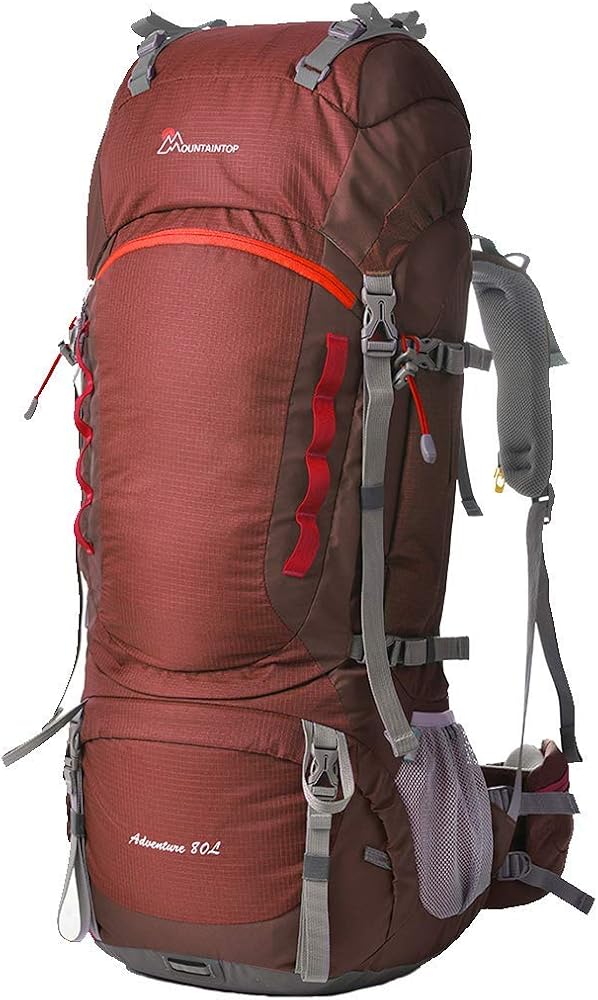
The Pentlands look gentle from Edinburgh and are genuinely exposed once you are on the ridge — there is no shelter between the tops, and the weather comes across fast. If you are doing a long traverse, or carrying kit for someone else in the party, the capacity and the waterproofing both stop being luxuries. Big hills close to a city still catch people out.
MOUNTAINTOP 80L Waterproof Rucksack
If you are carrying for a full traverse, or carrying for someone else in the party, capacity stops being optional. Eighty litres, YKK zips, an internal frame and a rain cover — the Pentlands are more exposed than their proximity to Edinburgh suggests.
Check price on Amazon