Bass Rock & the North Berwick Coast: Gannets, a Clifftop Café & the Start of the Grand Tour
Bass Rock at a glance
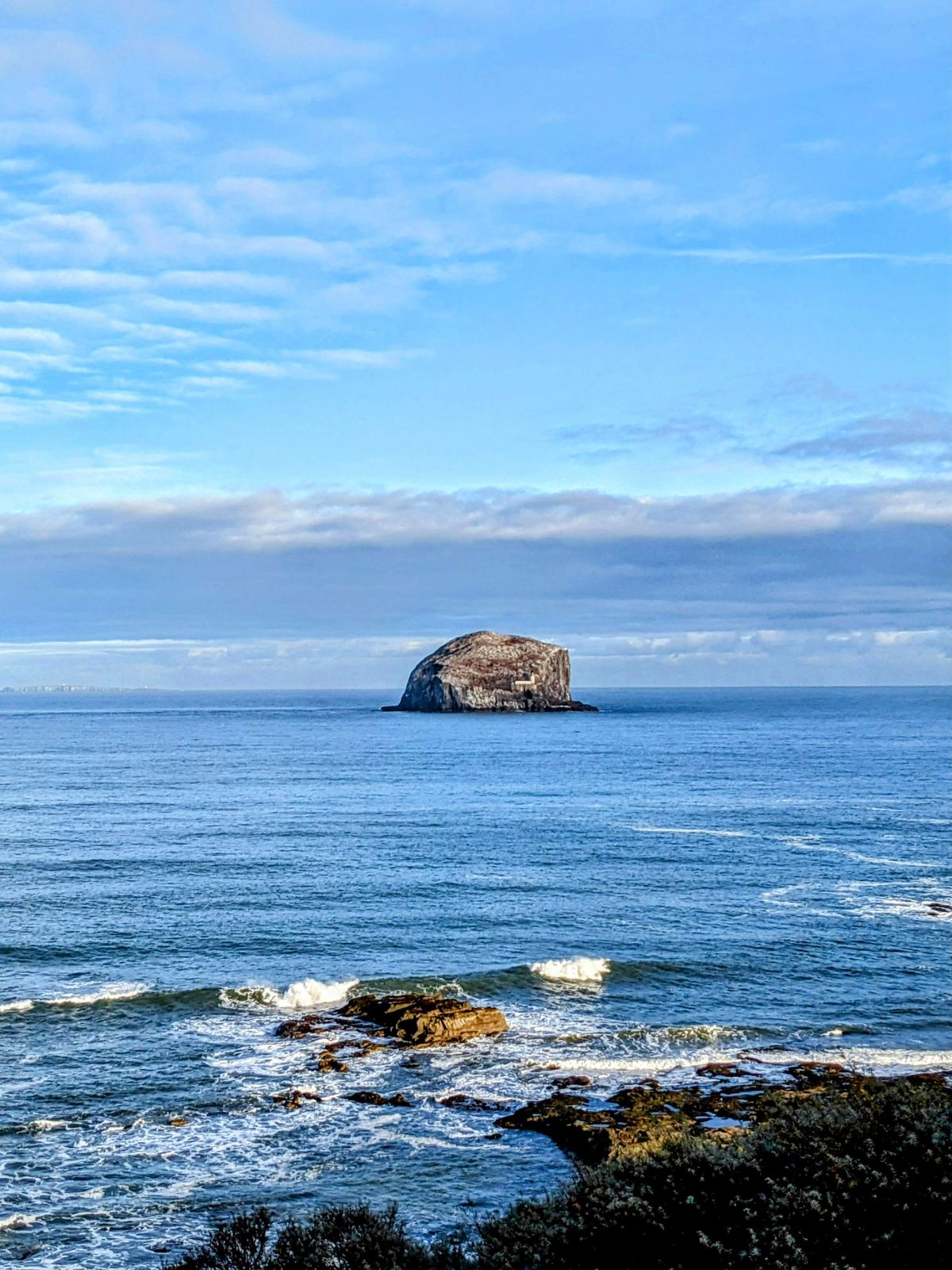
| What | A 107-metre volcanic plug in the Firth of Forth, about 3 miles off North Berwick |
| Famous for | The world’s largest colony of northern gannets — well over 100,000 birds, with figures of around 150,000 often quoted |
| Owner | RSPB Scotland (bought from the Dalrymple family in June 2026, together with Craigleith) |
| See it from | Almost anywhere along the North Berwick shore and coast path — or by boat from the Scottish Seabird Centre |
| Land on it | Only on a booked Seabird Centre landing trip — in recent seasons about £150 a head, over-16s only |
| Best time | April to August for the gannets; any clear day for the views |
Overview — the perfect starting line
Every big journey needs a starting line, and ours is this stretch of the East Lothian coast: red-gold beaches, tall grassy dunes, a long clifftop path and, always, the pale lump of Bass Rock sitting offshore. It is barely 25 minutes from Edinburgh (and there is a direct train), it is very dog-friendly, and there is good coffee at the end of every walk. It is the natural opening of our Grand Tour — see our main North Berwick page for the town, the harbour, the Law and the golf.
The rock & the gannets
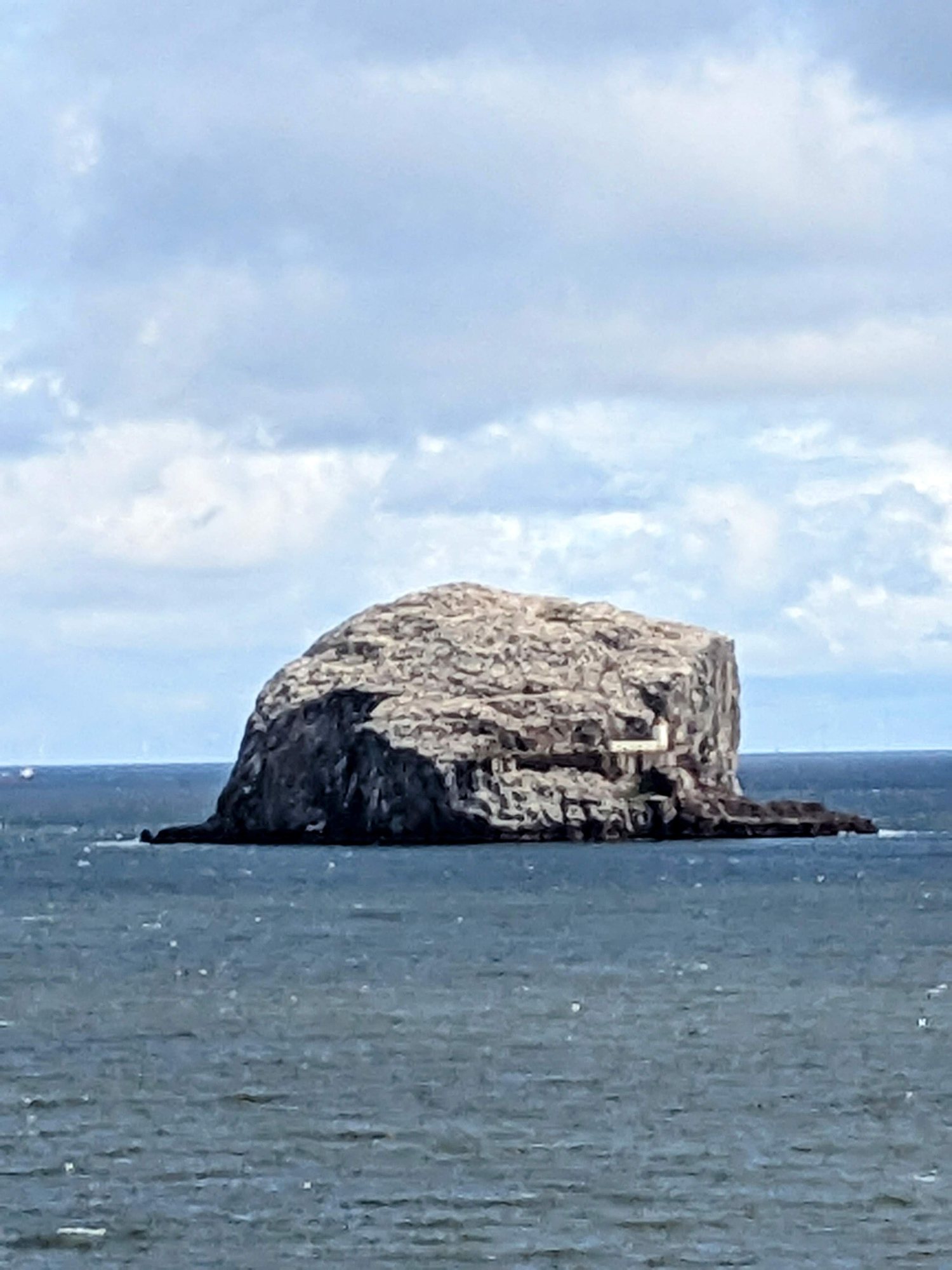
Bass Rock is the core of an ancient volcano — a plug of hard phonolitic trachyte, some 340 million years old, left standing when the softer rock around it wore away. It rises 107 metres from the sea, and through spring and summer it turns brilliant white: not with snow, but with northern gannets and their droppings. This is the world’s largest colony of the species, well over 100,000 birds; the gannet’s scientific name, Morus bassanus, comes from the rock itself.
A rock with a past
- A hermit’s island — the 8th-century saint St Baldred is said to have lived here; the ruins of a chapel remain.
- A castle & a prison — the Lauder family held the Bass for centuries; in 1671 it became a state prison, where Covenanters (Presbyterians who refused to accept the king’s authority over the church) were held in grim, damp conditions.
- The last Jacobite stronghold — four Jacobite officers seized the castle on 18 June 1691 and held it against King William’s forces for almost three years, surrendering on 18 April 1694.
- A lighthouse — built in 1902 by David Stevenson, cousin of Robert Louis Stevenson.
- A change of owner — the Dalrymple family owned the rock for some 320 years; in June 2026 it was bought by RSPB Scotland, with Craigleith, with £586,000 from the National Heritage Memorial Fund, the first time a conservation charity has owned it. RSPB Scotland will work with the Scottish Seabird Centre on a conservation plan for both islands.
Seeing it
- From the shore — free, and good all year. On a clear day you can see (and, downwind, smell) the colony from the coast path, with Tantallon Castle staring straight across at it from its clifftop a few minutes east.
- The Scottish Seabird Centre — on the harbour, with live gannet cameras and, in season, boat trips round the rock. Landing trips resumed in 2025 after being halted in 2023 (avian flu) and 2024 (storm damage); they are weather-dependent and must be booked ahead through the Centre.
The beach & the coast path
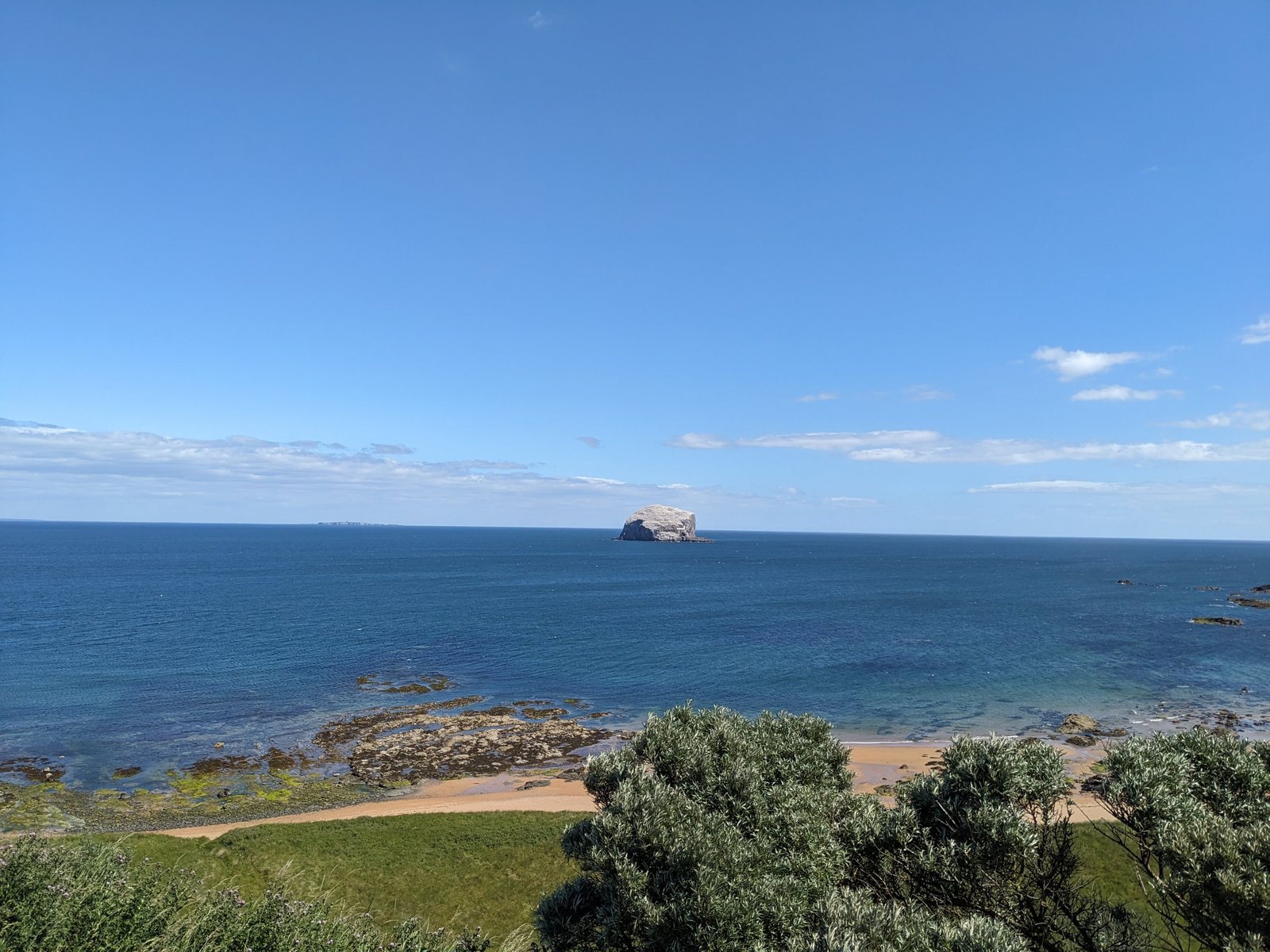
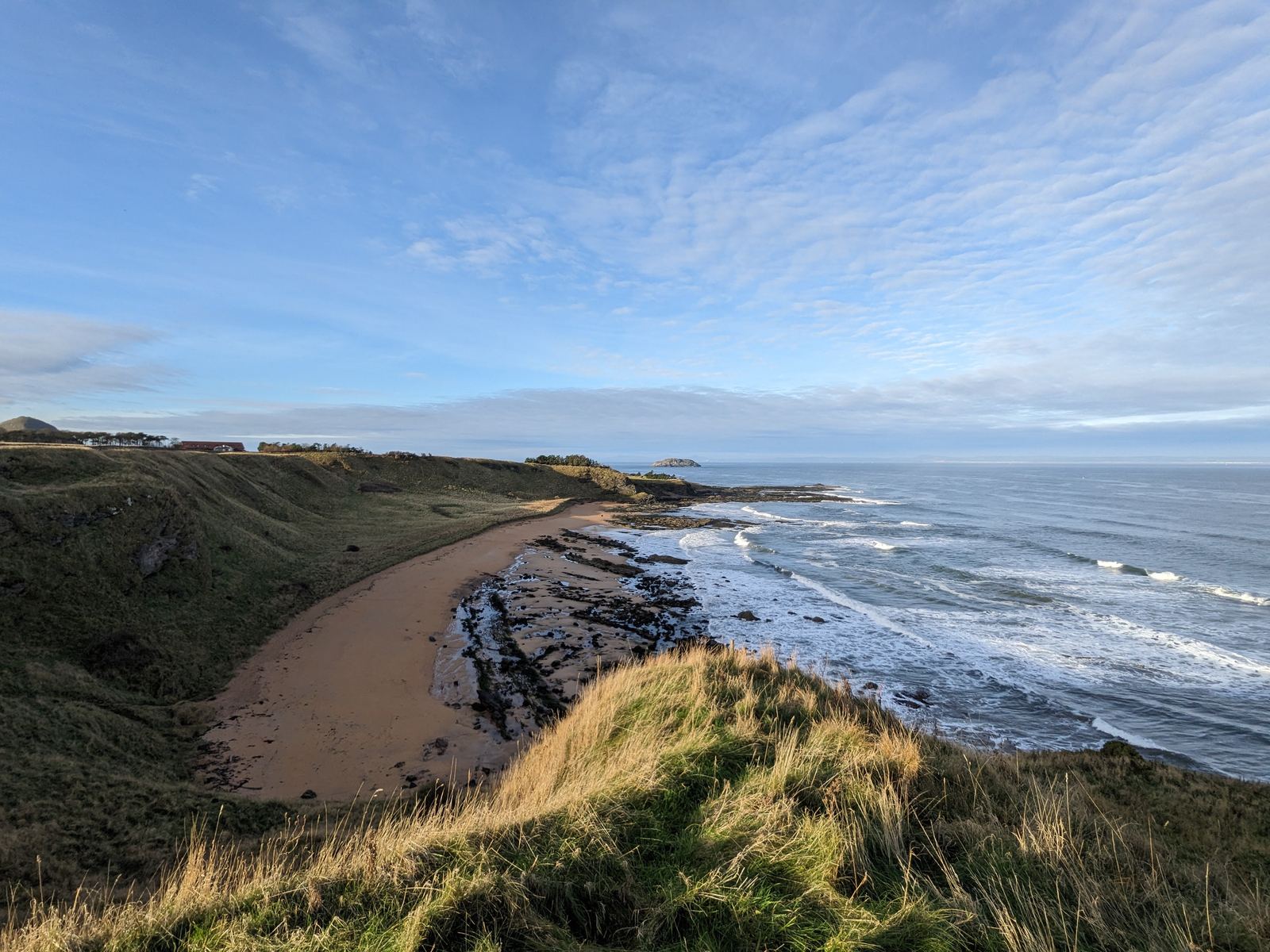
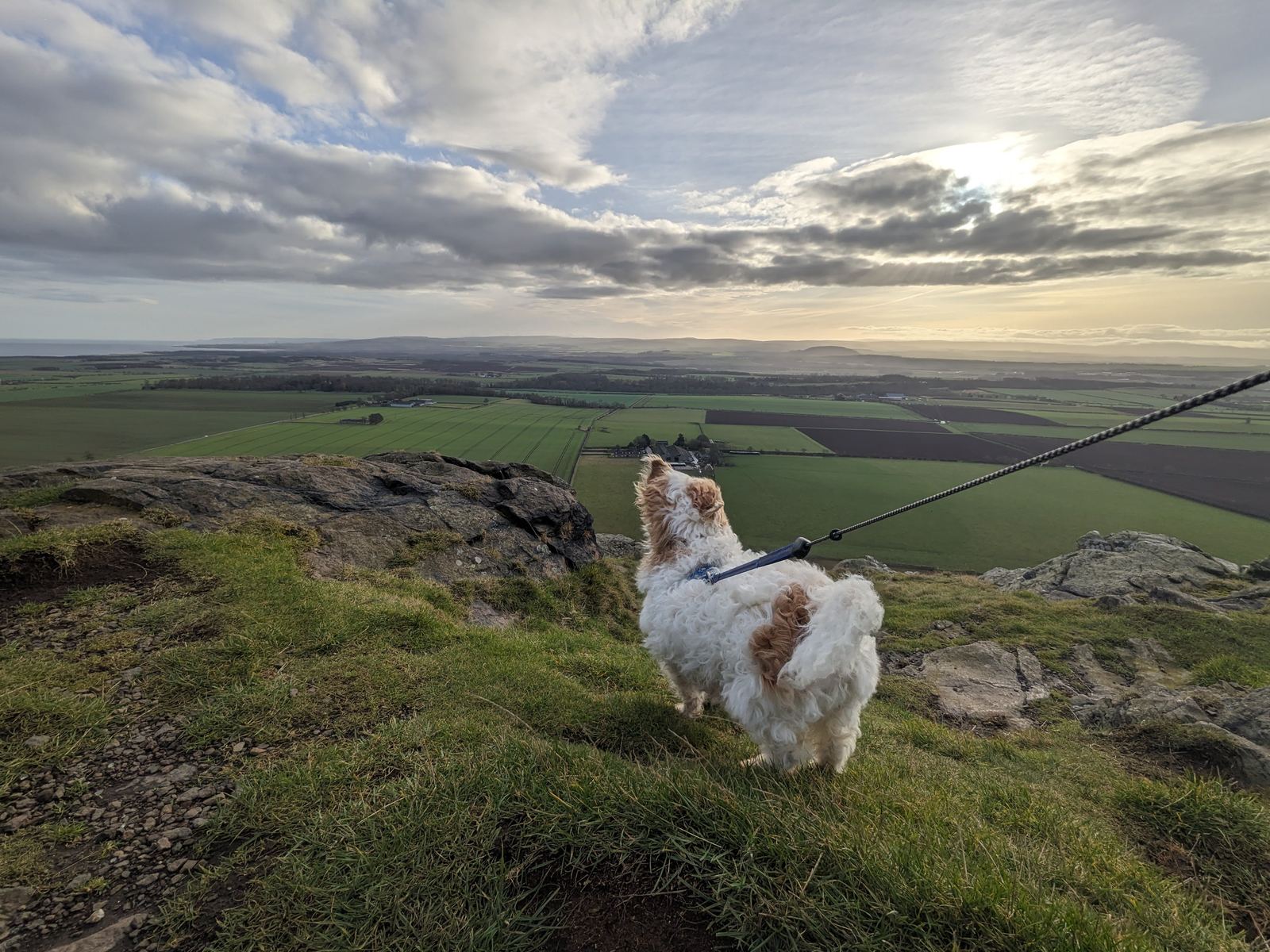
This is a coast of curving sandy bays below grassy cliffs, rock pools at low tide and dunes with golden marram grass — the sort of place where you walk for an hour and meet nobody. The foreshore here is volcanic: pink and rust-red rock, green weed and pools at low tide. Our favourite walks are the bays east and west of the town, and the path along the cliffs towards Tantallon.
Coffee & cake
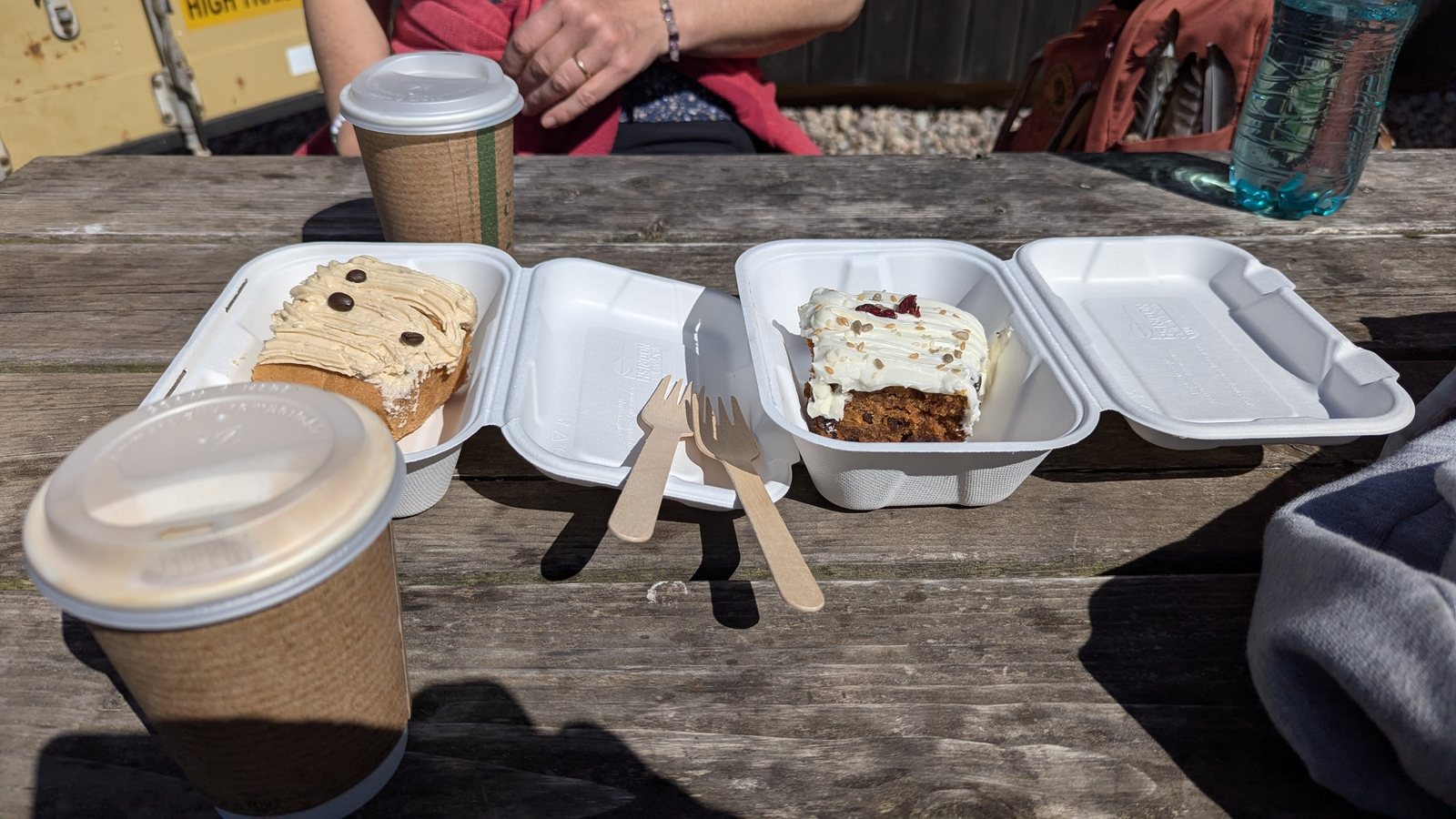
The reward for any walk here is a coffee and a slab of cake at the clifftop café — the one we think of as Drift, at Canty Bay, with picnic tables outside and the Forth in front of you. Everything came in compostable boxes, and the carrot cake did not last long. In town, the Penguin tea room inside the Seabird Centre does the same with live gannet cameras for company (see North Berwick).
Best time to visit
- April to August for the gannets, at their loudest and whitest.
- Any clear, breezy day for the views; Bass Rock earns its keep in every season.
- Pack a windproof — the Forth coast is breezy, which keeps the midges away.
Reality notes
- 🐕 Dogs: good, largely open beaches — check seasonal dog rules, keep them away from ground-nesting birds in the dunes in spring, and clean up.
- 🌊 Swimming: the North Sea is cold and has currents — paddle sensibly.
- 🚐 Staying over: there is a formal clifftop site and, on our trips, we wild-camped the clifftops responsibly — see North Berwick for the details and the etiquette.
Combine it with
- Tantallon Castle — the red-cliff fortress facing the Bass.
- North Berwick Law — the volcanic hill behind the town, a short climb for a big view.
- Dirleton and Dunbar — a fairytale castle to the west, a harbour town to the east.
- The Edinburgh & Forth Whisky Trail — Glenkinchie is a short drive inland.
- Edinburgh and the wider East Lothian coast.
Sources
- Our own December visits and photographs (the beaches, the coast path, the café).
- Wikipedia — Bass Rock (geology, gannets, history, ownership); news reports on the RSPB Scotland purchase, June 2026.
- Scottish Seabird Centre — Bass Rock landing trips and boat trips.