
Dunbar: John Muir’s Town, the Red Castle & Black Agnes
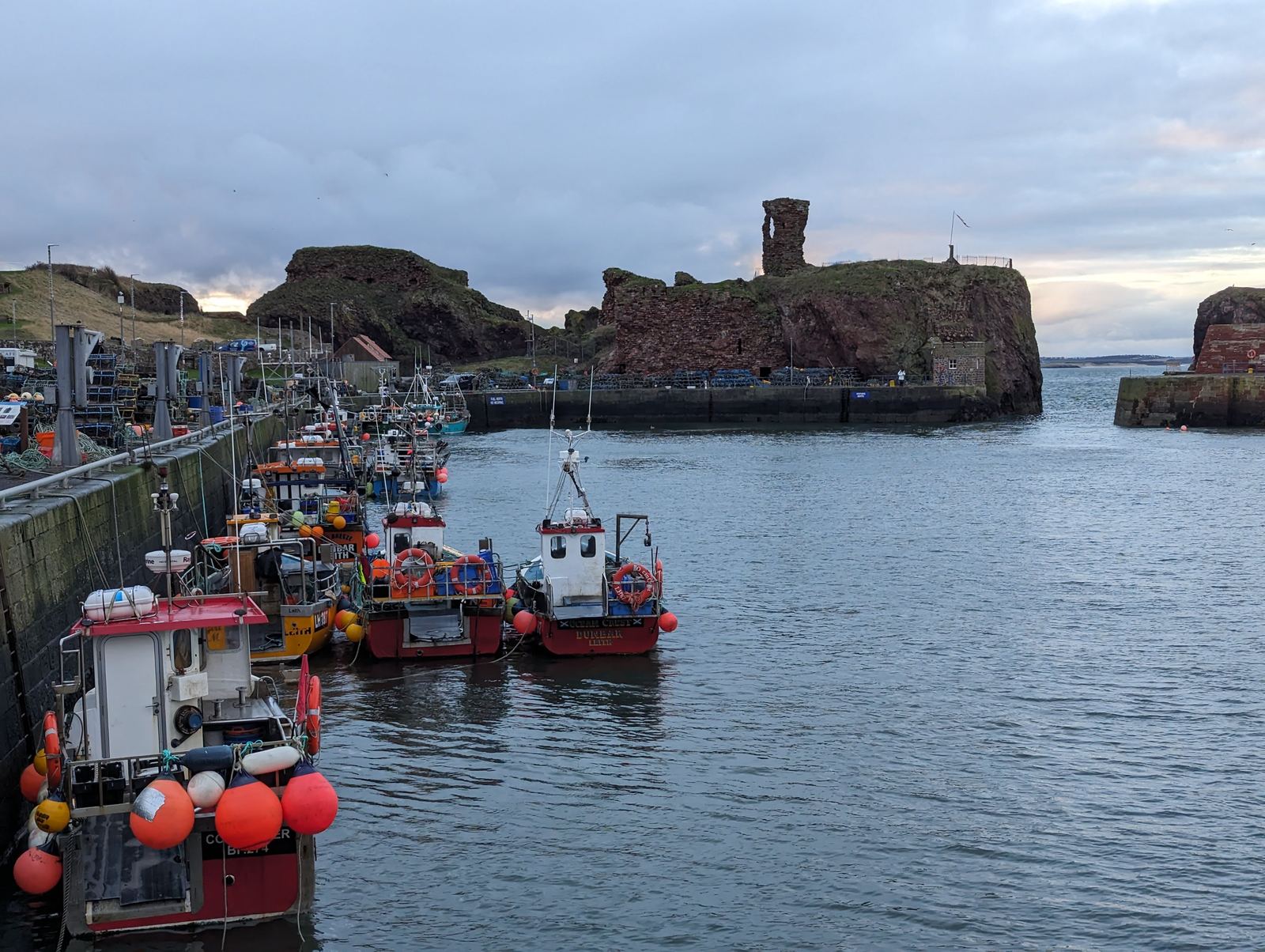
Overview — a proper old East Lothian town
Dunbar is a handsome, salty, red-stone town on the East Lothian coast, about 30 miles east of Edinburgh — a working fishing harbour, a dramatic ruined castle, and a genuine claim to fame: it’s the birthplace of John Muir, the father of the world’s national parks. Add a lively High Street, a couple of good pubs and cafés, and the wide sands of Belhaven Bay on the doorstep, and it’s a cracking base on this stretch of coast. We spent a happy few winter days here.
Where it is
Dunbar sits right on the A1 / East Coast Main Line — you can be here from Edinburgh in half an hour by train or car. It’s the eastern anchor of the beautiful East Lothian coast, with North Berwick and Tantallon to the west and the Tyninghame beach and John Muir Country Park just up the road.
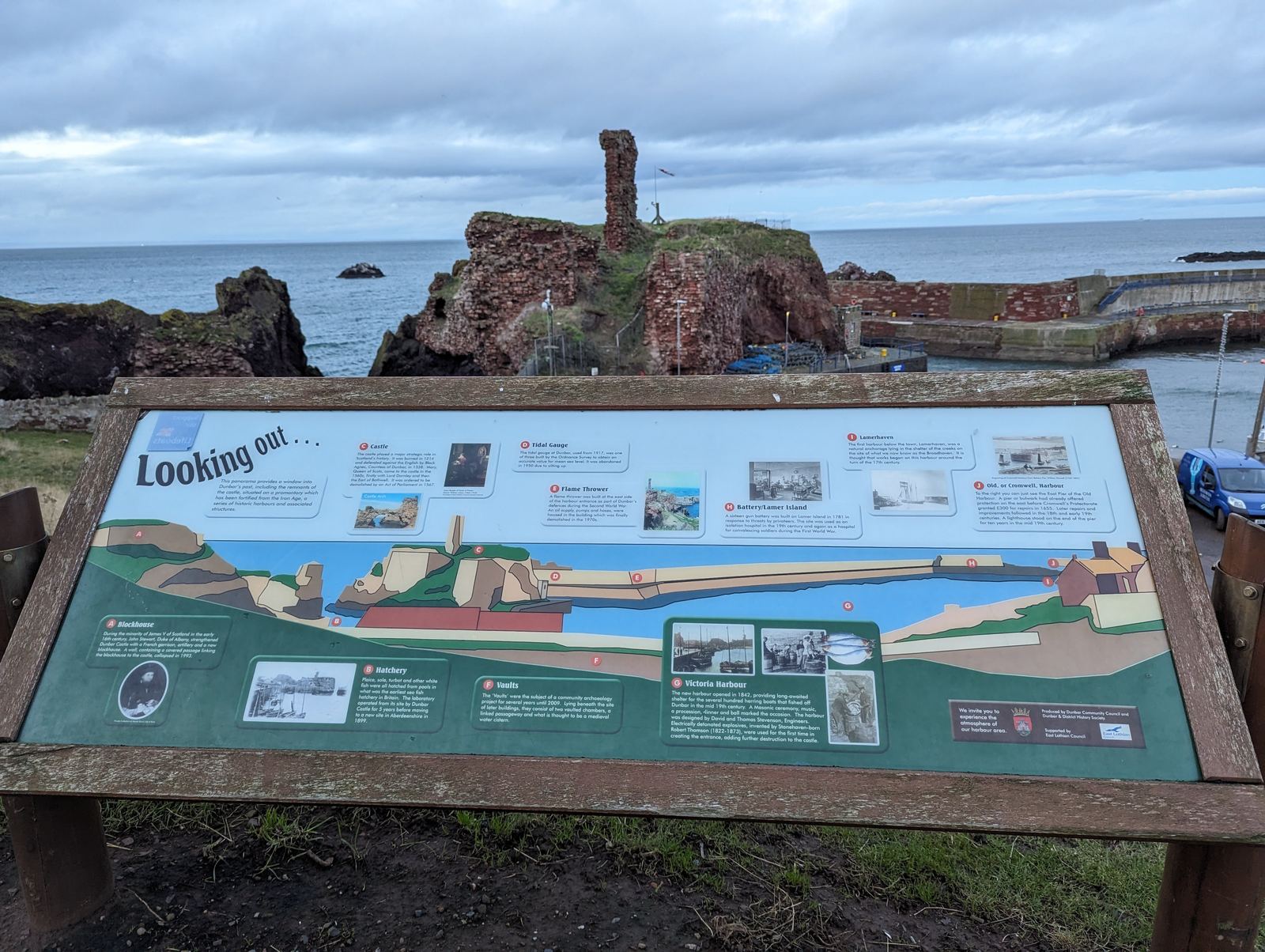
Dunbar Castle & the legend of Black Agnes
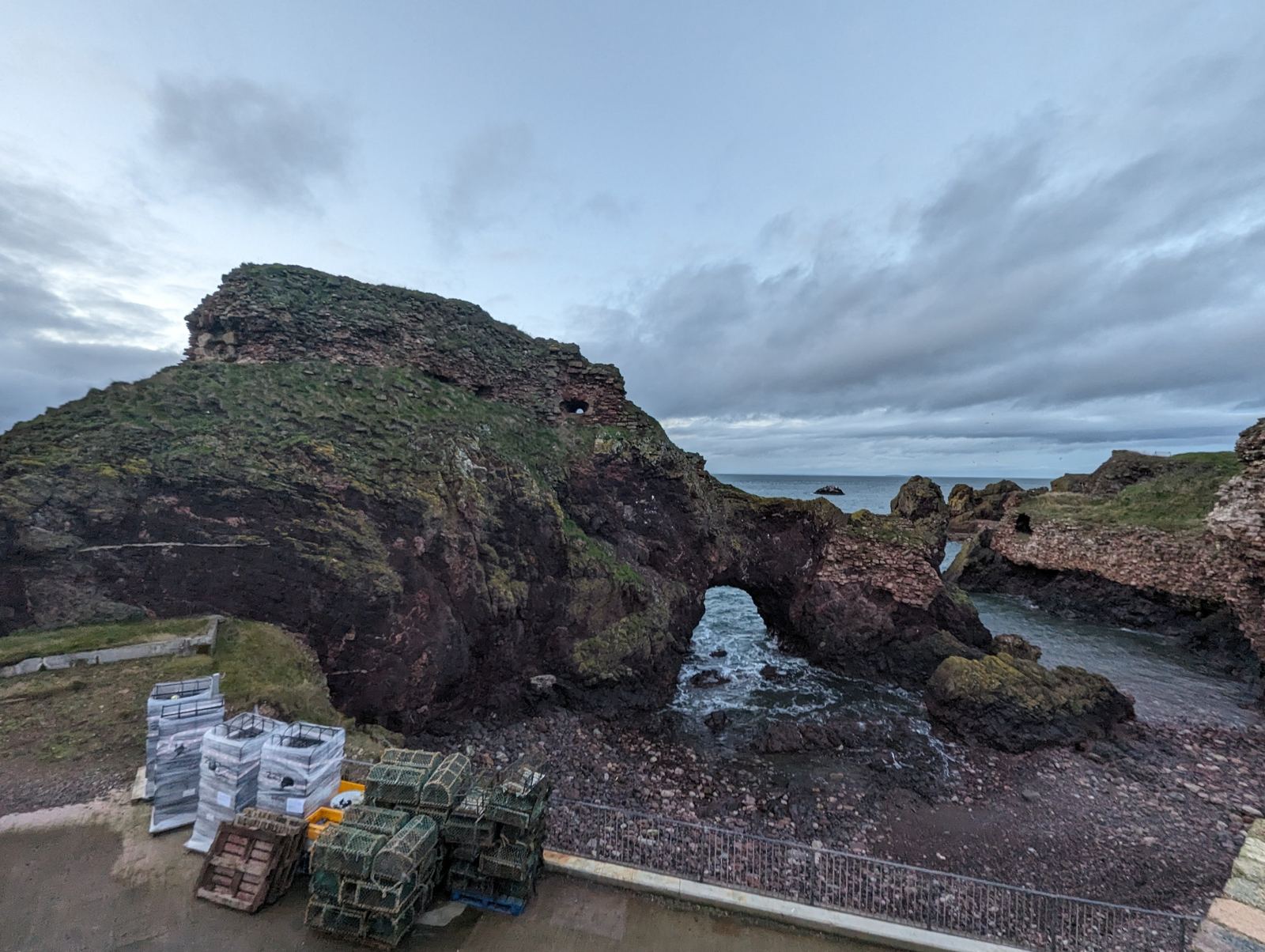
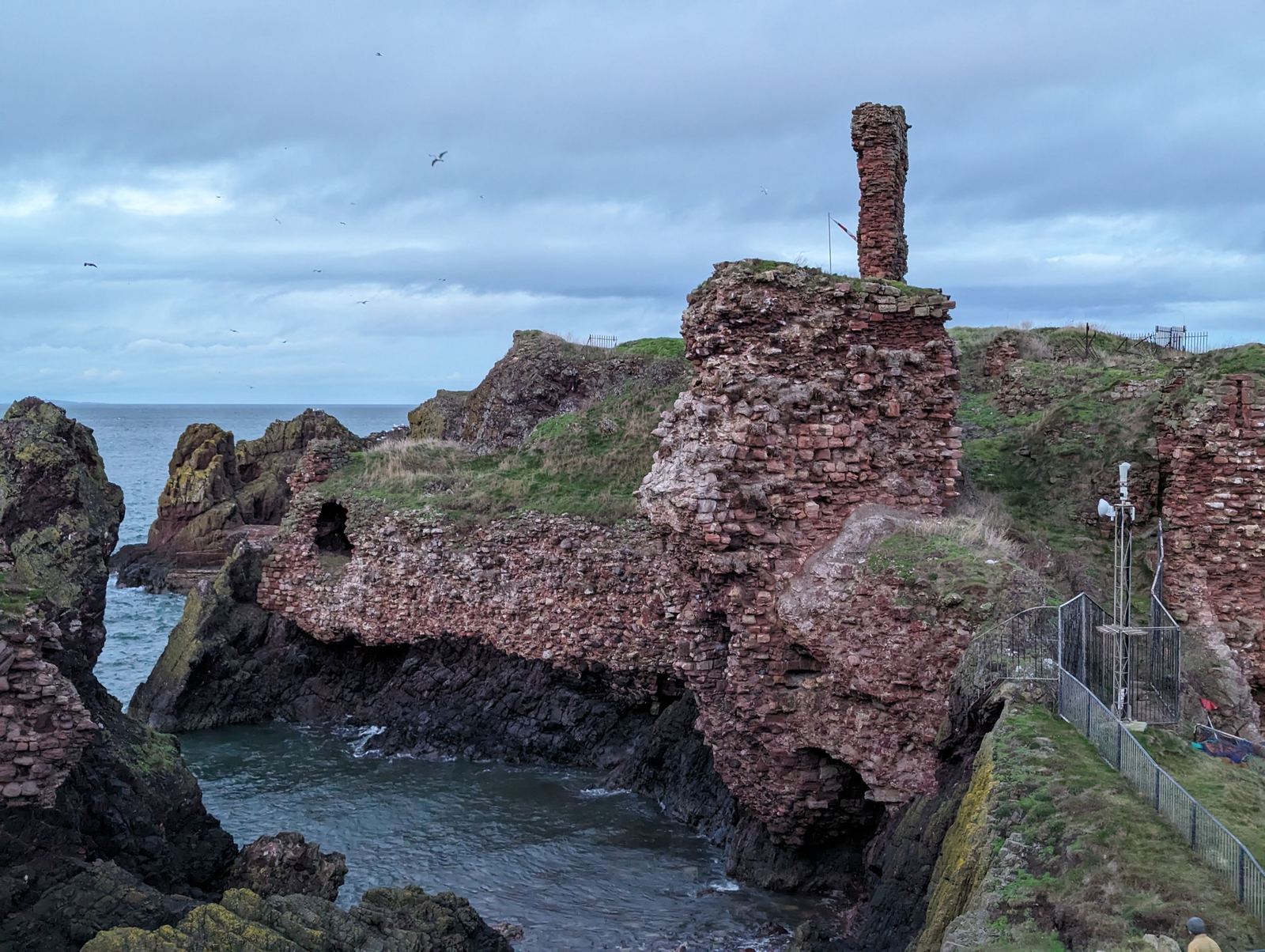
The ruins that loom over the harbour, all blood-red sandstone, are what’s left of Dunbar Castle — once one of the mightiest and most-besieged fortresses in Scotland, guarding the main road between England and Edinburgh. It saw centuries of war, was linked to Mary, Queen of Scots (who fled here more than once), and was finally ordered destroyed (“slighted”) in 1567. The harbour was later blasted right through the middle of it, which is why the ruin is so broken and dramatic.
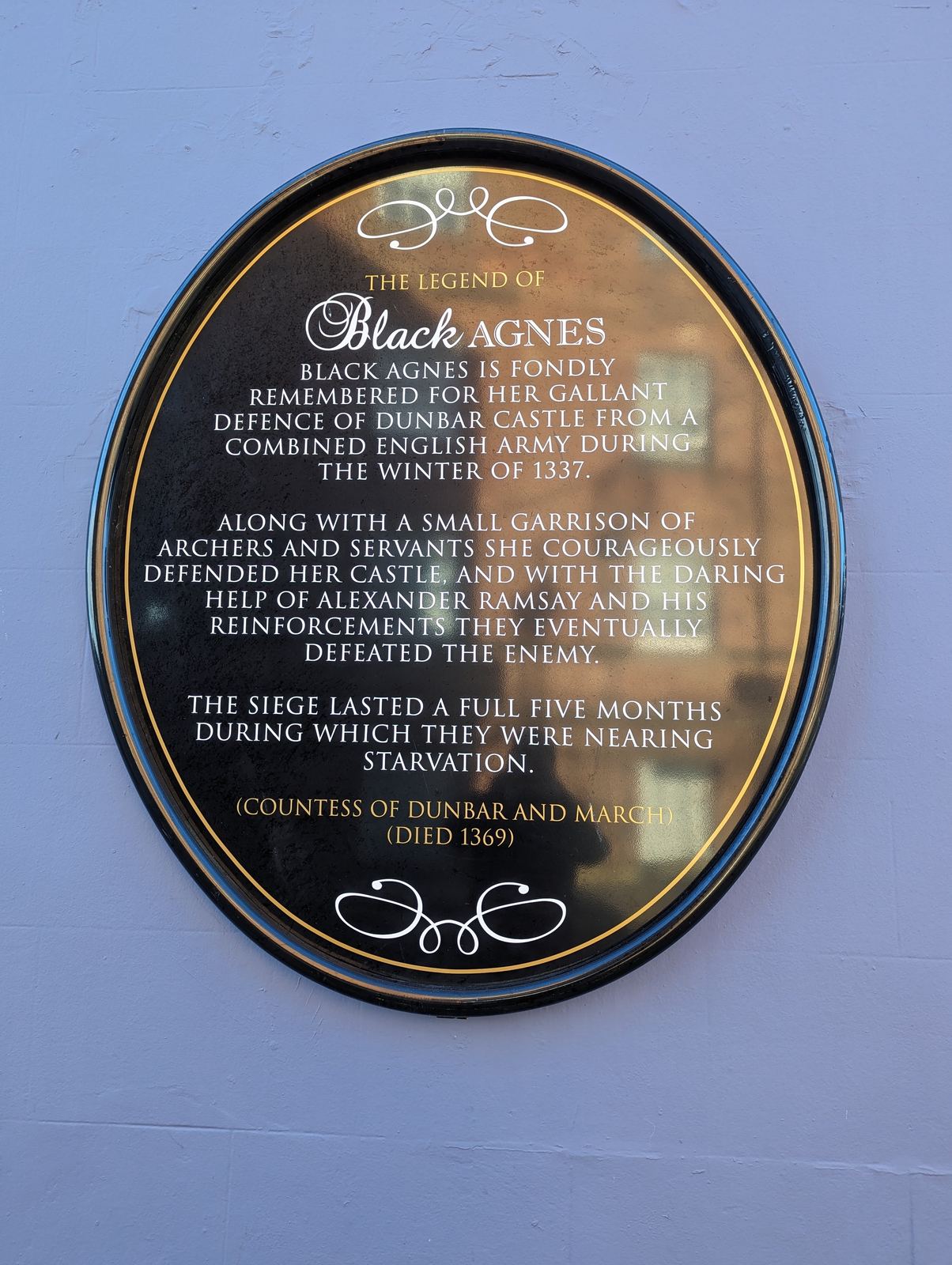
Its greatest story is Black Agnes. In 1338, with her husband away, Agnes Randolph, Countess of Dunbar — “Black Agnes” for her dark colouring — held the castle against a full English siege under the Earl of Salisbury for an incredible five months (January to June), with only a handful of guards and servants. She taunted the besiegers from the battlements, and famously had her maids dust off the marks left by the English catapults with a handkerchief, just to show what she thought of their bombardment. She never surrendered — and the English gave up and went home. She’s one of the great heroines of Scottish history, and there’s a plaque in the town that tells the tale.
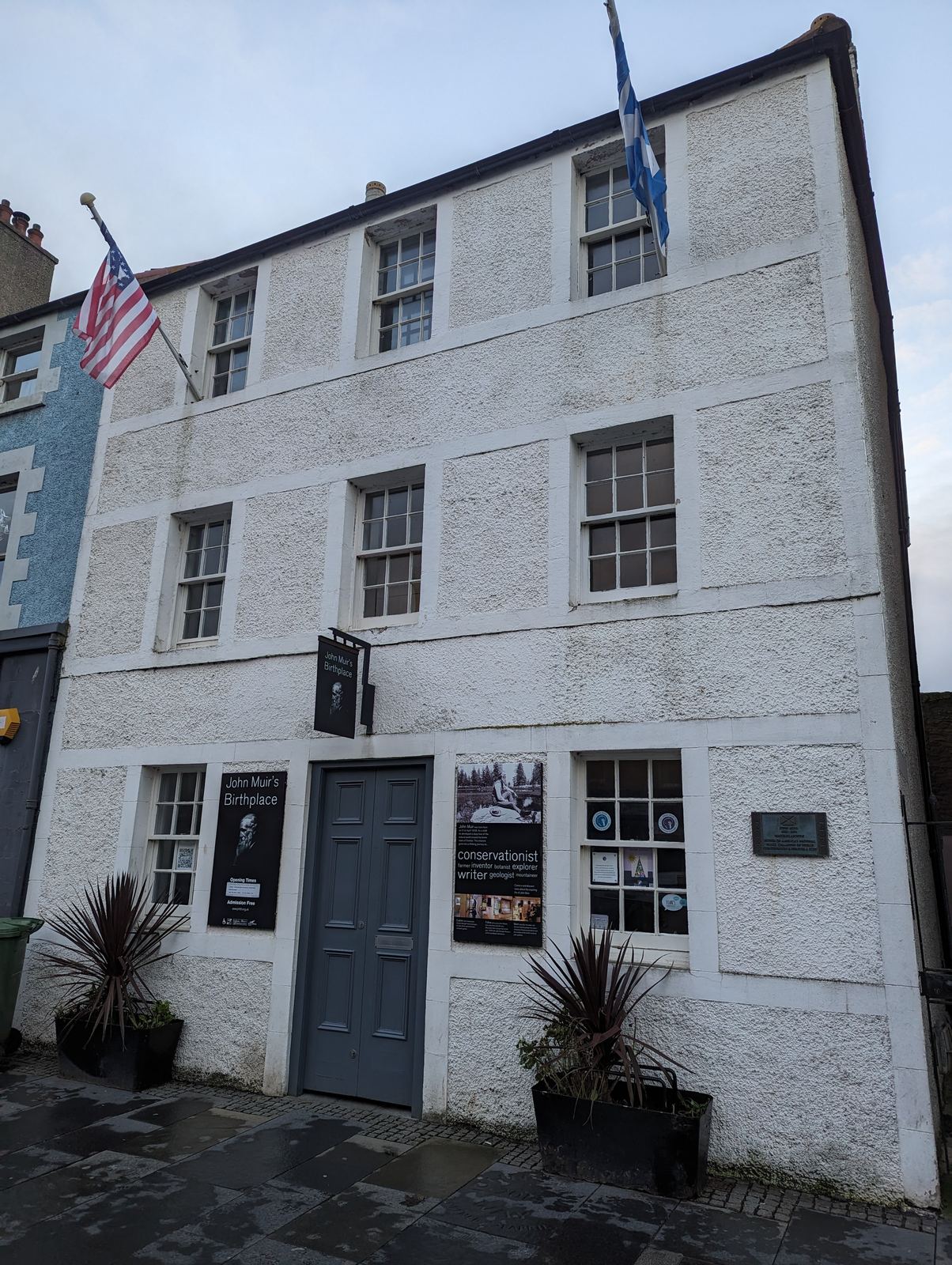
John Muir’s Birthplace
Dunbar’s proudest son was born on the High Street on 21 April 1838: John Muir, who emigrated to America as a boy and grew up to become the most influential conservationist in history — the man who helped save Yosemite, founded the Sierra Club, and is rightly called the “Father of America’s National Parks.” His childhood home is now a free little museum, John Muir’s Birthplace, and his name is all over this coast — the John Muir Way long-distance path and the John Muir Country Park both honour him.
The harbour — Victoria & Cromwell
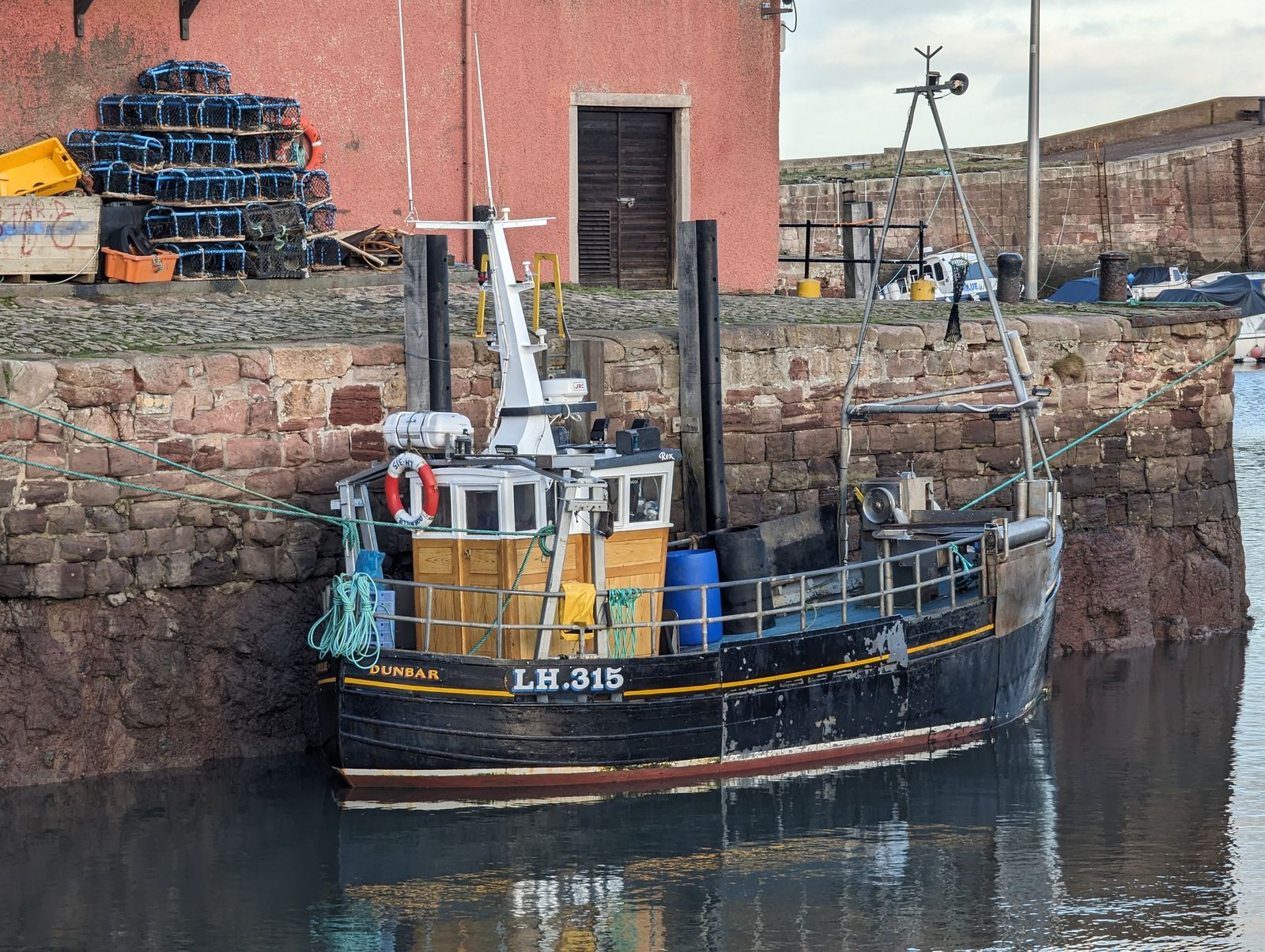
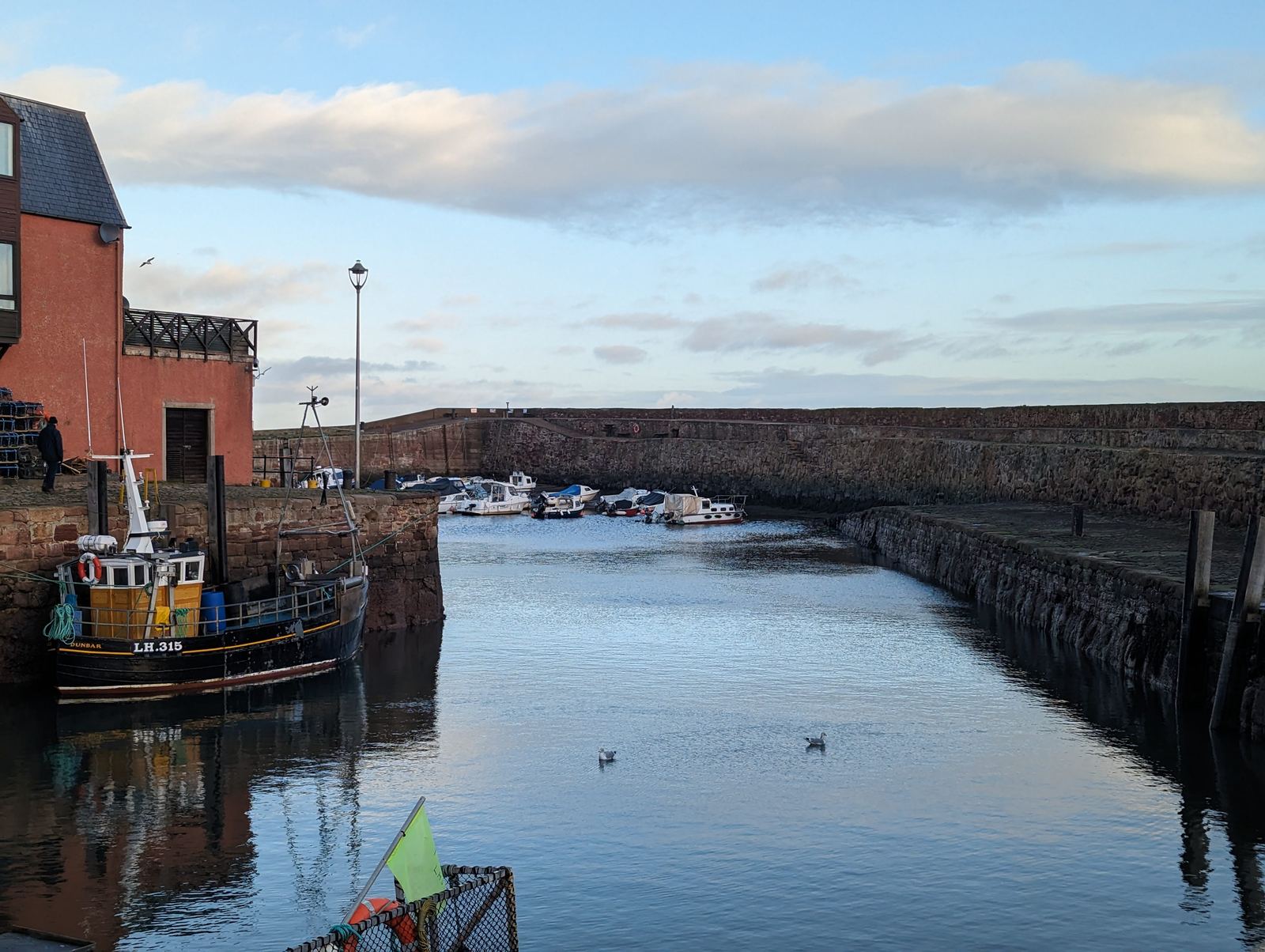
The harbour is the heart of the town, and still a working fishing port (lobster and crab, mostly). It’s really two harbours: the old Cromwell Harbour (built in the 1650s, after Cromwell’s victory here) and the Victorian Victoria Harbour, dug out of the castle rock. Wander down for the boats, the stacked creels, the smell of the sea, and one of the best views of the castle.
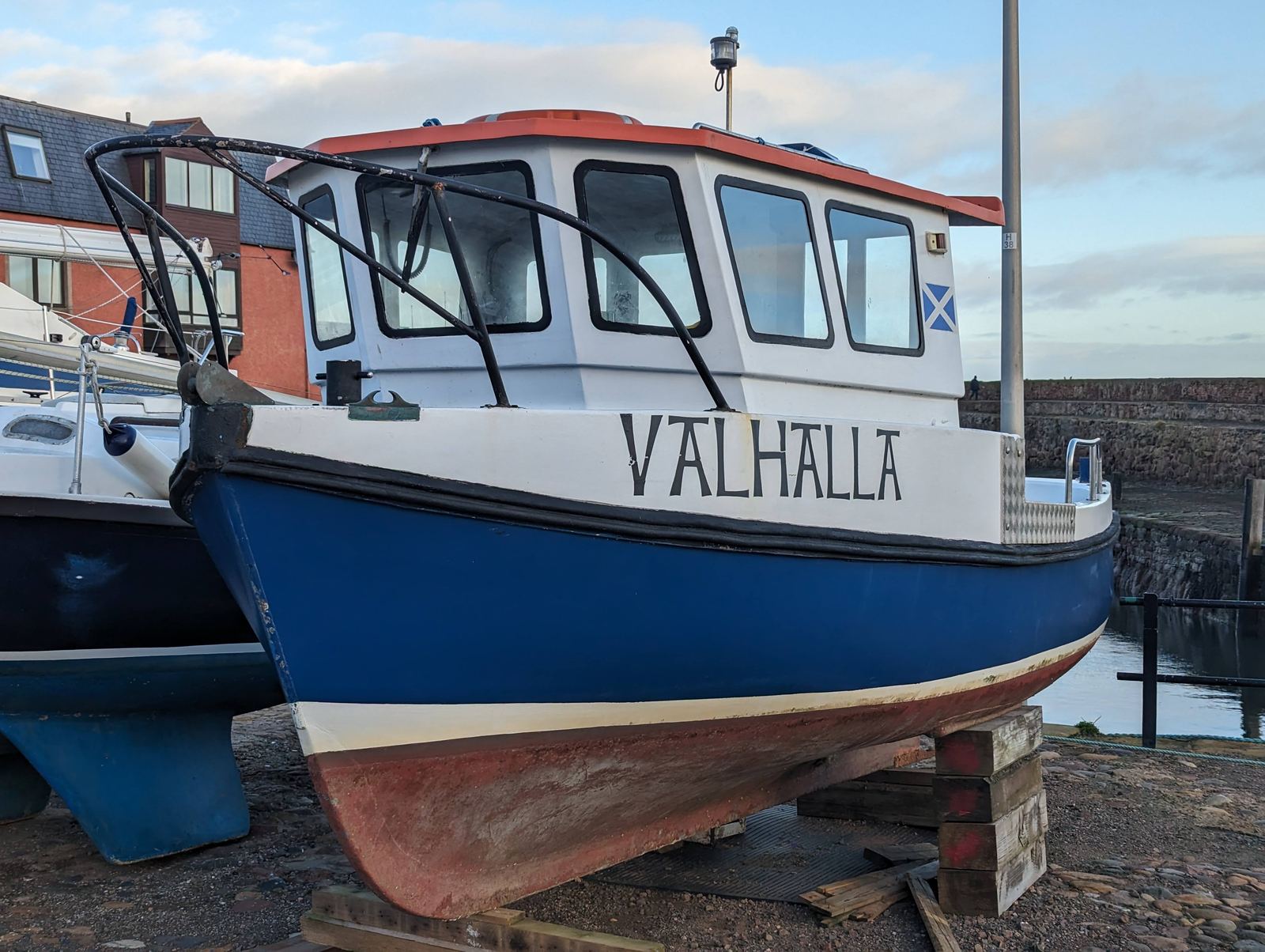
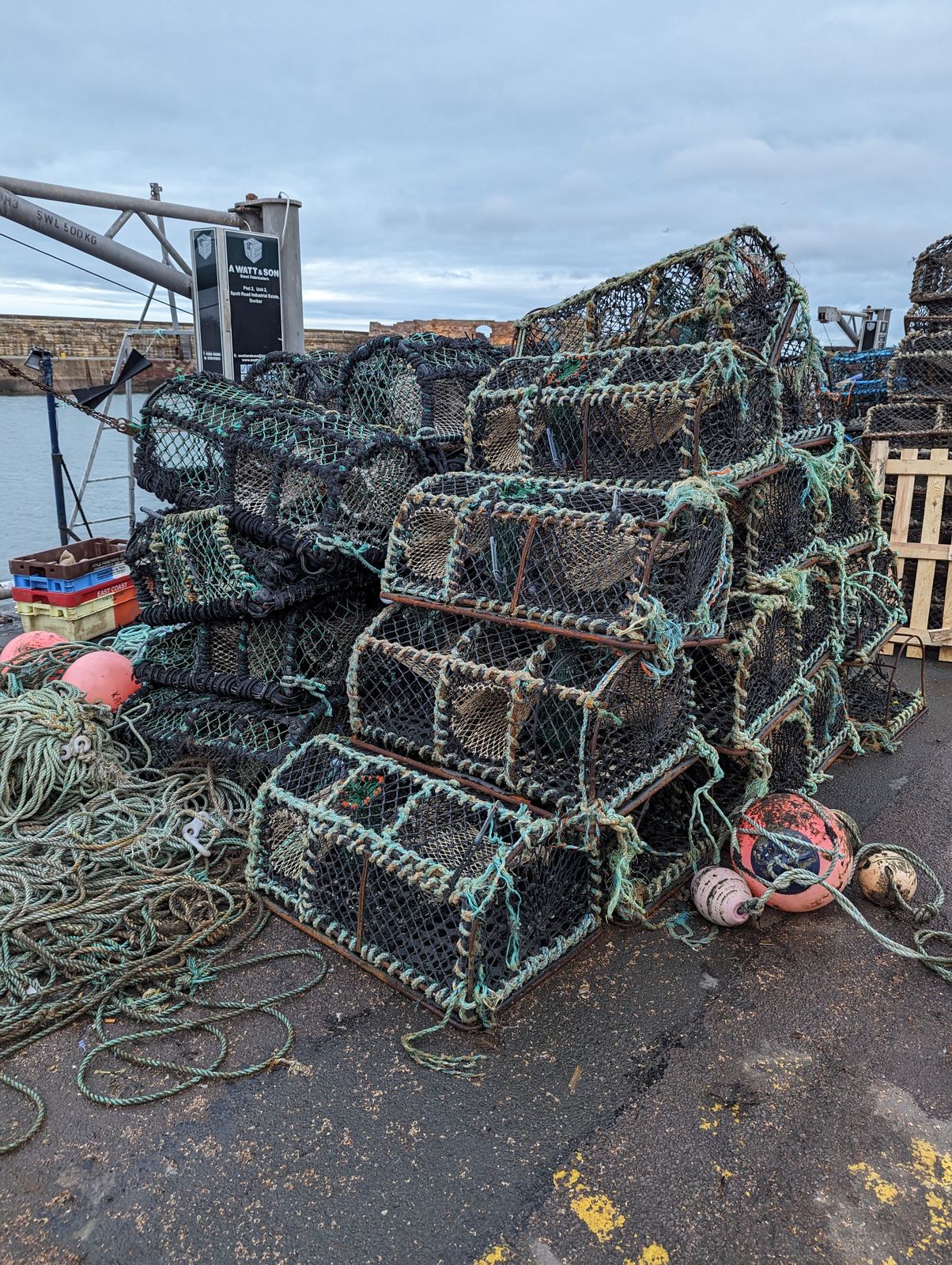
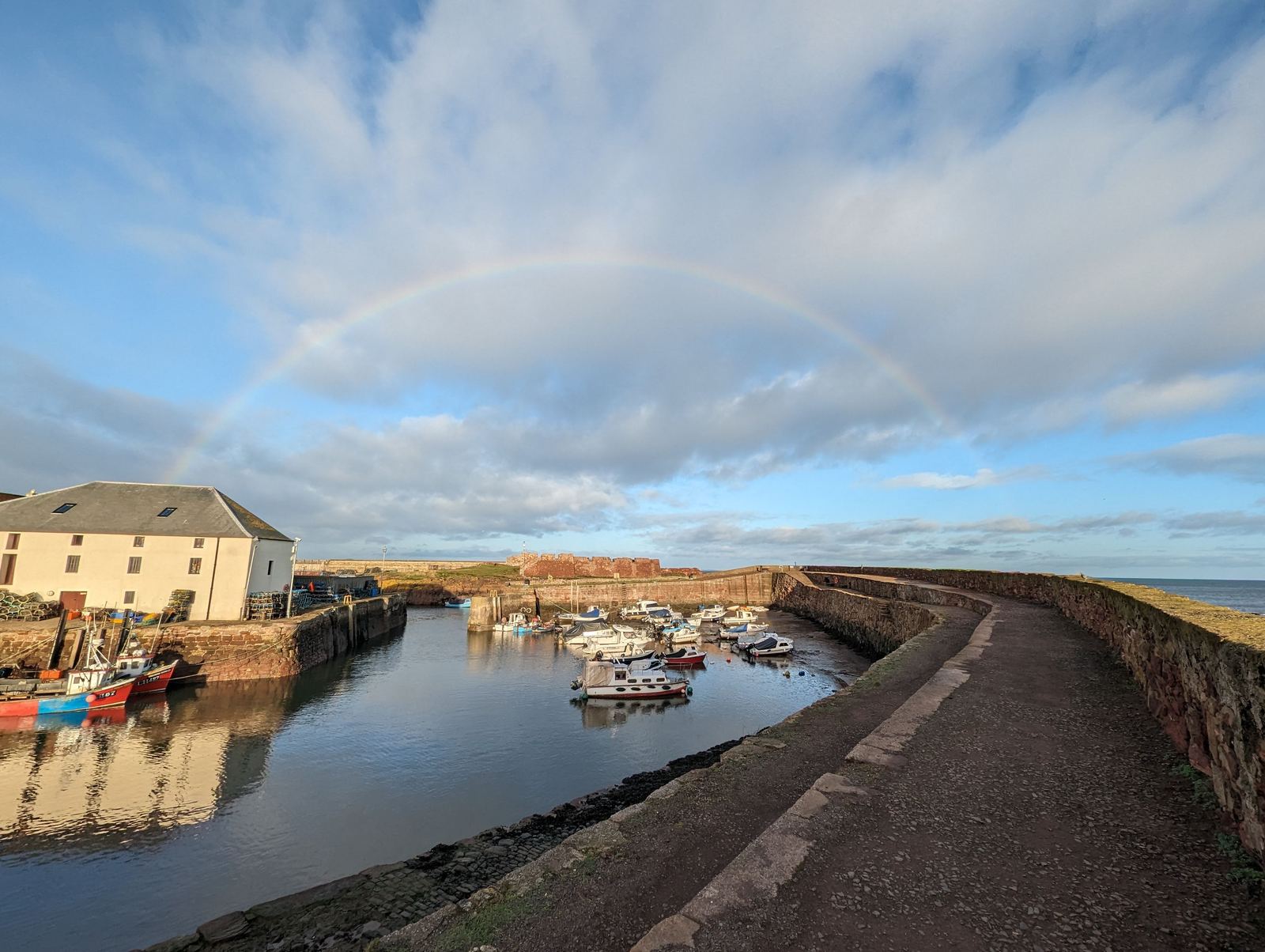
The Battle of Dunbar, 1650
One more slice of history worth knowing: in September 1650, just outside the town, Oliver Cromwell and his New Model Army — outnumbered nearly two to one — smashed a Scottish army of some 22,000 at the Battle of Dunbar. It was one of Cromwell’s most complete victories, and it broke Scottish resistance to him. The harbour he built afterwards still carries his name.
The town — High Street, coffee & a good pub
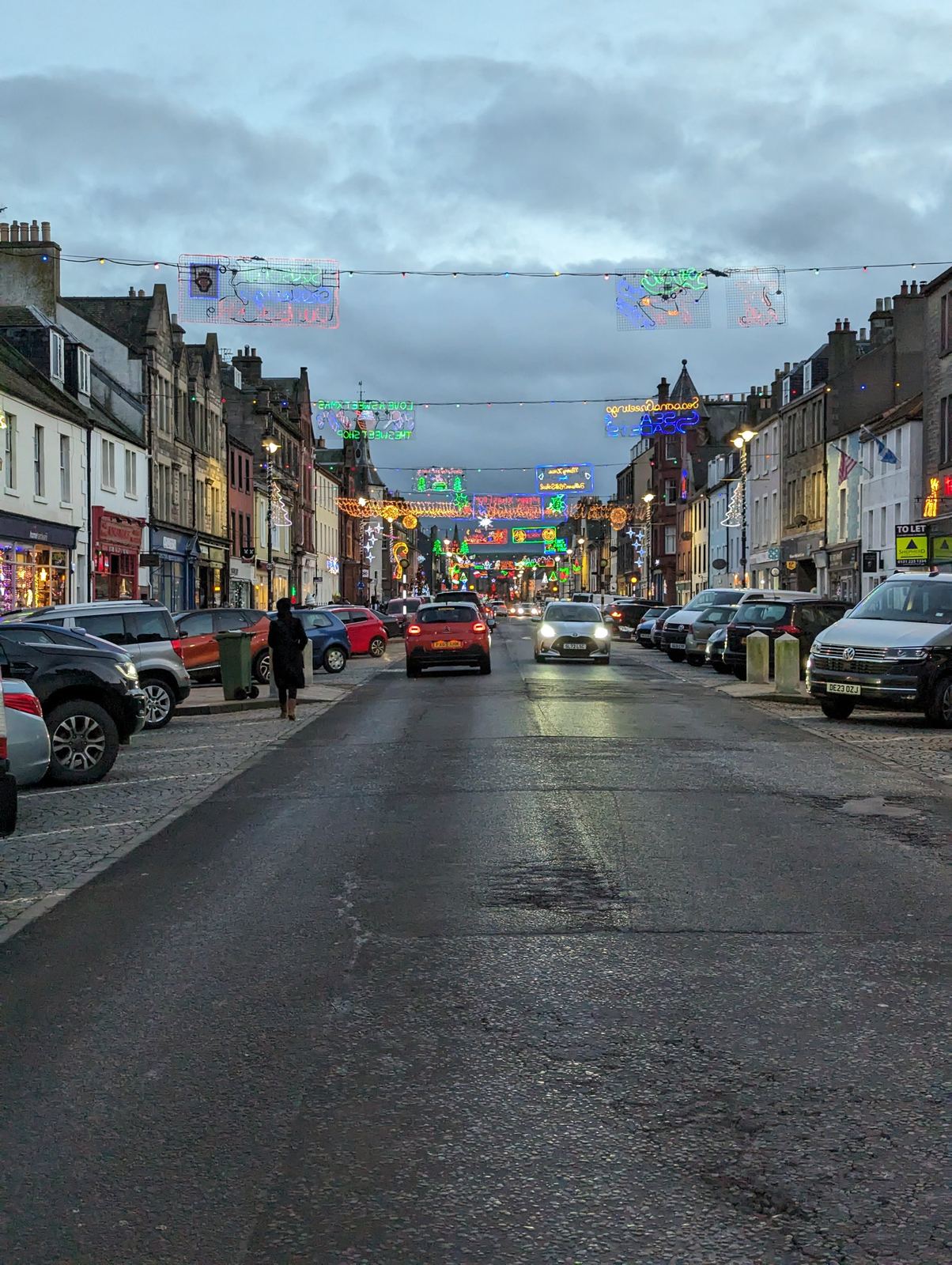
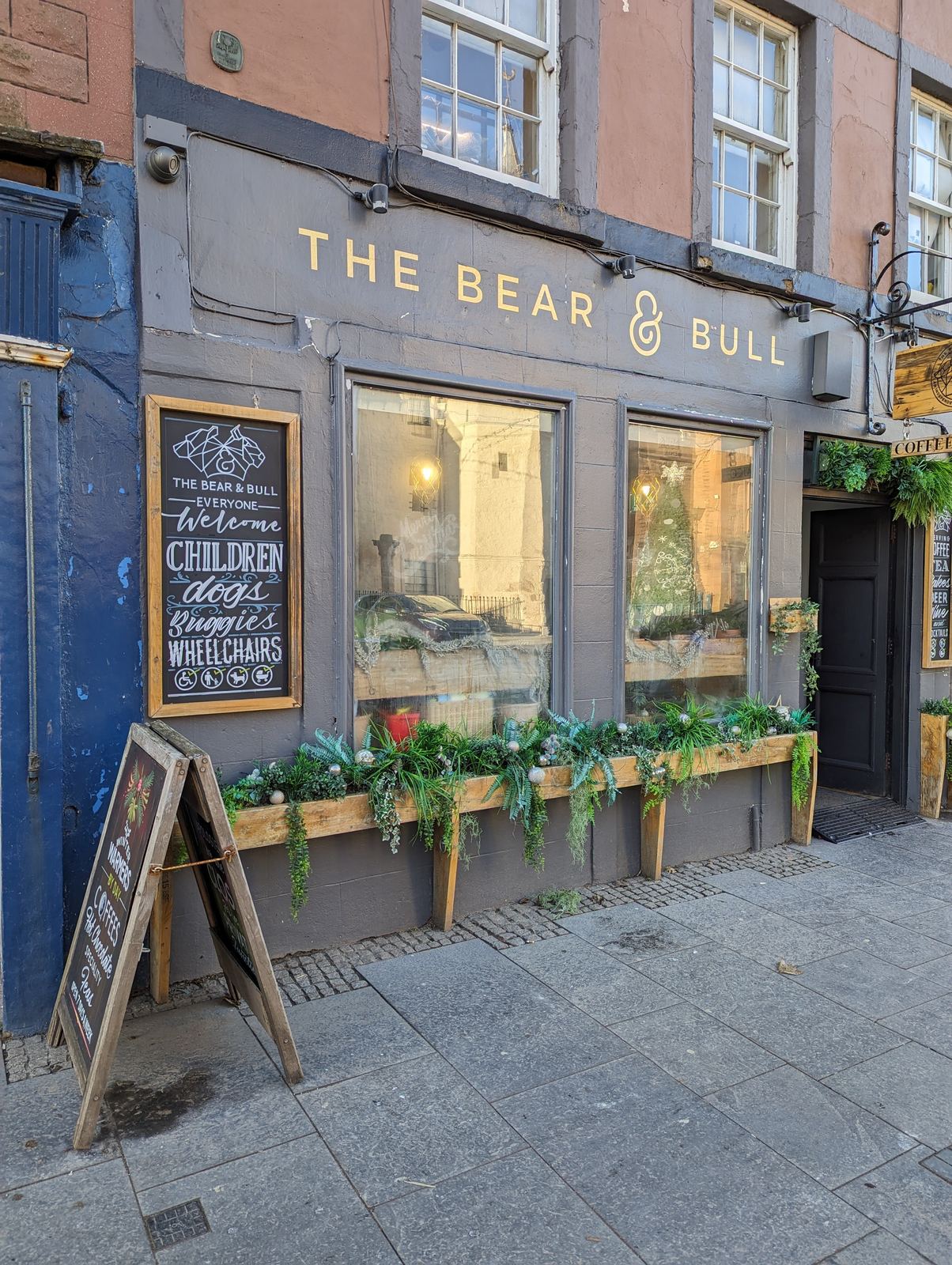
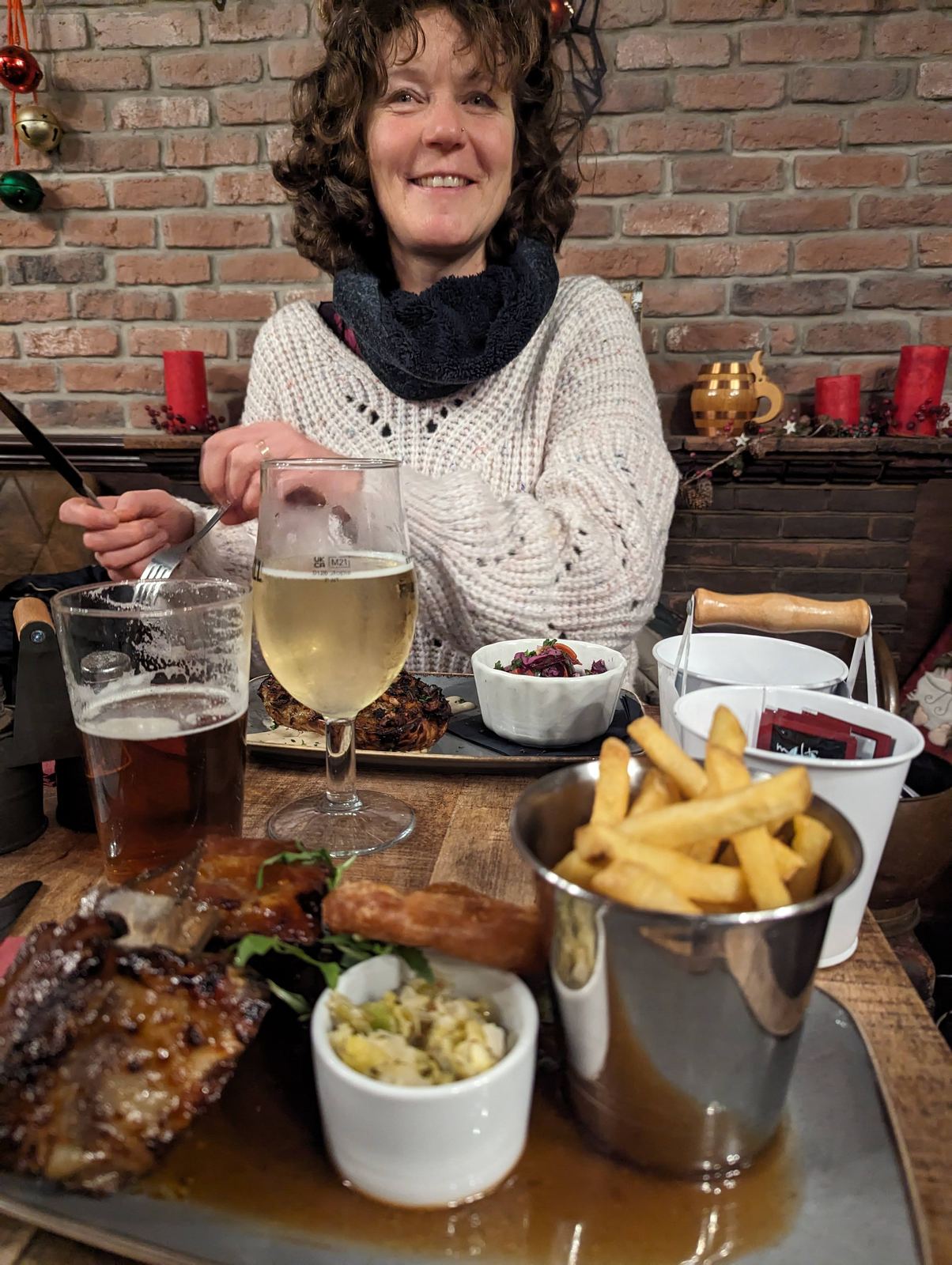
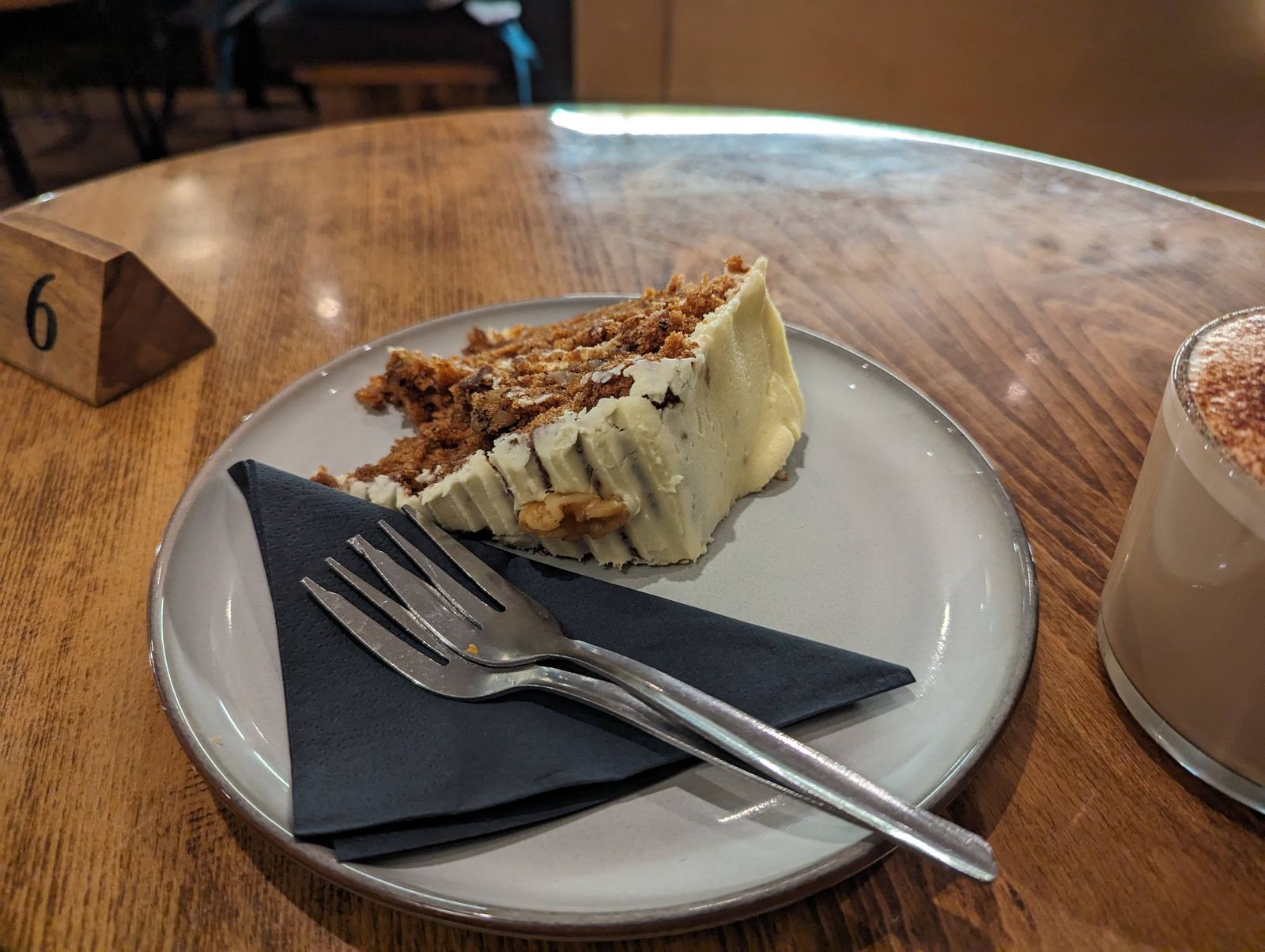
Dunbar’s long High Street is a proper working town’s street — independent shops, cafés and pubs, and (when we visited) strung with Christmas lights. There’s the lovely 1650 Coffee Shop right in the town centre — a friendly, family-run place that reckons it has the only sea view on the High Street — where we stopped a couple of times for coffee and a bowl of soup (they do proper home-made soup, fresh baguettes and cakes). Exactly the warm, easy spot you go back to. And for a pint and a bite, we had a cracking meal at The Bear & Bull, a genuinely dog-friendly pub (children, dogs, buggies and wheelchairs all welcome, the board says) — exactly our sort of place with Lillie in tow.
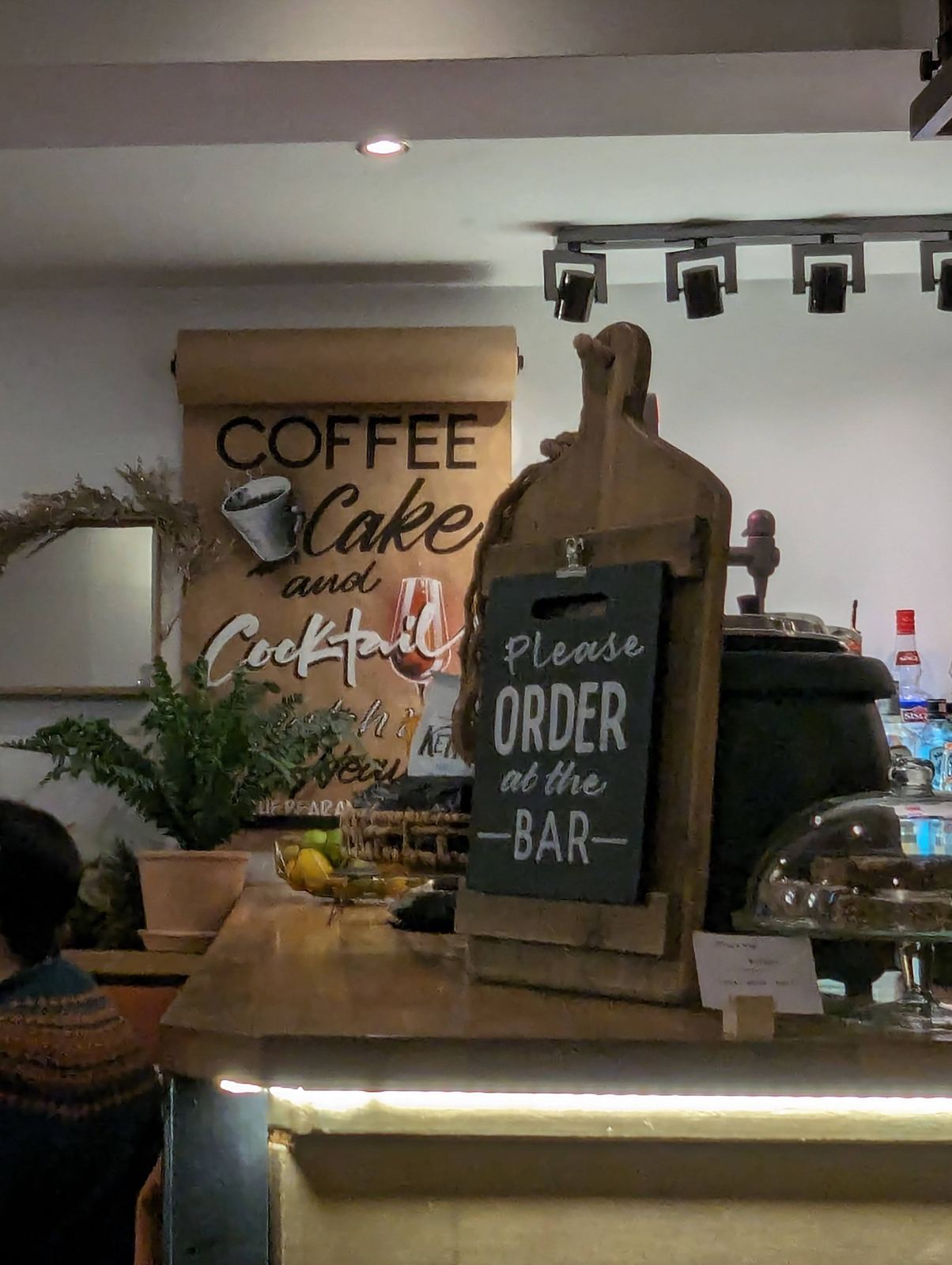
For a proper sit-down dinner, we also treated ourselves to a full meal one evening at Dukes, a restaurant-pub on the main road between Dunbar and Tyninghame — handy whichever of the two you’re based near.
Belhaven Bay & the coast
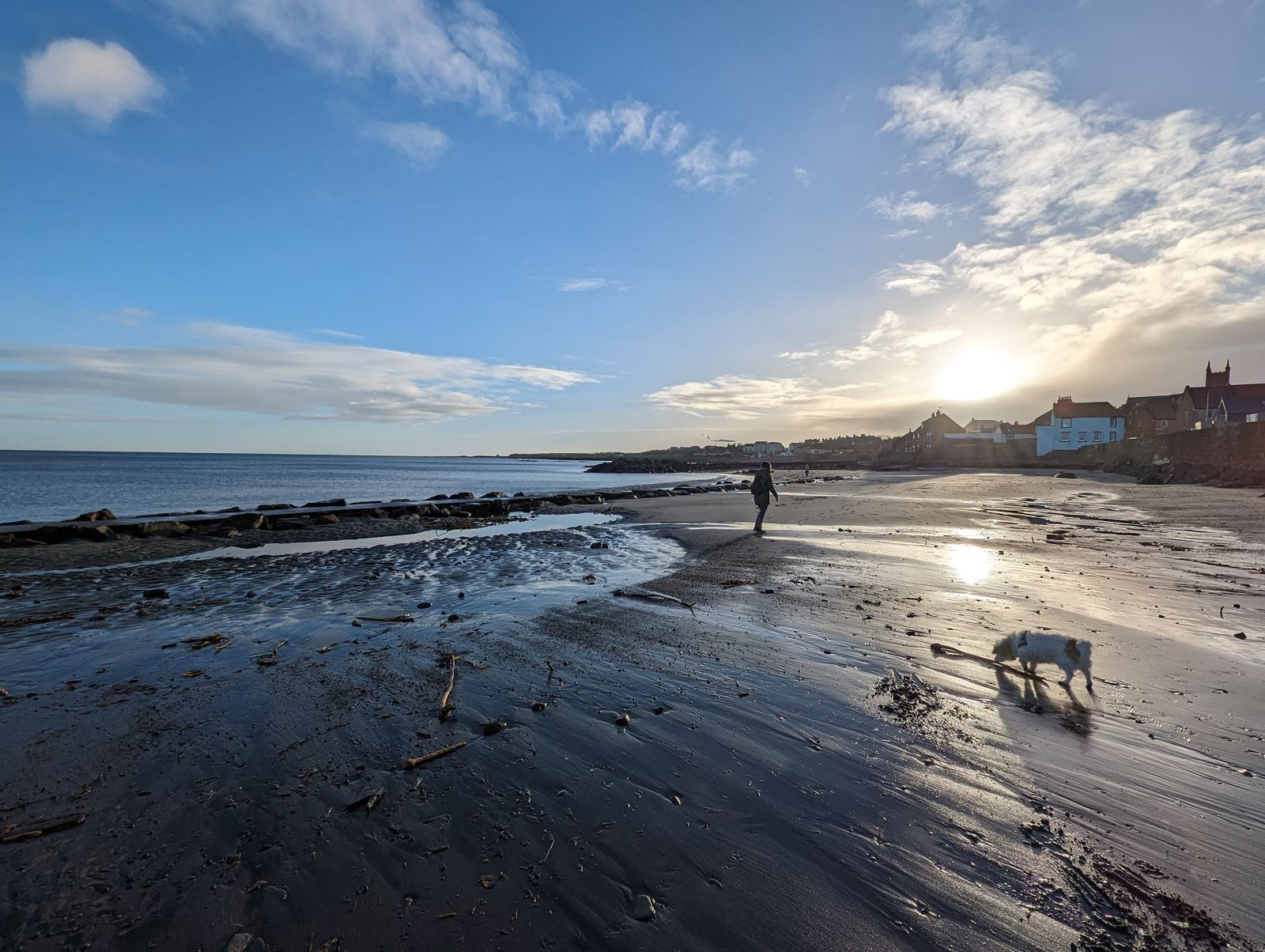
Right on the edge of town is the wide, glorious sweep of Belhaven Bay — miles of sand at low tide, backed by dunes, and the start of the John Muir Country Park that runs west along the Tyne estuary. It’s a superb dog beach and a lovely sunset spot (look out for the famous “Bridge to Nowhere,” a footbridge left stranded by the tide).
🚐 Staying overnight
For van life, we stayed overnight on the football car park in Dunbar — handy for the town and harbour, quiet at night, and a straightforward spot to tuck up in the motorhome. As always on a spot like this, be considerate and tidy — arrive late, leave early, take everything away, don’t take up more room than you need, and check the current signage before you rely on it (town-centre parking rules change). Done respectfully, it did us fine.
Best time to visit
Any time — Dunbar is a real town, open all year. We loved it in winter, with the Christmas lights, empty beaches and dramatic light; summer brings the harbour to life and the John Muir festival. The coast is breezy and bracing — pack layers.
Combine it with
- Tyninghame Beach & John Muir Country Park — the folded rocks, pinewoods and Tyne estuary, minutes west.
- North Berwick & Tantallon — Bass Rock, the Law and the great Douglas fortress, along the coast.
- The John Muir Way — the coast-to-coast path named for the town’s most famous son.
Reality notes
- 🏰 Dunbar Castle: unstaffed, fenced ruin by the harbour — view it from the harbour and cliff path (unsafe to enter).
- 🏛️ John Muir’s Birthplace: free museum on the High Street (check current opening days).
- 🅿️ Overnight: football car park — be tidy and considerate; check signage.
- 🐕 Dogs: superb — harbour, High Street, Belhaven Bay and dog-friendly pubs.
- 🚂 Getting here: on the A1 and the East Coast Main Line — 30 min from Edinburgh.
Sources
- First-hand: Kevin & family, Dunbar, Dec 2023 – Jan 2024 (own photos)
- On-site Black Agnes interpretation plaque, Dunbar
- John Muir’s Birthplace · Black Agnes — Wikipedia · Dunbar — Wikipedia
🪙 Detecting on this beach
Belhaven Bay gives you a wide, firm, shallow-shelving strand — easy walking, easy digging, and it catches the East Lothian summer crowds.
The legal bit: Belhaven’s wet sand is Crown foreshore — permit-free, no landowner to chase. Above the tide line you are on land with an owner. Scotland claims every ownerless find for the Crown whatever its age, so it all goes to the Treasure Trove Unit, and the harbour’s historic structures are not fair game. Full rules → · how to start →
Belhaven is the sort of beach that makes the case for the hobby by itself: wide, firm, easy digging, and busy enough in summer to keep replenishing what it gives up. Start-up cost is a few hundred pounds, after which every outing is free — and the gold, when it comes, is genuinely yours to keep once the police process runs its course.