
Lower Largo: The Real Robinson Crusoe’s Village on Largo Bay
Overview — a quiet bay with a castaway’s story
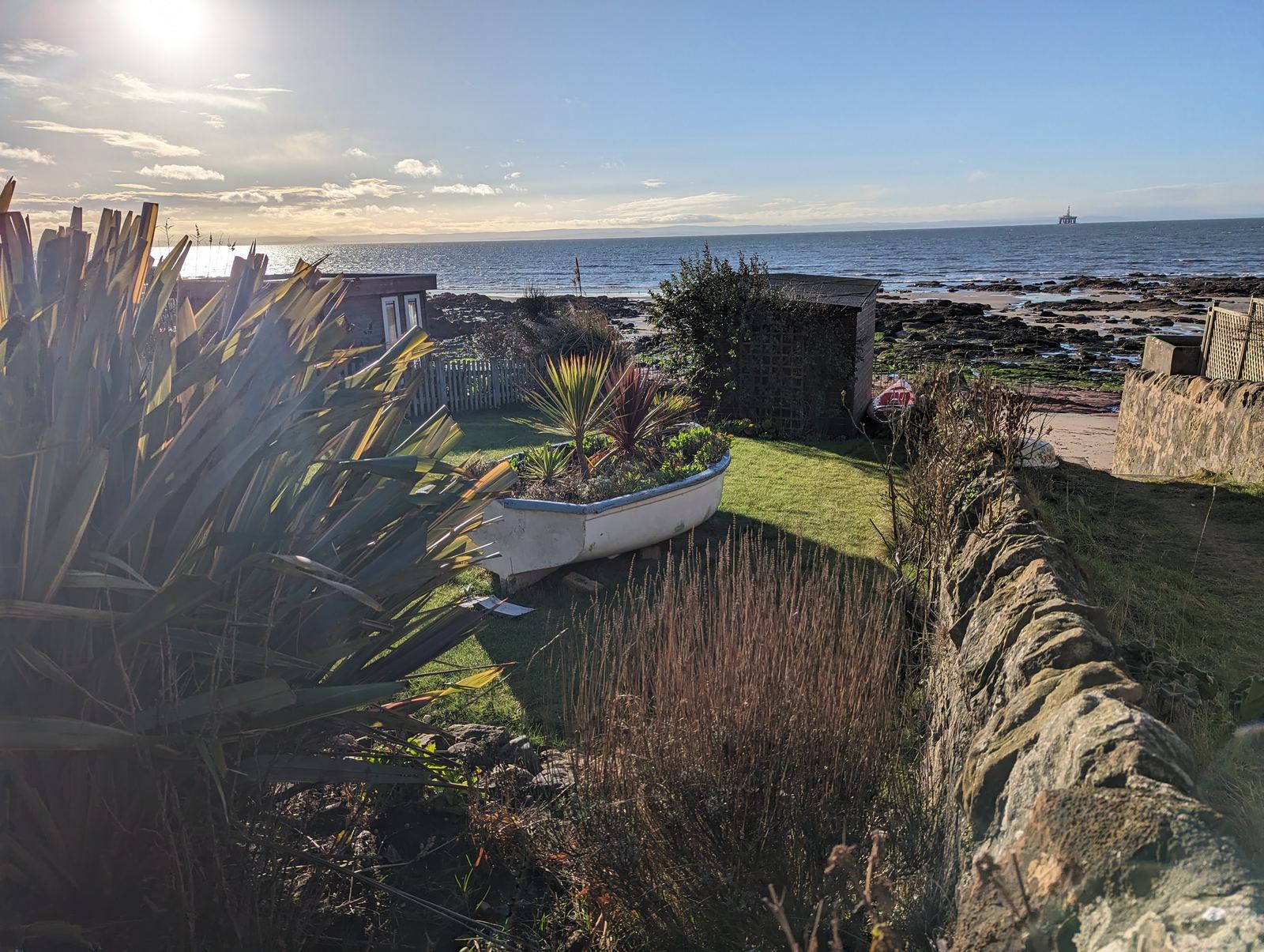
Lower Largo is one of those Fife villages that looks like nothing much and turns out to be everything. A single row of old Seatown cottages strung along a sandy bay, a burn running down under a great railway viaduct, a long beach that empties right out at low tide — and, improbably, the birthplace of Alexander Selkirk, the marooned sailor who became the model for Robinson Crusoe. It’s a place we’ve come back to again and again: we’ve stayed here at least twice, a couple of nights each time, parked in a tiny car park right on the sea with one of the loveliest views we know. Add cracking coast and dune walks with real history around them, and you’ve got a proper little Scottish Outpost.
Where it is
Lower Largo sits on the north shore of the Firth of Forth in the East Neuk of Fife, on Largo Bay, between Leven to the west and Elie to the east. It’s one of the “Largos” — Lower Largo on the shore, Upper Largo (Kirkton of Largo) up the hill, and Lundin Links next door — all under the distinctive cone of Largo Law. St Andrews is about half an hour north; the whole East Neuk is on the doorstep.
Alexander Selkirk — the real Robinson Crusoe
This is Lower Largo’s claim to fame, and it’s a good one. Alexander Selkirk was born here in 1676, the son of a local shoemaker — by all accounts a hot-tempered, difficult lad who ran off to sea. In 1704, after a furious row with his captain about the seaworthiness of their ship, Selkirk asked to be put ashore on an uninhabited island in the South Pacific (Juan Fernández, off Chile). He instantly regretted it — but the ship sailed, and he was marooned alone for four years and four months, living off goats and wild food until he was finally rescued in 1709.
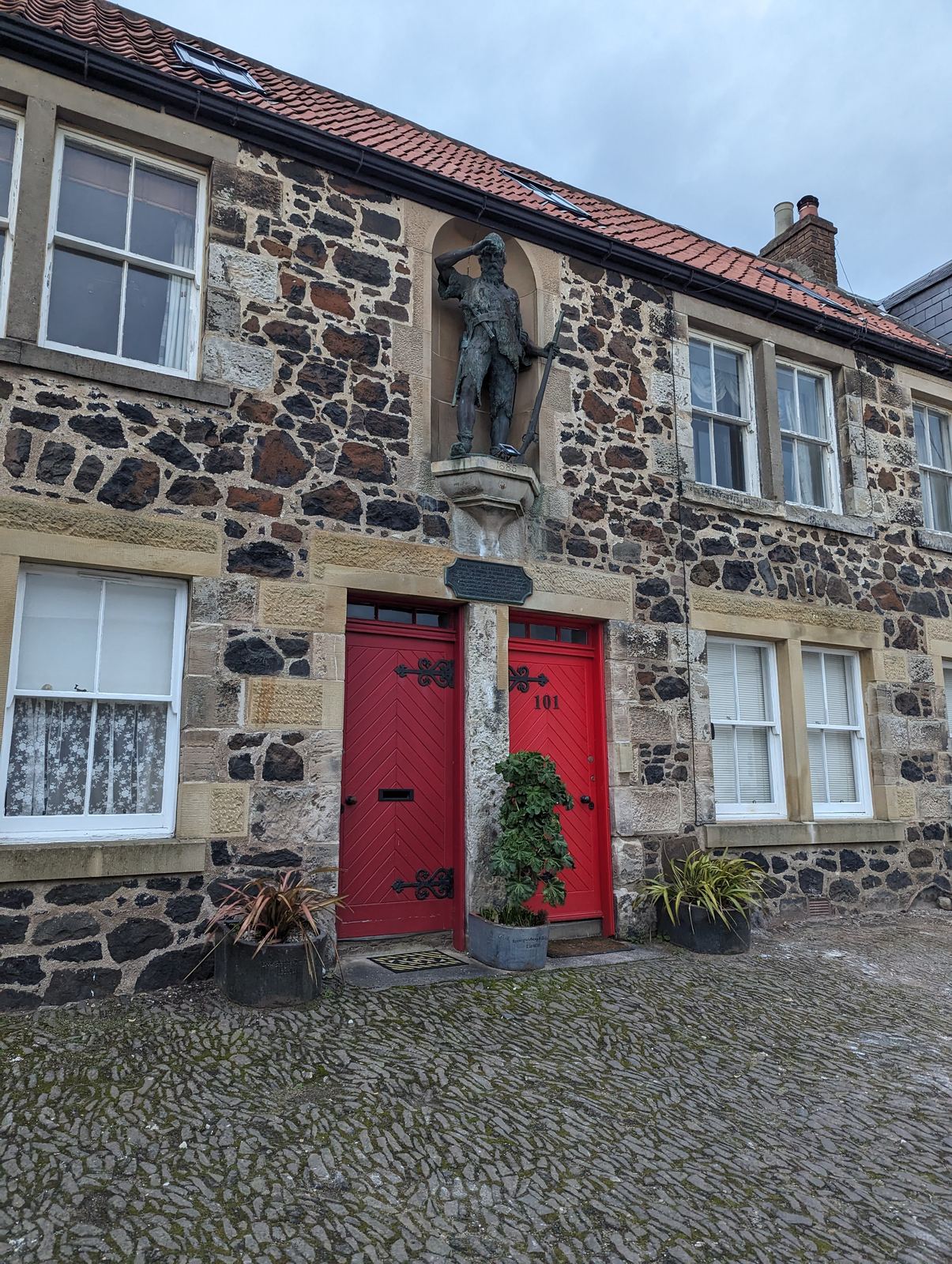
His story swept Britain, and when Daniel Defoe published Robinson Crusoe in 1719, everyone knew where the idea had come from. Selkirk himself came home to Lower Largo, rich, in 1717 — though the sea had him for good, and he died at sea of fever in 1721. On his birthplace house on Main Street stands a wonderful bronze statue — Selkirk in his goatskins, musket in hand, gazing out to sea — put up in 1885 by the sculptor Thomas Stuart Burnett, on the very spot where his cottage stood. It’s the thing to find in the village.
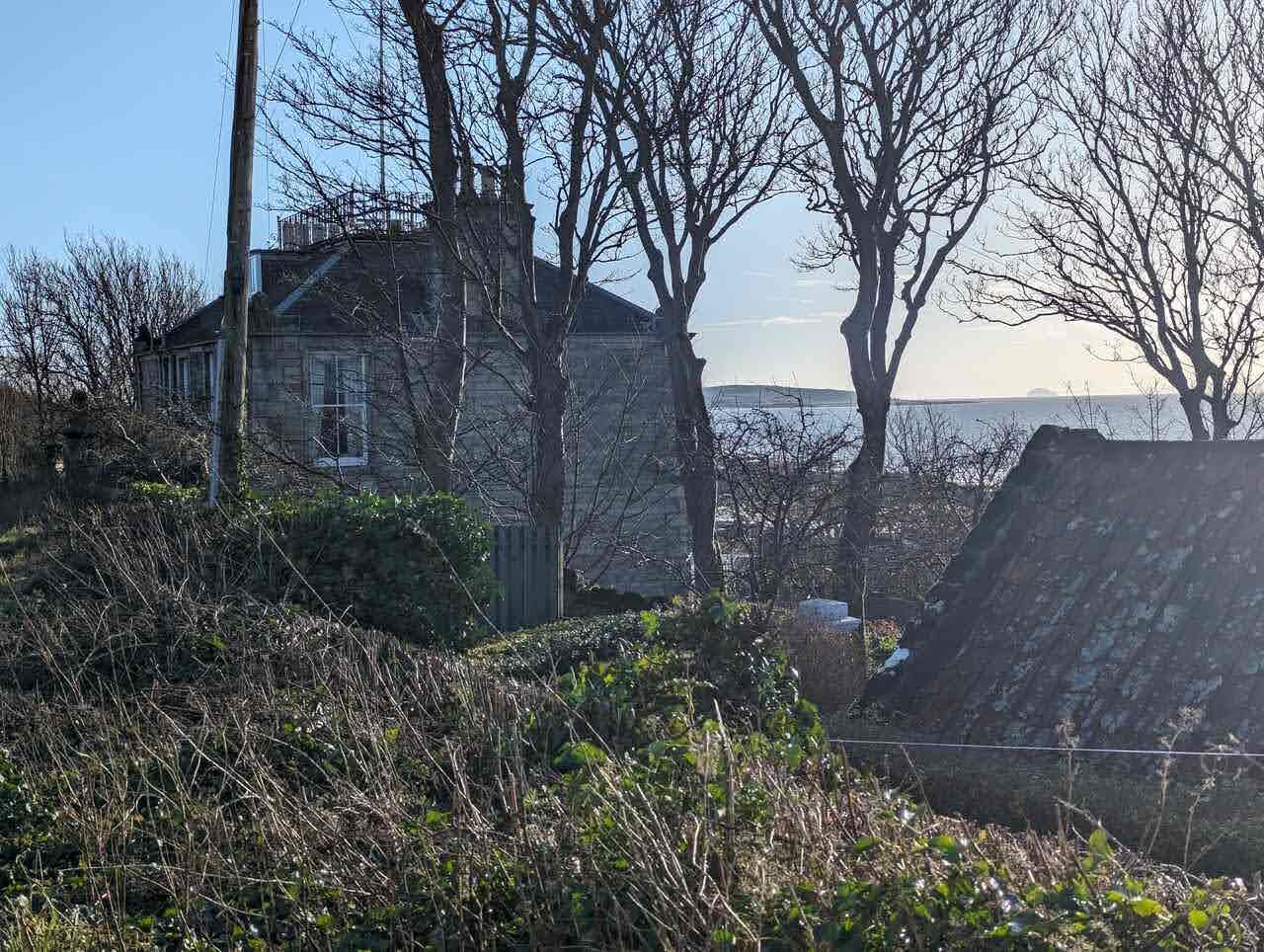
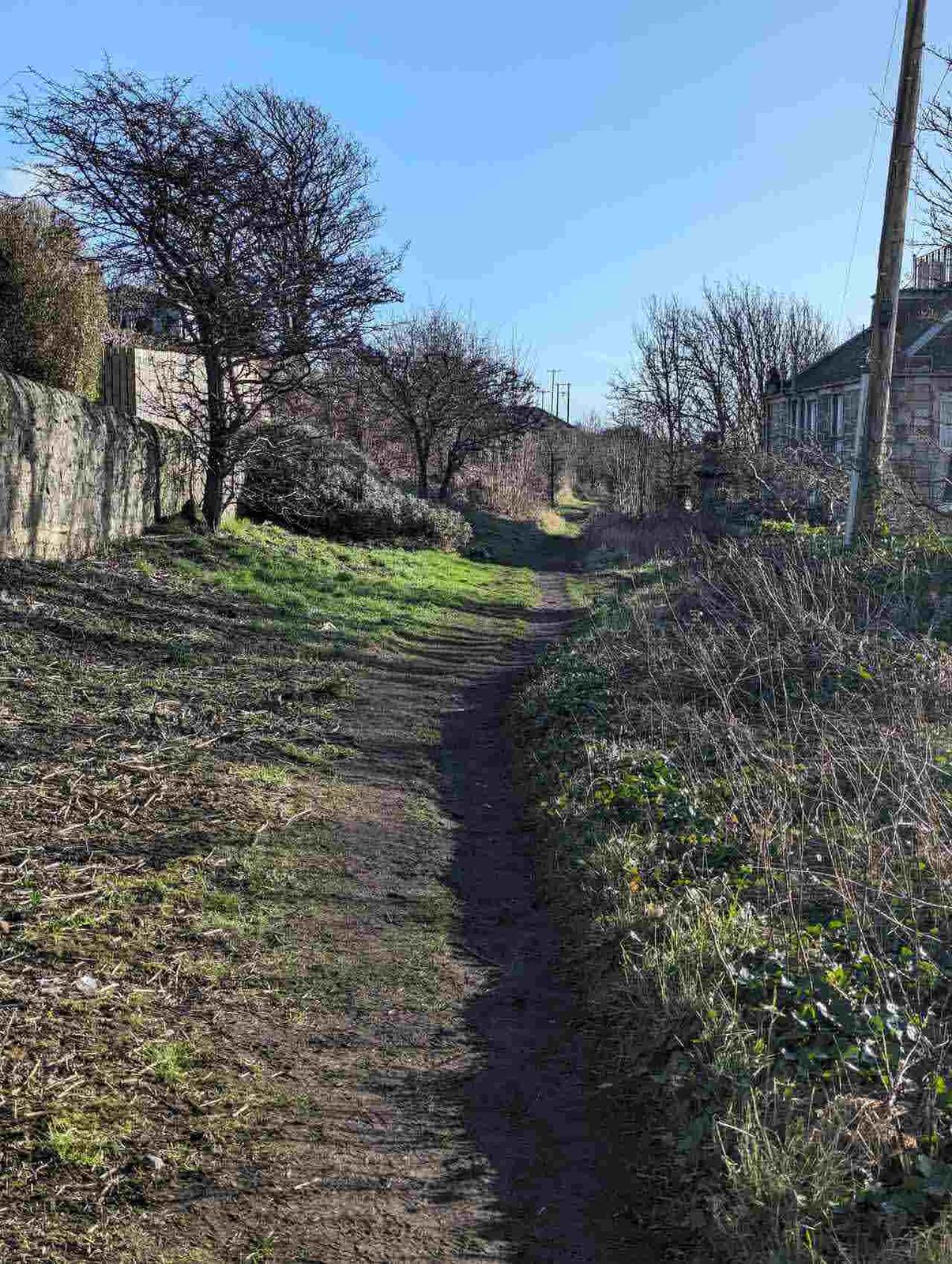
Sir Andrew Wood — Scotland’s great admiral
Selkirk isn’t Largo’s only sea-dog. Two centuries earlier this was the home of Sir Andrew Wood of Largo (died 1515), one of the greatest naval commanders in Scottish history. A Leith merchant turned fighting captain, Wood became Lord High Admiral of Scotland and the personal sea-captain of James III and James IV, sailing his famous ship the Yellow Caravel. He beat off English fleets in the mouth of the Forth, and was granted the lands of Largo for his service, where he built himself a tower.
The local legend is the best bit: in his old age Wood is said to have had a canal dug from Largo Tower to the kirk so he could be rowed to church in a barge by his old sailors, rather than walk. Whether or not it’s strictly true, it’s exactly the sort of thing a retired admiral would do — and it tells you how much sea runs through this quiet wee village.
The viaduct & the old railway
The one thing you can’t miss in Lower Largo is the great railway viaduct — a line of tall stone arches striding right across the village and the Keil Burn. It carried the Leven–St Andrews railway from 1857 until 1965, when Dr Beeching’s cuts closed the line; today the trains are long gone but the viaduct still dominates the Seatown, a magnificent bit of Victorian engineering framing the old houses. (There’s talk, on and off, of bringing the Leven line back — the rails already returned as far as Leven in 2024.)
The beach & the bay
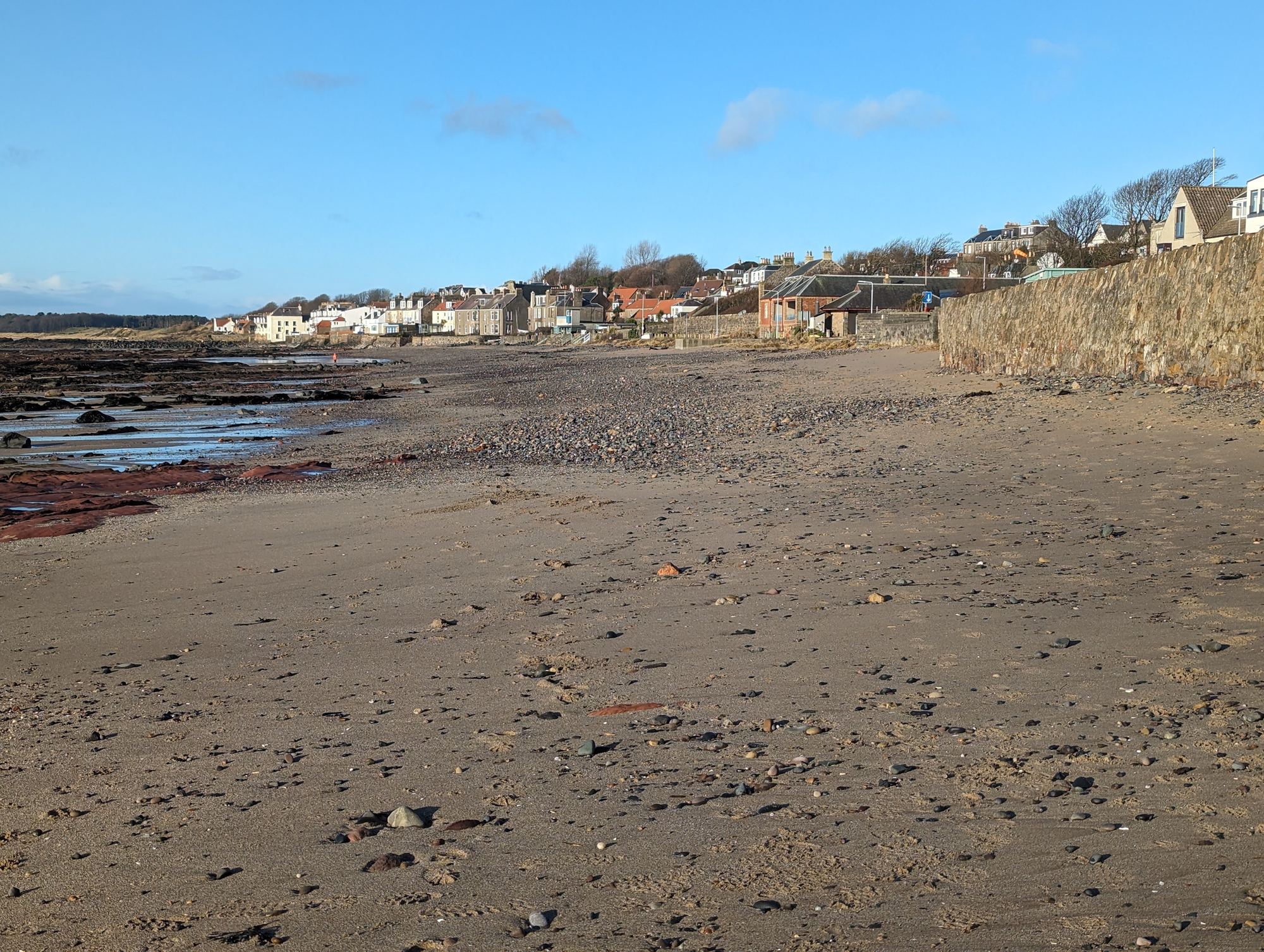
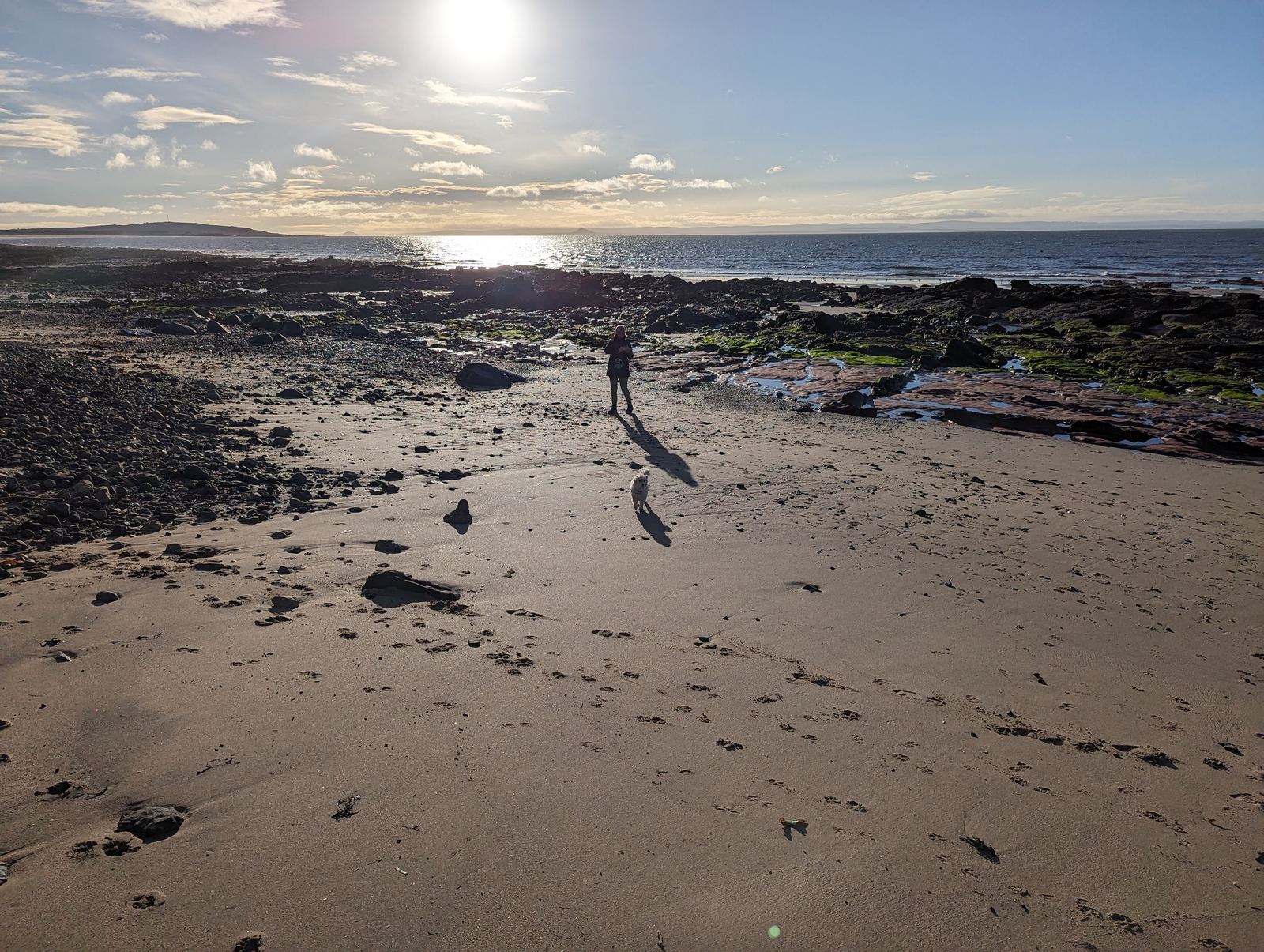
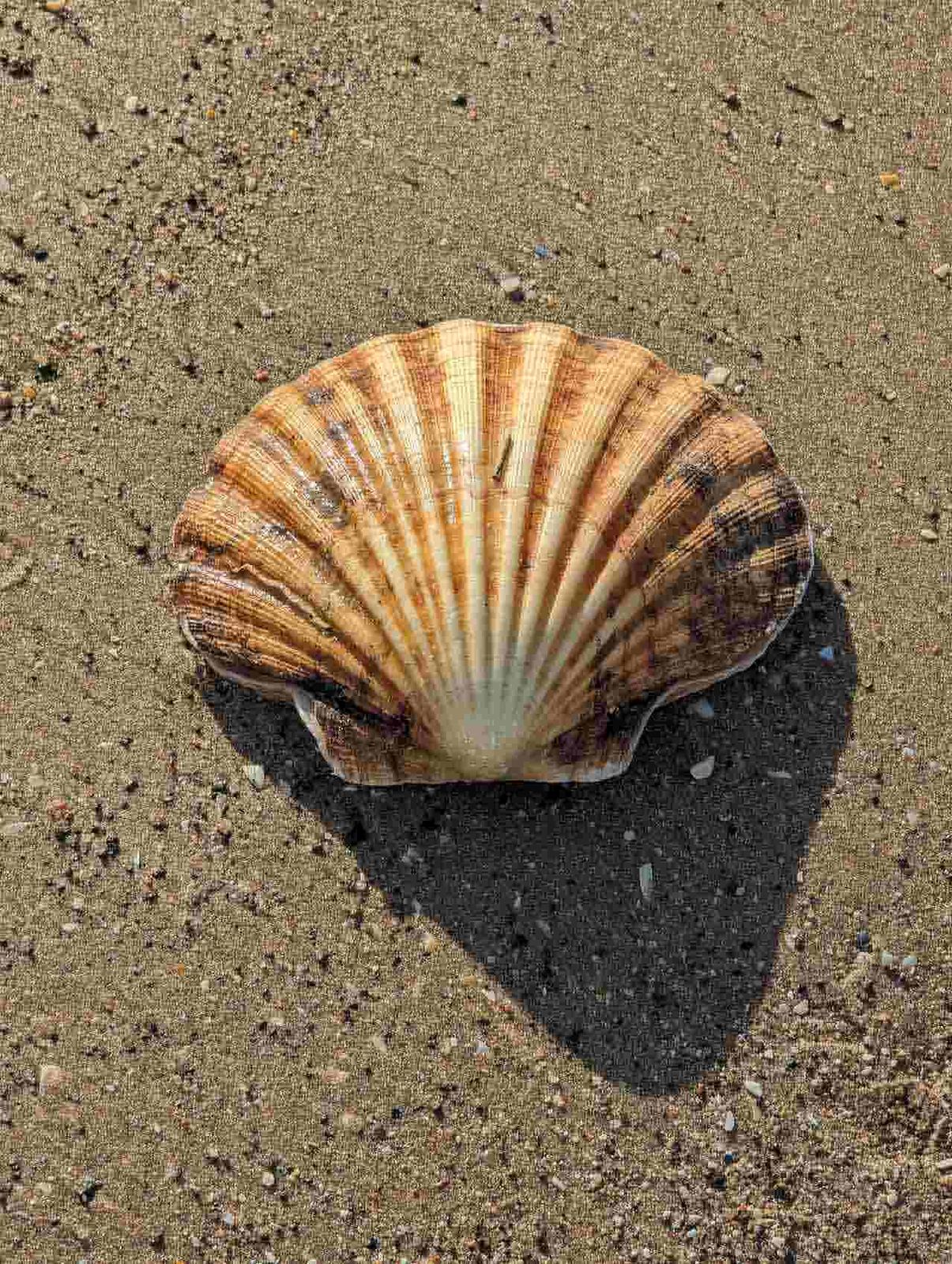
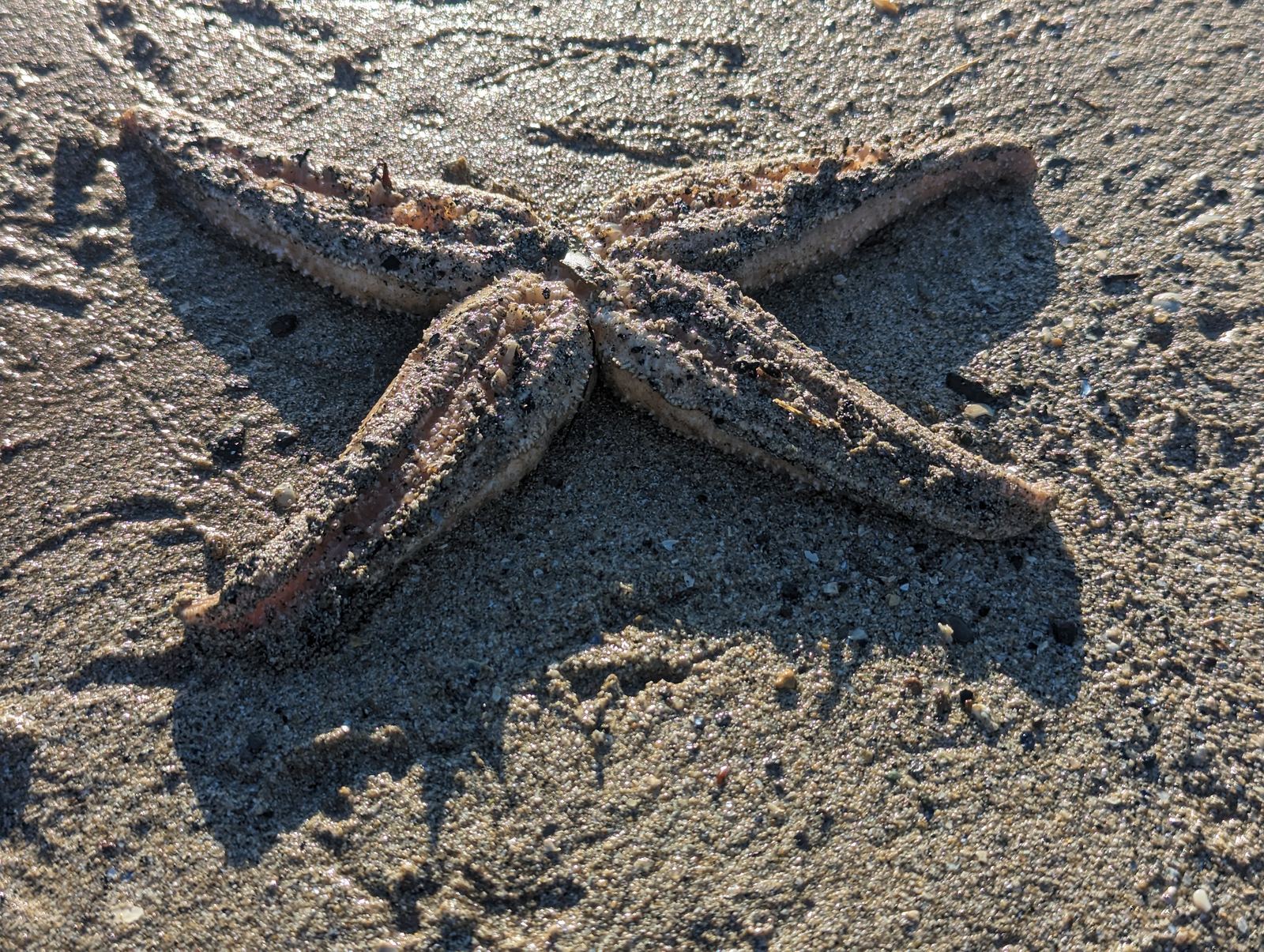
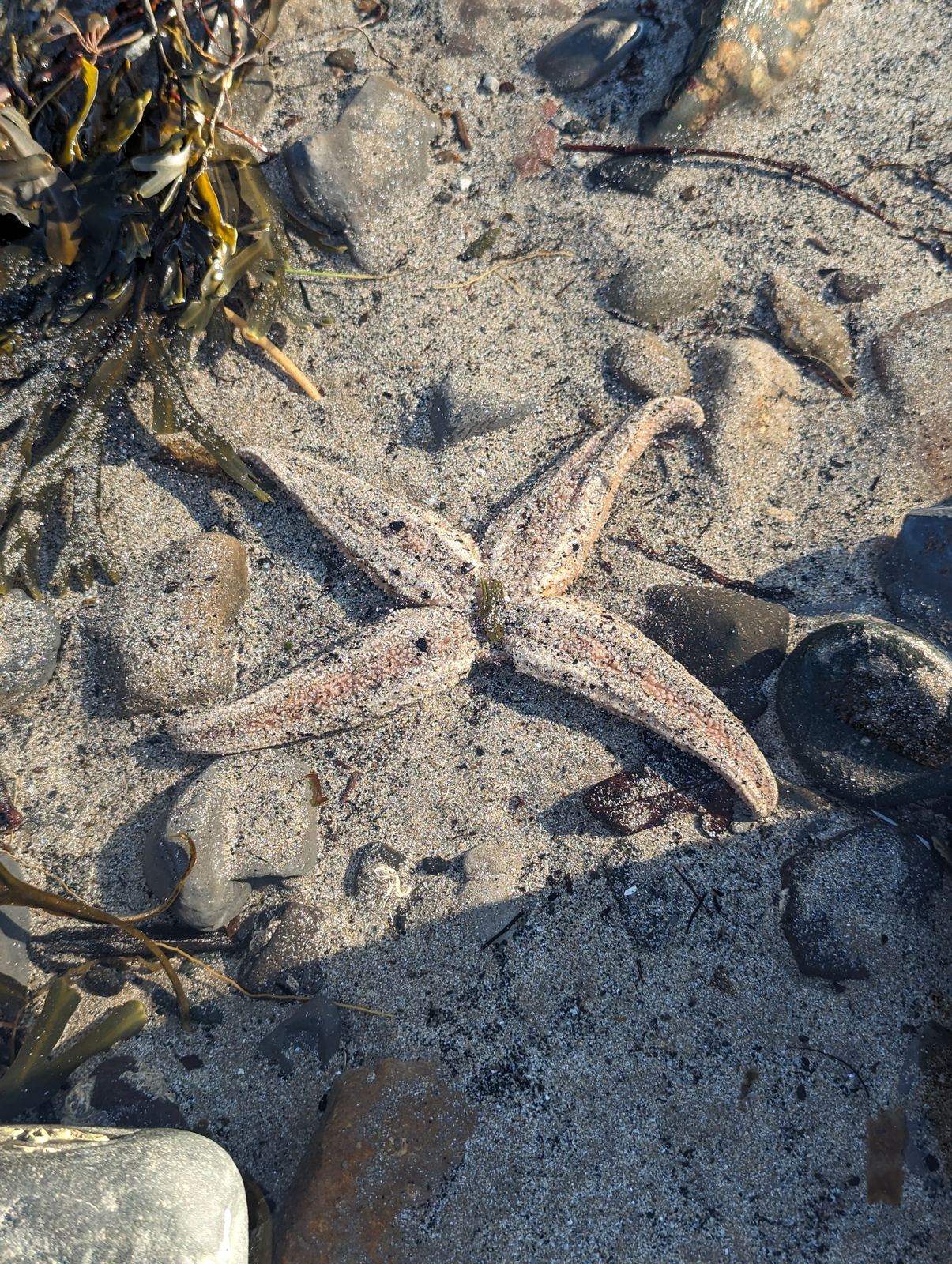
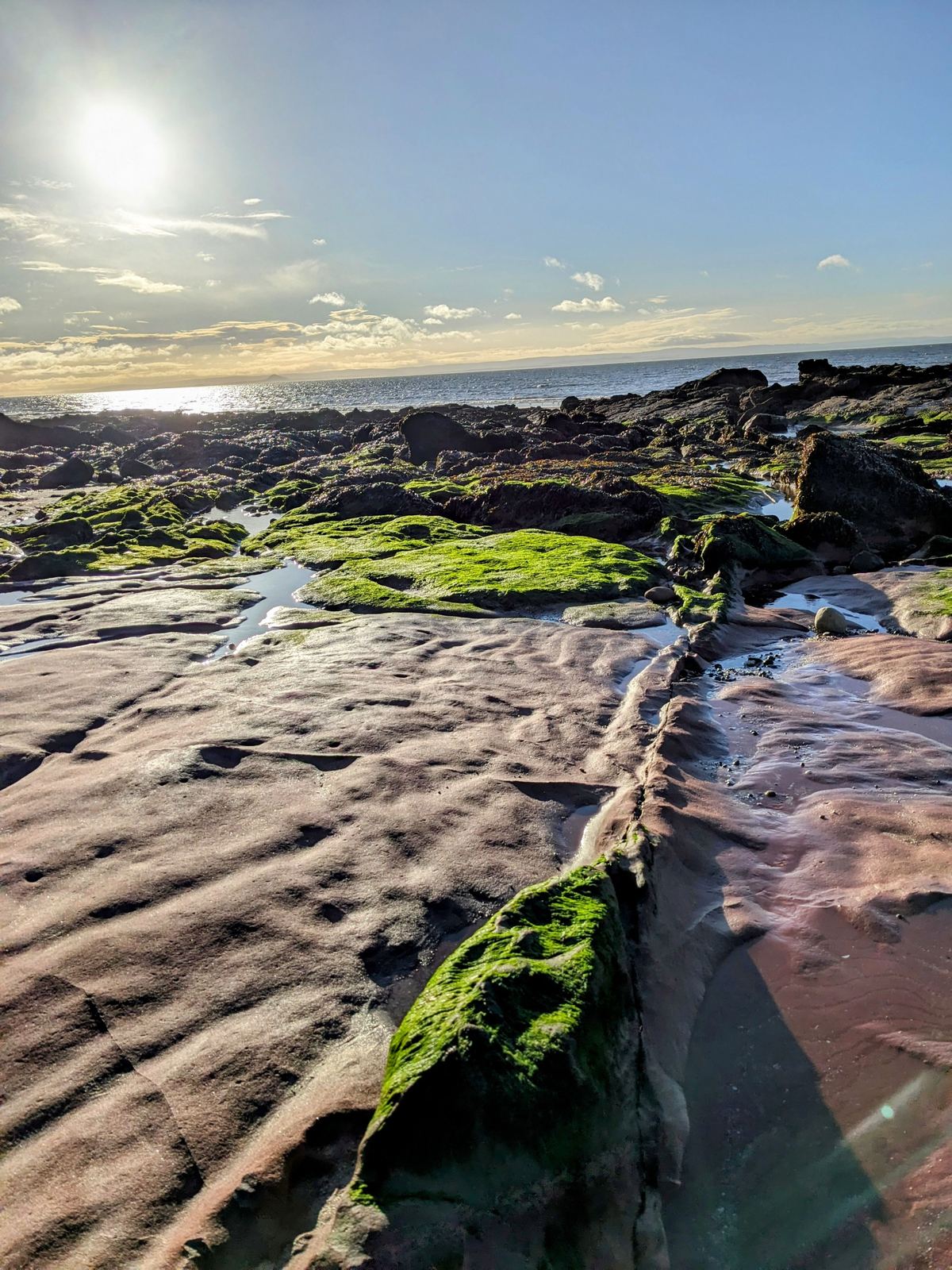
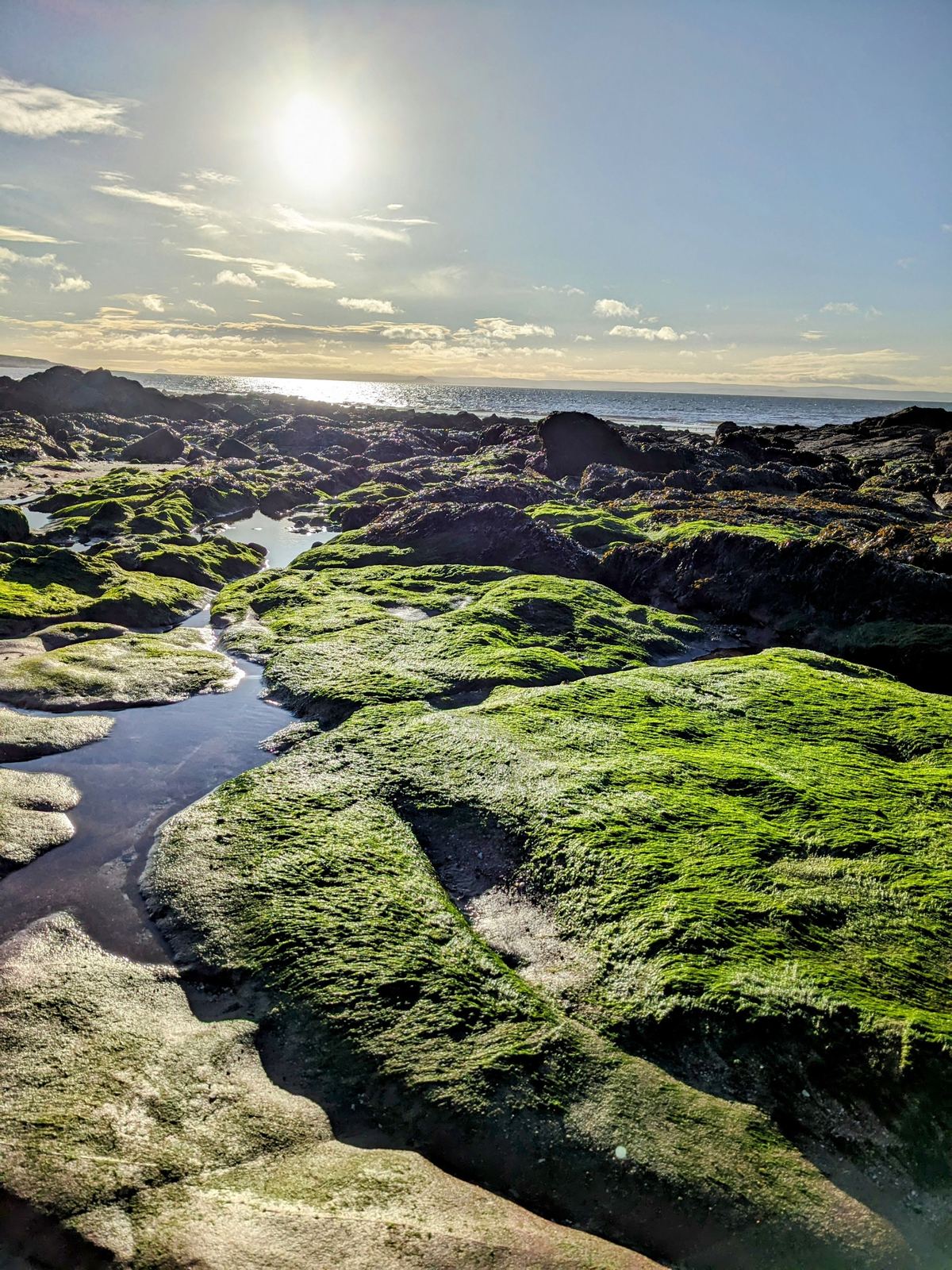
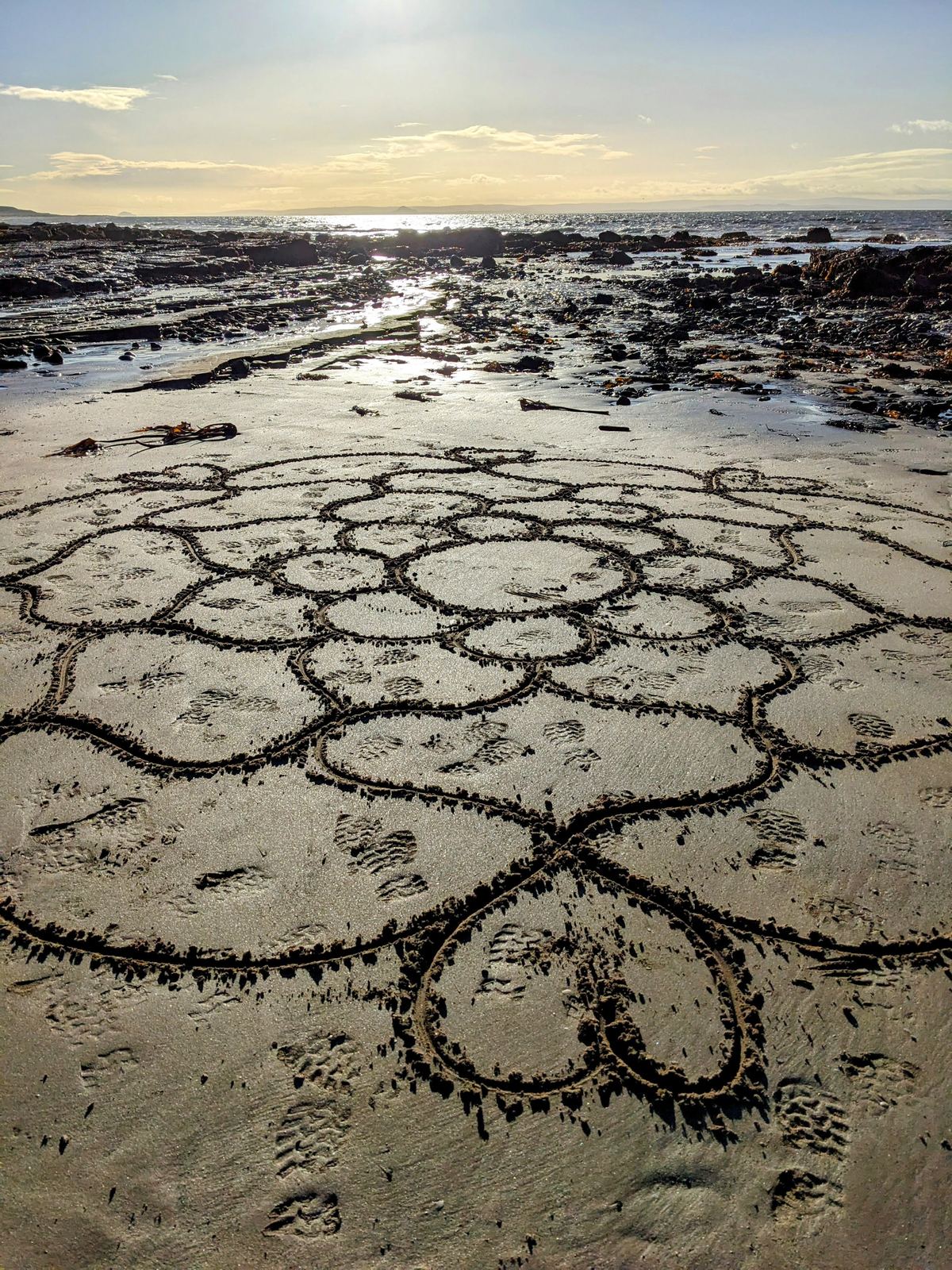
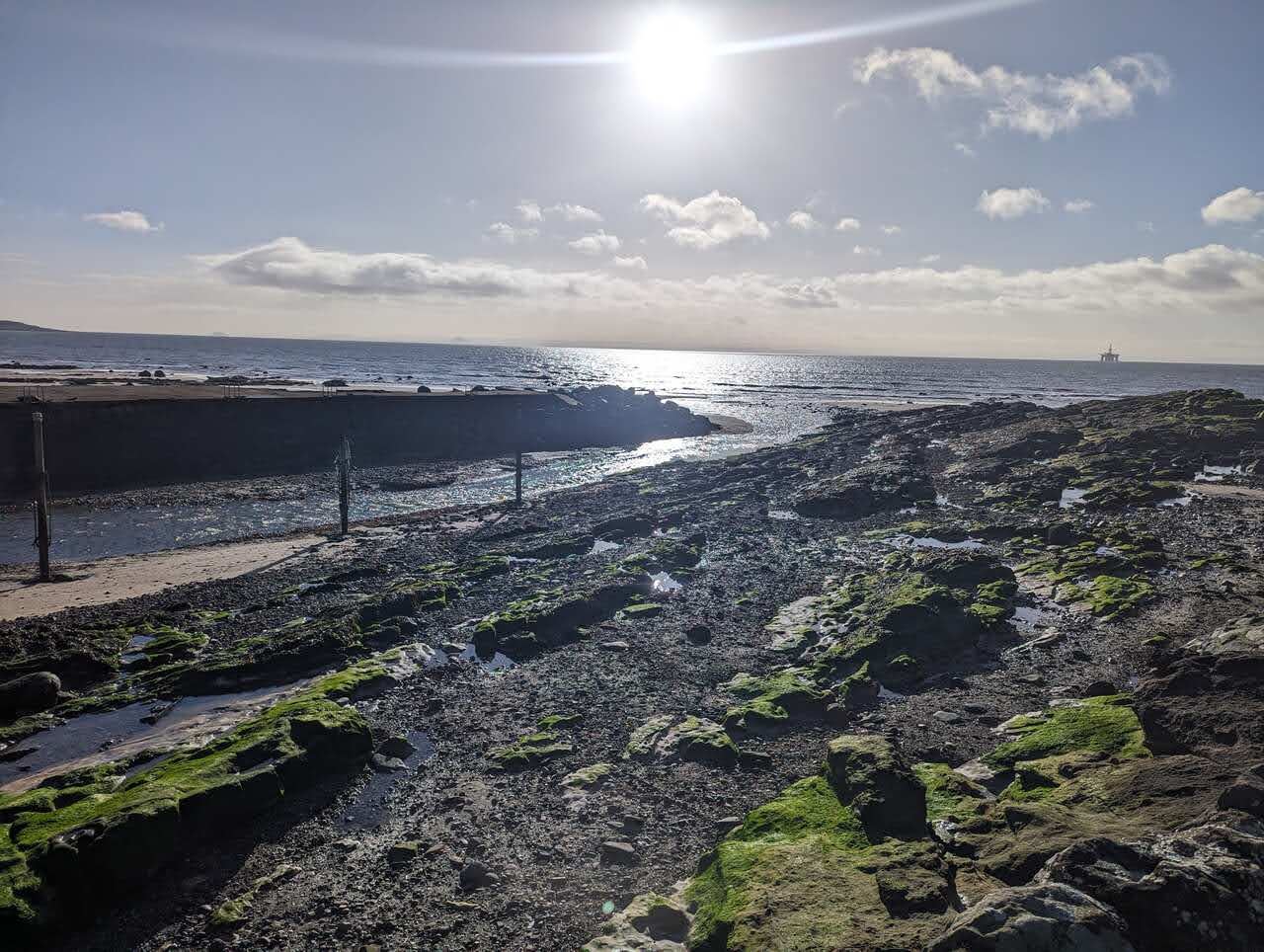
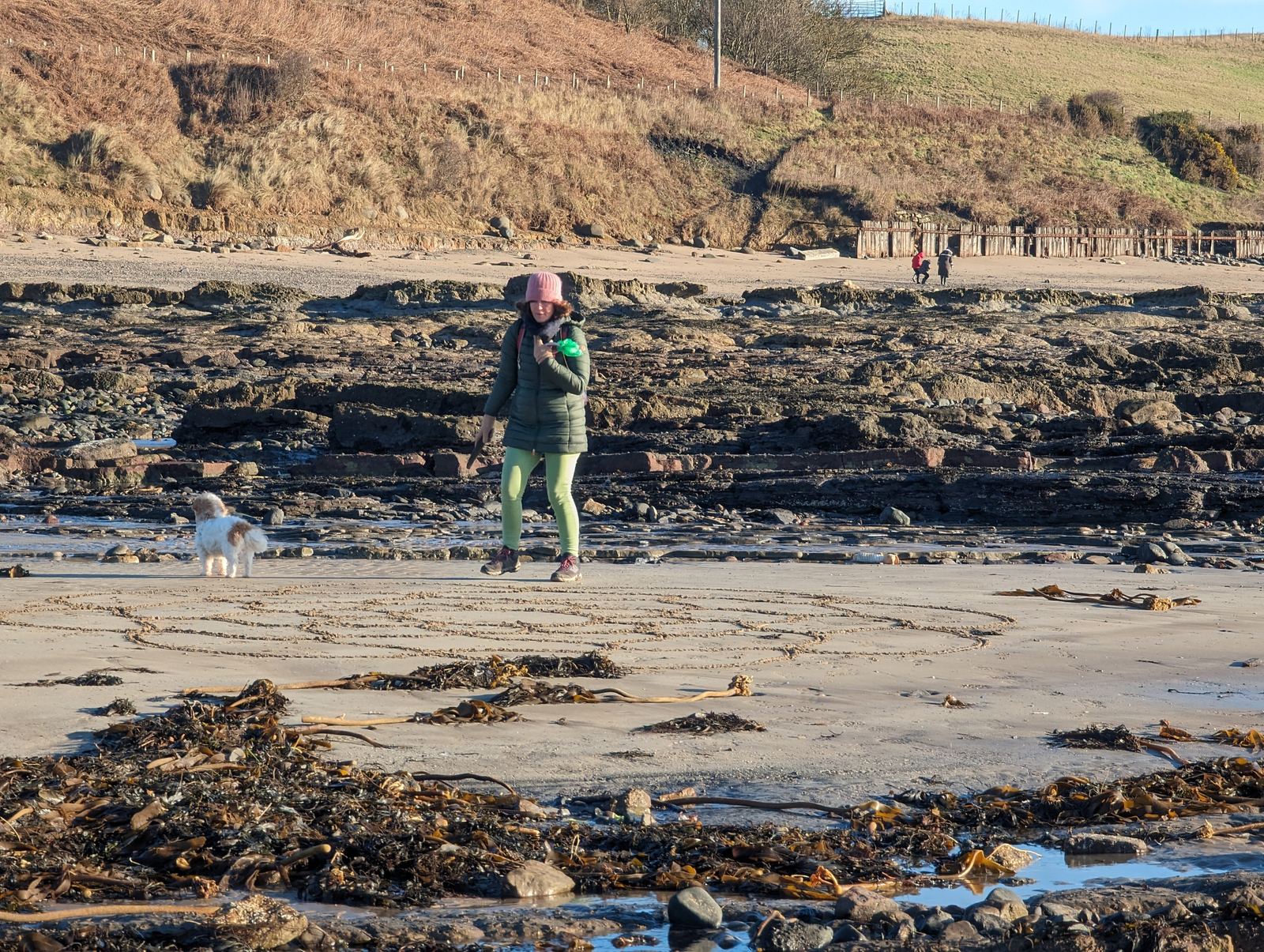
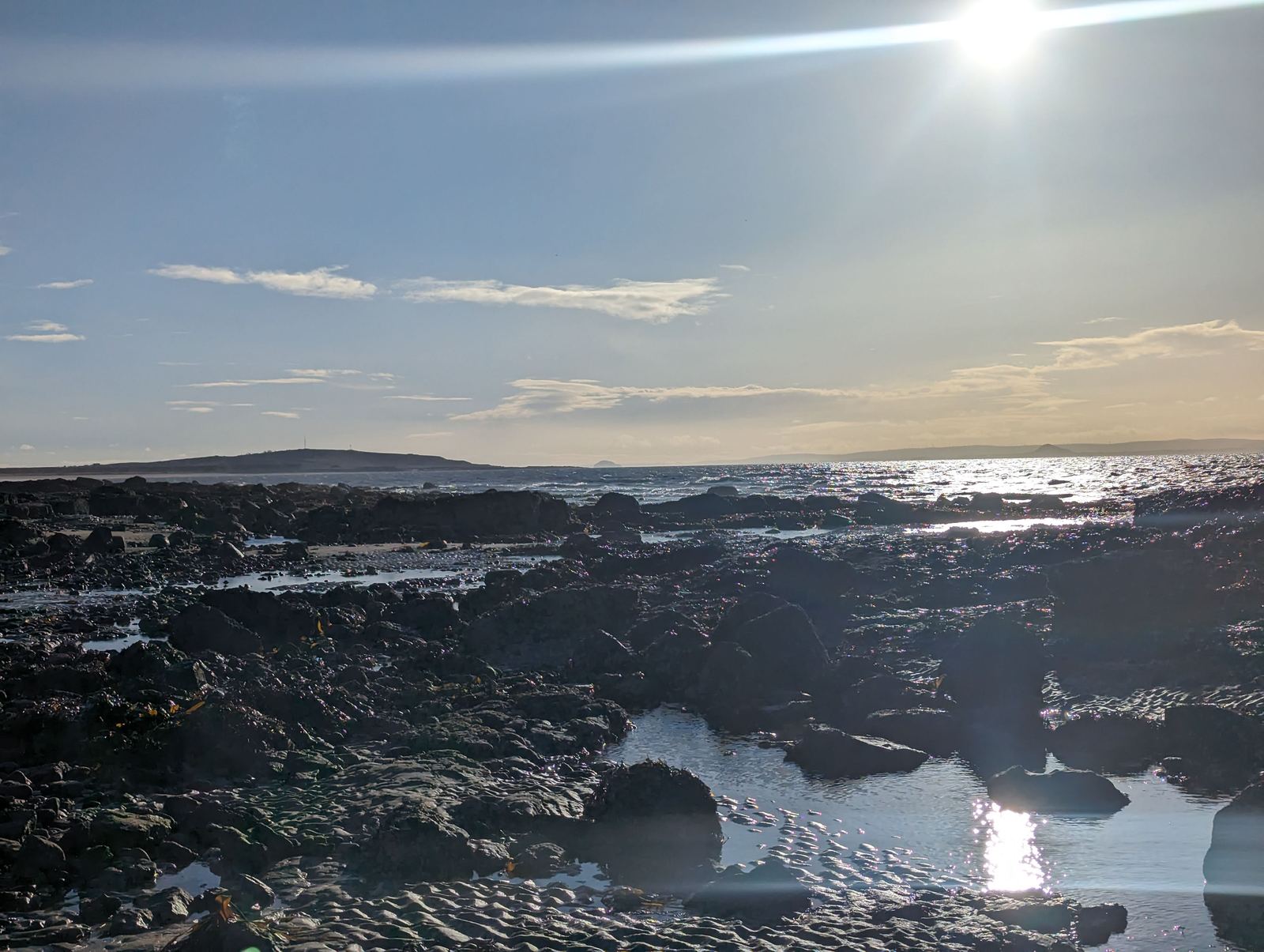
Largo Bay is a long, gentle arc of sand, and at low tide it opens right out into acres of firm, ribbed beach — brilliant for a long walk, a dog, or just standing about watching the light on the Forth. Poke about on the rocks at the village end and you’ll find the shore full of life: starfish in the pools, scallop and razor shells on the sand (this is scallop country), mussel beds and mossy, folded red rock. On a good day someone will have drawn a great heart or a maze in the wet sand. It’s an easy, happy beach, and out of season you’ll often have it to yourself.
Great walks — the coast & the dunes
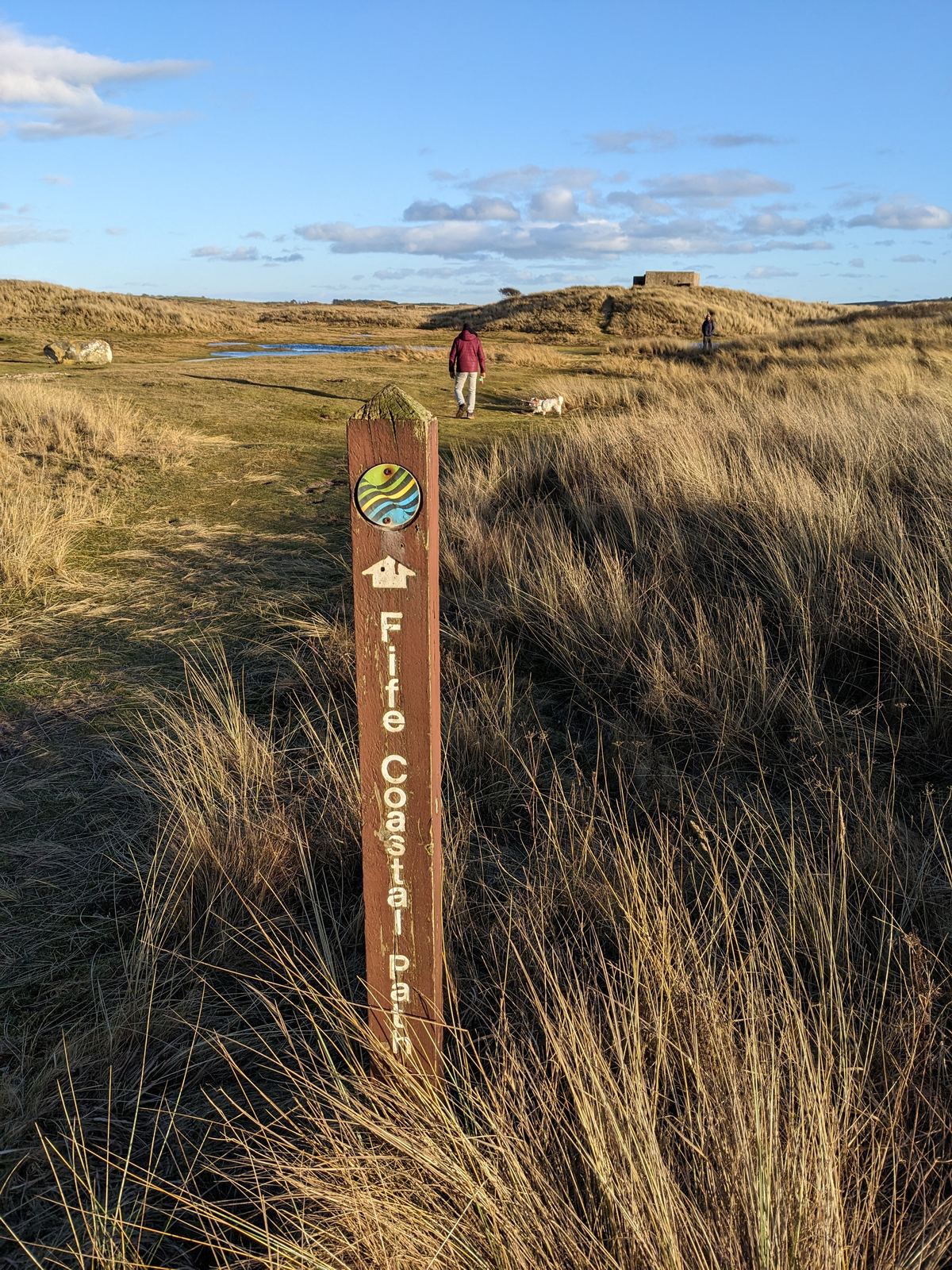
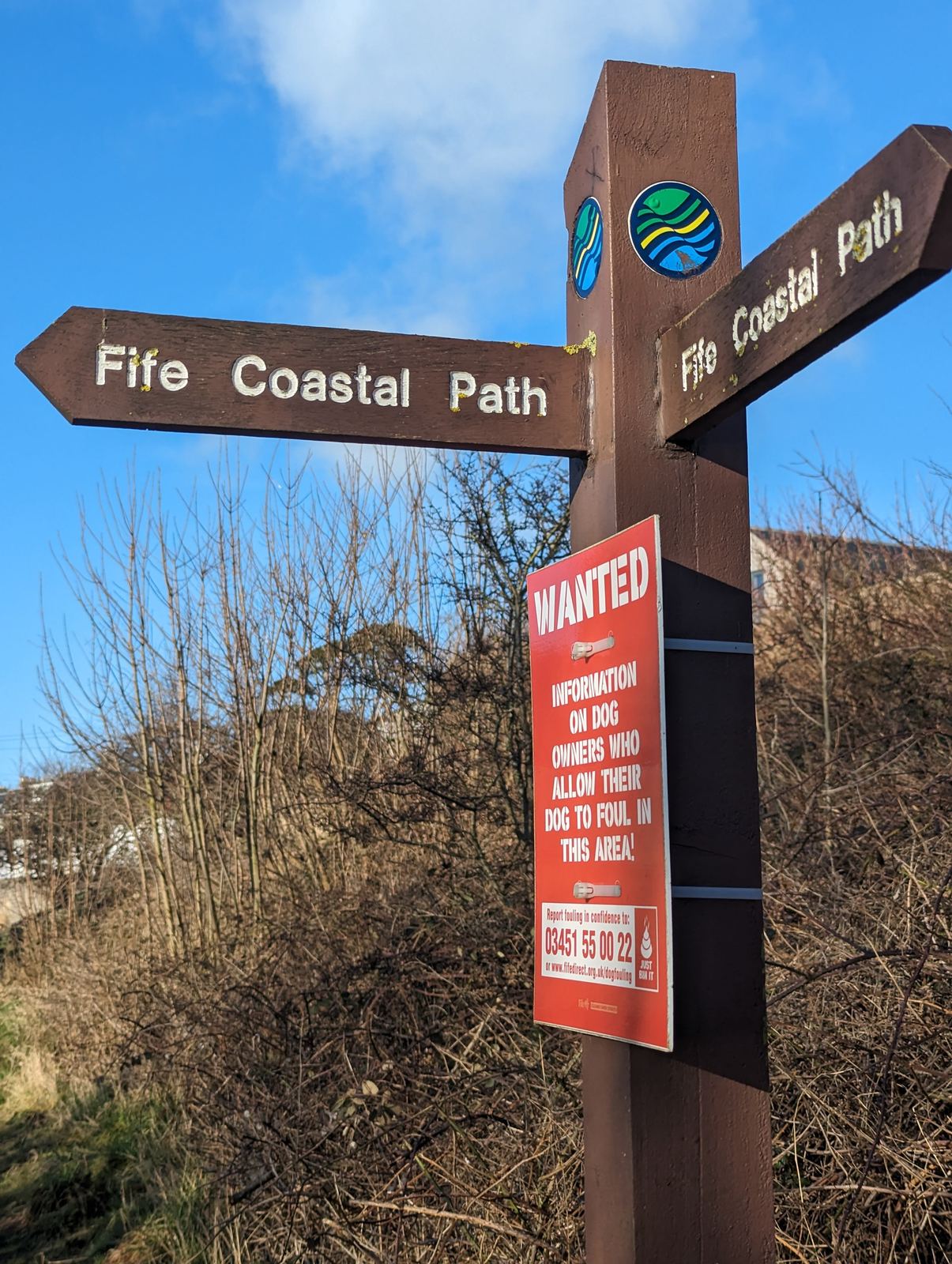
This is a walker’s village. The Fife Coastal Path runs right through it, so you can set off along the shore in either direction and not run out of coast: west toward Leven along a lovely run of dunes and marram grass, or east toward Elie and the East Neuk past rock and cove. There are quieter wooded paths climbing off the shore too, and behind the village the unmistakable cone of Largo Law (290 m, an old volcano) gives a short, sharp climb and a huge view over the Forth for anyone wanting to earn their lunch. Everywhere you go there’s history around you — the viaduct, the Selkirk story, old harbours and salt-working coast.
Overnight & motorhomes — our favourite bit
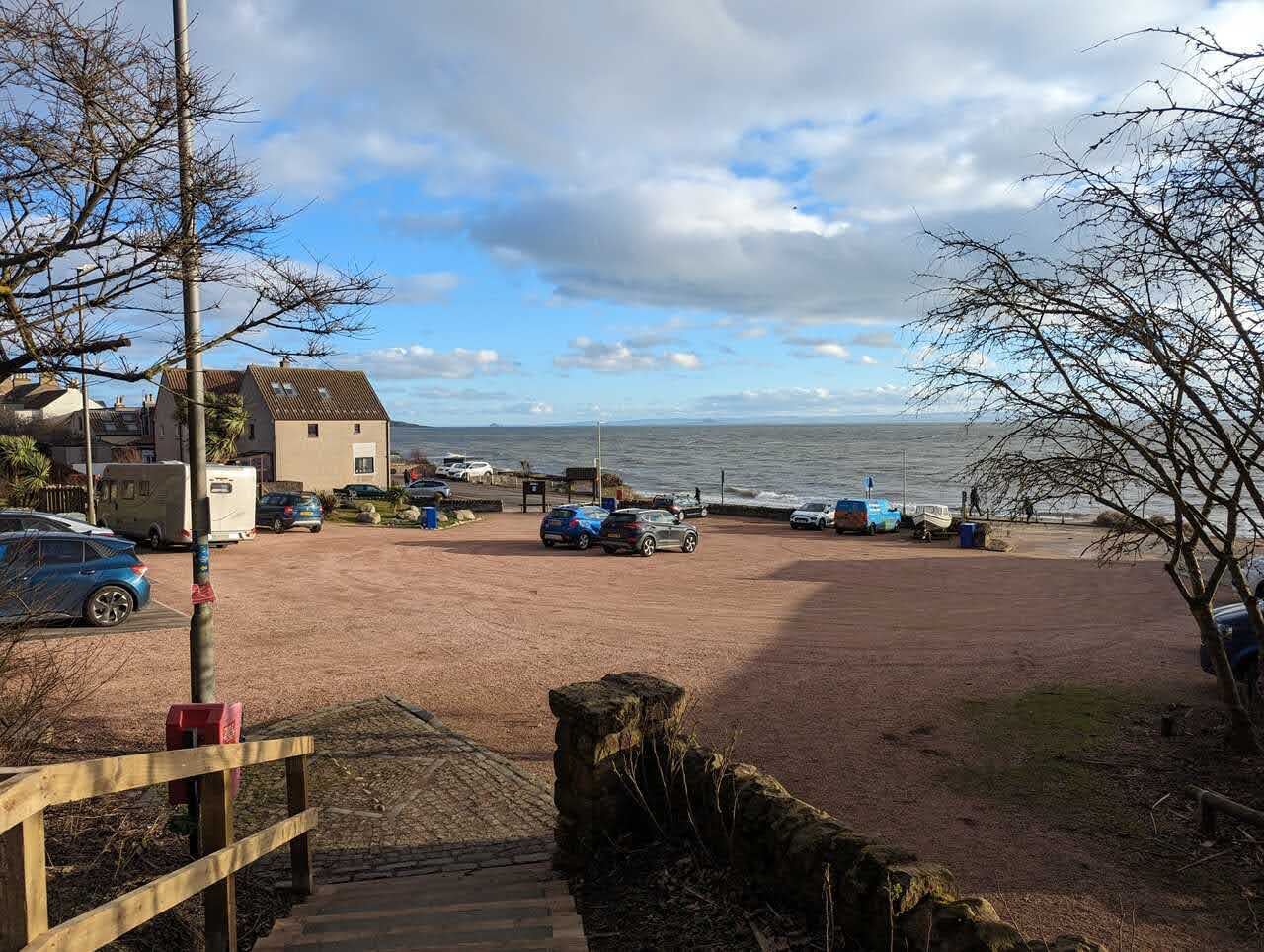
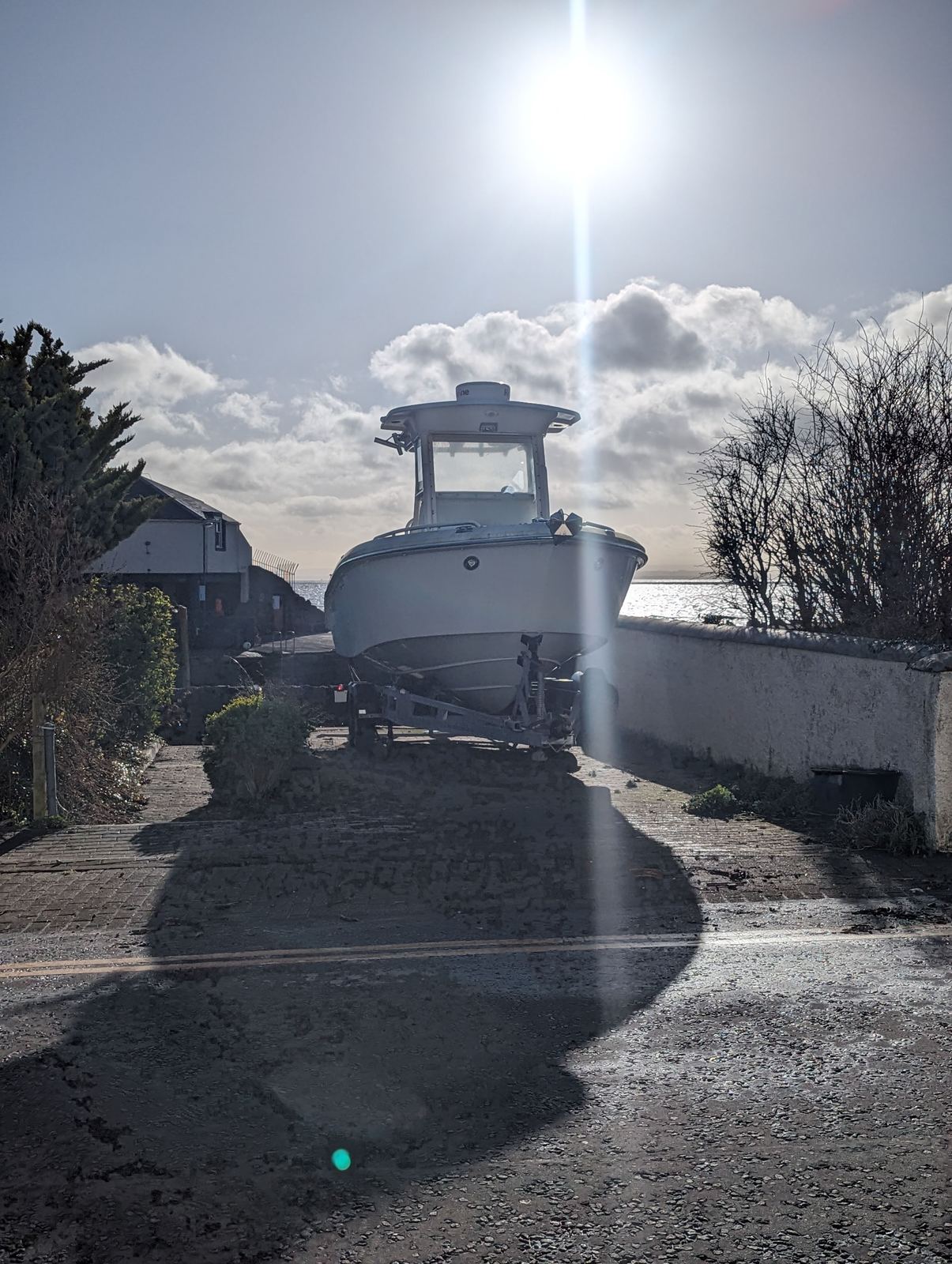
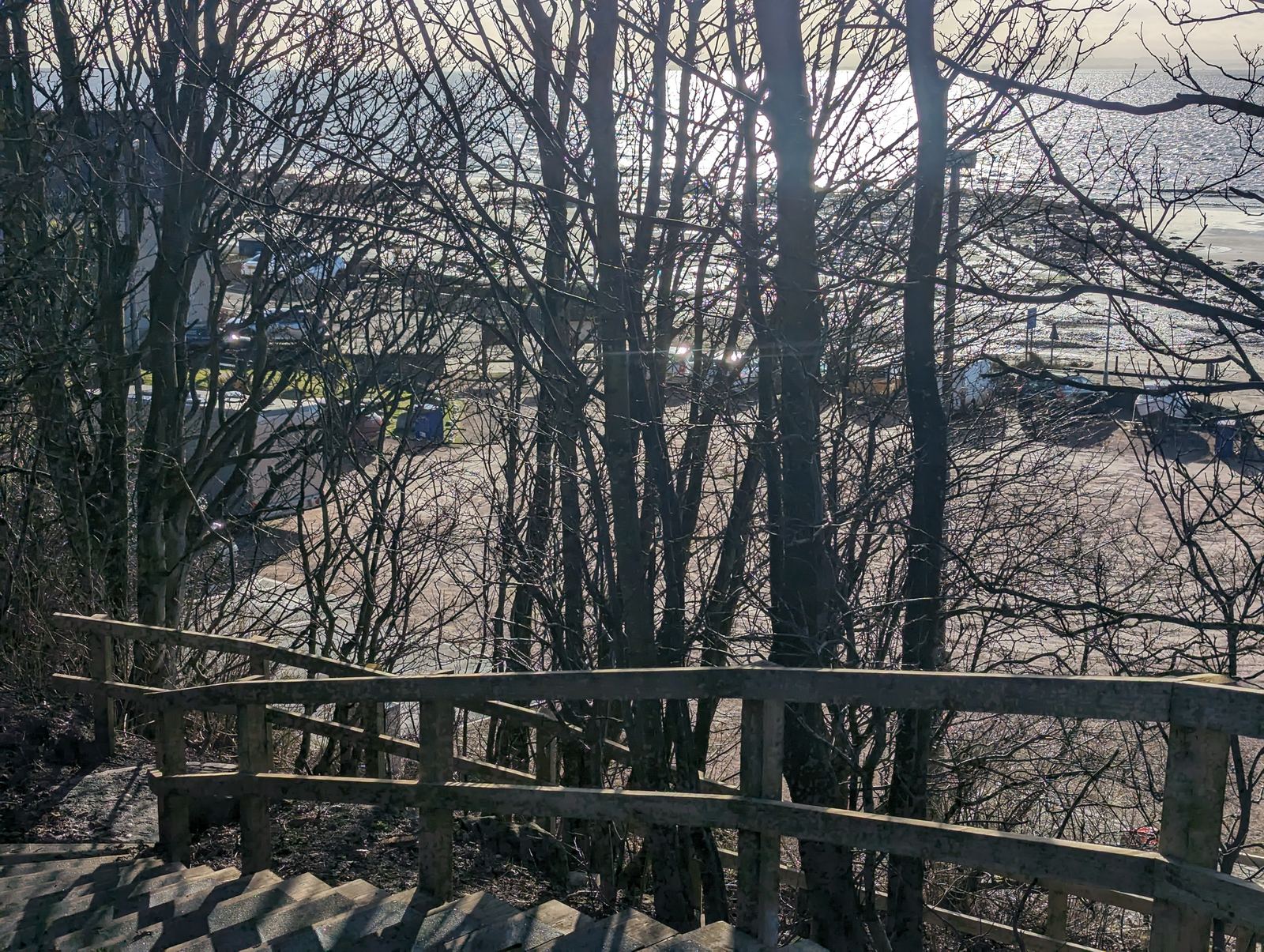
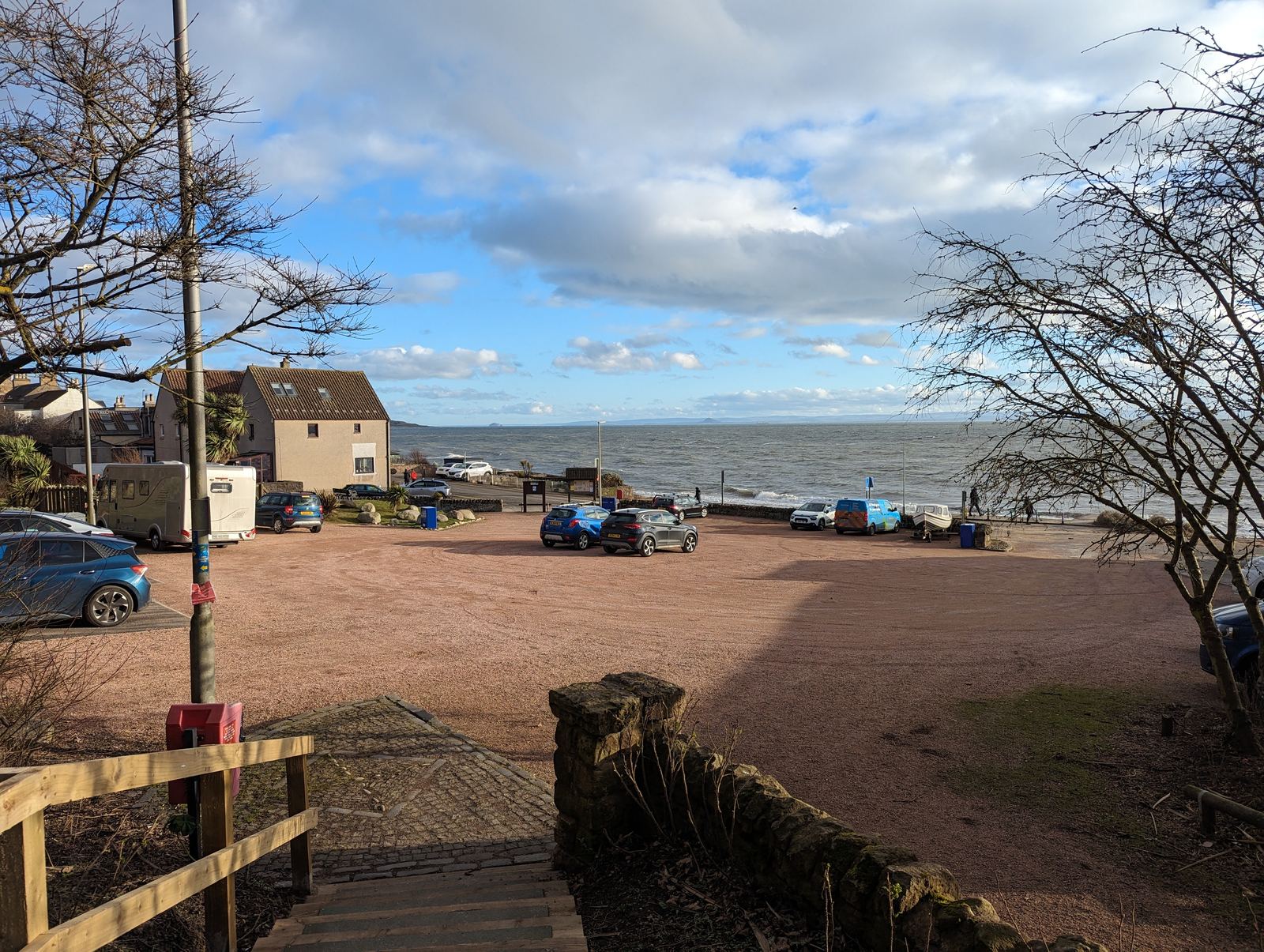
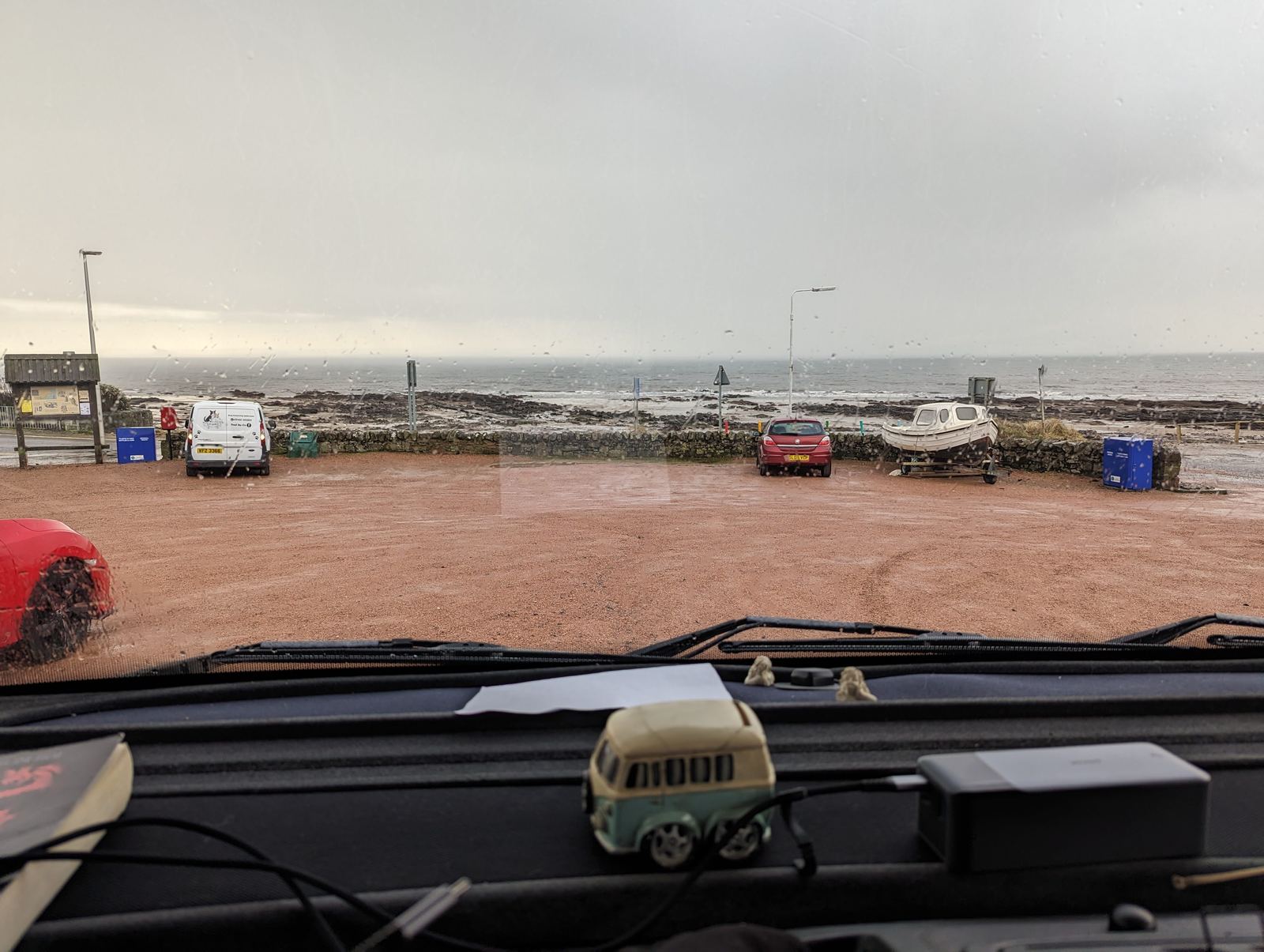
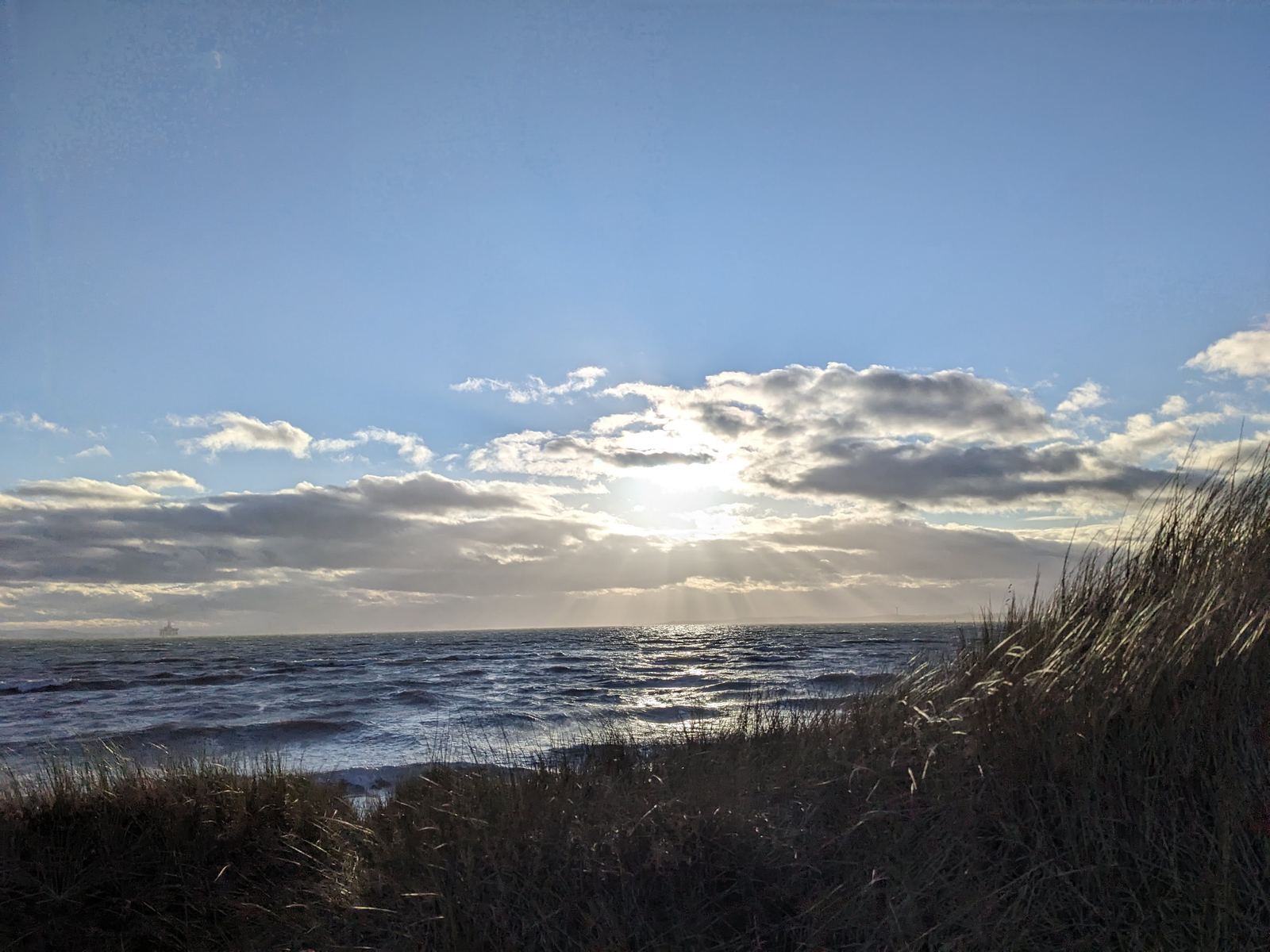
Here’s why we keep coming back. There’s a small car park right on the seafront, and it is a stunning spot — you wake up with the whole of Largo Bay in the windscreen and the tide a few yards away. We’ve stayed here at least twice, a couple of nights each time, and it’s one of our favourite pitches anywhere on the Fife coast. Best of all, to date it’s free.
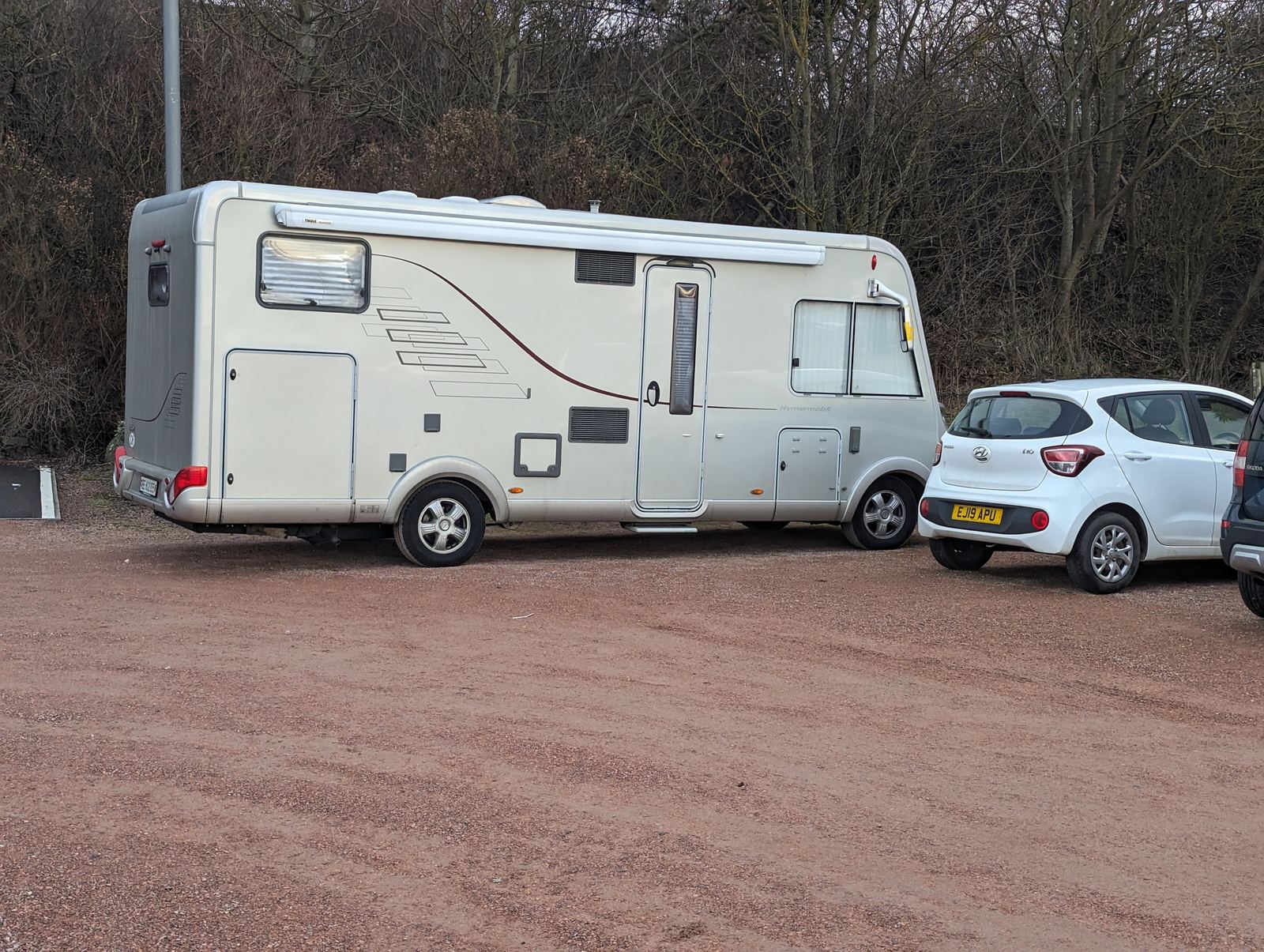
One honest warning: the car park is tight, and getting a big rig in and out — especially in summer when it’s busy — is not fun. We wouldn’t recommend it for large motorhomes in the season. For campervans and smaller motorhomes, though, it’s beautiful: quiet, right by the sea, with that view. As always, read the current signs, don’t take two spaces, be considerate to the neighbours and leave no trace — spots this good stay good only if vans behave.

Best time to visit
We love it out of season — winter and early spring, when the beach is empty, the light is long and low, and the wee car park is quiet enough to enjoy. Summer is lovely too but far busier, and that’s exactly when the tight car park gets awkward for bigger vans. Come for a still, bright winter day and you’ll have one of Fife’s best bays almost to yourself.
Practical
- 🅿️ Parking / overnight: small seafront car park, free to date, stunning view — but tight; fine for campervans and smaller motorhomes, awkward for big rigs, especially in summer. Check current signage.
- 🚐 Vehicle suitability: vans and small/mid motorhomes yes; large motorhomes, think twice in season.
- 🗿 Find the statue: the Alexander Selkirk statue is on his birthplace house on Main Street — the heart of the village.
- 🥾 Walks: Fife Coastal Path both ways (dunes west to Leven, coast east to Elie); Largo Law behind for a short, steep climb and a big view.
- 🐕 Dogs: a brilliant dog beach — mind seasonal dog rules and clean up (the locals are hot on it).
- 🍽️ Food & drink: the village has a pub/hotel on the harbour and cafés nearby; more choice a short hop away in Elie and the East Neuk.
Nearest places
- Elie & Earlsferry — the East Neuk’s best sandy beaches and Ruby Bay, just east. (Page coming.)
- Leven & Lundin Links — the long west end of Largo Bay, and the mysterious Lundin standing stones on the golf course. (Page coming.)
- Pittenweem — the East Neuk’s working fishing harbour, a little further round the coast.
- St Monans & Anstruther — more classic East Neuk villages along the shore. (Pages coming.)
- St Andrews — the Home of Golf and the great ruined cathedral, about half an hour north.
Sources
- First-hand: Kevin & family (and Lillie), Lower Largo, February 2024 — stayed twice on the seafront (own photos)
- Alexander Selkirk — Undiscovered Scotland · Alexander Selkirk — Wikipedia
- Sir Andrew Wood of Largo — Wikipedia · Largo, Fife — Wikipedia
🪙 Detecting on this beach
Largo Bay is long, sandy and quiet, which is the trade-off in a nutshell: fewer people means fewer modern losses, but it also means ground that has been worked far less than the honeypot beaches.
Before you start: Scotland lets you detect the foreshore without a permit — that is the strip the tide covers and uncovers, and nothing above it. Every find goes to the Treasure Trove Unit whatever its age, because Scots law claims all ownerless objects for the Crown, and scheduled monuments are a criminal offence to detect on. Full detail here → · start with our guide →
It is a cheap hobby to start and a hard one to stop. Largo Bay is long enough that you could walk it all season without covering the same sand twice, and every outing on quiet ground like this is ground nobody worked last weekend. Finds pay for the machine soon enough; the walking was free anyway.