
Crail: Scotland’s Most-Painted Harbour & the Jewel of the East Neuk
Overview
If you see one East Neuk village, make it Crail. It’s the oldest and arguably the prettiest of the string of old Fife fishing towns — a tiny, perfect harbour ringed by crow-stepped, pantiled cottages, wrapped in a medieval royal burgh of cobbled wynds. Artists and photographers have flocked here for two centuries, and the moment you round the corner to the harbour you understand why.
Where it is
Crail sits at the eastern tip of the East Neuk of Fife, about 10 miles south-east of St Andrews, with Anstruther and the other fishing villages strung out to the west and the headland of Fife Ness just beyond to the east. It’s all joined by the Fife Coastal Path.
The harbour
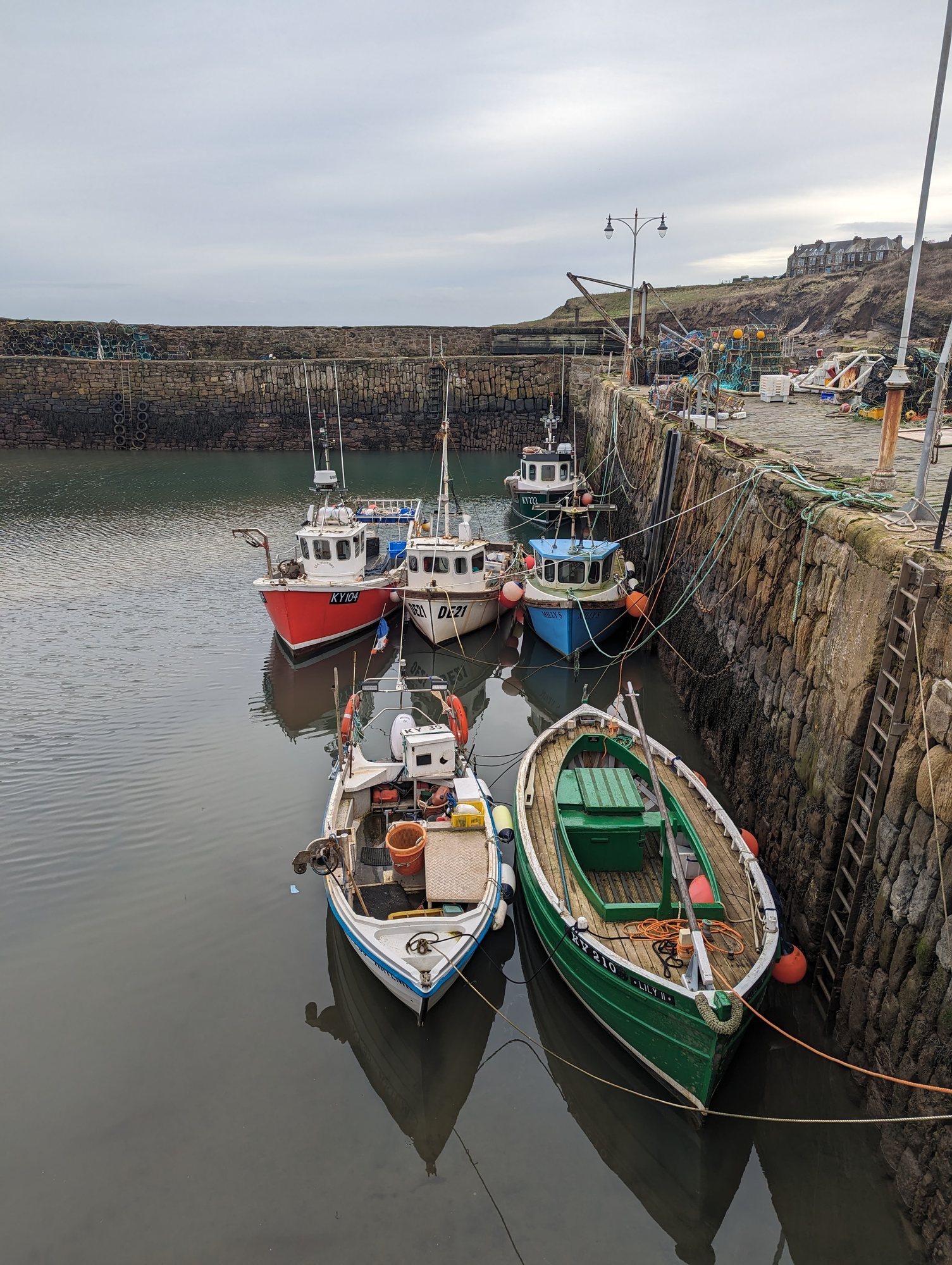
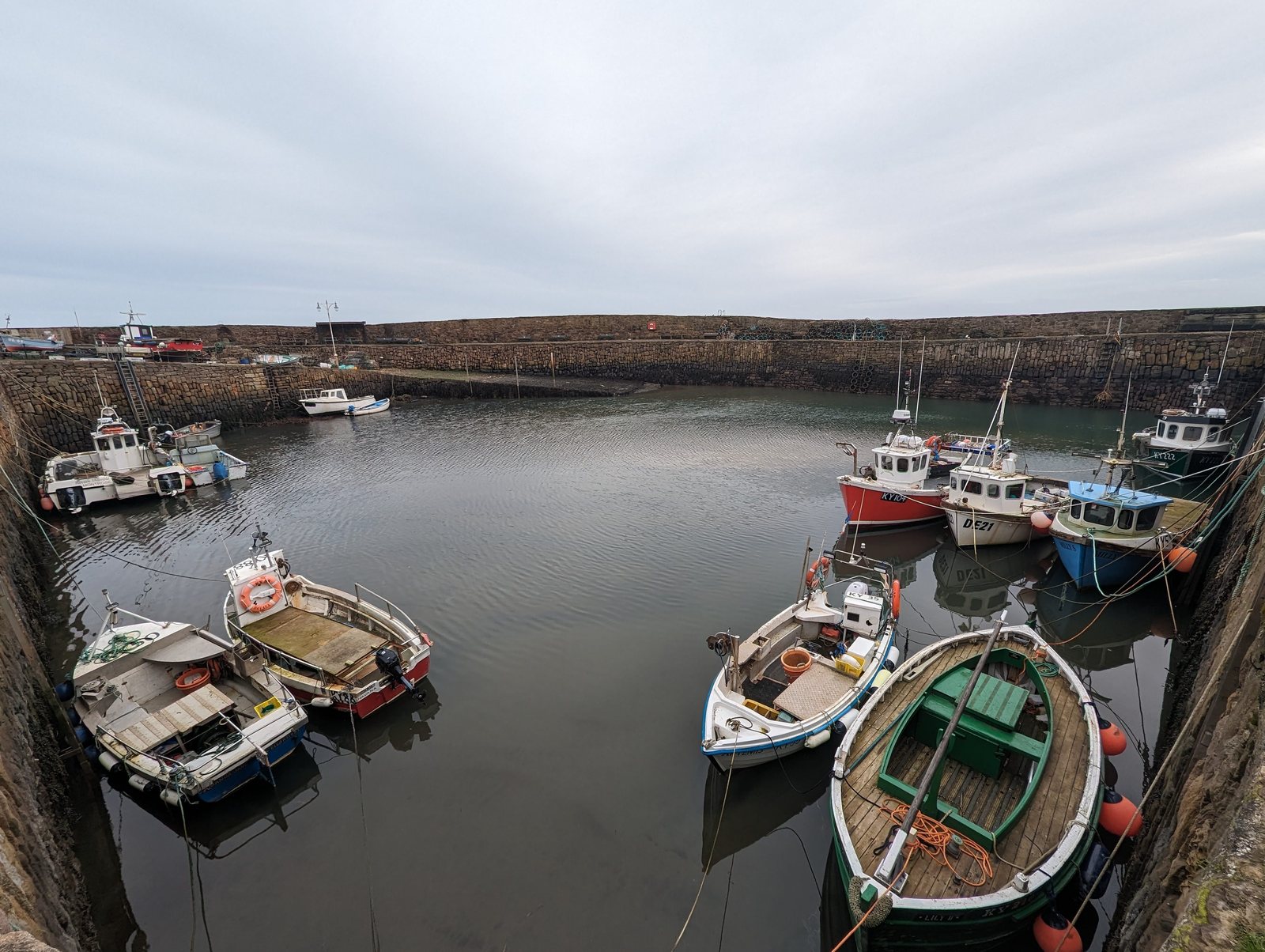
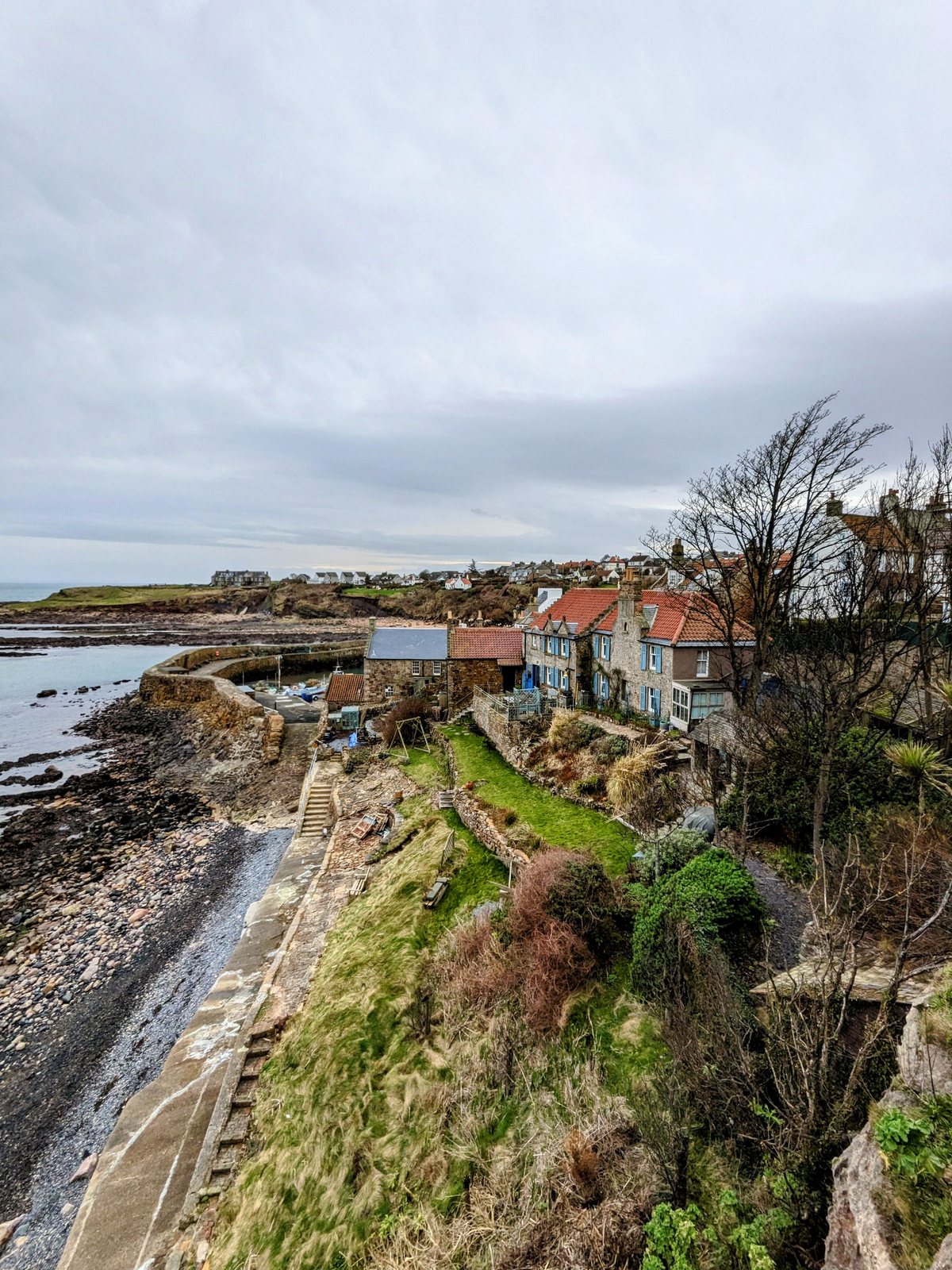
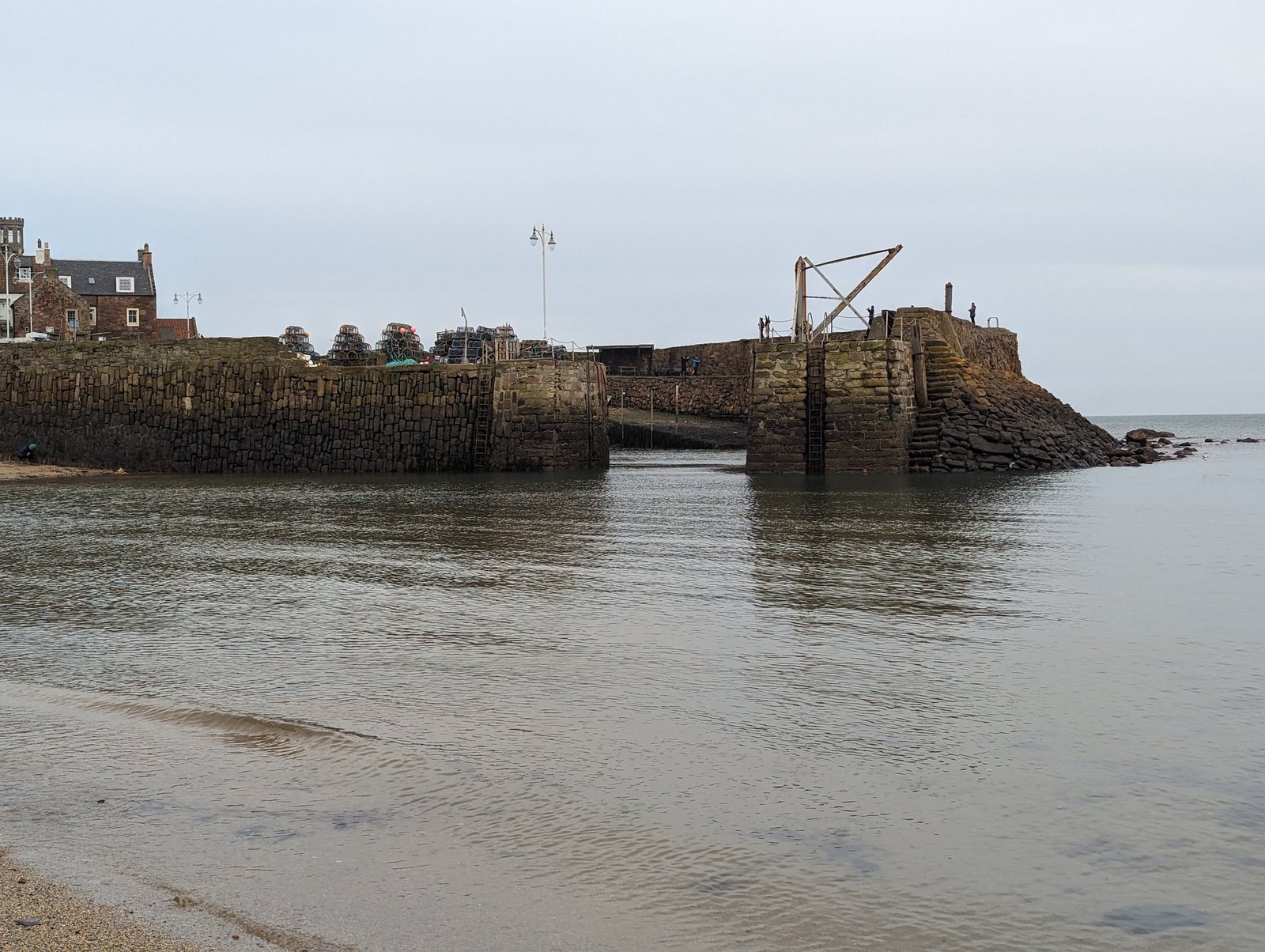
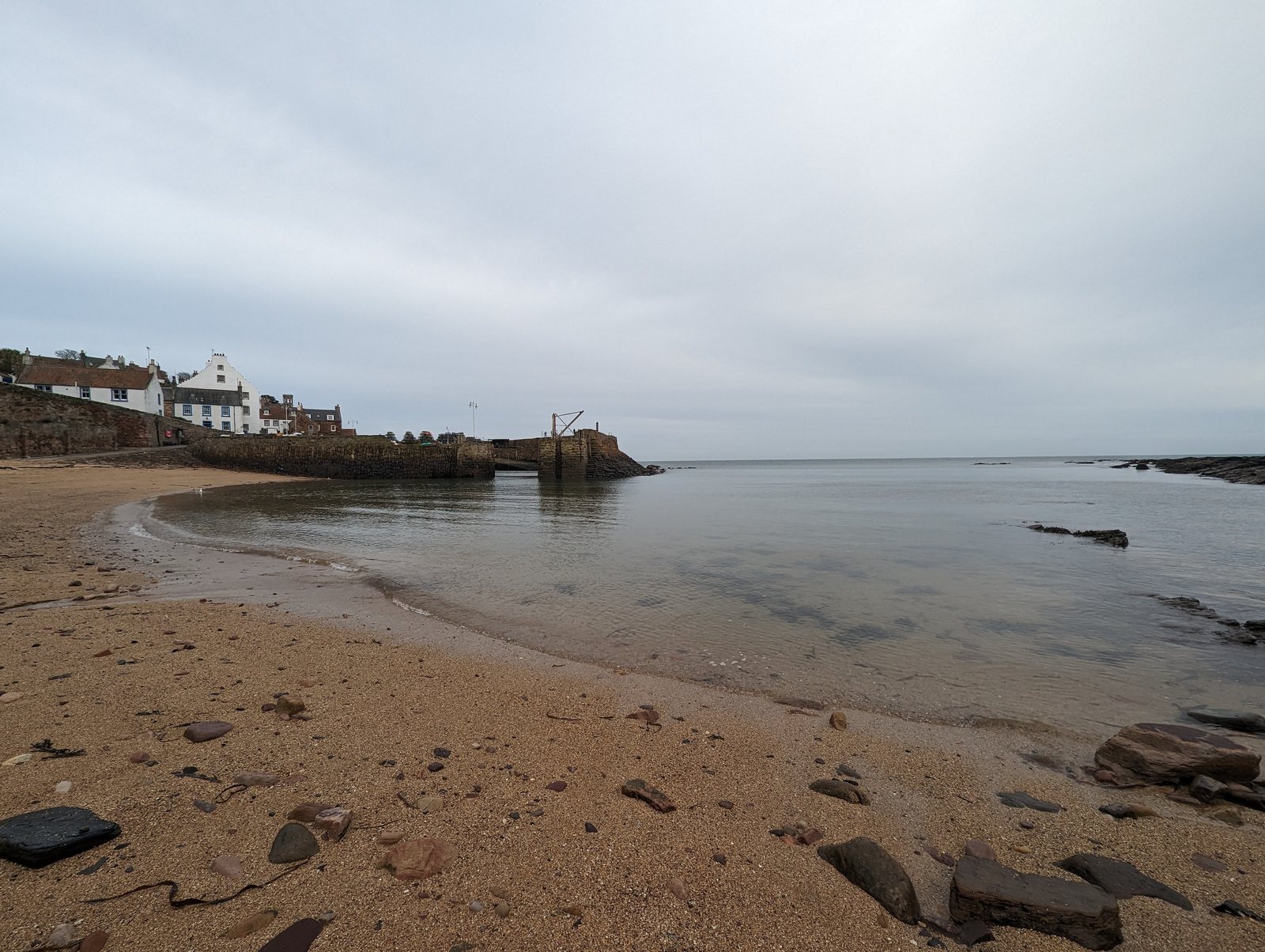
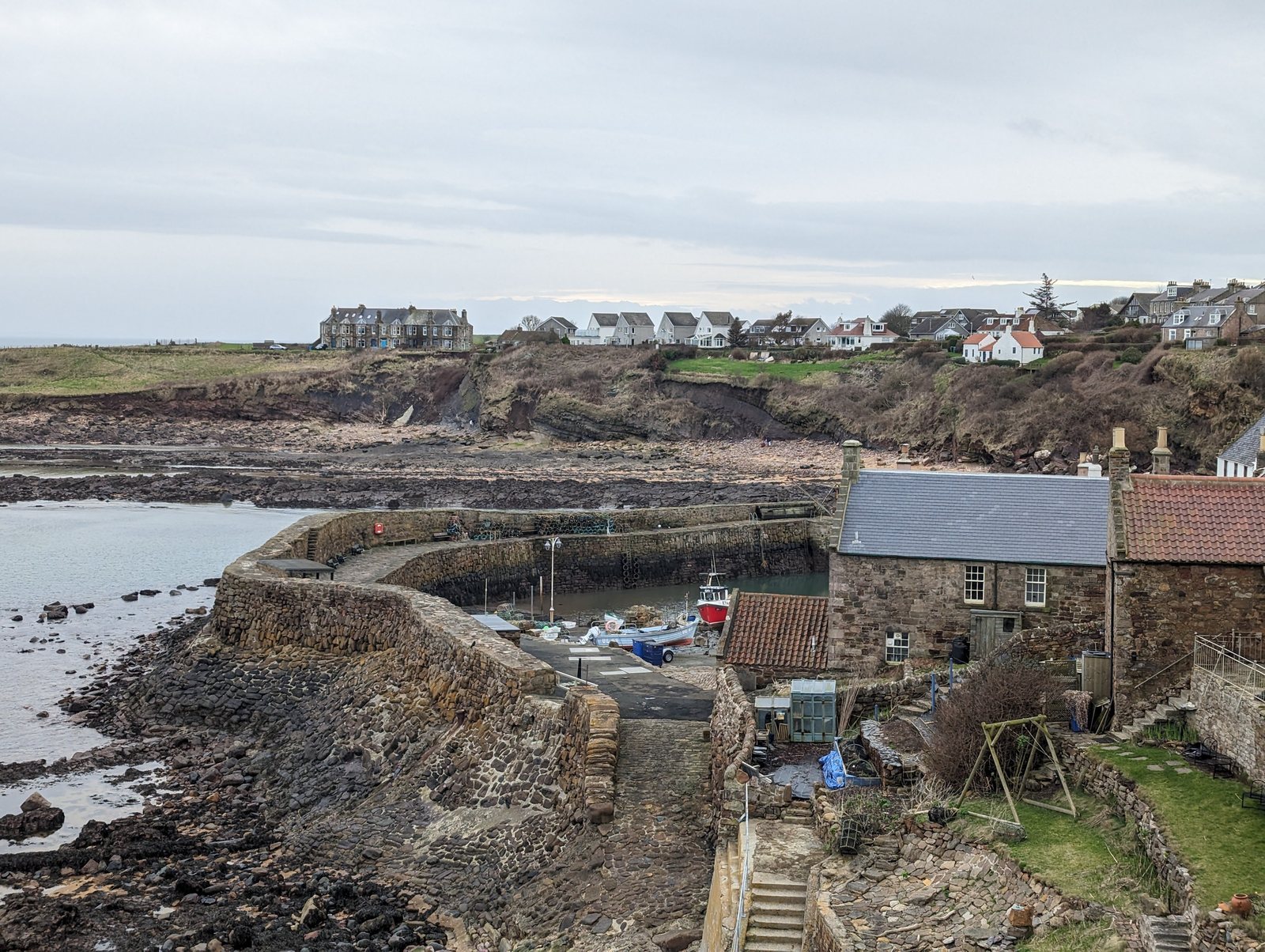
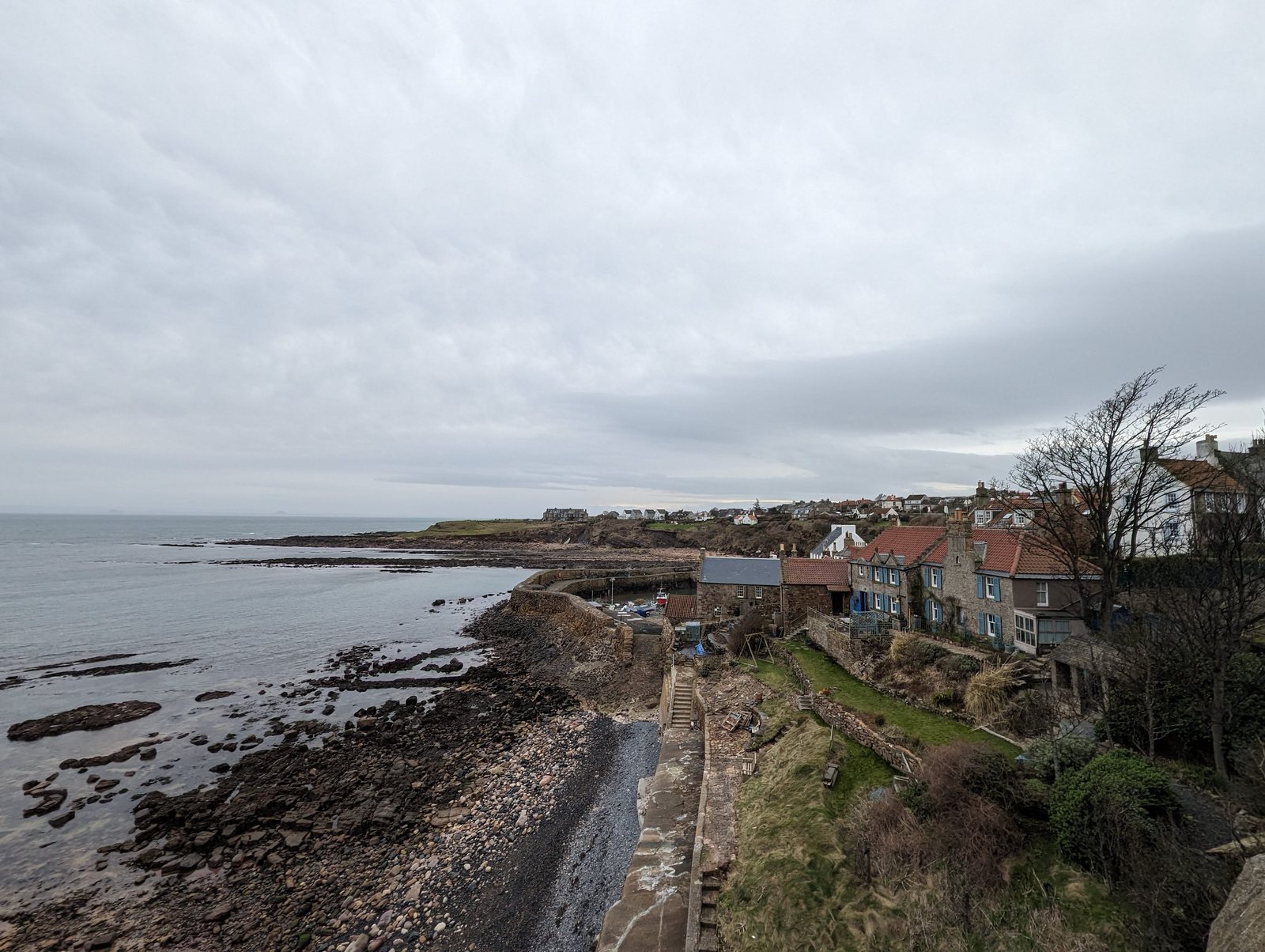
Crail’s harbour is the star, and rightly so — it’s often called the most painted and photographed harbour in Scotland. Small, ancient and still working, it sits below the town with a huddle of little boats, lobster creels stacked on the pier, and that famous view down from the brae above of the white-gabled houses against the sea. The present harbour was largely rebuilt in the 19th century, but boats have sheltered here since the Middle Ages. We could have sat and looked at it all day.
The old royal burgh
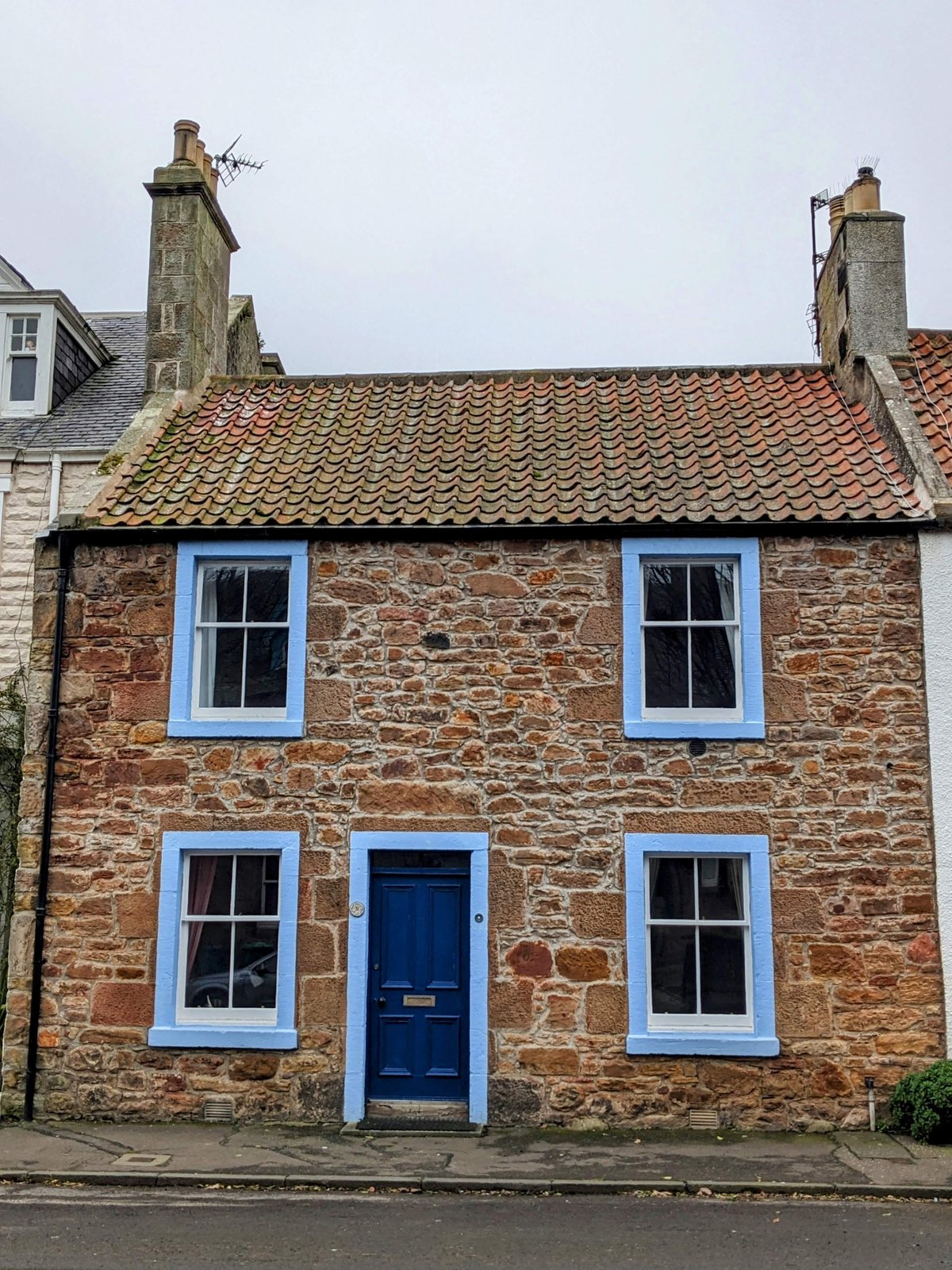
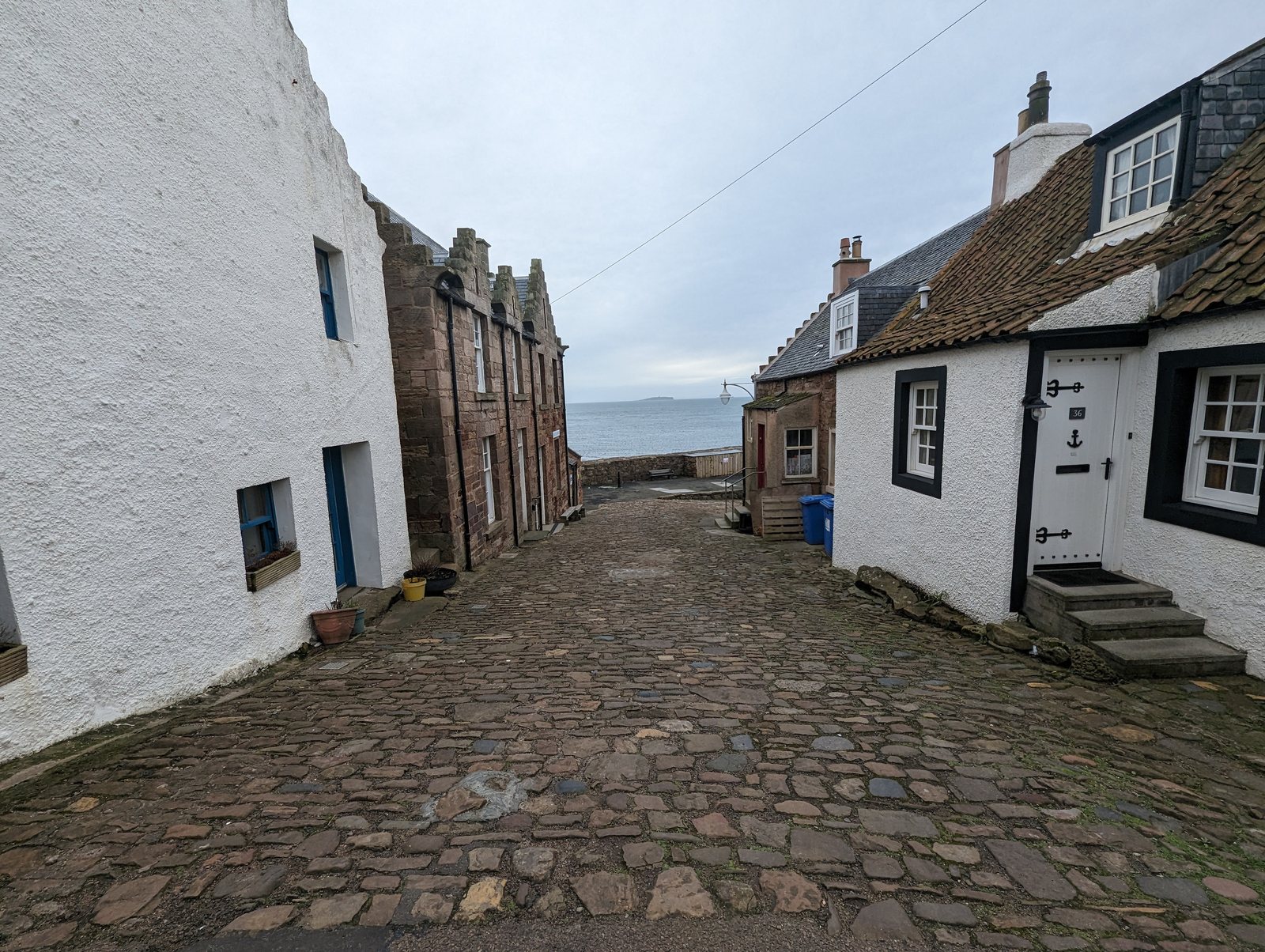
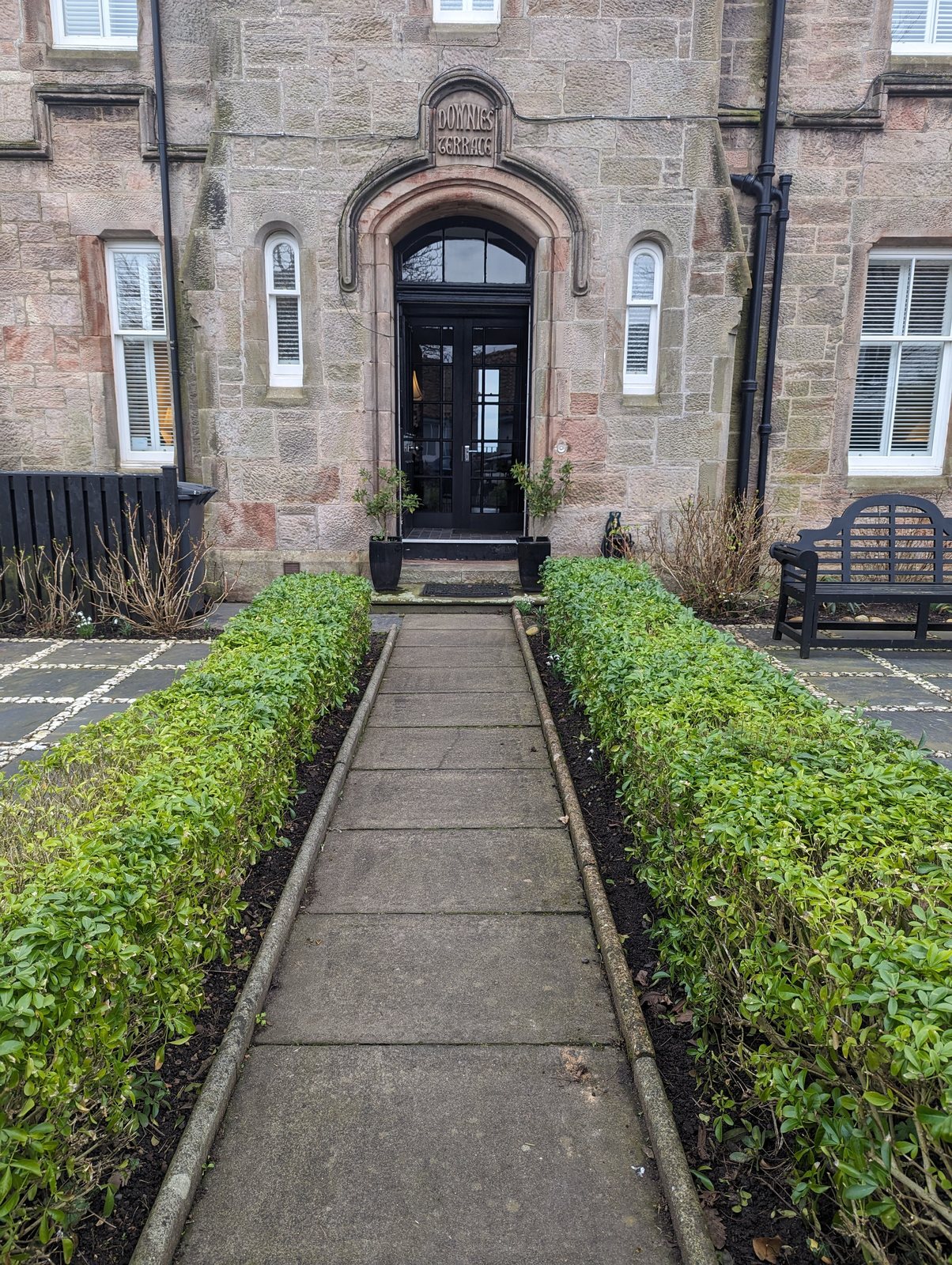
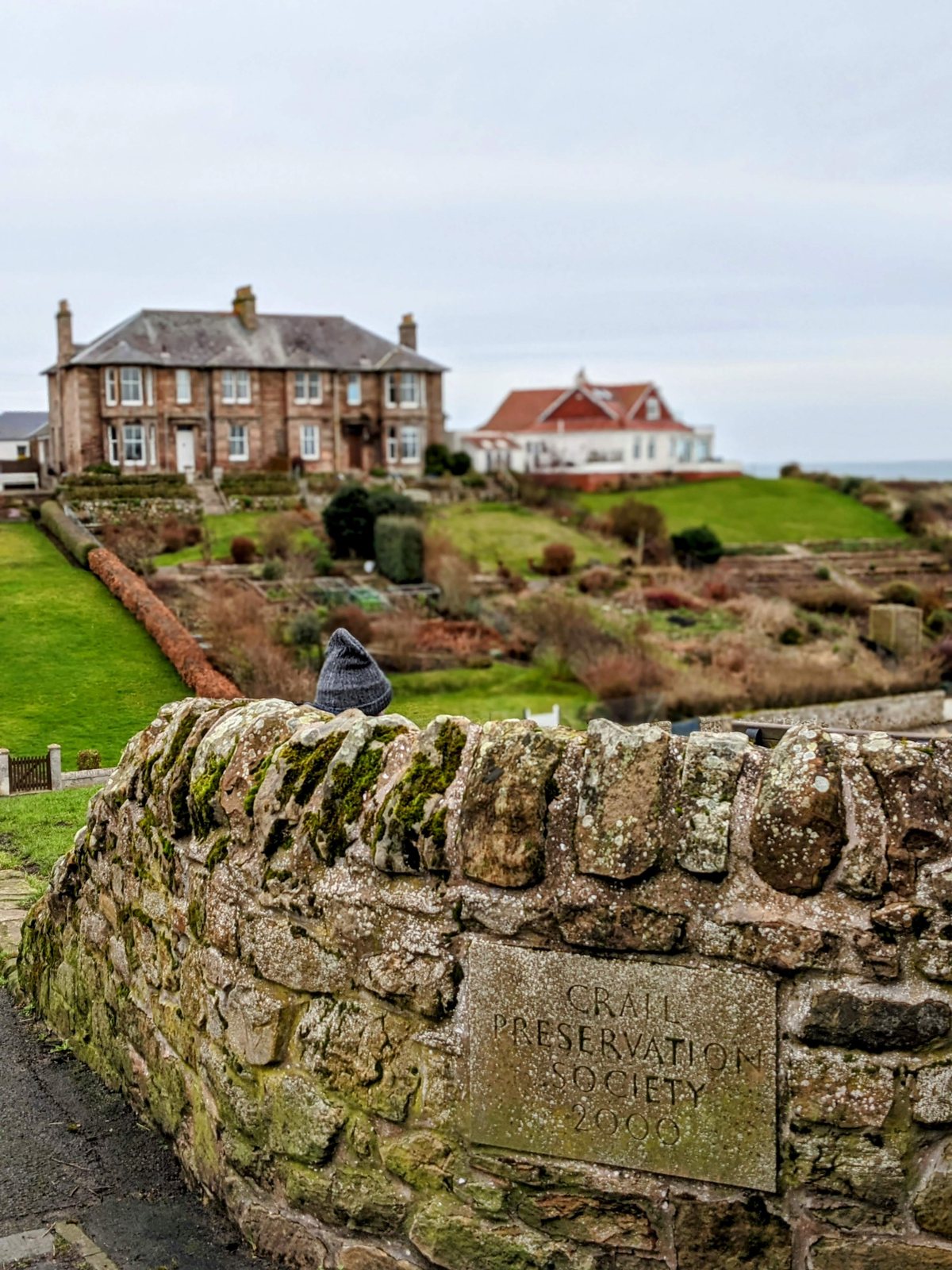
Crail is properly old. There was a settlement here by the 9th century and a thriving trading port by the 1100s, and it was made a royal burgh in 1178 by King William the Lion — one of the very earliest in Scotland. Robert the Bruce later granted it the rare privilege of holding a market on a Sunday (there’s more on the king on our Clan Bruce page). Its broad old market street, the Marketgate, was said to be one of the largest market squares in Europe, and the 16th-century Tolbooth still stands with its Dutch-style bell of 1520. The whole town is a lesson in old Scottish burgh building — pantiled roofs, crow-stepped gables and forestairs, much of it shaped by centuries of trade with the Low Countries.

The kirk, John Knox & a Pictish stone
Set a little back from the sea is Crail Parish Church, one of the oldest in Fife, with parts dating to the 13th century. In 1517 it was raised to a collegiate church, served by a provost and ten prebendaries. Its great moment in history came in June 1559, when John Knox preached a fiery sermon here that helped ignite the Reformation in the East Neuk — the church was stripped of its ornaments but, unlike many, spared the mob. Tucked inside, against the wall by the south door, is a beautifully carved 9th-century Pictish cross-slab — a reminder that Christian worship here is far older than the medieval kirk. In the churchyard stands a rare 17th-century morthouse, once used to foil body-snatchers.
Fishing, trade & the “Crail capon”
For most of its life Crail lived by the sea. Its boats worked the Forth for herring and white fish, and its merchants traded across the North Sea with Holland and the Baltic — the reason for all those Dutch pantiles. The town was once famous for the “Crail capon” — not a chicken at all, but a haddock, split and dried in the sea air, a local delicacy carried far and wide. Crabs and lobsters are still landed and sold at the harbour today.
Down to the shore
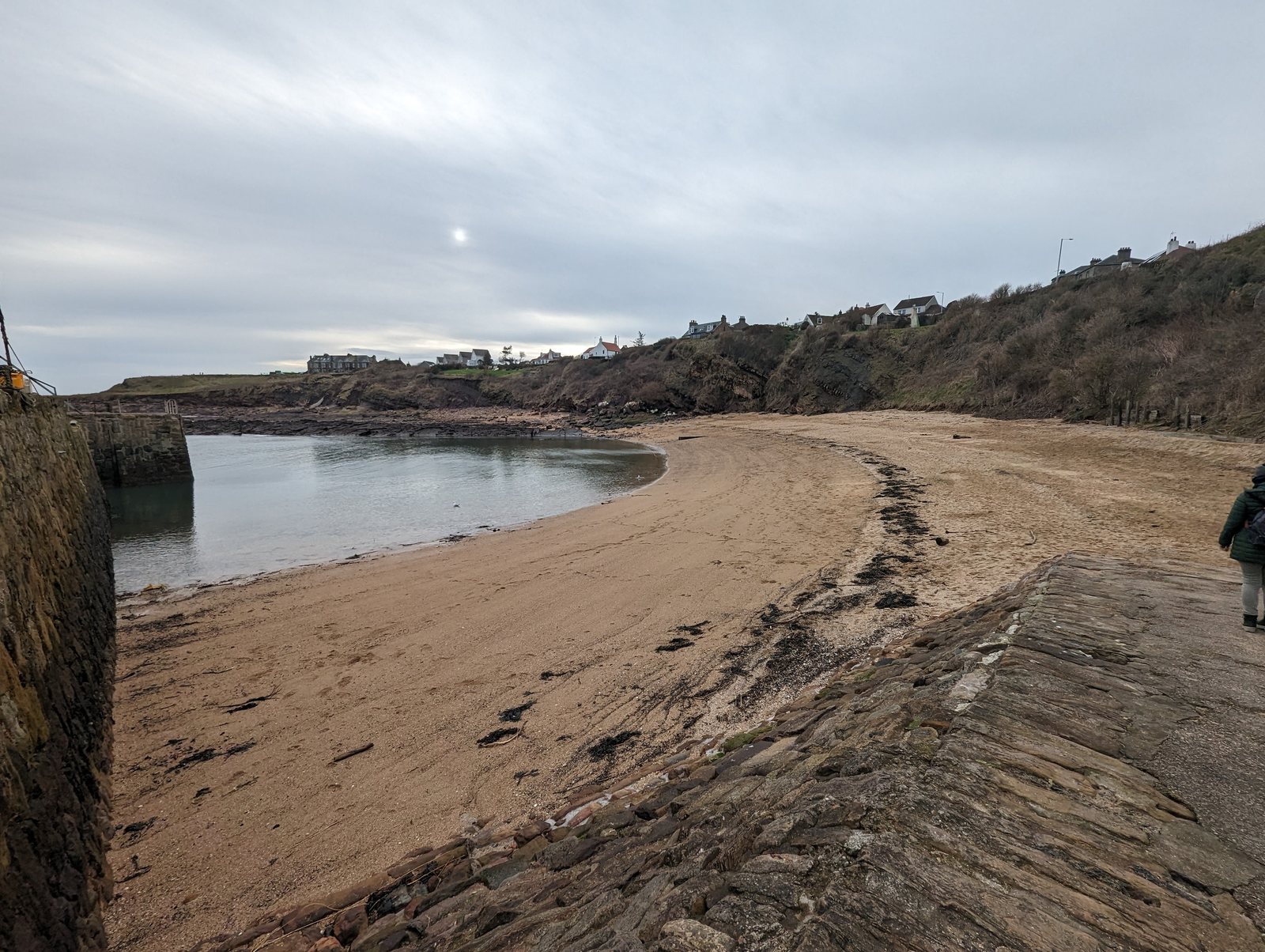
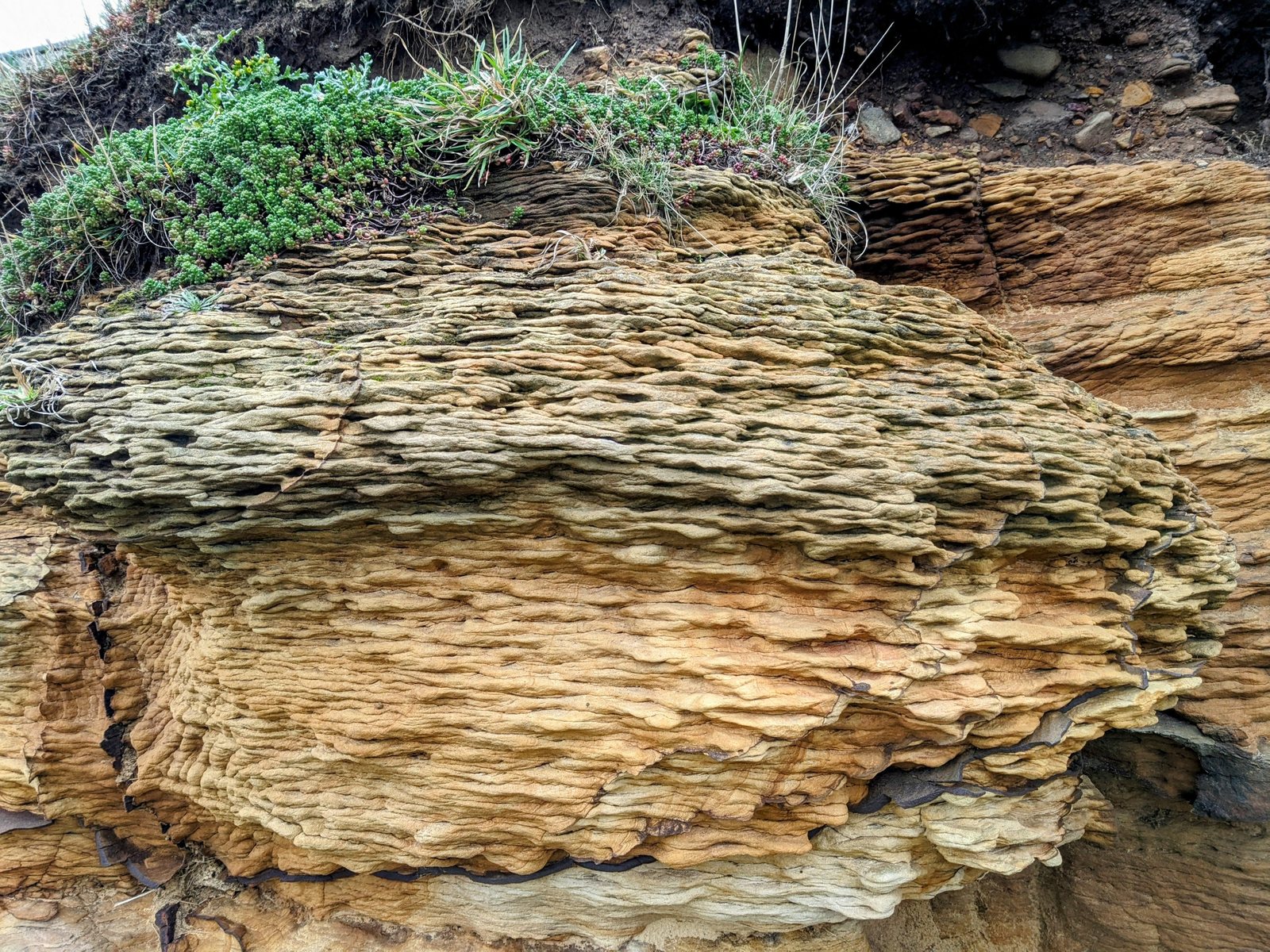
Below the houses the rocky shore is worth an explore, with dramatic folds of red sandstone laid bare at low tide and the coast path running east toward Fife Ness, the very corner of Fife. It’s a fine, blowy walk with the Isle of May out on the horizon.
Crail Airfield — HMS Jackdaw & the Cold War
There’s a surprising modern chapter, too. On the farmland just north of the town lies the old Crail Airfield. Begun as a naval air station in the First World War, in the run-up to the Second it became HMS Jackdaw, a Fleet Air Arm base where crews trained in torpedo attack. Stranger still, in the 1950s it housed the Joint Services School for Linguists — a Cold War operation that taught Russian to National Servicemen destined for intelligence work. The runways and control tower still stand, an eerie, atmospheric place to wander.
The Crail Harbour Gallery & Tearoom
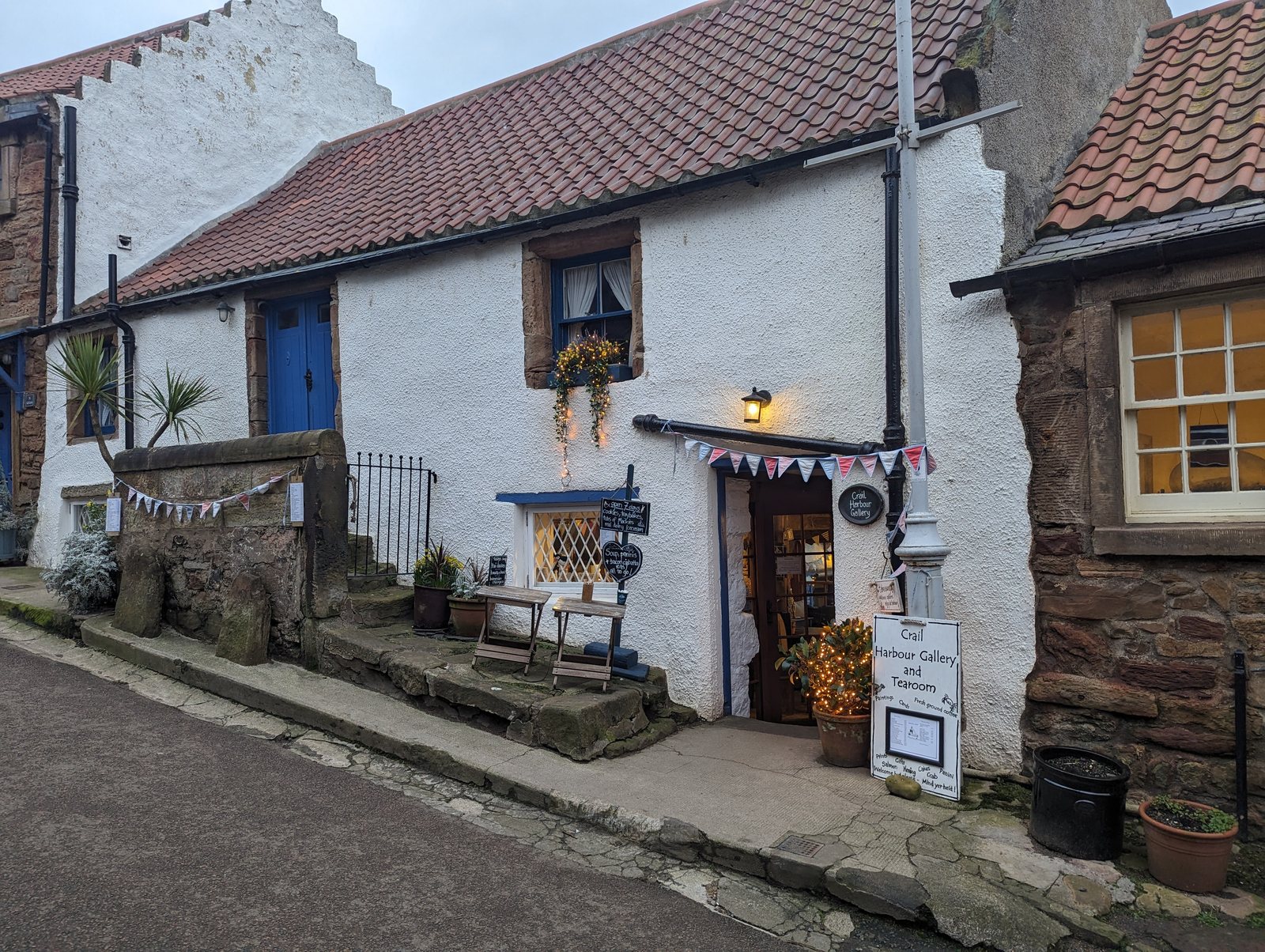
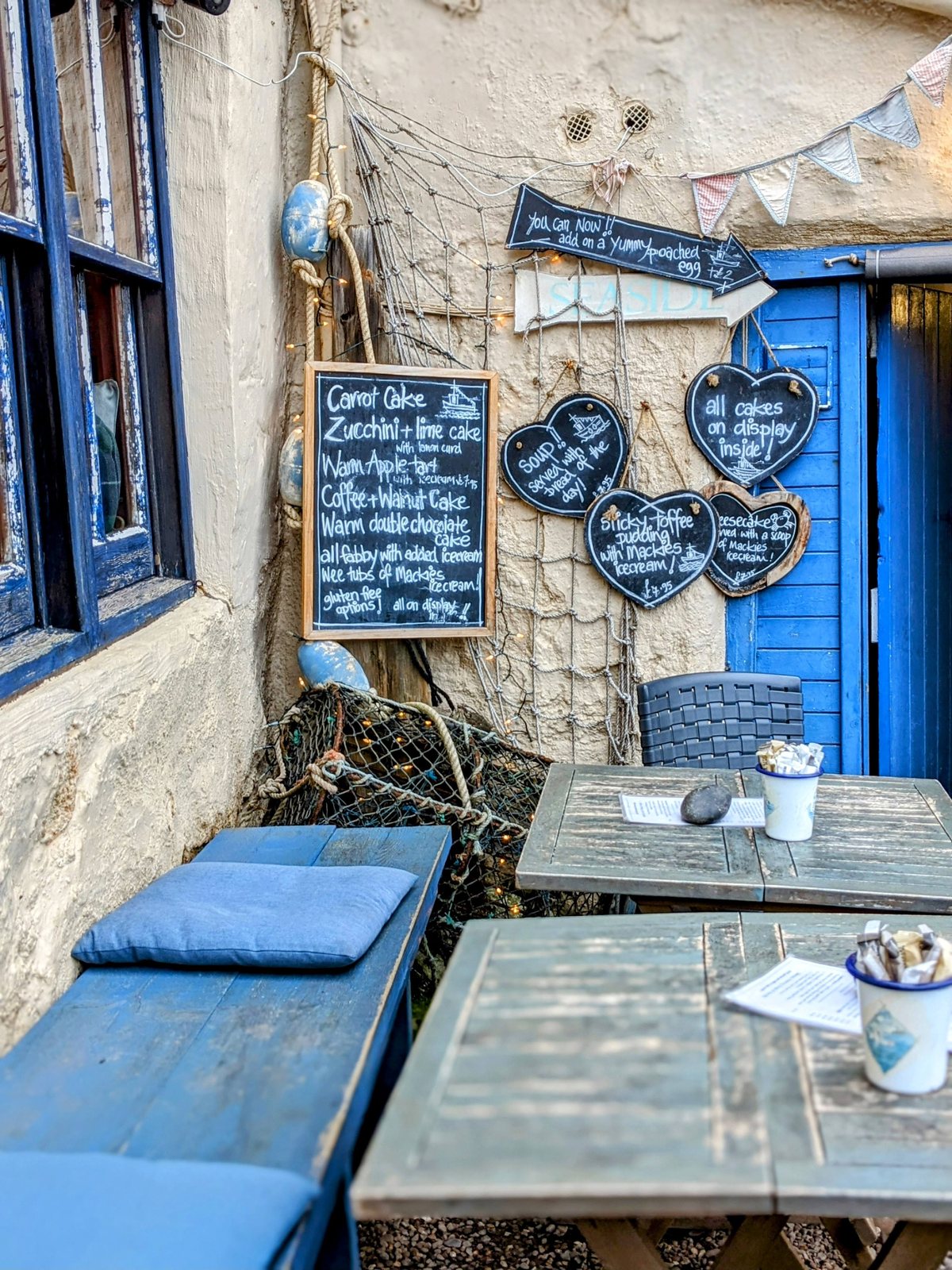
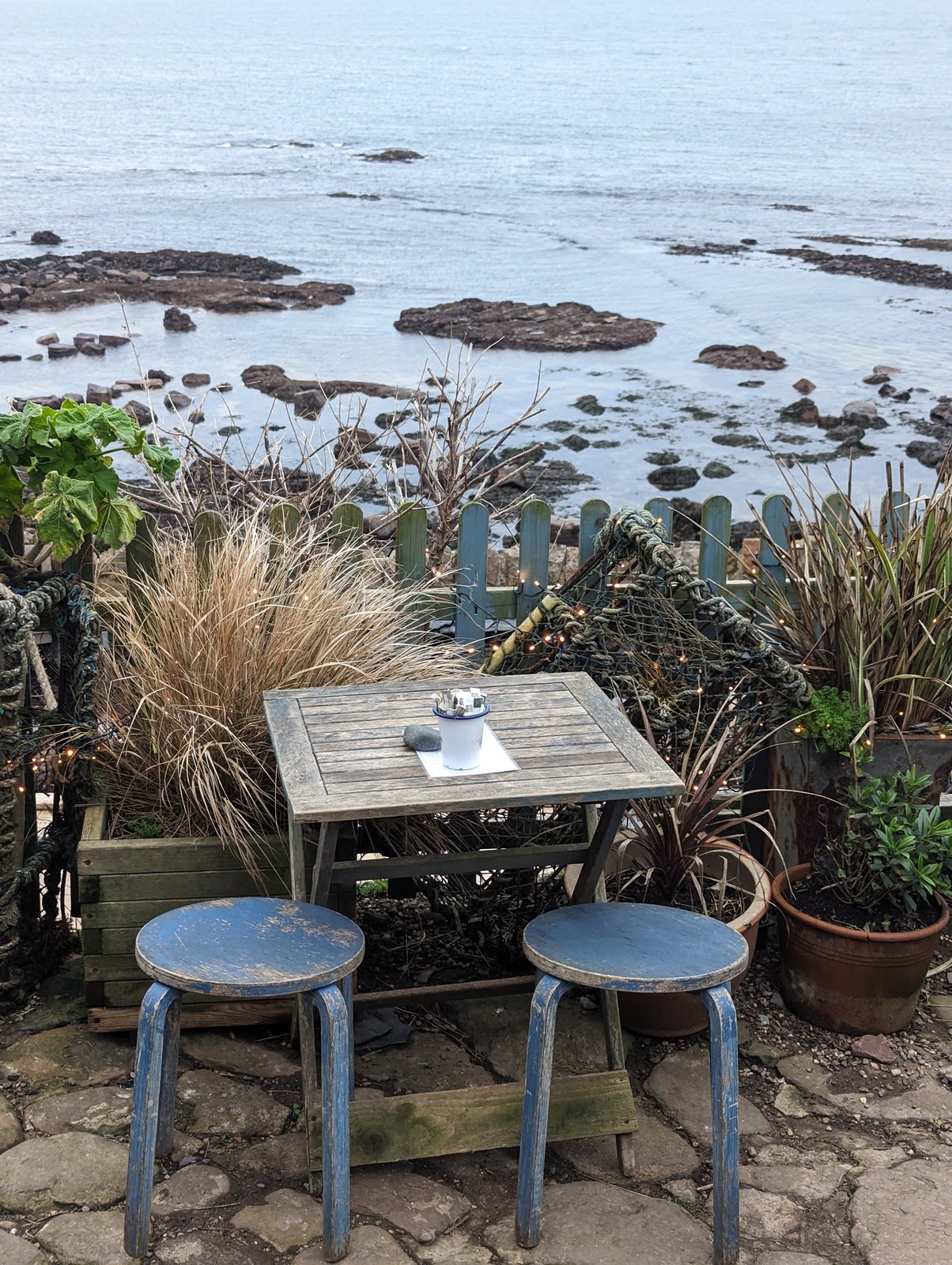
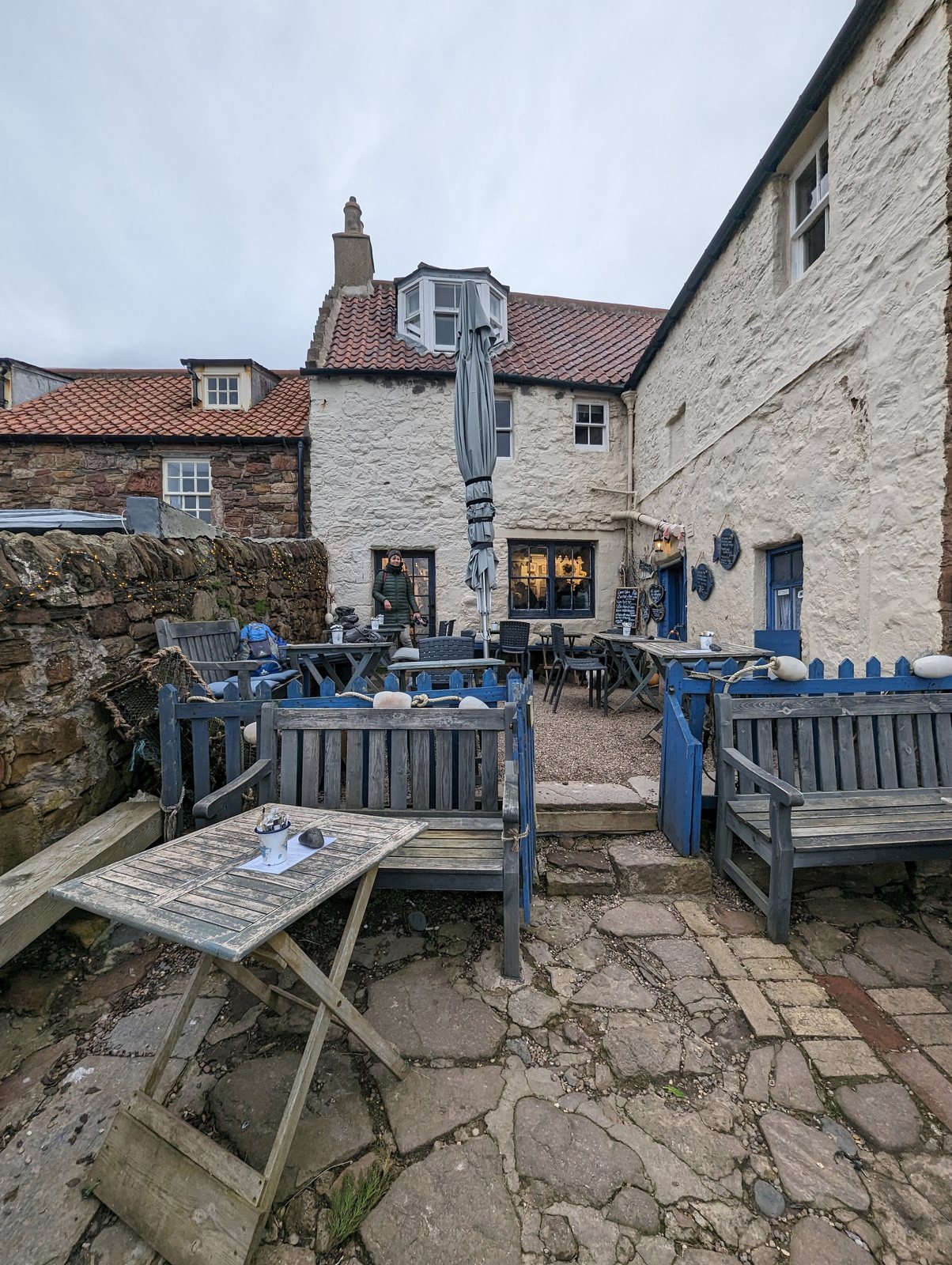
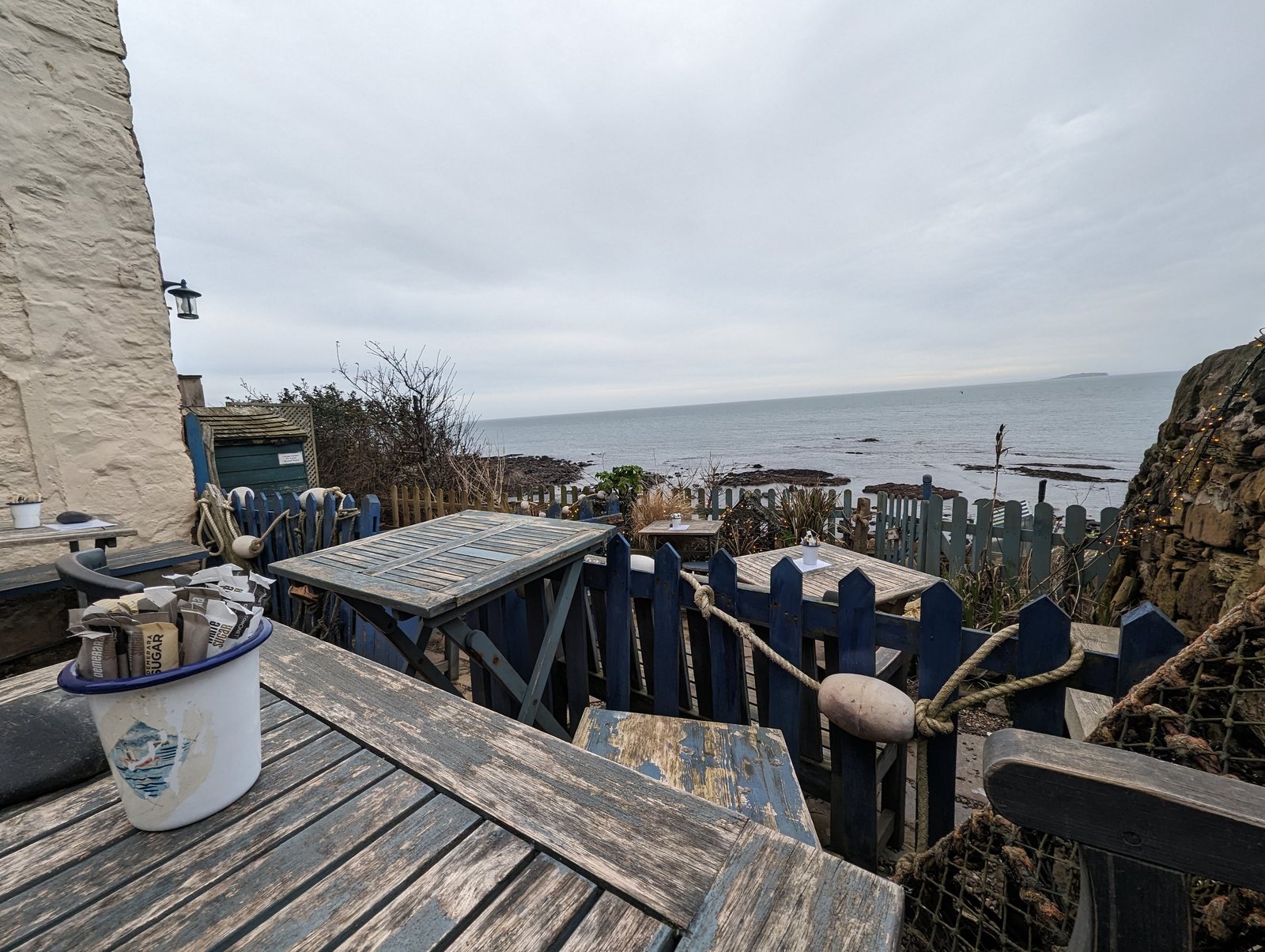
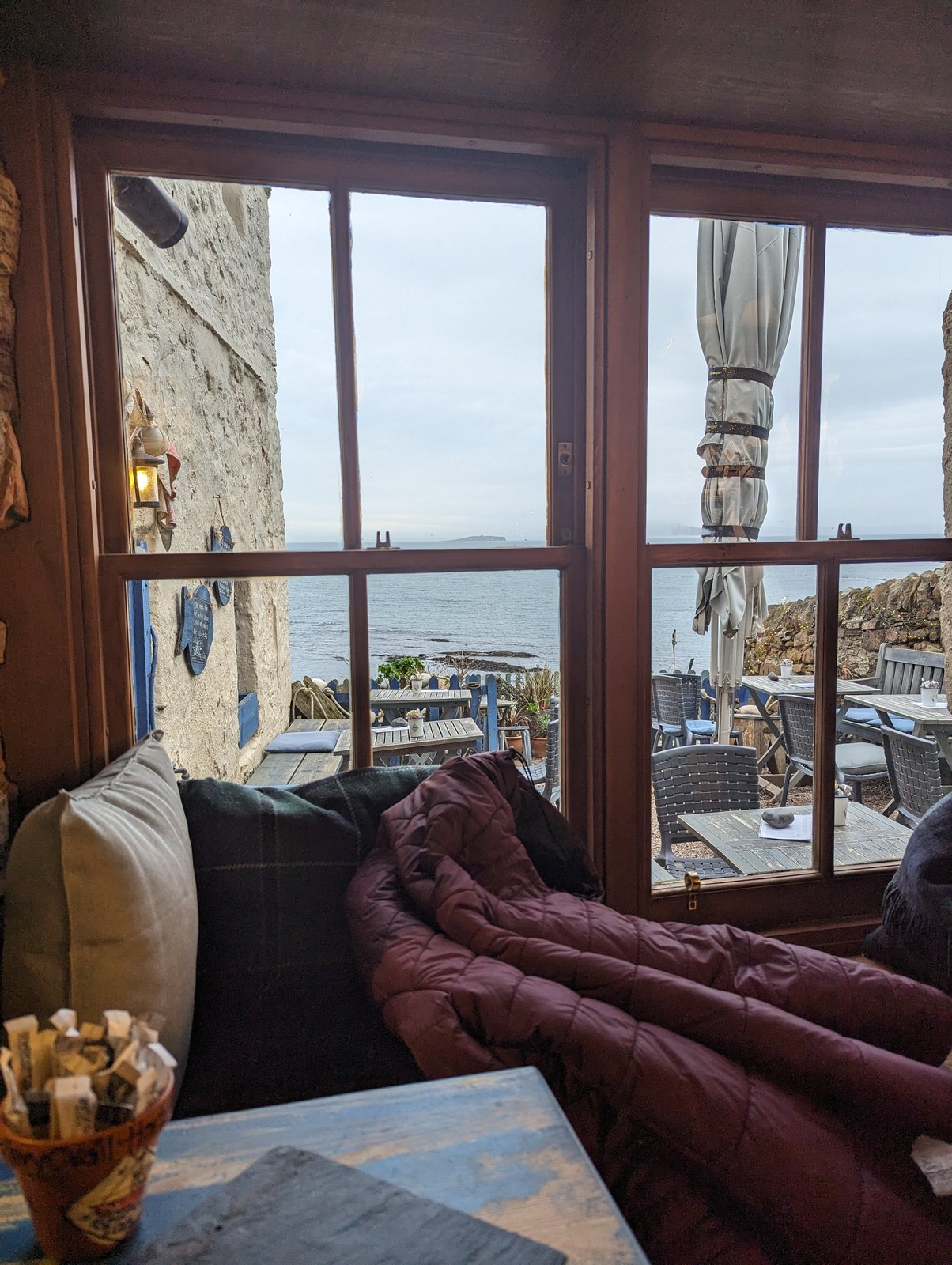
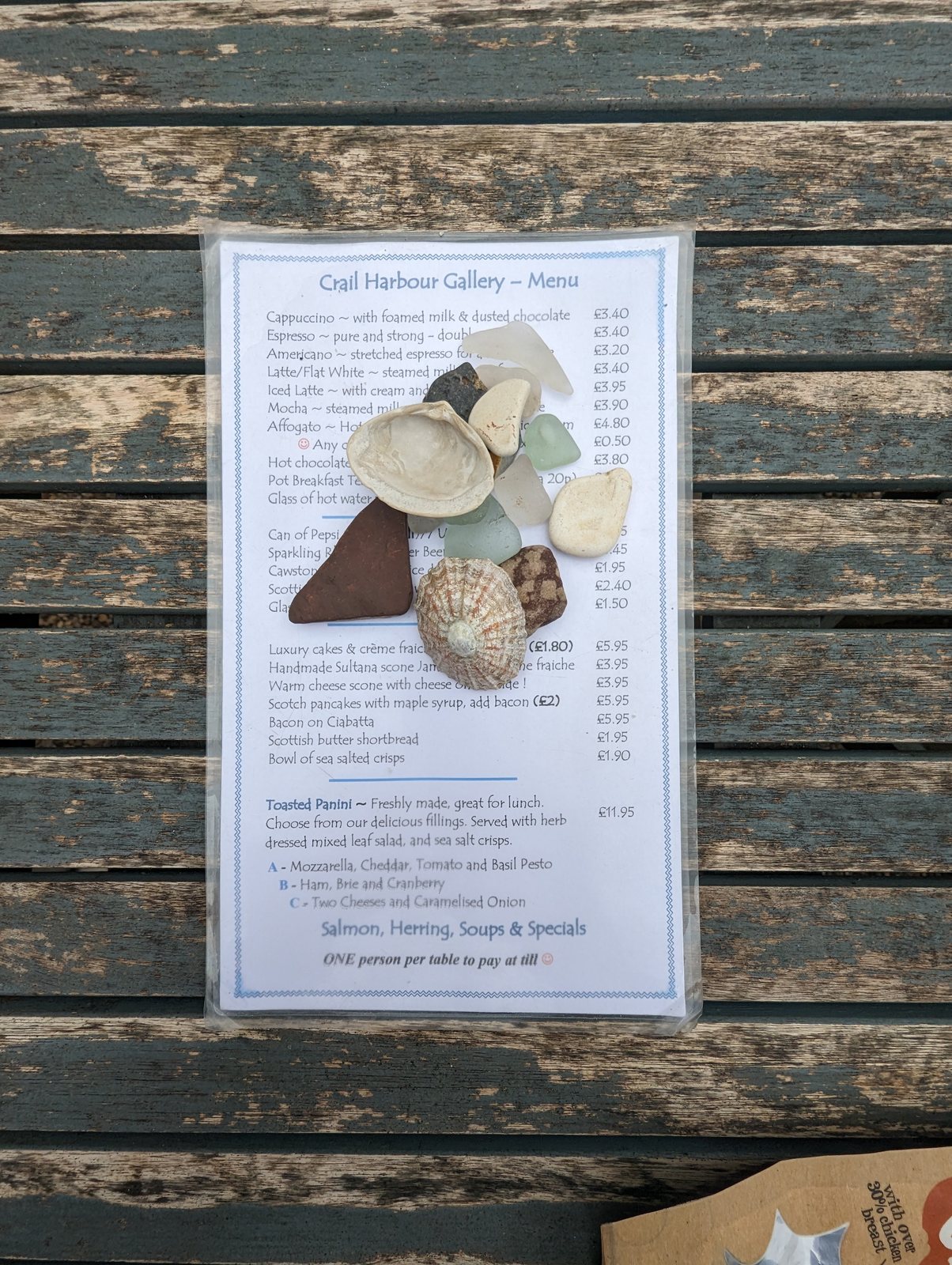
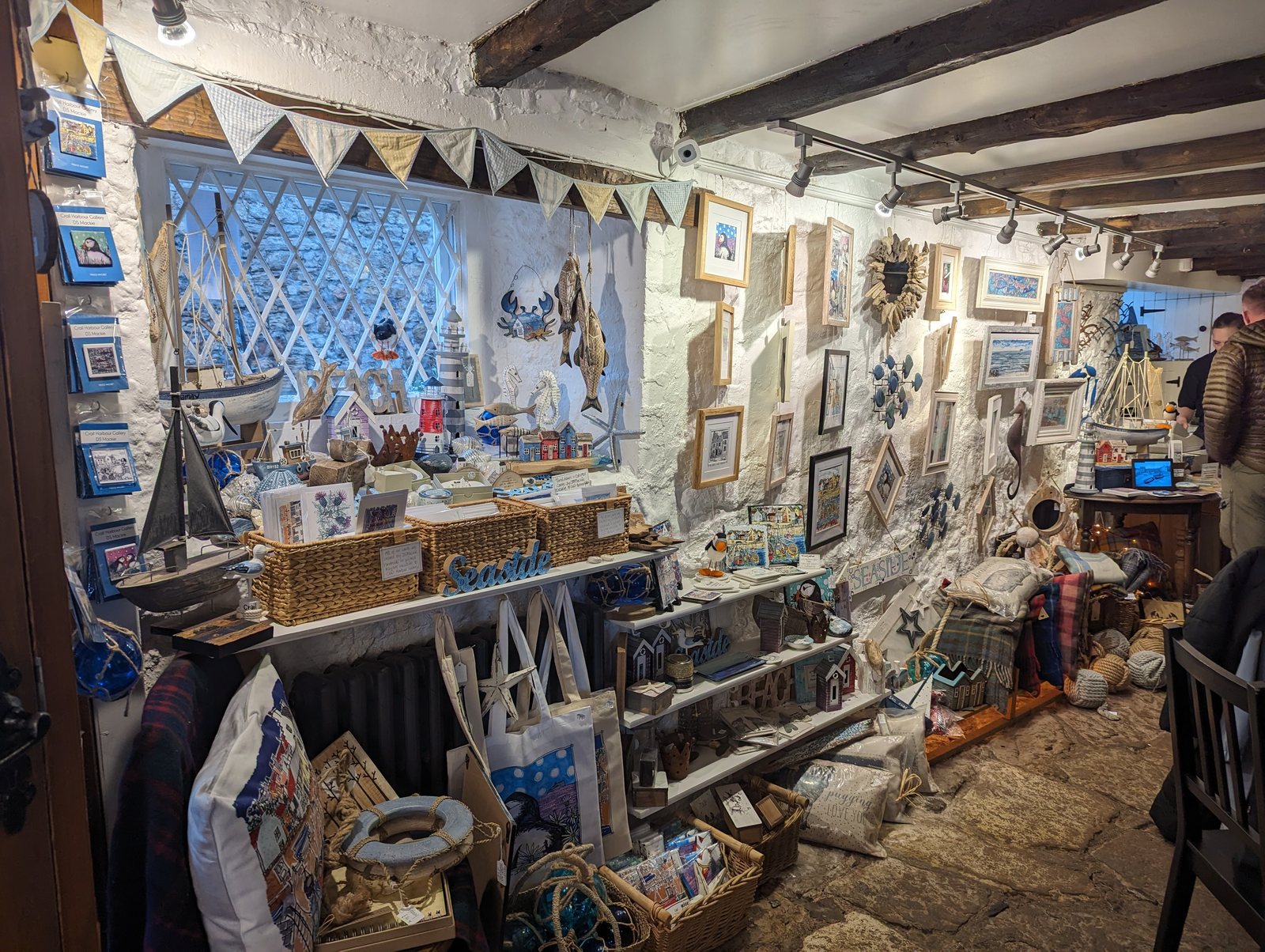
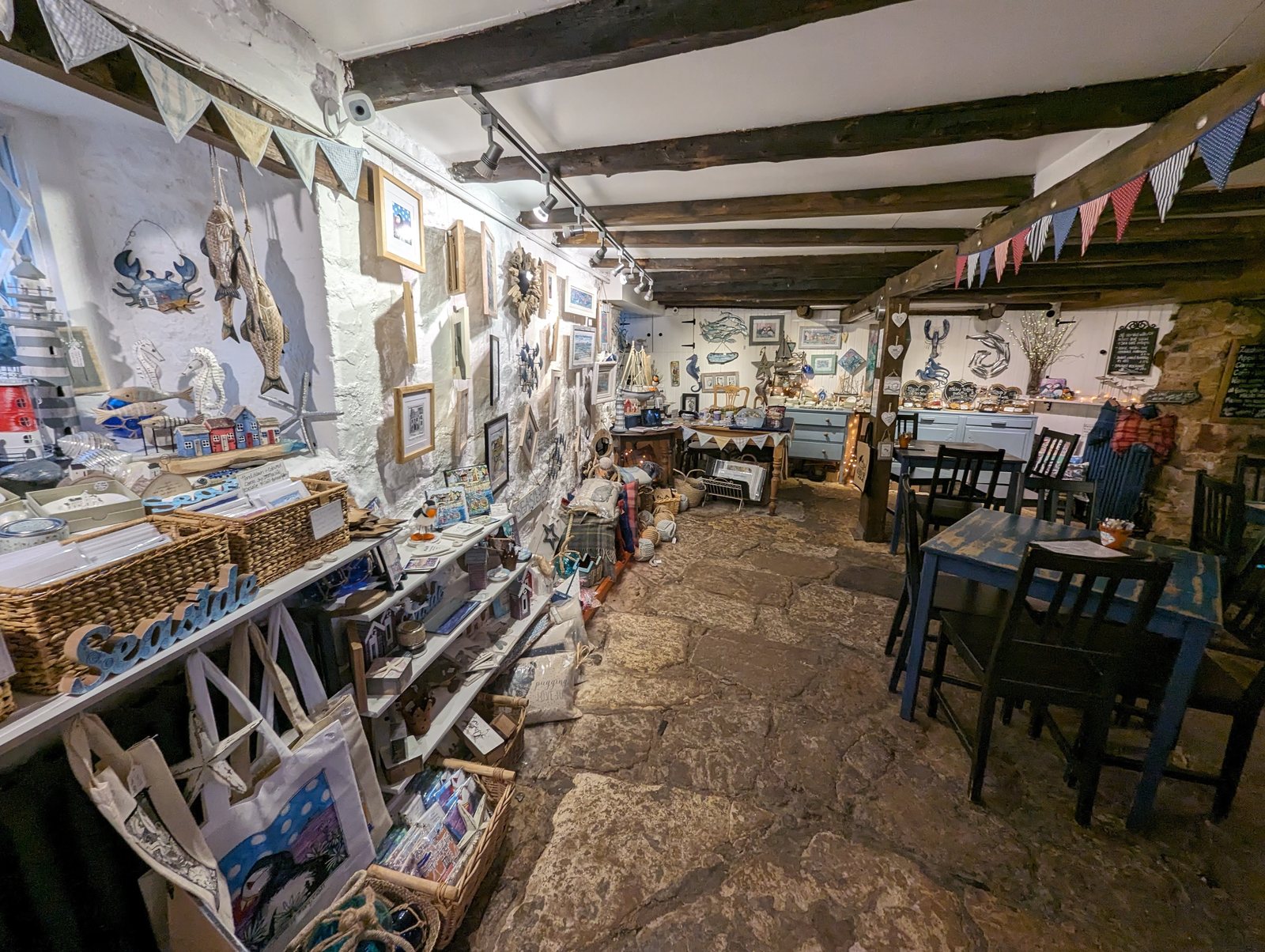
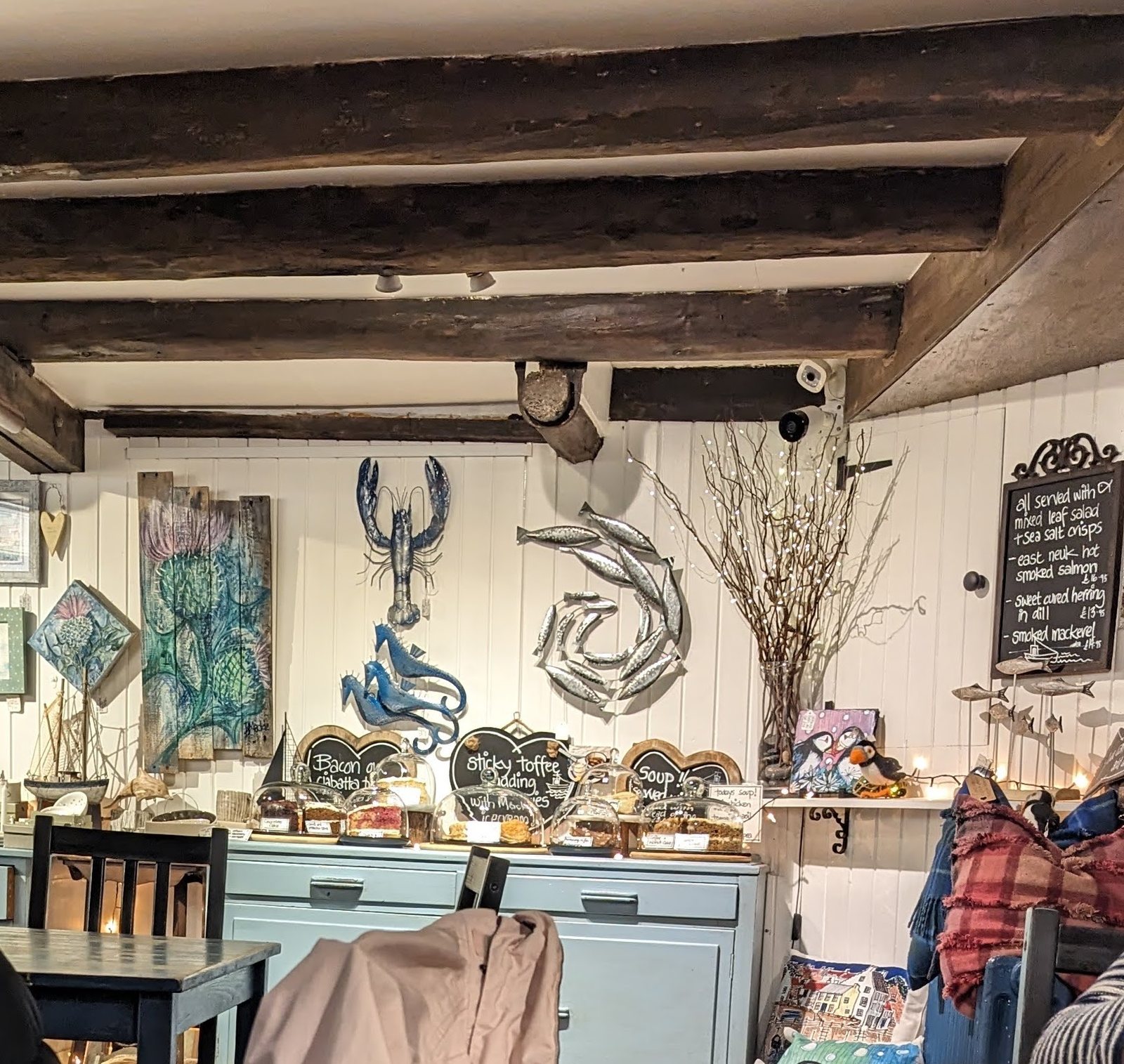
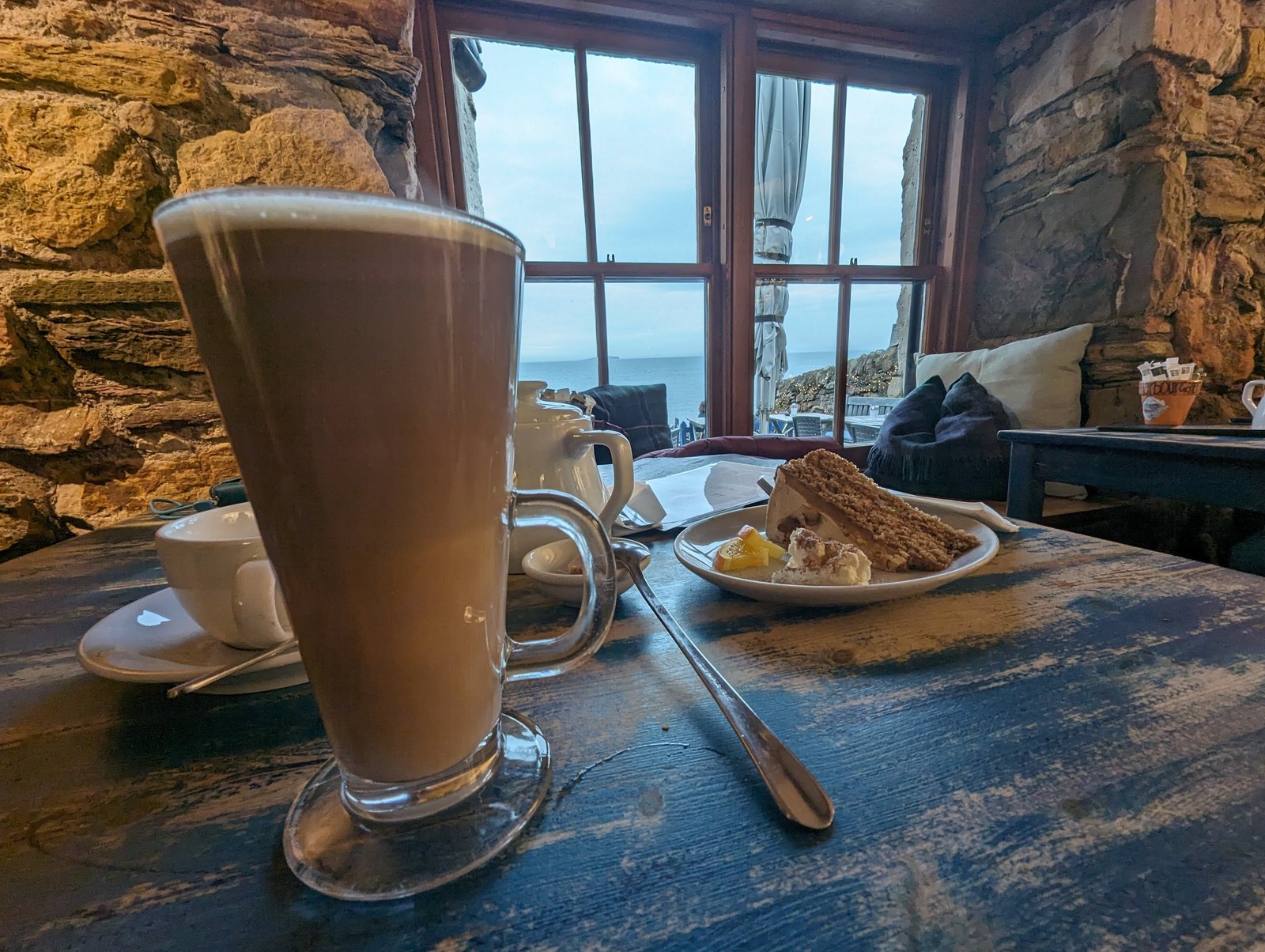
Right down on the Shoregate by the harbour we found a gem: the Crail Harbour Gallery & Tearoom, run by Alan and Deborah Stamper. It’s part little art gallery, part cosy tearoom, with tables built onto the old harbour wall and window seats looking straight out to sea. We had a grand latte and a cake there watching the boats — exactly the kind of place that makes a cold day by the water a pleasure.
Nearby — the East Neuk & beyond
- Anstruther — the East Neuk “capital,” with its fisheries museum and famous fish suppers, just west.
- St Monans & Pittenweem — more lovely fishing villages along the coast.
- Kingsbarns & St Andrews — round the coast to the north.
Sources
- First-hand: Kevin & family, Crail, 19 February 2024 (own photos); coffee at the Crail Harbour Gallery & Tearoom.
- Undiscovered Scotland, Wikipedia & Wikishire (royal burgh 1178, the Bruce’s Sunday market, the Marketgate & Tolbooth, the collegiate church & John Knox 1559, the Pictish cross-slab, HMS Jackdaw & the Cold War language school).