Glenfiddich Distillery, Dufftown: The World’s Best-Selling Malt — and a Cracking Day Out
Glenfiddich at a glance
| Region | Speyside (Dufftown, Moray) |
| Founded | 1886 — first spirit Christmas 1887 |
| Owner | William Grant & Sons (still family-owned) |
| Visitor centre | Yes — shop, café & tours |
| Tours | Daily tours & tastings; grounds free to wander |
| Opening | Open most of the year — check the website for current days & times |
| Website | glenfiddich.com |
Overview — a great day out
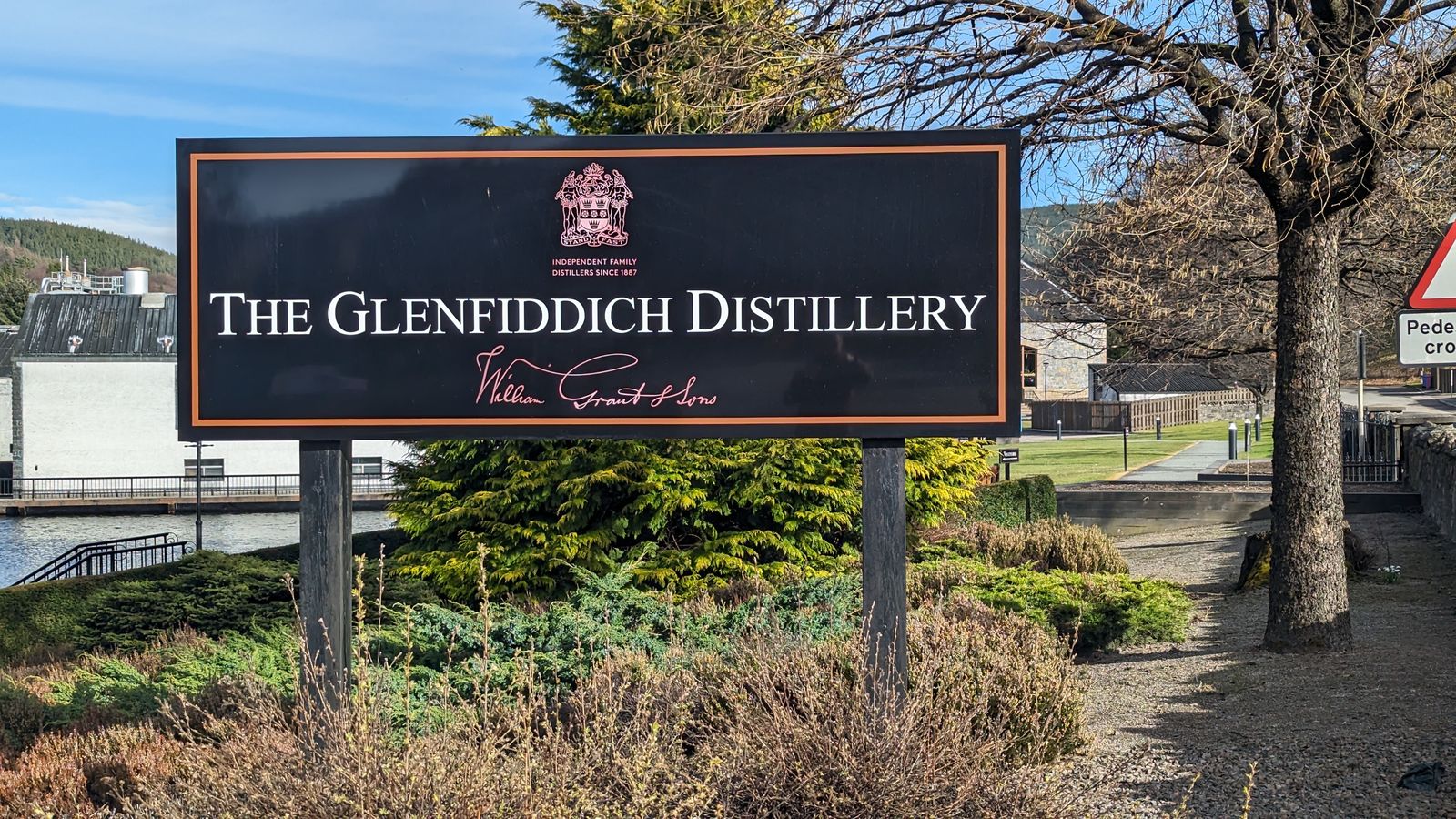
This was a proper good day out. Glenfiddich, in Dufftown, is the world’s best-selling single malt and one of the most famous distilleries on earth — but it’s also a genuinely lovely place to spend a day: free to walk into, with a beautiful stroll round the green grounds, the great ruin of Balvenie Castle next door, shaggy Highland cows in the fields, and the whisky town of Dufftown a stone’s throw away. We stayed the night nearby and did the distillery the next day.
The full history — from one man’s dream to the world’s best-seller
Glenfiddich — Gaelic for “valley of the deer” — was the work of one determined man. William Grant was a Dufftown book-keeper who had spent nearly twenty years learning every job in the trade at the neighbouring Mortlach distillery. Dreaming of making his own whisky, he saved for years, bought a set of second-hand stills from the Cardhu distillery for a few hundred pounds, and with the labour of his wife and their nine children built his distillery by hand, stone by stone, in the glen of the Fiddich. The first spirit ran from the stills on Christmas Day 1887.
For its first seventy years Glenfiddich was, like almost every malt of the age, sold mostly to blenders to disappear into blended Scotch. What changed everything — and changed the whole industry — came in the early 1960s, when William Grant’s great-grandson Sandy Grant Gordon took a radical gamble: to bottle Glenfiddich as a single malt and actively market it, first across the UK and then abroad. At the time hardly anyone outside Scotland drank single malt at all. Glenfiddich was the first Scotch single malt to be promoted internationally, and its now-famous triangular green bottle became the emblem of a category it more or less invented. The gamble paid off spectacularly: Glenfiddich grew to become the best-selling single malt whisky in the world, a position it has held for decades.
What makes Glenfiddich unusual today is what it has kept. It is still owned and run by the Grant family, through William Grant & Sons — one of the last of the big family firms in an industry now dominated by global drinks conglomerates. And it remains one of the very few distilleries in Scotland to keep its own on-site coppersmiths and cooperage, maintaining its stills and casks in-house, and to bottle its whisky at the distillery. From a book-keeper’s savings and a set of borrowed stills, the valley of the deer became a household name on every continent.
Where it is
Glenfiddich sits on the edge of Dufftown, in Speyside (Moray) — the self-styled “malt whisky capital” of Scotland, with more working distilleries per square mile than anywhere on earth. It’s a stop on the official Malt Whisky Trail.
The distillery
Glenfiddich was hand-built by William Grant in 1886, with the help of his seven sons and two daughters, and the first spirit ran on Christmas Day 1887 — his stated aim was simply to make “the best dram in the valley.” Remarkably, it is still entirely family-owned (by William Grant & Sons) to this day. It made history in 1963 as the first distillery to market a “Single Malt” for export — effectively inventing the category the whole world now knows — and it’s been welcoming visitors since 1969.
What really sets Glenfiddich apart is that it stayed in the family. Where almost every other Scottish distillery was swallowed by the big drinks conglomerates, Glenfiddich remained with the Grants — a branch of Clan Grant, the ancient Highland house of Strathspey whose war-cry, “Stand Fast, Craigellachie!”, still echoes across Speyside. It was William Grant’s grandson, Sandy Grant Gordon, who took the bold step in the 1960s of selling Glenfiddich as a single malt in its own right — at a time when almost all malt whisky disappeared anonymously into blends — and in doing so opened the door to the entire single-malt world we know today. Some of the whisky is still married in a great Solera vat that is never fully emptied, so every bottle carries a little of what came before.
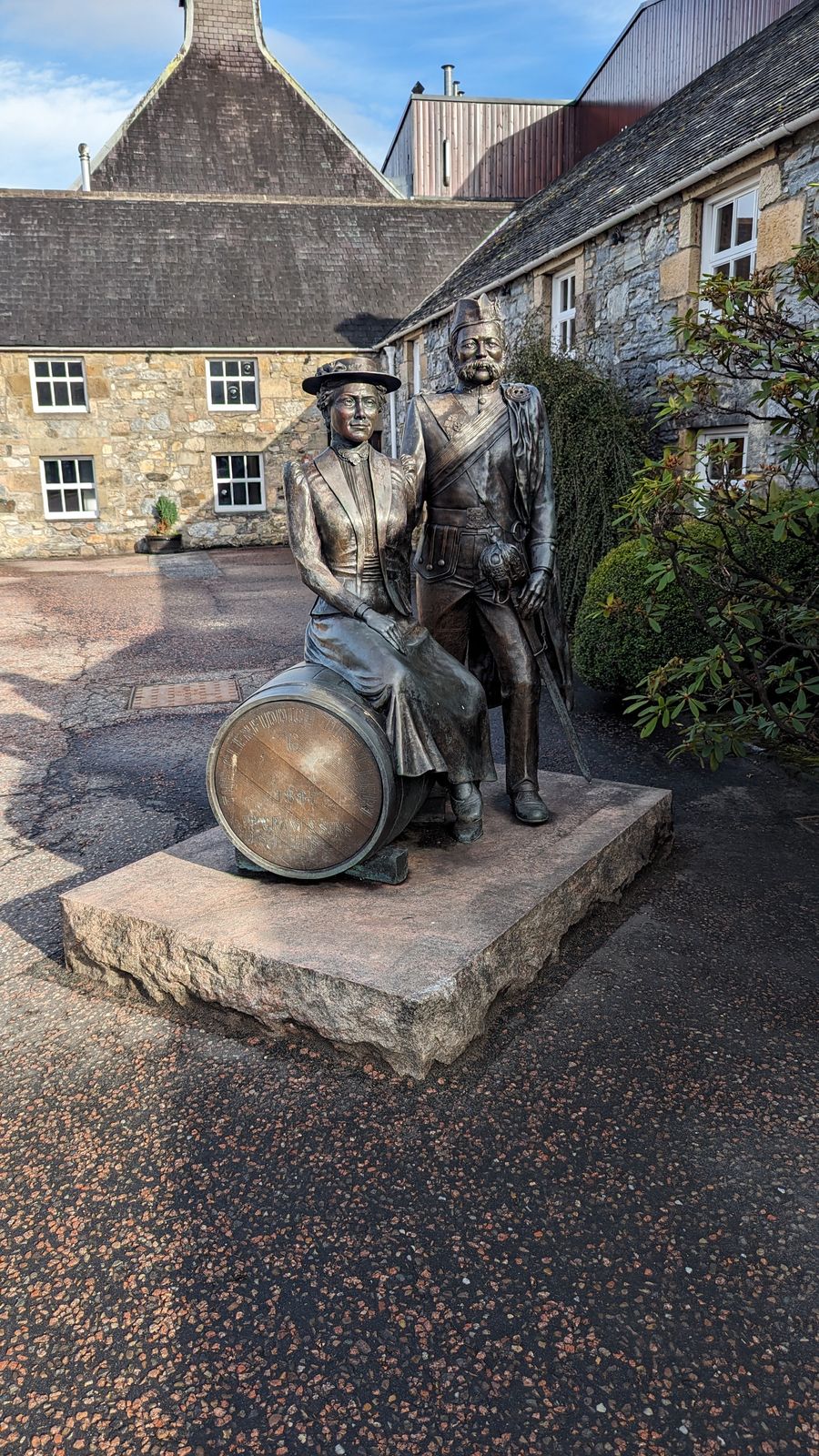
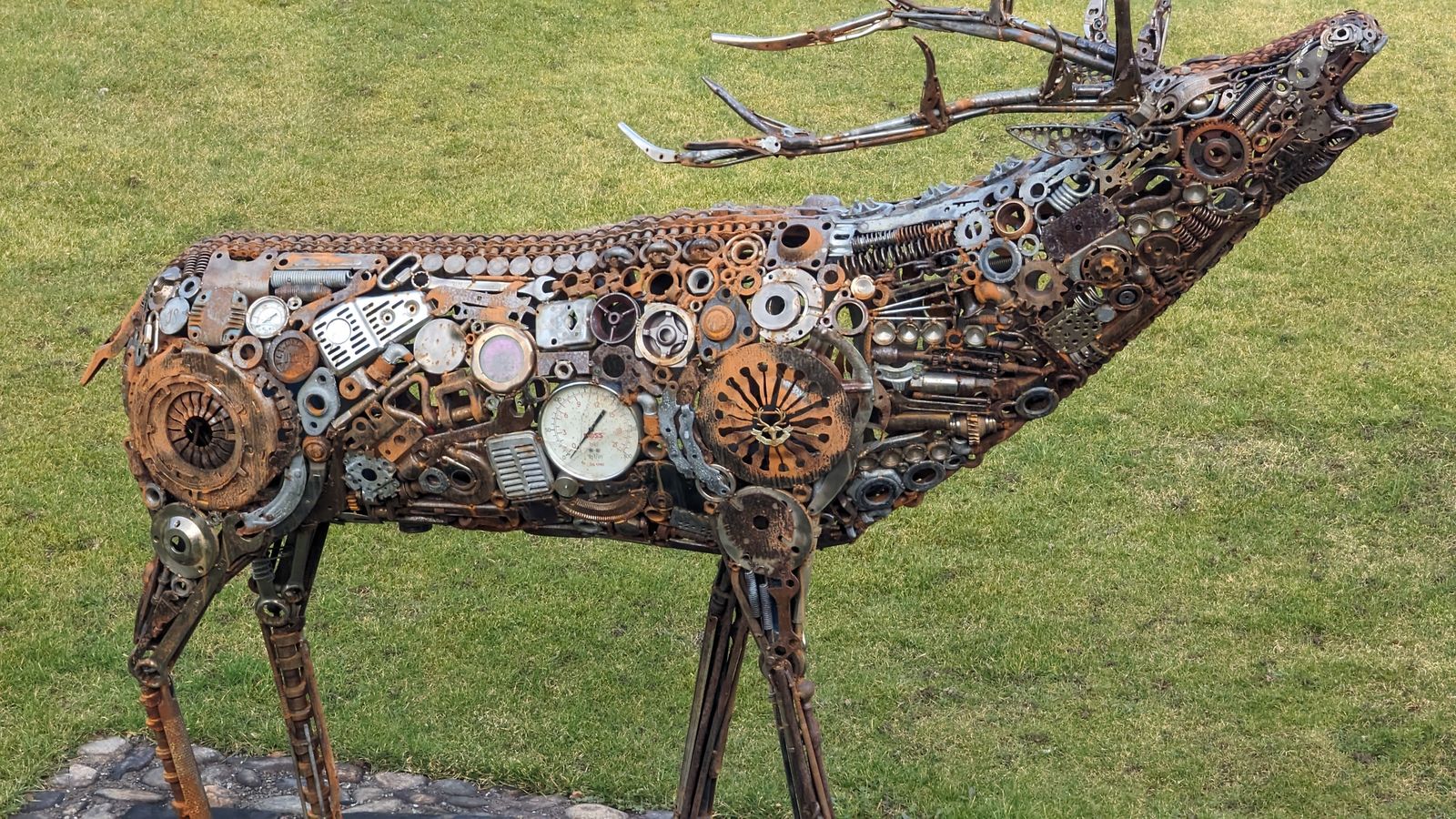
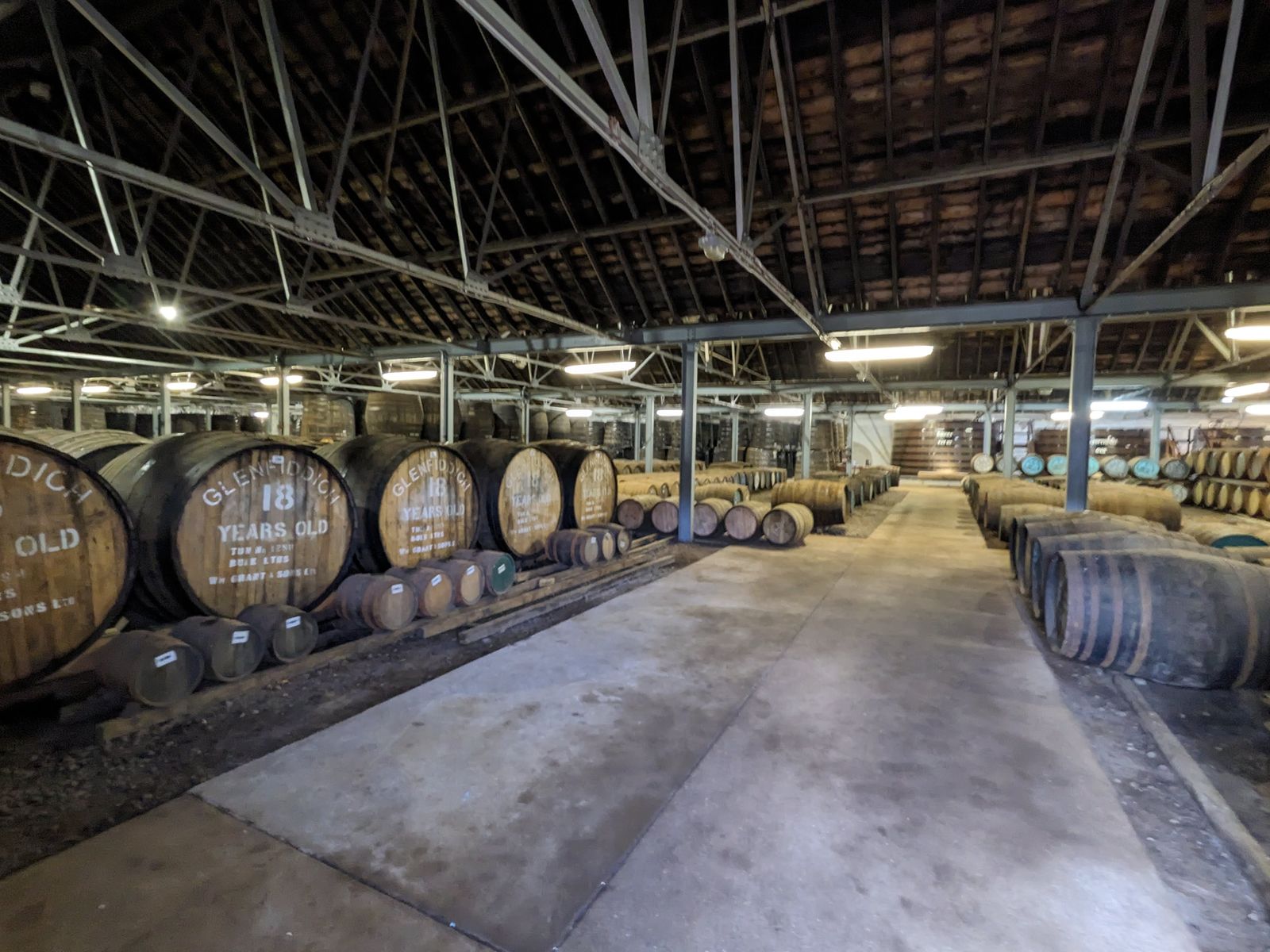
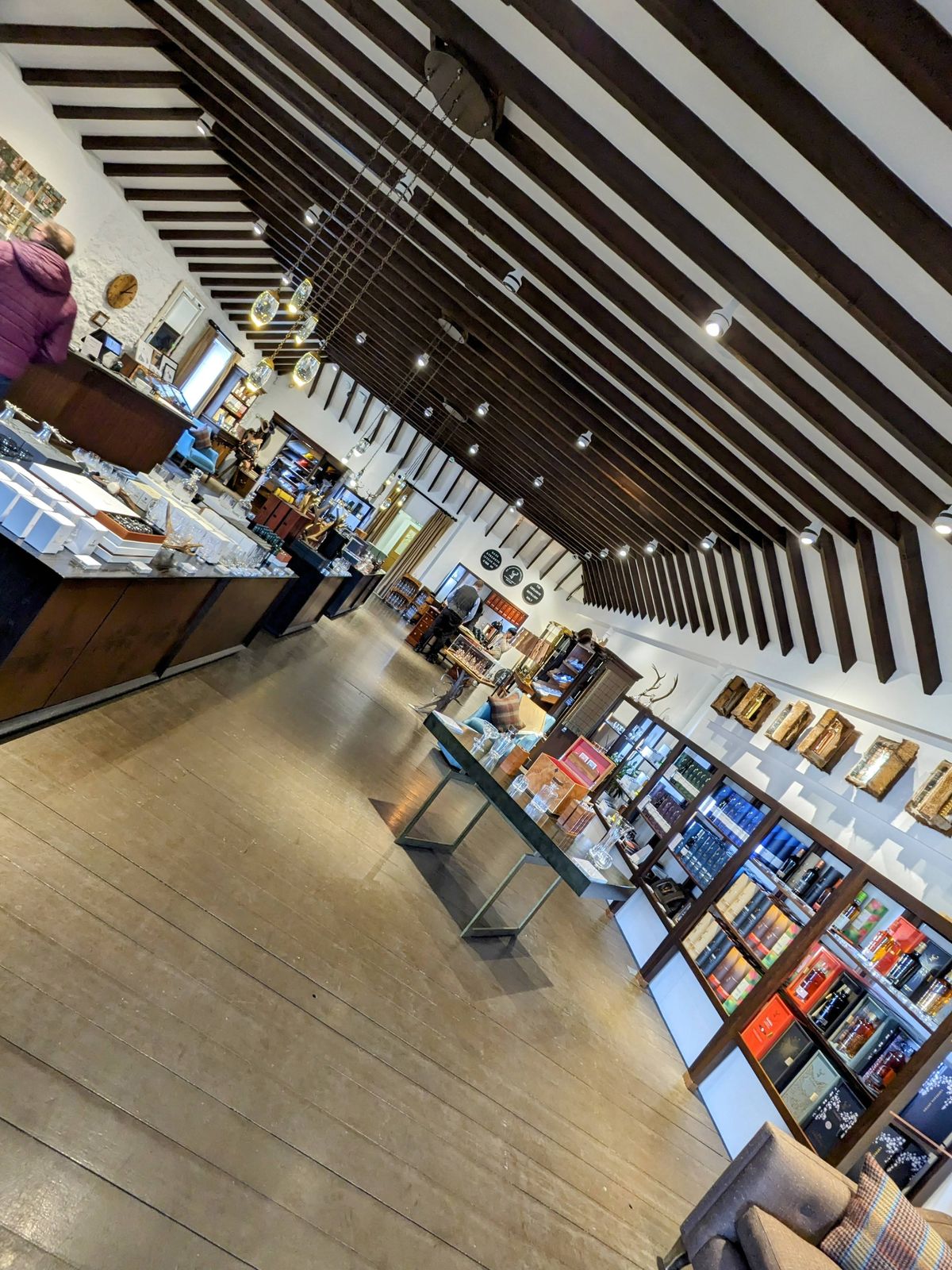
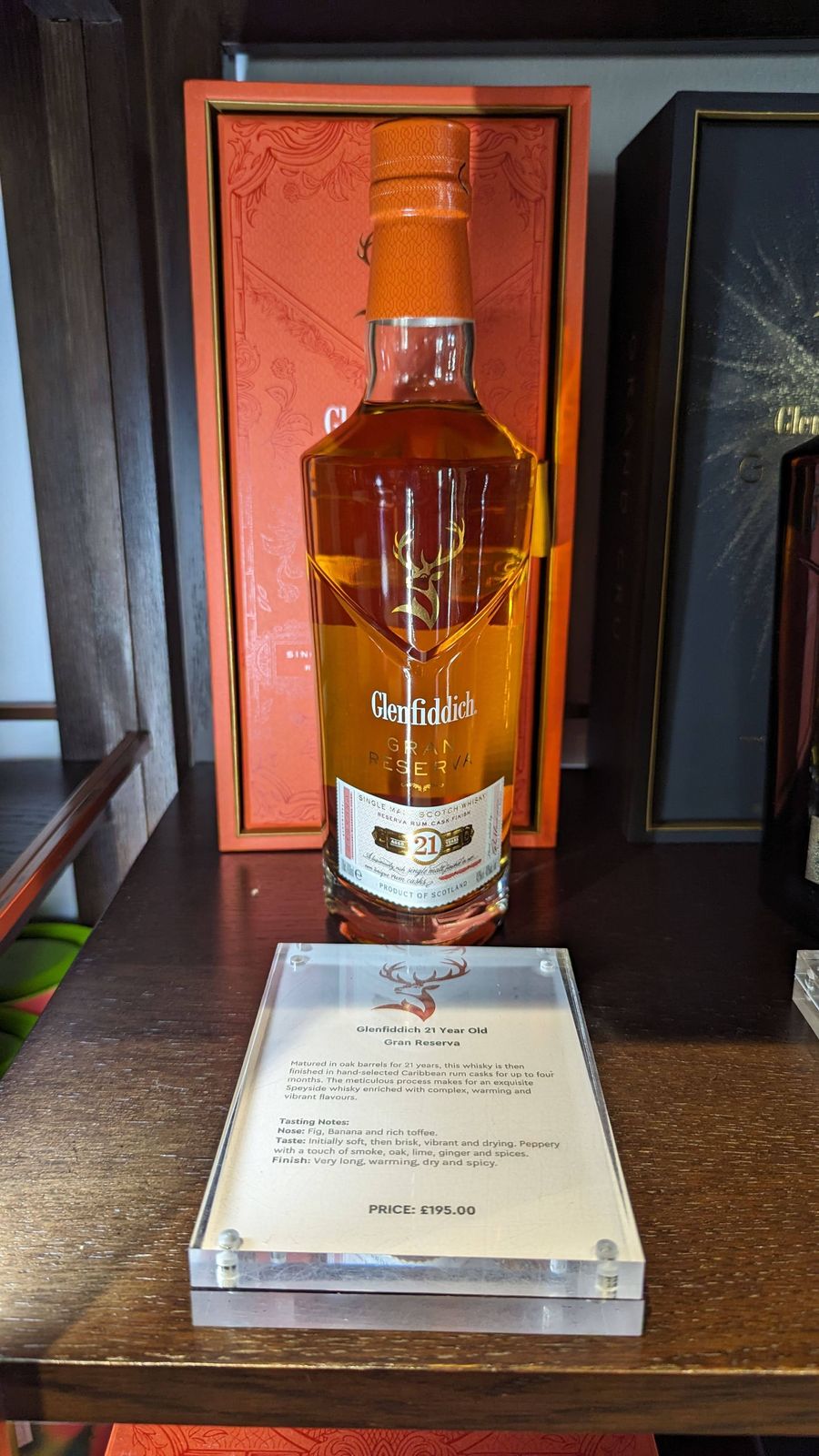
You can wander the courtyards past the pagoda-roofed buildings, see the warehouses where casks sleep for years, and browse a shop that runs from an everyday dram to bottles that cost more than a car. Keep an eye out for the Glenfiddich stag, sculpted from reclaimed metal.
One of ours
Fittingly, one of the bottles in our own collection is a Glenfiddich — the smoky-sweet experimental Fire & Cane.
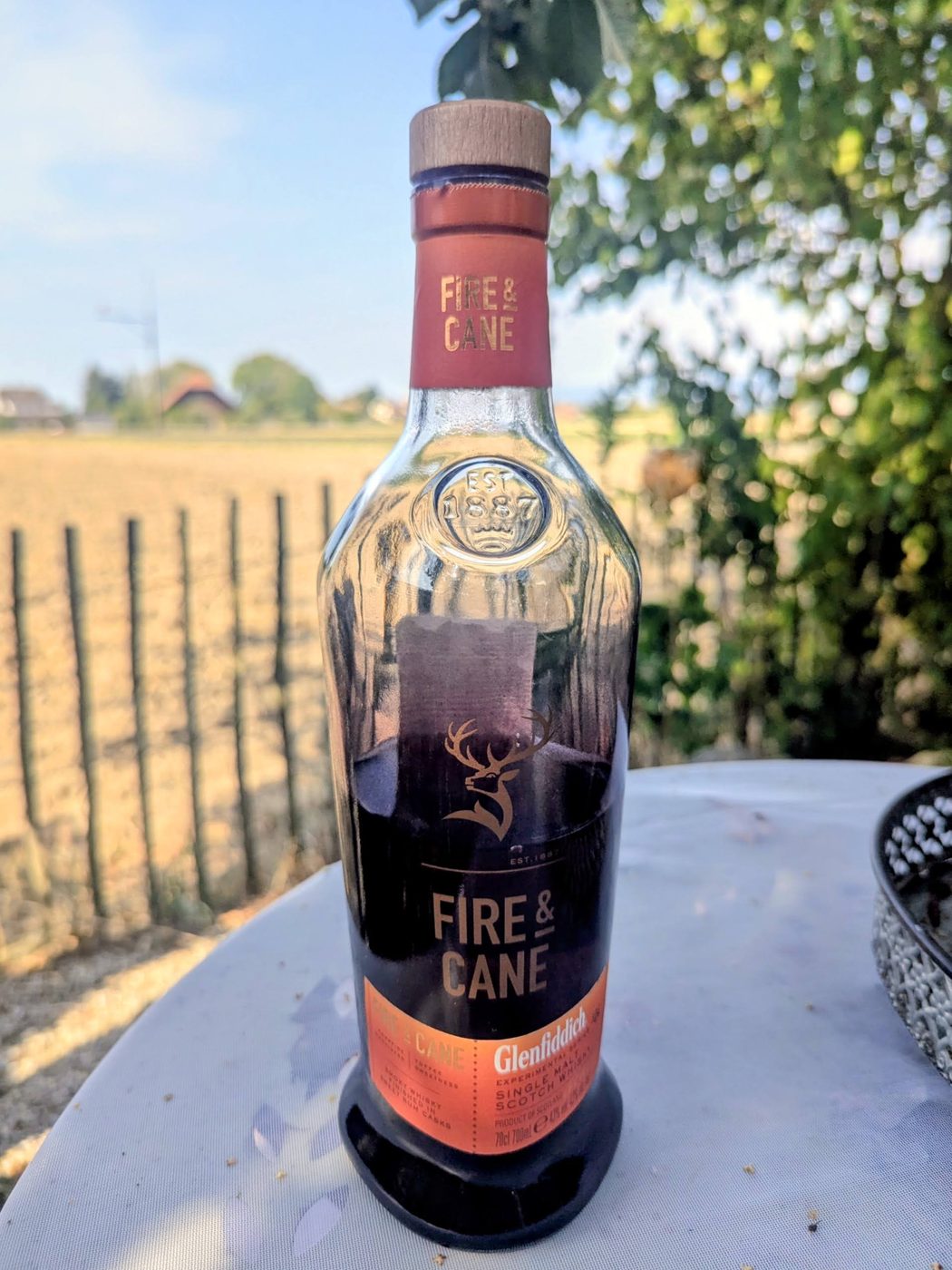 🥃 OUR OWN BOTTLE
The walk round the grounds
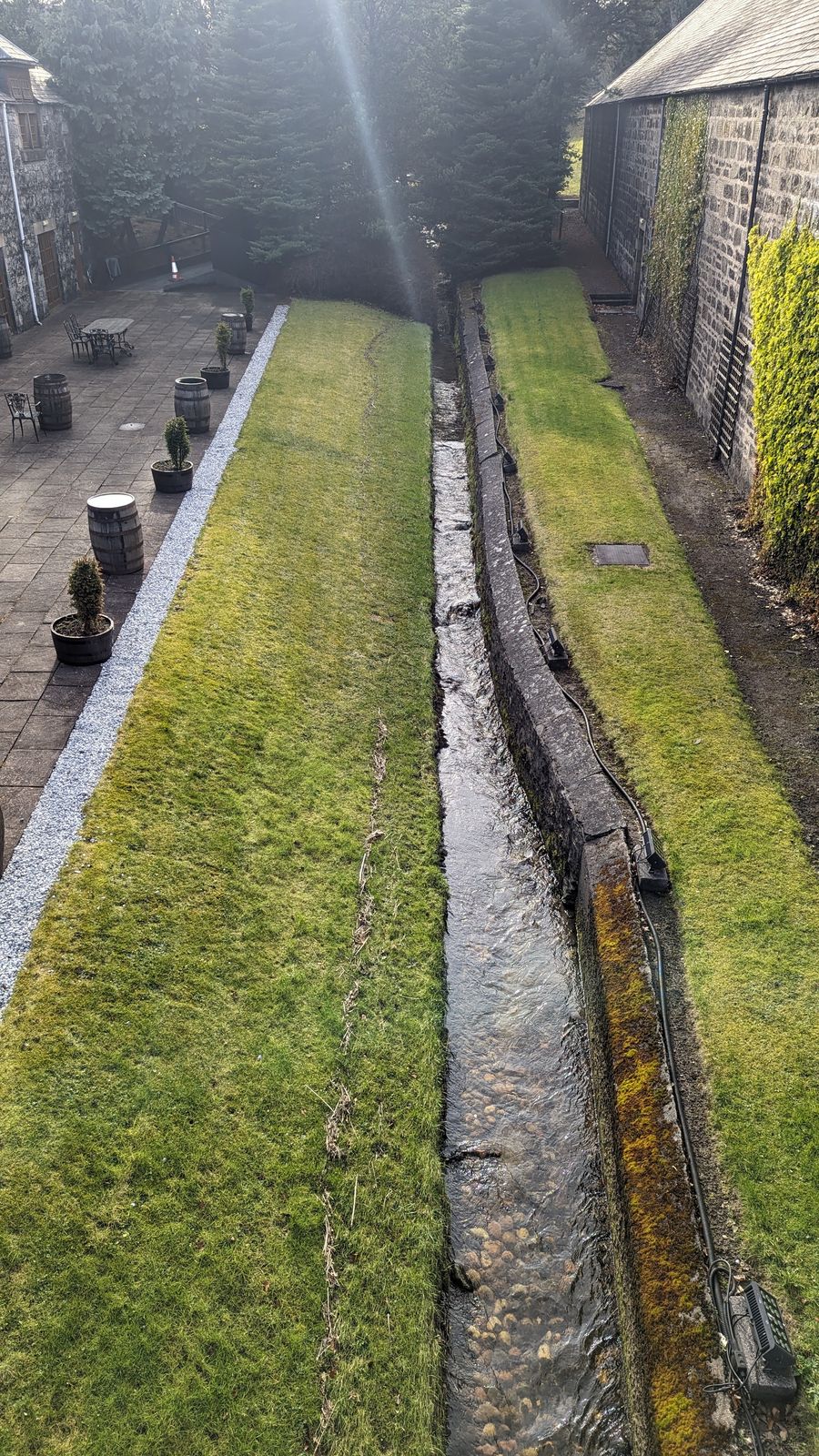
The best bit of the day, honestly, was the walk round the green grounds — following the lade and paths among the buildings and out into the fields, with the Highland cows for company. Here’s roughly where it all is (distillery, grounds and Balvenie Castle):
Balvenie Castle
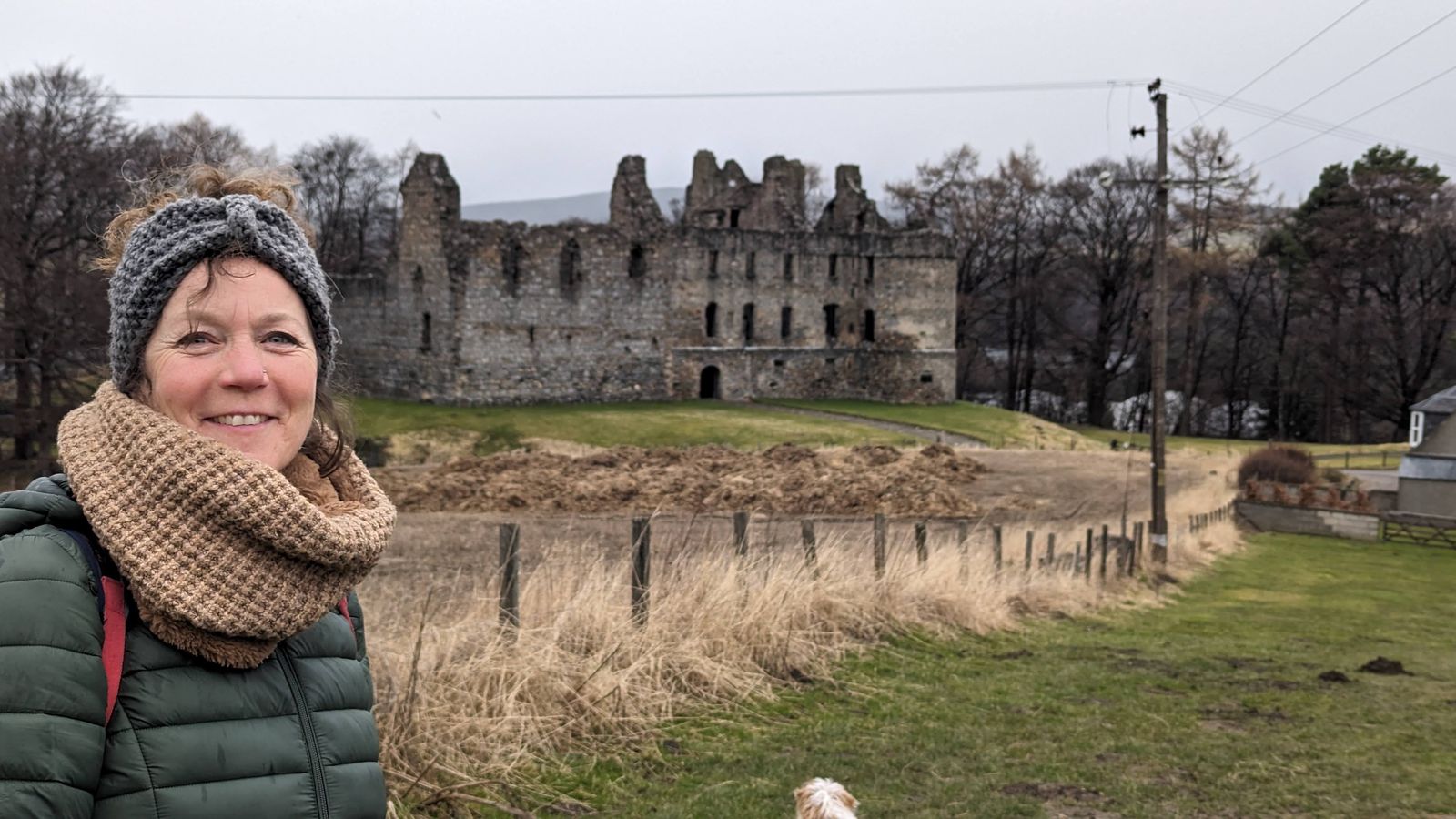
Right beside Glenfiddich stands Balvenie Castle — a substantial moated courtyard ruin that began with the Comyns in the 13th century and passed to the Black Douglases and then the Stewart Earls of Atholl. It even hosted Mary, Queen of Scots in 1562. It’s cared for by Historic Environment Scotland (seasonal, low-cost entry) and makes a perfect add-on to the distillery — we’ve given it its own page: Balvenie Castle — the full story, part of our Castles of Scotland collection and tied to the mighty Clan Douglas who once held it.
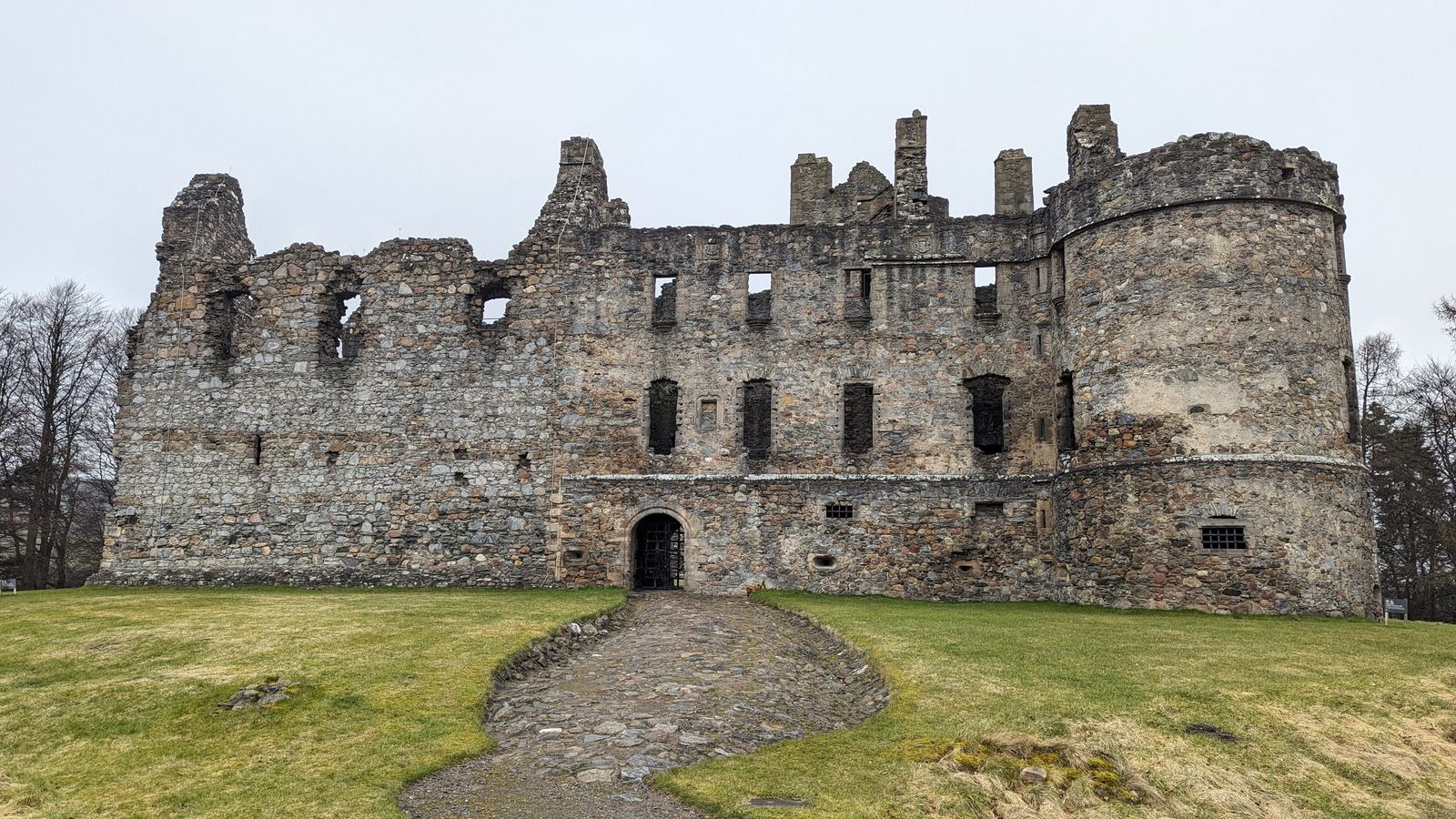
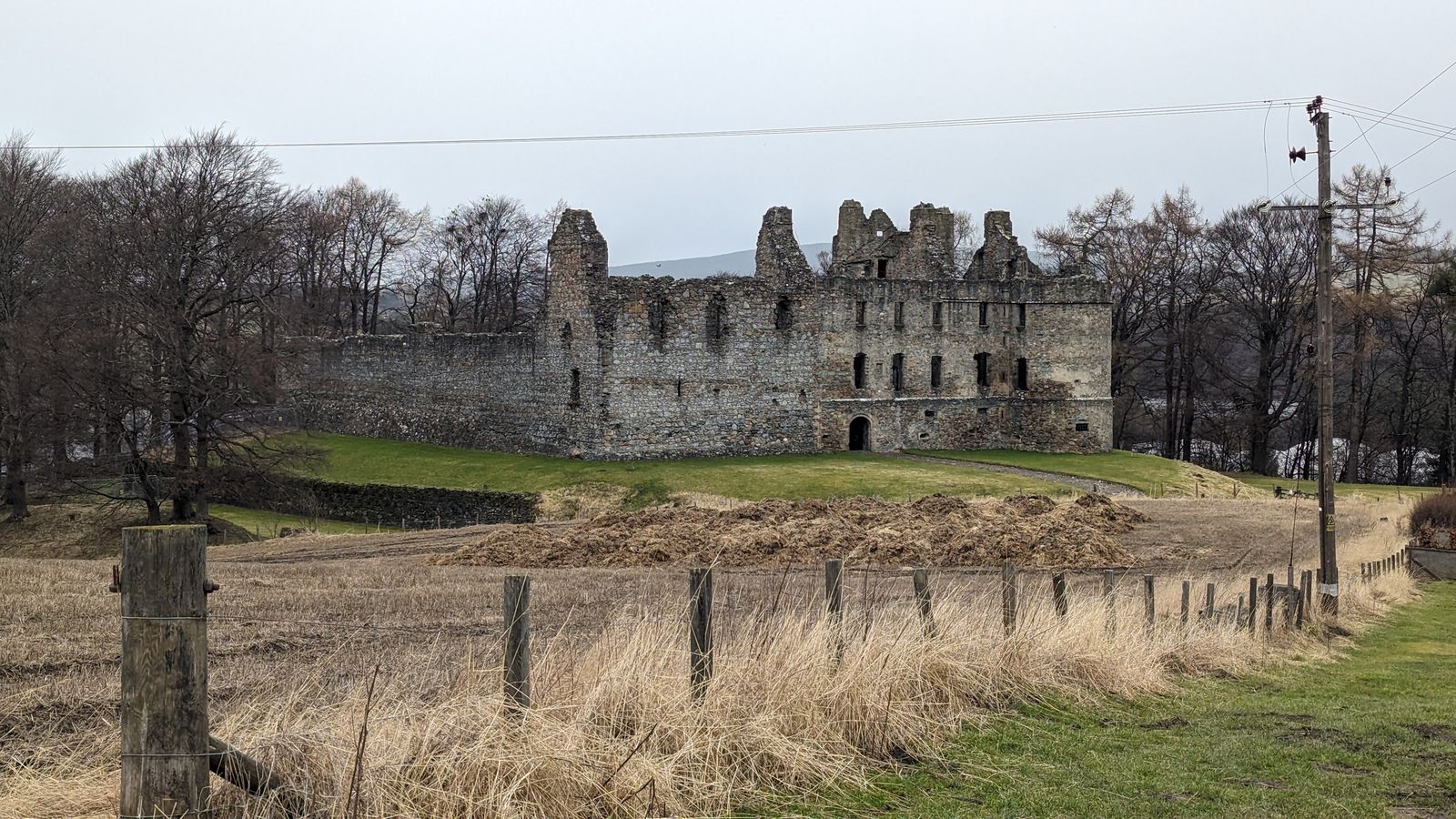
Highland cows & Dufftown
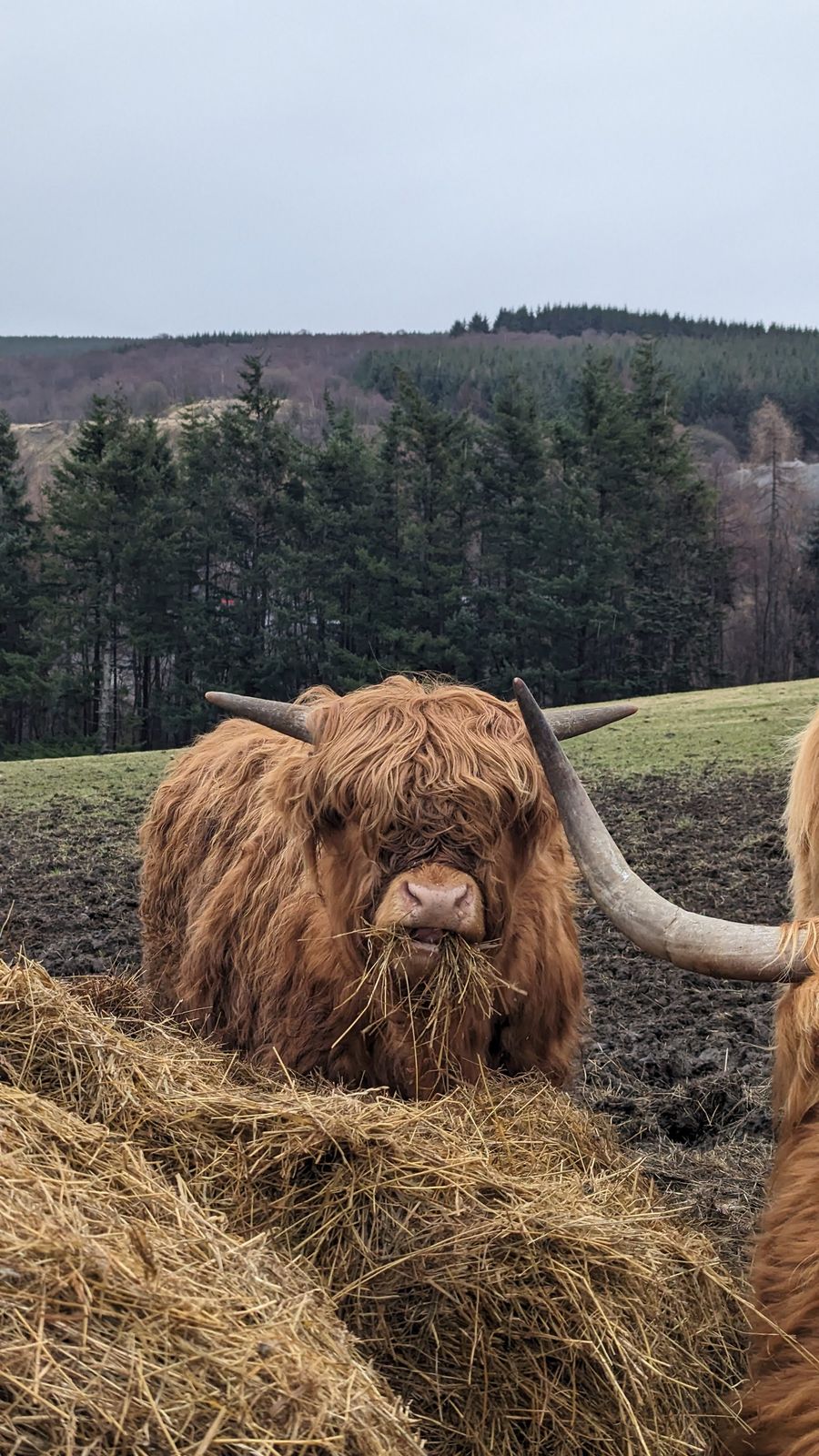
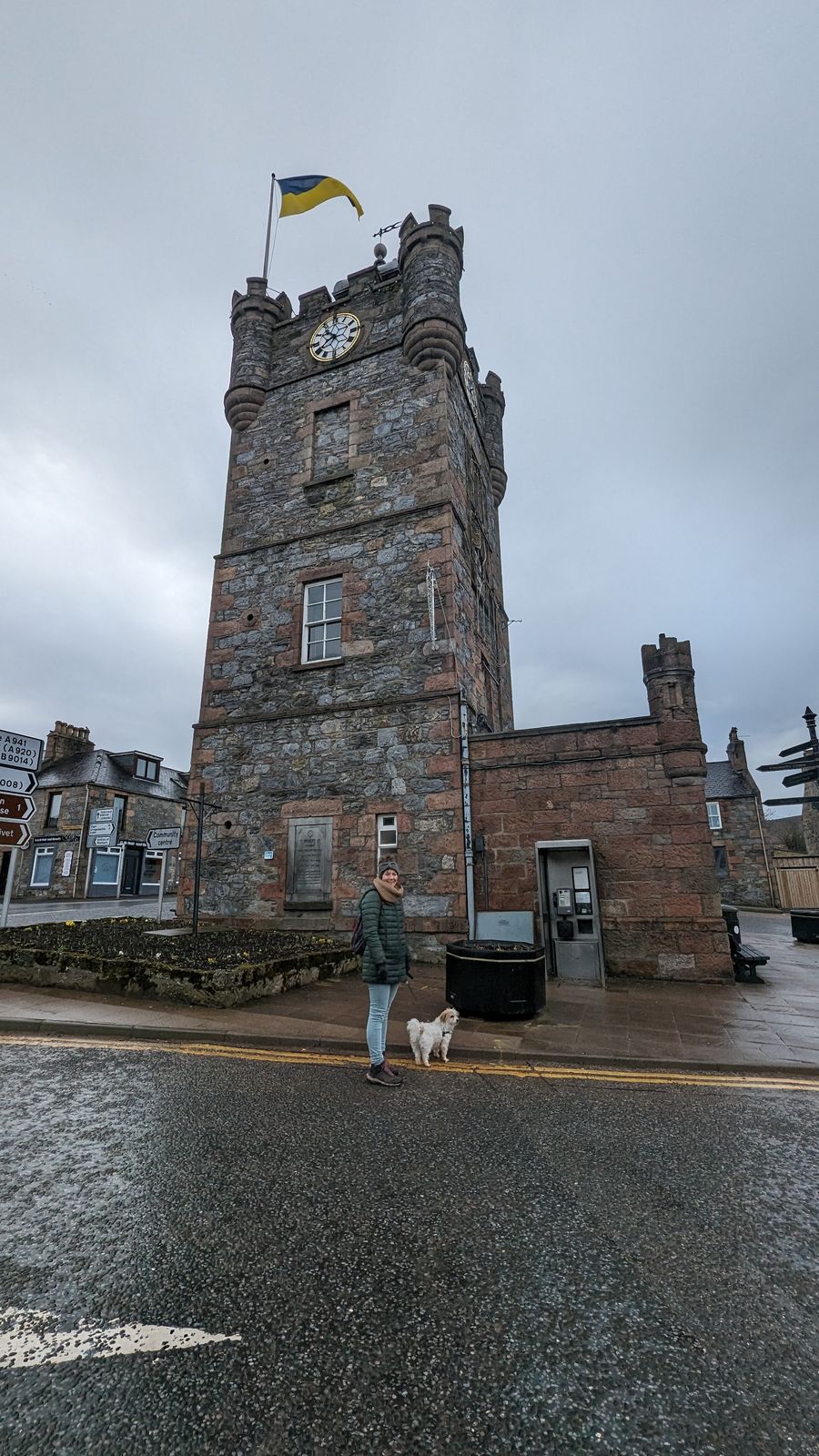
The fields around are dotted with proper shaggy Highland cows, and the town of Dufftown itself — gathered round its handsome Victorian Clock Tower — is the beating heart of Speyside whisky, surrounded by famous names and the Speyside Cooperage just up the road.
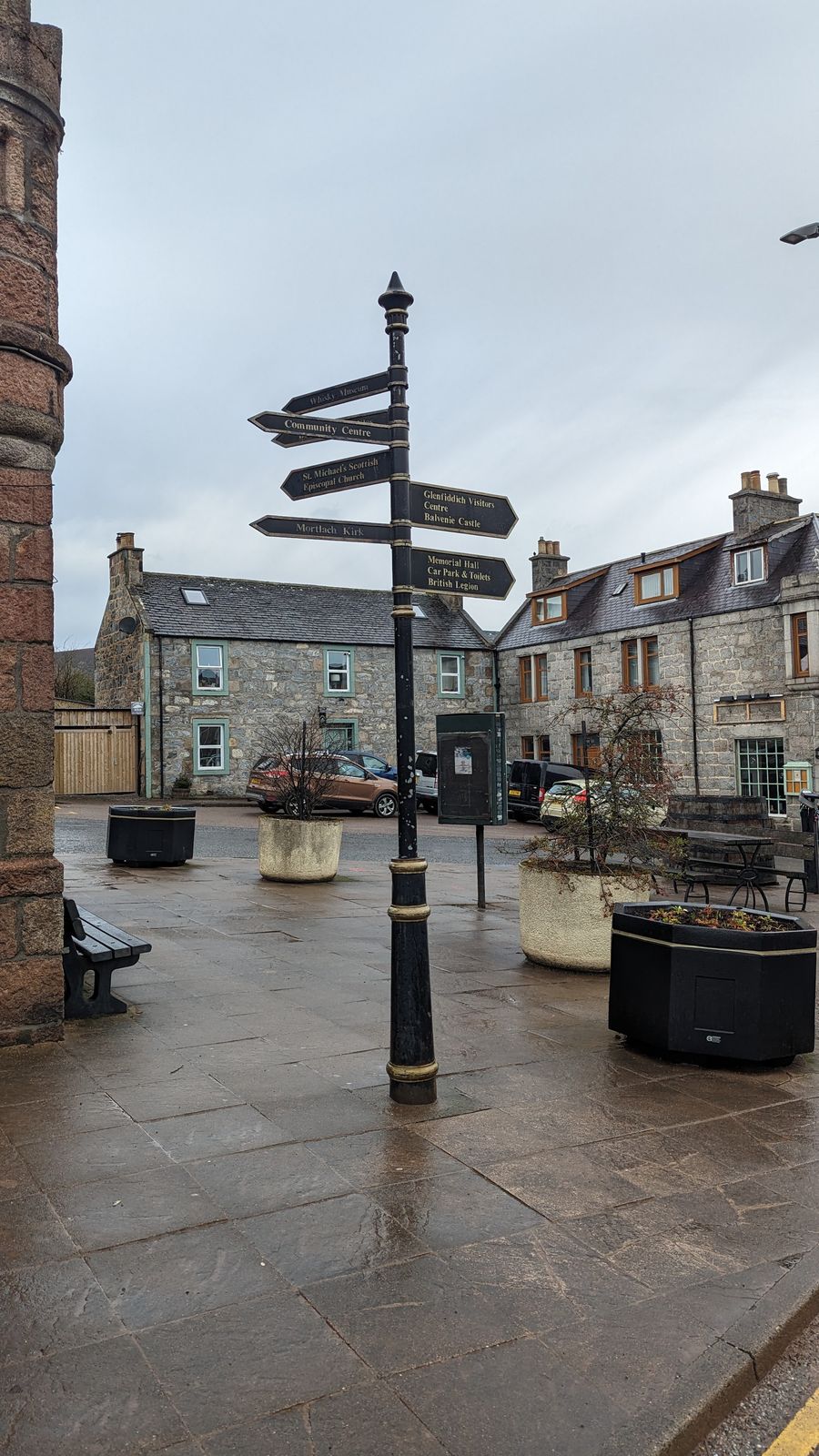
Overnight — the honest bit
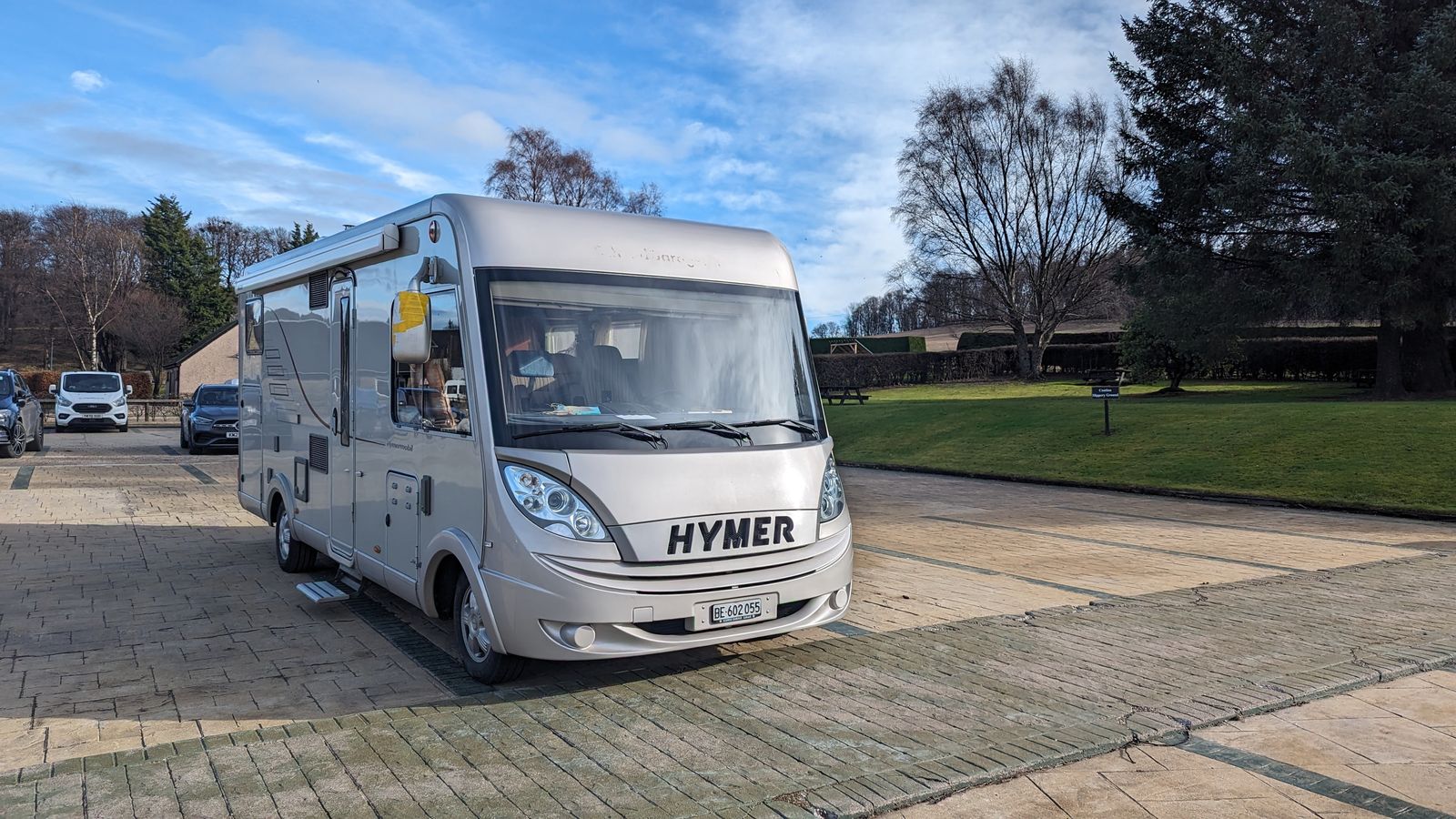
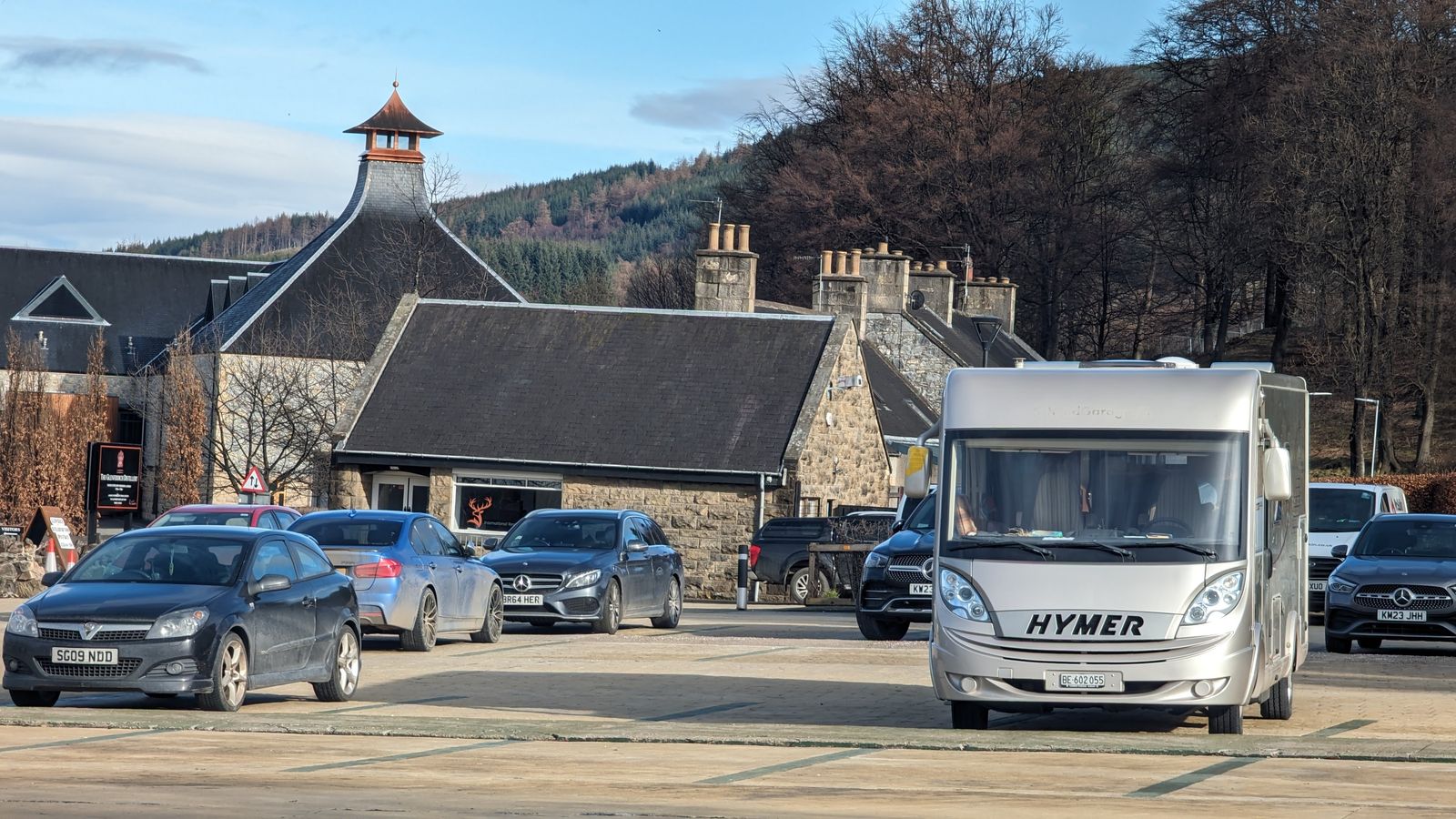
We spent the night before in the local car park, and had a smashing fish supper from the takeaway van parked up there of an evening — with public toilets right on hand, which makes it a genuinely handy overnight. Full honesty, mind: not everyone was thrilled to see us. We got a bit of a moan off a couple of whingy school-run mums — even though the car park was barely half full and we were doing no harm to anyone. It didn’t spoil a thing. As always, read the signs, keep it tidy and be considerate, and you’ll be fine.
Nearby & more whisky
- The neighbour you can’t tour: Glendullan — Dufftown’s quiet production distillery.
- Speyside is stitched together by the Malt Whisky Trail — seven working distilleries plus the Speyside Cooperage.
- More of our own drams and distilleries: Glen Scotia, Springbank and Campbeltown, and Oban.
- Next door: Balvenie Castle — and the family behind it all, Clan Grant.
Sources
- Glenfiddich & Wikipedia (history, 1887, the single-malt category).
- Visit Moray Speyside & the Malt Whisky Trail.
- Everything first-hand is from our own February 2024 visit.