
Clan Douglas: The Mighty House of Tantallon
The clan by the numbers
| First on record | William de Douglas, charter witness c. 1175–99; Sir James “the Black” Douglas (d. 1330), Bruce’s lieutenant |
| Standing | At their height the Black Douglases were the mightiest noble house in Lowland Scotland — near-royal — until forfeited in 1455 |
| People bearing the name today | ~8,800 in Scotland, ~254,000 worldwide (estimate) |
Douglas is a Lowland/Borders family, absent from the Highland muster lists, so no clan-strength number exists — their power was measured in earldoms and armies, not a levy.
Overview — for a while, the most powerful family in Scotland
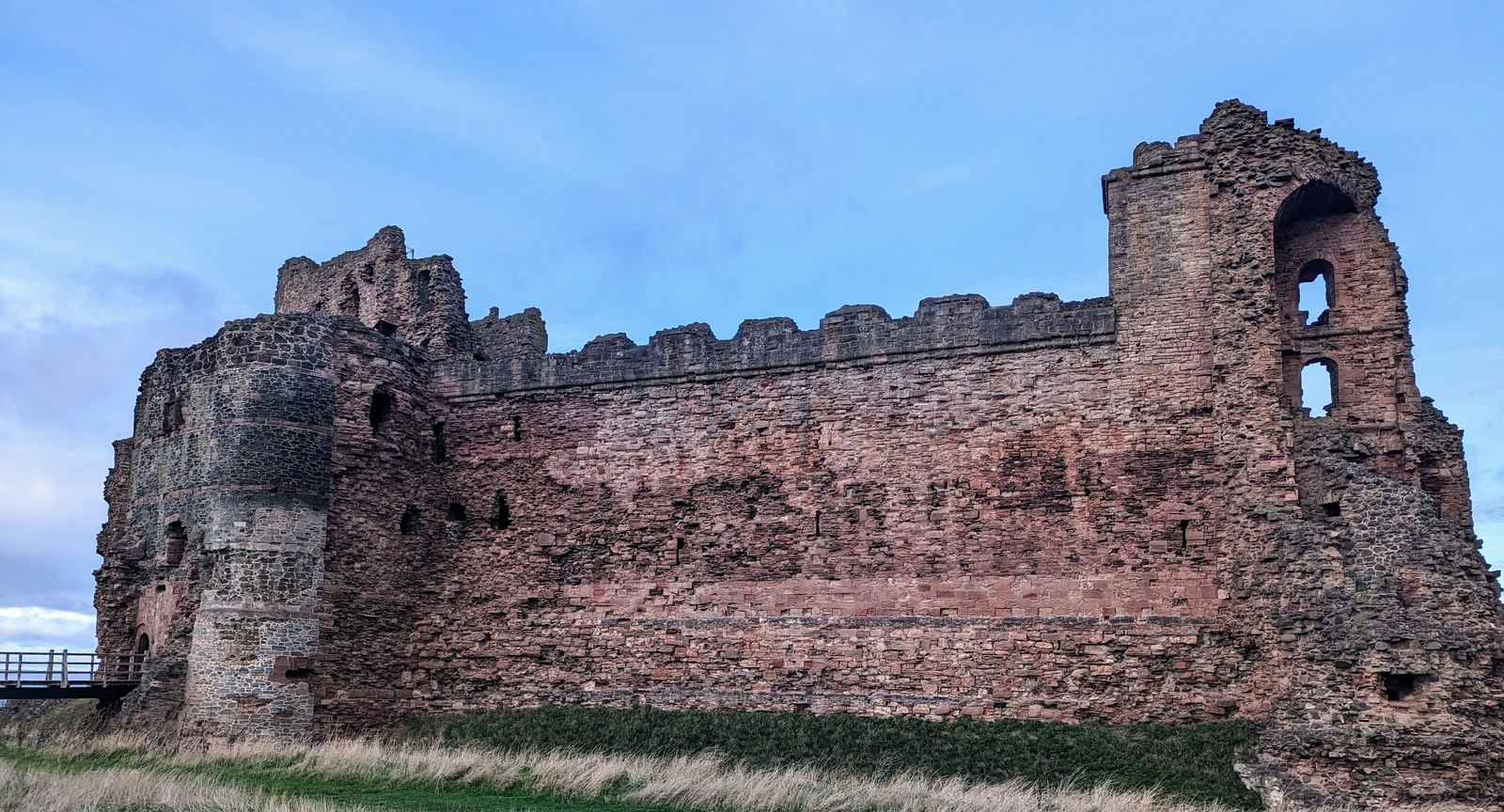
Clan Douglas was, at its height, so powerful it frightened kings. For much of the later Middle Ages the Douglases rivalled the crown itself, and their great East Lothian fortress — Tantallon Castle, on the cliffs by the North Berwick coast — was one of the mightiest strongholds in the land, glaring across the water at the Bass Rock.
The Black Douglases & the Red
The clan’s founding hero was Sir James Douglas — “the Good Sir James,” the Black Douglas — the fearless lieutenant of Robert the Bruce, who carried the king’s heart on crusade. His descendants, the “Black Douglases” (Earls of Douglas), grew so mighty that they were finally broken by James II — including the infamous “Black Dinner” (1440) and the king’s own murder of the 8th Earl in 1452. Power then passed to the “Red Douglases,” the Earls of Angus, who held Tantallon — a castle so strong it inspired the old saying, “Ding doon Tantallon? Mak a brig to the Bass!” (i.e. impossible). The clan motto is “Jamais arrière” — “Never behind.”
And they weren’t only an east-coast family. A separate, loyal branch — the Douglases of Lochleven (later Earls of Morton) — held the island fortress of Loch Leven Castle in Kinross-shire for some 300 years, and it was they who were handed the crown’s most famous prisoner: Mary, Queen of Scots.
Douglas country on our travels
- Tantallon Castle — the Red Douglas curtain-wall fortress facing the Bass Rock, near North Berwick.
- Loch Leven Castle — the island prison of Mary, Queen of Scots, held for 300 years by the Douglases of Lochleven.
← Back to Scottish Clans · see also the Castles of Scotland.
The fall of the Comyns
Among the lands the Douglases gained as Robert Bruce triumphed were parts of the forfeited Comyn earldom of Buchan, laid waste in the Harrying of Buchan (1308).
Battles — won and lost
The most notable actions the clan fought, and how they ended:
- Halidon Hill (1333) — vs the English — LOST
- Otterburn (1388) — vs the English (“dead Douglas won the field”) — WON
- Homildon Hill (1402) — vs the English (4th Earl captured) — LOST
- Verneuil (1424) — vs the English, in France (4th Earl slain) — LOST
- Sark (1448) — vs the English — WON
- Arkinholm (1455) — vs the Crown & the Red Douglases (Black Douglas power ends) — LOST
The Black Douglases fell in 1455; the Red Douglases (Earls of Angus) rose in their place — and at Arkinholm fought against their own cousins.
The clan lands
Orange markers = the clan’s chief castles, seats and territories; where we have a page, they link through.
Explore Scottish Outposts
Clans · Whisky · Castles · Lochs · Kirks & Cathedrals · Standing Stones · Metal Detecting · Trips So Far
Sources
- First-hand: our own travels on the East Lothian coast (own photos)
- Clan Douglas — Wikipedia · Tantallon Castle — Wikipedia