Mortlach Distillery, Dufftown: The Beast of Dufftown
Mortlach at a glance
| Region | Speyside (Dufftown, Moray) |
| Founded | 1823 |
| Owner | Diageo |
| Visitor centre | No — production-only (private tours by arrangement) |
| Tours | No public tours |
| Opening | Not open to the public |
| Website | malts.com |
Overview
Mortlach is where Dufftown’s whisky story begins. It was licensed in 1823, the first legal distillery in a town that now calls itself the malt whisky capital of the world. Its spirit is so rich and heavy that the trade calls it “the Beast of Dufftown”. The weight comes from a unique, part-triple distillation known as “2.81 times distilled”, from old-fashioned worm tub condensers, and from a tiny still nicknamed the Wee Witchie.
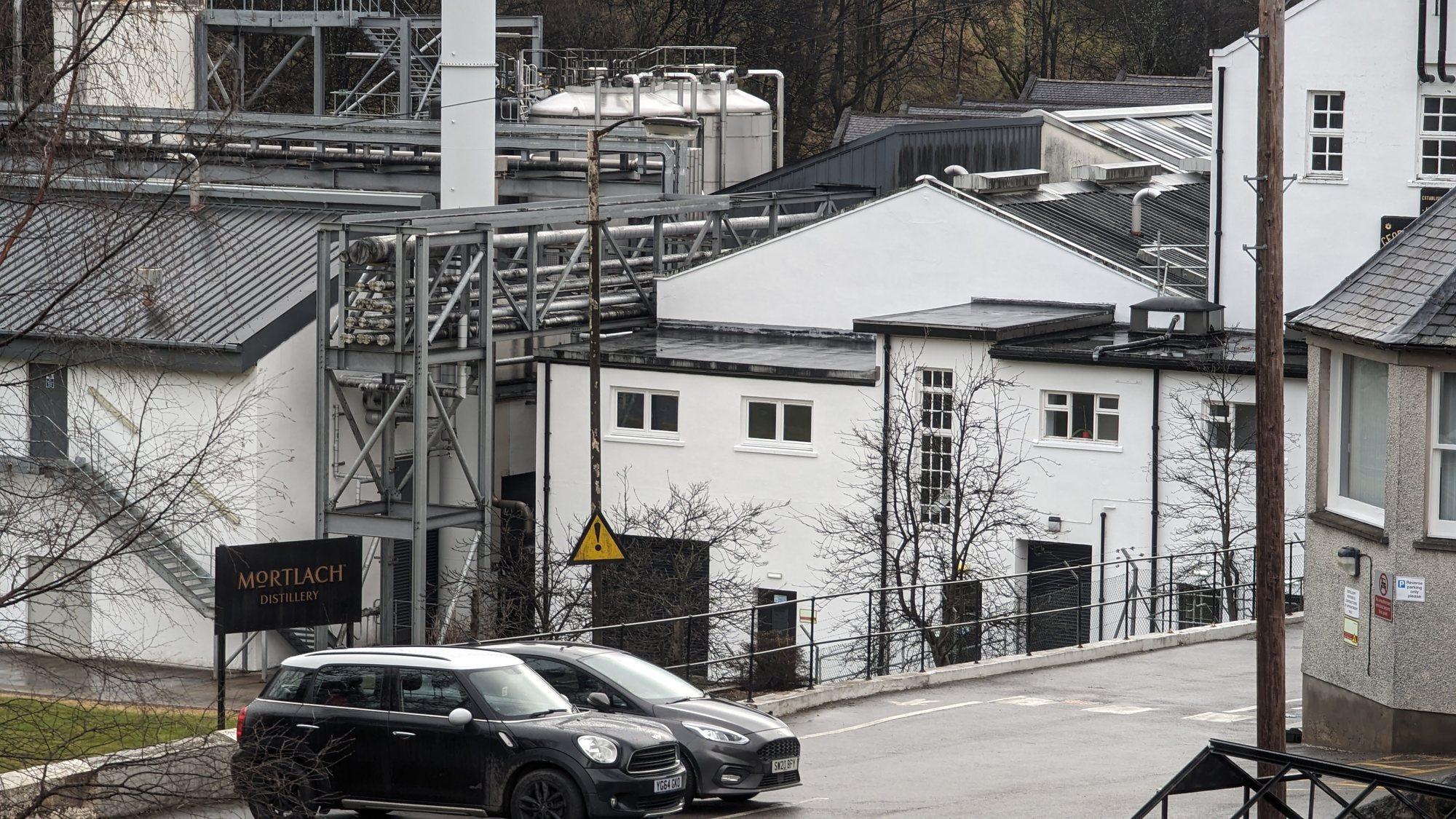
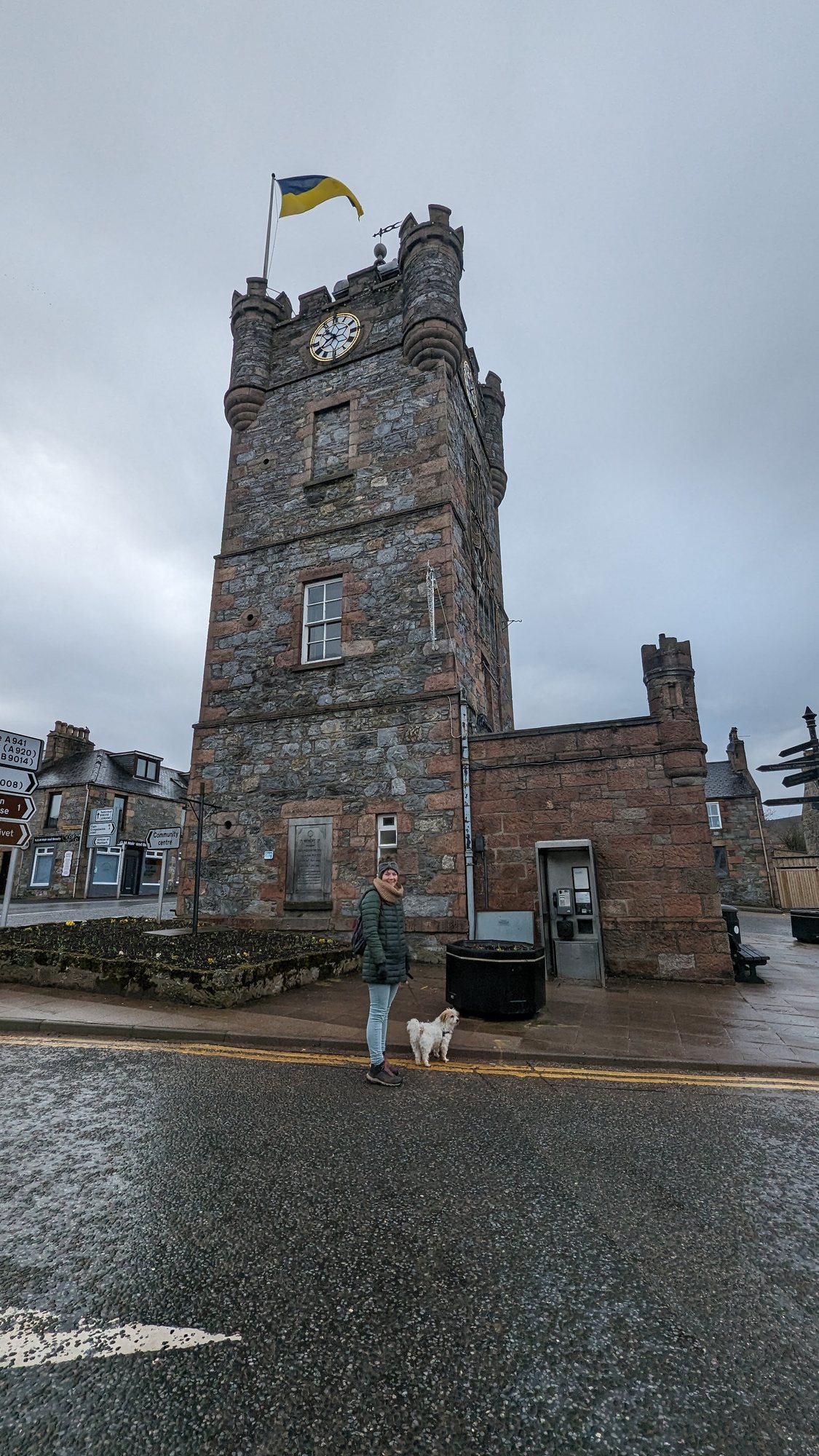
It is also a distillery you can only look at. Mortlach has no visitor centre and no public tours. Its whitewashed stillhouse stands right by the road down to the Dullan Water, a few minutes’ walk from the Clock Tower. You can see it from the pavement, and then go and drink it in town.
Where it is
Mortlach sits on the southern edge of Dufftown, in the narrow valley where the Dullan Water runs down to meet the River Fiddich. Dufftown is in the heart of Speyside, in Moray. Elgin is about 17 miles away, Aberdeen about 55 miles (around 1 hour 20 minutes by road) and Inverness about 55 miles. From the Clock Tower in the square, walk down Church Street towards Mortlach Kirk. The distillery is on the way, and the kirk is just beyond it.
Address: Mortlach Distillery, Dufftown, Keith, Banffshire AB55 4AQ. Do not drive into the yard, because it is a working site. Park in the square and walk down.
The full history
Before the whisky: a battle and a bishop
The name is far older than the distillery. Mortlach was the name of the parish long before Dufftown existed. Its church, Mortlach Kirk, stands on a site associated with St Moluag in the 6th century, which makes it one of the oldest places of Christian worship in Scotland. Tradition says that in 1010 King Malcolm II beat a Danish army here. Before the fight he vowed to lengthen the church by three spear lengths if he won. A carved Pictish slab in the kirkyard is still called the Battle Stone. For a time Mortlach was even the seat of a bishop, before the see moved to Aberdeen.
1823: out of the shadows
This glen was smuggling country. Its springs, peat and hidden corners suited illicit stills, and there was almost certainly one on the Mortlach site before any licence. The Excise Act of 1823 made legal distilling worthwhile, and that same year James Findlater and his partners took out a licence. The distillery’s early decades were rocky. It changed hands several times, and for a spell it was used as a brewery.
The Cowies and the 2.81
Mortlach’s modern character comes from the Cowie family. In 1853 the engineer George Cowie went into partnership with John Gordon, and by 1867 he was sole owner. His son, Alexander Mitchell Cowie, had trained as a doctor, and took charge in 1896. The next year he expanded the distillery with Charles Doig, the architect famous for the pagoda kiln roofs. He also brought in the complicated distilling regime that still defines Mortlach. A railway siding was laid to link the distillery to Dufftown station, and electric lighting arrived in 1898, early for a Highland distillery.
The man who learned here: William Grant
One of Mortlach’s staff changed the town for good. William Grant worked at Mortlach for around twenty years, rising from bookkeeper to manager and learning every part of the trade. In 1886–87 he left to build his own distillery with his family, using second-hand stills bought from Cardhu. He called it Glenfiddich. Without Mortlach’s training there would be no Glenfiddich, no Balvenie and no Grant whisky dynasty.
Walkers, DCL and Diageo
In 1923 the Cowies sold to John Walker & Sons, and Mortlach’s heavy malt became a backbone of Johnnie Walker blends. Two years later Walker’s merged into the Distillers Company (DCL). The distillery was completely rebuilt in 1963, though some of the older buildings survive, and the odd still layout was faithfully kept. DCL became part of Guinness in 1986, and then of Diageo in 1997.
From blending secret to luxury malt
For most of the 20th century Mortlach was a blender’s secret. The only official single malt was the Flora & Fauna 16 Year Old, which became a cult bottling among whisky lovers. Independent bottlers, especially Gordon & MacPhail of Elgin, kept old Mortlach in circulation. In 2014 Diageo relaunched it as a luxury brand with a new range. The core line today is the 12-year-old (“The Wee Witchie”), 16 and 20 Year Old. In 2023 a Gordon & MacPhail 31-year-old Mortlach was named Whisky of the Year at the International Whisky Competition.
How it’s made: 2.81 times distilled
Most Scotch malt is distilled twice, once in a wash still and once in a spirit still. Mortlach has six stills of different shapes and sizes, three wash and three spirit, piped together in an unusual pattern. One pair of stills works in the normal way. The others share and redistil the weaker “feints”, and part of the spirit is distilled a third time in the smallest still, the Wee Witchie. Averaged out, each drop of new spirit has been distilled about 2.81 times.
The vapour then condenses in worm tubs: long copper coils sitting in tanks of cold water outside the stillhouse. Most distilleries replaced these with modern shell-and-tube condensers. Worms give the spirit very little contact with copper, which leaves it heavy, sulphury and meaty. Ageing in sherry casks turns that into the dark fruit, leather and savoury depth Mortlach is known for. The distillery’s capacity is about 3.7 million litres a year.
Clans & the land
Mortlach was never a clan’s distillery. It was founded and run by local businessmen. The glen around it, though, is full of clan history:
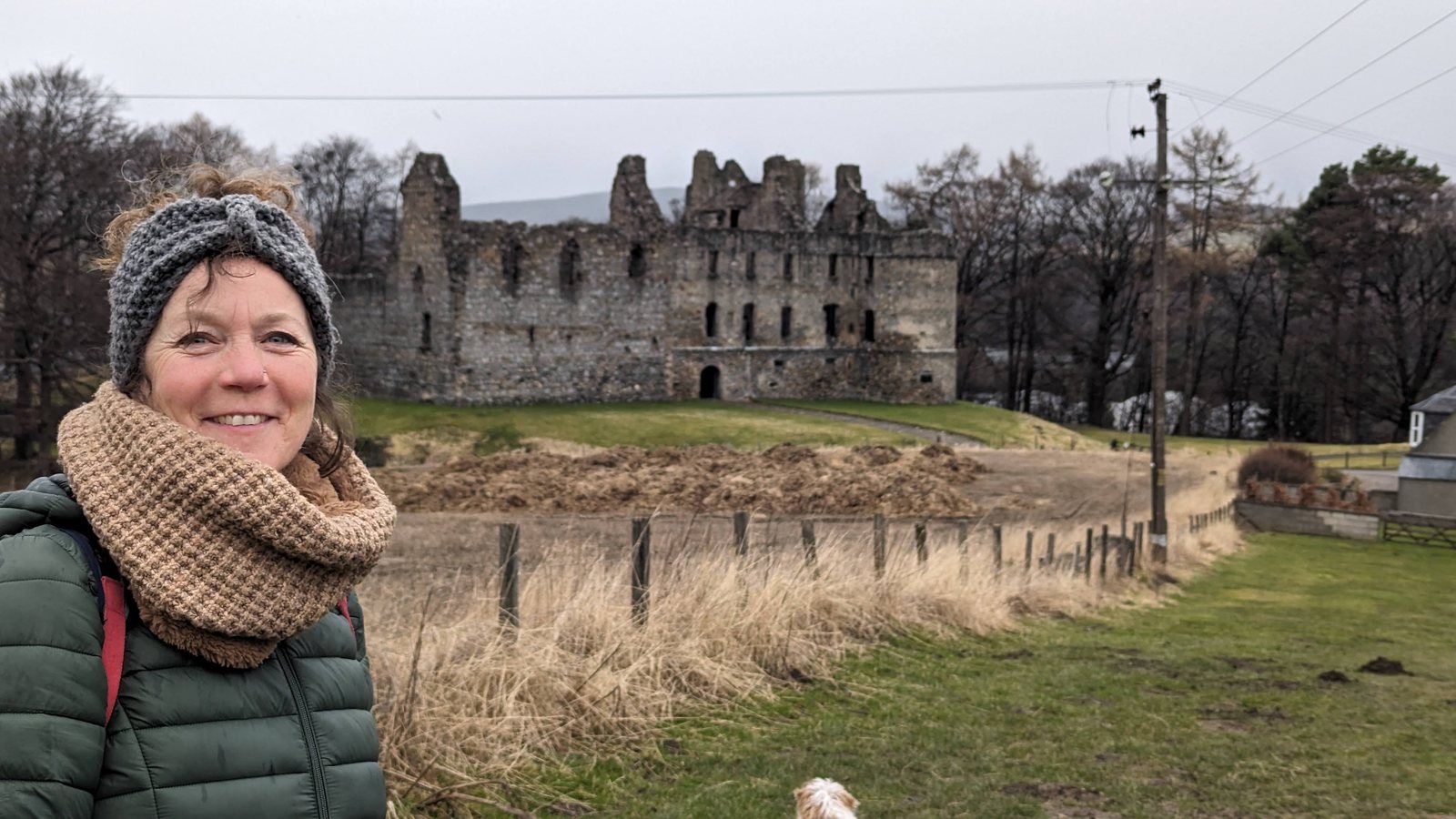
- The Comyns and the Douglases at Balvenie. A mile north stands Balvenie Castle, begun by the Comyns, the most powerful family in 13th-century Scotland. It passed to the Black Douglases and then to the Stewart Earls of Atholl, who rebuilt it as a Renaissance house.
- The Gordons. Much of Strathbogie and upper Banffshire was Gordon land, ruled from Huntly. In 1594 the Gordon Earl of Huntly beat a royal army under Argyll at the Battle of Glenlivet, a few hills south-west of here.
- The Duffs. The town itself was built in 1817 by James Duff, 4th Earl of Fife, to give work to men coming home from the Napoleonic Wars. Its name, Dufftown, comes from him.
- The Grants. Grant country lies around Strathspey to the west. Clan Grant’s most famous whisky son, William Grant, learned his trade in this distillery.
Water, lochs & the glen
Mortlach takes its process water from springs in the Conval Hills above Dufftown, a source known as Dykehead. Cooling water for the worm tubs comes from the Dullan Water. A short walk up the Dullan, past the kirk, brings you to the waterfall and pool known as the Giant’s Chair. The only loch nearby is Loch Park, a long, narrow wooded loch north of Drummuir, about four miles from town. For Scotland’s bigger waters, see our lochs guide.
Churches & carved stones
Mortlach Kirk is the reason to linger. It stands just past the distillery, and its kirkyard holds the Battle Stone, a Pictish cross-slab carved with a serpent, a beast and a horseman. It also has a 19th-century watch-house built to guard fresh graves against body-snatchers. There are more Pictish carvings in the north-east nearby. The Maiden Stone and Brandsbutt Stone near Inverurie are about an hour away, and the great East Aquhorthies stone circle is close by them. For the full collection, see our standing stones guide.
Visiting
Mortlach is not open to the public. There is no shop or visitor centre, and tours are only occasional private ones arranged through Diageo. Respect the gates. The best way to “visit” is to walk past on the way to Mortlach Kirk, then try a dram in one of Dufftown’s bars, or at the Whisky Shop Dufftown in the square, which stocks a range of local malts. For a distillery tour in town, Glenfiddich and Balvenie are the nearest. See our Dufftown guide for coffee, food and where to stay.
Nearby distilleries
- Dufftown Distillery: in the town itself, about half a mile away. It makes the Singleton of Dufftown and is production only.
- Glendullan: about half a mile away on the north side of town, by the River Fiddich. It is Diageo’s big Singleton producer and was once favoured by Edward VII.
- Glenfiddich: about a mile north. William Grant’s distillery has tours, a shop and free grounds to wander.
- The Balvenie: next to Glenfiddich, with its own floor maltings. Tours are by appointment.
- Kininvie: the Grants’ hidden third distillery, on the same site.
- Craigellachie and Aberlour: about 4–5 miles north-west, down the Fiddich to the Spey.
Two or three distilleries a day is plenty. Our Speyside Whisky Trail sets out Dufftown as a base, and the whisky hub covers every region.
Sources
- Mortlach distillery — Wikipedia.
- Aberdeenshire HER: Mortlach Distillery, Dufftown (1963 rebuild).
- Whisky Hammer: The Beast of Dufftown.
- Diageo / Malts.com.
- Our own visit to Dufftown.