
Bass Rock & the North Berwick Coast: Where the Grand Tour Begins
Overview — the perfect starting line
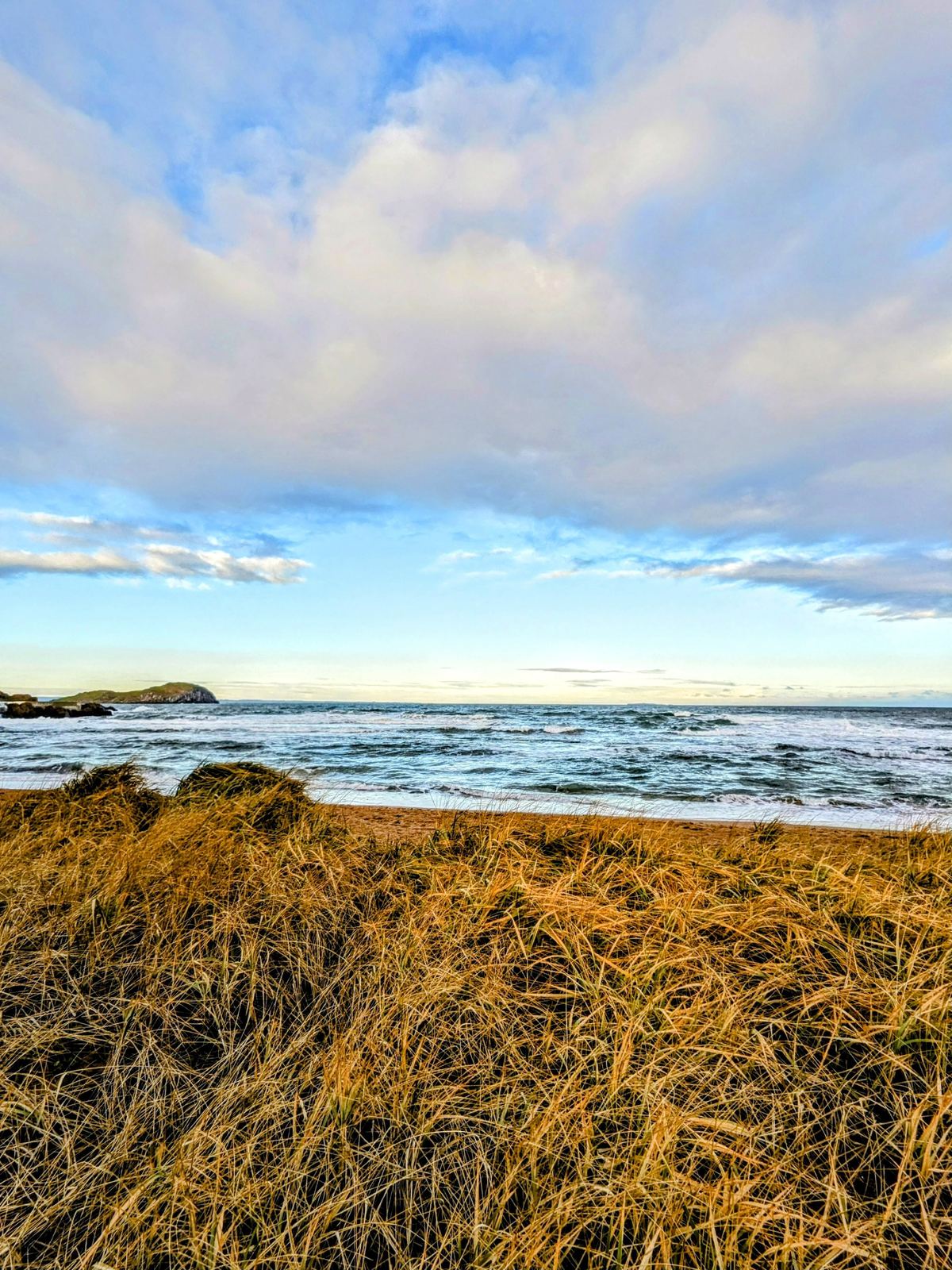
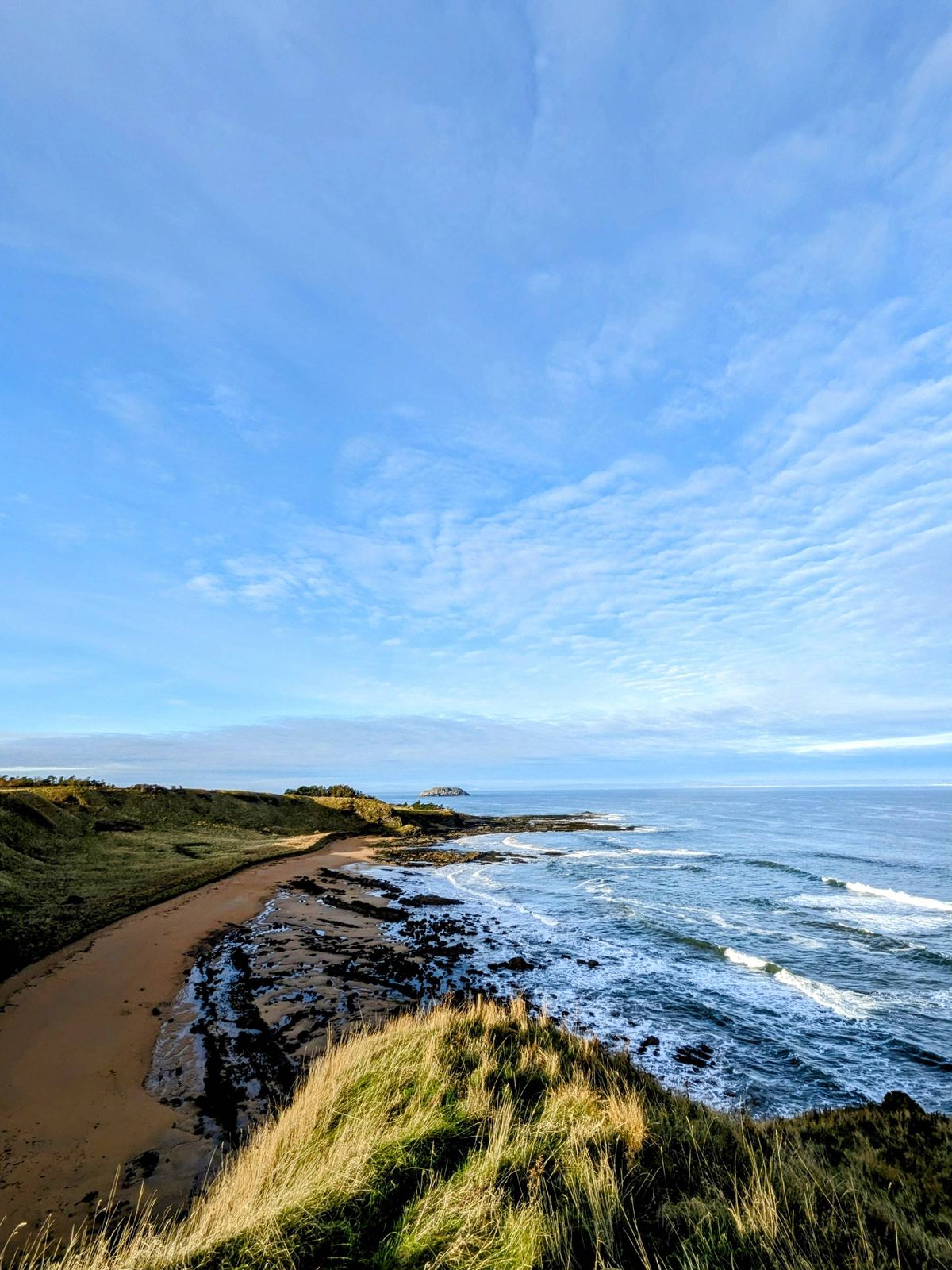
Every big journey needs a starting line, and ours is here: a wide, quiet, red-gold coast on the East Lothian shore, with the great white lump of Bass Rock sitting just offshore and the salt wind doing you the world of good. It’s barely 30 minutes east of Edinburgh, it’s gloriously dog-friendly, and there’s a genuinely excellent café right on the cliff for coffee and cake afterwards.
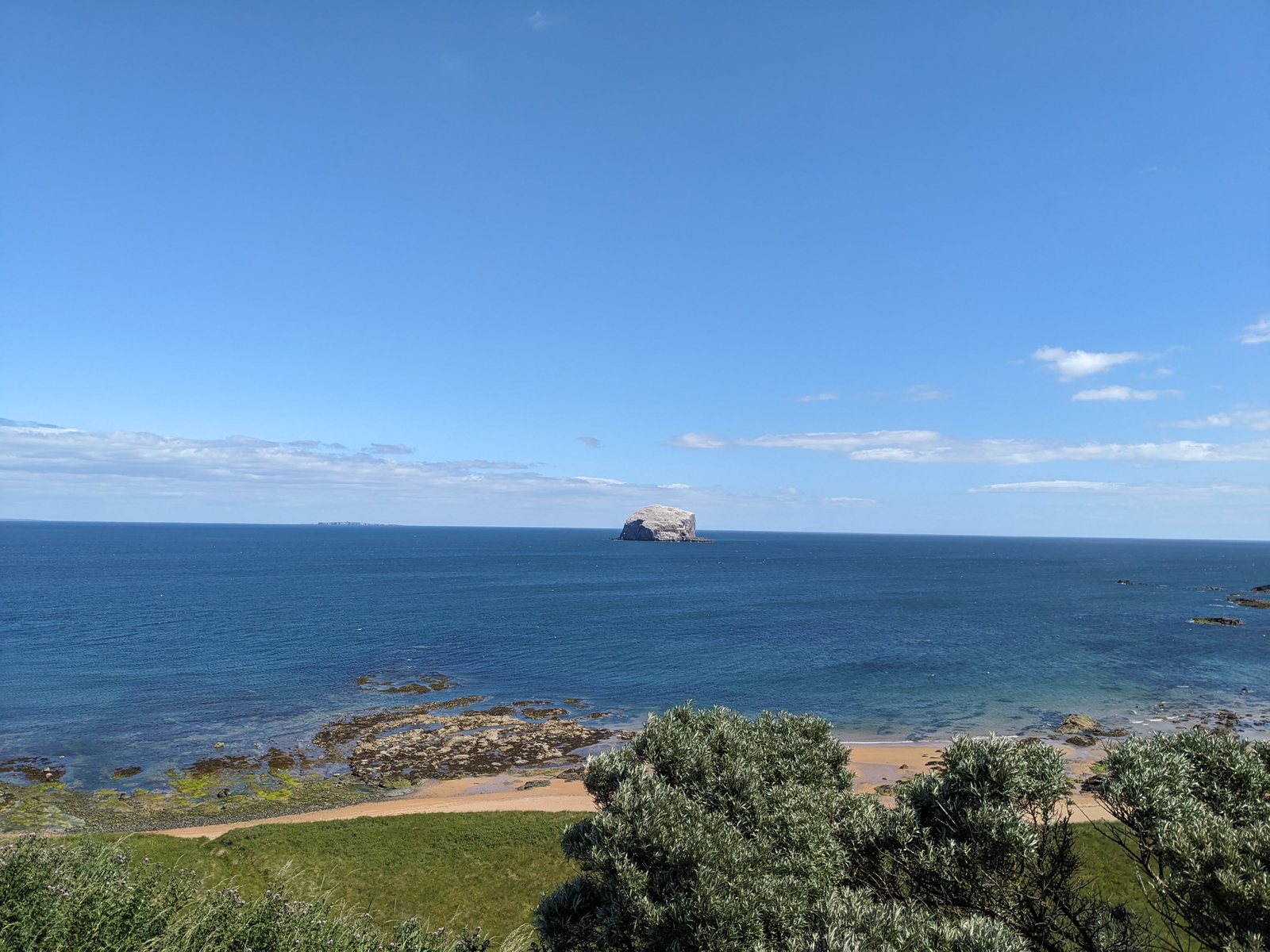
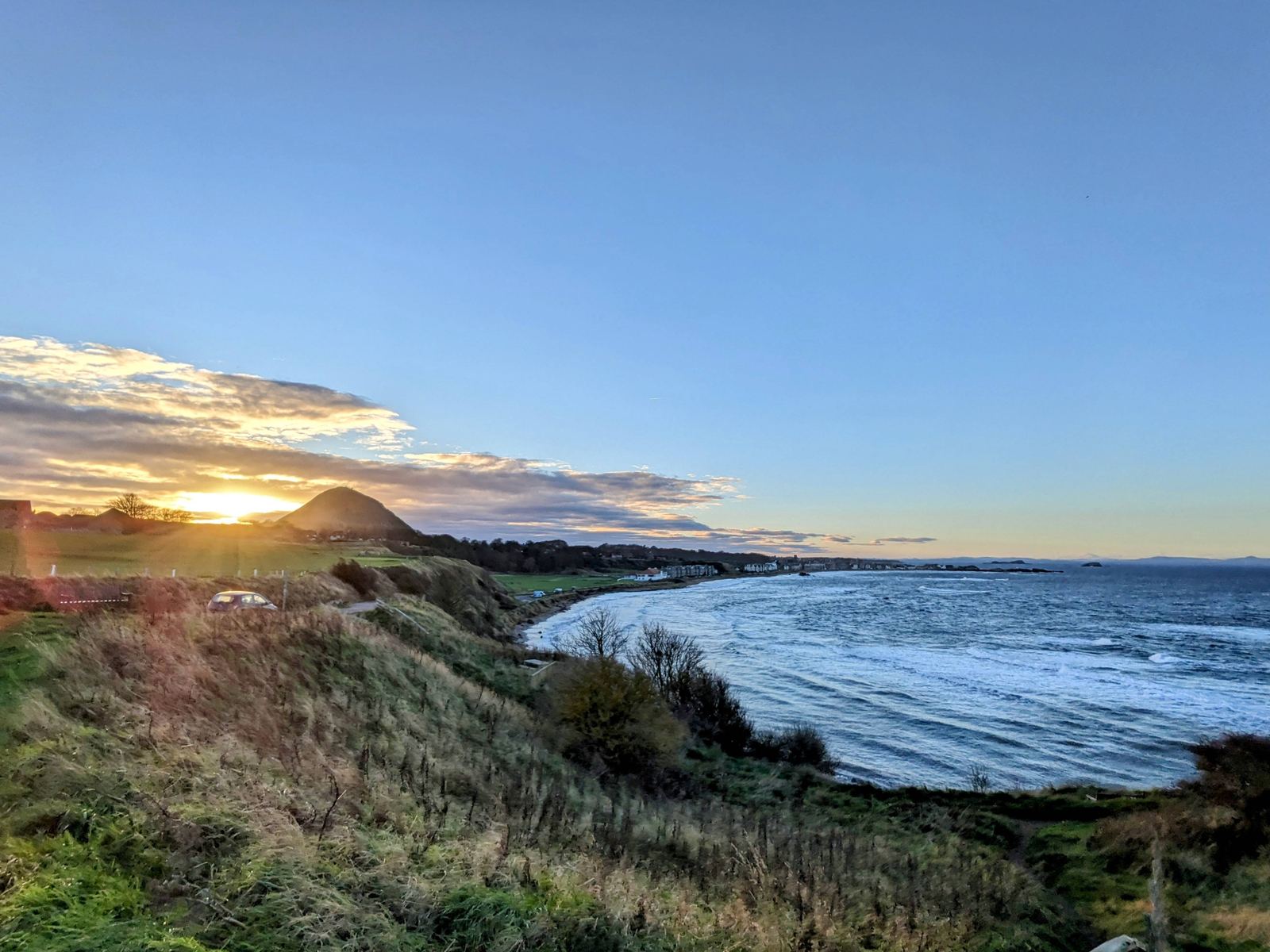
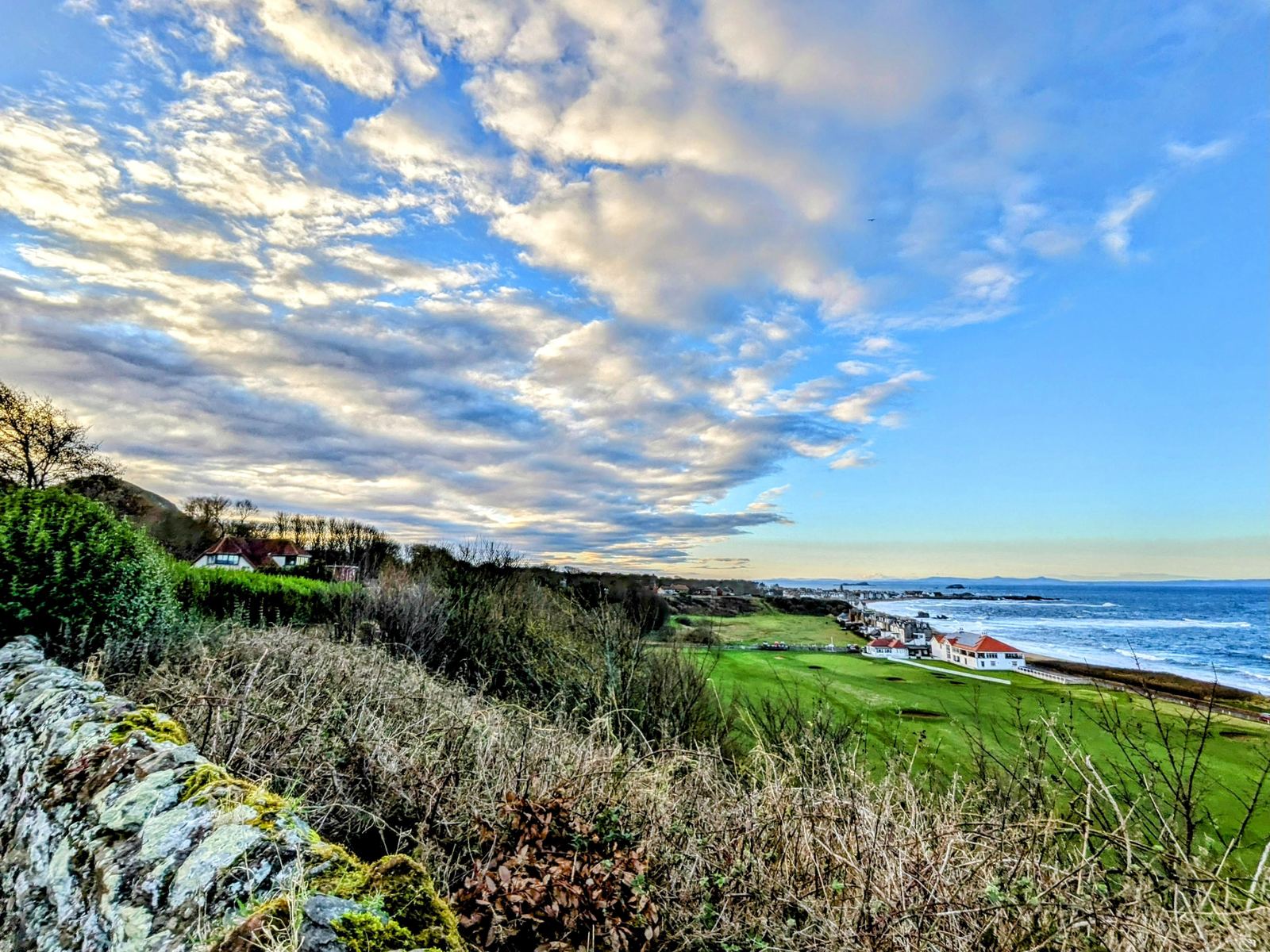
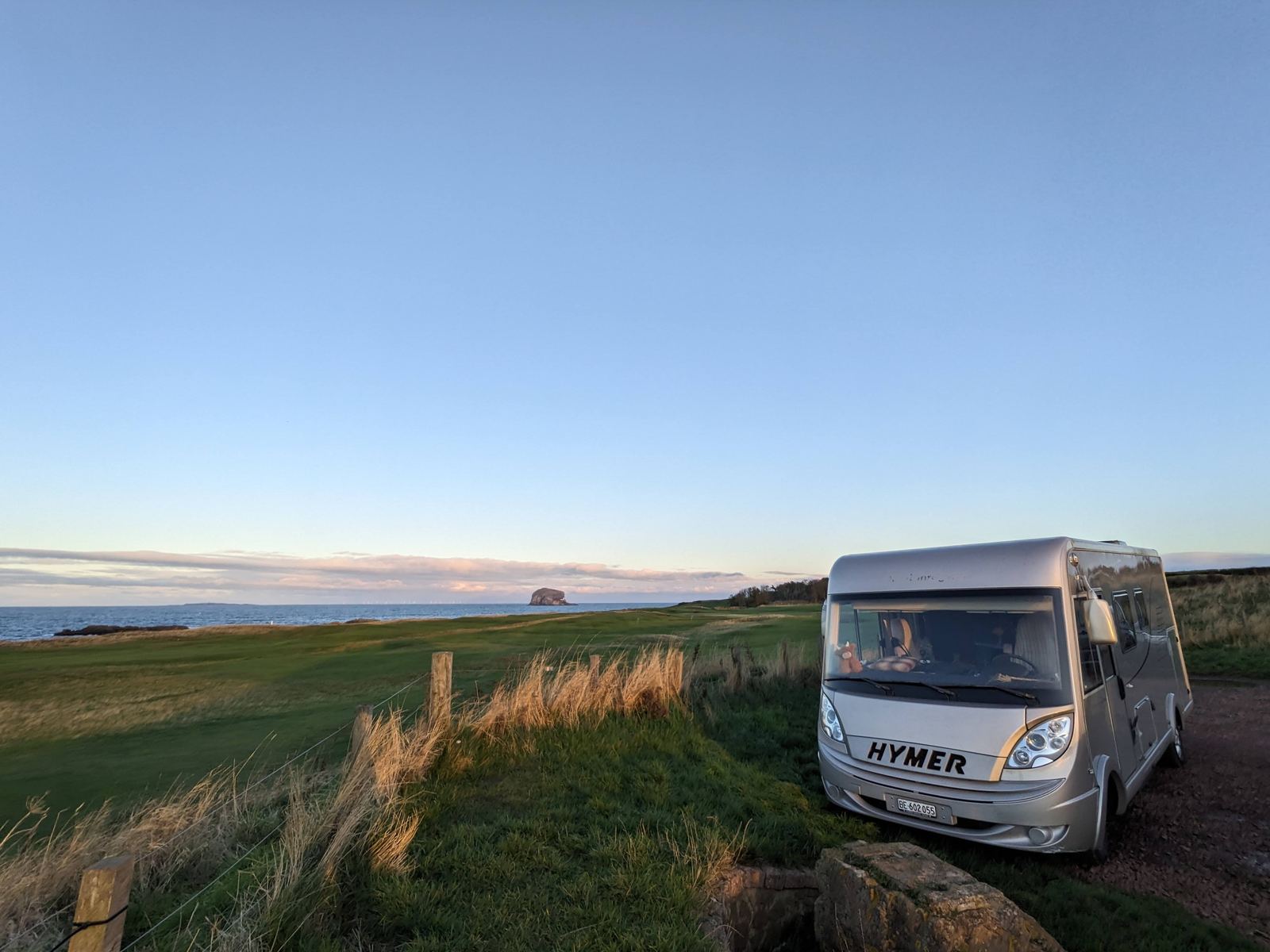
This is where our Grand Tour of Scotland begins — before Stirling, before the Highlands — and honestly, it sets the bar high. We’ve been in high summer and, as these photos show, on crisp December days too, when the low winter sun turns the whole coast to gold and you get the beach almost to yourself.
The story — Scotland’s Rock of birds
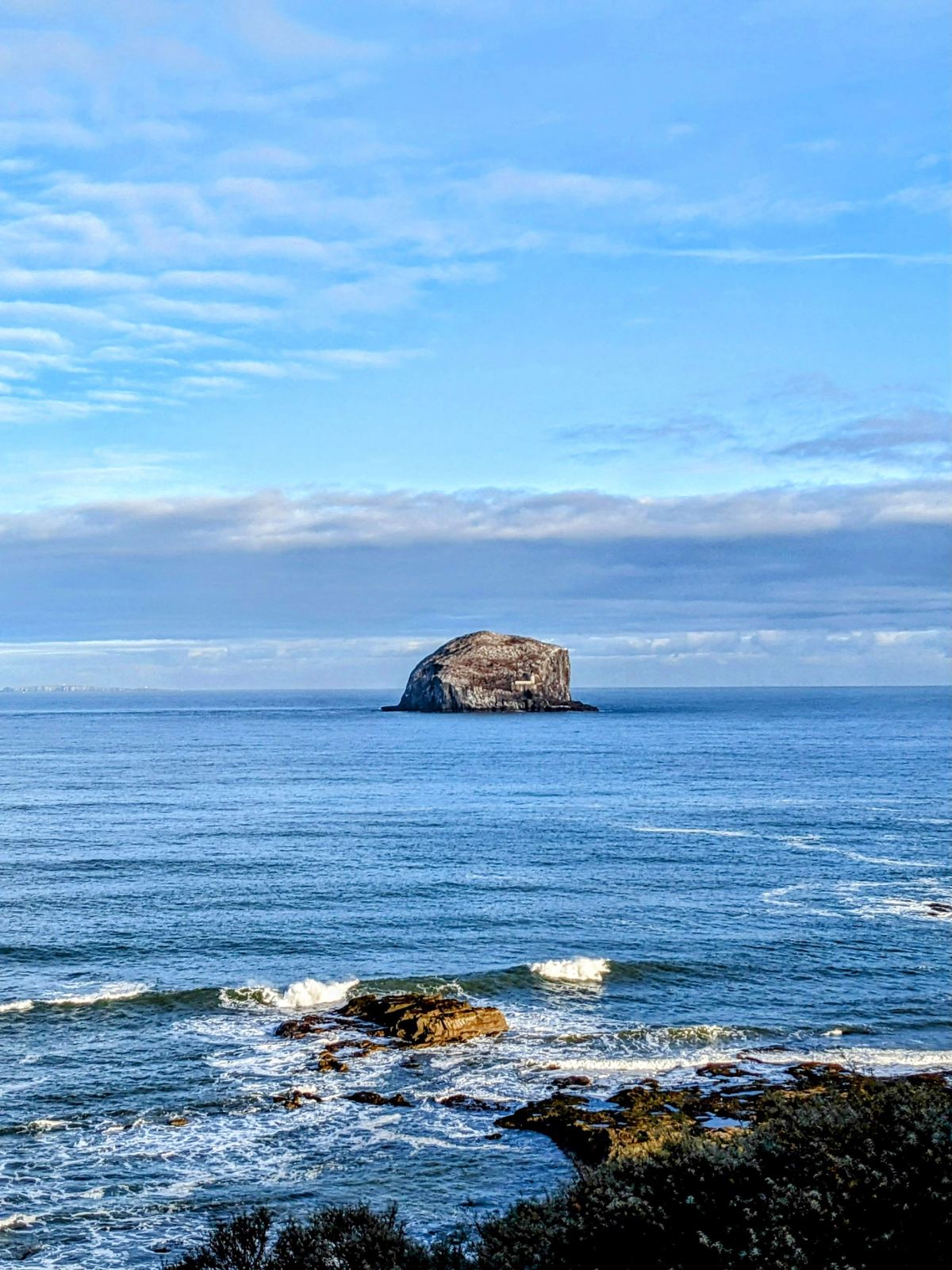
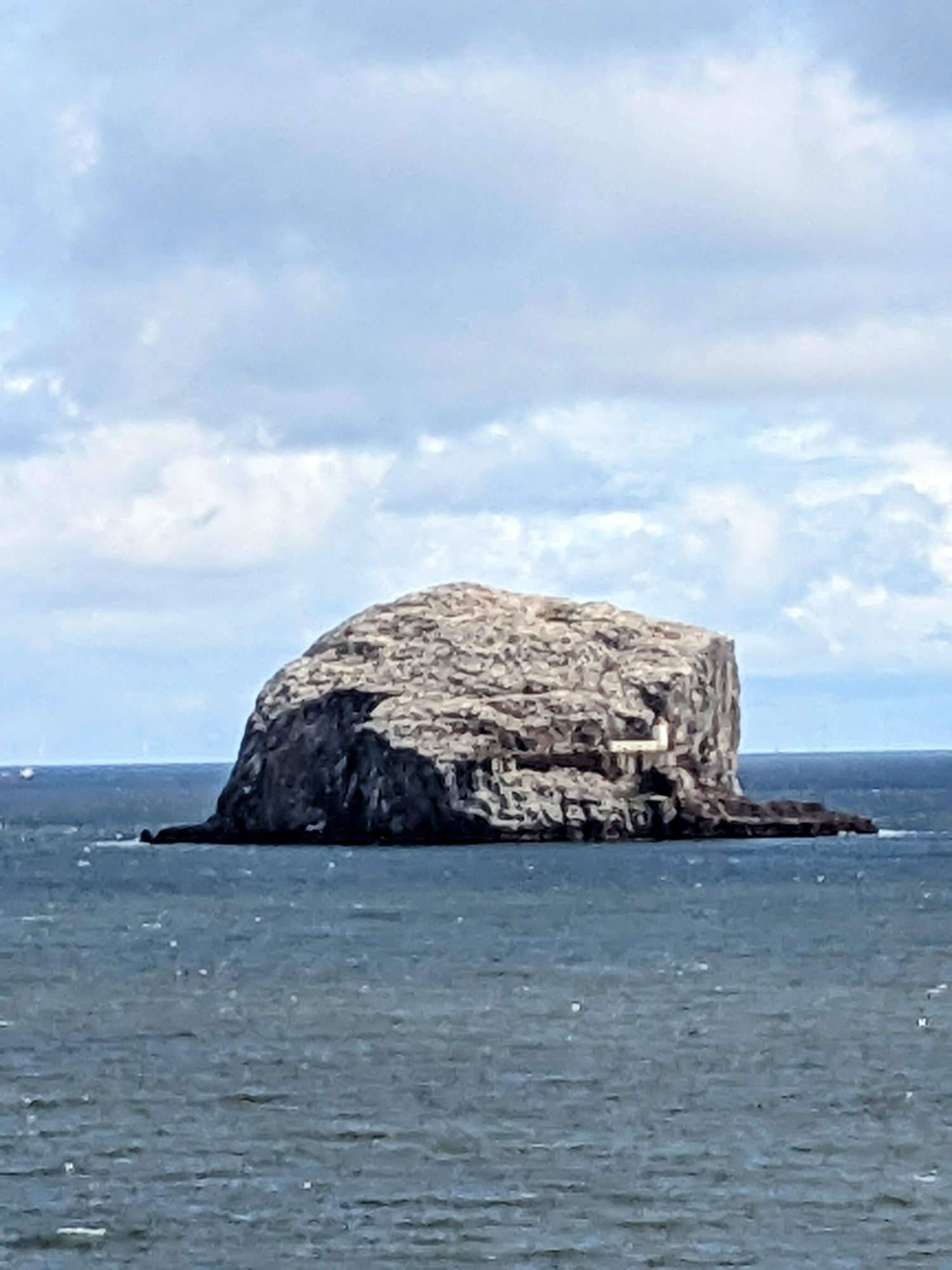
Bass Rock is a 107-metre volcanic plug, the core of an ancient volcano left standing when everything softer wore away. Today it’s world-famous for one thing: it hosts the largest colony of Northern gannets on the planet — around 150,000 birds. In spring and summer the rock turns brilliant white, not with snow but with gannets, and the air above it swirls with them. The gannet’s scientific name, Morus bassanus, is even taken from the Bass itself.
It’s had other lives, too — a medieval chapel, a castle, and a grim 17th-century island prison that held Covenanters. A Stevenson-built lighthouse still stands on it. You can’t casually land, but boat trips run out around it from North Berwick in season, and on a clear day you’ll see (and smell) the colony from the shore.
The Bass Rock, in full
The Bass Rock — usually just “the Bass” to locals — is far more than a pretty backdrop. Here is the whole story of the extraordinary lump of rock that dominates this coast.
A volcano in the Firth
The Bass is a volcanic plug, the hard core of a volcano that erupted in the Carboniferous period over 300 million years ago — a cousin of North Berwick Law and the crag beneath Edinburgh Castle. It rises a sheer 107 metres (350 ft) straight out of the sea about two miles offshore, ringed by cliffs on almost every side.
The world’s greatest gannet colony
Above all, the Bass is famous for its gannets. It is home to the largest colony of Northern gannets on Earth — around 150,000 birds in summer, so many that the entire rock turns brilliant white and gleams from miles away. The bond is so complete that the bird’s scientific name, Morus bassanus, is taken from the Bass itself. To see, hear and smell the colony in full cry is one of the great wildlife spectacles of Britain.
St Baldred’s hermitage
People have found the Bass holy for a very long time. Around AD 600 the East Lothian hermit St Baldred is said to have made his home on the rock, and the ruins of a chapel dedicated to him still cling to it.
Fortress & prison
For centuries the Bass was a fortress, held for generations by the Lauder family, its cliffs making it all but impossible to storm. In the 17th century that impregnability found a grimmer use: the rock became a royal state prison. Many Covenanters — Presbyterians who defied the crown during the “Killing Time” — were locked up here, cut off by the wild sea.
The last stand for the Stuarts
The Bass’s most remarkable moment came at the very end of the Stuart cause. In 1691 a handful of imprisoned Jacobites — supporters of the exiled King James — overpowered their guards and seized the rock, then held it against the whole might of the government for nearly three years, kept supplied by French ships, before surrendering on generous terms in 1694. It was, astonishingly, the very last place in all Britain to hold out for the Stuart kings.
The lighthouse & the Bass today
In 1902 a lighthouse was built on the Bass by the Stevenson family (of Treasure Island fame); its keepers were the last people to live there, and it was automated in 1988. Today the Bass is uninhabited, left entirely to the birds. In season you can take a boat trip from North Berwick harbour to sail around it or even land, and there’s live camera coverage at the Scottish Seabird Centre.
Winter light & the red rocks
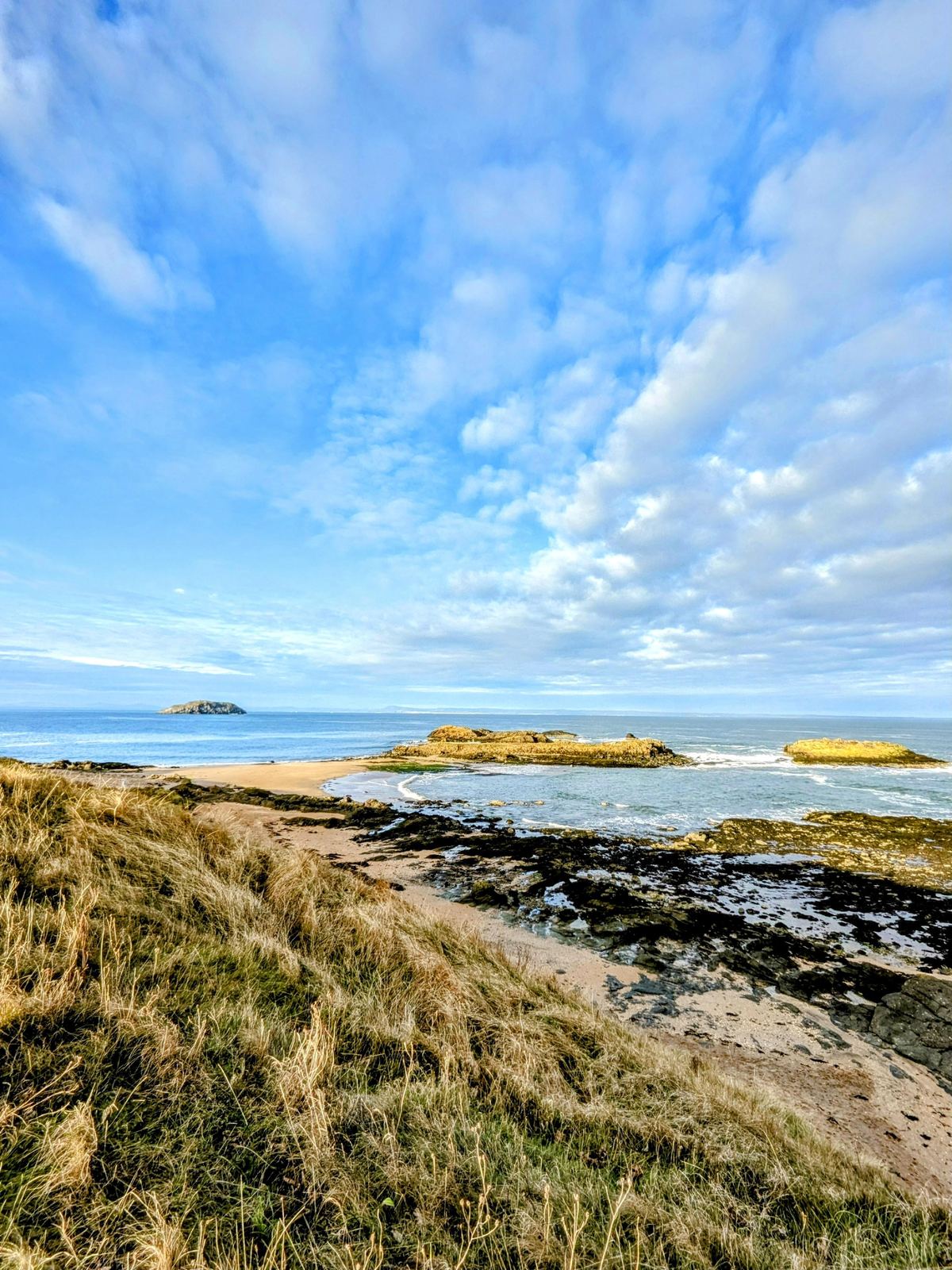
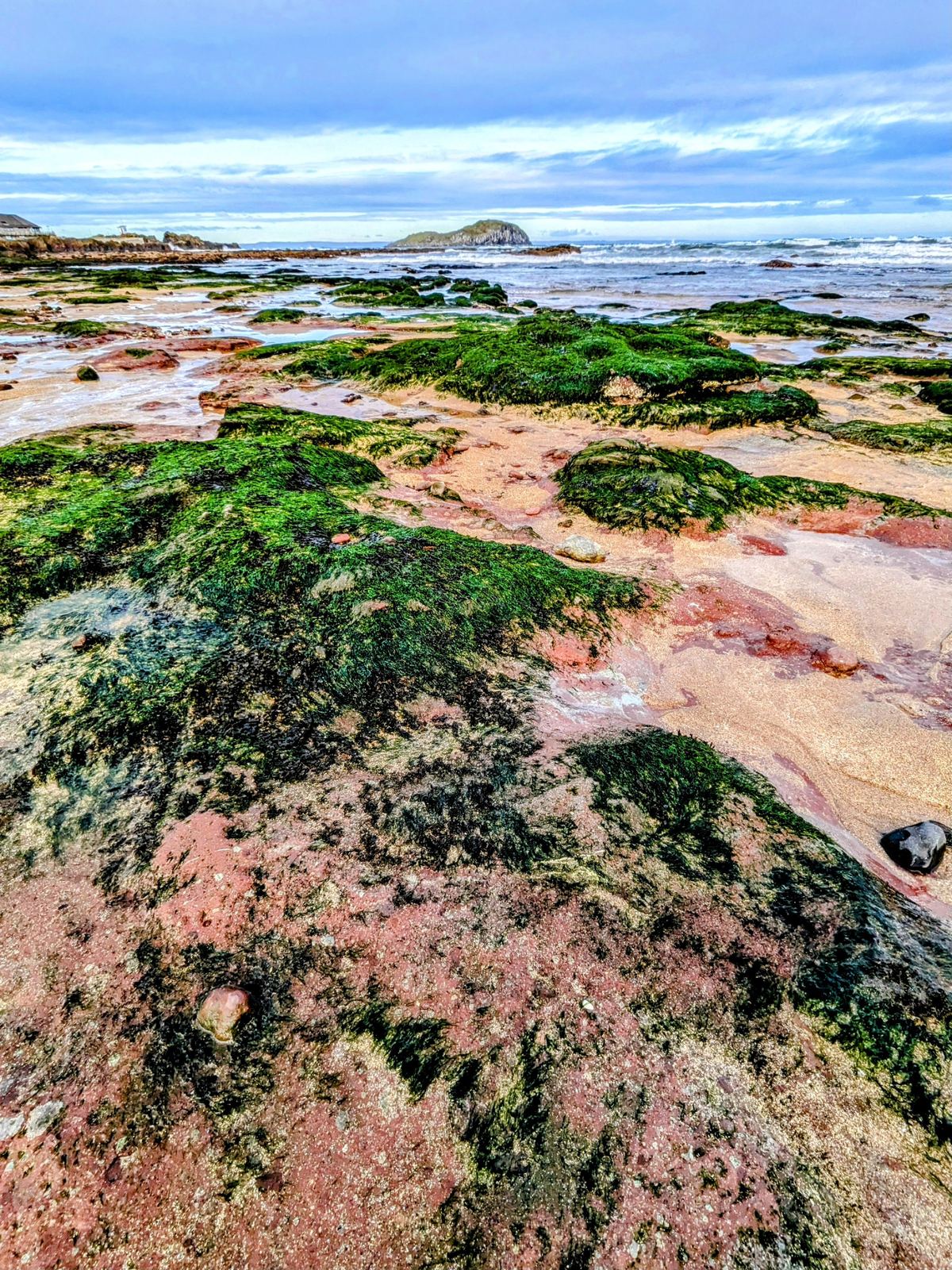
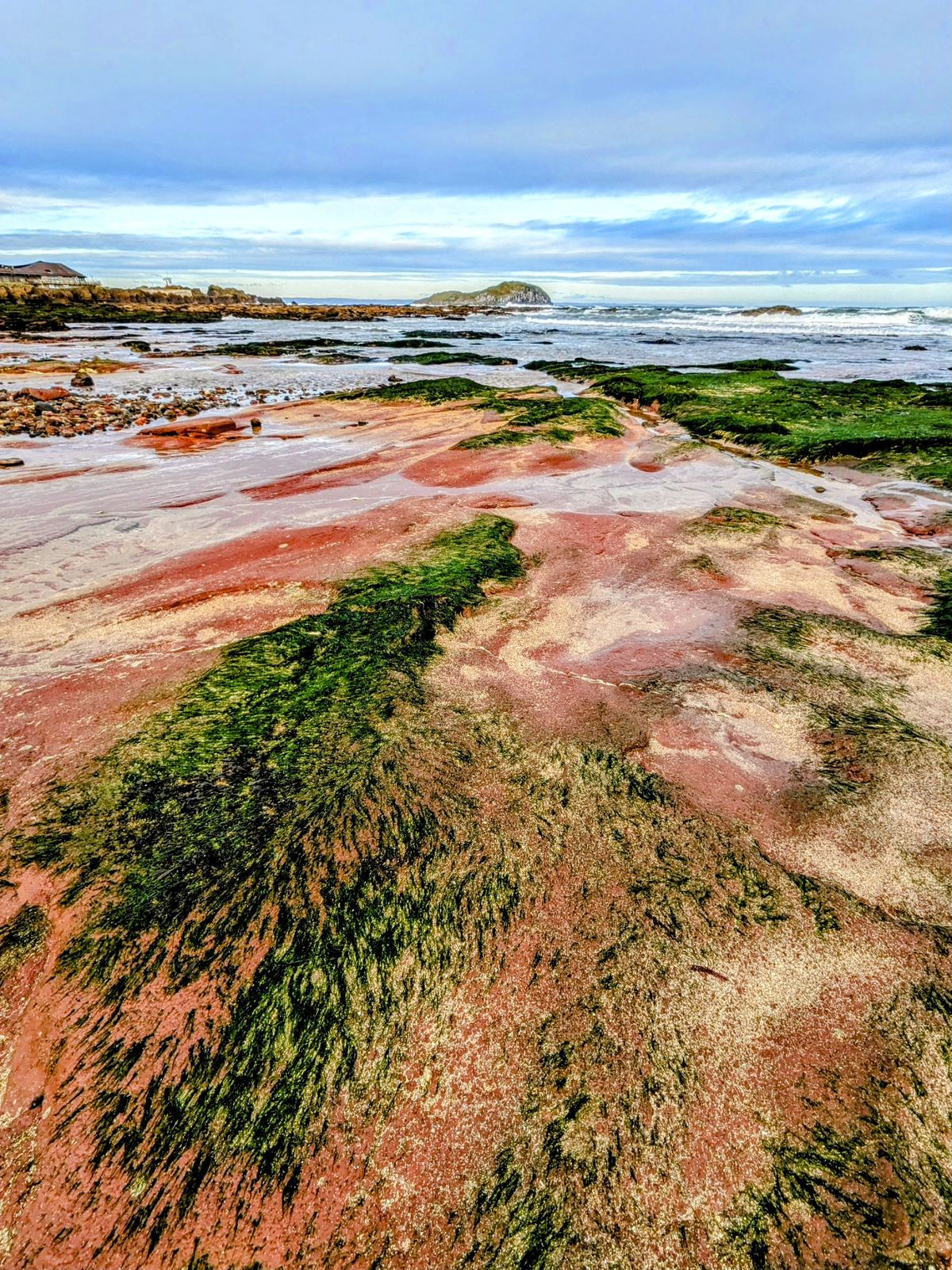
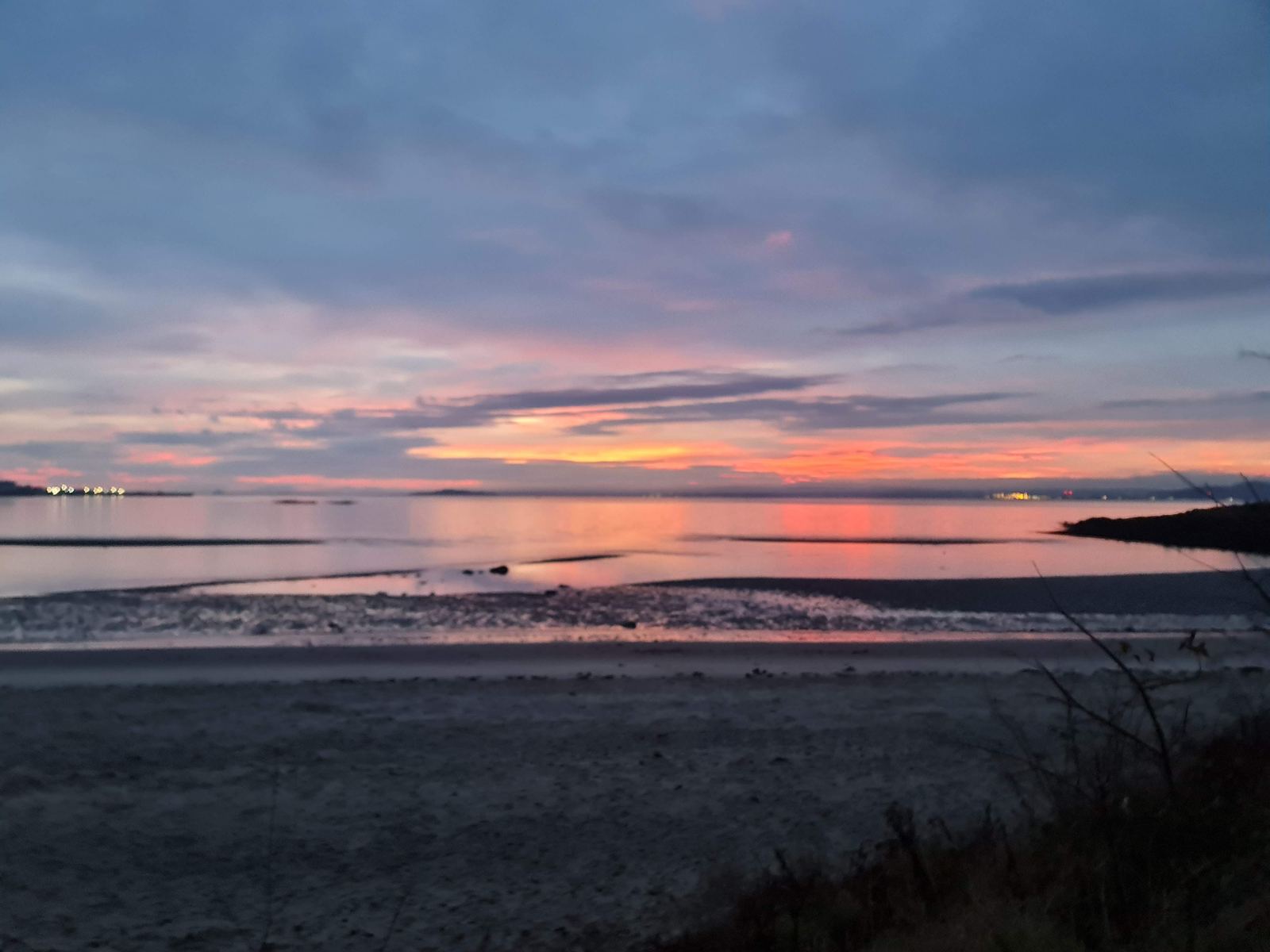
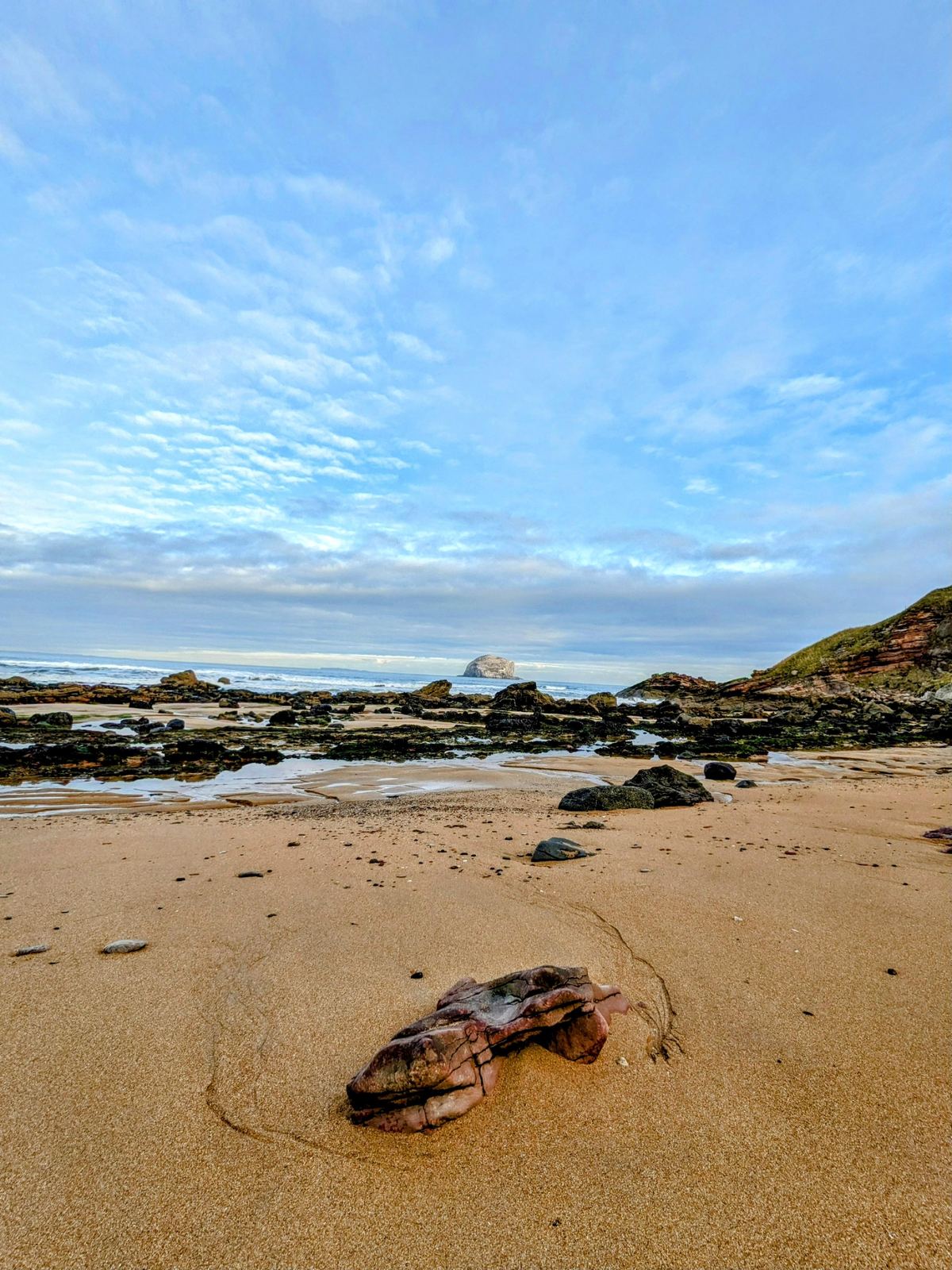
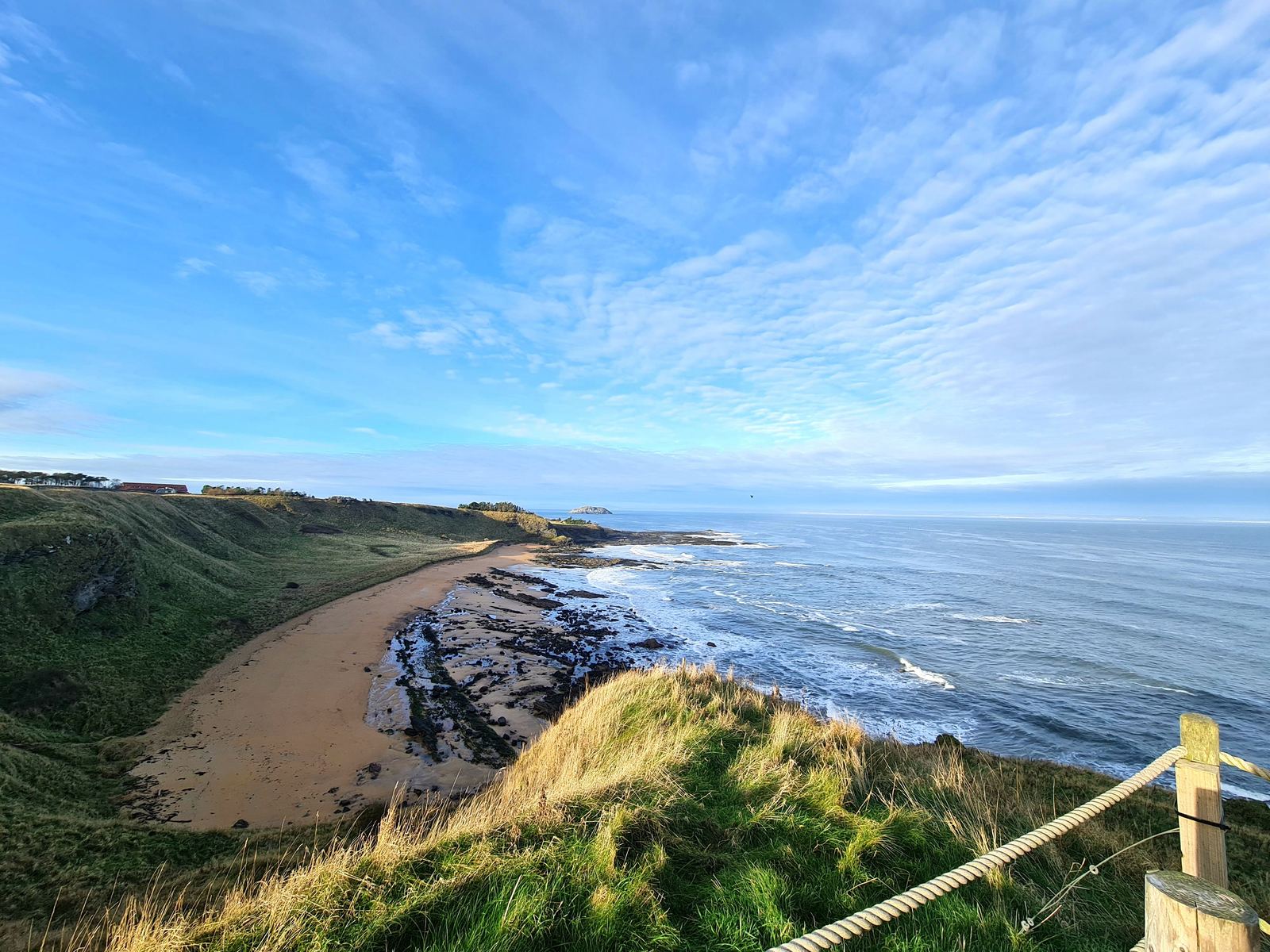
Come in winter and the coast has a magic all its own. Low tide reveals the extraordinary volcanic geology of the foreshore — ledges of deep red sandstone streaked with bright green algae, a proper geologist’s playground and unlike anywhere else on the Forth. The light does the rest: sunrise over the mudflats, and sunsets that set the sky and the sea on fire behind the Bass.
What you’ll actually see and do
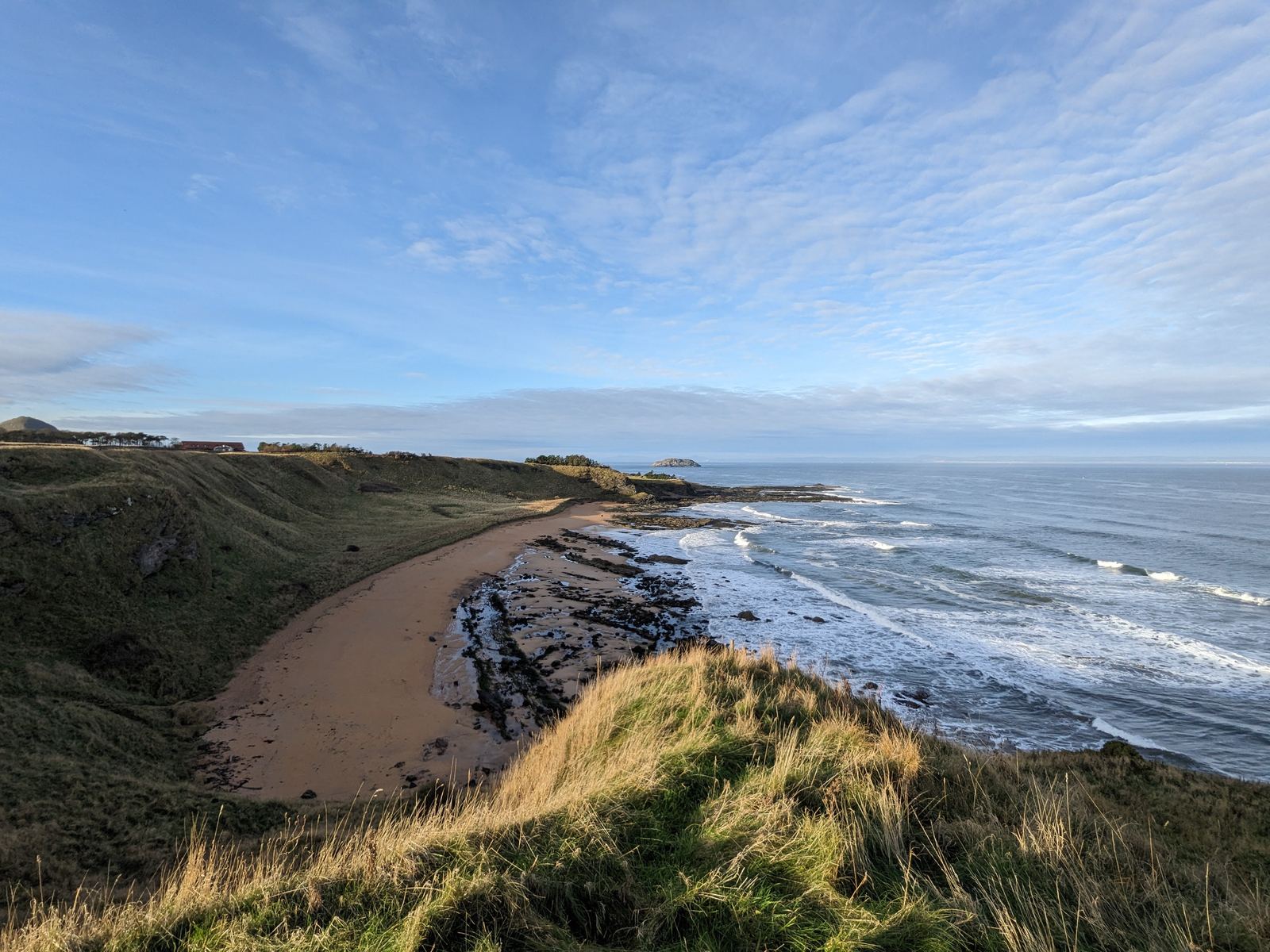
- The beach — broad, clean, red-gold sand backed by tall grassy dunes, with driftwood to throw and space to disappear into. Even on a bright day it’s never Costa-crowded.
- Bass Rock and the Firth — the star of every photo. Bring binoculars for the gannets; on a clear day you can see along the coast to Tantallon and beyond.
- A paddle — the North Sea is bracing (read: cold), but on a sunny day it’s irresistible.
- The dog’s day out — off-lead space, soft sand, and gentle surf. Ours didn’t stop grinning.
Climb North Berwick Law — the whale’s jaw
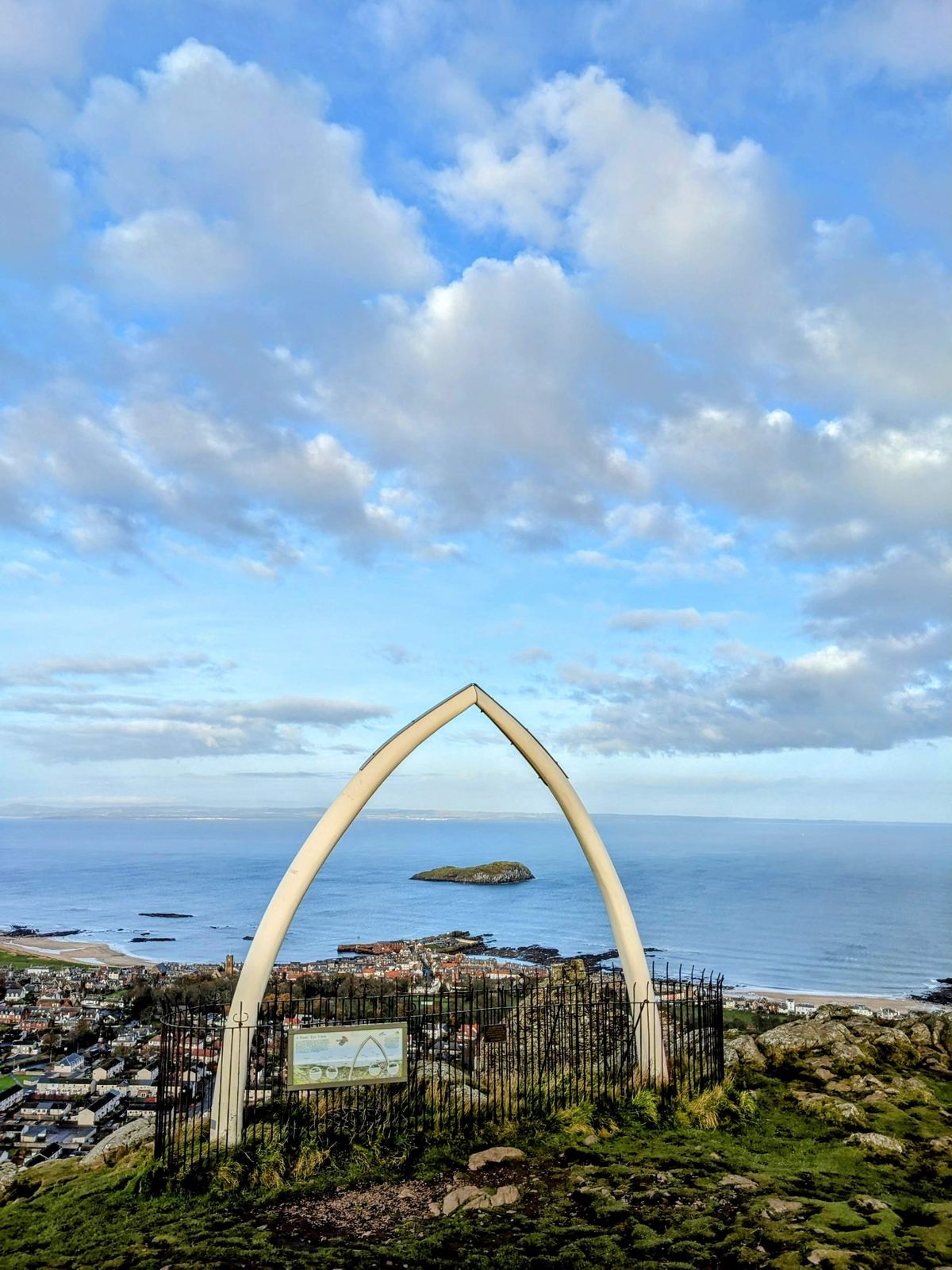
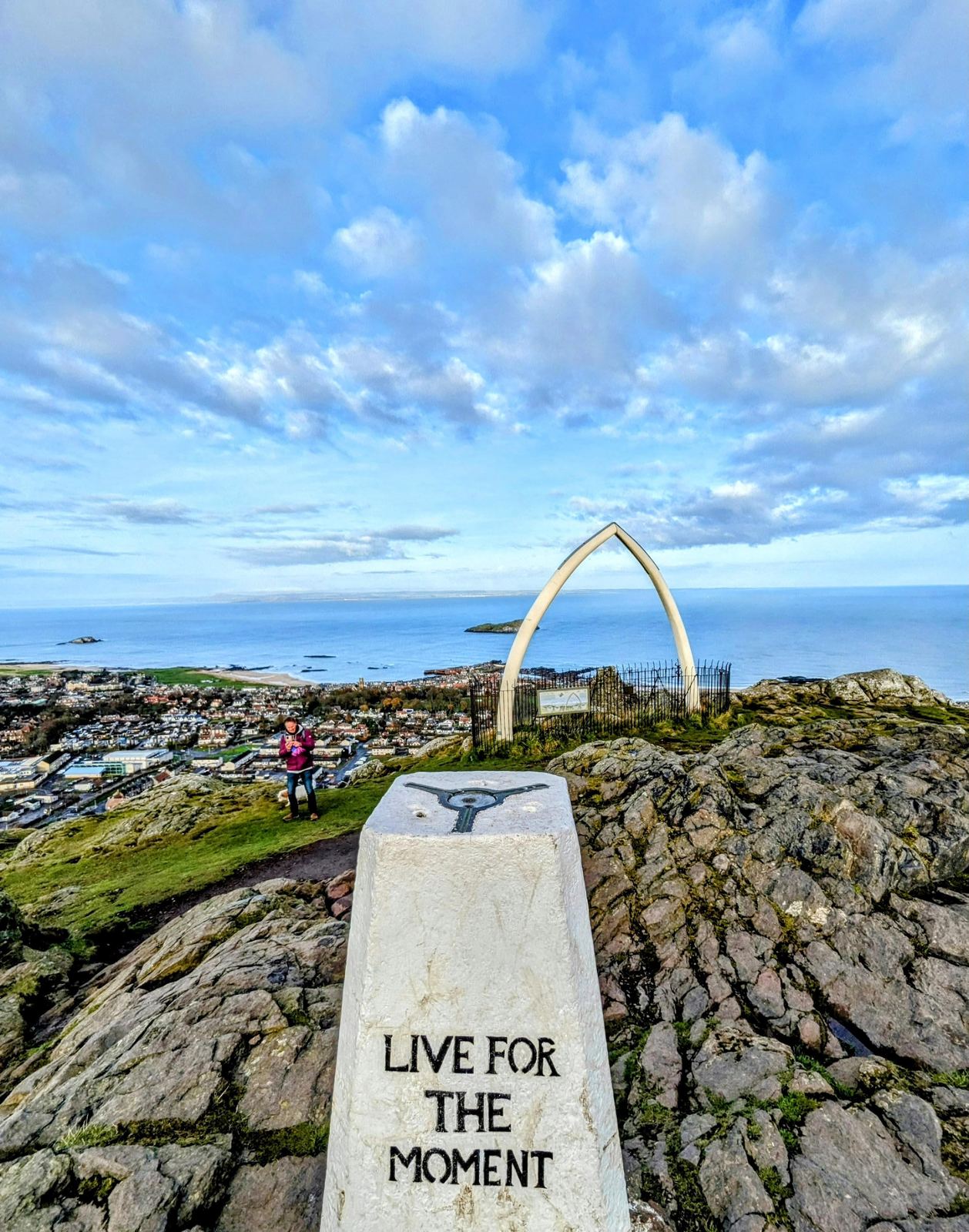
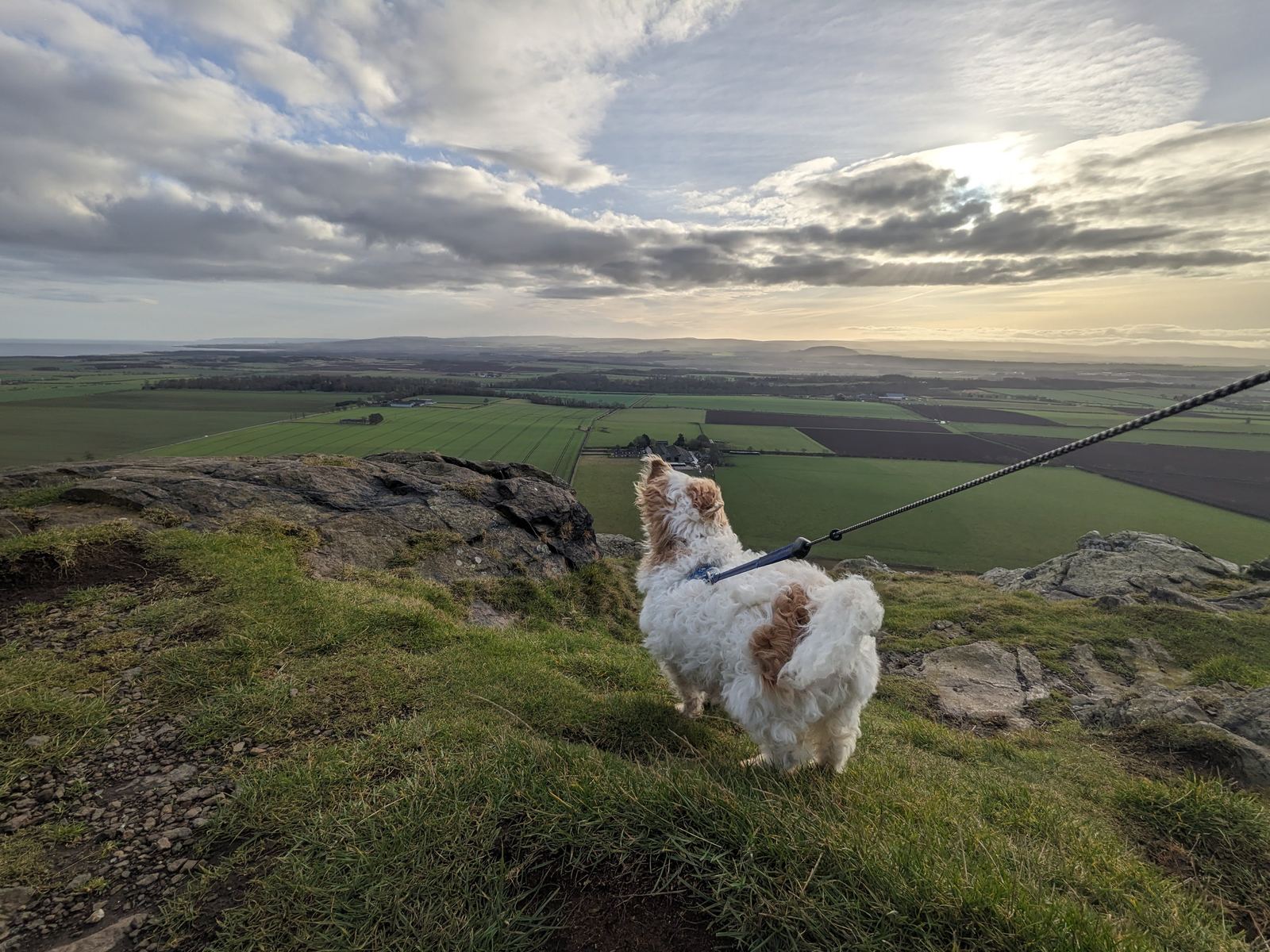
Right behind the town rises North Berwick Law, a perfect 187-metre volcanic cone (a “law”) that you can climb in under an hour — and absolutely should. The path zig-zags up through gorse to a summit crowned by a trig point, the ruins of a Napoleonic-era lookout, and the Law’s famous landmark: an arch made from a whale’s jawbones. There’s been a whale-jaw arch up here since about 1709; the last real one was lifted off in 2005 when it finally rotted, and the fibreglass replica you see today went up in 2008.
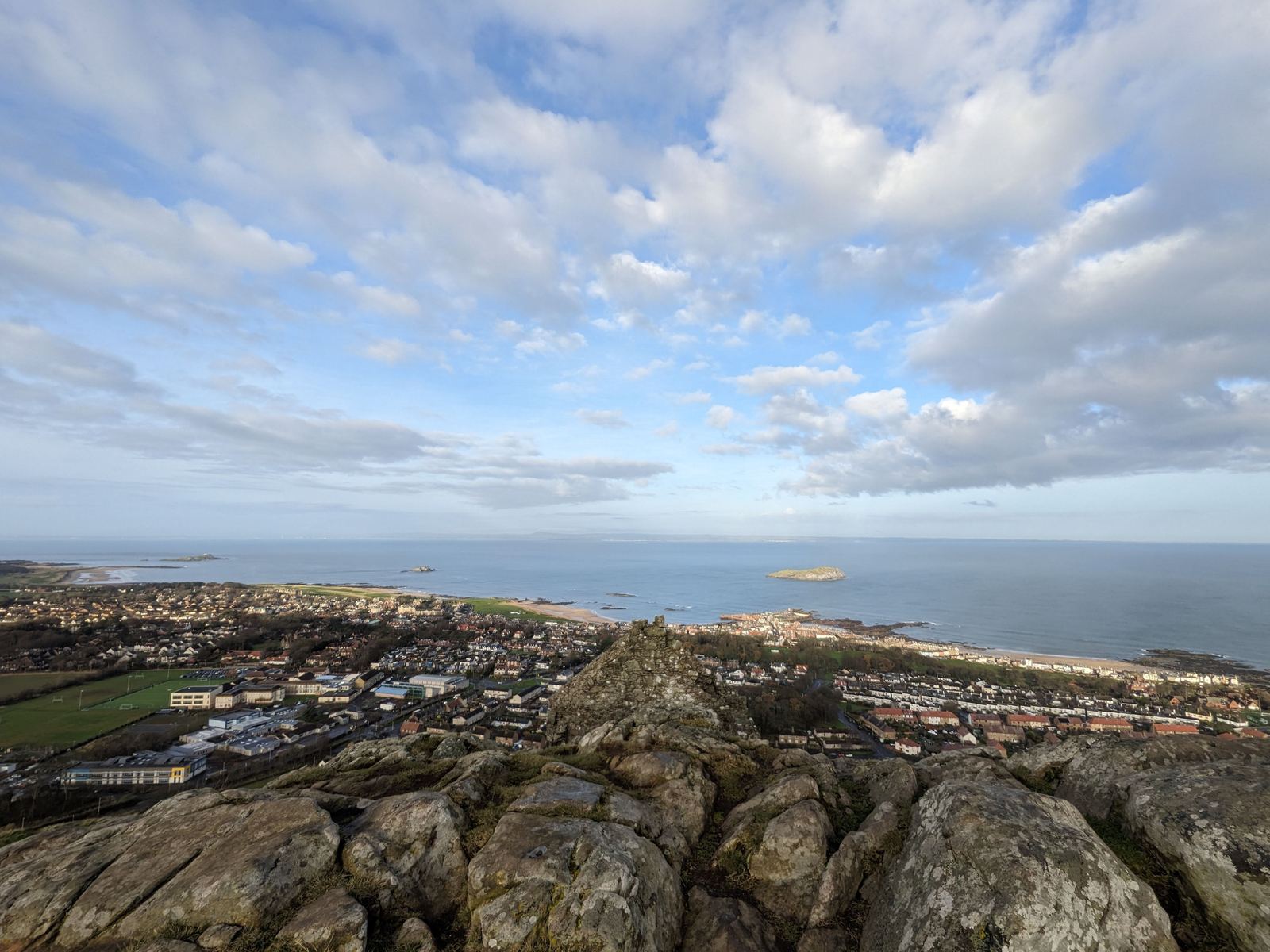
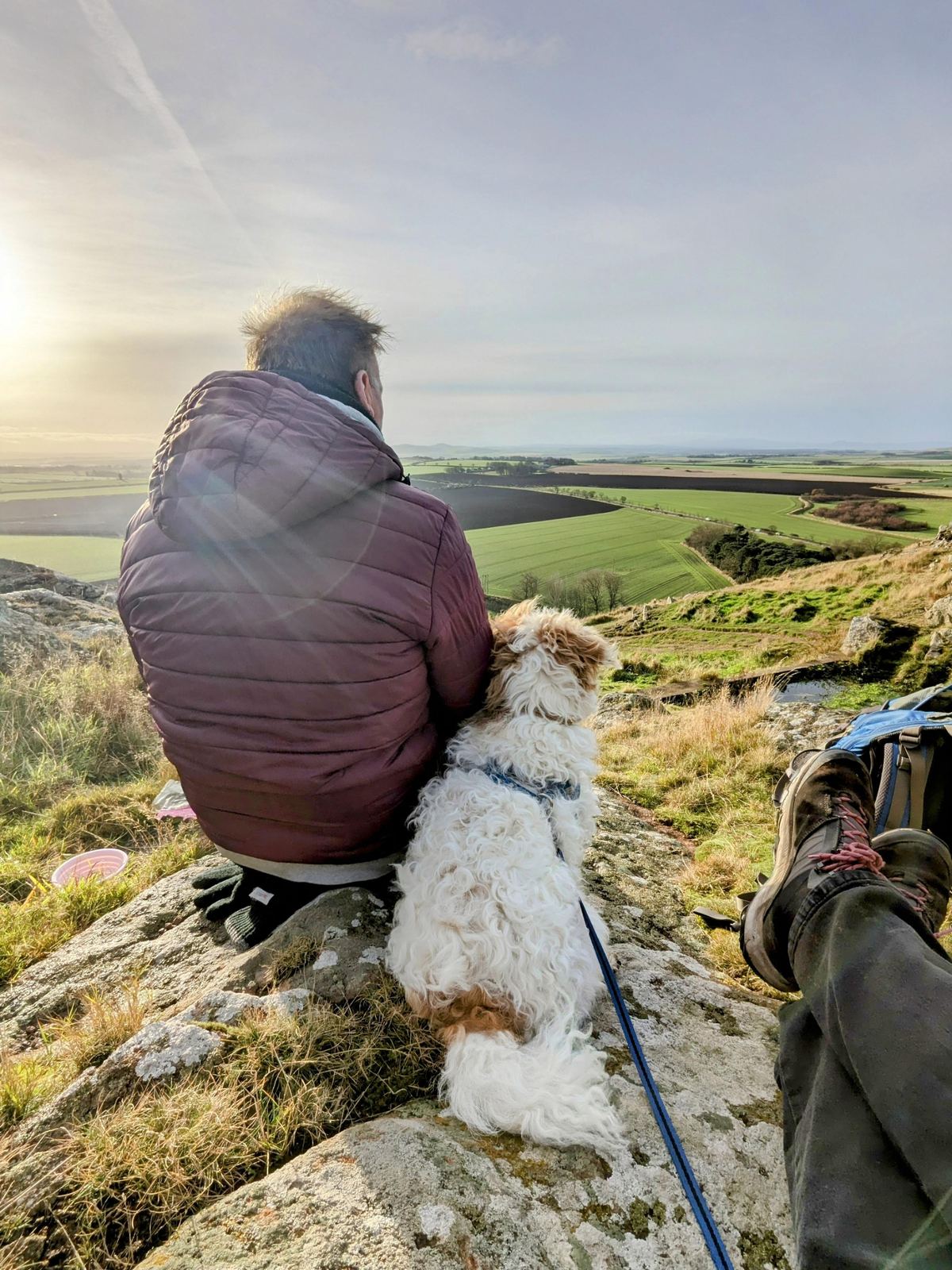
The reward is one of the great viewpoints of the Forth: the whole town laid out below, Bass Rock and the island chain out to sea, the Lammermuirs behind, and — on a clear day — Edinburgh, the bridges and the hills of Fife. We did it on a bright, bitter December afternoon, and the light was unforgettable.
Best time to visit
- Spring and summer (Apr–Aug) for the gannets — the colony is at full, roaring life, and the rock is at its whitest.
- Winter for the light, the empty beaches and the red rocks at low tide (our December visit was magic).
- Come on a clear day and you’ve hit the jackpot; come windswept and grey and it’s still wildly atmospheric. Either way, pack a windproof — the Forth coast is breezy (which, handily, keeps the midges away).
Nearest café — coffee, cake & a sea view
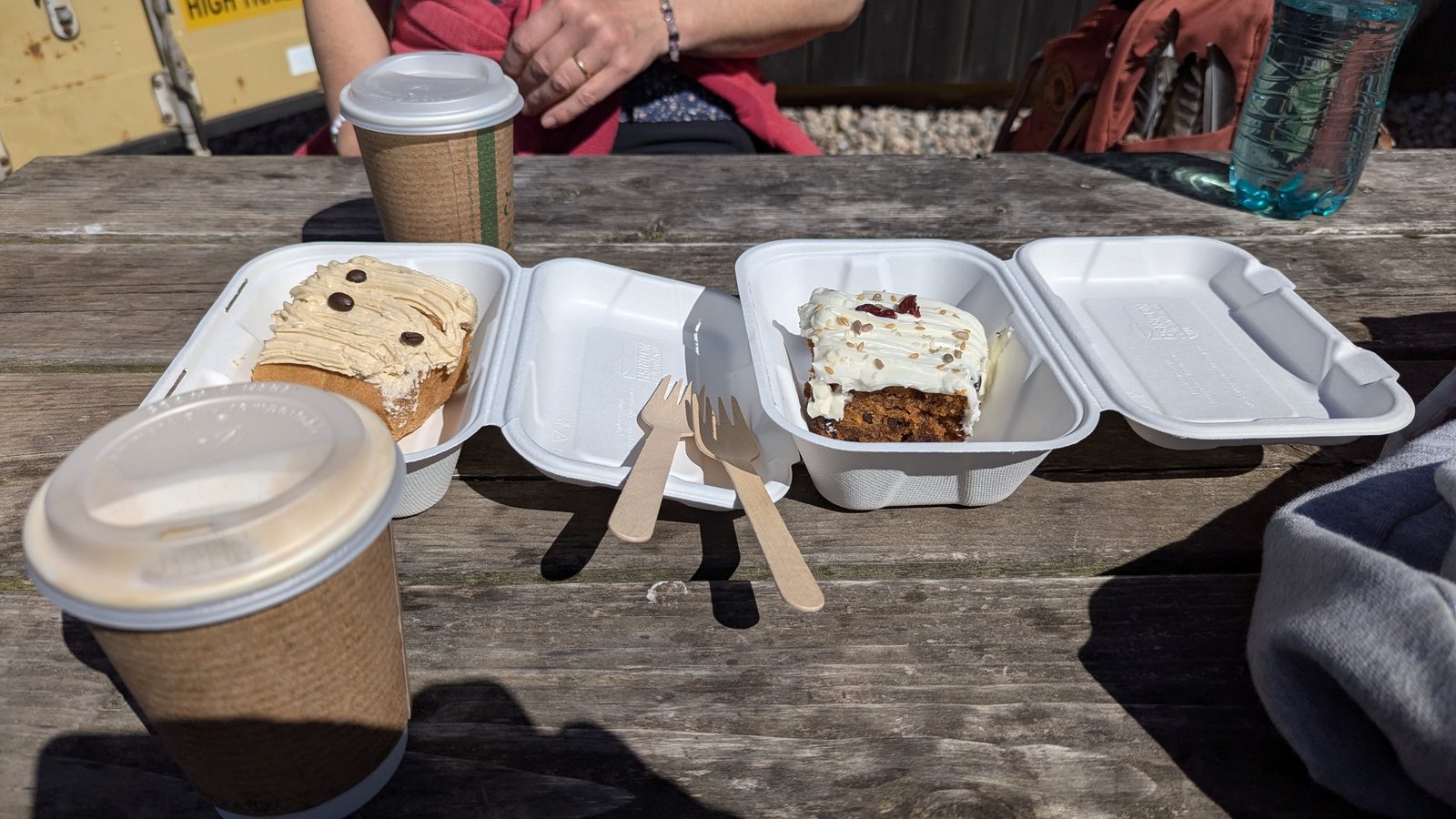
Here’s the stop that makes it: Drift, at Canty Bay just east of North Berwick — a fantastic clifftop café built from shipping containers, with floor-to-ceiling windows and picnic benches out front and the Firth of Forth and Bass Rock laid out in front of you. It opened in 2018 as a farm-diversification project and is a double Scottish Thistle award-winner; everything — cakes, scones, traybakes, soup — is baked in-house. We sat with two coffees and a shared slab of cake (the carrot cake did not survive), watching the sea. Dog-friendly outside, and exactly the reward you want after a beach walk.
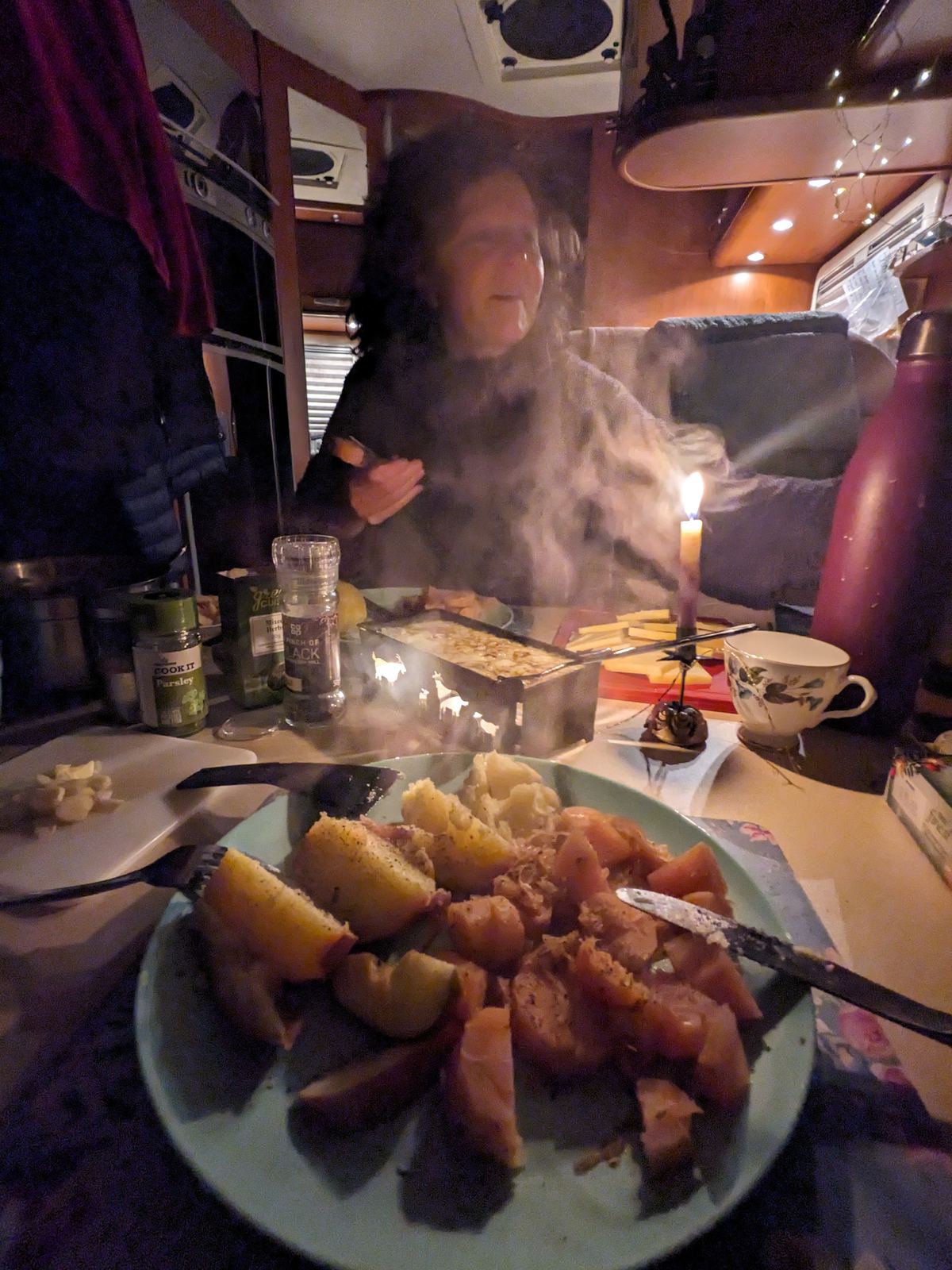
And on a cold winter’s night, we didn’t rush off — we tucked up in the motorhome with the fairy lights on and a proper candlelit dinner. Not a bad way to end a day on this coast.
Watch: a December morning in North Berwick
Filmed above Milsey Bay on the east side of town, looking out to the Bass — with Lillie, who travels everywhere with us.

Insta360 X6 360° Action Camera
That clifftop clip above Milsey Bay was shot on the Insta360 X6 — the 360° camera we film everything on. You point it roughly the right way and reframe the shot afterwards on your phone, which is exactly what you want on a blustery East Lothian headland with a dog on the lead and gannets streaming past. No fiddling in the wind — grab the whole scene and sort it out later.
Check price on Amazon
Celestron Nature DX 10×42 Binoculars
Bass Rock holds the world’s largest colony of Northern gannets — over 150,000 birds — and from the North Berwick shore it’s a white cloud you’ll want to bring close. A proper pair of binoculars turns that smudge into diving, wheeling birds you can actually watch. Waterproof and Amazon’s Choice, these are what we’d point you at for the Rock, the harbour seabirds and the long views from the Law.
Check price on Amazon
Combine it with
This corner of East Lothian is stacked, which is why it’s our Grand Tour Stage 1:
- Tantallon Castle — a dramatic red-cliff curtain-wall fortress staring straight across at Bass Rock (a few minutes along the coast).
- North Berwick town — harbour, the Scottish Seabird Centre (live cameras on the gannets, plus boat trips), and the beaches and shops.
- Dirleton and Yellowcraig — a fairy-tale ruined castle and another gorgeous dog beach just to the west.
- Onward: this is the launch pad. From here the Grand Tour rolls west toward Edinburgh, the Forth Bridges and Stirling — and everything north.
Reality notes
- 🐕 Dogs: brilliant, largely off-lead beach — but check seasonal dog rules and clean up. Watch for ground-nesting birds in the dunes in spring.
- 🐦 Wildlife: Bass Rock gannets are the headline (peak spring–summer); also terns, gulls and seals along this coast.
- 🥾 North Berwick Law: ~187m, under an hour up; steepish and can be muddy/slippy — decent footwear, and mind the drop near the summit.
- 🚗 Parking: [confirm — beach car park name & any fee/barrier]. Some East Lothian beaches (e.g. Seacliff) have a small parking charge or a coin-operated barrier.
- 🦟 Midges: low — open, breezy coast.
- 🌊 Swimming: the North Sea is cold and has currents — paddle sensibly, supervise dogs and kids.
Sources
- First-hand: Kevin & family, North Berwick coast, several visits incl. December 2024 (own photos)
- Scottish Seabird Centre — Bass Rock & gannets
- North Berwick Law — Wikipedia
🪙 Detecting on this beach
The wider East Lothian shoreline is a mix of sand, rock and reef. Pick the sandy bays — the rocky sections are not worth carrying a detector to.
How it works: Scotland is unusual in letting you detect the foreshore without a permit — England charges for the privilege. That covers the sandy bays along this coast between the tide marks, and nothing above them. Report all finds to the Treasure Trove Unit, and steer clear of anything scheduled. The Scottish law → · start here →
Worth considering as a way to keep coming back to this coast out of season. The sandy bays along here are quiet from October onwards, the summer crowds have left their losses behind them, and a good machine turns a bracing winter walk into something with a purpose and an occasional payday.