
Tyninghame Beach & John Muir Country Park: Folded Rocks, Pinewoods & St Baldred
Overview — a beach, a pinewood and 1,300 years of history
Just west of Dunbar, where the River Tyne spills into the sea, lies one of our favourite corners of the East Lothian coast: Tyninghame. It’s a place of wide tidal sands, ancient pinewoods, saltmarsh and the most beautiful folded rocks you’ll see anywhere — all wrapped up in the John Muir Country Park and backed by one of Scotland’s oldest and grandest estates. Quiet, wild and endlessly photogenic, it’s a proper walk-and-breathe sort of place, and we spent hours here.
Where it is
Tyninghame sits on the Tyne estuary about 3 miles (5 km) west of Dunbar, off the A198. The beach and walks are part of the John Muir Country Park; the estate and the little conservation village of Tyninghame are just inland. It pairs perfectly with Dunbar and the wider North Berwick coast.
The beach & the folded rocks
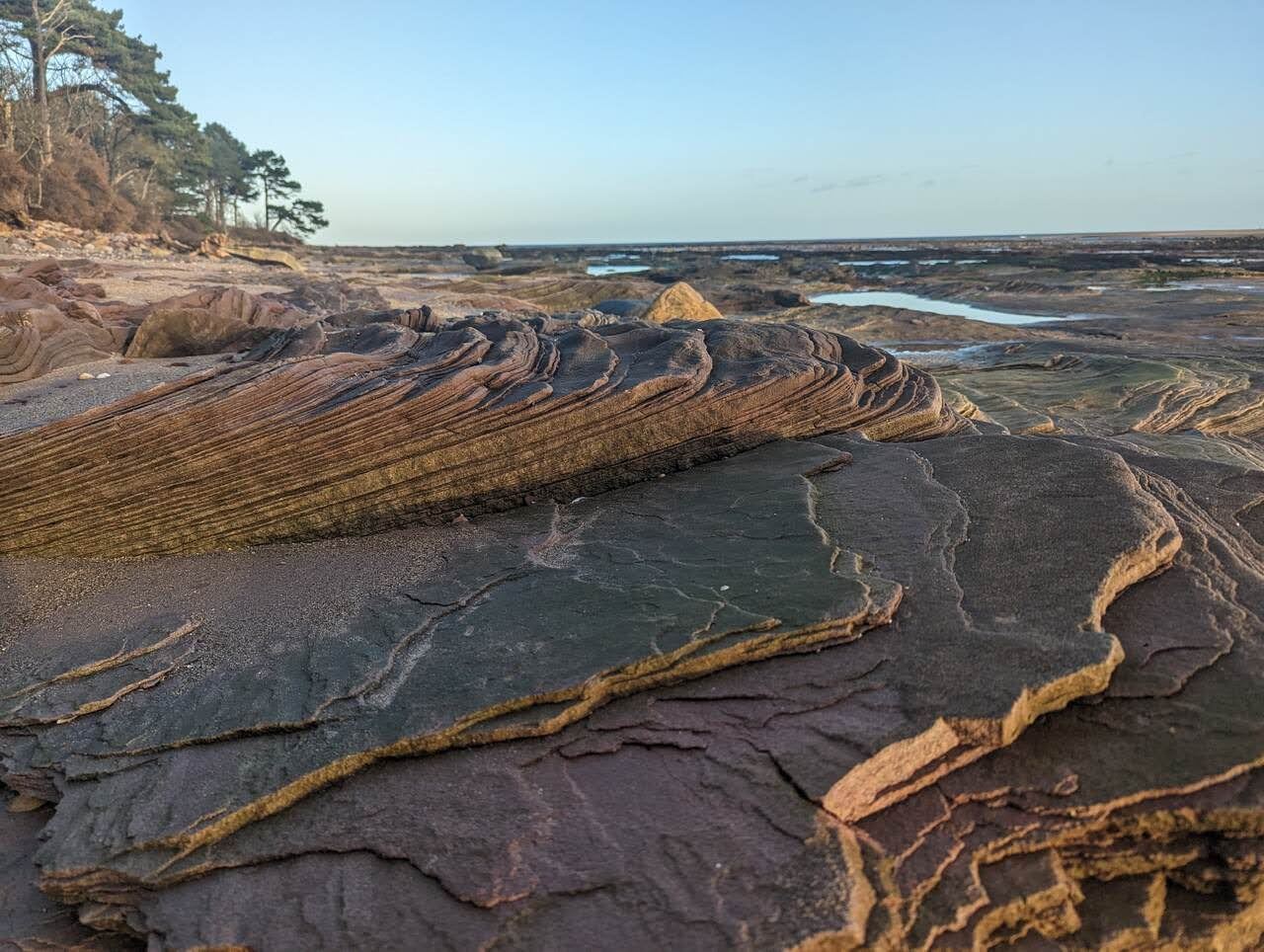
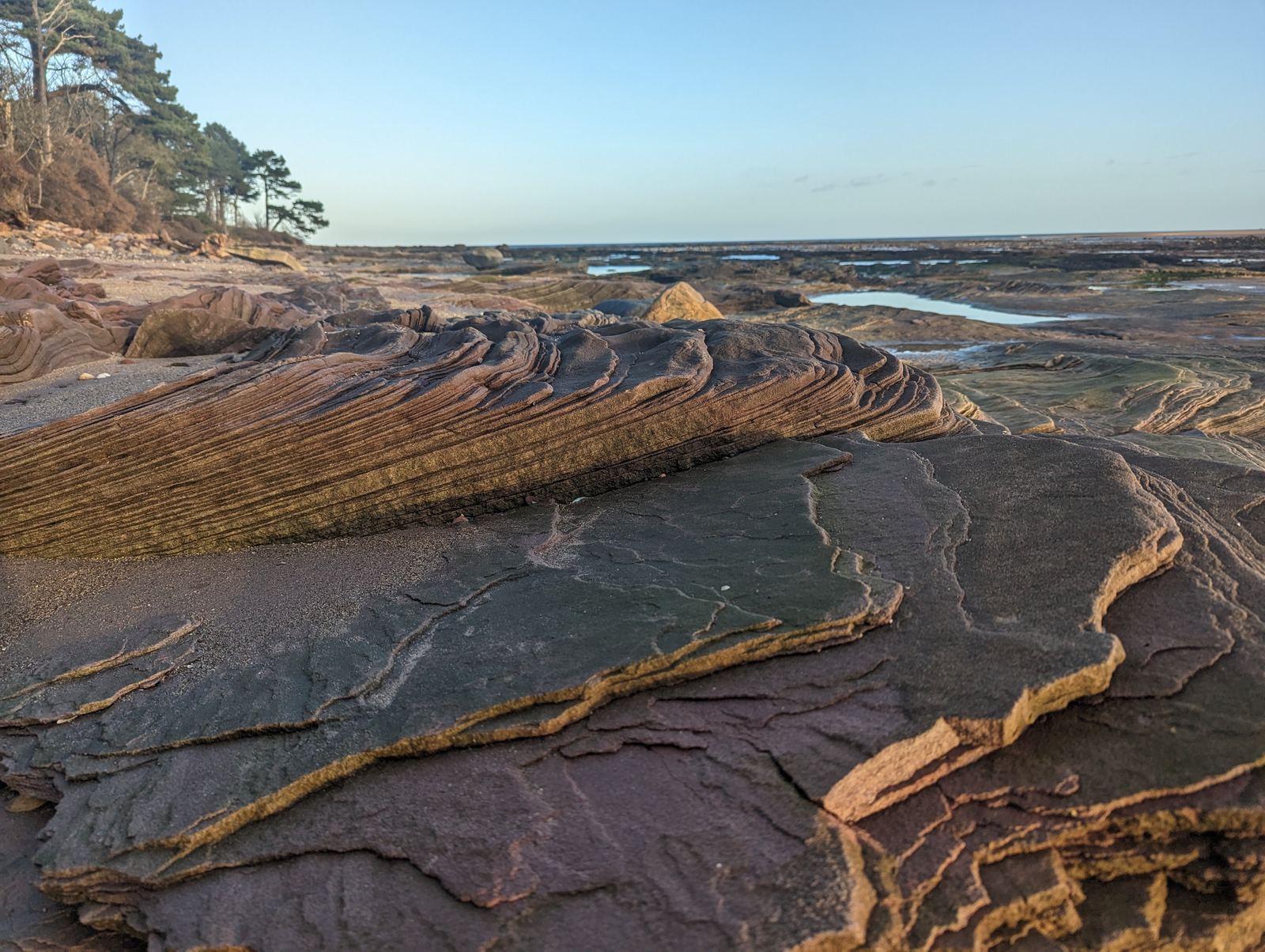
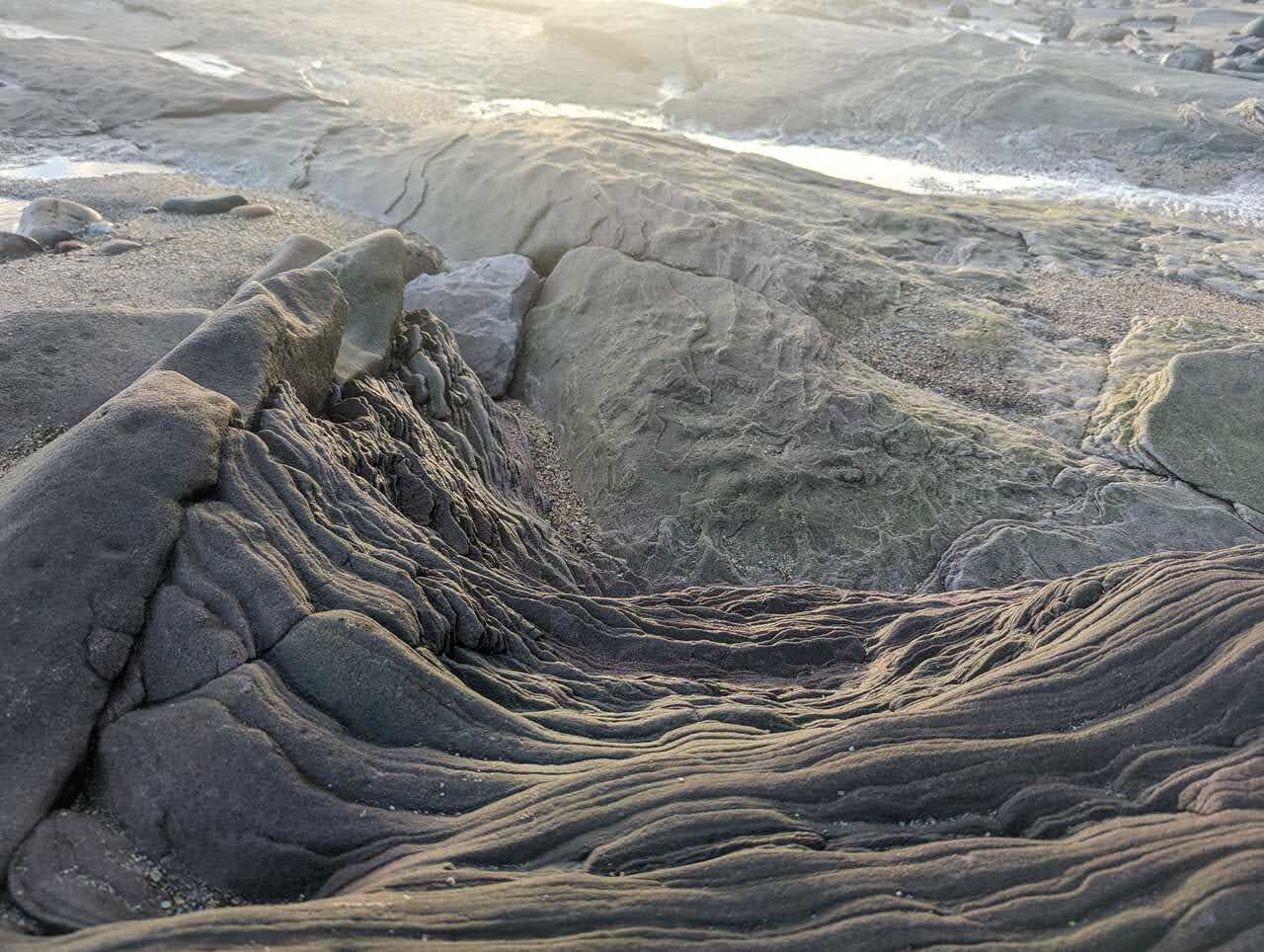
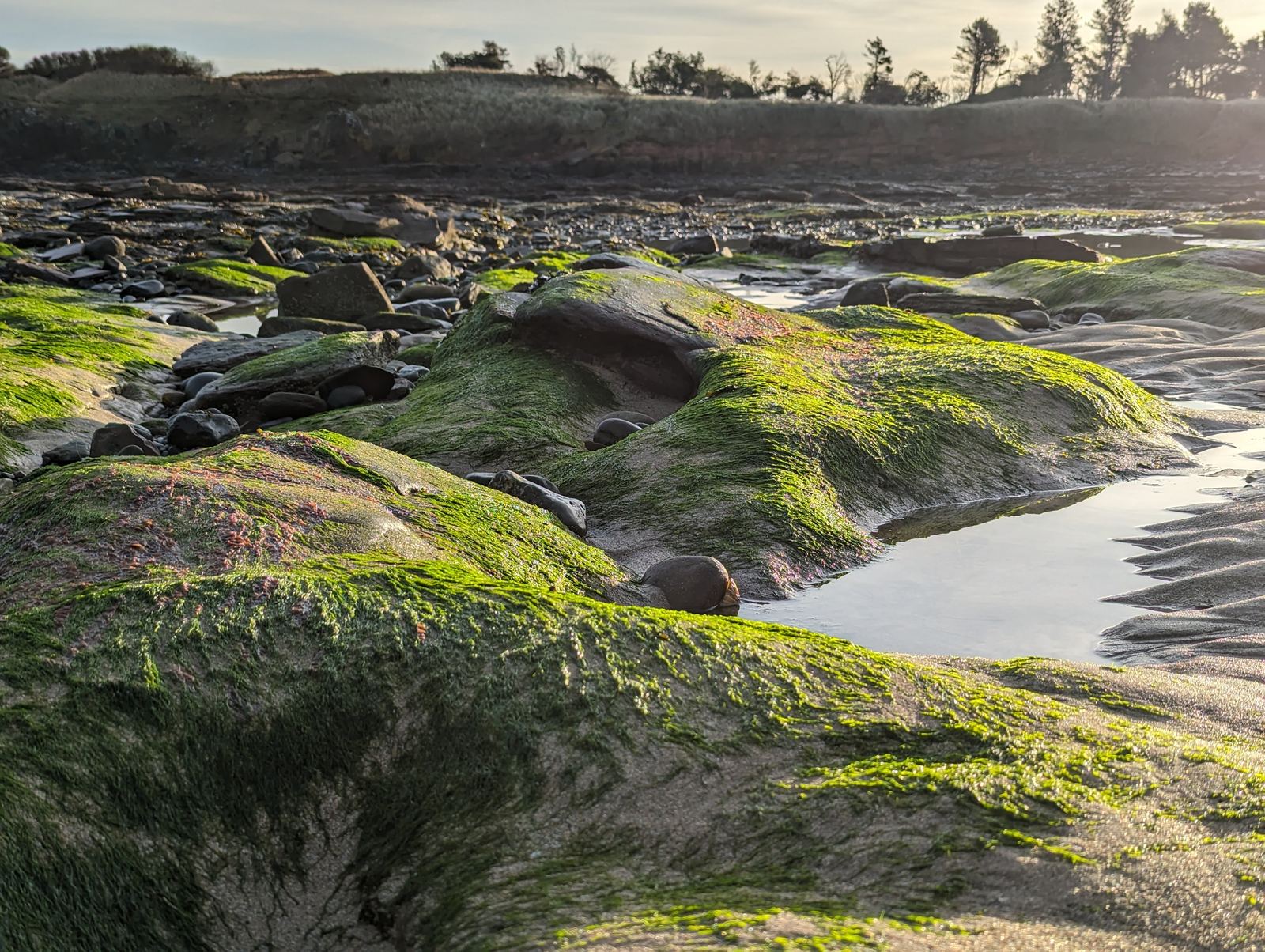
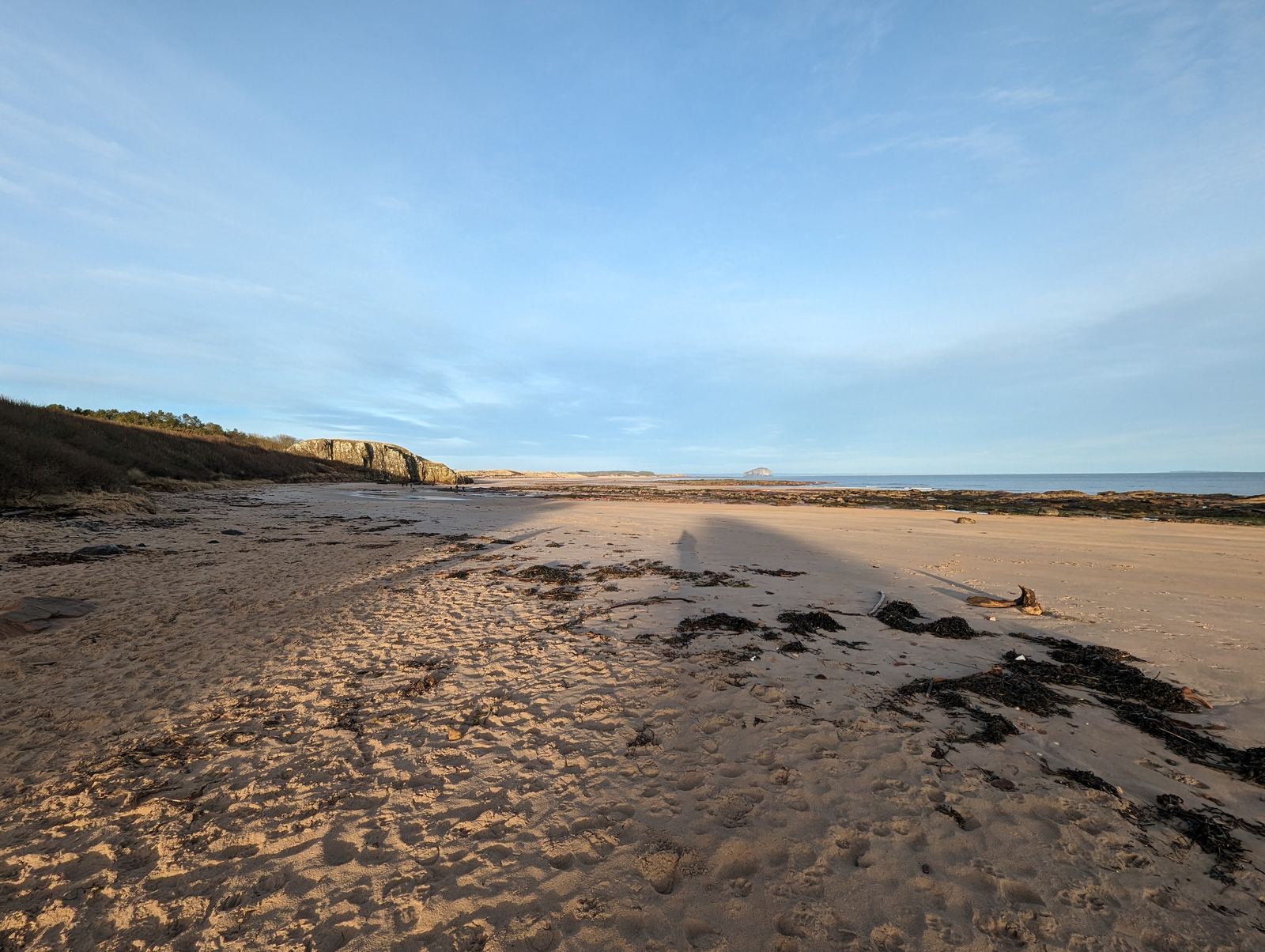
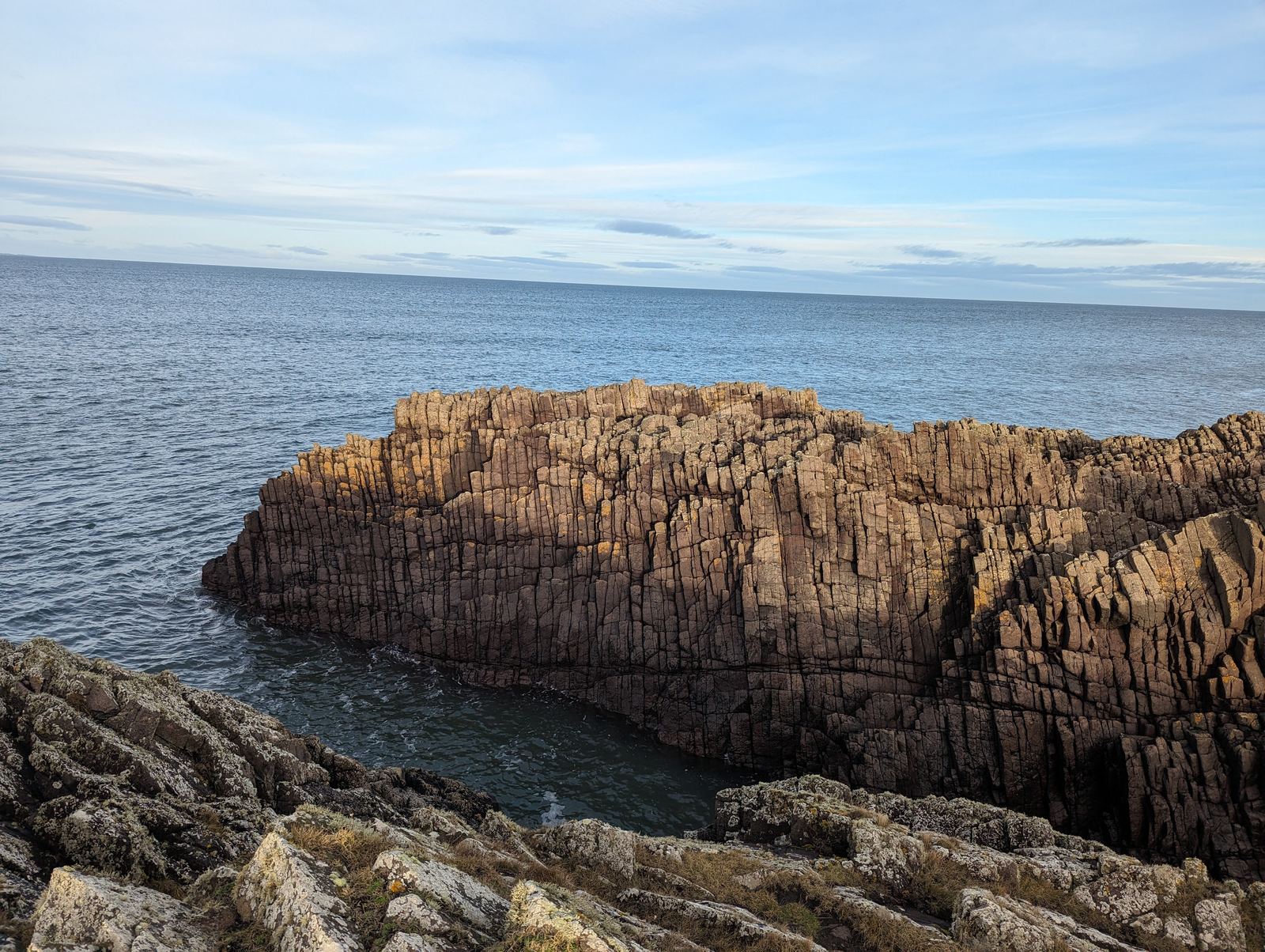
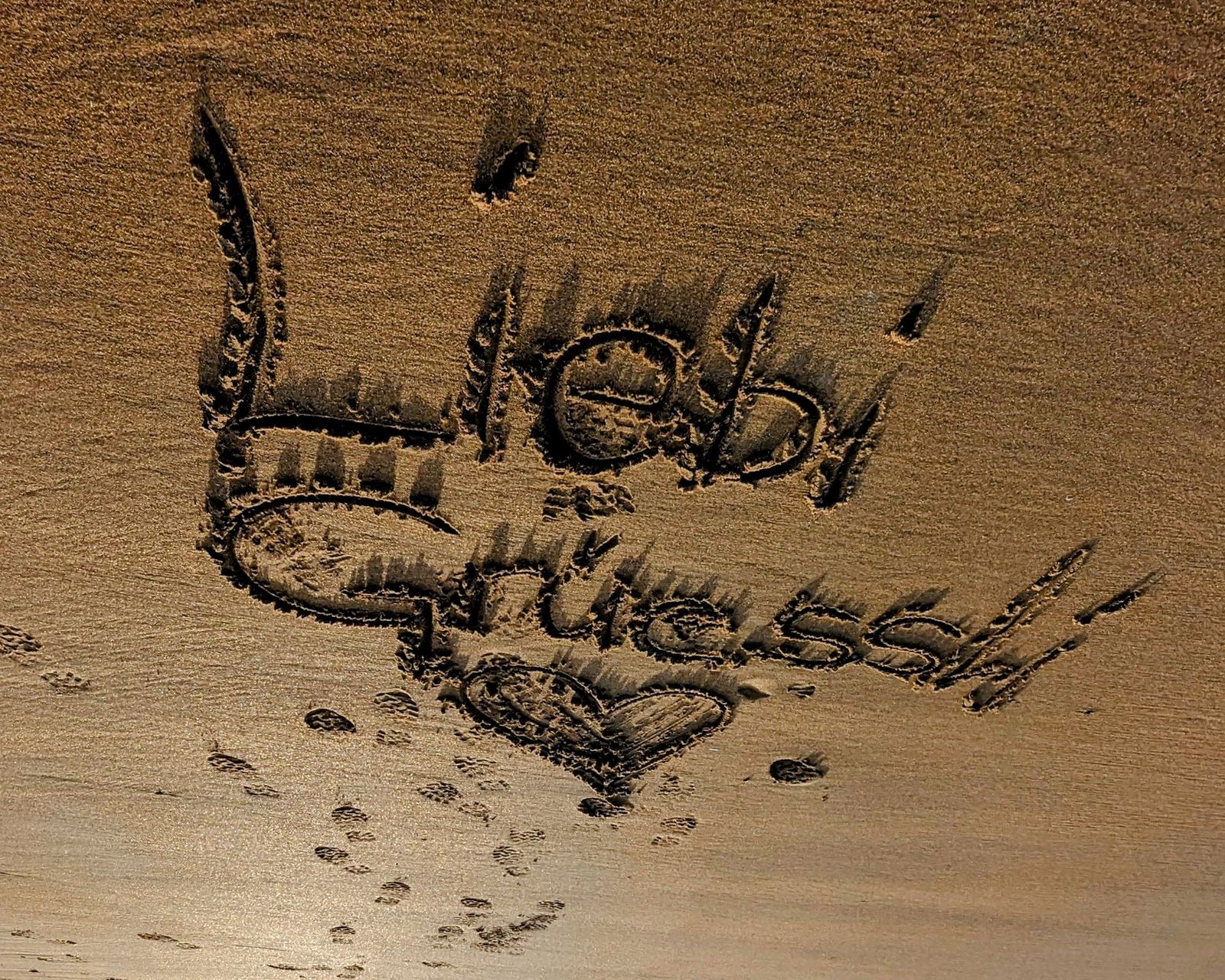
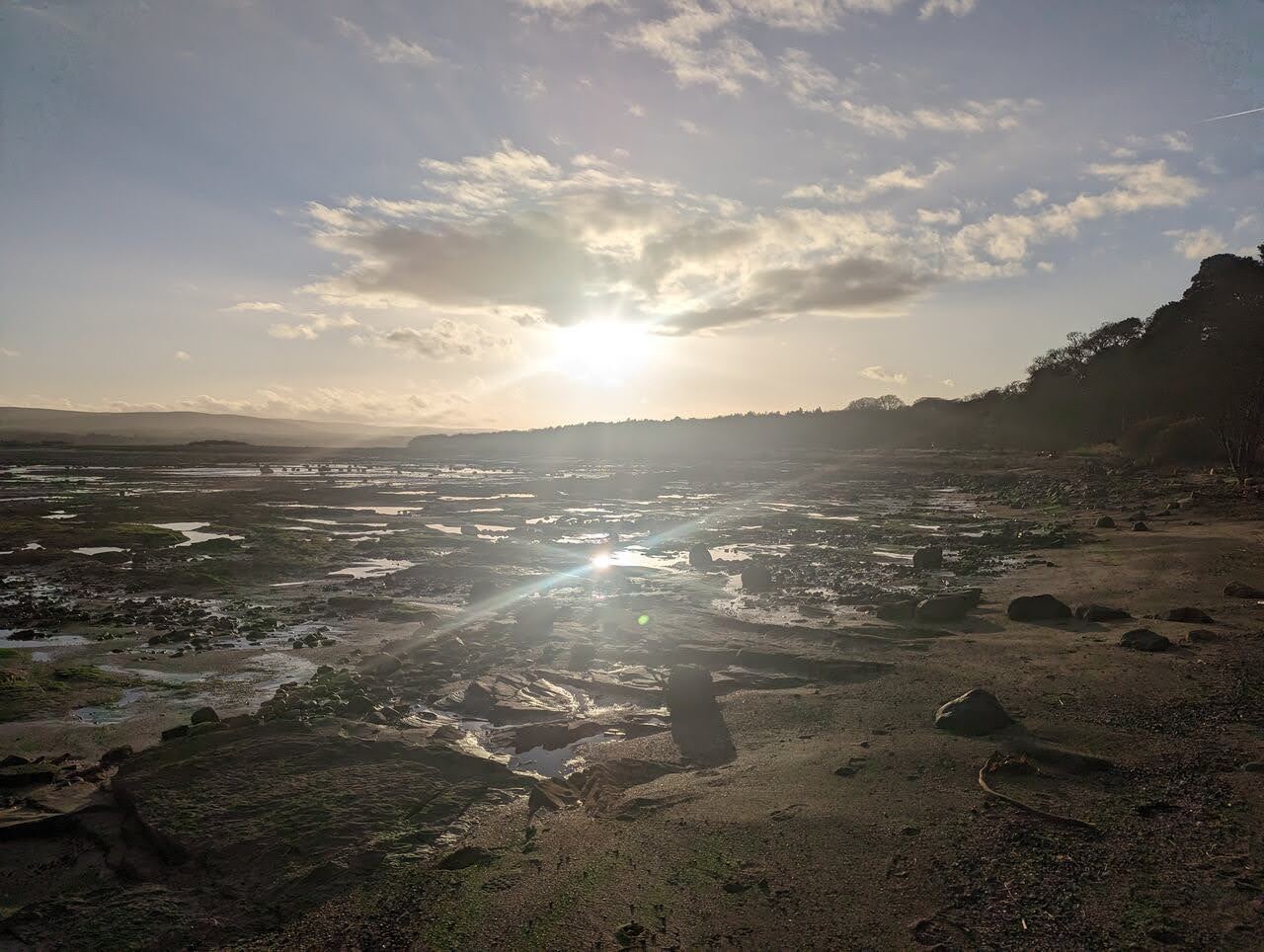
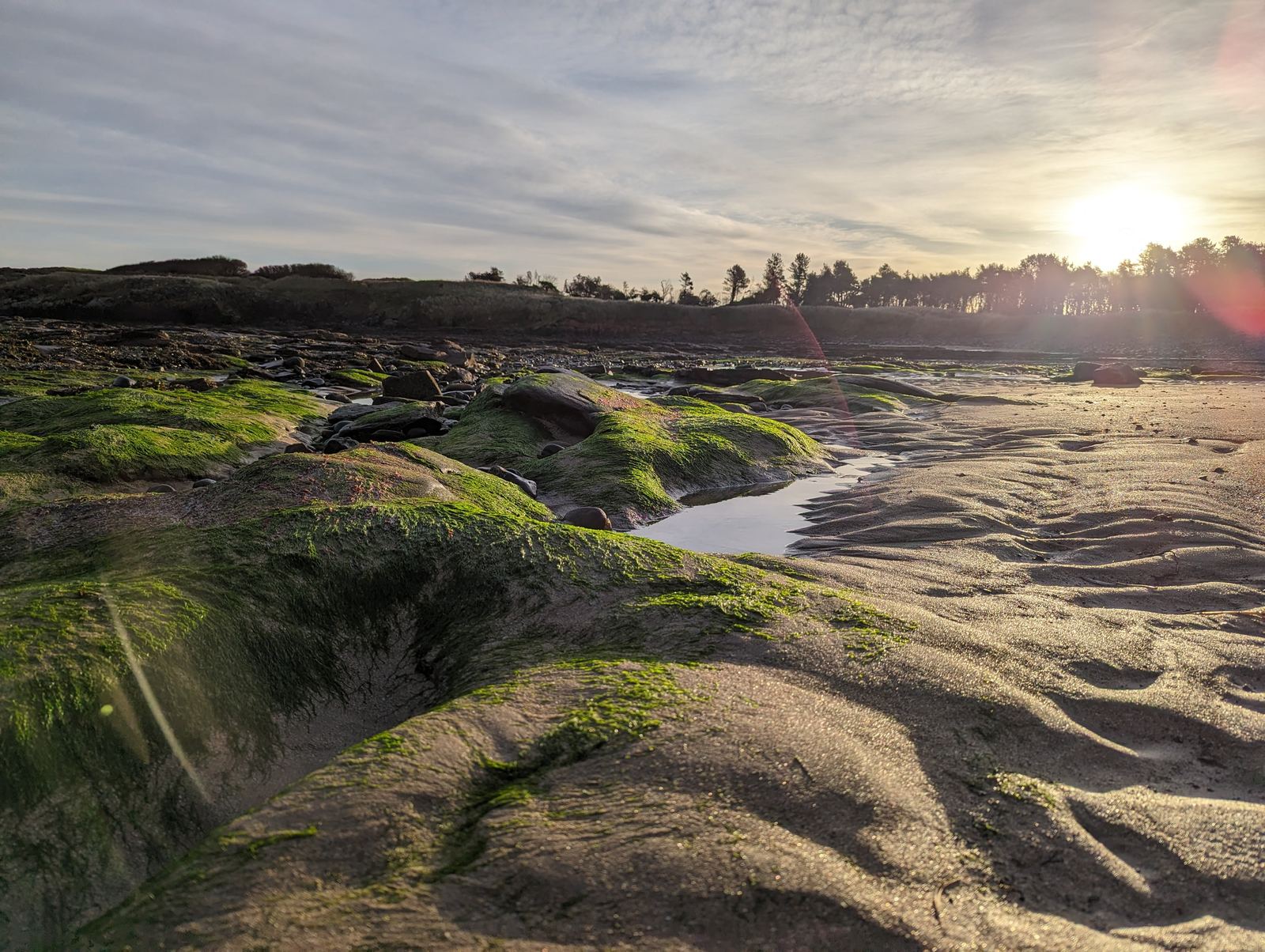
The star of Tyninghame is the shore itself. As well as clean, wide sands and green-mossed boulders, the beach is famous for its astonishing folded, banded sandstone — great swirling sheets of rock, layer upon coloured layer, sculpted by the sea into shapes that look almost liquid. Catch it in low winter sun and it’s unforgettable. Beyond, the Tyne estuary opens out in a maze of channels, sandbanks and saltmarsh, with rocky little headlands (one of them the site of a long-gone “St Baldred’s Castle”).
The pinewoods & the walks
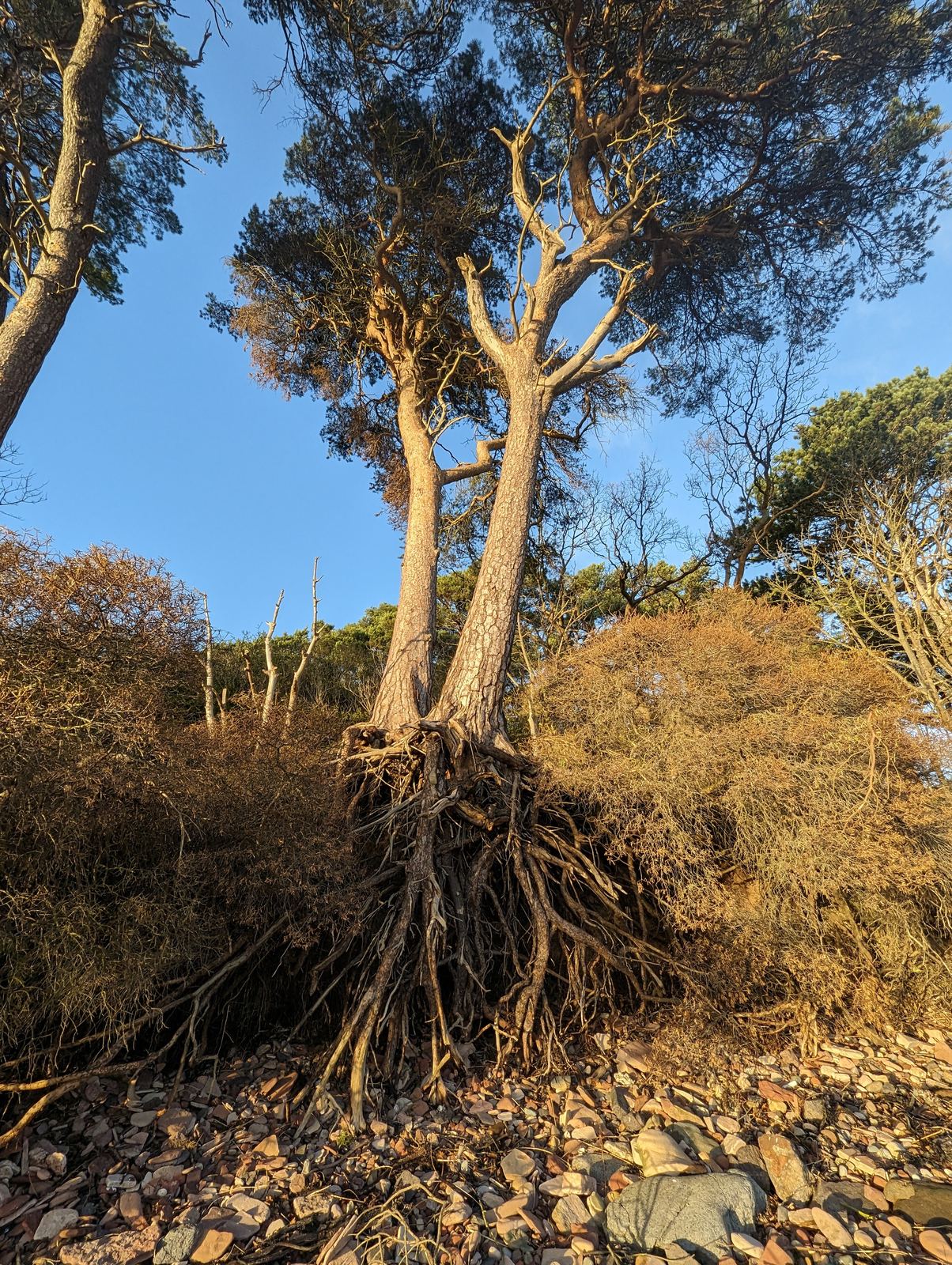
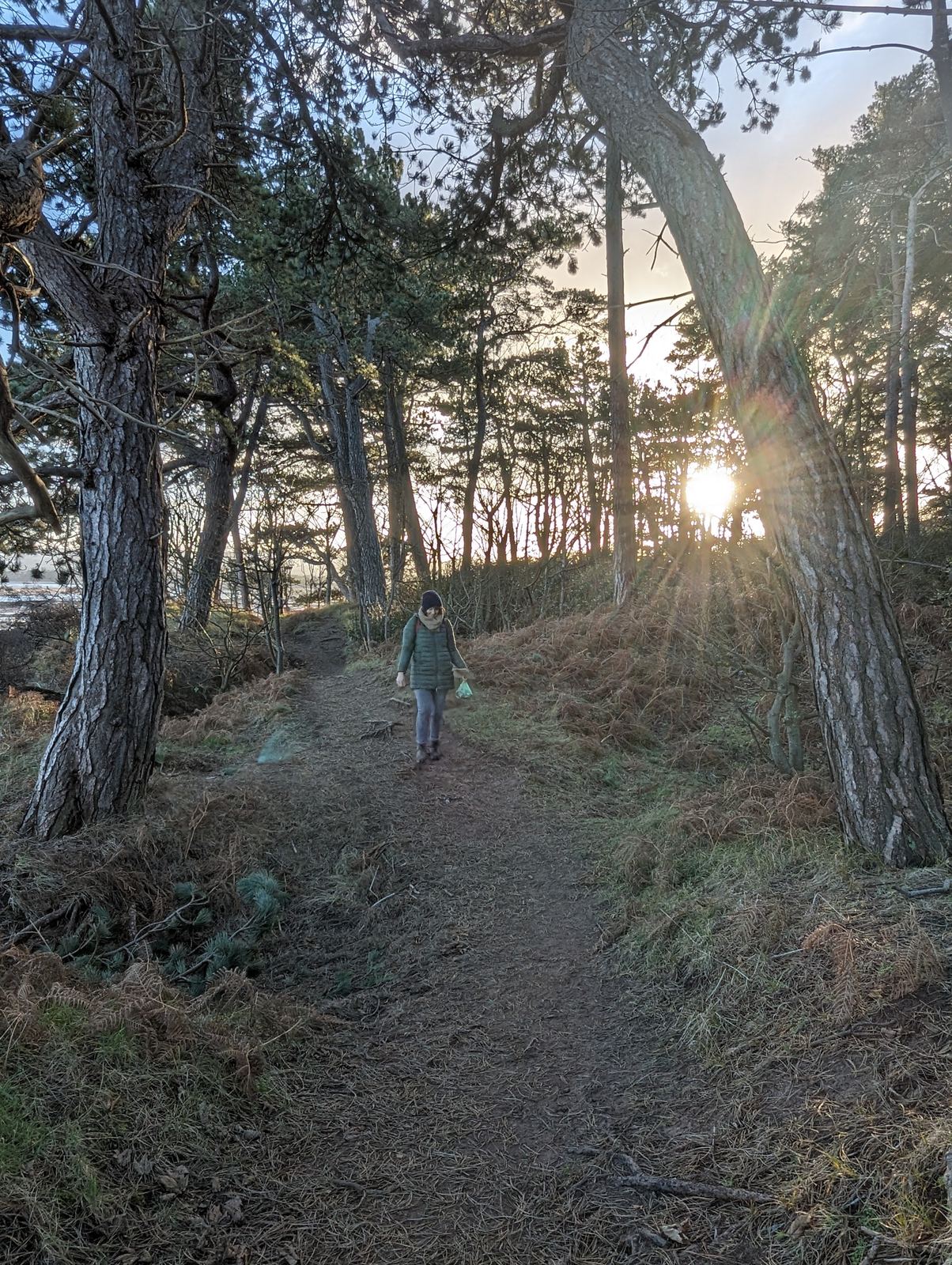
Behind the beach run glorious Scots pinewoods — part of the great tree-planting the estate laid out three centuries ago — threaded with easy paths that link the woods, the shore and the estuary. It’s flat, sheltered, dog-friendly walking, with the sea always glinting through the trees and the light doing lovely things among the pines. You can wander for a whole afternoon and barely see another soul in winter.
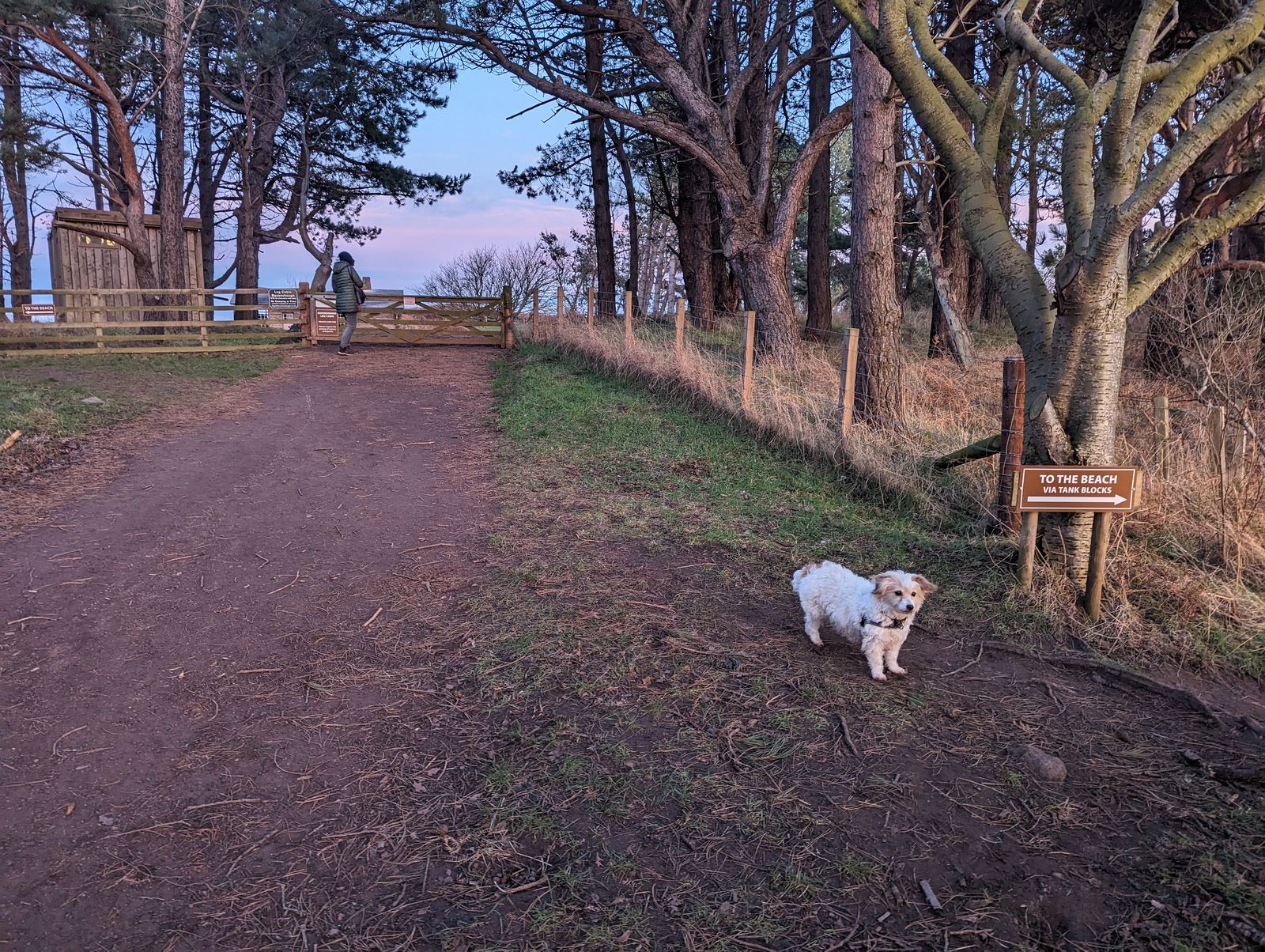
John Muir Country Park
All of this sits inside the John Muir Country Park — 1,760 acres and 8 miles of coastline named for Dunbar’s own John Muir, the father of the world’s national parks. It runs from Belhaven Bay at Dunbar right along the Tyne estuary, taking in tidal mudflats, saltmarsh, dunes, pinewoods and open fields — a brilliant spot for wading birds and wildfowl (bring binoculars), and one of the finest easy coastal walks in East Lothian. It’s free, and open all year.
Tyninghame estate & St Baldred
Inland, the little estate village and the grand Tyninghame House hide a very deep history. Tyninghame is one of the oldest settlements in Scotland — an Anglian village going back to the 7th century — and it takes its name and its saint from St Baldred, a monk who lived and preached here and died around 756 AD. A monastery stood here through the early Middle Ages, and the romantic ruins of St Baldred’s church (of Norman date) still stand near the house, reputedly one of the places the saint was buried.
Since 1628 the estate has belonged to the Earls of Haddington (the Hamilton family), who are buried at St Baldred’s. It was the 6th Earl and his Countess, from 1700, who transformed this whole corner of East Lothian with vast tree-planting — including the famous mile-long avenues — which is why the estate and its pinewoods feel so timeless today. (The house itself is private and divided into homes, but the wider landscape they shaped is what you’re walking through.)
🚐 Staying overnight — the honest version
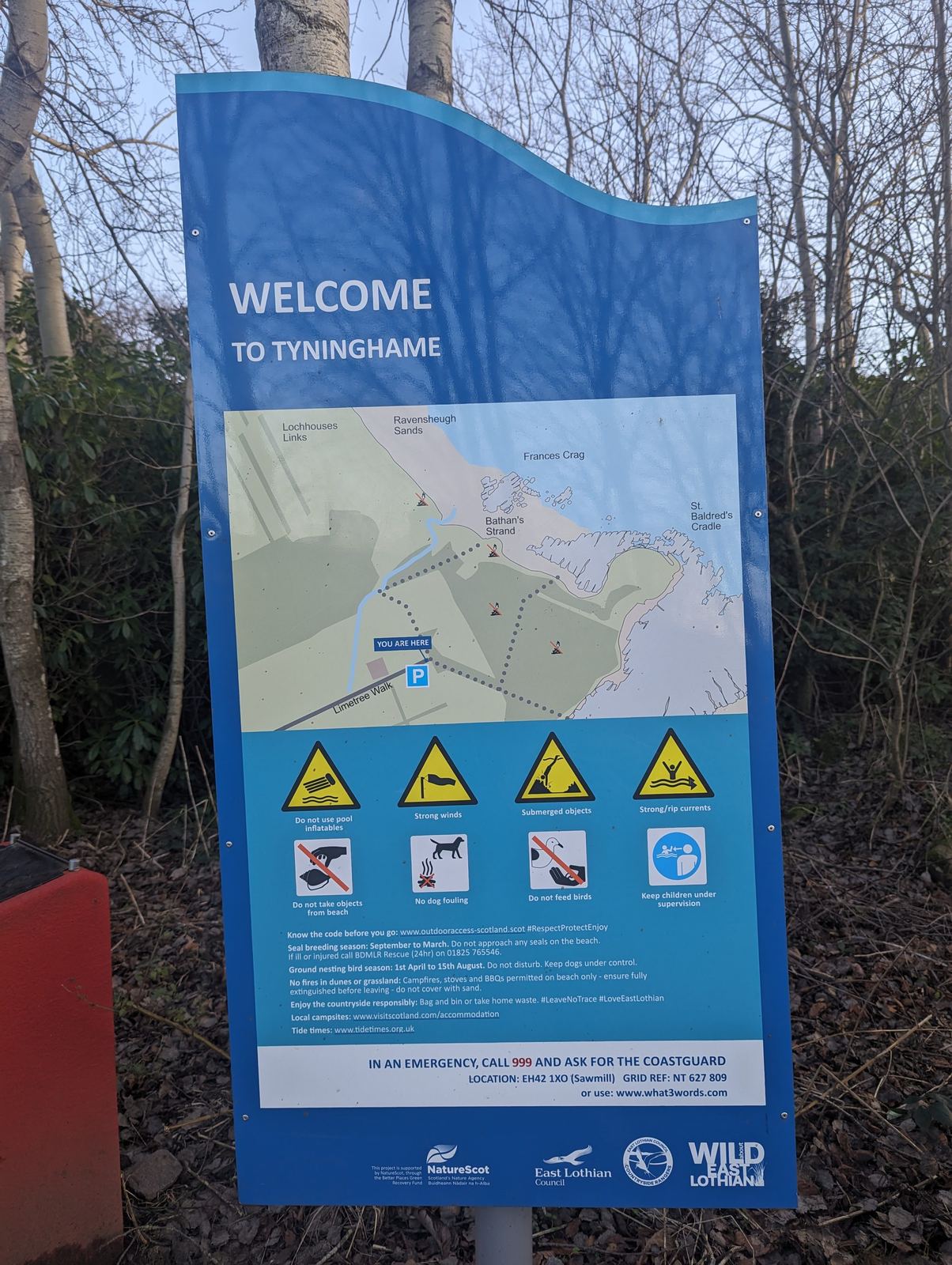
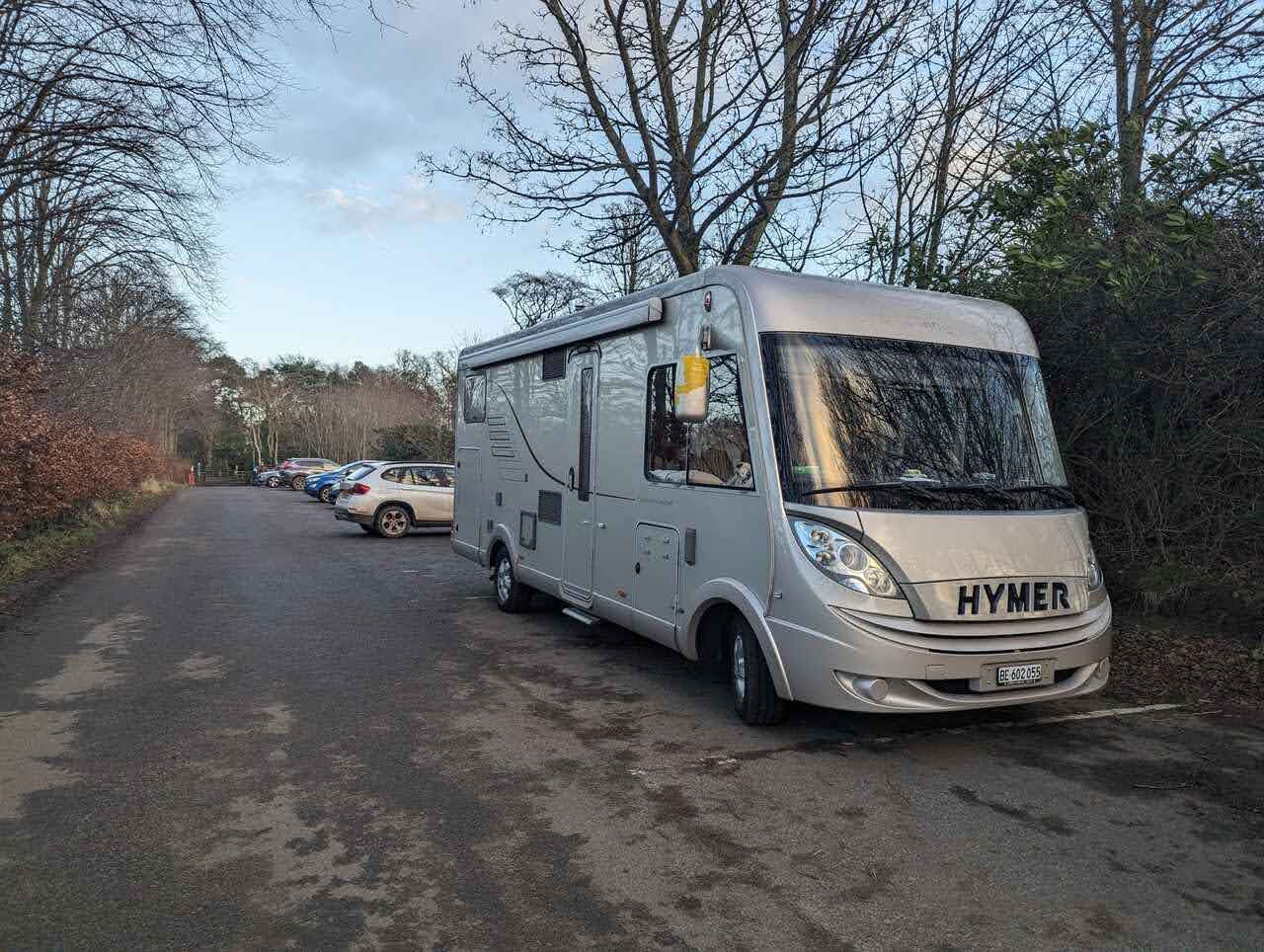
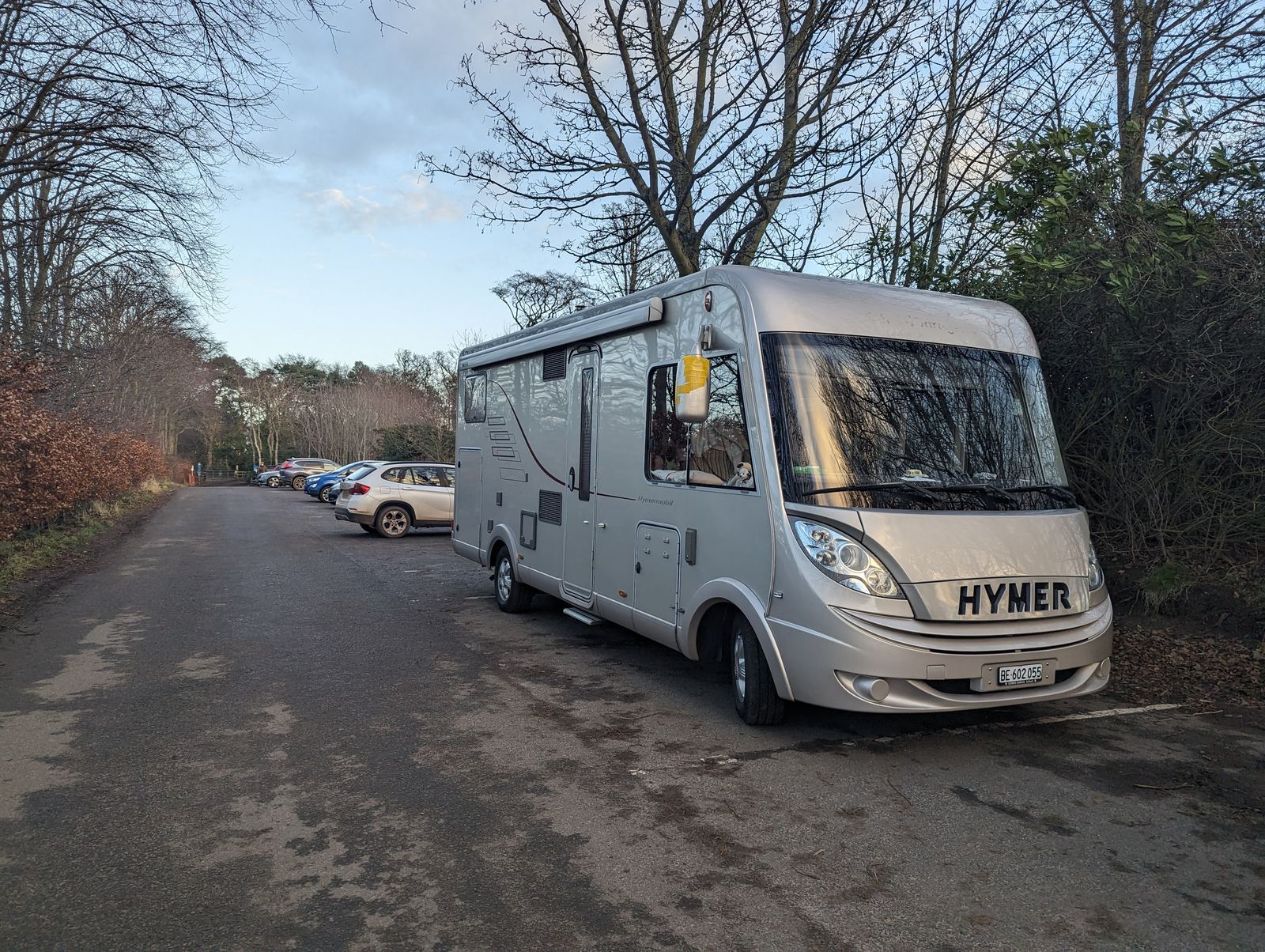
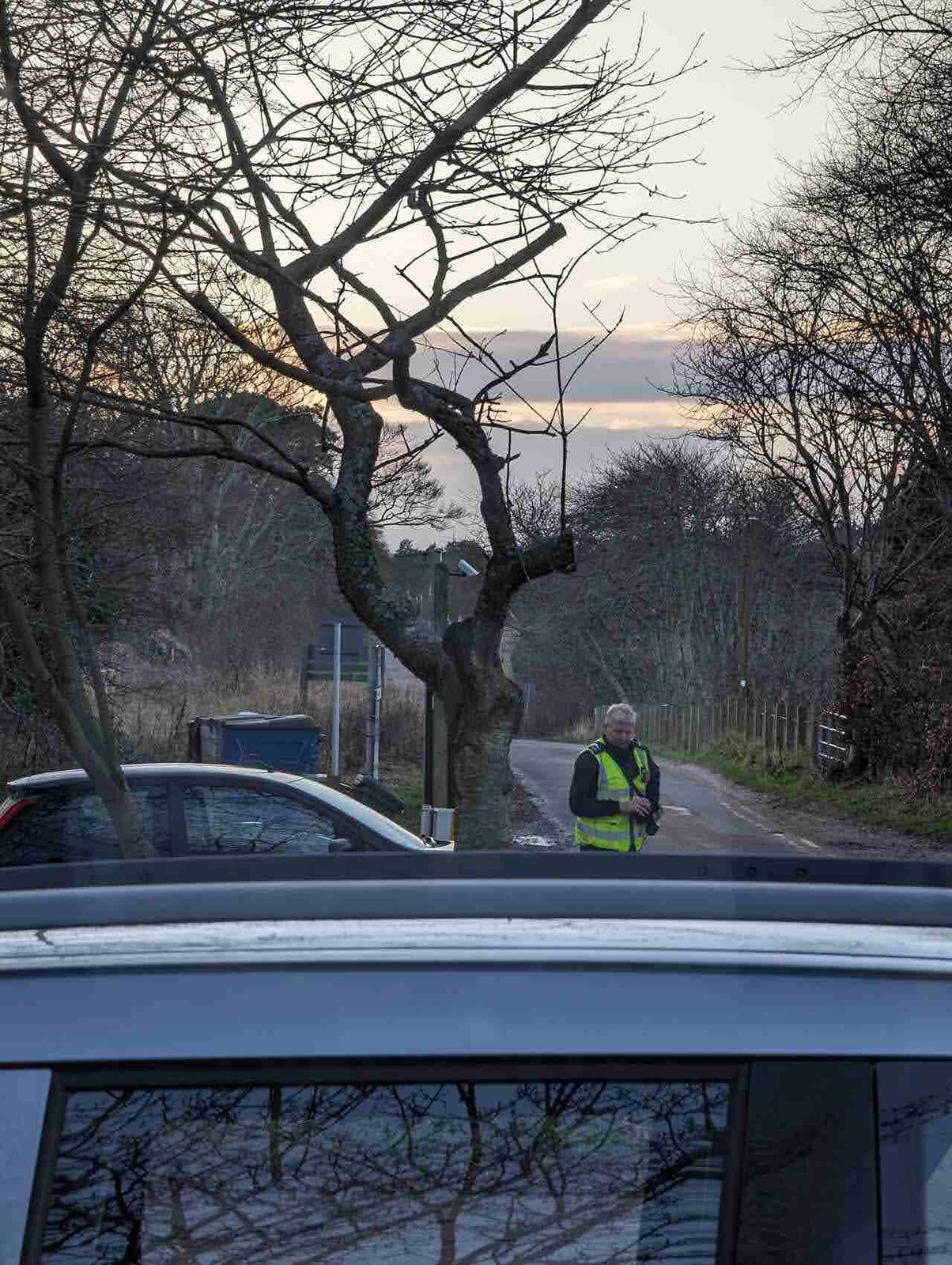
Right, the practical (and important) bit. We did stay overnight in the small car park by the walks — but we’ll be straight with you: you’re really not supposed to. It’s a day car park where you need a ticket, and there’s a parking warden who turns up at 8am on the dot to check vehicles. So if you do stop over, the rules to respect are simple and firm: buy your ticket, take only one space (never two), be gone or sorted by the time the warden arrives, and leave absolutely no trace. Honestly, it’s a day-visit car park first and foremost — the surest bet for an overnight nearby is the Dunbar option, and treat Tyninghame as the glorious walk it is.
Best time to visit
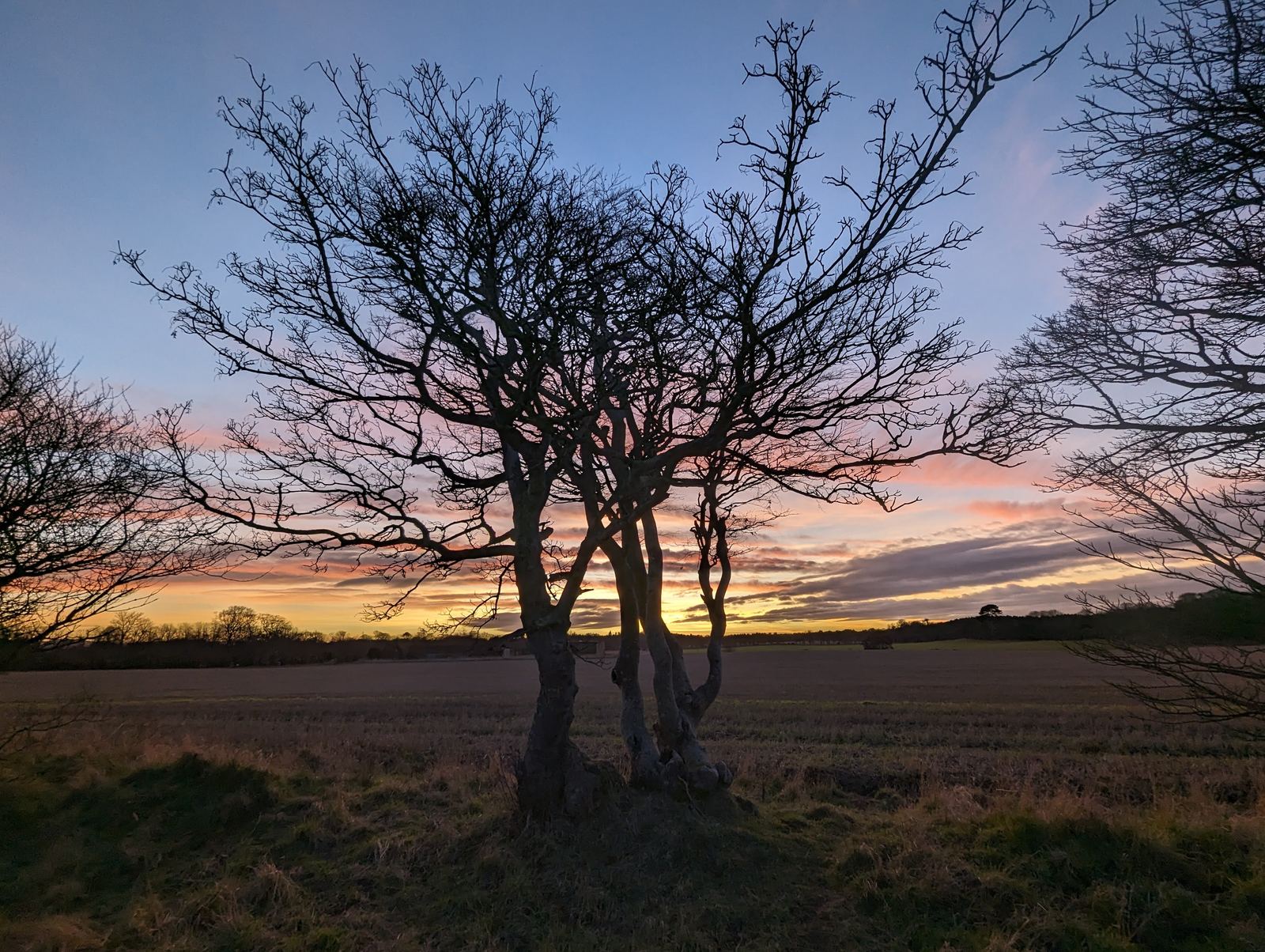
Any season — but we loved it in winter, with the low sun on the folded rocks, empty paths and huge skies. Spring and autumn are superb for birdwatching on the estuary. Come at low tide to see the rocks and sands at their best, and check tide times — the estuary channels fill fast.
Combine it with
- Dunbar — John Muir’s town, the red castle and the harbour, 3 miles east.
- North Berwick & Tantallon — Bass Rock, the Law and the Douglas fortress, west along the coast.
- The John Muir Way — the long-distance path runs right through here.
Reality notes
- 🅿️ Parking: small ticketed day car park by the walks — warden checks at 8am; one space per vehicle. Overnighting is not really provided for (see above).
- 🌊 Tides: the estuary and its channels fill quickly — check tide times, mind children and dogs.
- 🐦 Wildlife: important estuary for wading birds and wildfowl — keep dogs under control, especially in the breeding season.
- 🥾 Walking: flat, easy, sheltered paths through wood, dune and shore — brilliant, but bring boots for wet sand.
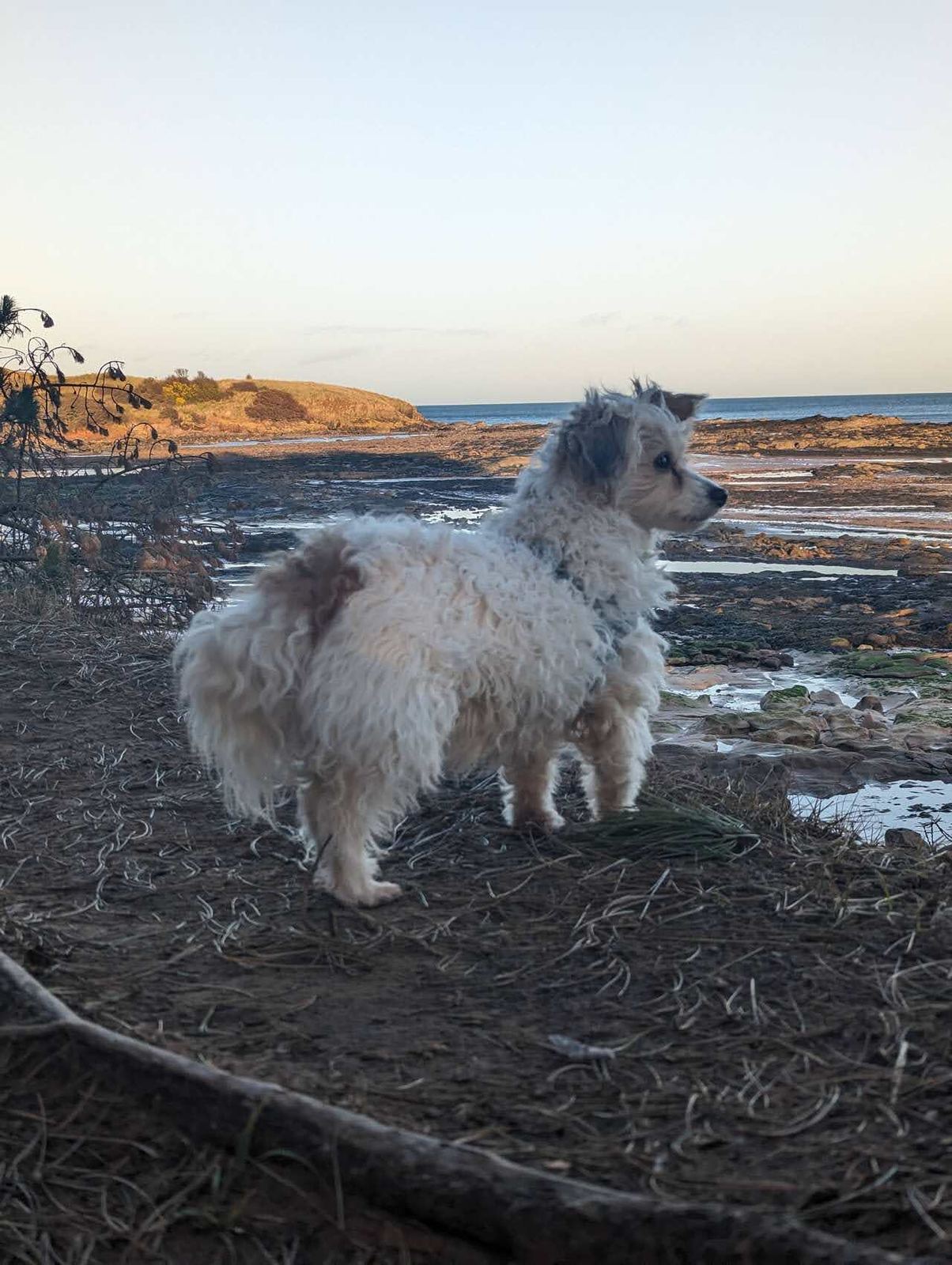
- 🐕 Dogs: superb — just mind the birds and the tide.
Sources
- First-hand: Kevin & family, Tyninghame, Dec 2023 – Jan 2024 (own photos)
- John Muir Country Park — Wikipedia · Tyninghame — Undiscovered Scotland
🪙 Detecting on this beach
Big, wild sands inside John Muir Country Park. Check the designations here before you go — country park and nature-reserve status can bring restrictions on top of the general foreshore rules.
Extra care here: foreshore detecting needs no permit anywhere in Scotland, but Tyninghame sits inside a country park with nature designations layered on top, so check what applies before you dig. Every find is reportable to the Treasure Trove Unit regardless of age, and scheduled monuments are strictly off limits. Read the law first → · our guide →
It is a genuinely good hobby to take up here. You get a reason to be on a beach like this at first light in November, the kit is a one-off cost, and the finds range from the merely satisfying to the occasionally valuable. Scotland pays finders market value for anything a museum wants — £138,651 went out to members of the public last year alone.