
A Pebble Beach on the Kintyre Way: Our Favourite Wild Camp
Overview — my wife’s favourite place
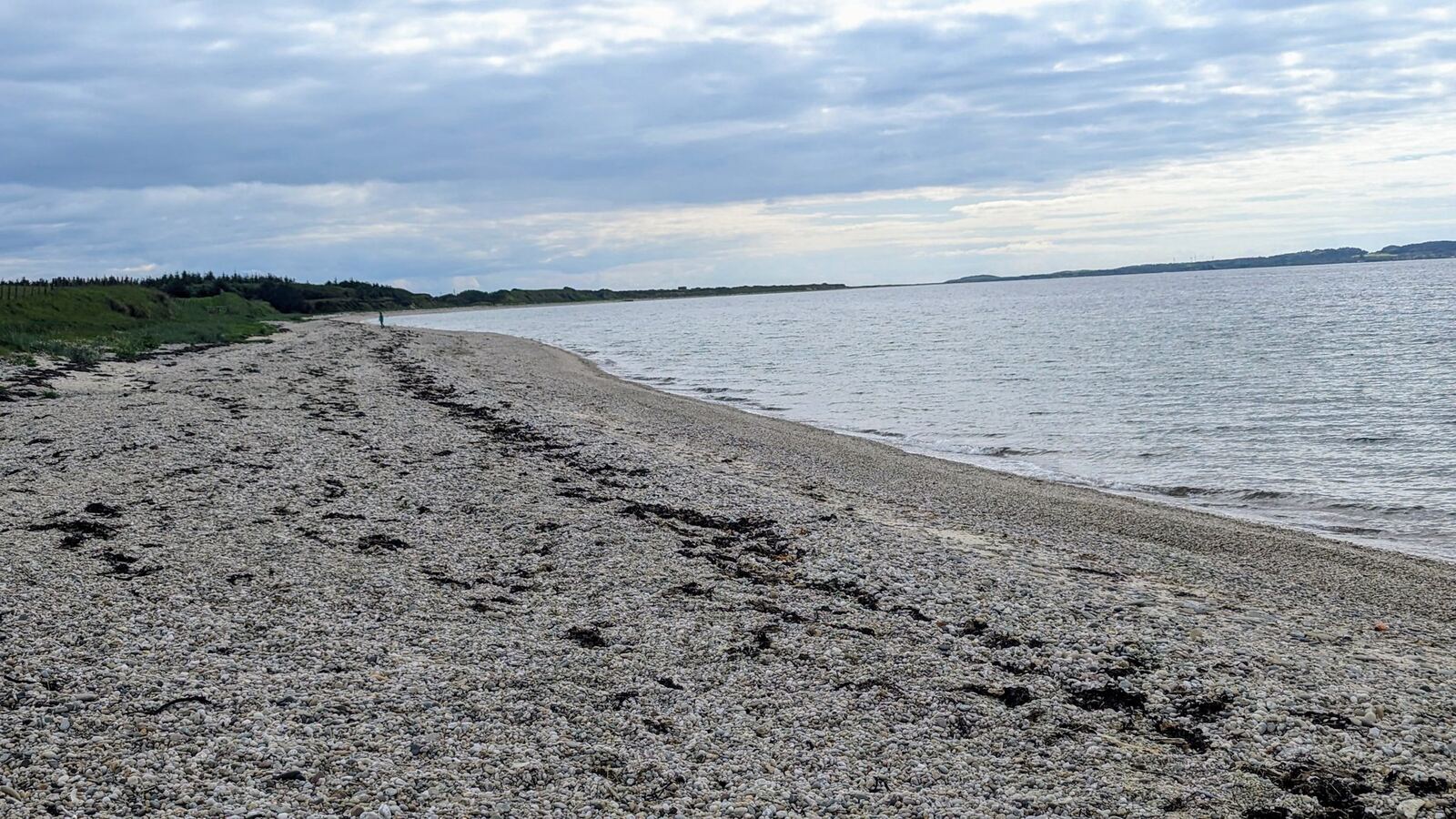
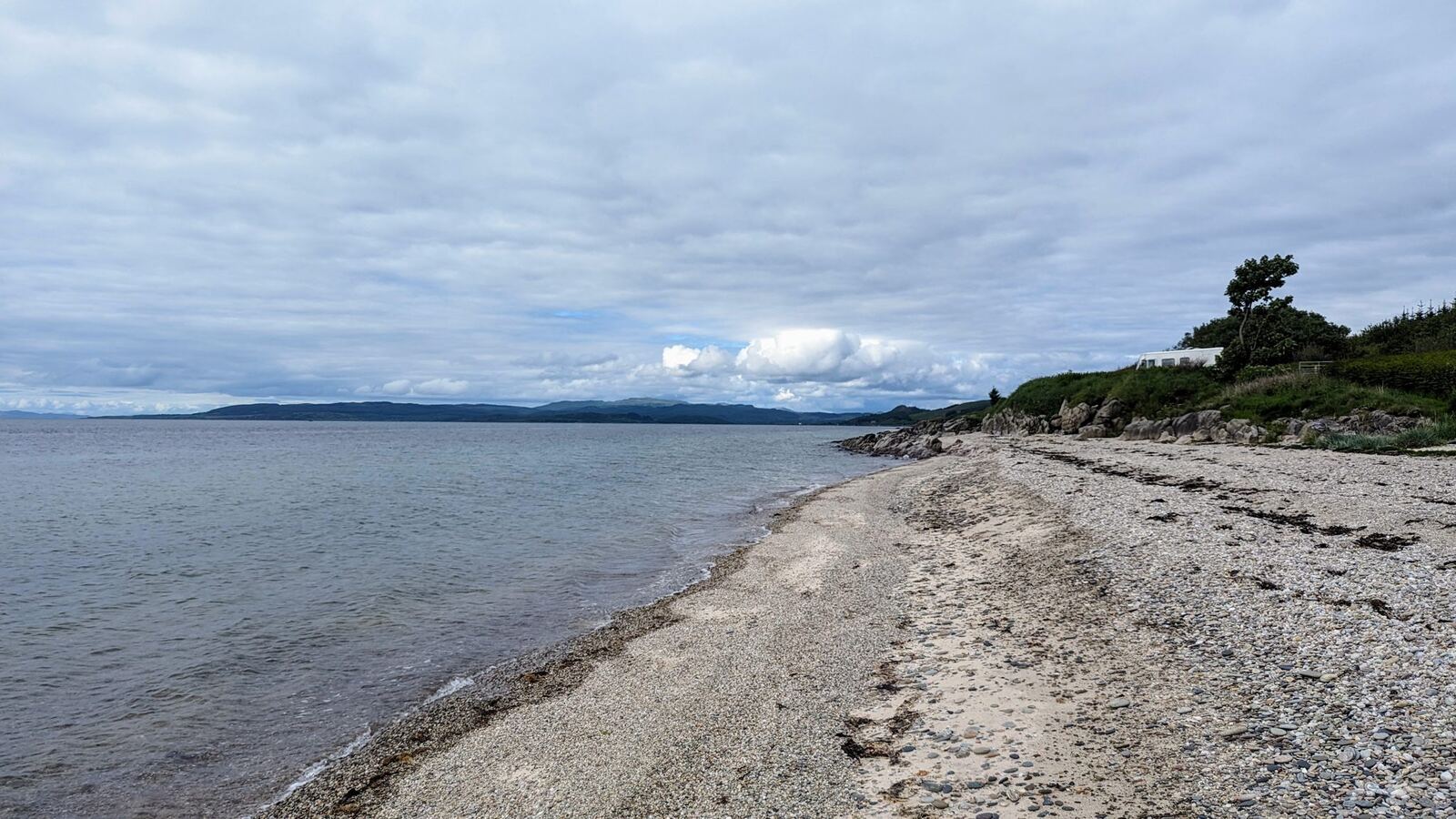
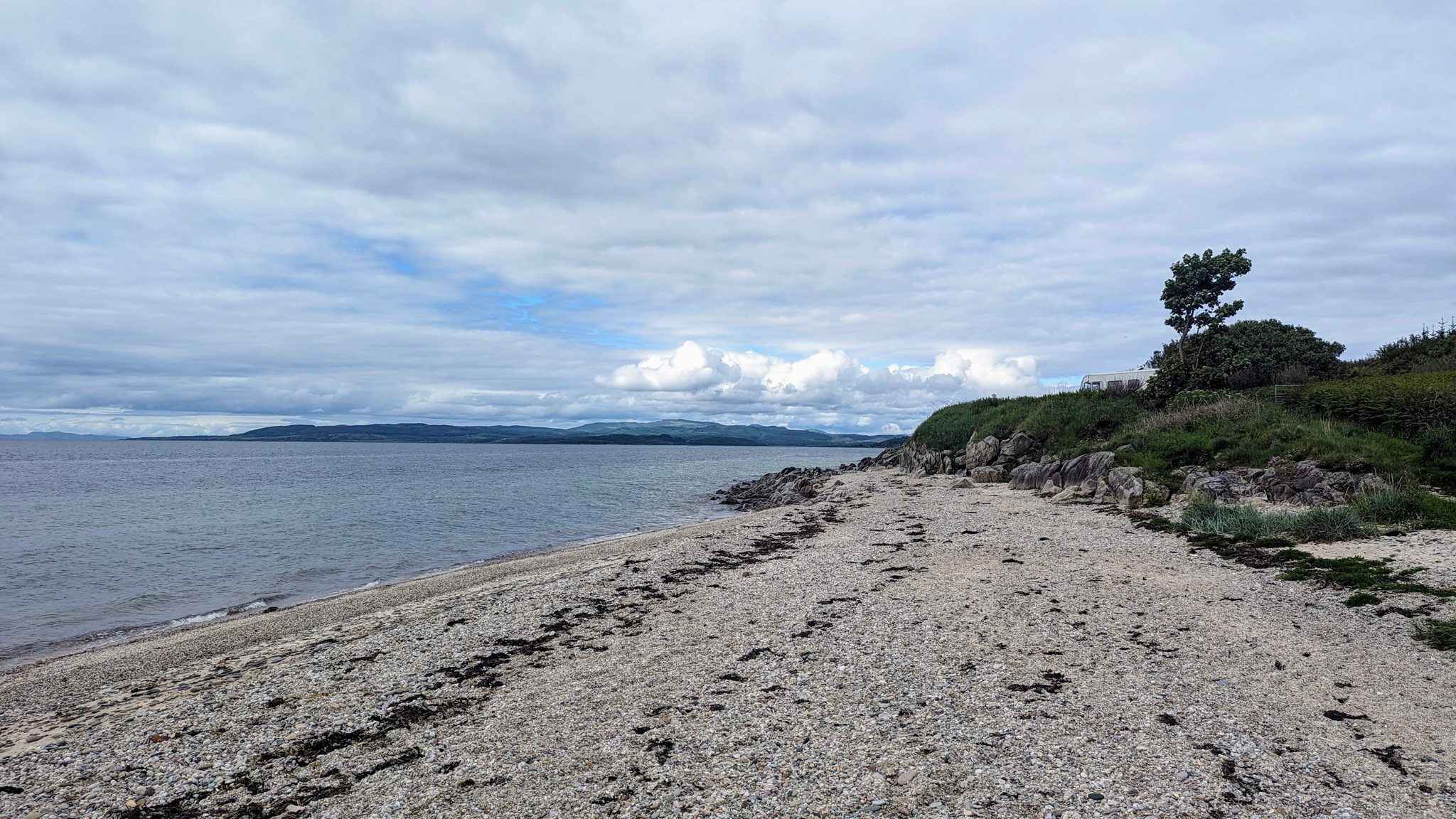
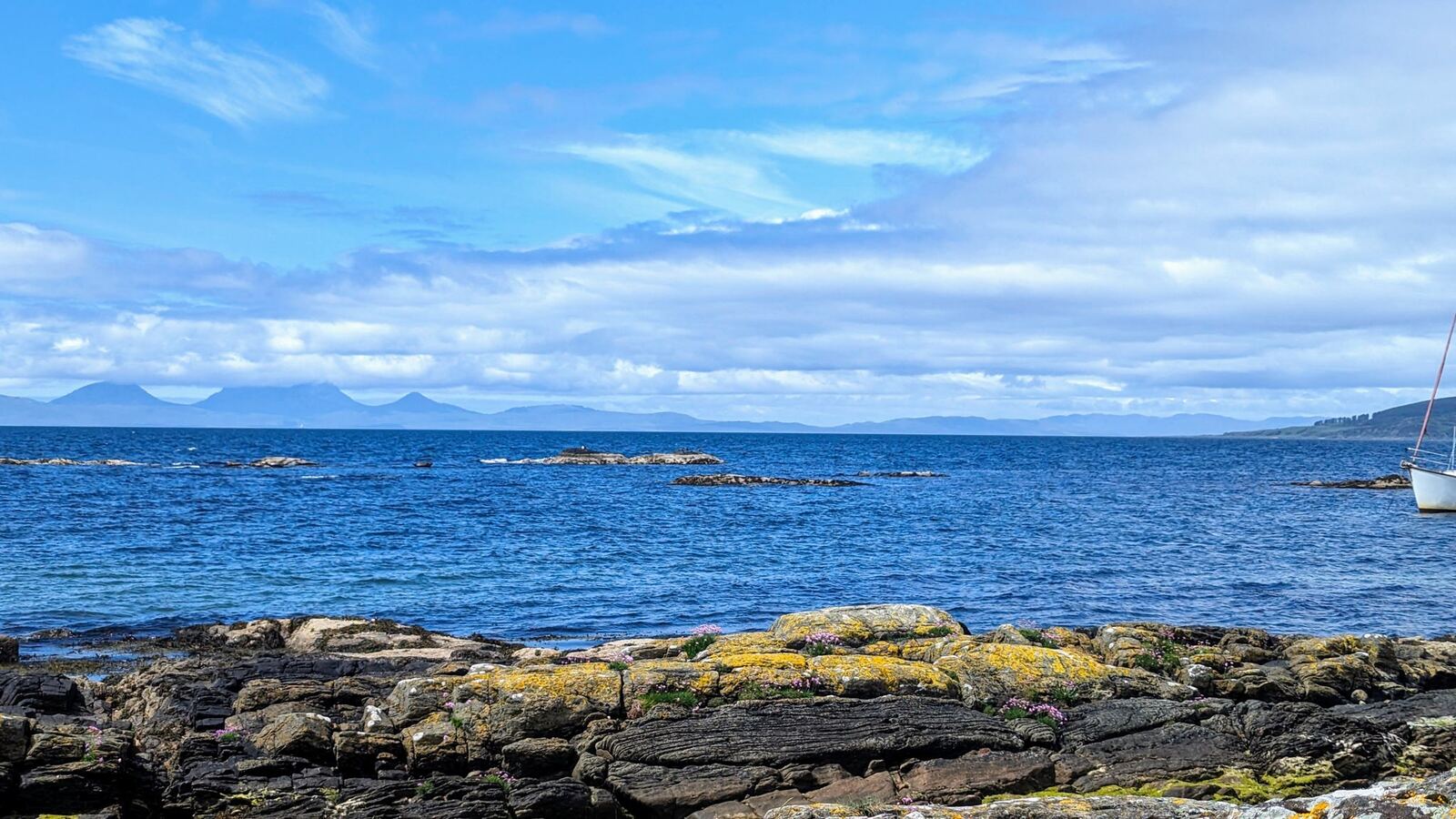
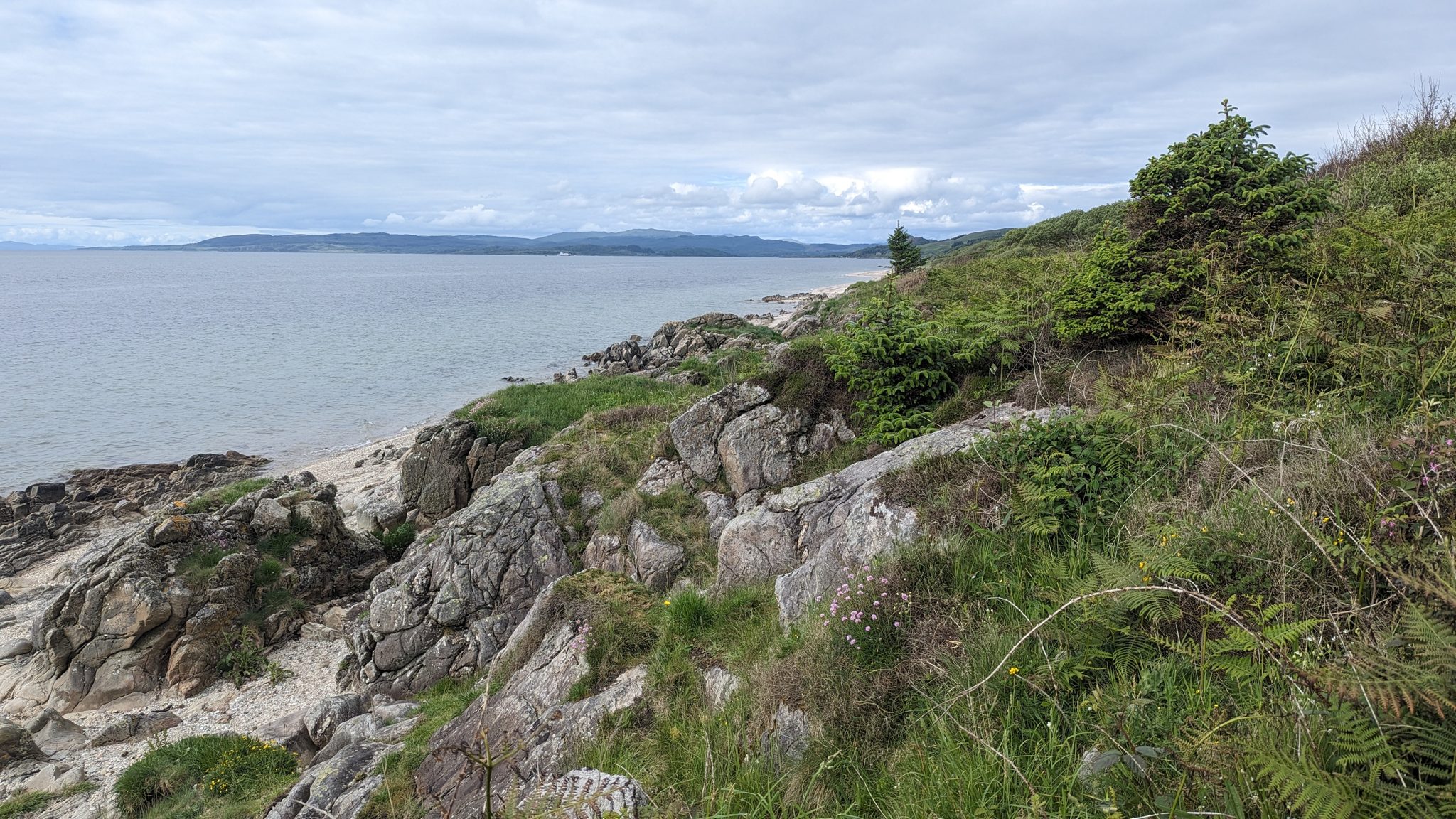
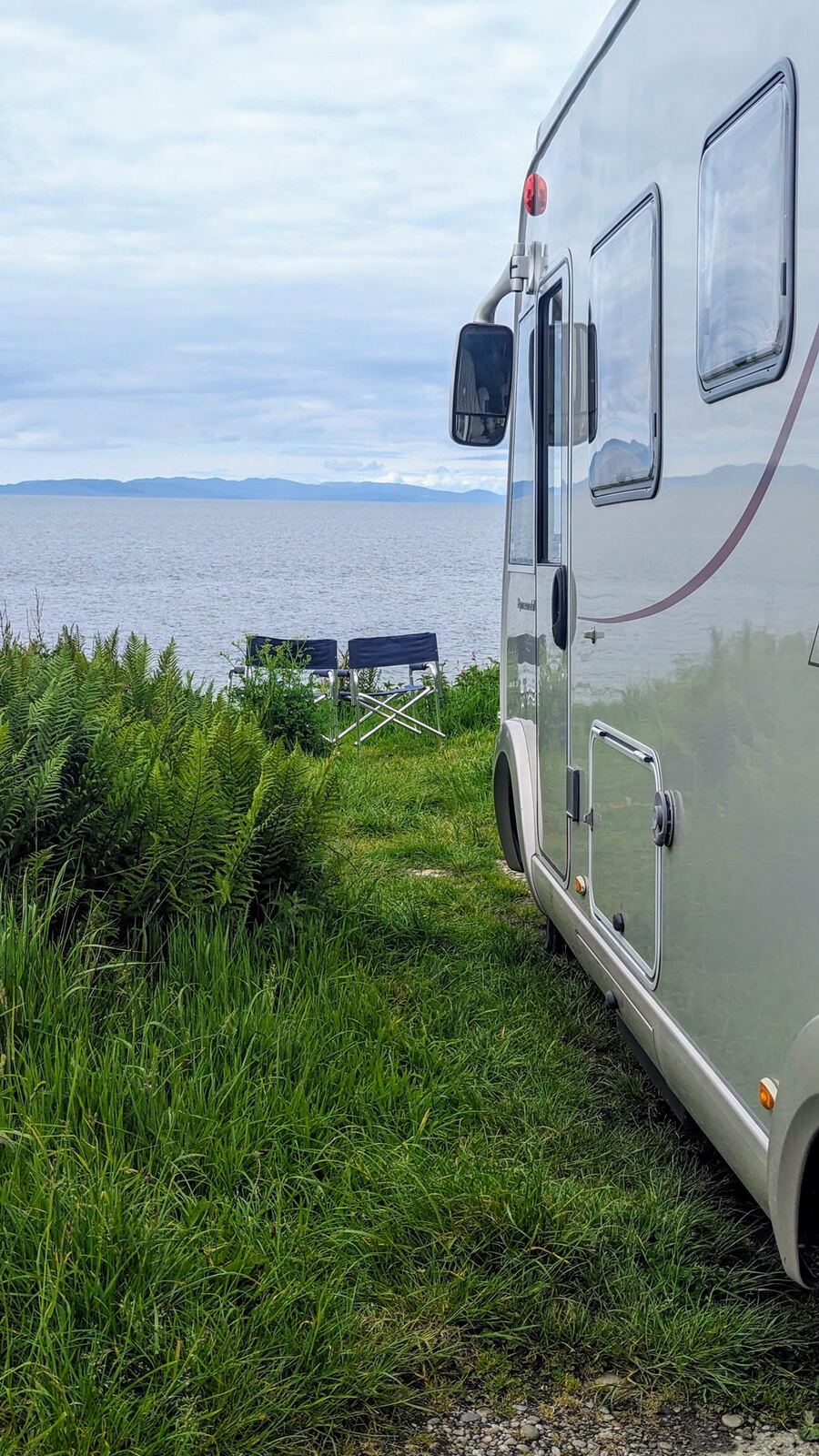
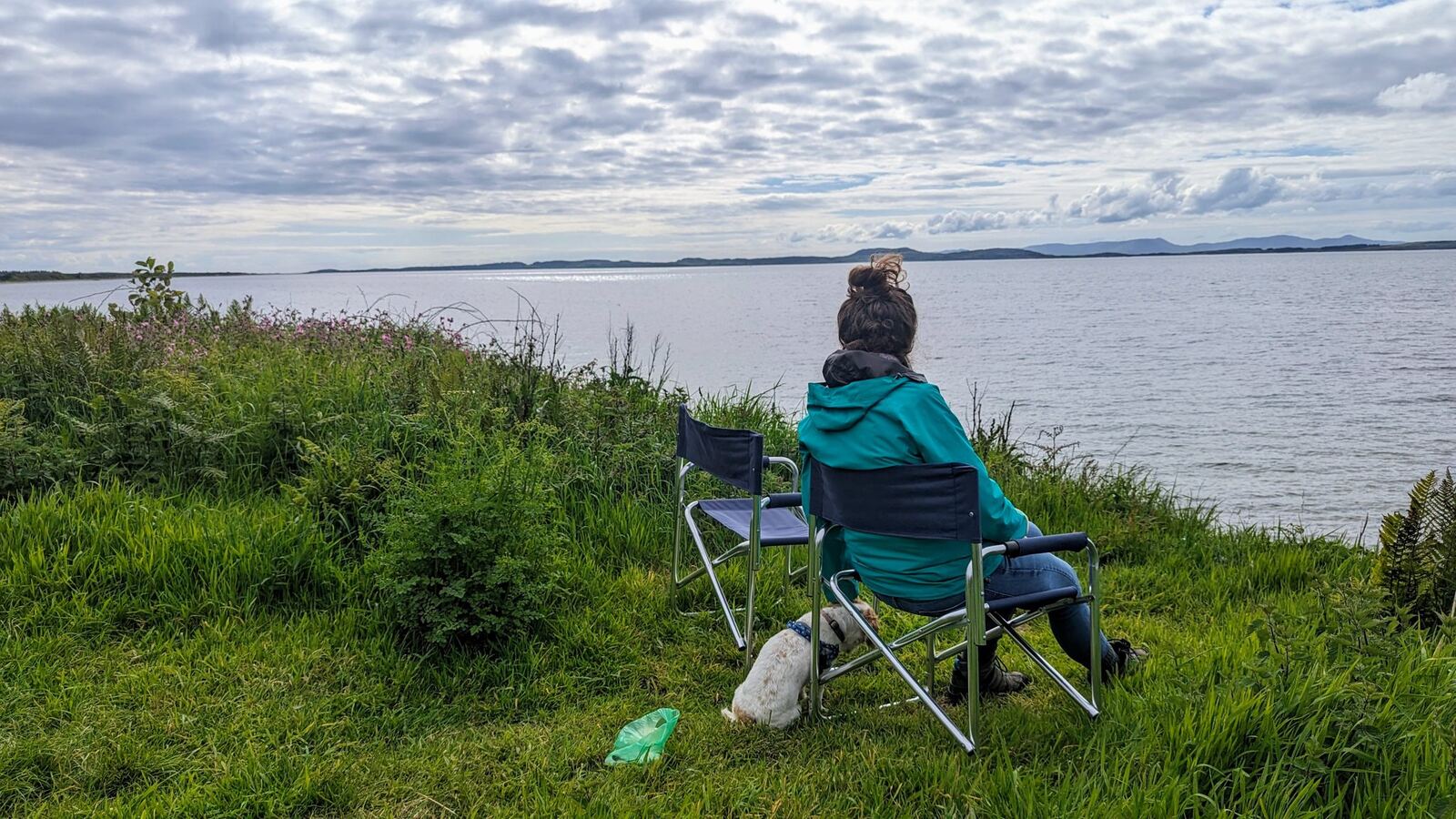
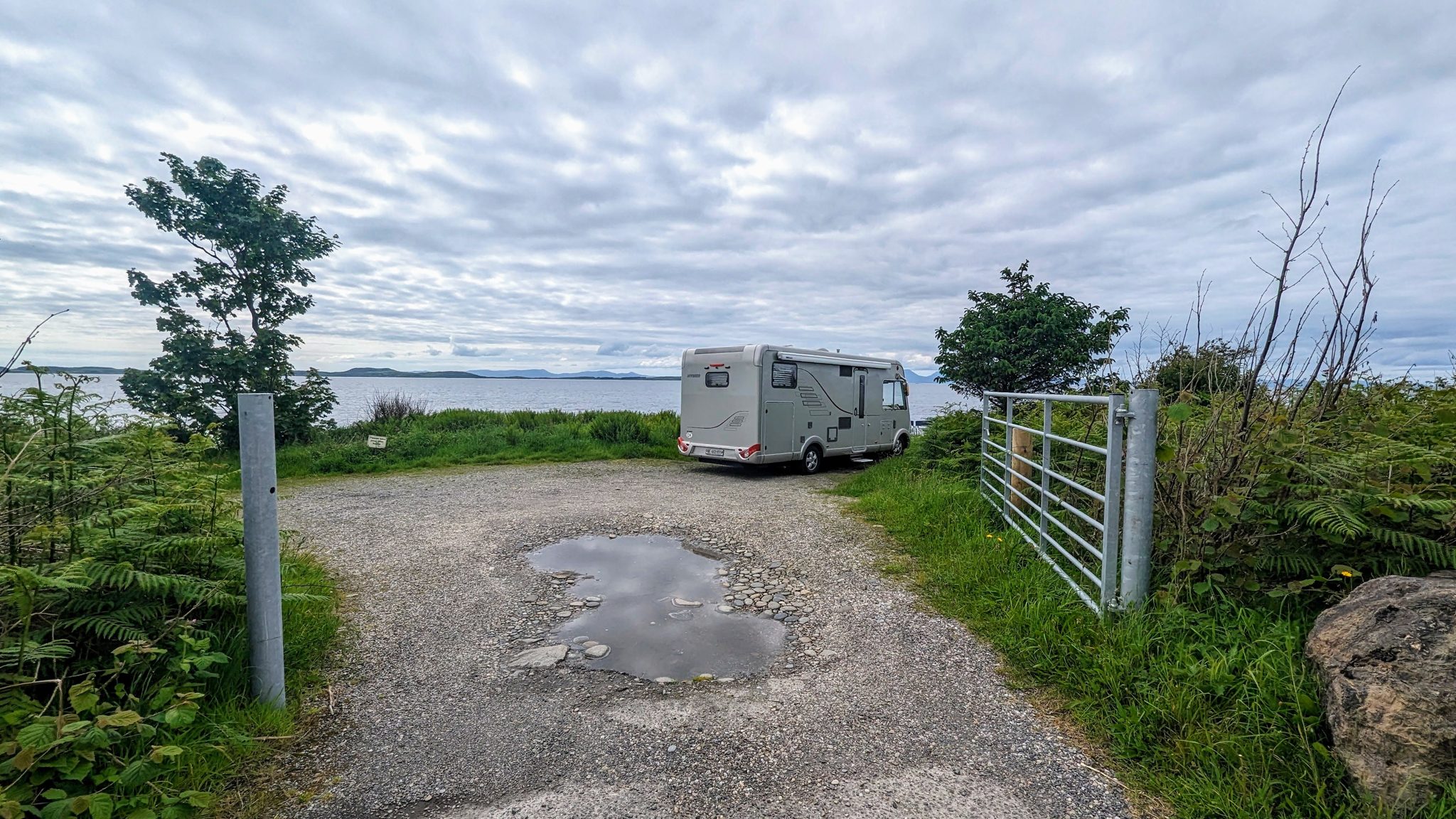
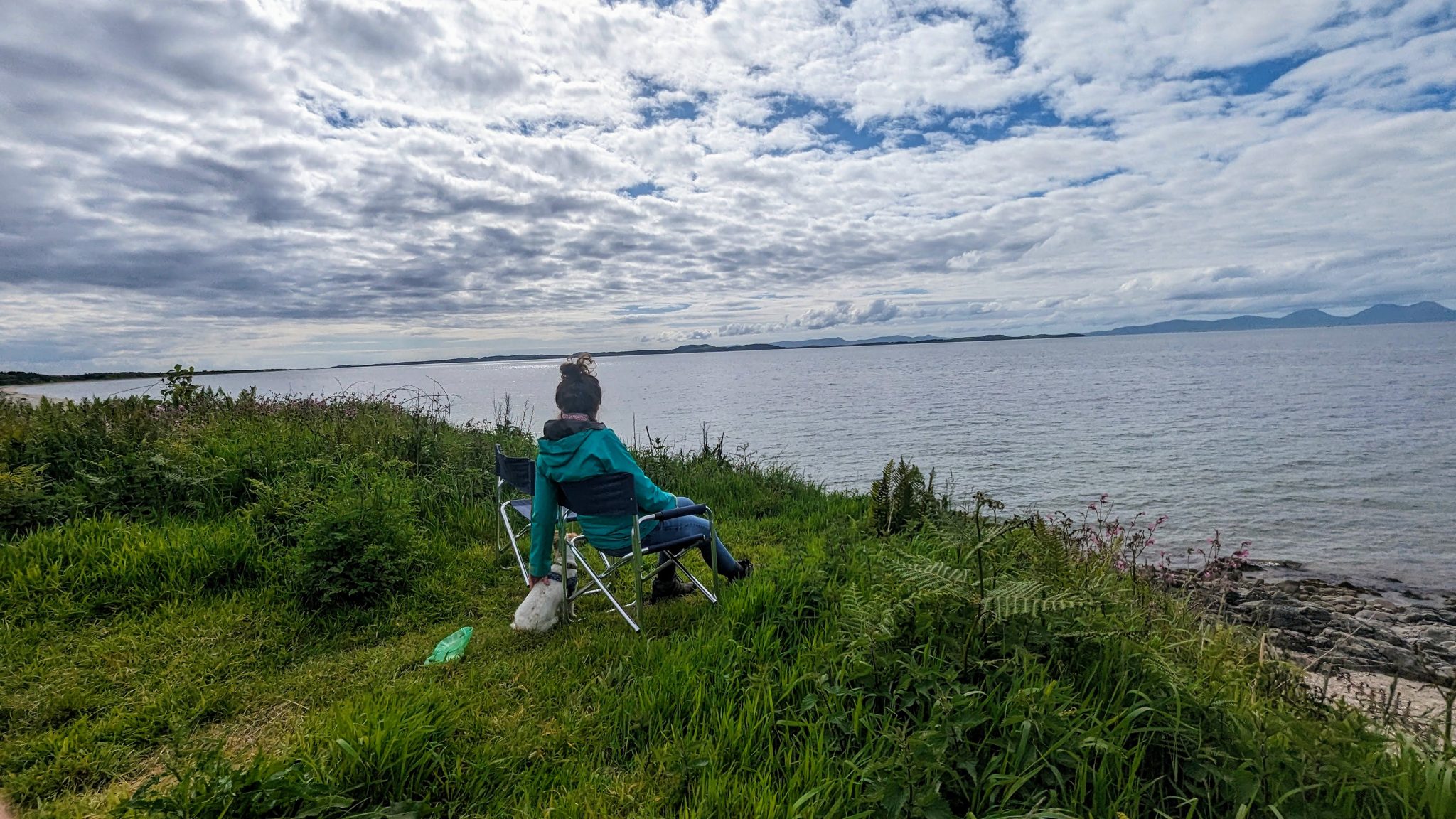
Of everywhere we parked up in two years of touring Scotland, this quiet spot on the east Kintyre coast was my wife’s favourite — and it’s easy to see why. You’re literally on the beach: a long, stunning pebble-and-shingle shore, the van pulled up on the grass right above it, chairs out, and the Isle of Arran filling the horizon across the Kilbrannan Sound. There’s a lovely walk along the beach, and — the little bit of magic that made it — you sit with your morning coffee and watch the ferries crossing to the islands. We came back here at least twice, and stayed more than a night each time.
Where it is (and where on the route)
This is the east coast of Kintyre, up near Grogport, on the B842 and right on the Kintyre Way — the 100-mile coast-to-coast long-distance path. You look east across the Kilbrannan Sound to Arran, which is why the Claonaig–Lochranza (Arran) ferry tracks back and forth in front of you. It’s part of Stage 5 (Kintyre) of the Argyll Coastal Route.
The pebble beach & the walk
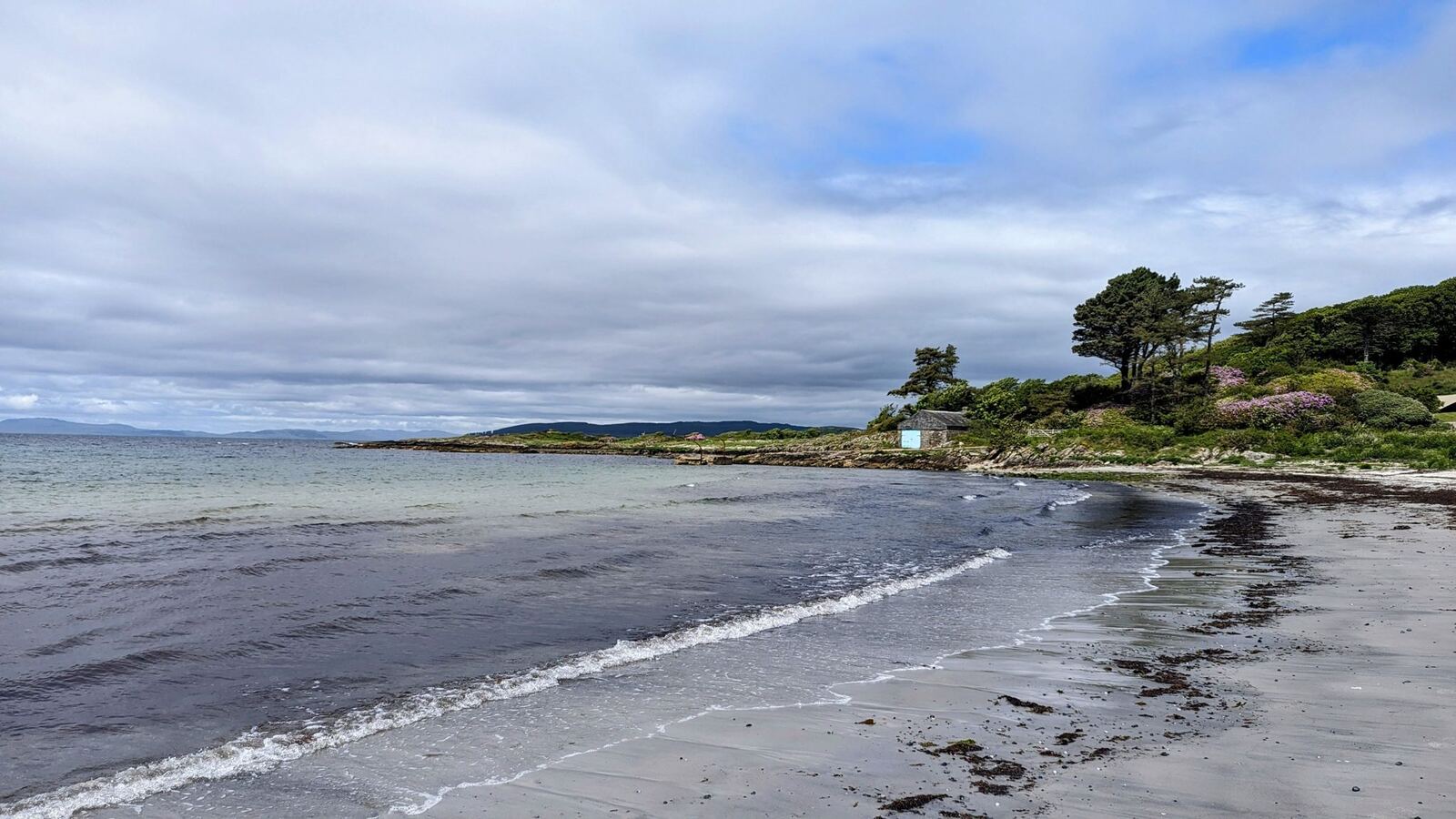
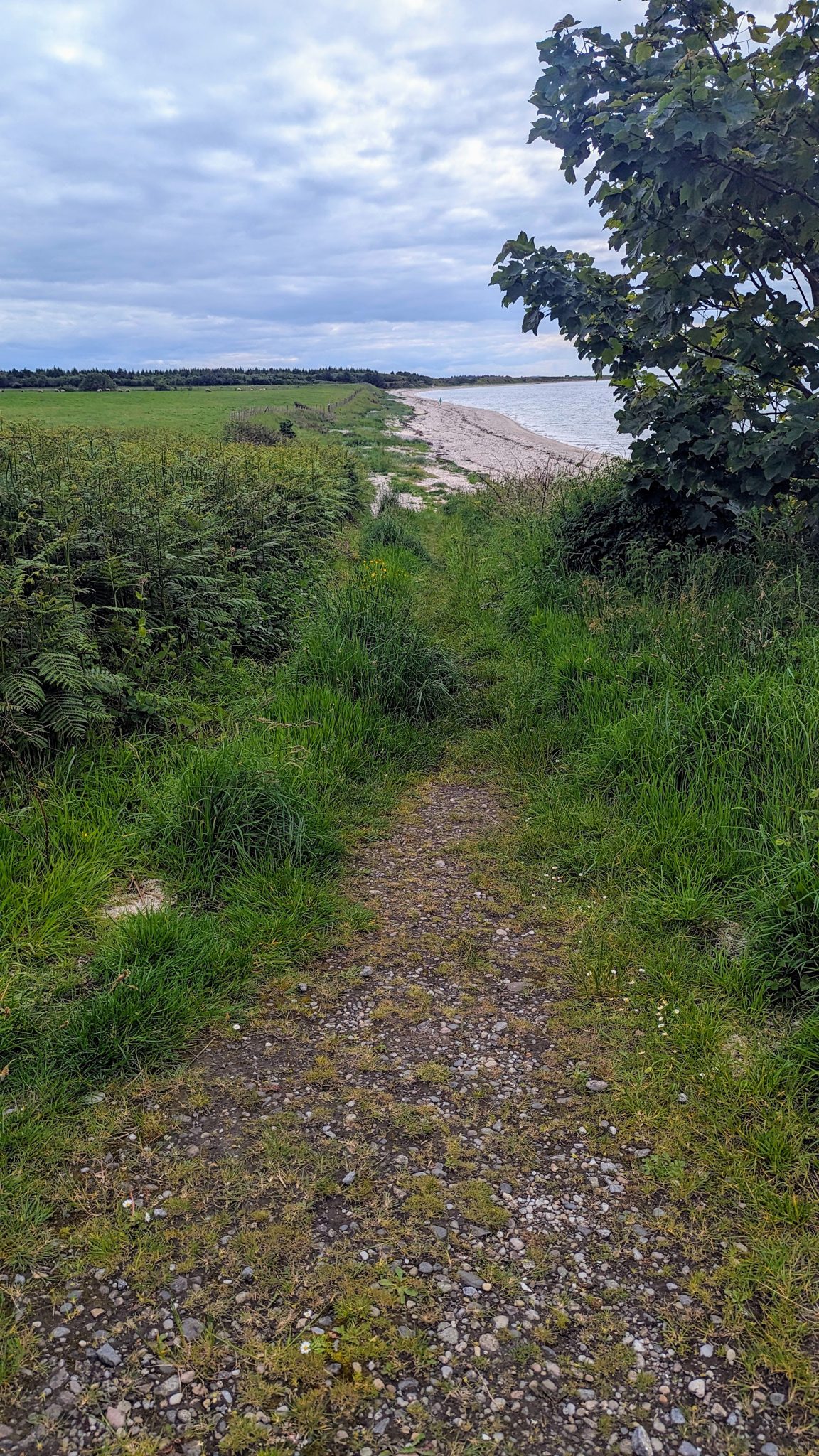
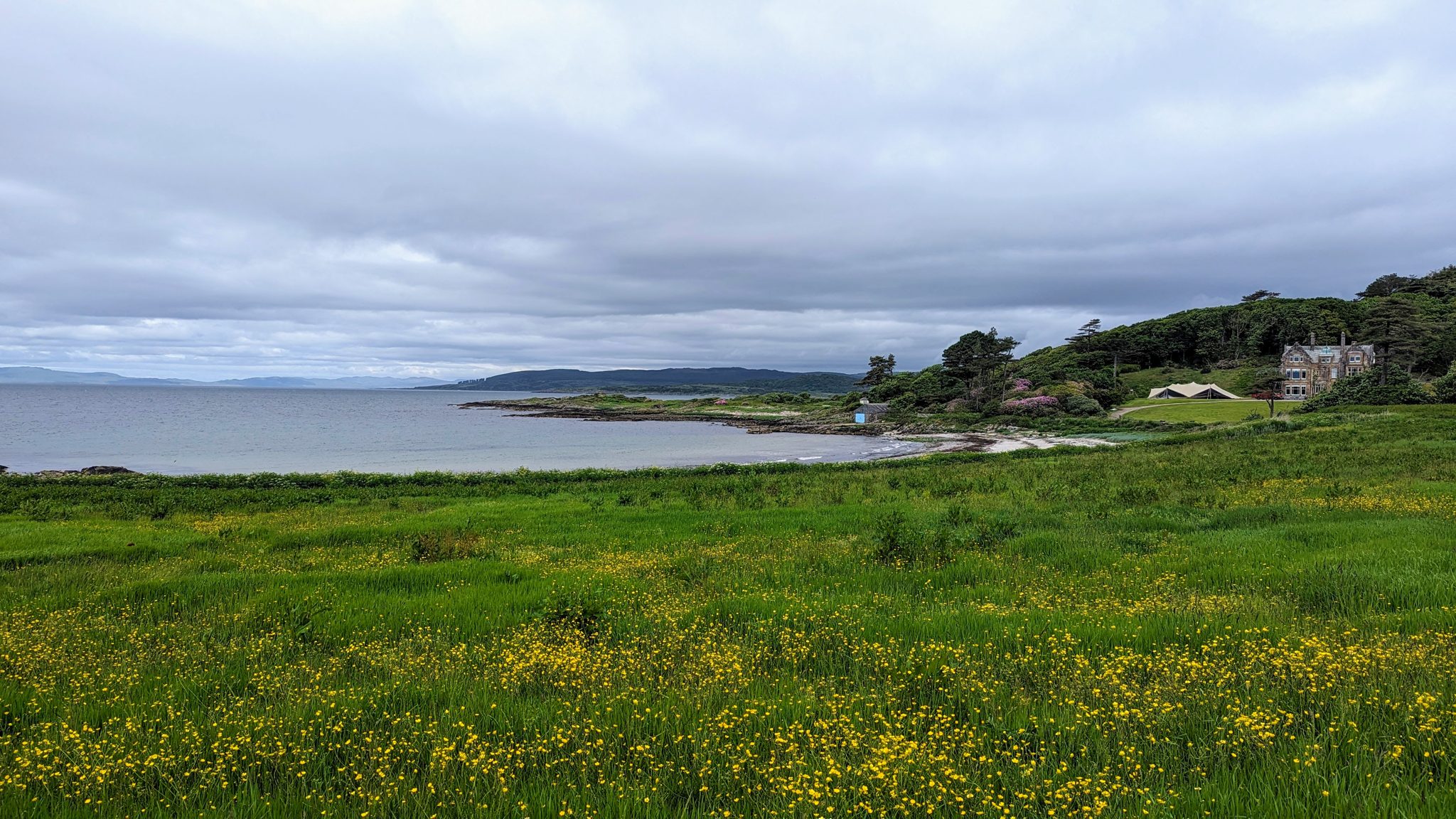
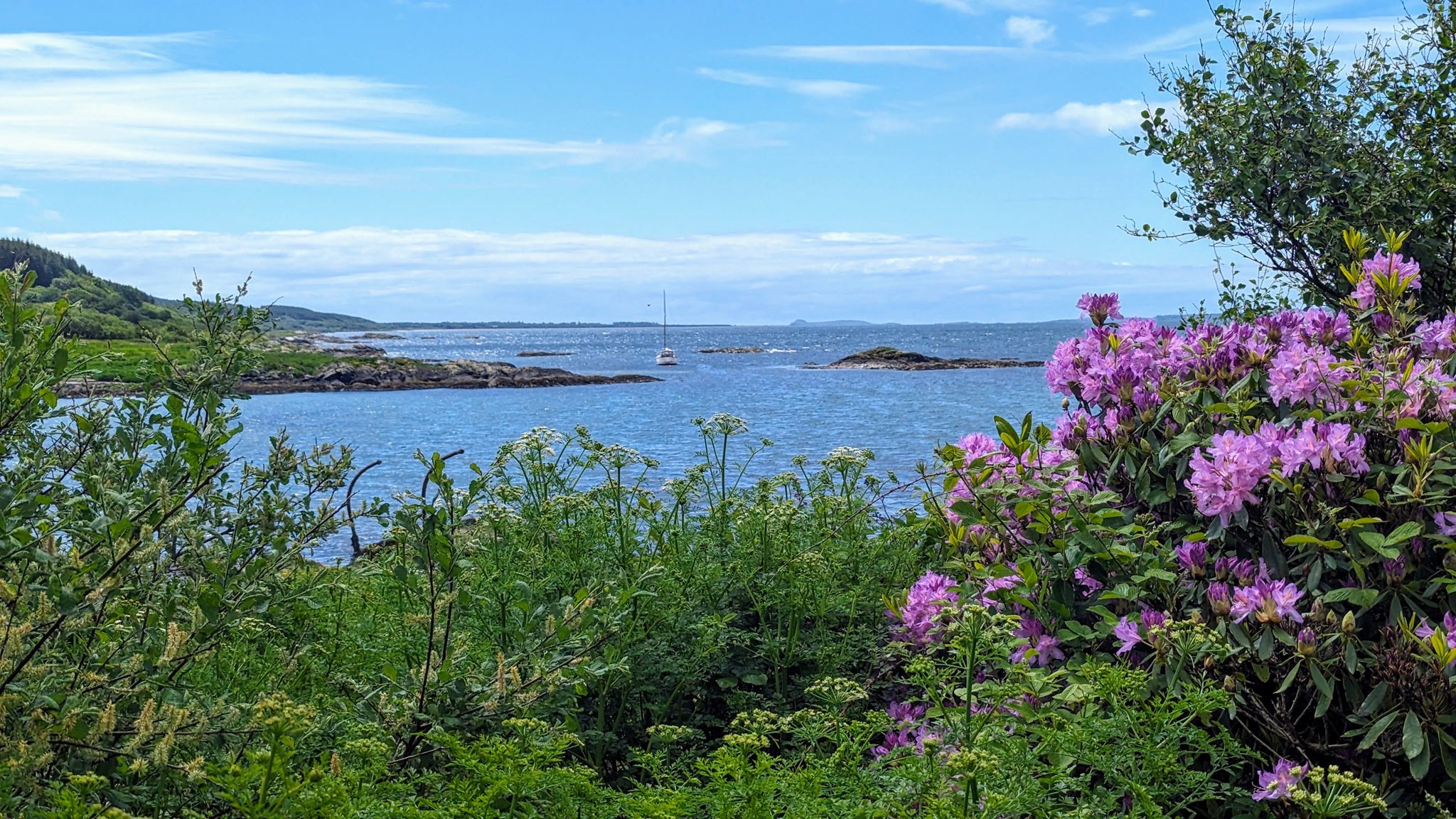
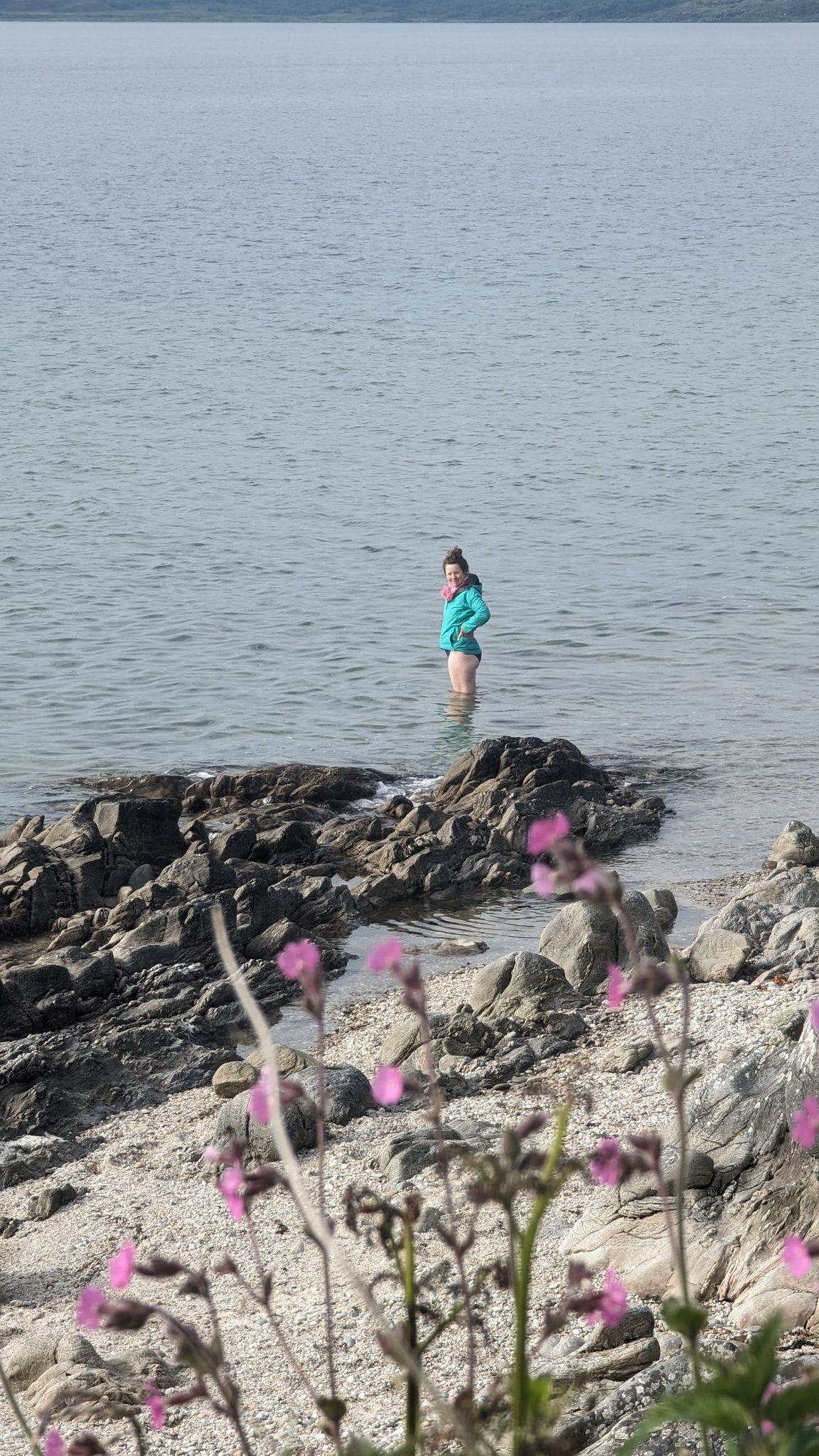
The beach is the whole point: a big sweep of smooth pebbles and shingle curving round the bay, rocky points at either end, wildflowers on the banks (rhododendron and sea-thistle), and the water lapping a few steps from the door. It’s a gorgeous, easy beach walk — pick your way along the shore, poke about the rock pools, and just breathe it in.
The view — Arran, the ferries & the wildlife
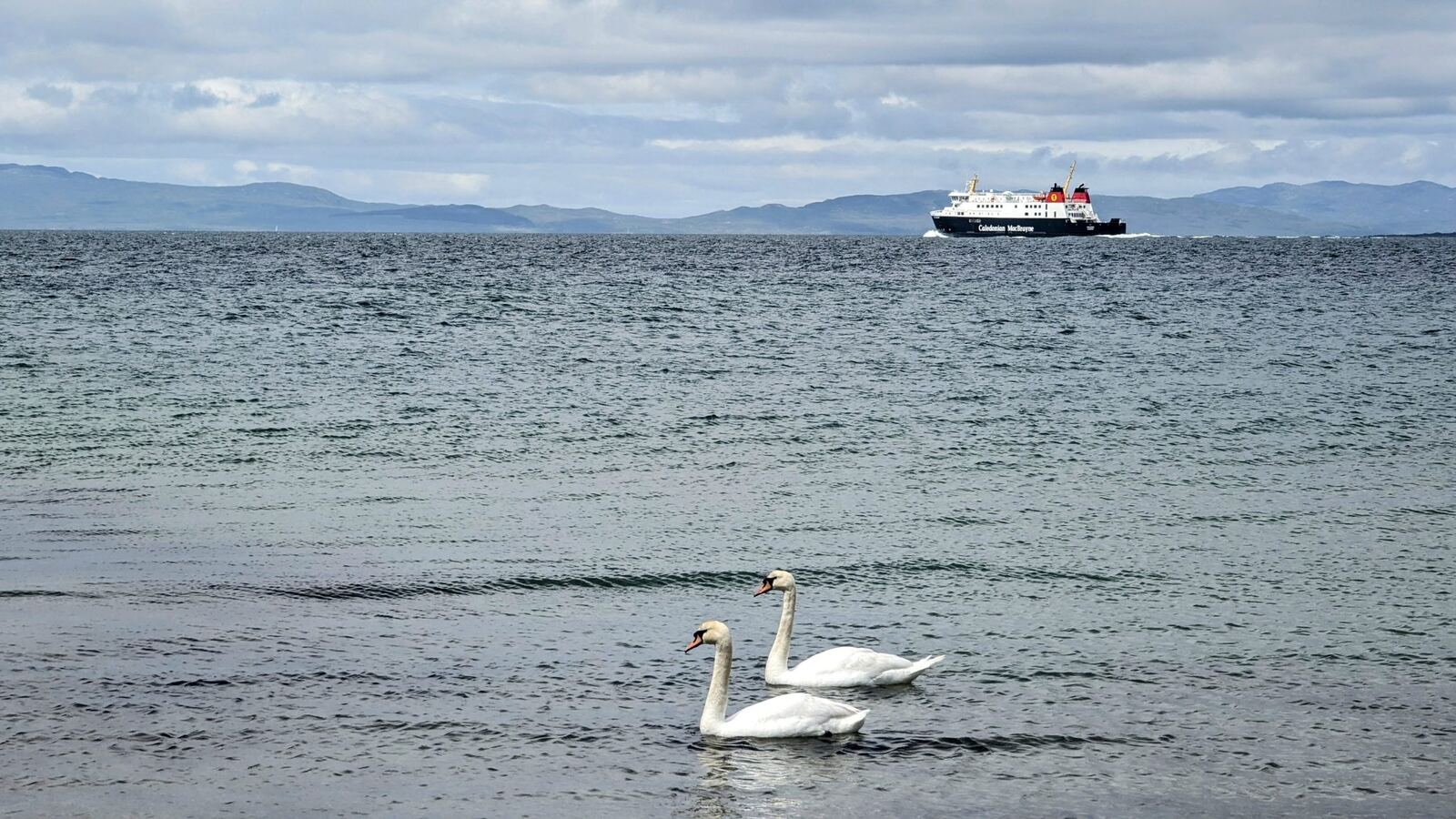
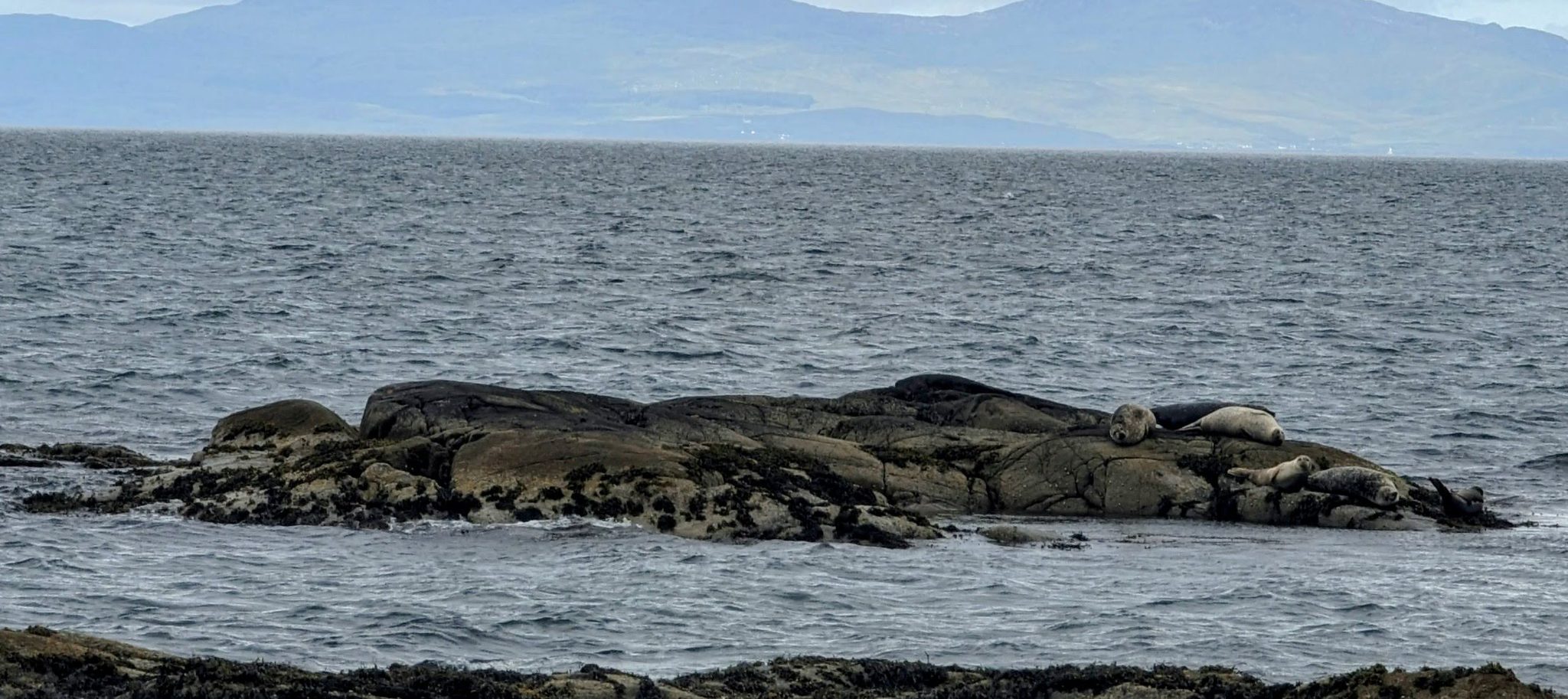
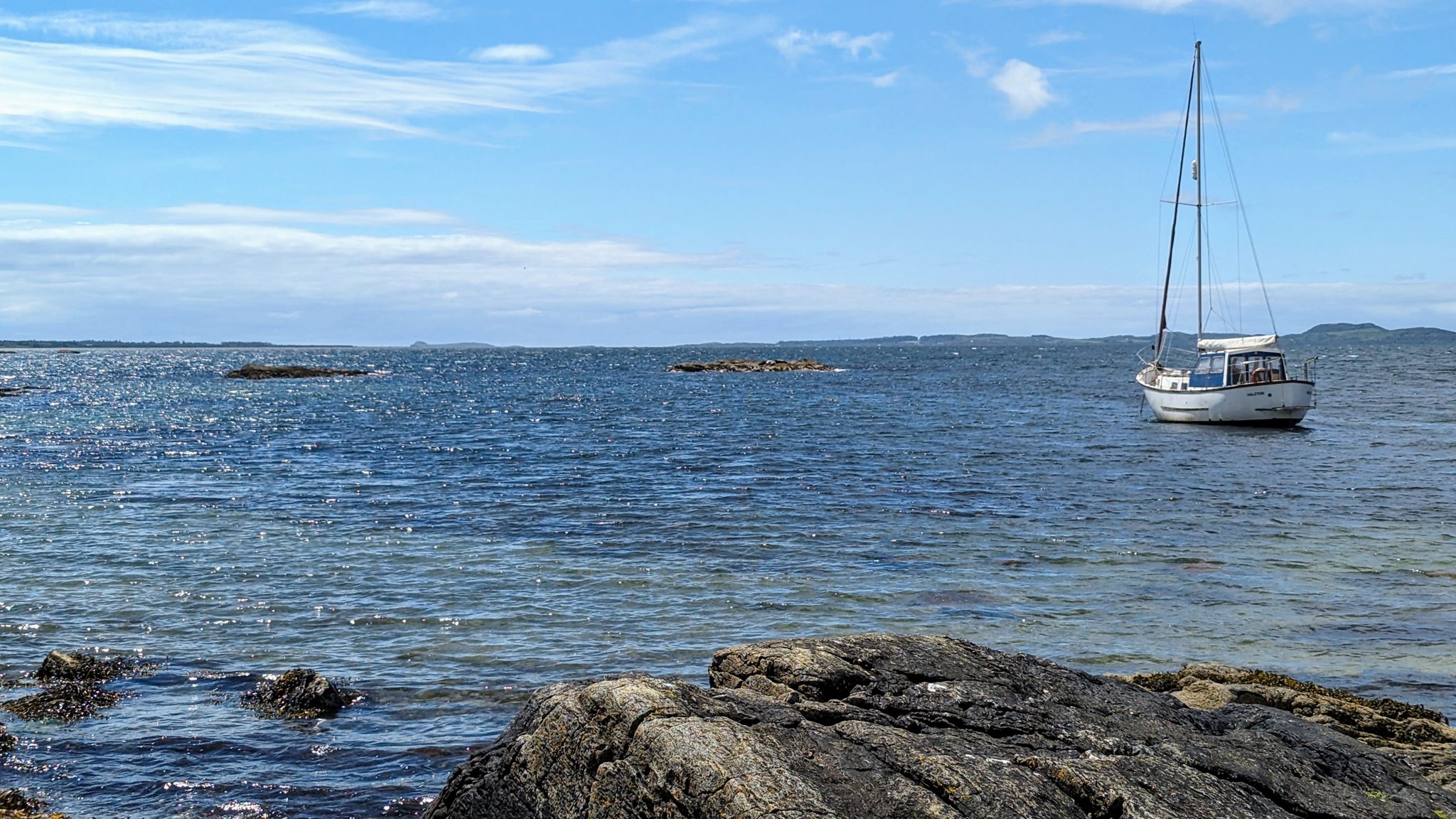
Sitting here, the world drifts past: the CalMac ferry crossing to Arran, yachts at anchor in the bay, and one still evening a pair of swans gliding by. On a clear day the Arran mountains are laid out across the water. It’s the kind of view you don’t get tired of.
Wild camping — right on the shore (we came back)
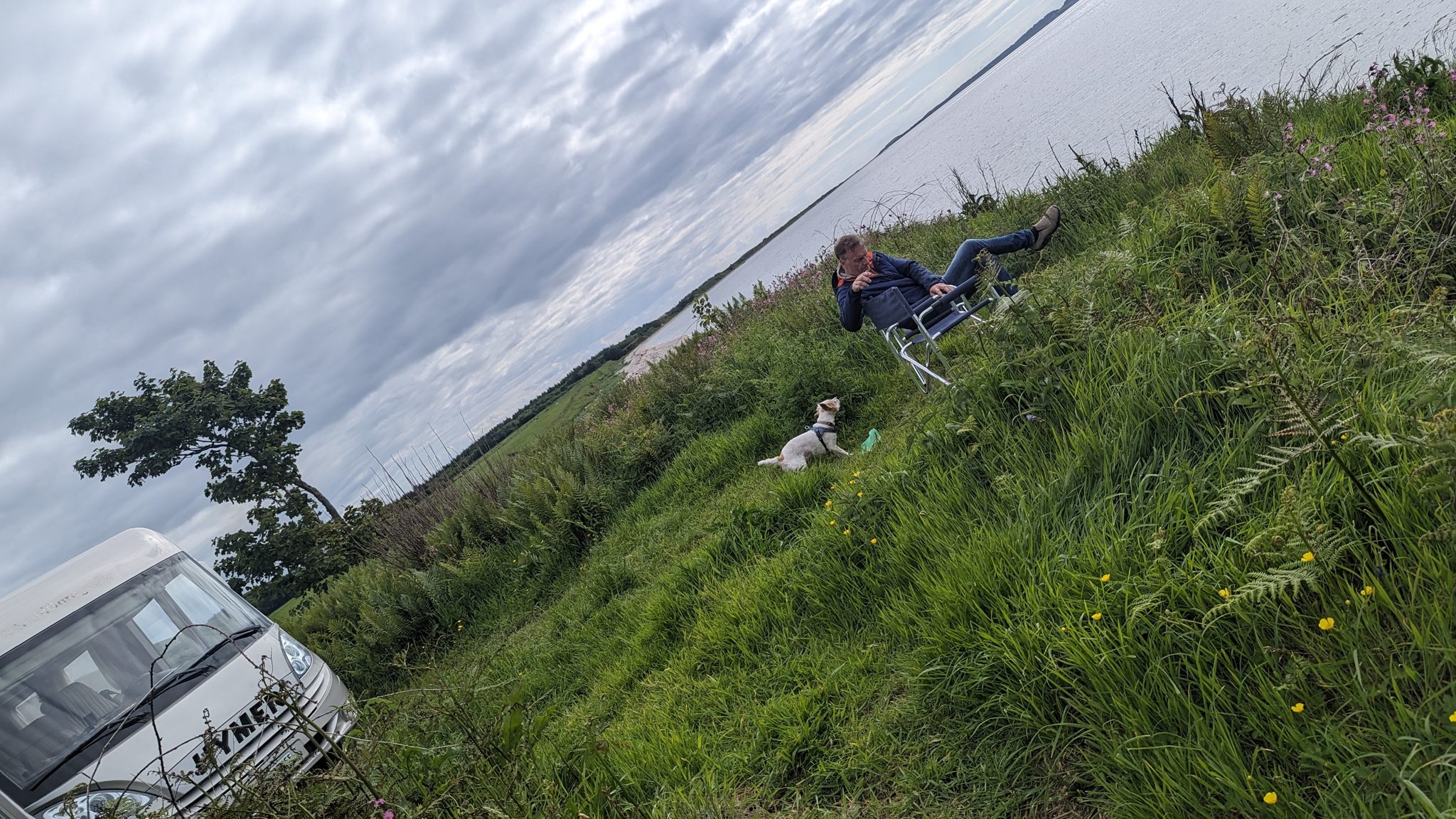
This is wild-camping at its very best: park up on the grass above the beach, chairs out, sea on the doorstep. We settled in for more than one night, more than once — mornings with a coffee watching the ferry, evenings just sitting and watching the light go. My wife could happily have stayed all summer.
And here’s the deal — the only rule that really matters at a spot like this:
Leave it exactly as you’d want to find it. Not a trace. Arrive late, leave early, take every last scrap of your own rubbish away, and never block gates, tracks or the Kintyre Way. And if you’ve the room and it’s not too much bother, pick up other people’s litter too — a stray bottle or bit of plastic here washes straight into the sea, and it’s exactly the kind of mess that gets a beautiful place like this closed to vans for good. A few minutes with a bin bag keeps it clean, keeps it wild, and keeps it open. That’s the whole bargain.
Do that, and spots like this stay perfect for the next van — and for us, next time.
Staying out here for more than a night is a power question as much as a parking one. Ours came from solar and a battery bank rather than a hook-up, which is what made shore spots like this one workable.
Best time to visit
Late spring to early autumn for the long light and the calm evenings (our late-May visit was perfect — flowers out, warm enough for the chairs). It’s an exposed east-coast shore, so pick settled weather for the full effect, and remember west-coast midges appear on still summer evenings.
Combine it with
- Skipness — castle and the Seafood Cabin, further up the east coast.
- Campbeltown & the whisky (Springbank, Glen Scotia) — south down the peninsula.
- The Isle of Arran — across the water, via the Claonaig–Lochranza ferry.
- The rest of the Kintyre run on the Argyll Coastal Route.
Reality notes
- ⛺ Wild camping: superb and quiet — be responsible (arrive late/leave early, no trace, don’t block the Kintyre Way or gates).
- 🏖️ Beach: pebbles/shingle — good footwear for the walk; mind the tide.
- ⛴️ Ferry views: the Claonaig–Lochranza Arran ferry crosses in front.
- 🦟 Midges: possible on still summer evenings.
- 🐕 Dogs: brilliant — beach and shore (leads near the road and livestock).
Sources
- First-hand: Kevin & family, east Kintyre coast, 27 May 2024 (own photos + GPS)
- The Kintyre Way (official)
- Claonaig–Lochranza ferry — CalMac
🪙 Detecting on this beach
Don’t let the shingle put you off — the stones make no difference to a detector. An ordinary quartz or granite pebble is effectively invisible to the coil; its field reads straight through it. The only stones that ever signal are mineralised “hot rocks” carrying iron oxides such as magnetite or haematite, and a little ground-balancing and iron bias settles those. So swing it here exactly as you would on any beach.
What actually helps anywhere: work the low-tide edge, and come after a storm, when the sea has turned over ground that has almost certainly never been detected at all — which, on a stretch this remote, counts for a great deal.
Same rules as everywhere in Scotland: between the tide marks you need no permit; above them you need permission, and wild-camping somewhere does not grant it. Anything you find goes to the Treasure Trove Unit whatever its age, and a detector on a scheduled monument is a criminal offence no landowner can authorise. Detail here → · beginner’s guide →
A wild, empty beach like this has almost certainly never seen a coil — and if you are already carrying a pack down here, a machine that weighs three-quarters of a kilo and folds into it costs you almost nothing to bring. Work the low-tide edge, and an hour of the afternoon turns into a hunt on genuinely untouched ground.