
The Kinnell Estate, Killin: The Ancient Seat of the MacNab Chiefs
Overview
Just across the River Dochart from Killin, at the head of Loch Tay, lies the Kinnell Estate — for centuries the historic seat of the chiefs of Clan MacNab. It’s the destination of one of our favourite easy strolls out of the village, and its story — an old laird’s house, a Bronze-Age stone circle, a famous vine and a clan ruined by debt — runs right through the history of Killin.
Kinnell House
At the heart of the estate stands Kinnell House, a handsome Highland laird’s house whose oldest core dates to around 1580, extended and remodelled in the 18th and 19th centuries. It is a category-A listed building, still privately owned, and not open to the public — but it makes a fine sight from the estate approach. The house is also famous for its ancient vine, long reckoned one of the oldest and largest in Scotland.
The MacNabs of Kinnell
The MacNabs — in Gaelic Clann an Aba, “the children of the abbot” — held Kinnell as their principal seat for generations, ruling this stretch of Breadalbane from the head of Loch Tay. Their ancient burial ground is not at Kinnell itself but on Innis Bhuidhe (Inchbuie), the wooded island held between the arms of the Falls of Dochart in the middle of Killin, where the chiefs lie behind an 18th-century walled enclosure.
Ruin, and a chief who fled to Canada
The MacNabs’ long tenure ended in debt. The larger-than-life Francis MacNab, 16th chief — immortalised in Sir Henry Raeburn’s magnificent portrait “The MacNab” — died deep in debt in 1816. His nephew Archibald MacNab inherited the burden and, to escape his creditors, emigrated to Canada in the 1820s, founding McNab Township in Ontario, where he ruled as a notoriously autocratic laird. The Kinnell estate itself was sold around 1828, passing to the powerful Earls (later Marquesses) of Breadalbane, the Campbells who dominated this country for so long.
The Kinnell stone circle
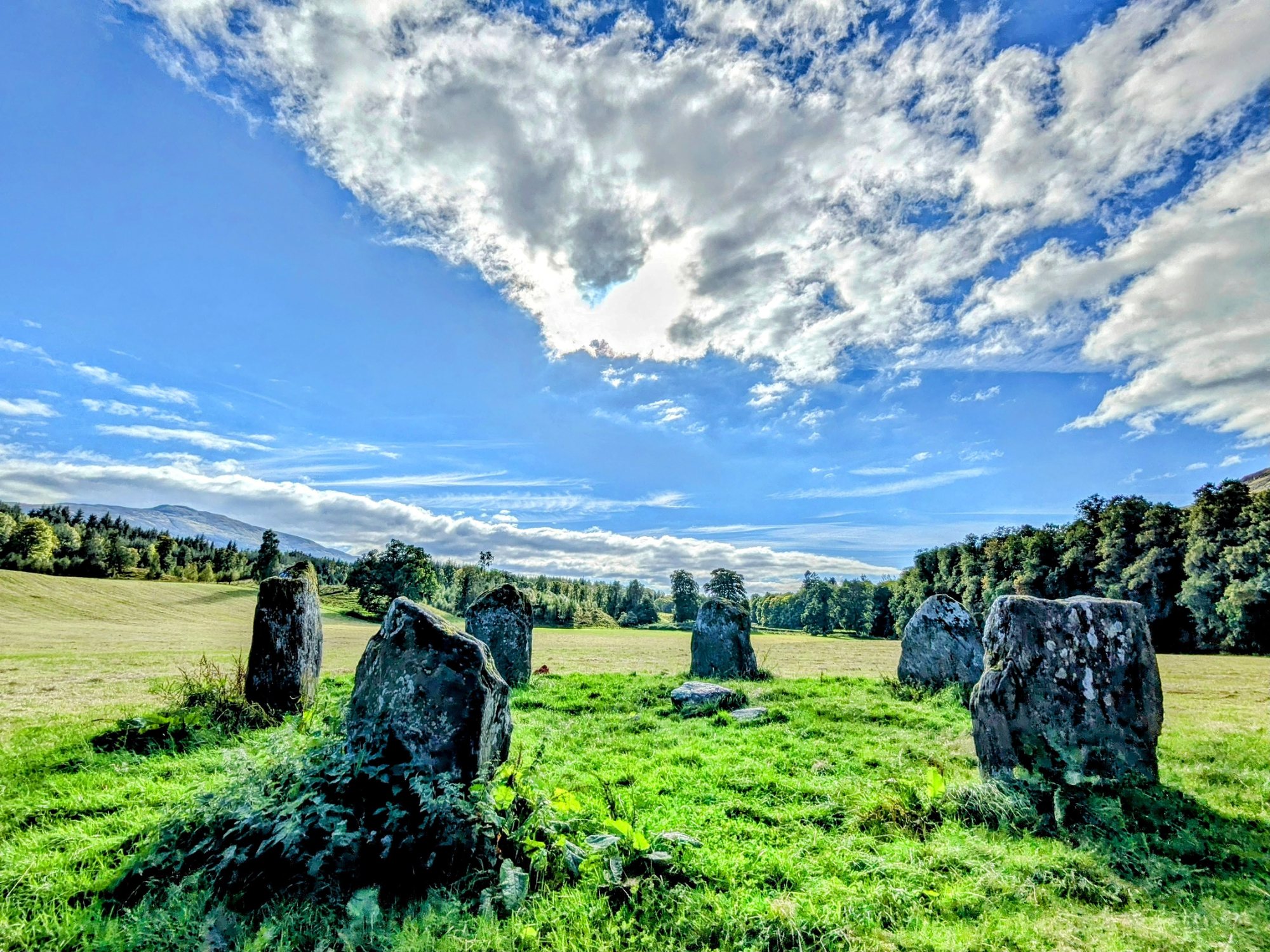
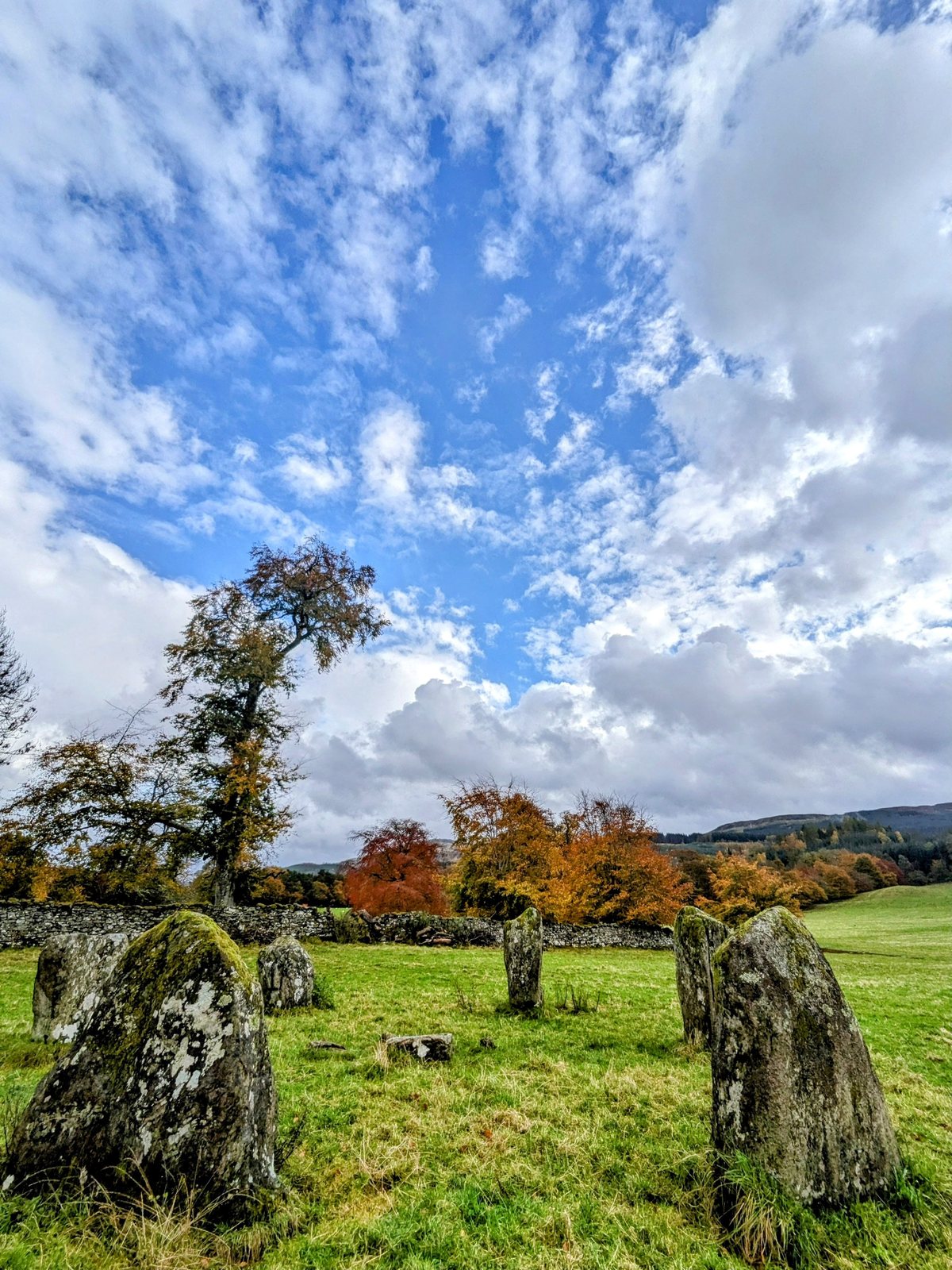
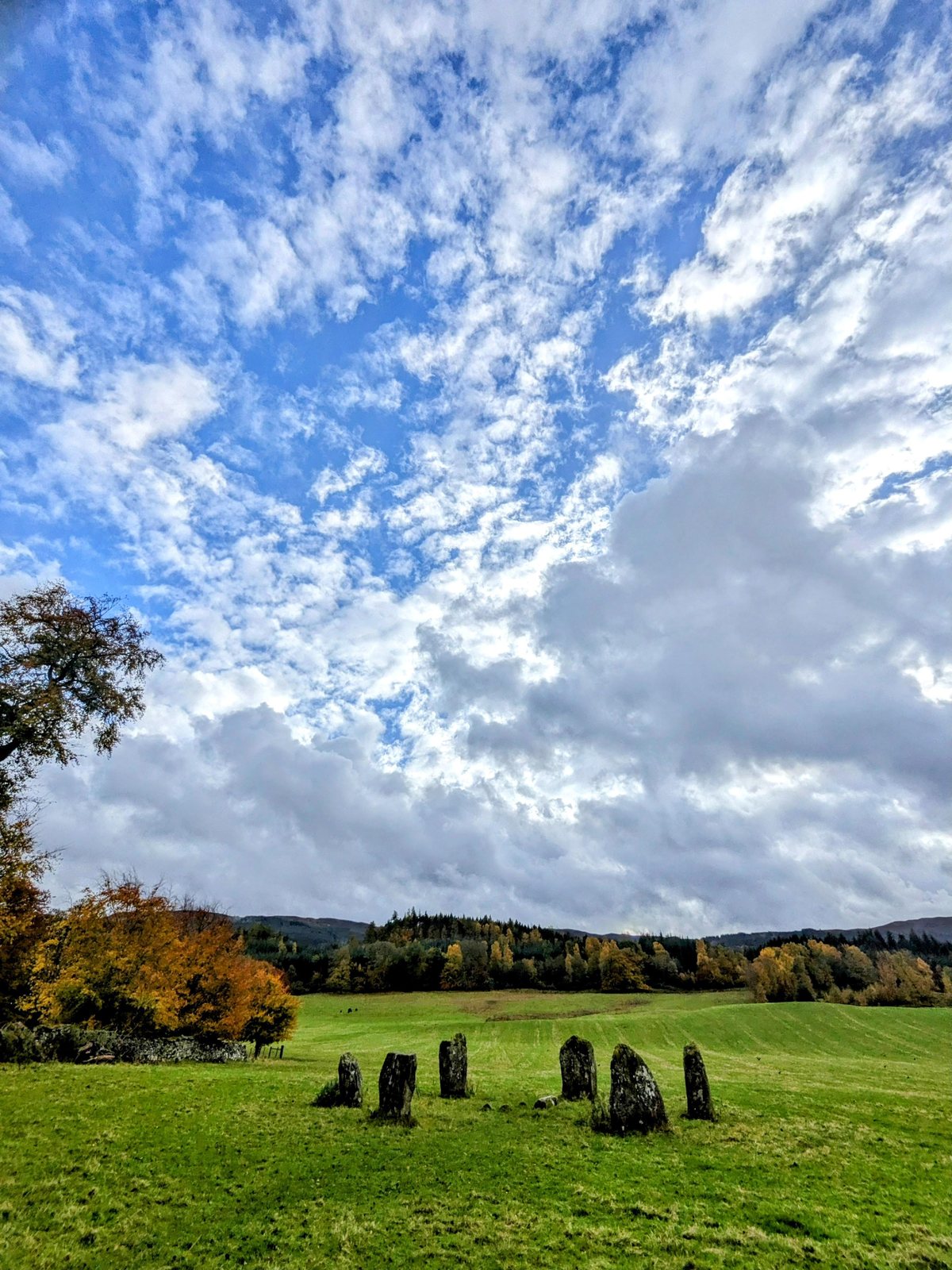
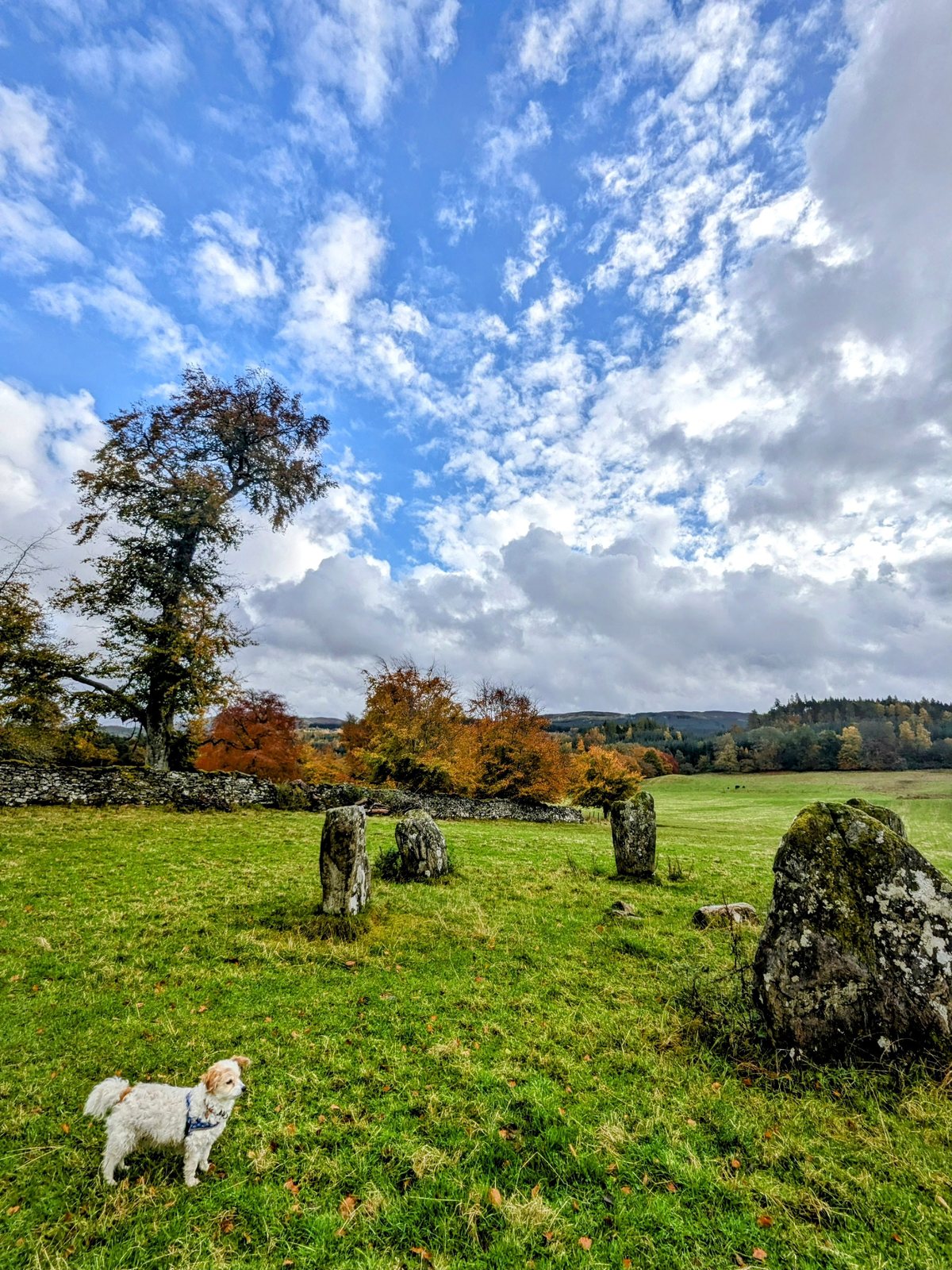
In the estate grounds stands the Kinnell (Killin) Stone Circle — a fine, complete Bronze-Age ring of six upright stones of grey schist, thousands of years old, and older than the MacNabs, older than Scotland itself — one of Scotland’s standing stones you can often have entirely to yourself. It sits on estate land: in our experience you’re welcome to walk up and take a look — there’s a gate at the top, so just close it behind you if there’s livestock in the field, and leave everything as you found it.
While you’re in Killin, it’s worth pairing a visit with St Fillan’s mill and healing stones down by the Falls of Dochart — and up Strath Fillan lies Dalrigh, where Robert the Bruce lost the Brooch of Lorn to the MacDougalls in 1306.
Sources
- Wikishire and Historic Environment Scotland listings on Kinnell House.
- Standard clan histories on Clan MacNab, Francis MacNab and the emigration of Archibald MacNab to Canada.