Clan Mackay: Lord Reay’s Country & the Far North-West
The clan by the numbers
| First on record | Angus Mackay granted Strathnaver by charter, 1415; traditional first chief Iye, c. 1210 |
| Peak fighting strength | ~3,000 raised in 1626 for Continental service (a paid regiment, not a pure clan levy); ~800 in the ’45 |
| People bearing the name today | ~13,700 in Scotland, ~79,000 worldwide (estimate) |
The famous ~3,000 was Mackay’s Regiment for the Thirty Years’ War — a paid force recruited beyond the clan, not a clan muster. Spelling variants (McKay, MacKay) split the surname count.
Overview — the clan of the top-left corner
Clan Mackay ruled the wild top-left corner of Scotland — Strathnaver and the Reay Forest, the empty, beautiful country behind Durness and Cape Wrath. In Gaelic this whole land was simply Dùthaich MhicAoidh, “the Mackay Country,” and its chief has been styled Lord Reay since 1628. The Mackays were among the fiercest fighting clans in Scotland, hiring out whole regiments to the wars of Europe — and their story ends in one of the saddest chapters of Highland history.
The name & the origins
The Gaelic name is Clann Mhic Aoidh — “the children of the son of Aodh (Hugh).” Clan tradition links the family to the old royal house of Moray, the MacHeths, driven north after they lost their long struggle with the kings of Scots. By the 14th century the Mackays were firmly established in Strathnaver, and for the next four hundred years they held the far north against all comers.
The long feud with Sutherland
The great fact of Mackay history is the centuries-long feud with the Earls of Sutherland to the east — a running war of raids, battles and burnings along the border of the two territories. The Mackays could put a formidable force in the field: at the Battle of Drumnacoub (1433) and many a smaller fight they held their ground against far larger neighbours. It was a hard country that bred hard men, and the clan’s fighting reputation carried far beyond Scotland.
Soldiers of Europe — Mackay’s Regiment
That reputation reached its height under Sir Donald Mackay, 1st Lord Reay. In the 1620s he raised some 3,000 men from the far north and led them to the Thirty Years’ War, serving first the King of Denmark and then the great Gustavus Adolphus of Sweden. Mackay’s Regiment became one of the most celebrated Scottish units on the continent — proof that a clan from the emptiest edge of Britain could field soldiers who marched across Germany.
Balnakeil, Durness & Rob Donn
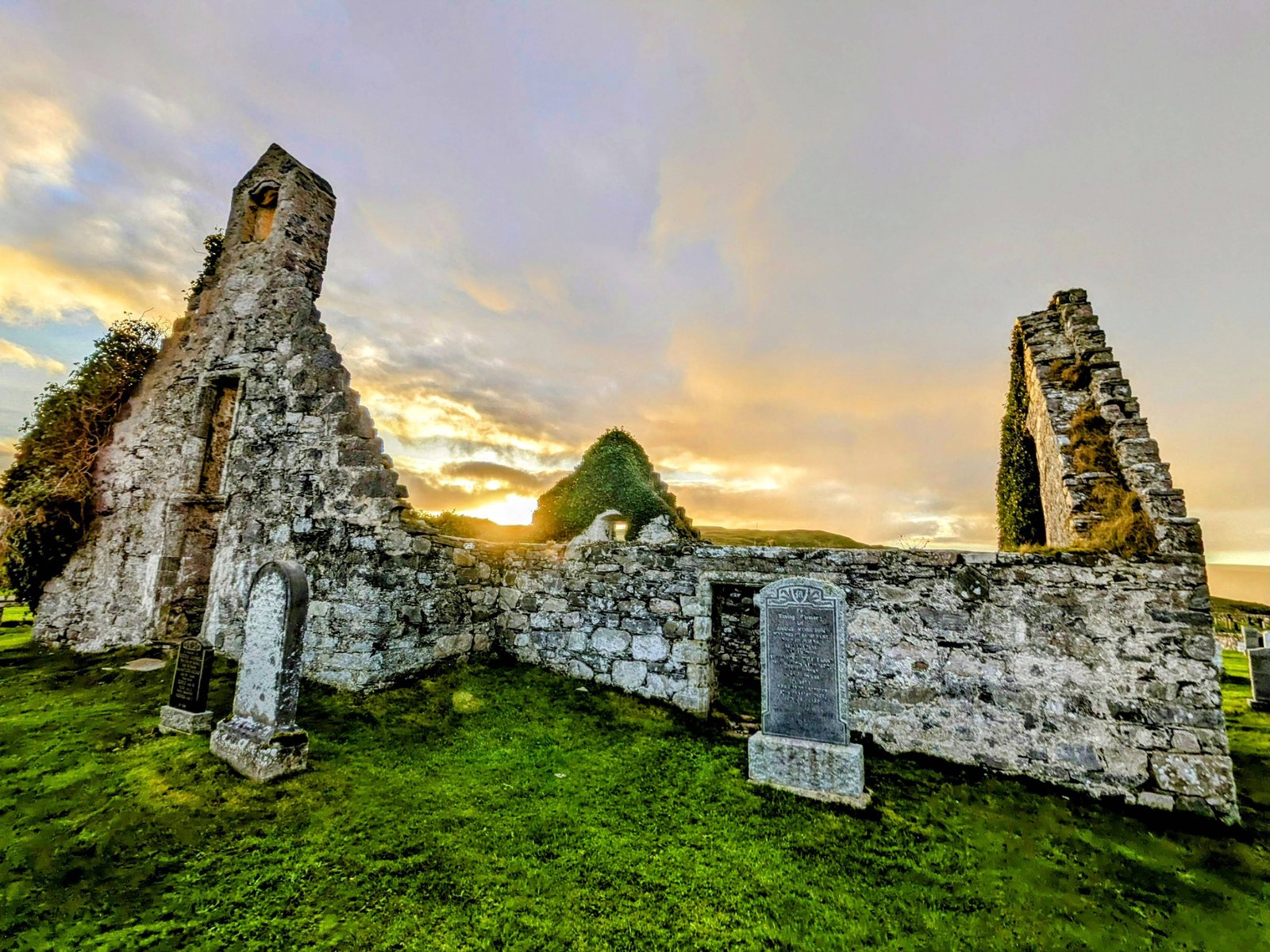
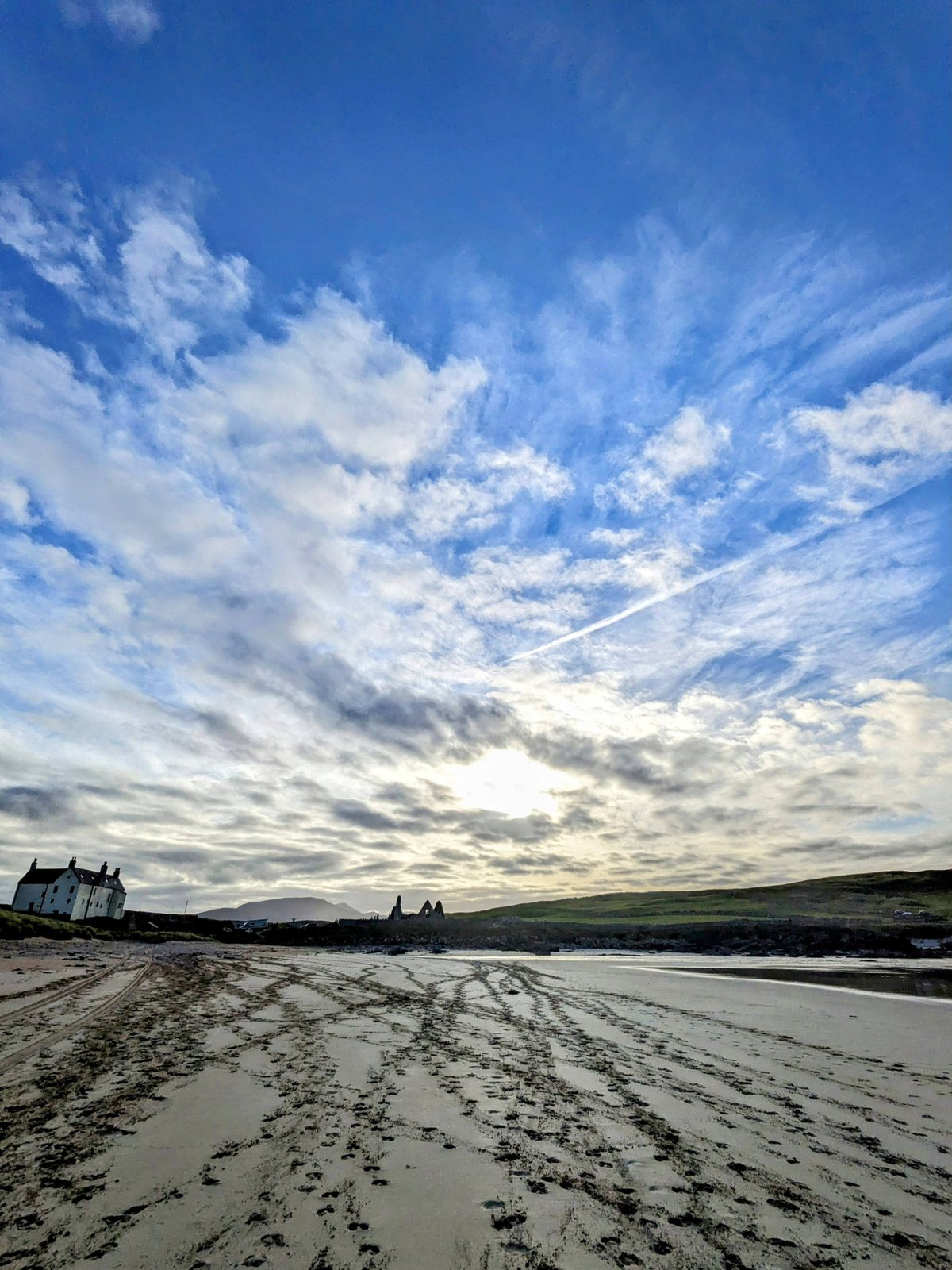
The spiritual heart of the Mackay country is the roofless kirk at Balnakeil, beside the great white beach near Durness. It was rebuilt in 1619 by the 1st Lord Reay, and in its wall is a grim tomb — that of Donald MacMurchou, a local strongman said to have paid handsomely to be buried inside the church, safe from those he had wronged. In the churchyard stands a memorial to Rob Donn MacKay (1714–1778), the great Gaelic bard of the Reay country, who could neither read nor write yet composed some of the finest poetry in the language.
The selling of the country & the Clearances
The end, when it came, was bitter. Weighed down by debt, the Lords Reay sold the bulk of the Reay estates — Strathnaver and all — to the House of Sutherland, the very family they had fought for centuries, in a series of sales finishing in 1829. By then the new owners were already emptying the glens: the Strathnaver Clearances, driven through by the factor Patrick Sellar from 1814, saw whole townships burned out to make way for sheep — among the most notorious of all the Highland Clearances. The Mackay Country that had held its people for five hundred years was largely emptied in a generation, and the silence of Strathnaver today is its memorial.
Motto & badge
The Mackay motto is “Manu Forti” — “with a strong hand.” The plant badge is the great bulrush, and the chief remains Lord Reay to this day.
Mackay country on our travels
You’ll stand in the Mackay Country on the far north coast of this site:
- Durness & Balnakeil — the white beach, the roofless kirk, and the heart of the old Reay country.
← Back to Scottish Clans · see also Clan Sinclair (the earls of neighbouring Caithness) and the Lochs of Scotland.
Battles — won and lost
The most notable actions the clan fought, and how they ended:
- Tuiteam Tarbhach (1406) — vs the MacLeods of Lewis — WON
- Drumnacoub (1433) — vs a Sutherland force — WON
- Tannach (1464) — vs Clan Gunn — WON
- The Thirty Years’ War (1620s–30s) — vs the Catholic Imperial armies (Mackay’s Regiment) — WON
- Littleferry (1746) — vs the Jacobites — WON
A long feud with Clan Sutherland to the south-east; staunchly Protestant and Hanoverian.
The clan lands
Orange markers = the clan’s chief castles, seats and territories; where we have a page, they link through.
Explore Scottish Outposts
Clans · Whisky · Castles · Lochs · Kirks & Cathedrals · Standing Stones · Metal Detecting · Trips So Far
Sources
- First-hand: our own visit to Durness and Balnakeil (own photos)
- Standing Council of Scottish Chiefs · Clan Mackay — Wikipedia