
The Whaligoe Steps: 365 Stairs Down a Caithness Cliff to a Hidden Herring Harbour
Overview — the honest take
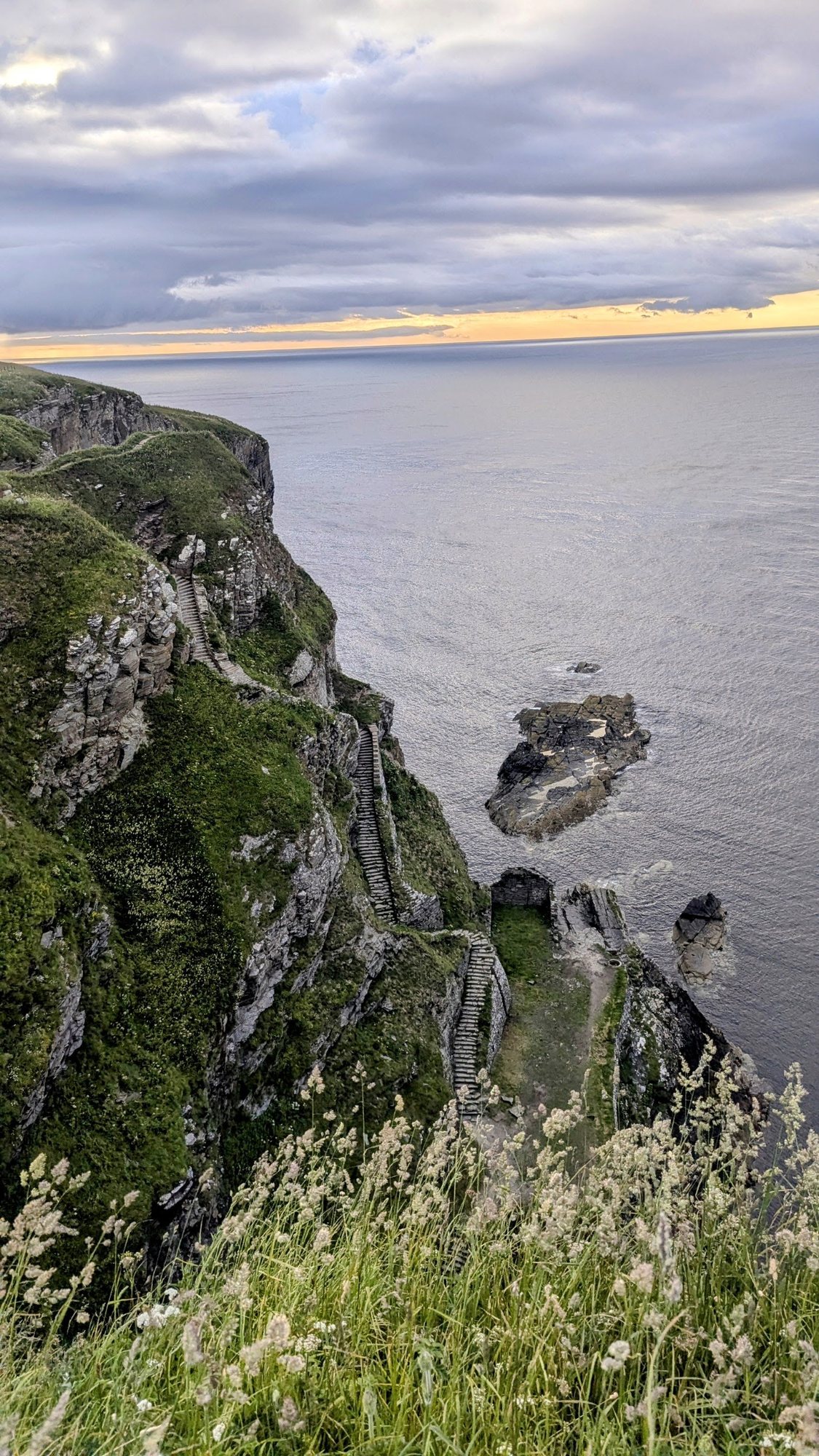
The Whaligoe Steps are one of the most extraordinary — and least-known — places on the whole Caithness coast. A flight of some 330 flagstone steps (everyone calls it “the 365 Steps”) zig-zags down a sheer cliff face to a tiny natural harbour, hidden in a cleft between two headlands. For a century it was a working herring haven, and the fishwives climbed every one of those steps with creels of fish on their backs. There’s no big car park, no ticket office, barely a sign — and that’s exactly why it’s so special. It’s free, it’s astonishing, and it’s a proper leg-burner.
Where it is
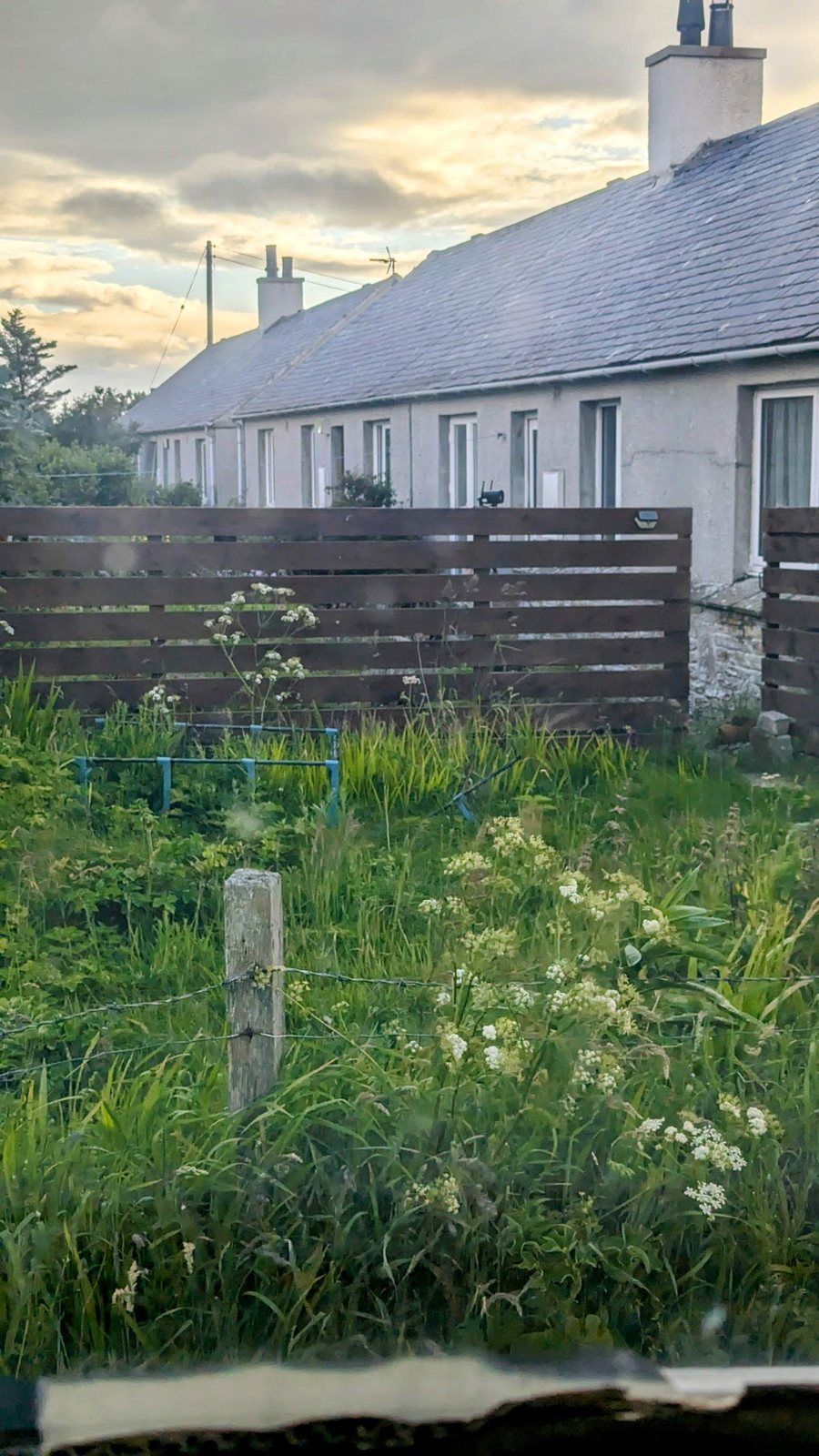
The steps drop into the cliffs at Ulbster, on the Caithness coast (NC500) between Wick and Lybster, just off the A99 — right on the Caithness coast. The turning is easy to miss: a narrow lane off the main road leads to a small parking area by the old coastguard cottages, and the steps begin right there, dropping away over the cliff edge.
Down the steps to the harbour
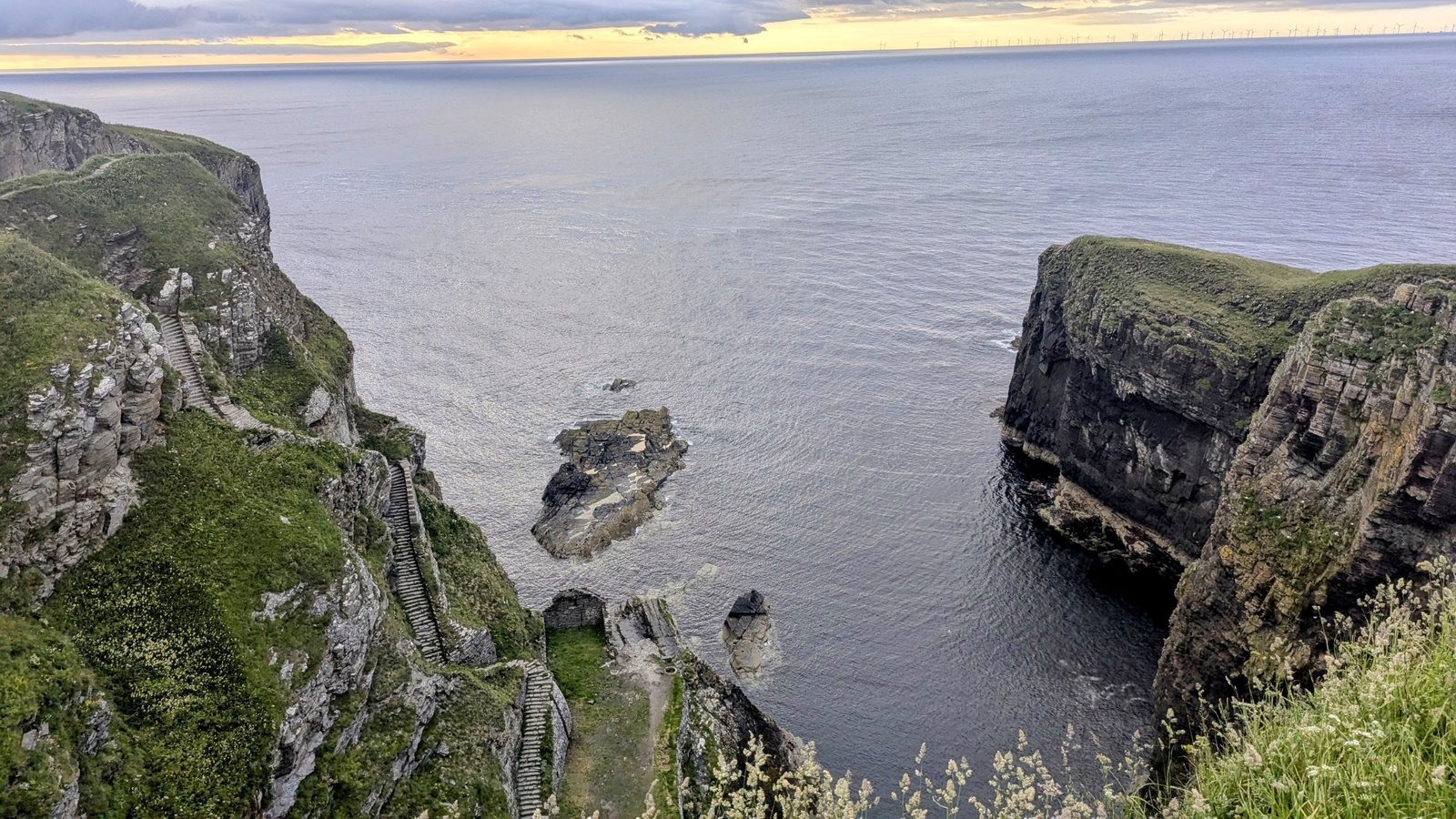
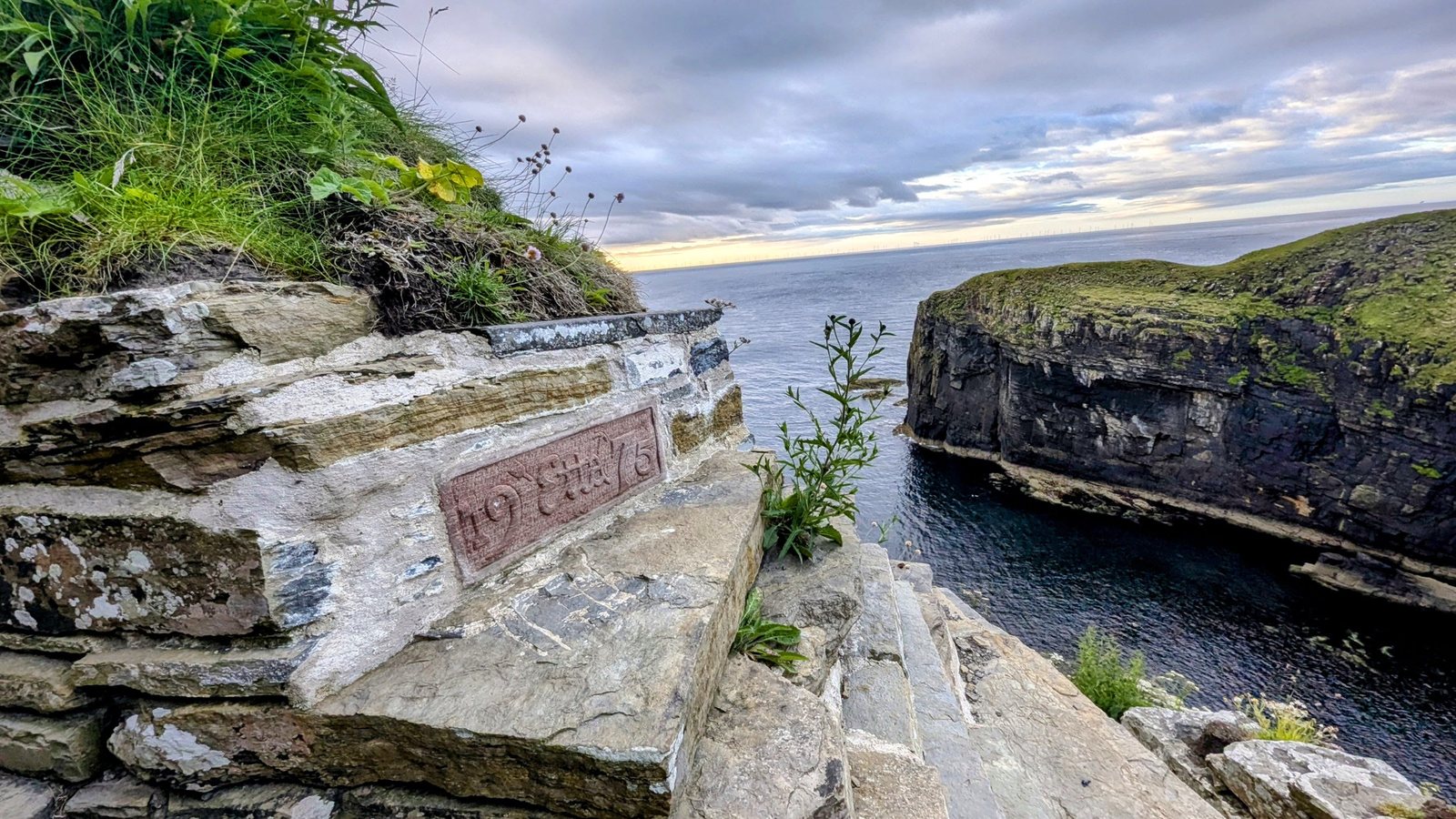
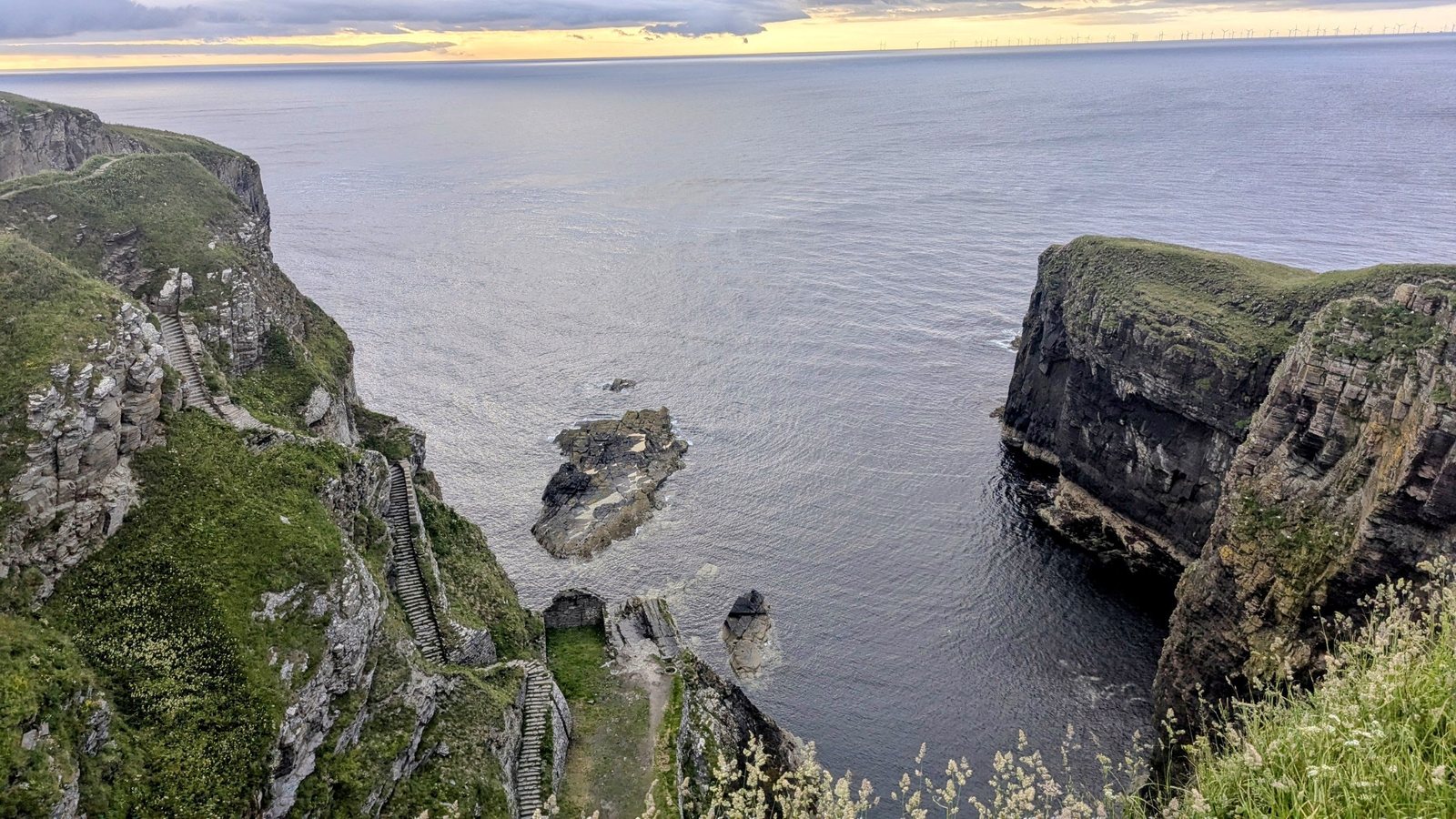
The descent is genuinely dramatic. The steps switch back and forth down the cliff, and with every turn the geo — the narrow inlet between the headlands — opens up below you, until you reach the flat grassy shelf at the bottom. This is the “bink,” the working platform where the herring were landed and gutted, with the remains of an old salt-and-net store beside it. It’s a magical, sheltered little world down there, the swell surging into the rock walls and seabirds wheeling overhead.
The history — the fishwives of Whaligoe
It seems impossible that anyone would land fish here — but they did, in their thousands. The steps were built around 1792–1808, when the local laird, Captain David Brodie, paid a few pounds to have a flight cut down to the natural haven so it could be used as a herring station. At the height of the “silver darlings” boom in the 1800s, Whaligoe worked a fleet of twenty or more boats.
The hardest work fell to the women. Once the boats landed, the fishwives gutted the herring on the bink, packed them into creels, and then carried them up the 365 steps on their backs — loads that could weigh a hundredweight — before walking miles to sell them in Wick. They did it in all weathers, year after year. Standing at the bottom, looking up at that cliff, it’s a humbling thought.
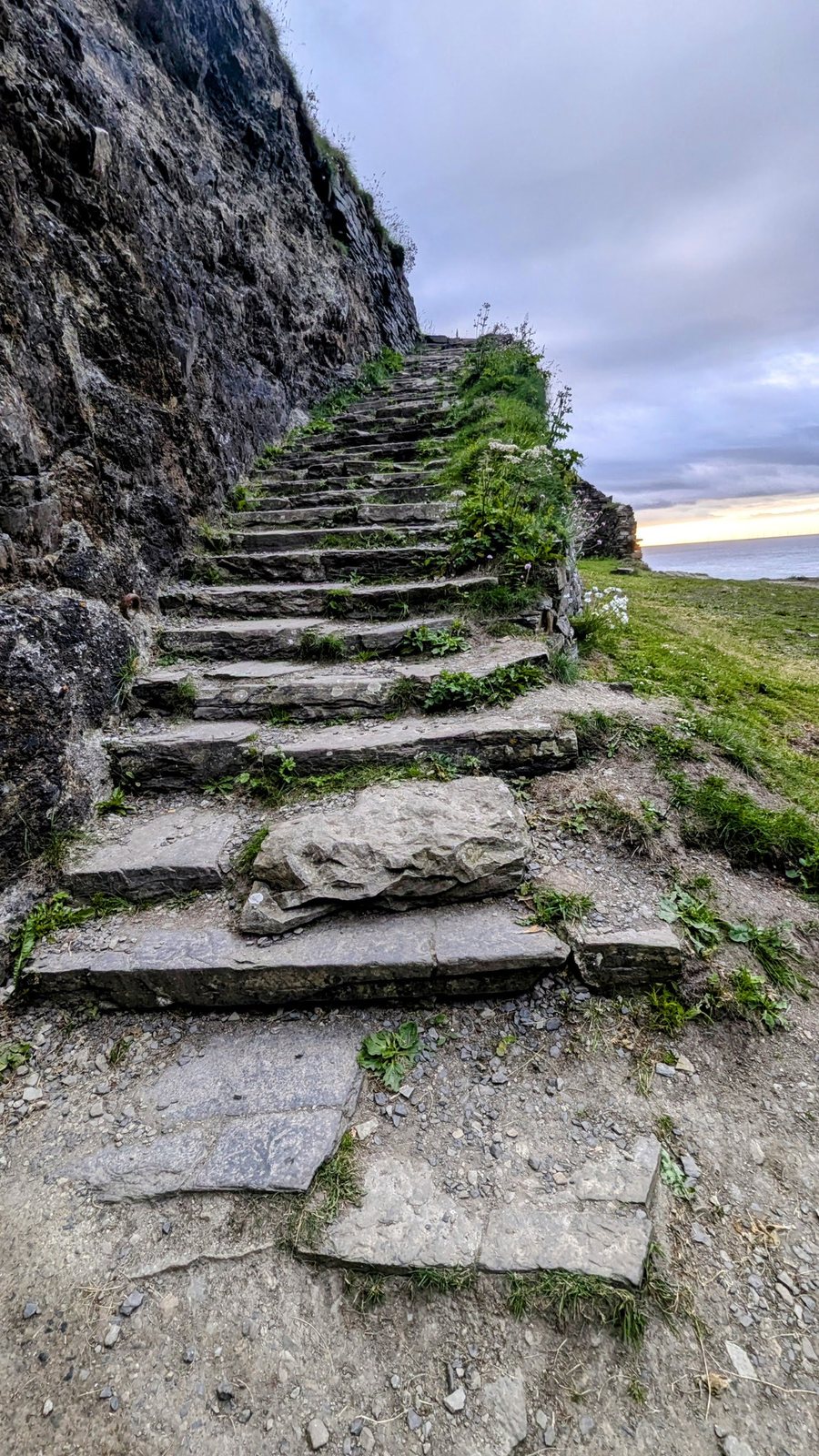
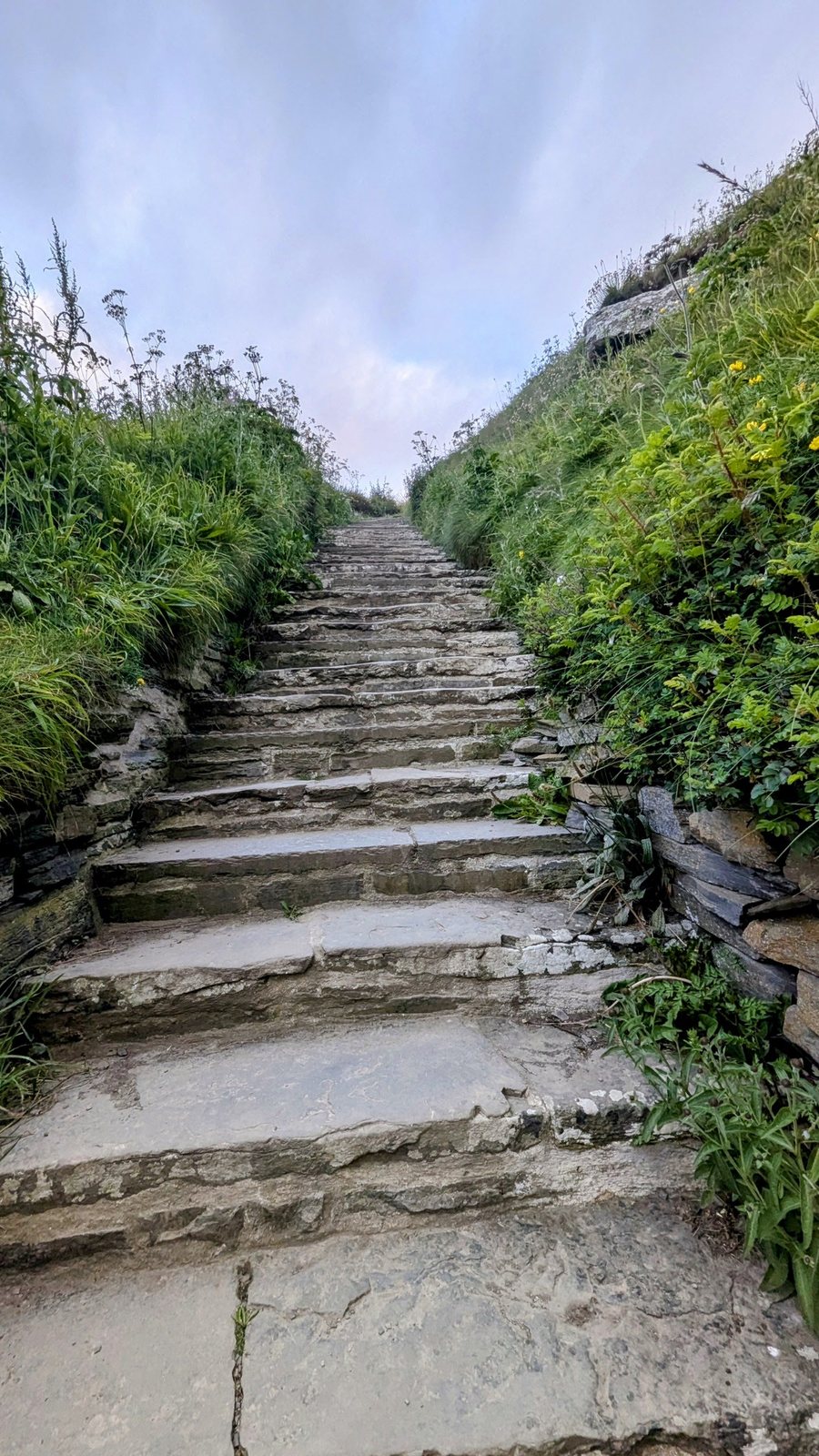
The name itself is grimly Caithness: “Whaligoe” means the “whale geo” — the inlet where whales were sometimes washed in. Today the steps are lovingly maintained by local volunteers, which is the only reason they’re still safe to walk.
The cliffs & the coast
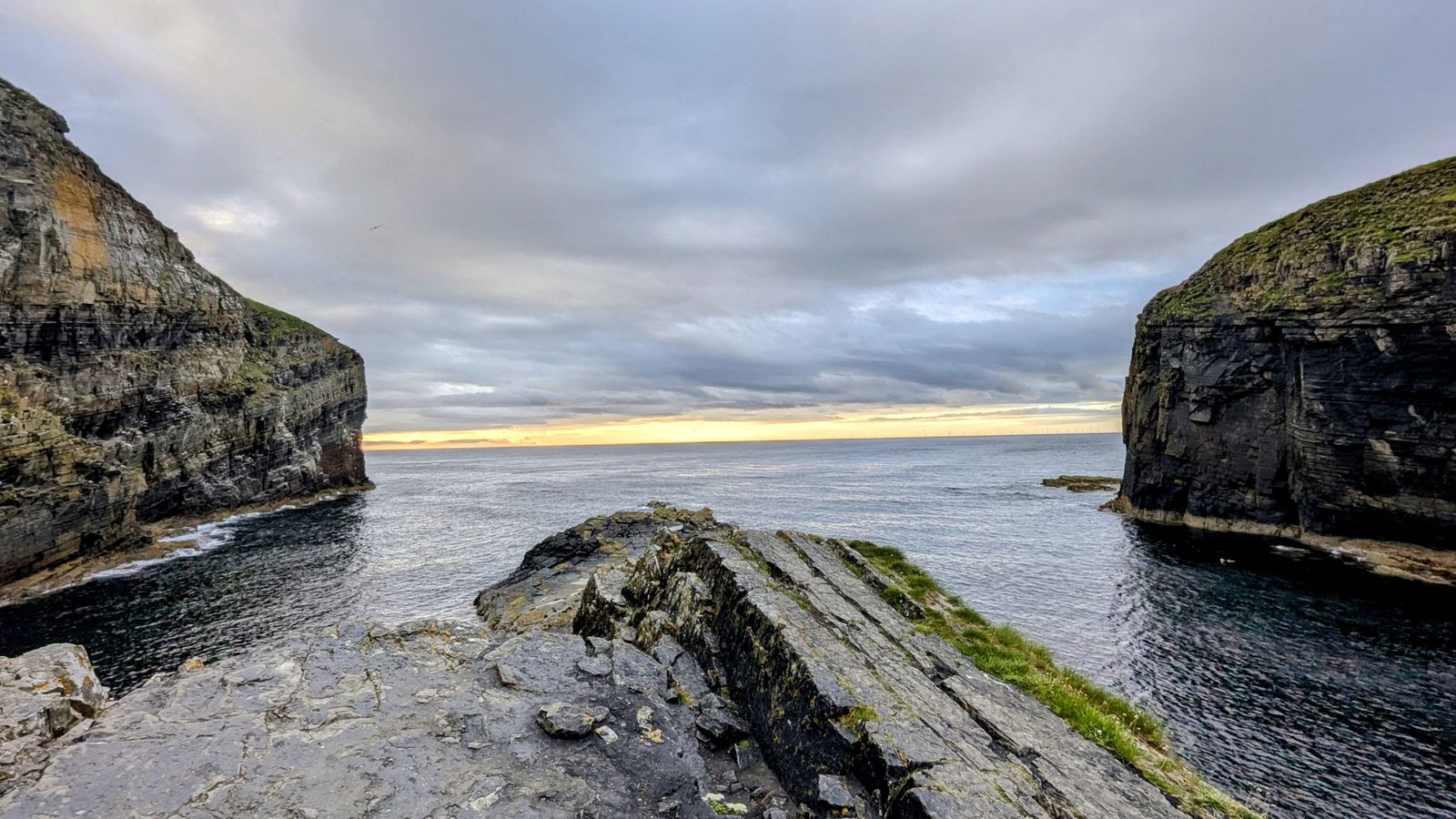
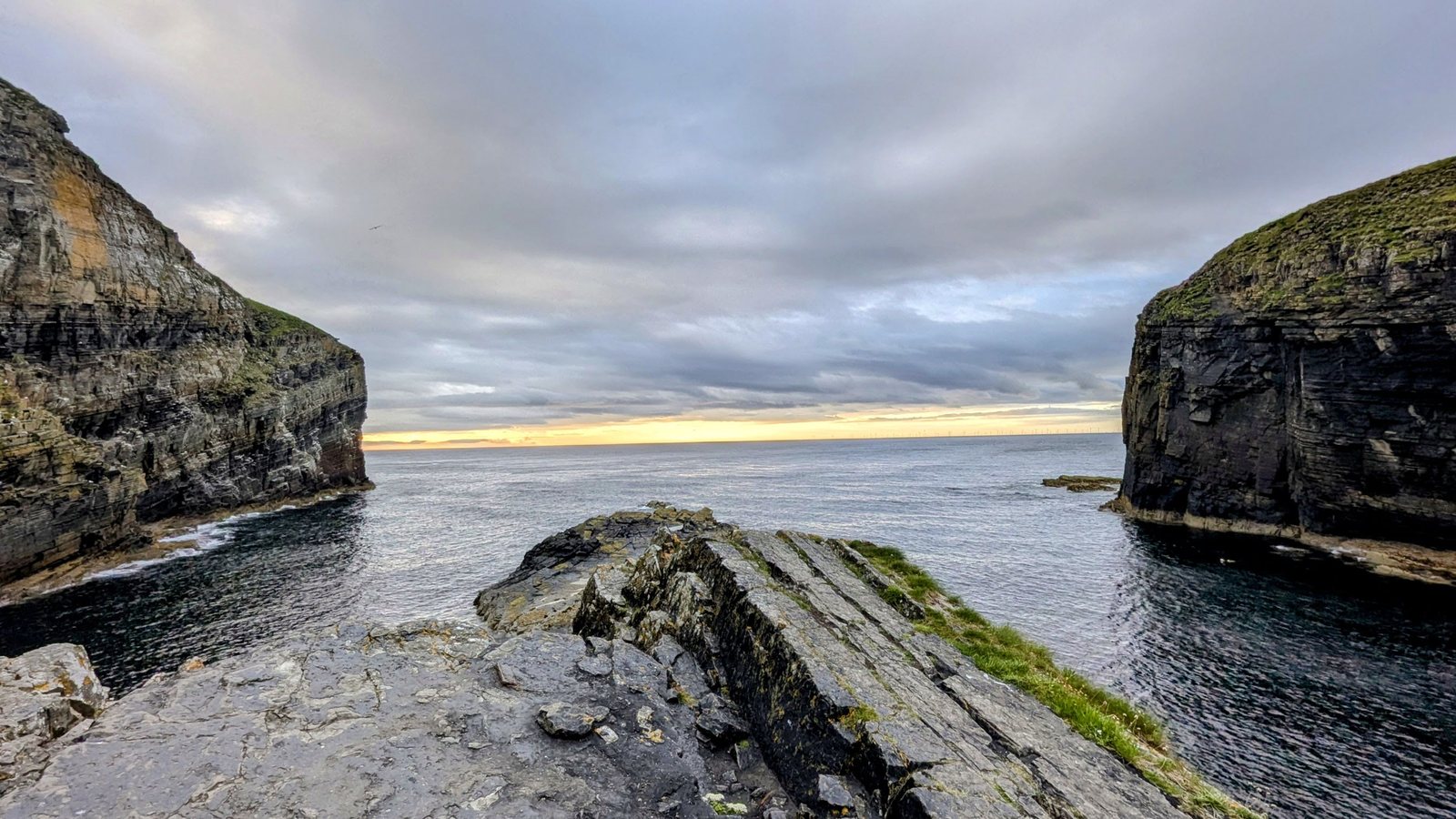
Whaligoe sits on the great flagstone cliffs of the Caithness coast, and the scenery is superb in its own right — layered rock, sea stacks, and the constant traffic of kittiwakes and other seabirds nesting on the ledges. The light here at either end of the day is something else.
Visiting — and a word of care
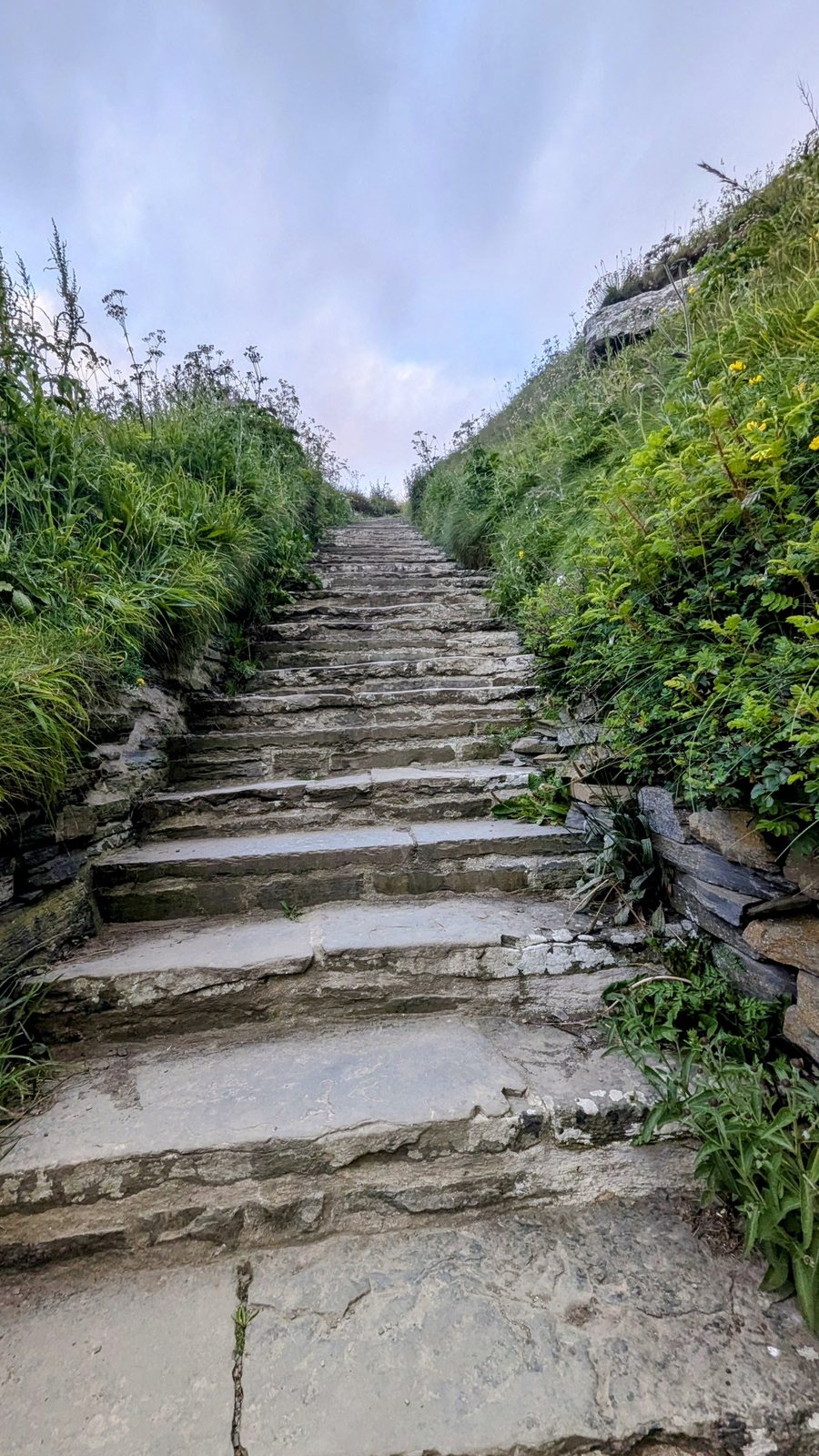
Whaligoe is free and open all the time, but it asks a bit of you. The steps are steep, uneven and can be very slippery when wet, and there are big drops and no barriers — take your time, wear proper shoes, and mind children and dogs. Remember that going down is the easy half: everything you descend, you have to climb back up. There’s a small café near the top for a well-earned brew afterwards. It’s not a place to rush, and it rewards anyone who makes the effort.
Nearby
- Wick — the old herring capital and Caithness coast hub just up the coast.
- Castle Sinclair Girnigoe — Scotland’s most dramatic cliff ruin, at Noss Head near Wick.
- Keiss — the little Caithness harbour with 2,000 years of history, further north.
- Close by are the Cairn of Get chambered tomb and the Hill o’ Many Stanes Bronze-Age stone rows — well worth combining.
Sources
- Canmore and Undiscovered Scotland on the steps, the harbour and the herring station.
- On Captain David Brodie, the fishwives and the “whale geo” name: Caithness local-history records.
- Everything first-hand is from our own visit to the Whaligoe Steps.