
Dunnottar Castle: The Cliff Fortress Where Scotland Hid Its Crown Jewels
🏰 Privately run · paid entry (£10.50+ adult, more for a family) · not cheap
Overview — the honest take
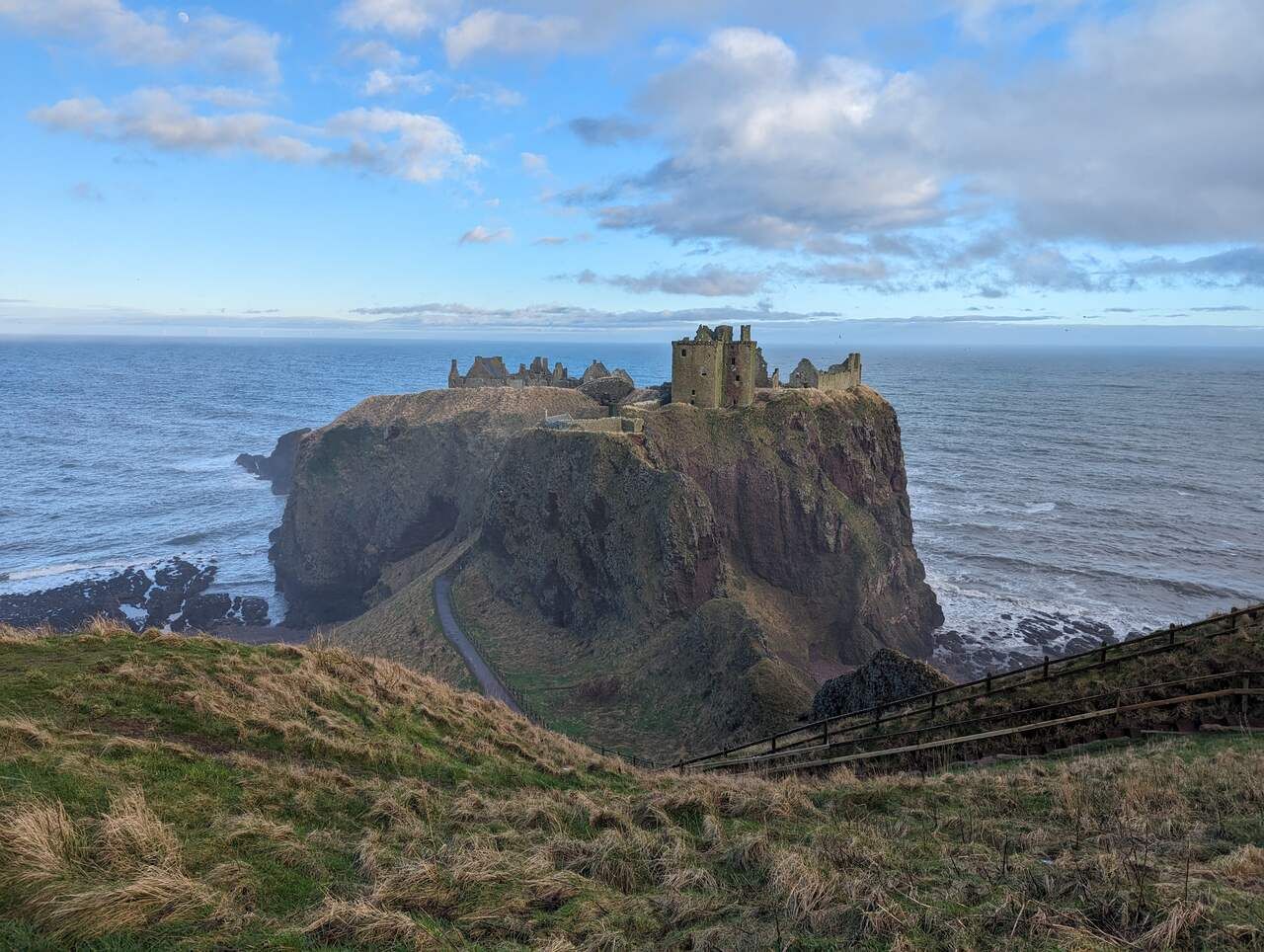
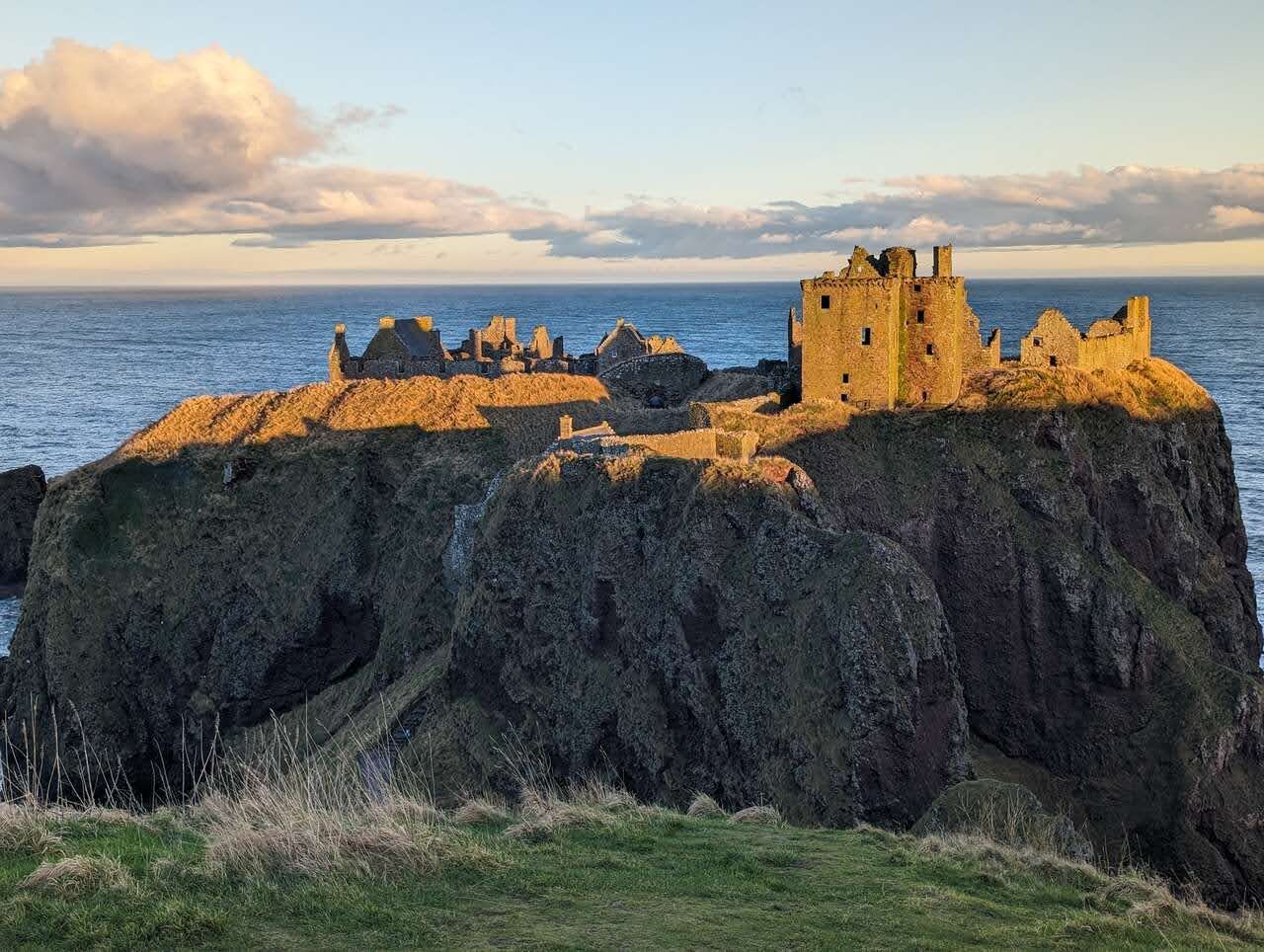
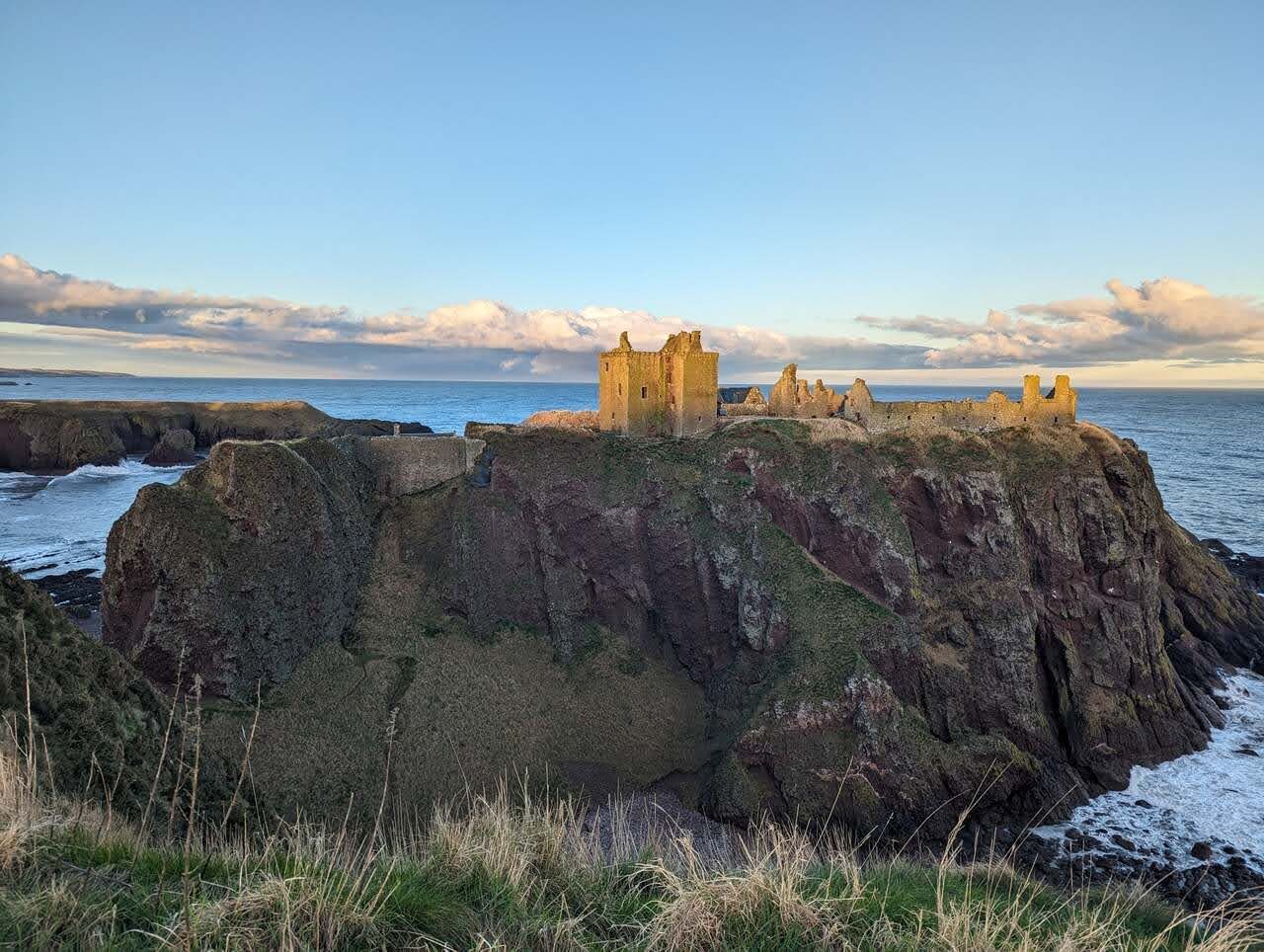
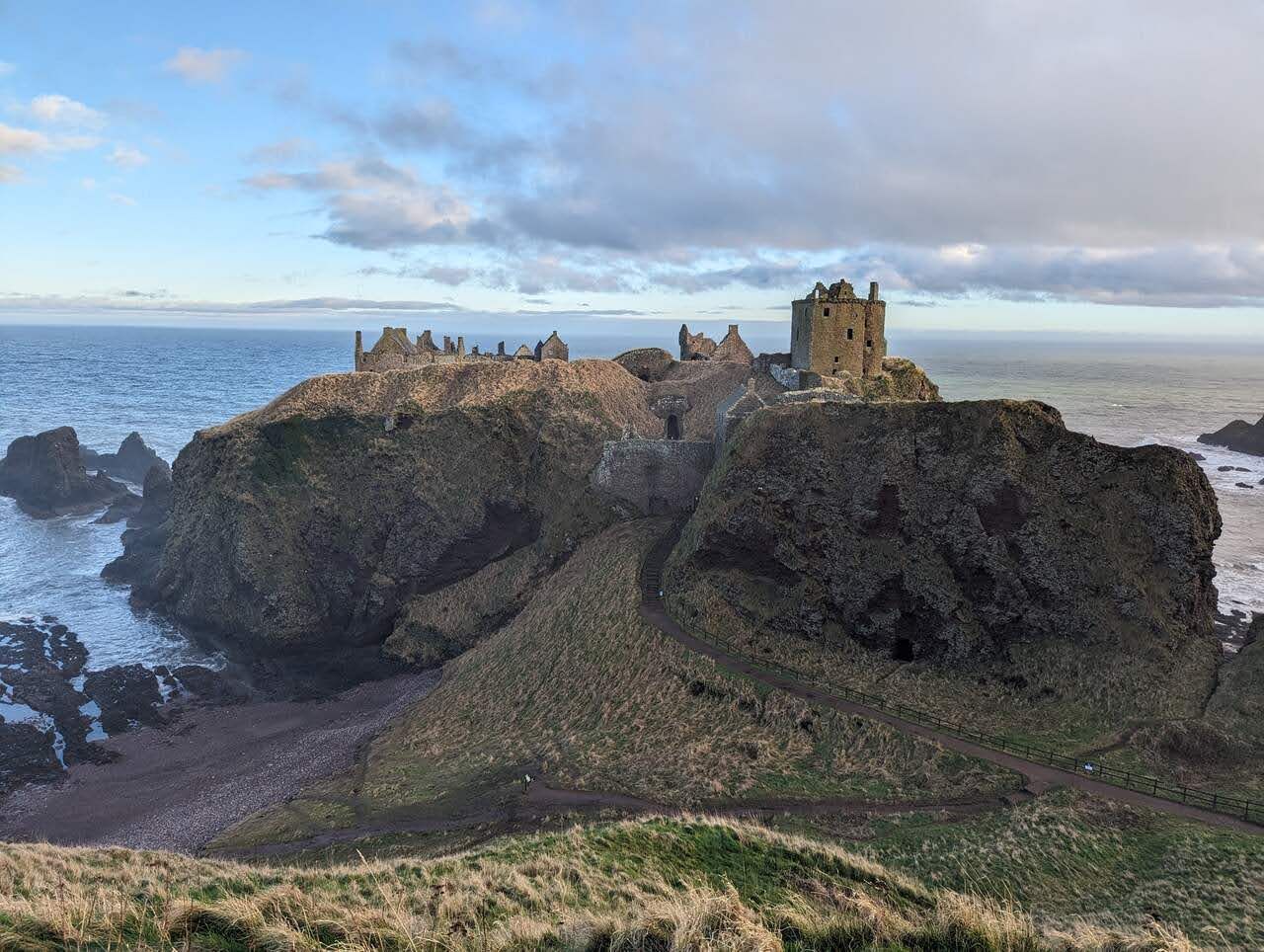
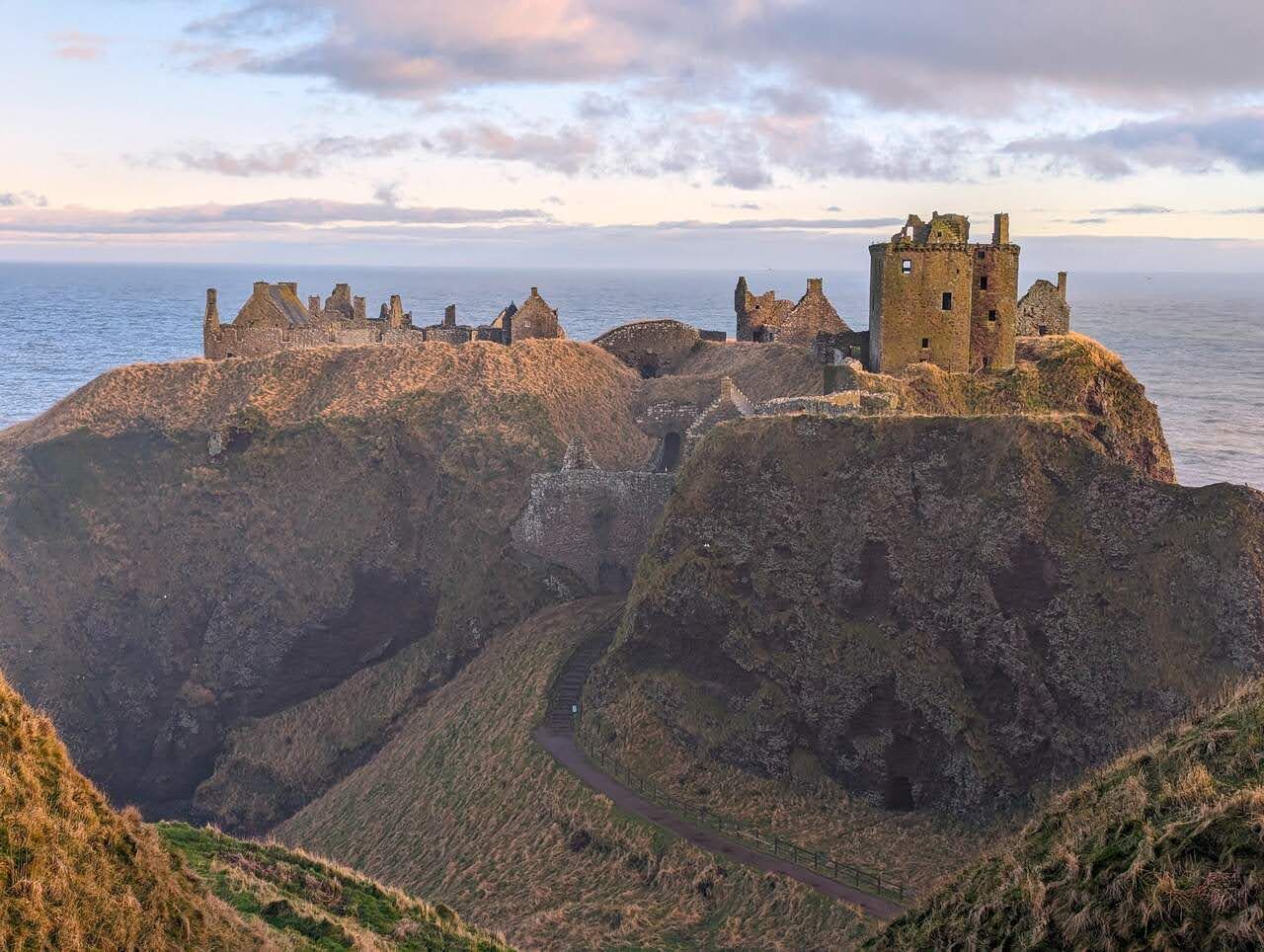
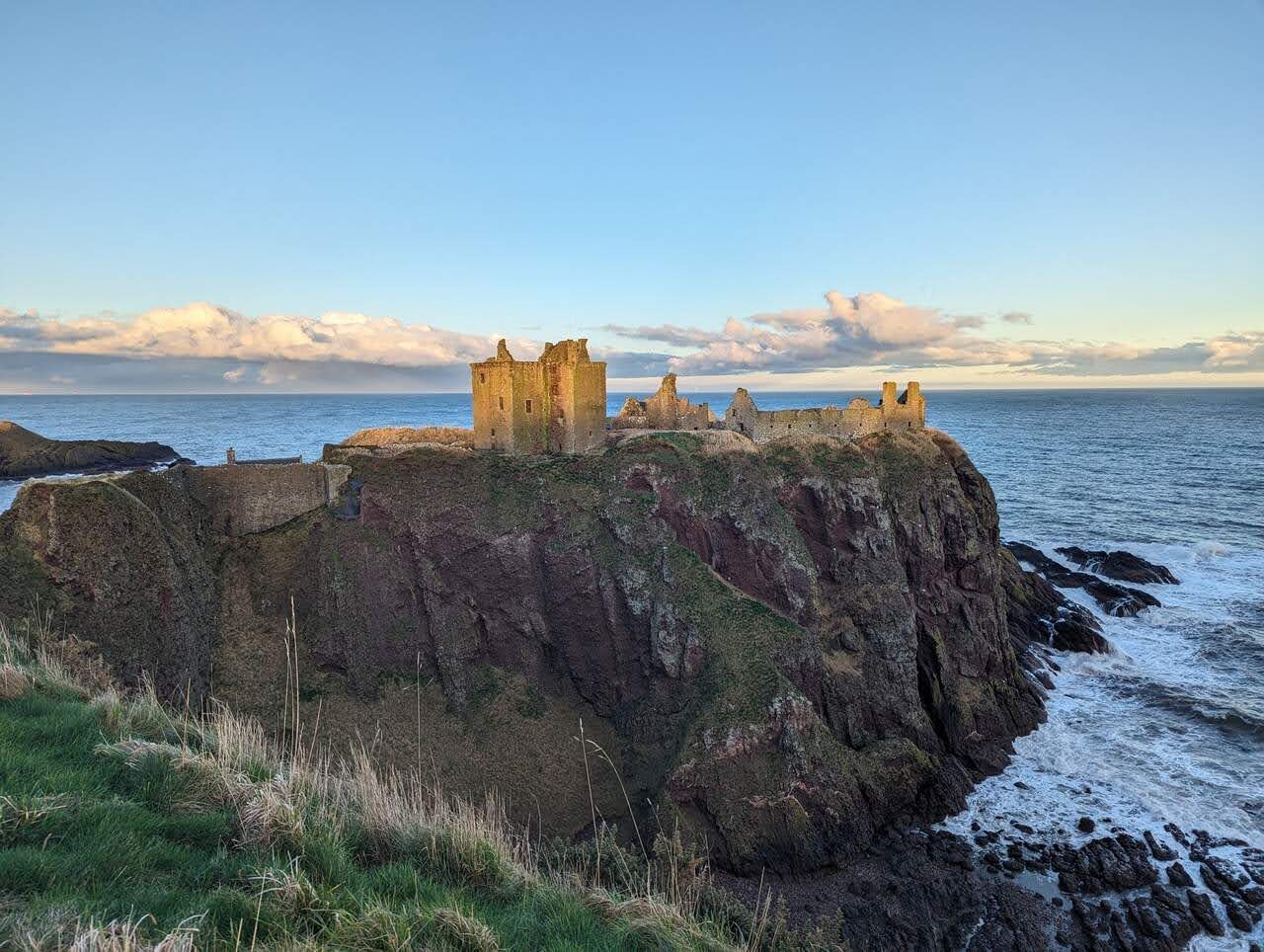
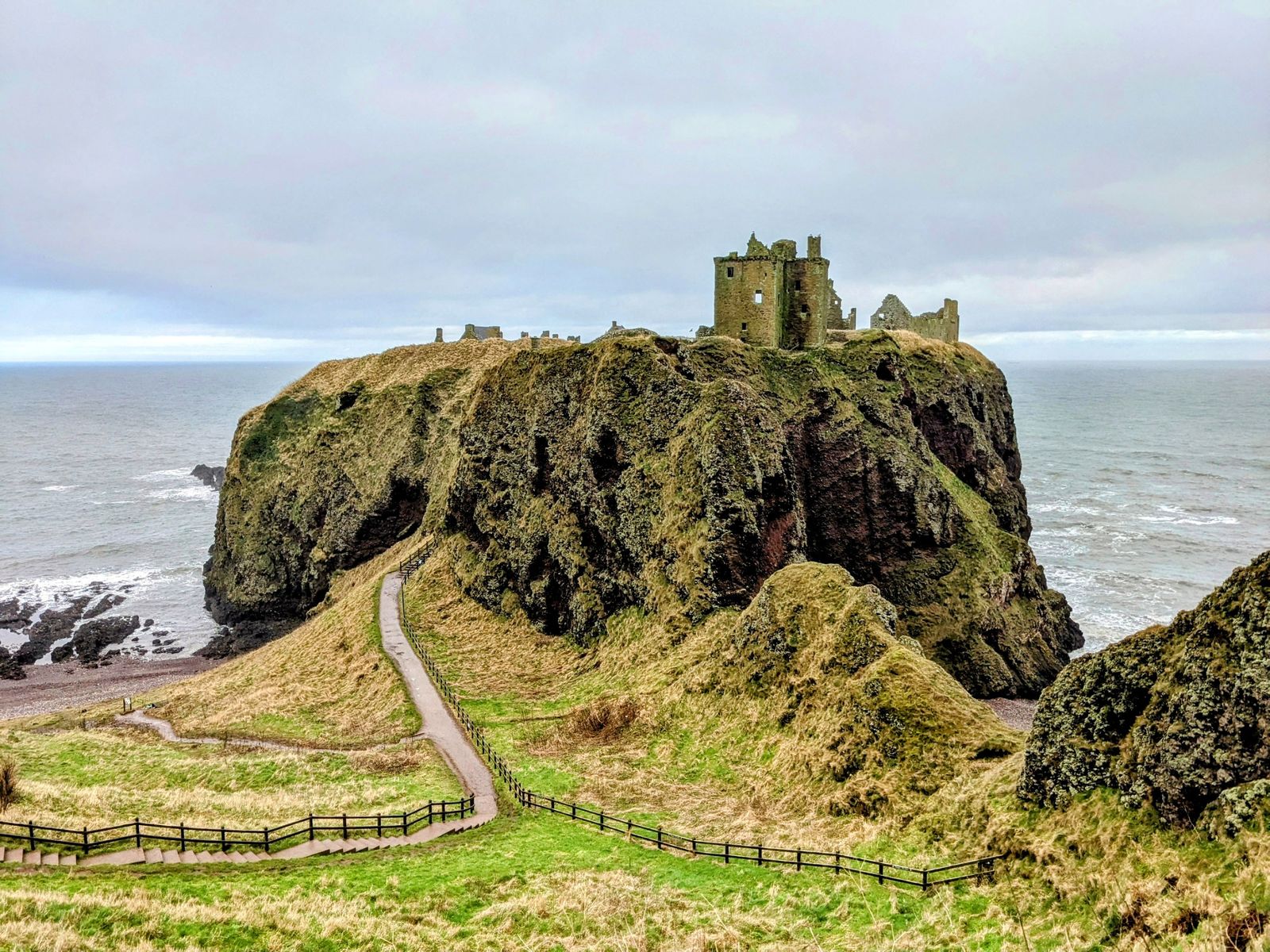
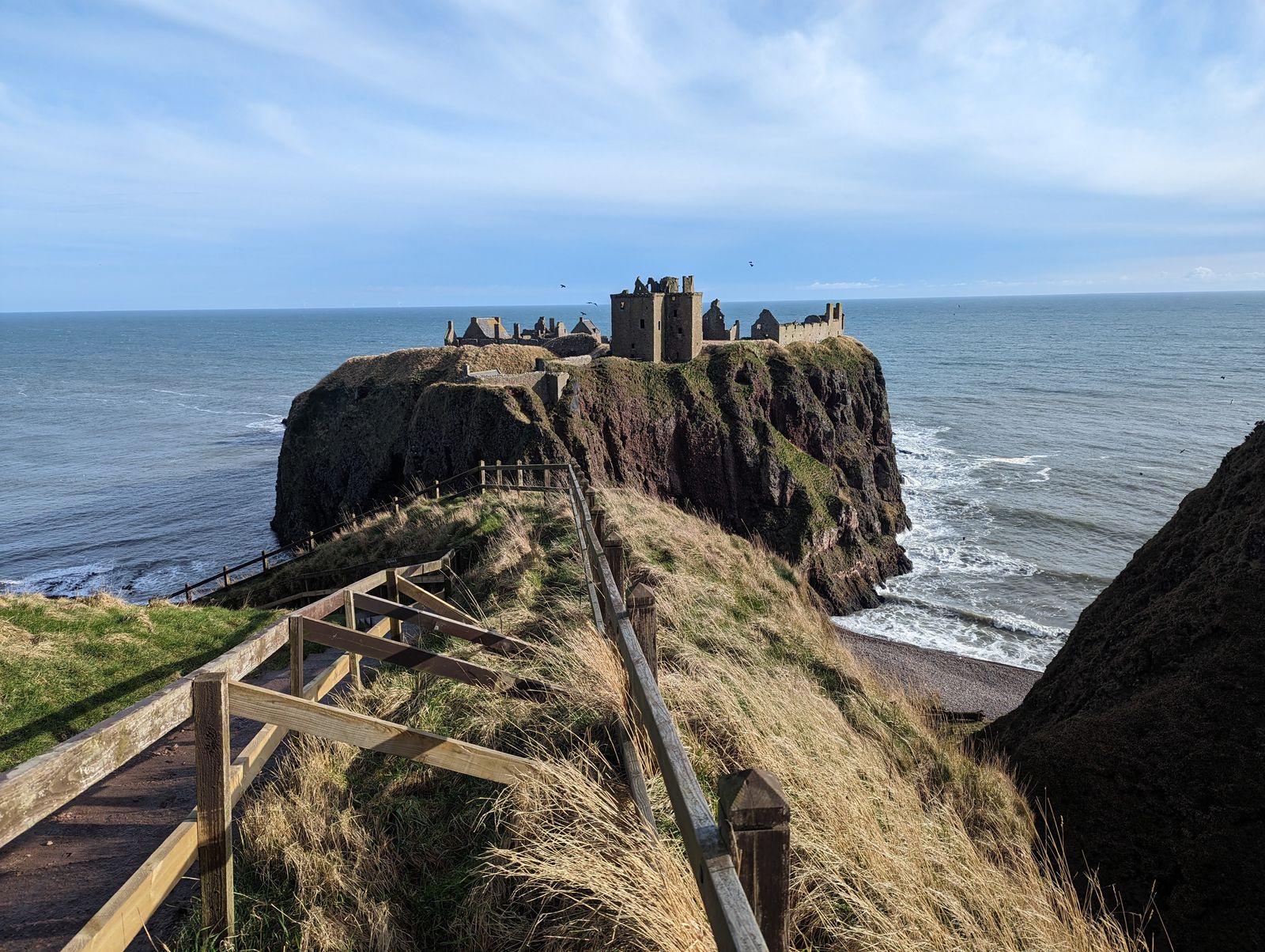
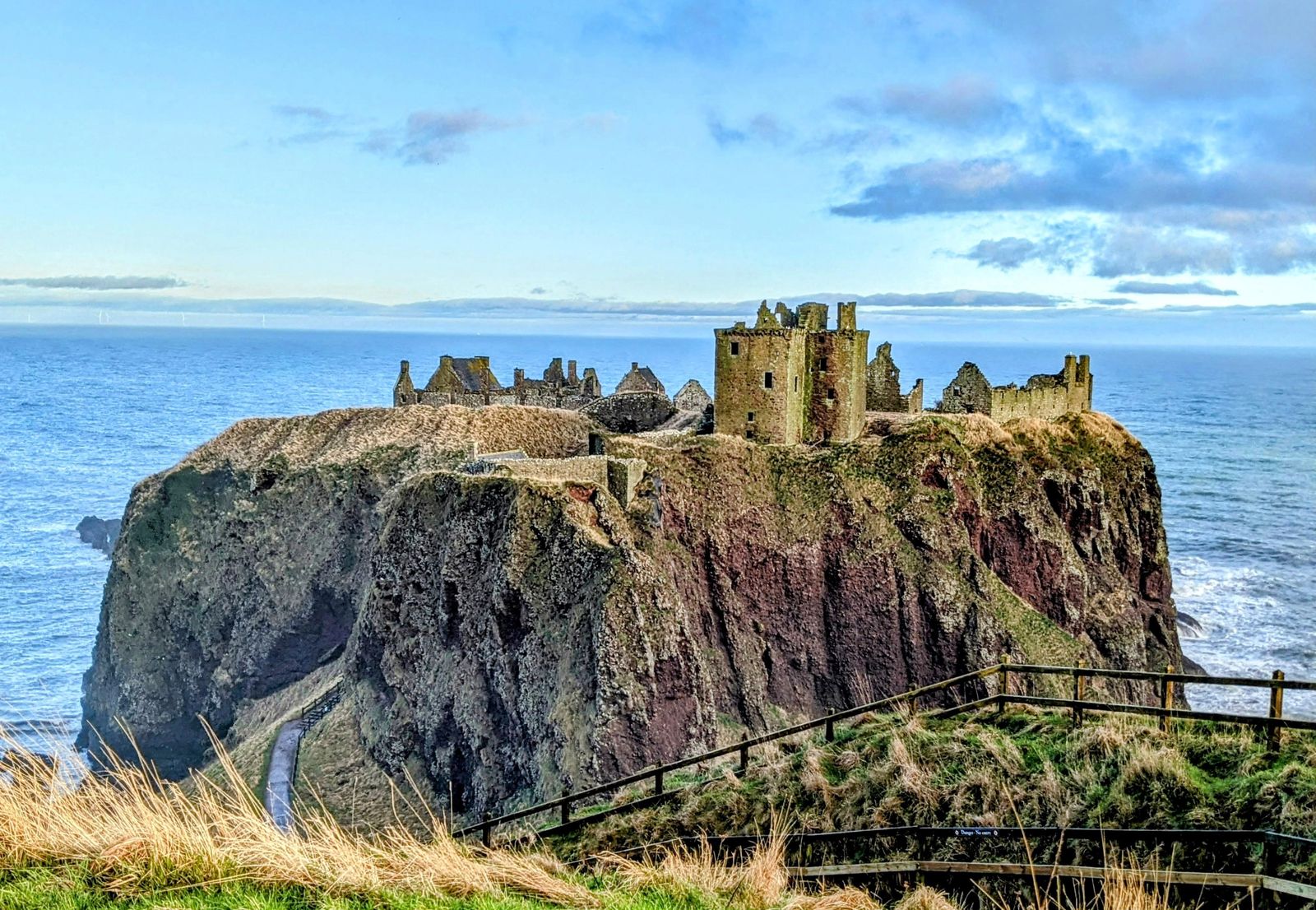
Dunnottar Castle is, quite simply, one of the great sights of Scotland: a sprawling ruined fortress perched on a flat-topped sea-cliff rock, cut off from the mainland by a deep, narrow chasm, with the North Sea booming on three sides. It looks impossible — and it carries a history to match, from an early Christian saint to William Wallace, from Mary, Queen of Scots to the hiding of the Honours of Scotland — the nation’s crown jewels — from Oliver Cromwell’s army. We came on a bright, bitter February afternoon and it was every bit as spectacular as its reputation.
We’ll be straight with you on two things, because they matter: it’s privately run and the entry isn’t cheap (over a tenner a head, more for a family), and getting to the rock means a steep walk down and a proper climb of steps back up. Neither is a reason to miss it — but go knowing.
Where it is
The castle stands on the Aberdeenshire coast about two miles south of Stonehaven, roughly 15 miles south of Aberdeen. There’s a car park at the top; from there it’s a short walk to the cliff edge and then down. Far better, if you have the time, is to walk out along the coast from Stonehaven (more on that below).
The history — more than a castle
People have held this rock for well over a thousand years. The earliest record is from the 5th century, when the Celtic saint St Ninian is said to have founded a church here — one of the earliest Christian sites in Pictland. In 1297, during the Wars of Independence, William Wallace stormed the English garrison holding Dunnottar and took it back for Scotland.
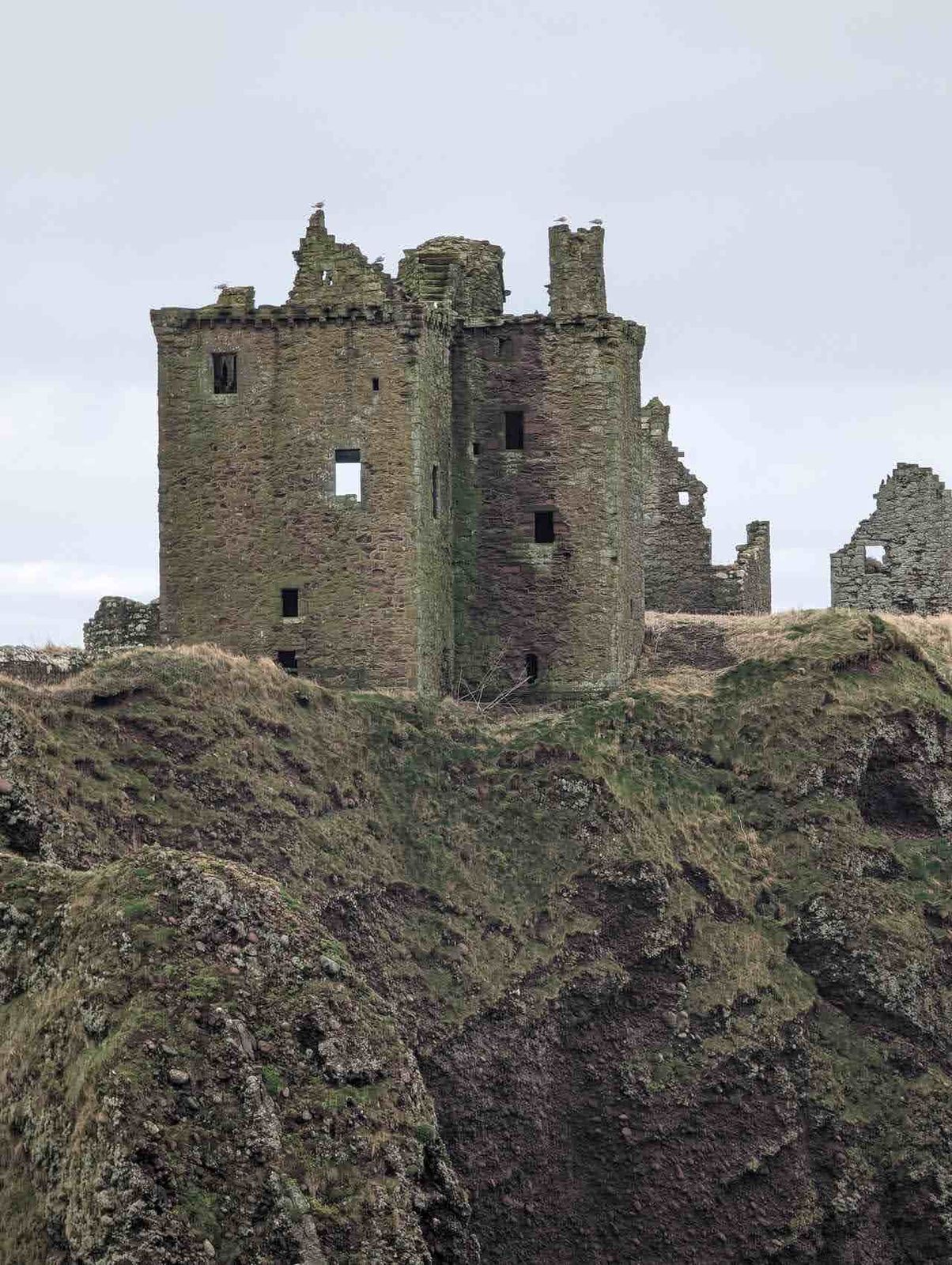
From the 14th century the rock belonged to the Keith family, the Earls Marischal of Scotland, who built the tower keep and turned it into the great fortress-residence you see today. James IV visited in 1504; Mary, Queen of Scots came in 1562 after the Battle of Corrichie.
The Honours of Scotland
Dunnottar’s most famous hour came in 1651–52. With Cromwell’s forces overrunning Scotland, the Honours of Scotland — the crown, sword and sceptre, the oldest crown jewels in Britain — were brought here for safety. When the castle was besieged and forced to surrender, the Honours had already been smuggled out under the invaders’ noses and hidden (the story goes) beneath the floor of a nearby church at Kinneff, where they stayed safe until the Restoration. It’s one of the great survival stories of Scottish history — and the reason there is still a Scottish crown to see today.
The Whigs’ Vault
The rock has a darker tale too. In 1685, 167 Covenanters — Presbyterian dissenters, nicknamed “Whigs” — were marched here and crammed for weeks into a single damp cellar now called the Whigs’ Vault. Several died of the conditions, others perished trying to escape down the cliffs, and the survivors were shipped off to the colonies. Standing in that low, dark room is a sobering counterpoint to the beauty outside.
The castle’s long story wound down after the last Earl Marischal forfeited his titles and lands for joining the 1715 Jacobite rising, and it slid gently into the magnificent ruin it is now.
Visiting — and those steps
Dunnottar is privately owned and run, with paid entry (over £10 an adult when we visited, and dearer for a family — check current prices before you go). Once you’re through the top gate the path drops steeply down to the neck of the rock and then climbs a long flight of steps back up to the castle gate — not one for anyone unsteady on their feet, and a fair puff on the way out. Inside, you can explore the keep, the chapel, the great hall range, the bowling green, and the grim little Whigs’ Vault.
The walk from Stonehaven & the War Memorial
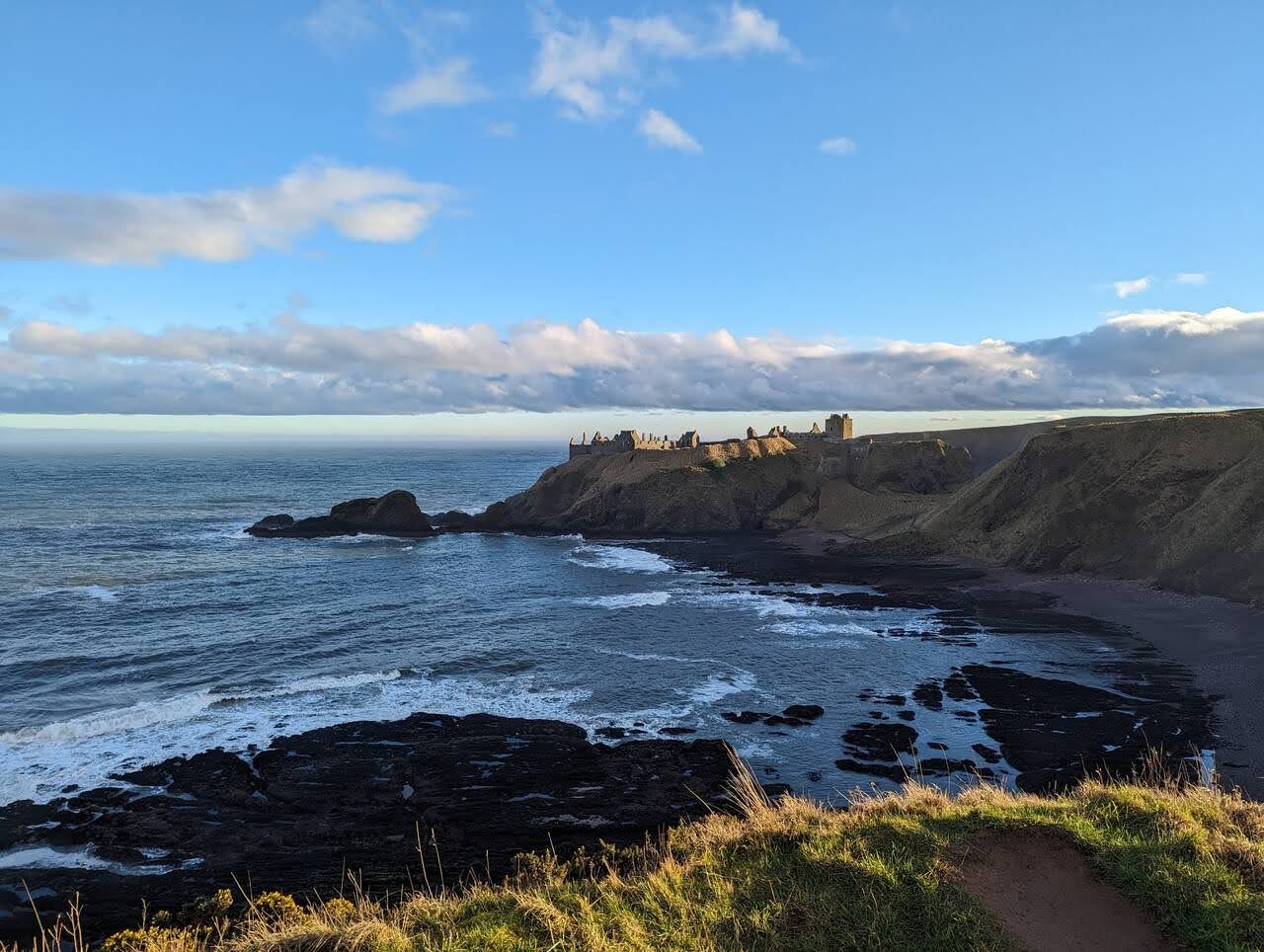
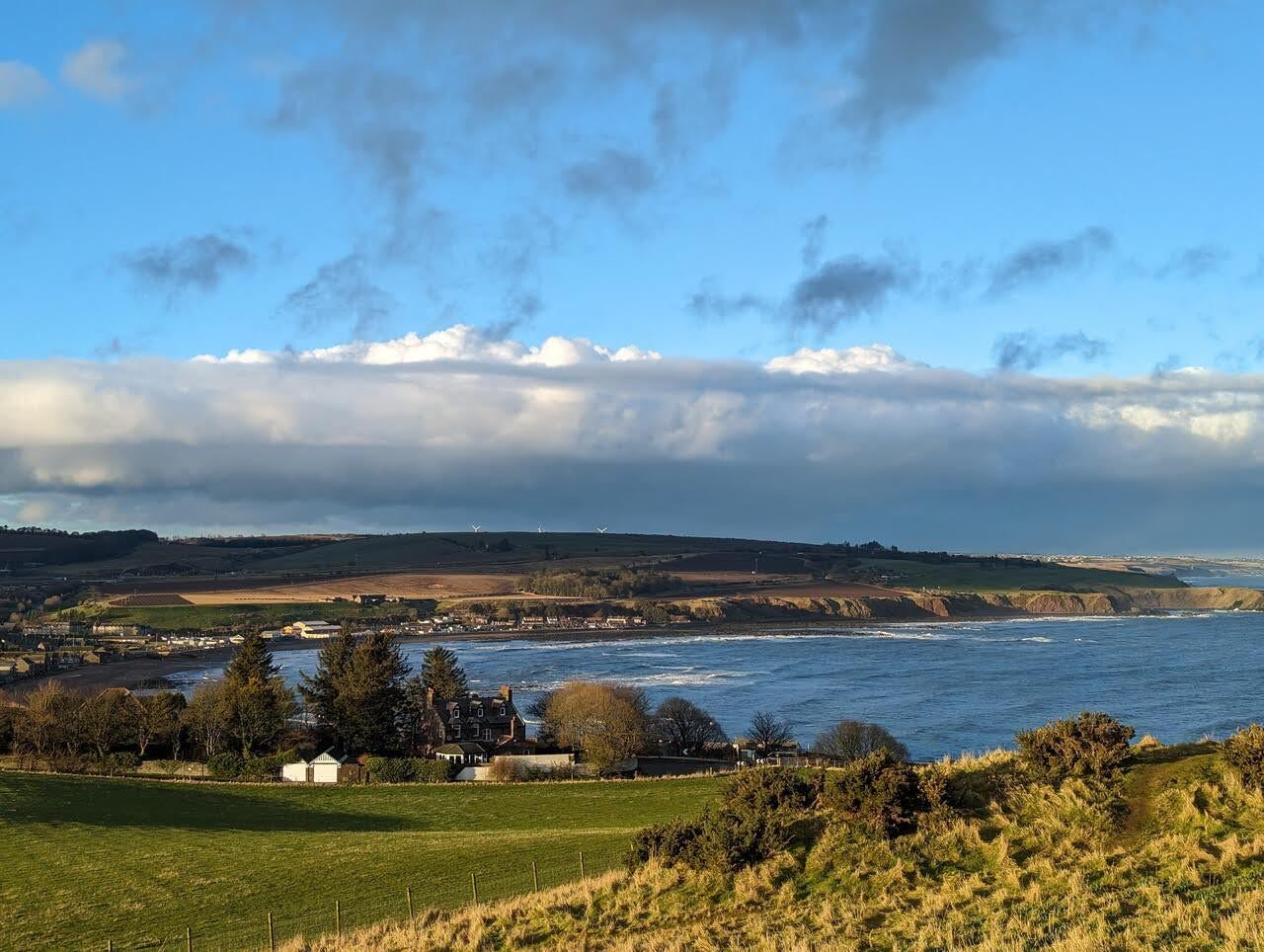
If you can, leave the car in Stonehaven and walk out. The coastal path from the harbour runs up onto the cliffs and south along the coast to the castle in around 40 minutes to an hour, with the drama building the whole way. It’s one of the best short coast walks in the north-east.
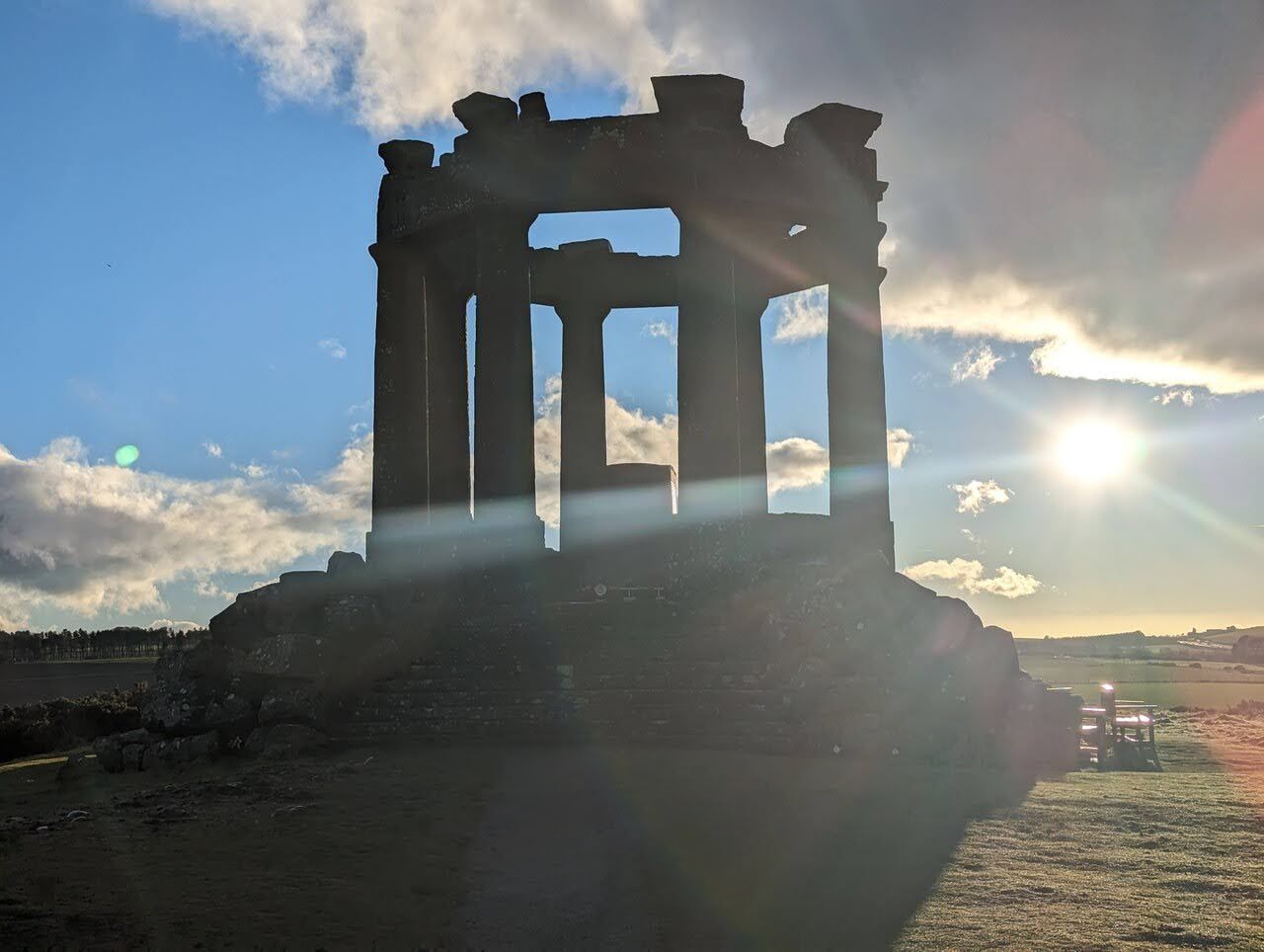
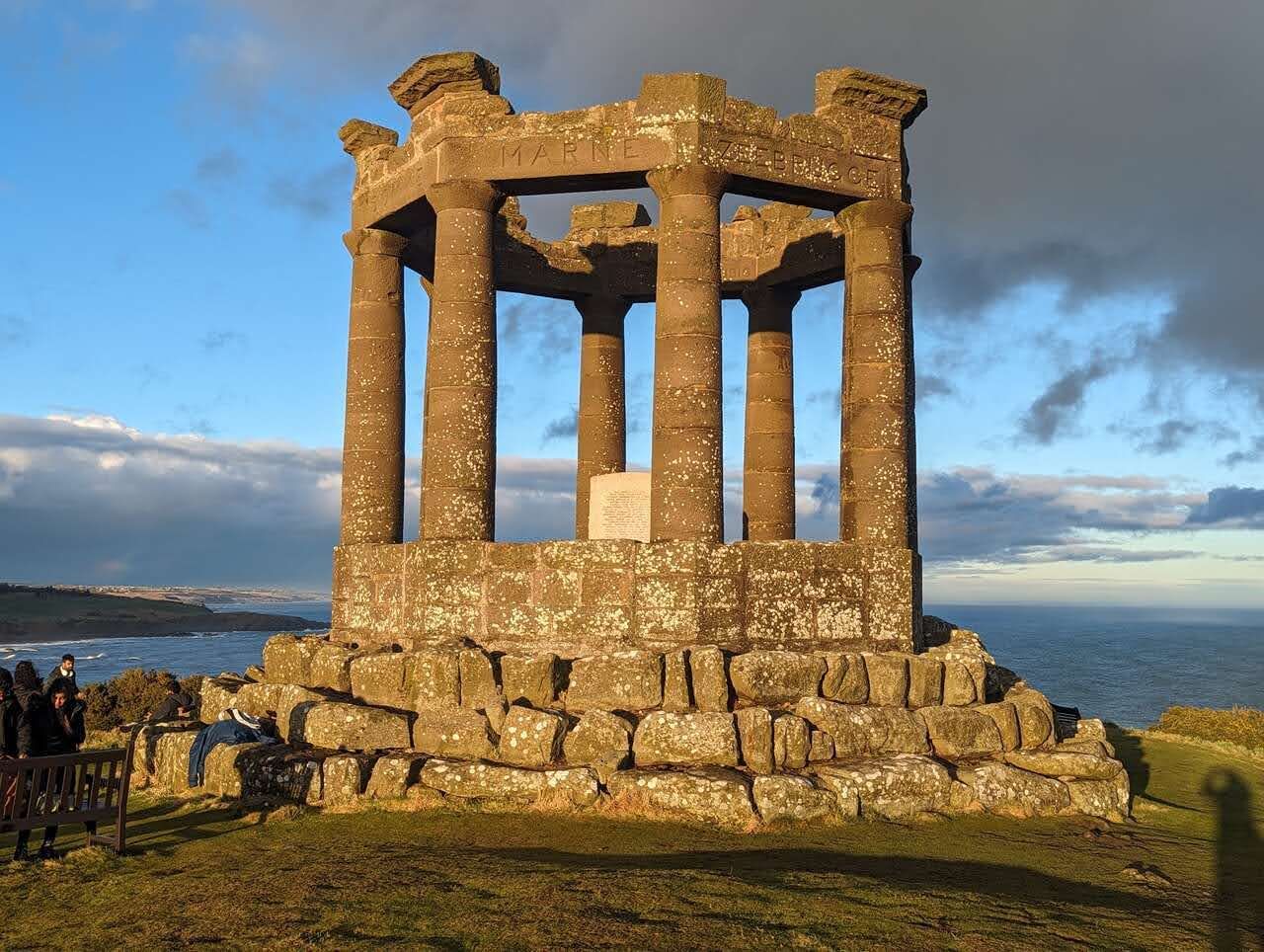
Halfway along, on the top of Black Hill, stands the Stonehaven War Memorial — a striking roofless colonnade, like a ruined temple against the sky. It was left deliberately open to the elements, a symbol of lives cut short and homes left unfinished. Catch it at sunrise or sunset, as we did, and it’s unforgettable.
The coast
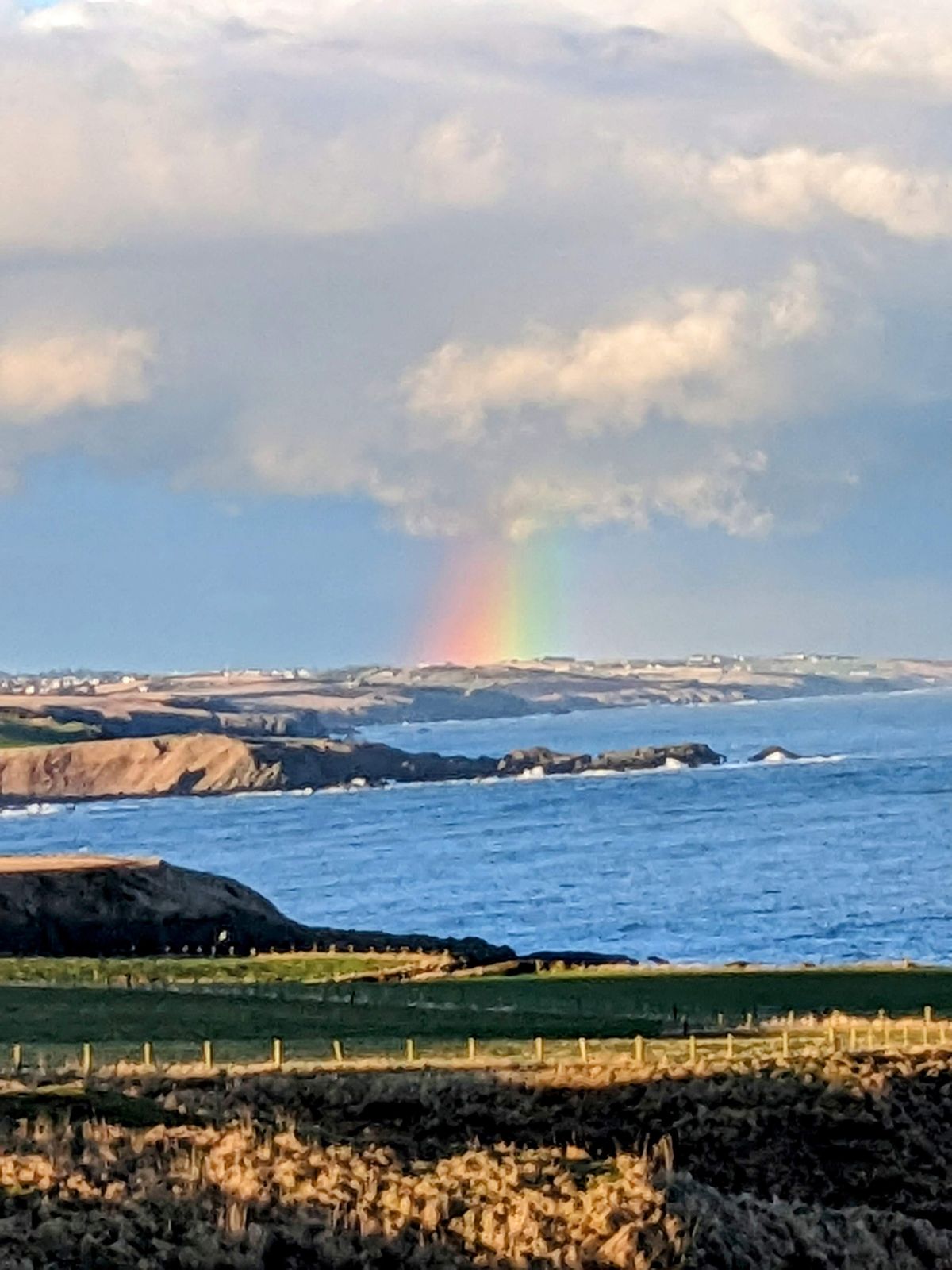
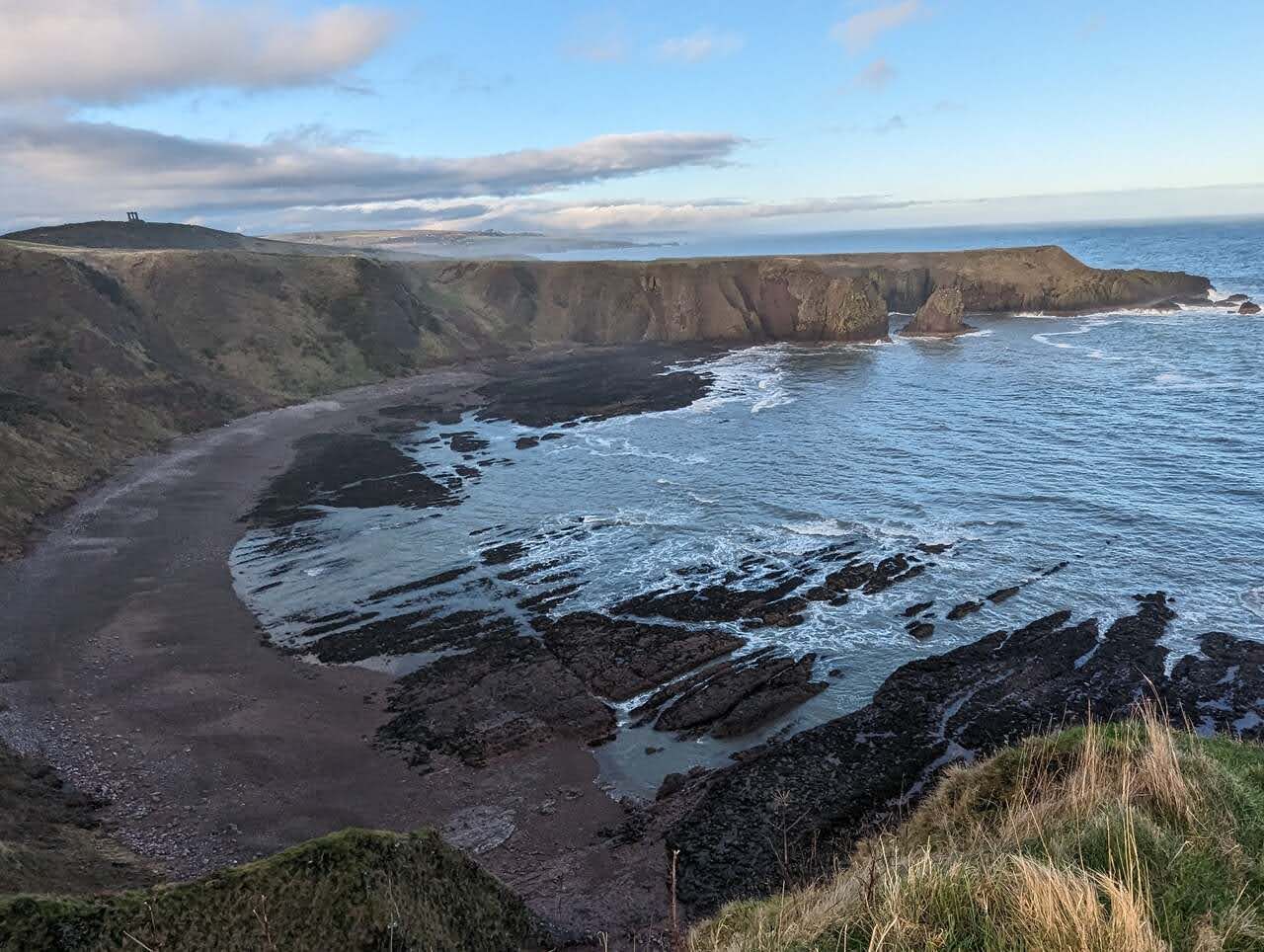
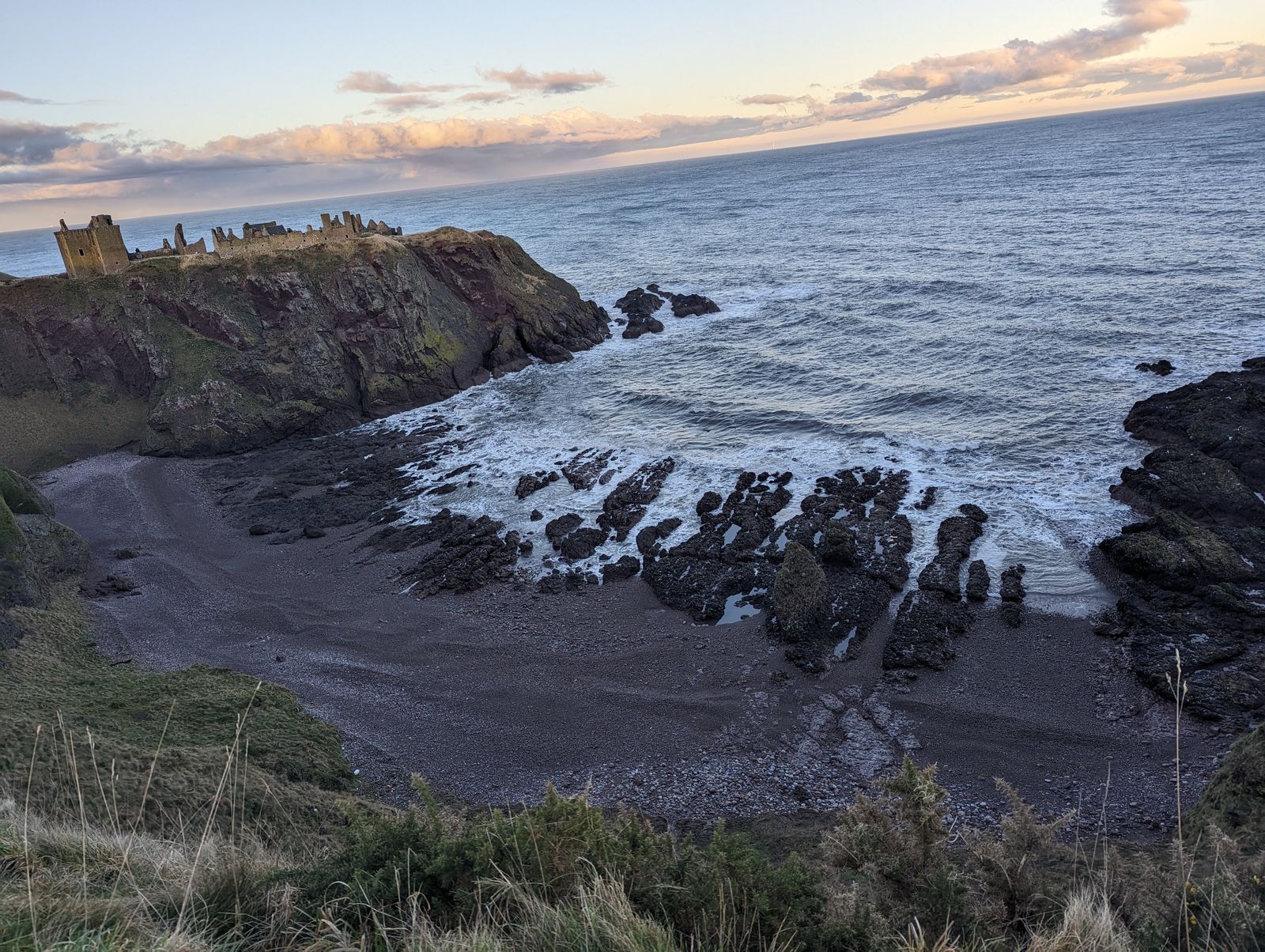
The whole of this stretch is big, dramatic sea-cliff country — stacks, coves, wheeling seabirds and, if you’re lucky with the fast-changing weather, a rainbow straight out over the North Sea.
Overnight
We slept in the castle car park with no issues at all — quiet, handy for a first-light look at the rock, and a stone’s throw from the coast walk. As always, check current signage and be considerate; it’s a busy visitor car park by day.

More from our visits
Nearby — Stonehaven & the coast
Stonehaven itself is well worth time: a handsome old harbour, a famous 1930s open-air Art Deco sea pool (heated, and open in summer), good pubs and chip shops, and the wooded walks of Dunnottar Woods behind the town. At Hogmanay it’s known across the world for its fireballs ceremony, when locals swing blazing wire cages through the streets.
- Browse the rest of the ruins we’ve visited in our Castles of Scotland collection.
- For the wider Wallace and Mary, Queen of Scots story, see Stirling (Bannockburn & the Wallace Monument) and Loch Leven Castle.
Sources
- Dunnottar Castle — official history & Wikipedia.
- The Honours of Scotland & the Whigs’ Vault — Dunnottar Castle history pages and Historic Environment Scotland.
- Everything first-hand is from our own February 2024 visit.