Clackmannan: The Bruce Tower, the Stone of Mannan & the Tiny County’s Ancient Capital
Overview — the honest take
Clackmannan is a small, deeply historic town on a ridge above the River Forth — the ancient capital of Clackmannanshire, Scotland’s smallest county. It packs a remarkable amount of story into a short walk: a towering medieval stronghold of the Bruces, a mysterious sacred stone that gave the whole county its name, an old tolbooth and mercat cross, and a hilltop with big views over the Forth to the Ochils. It’s only a couple of miles from our home base at Alloa, and it’s an easy, rewarding wander for anyone who likes their history close to the surface.
Where it is
Clackmannan sits on a low hill above the Forth, about 2 miles east of Alloa and 8 miles from Stirling, in the heart of the wee county it named. King’s Seat Hill, crowned by the tower and the old kirk, rises right at the edge of the town.
The Stone of Mannan — where the name comes from
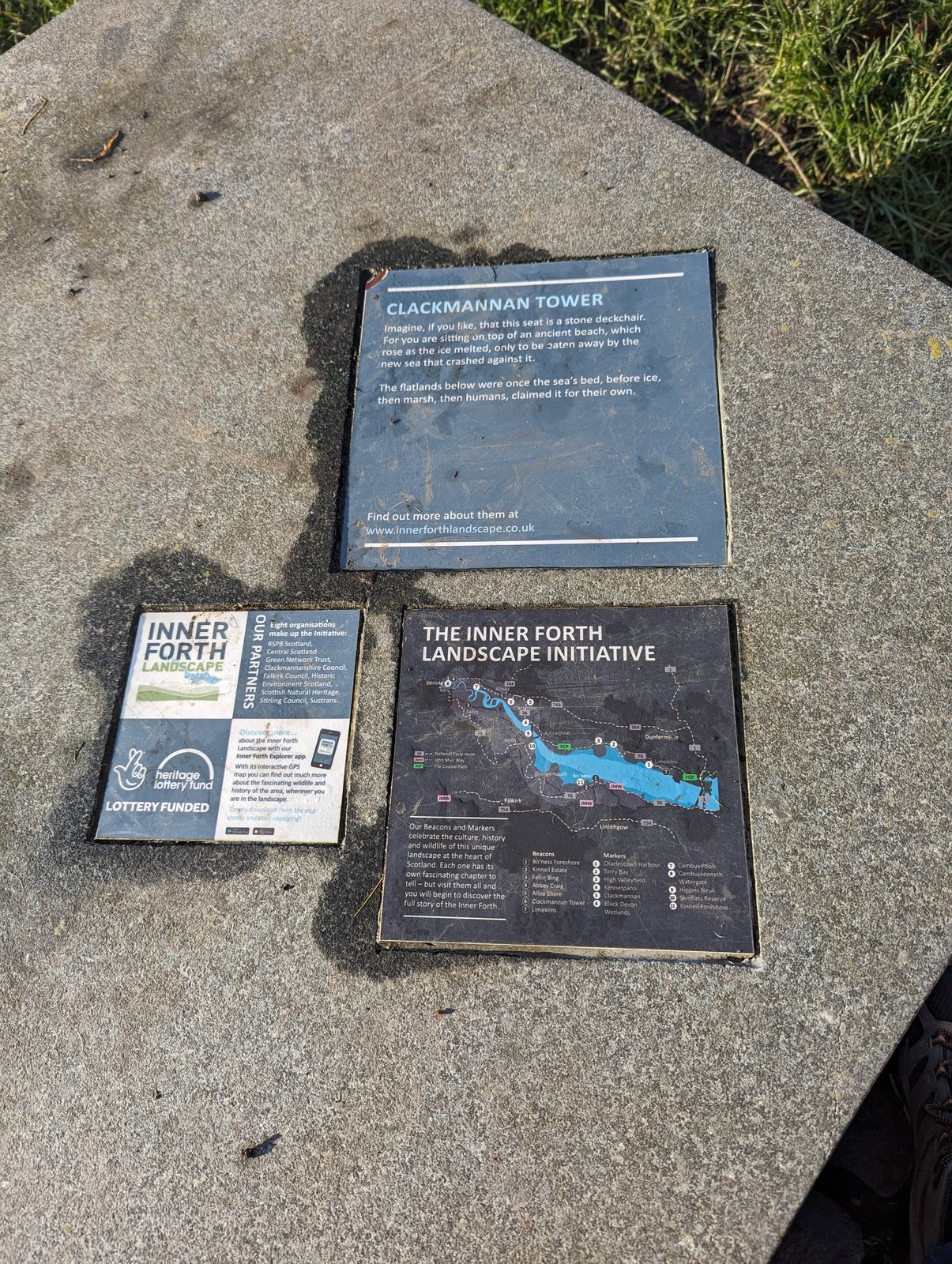
The town’s name is pure ancient Scotland: “Clach Mhannain” means the “Stone of Mannan” — a reference to Manau, the old district here, and to the Celtic sea-god Manannán. The Stone of Mannan itself is real and still here: an ancient blue-grey glacial boulder, once a place of pagan gathering, which in 1833 was hoisted onto a tall stone shaft beside the Tolbooth in the main street, where it still stands. Standing under it, you’re looking at the literal thing that named a whole county.
Clackmannan Tower — the house of the Bruces
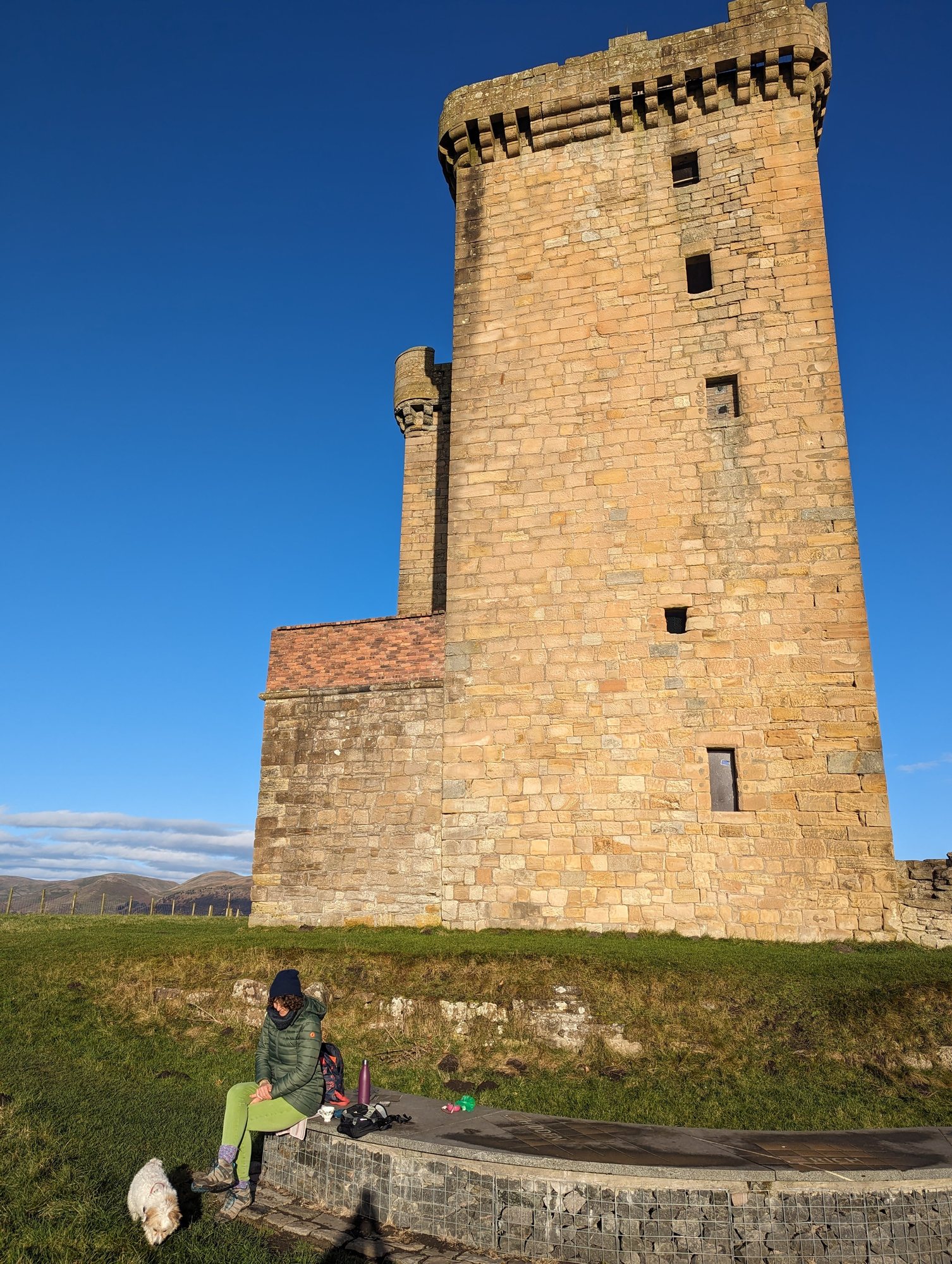
The great landmark is Clackmannan Tower, a tall and imposing tower house begun in the 14th century on King’s Seat Hill. Its story is bound up with Scotland’s greatest royal name: the lands were granted by King David II (son of Robert the Bruce) to Robert Bruce, a kinsman of the royal house, and the tower became the seat of the Bruces of Clackmannan for some four hundred years. It grew from a simple keep into a fine L-plan stronghold, and it dominates the skyline of the whole Forth valley. Read more about the wider family on our Clan Bruce page.
One lovely story belongs here. In 1787 the poet Robert Burns visited the elderly Catherine Bruce of Clackmannan, the last of the line, who claimed descent from the king. Using what she said was Robert the Bruce’s own sword, the old lady playfully “knighted” Burns — declaring she had a better right to do it than “some folk,” meaning the Hanoverian kings. It’s a wonderful little collision of two Scottish legends on this one hilltop.
⚠ Note: the tower is looked after by Historic Environment Scotland but is not open inside — it suffered subsidence and is fenced for safety. You can walk up to it and around it on the hill, and the exterior and the views are the reward.
The old town — Tolbooth, Cross & kirk
Down in the town, the Main Street holds a fine group of old monuments together: the surviving tower of the Tolbooth (the old town house and jail, dated 1592), the Mercat Cross, and the Stone of Mannan on its pillar — the historic heart of a royal burgh. On the hill stands Clackmannan Kirk, the parish church, with its graveyard looking out over the Forth.
King’s Seat Hill & the views
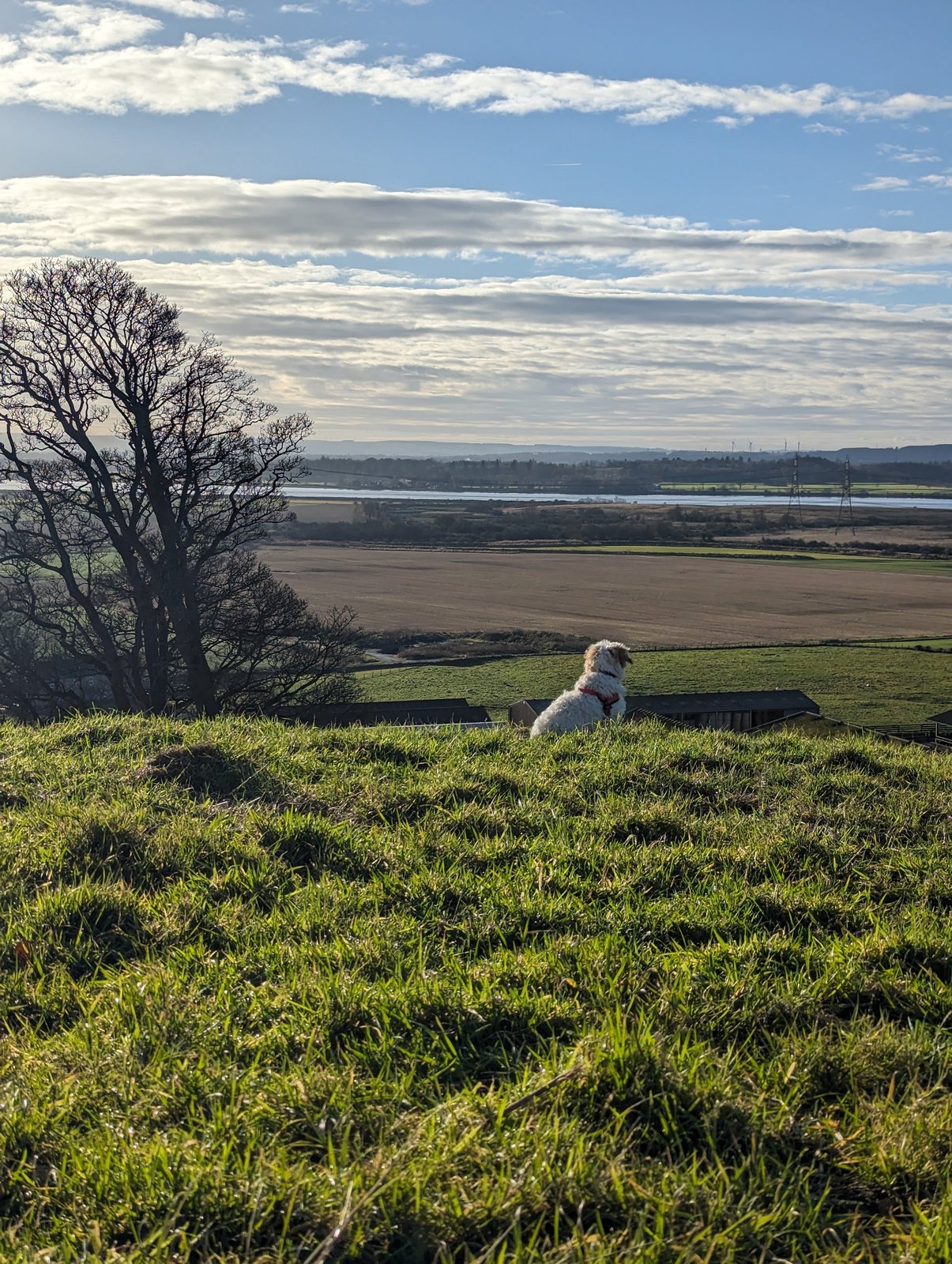
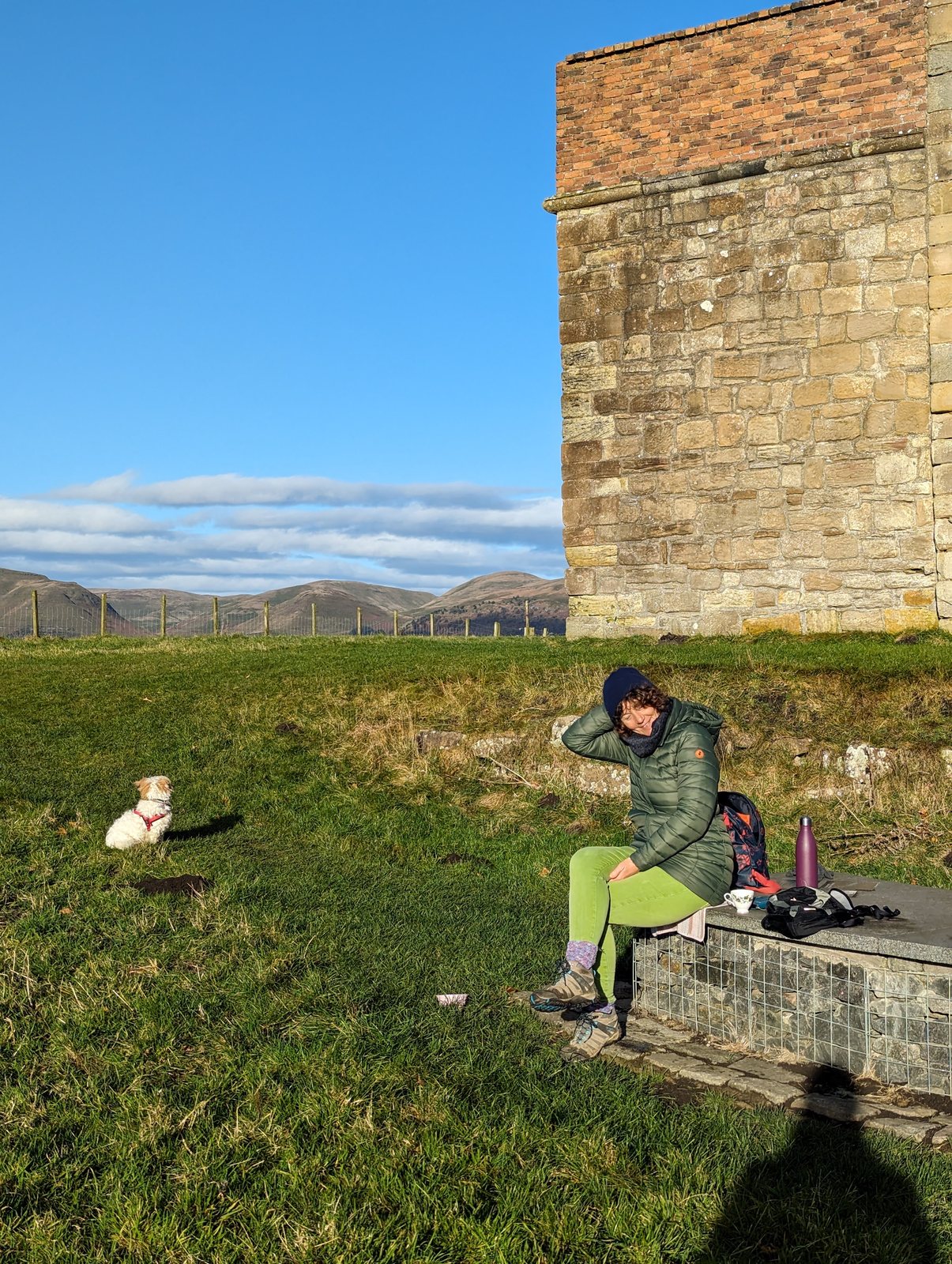
The walk up to the tower on King’s Seat Hill is short and worth it for the panorama alone: the silver curve of the Forth, the Ochil Hills rising behind Alva and Tillicoultry, and away west the Wallace Monument and the Stirling gap into the Highlands. It’s a fine, breezy spot to take it all in.
Nearby
- Alloa — our home base, the underrated heart of Clackmannanshire, two miles west.
- Clan Bruce — the house of Robert the Bruce, whose kinsmen held this tower.
- Stirling — the castle and the Wallace Monument, up the Forth to the west.
Sources
- Historic Environment Scotland & Canmore on Clackmannan Tower (the Bruces, the building phases).
- Wikishire on the Stone of Mannan, the Tolbooth and the burgh; the Burns “knighting” of 1787.
- Everything first-hand is from our own visit to Clackmannan.