
Cruden Bay: A Pink-Sand Beach, Dracula’s Castle & the Buchan Coast
Overview — the honest take
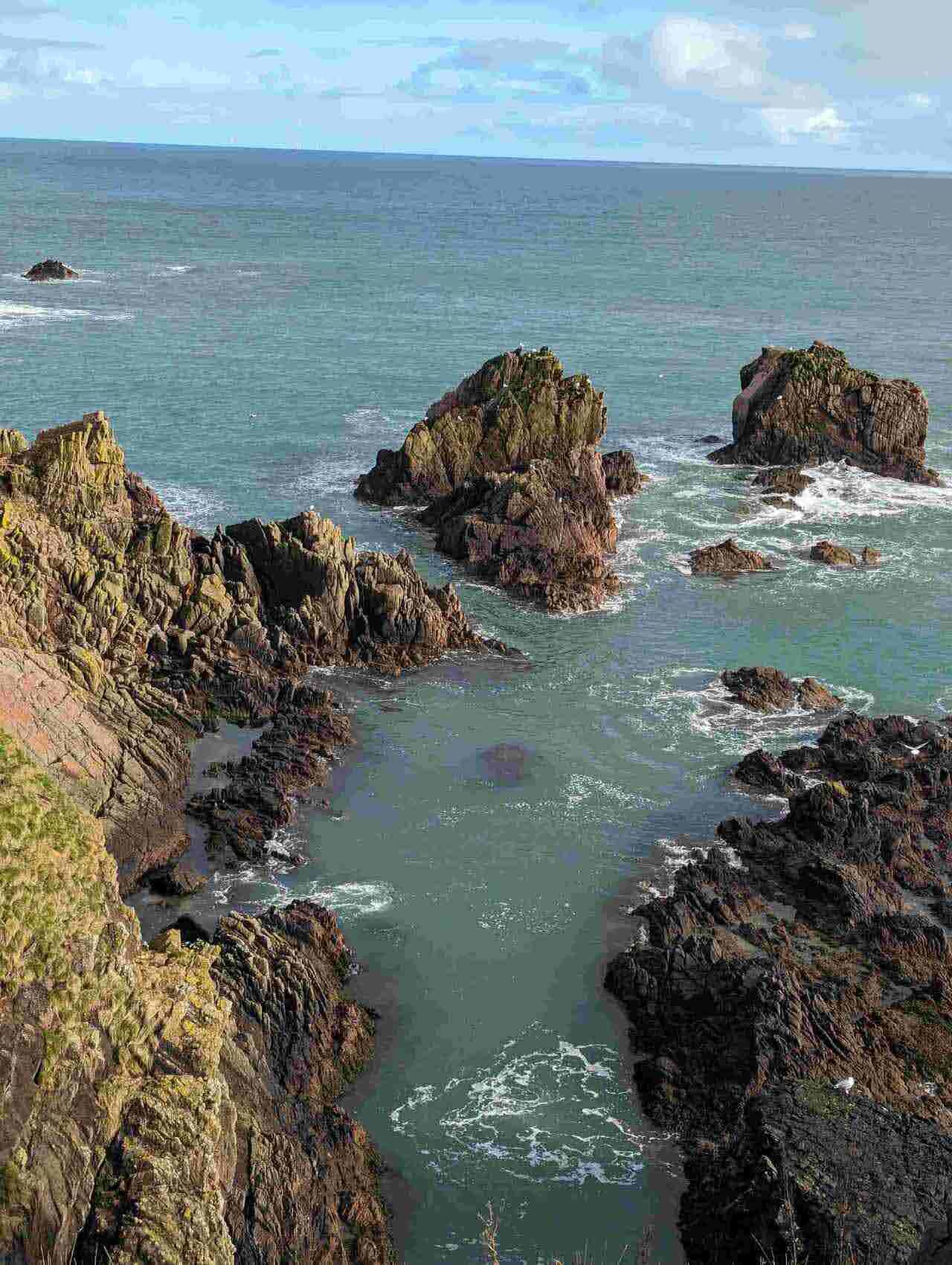
Cruden Bay is a genuinely lovely Aberdeenshire village, and one that quietly over-delivers: a mile and a half of curving, faintly pink sand; a wild, cliff-torn coast; a little fishing harbour; a world-class golf links; and, brooding on the clifftop just to the north, the great ruin of Slains Castle — the place that helped Bram Stoker imagine Dracula. We spent a happy February day here on the beach and the cliffs, and came away thoroughly charmed.
Where it is
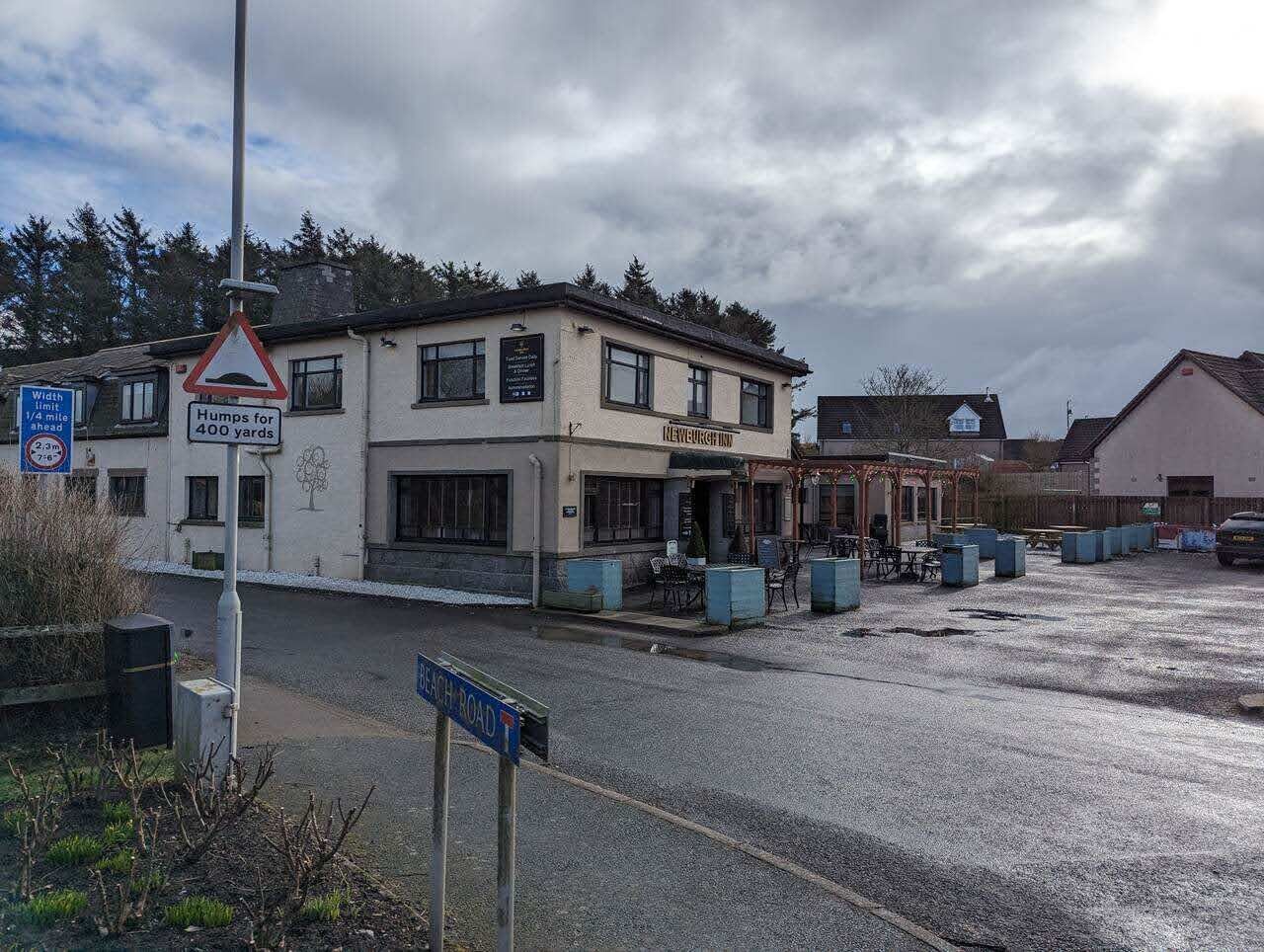
Cruden Bay sits on the Buchan coast of Aberdeenshire, about 23 miles north of Aberdeen and a few miles south of Peterhead. The village proper is Port Erroll, tucked by the harbour and the mouth of the Water of Cruden, with the beach and the cliffs stretching away to either side.
The beach & the Water of Cruden
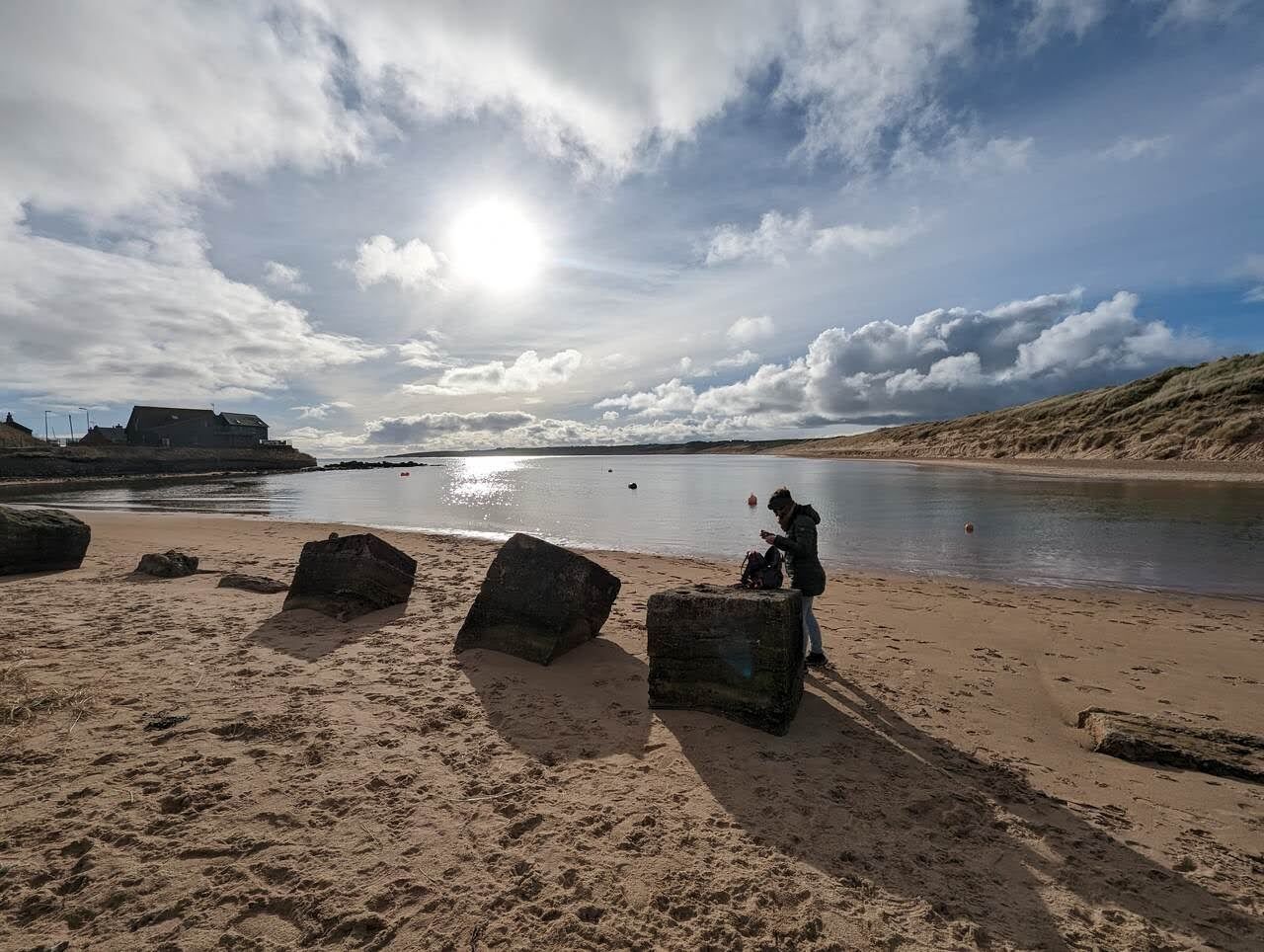
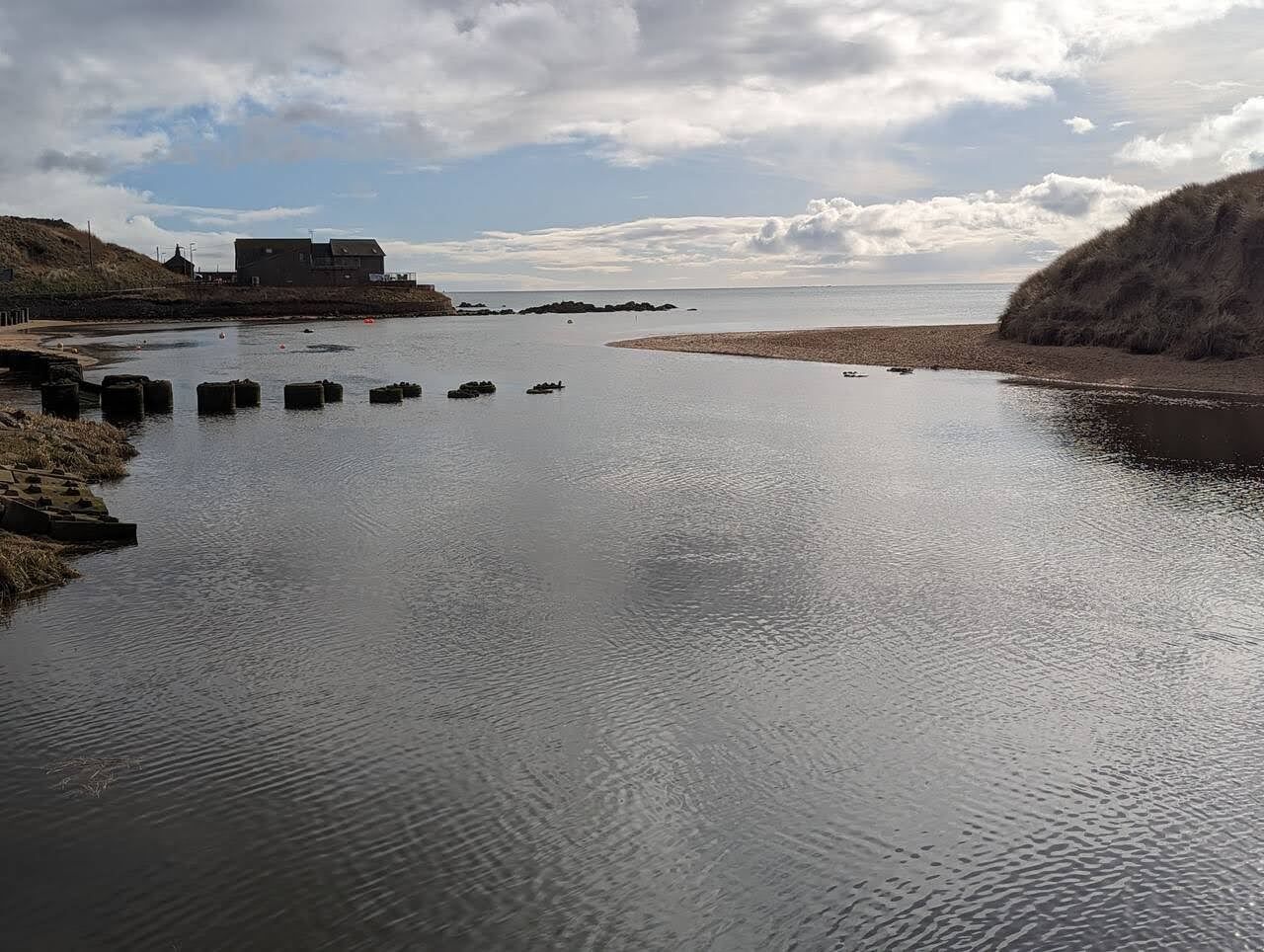
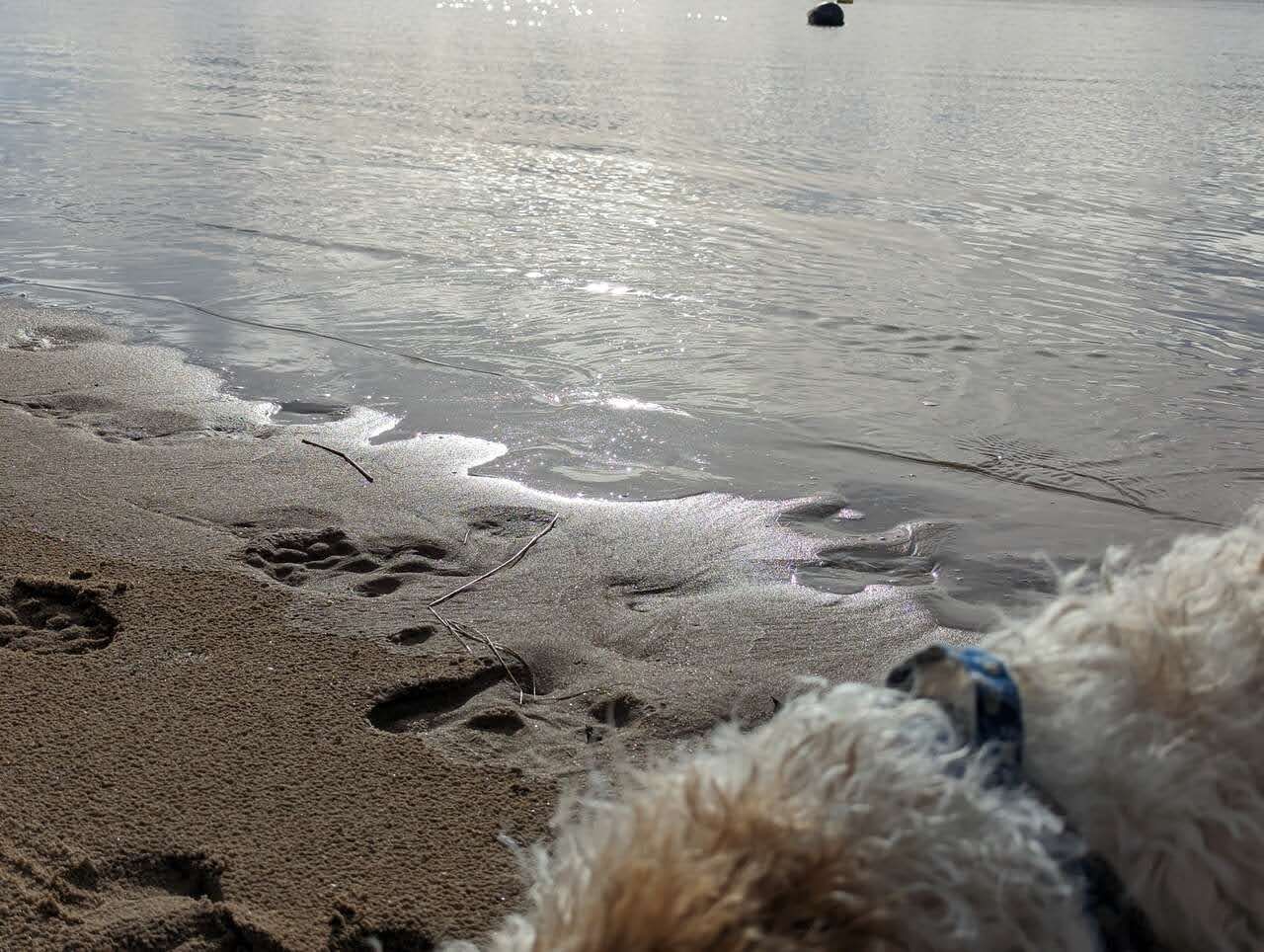
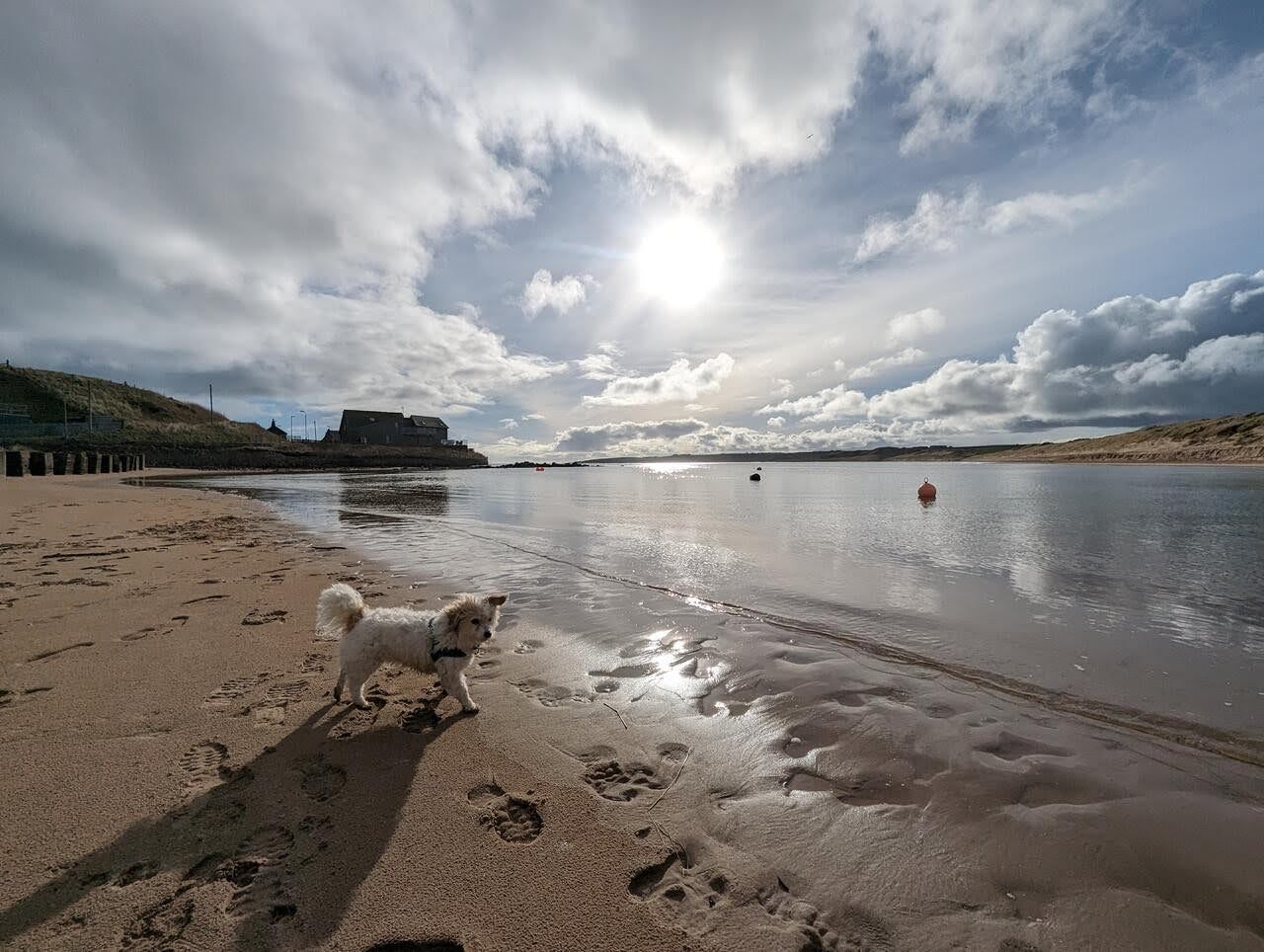
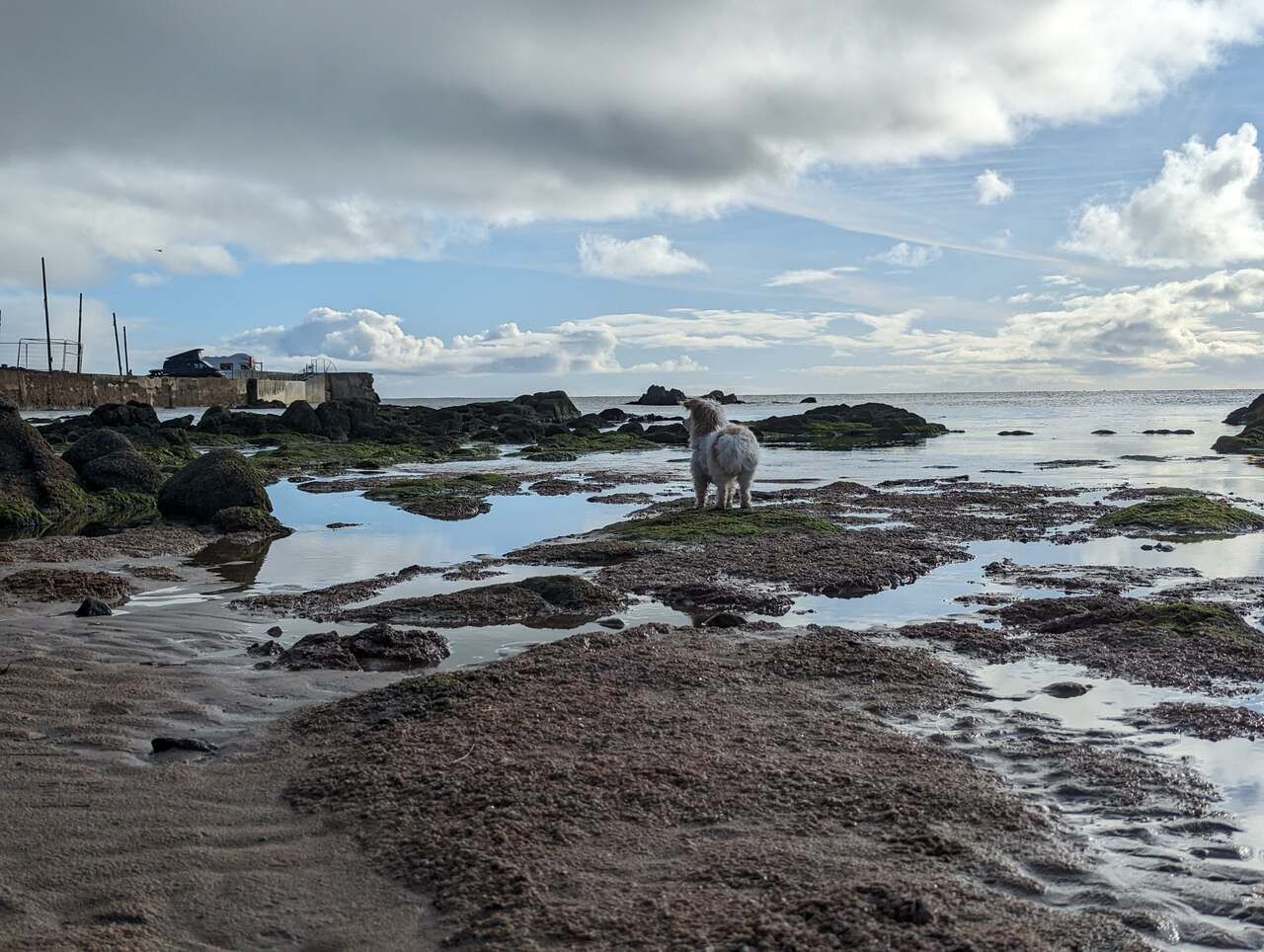
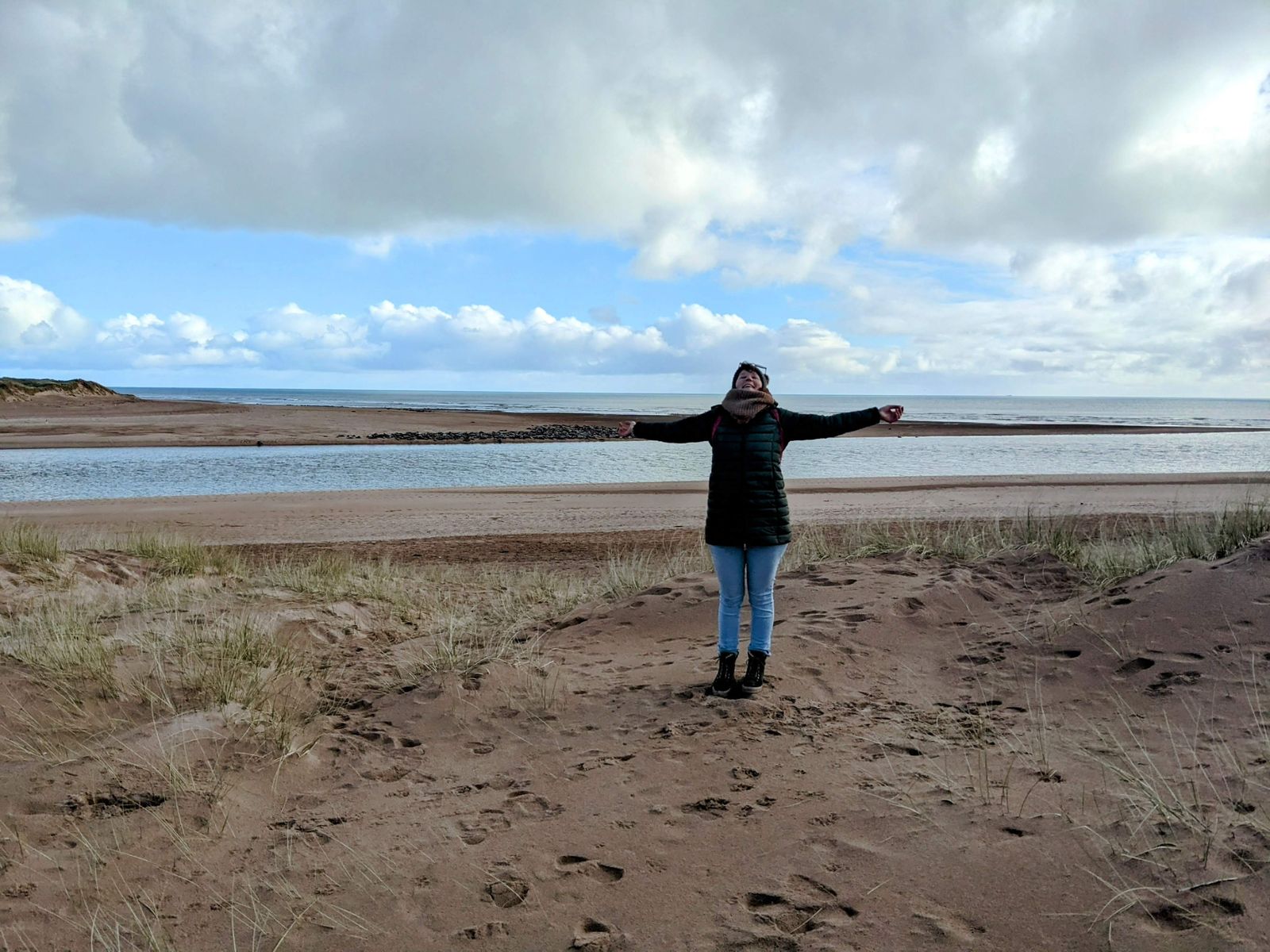
The beach is the heart of it — a broad, clean, gently curving sweep of sand backed by dunes, with a faint pink tinge that comes (they say) from the red cliffs eroding to the north. You reach it across the Water of Cruden on a footbridge, or by hopping the stepping stones where the burn meets the sea. At low tide the rocky ends of the bay open up into rockpools and weed-draped shelves — Lillie’s idea of heaven.
Slains Castle & Dracula
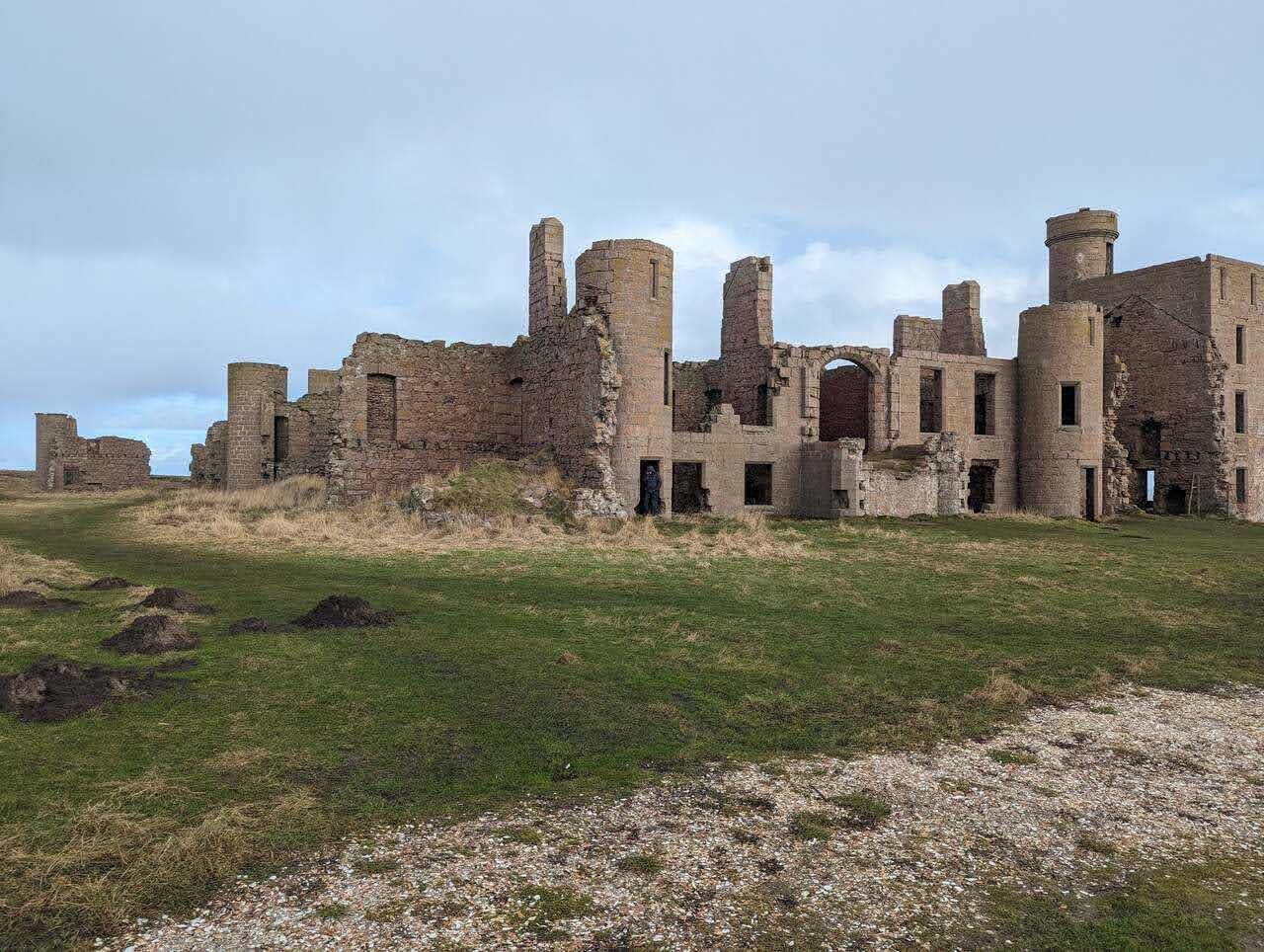
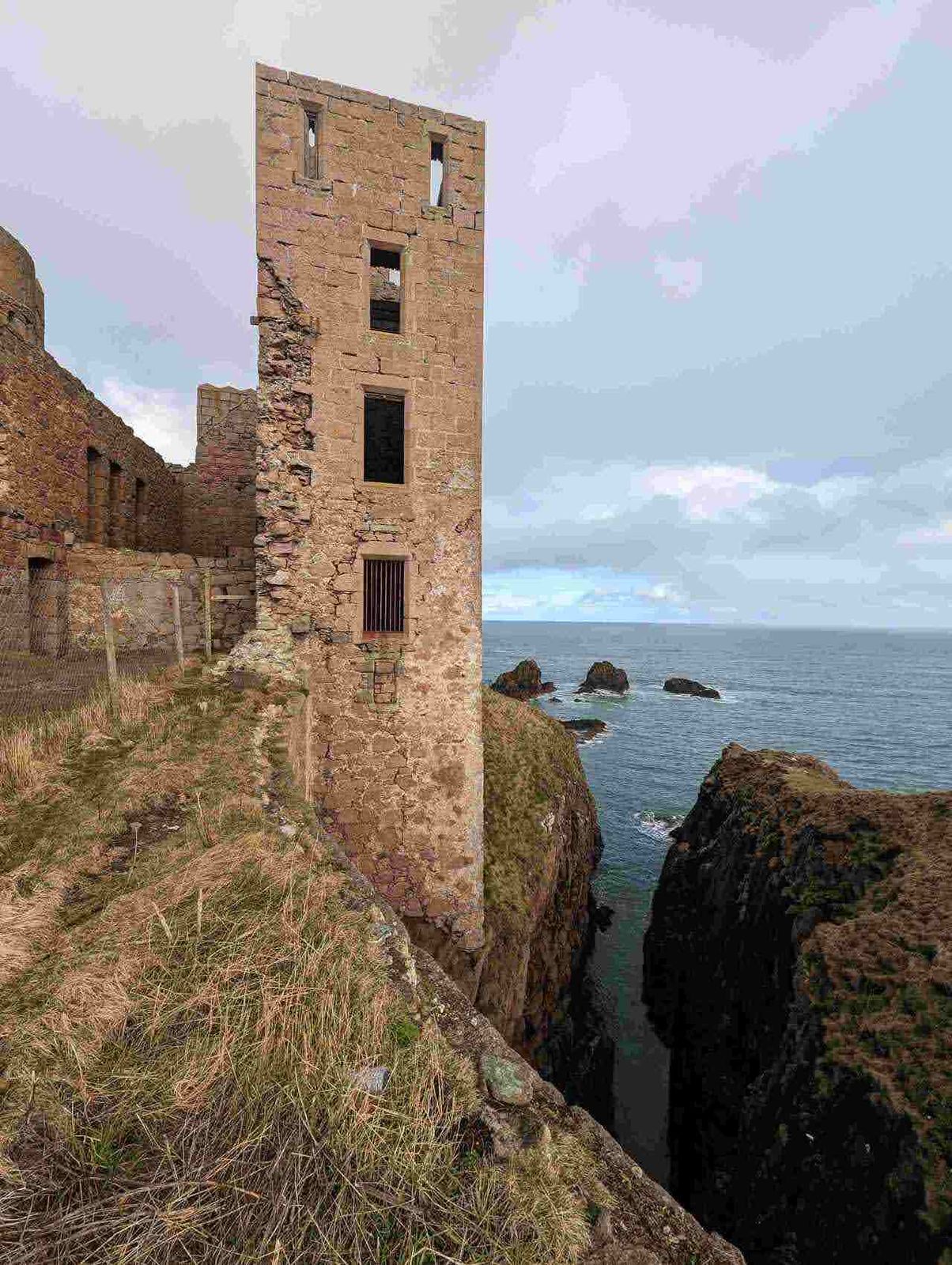
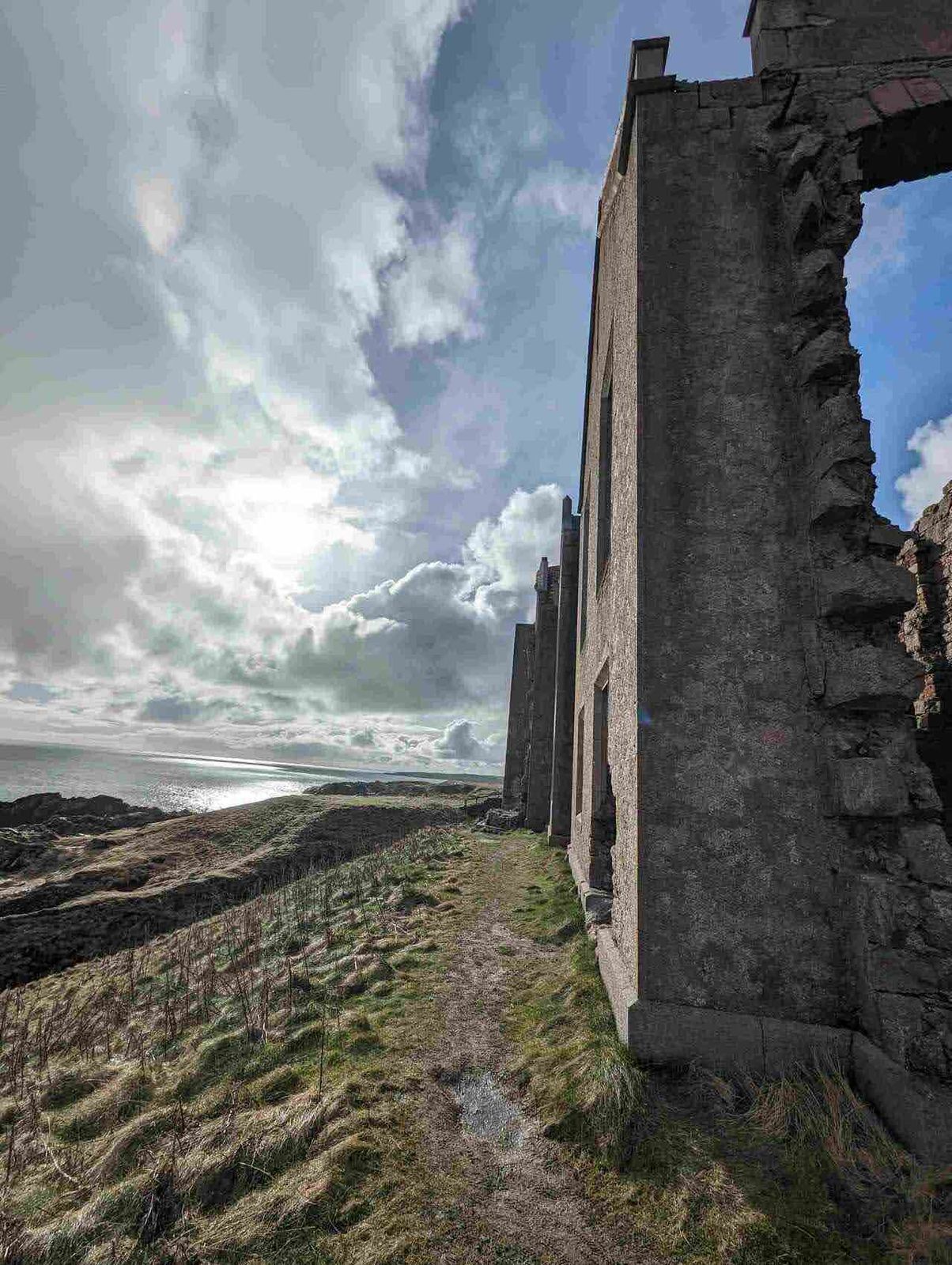
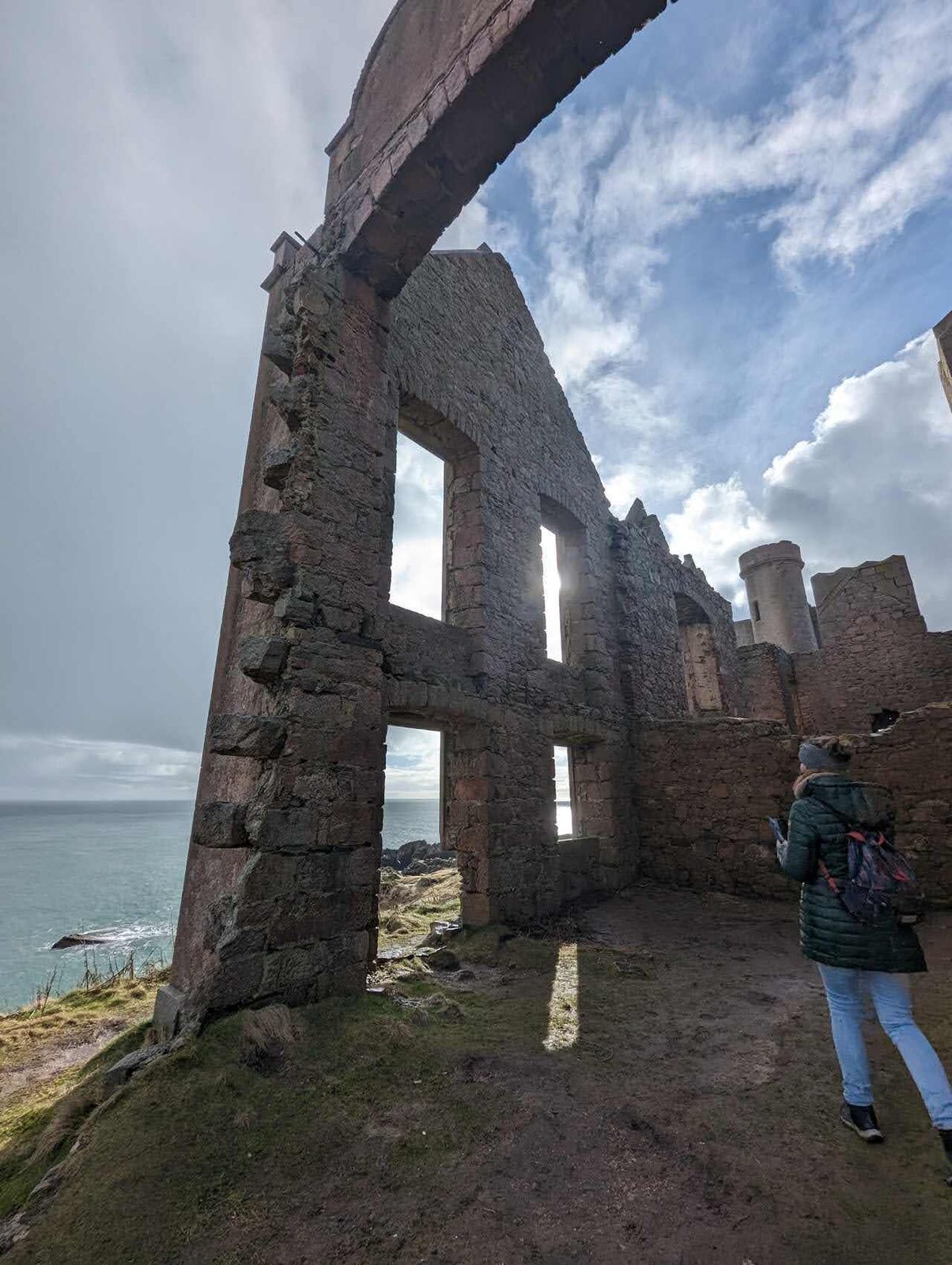
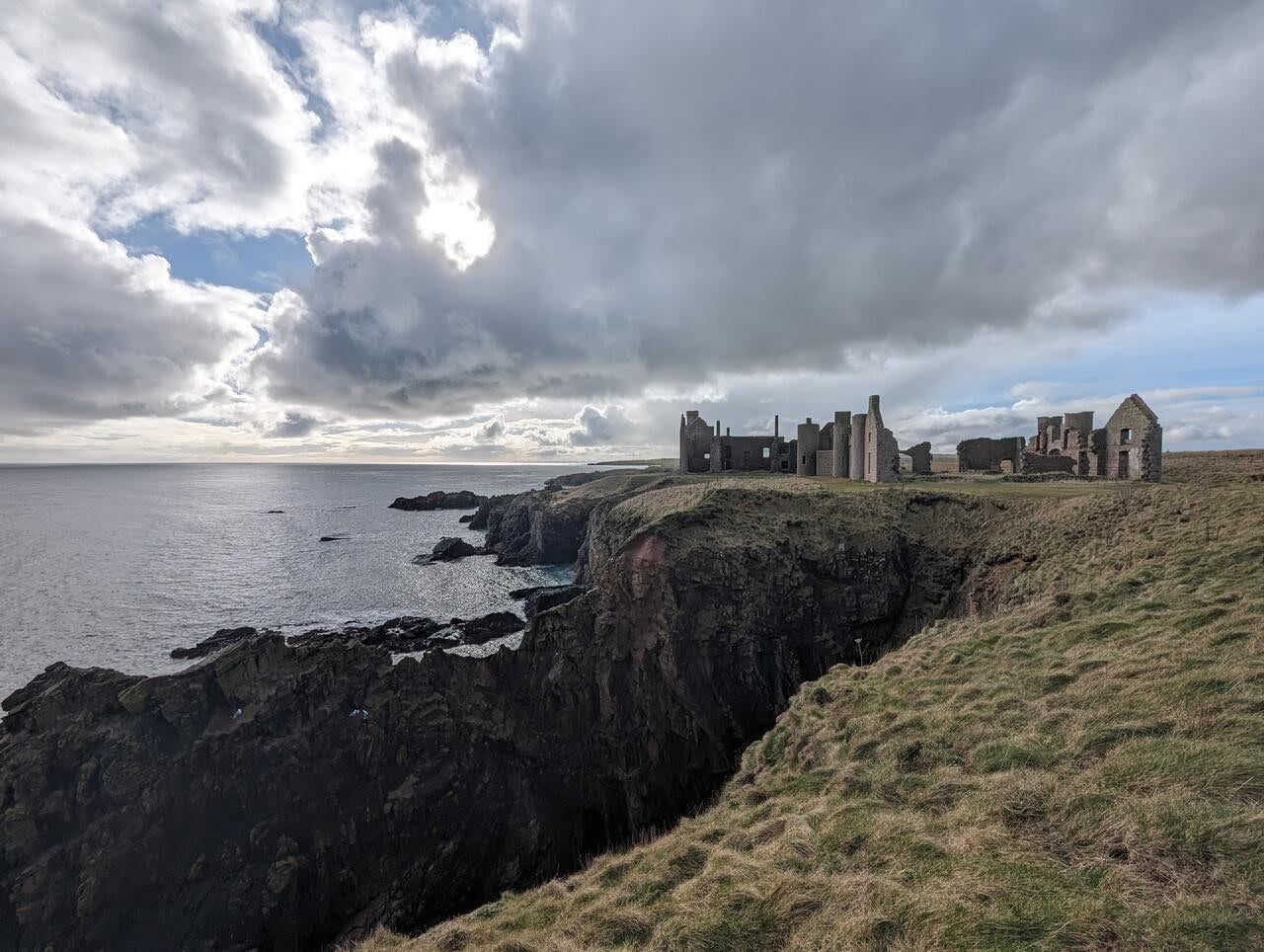
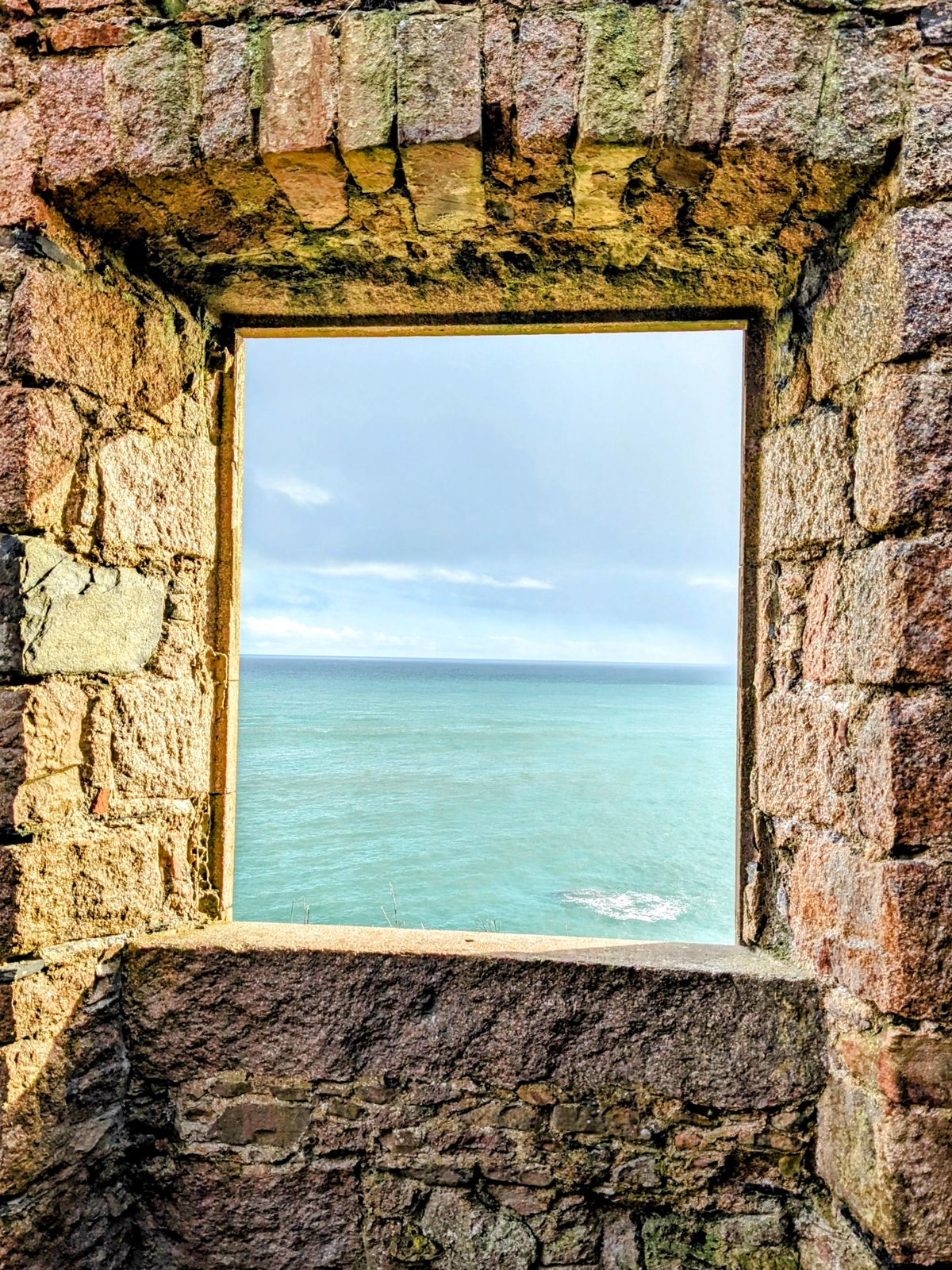
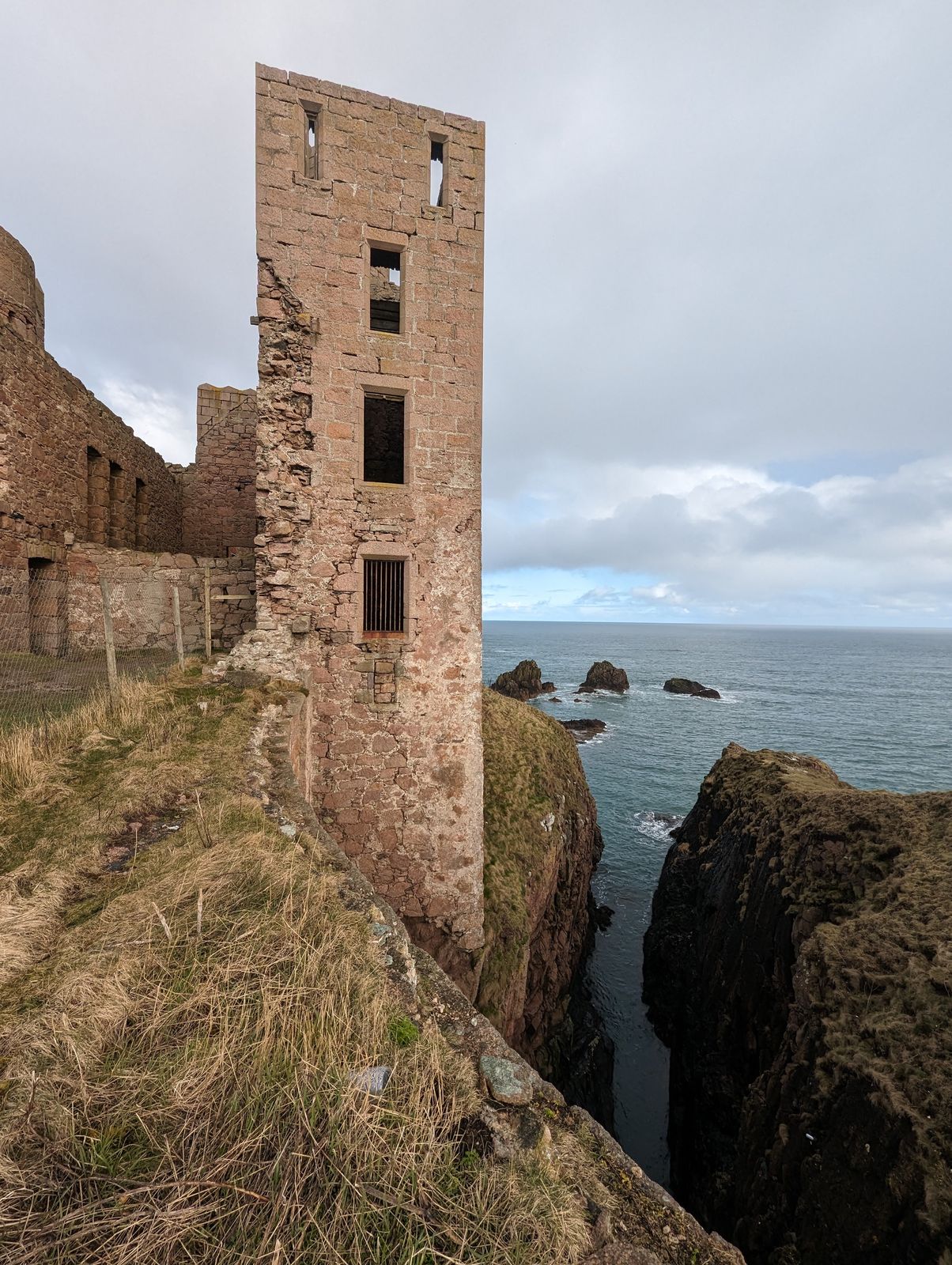
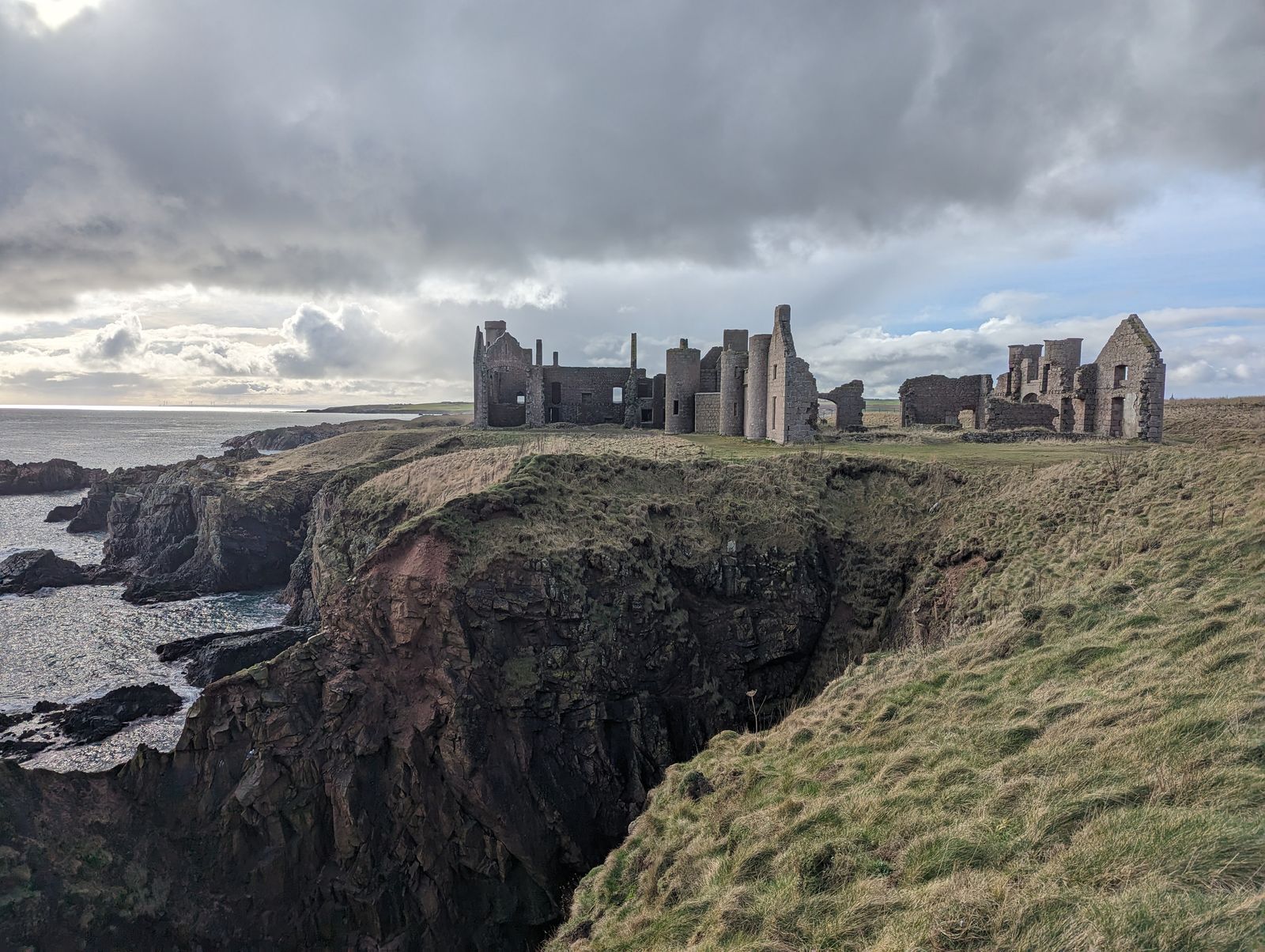
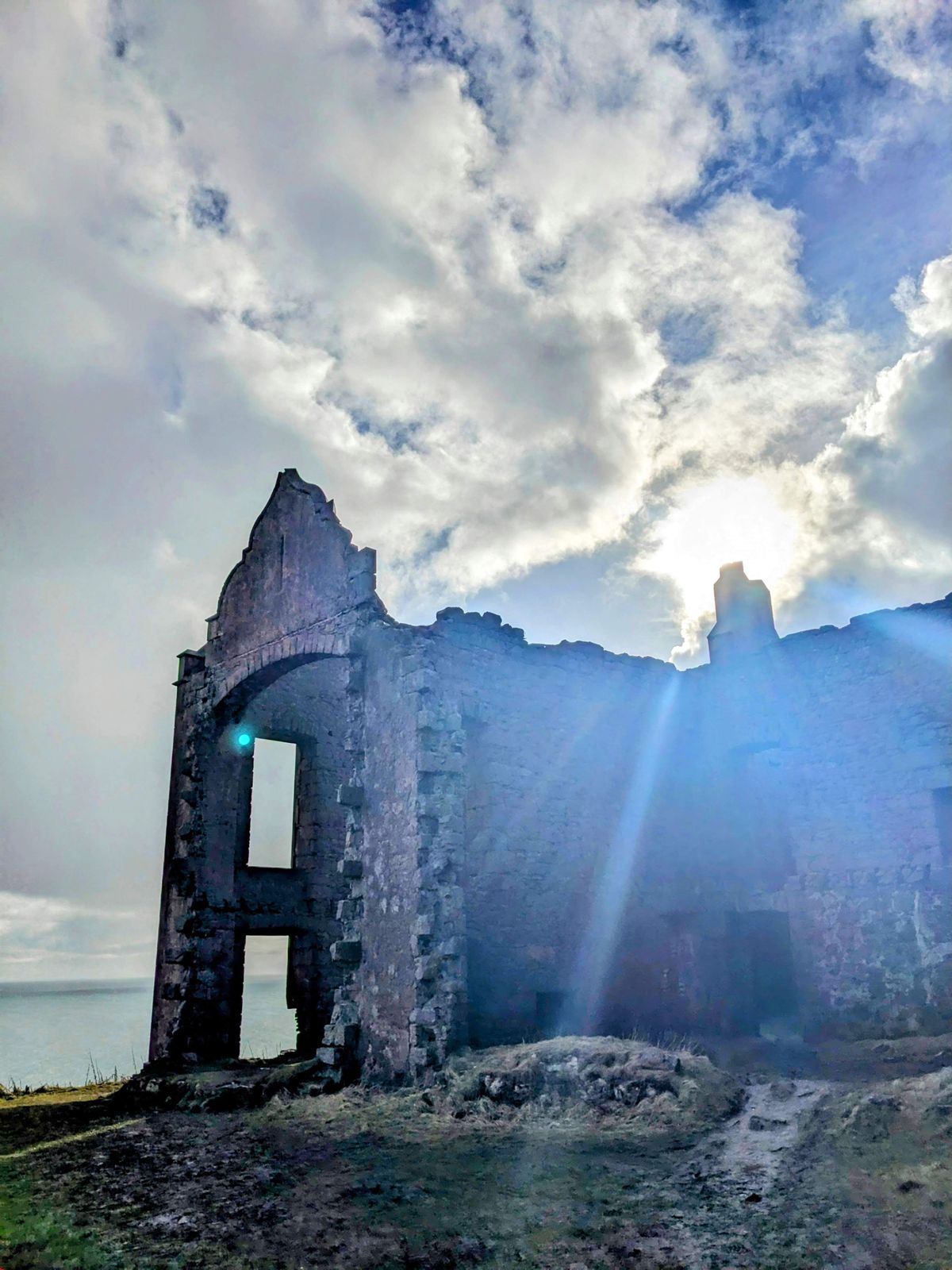
On the cliffs a mile or so north stands Slains Castle (properly New Slains) — a rambling, roofless ruin right on the edge of the drop. Its fame is literary: Bram Stoker holidayed in Cruden Bay for some 17 years, staying at the Kilmarnock Arms in the village, and the brooding castle and this wild coast fed straight into his imagination. He set stories here, and an early draft of Dracula even had the Count’s ship making landfall at Cruden Bay rather than Whitby. It’s a free, open ruin — but it’s unfenced and right on the cliff, so take real care, especially with children and dogs.
The Buchan cliffs & the Bullers of Buchan
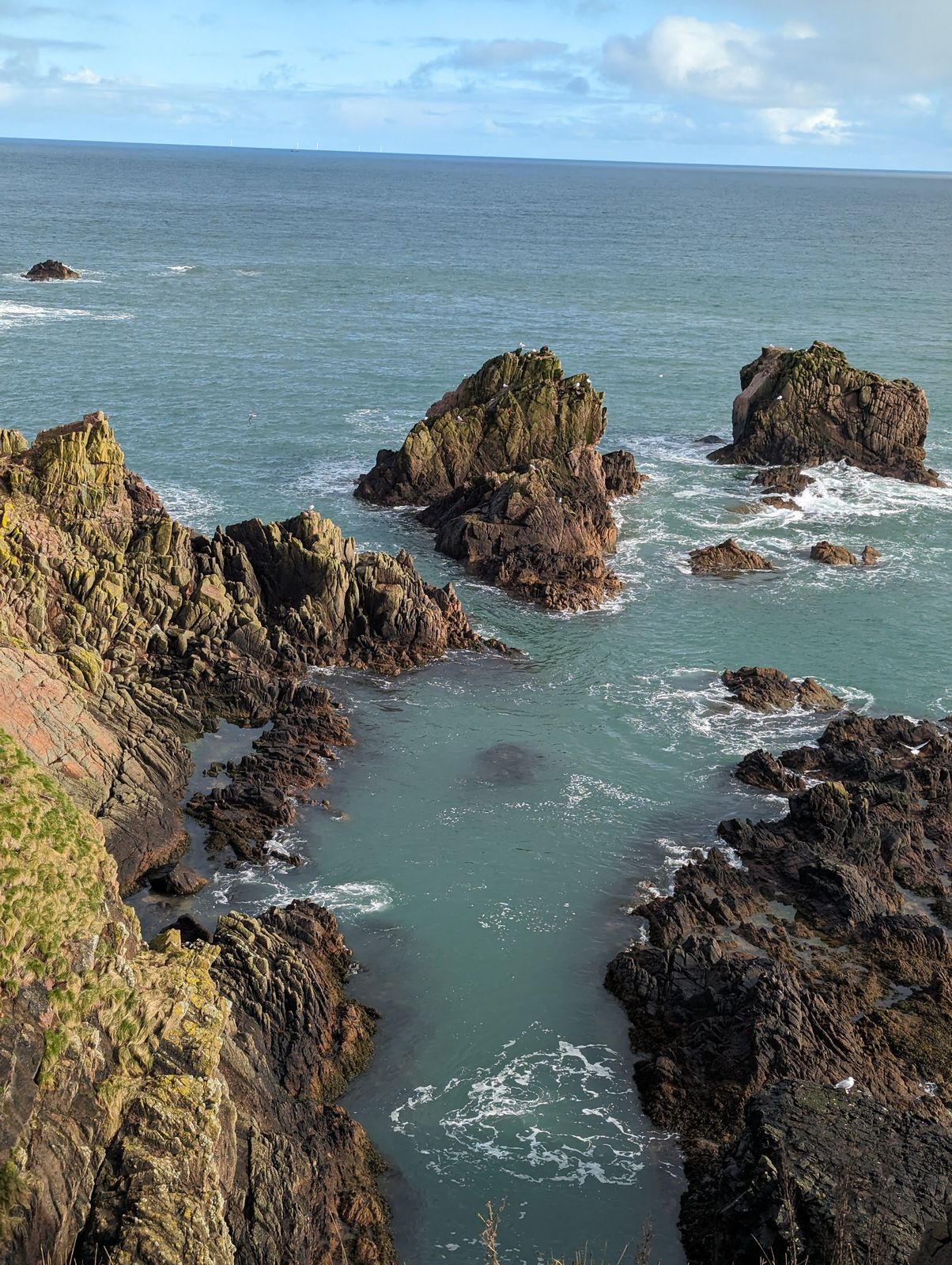
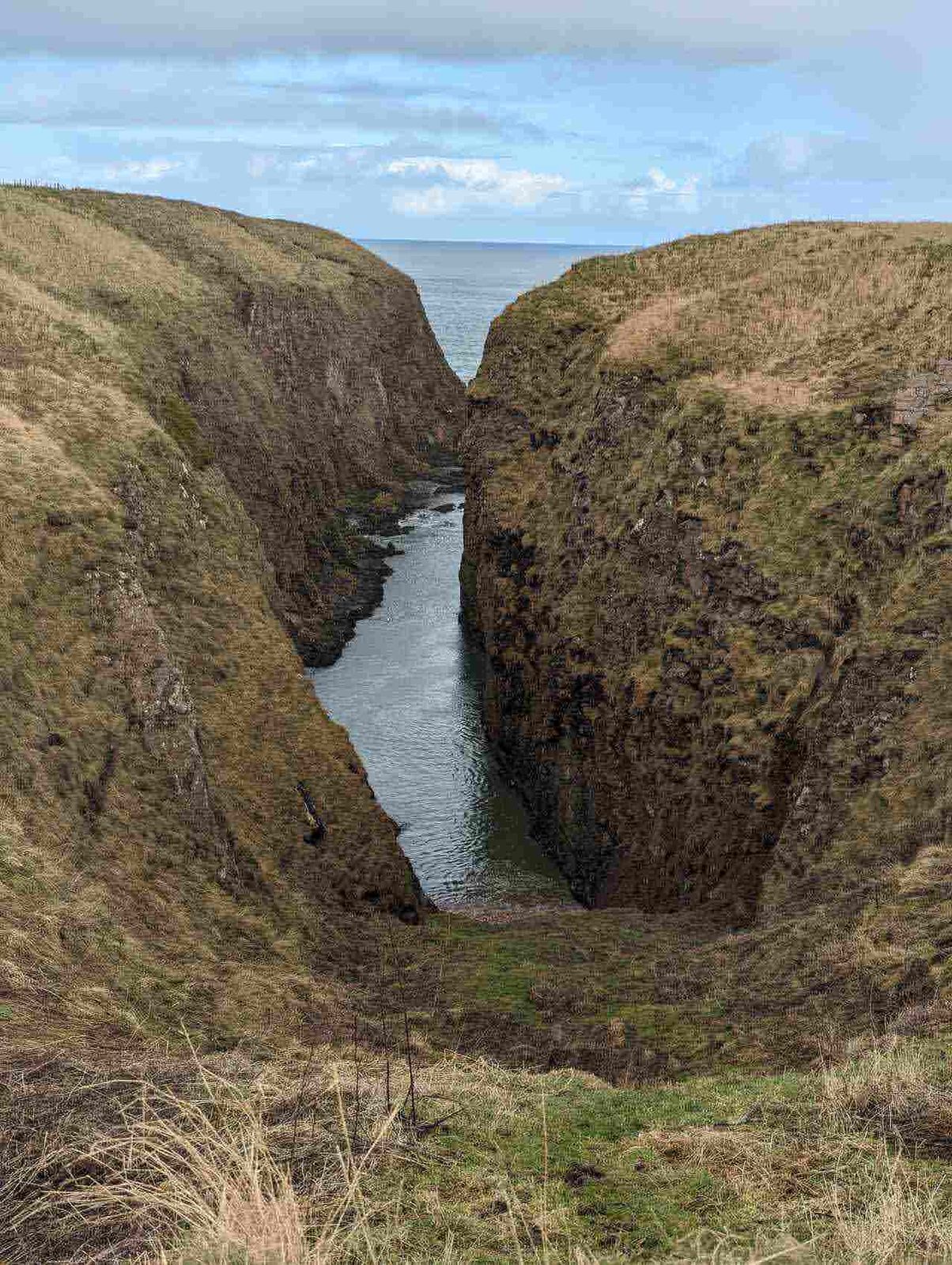
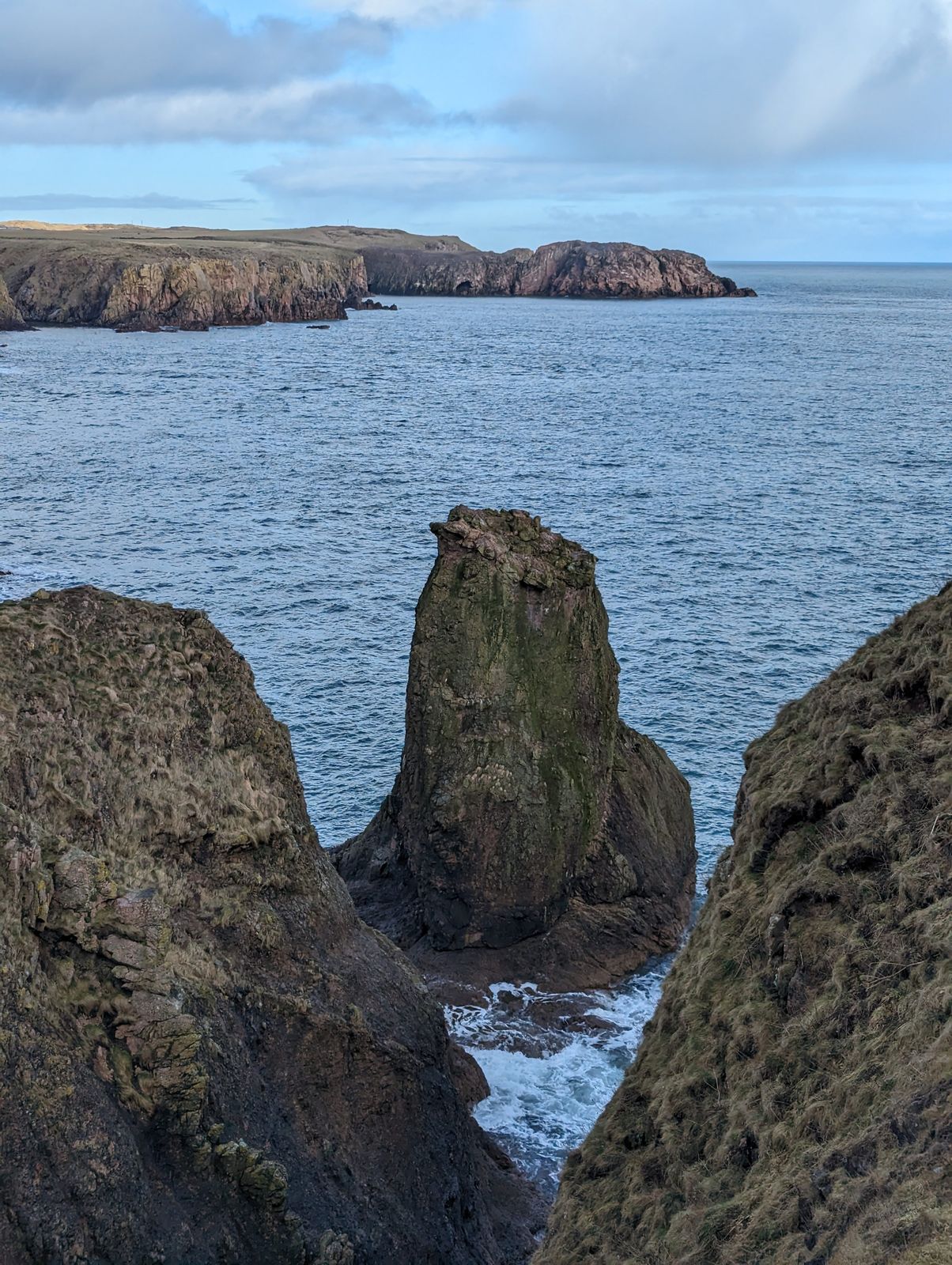
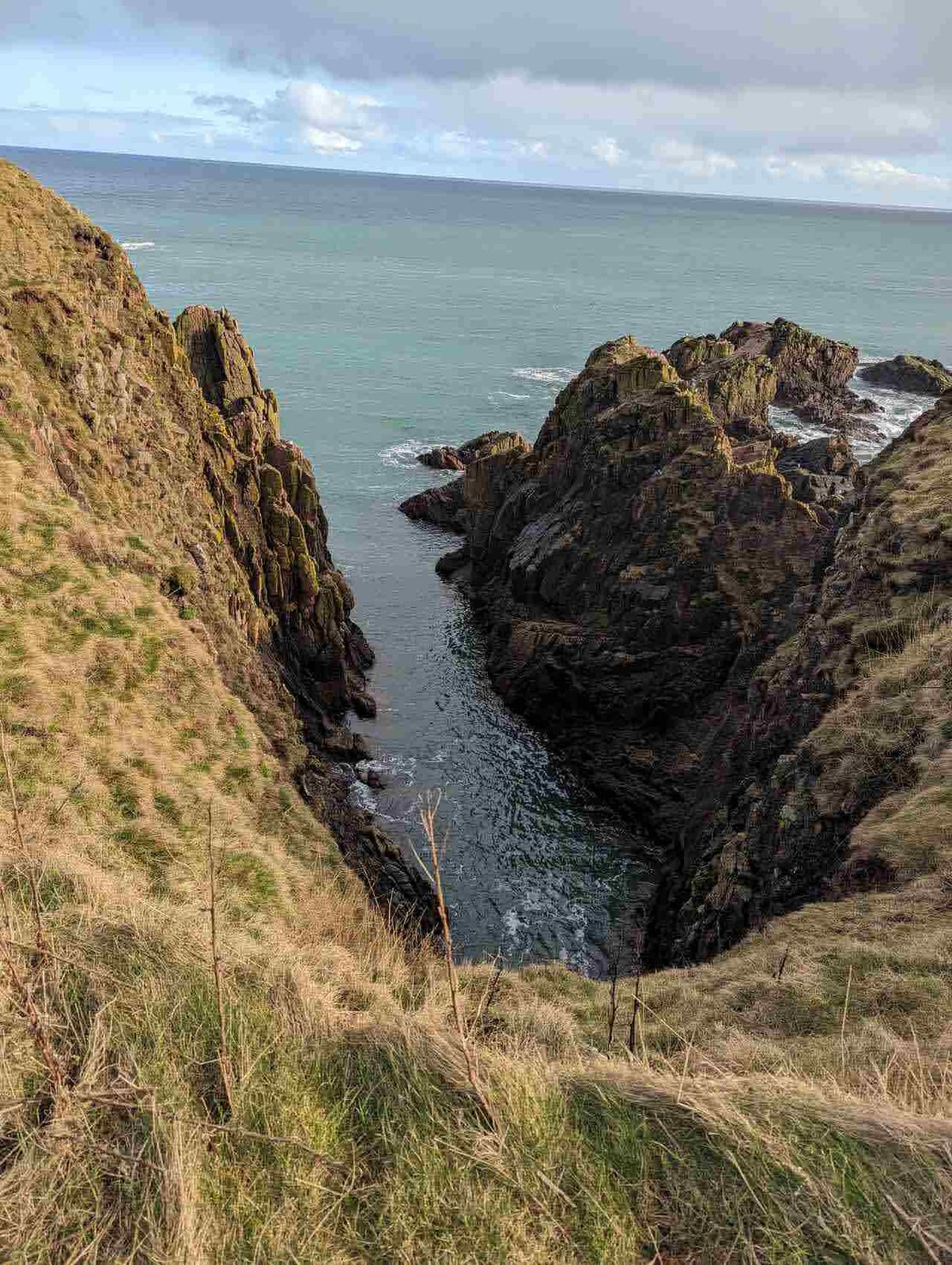
The coast either side of the castle is spectacular — deep geos, sea stacks, arches and coves, alive with seabirds. A little further north lies one of the great natural sights of the north-east: the Bullers of Buchan, a collapsed sea cave forming a sheer-sided rock “pot” nearly 200 feet deep, into which the sea booms through a natural archway (bullers means “boilers”). In early summer it’s thick with puffins.
Port Erroll harbour & the golf
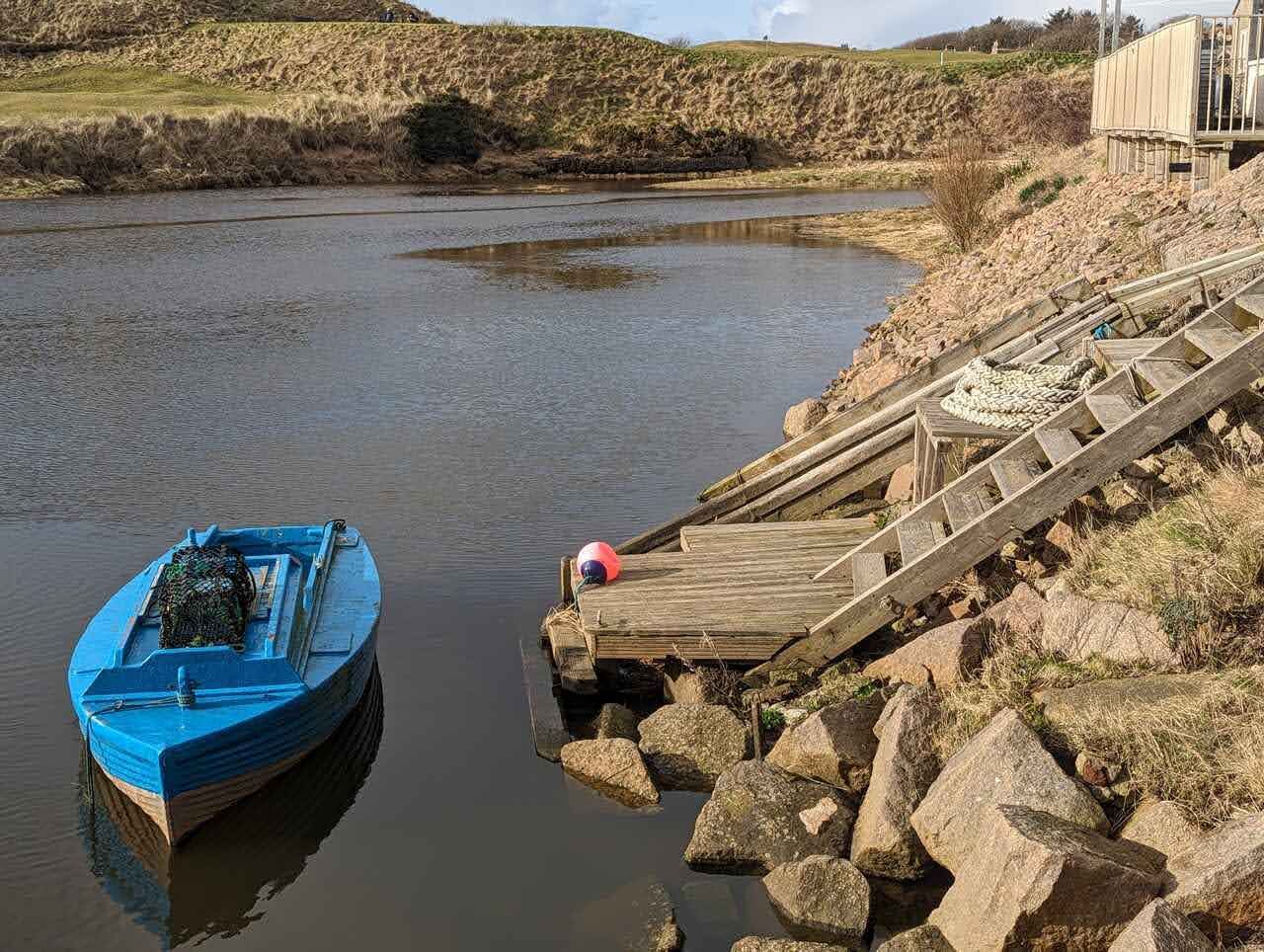
The harbour at Port Erroll was built in the late 1870s by the Earls of Erroll in the hope of landing a herring fishery — the fishing never quite took, but the wee harbour is a charming spot still. And out on the links is Cruden Bay Golf Club: golf has been played here since 1791, the course laid out by Old Tom Morris in 1899 and reshaped in 1926, and it’s rated among the finest links courses in the world.
The village & overnight
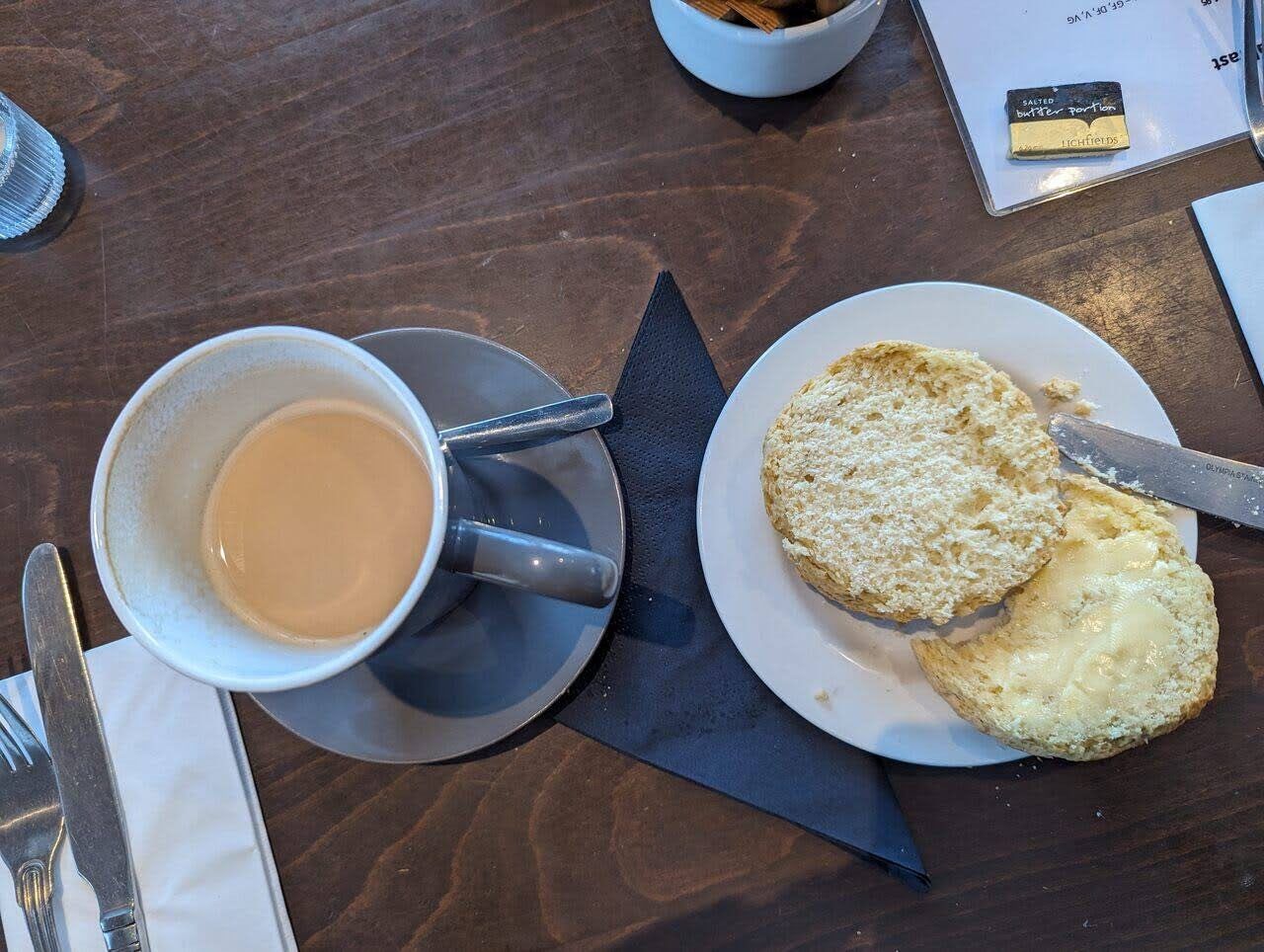
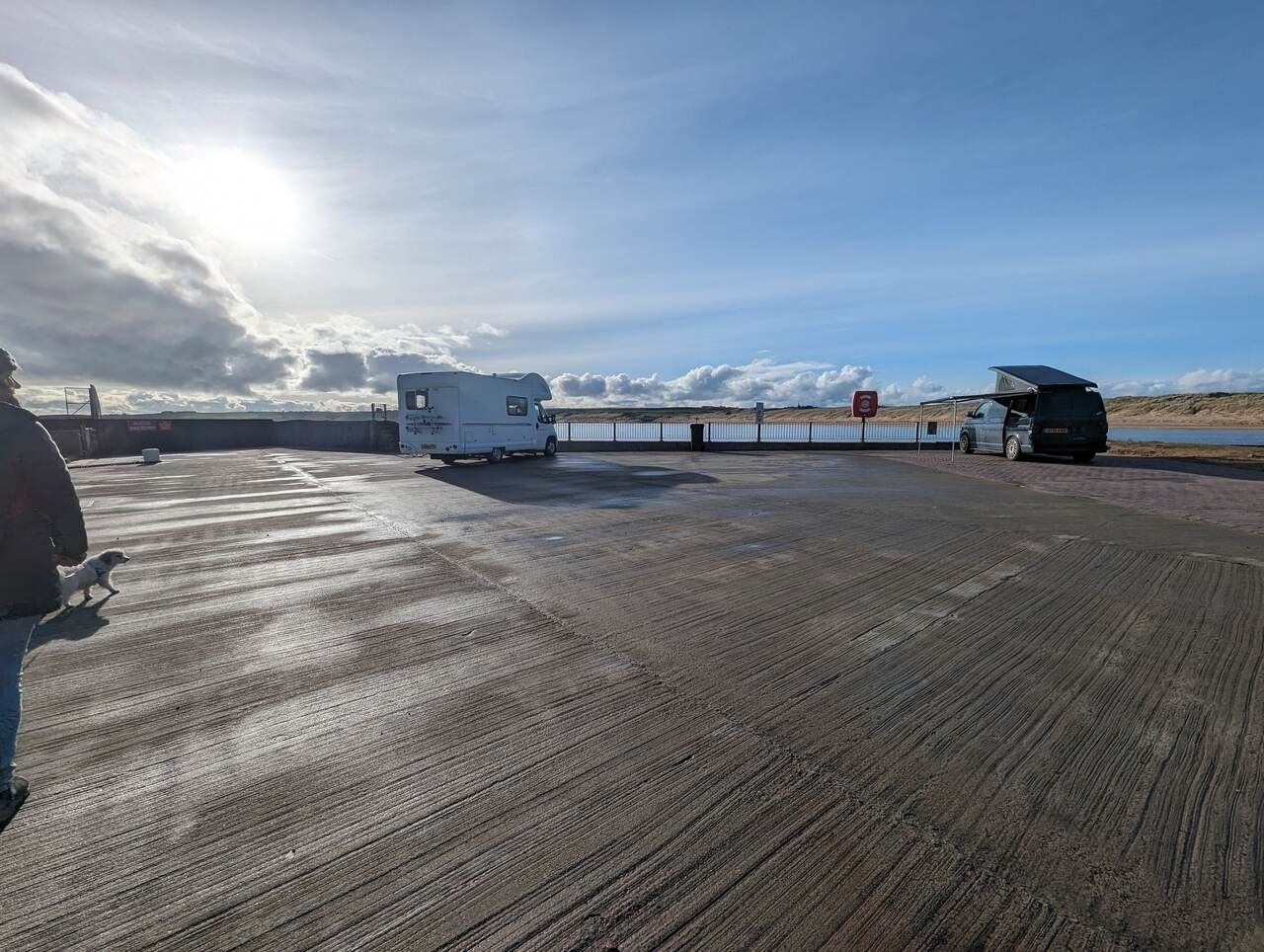
The village is relaxed and welcoming, with a shop, a pub or two and somewhere for a warming coffee after the beach. We had a quiet overnight down by the shore car park — handy for a first-light beach walk and the coast path north to the castle.
Nearby
- Dunnottar Castle — the other great Aberdeenshire clifftop fortress, down the coast past Aberdeen.
- Newburgh & the Ythan Estuary, just south, are famous for their big seal colony hauled out on the sands.
- See the rest of our Castles of Scotland collection.
Sources
- VisitAberdeenshire — Cruden Bay & Walkhighlands — the Bullers of Buchan.
- Slains Castle & Bram Stoker — NorthLink Ferries and VisitAberdeenshire; Cruden Bay Golf Club history.
- Everything first-hand is from our own February 2024 visit.