
Aberdour Bay & New Aberdour, Aberdeenshire: a Secluded Beach on an Ancient Coast
Overview — the other Aberdour
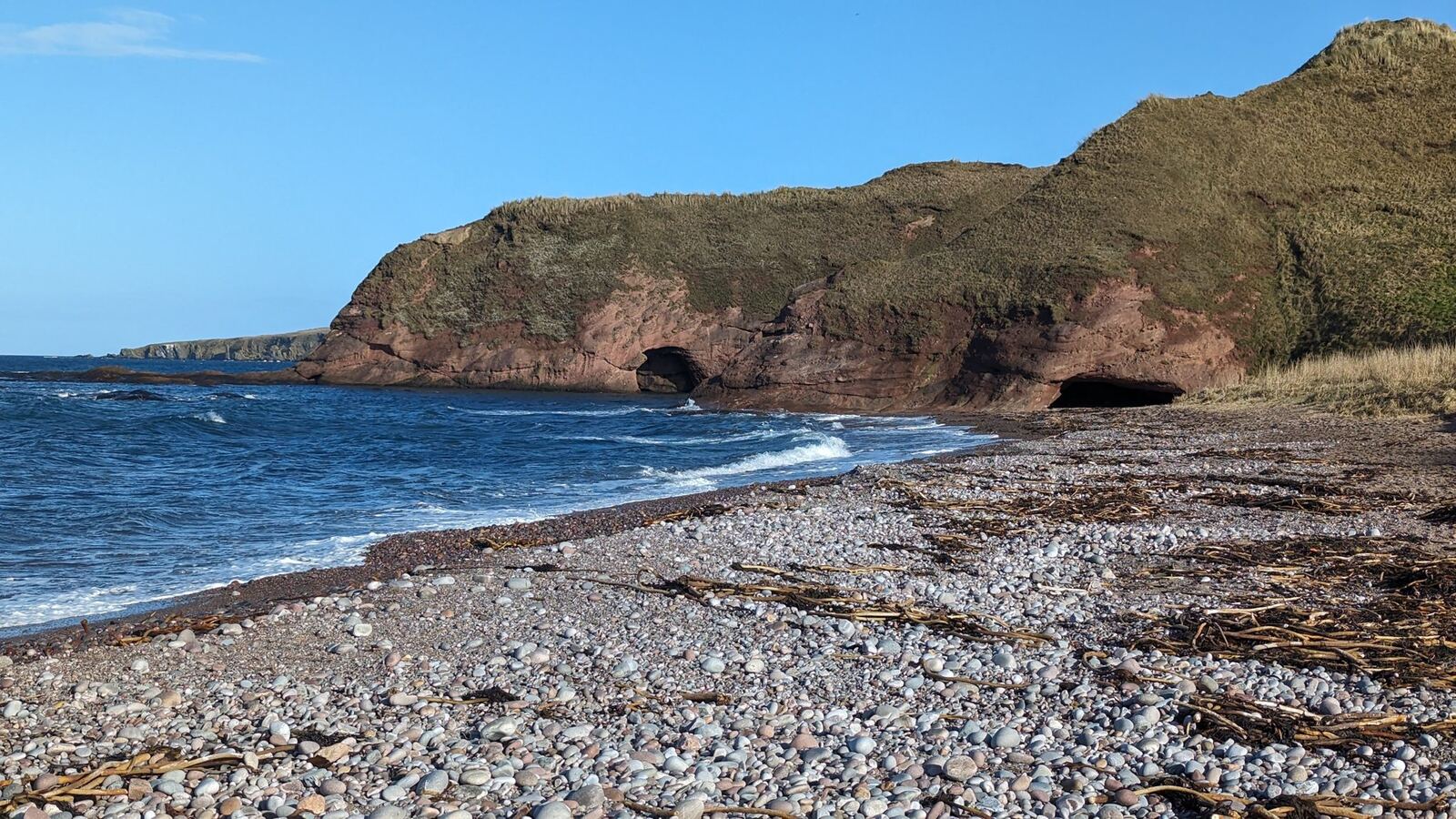
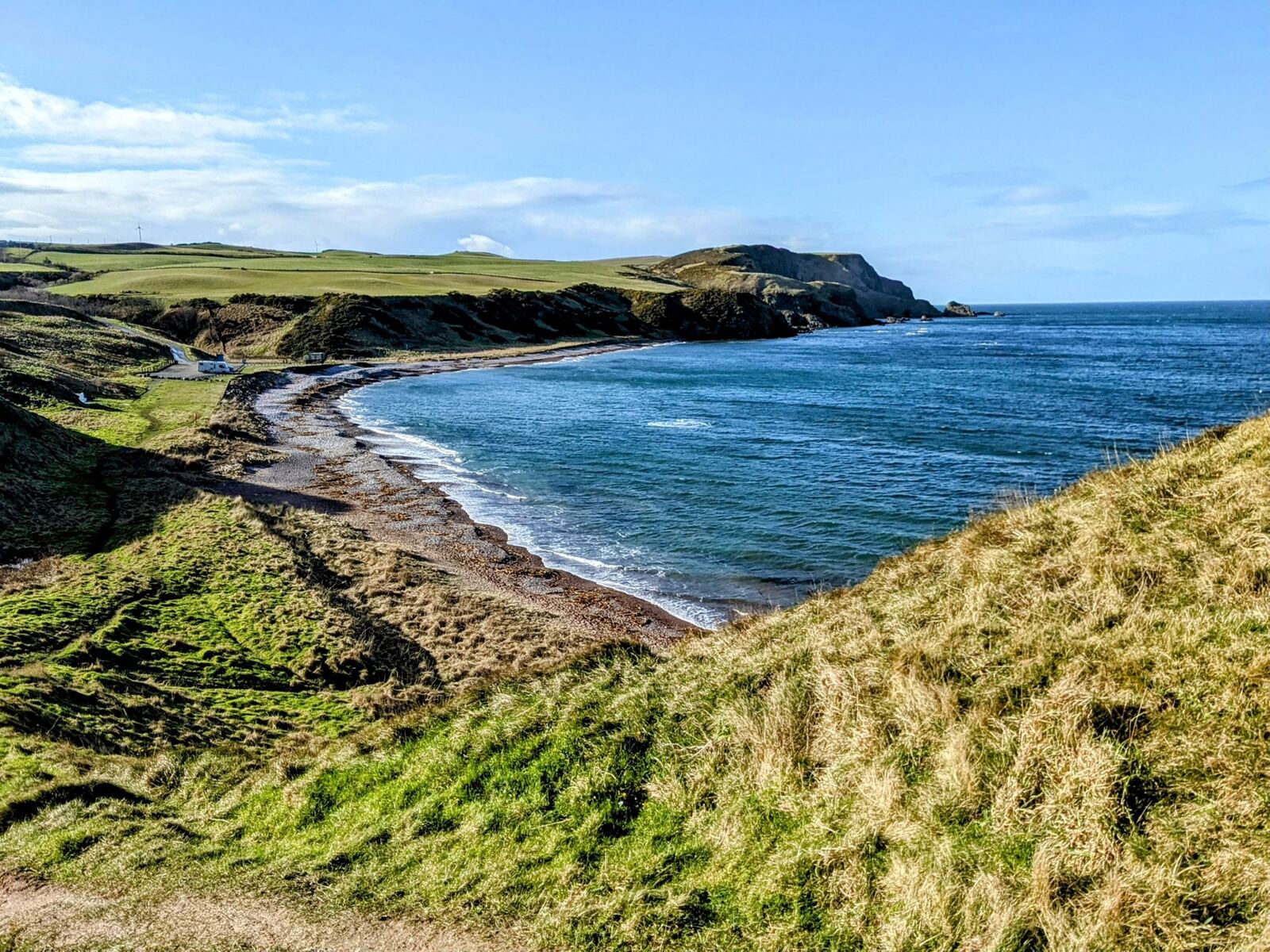
First things first: this isn’t the pretty Fife village most folk mean by “Aberdour.” This is Aberdour Bay (also Aberdour Beach) on the far north-east coast of Aberdeenshire, in the old district of Buchan, near the planned village of New Aberdour and the fishing town of Rosehearty. It’s a secluded, red-cliffed beach on the Moray Firth — reached down a steep wee road, backed by dramatic sandstone cliffs and sea caves, and blessed with an almost eerie quiet. We came here, stayed overnight in a lovely spot right by the sea, and had the place all but to ourselves. If you want away from it all, this is it.
Where it is
Aberdour Bay lies on the Moray Firth coast of Aberdeenshire, between Rosehearty (to the east, toward Fraserburgh) and the famous cliff-clinging villages of Pennan, Crovie and Gardenstown (to the west). The bay is reached by a steep single-track road down from New Aberdour village, which sits up on the higher ground.
An ancient, holy coast
For such a quiet spot, this is remarkably old ground. Tradition holds that St Drostan — a companion of the great missionary St Columba’s circle, and one of the founding saints of the north-east — was associated with a church here in the early Christian centuries, making Aberdour one of the cradle sites of Christianity in Buchan. The ruins of the old kirk of Aberdour and a St Drostan’s Well stand near the shore, and the story ties this coast to Deer and the famous Book of Deer. It’s the kind of place where the history is quiet but very deep. (We’ve kept this to the well-attested tradition — worth reading the on-site information if you visit.)
Dundarg Castle — the cliff fort
On the headland just east of the bay stand the fragmentary ruins of Dundarg Castle — a site with roots as an ancient promontory fort, later a medieval castle, perched on the red cliffs above the firth. There’s not a lot left, but the setting is spectacular, and it adds to the sense that people have valued this hidden corner for a very long time.
The beach & our overnight
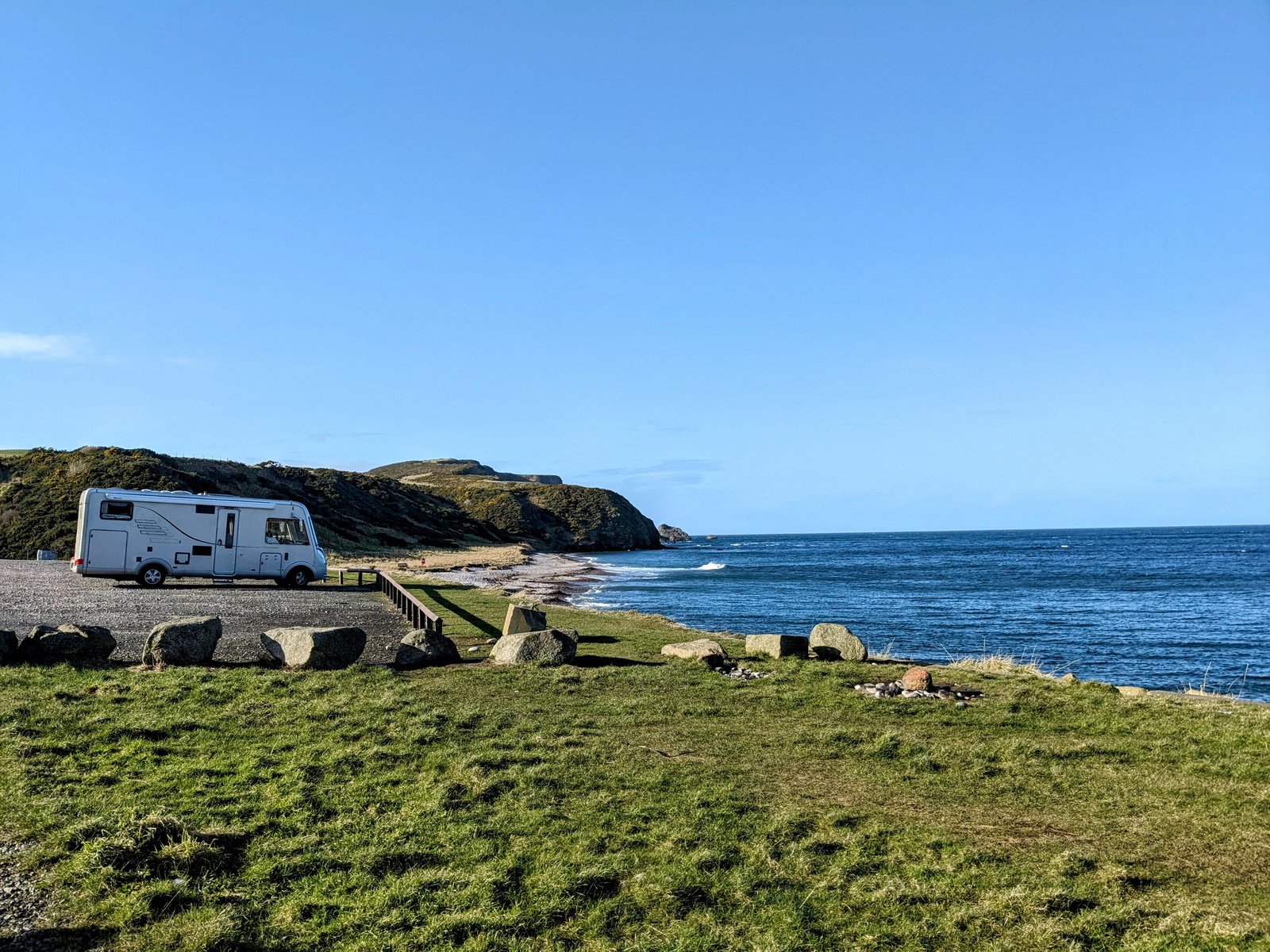
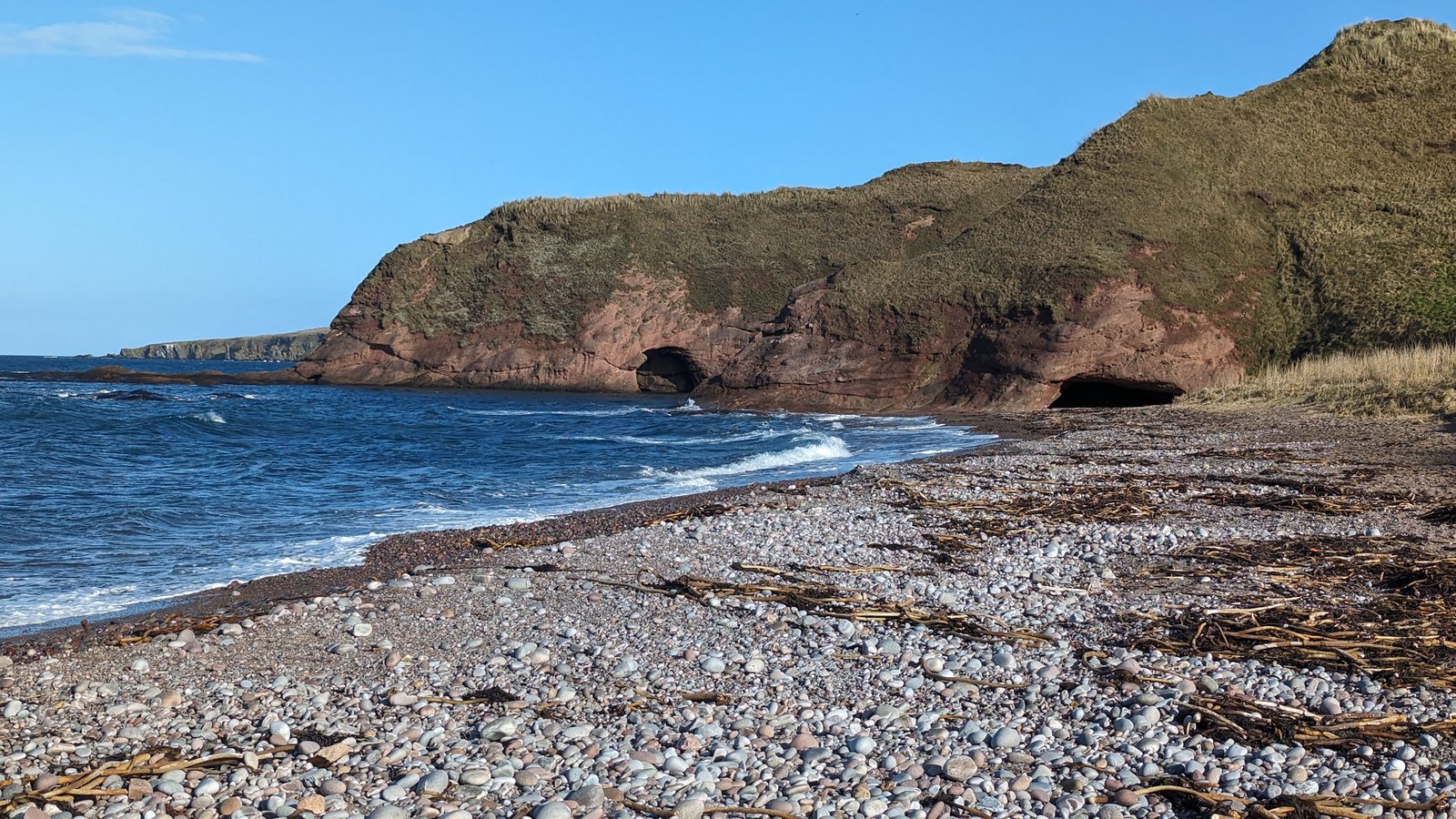
The beach itself is a broad sweep of pebble and sand below green and red cliffs, with rockpools, caves and big Moray Firth skies. It’s the kind of place that rewards arriving with everything you need and staying a while. We overnighted right by the sea here — quiet, wild-feeling and utterly peaceful, with the waves for company and not another soul about.
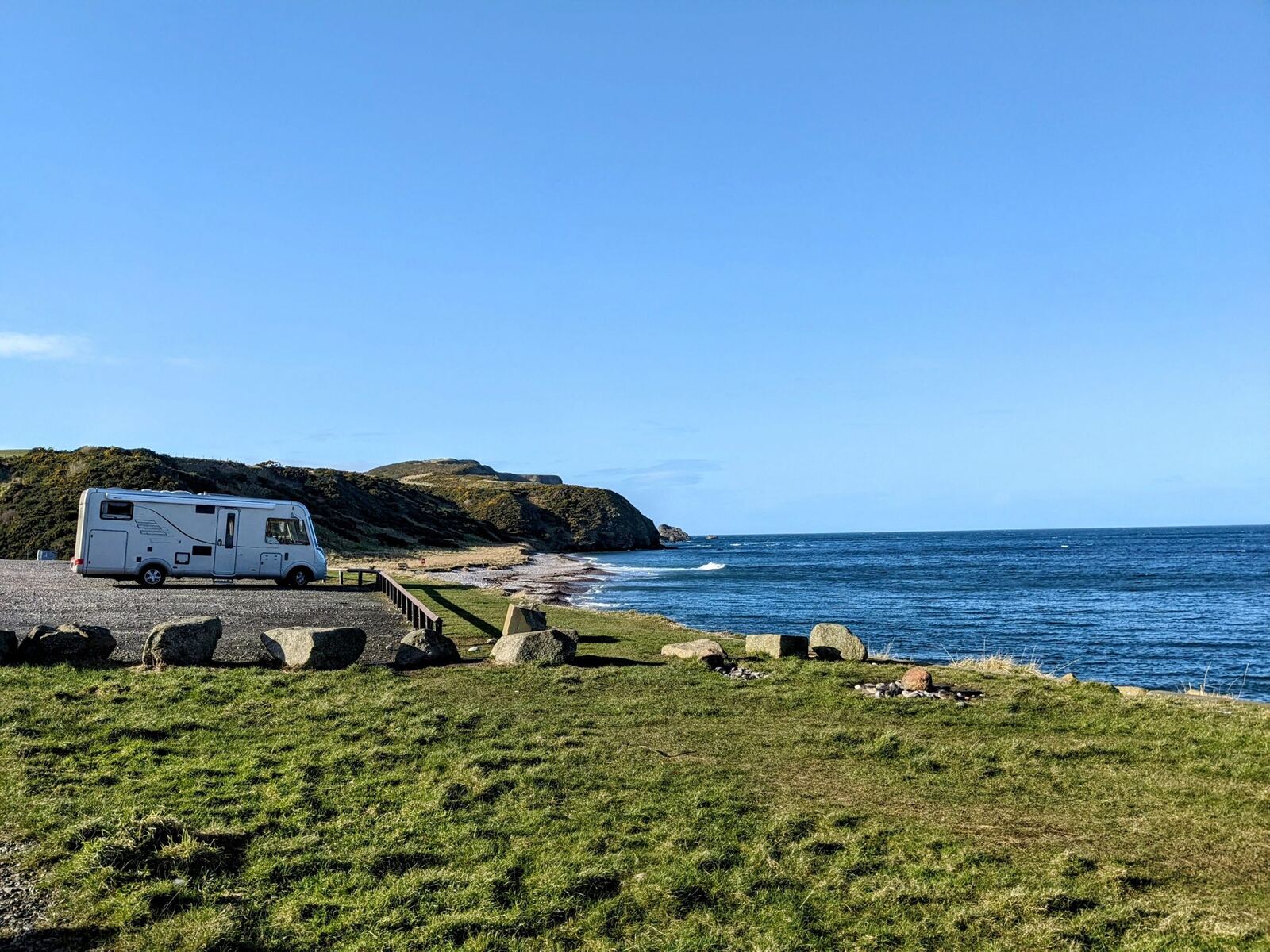
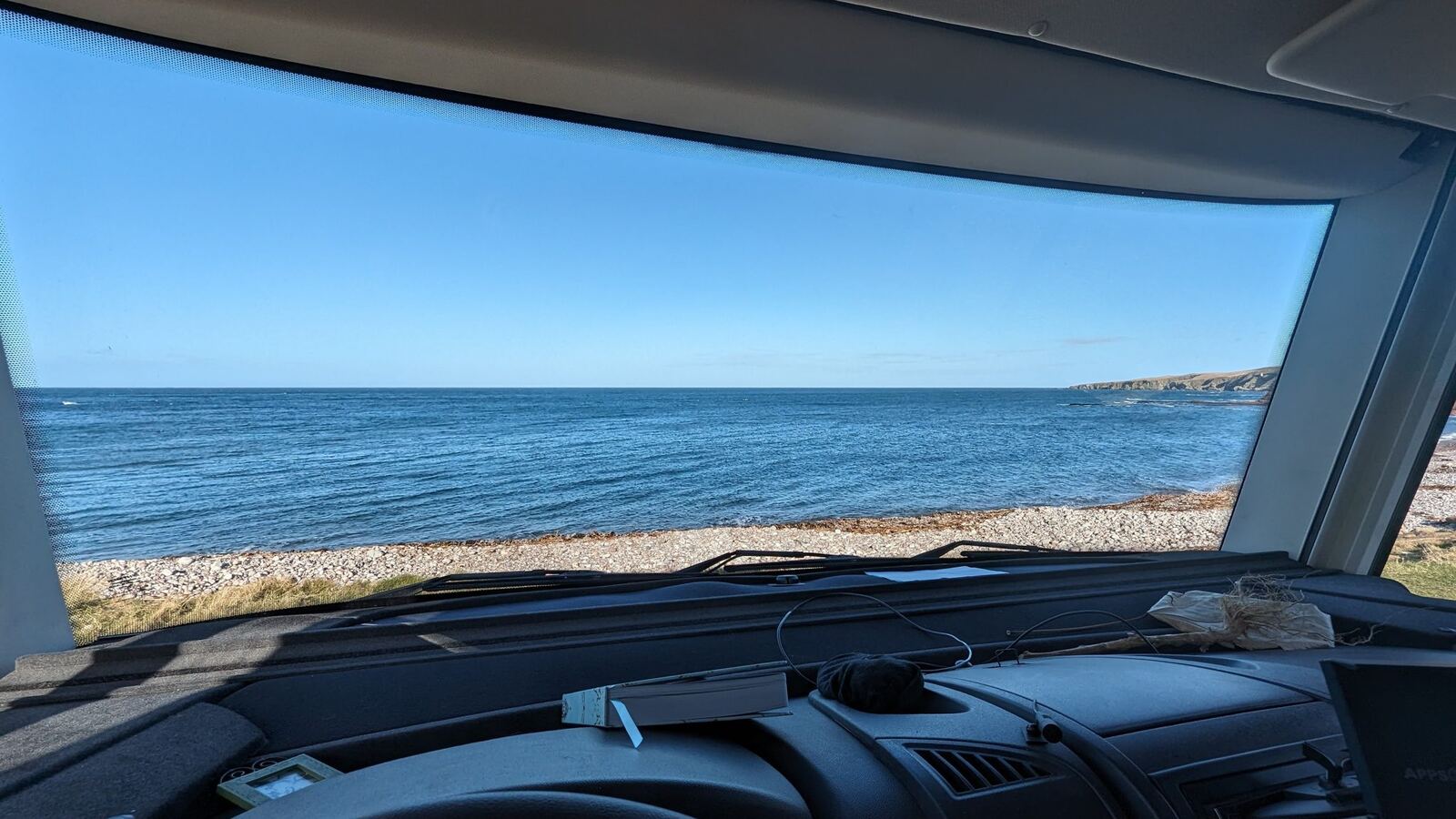
If you overnight here: it’s a remote, sensitive spot — treat it with real care. Arrive late, leave early, take everything away, don’t block the narrow road or the turning area, and if anything pick up others’ litter too. Quiet corners like this stay open to vans only while everyone behaves. Leave not a trace.
Best time to visit
Late spring to autumn for the long north-east light and the calmest sea; the road down is steep and narrow, so take care in a big vehicle and in winter. Come on a clear day and you’ll not want to leave.
Nearby & linked
- Aberdour, Fife — the other Aberdour (the one most people mean): Silver Sands, the harbour and the castle, far to the south on the Forth.
- Rosehearty, Fraserburgh & the Buchan coast — east along the firth.
- Pennan, Crovie & Gardenstown — the famous cliff-foot villages just west.
Reality notes
- 🏖️ The beach: secluded and free; steep, narrow access road — mind big vehicles.
- ⛪ History: ancient St Drostan / old-kirk associations near the shore — read the on-site boards.
- 🏰 Dundarg Castle: fragmentary cliff-top ruin on the headland — spectacular setting, little left.
- 🚐 Overnight: a remote, sensitive sea-side spot — be responsible, leave no trace.
- 🐕 Dogs: brilliant — beach and cliffs (leads near the edges and any livestock).
Sources
- First-hand: Kevin & family — an overnight at Aberdour Bay, 27 Feb 2024 (own photos)
- New Aberdour — Wikipedia
- Dundarg Castle — Wikipedia
🪙 Detecting on this beach
Secluded, rarely visited and a long way from anywhere — the opposite profile to the Fife honeypots. Low odds of modern jewellery, but also ground almost nobody has swung a coil over.
The legal position: foreshore detecting in Scotland needs no permit from anyone, which is what makes a remote bay like this practical. The cliffs and fields above the beach need the landowner. Every find, of any age or material, goes to the Treasure Trove Unit — there is no Treasure Act here and no minimum threshold. Full explanation → · our guide →
The appeal here is not volume, it is virgin ground. Almost nobody detects this far up the Aberdeenshire coast, and a secluded beach on an ancient shoreline is the kind of place where the finds are fewer but more interesting — and where anything of real age goes straight to the Treasure Trove Unit, with a reward to follow if a museum claims it.